
Nextdoor Advertising for Lead Growth
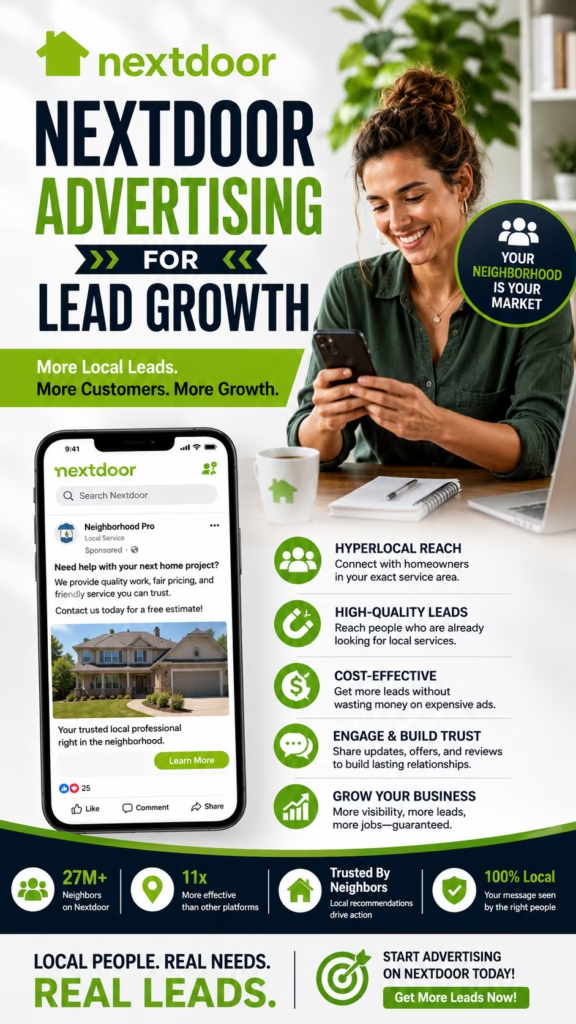
Nextdoor Advertising for Lead Growth helps local businesses build neighborhood visibility, attract nearby customers, generate calls and messages, improve trust, and turn community-based advertising into qualified leads, appointments, estimates, and sales.
Introduction
Nextdoor Advertising for Lead Growth gives local businesses a way to reach homeowners, renters, property owners, landlords, parents, business owners, and other neighborhood decision-makers within clearly defined geographic areas.
Many businesses spend money on broad advertising that reaches people outside their service area or customers who have little immediate interest. Nextdoor creates a more local environment where users discuss neighborhood needs, ask for recommendations, compare service providers, plan property projects, and look for nearby businesses.
A well-designed Nextdoor advertising strategy can help a contractor promote estimates, a moving company reach families planning relocations, a real estate professional generate local conversations, a retailer highlight nearby availability, or a home service company fill open appointments.
Nextdoor advertising supports lead growth by placing a relevant local offer inside a neighborhood-focused customer environment.
Advertising alone is not enough. Businesses still need accurate profile information, strong creative, clear offers, neighborhood relevance, genuine recommendations, real photos, rapid responses, lead qualification, appointment scheduling, follow-up, and performance tracking.
The strongest campaigns do not feel disconnected from the community. They use language, images, services, customer benefits, and calls to action that make sense for the exact neighborhoods being targeted.
Nextdoor advertising can support contractors, moving companies, real estate businesses, cleaners, landscapers, painters, roofers, plumbers, HVAC companies, medical practices, senior services, retailers, restaurants, childcare businesses, automotive services, and many other local industries.
Businesses can use paid advertising to increase reach while supporting the campaign with organic posts, recommendations, project photos, educational content, local responses, and a dependable lead-management process.
Main idea: Nextdoor Advertising for Lead Growth works when precise local targeting, trusted neighborhood proof, clear offers, and fast follow-up work together to create profitable customers.
Table of Contents
- 1) Why Nextdoor advertising works for local lead generation
- 2) Understanding neighborhood customer intent
- 3) Choosing the right advertising objective
- 4) Identifying the best local audience
- 5) Selecting profitable services and offers
- 6) Creating neighborhood-specific ad messages
- 7) Writing stronger Nextdoor ad headlines
- 8) Using real photos that build trust
- 9) Creating calls to action that generate leads
- 10) Using accurate pricing and promotion language
- 11) Building trust with recommendations
- 12) Combining paid advertising with organic activity
- 13) Using seasonal Nextdoor campaigns
- 14) Creating lead-generation landing pages
- 15) Improving mobile conversion
- 16) Responding quickly to Nextdoor leads
- 17) Qualifying neighborhood inquiries
- 18) Moving leads toward appointments and estimates
- 19) Following up with local prospects
- 20) Controlling Nextdoor advertising costs
- 21) Testing ads for stronger lead growth
- 22) Tracking Nextdoor advertising performance
- 23) Common Nextdoor advertising mistakes
- 24) Final thoughts
- 25) FAQs
- 26) Extra keywords
1) Why Nextdoor Advertising Works for Local Lead Generation
Nextdoor advertising works because the platform is organized around local communities. Businesses can focus on customers who live, own property, rent, work, or make decisions within nearby neighborhoods.
Geographic relevance matters for contractors, retailers, healthcare practices, restaurants, property companies, delivery services, repair businesses, and other companies that cannot profitably serve every location.
Nextdoor advertising can generate:
- Direct messages
- Phone calls
- Website visits
- Estimate requests
- Appointment bookings
- Store visits
- Service inquiries
- Property leads
- Local referrals
- Completed sales
A roofing company can target neighborhoods with older homes. A moving company can advertise within active housing markets. A cleaning company can promote recurring services to nearby households. A medical practice can reach people within a reasonable driving distance.
The strongest advantage is not simply that the audience is local. It is that users often visit Nextdoor to discuss local needs and ask who nearby residents trust.
Nextdoor advertising connects local business offers with customers whose location makes them realistic prospects.
2) Understanding Neighborhood Customer Intent
Nextdoor users may have different levels of buying intent. Some are actively searching for a contractor or business. Others are reading recommendations, planning future work, or trying to understand a problem.
Common neighborhood intent levels:
- General local browsing
- Reading recommendations
- Comparing businesses
- Planning a future project
- Researching prices
- Looking for maintenance advice
- Seeking an urgent repair
- Checking local availability
- Requesting an estimate
- Ready to schedule
An effective advertisement should match the customer’s likely stage. An emergency plumbing ad should emphasize fast response and service coverage. A remodeling ad should focus on planning, project proof, consultation, and estimate availability.
Businesses should avoid using one generic message for every audience. A homeowner planning a kitchen renovation needs different information than someone needing same-day drain service.
Strong campaigns can also use multiple ads for different customer stages. One ad can educate. Another can promote an estimate. A third can highlight a recent project or customer recommendation.
Lead growth improves when the advertisement matches the customer’s local need and stage of decision-making.
3) Choosing the Right Advertising Objective
Every Nextdoor campaign should begin with a clear objective. Businesses often waste money because the ad has no specific outcome beyond creating awareness.
Possible campaign objectives include:
- Generate direct messages
- Increase phone calls
- Drive website visits
- Schedule estimates
- Book appointments
- Promote a seasonal service
- Fill schedule openings
- Increase local brand awareness
- Promote a store or showroom
- Generate property inquiries
The objective should influence the ad headline, image, description, landing page, response process, and tracking method.
Example objective alignment:

Objective:
Generate painting estimates

Headline:
Interior Painting Estimates Available Nearby

Image:
Real completed interior painting project

Call to action:
Request an estimate

Lead questions:
Property city
Rooms or areas
Approximate size
Photos
Preferred timeline
A campaign designed for awareness may use broader messaging. A campaign designed for immediate lead generation should use a specific offer and direct call to action.
A clear objective makes the Nextdoor advertisement easier to create, track, and improve.
4) Identifying the Best Local Audience
Nextdoor advertising is most effective when audience selection matches the business’s actual service area, customer profile, and operational capacity.
Audience planning questions:
Which neighborhoods are profitable?
How far will the team travel?
Where are current customers located?
Which areas have strong demand?
Where can appointments be scheduled?
Which property types fit the service?
What customer needs are common?
Which markets have the strongest margins?
Audience factors may include:
- Neighborhood location
- Service radius
- Homeownership
- Property type
- House age
- Local service demand
- Delivery availability
- Appointment coverage
- Project value
- Seasonal conditions
Businesses should not target a large area simply to maximize reach. Leads from distant or unprofitable neighborhoods may increase message volume while reducing campaign value.
Start with areas the business already serves successfully. Existing projects, reviews, referrals, and customer familiarity can strengthen ad performance.
The best audience is not the largest audience. It is the local audience most likely to become a profitable customer.
5) Selecting Profitable Services and Offers
Businesses should advertise services and products with enough value to support advertising, sales follow-up, labor, delivery, materials, and operational costs.
Strong Nextdoor offers may include:
- Home repair estimates
- Seasonal maintenance
- Interior painting
- Exterior cleaning
- Roof inspections
- HVAC tune-ups
- Moving consultations
- Property sale reviews
- Recurring cleaning
- Landscape projects
- Dental appointments
- Retail delivery
A low-value service may generate many leads but leave little profit after advertising and labor costs. A higher-value service may produce fewer inquiries but stronger returns.
Offer evaluation:
Average sale value
Gross profit margin
Lead-to-sale conversion rate
Advertising cost
Estimate or consultation cost
Fulfillment capacity
Repeat customer potential
Referral value
Offers should be easy to understand. Avoid advertising a broad list of unrelated services in one campaign.
The strongest Nextdoor campaign promotes one valuable local offer with one clear customer benefit.
6) Creating Neighborhood-Specific Ad Messages
Neighborhood-specific advertising feels more relevant than broad generic copy. The ad should reflect real local service coverage and customer needs.
Generic message:
We provide great home services. Contact us today.

Neighborhood-focused message:
Need Exterior Painting in the Northside Area?

Our team is currently scheduling exterior painting estimates for siding, trim, shutters, doors, and complete home repainting in nearby neighborhoods.
Local ad-message elements include:
- Nearby service availability
- Neighborhood-specific need
- Seasonal timing
- Local project example
- Real customer benefit
- Simple qualification
- Direct next step
Do not claim to be based in a neighborhood if the business is not actually local to or serving that area.
Businesses can reference nearby projects when appropriate, but they should protect customer privacy and avoid publishing exact addresses without permission.
Neighborhood language increases relevance when it reflects real local service and authentic business activity.
7) Writing Stronger Nextdoor Ad Headlines
The headline should explain the offer immediately. Avoid vague language that forces the customer to guess what the business does.
Weak headline:
Great Local Deal

Stronger headline:
Local Roof Repair Estimates Available

Weak headline:
Call Our Team

Stronger headline:
Need a Moving Quote for Your Upcoming Move?

Weak headline:
Professional Services

Stronger headline:
Interior Painting Appointments for Nearby Homeowners

Weak headline:
We Buy Houses

Stronger headline:
Considering the Sale of a Local Rental Property?
Useful headline elements include:
- Specific service
- Customer problem
- Neighborhood relevance
- Estimate availability
- Appointment opportunity
- Seasonal need
- Primary benefit
- Local urgency when accurate
Headlines should remain readable and credible. Avoid excessive punctuation, full capitalization, unsupported savings, or misleading claims.
A specific headline attracts customers who already understand the service and need the next step.
8) Using Real Photos That Build Trust
Real photos are especially important in neighborhood advertising because customers want proof that the business is active, local, and experienced.
Strong Nextdoor advertising photos include:
- Completed projects
- Before-and-after results
- Real products
- Business team members
- Branded vehicles
- Store or office interiors
- Professional equipment
- Customer-facing locations
- Local property projects
- Service work in progress
The main image should match the exact advertisement. A roofing ad should show roofing work. A moving ad should show an organized moving team or truck. A cleaning ad should show a real completed result.
Avoid using generic stock photos as if they represent actual customers, projects, or inventory.
Photos should be clear, properly framed, and easy to understand on a mobile screen.
Protect privacy by removing addresses, license plates, family photos, documents, alarm equipment, and identifiable occupants when necessary.
Real local photos reduce uncertainty and help customers believe the offer before they make contact.
9) Creating Calls to Action That Generate Leads
The call to action should tell the customer exactly what to do next.
Weak call to action:
Learn more

Stronger contractor CTA:
Message with your city, project type, photos, and preferred timeline to request an estimate.

Stronger moving CTA:
Send your current ZIP code, destination ZIP code, move date, and approximate home size for a quote.

Stronger appointment CTA:
Contact us with your preferred day and time to check current appointment availability.
Strong calls to action may request:
- Property city
- Service needed
- Project photos
- Preferred timeline
- Appointment preference
- Phone number
- Delivery location
- Property details
- Product interest
- Quote information
The request should remain simple. Asking for too much information in the advertisement may reduce response.
Collect the most important initial details first and gather more information during follow-up.
A clear call to action turns neighborhood attention into a measurable lead.
10) Using Accurate Pricing and Promotion Language
Misleading prices may increase clicks but reduce lead quality and damage neighborhood trust.
Clear pricing language:
The displayed price is a starting price.
Final pricing depends on project size and condition.
Delivery may be priced separately.
Materials and upgrades affect final cost.
An inspection may be required.
Promotional availability is limited.
Financing is subject to approval.
Offer terms may vary by location.
Businesses should clearly explain what is included. A service call price may not include parts. A painting price may apply only to a certain room size. A moving estimate may depend on distance, inventory, stairs, access, and labor.
Promotions should include accurate terms, dates, availability, and eligibility.
Avoid guaranteed savings claims unless the business can support them. Do not imply that every customer will receive the lowest advertised price.
Accurate pricing language may reduce low-quality inquiries while increasing trust with serious customers.
11) Building Trust with Recommendations
Recommendations can improve advertising performance because they show that real local customers have experience with the business.
Strong recommendations may mention:
- Communication
- Reliability
- Workmanship
- Scheduling
- Cleanliness
- Estimate clarity
- Customer service
- Professionalism
- Problem-solving
- Overall value
Recommendation request:
Thank you for working with our team. If you are comfortable sharing your experience, we would appreciate an honest Nextdoor recommendation. Your feedback helps nearby customers understand our communication, service, and process.
Recommendations should come from genuine customer experiences. Businesses should not buy recommendations, create fake profiles, or pressure customers.
Advertised claims should match the experiences described in recommendations. If the ad emphasizes fast communication but reviews consistently mention slow responses, the business should improve operations before increasing ad spend.
Recommendations make paid advertising more believable by supporting the offer with neighborhood proof.
12) Combining Paid Advertising with Organic Activity
Paid ads can increase reach, while organic activity builds familiarity and trust.
Organic Nextdoor activity may include:
- Helpful neighborhood posts
- Project updates
- Seasonal reminders
- Maintenance tips
- Customer recommendations
- Local answers
- Service availability
- Community participation
Combined strategy:
Organic project post builds awareness
Customer sees paid advertisement
Customer recognizes the business
Customer reviews recommendations
Customer sends a message
Business qualifies the lead
Appointment is scheduled
Advertising performs better when customers can find an active, professional business presence after seeing the ad.
Organic content can also help identify which topics, images, services, and offers deserve paid promotion.
Paid reach becomes more valuable when it is supported by consistent organic neighborhood credibility.
13) Using Seasonal Nextdoor Campaigns
Seasonal advertising helps businesses match their offer to timely local needs.
Seasonal campaign ideas:
Spring landscaping
Summer HVAC service
Exterior painting season
Storm damage inspections
Back-to-school services
Fall gutter cleaning
Winter plumbing preparation
Holiday house cleaning
Snow removal
Moving season
Seasonal campaign benefits include:
- Stronger customer relevance
- Timely service demand
- Schedule-filling opportunities
- Preventive maintenance leads
- Weather-related urgency
- Project planning
- Promotion timing
- Repeat customer reminders
Campaigns should launch before peak demand. Waiting until the schedule is full reduces the value of advertising.
Seasonal language should reflect real local weather and customer needs. Avoid generic content that does not apply to the target neighborhoods.
Seasonal advertising creates lead growth by matching the local offer to the moment customers are most likely to need it.
14) Creating Lead-Generation Landing Pages
Sending advertising traffic to a general homepage can reduce conversion. A focused landing page should continue the exact message from the advertisement.
A strong landing page includes:
- Matching headline
- Clear service description
- Real project photos
- Customer reviews
- Service-area information
- Accurate pricing clarification
- Simple lead form
- Visible phone number
- Trust information
- Clear next step
Ad headline:
Interior Painting Estimates Available Nearby

Landing-page headline:
Request a Local Interior Painting Estimate

Landing-page form:
Name
Phone
Property city
Rooms or areas
Preferred timeline
Photo upload
The landing page should load quickly on mobile devices and avoid unnecessary navigation, pop-ups, or long forms.
Businesses should protect personal information and explain how lead details will be used.
Message consistency between the ad and landing page improves trust and lead conversion.
15) Improving Mobile Conversion
Many Nextdoor users view ads on mobile devices. The lead process should be simple, fast, and easy to complete on a small screen.
Mobile conversion improvements include:
- Short headlines
- Clear primary image
- Readable text
- Tap-to-call buttons
- Short lead forms
- Fast page loading
- Large form fields
- Simple navigation
- Visible call to action
- Easy photo upload
Customers should not need to zoom, search for the phone number, complete a long questionnaire, or navigate several pages.
Test the full process on a real phone. Click the ad, load the page, complete the form, tap the phone number, and verify that notifications arrive.
Missed mobile leads should receive prompt follow-up when possible.
Mobile simplicity reduces the number of potential customers lost between the advertisement and the first conversation.
16) Responding Quickly to Nextdoor Leads
Local customers may contact several businesses after seeing recommendations or advertisements. Fast response can create an immediate advantage.
Simple local lead response:
Thank you for reaching out. What neighborhood or city are you located in, what service do you need, and what timeline are you considering? Photos or additional details would help us explain the best next step.
A strong first response should:
- Acknowledge the exact inquiry
- Confirm the location
- Answer the main question
- Ask one useful qualifying question
- Request photos when helpful
- Ask about timing
- Explain the next step
- Avoid unsupported promises
Businesses should consider evening and weekend lead coverage because neighborhood users may browse outside normal business hours.
Automation can support the first response, but messages should sound natural and match the exact advertisement.
The advertisement creates the lead opportunity, but response speed determines whether the business receives the conversation.
17) Qualifying Neighborhood Inquiries
Lead volume does not automatically equal lead quality. Businesses should collect enough information to determine whether the customer fits the service, location, timing, and offer.
Useful qualification details include:
- Customer city or neighborhood
- Service or product needed
- Project size
- Current condition
- Photos
- Preferred timeline
- Delivery needs
- Appointment availability
- Residential or commercial use
- Best contact method
The first reply should not ask every possible question. Begin with the most important information.
Simple qualification flow:
Confirm location
Confirm service
Ask timeline
Request photos
Collect phone number
Schedule next step
Leads can be organized as new, awaiting details, qualified, appointment scheduled, estimate sent, follow-up needed, won, lost, or closed.
Qualification protects advertising budgets by helping teams focus on customers they can realistically serve.
18) Moving Leads Toward Appointments and Estimates
The purpose of the first conversation is usually to move the customer toward a clear next step.
Nextdoor lead flow:
Advertisement viewed
Customer sends message
Location confirmed
Need qualified
Phone number collected
Appointment scheduled
Estimate or consultation completed
Proposal sent
Follow-up completed
Sale booked
A contractor may schedule an inspection. A medical office may book an appointment. A moving company may prepare a quote. A retailer may arrange delivery or a showroom visit.
Every response should move the lead forward rather than simply answering questions.
Businesses should explain what the next step includes and whether fees, measurements, inspections, consultations, or documentation are required.
Nextdoor becomes a dependable lead channel when qualified conversations consistently move toward real appointments and estimates.
19) Following Up with Local Prospects
Many leads do not make a decision immediately. They may be comparing businesses, reviewing budgets, checking with family, waiting for a future date, or collecting more information.
Useful follow-up moments include:
- After requesting photos
- After an unanswered message
- Before an appointment
- After a consultation
- After sending an estimate
- When availability changes
- When a promotion approaches expiration
- When the customer postpones
- When seasonal demand begins
- When a new service option becomes available
Simple follow-up:
Hi, I wanted to follow up regarding your request. Are you still considering the same service and timeline? We can answer updated questions, confirm availability, or explain the next step whenever you are ready.
Follow-up should remain respectful. Avoid excessive messages or pressure.
A CRM or lead tracker should record the campaign, customer need, location, conversation status, appointment, estimate, and next follow-up date.
Consistent follow-up recovers advertising leads that would otherwise disappear after the first conversation.
20) Controlling Nextdoor Advertising Costs
Lead growth should not come at the expense of profitability. Businesses need clear campaign budgets and acquisition targets.
Advertising costs may include:
- Media spend
- Creative production
- Landing-page software
- Call tracking
- CRM tools
- Lead-response labor
- Estimate preparation
- Campaign management
- Follow-up labor
- Promotional discounts
Customer acquisition cost:
Total advertising and sales cost
÷
Number of new customers
=
Customer acquisition cost
Businesses should set a maximum acceptable cost per lead and customer based on average transaction value, gross profit, repeat purchases, and referral value.
Pause or revise ads that generate unqualified leads, distant customers, unrealistic price expectations, or services the business cannot fulfill.
The goal is not the cheapest lead. The goal is a qualified customer acquired at a profitable cost.
21) Testing Ads for Stronger Lead Growth
Businesses should test campaign elements instead of assuming the first advertisement is the best version.
Nextdoor ad elements to test:
- Headline
- Primary image
- Offer
- Call to action
- Service category
- Neighborhood audience
- Seasonal message
- Landing page
- Lead form length
- Pricing language
Example ad test:

Version A:
Free Exterior Painting Estimate

Version B:
Exterior Painting Appointments Available Nearby

Version C:
Peeling Paint? Request a Local Exterior Review
Test one major element at a time when possible. Changing the headline, image, audience, offer, and landing page simultaneously makes it difficult to understand what caused the result.
Campaign decisions should be based on qualified leads, appointments, sales, and revenue—not only clicks or engagement.
Testing improves lead growth by replacing assumptions with measurable customer behavior.
22) Tracking Nextdoor Advertising Performance
Tracking helps businesses understand whether Nextdoor advertising is producing qualified local customers and profitable growth.
Useful advertising metrics include:
- Ad impressions
- Clicks
- Messages
- Phone calls
- Website visits
- Lead forms
- Qualified leads
- Appointments
- Estimates
- Completed sales
- Average transaction value
- Revenue by campaign
- Cost per lead
- Cost per customer
- Return on advertising spend
Example Nextdoor advertising performance:
25,000 impressions
620 clicks
140 messages and forms
72 qualified leads
38 appointments or estimates
16 completed sales

Click-through rate:
620 ÷ 25,000 = 2.48%

Lead conversion rate:
140 ÷ 620 = 22.6%

Qualification rate:
72 ÷ 140 = 51.4%

Qualified lead-to-sale rate:
16 ÷ 72 = 22.2%
Return on advertising spend:
Revenue attributed to campaign
÷
Advertising spend
=
Return on advertising spendBusinesses should track lead quality by neighborhood, service, creative, headline, landing page, and offer.
A campaign with many clicks but few leads may have weak landing-page conversion. A campaign with many leads but few customers may have poor qualification or follow-up.
Nextdoor advertising should be judged by profitable customers and revenue—not exposure alone.
23) Common Nextdoor Advertising Mistakes
Nextdoor advertising often underperforms when businesses use broad targeting, weak creative, unclear offers, or poor lead follow-up.
Common advertising mistakes include:
- Targeting unserviceable areas
- Using vague headlines
- Promoting too many services
- Using generic stock photos
- Using misleading prices
- Sending traffic to a generic homepage
- Using long lead forms
- Providing no clear call to action
- Ignoring recommendations
- Responding slowly
- Failing to qualify leads
- Failing to follow up
- Tracking clicks but not sales
- Scaling before testing
- Changing too many variables at once
Another mistake is treating neighborhood advertising like a loud national sales campaign. Local users respond more positively to useful, credible, community-relevant communication.
Businesses should not increase budgets until the lead process works. More advertising cannot repair unanswered calls, weak estimates, confusing pricing, or poor follow-up.
Campaign claims should remain accurate and consistent with the customer experience.
Nextdoor advertising fails when paid reach creates attention but the offer, trust signals, or lead process creates confusion.
24) Final Thoughts
Nextdoor Advertising for Lead Growth can help local businesses reach nearby customers, increase neighborhood visibility, generate calls and messages, fill appointments, and create a more predictable local sales pipeline.
The strongest strategy begins with a clear objective, profitable offer, accurate audience, neighborhood-specific message, strong headline, real photos, genuine recommendations, direct call to action, mobile-friendly landing page, and rapid response.
Businesses should combine paid advertising with organic activity. Helpful posts, project photos, seasonal tips, recommendations, and local engagement make advertising more credible.
Lead growth also depends on what happens after the customer clicks. Businesses need qualification, appointment scheduling, estimates, sales follow-up, CRM tracking, and clear measurement.
Nextdoor can support contractors, home service companies, real estate businesses, moving companies, retailers, healthcare practices, cleaners, restaurants, senior services, property companies, and many other local industries.
Most importantly, businesses should track profitability. Impressions, clicks, and messages are useful, but the real goal is qualified customers and revenue.
Build a Stronger Neighborhood Advertising System
Market Wiz AI helps local businesses improve Nextdoor advertising, neighborhood content, Google Maps visibility, Marketplace posting, local SEO, lead response, customer follow-up, and multi-market performance tracking.
Schedule a Market Wiz AI DemoFinal takeaway: Nextdoor advertising drives lead growth when precise neighborhood targeting, credible local proof, clear offers, fast response, and organized follow-up work together to produce profitable customers.
25) FAQs
1) What is Nextdoor Advertising for Lead Growth?
It is the process of using paid neighborhood advertising, local targeting, strong creative, recommendations, lead-response systems, and follow-up to generate more nearby customers.
2) Can Nextdoor advertising generate leads?
Yes. Businesses can generate messages, phone calls, website visits, appointments, estimates, store visits, property inquiries, and completed sales.
3) What businesses can advertise on Nextdoor?
Contractors, home service companies, moving businesses, retailers, restaurants, real estate professionals, medical practices, cleaners, landscapers, and many other local businesses can advertise.
4) Why is neighborhood targeting valuable?
Neighborhood targeting helps businesses focus on customers who live within realistic service, delivery, appointment, or store-visit areas.
5) What should a Nextdoor advertisement promote?
It should promote one clear service, product, appointment opportunity, estimate, consultation, seasonal need, or local customer benefit.
6) What makes a strong Nextdoor headline?
A strong headline identifies the exact service, customer problem, local benefit, estimate opportunity, or appointment availability.
7) Are real photos important in Nextdoor ads?
Yes. Real project, product, team, store, property, and service photos help build trust and make the advertisement more credible.
8) Can businesses use stock photos?
Stock photos may support general concepts, but they should not be presented as actual local projects, customers, products, or completed work.
9) Should Nextdoor ads include prices?
Businesses should use accurate pricing and explain when the final cost depends on size, condition, delivery, materials, labor, appointment type, or service scope.
10) What is the best call to action?
The call to action should clearly ask the customer to request an estimate, schedule an appointment, call, message, visit the website, or provide several initial details.
11) Do recommendations help paid advertising?
Yes. Genuine recommendations give customers additional proof that nearby people have experience with the business.
12) Should businesses use organic Nextdoor posts too?
Yes. Organic posts, useful answers, project photos, maintenance advice, and recommendations can strengthen the credibility of paid advertisements.
13) What seasonal services can be advertised?
Businesses can promote HVAC maintenance, exterior painting, gutter cleaning, landscaping, storm repair, snow removal, holiday cleaning, moving services, and other timely local needs.
14) Should ads send customers to the homepage?
A focused landing page usually converts better because it continues the exact message, service, offer, and call to action from the advertisement.
15) How can businesses improve mobile conversion?
Use clear images, short text, fast pages, tap-to-call buttons, short forms, large fields, and a visible primary call to action.
16) How quickly should businesses respond?
Businesses should respond as quickly as reasonably possible because local customers may contact several companies.
17) Can lead responses be automated?
Automation can support first responses, location confirmation, service qualification, phone collection, scheduling, and follow-up when messages remain accurate and natural.
18) What information should businesses request from leads?
Ask for location, service or product needed, project size, photos, preferred timing, delivery requirements, appointment preference, and contact information.
19) How should Nextdoor leads be moved forward?
Qualified leads should move toward a phone call, appointment, estimate, consultation, property review, delivery schedule, or store visit.
20) Should businesses follow up with leads?
Yes. Respectful follow-up can recover customers who are comparing options, planning for later, reviewing estimates, or waiting for availability.
21) How can businesses control advertising costs?
Use precise targeting, profitable offers, conversion tracking, lead qualification, campaign limits, strong follow-up, and regular performance reviews.
22) What should businesses test?
Test headlines, images, offers, calls to action, neighborhood audiences, landing pages, lead forms, pricing language, and seasonal messages.
23) What Nextdoor advertising metrics matter?
Track impressions, clicks, messages, calls, forms, qualified leads, appointments, estimates, sales, revenue, cost per lead, and cost per customer.
24) What is the biggest Nextdoor advertising mistake?
One of the biggest mistakes is increasing ad spend before the offer, landing page, response time, qualification, and follow-up process are working.
25) What is the best Nextdoor advertising strategy?
Target profitable neighborhoods, promote one clear offer, use real local proof, respond quickly, qualify every lead, follow up consistently, and track completed sales.
25) Extra Keywords
- Nextdoor Advertising for Lead Growth
- Nextdoor lead generation
- neighborhood advertising
- local business leads
- Nextdoor business marketing
- local customer acquisition
- Nextdoor advertising strategy
- neighborhood lead growth
- Nextdoor ads for local businesses
- Nextdoor marketing campaigns
- local service advertising
- Nextdoor contractor leads
- Nextdoor customer acquisition
- neighborhood business promotion
- Nextdoor advertising ROI
- local lead generation strategy
- Nextdoor paid advertising
- Nextdoor campaign optimization
- local neighborhood marketing
- Nextdoor appointment leads
- Nextdoor estimate requests
- Nextdoor ad conversion
- Nextdoor advertising cost
- Nextdoor local sales growth
- Nextdoor business growth strategy













