
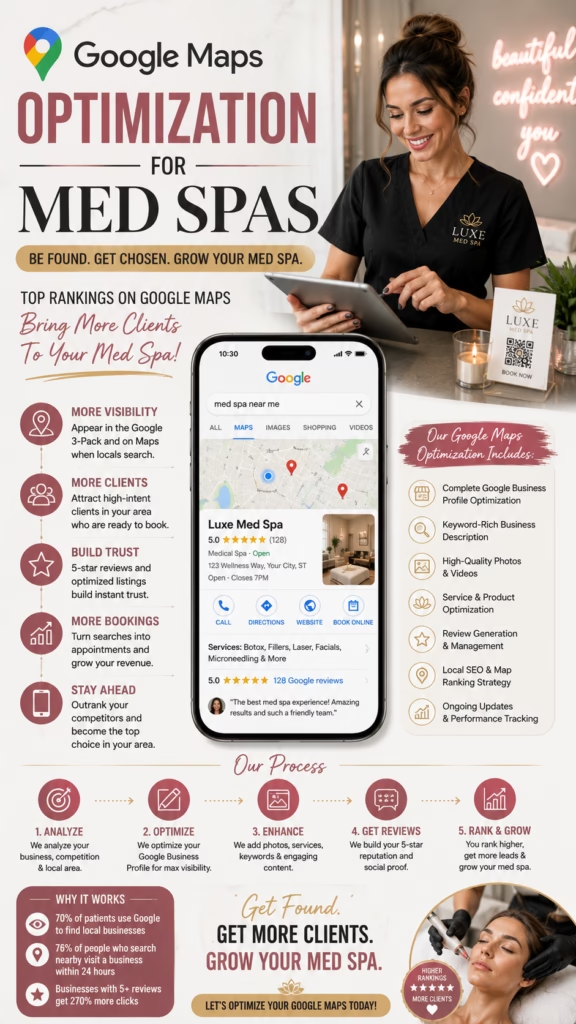
Google Maps Optimization for Med Spas
Google Maps Optimization for Med Spas helps medical spas improve local visibility, strengthen practitioner trust, attract qualified clients, generate consultation requests, and turn nearby treatment searches into booked appointments.
Introduction
Google Maps Optimization for Med Spas is one of the most valuable local marketing strategies for practices that depend on nearby clients. People searching for injectables, skin rejuvenation, laser treatments, body contouring, facials, hair restoration, or other aesthetic services usually prefer a reputable provider within a convenient driving distance.
Google often displays local map results before many traditional website listings. A complete and trusted Google Business Profile can therefore become one of the first places a prospective client encounters the med spa, sees photos, reads reviews, compares services, checks hours, visits the website, or requests directions.
Google Maps optimization gives med spas an opportunity to appear when nearby clients are actively researching treatments and comparing providers.
Strong local visibility requires more than entering a business name and phone number. Med spas need accurate categories, complete treatment information, professional photos, consistent reviews, practitioner credibility, useful local landing pages, responsive appointment systems, and responsible marketing language.
The strongest strategy connects the Google Business Profile with the website, treatment pages, location pages, provider information, review activity, local citations, social proof, appointment forms, phone tracking, and consultation follow-up.
Because med spas provide aesthetic and sometimes medically supervised services, marketing claims should remain accurate, appropriately qualified, and consistent with applicable professional, advertising, privacy, and platform requirements.
Main idea: Google Maps Optimization for Med Spas works when Google and prospective clients can clearly understand where the practice is located, which treatments are available, who provides them, how appointments work, and why the practice can be trusted.
Table of Contents
- 1) Why Google Maps matters for med spas
- 2) Understanding local med spa search intent
- 3) Setting up the Google Business Profile correctly
- 4) Choosing the best primary category
- 5) Adding relevant secondary categories
- 6) Optimizing business information
- 7) Writing a strong med spa description
- 8) Adding treatments and services
- 9) Building practitioner trust
- 10) Using professional photos
- 11) Generating more client reviews
- 12) Responding to med spa reviews
- 13) Publishing Google Business Profile posts
- 14) Using treatment-specific content
- 15) Creating local med spa landing pages
- 16) Optimizing the med spa website
- 17) Using local keywords naturally
- 18) Building citations and local authority
- 19) Improving consultation conversion
- 20) Google Maps optimization for injectables
- 21) Google Maps optimization for laser treatments
- 22) Google Maps optimization for skin treatments
- 23) Google Maps optimization for body treatments
- 24) Tracking local med spa performance
- 25) Common Google Maps mistakes
- 26) Trust and compliance reminders
- 27) Final thoughts
- 28) FAQs
- 29) Extra keywords
1) Why Google Maps Matters for Med Spas
Google Maps matters because med spa searches are highly local and often connected to immediate commercial intent. A prospective client may be comparing nearby practices, researching treatment availability, reading reviews, checking before-and-after photos, or looking for a consultation.
Common local med spa searches:
med spa near me
medical spa near me
injectables near me
skin rejuvenation near me
laser treatment near me
facial treatments near me
body contouring near me
local aesthetic clinic
med spa consultation
medical aesthetics in my area
These searches often occur close to a decision. The prospective client may already understand the treatment category and be deciding which provider to contact.
Google Maps visibility can generate:
- Phone calls
- Website visits
- Consultation requests
- Online bookings
- Direction requests
- Treatment inquiries
- Review activity
- New client appointments
- Repeat treatment inquiries
- Local brand recognition
Google Maps can also help smaller med spas compete with larger brands. A practice with accurate information, strong reviews, excellent photos, relevant treatment pages, and fast responses may earn significant visibility within its immediate market.
Google Maps helps med spas reach qualified local clients at the moment they are actively comparing aesthetic providers.
2) Understanding Local Med Spa Search Intent
Not every med spa search has the same intent. Some people are researching treatments, while others are ready to schedule a consultation or book an appointment.
Common med spa search-intent categories:
- General provider searches
- Treatment-specific searches
- Problem-focused searches
- Price and consultation searches
- Provider qualification searches
- Review and reputation searches
- Before-and-after research
- Appointment availability searches
- Location and direction searches
- Post-treatment information searches
A general search such as “med spa near me” requires broad relevance and strong brand trust. A treatment-specific search requires a profile and website that clearly confirm the treatment is available.
Google Maps optimization should support both discovery and decision-making. The profile introduces the practice, while the website and landing pages provide deeper treatment information.
The strongest local strategy matches the information on the profile and website to the questions clients ask at each stage of the treatment journey.
3) Setting Up the Google Business Profile Correctly
The Google Business Profile should accurately represent the med spa’s real location, brand, services, hours, contact information, and customer experience.
Google Business Profile setup checklist:
- Accurate business name
- Correct primary category
- Relevant secondary categories
- Current address
- Active phone number
- Correct website link
- Accurate appointment URL
- Current business hours
- Complete business description
- Full treatment list
- Professional photos
- Accurate accessibility information
The address should represent the actual place where clients receive services. Businesses should avoid using inaccurate addresses, virtual offices, or locations that do not function as legitimate client-facing operations.
Hours should reflect when clients can reach the practice or attend appointments. Holiday and special hours should be updated when appropriate.
A correctly configured profile gives every other local optimization effort a stronger foundation.
4) Choosing the Best Primary Category
The primary category helps Google understand the med spa’s main business. The category should reflect the practice’s central service identity rather than a secondary treatment.
Possible category considerations:
Medical spa
Skin care clinic
Laser hair removal service
Facial spa
Wellness center
Cosmetic clinic
Weight loss service
Hair removal service
The exact selection should match the services genuinely provided and the way the business operates. A practice focused on medical aesthetics may require a different primary category than a traditional day spa.
Changing categories frequently without a clear reason can create inconsistency. Category decisions should reflect the business model, website, staffing, and treatment menu.
The strongest primary category is the one that most accurately describes the practice’s core identity.
5) Adding Relevant Secondary Categories
Secondary categories can help Google understand additional areas of the practice, but they should only represent real services.
Secondary category decisions may depend on whether the med spa offers:
- Advanced skin treatments
- Laser hair removal
- Facials
- Body contouring
- Wellness services
- Hair restoration
- Aesthetic consultations
- Cosmetic treatments
Adding unrelated categories does not automatically improve rankings. It may weaken the clarity of the profile and attract irrelevant inquiries.
Categories should align with the treatments listed on the profile and the content published on the website.
Secondary categories should expand accurate relevance without making the profile unfocused.
6) Optimizing Business Information
Business information should remain consistent across the Google Business Profile, website, booking platform, social profiles, and local directories.
Important information to verify:
- Business name
- Street address
- Suite number
- Phone number
- Website
- Appointment link
- Hours
- Email contact
- Parking information
- Accessibility details
Inconsistent information can confuse prospective clients and weaken trust. An old phone number or broken appointment link can directly reduce bookings.
Use an appointment URL that takes clients to the correct booking or consultation page rather than an unrelated homepage.
Accurate information protects both local visibility and the client experience.
7) Writing a Strong Med Spa Description
The business description should explain the practice, treatments, local area, team, and client experience in clear language.
Med spa description structure:
Practice identity
Primary treatment categories
Local service area
Qualified provider information
Consultation approach
Client experience
Scheduling options
Clear trust statement
The description can mention aesthetic consultations, skin treatments, injectables, laser services, body treatments, or other genuine offerings. It should avoid keyword repetition and unsupported superiority claims.
Do not promise guaranteed results. Outcomes can vary based on treatment, individual characteristics, provider assessment, and adherence to instructions.
A strong description helps prospective clients understand the practice without relying on exaggerated marketing language.
8) Adding Treatments and Services
The service section should reflect the actual treatment menu and use clear, client-friendly names.
Potential med spa service categories include:
- Aesthetic consultations
- Injectable treatments
- Facial treatments
- Skin rejuvenation
- Laser hair removal
- Laser skin treatments
- Chemical peels
- Microneedling
- Body contouring
- Hair restoration
- Wellness services
- Maintenance treatments
Each service description can explain the general purpose of the treatment, consultation process, and whether an individualized assessment is required.
Service names should match the website. If the profile lists a treatment, the website should provide a useful page explaining what it is, who may be an appropriate candidate, what the consultation involves, and how to schedule.
Complete service information improves local relevance and helps clients find the treatment category they are researching.
9) Building Practitioner Trust
Prospective clients often evaluate the qualifications, experience, communication style, and professional oversight of the people providing treatment.
Practitioner trust elements may include:
- Provider names
- Accurate credentials
- Professional biographies
- Training information
- Treatment specialties
- Professional photos
- Consultation philosophy
- Safety-focused communication
- Continuing education
- Appropriate supervision information
Credential claims should be precise. Avoid vague wording that may make a provider appear to hold qualifications they do not have.
Provider pages on the website can strengthen trust and give prospective clients more context before scheduling.
Practitioner transparency helps turn local visibility into confident consultation requests.
10) Using Professional Photos
Photos influence how prospective clients perceive cleanliness, professionalism, atmosphere, technology, and trust.
Med spa photo ideas:
- Exterior signage
- Reception area
- Treatment rooms
- Consultation spaces
- Professional team portraits
- Practitioner photos
- Approved treatment equipment
- Product displays
- Client comfort areas
- Brand details
Images should be current, well lit, and representative of the real practice. Avoid relying only on stock photography.
Before-and-after photos require careful consent, consistency, and truthful representation. Lighting, positioning, timing, and editing should not create a misleading impression.
Professional photos help prospective clients understand what the experience may feel like before they arrive.
11) Generating More Client Reviews
Reviews help prospective clients evaluate service, professionalism, communication, comfort, cleanliness, and overall experience.
Appropriate review-request moments may include:
- After a positive client interaction
- After a completed treatment experience
- After a client expresses satisfaction
- After a follow-up appointment
- After a successful consultation process
- After a repeat client visit
- After resolving a service concern
- After a client compliments the team
Review requests should be neutral and professional. Clients should not be pressured to leave positive feedback or encouraged to disclose private medical or treatment information.
Review growth should be consistent rather than occurring in suspicious bursts.
Authentic reviews strengthen local trust and help prospective clients compare practices with greater confidence.
12) Responding to Med Spa Reviews
Review responses should protect privacy and avoid confirming that a person received treatment unless appropriate and permitted.
General positive response example:
Thank you for sharing your feedback. We appreciate your kind words about our team and the experience at our practice.
Responses should remain general when discussing sensitive or treatment-related details. Avoid mentioning the specific service, condition, appointment, or outcome unless the client has clearly made that information public and the response is appropriate.
Negative reviews should be handled calmly. Acknowledge the concern without arguing and invite the reviewer to contact the practice through a private channel.
Professional review responses protect privacy while showing future clients that the practice takes communication seriously.
13) Publishing Google Business Profile Posts
Google Business Profile posts can highlight treatments, consultations, team updates, educational content, seasonal topics, and practice news.
Med spa Google post ideas:
- Consultation availability
- New provider introductions
- Skin treatment education
- Seasonal skincare reminders
- Laser treatment information
- Maintenance appointment reminders
- Practice anniversary posts
- Facility updates
- Frequently asked questions
- New service announcements
Each post should focus on one topic and include a clear action such as learning more, requesting a consultation, or visiting the treatment page.
Promotional claims should remain accurate. Avoid implying guaranteed outcomes or universal suitability.
Consistent Google posts help the med spa communicate current services and expertise.
14) Using Treatment-Specific Content
Treatment-specific content helps the practice become relevant for more precise local searches.
Treatment content topics:
What the treatment is
What concerns it may address
Who may be an appropriate candidate
Why consultation matters
What to expect during the visit
Typical preparation considerations
General recovery information
Common questions
Provider qualifications
How to schedule
Every treatment page should be written for people, not only search engines. It should explain the experience clearly while avoiding promises that cannot be supported.
Treatment content should be reviewed by an appropriately qualified person within the practice.
Detailed treatment content helps Google understand relevance and helps clients make informed consultation decisions.
15) Creating Local Med Spa Landing Pages
Local landing pages can support nearby visibility when the med spa genuinely serves clients from those communities.
A useful med spa location page can include:
- Location-specific introduction
- Treatments available
- Distance or travel context
- Parking information
- Practitioner information
- Consultation process
- Real practice photos
- Client experience information
- Frequently asked questions
- Clear appointment CTA
Each page should contain original information. Copying one page and changing only the city name creates weak content.
Location pages should link to treatment pages and provide an easy path to consultation or booking.
Strong local pages help nearby clients understand why the practice is a convenient and credible option.
16) Optimizing the Med Spa Website
The website should confirm the information presented on Google and give prospective clients the details needed to move forward.
Important med spa website elements:
- Clear treatment pages
- Provider biographies
- Location information
- Consultation details
- Online booking
- Visible phone number
- Professional photos
- Client reviews
- Privacy information
- Mobile-friendly design
- Fast page performance
- Strong internal links
The homepage should quickly explain the practice, main treatment categories, location, and next step.
Treatment pages should avoid thin copy. Prospective clients often need context about candidacy, consultation, provider assessment, treatment experience, and general expectations.
A strong website turns Google Maps visibility into informed consultation requests.
17) Using Local Keywords Naturally
Local keywords should explain the treatment and location without making content unnatural.
Local keyword examples:
med spa in [city]
medical spa near [community]
aesthetic consultation in [city]
skin treatments near [area]
laser treatment in [city]
injectable consultation near [community]
body contouring in [region]
local medical aesthetics practice
Use related language naturally throughout the website. Treatment names, provider terms, consultation phrases, location references, and client questions can create strong relevance without excessive repetition.
Avoid placing long lists of cities in the footer or repeating one keyword in every sentence.
Natural local keywords improve search relevance while preserving a professional client experience.
18) Building Citations and Local Authority
Local citations are online references to the med spa’s business name, address, phone number, and website.
Potential authority sources include:
- Professional directories
- Local business directories
- Chamber of commerce listings
- Community organizations
- Provider directories
- Local publications
- Business partnerships
- Professional associations
- Event sponsorships
- Relevant local features
Focus on accurate, relevant listings rather than hundreds of low-quality directories.
Local partnerships can also strengthen awareness. Med spas may develop relationships with complementary businesses when those relationships are appropriate and transparent.
Relevant citations and local authority reinforce that the practice is established in the community.
19) Improving Consultation Conversion
Local ranking is only valuable when prospective clients can take the next step easily.
Useful consultation questions may include:
- Which treatment or concern interests the client?
- Has the client visited the practice before?
- What is the preferred appointment timeframe?
- Is a consultation required?
- Which provider is preferred?
- What is the best contact method?
- Are there scheduling limitations?
- Does the client have general treatment questions?
Inquiry forms should not request unnecessary sensitive information. Clinical details should be collected through appropriate and secure processes.
Simple consultation response:
Thank you for contacting us. Which treatment or aesthetic concern would you like to discuss, and what days generally work best for a consultation? Our team can help explain the next available appointment options.
Google Maps creates visibility, but a clear and responsive consultation process turns visibility into appointments.
20) Google Maps Optimization for Injectables
Injectable-related searches often involve provider trust, consultation, treatment philosophy, experience, location, and appointment availability.
Injectable content can address:
- Consultation process
- Provider qualifications
- Individualized treatment planning
- General treatment experience
- Preparation considerations
- Aftercare guidance
- Follow-up appointments
- Frequently asked questions
Avoid language that promises a specific appearance or identical result for every client.
Before-and-after imagery should be used responsibly, with permission and consistent presentation.
Injectable optimization works best when local relevance is supported by practitioner credibility and responsible education.
21) Google Maps Optimization for Laser Treatments
Laser-related searches may include hair removal, skin treatments, pigmentation concerns, texture, resurfacing, or other available services.
Laser treatment page topics:
Treatment purpose
Consultation requirements
Technology used
Provider assessment
General candidacy considerations
Preparation
Treatment experience
General recovery information
Treatment series information
Appointment scheduling
The practice should only promote technologies and treatments it genuinely offers.
Claims about effectiveness, permanence, discomfort, recovery, or suitability should remain accurate and appropriately qualified.
Laser treatment visibility improves when the profile and website provide clear, trustworthy information about the actual service.
22) Google Maps Optimization for Skin Treatments
Skin treatment searches may include facials, peels, microneedling, hydration treatments, rejuvenation, texture concerns, and other services.
Skin treatment content ideas:
- Treatment consultation
- Skin assessment
- Facial options
- Chemical peel information
- Microneedling information
- Maintenance schedules
- Preparation guidance
- Aftercare information
- Combination treatment discussions
- Seasonal skincare education
Content should avoid diagnosing skin conditions through marketing copy. Encourage appropriate professional evaluation.
Skin treatment optimization works when educational content supports an individualized consultation process.
23) Google Maps Optimization for Body Treatments
Body treatment searches may involve contouring, skin appearance, wellness services, or other non-surgical aesthetic options.
Body treatment content can include:
- Consultation process
- Treatment areas
- Technology information
- General candidacy
- Treatment series considerations
- Preparation guidance
- General recovery information
- Provider assessment
- Realistic expectation setting
- Appointment options
Avoid guaranteed measurement changes, guaranteed weight loss, or universal outcomes.
Marketing should clearly distinguish aesthetic treatment from medical weight-management claims when relevant.
Body treatment visibility should be supported by accurate expectation setting and a clear consultation process.
24) Tracking Local Med Spa Performance
Tracking helps med spas understand whether Google Maps visibility is producing qualified consultations and booked treatments.
Useful performance metrics include:
- Google profile views
- Phone calls
- Website visits
- Appointment-link clicks
- Direction requests
- Consultation forms
- Qualified inquiries
- Appointments booked
- New clients
- Review growth
- Revenue by treatment category
- Inquiry-to-booking conversion rate
Compare results by treatment page, location, search theme, call source, booking page, and consultation response process.
A large number of profile views with few bookings may indicate weak reviews, unclear services, poor photos, broken links, or a complicated scheduling process.
The best Google Maps strategy is measured by qualified consultations, booked appointments, client retention, and responsible growth.
25) Common Google Maps Mistakes
Common med spa optimization mistakes include:
- Using the wrong category
- Inaccurate business information
- Broken appointment links
- Incomplete treatment listings
- Using stock photos only
- Ignoring reviews
- Publishing duplicate location pages
- Keyword stuffing
- Weak provider information
- Unsupported treatment claims
- Slow inquiry response
- No performance tracking
Another common mistake is focusing only on rankings. A highly visible profile can still underperform if prospective clients do not trust the photos, reviews, providers, or booking experience.
Practices should also avoid creating profiles for locations that do not function as real, eligible client-facing businesses.
Google Maps optimization fails when the profile creates visibility but the client experience creates uncertainty.
26) Trust and Compliance Reminders
Med spa marketing should follow current platform policies and applicable rules concerning professional credentials, medical advertising, privacy, testimonials, before-and-after imagery, financing, pricing, treatment claims, and informed consent.
Trust and compliance reminders:
- Use accurate business information
- Represent credentials correctly
- Describe treatments honestly
- Avoid guaranteed outcomes
- Use qualified clinical review
- Protect client privacy
- Obtain permission for images
- Use accurate financing language
- Handle reviews carefully
- Review current platform policies
- Follow applicable professional requirements
- Keep treatment information current
Review responses should never expose private client information. Before-and-after images should not be misleading. Treatment claims should be supportable and appropriately qualified.
Trustworthy med spa marketing begins when the online promise accurately reflects the consultation, treatment, and client experience.
27) Final Thoughts
Google Maps Optimization for Med Spas can help aesthetic practices increase local visibility, strengthen client trust, generate more consultation requests, and compete more effectively in nearby markets.
The strongest strategy begins with an accurate Google Business Profile, correct categories, complete treatment listings, professional photos, qualified provider information, consistent reviews, careful review responses, treatment-specific pages, local landing pages, and an easy appointment process.
Med spas should create useful content around consultations, injectables, skin treatments, laser services, body treatments, provider qualifications, appointment preparation, aftercare, maintenance, and common client questions.
Google Maps optimization should support a broader local marketing system that may also include website SEO, social media, email, referrals, events, partnerships, and client retention.
Most importantly, local visibility must be supported by a professional and responsible client experience. Fast responses, accurate information, respectful communication, privacy protection, and realistic expectation setting are essential.
Final takeaway: Google Maps helps med spas grow when the profile, website, providers, reviews, photos, treatment content, and consultation process work together to turn nearby searches into informed and qualified appointments.
28) FAQs
1) What is Google Maps Optimization for Med Spas?
It is the process of improving a med spa’s Google Business Profile, website, treatment pages, reviews, photos, business information, and local authority to increase visibility in nearby searches.
2) Why is Google Maps important for med spas?
It helps practices appear when nearby clients search for aesthetic treatments, consultations, skin services, laser treatments, injectables, and related services.
3) What category should a med spa use?
The practice should choose the category that most accurately describes its main business and add only relevant secondary categories.
4) What information should the profile include?
It should include the business name, address, phone, website, appointment link, hours, categories, description, services, photos, and accessibility information.
5) Should every treatment be listed?
The profile should list the treatments genuinely offered, using clear names and accurate descriptions.
6) Are Google reviews important for med spas?
Yes. Reviews help prospective clients evaluate professionalism, communication, atmosphere, service, and trust.
7) How can med spas get more reviews?
Practices can request honest feedback after positive client experiences without pressuring clients or asking them to reveal private information.
8) Should med spas respond to reviews?
Yes, but responses should protect privacy and avoid confirming sensitive treatment details.
9) Are professional photos important?
Yes. Photos of the facility, providers, treatment rooms, reception area, and equipment can strengthen trust.
10) Can med spas use before-and-after photos?
They may use appropriately authorized images when presented truthfully and consistently, subject to applicable requirements.
11) Should med spas publish Google posts?
Yes. Posts can highlight consultations, educational topics, provider introductions, treatment information, and practice updates.
12) What should a med spa business description include?
It should explain the practice identity, main treatment categories, location, providers, consultation approach, and client experience.
13) Should med spas create treatment pages?
Yes. Individual treatment pages help prospective clients and search engines understand each service.
14) Should med spas create city landing pages?
Yes, when the practice genuinely serves those communities and can provide original, useful local information.
15) What local keywords should med spas use?
Use natural phrases combining the treatment, consultation type, practice category, and local city or community.
16) Can Google Maps generate injectable consultations?
Yes. Strong local visibility, provider information, reviews, and treatment content can generate qualified consultation requests.
17) Can laser treatments rank locally?
Yes. The profile and website should clearly explain the actual laser treatments offered, consultation requirements, and provider expertise.
18) Can skin treatments rank in Google Maps?
Yes. Complete service listings, treatment pages, reviews, photos, and local relevance can improve visibility.
19) What should a consultation form ask?
It can ask about the treatment category, general concern, preferred appointment time, contact information, and provider preference without collecting unnecessary sensitive details.
20) How fast should med spas respond to leads?
They should respond promptly because prospective clients often compare several practices.
21) What local SEO metrics should med spas track?
Track profile views, calls, website visits, appointment clicks, consultation forms, bookings, reviews, new clients, and conversion rates.
22) Why does a profile receive views but few bookings?
The profile may have weak reviews, incomplete services, poor photos, limited provider information, broken links, or a confusing booking process.
23) What is the biggest med spa Google Maps mistake?
The biggest mistake is focusing only on rankings while ignoring trust, privacy, provider credibility, treatment content, and appointment conversion.
24) Should med spas guarantee results in marketing?
No. Treatment outcomes vary, and marketing claims should remain accurate, responsible, and appropriately qualified.
25) What is the best Google Maps optimization tip for med spas?
Build a complete and trustworthy profile supported by strong treatment pages, qualified provider information, authentic reviews, professional photos, and fast consultation follow-up.
25) Extra Keywords
- Google Maps Optimization for Med Spas
- med spa local SEO
- Google Business Profile for med spas
- medical spa marketing
- med spa lead generation
- local med spa advertising
- med spa Google Maps ranking
- medical aesthetics local SEO
- med spa consultation leads
- Google Maps med spa marketing
- med spa review strategy
- med spa treatment pages
- med spa location pages
- injectables local SEO
- laser treatment local SEO
- skin treatment local SEO
- body contouring local SEO
- aesthetic clinic Google Maps
- medical spa customer acquisition
- med spa appointment marketing
- med spa website optimization
- med spa Google reviews
- local aesthetic practice marketing
- med spa consultation conversion
- med spa business growth













