

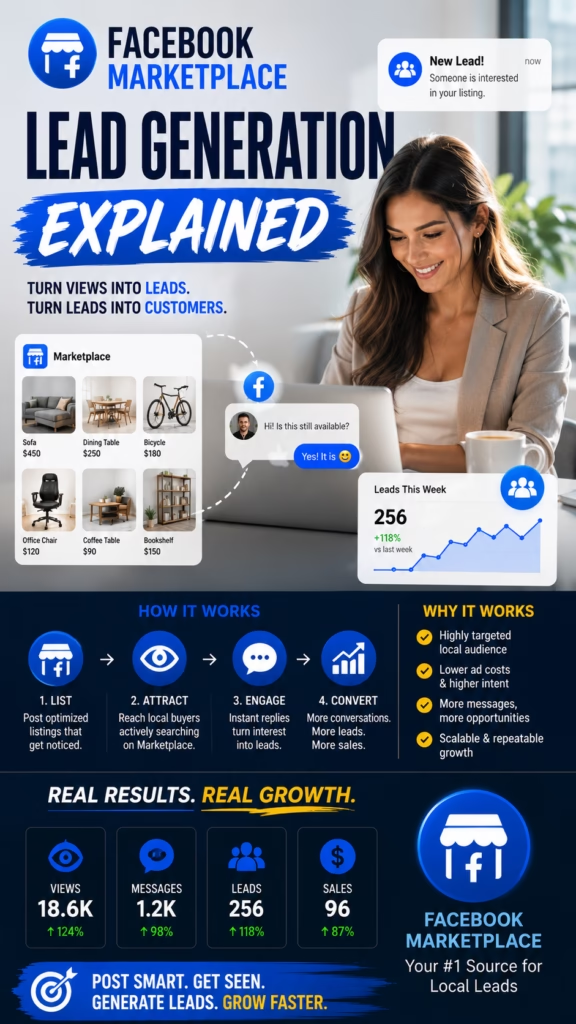
Facebook Marketplace Lead Generation Explained
Facebook Marketplace Lead Generation Explained shows businesses how to create stronger listings, attract local prospects, start more conversations, qualify inquiries, improve follow-up, and convert Marketplace activity into measurable sales opportunities.
Introduction
Facebook Marketplace Lead Generation Explained begins with a simple idea: every listing should do more than collect views. It should attract the right person, answer important questions, create trust, and encourage a meaningful conversation.
Facebook Marketplace is commonly associated with local buying and selling, but it can also create opportunities for businesses that offer products, installations, appointments, estimates, deliveries, consultations, and other locally relevant solutions. A strong Marketplace listing can connect a business with people who are already browsing, comparing options, checking prices, and preparing to make a decision.
The most effective Marketplace lead-generation strategies do not depend on posting a large number of random advertisements. They depend on relevance. The title must match the prospect’s interest. The image must stop the scroll. The description must explain the value. The location must make sense. The call to action must be easy to follow. The response must arrive before the prospect loses interest.
Facebook Marketplace lead generation works best when a listing moves a prospect through four stages: discovery, interest, conversation, and conversion.
Businesses can use Marketplace to promote furniture, mattresses, appliances, sheds, carports, shipping containers, equipment, home improvement products, rental availability, local services, installation options, clearance inventory, financing opportunities, and many other offers.
However, Marketplace leads are not automatically qualified. Some people are only browsing. Others want information without immediate buying intent. A few may be ready to purchase immediately. The purpose of a lead-generation system is to identify which prospects are serious and guide them toward the most appropriate next step.
Main idea: Facebook Marketplace Lead Generation Explained is not about collecting as many messages as possible. It is about creating more qualified conversations that can become appointments, estimates, store visits, deliveries, or completed sales.
Table of Contents
- 1) What Facebook Marketplace lead generation means
- 2) Why Marketplace can generate local leads
- 3) Understanding the Marketplace lead funnel
- 4) Building profile and business trust
- 5) Identifying the right audience
- 6) Creating offers that produce inquiries
- 7) Writing lead-generating titles
- 8) Choosing stronger listing images
- 9) Writing descriptions that convert
- 10) Using Marketplace keywords naturally
- 11) Improving local targeting
- 12) Using pricing without reducing trust
- 13) Creating calls to action
- 14) Qualifying Marketplace leads
- 15) Responding to new inquiries
- 16) Building an effective follow-up system
- 17) Using automation responsibly
- 18) Lead-generation examples by industry
- 19) Tracking Marketplace performance
- 20) Improving underperforming listings
- 21) Common lead-generation mistakes
- 22) Building a complete Marketplace strategy
- 23) Final thoughts
- 24) Frequently asked questions
- 25) Extra SEO keywords
1) What Facebook Marketplace Lead Generation Means
Facebook Marketplace lead generation is the process of using Marketplace listings and conversations to identify potential customers. A lead may be someone who asks about availability, requests a price, wants delivery information, schedules an appointment, asks about financing, requests an estimate, or shares contact details for additional help.
A Marketplace message is not always a complete lead. The quality of the opportunity depends on the person’s needs, location, timeline, budget, product interest, and willingness to take the next step.
Examples of Marketplace lead actions include:
- Asking whether a product is still available
- Requesting additional photos
- Asking about delivery or installation
- Requesting a store address
- Scheduling an appointment
- Requesting a project estimate
- Asking about payment or financing options
- Providing a phone number
- Sharing a property location
- Confirming a pickup or consultation time
The listing begins the process, but the conversation determines whether the person becomes a qualified lead. Businesses should therefore evaluate both listing quality and messaging quality.
A Marketplace inquiry becomes more valuable when the business knows what the prospect wants, where the prospect is located, and what next step they are prepared to take.
2) Why Marketplace Can Generate Local Leads
Marketplace can generate local leads because it places products and offers in front of people who are already browsing. These users may not be conducting a traditional Google search, but they are still evaluating options and showing commercial interest.
The platform also supports a relatively short customer journey. A prospect can discover a listing, view photos, read details, inspect the seller profile, and send a message from the same interface.
Local Discovery
Marketplace commonly connects users with listings in or near their selected geographic area, making it useful for businesses that depend on local customers.
Visual Shopping
Prospects can evaluate products, project examples, features, styles, colors, and condition before beginning a conversation.
Direct Messaging
The prospect can ask a question immediately instead of completing a long form or navigating several website pages.
Buyer Intent
Many Marketplace users are actively comparing products, availability, prices, delivery options, and local sellers.
Marketplace is especially useful for products or services that are easy to understand visually. Furniture, mattresses, appliances, sheds, flooring, equipment, vehicles, rentals, and remodeling examples can all benefit from strong images.
Marketplace combines local visibility, visual proof, buyer intent, and immediate communication. That combination creates the foundation for lead generation.
3) Understanding the Marketplace Lead Funnel
A lead funnel describes the path a person follows from seeing a listing to becoming a customer. Businesses should understand each stage because a different problem may prevent conversion at each point.
Marketplace lead funnel:

Listing impression
        ↓
Listing view
        ↓
Message or inquiry
        ↓
Qualified conversation
        ↓
Appointment, estimate, visit, or phone call
        ↓
Sale or booked project
        ↓
Follow-up, review, referral, or repeat purchase
If a listing receives few views, the title, photo, category, location, or posting strategy may need improvement. If it receives views but no messages, the offer may be unclear or unconvincing. If it receives messages but no appointments, the response process may be weak. If appointments do not become sales, the issue may occur later in the customer journey.
Questions to ask at each stage:
- Are enough local people seeing the listing?
- Does the primary photo create interest?
- Does the title match what prospects search for?
- Does the description answer important questions?
- Is the call to action easy to understand?
- Are inquiries receiving fast responses?
- Are qualification questions reducing wasted time?
- Is the next step simple to schedule?
- Are leads being followed up consistently?
- Are completed sales being tracked?
Improving Marketplace lead generation requires identifying where prospects leave the funnel and strengthening that exact stage.
4) Building Profile and Business Trust
Before messaging, a prospect may inspect the profile associated with a listing. A profile that appears incomplete, inconsistent, or unrelated to the offer can reduce trust.
Businesses should maintain accurate information and present themselves professionally. The profile name, image, location, listing style, and communication should feel connected to the products or services being offered.
Marketplace trust signals may include:
- A clear profile or business image
- A consistent business identity
- Accurate location information
- Real product or project photos
- Professional descriptions
- Consistent listing categories
- Polite and helpful communication
- Clear pickup, delivery, or service information
- Honest pricing language
- Accurate condition and availability details
Trust also depends on consistency. A listing should not describe one product while showing another. A message should not suddenly introduce unexpected fees or completely different terms. When every stage matches, the prospect feels more comfortable continuing.
A high-performing image cannot overcome an untrustworthy profile, misleading price, or inconsistent conversation.
5) Identifying the Right Audience
Effective lead generation starts with a clear audience. Businesses should know who is most likely to want the product, what problem it solves, what information the prospect needs, and what objections may delay the decision.
A mattress retailer may target shoppers replacing an old mattress, moving into a new home, furnishing a guest room, or seeking a more affordable option. A shed dealer may target homeowners needing storage, workshops, garden buildings, or backyard offices. A contractor may target property owners with a specific repair or improvement need.
Audience planning questions:

Who is most likely to need this?
What problem are they trying to solve?
What features matter most?
What locations can we serve?
What price concerns may appear?
What trust questions will they ask?
What photos will help them decide?
What information qualifies the lead?
What next step should they take?
Listings written for everyone often become too general. Listings written around one buyer need are easier to understand and more likely to produce a relevant inquiry.
Strong Marketplace lead generation begins before the listing is written. It begins by identifying the exact person, problem, and desired action.
6) Creating Offers That Produce Inquiries
An offer is more than a product name. It is the complete reason a prospect should stop, read, and send a message. The offer can include availability, delivery, customization, installation, inventory selection, project estimates, appointment openings, financing information, or a limited promotional advantage.
Marketplace offer examples:
- Mattress sets available with local delivery
- Scratch-and-dent appliances with pickup options
- Custom shed orders with multiple sizes
- Furniture packages for apartments and new homes
- Flooring estimates with material options
- Interior painting appointment openings
- Shipping containers available in several conditions
- Equipment inventory with financing information
- Rental units with upcoming availability
- Installation consultations for local homeowners
The offer should be specific enough to create interest but accurate enough to avoid disappointment. Do not promise inventory, financing, delivery times, discounts, or results unless those claims can be supported.
A powerful offer also reduces uncertainty. It tells the prospect what is available, where it is available, who it is for, and what to do next.
The strongest Marketplace offers combine a desirable product or service with a convenient next step.
7) Writing Lead-Generating Marketplace Titles
The title is one of the first elements a prospect sees. It should identify the product, service, benefit, model, size, style, or buying opportunity clearly.
Weak title:
Great Deal Available

Stronger title:
Queen Mattress Set Available With Local Delivery

Weak title:
Storage Building

Stronger title:
10x16 Backyard Storage Shed With Multiple Color Options

Weak title:
Appliance Sale

Stronger title:
Stainless Steel Refrigerator Available Today

Weak title:
Home Improvement

Stronger title:
Interior Painting Estimate Openings for Local Homeowners

Weak title:
Furniture

Stronger title:
Modern Sectional Sofa for Living Room or Apartment
Strong titles usually contain the most important search phrase near the beginning. They avoid unnecessary punctuation, exaggerated promises, and unrelated keywords.
Useful title elements include:
- Product category
- Brand or model
- Size or dimensions
- Material or style
- Condition
- Delivery availability
- Installation availability
- Appointment availability
- Local area
- Primary buyer benefit
A clear title attracts fewer accidental clicks and more people who are genuinely interested in the offer.
8) Choosing Stronger Listing Images
Marketplace is highly visual. The primary image must communicate value quickly enough to stop the prospect from scrolling.
Product listings should use bright, clean images that show the item from useful angles. Service listings should use completed projects, before-and-after comparisons, equipment, team photos, or clear visual representations of the result.
Product Photo Guidelines
- Use natural or bright lighting
- Remove unnecessary clutter
- Show the full product
- Add detail images
- Show size or scale when helpful
- Represent condition accurately
Service Photo Guidelines
- Use real completed work
- Show before-and-after results
- Highlight craftsmanship
- Use customer-approved photos
- Show different project types
- Avoid irrelevant stock images
The first image should normally communicate the main product or result. Additional images can answer secondary questions about dimensions, features, color, condition, installation, delivery, or craftsmanship.
Do not use misleading photos, images copied without permission, or pictures that show features not included in the actual offer.
Better images improve both click-through rate and lead quality because prospects understand the offer before messaging.
9) Writing Descriptions That Convert
A Marketplace description should help a prospect decide whether the offer is relevant. It should explain what is available, why it is useful, what options exist, where the business operates, and how to request more information.
Lead-generating description structure:

1. Opening benefit
2. Product or service explanation
3. Important features
4. Available options
5. Location or service area
6. Pricing clarification
7. Delivery, pickup, or appointment information
8. Qualification request
9. Trust statement
10. Clear call to action
The opening should focus on the buyer. Instead of beginning with a long company history, begin with the need the product solves.
Example:

Need a comfortable queen mattress without paying luxury-store prices?

This queen mattress set is available for local pickup or delivery. It is a practical option for master bedrooms, guest rooms, apartments, rental properties, and new homes.

Available options may include:
• Multiple comfort levels
• Foundation or mattress-only choices
• Local delivery
• Additional sizes
• Bedroom furniture options

Message with your ZIP code, preferred size, and whether you need delivery. We will confirm current availability and the best next step.
Descriptions should be easy to scan. Short paragraphs, organized lists, and direct language make the information easier to process on a phone.
A converting description answers the prospect’s major questions while leaving one simple reason to send a message.
10) Using Marketplace Keywords Naturally
Keywords help connect a listing with the words prospects use when browsing or searching. These may include product categories, sizes, materials, brands, styles, conditions, service types, and local areas.
Examples of natural Marketplace keywords:
- Queen mattress set
- Sectional sofa
- Stainless steel refrigerator
- Storage shed
- Shipping container
- Vinyl plank flooring
- Interior painting estimate
- Used farm equipment
- Apartment furniture package
- Local appliance delivery
The primary phrase should appear naturally in the title and early in the description. Related terms can be included throughout the listing when they genuinely describe the offer.
Businesses should avoid keyword stuffing. Repeating the same phrase excessively can make the listing difficult to read and less trustworthy.
Natural keyword use:
Queen mattress set available with local delivery. This mattress is a practical option for bedrooms, apartments, guest rooms, and rental properties.

Unnatural keyword use:
Queen mattress queen mattress set mattress near me queen bed mattress local queen mattress cheap queen mattress.
Keywords should improve clarity and relevance. They should never make the listing look automated, confusing, or spam-like.
11) Improving Local Targeting
Location is essential for businesses that depend on store visits, local delivery, service appointments, project estimates, or pickup. Prospects need to know whether the offer is realistically available to them.
Useful local targeting details:
- Primary city
- Nearby cities
- County or regional service area
- Delivery radius
- Pickup location
- ZIP code requirements
- Travel fee information
- Installation area
- Appointment territory
- Store hours or consultation schedule
Businesses serving multiple cities can create location-focused listing versions. Each version should remain accurate and unique. Changing only the city name while keeping every other element identical may make the campaign feel repetitive.
A stronger approach is to customize the title, description, product selection, local benefits, delivery details, and image order for each area.
Local CTA example:
Message with your city or ZIP code so we can confirm delivery availability and current inventory.
Clear location information improves lead quality by discouraging inquiries from people outside the business’s practical service area.
12) Using Pricing Without Reducing Trust
Pricing is one of the most common sources of confusion in Marketplace listings. The displayed price should represent the offer accurately or be explained clearly.
Some businesses offer products with fixed prices. Others have multiple models, sizes, configurations, delivery fees, installation costs, or project-based estimates. The listing should explain what the posted price includes.
Clear pricing language:

Price shown applies to the listed model.
Delivery is quoted separately based on ZIP code.
Additional sizes and comfort options are available.
Starting price applies to the basic configuration.
Installation pricing depends on project size and conditions.
Final project pricing requires an estimate.
Financing approval and terms may vary.
Using an unrealistically low price only to generate messages can create frustration and damage trust. It may also produce a large number of poor-quality inquiries from people who expected a different offer.
Transparent pricing may reduce total messages, but it often increases the percentage of inquiries that can become real customers.
13) Creating Calls to Action That Start Better Conversations
A call to action tells the prospect exactly what to do next. Generic phrases such as “message us” can work, but a more specific CTA usually creates a more useful first response.
Marketplace CTA examples:
- Message with your ZIP code for delivery availability.
- Send the size and color you are looking for.
- Ask whether this model is currently available.
- Send your city and preferred appointment day.
- Message with project photos for estimate availability.
- Tell us whether you need pickup, delivery, or installation.
- Send your room dimensions for product recommendations.
- Ask about current inventory and payment options.
- Message with your property location and desired timeline.
- Send the model number you are comparing.
The CTA should request only the information needed to begin. Asking for too many details in the listing may discourage prospects. Additional questions can be asked after the conversation starts.
A strong CTA turns a vague inquiry into the first step of the qualification process.
14) Qualifying Facebook Marketplace Leads
Lead qualification determines whether the inquiry fits the business’s product, service area, schedule, inventory, budget range, and sales process.
The qualification questions depend on the industry. A furniture store may ask about item type, dimensions, color, delivery ZIP code, and timing. A contractor may ask about location, project type, photos, measurements, and desired start date.
Product Lead Questions
- Which item are you interested in?
- What size or model do you need?
- What color or style do you prefer?
- Do you need delivery?
- What is your ZIP code?
- When are you hoping to purchase?
Service Lead Questions
- What city is the property in?
- What service do you need?
- Can you send photos?
- What is the approximate size?
- What is your preferred timeline?
- Would you like an appointment or estimate?
Qualification should feel helpful rather than interrogative. Begin with one or two easy questions, respond to the prospect’s concern, and then gather the remaining information naturally.
Qualified leads save time because the sales team understands the prospect’s need before arranging delivery, scheduling an estimate, or preparing a recommendation.
15) Responding to New Marketplace Inquiries
Response speed is important because Marketplace prospects may message several sellers. The first professional and helpful response can earn the conversation.
A good first response should acknowledge the inquiry, confirm the relevant offer, and ask one useful qualification question.
Product response example:

Thanks for reaching out. This item may still be available. What ZIP code are you located in, and do you need pickup or delivery?

Service response example:

Thanks for reaching out. We may be able to help with that project. What city is the property in, and can you send a few photos of the area?

Appointment response example:

Thanks for your message. We are currently scheduling appointments. Which day works best for you, and what product or service are you interested in?
Avoid sending a large block of generic text that does not address the prospect’s question. The response should feel connected to the exact listing and inquiry.
Strong response practices:
- Reply promptly
- Use the product or service name
- Answer the prospect’s question
- Ask one useful next question
- Confirm location or delivery area
- Avoid unsupported guarantees
- Explain the next step clearly
- Keep the tone professional
- Record important lead details
- Follow up when appropriate
The goal of the first response is not to explain everything. It is to keep the conversation moving toward a qualified next step.
16) Building an Effective Follow-Up System
Many Marketplace leads do not convert during the first conversation. Prospects become distracted, compare options, wait for another decision-maker, or need more time. A reasonable follow-up system can recover opportunities that would otherwise disappear.
Simple Marketplace follow-up sequence:

Initial response:
Answer the question and gather one qualification detail.

Second message:
Provide the requested information and suggest the next step.

Follow-up:
Ask whether the prospect still needs help or wants availability confirmed.

Final follow-up:
Offer a simple way to restart the conversation when ready.
Follow-up should remain relevant and respectful. Businesses should avoid repeated aggressive messages. Each follow-up should add value, such as updated availability, appointment options, delivery information, or an answer to a previous question.
Useful follow-up reasons:
- Confirming current inventory
- Providing additional photos
- Sharing delivery availability
- Offering appointment openings
- Answering a financing question
- Confirming an estimate request
- Checking whether the prospect still needs the item
- Providing an alternative model
- Clarifying pricing or included features
- Scheduling a phone call or store visit
Follow-up works best when it continues a real conversation instead of restarting with a generic sales pitch.
17) Using Marketplace Lead Automation Responsibly
Automation can help businesses organize listings, respond to common questions, record inquiries, assign leads, schedule follow-ups, and monitor campaign performance. However, automation should support the customer experience rather than make it feel impersonal or misleading.
A useful automation system may help identify which listing produced the inquiry, send an immediate acknowledgment, gather basic qualification details, and notify the appropriate salesperson.
Possible automation functions include:
- Listing organization
- Content scheduling
- Lead-source tracking
- Initial inquiry acknowledgment
- Qualification question delivery
- Salesperson notification
- CRM record creation
- Follow-up reminders
- Appointment routing
- Performance reporting
Automated messages should remain accurate and relevant. They should not pretend to know information that has not been confirmed. Inventory, delivery dates, pricing, appointment times, and eligibility should be verified before being promised.
Businesses should also review the current rules and requirements that apply to their Marketplace activity, accounts, listings, tools, and communication processes.
Automation should improve speed and organization without replacing honesty, human judgment, or accurate customer service.
18) Facebook Marketplace Lead-Generation Examples by Industry
Furniture Stores
Furniture retailers can create separate listings for sectionals, sofas, dining sets, bedroom sets, recliners, mattresses, and clearance products. The CTA can request the customer’s preferred style, color, room dimensions, and delivery ZIP code.
Furniture CTA:
Message with the item you are interested in, your preferred color, and your ZIP code for current availability and delivery information.
Mattress Retailers
Mattress stores can organize listings around mattress sizes, comfort levels, bedroom packages, adjustable bases, guest-room options, and local delivery. Leads can be qualified by size, comfort preference, budget range, and delivery needs.
Mattress CTA:
Send your preferred mattress size, comfort level, and delivery ZIP code so we can recommend available options.
Appliance Stores
Appliance sellers can list refrigerators, washers, dryers, ranges, dishwashers, freezers, and package deals. Listings should accurately explain condition, model, cosmetic differences, warranty details, pickup, and delivery.
Appliance CTA:
Message with the appliance type, approximate dimensions, and delivery ZIP code for current inventory options.
Shed and Portable Building Dealers
Shed dealers can create listings for storage buildings, garages, cabins, workshops, backyard offices, and custom configurations. Qualification may include property location, preferred size, access, style, and desired use.
Shed CTA:
Send your ZIP code, preferred building size, and intended use for available models and delivery information.
Contractors and Home-Service Businesses
Contractors can create project-specific listings for painting, fencing, flooring, remodeling, repairs, landscaping, pressure washing, and other services. Leads should be qualified using the property location, project type, photos, approximate measurements, and timeline.
Contractor CTA:
Message with your city, project type, approximate size, and a few photos for estimate availability.
Equipment Dealers
Equipment listings can include model number, year, hours, condition, attachments, delivery options, payment information, and inspection availability. Leads can be qualified by intended use, location, timing, and equipment requirements.
Rental and Property Businesses
Rental listings should explain property type, location, monthly cost, availability, qualification requirements, pet policies, utilities, and showing procedures accurately. Prospects can be guided toward a formal inquiry or application process.
The exact listing structure changes by industry, but the lead-generation principles remain the same: relevance, clarity, proof, qualification, and follow-up.
19) Tracking Facebook Marketplace Lead Performance
Tracking allows businesses to understand which listings generate attention and which ones produce revenue. Without tracking, a business may continue posting low-performing content or misjudge which products attract the best customers.
Marketplace lead-generation metrics:
- Listings published
- Listing views
- Messages received
- Qualified leads
- Average response time
- Phone numbers collected
- Appointments scheduled
- Store visits
- Estimates requested
- Deliveries scheduled
- Sales completed
- Revenue generated
- Lead-to-appointment rate
- Appointment-to-sale rate
- Revenue by listing category
Each listing can be evaluated using a simple funnel.
Example:

1,000 listing views
100 inquiries
40 qualified leads
18 appointments
7 completed sales

Inquiry rate:
100 ÷ 1,000 = 10%

Qualification rate:
40 ÷ 100 = 40%

Appointment rate:
18 ÷ 40 = 45%

Lead-to-sale rate:
7 ÷ 40 = 17.5%
These numbers help identify the greatest opportunity. If the inquiry rate is low, improve the listing. If qualification is low, improve targeting and pricing clarity. If appointment conversion is low, improve the response and scheduling process.
The most important metric is not total views. It is the number of profitable customers created from Marketplace activity.
20) Improving Underperforming Marketplace Listings
Listings should be tested and improved based on actual results. Small changes to the title, primary image, price explanation, location, description, or CTA can produce significant differences.
If a listing receives few views:
- Improve the title
- Use a stronger primary photo
- Review the category
- Confirm the location
- Use more relevant keywords
- Test a different product angle
If a listing receives views but few messages:
- Clarify the offer
- Add more product details
- Improve price transparency
- Add trust signals
- Use better secondary images
- Create a stronger CTA
If a listing receives messages but few qualified leads:
- Make the location clearer
- Explain the price accurately
- Identify the ideal customer
- Use more specific titles
- Add qualification instructions
- Remove misleading wording
If qualified leads do not become sales:
- Improve response speed
- Create a clearer next step
- Offer appointment options
- Improve follow-up
- Confirm inventory faster
- Review the sales process
Optimization should be based on the stage where the lead funnel is breaking, not on random changes.
21) Common Facebook Marketplace Lead-Generation Mistakes
Businesses often struggle with Marketplace because the listings create attention without creating trust or direction.
Common mistakes include:
- Using vague listing titles
- Posting low-quality photos
- Using unrelated stock images
- Creating one listing for every possible product
- Failing to explain the displayed price
- Providing no location information
- Using excessive keywords
- Writing long unorganized descriptions
- Using weak calls to action
- Responding too slowly
- Sending generic automated replies
- Failing to qualify inquiries
- Not following up
- Failing to track completed sales
- Making unsupported claims
Another common mistake is measuring success only by the number of messages. A listing that produces 100 vague inquiries may be less valuable than a listing that produces 15 qualified appointments.
Businesses should also avoid creating posts that appear identical. Unique listing angles, photos, products, locations, descriptions, and customer needs can make a campaign more useful and professional.
More messages do not automatically mean better lead generation. Better qualification and conversion matter more than raw inquiry volume.
22) Building a Complete Facebook Marketplace Lead-Generation Strategy
A complete Marketplace strategy connects content, listings, lead response, qualification, follow-up, tracking, and sales operations.
Complete strategy framework:

Step 1:
Select profitable products, services, or offers.

Step 2:
Identify the ideal prospect for each listing.

Step 3:
Create specific titles and high-quality images.

Step 4:
Write descriptions that explain value and next steps.

Step 5:
Add accurate local and pricing information.

Step 6:
Publish listings consistently.

Step 7:
Respond quickly to new inquiries.

Step 8:
Qualify each lead using simple questions.

Step 9:
Move qualified leads toward appointments, estimates, visits, or sales.

Step 10:
Follow up with interested prospects.

Step 11:
Track results by listing, location, product, and salesperson.

Step 12:
Improve weak stages of the funnel.
Businesses should create different campaigns for different priorities. One campaign may promote high-margin products. Another may promote clearance inventory. A third may focus on appointment generation or delivery availability.
A strong strategy also considers operational capacity. Generating more leads is not helpful if the business cannot answer messages, confirm inventory, deliver products, attend estimates, or follow up consistently.
Turn Marketplace Activity Into an Organized Lead System
Market Wiz AI helps businesses improve Marketplace visibility, lead response, follow-up, campaign organization, and performance tracking.
Schedule a Market Wiz AI DemoThe best Marketplace strategy connects marketing activity with the people and processes responsible for converting each lead.
23) Final Thoughts
Facebook Marketplace Lead Generation Explained demonstrates that successful lead generation requires more than publishing products and waiting for messages. Businesses need a complete system that attracts the right prospects and guides them toward a clear outcome.
The process begins with a focused offer and a relevant audience. It continues through a specific title, strong images, an informative description, accurate location details, transparent pricing, and a direct call to action.
Once a prospect sends a message, response speed becomes critical. The business must answer the question, gather qualification information, recommend the next step, and record important details. Leads that do not convert immediately may require organized follow-up.
Tracking completes the system. Businesses should know which listings create views, which ones generate qualified conversations, and which ones produce appointments, estimates, store visits, deliveries, and sales.
Marketplace can support furniture stores, mattress retailers, appliance dealers, shed companies, equipment sellers, contractors, property businesses, and many other local companies. The exact offer changes, but the underlying strategy remains consistent.
Final takeaway: Facebook Marketplace lead generation works when every listing creates a clear connection between one prospect’s need, one relevant offer, and one easy next step.
24) Frequently Asked Questions
1) What is Facebook Marketplace lead generation?
Facebook Marketplace lead generation is the process of attracting potential customers through Marketplace listings and converting their inquiries into qualified sales opportunities, appointments, estimates, visits, deliveries, or purchases.
2) Can businesses generate leads from Facebook Marketplace?
Yes. Businesses can generate leads when their listings clearly explain the offer, use strong images, target relevant locations, provide accurate information, and guide prospects toward a useful next step.
3) What counts as a Facebook Marketplace lead?
A Marketplace lead is generally a prospect who expresses meaningful interest by requesting availability, pricing, delivery, an appointment, an estimate, additional details, or another sales-related action.
4) What makes a Marketplace listing generate leads?
A lead-generating listing usually includes a specific title, clear images, buyer-focused copy, accurate pricing language, location details, trust signals, and a direct call to action.
5) What is the best title for a Marketplace listing?
The best title clearly identifies the product or service and may include the size, model, style, condition, location, delivery option, or primary benefit.
6) How important are Marketplace listing photos?
Photos are extremely important because they influence whether prospects stop scrolling, open the listing, understand the offer, and trust the seller.
7) How many photos should a Marketplace listing include?
The listing should include enough photos to show the product, condition, major features, useful angles, dimensions, or service results clearly. The ideal number depends on the offer.
8) Should Marketplace descriptions be long?
Descriptions should be detailed enough to answer important questions but organized for mobile reading. Short paragraphs, lists, and direct language usually work best.
9) Should businesses use keywords in Marketplace listings?
Yes. Businesses should use relevant product, service, feature, and location keywords naturally in the title and description without excessive repetition.
10) How can businesses improve local Marketplace leads?
Businesses can improve local lead quality by including accurate cities, ZIP codes, delivery areas, service territories, pickup details, and appointment locations.
11) Should a Marketplace listing include a price?
The price should be accurate or clearly explained. If the amount is a starting price, deposit, base model price, or estimate placeholder, the description should state that directly.
12) What is a good Marketplace call to action?
A good CTA asks for one or two useful details, such as the prospect’s ZIP code, preferred size, delivery need, project type, photos, or appointment preference.
13) How fast should businesses respond to Marketplace leads?
Businesses should respond as quickly as reasonably possible because prospects often contact multiple sellers or providers during the same browsing session.
14) How should a business qualify a Marketplace lead?
Qualification may include asking about product interest, size, model, location, delivery, timeline, budget range, service need, property details, or appointment availability.
15) Why do Marketplace listings receive views but no messages?
The primary photo may be weak, the offer may be unclear, the price may appear unrealistic, the description may lack useful information, or the CTA may not provide a reason to respond.
16) Why do Marketplace inquiries fail to become customers?
Inquiries may fail to convert because of slow responses, poor qualification, unclear pricing, inventory issues, weak follow-up, difficult scheduling, or an ineffective sales process.
17) Can Marketplace responses be automated?
Automation can assist with acknowledgments, qualification questions, routing, CRM organization, and follow-up reminders. Automated communication should remain accurate, relevant, and professionally supervised.
18) Can furniture stores use Marketplace for lead generation?
Yes. Furniture stores can create listings for individual products, room packages, delivery options, clearance items, styles, colors, and appointment opportunities.
19) Can mattress stores generate Marketplace leads?
Yes. Mattress stores can create listings based on size, comfort level, price range, delivery availability, adjustable bases, bedroom packages, and current inventory.
20) Can appliance stores use Marketplace?
Yes. Appliance retailers can promote refrigerators, washers, dryers, ranges, dishwashers, freezers, packages, and delivery options using detailed product listings.
21) Can contractors generate leads through Marketplace?
Yes. Contractors can create listings for specific project types and ask homeowners to send their location, project details, measurements, photos, and preferred timeline.
22) What Marketplace metrics should businesses track?
Businesses should track views, messages, qualified leads, response times, appointments, estimates, visits, completed sales, conversion rates, and revenue.
23) Should businesses create multiple Marketplace listings?
Businesses can create multiple listings for different products, models, locations, buyer needs, services, and offers. Each listing should remain accurate, useful, and distinct.
24) What is the biggest Facebook Marketplace lead-generation mistake?
One of the biggest mistakes is focusing only on posting volume without improving listing quality, qualification, response speed, follow-up, and sales tracking.
25) What is the best Facebook Marketplace lead-generation strategy?
The best strategy combines relevant offers, specific listings, strong visual proof, accurate information, fast responses, simple qualification, organized follow-up, and measurable conversion tracking.
25) Extra SEO Keywords
- Facebook Marketplace Lead Generation Explained
- Facebook Marketplace lead generation
- Facebook Marketplace business leads
- Facebook Marketplace marketing
- Marketplace lead generation strategy
- Facebook Marketplace sales leads
- local lead generation
- Facebook Marketplace advertising
- Marketplace listing optimization
- Facebook Marketplace buyer inquiries
- Facebook Marketplace conversion strategy
- Facebook Marketplace response automation
- Marketplace lead follow-up
- Facebook Marketplace sales strategy
- Facebook Marketplace business marketing
- how to generate Marketplace leads
- Facebook Marketplace local marketing
- Marketplace inquiry conversion
- Facebook Marketplace appointment leads
- Facebook Marketplace estimate leads
- Facebook Marketplace lead tracking
- Marketplace message automation
- Facebook Marketplace listing strategy
- qualified Facebook Marketplace leads
- Facebook Marketplace business growth













