
Market Wiz AI

Market Wiz

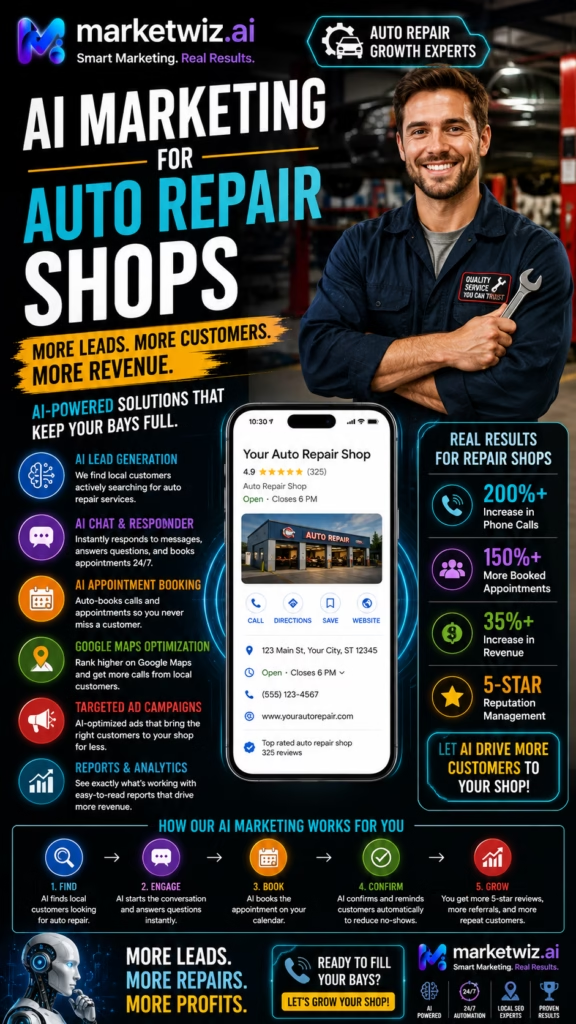
With ingenious automation fused with human dedication 24/7, Market Wiz puts the local marketing competition on notice – they’ve created a new standard operating system for dominating every digital front.All-Platform Compatibility: Facebook, Craigslist, Google, you name it. This system plays well with all the big players, ensuring your ads are everywhere they need to be.The Cherry on Top: There's a ton more under the hood, each feature adding more muscle to your marketing efforts.Bottom line: Market Wiz.ai isn’t just another tool; it’s your 24/7 digital marketing powerhouse. In the world of local advertising, it's the smartest move you’ll make.Market Wiz automates your online ads.|

Why AI Marketing Generates Better Leads

ChatGPT Image Jun 7 2026 07 12 41 PM
Why AI Marketing Generates Better Leads

Why AI Marketing Generates Better Leads

Why AI Marketing Generates Better Leads explains how businesses can improve lead quality with faster response times, smarter targeting, automated qualification, personalized follow-up, CRM workflows, review systems, retargeting, and data-driven sales processes.

Introduction

Why AI Marketing Generates Better Leads starts with one major difference between old marketing and modern marketing: speed. A lead is most valuable when the person is still interested, still comparing options, and still ready to take action. AI marketing helps businesses respond faster, qualify better, follow up consistently, and avoid letting interested buyers go cold.

Traditional marketing often creates leads but does not always manage them well. A business may run ads, post on social media, send traffic to a website, or get form submissions, but if the response is slow or inconsistent, many opportunities disappear. AI marketing improves the entire lead journey from first click to booked call, quote request, appointment, purchase, or follow-up.

AI marketing generates better leads because it combines smarter targeting with faster response, better qualification, and more consistent follow-up.

For local businesses, this matters even more. A homeowner looking for a plumber, HVAC company, painter, pressure washer, roofer, landscaper, mattress store, mobile home dealer, contractor, or repair service may contact multiple businesses in minutes. The company that responds quickly and clearly often has the advantage.

AI marketing does not only create more messages. The real goal is better leads: people who understand the offer, fit the service area, have real intent, and are more likely to become customers. AI helps businesses filter, organize, and guide those leads toward the right next step.

Main idea: Why AI Marketing Generates Better Leads comes down to speed, relevance, personalization, automation, qualification, and better sales follow-up.

Table of Contents

  • 1) What AI marketing means
  • 2) Why better leads matter more than more leads
  • 3) How AI improves targeting
  • 4) How AI speeds up lead response
  • 5) AI lead qualification
  • 6) Personalized follow-up at scale
  • 7) Missed-call and message automation
  • 8) AI chatbots and website lead capture
  • 9) CRM automation and lead tracking
  • 10) Lead scoring and priority routing
  • 11) AI retargeting and remarketing
  • 12) AI content and ad testing
  • 13) AI for local business leads
  • 14) AI for service businesses
  • 15) AI for product businesses
  • 16) Review and reputation automation
  • 17) Customer reactivation campaigns
  • 18) Common AI marketing mistakes
  • 19) Final thoughts
  • 20) FAQs
  • 21) Extra keywords

1) What AI Marketing Means

AI marketing means using artificial intelligence tools, automation workflows, data, customer behavior, chat systems, CRM triggers, ad optimization, personalization, and follow-up systems to improve marketing performance. It helps businesses reach better prospects, respond faster, and guide leads through the sales process more efficiently.

AI marketing can include automated text replies, AI chatbots, email follow-up, lead scoring, smart ad targeting, retargeting audiences, automated appointment reminders, review requests, content generation, call summaries, and customer reactivation campaigns.

AI marketing can help with:

  • Lead capture
  • Instant response
  • Lead qualification
  • Personalized follow-up
  • CRM organization
  • Ad testing
  • Audience segmentation
  • Retargeting
  • Review requests
  • Customer reactivation

AI marketing is not just about automation. It is about creating a smarter, faster, and more organized lead system.

2) Why Better Leads Matter More Than More Leads

More leads are not always better. A business can receive dozens of weak inquiries and still close very few customers. Better leads are different. Better leads are more qualified, more relevant, more responsive, and more likely to take the next step.

AI marketing helps improve lead quality by filtering out poor-fit inquiries, asking qualifying questions, tracking behavior, and moving serious prospects to the right follow-up path.

Better lead signals:
Fits the service area
Has a real need
Understands the offer
Shares useful details
Responds to follow-up
Asks about pricing or scheduling
Books a call or appointment
Requests a quote
Shows repeat interest
Moves toward a decision

AI marketing generates better leads by helping businesses focus on people who are more likely to become customers.

3) How AI Improves Targeting

AI can improve targeting by identifying patterns in customer behavior, search intent, ad engagement, website activity, and lead quality. Instead of treating every audience the same, AI can help businesses understand which people are most likely to respond, book, buy, or request a quote.

Better targeting means fewer wasted impressions and stronger lead intent. A business can create campaigns based on service type, location, customer need, buying stage, seasonality, or previous engagement.

AI targeting can improve:

  • Audience segmentation
  • Local targeting
  • Service-specific campaigns
  • Retargeting audiences
  • Lookalike audiences
  • Buyer intent analysis
  • Ad placement decisions
  • Budget allocation
  • Seasonal targeting
  • Customer behavior tracking

Smarter targeting helps AI marketing attract leads that are more relevant from the start.

4) How AI Speeds Up Lead Response

Speed is one of the biggest advantages of AI marketing. When a lead submits a form, sends a message, calls after hours, or clicks an ad, AI can respond immediately. This keeps the business in the conversation while the prospect is still interested.

Fast response is especially important for local services. A lead looking for AC repair, plumbing help, towing, pressure washing, painting, remodeling, or a local product may contact several companies. The first clear response often wins attention.

AI can respond instantly to:
Website forms
Facebook messages
Google messages
Missed calls
Text inquiries
Chatbot questions
Marketplace leads
Email replies
Appointment requests
Quote requests

AI marketing improves lead quality by engaging prospects before they lose interest or contact a competitor.

5) AI Lead Qualification

AI lead qualification helps determine whether a lead is a good fit. Instead of asking every question manually, AI can collect important details automatically. This helps the sales team, business owner, or office staff prioritize serious opportunities.

For service businesses, AI can ask for location, service needed, timeline, photos, budget range, property type, and best contact method. For product businesses, it can ask about size, model, delivery needs, financing, availability, or purchase timeline.

AI qualification questions can collect:

  • Name
  • Phone number
  • Email
  • Location
  • Service or product interest
  • Timeline
  • Budget range when appropriate
  • Photos or project details
  • Preferred appointment time
  • Best next step

AI qualification helps businesses separate serious leads from casual interest.

6) Personalized Follow-Up at Scale

Personalized follow-up is one of the main reasons AI marketing generates better leads. Many businesses follow up once and stop. AI can continue the conversation with relevant messages based on what the lead asked about.

A lead interested in roof cleaning should receive different follow-up than a lead interested in driveway cleaning. A mattress buyer asking about delivery should receive different follow-up than someone asking about financing. AI can help personalize that communication at scale.

Personalized follow-up examples:
Service-specific reminders
Product-specific messages
Appointment confirmation
Quote follow-up
Financing follow-up
Delivery follow-up
Abandoned form reminder
Missed-call recovery
Review request
Repeat customer offer

Personalization makes leads feel understood instead of pushed through a generic sales sequence.

7) Missed-Call and Message Automation

Missed calls are lost opportunities. AI marketing can automatically text a lead when a call is missed, ask what they need, and notify the business. This is especially valuable for small businesses where the owner is often busy working, driving, selling, or helping customers.

Message automation can also respond to Facebook, website chat, Google Business Profile, marketplace inquiries, and text requests.

Example missed-call text:

β€œHi, thanks for reaching out. Sorry we missed your call. What service or product are you looking for today? Send your city and a few details, and we can help with the next step.”

Missed-call automation turns silence into a second chance to capture the lead.

8) AI Chatbots and Website Lead Capture

AI chatbots can help websites capture leads 24/7. A visitor may have a question after hours or while the team is unavailable. AI chat can answer common questions, collect contact details, qualify the lead, and send the information to the business.

The best chatbots do not pretend to know everything. They help guide the visitor toward the right next step, such as a quote, call, appointment, demo, or product inquiry.

AI chatbot lead capture:
Answers common questions
Collects contact details
Asks qualifying questions
Routes urgent leads
Captures after-hours visitors
Schedules calls or appointments
Sends lead details to CRM
Triggers follow-up messages
Supports sales team
Improves website conversion

AI chatbots help websites convert more visitors into qualified conversations.

9) CRM Automation and Lead Tracking

CRM automation helps businesses organize leads from multiple sources. Instead of losing leads in email, text messages, spreadsheets, voicemail, and social media inboxes, CRM workflows can track every prospect in one place.

AI can move leads through stages automatically, assign follow-ups, remind the team, and show which campaigns create the best customers.

A simple AI-powered CRM pipeline:

  • New lead
  • Contacted
  • Qualified
  • Quote requested
  • Quote sent
  • Follow-up needed
  • Appointment booked
  • Won
  • Review requested
  • Reactivation campaign

CRM automation improves lead quality by making sure no serious opportunity gets forgotten.

10) Lead Scoring and Priority Routing

Lead scoring helps businesses decide which leads should be handled first. A lead with strong intent, a nearby location, clear budget, and urgent timeline may be scored higher than a vague inquiry with no details.

AI can help score leads based on behavior, answers, source, urgency, and fit. The best leads can be routed immediately to sales, while lower-intent leads can enter nurturing sequences.

Lead scoring factors:
Location fit
Service fit
Budget fit
Timeline
Message detail
Website behavior
Ad engagement
Lead source
Repeat interaction
Appointment readiness

Lead scoring helps teams spend more time on high-value opportunities.

11) AI Retargeting and Remarketing

Many leads do not buy the first time they see a business. AI retargeting helps bring interested people back. If someone visited a landing page, clicked an ad, watched a video, opened an email, or started a form, retargeting can remind them about the offer.

Retargeting can improve lead quality because the audience has already shown some interest. These people may be warmer than cold traffic.

Retargeting audiences can include:

  • Website visitors
  • Landing page visitors
  • Video viewers
  • Form starters
  • Email clickers
  • Past customers
  • Quote request visitors
  • Shopping cart abandoners
  • Social media engagers
  • CRM lead lists

AI retargeting improves lead quality by focusing attention on people who already showed interest.

12) AI Content and Ad Testing

AI can help create and test more ad variations, landing page copy, headlines, social posts, email subject lines, and calls-to-action. Better testing helps businesses discover which message attracts the strongest leads.

Instead of guessing, businesses can test different angles such as urgency, trust, price, convenience, speed, quality, local proof, financing, delivery, or free estimates.

AI can help test:
Ad headlines
Landing page copy
Social media captions
Email subject lines
Offer language
Call-to-action buttons
Audience angles
Follow-up messages
FAQ content
Retargeting copy

AI marketing creates better leads by helping businesses identify the messages that attract serious buyers.

13) AI for Local Business Leads

Local businesses benefit from AI marketing because local leads often require fast response and clear qualification. A lead may ask for service area, appointment time, delivery, pricing, availability, or a quote. AI can answer quickly and gather the details needed for the next step.

Local businesses can use AI across Google Business Profile, websites, Facebook, marketplace listings, email, SMS, and CRM systems.

Local businesses that can use AI marketing:

  • Plumbers
  • HVAC companies
  • Painters
  • Pressure washing companies
  • Roofers
  • Contractors
  • Landscapers
  • Mattress stores
  • Mobile home sellers
  • Local retailers

AI helps local businesses convert more nearby interest into booked calls, quotes, visits, and jobs.

14) AI for Service Businesses

Service businesses often lose leads because they are busy on job sites. AI can help respond while the team is working. It can collect job details, request photos, confirm locations, send reminders, and follow up after estimates.

This is useful for contractors, cleaners, movers, repair companies, towing companies, home service providers, and appointment-based businesses.

AI service business workflows:
Missed-call text back
Estimate request intake
Photo collection
Appointment reminder
Quote follow-up
Job completion follow-up
Review request
Repeat service reminder
Seasonal campaign
Referral request

AI marketing helps service businesses turn more inquiries into scheduled work.

15) AI for Product Businesses

Product businesses can use AI marketing to qualify buyers, answer product questions, recommend options, follow up on abandoned interest, promote delivery, explain financing, and track inventory-related leads.

Retailers, dealers, furniture stores, mattress stores, equipment sellers, and local inventory businesses can benefit from faster and more organized buyer communication.

AI product business workflows:

  • Product availability replies
  • Delivery questions
  • Financing follow-up
  • Inventory recommendations
  • Appointment scheduling
  • Store visit reminders
  • Abandoned interest follow-up
  • Post-purchase review requests
  • Repeat buyer campaigns
  • Seasonal promotions

AI helps product businesses turn browsing interest into buyer conversations and sales opportunities.

16) Review and Reputation Automation

Reviews help improve trust, especially for local businesses. AI marketing can automatically request reviews after a job, sale, delivery, or appointment. It can also help draft professional review responses.

Better reviews can improve conversion because prospects often compare businesses before contacting them. A business with stronger reviews may generate better leads because customers arrive with more trust.

Review automation can include:
Post-job review request
Post-purchase review request
Review reminder
Review response draft
Customer feedback request
Negative feedback routing
Google review link
Testimonial collection
Reputation tracking
Referral request

AI review automation helps businesses turn happy customers into stronger trust signals.

17) Customer Reactivation Campaigns

Past customers are often easier to convert than cold prospects. AI marketing can reactivate old customers with service reminders, seasonal promotions, repeat purchase offers, maintenance reminders, and loyalty messages.

This can generate better leads because past customers already know the business. They may need another service, product, appointment, delivery, upgrade, or referral opportunity.

Customer reactivation examples:

  • Seasonal service reminder
  • Annual maintenance offer
  • Repeat purchase reminder
  • Warranty follow-up
  • Upgrade offer
  • Referral request
  • Review request
  • Inactive lead follow-up
  • Past quote reminder
  • Customer appreciation message

AI reactivation campaigns generate better leads by starting with people who already have a relationship with the business.

18) Common AI Marketing Mistakes

AI marketing works best when it supports a real sales process. Common mistakes include sending too many automated messages, using robotic language, failing to qualify leads, not tracking results, ignoring human handoff, and treating automation like a replacement for service quality.

The goal is not to remove the human side. The goal is to make the business faster, more organized, and more consistent.

Common mistakes:
Too many messages
Robotic tone
No qualification questions
No CRM tracking
No human handoff
No lead scoring
No follow-up after quotes
No review request system
No performance tracking
No clear next step

AI marketing fails when automation creates noise instead of helping leads move toward action.

19) Final Thoughts

Why AI Marketing Generates Better Leads comes down to how well AI improves the full customer journey. Better targeting attracts more relevant prospects. Instant response keeps leads engaged. Qualification filters the right opportunities. Personalized follow-up builds trust. CRM automation keeps everything organized.

AI marketing is not magic, but it can make a business more responsive, more consistent, and more strategic. When used correctly, it helps businesses focus on the leads most likely to become customers.

Final takeaway: AI marketing generates better leads because it responds faster, qualifies smarter, follows up consistently, and turns customer interest into organized sales opportunities.

20) FAQs

1) Why does AI marketing generate better leads?

AI marketing generates better leads by improving targeting, response speed, lead qualification, follow-up consistency, personalization, and CRM tracking.

2) What is AI marketing?

AI marketing uses artificial intelligence, automation, data, and workflows to improve lead capture, communication, targeting, and sales follow-up.

3) Does AI marketing only generate more leads?

No. The best AI marketing systems focus on better leads, not just more leads.

4) What makes a lead better?

A better lead fits the business, has real intent, shares useful details, responds to follow-up, and is more likely to become a customer.

5) How does AI improve lead response?

AI can respond instantly to forms, messages, missed calls, chat inquiries, and quote requests.

6) What is AI lead qualification?

AI lead qualification uses automated questions to collect important details such as location, need, timeline, budget, and contact information.

7) Can AI help with missed calls?

Yes. Missed-call text back can automatically respond when a business misses a call.

8) Can AI chatbots generate leads?

Yes. AI chatbots can capture website visitors, answer questions, collect contact details, and route leads to the right next step.

9) Can AI personalize follow-up?

Yes. AI can help customize follow-up based on service interest, product interest, location, behavior, and lead stage.

10) Can AI help local businesses?

Yes. AI can help local businesses respond faster, qualify inquiries, schedule appointments, request reviews, and reactivate old customers.

11) Can AI help service businesses?

Yes. AI is useful for service businesses that need quote requests, appointment reminders, photo collection, missed-call recovery, and estimate follow-up.

12) Can AI help product businesses?

Yes. AI can answer product questions, qualify buyers, follow up on availability, promote delivery, and support sales conversations.

13) What is lead scoring?

Lead scoring ranks leads based on fit, intent, urgency, behavior, and likelihood to convert.

14) What is AI retargeting?

AI retargeting helps businesses reconnect with people who previously visited a website, clicked an ad, watched a video, or engaged with content.

15) Does AI replace salespeople?

No. AI supports sales teams by handling repetitive tasks, organizing leads, and improving follow-up.

16) Can AI request reviews?

Yes. AI can automatically send review requests after jobs, purchases, appointments, or completed services.

17) Can AI reactivate old customers?

Yes. AI can send seasonal reminders, repeat purchase offers, maintenance prompts, and referral requests.

18) What is CRM automation?

CRM automation organizes leads into stages, triggers follow-ups, tracks activity, and helps prevent opportunities from being forgotten.

19) What is the biggest AI marketing mistake?

The biggest mistake is using automation without a clear sales process, human handoff, or lead tracking.

20) How does AI improve ad campaigns?

AI can help test audiences, headlines, offers, creative angles, and follow-up sequences to find stronger-performing combinations.

21) Can AI improve lead quality from Facebook?

Yes. AI can respond to Facebook leads quickly, qualify them, and move serious prospects into a CRM.

22) Can AI improve website conversions?

Yes. AI chat, forms, personalization, and instant follow-up can help convert more website visitors into leads.

23) Does AI marketing work for small businesses?

Yes. Small businesses can benefit because AI helps save missed calls, organize leads, and follow up without hiring more staff.

24) How should AI marketing success be measured?

Measure response time, qualified leads, appointments, quotes, sales, booked jobs, review growth, and revenue.

25) What is the main goal of AI marketing?

The main goal is to turn interest into qualified leads, better conversations, booked appointments, sales opportunities, and customers.

21) Extra Keywords

  1. Why AI Marketing Generates Better Leads
  2. AI marketing leads
  3. AI lead generation
  4. better leads with AI
  5. AI marketing automation
  6. AI follow up
  7. AI sales automation
  8. AI lead qualification
  9. AI lead scoring
  10. AI CRM automation
  11. AI missed call text back
  12. AI chatbot lead generation
  13. AI retargeting
  14. AI customer reactivation
  15. AI review automation
  16. AI marketing for local businesses
  17. AI marketing for service businesses
  18. AI marketing for small businesses
  19. AI personalized marketing
  20. AI appointment booking
  21. AI quote follow up
  22. AI lead nurturing
  23. AI marketing system
  24. AI automation for lead generation
  25. AI tools for better leads

© 2026 Your Brand

Why AI Marketing Generates Better Leads Read More Β»

AI Automation for Pressure Washing Companies

ChatGPT Image Jun 7 2026 07 12 37 PM
AI Automation for Pressure Washing Companies

AI Automation for Pressure Washing Companies

AI Automation for Pressure Washing Companies explains how exterior cleaning businesses can use instant lead response, missed-call text back, quote follow-up, CRM workflows, review requests, scheduling reminders, seasonal campaigns, and local marketing automation to book more pressure washing jobs.

Introduction

AI Automation for Pressure Washing Companies is becoming one of the most practical ways for exterior cleaning businesses to respond faster, follow up better, and turn more local interest into booked jobs. Pressure washing leads often come from homeowners, property managers, real estate agents, HOAs, storefronts, and commercial properties that want driveways, sidewalks, siding, roofs, patios, fences, decks, parking lots, or building exteriors cleaned.

The challenge is not only getting leads. The challenge is responding quickly, collecting the right job details, sending reminders, following up on quotes, requesting reviews, and keeping past customers active. That is where AI automation can help.

AI automation helps pressure washing companies turn missed calls, quote requests, form submissions, and old leads into faster conversations and more booked work.

Many pressure washing companies lose jobs because the owner is on-site, driving, cleaning equipment, handling chemicals, managing crews, or answering another customer. If a lead waits too long for a reply, they may call another company. Automation helps fill that gap by replying instantly, qualifying the lead, and pushing the conversation toward an estimate.

AI automation does not replace good service. It supports it. The best systems help pressure washing companies stay organized, communicate professionally, and follow up consistently without adding more manual work.

Main idea: AI Automation for Pressure Washing Companies is about faster response, better follow-up, cleaner scheduling, stronger reviews, and more predictable local growth.

Table of Contents

  • 1) What AI automation means for pressure washing companies
  • 2) Why pressure washing leads need fast response
  • 3) Missed-call text back automation
  • 4) AI lead qualification for pressure washing jobs
  • 5) Quote request automation
  • 6) Scheduling and appointment reminders
  • 7) Follow-up automation for unsold estimates
  • 8) Review request automation
  • 9) Customer reactivation campaigns
  • 10) Seasonal pressure washing campaigns
  • 11) AI chat and website lead capture
  • 12) Facebook and marketplace lead automation
  • 13) Google Business Profile and local SEO support
  • 14) CRM automation for pressure washing companies
  • 15) Residential pressure washing automation
  • 16) Commercial pressure washing automation
  • 17) Tracking AI automation results
  • 18) Common automation mistakes
  • 19) Final thoughts
  • 20) FAQs
  • 21) Extra keywords

1) What AI Automation Means for Pressure Washing Companies

AI automation for pressure washing companies means using software, workflows, messages, AI chat, AI voice, forms, CRM triggers, and follow-up systems to handle repetitive parts of the sales and customer communication process. It helps the business respond quickly and stay organized.

Pressure washing companies can use automation for missed calls, quote requests, lead qualification, estimate reminders, appointment confirmations, job follow-ups, review requests, reactivation campaigns, seasonal promotions, and customer database management.

AI automation can help with:

  • Missed-call text back
  • Instant lead response
  • Quote request forms
  • Lead qualification questions
  • Appointment reminders
  • Estimate follow-up
  • Review requests
  • Past customer reactivation
  • Seasonal promotions
  • CRM pipeline updates

Automation gives pressure washing companies a more reliable sales process without needing to manually chase every lead.

2) Why Pressure Washing Leads Need Fast Response

Pressure washing leads are often comparison shoppers. A homeowner may contact several companies for driveway cleaning, house washing, roof cleaning, patio cleaning, or deck cleaning. The company that responds first with a clear process often has an advantage.

Fast response shows professionalism. It also keeps the lead from going cold. AI automation can respond immediately when someone submits a form, calls after hours, sends a message, or asks for a quote through a marketplace listing.

Fast-response moments:
Missed phone call
Website form submission
Facebook message
Marketplace inquiry
Google Business Profile message
Text message request
After-hours lead
Quote request
Commercial inquiry
Repeat customer question

The faster a pressure washing company responds, the better chance it has to book the estimate before competitors do.

3) Missed-Call Text Back Automation

Missed-call text back is one of the simplest and most valuable automations for pressure washing companies. When a customer calls and no one answers, the system automatically sends a text message. This keeps the conversation alive even when the owner is busy on a job.

The message should be friendly, short, and designed to collect job details. It should ask what service the customer needs and where the property is located.

Example missed-call text:

β€œHi, thanks for calling. Sorry we missed you. Are you looking for pressure washing, house washing, roof cleaning, driveway cleaning, or another service? Send your address or city and a few photos if possible, and we can help with the next step for a quote.”

Missed-call automation helps pressure washing companies save leads that would otherwise disappear.

4) AI Lead Qualification for Pressure Washing Jobs

AI lead qualification helps collect the details needed to estimate a pressure washing job. Instead of asking the same questions manually, automation can ask for service type, property location, surface type, photos, square footage, timeline, and whether the job is residential or commercial.

Qualified leads are easier to quote. They also help the company decide which jobs are worth prioritizing.

Pressure washing qualification questions:
What service do you need?
What city is the property in?
Is it residential or commercial?
What surfaces need cleaning?
Can you send photos?
Is there heavy staining, algae, oil, or mold?
When do you want the job done?
Do you need a one-time service or recurring cleaning?
Is water access available?
What is the best phone number?

AI qualification helps pressure washing companies collect useful job details before giving a quote.

5) Quote Request Automation

Quote request automation helps turn interest into an organized estimate. When a lead fills out a form or messages the company, the system can send a confirmation, request photos, collect the address, and notify the business owner.

This is especially helpful for pressure washing because photos can often help estimate the job faster. Driveways, siding, patios, fences, decks, roofs, sidewalks, and parking lots can be easier to evaluate with images.

A quote request workflow can collect:

  • Name
  • Phone number
  • Email
  • Property address or city
  • Service needed
  • Photos
  • Timeline
  • Residential or commercial type
  • Preferred contact method
  • Special notes

Quote automation keeps leads organized and makes estimates easier to complete.

6) Scheduling and Appointment Reminders

Scheduling automation helps pressure washing companies reduce back-and-forth messages. Once a lead is ready, the system can offer appointment windows, confirm estimate times, or remind customers about scheduled jobs.

Appointment reminders can reduce no-shows, missed estimate visits, and day-of confusion. They can also remind customers to clear vehicles, unlock gates, move outdoor furniture, or confirm water access.

Reminder message ideas:
Estimate reminder
Job confirmation
Gate access reminder
Move vehicles from driveway
Clear patio furniture
Confirm water access
Weather reschedule notice
Crew arrival window
Payment reminder
Post-job review request

Scheduling automation helps pressure washing companies look more professional and avoid avoidable delays.

7) Follow-Up Automation for Unsold Estimates

Many pressure washing companies send estimates and never follow up. This loses money. A lead may be interested but distracted, comparing prices, waiting for a spouse, or not ready that day. Automated follow-up keeps the company in the conversation.

A good follow-up sequence should be polite, spaced out, and helpful. It should remind the customer of the quote, answer questions, and make booking easy.

Simple estimate follow-up sequence:

  • Same day: β€œDid you have any questions about the quote?”
  • Day 2: β€œWe still have openings this week if you want to schedule.”
  • Day 5: β€œJust checking in before we close out this estimate.”
  • Day 10: β€œWould you like us to keep this quote active?”
  • Seasonal reminder: β€œStill interested in getting the exterior cleaned?”

Follow-up automation helps pressure washing companies recover leads that would otherwise go quiet.

8) Review Request Automation

Reviews are critical for pressure washing companies because customers want proof before hiring. After a job is completed, automation can send a review request with a simple message and link.

The best time to ask is shortly after the job, when the customer has seen the clean driveway, house wash, patio, fence, or storefront result. The request should be simple and friendly.

Review request example:
β€œThanks again for choosing us for your pressure washing project. If you were happy with the work, would you mind leaving us a quick review? It helps local homeowners find us and means a lot to our business.”

Review automation helps pressure washing companies build trust without manually chasing every customer.

9) Customer Reactivation Campaigns

Past customers are one of the best sources of future pressure washing revenue. Driveways, siding, decks, patios, fences, roofs, storefronts, and commercial properties often need cleaning again. AI automation can remind old customers when it may be time to schedule another service.

Reactivation campaigns can be sent by text, email, or voicemail drop depending on the system and permissions. The message should be simple and seasonal.

Reactivation campaign ideas:

  • Spring cleaning reminder
  • Summer driveway cleaning offer
  • Fall exterior cleanup
  • Annual house wash reminder
  • Commercial monthly cleaning reminder
  • HOA property refresh offer
  • Deck and patio cleaning reminder
  • Roof cleaning follow-up
  • Fence cleaning reminder
  • Repeat customer appreciation offer

Customer reactivation can help pressure washing companies get more repeat jobs from people who already know the business.

10) Seasonal Pressure Washing Campaigns

Pressure washing demand is seasonal in many markets. Spring, summer, and early fall can create strong demand for driveway cleaning, house washing, patio cleaning, deck cleaning, fence cleaning, and roof cleaning. Automation helps promote the right service at the right time.

Seasonal campaigns can be sent to leads, past customers, and local prospects. They can also support social media, Google Business Profile posts, and marketplace listings.

Seasonal campaign examples:
Spring exterior cleaning
Summer driveway refresh
Patio cleaning before gatherings
Deck cleaning before staining
Fence cleaning before listing a home
Roof cleaning reminder
Commercial storefront cleaning
HOA community cleaning
Fall cleanup special
Pre-holiday exterior refresh

Seasonal automation helps pressure washing companies stay visible when customers are most likely to book.

11) AI Chat and Website Lead Capture

AI chat can help pressure washing websites capture leads after hours and during busy workdays. A website visitor may ask about pricing, service areas, roof cleaning, driveway cleaning, or appointment availability. AI chat can answer basic questions and collect contact details.

The chat should not overpromise. It should collect information and guide the lead to a quote or callback.

AI chat can collect:

  • Name
  • Phone number
  • Service needed
  • Property city
  • Residential or commercial type
  • Photos if supported
  • Timeline
  • Best callback time
  • Special surface concerns
  • Permission to text follow-up

AI chat helps convert website visitors into quote-ready pressure washing leads.

12) Facebook and Marketplace Lead Automation

Pressure washing companies often get leads from Facebook, Facebook Marketplace, Craigslist, OfferUp, Nextdoor, and local groups. AI automation can help organize these leads and respond faster.

When someone messages from a listing or ad, automation can ask for the service type, city, photos, and timeline. This prevents leads from getting lost across multiple platforms.

Marketplace lead automation flow:
New message received
Auto-reply confirms interest
Ask for service type
Ask for city or address
Ask for photos
Ask for timeline
Create CRM lead
Notify business owner
Send quote reminder
Follow up if no reply

Marketplace automation helps pressure washing companies manage leads from multiple platforms without losing track.

13) Google Business Profile and Local SEO Support

AI automation can support local SEO by helping pressure washing companies request reviews, publish content ideas, answer common questions, and organize customer feedback. Google Business Profile remains important because many customers search locally for pressure washing, house washing, roof cleaning, and driveway cleaning.

Automation can remind customers to leave reviews, help generate post ideas, and track which local keywords produce calls. It can also help the business follow up with customers who found the company through Google.

AI can support local SEO with:

  • Review requests
  • Review response drafts
  • Google Post ideas
  • FAQ content
  • Service page outlines
  • Local keyword tracking
  • Lead source tracking
  • Call follow-up
  • Customer feedback organization
  • Seasonal content reminders

AI automation can help pressure washing companies turn local SEO visibility into more organized lead follow-up.

14) CRM Automation for Pressure Washing Companies

A CRM helps pressure washing companies track leads, quotes, booked jobs, completed jobs, review requests, and follow-ups. AI automation makes the CRM more useful by moving leads through the pipeline automatically.

For example, a new lead can be added to the β€œNew Quote Request” stage, then moved to β€œEstimate Sent,” β€œFollow-Up Needed,” β€œBooked,” β€œCompleted,” and β€œReview Requested.”

Pressure washing CRM pipeline:
New lead
Contacted
Photos requested
Quote needed
Quote sent
Follow-up needed
Booked
Job completed
Review requested
Repeat customer campaign

CRM automation gives pressure washing companies a clearer view of every lead and every job opportunity.

15) Residential Pressure Washing Automation

Residential pressure washing leads often involve homeowners looking for driveway cleaning, house washing, patio cleaning, deck cleaning, fence cleaning, roof cleaning, gutter brightening, or exterior refreshes. Automation can ask the right questions and help homeowners book faster.

Residential workflows should be simple and friendly. Many homeowners want to know price, timing, safety, and what surfaces can be cleaned.

Residential automation can cover:

  • Driveway cleaning quotes
  • House washing requests
  • Patio cleaning
  • Deck cleaning
  • Fence cleaning
  • Roof cleaning
  • Photo collection
  • Estimate reminders
  • Appointment confirmations
  • Repeat annual cleaning reminders

Residential automation helps homeowners move from interest to estimate without long back-and-forth conversations.

16) Commercial Pressure Washing Automation

Commercial pressure washing leads can be valuable because they may lead to recurring contracts. These leads may come from property managers, HOAs, restaurants, storefronts, gas stations, parking lots, apartment complexes, offices, and retail centers.

Automation can help route commercial leads differently from residential leads. It can ask about property type, square footage, recurring needs, access times, and preferred schedule.

Commercial qualification questions:
What type of property is it?
What surfaces need cleaning?
Is this one-time or recurring?
What city is the property in?
What is the approximate size?
Are there access restrictions?
Do you need after-hours service?
Who is the decision-maker?
Do you need proof of insurance?
What timeline are you targeting?

Commercial automation helps pressure washing companies identify higher-value recurring opportunities faster.

17) Tracking AI Automation Results

AI automation should be measured. The goal is not to simply install software. The goal is to increase response speed, booked estimates, completed jobs, repeat customers, reviews, and revenue.

Pressure washing companies should track response time, missed-call recovery, quote requests, booked jobs, follow-up conversions, review growth, and customer reactivation results.

Track these automation metrics:

  • New leads captured
  • Missed calls recovered
  • Average response time
  • Quotes requested
  • Quotes sent
  • Follow-up replies
  • Jobs booked
  • Jobs completed
  • Reviews requested
  • Reviews received
  • Past customers reactivated
  • Revenue from automation campaigns

The best automation system is measured by booked jobs and revenue, not just messages sent.

18) Common Automation Mistakes

Many pressure washing companies make automation too complicated. They set up too many messages, use robotic wording, fail to track results, or automate before having a clear sales process. Automation should make the customer experience smoother, not more confusing.

The best systems are simple, helpful, and connected to real business goals.

Common mistakes:
Too many automated messages
Robotic wording
No human handoff
No lead tracking
No follow-up after quote
No review request system
No missed-call recovery
No seasonal campaigns
No CRM pipeline
No measurement of booked jobs

Automation fails when it creates noise instead of helping customers book faster.

19) Final Thoughts

AI Automation for Pressure Washing Companies can help exterior cleaning businesses respond faster, organize leads, send better follow-ups, request more reviews, reactivate old customers, and run seasonal campaigns. For a company that depends on local leads, automation can make the sales process more consistent.

The strongest systems combine missed-call text back, quote request automation, CRM tracking, estimate follow-up, appointment reminders, review requests, and seasonal campaigns. When these pieces work together, pressure washing companies can book more jobs without manually chasing every lead.

Final takeaway: AI automation helps pressure washing companies turn more calls, messages, forms, and past customers into booked jobs and repeat revenue.

20) FAQs

1) What is AI automation for pressure washing companies?

AI automation for pressure washing companies uses software, messaging, CRM workflows, chat, and follow-up systems to capture leads, qualify jobs, book estimates, and request reviews.

2) Can AI help pressure washing companies get more leads?

Yes. AI can help capture more leads by responding faster, saving missed calls, qualifying inquiries, and following up with prospects.

3) What is missed-call text back?

Missed-call text back automatically sends a text when a call is missed, helping keep the lead from contacting a competitor.

4) What questions should AI ask pressure washing leads?

It should ask for service type, city, photos, surface type, timeline, residential or commercial property, and best contact information.

5) Can AI send pressure washing quotes?

AI can help collect quote details and organize the request, but final pricing should be reviewed by the business when needed.

6) Can AI help with appointment reminders?

Yes. AI automation can send estimate reminders, job reminders, access reminders, and weather-related reschedule notices.

7) Can AI follow up on unsold estimates?

Yes. Automated follow-up can remind leads about their quote and encourage them to schedule.

8) Can AI request reviews?

Yes. After a job is completed, automation can send a review request with a link.

9) Can AI help reactivate old customers?

Yes. AI can send seasonal reminders and repeat service offers to past customers.

10) What pressure washing services can automation support?

It can support driveway cleaning, house washing, roof cleaning, patio cleaning, deck cleaning, fence cleaning, commercial cleaning, and more.

11) Can AI help with commercial pressure washing leads?

Yes. AI can ask commercial-specific questions about property type, recurring needs, schedule, access, and decision-maker details.

12) Can AI manage Facebook leads?

Yes. AI automation can respond to Facebook, marketplace, and website leads if connected through the right tools.

13) Can AI help with Google Business Profile?

AI can support review requests, review response drafts, post ideas, and local content planning.

14) Does AI replace a pressure washing salesperson?

No. AI supports the sales process, but human review is still important for quotes, complex jobs, and customer relationships.

15) What is a CRM for pressure washing companies?

A CRM tracks leads, quotes, follow-ups, booked jobs, completed work, review requests, and repeat customers.

16) What should a pressure washing CRM pipeline include?

It should include new lead, contacted, photos requested, quote sent, follow-up needed, booked, completed, review requested, and reactivation stages.

17) Can AI help with seasonal campaigns?

Yes. AI can help send spring, summer, fall, and repeat cleaning reminders to customers and leads.

18) What is the best automation to start with?

Missed-call text back and quote follow-up are two of the easiest automations to start with.

19) How do pressure washing companies track automation results?

They should track response time, missed calls recovered, quotes requested, jobs booked, reviews received, and revenue.

20) Can AI help reduce no-shows?

Yes. Appointment reminders can reduce missed estimates and scheduling confusion.

21) Can AI help collect photos from leads?

Yes. Automated messages can ask customers to send photos of the driveway, siding, patio, deck, roof, or commercial property.

22) What is the biggest automation mistake?

The biggest mistake is using too many robotic messages without a clear human handoff or sales process.

23) Is AI automation good for small pressure washing companies?

Yes. Small companies can benefit because automation helps save missed calls and follow up while the owner is busy on jobs.

24) Can AI help book more repeat pressure washing jobs?

Yes. Reactivation campaigns can remind past customers when it may be time for another cleaning.

25) What is the main goal of AI automation for pressure washing companies?

The main goal is to turn more calls, messages, forms, quotes, and past customers into booked jobs, reviews, and repeat revenue.

21) Extra Keywords

  1. AI Automation for Pressure Washing Companies
  2. AI for pressure washing companies
  3. pressure washing automation
  4. pressure washing lead automation
  5. pressure washing CRM automation
  6. AI follow up for pressure washing
  7. pressure washing missed call text back
  8. pressure washing quote automation
  9. pressure washing review automation
  10. pressure washing customer reactivation
  11. AI pressure washing marketing
  12. pressure washing lead generation
  13. AI booking system for contractors
  14. pressure washing appointment reminders
  15. pressure washing estimate follow-up
  16. pressure washing seasonal campaigns
  17. AI chatbot for pressure washing
  18. pressure washing website lead capture
  19. pressure washing sales automation
  20. pressure washing business software
  21. pressure washing local SEO automation
  22. pressure washing Google review requests
  23. pressure washing commercial lead automation
  24. residential pressure washing automation
  25. AI tools for pressure washing businesses

© 2026 Your Brand

AI Automation for Pressure Washing Companies Read More Β»

AI Lead Generation for Electricians

ChatGPT Image Jun 7 2026 07 12 25 PM
AI Lead Generation for Electricians

AI Lead Generation for Electricians

AI Lead Generation for Electricians explains how electrical contractors can use artificial intelligence to capture more local leads, respond faster to service requests, improve Google Maps visibility, automate follow-up, manage reviews, create content, and book more electrical jobs.

Introduction

AI Lead Generation for Electricians is becoming a powerful growth strategy because electrical leads are often urgent, local, and competitive. When a homeowner or business needs electrical repair, panel upgrades, outlet installation, lighting installation, EV charger installation, generator installation, emergency electrical service, or commercial electrical work, they usually search online and contact the company that looks trustworthy and responds quickly.

Electricians can lose leads from missed calls, slow replies, weak Google Maps visibility, poor website content, inconsistent follow-up, few reviews, and no organized CRM system. AI lead generation helps solve these problems by making the marketing and follow-up process faster, smarter, and more consistent.

Electricians win with AI lead generation when they use it to improve visibility, response speed, lead qualification, follow-up, trust, and booked appointments.

AI does not replace licensed electricians or professional judgment. Instead, it supports the business by helping with repetitive marketing and communication tasks. It can help create local SEO pages, Google Business Profile posts, review request messages, ad copy, SMS follow-ups, website chatbot conversations, missed call responses, and lead summaries.

The biggest advantage is timing. Electrical customers often need help fast. If your business can answer quickly, collect the right details, and guide the customer toward a service appointment, AI can help turn more searches and inquiries into booked jobs.

Main idea: AI Lead Generation for Electricians is about using automation and smart systems to turn electrical service demand into qualified leads, booked estimates, and completed jobs.

Table of Contents

  • 1) What AI lead generation means for electricians
  • 2) Why electricians need better lead systems
  • 3) How AI helps electrical lead generation
  • 4) AI for Google Maps and local electrician SEO
  • 5) AI for electrical website content
  • 6) AI for emergency electrical leads
  • 7) AI for panel upgrade campaigns
  • 8) AI for EV charger installation leads
  • 9) AI chatbots for electrician websites
  • 10) AI phone agents for missed electrical calls
  • 11) AI for review generation
  • 12) AI for electrician ads
  • 13) AI for email and SMS follow-up
  • 14) AI for customer reactivation
  • 15) AI for CRM organization
  • 16) AI for reporting and tracking
  • 17) AI for electrician social media
  • 18) Common AI lead generation mistakes
  • 19) 90-day AI lead generation plan for electricians
  • 20) Final thoughts
  • 21) FAQs
  • 22) Extra keywords

1) What AI Lead Generation Means for Electricians

AI lead generation for electricians means using artificial intelligence tools to attract, capture, qualify, follow up with, and convert electrical service leads. It can support local SEO, Google Maps visibility, website chat, phone answering, missed call recovery, email campaigns, SMS follow-up, paid ads, review generation, social media content, and CRM organization.

For electricians, AI lead generation should be practical. It should help the business capture more service opportunities, respond faster, organize lead details, and move customers toward appointments or estimates.

AI lead generation can help electricians with:

  • Emergency electrical leads
  • Panel upgrade leads
  • EV charger installation leads
  • Lighting installation leads
  • Generator installation leads
  • Google Maps SEO
  • Local service pages
  • Website chat
  • Missed call follow-up
  • Review and reputation growth

AI lead generation works best when it supports the electrician’s real service process and customer communication.

2) Why Electricians Need Better Lead Systems

Electricians need better lead systems because many electrical leads are time-sensitive. A customer may be dealing with no power, breaker issues, unsafe wiring, flickering lights, outlet problems, or a project they want scheduled quickly. If the business does not respond fast, the customer may call another electrician.

AI helps electricians create a more organized system for capturing leads, asking the right questions, sending follow-ups, tracking opportunities, and measuring what marketing actually produces jobs.

Common electrician lead generation problems:
Missed phone calls
Slow lead response
No after-hours capture
Weak Google Maps visibility
Few recent reviews
No review request process
No service-specific pages
No city pages
No follow-up automation
No CRM organization
No call tracking
No reporting on booked jobs

AI helps electricians reduce lost opportunities by keeping the lead process faster and more consistent.

3) How AI Helps Electrical Lead Generation

AI helps electrical lead generation by improving the systems that bring in and convert customers. It can create local landing pages, Google Business Profile posts, ad copy, website content, chatbot flows, phone scripts, review requests, and follow-up messages.

Electricians can build campaigns around high-value services such as panel upgrades, EV charger installation, generator installation, lighting installation, electrical repairs, outlet installation, wiring upgrades, and commercial electrical work.

AI can support electrical lead generation through:

  • Local landing pages
  • Service-specific ad copy
  • Google Business Profile posts
  • SEO blog articles
  • Emergency electrician content
  • EV charger content
  • Panel upgrade campaigns
  • Quote request forms
  • Missed call replies
  • Customer reactivation campaigns

AI lead generation becomes stronger when better visibility is paired with immediate follow-up.

4) AI for Google Maps and Local Electrician SEO

Google Maps and local SEO are critical for electricians because most customers want a nearby provider. Searches like β€œelectrician near me,” β€œemergency electrician,” β€œpanel upgrade electrician,” β€œEV charger installer,” and β€œelectrical repair near me” often have strong buying intent.

AI can help create Google Business Profile descriptions, electrical service descriptions, review replies, Google posts, city pages, service pages, FAQs, and local keyword plans.

AI can help electrician SEO by creating:
Google Business Profile descriptions
Electrical service descriptions
Review response templates
City page outlines
Panel upgrade pages
EV charger installation pages
Emergency electrician pages
FAQ sections
Blog topics
Internal linking ideas
Google post ideas
Local keyword clusters

AI can speed up electrician SEO, but rankings still need real reviews, accurate information, citations, local trust, and strong service quality.

5) AI for Electrical Website Content

Electrical websites need clear content for each major service. A website with only one general electrical page may miss searches for panel upgrades, EV charger installation, lighting installation, generator installation, outlet repair, wiring repair, ceiling fan installation, and emergency electrical service.

AI can help create service pages, city pages, FAQs, blog posts, landing pages, and calls to action that explain what the electrician does and where the company works.

AI can help create electrician pages for:

  • Emergency electrical service
  • Panel upgrades
  • EV charger installation
  • Generator installation
  • Lighting installation
  • Outlet installation
  • Electrical repair
  • Wiring repair
  • Ceiling fan installation
  • Commercial electrical services

AI website content should be edited to stay accurate, local, helpful, and specific to the electrical company’s actual services.

6) AI for Emergency Electrical Leads

Emergency electrical leads are urgent and require fast response. Customers may be dealing with power loss, burning smells, breaker problems, exposed wiring, sparking outlets, electrical hazards, storm damage, or unsafe panels.

AI can help electricians create emergency electrical ads, landing pages, after-hours phone flows, missed call responses, and lead qualification scripts.

Emergency electrical AI uses:
After-hours call answering
Missed call text replies
Emergency landing page copy
Urgent ad headlines
Service-area emergency pages
Fast response scripts
Lead qualification questions
Callback scheduling
Dispatch notes
Emergency follow-up reminders

Emergency electrical marketing should be fast and clear, but safety-sensitive issues should always be handled by qualified professionals.

7) AI for Panel Upgrade Campaigns

Panel upgrades can be valuable leads for electricians because they often involve larger projects. Customers may need panel upgrades for older homes, added appliances, EV chargers, home additions, generator systems, or recurring breaker issues.

AI can help create panel upgrade service pages, local SEO content, ad copy, FAQs, and follow-up campaigns for customers who are researching electrical capacity improvements.

AI panel upgrade campaign ideas:

  • Electrical panel upgrade page
  • Breaker panel replacement page
  • Older home electrical upgrade article
  • EV charger panel upgrade content
  • Generator-ready panel content
  • Panel upgrade ad copy
  • Panel inspection landing page
  • Google Business Profile panel post
  • Panel upgrade FAQ section
  • Estimate follow-up sequence

AI helps electricians turn panel upgrades into a structured lead generation campaign.

8) AI for EV Charger Installation Leads

EV charger installation is a growing service category for electricians. Customers may search for home EV charger installation, Level 2 charger installation, Tesla charger installation, garage charger setup, and panel upgrade support for EV charging.

AI can help create EV charger service pages, ad copy, FAQs, local SEO content, quote request questions, and follow-up messages.

EV charger marketing angles:
Home EV charger installation
Level 2 charger installation
Tesla wall connector installation
Garage EV charger setup
Panel upgrade for EV charger
EV charger estimate
Residential EV charger wiring
Commercial EV charger installation
EV charger troubleshooting
Local EV charger installer

EV charger marketing works best when content explains the installation process, electrical requirements, safety, and next step clearly.

9) AI Chatbots for Electrician Websites

AI chatbots can help electrician websites capture leads when visitors arrive after hours or when the office is busy. A chatbot can answer basic questions, collect contact details, ask about the electrical issue, and guide the visitor toward a service request.

The chatbot should not provide unsafe DIY instructions or diagnose serious electrical hazards. It should collect information and route the customer toward professional help.

An electrician chatbot can collect:

  • Name
  • Phone number
  • Email address
  • Service location
  • Electrical issue
  • Emergency status
  • Photos if appropriate
  • Preferred appointment time
  • Property type
  • Best contact method

A good AI chatbot turns electrician website visitors into organized lead opportunities.

10) AI Phone Agents for Missed Electrical Calls

Missed calls can cost electricians valuable jobs. A customer with an electrical issue may not leave a voicemail. They may call the next company listed on Google Maps.

AI phone agents can help answer calls, collect details, identify emergency needs, confirm service areas, schedule callbacks, and route urgent calls to the business.

AI phone agent uses for electricians:
Answer missed calls
Handle after-hours calls
Collect customer information
Ask about the electrical issue
Identify emergencies
Confirm service area
Schedule callbacks
Send job notes
Route urgent calls
Reduce lost opportunities

AI phone agents help electricians protect leads when staff cannot answer immediately.

11) AI for Review Generation

Reviews are essential for electricians because customers want to trust the professional working inside their home or business. AI can help create review request messages, follow-up reminders, review reply templates, and reputation content.

The best review requests are sent after successful service calls, installations, repairs, and completed projects.

AI can help electricians with reviews by:

  • Creating review request templates
  • Sending follow-up reminders
  • Writing review replies
  • Identifying review themes
  • Creating review spotlight posts
  • Turning reviews into website content
  • Encouraging service-specific reviews
  • Encouraging city-specific reviews
  • Tracking review growth
  • Improving trust signals

AI review systems help electricians build trust after every completed service call.

12) AI for Electrician Ads

AI can help electricians create ad copy for Google Ads, Facebook Ads, local campaigns, landing pages, and retargeting messages. It can generate multiple variations quickly so the business can test different service offers.

Ad campaigns can focus on emergency electrical repair, panel upgrades, EV chargers, generator installation, lighting, outlet installation, and commercial electrical work.

AI electrician ad angles:
Emergency electrician available
Same-day electrical repair
Panel upgrade estimate
EV charger installation
Generator installation
Outlet installation
Lighting installation
Breaker repair
Commercial electrician support
Local electrician near me

AI helps electricians create more ad variations, but strong offers and fast follow-up still drive the best results.

13) AI for Email and SMS Follow-Up

Email and SMS follow-up help electricians stay connected with new leads, old estimates, past customers, and recurring service opportunities. AI can create messages for missed calls, estimate follow-up, appointment reminders, review requests, maintenance reminders, and reactivation campaigns.

Electrical follow-up should be short, clear, professional, and focused on the next step.

AI follow-up campaign ideas:

  • Missed call reply
  • New lead follow-up
  • Estimate follow-up
  • Appointment reminder
  • Panel upgrade follow-up
  • EV charger estimate follow-up
  • Review request
  • Referral request
  • Past customer check-in
  • Seasonal electrical safety reminder

AI follow-up helps electricians stay in contact without manually writing every message.

14) AI for Customer Reactivation

Customer reactivation means reaching out to past electrical customers who may need another service. AI can help electricians create campaigns for panel inspections, lighting upgrades, generator readiness, EV charger installation, outlet additions, and seasonal safety checks.

Past customers are valuable because they already know the company. AI can help keep the business top-of-mind.

Customer reactivation ideas:
Past customer check-in
Electrical safety inspection
Panel upgrade reminder
EV charger installation offer
Generator readiness message
Lighting upgrade campaign
Outlet addition reminder
Review request
Referral request
Old estimate reactivation

AI helps electricians turn past customers into repeat jobs and referral opportunities.

15) AI for CRM Organization

AI can help electrical contractors organize leads inside a CRM by summarizing conversations, labeling lead status, identifying urgent needs, assigning follow-up tasks, and tracking job outcomes.

This helps the business understand which leads are new, which need dispatch, which need estimates, which were booked, and which should be followed up with later.

AI CRM organization can track:

  • New electrical leads
  • Emergency leads
  • Panel upgrade leads
  • EV charger leads
  • Estimate requested
  • Appointment scheduled
  • Follow-up needed
  • Job completed
  • Review requested
  • Customer reactivation opportunity

AI helps electricians keep lead pipelines cleaner and easier to manage.

16) AI for Reporting and Tracking

AI can help electricians understand what marketing is producing actual service calls and booked jobs. It can summarize calls, forms, booked appointments, ad performance, Google Maps activity, website traffic, and review growth.

Tracking helps electrical contractors focus on the channels and services that generate real revenue.

AI reporting can help track:
Phone calls generated
Missed calls recovered
Website forms submitted
Booked appointments
Emergency calls
Panel upgrade leads
EV charger leads
Cost per lead
Cost per booked job
Google Maps activity
Review growth
Revenue by lead source

AI reporting helps electricians make better decisions based on real lead and job data.

17) AI for Electrician Social Media

AI can help electricians create social media content from daily service work, completed projects, electrical safety tips, seasonal reminders, customer reviews, and common homeowner questions.

Electrician social media should be helpful, trust-building, and easy to understand. Customers respond to safety tips, visible proof, and reminders that the company is available when needed.

AI social media ideas for electricians:

  • Electrical safety tips
  • Panel upgrade warning signs
  • EV charger installation posts
  • Generator readiness reminders
  • Lighting upgrade ideas
  • Outlet safety reminders
  • Review spotlight posts
  • Before-and-after project posts
  • Short-form video scripts
  • Local service announcements

AI helps electricians turn professional knowledge into consistent social media content.

18) Common AI Lead Generation Mistakes

AI lead generation can create weak results when electricians use generic content without strategy. The goal is not to publish robotic posts or spam local keywords. The goal is to create accurate, useful, local, conversion-focused marketing.

Electrical companies should avoid unsafe advice, false promises, inaccurate pricing, fake urgency, duplicate city pages, generic AI blogs, and automation that frustrates customers.

Common AI lead generation mistakes:
Using generic content
Not editing AI output
Giving unsafe electrical advice
Making false service claims
Publishing duplicate city pages
Keyword stuffing
Ignoring reviews
No missed call system
No lead tracking
No human oversight
Over-automating urgent calls
No connection to booked jobs

AI lead generation works best when it is guided by real electrical expertise, real service areas, and safe customer communication.

19) 90-Day AI Lead Generation Plan for Electricians

A 90-day AI lead generation plan helps electricians build a stronger system step by step. The goal is to improve local visibility, response speed, follow-up, reviews, and booked jobs.

Days 1-30:

  • Audit current electrician marketing
  • Optimize Google Business Profile
  • Set up lead tracking
  • Create missed call response scripts
  • Create review request templates
  • Identify top electrical services
  • Create local keyword plan

Days 31-60:

  • Create emergency electrician page
  • Create panel upgrade page
  • Create EV charger installation page
  • Create city page outlines
  • Publish Google posts weekly
  • Launch email or SMS follow-up
  • Start tracking booked appointments

Days 61-90:

  • Add AI chatbot or phone support
  • Build customer reactivation campaigns
  • Improve electrician ad copy
  • Analyze lead quality
  • Expand service-area content
  • Improve reporting dashboard
  • Double down on best lead sources

A 90-day AI lead generation plan helps electricians move from scattered marketing to a more predictable lead system.

20) Final Thoughts

AI Lead Generation for Electricians gives electrical contractors a practical way to become faster, more visible, more organized, and more consistent. Electrical leads are competitive, and the company that responds quickly with clear communication often wins the opportunity.

The strongest AI lead generation system includes Google Maps optimization, local SEO content, emergency electrician campaigns, panel upgrade pages, EV charger marketing, website chat, AI phone support, review generation, ad copy, email follow-up, SMS campaigns, CRM organization, and performance tracking.

Final takeaway: Electricians can use AI lead generation to capture more local demand, reduce missed opportunities, improve follow-up, and book more profitable electrical jobs.

21) FAQs

1) What is AI Lead Generation for Electricians?

AI Lead Generation for Electricians is the use of artificial intelligence to attract, capture, qualify, follow up with, and convert electrical service leads.

2) Can AI help electricians get more leads?

Yes. AI can help electricians create better SEO content, ads, landing pages, Google posts, follow-up systems, and missed call responses.

3) Can AI help electrical contractors rank on Google Maps?

AI can support Google Maps rankings by helping create service descriptions, review replies, Google posts, city pages, and local SEO content.

4) Does AI replace electrician marketing?

No. AI supports electrician marketing by improving speed and consistency, but strategy and human oversight still matter.

5) Can AI answer electrical service calls?

Yes. AI phone agents can answer calls, collect customer details, identify emergencies, and schedule callbacks.

6) Can AI help with missed electrical calls?

Yes. AI can respond to missed calls quickly so fewer electrical leads are lost.

7) Can AI help with emergency electrician leads?

Yes. AI can help create emergency electrician campaigns, landing pages, call scripts, and after-hours lead capture systems.

8) Can AI help with panel upgrade marketing?

Yes. AI can create panel upgrade service pages, ad copy, Google posts, FAQ content, and follow-up messages.

9) Can AI help with EV charger installation leads?

Yes. AI can create EV charger installation pages, ads, local SEO content, and estimate follow-up sequences.

10) What is an AI chatbot for electricians?

An AI chatbot is a website assistant that can answer basic questions, collect lead information, and guide customers toward scheduling service.

11) Can AI write electrician website content?

Yes. AI can help write service pages, city pages, FAQs, blog posts, landing pages, and calls to action.

12) Should AI electrical content be edited?

Yes. AI content should be edited for accuracy, safety, local relevance, service details, and brand voice.

13) Can AI help electricians get reviews?

Yes. AI can create review request templates, reminders, and review response drafts.

14) Can AI help with electrician ads?

Yes. AI can create electrician ad headlines, descriptions, offers, landing page copy, and retargeting messages.

15) Can AI send SMS follow-ups?

Yes. AI can help create SMS messages for missed calls, appointment reminders, review requests, and customer reactivation.

16) Can AI send email campaigns for electricians?

Yes. AI can help write email campaigns for follow-up, safety reminders, reviews, referrals, and seasonal electrical tips.

17) Can AI help organize electrician leads?

Yes. AI can summarize conversations, categorize leads, update CRM notes, and identify follow-up tasks.

18) Can AI help with electrician reporting?

Yes. AI can summarize lead sources, calls, booked jobs, ad performance, Google Maps activity, and review growth.

19) What electrical services work best with AI lead generation?

Emergency electrical service, panel upgrades, EV charger installation, generator installation, lighting installation, outlet installation, electrical repair, and commercial electrical work can all benefit.

20) Is AI lead generation useful for small electrical companies?

Yes. Small electrical companies can benefit because AI helps save time, improve response speed, and create more consistent marketing.

21) What is the biggest AI lead generation mistake for electricians?

The biggest mistake is using generic AI content without editing it for accurate electrical services, safety, service areas, and customer needs.

22) Can AI help electricians close more jobs?

Yes. AI can help by improving lead response, follow-up consistency, CRM organization, and customer communication.

23) Should electricians use AI for local SEO?

Yes. AI can help create local SEO content, service pages, city pages, Google posts, and FAQ sections.

24) Should electricians use AI for social media?

Yes. AI can create electrical safety tips, captions, short-form video scripts, seasonal posts, and review spotlight content.

25) What is the main goal of AI Lead Generation for Electricians?

The main goal is to turn local electrical searches, calls, messages, and website visits into qualified leads and booked jobs.

22) Extra Keywords

  1. AI Lead Generation for Electricians
  2. AI marketing for electricians
  3. electrician lead generation
  4. electrical contractor marketing
  5. AI SEO for electricians
  6. Google Maps SEO for electricians
  7. AI ads for electricians
  8. AI chatbot for electricians
  9. AI phone agent for electricians
  10. electrical lead automation
  11. emergency electrician marketing
  12. panel upgrade leads
  13. EV charger installation leads
  14. AI follow-up for electricians
  15. electrician SMS marketing
  16. electrician email marketing
  17. AI review generation for electricians
  18. electrician Google Business Profile SEO
  19. local SEO for electricians
  20. electrician website content AI
  21. electrician CRM automation
  22. AI missed call system for electricians
  23. electrical advertising automation
  24. AI lead response for electricians
  25. electrical business growth AI

© 2026 Your Brand

```

AI Lead Generation for Electricians Read More Β»

AI Marketing for Plumbers

ChatGPT Image Jun 7 2026 07 12 20 PM
AI Marketing for Plumbers

AI Marketing for Plumbers

AI Marketing for Plumbers explains how plumbing companies can use artificial intelligence to generate more emergency calls, improve Google Maps visibility, automate missed call follow-up, create local content, manage reviews, qualify leads, and book more plumbing jobs.

Introduction

AI Marketing for Plumbers is becoming one of the most valuable growth strategies for plumbing companies because plumbing leads are urgent, local, and highly competitive. When someone has a burst pipe, clogged drain, leaking water heater, sewer backup, broken toilet, or emergency plumbing issue, they usually contact the first trustworthy company that responds quickly.

That is where AI marketing creates an advantage. Plumbing companies cannot afford to miss calls, ignore website visitors, forget follow-ups, or publish inconsistent content. AI can help plumbers respond faster, organize leads better, create local SEO content, manage Google Business Profile updates, write ad copy, request reviews, and keep customers moving toward booked appointments.

Plumbers win with AI marketing when they use it to improve speed, visibility, trust, follow-up, and booked service calls.

AI does not replace skilled plumbers, dispatchers, or customer service. Instead, it supports the business by handling repetitive marketing and communication tasks that often get missed. A plumbing business can use AI to improve emergency response, drain cleaning lead generation, water heater campaigns, sewer line content, local SEO, Google Maps performance, and customer reactivation.

The biggest opportunity is response speed. A plumbing customer may call several companies in a few minutes. If your business answers faster, follows up quicker, and provides a clearer next step, you have a better chance of winning the job.

Main idea: AI Marketing for Plumbers is about using automation and smart systems to turn local plumbing demand into more calls, estimates, appointments, and booked jobs.

Table of Contents

  • 1) What AI marketing means for plumbers
  • 2) Why plumbing companies need AI marketing systems
  • 3) How AI helps plumbing lead generation
  • 4) AI for Google Maps and local plumbing SEO
  • 5) AI for plumbing website content
  • 6) AI for emergency plumbing leads
  • 7) AI for drain cleaning campaigns
  • 8) AI for water heater marketing
  • 9) AI chatbots for plumbing websites
  • 10) AI phone agents for missed plumbing calls
  • 11) AI for review generation
  • 12) AI for plumbing ads
  • 13) AI for email and SMS follow-up
  • 14) AI for customer reactivation
  • 15) AI for CRM organization
  • 16) AI for reporting and tracking
  • 17) AI for plumbing social media
  • 18) Common AI marketing mistakes
  • 19) 90-day AI marketing plan for plumbers
  • 20) Final thoughts
  • 21) FAQs
  • 22) Extra keywords

1) What AI Marketing Means for Plumbers

AI marketing for plumbers means using artificial intelligence tools to improve how a plumbing company attracts, responds to, qualifies, follows up with, and converts local leads. It can support SEO, Google Maps optimization, website chat, phone answering, missed call responses, email campaigns, SMS follow-up, paid ads, social media, and review generation.

For plumbing businesses, AI marketing should be practical. It should help the company answer faster, book more jobs, organize leads, create more local visibility, and reduce wasted opportunities.

AI marketing can help plumbers with:

  • Emergency plumbing leads
  • Drain cleaning campaigns
  • Water heater replacement leads
  • Google Maps SEO
  • Local service pages
  • Missed call follow-up
  • Website chat
  • Review requests
  • Ad copy and landing pages
  • Lead tracking and reporting

AI marketing works best when it supports the plumbing company’s real sales and dispatch process.

2) Why Plumbing Companies Need AI Marketing Systems

Plumbing companies need strong marketing systems because plumbing customers often need help quickly. If a lead waits too long for a response, they may call another company. AI can help reduce delays and keep opportunities from slipping away.

Many plumbing businesses lose revenue from missed calls, weak follow-up, poor online visibility, few recent reviews, inconsistent content, and no lead tracking. AI helps organize these areas into a more reliable system.

Common plumbing marketing problems:
Missed emergency calls
Slow response times
Weak Google Maps visibility
Few recent reviews
No review request system
Inconsistent website content
No city/service pages
No drain cleaning campaigns
No water heater campaigns
No after-hours lead capture
No CRM organization
No reporting on booked jobs

AI helps plumbing companies stay responsive and visible even when the team is busy handling service calls.

3) How AI Helps Plumbing Lead Generation

AI helps plumbing lead generation by improving the content, campaigns, follow-up, and automation that bring customers into the business. It can help create landing pages, Google posts, service pages, local SEO content, social posts, ads, and follow-up messages.

Plumbing companies can use AI to build campaigns around high-value services like emergency plumbing, drain cleaning, sewer line repair, water heater installation, leak detection, pipe repair, toilet repair, and commercial plumbing.

AI can support plumbing lead generation through:

  • Local landing pages
  • Service-specific ad copy
  • Google Business Profile posts
  • SEO blog articles
  • Emergency plumbing content
  • Drain cleaning content
  • Water heater campaigns
  • Quote request forms
  • Missed call replies
  • Customer reactivation campaigns

AI lead generation is strongest when visibility and fast response work together.

4) AI for Google Maps and Local Plumbing SEO

Google Maps and local SEO are critical for plumbers because most plumbing searches have local intent. Customers often search phrases like β€œplumber near me,” β€œemergency plumber,” β€œdrain cleaning near me,” β€œwater heater repair,” or β€œsewer line repair.”

AI can help create Google Business Profile descriptions, service descriptions, review replies, Google posts, city pages, service pages, FAQs, and local keyword plans.

AI can help plumbing SEO by creating:
Google Business Profile descriptions
Plumbing service descriptions
Review response templates
City page outlines
Drain cleaning pages
Water heater pages
Emergency plumber pages
FAQ sections
Blog topics
Internal linking ideas
Google post ideas
Local keyword clusters

AI can speed up plumbing SEO, but strong rankings still require real reviews, photos, citations, accurate information, and quality service.

5) AI for Plumbing Website Content

Plumbing websites need clear content for each major service. A website with only one general plumbing page may miss searches for water heater replacement, drain cleaning, leak repair, sewer line repair, toilet installation, pipe repair, and emergency plumbing.

AI can help create service pages, city pages, FAQs, blogs, and calls to action that explain what the plumbing company does and where it works.

AI can help create plumbing pages for:

  • Emergency plumbing
  • Drain cleaning
  • Sewer line repair
  • Water heater repair
  • Water heater installation
  • Leak detection
  • Pipe repair
  • Toilet repair
  • Garbage disposal repair
  • Commercial plumbing

AI website content should be edited to sound local, accurate, helpful, and specific to the plumbing company’s real services.

6) AI for Emergency Plumbing Leads

Emergency plumbing leads are often the most urgent. Customers may be dealing with burst pipes, major leaks, sewer backups, overflowing toilets, or no hot water. These leads require fast response and clear communication.

AI can help create emergency plumbing ads, landing pages, follow-up messages, phone scripts, and after-hours lead capture systems.

Emergency plumbing AI uses:
After-hours call answering
Missed call text replies
Emergency landing page copy
Urgent ad headlines
Service-area emergency pages
Fast response scripts
Lead qualification questions
Callback scheduling
Dispatch notes
Emergency follow-up reminders

Emergency plumbing marketing depends on speed, clarity, and trust.

7) AI for Drain Cleaning Campaigns

Drain cleaning is one of the most common plumbing services customers search for. AI can help plumbers create campaigns for clogged drains, slow drains, kitchen sink clogs, bathroom drain clogs, sewer backups, hydro jetting, and main line cleaning.

AI can support drain cleaning SEO pages, Google posts, ad copy, SMS follow-ups, and seasonal content.

AI drain cleaning campaign ideas:

  • Clogged drain service page
  • Drain cleaning near me landing page
  • Sewer backup blog article
  • Hydro jetting service content
  • Kitchen sink clog ad
  • Bathroom drain clog ad
  • Same-day drain cleaning post
  • Google Business Profile drain cleaning post
  • Drain maintenance email
  • Clog prevention social post

AI helps plumbers turn drain cleaning into a consistent lead generation category.

8) AI for Water Heater Marketing

Water heater repair and replacement can be high-value plumbing services. Customers may search when they have no hot water, leaking tanks, old water heaters, strange noises, pilot light problems, or interest in tankless systems.

AI can help create water heater service pages, replacement campaigns, tankless water heater content, ad variations, and follow-up messages for older estimates.

Water heater marketing angles:
Water heater repair
Water heater replacement
Tankless water heater installation
No hot water service
Leaking water heater help
Same-day water heater service
Gas water heater repair
Electric water heater repair
Water heater maintenance
Emergency water heater replacement

Water heater marketing works best when content explains the problem, urgency, options, and next step clearly.

9) AI Chatbots for Plumbing Websites

AI chatbots can help plumbing websites capture leads when customers visit after hours or when the office is busy. A chatbot can answer common questions, ask about the issue, collect contact information, and encourage the customer to request service.

The chatbot should be simple, honest, and focused on booking or routing the lead. It should not overpromise pricing or diagnose complex problems without a plumber’s review.

A plumbing chatbot can collect:

  • Name
  • Phone number
  • Email address
  • Service location
  • Plumbing issue
  • Emergency status
  • Photos if available
  • Preferred appointment time
  • Property type
  • Best contact method

A good AI chatbot turns plumbing website visitors into organized service opportunities.

10) AI Phone Agents for Missed Plumbing Calls

Missed calls can cost plumbing companies serious revenue. A customer with an urgent plumbing issue may not leave a voicemail. They may simply call the next plumber in the search results.

AI phone agents can help answer calls, collect details, identify emergencies, confirm service areas, schedule callbacks, and route urgent leads.

AI phone agent uses for plumbers:
Answer missed calls
Handle after-hours calls
Collect customer information
Ask about the plumbing issue
Identify emergencies
Confirm service area
Schedule callbacks
Send dispatch notes
Route urgent calls
Reduce lost opportunities

AI phone agents help plumbing companies protect valuable leads when no one is available to answer immediately.

11) AI for Review Generation

Reviews are extremely important for plumbers because customers want trust before they allow someone into their home. AI can help create review request messages, follow-up reminders, review reply templates, and reputation content.

The best review requests are sent shortly after a completed job, while the customer experience is still fresh.

AI can help plumbers with reviews by:

  • Creating review request templates
  • Sending follow-up reminders
  • Writing review replies
  • Identifying review themes
  • Creating review spotlight posts
  • Turning reviews into website content
  • Encouraging service-specific reviews
  • Encouraging city-specific reviews
  • Tracking review growth
  • Improving customer trust signals

AI review systems help plumbers build trust consistently after every completed service call.

12) AI for Plumbing Ads

AI can help plumbing companies create ad copy for Google Ads, Facebook Ads, local campaigns, landing pages, and retargeting messages. It can generate multiple variations quickly so plumbers can test different service angles.

Ad campaigns can focus on emergency plumbing, drain cleaning, water heaters, leak repair, sewer line service, toilet repair, and commercial plumbing.

AI plumbing ad angles:
Emergency plumber available
Same-day drain cleaning
Water heater repair
Water heater replacement
Leak repair service
Sewer line help
Clogged toilet repair
Commercial plumbing support
Local plumber near me
Fast plumbing appointment

AI helps plumbers create more ad variations, but strong offers and fast follow-up still matter most.

13) AI for Email and SMS Follow-Up

Email and SMS follow-up help plumbing companies stay connected with leads, customers, and past service calls. AI can create messages for missed calls, quote follow-up, appointment reminders, review requests, maintenance reminders, and reactivation campaigns.

Plumbing follow-up should be short, clear, and helpful. Customers often need a direct next step.

AI follow-up campaign ideas:

  • Missed call reply
  • New lead follow-up
  • Estimate follow-up
  • Appointment reminder
  • Water heater maintenance reminder
  • Drain cleaning reminder
  • Review request
  • Referral request
  • Past customer check-in
  • Seasonal plumbing tip

AI follow-up helps plumbers stay in contact without manually writing every message.

14) AI for Customer Reactivation

Customer reactivation means reaching out to past customers who may need another plumbing service. Many plumbing companies have old customer lists that are not being used. AI can help create campaigns that bring those customers back.

Past customers may need drain cleaning, water heater maintenance, fixture upgrades, leak inspections, sewer line checks, or seasonal plumbing service.

Customer reactivation ideas:
Past customer check-in
Water heater age reminder
Drain cleaning reminder
Seasonal plumbing inspection
Leak prevention message
Referral request
Review request
Fixture upgrade campaign
Commercial plumbing follow-up
Old estimate reactivation

AI helps plumbers turn past customers into repeat service calls and referrals.

15) AI for CRM Organization

AI can help plumbing companies organize leads inside a CRM by summarizing conversations, labeling lead status, identifying urgent issues, assigning follow-up tasks, and tracking job outcomes.

This helps the team understand which leads are new, which need dispatch, which need estimates, which were booked, and which need future follow-up.

AI CRM organization can track:

  • New plumbing leads
  • Emergency leads
  • Drain cleaning leads
  • Water heater leads
  • Estimate requested
  • Appointment scheduled
  • Follow-up needed
  • Job completed
  • Review requested
  • Customer reactivation opportunity

AI helps plumbing companies keep lead pipelines cleaner and easier to manage.

16) AI for Reporting and Tracking

AI can help plumbers understand what marketing is actually producing results. It can summarize calls, forms, booked jobs, ad performance, Google Maps activity, website traffic, and review growth.

Without tracking, a plumbing company may spend money on marketing without knowing which campaigns produce booked service calls.

AI reporting can help track:
Phone calls generated
Missed calls recovered
Website forms submitted
Booked appointments
Emergency calls
Drain cleaning leads
Water heater leads
Cost per lead
Cost per booked job
Google Maps activity
Review growth
Revenue by lead source

AI reporting helps plumbers focus on marketing that produces real service revenue.

17) AI for Plumbing Social Media

AI can help plumbing companies create social media content from everyday service work. This includes maintenance tips, before-and-after photos, common plumbing problems, emergency reminders, review highlights, and seasonal posts.

Plumbing social media should be practical and trust-building. Customers respond to helpful tips, visible proof, and reminders that the company is available when needed.

AI social media ideas for plumbers:

  • Drain cleaning tips
  • Water heater warning signs
  • Leak prevention posts
  • Emergency plumbing reminders
  • Before-and-after repair posts
  • Review spotlight posts
  • Fixture upgrade ideas
  • Seasonal plumbing maintenance
  • Short-form video scripts
  • Local service announcements

AI helps plumbers turn simple service knowledge into consistent social media content.

18) Common AI Marketing Mistakes

AI marketing can create weak results when plumbers use generic content without strategy. The goal is not to publish robotic posts or spam local keywords. The goal is to create useful, accurate, local, conversion-focused marketing.

Plumbing companies should avoid false promises, inaccurate pricing, fake urgency, duplicate city pages, generic AI blogs, and automation that frustrates customers.

Common AI marketing mistakes:
Using generic content
Not editing AI output
Making false service claims
Publishing duplicate city pages
Keyword stuffing
Ignoring reviews
No missed call system
No lead tracking
No human oversight
Over-automating urgent calls
No service-area strategy
No connection to booked jobs

AI marketing works best when it is guided by real plumbing knowledge, real service areas, and real customer needs.

19) 90-Day AI Marketing Plan for Plumbers

A 90-day AI marketing plan helps plumbing companies build a better system step by step. The goal is to improve visibility, response speed, follow-up, reviews, and booked service calls.

Days 1-30:

  • Audit current plumbing marketing
  • Optimize Google Business Profile
  • Set up lead tracking
  • Create missed call response scripts
  • Create review request templates
  • Identify top plumbing services
  • Create local keyword plan

Days 31-60:

  • Create emergency plumbing page
  • Create drain cleaning page
  • Create water heater page
  • Create city page outlines
  • Publish Google posts weekly
  • Launch email or SMS follow-up
  • Start tracking booked appointments

Days 61-90:

  • Add AI chatbot or phone support
  • Build customer reactivation campaigns
  • Improve plumbing ad copy
  • Analyze lead quality
  • Expand service-area content
  • Improve reporting dashboard
  • Double down on best lead sources

A 90-day AI marketing plan helps plumbers move from scattered marketing to a more predictable lead generation system.

20) Final Thoughts

AI Marketing for Plumbers gives plumbing companies a practical way to become faster, more visible, more organized, and more consistent. Plumbing leads are competitive, and the company that responds quickly with clear communication often wins the job.

The strongest AI marketing system includes Google Maps optimization, local SEO content, emergency plumbing campaigns, drain cleaning pages, water heater marketing, website chat, AI phone support, review generation, ad copy, email follow-up, SMS campaigns, CRM organization, and performance tracking.

Final takeaway: Plumbers can use AI marketing to capture more local demand, reduce missed opportunities, improve follow-up, and book more profitable service calls.

21) FAQs

1) What is AI Marketing for Plumbers?

AI Marketing for Plumbers is the use of artificial intelligence to improve plumbing lead generation, local SEO, follow-up, ads, reviews, website chat, phone answering, and customer communication.

2) Can AI help plumbers get more leads?

Yes. AI can help plumbers create better SEO content, ads, landing pages, Google posts, follow-up systems, and missed call responses.

3) Can AI help plumbing companies rank on Google Maps?

AI can support Google Maps rankings by helping create service descriptions, review replies, Google posts, city pages, and local SEO content.

4) Does AI replace plumbing marketing?

No. AI supports plumbing marketing by improving speed and consistency, but strategy and human oversight are still important.

5) Can AI answer plumbing calls?

Yes. AI phone agents can answer calls, collect customer details, identify emergencies, and schedule callbacks.

6) Can AI help with missed plumbing calls?

Yes. AI can respond to missed calls quickly so fewer plumbing leads are lost.

7) Can AI help with emergency plumbing leads?

Yes. AI can help create emergency plumbing campaigns, landing pages, call scripts, and after-hours lead capture systems.

8) Can AI help with drain cleaning marketing?

Yes. AI can create drain cleaning service pages, ad copy, Google posts, social content, and follow-up messages.

9) Can AI help with water heater marketing?

Yes. AI can create water heater repair and replacement pages, ads, email campaigns, and follow-up sequences.

10) What is an AI chatbot for plumbers?

An AI chatbot is a website assistant that can answer common questions, collect lead information, and guide customers toward scheduling service.

11) Can AI write plumbing website content?

Yes. AI can help write service pages, city pages, FAQs, blog posts, landing pages, and calls to action.

12) Should AI plumbing content be edited?

Yes. AI content should be edited for accuracy, local relevance, service details, and brand voice.

13) Can AI help plumbers get reviews?

Yes. AI can create review request templates, reminders, and review response drafts.

14) Can AI help with plumbing ads?

Yes. AI can create plumbing ad headlines, descriptions, offers, landing page copy, and retargeting messages.

15) Can AI send SMS follow-ups?

Yes. AI can help create SMS messages for missed calls, appointment reminders, review requests, and customer reactivation.

16) Can AI send email campaigns for plumbers?

Yes. AI can help write email campaigns for follow-up, maintenance reminders, reviews, referrals, and seasonal plumbing tips.

17) Can AI help organize plumbing leads?

Yes. AI can summarize conversations, categorize leads, update CRM notes, and identify follow-up tasks.

18) Can AI help with plumbing reporting?

Yes. AI can summarize lead sources, calls, booked jobs, ad performance, Google Maps activity, and review growth.

19) What plumbing services work best with AI marketing?

Emergency plumbing, drain cleaning, water heater repair, water heater replacement, leak repair, sewer line repair, toilet repair, and commercial plumbing can all benefit.

20) Is AI marketing useful for small plumbing companies?

Yes. Small plumbing companies can benefit because AI helps save time, improve response speed, and create more consistent marketing.

21) What is the biggest AI marketing mistake for plumbers?

The biggest mistake is using generic AI content without editing it for accurate plumbing services, service areas, and customer needs.

22) Can AI help plumbers close more jobs?

Yes. AI can help by improving lead response, follow-up consistency, CRM organization, and customer communication.

23) Should plumbers use AI for local SEO?

Yes. AI can help create local SEO content, service pages, city pages, Google posts, and FAQ sections.

24) Should plumbers use AI for social media?

Yes. AI can create plumbing tips, captions, short-form video scripts, seasonal posts, and review spotlight content.

25) What is the main goal of AI Marketing for Plumbers?

The main goal is to turn local plumbing searches, calls, messages, and website visits into qualified leads and booked service jobs.

22) Extra Keywords

  1. AI Marketing for Plumbers
  2. AI marketing for plumbing companies
  3. plumber lead generation
  4. plumbing marketing automation
  5. AI SEO for plumbers
  6. Google Maps SEO for plumbers
  7. AI ads for plumbers
  8. AI chatbot for plumbers
  9. AI phone agent for plumbers
  10. plumbing lead automation
  11. emergency plumber marketing
  12. drain cleaning marketing
  13. water heater marketing
  14. AI follow-up for plumbers
  15. plumbing SMS marketing
  16. plumbing email marketing
  17. AI review generation for plumbers
  18. plumbing Google Business Profile SEO
  19. local SEO for plumbers
  20. plumbing website content AI
  21. plumber CRM automation
  22. AI missed call system for plumbers
  23. plumbing advertising automation
  24. AI lead response for plumbers
  25. plumbing business growth AI

© 2026 Your Brand

```

AI Marketing for Plumbers Read More Β»

AI Marketing for Roofing Contractors

ChatGPT Image Jun 6 2026 08 58 51 AM
AI Marketing for Roofing Contractors

AI Marketing for Roofing Contractors

AI Marketing for Roofing Contractors explains how roofing companies can use AI lead capture, instant follow-up, missed-call recovery, storm response automation, inspection booking, estimate reminders, review requests, CRM tracking, and local marketing systems to turn more roofing inquiries into booked jobs.

Introduction

AI Marketing for Roofing Contractors is becoming a major advantage for roofing businesses that want more leads, faster response times, and better follow-up. Roofing leads are often high-value, but they can also be competitive. When a homeowner has storm damage, a leak, missing shingles, gutter issues, roof age concerns, or needs a replacement estimate, they may contact multiple contractors quickly.

Traditional roofing marketing focuses on generating more calls, forms, clicks, and website visits. AI marketing helps roofing contractors convert more of those opportunities by responding instantly, qualifying leads, booking inspections, recovering missed calls, sending reminders, tracking lead sources, and following up after estimates.

AI marketing for roofing contractors works best when it helps the business respond quickly, book inspections faster, and organize every lead from first contact to closed job.

Roofing companies can receive leads from Google Maps, paid ads, Facebook, marketplace posts, Nextdoor, referrals, storm campaigns, door hangers, websites, and local SEO. Without a fast response system, many of those leads can go cold before anyone follows up. AI can help prevent that.

AI does not replace roofing sales teams, estimators, or office staff. It supports them by handling repetitive tasks: lead intake, first response, missed-call texts, inspection reminders, review requests, estimate follow-ups, and CRM updates. The strongest systems combine AI speed with human expertise.

Main idea: AI Marketing for Roofing Contractors is about using automation to capture more leads, respond faster, book more inspections, and convert more estimates into roofing jobs.

Table of Contents

  • 1) What AI marketing means for roofing contractors
  • 2) Why roofing companies need faster lead response
  • 3) How AI improves roofing lead capture
  • 4) AI callers for roofing contractors
  • 5) AI chatbots for roofing websites
  • 6) Missed-call recovery for roofing leads
  • 7) AI follow-up for storm damage leads
  • 8) AI follow-up for Google Maps roofing leads
  • 9) AI follow-up for paid ad leads
  • 10) Roofing lead qualification with AI
  • 11) Roof inspection booking automation
  • 12) Estimate follow-up automation
  • 13) Seasonal roofing marketing with AI
  • 14) AI review requests for roofing companies
  • 15) CRM tracking and roofing pipeline automation
  • 16) AI scripts for roofing lead follow-up
  • 17) Reducing lost roofing leads
  • 18) Common AI marketing mistakes
  • 19) AI roofing marketing checklist
  • 20) Final thoughts
  • 21) FAQs
  • 22) Extra keywords

1) What AI Marketing Means for Roofing Contractors

AI marketing for roofing contractors means using artificial intelligence and automation to improve lead generation, lead response, appointment booking, follow-up, reputation building, and tracking. It can include AI phone agents, website chatbots, automated text messages, CRM workflows, review request systems, estimate reminders, and storm response campaigns.

The goal is not only to get more leads. The goal is to convert more of the leads the roofing company already receives. Many roofing businesses lose opportunities because they miss calls, reply late, forget follow-ups, or fail to track where leads came from.

AI marketing can help roofing contractors with:

  • Instant lead response
  • Missed-call recovery
  • Website chat capture
  • Storm lead follow-up
  • Roof inspection booking
  • Estimate reminders
  • CRM updates
  • Review requests
  • Lead source tracking
  • Pipeline automation

AI marketing gives roofing contractors a faster and more organized way to turn attention into appointments and jobs.

2) Why Roofing Companies Need Faster Lead Response

Roofing leads can be urgent and competitive. A homeowner with an active leak, storm damage, missing shingles, or insurance-related concerns may contact multiple roofers at once. The company that responds first often has the best chance of booking the inspection.

AI helps by responding instantly through text, chat, email, or phone when office staff are busy, sales reps are in the field, or the call happens after hours. Fast response is especially valuable after storms when lead volume rises quickly.

Roofing lead response problems:
Missed phone calls
Slow web form replies
No after-hours response
Forgotten Facebook messages
No storm lead workflow
No inspection reminders
No estimate follow-up
No CRM logging
No review request process
No lead source tracking

The faster a roofing contractor responds, the more likely the lead is to become a booked roof inspection.

3) How AI Improves Roofing Lead Capture

AI improves roofing lead capture by making sure fewer inquiries slip away. A homeowner may call, submit a form, message from social media, click a Google ad, or ask a question through website chat. AI can collect key information and route the lead quickly.

This is especially useful for roofing companies during storm season, peak repair demand, and busy sales periods. AI creates an always-on intake layer that can capture leads even when the team is unavailable.

AI can capture roofing lead details such as:

  • Customer name
  • Phone number
  • Property address or city
  • Roof issue
  • Leak or storm damage urgency
  • Insurance claim status
  • Preferred inspection time
  • Roof type if known
  • Photos if available
  • Lead source

Better lead capture helps roofers book more inspections without increasing ad spend.

4) AI Callers for Roofing Contractors

AI callers can help roofing contractors contact new leads quickly, ask qualification questions, confirm roofing concerns, and schedule inspections. They can be useful for web form leads, missed calls, storm campaign responses, and after-hours inquiries.

A roofing AI caller should sound professional and collect the right details. It should not make promises about insurance approval, roof condition, pricing, or damage severity without a real inspection. The goal is to move the homeowner toward a proper roofing evaluation.

AI caller workflow:
New roofing lead comes in
AI calls or texts quickly
Confirms homeowner name
Asks about roof issue
Confirms city or address
Determines urgency
Asks about storm or leak damage
Offers inspection options
Logs details in CRM
Notifies roofing team

AI callers help roofing contractors reach new leads before competitors can win the inspection.

5) AI Chatbots for Roofing Websites

AI chatbots can help roofing websites capture visitors who are researching before calling. A homeowner may want to ask about roof leaks, storm damage, missing shingles, roof replacement, gutter issues, inspection availability, financing, or insurance-related questions.

A good chatbot should answer basic questions, collect lead details, and guide the visitor toward an inspection. It should not overdiagnose roof damage or make claims that require a professional evaluation.

Roofing chatbot topics:

  • Roof leak concerns
  • Storm damage questions
  • Missing shingles
  • Roof replacement estimates
  • Inspection scheduling
  • Gutter issues
  • Emergency tarp requests
  • Insurance claim questions
  • Financing options
  • Service areas

An AI chatbot turns roofing website visitors into captured leads instead of anonymous traffic.

6) Missed-Call Recovery for Roofing Leads

Missed-call recovery is one of the most valuable AI workflows for roofing contractors. When a homeowner calls and nobody answers, AI can instantly send a text, ask what roofing issue they have, collect their address, and notify the team.

This is powerful because many homeowners will not leave a voicemail. They may simply call the next roofer. A missed-call text can save the lead before it disappears.

Missed-call recovery example:
Homeowner calls
Call is missed
AI sends instant text
Text asks what roofing help is needed
Homeowner replies with issue
AI collects city or address
AI offers inspection options
Team receives alert
Lead is logged in CRM
Follow-up continues automatically

Missed-call recovery helps roofing companies turn lost calls into booked inspections.

7) AI Follow-Up for Storm Damage Leads

Storm damage leads can arrive quickly after hail, wind, heavy rain, or severe weather. Roofing companies need fast organization during these periods because many homeowners may request inspections at the same time.

AI can help sort storm leads, ask whether the homeowner has leaks or visible damage, collect photos, confirm location, and schedule inspection windows. It can also follow up with homeowners who requested information but did not book yet.

Storm lead details AI can collect:

  • Storm date
  • City or neighborhood
  • Visible roof damage
  • Active leaks
  • Missing shingles
  • Gutter damage
  • Photos
  • Insurance claim status
  • Inspection urgency
  • Best callback time

AI storm workflows help roofing contractors organize demand while homeowners are actively looking for help.

8) AI Follow-Up for Google Maps Roofing Leads

Google Maps leads are valuable because they often come from local homeowners actively searching for a roofer. AI can help respond to missed calls, messages, web clicks, and quote requests connected to Google Business Profile activity.

AI can also help tag these leads inside the CRM so the roofing company knows which appointments and jobs came from Google Maps visibility.

AI can support Google Maps roofing leads by:
Responding to missed calls
Texting new inquiries
Logging lead source
Asking roof issue questions
Routing urgent leak leads
Booking inspection appointments
Sending appointment reminders
Following up after inspection
Requesting reviews after completed jobs
Tracking closed revenue

AI helps roofing contractors get more value from Google Maps by improving response speed and follow-up consistency.

9) AI Follow-Up for Paid Ad Leads

Paid roofing leads can be expensive. If a contractor spends money on Google Ads, Facebook Ads, storm campaigns, Local Services Ads, or landing pages, slow follow-up can waste that budget. AI protects ad spend by responding instantly.

AI can text, call, qualify, and route paid leads before they go cold. This helps improve return on ad spend because more paid inquiries become booked inspections.

Paid ad AI workflow:

  • Lead submits form
  • AI sends immediate text
  • AI calls quickly
  • Customer confirms roofing need
  • AI checks urgency
  • AI offers inspection options
  • CRM records campaign source
  • Team receives notification
  • Reminder is sent
  • Estimate follow-up begins

AI follow-up helps roofing contractors convert more paid leads before competitors do.

10) Roofing Lead Qualification With AI

Lead qualification helps roofing contractors understand what type of opportunity they are handling. A roof leak, storm inspection, full replacement, repair request, gutter issue, or commercial roof concern may require different handling.

AI can ask basic questions before the roofing team steps in. This helps sales reps and office staff prioritize urgent jobs, schedule inspections correctly, and prepare before contacting the homeowner.

Roofing qualification questions:
Is this a leak, storm damage, repair, or replacement?
What city or neighborhood is the property in?
Is water currently entering the home?
Do you see missing shingles?
Did recent hail or wind damage the roof?
Have you contacted insurance?
Is this residential or commercial?
When would you like an inspection?
Can you send photos?
What is the best callback number?

AI qualification helps roofing teams prioritize urgent leads and prepare for better inspection conversations.

11) Roof Inspection Booking Automation

Roof inspection booking automation helps convert leads into scheduled appointments. Once AI collects the homeowner’s issue, location, urgency, and preferred time, it can offer available inspection windows or notify the team to confirm the appointment.

For urgent leaks or storm damage, the system should alert the roofing team quickly. For routine replacement estimates, it can guide the homeowner toward the next available inspection slot.

Booking automation can support:

  • Roof leak inspections
  • Storm damage inspections
  • Replacement estimates
  • Repair estimates
  • Gutter inspections
  • Commercial roof inspections
  • Appointment reminders
  • Rescheduling requests
  • Calendar updates
  • CRM appointment tracking

Booking automation reduces friction between the first roofing inquiry and the confirmed inspection.

12) Estimate Follow-Up Automation

Estimate follow-up is critical for roofing contractors because many homeowners compare multiple bids. AI can help follow up after an inspection, remind the homeowner about the estimate, answer basic next-step questions, and prompt a sales rep to call.

Follow-up should be professional and helpful. It should not pressure the homeowner aggressively. The goal is to keep the conversation alive and make it easy to move forward.

Estimate follow-up workflow:
Inspection completed
Estimate is sent
AI sends confirmation
Homeowner receives reminder
AI asks if they have questions
Sales rep gets follow-up alert
Financing option reminder if applicable
Installation timeline is discussed
Decision deadline is tracked
CRM pipeline is updated

Estimate follow-up automation helps roofing contractors close more jobs from inspections they already completed.

13) Seasonal Roofing Marketing With AI

Roofing demand often changes by season. Spring storms, summer heat, hurricane season, fall inspections, winter leaks, and year-end repairs can all affect homeowner demand. AI can help roofing contractors prepare and follow up around these seasonal patterns.

AI can send seasonal reminders, reactivate old estimates, follow up with past customers, and launch inspection campaigns before demand spikes.

Seasonal AI campaign ideas:

  • Spring roof inspection reminders
  • Storm damage follow-up
  • Hail damage inspection campaigns
  • Summer roof ventilation reminders
  • Fall gutter and roof checkups
  • Winter leak prevention reminders
  • Past estimate reactivation
  • Insurance claim follow-up
  • Old customer check-ins
  • Weather-triggered alerts

AI helps roofing contractors stay ahead of seasonal demand instead of reacting too late.

14) AI Review Requests for Roofing Companies

Reviews are important for roofing contractors because homeowners compare trust before requesting an inspection. AI can automatically send review requests after completed jobs, especially when the customer had a positive experience.

Review request automation should be polite and simple. It should make it easy for satisfied homeowners to share their experience without feeling pressured.

AI review request workflow:
Roofing job is completed
Customer receives thank-you message
AI asks if everything went well
Satisfied customer receives review link
Customer is thanked
Review status is tracked
Team is alerted to feedback
Follow-up happens if needed
Review growth is monitored
Reputation improves over time

AI review requests help roofers turn completed jobs into stronger local trust and better conversion rates.

15) CRM Tracking and Roofing Pipeline Automation

CRM tracking helps roofing contractors understand where leads come from, which ones book inspections, which estimates close, and which marketing channels produce revenue. AI can help update the CRM automatically so fewer details are missed.

This is especially important for roofing because leads can move through several stages: inquiry, inspection, estimate, follow-up, insurance discussion, approval, scheduling, production, completion, and review request.

Roofing CRM fields to track:

  • Lead source
  • Customer name
  • Phone number
  • Property address
  • Roof issue
  • Storm or leak status
  • Inspection date
  • Estimate amount
  • Pipeline stage
  • Job result
  • Revenue
  • Review request status

AI-powered CRM tracking helps roofers manage the full pipeline from first inquiry to completed job.

16) AI Scripts for Roofing Lead Follow-Up

AI scripts should sound natural, helpful, and professional. The script should identify the roof issue, confirm location, determine urgency, and move toward an inspection. It should not overpromise diagnosis, insurance approval, or price before a real evaluation.

Simple scripts usually perform best because homeowners want help quickly.

Example AI text script:
Hi, thanks for reaching out. We can help with roofing. Is this for a leak, storm damage, repair, replacement estimate, or another roof concern? Please send your city and how urgent the issue is, and we can help with the next step for an inspection.

Example AI call opening:
Hi, this is the roofing support assistant calling about your service request. I just need a few quick details so the team can help you faster. Are you dealing with a roof leak, storm damage, repair need, or replacement estimate?

Good AI scripts make homeowners feel supported while moving them toward a roofing inspection.

17) Reducing Lost Roofing Leads

Lost leads are one of the most expensive problems in roofing marketing. A company may pay for ads, SEO, Google Maps, canvassing, social media, and referrals, but still lose opportunities because the follow-up process is slow or inconsistent.

AI reduces lost leads by responding instantly, recovering missed calls, sending reminders, following up with unscheduled leads, and keeping the pipeline organized.

AI helps reduce lost roofing leads by fixing:

  • Missed calls
  • Late form replies
  • Forgotten messages
  • No after-hours response
  • No inspection reminders
  • No estimate follow-up
  • No storm lead organization
  • No CRM notes
  • No review request process
  • No old estimate reactivation

AI marketing helps roofing contractors make more money from leads they are already generating.

18) Common AI Marketing Mistakes

AI can help roofing contractors, but only when the system is set up correctly. Common mistakes include using generic scripts, over-automating urgent leaks, making insurance promises, failing to connect the CRM, not tracking lead sources, and not giving homeowners a human handoff option.

AI should improve the customer experience. If it creates confusion, delays, or inaccurate expectations, the workflow should be adjusted.

Common AI mistakes:
Generic scripts
No urgent leak routing
No human handoff
Wrong service-area answers
No CRM integration
No lead source tracking
Overpromising insurance outcomes
Overpromising pricing
Slow alerts to the team
No inspection reminders
No estimate follow-up
No review request workflow

AI fails when it is treated like a shortcut instead of a carefully designed roofing lead response system.

19) AI Roofing Marketing Checklist

A strong AI roofing marketing system should be simple, fast, and connected to real operations. Start with missed-call recovery, instant form response, roof inspection booking, estimate follow-up, CRM tracking, and review requests.

Then connect AI to the roofing company’s website, phone system, Google Maps leads, paid ads, social campaigns, storm workflows, and sales pipeline.

AI roofing checklist:

  • Set up missed-call text back
  • Add website AI chat
  • Create roofing qualification scripts
  • Connect forms to instant follow-up
  • Route urgent leak leads quickly
  • Automate inspection reminders
  • Track lead sources in CRM
  • Follow up after estimates
  • Send post-job review requests
  • Review performance monthly

The best AI roofing marketing system starts with speed, then adds qualification, booking, tracking, and follow-up.

20) Final Thoughts

AI Marketing for Roofing Contractors is about helping roofers respond faster, capture more opportunities, book more inspections, and close more jobs. Roofing leads are too valuable to lose because of missed calls, slow replies, forgotten estimates, or unorganized follow-up.

AI callers, chatbots, missed-call recovery, automated text follow-up, inspection reminders, CRM tracking, estimate follow-up, review requests, and storm response workflows can all help roofing companies improve conversion.

Final takeaway: AI marketing helps roofing contractors turn more calls, clicks, forms, and messages into inspections, estimates, reviews, and completed roofing jobs.

21) FAQs

1) What is AI marketing for roofing contractors?

AI marketing for roofing contractors uses automation, AI callers, chatbots, missed-call recovery, CRM workflows, review requests, and follow-up systems to generate and convert more roofing leads.

2) Can AI help roofers get more leads?

Yes. AI can help capture more inquiries, respond faster, recover missed calls, and follow up with homeowners who may otherwise go cold.

3) Does AI replace roofing sales reps?

No. AI should support sales reps by handling repetitive intake, qualification, reminders, and follow-up tasks.

4) What is an AI caller for roofing?

An AI caller is an automated voice system that can call or answer roofing leads, ask basic questions, and route the opportunity to the team.

5) What is missed-call recovery for roofers?

Missed-call recovery sends an instant text or starts a follow-up workflow when a roofing company misses a call.

6) Why is missed-call recovery important for roofing?

Homeowners often contact multiple contractors. If a roofer misses the call, the lead may quickly move to a competitor.

7) Can AI book roof inspections?

Yes. AI can collect details, offer inspection windows, send reminders, and update the CRM when connected properly.

8) Can AI qualify roofing leads?

Yes. AI can ask whether the homeowner needs leak repair, storm damage inspection, roof replacement, gutter help, or another roofing service.

9) Can AI help with storm damage leads?

Yes. AI can collect storm details, photos, location, urgency, and inspection requests quickly after severe weather.

10) Can AI help with Google Maps roofing leads?

Yes. AI can respond to missed calls, messages, forms, and inquiries from Google Business Profile and track the lead source.

11) Can AI improve paid ad results for roofers?

Yes. AI can improve conversion by following up with paid ad leads instantly and reducing leads that go cold.

12) Can AI follow up after roof estimates?

Yes. AI can send estimate reminders, ask if the homeowner has questions, and prompt the sales team to follow up.

13) Can AI request roofing reviews?

Yes. AI can send polite review requests after completed jobs to help build local reputation.

14) What should a roofing AI chatbot ask?

It should ask for the roof issue, city, urgency, photos if available, contact number, and preferred inspection time.

15) What roofing services can AI qualify?

AI can qualify roof leaks, storm damage, roof replacement, roof repair, gutter issues, commercial roofing, and inspection requests.

16) Should AI discuss insurance claims?

AI should be careful and avoid promising claim outcomes. It can ask whether insurance is involved and route the lead to a human specialist.

17) What is the biggest AI mistake roofers make?

The biggest mistake is using generic automation without urgent lead routing, CRM tracking, human handoff, or accurate service information.

18) How does AI reduce lost roofing leads?

AI reduces lost leads by responding instantly, recovering missed calls, following up automatically, and keeping the pipeline organized.

19) Can AI help after hours?

Yes. AI can capture after-hours leads, ask basic questions, and notify the team or schedule follow-up based on company rules.

20) Can AI help during storm season?

Yes. AI can help manage high lead volume, collect storm details, prioritize urgent leaks, and book inspections.

21) Should AI connect to the roofing CRM?

Yes. CRM connection helps track lead source, service type, inspection status, estimate value, follow-up, and revenue.

22) What lead sources can AI support?

AI can support Google Maps, websites, paid ads, Facebook, Craigslist, OfferUp, Nextdoor, referrals, storm campaigns, and past customer follow-up.

23) How fast should AI respond to roofing leads?

AI should respond as quickly as possible, especially for leaks, storm damage, and high-intent inspection requests.

24) Is AI marketing worth it for small roofing companies?

Yes, especially if the company misses calls, replies slowly, lacks follow-up, or wants to improve conversion from existing leads.

25) What is the main goal of AI marketing for roofing contractors?

The main goal is to turn more roofing inquiries into inspections, estimates, completed jobs, reviews, and revenue.

22) Extra Keywords

  1. AI Marketing for Roofing Contractors
  2. AI roofing leads
  3. roofing lead generation
  4. AI for roofers
  5. roofing marketing automation
  6. AI caller for roofing
  7. roofing AI chatbot
  8. missed call recovery for roofers
  9. roof inspection booking automation
  10. roofing CRM automation
  11. storm damage lead automation
  12. roofing estimate follow-up
  13. roofing appointment automation
  14. roofing Google Maps leads
  15. roofing paid ad follow-up
  16. AI text follow-up roofing
  17. roofing review automation
  18. roofing customer reactivation
  19. seasonal roofing marketing automation
  20. roofing lead qualification
  21. AI sales agent for roofing
  22. roofing lead tracking
  23. roofing automation system
  24. roofing pipeline automation
  25. AI storm response for roofers

© 2026 Your Brand

AI Marketing for Roofing Contractors Read More Β»

AI Lead Generation for HVAC Companies

ChatGPT Image Jun 6 2026 08 58 44 AM
AI Lead Generation for HVAC Companies

AI Lead Generation for HVAC Companies

AI Lead Generation for HVAC Companies explains how heating and cooling contractors can use AI follow-up, instant lead response, missed-call recovery, chatbots, AI callers, appointment booking, CRM tracking, review automation, and local marketing systems to turn more HVAC inquiries into booked jobs.

Introduction

AI Lead Generation for HVAC Companies is becoming one of the most important marketing advantages for heating and cooling contractors. HVAC leads are often urgent. When a homeowner has no cooling, no heat, a broken furnace, a leaking AC unit, a failed thermostat, or a system that will not turn on, they usually contact the company that responds the fastest.

Traditional HVAC marketing focuses on getting more traffic, clicks, calls, and form submissions. AI lead generation goes one step further. It helps the company respond faster, qualify leads, recover missed calls, answer common questions, schedule appointments, follow up automatically, and track which lead sources produce real revenue.

AI lead generation for HVAC companies works best when it helps the business respond faster than competitors and turn every inquiry into a clear next step.

For HVAC contractors, speed is everything. A lead from Google Maps, Facebook, Craigslist, OfferUp, Nextdoor, a website form, or a paid ad can go cold in minutes if nobody replies. AI systems can help reduce that gap by contacting leads instantly, collecting important details, and routing the opportunity to the right person.

This does not mean AI replaces the HVAC team. It means AI supports the team by handling the repetitive parts of lead capture, qualification, scheduling, reminders, and follow-up. The best results happen when AI and human technicians work together.

Main idea: AI Lead Generation for HVAC Companies is about capturing more leads, responding instantly, booking faster, and tracking the full path from inquiry to completed job.

Table of Contents

  • 1) What AI lead generation means for HVAC companies
  • 2) Why HVAC companies need faster lead response
  • 3) How AI improves HVAC lead capture
  • 4) AI callers for HVAC companies
  • 5) AI chatbots for HVAC websites
  • 6) Missed-call recovery for HVAC leads
  • 7) AI follow-up for Google Maps leads
  • 8) AI follow-up for paid ad leads
  • 9) AI follow-up for marketplace leads
  • 10) HVAC lead qualification with AI
  • 11) Booking automation for HVAC appointments
  • 12) Seasonal HVAC lead generation with AI
  • 13) Emergency HVAC lead handling
  • 14) AI review requests for HVAC companies
  • 15) CRM tracking and pipeline automation
  • 16) AI scripts for HVAC lead follow-up
  • 17) Reducing lost HVAC leads
  • 18) Common AI lead generation mistakes
  • 19) AI HVAC lead generation checklist
  • 20) Final thoughts
  • 21) FAQs
  • 22) Extra keywords

1) What AI Lead Generation Means for HVAC Companies

AI lead generation for HVAC companies means using automation and artificial intelligence to help capture, qualify, respond to, and convert heating and cooling leads. It can include AI phone agents, AI chatbots, text automation, email follow-up, missed-call recovery, appointment reminders, CRM updates, and review request workflows.

The goal is not only to get more leads. The goal is to convert more of the leads the company already receives. Many HVAC businesses lose opportunities because calls are missed, web forms are answered late, messages are forgotten, or follow-up is inconsistent.

AI lead generation can help HVAC companies with:

  • Instant lead response
  • Missed-call recovery
  • Website chat capture
  • Lead qualification
  • Appointment booking
  • Reminder messages
  • CRM updates
  • Review requests
  • Lead source tracking
  • Follow-up automation

AI lead generation gives HVAC companies a faster and more organized way to handle every customer inquiry.

2) Why HVAC Companies Need Faster Lead Response

HVAC leads are often urgent because heating and cooling problems affect comfort, safety, and daily routines. If a homeowner needs AC repair during a hot day or furnace repair during cold weather, they may call several companies until one answers.

Fast response can be the difference between booking the job and losing the lead. AI can help by responding immediately through text, chat, phone, or email when the team is busy, after hours, on another call, or in the field.

HVAC lead response problems:
Missed phone calls
Slow web form replies
Forgotten Facebook messages
No after-hours response
No appointment reminders
No quote follow-up
No missed-call text
No CRM logging
No review request process
No lead source tracking

The faster an HVAC company responds, the more likely the lead is to become a booked appointment.

3) How AI Improves HVAC Lead Capture

AI improves lead capture by making sure fewer inquiries slip through the cracks. A homeowner can call, text, submit a website form, click a Google ad, message from a marketplace listing, or ask a question through chat. AI can help collect the right information and route the lead quickly.

Instead of depending only on manual response, AI systems can create an always-on capture layer. This is especially useful during peak HVAC seasons when call volume rises and office staff can get overwhelmed.

AI can capture details such as:

  • Customer name
  • Phone number
  • Service address or city
  • AC, heat, furnace, or system issue
  • Urgency level
  • Preferred appointment time
  • System type
  • New installation or repair need
  • Lead source
  • Best callback time

Better lead capture helps HVAC companies book more jobs without increasing ad spend.

4) AI Callers for HVAC Companies

AI callers can help HVAC companies call new leads quickly, answer common questions, qualify service needs, and schedule appointments. An AI caller can be especially useful for web form leads, missed calls, quote requests, and after-hours inquiries.

A strong AI caller should sound professional, collect useful information, and transfer or notify the team when a human should step in. It should not overpromise pricing, diagnosis, or technical guarantees. HVAC service often requires inspection, so the AI should guide the customer toward the right next step.

AI caller workflow:
New lead comes in
AI calls or texts quickly
Confirms customer name
Asks service issue
Confirms city or address
Determines urgency
Offers appointment options
Routes emergency leads
Logs details in CRM
Notifies HVAC team

AI callers help HVAC companies respond before competitors have time to win the lead.

5) AI Chatbots for HVAC Websites

AI chatbots can help HVAC websites capture visitors who are not ready to call yet. A visitor may want to ask about AC repair, furnace replacement, maintenance plans, emergency service, service areas, pricing, financing, or appointment availability.

A chatbot can answer basic questions, collect lead details, and push the visitor toward booking. It should be helpful and clear, not robotic or confusing.

HVAC chatbot topics:

  • AC repair questions
  • Furnace repair questions
  • Emergency service availability
  • Maintenance plans
  • Service areas
  • Appointment requests
  • Financing questions
  • System replacement estimates
  • Thermostat issues
  • Indoor air quality services

An AI chatbot turns website visitors into captured HVAC leads instead of anonymous traffic.

6) Missed-Call Recovery for HVAC Leads

Missed-call recovery is one of the highest-impact AI workflows for HVAC companies. When someone calls and nobody answers, AI can immediately send a text, start a callback workflow, collect information, and notify the team.

This matters because many HVAC leads will not leave a voicemail. They may simply call the next company. A missed-call text can save the opportunity before it disappears.

Missed-call recovery example:
Customer calls
Call is missed
AI sends instant text
Text asks what service is needed
Customer replies with issue
AI collects address or city
AI offers booking options
Team receives alert
Lead is logged in CRM
Follow-up continues automatically

Missed-call recovery helps HVAC companies turn lost calls into booked appointments.

7) AI Follow-Up for Google Maps Leads

Google Maps leads are extremely valuable for HVAC companies because they often come from customers actively searching for local help. AI can support these leads by responding to calls, messages, forms, and booking requests quickly.

If a lead comes from Google Business Profile, AI can help track the source, ask the right qualification questions, and route the lead based on service type or urgency.

AI can support Google Maps leads by:

  • Responding to missed calls
  • Texting new inquiries
  • Logging lead source
  • Asking service questions
  • Routing emergency leads
  • Sending appointment reminders
  • Following up after service
  • Requesting reviews
  • Tracking booked jobs
  • Measuring revenue by source

AI helps HVAC companies get more value from Google Maps by improving response and follow-up.

8) AI Follow-Up for Paid Ad Leads

Paid ad leads can become expensive if the follow-up process is weak. HVAC companies may spend money on Google Ads, Facebook Ads, Local Services Ads, or other campaigns, but lose leads because nobody responds quickly enough.

AI can contact paid ad leads instantly, qualify the issue, and push the customer toward booking. This can help improve return on ad spend by increasing conversion from the leads already generated.

Paid ad AI workflow:
Lead submits form
AI sends immediate text
AI calls within minutes
Customer confirms service need
AI checks urgency
AI offers appointment options
CRM records campaign source
Team receives notification
Lead gets reminder
Post-service review request is sent

AI follow-up protects HVAC ad spend by reducing the number of leads that go cold.

9) AI Follow-Up for Marketplace Leads

HVAC companies may generate leads from Facebook Marketplace, Craigslist, OfferUp, Nextdoor, and other local platforms. These leads often start as casual messages, but fast follow-up can turn them into calls and appointments.

AI can help by sending quick replies, asking the customer what issue they are having, confirming the city, and moving the person toward a phone call or appointment.

Marketplace HVAC leads may come from:

  • Facebook Marketplace posts
  • Craigslist service ads
  • OfferUp service listings
  • Nextdoor posts
  • Local Facebook groups
  • Referral posts
  • Seasonal service offers
  • AC tune-up promotions
  • Furnace inspection posts
  • Emergency repair listings

AI follow-up helps marketplace leads move from casual messages into real HVAC appointments.

10) HVAC Lead Qualification With AI

Lead qualification helps HVAC companies understand what kind of opportunity they are dealing with. A maintenance tune-up, emergency AC repair, furnace repair, system replacement, and thermostat issue all require different handling.

AI can ask basic qualification questions before the team steps in. This saves time and helps dispatchers, owners, or comfort advisors prioritize the best opportunities.

HVAC qualification questions:
Is this AC, heating, furnace, or another issue?
Is the system working at all?
Is this urgent or routine?
What city are you in?
Is this residential or commercial?
Do you need repair, maintenance, or replacement?
When would you like service?
What is the best callback number?
Do you have photos or error codes?
How did you hear about us?

AI qualification helps HVAC teams prioritize urgent leads and prepare better before calling back.

11) Booking Automation for HVAC Appointments

Booking automation helps convert leads into scheduled jobs. Once AI collects the customer’s service need, location, urgency, and preferred time, it can offer appointment windows or route the lead to a dispatcher.

For emergency service, the system should prioritize fast human handoff. For routine maintenance, the system can often guide the customer toward a scheduled time.

Booking automation can help with:

  • Maintenance appointments
  • AC repair scheduling
  • Furnace repair scheduling
  • Replacement estimate bookings
  • Comfort advisor appointments
  • Emergency service routing
  • Reminder messages
  • Rescheduling requests
  • Confirmation texts
  • Calendar and CRM updates

Booking automation reduces friction between the first inquiry and the confirmed HVAC appointment.

12) Seasonal HVAC Lead Generation With AI

HVAC demand changes by season. In warmer months, AC repair, AC installation, and cooling tune-ups may increase. In colder months, furnace repair, heating inspections, and no-heat calls become more important. AI can help manage seasonal surges.

AI can send seasonal reminders, follow up with old customers, promote maintenance plans, and help capture increased call volume during peak weather.

Seasonal AI campaign ideas:
Spring AC tune-up reminders
Summer no-cooling follow-up
Fall furnace inspection reminders
Winter no-heat response workflow
Maintenance plan renewals
Filter change reminders
Thermostat upgrade offers
Indoor air quality promotions
Past customer reactivation
Weather-triggered campaign alerts

AI helps HVAC companies prepare for seasonal demand before call volume overwhelms the team.

13) Emergency HVAC Lead Handling

Emergency HVAC leads need special handling because the customer may be uncomfortable, stressed, or actively searching for immediate help. AI should identify urgency quickly and notify the team immediately.

Emergency workflows should be accurate. If the company does not offer 24/7 emergency service, the AI should not claim it does. Honest communication protects trust and reduces frustration.

Emergency lead handling should identify:

  • No cooling
  • No heat
  • System not turning on
  • Burning smell
  • Water leak near system
  • Urgent thermostat failure
  • Commercial HVAC emergency
  • Elderly or vulnerable household concern
  • After-hours request
  • Immediate callback needed

Emergency HVAC AI workflows should prioritize speed, accuracy, and fast human handoff.

14) AI Review Requests for HVAC Companies

Reviews are important for HVAC companies because homeowners compare trust before booking. AI can automatically send review requests after completed jobs, especially when the customer has had a positive experience.

Review request automation should be polite, simple, and timed correctly. It should not pressure customers. The goal is to make it easy for satisfied customers to share their experience.

AI review request workflow:
Job is completed
Customer receives thank-you message
AI asks if everything went well
Satisfied customer gets review link
Customer is thanked
Review activity is tracked
Team is alerted to feedback
Follow-up happens if needed
Review growth is monitored
Reputation improves over time

AI review requests help HVAC companies turn completed jobs into stronger local trust.

15) CRM Tracking and Pipeline Automation

CRM tracking helps HVAC companies see where leads come from, what happened next, and which marketing channels produce booked jobs. AI can help update the CRM automatically so fewer details are missed.

This matters because lead generation is not just about volume. A company needs to know which leads became appointments, estimates, replacements, maintenance plans, and revenue.

CRM fields to track:

  • Lead source
  • Customer name
  • Phone number
  • Service type
  • Urgency level
  • City or service area
  • Appointment status
  • Estimate amount
  • Job result
  • Revenue
  • Follow-up status
  • Review request status

AI-powered CRM tracking helps HVAC companies make better marketing decisions based on booked revenue, not guesses.

16) AI Scripts for HVAC Lead Follow-Up

AI scripts should sound natural, helpful, and direct. The script should not overcomplicate the conversation. It should identify the issue, confirm location, determine urgency, and move toward an appointment.

The best scripts are short enough to keep the customer engaged but detailed enough to help the HVAC team prepare.

Example AI text script:
Hi, thanks for reaching out. We can help with HVAC service. Is this for AC, heating, furnace, maintenance, or another issue? Please send your city and how urgent the problem is, and we can help with the next step.

Example AI call opening:
Hi, this is the HVAC support assistant calling about your service request. I just need a few quick details so the team can help you faster. Are you having an AC issue, heating issue, maintenance request, or replacement estimate request?

Good AI scripts make the customer feel helped, not trapped in automation.

17) Reducing Lost HVAC Leads

Lost leads are one of the biggest hidden costs in HVAC marketing. A company may be paying for ads, SEO, Google Maps, social media, and marketplace posting, but still lose leads because the follow-up process is slow or inconsistent.

AI reduces lost leads by responding instantly, sending reminders, following up with unbooked leads, recovering missed calls, and keeping the pipeline organized.

AI helps reduce lost leads by fixing:

  • Missed calls
  • Late form replies
  • Forgotten messages
  • No after-hours response
  • No appointment reminders
  • No estimate follow-up
  • No maintenance plan follow-up
  • No seasonal reactivation
  • No CRM notes
  • No review request process

AI lead generation helps HVAC companies make more money from leads they are already receiving.

18) Common AI Lead Generation Mistakes

AI can help HVAC companies, but only when it is set up correctly. Common mistakes include using generic scripts, over-automating urgent issues, failing to connect the CRM, not tracking lead sources, making inaccurate claims, and not giving customers a human handoff option.

AI should make the customer experience smoother. If it creates confusion, delays, or frustration, the workflow needs to be improved.

Common AI mistakes:
Generic scripts
No emergency routing
No human handoff
Wrong service-area answers
No CRM integration
No lead source tracking
No appointment reminders
Overpromising pricing
Slow alerts to the team
No review request workflow
No follow-up after estimates
No monitoring or testing

AI fails when it is treated like a magic tool instead of a carefully designed lead response system.

19) AI HVAC Lead Generation Checklist

A strong AI lead generation system should be simple, fast, and connected to real HVAC operations. Start with the biggest lead leaks: missed calls, slow form response, untracked leads, weak follow-up, and no review requests.

Then connect AI to the company’s website, phone system, Google Maps leads, paid ads, CRM, and appointment process.

AI HVAC checklist:

  • Set up missed-call text back
  • Add website AI chat
  • Create AI lead qualification scripts
  • Connect forms to instant follow-up
  • Route emergency leads quickly
  • Automate appointment reminders
  • Track lead sources in CRM
  • Follow up with unscheduled leads
  • Send post-service review requests
  • Review performance monthly

The best AI lead generation system starts with speed, then adds qualification, booking, tracking, and retention.

20) Final Thoughts

AI Lead Generation for HVAC Companies is about helping contractors respond faster, capture more opportunities, and turn more inquiries into booked jobs. HVAC leads are too valuable to lose because of missed calls, slow replies, or unorganized follow-up.

AI callers, chatbots, missed-call recovery, automated text follow-up, CRM tracking, appointment reminders, review requests, and seasonal reactivation can all help heating and cooling companies improve lead conversion.

Final takeaway: AI lead generation helps HVAC companies turn more calls, clicks, forms, and messages into appointments, estimates, reviews, and revenue.

21) FAQs

1) What is AI lead generation for HVAC companies?

AI lead generation for HVAC companies uses automation, AI callers, chatbots, missed-call recovery, and CRM workflows to capture, qualify, and convert more heating and cooling leads.

2) Can AI help HVAC companies get more leads?

Yes. AI can help capture more existing inquiries, respond faster, recover missed calls, and follow up with leads that might otherwise go cold.

3) Does AI replace HVAC office staff?

No. AI should support office staff by handling repetitive lead response, qualification, reminders, and follow-up.

4) What is an AI caller for HVAC?

An AI caller is an automated voice system that can call or answer leads, collect basic details, qualify urgency, and route the opportunity to the team.

5) What is missed-call recovery?

Missed-call recovery sends an instant text or starts a follow-up workflow when an HVAC company misses a phone call.

6) Why is missed-call recovery important for HVAC?

HVAC customers often need urgent help and may call another company if nobody answers quickly.

7) Can AI book HVAC appointments?

Yes. AI can help collect details, offer appointment options, send reminders, and update the CRM when connected properly.

8) Can AI qualify HVAC leads?

Yes. AI can ask whether the customer needs AC repair, heating repair, maintenance, replacement, or emergency service.

9) Can AI help with emergency HVAC leads?

Yes, but emergency leads should be routed quickly to a human team member when immediate service is needed.

10) Can AI help with Google Maps leads?

Yes. AI can respond to calls, messages, forms, and missed inquiries from Google Business Profile and track the lead source.

11) Can AI improve paid ad results for HVAC?

Yes. AI can improve conversion by following up with paid ad leads instantly and reducing the number of leads that go cold.

12) Can AI follow up with old HVAC customers?

Yes. AI can support seasonal reminders, maintenance plan renewals, tune-up campaigns, and past customer reactivation.

13) Can AI request reviews after HVAC jobs?

Yes. AI can send polite review requests after completed jobs to help build the company’s local reputation.

14) What should an HVAC AI chatbot ask?

It should ask for the customer’s issue, city, urgency, phone number, preferred appointment time, and service type.

15) What HVAC services can AI qualify?

AI can qualify AC repair, furnace repair, heat pump service, maintenance, thermostat issues, indoor air quality, and replacement estimates.

16) Should AI give HVAC pricing?

AI should be careful with pricing because many HVAC jobs require inspection. It can provide general guidance only if the business approves it.

17) What is the biggest AI mistake HVAC companies make?

The biggest mistake is using generic automation without emergency routing, CRM tracking, human handoff, or accurate service information.

18) How does AI reduce lost HVAC leads?

AI reduces lost leads by responding instantly, following up automatically, recovering missed calls, and keeping the pipeline organized.

19) Can AI help after hours?

Yes. AI can capture after-hours leads, ask basic questions, and notify the team or schedule follow-up based on the company’s rules.

20) Can AI help HVAC companies during busy seasons?

Yes. AI can manage higher call and message volume during summer AC season and winter heating season.

21) Should AI connect to the HVAC CRM?

Yes. CRM connection helps track lead source, service type, appointment status, follow-up, and revenue.

22) What lead sources can AI support?

AI can support Google Maps, websites, paid ads, Facebook, Craigslist, OfferUp, Nextdoor, referrals, and past customer campaigns.

23) How fast should AI respond to HVAC leads?

AI should respond as quickly as possible, especially for urgent AC repair, heating repair, and emergency service requests.

24) Is AI lead generation worth it for small HVAC companies?

Yes, especially if the company misses calls, replies slowly, lacks follow-up, or wants to improve conversion from existing leads.

25) What is the main goal of AI lead generation for HVAC companies?

The main goal is to turn more HVAC inquiries into booked appointments, estimates, completed jobs, reviews, and revenue.

22) Extra Keywords

  1. AI Lead Generation for HVAC Companies
  2. AI HVAC leads
  3. HVAC lead generation
  4. AI for HVAC companies
  5. HVAC marketing automation
  6. AI caller for HVAC
  7. HVAC AI chatbot
  8. missed call recovery for HVAC
  9. HVAC appointment automation
  10. HVAC booking automation
  11. AI HVAC follow-up
  12. HVAC CRM automation
  13. AC repair lead generation
  14. furnace repair leads
  15. emergency HVAC leads
  16. HVAC Google Maps leads
  17. HVAC paid ad follow-up
  18. AI text follow-up HVAC
  19. HVAC review automation
  20. HVAC customer reactivation
  21. seasonal HVAC marketing automation
  22. HVAC lead qualification
  23. AI sales agent for HVAC
  24. HVAC lead tracking
  25. HVAC automation system

© 2026 Your Brand

AI Lead Generation for HVAC Companies Read More Β»

The Future of AI Marketing for Small Businesses

ChatGPT Image Jun 6 2026 08 58 20 AM
The Future of AI Marketing for Small Businesses

The Future of AI Marketing for Small Businesses

The Future of AI Marketing for Small Businesses explains how local companies can use artificial intelligence to generate leads, automate follow-up, improve SEO, create content, manage reviews, personalize customer communication, and grow with smarter marketing systems.

Introduction

The Future of AI Marketing for Small Businesses is not about replacing business owners, salespeople, or customer service teams. It is about giving small businesses better tools to compete with larger companies that already have bigger budgets, bigger teams, and more advanced systems.

Small businesses often struggle with consistency. They need to answer calls, follow up with leads, post content, manage reviews, run ads, update websites, improve SEO, write emails, respond to messages, and track results. AI marketing helps reduce that pressure by automating repetitive tasks and improving the speed of execution.

The future belongs to small businesses that use AI to become faster, more organized, more visible, and more responsive.

AI marketing can help restaurants, contractors, real estate professionals, retail shops, medical offices, law firms, home service companies, fitness studios, salons, agencies, consultants, and local service providers. The goal is not to make marketing robotic. The goal is to make marketing more consistent and more effective.

Instead of guessing what to post, when to follow up, or which leads are most important, small businesses can use AI to organize the process. AI can help create content, identify opportunities, answer questions, qualify leads, recommend next steps, and keep customers engaged.

Main idea: The Future of AI Marketing for Small Businesses is about using automation, personalization, and smarter data to turn local attention into real revenue.

Table of Contents

  • 1) What AI marketing means for small businesses
  • 2) Why AI marketing is becoming essential
  • 3) How AI improves lead generation
  • 4) AI for local SEO and Google Maps
  • 5) AI for website content
  • 6) AI for social media marketing
  • 7) AI for paid advertising
  • 8) AI for customer follow-up
  • 9) AI chatbots and website assistants
  • 10) AI phone agents and missed calls
  • 11) AI for reviews and reputation
  • 12) AI for email marketing
  • 13) AI for SMS marketing
  • 14) AI for customer personalization
  • 15) AI for CRM and lead organization
  • 16) AI for analytics and reporting
  • 17) AI for customer retention
  • 18) Industries that benefit from AI marketing
  • 19) Common AI marketing mistakes
  • 20) Final thoughts
  • 21) FAQs
  • 22) Extra keywords

1) What AI Marketing Means for Small Businesses

AI marketing for small businesses means using artificial intelligence to improve how a company attracts, communicates with, follows up with, and converts customers. It can support content creation, local SEO, paid advertising, customer service, lead qualification, email campaigns, review requests, and reporting.

For small businesses, the best AI marketing tools are practical. They help owners save time, improve response speed, and create more consistent marketing without hiring a large internal team.

AI marketing can help small businesses with:

  • Lead generation
  • Local SEO
  • Google Maps optimization
  • Website content
  • Social media posts
  • Paid ad copy
  • Email campaigns
  • SMS follow-up
  • Review requests
  • Customer service automation

AI marketing works best when it supports real business goals instead of creating random content without strategy.

2) Why AI Marketing Is Becoming Essential

AI marketing is becoming essential because customers expect fast answers, personalized communication, and easy booking. Small businesses that respond slowly or market inconsistently can lose leads to competitors who move faster.

AI gives small businesses a way to compete with larger companies by improving speed, consistency, and organization. It helps businesses do more with fewer resources.

Why AI marketing matters:
Customers expect fast responses
Competition is increasing
Ad costs are rising
Content demand is growing
Reviews matter more than ever
Local SEO requires consistency
Leads go cold quickly
Small teams need automation
Follow-up is often missed
Marketing data is hard to organize

AI marketing is becoming the small business advantage because it helps lean teams act like larger, more organized companies.

3) How AI Improves Lead Generation

AI improves lead generation by helping small businesses create better campaigns, faster content, stronger landing pages, better follow-up sequences, and more personalized messages. It can also help identify which services, locations, offers, and customer groups are most valuable.

Lead generation is not only about getting more traffic. It is about turning attention into inquiries, appointments, quotes, calls, visits, and purchases.

AI can improve lead generation through:

  • SEO content creation
  • Landing page copy
  • Ad headline testing
  • Lead form optimization
  • Automated follow-up
  • Chatbot conversations
  • Missed call responses
  • Audience segmentation
  • Offer creation
  • Customer reactivation campaigns

The future of lead generation is faster, more personalized, and more automated.

4) AI for Local SEO and Google Maps

Local SEO and Google Maps visibility are critical for small businesses that depend on nearby customers. AI can help create service descriptions, city pages, FAQs, Google Business Profile posts, review responses, blog articles, and keyword plans.

AI can speed up the content and planning side of local SEO, but businesses still need real reviews, accurate information, photos, citations, and strong service quality.

AI can support local SEO with:
Google Business Profile descriptions
Service-area content
City pages
Local keyword research
FAQ content
Review responses
Google posts
Blog topic ideas
Citation descriptions
Internal linking ideas
Location-based landing pages
Local content calendars

AI helps small businesses build local relevance faster, but real trust signals still matter.

5) AI for Website Content

Small business websites need clear, useful content that explains services, products, locations, benefits, pricing factors, FAQs, and next steps. AI can help create this content faster.

Website content should never feel generic. AI-generated content should be edited to include real business details, service areas, customer pain points, and proof.

AI can help create:

  • Home page copy
  • Service pages
  • Product descriptions
  • Location pages
  • Blog articles
  • FAQ sections
  • About page content
  • Landing pages
  • Case studies
  • Calls to action

The best AI website content is specific, local, helpful, and edited for the business’s real customers.

6) AI for Social Media Marketing

Social media is one of the easiest areas for small businesses to improve with AI. Many businesses have photos, updates, promotions, reviews, and customer stories but do not know how to turn them into consistent posts.

AI can help create captions, hooks, short-form video scripts, content calendars, post ideas, promotional messages, and educational content.

AI social media ideas:
Before-and-after captions
Short-form video scripts
Instagram captions
Facebook posts
TikTok hooks
YouTube Shorts scripts
Review spotlight posts
Behind-the-scenes posts
Seasonal promotions
Educational tips
Customer story posts
Local community updates

AI helps small businesses turn everyday business activity into consistent social content.

7) AI for Paid Advertising

AI can help small businesses improve paid advertising by creating ad copy, testing new angles, identifying offers, generating landing page ideas, and organizing campaign messaging.

Small businesses can use AI to create multiple variations of headlines, descriptions, calls to action, and audience-specific messages. This makes testing easier and faster.

AI can help paid ads with:

  • Ad headlines
  • Ad descriptions
  • Offer ideas
  • Landing page copy
  • Retargeting messages
  • Audience angles
  • Lead form questions
  • Creative concepts
  • Seasonal promotions
  • Follow-up scripts

AI helps small businesses test more ad ideas without starting from scratch every time.

8) AI for Customer Follow-Up

Customer follow-up is one of the biggest opportunities in AI marketing. Many small businesses lose leads because they respond too slowly, forget to follow up, or do not have a structured process.

AI can help send quick replies, ask qualifying questions, remind customers, schedule callbacks, and keep leads warm until they are ready to buy.

Example AI-assisted follow-up:
Thanks for reaching out. We can help with that. What service are you interested in, and what city are you located in? If you can share a few details about what you need, we can help with the next step and get you the right information.

Fast follow-up can be the difference between winning a customer and losing them to a competitor.

9) AI Chatbots and Website Assistants

AI chatbots and website assistants help small businesses capture leads even when the owner or team is busy. They can answer common questions, collect customer details, recommend next steps, and guide visitors toward booking or contacting the business.

A chatbot should be helpful, simple, and honest. It should not create confusion or pretend to know things it does not know.

An AI website assistant can collect:

  • Name
  • Phone number
  • Email address
  • Service needed
  • Location
  • Timeline
  • Budget range when appropriate
  • Preferred contact method
  • Appointment interest
  • Customer questions

AI website assistants help turn silent website visitors into real lead opportunities.

10) AI Phone Agents and Missed Calls

Missed calls can cost small businesses real money. Many customers call once and move on if no one answers. AI phone agents can help answer calls, collect information, qualify leads, and route important conversations.

This is especially helpful for service businesses, medical offices, contractors, real estate teams, and appointment-based businesses.

AI phone agents can help with:
Missed call response
After-hours calls
Basic questions
Lead qualification
Appointment requests
Callback scheduling
Customer information collection
Service area confirmation
Urgent inquiry routing
Follow-up reminders

The future of small business phone support is faster, more organized, and available beyond normal office hours.

11) AI for Reviews and Reputation

Reviews are one of the most important trust signals for small businesses. AI can help create review request messages, follow-up reminders, review response templates, and reputation content.

Small businesses should use AI to make review generation more consistent while still keeping responses personal and professional.

AI can help with reputation by:

  • Creating review request templates
  • Writing review replies
  • Tracking review themes
  • Identifying common customer praise
  • Creating testimonial posts
  • Turning reviews into website content
  • Creating follow-up reminders
  • Helping respond to negative reviews
  • Highlighting customer success stories
  • Improving trust signals

AI can make reputation management more consistent, but every response should still feel human and respectful.

12) AI for Email Marketing

Email marketing remains valuable because it helps small businesses stay in touch with leads, customers, and past buyers. AI can help write newsletters, promotions, reactivation campaigns, welcome sequences, and appointment reminders.

The future of email marketing is personalization. AI can help tailor messages based on customer type, service interest, purchase history, or stage in the sales process.

AI email campaign ideas:
Welcome sequence
New lead follow-up
Past customer check-in
Review request
Referral request
Seasonal promotion
Appointment reminder
Abandoned quote follow-up
Reactivation campaign
Newsletter
Service education series
Limited-time offer

AI helps small businesses send better emails without spending hours writing from scratch.

13) AI for SMS Marketing

SMS marketing can be powerful because text messages are direct and immediate. AI can help small businesses create short, clear, action-focused texts for appointment reminders, quote follow-ups, special offers, and reactivation campaigns.

SMS should be used carefully and respectfully. Messages should be relevant, permission-based, and easy to understand.

AI can help write SMS messages for:

  • Appointment reminders
  • Quote follow-ups
  • Missed call replies
  • Review requests
  • Referral requests
  • Seasonal offers
  • Customer reactivation
  • Order updates
  • Booking confirmations
  • Service reminders

SMS marketing should follow consent rules and avoid spammy messaging.

14) AI for Customer Personalization

Personalization is one of the biggest parts of the future of AI marketing for small businesses. Customers are more likely to respond when the message matches their needs, location, timing, and interests.

AI can help segment customers and create messages based on what they care about. A past customer may need a maintenance reminder. A new lead may need a fast reply. A repeat buyer may need a loyalty offer.

Personalization can be based on:
Customer location
Service interest
Purchase history
Lead source
Website behavior
Past appointments
Review history
Customer type
Budget range
Urgency level
Seasonal need
Buying stage

The future of AI marketing is not generic automation. It is smarter personalization at scale.

15) AI for CRM and Lead Organization

Small businesses often lose opportunities because leads are not organized. AI can help summarize conversations, assign lead status, identify follow-up needs, and keep the sales pipeline cleaner.

This helps owners and teams quickly understand who needs a reply, who needs a quote, who is ready to buy, and who should be reactivated later.

AI CRM organization can track:

  • New leads
  • Qualified leads
  • Unqualified leads
  • Appointments requested
  • Quotes sent
  • Follow-up needed
  • Customers won
  • Customers lost
  • Review requests
  • Reactivation opportunities

AI helps small businesses organize customer opportunities before they get forgotten.

16) AI for Analytics and Reporting

AI can help small businesses understand marketing performance by summarizing data from ads, websites, calls, forms, CRM activity, emails, reviews, and sales. This makes decision-making easier.

Instead of staring at confusing dashboards, business owners can use AI summaries to see what is working, what is wasting money, and what needs improvement.

AI reporting can help track:
Website leads
Phone calls
Form submissions
Ad performance
Cost per lead
Booked appointments
Customer source
Revenue by channel
Review growth
Google Maps activity
Email performance
SMS performance
Best-performing offers
Lost lead reasons

AI reporting helps small businesses make smarter decisions with less confusion.

17) AI for Customer Retention

Customer retention is often more profitable than constantly chasing new customers. AI can help small businesses stay in touch with past customers through reminders, loyalty messages, service updates, referral requests, and reactivation campaigns.

This is especially important for businesses with repeat purchases, maintenance needs, seasonal services, subscriptions, memberships, or long-term customer relationships.

AI retention campaigns can include:

  • Past customer check-ins
  • Maintenance reminders
  • Birthday or anniversary messages
  • Loyalty offers
  • Referral requests
  • Review requests
  • Seasonal reminders
  • Membership updates
  • Win-back campaigns
  • Product or service recommendations

AI helps small businesses turn one-time customers into repeat customers and referral sources.

18) Industries That Benefit from AI Marketing

The future of AI marketing for small businesses applies across many industries. Any business that needs leads, appointments, reviews, repeat customers, local visibility, or customer communication can benefit.

Small businesses that can benefit from AI marketing include:

  • Contractors
  • Restaurants
  • Real estate professionals
  • Medical offices
  • Dental practices
  • Law firms
  • Retail stores
  • Fitness studios
  • Salons and spas
  • Local service companies

AI marketing is not only for big companies. Small businesses may benefit even more because they need leverage.

19) Common AI Marketing Mistakes

AI marketing can create problems when businesses use it without strategy. The goal is not to produce more generic content. The goal is to create better systems that help customers and drive results.

Small businesses should avoid fake claims, robotic messages, spammy automation, copied content, and tools that are not connected to the sales process.

Common AI marketing mistakes:
Using generic content
Not editing AI output
Ignoring customer experience
Automating too much
Using fake claims
Keyword stuffing
Not tracking results
No lead follow-up plan
No review system
No local strategy
No human oversight
Not connecting AI to revenue goals

AI marketing works best when it is guided by real business knowledge and reviewed by humans.

20) Final Thoughts

The Future of AI Marketing for Small Businesses is about smarter growth. Small businesses do not need to become technology companies. They need simple, practical systems that help them respond faster, market consistently, understand customers better, and convert more opportunities.

The strongest AI marketing strategy includes lead generation, local SEO, Google Maps optimization, website content, social media, paid ads, chatbots, phone agents, reviews, email, SMS, CRM organization, reporting, and customer retention.

Final takeaway: Small businesses that use AI marketing wisely can become more visible, more responsive, more organized, and more competitive in their local markets.

21) FAQs

1) What is the future of AI marketing for small businesses?

The future of AI marketing for small businesses is using automation, personalization, analytics, and smarter communication to generate leads and improve customer relationships.

2) Why should small businesses use AI marketing?

Small businesses should use AI marketing to save time, respond faster, create content consistently, organize leads, and compete with larger companies.

3) Can AI help small businesses get more leads?

Yes. AI can support lead generation through SEO, ads, landing pages, follow-up, chatbots, and customer reactivation campaigns.

4) Can AI improve local SEO?

Yes. AI can help create local pages, service content, Google posts, FAQs, review responses, and keyword plans.

5) Can AI help with Google Maps rankings?

AI can support Google Maps visibility by helping create optimized descriptions, posts, review replies, and local content.

6) Does AI replace marketers?

No. AI supports marketers and business owners by speeding up tasks, but strategy and human judgment still matter.

7) Can AI write website content?

Yes. AI can help draft home pages, service pages, location pages, blogs, FAQs, and landing pages.

8) Should AI website content be edited?

Yes. AI content should always be edited for accuracy, brand voice, local details, and customer relevance.

9) Can AI help with social media?

Yes. AI can create captions, hooks, post ideas, video scripts, and content calendars.

10) Can AI help with paid ads?

Yes. AI can create ad headlines, descriptions, offers, landing page copy, and retargeting messages.

11) What is an AI chatbot?

An AI chatbot is a website assistant that can answer questions, collect lead information, and guide visitors toward booking or contacting the business.

12) Can AI answer phone calls?

Yes. AI phone agents can help answer calls, collect information, qualify leads, and schedule callbacks.

13) Can AI help with missed calls?

Yes. AI can help respond to missed calls quickly so fewer leads are lost.

14) Can AI help small businesses get reviews?

Yes. AI can create review request templates, reminders, and review response drafts.

15) Can AI help with email marketing?

Yes. AI can write newsletters, follow-up sequences, promotions, referral requests, and reactivation emails.

16) Can AI help with SMS marketing?

Yes. AI can help create short text messages for reminders, follow-ups, reviews, and offers.

17) Can AI personalize marketing?

Yes. AI can help personalize messages based on location, service interest, purchase history, timing, and customer type.

18) Can AI help organize leads?

Yes. AI can summarize conversations, update CRM notes, assign lead status, and identify follow-up opportunities.

19) Can AI help with reporting?

Yes. AI can summarize marketing data and help businesses understand which channels produce leads and sales.

20) What industries can use AI marketing?

Contractors, restaurants, retailers, real estate professionals, medical offices, law firms, fitness studios, salons, and local service businesses can use AI marketing.

21) Is AI marketing only for large companies?

No. AI marketing can be especially useful for small businesses because it helps smaller teams do more with limited time and resources.

22) What is the biggest AI marketing mistake?

The biggest mistake is using generic AI output without editing, strategy, tracking, or human oversight.

23) Does AI marketing save time?

Yes. AI can save time by helping with writing, follow-up, reporting, customer communication, and campaign planning.

24) Can AI increase sales?

AI can help increase sales by improving lead response, personalization, follow-up, and customer retention.

25) What is the main goal of AI marketing for small businesses?

The main goal is to help small businesses become more visible, more responsive, more organized, and more profitable.

22) Extra Keywords

  1. The Future of AI Marketing for Small Businesses
  2. AI marketing for small businesses
  3. small business marketing automation
  4. AI lead generation
  5. local SEO AI tools
  6. AI advertising
  7. AI customer follow-up
  8. AI chatbot for small business
  9. AI phone agent for small business
  10. AI email marketing
  11. AI SMS marketing
  12. AI review generation
  13. AI social media marketing
  14. AI content creation
  15. AI Google Maps optimization
  16. AI local business marketing
  17. AI CRM for small business
  18. AI marketing tools
  19. AI marketing strategy
  20. AI marketing automation
  21. AI customer retention
  22. AI personalization marketing
  23. AI analytics for small business
  24. AI sales automation
  25. AI business growth strategy

© 2026 Your Brand

```

The Future of AI Marketing for Small Businesses Read More Β»

AI Marketing for Contractors Explained

ChatGPT Image Jun 6 2026 08 58 13 AM
AI Marketing for Contractors Explained

AI Marketing for Contractors Explained

AI Marketing for Contractors Explained shows how local contractors can use artificial intelligence to generate more leads, improve Google Maps visibility, automate follow-up, create content, manage reviews, track opportunities, and build a more consistent marketing system.

Introduction

AI Marketing for Contractors Explained starts with one simple idea: contractors do not just need more marketing activity. They need faster, smarter, more consistent systems that turn attention into real booked jobs. Artificial intelligence can help contractors improve lead generation, follow-up, local SEO, social media, paid ads, review requests, customer communication, and sales tracking.

Many contractors still depend on referrals, word-of-mouth, yard signs, Facebook posts, and occasional ads. Those channels can work, but they often lack consistency. AI marketing helps fill the gap by automating repetitive tasks, improving response speed, organizing leads, creating content faster, and helping contractors show up more often where customers are searching.

Contractors win with AI marketing when they use it to support real business goals: more calls, more estimate requests, faster follow-up, better local visibility, and more booked projects.

AI does not replace good workmanship, reputation, or customer service. Instead, it helps contractors market those strengths more efficiently. A fence contractor, painter, roofer, remodeler, flooring installer, landscaper, HVAC company, plumber, electrician, junk removal company, or handyman business can use AI to create better systems around visibility and conversion.

The biggest benefit is speed. When a homeowner submits a form, messages a business, calls after hours, or asks for pricing, an AI-powered marketing system can help respond faster and keep the lead from going cold.

Main idea: AI Marketing for Contractors Explained is about using automation and intelligence to turn local attention into qualified leads, estimates, and booked contractor jobs.

Table of Contents

  • 1) What AI marketing means for contractors
  • 2) Why contractors need better marketing systems
  • 3) How AI helps contractor lead generation
  • 4) AI for Google Maps and local SEO
  • 5) AI for contractor website content
  • 6) AI for social media marketing
  • 7) AI for paid ads and local campaigns
  • 8) AI for lead follow-up
  • 9) AI chatbots for contractor websites
  • 10) AI phone agents for missed calls
  • 11) AI for review generation
  • 12) AI for email and SMS campaigns
  • 13) AI for estimating support
  • 14) AI for CRM organization
  • 15) AI for customer segmentation
  • 16) AI for reporting and tracking
  • 17) Best contractor services for AI marketing
  • 18) Common AI marketing mistakes
  • 19) 90-day AI marketing plan for contractors
  • 20) Final thoughts
  • 21) FAQs
  • 22) Extra keywords

1) What AI Marketing Means for Contractors

AI marketing for contractors means using artificial intelligence tools to improve how a contractor attracts, follows up with, qualifies, and converts local leads. It can support search engine optimization, Google Maps visibility, social media content, ad creation, website chat, phone answering, email follow-up, review requests, and customer tracking.

For contractors, AI marketing should not feel complicated. The best systems are practical. They help answer common questions, respond to leads faster, create better marketing content, and organize opportunities so fewer jobs slip through the cracks.

AI marketing can help contractors with:

  • Lead generation
  • Google Maps optimization
  • Local SEO content
  • Website chat
  • Missed call handling
  • Text message follow-up
  • Email campaigns
  • Social media posts
  • Review requests
  • Lead tracking and reporting

AI marketing works best when it supports the contractor’s real sales process instead of replacing it.

2) Why Contractors Need Better Marketing Systems

Contractors often lose leads because of slow response times, inconsistent posting, weak local SEO, poor follow-up, missed calls, unclear service pages, and no organized tracking. Even great contractors can struggle when their marketing system is not consistent.

AI helps contractors create a more reliable system. Instead of manually writing every post, remembering every follow-up, or checking every missed call, AI can help keep the process moving.

Common contractor marketing problems:
Missed phone calls
Slow lead response
No follow-up system
Weak Google Maps visibility
Few recent reviews
Inconsistent social media
Poor website content
No CRM organization
No lead tracking
No city/service pages
No automated quote reminders
No reporting on what works

AI marketing gives contractors a way to make their marketing more consistent, even when the business owner is busy running jobs.

3) How AI Helps Contractor Lead Generation

AI can help contractors generate leads by improving the content, targeting, follow-up, and visibility that bring local customers into the business. It can help create landing pages, ads, social posts, Google Business Profile posts, blog content, email campaigns, and lead qualification scripts.

The biggest advantage is that AI can help contractors create more relevant marketing faster. A painting company can create posts for interior painting, exterior painting, cabinet painting, and drywall repair. A fence company can create content for privacy fences, vinyl fences, wood fences, and gate repair.

AI can support lead generation through:

  • Local landing pages
  • Service-specific ad copy
  • Google Business Profile posts
  • SEO blog articles
  • Social media captions
  • Lead magnets
  • Quote request forms
  • Follow-up sequences
  • Missed call replies
  • Customer reactivation campaigns

AI lead generation is strongest when it connects visibility with fast follow-up.

4) AI for Google Maps and Local SEO

AI can help contractors improve Google Maps and local SEO by creating better service descriptions, city pages, FAQs, Google posts, review responses, and keyword plans. It can also help organize service-area content so the business appears more relevant to local searches.

Google Maps optimization still requires real business signals like reviews, accurate information, photos, citations, and customer trust. AI helps contractors create and maintain the supporting content more efficiently.

AI can help local SEO by creating:
Google Business Profile descriptions
Service descriptions
Review response templates
City page outlines
Service page content
FAQ sections
Blog topics
Internal linking ideas
Google post ideas
Citation descriptions
Keyword clusters
Local content calendars

AI can speed up local SEO work, but the contractor still needs real reviews, real photos, accurate information, and strong customer service.

5) AI for Contractor Website Content

Contractor websites need clear, helpful content that explains services, locations, benefits, project types, and next steps. AI can help create service pages, city pages, FAQs, blogs, case studies, and calls to action.

This matters because customers want to know if the contractor handles their specific project. A general website is weaker than a website with pages for each major service and service area.

AI can help create pages for:

  • Roofing services
  • Fence installation
  • Interior painting
  • Exterior painting
  • Flooring installation
  • Bathroom remodeling
  • Kitchen remodeling
  • HVAC repair
  • Junk removal
  • Handyman services

AI website content should be edited to sound local, specific, useful, and true to the contractor’s actual services.

6) AI for Social Media Marketing

AI can help contractors create social media content faster. This includes captions, short-form video scripts, before-and-after post ideas, project highlights, seasonal reminders, customer education posts, and local service promotions.

Contractors often have good project photos but do not know what to write. AI can turn those photos into polished posts that explain the service, location, transformation, and call to action.

AI social media content ideas:
Before-and-after project captions
Short-form video scripts
Facebook posts
Instagram captions
TikTok hooks
YouTube Shorts scripts
Project highlight posts
Seasonal service reminders
Review spotlight posts
Local offer posts
Educational tips
FAQ-style content

AI helps contractors turn everyday job photos into consistent marketing content.

7) AI for Paid Ads and Local Campaigns

AI can help contractors create ad headlines, descriptions, landing page copy, audience ideas, offer angles, and testing variations. This is useful for Facebook ads, Google ads, local service campaigns, retargeting ads, and seasonal promotions.

AI can also help create different ad angles based on service type. For example, a fence contractor can test privacy fence ads, vinyl fence ads, gate repair ads, and storm damage fence repair ads.

AI can help with paid ads by creating:

  • Ad headlines
  • Ad descriptions
  • Landing page copy
  • Offer ideas
  • Audience concepts
  • Creative variations
  • Retargeting messages
  • Seasonal campaign angles
  • Lead form questions
  • Follow-up scripts

AI can create more ad testing options, but contractors still need strong offers, good photos, and fast follow-up.

8) AI for Lead Follow-Up

Lead follow-up is one of the highest-value uses of AI marketing for contractors. Many leads go cold because the business replies too slowly or forgets to follow up after the first conversation.

AI can help send quick responses, ask qualifying questions, confirm service needs, collect project photos, request location details, and move the customer toward an estimate.

Example AI-assisted follow-up:
Thanks for reaching out. We can help with that type of project. What city are you located in, and can you send a few photos of the area? Also, what timeline are you hoping for? Once we have those details, we can help with the next step for an estimate.

AI follow-up helps contractors respond before the customer chooses a competitor.

9) AI Chatbots for Contractor Websites

AI chatbots can help contractor websites capture leads even when the office is closed or the owner is busy. A chatbot can answer common questions, collect customer details, ask about the project, and encourage the visitor to request an estimate.

The chatbot should be simple and helpful. It should not pretend to be a human if it is not. It should guide users toward the next step and collect the information the contractor needs.

A contractor chatbot can collect:

  • Name
  • Phone number
  • Email address
  • City or service area
  • Project type
  • Photos
  • Timeline
  • Property type
  • Preferred contact method
  • Best time for an estimate

A good AI chatbot turns website visitors into organized lead opportunities.

10) AI Phone Agents for Missed Calls

Missed calls are expensive for contractors. Many customers call the first few companies they find and book with whoever answers quickly. AI phone agents can help answer calls, collect lead details, qualify projects, and route important calls to the business.

An AI phone agent can be especially useful after hours, during job site work, or when the office is overwhelmed.

AI phone agent uses:
Answer missed calls
Collect customer information
Ask project questions
Confirm service area
Capture urgent jobs
Schedule callbacks
Send appointment reminders
Route qualified leads
Handle after-hours inquiries
Reduce lost opportunities

AI phone agents help contractors stop losing leads just because no one picked up the phone.

11) AI for Review Generation

Reviews are critical for contractors because customers want proof before inviting someone to their home or business. AI can help create review request messages, follow-up reminders, review response templates, and reputation tracking systems.

The best review requests are personal, simple, and sent soon after a successful job. AI can help standardize that process.

AI can help contractors with reviews by:

  • Creating review request templates
  • Sending follow-up reminders
  • Writing review replies
  • Identifying review themes
  • Tracking recent reviews
  • Creating review spotlight posts
  • Turning reviews into website content
  • Encouraging service-specific reviews
  • Encouraging location-specific reviews
  • Improving customer trust signals

AI review systems help contractors build trust consistently after every completed job.

12) AI for Email and SMS Campaigns

Email and SMS campaigns help contractors stay in touch with leads, past customers, and old estimates. AI can help create messages for quote follow-up, seasonal reminders, reactivation campaigns, referral requests, and maintenance reminders.

This is especially useful for contractors with long sales cycles or repeat-service opportunities.

AI campaign ideas:
Estimate follow-up
Missed call follow-up
Old lead reactivation
Past customer check-in
Seasonal service reminder
Referral request
Review request
Maintenance reminder
Project photo request
Limited availability message
Storm damage follow-up
Holiday cleanup promotion

AI email and SMS campaigns help contractors stay visible without manually writing every message.

13) AI for Estimating Support

AI can support estimating by helping organize project details before a contractor reviews the job. It can ask questions, collect photos, identify project type, gather location details, and prepare a summary for the estimator.

AI should not replace professional judgment for pricing complex contractor jobs. Instead, it should help gather better information so the contractor can respond faster and more accurately.

AI can prepare estimate summaries with:

  • Customer name
  • Project type
  • Service location
  • Photos received
  • Timeline
  • Property type
  • Material preferences
  • Urgency level
  • Special notes
  • Recommended next step

AI can support estimate preparation, but final pricing and scope should be reviewed by the contractor.

14) AI for CRM Organization

Contractors need organized lead tracking. AI can help categorize leads, summarize conversations, update CRM notes, assign follow-up tasks, and identify which opportunities need attention.

This helps reduce missed opportunities. A contractor can quickly see which leads are new, which need follow-up, which have estimates pending, and which jobs were won or lost.

AI CRM organization can track:
New leads
Qualified leads
Unqualified leads
Estimate requested
Estimate sent
Follow-up needed
Appointment scheduled
Job booked
Job completed
Review requested
Customer reactivation
Lost lead reason

AI helps contractors keep their sales pipeline cleaner and easier to manage.

15) AI for Customer Segmentation

Customer segmentation means grouping leads and customers based on service type, location, timeline, budget, project size, or status. AI can help contractors understand which groups are most valuable and which messages should be sent to each group.

For example, a roofing contractor may separate storm damage leads from roof replacement leads. A painter may separate interior painting leads from cabinet painting leads. A landscaper may separate one-time cleanups from recurring maintenance leads.

Useful contractor segments include:

  • New leads
  • Past customers
  • Unbooked estimates
  • High-value projects
  • Urgent service requests
  • Service-specific leads
  • City-specific leads
  • Commercial customers
  • Residential customers
  • Referral opportunities

Segmentation helps contractors send the right message to the right customer at the right time.

16) AI for Reporting and Tracking

AI can help contractors understand marketing performance by organizing data from calls, forms, ads, website traffic, Google Business Profile activity, reviews, and booked jobs. Better reporting helps the contractor know what is actually producing revenue.

Without tracking, contractors may spend money on marketing without knowing which campaigns work. AI can help summarize performance and highlight opportunities.

AI reporting can help track:
Calls generated
Forms submitted
Messages received
Booked estimates
Closed jobs
Cost per lead
Cost per booked job
Top service keywords
Top city pages
Best-performing ads
Review growth
Google Maps activity
Revenue by lead source

AI reporting helps contractors make smarter marketing decisions based on real lead and job data.

17) Best Contractor Services for AI Marketing

AI marketing can work for many contractor categories. It is especially useful for businesses that depend on local leads, estimate requests, calls, reviews, and repeat follow-up.

Contractor businesses that can benefit from AI marketing include:

  • Roofing contractors
  • Fence contractors
  • Painting companies
  • Flooring companies
  • Remodeling contractors
  • HVAC companies
  • Plumbing companies
  • Electrical contractors
  • Landscaping companies
  • Junk removal companies

Any contractor that depends on local visibility and fast lead response can benefit from AI marketing.

18) Common AI Marketing Mistakes

AI marketing can create problems when contractors use it without strategy. The goal is not to publish generic content everywhere. The goal is to create useful, accurate, local, conversion-focused marketing that supports real services.

Contractors should avoid robotic content, fake claims, inaccurate service promises, spammy keywords, and automation that feels impersonal.

Common AI marketing mistakes:
Using generic content
Not editing AI output
Making false service claims
Ignoring local details
Keyword stuffing
No review strategy
No lead follow-up system
No tracking
Over-automating conversations
Using fake project photos
Publishing duplicate city pages
Not connecting AI to real sales goals

AI marketing works best when it is guided by real business knowledge and edited for accuracy.

19) 90-Day AI Marketing Plan for Contractors

A 90-day AI marketing plan helps contractors build a stronger system step by step. The goal is to improve visibility, automate follow-up, organize leads, build trust, and create more consistent marketing output.

Days 1-30:

  • Audit current marketing
  • Optimize Google Business Profile
  • Set up lead tracking
  • Create review request templates
  • Build basic follow-up scripts
  • Identify top services
  • Create a local keyword plan

Days 31-60:

  • Create service pages
  • Create city page outlines
  • Launch social content calendar
  • Set up email or SMS follow-up
  • Create Google posts
  • Improve website calls to action
  • Start tracking booked estimates

Days 61-90:

  • Add AI chatbot or phone support
  • Build reactivation campaigns
  • Improve ad copy and landing pages
  • Analyze lead quality
  • Expand content by service area
  • Improve reporting dashboard
  • Double down on best lead sources

A 90-day AI marketing plan helps contractors move from random marketing activity to a more organized lead generation system.

20) Final Thoughts

AI Marketing for Contractors Explained comes down to using artificial intelligence as a practical growth tool. Contractors do not need AI for flashy technology. They need it to save time, respond faster, create better content, organize leads, improve local SEO, and convert more opportunities into booked jobs.

The strongest AI marketing system includes Google Maps optimization, local SEO content, website conversion tools, social media content, ad support, review generation, CRM organization, AI chat, AI phone support, email follow-up, SMS campaigns, and performance tracking.

Final takeaway: Contractors can use AI marketing to become more visible, more responsive, more organized, and more consistent in turning local demand into real revenue.

21) FAQs

1) What is AI marketing for contractors?

AI marketing for contractors means using artificial intelligence tools to improve lead generation, follow-up, local SEO, content creation, reviews, ads, and customer communication.

2) Why should contractors use AI marketing?

Contractors should use AI marketing to save time, respond faster, create content consistently, organize leads, and improve local visibility.

3) Can AI help contractors get more leads?

Yes. AI can support lead generation through better content, faster follow-up, Google Maps optimization, ads, social media, and website conversion tools.

4) Can AI improve Google Maps rankings?

AI can help create supporting content, review responses, Google posts, service descriptions, and local SEO plans that support Google Maps visibility.

5) Does AI replace contractor marketing?

No. AI supports contractor marketing, but it should not replace real customer service, reviews, photos, workmanship, or strategy.

6) Can AI write contractor website pages?

Yes. AI can help draft service pages, city pages, FAQs, blogs, and calls to action, but the content should be edited for accuracy.

7) Can AI help with social media?

Yes. AI can create captions, video scripts, post ideas, project highlights, and seasonal content for contractors.

8) Can AI help with paid ads?

Yes. AI can generate ad headlines, descriptions, landing page copy, campaign angles, and testing variations.

9) Can AI follow up with contractor leads?

Yes. AI can help send replies, ask qualifying questions, collect project details, and move leads toward estimates.

10) What is an AI chatbot for contractors?

An AI chatbot is a website tool that answers questions, collects lead details, and helps visitors request estimates.

11) Can AI answer contractor phone calls?

Yes. AI phone agents can answer calls, collect customer information, qualify leads, and schedule callbacks.

12) Can AI help with missed calls?

Yes. AI can respond to missed calls quickly and help prevent leads from going cold.

13) Can AI help contractors get more reviews?

Yes. AI can create review request messages, reminders, and review response templates.

14) Can AI send email campaigns?

Yes. AI can help write email campaigns for follow-up, seasonal reminders, reactivation, referrals, and reviews.

15) Can AI send SMS campaigns?

Yes. AI can help create SMS follow-up messages, appointment reminders, and lead reactivation campaigns.

16) Can AI create estimates?

AI can help organize estimate information, but final pricing and scope should be reviewed by the contractor.

17) Can AI help organize contractor leads?

Yes. AI can summarize conversations, categorize leads, update CRM notes, and identify follow-up tasks.

18) What contractor businesses can use AI marketing?

Roofers, painters, fence contractors, remodelers, flooring companies, HVAC companies, plumbers, electricians, landscapers, junk removal companies, and handyman businesses can use AI marketing.

19) What is the biggest AI marketing mistake?

The biggest mistake is using generic AI content without editing it for accuracy, local relevance, and real business details.

20) Is AI marketing expensive?

Costs vary depending on tools and setup, but AI marketing can save time and improve lead handling when used correctly.

21) Can AI help contractors close more jobs?

Yes. AI can help by improving response speed, follow-up consistency, lead organization, and customer communication.

22) Should contractors use AI for SEO?

Yes. AI can help create SEO plans, service pages, city pages, FAQs, blog ideas, and local keyword content.

23) Should contractors use AI for reviews?

Yes. Reviews are important for trust, and AI can help create a consistent review request system.

24) Does AI marketing work for small contractors?

Yes. Small contractors can benefit because AI helps save time, improve follow-up, and create consistent marketing output.

25) What is the main goal of AI marketing for contractors?

The main goal is to turn local visibility and customer interest into qualified leads, booked estimates, and completed jobs.

22) Extra Keywords

  1. AI Marketing for Contractors Explained
  2. AI marketing for contractors
  3. contractor marketing automation
  4. AI lead generation for contractors
  5. local SEO for contractors
  6. contractor AI tools
  7. AI advertising for contractors
  8. AI follow-up for contractors
  9. AI chatbot for contractors
  10. AI phone agent for contractors
  11. contractor lead automation
  12. AI Google Maps optimization
  13. AI review generation
  14. AI social media for contractors
  15. AI website content for contractors
  16. AI CRM for contractors
  17. AI SMS marketing for contractors
  18. AI email marketing for contractors
  19. contractor sales automation
  20. AI marketing system for contractors
  21. AI tools for local contractors
  22. contractor lead response automation
  23. AI SEO for contractors
  24. AI ads for home services
  25. AI contractor lead generation

© 2026 Your Brand

```

AI Marketing for Contractors Explained Read More Β»

Google Maps SEO Tips for Local Businesses

ChatGPT Image Jun 5 2026 01 54 03 PM
Google Maps SEO Tips for Local Businesses

Google Maps SEO Tips for Local Businesses

Google Maps SEO Tips for Local Businesses explains how small businesses can improve Google Maps visibility, optimize Google Business Profile, build reviews, add photos, publish updates, strengthen website signals, improve local relevance, and turn nearby searches into calls, visits, bookings, and leads.

Introduction

Google Maps SEO Tips for Local Businesses can help companies become easier to find when nearby customers search for products, services, stores, restaurants, contractors, healthcare providers, professional services, and local solutions. Google Maps is often one of the first places customers compare local options before calling, visiting, booking, or requesting a quote.

Local businesses need more than a basic profile. A strong Google Maps presence requires accurate business information, the right categories, helpful services, strong reviews, real photos, local website content, citations, posts, customer engagement, and consistent tracking.

Google Maps SEO works best when the business clearly proves what it does, where it operates, and why nearby customers should trust it.

Google explains local ranking through relevance, distance, and prominence. Relevance means how well a business matches the search. Distance means how close the business is to the searcher or searched area. Prominence means how well-known and trusted the business appears. A local SEO strategy should support all three.

Whether the business is a plumber, painter, HVAC company, flooring contractor, restaurant, gym, dentist, retail store, landscaper, roofer, cleaner, attorney, salon, or real estate office, Google Maps SEO can help create more visibility and more local customer actions.

Main idea: Google Maps SEO Tips for Local Businesses are about improving relevance, distance clarity, prominence, trust, and conversion.

Table of Contents

  • 1) Why Google Maps SEO matters for local businesses
  • 2) How Google Maps rankings work
  • 3) Optimize Google Business Profile completely
  • 4) Choose the right business categories
  • 5) Add services and products clearly
  • 6) Keep name, address, and phone details consistent
  • 7) Build better Google reviews
  • 8) Respond to reviews professionally
  • 9) Upload real photos and videos
  • 10) Use Google Posts consistently
  • 11) Improve website signals
  • 12) Build strong service pages
  • 13) Create useful city and location pages
  • 14) Build citations and local mentions
  • 15) Improve customer actions
  • 16) Track Google Maps leads
  • 17) Common Google Maps SEO mistakes
  • 18) Google Maps SEO checklist
  • 19) Final thoughts
  • 20) FAQs
  • 21) Extra keywords

1) Why Google Maps SEO Matters for Local Businesses

Google Maps SEO matters because local customers often search when they are close to taking action. Someone searching for β€œplumber near me,” β€œbest restaurant nearby,” β€œflooring contractor in my area,” or β€œdentist open today” may already be ready to call, visit, or book.

When a business ranks better on Google Maps, it can receive more phone calls, direction requests, website clicks, appointment requests, messages, store visits, and quote inquiries. This makes Google Maps one of the most important local visibility channels for many businesses.

Google Maps SEO can help local businesses generate:

  • Phone calls
  • Direction requests
  • Website visits
  • Messages
  • Appointment bookings
  • Quote requests
  • Store visits
  • Restaurant visits
  • Service calls
  • Local sales opportunities

Google Maps SEO helps local businesses turn nearby search intent into real customer actions.

2) How Google Maps Rankings Work

Google Maps rankings are mainly influenced by relevance, distance, and prominence. Relevance is how well the business matches the search. Distance is how close the business is to the customer or searched location. Prominence is how trusted, known, and established the business appears.

A local business should not rely on one ranking trick. The best strategy improves the entire local presence: Google Business Profile, reviews, photos, website content, service pages, citations, local mentions, and customer engagement.

Core local ranking factors:
Relevance
Distance
Prominence
Google Business Profile completeness
Business categories
Services and products
Reviews
Photos
Website content
Citations
Local mentions
Customer actions

Strong Google Maps SEO improves the signals Google and customers use to evaluate a local business.

3) Optimize Google Business Profile Completely

Google Business Profile is the foundation of Google Maps SEO. It gives Google and customers essential information about the business, including name, location, phone number, website, hours, categories, services, products, photos, reviews, and updates.

A complete profile helps Google understand the business better and helps customers decide whether to take action. Missing details can reduce trust and make the business look less active.

Google Business Profile checklist:

  • Correct business name
  • Accurate address or service area
  • Correct phone number
  • Website link
  • Updated hours
  • Primary category
  • Secondary categories
  • Services and products
  • Photos and posts
  • Reviews and Q&A

A complete Google Business Profile gives customers and Google clearer reasons to trust the business.

4) Choose the Right Business Categories

Categories help Google understand what kind of business you operate. The primary category should describe the main business as accurately as possible. Secondary categories can support additional services, but they should only be used when they are truly relevant.

Wrong categories can attract poor-fit leads or confuse Google. A plumber, painter, restaurant, dentist, flooring company, gym, salon, or attorney should choose categories that match real services and real customer searches.

Category tips:
Choose the most accurate primary category
Add relevant secondary categories
Avoid unrelated categories
Match categories to real services
Review competitors carefully
Keep categories aligned with website content
Update categories when services change
Avoid keyword stuffing business names
Use services for extra detail
Keep the profile accurate

The right categories help Google connect the business with the right local searches.

5) Add Services and Products Clearly

Services and products help Google and customers understand what the business offers. A service business can list repair, installation, estimates, inspections, consultations, maintenance, and emergency services. A retail business can list product categories, brands, delivery options, or featured items.

Adding specific services and products can improve relevance for searches that are more detailed than the business category alone.

Examples of useful services and products:

  • AC repair
  • Interior painting
  • Flooring installation
  • Drain cleaning
  • Lawn maintenance
  • Dental cleaning
  • Personal training
  • Mattress delivery
  • Lunch specials
  • Free consultations

Detailed services and products make the profile more useful and more relevant to specific searches.

6) Keep Name, Address, and Phone Details Consistent

NAP stands for name, address, and phone number. Consistent NAP details help Google and customers trust the business information. If the business has different phone numbers, old addresses, duplicate listings, or inconsistent names across the web, it can create confusion.

Local businesses should keep their business name, address, phone number, website, and hours accurate across Google Business Profile, the website, directories, social profiles, and major citation sources.

NAP consistency checklist:
Correct business name
Correct address
Correct phone number
Correct website URL
Consistent business hours
Accurate service areas
Updated holiday hours
No duplicate profiles
No old addresses
No outdated phone numbers

Accurate business information reduces friction for customers who want to call, visit, or book.

7) Build Better Google Reviews

Reviews are one of the strongest trust signals for local businesses. Customers often compare reviews before choosing who to call or visit. Strong, recent, detailed reviews can improve customer confidence and support prominence.

Businesses should ask satisfied customers for reviews in a simple, honest way. The best reviews mention specific services, products, locations, team members, and outcomes. Review growth should be natural and consistent.

Review signals to build:

  • Review count
  • Review rating
  • Review freshness
  • Service-specific details
  • Location mentions
  • Staff or team mentions
  • Customer outcome details
  • Review response quality
  • Consistent review growth
  • Authentic customer sentiment

Reviews help local businesses build trust before the customer ever calls or visits.

8) Respond to Reviews Professionally

Responding to reviews shows customers that the business is active and cares about feedback. Positive review responses should be thankful and professional. Negative review responses should be calm, respectful, and focused on resolution.

Review responses also help future customers evaluate the business. A professional response can strengthen trust even when the review is not perfect.

Review response tips:
Thank the customer
Mention the service naturally
Stay professional
Do not argue
Address concerns calmly
Invite offline follow-up if needed
Respond consistently
Use a human tone
Avoid keyword stuffing
Keep responses concise

Review responses are not only for the reviewer. They are also for future customers comparing businesses.

9) Upload Real Photos and Videos

Photos and videos help customers understand the business visually. They can show products, services, staff, projects, storefronts, vehicles, menus, results, facilities, and customer experiences.

Real images usually build more trust than generic stock photos. A contractor can upload project photos, a restaurant can upload food photos, a retail store can upload product displays, and a service business can upload team and vehicle images.

Photo and video ideas:

  • Exterior storefront photos
  • Interior business photos
  • Team photos
  • Product photos
  • Before-and-after project photos
  • Service vehicle photos
  • Menu or food photos
  • Customer experience photos
  • Short walkthrough videos
  • Seasonal update images

Real photos make the profile feel more active, trustworthy, and useful.

10) Use Google Posts Consistently

Google Posts allow businesses to share updates, offers, events, service highlights, product announcements, and seasonal reminders directly on the Google Business Profile. Posts can help keep the profile active and give customers more reasons to engage.

Posts should be useful and customer-focused. They can promote seasonal services, new products, limited offers, recent projects, helpful tips, or appointment availability.

Google Post ideas:
Seasonal service reminder
Special offer
New product announcement
Recent project highlight
Before-and-after update
Appointment availability
Event announcement
FAQ-style post
Customer review spotlight
Holiday hours update

Google Posts help keep the profile fresh, useful, and connected to current customer needs.

11) Improve Website Signals

The website connected to Google Business Profile should support the same services, locations, and trust signals shown on the profile. A strong website can help explain the business in more detail and turn profile visitors into customers.

The website should load quickly, work well on mobile, include clear contact details, and have pages for important services or locations. Customers should not have to hunt for the phone number or booking option.

Website signals that support local SEO:

  • Service pages
  • Location pages
  • Consistent contact information
  • Click-to-call buttons
  • Contact forms
  • Reviews and testimonials
  • Project or product photos
  • Local FAQs
  • Schema markup
  • Fast mobile performance

A strong website reinforces the same relevance and trust signals as the Google Business Profile.

12) Build Strong Service Pages

Service pages help local businesses rank for specific searches. Instead of relying on one general homepage, businesses should create pages for their most important services. A plumber might have drain cleaning, leak repair, and water heater pages. A painter might have interior painting, exterior painting, and cabinet painting pages.

Each service page should be useful, detailed, and connected to customer intent. It should explain the service, common problems, process, photos, FAQs, reviews, and next step.

Strong service page elements:
Clear service title
Problem solved
Service details
Process overview
Project photos
FAQs
Reviews or testimonials
Service-area details
Call-to-action
Internal links

Service pages help Google and customers understand what the business actually does.

13) Create Useful City and Location Pages

City and location pages can help businesses build local relevance in target areas. These pages should be unique and useful. Copying the same page and swapping city names is weak and can hurt user experience.

A strong city page includes services offered in that area, local context, project examples, customer reviews, FAQs, nearby neighborhoods, and a clear call-to-action.

A strong city page includes:

  • City-specific heading
  • Services offered in that city
  • Local project examples
  • Customer reviews
  • Photos from nearby work
  • Neighborhood references
  • Local FAQs
  • Service-area details
  • Clear CTA
  • Internal links to services

Location pages work best when they are genuinely helpful for customers in that area.

14) Build Citations and Local Mentions

Citations are mentions of the business name, address, phone number, and website across directories and local platforms. Local mentions can come from chamber pages, sponsorships, community websites, local news, industry directories, supplier pages, and partner websites.

Consistent citations help reinforce that the business is real and established. Incorrect details can create confusion, so quality and accuracy matter more than random quantity.

Useful citation and mention sources:
Google Business Profile
Bing Places
Apple Business Connect
Yelp
BBB if applicable
Chamber of commerce
Industry directories
Local directories
Supplier pages
Community sponsorship pages
Local news mentions
Partner websites

Citations and local mentions support prominence by showing that the business exists beyond its own website.

15) Improve Customer Actions

Customer actions show whether people find the profile useful. These actions may include calls, website clicks, direction requests, messages, bookings, product views, menu views, photo views, and appointment requests.

Businesses can improve customer actions by making the profile complete, adding strong photos, keeping hours accurate, responding to reviews, and making calls-to-action clear.

Customer actions to improve:

  • Phone calls
  • Website clicks
  • Direction requests
  • Messages
  • Bookings
  • Quote requests
  • Photo views
  • Product views
  • Menu views
  • Store visits

Google Maps SEO should create measurable customer actions, not just profile views.

16) Track Google Maps Leads

Tracking helps businesses understand whether Google Maps SEO is creating real results. Rankings are useful, but the final goal is calls, bookings, visits, estimates, sales, and revenue.

Businesses should track Google Business Profile calls, website clicks, direction requests, messages, booked appointments, store visits, quote requests, and closed sales when possible.

Track these Google Maps metrics:
Profile views
Search views
Map views
Phone calls
Website clicks
Direction requests
Messages
Bookings
Quote requests
Store visits
Review growth
Top search queries
Ranking movement
Lead quality
Closed sales

The best local SEO strategy tracks both visibility and business outcomes.

17) Common Google Maps SEO Mistakes

Many local businesses underperform because their Google Business Profile is incomplete, outdated, or inconsistent. Common mistakes include wrong categories, missing services, old hours, weak photos, few reviews, no review responses, duplicate listings, thin website content, and poor tracking.

Most mistakes are fixable. A regular audit can help find profile gaps, website issues, citation errors, and conversion problems.

Common mistakes include:

  • Wrong primary category
  • Missing services or products
  • Old business hours
  • Incorrect phone number
  • Weak photos
  • No review strategy
  • No review responses
  • Duplicate profiles
  • Thin website pages
  • No lead tracking

Google Maps SEO fails when businesses treat the profile like a one-time setup instead of an active local marketing asset.

18) Google Maps SEO Checklist

A simple checklist can help local businesses stay organized. Google Maps SEO is not a one-time task. It should be reviewed regularly as services, hours, photos, reviews, offers, and locations change.

Google Maps SEO checklist:
Verify Google Business Profile
Complete all profile details
Choose accurate categories
Add services and products
Update hours
Add photos and videos
Publish Google Posts
Ask for reviews
Respond to reviews
Fix citation errors
Improve website pages
Create service pages
Create useful location pages
Track calls and leads
Review performance monthly

Consistent optimization helps local businesses stay more visible, trusted, and ready for customer action.

19) Final Thoughts

Google Maps SEO Tips for Local Businesses are about building a stronger local presence where customers are already searching. A strong Google Maps strategy includes Google Business Profile optimization, accurate categories, services, reviews, photos, posts, website content, citations, location pages, customer actions, and tracking.

The businesses that win on Google Maps are usually the ones that look relevant, trusted, active, local, and easy to contact. A complete profile is important, but it works best when supported by a strong website, real reviews, useful content, and consistent customer experience.

Final takeaway: Google Maps SEO helps local businesses turn nearby search visibility into calls, visits, appointments, quote requests, and sales.

20) FAQs

1) What is Google Maps SEO?

Google Maps SEO is the process of improving a business’s visibility in Google Maps and local search results through Google Business Profile, reviews, website content, citations, and local signals.

2) Why does Google Maps SEO matter for local businesses?

It matters because nearby customers often search Google Maps before calling, visiting, booking, or buying.

3) What are the main Google local ranking factors?

Google says local rankings are mainly based on relevance, distance, and prominence.

4) What is relevance in Google Maps SEO?

Relevance means how well a business matches what the searcher is looking for.

5) What is distance in Google Maps SEO?

Distance means how close the business is to the searcher or the searched location.

6) What is prominence in Google Maps SEO?

Prominence means how well-known, trusted, reviewed, and established the business appears.

7) How do I optimize Google Business Profile?

Complete all business details, choose accurate categories, add services, upload photos, post updates, collect reviews, and keep information current.

8) Do categories matter for Google Maps rankings?

Yes. Categories help Google understand what kind of business you operate and which searches you should match.

9) Should I add services and products?

Yes. Services and products help customers and Google understand what the business offers.

10) Do reviews help Google Maps SEO?

Reviews can support trust, prominence, and customer decision-making.

11) Should I respond to reviews?

Yes. Professional review responses show that the business is active and values customer feedback.

12) Do photos help Google Maps SEO?

Photos can improve trust and engagement by showing the business, products, services, projects, or customer experience.

13) Should I use Google Posts?

Yes. Google Posts can keep the profile active and promote offers, updates, services, events, and seasonal reminders.

14) What is NAP consistency?

NAP consistency means the business name, address, and phone number are accurate across Google, the website, and directories.

15) Do citations still matter?

Citations can support local trust and prominence when they are accurate and consistent.

16) Can a website help Google Maps rankings?

Yes. A strong website reinforces services, locations, trust, content depth, and conversion paths.

17) Should local businesses create service pages?

Yes. Service pages help explain specific offerings and support relevant local searches.

18) Should local businesses create city pages?

Yes, when useful and unique. City pages should provide real local value and not be copied templates with only city names changed.

19) How often should I update Google Business Profile?

Update the profile whenever hours, services, photos, offers, locations, or business details change.

20) How do I track Google Maps SEO results?

Track calls, website clicks, direction requests, messages, bookings, quote requests, visits, rankings, reviews, and closed sales.

21) What is the biggest Google Maps SEO mistake?

The biggest mistake is leaving the profile incomplete, outdated, or unsupported by a strong website and review strategy.

22) Can service-area businesses rank on Google Maps?

Yes. Service-area businesses can rank locally when their profile, website, reviews, and service-area signals are strong and accurate.

23) How long does Google Maps SEO take?

Results vary by competition, profile strength, website quality, reviews, citations, and consistency. Local SEO usually improves over time.

24) Can Google Maps SEO replace paid ads?

No. Google Maps SEO can reduce dependency on ads over time, but paid ads may still be useful for faster visibility or competitive markets.

25) What is the main goal of Google Maps SEO?

The main goal is to turn local search visibility into calls, visits, bookings, quote requests, and real customers.

21) Extra Keywords

  1. Google Maps SEO Tips for Local Businesses
  2. Google Maps SEO
  3. local SEO tips
  4. Google Business Profile optimization
  5. Google Maps ranking
  6. local business SEO
  7. local search optimization
  8. Google local rankings
  9. Google Maps lead generation
  10. Google Business Profile tips
  11. local pack rankings
  12. Google Maps visibility
  13. local SEO checklist
  14. Google reviews SEO
  15. Google Posts for local businesses
  16. local citations
  17. NAP consistency
  18. service-area SEO
  19. city page SEO
  20. service page SEO
  21. local SEO for small businesses
  22. Google Maps marketing
  23. improve Google Maps ranking
  24. local business lead generation
  25. Google Maps SEO checklist

© 2026 Your Brand

Google Maps SEO Tips for Local Businesses Read More Β»

How Flooring Companies Can Rank on Google Maps

ChatGPT Image Jun 5 2026 01 53 59 PM
How Flooring Companies Can Rank on Google Maps

How Flooring Companies Can Rank on Google Maps

How Flooring Companies Can Rank on Google Maps explains how flooring contractors can improve local visibility, optimize Google Business Profile, rank for flooring installation and repair searches, build stronger reviews, upload project photos, target service areas, and generate more local flooring leads.

Introduction

How Flooring Companies Can Rank on Google Maps is one of the most important topics for flooring contractors that depend on local homeowners, property managers, remodelers, builders, and commercial clients. When someone searches for flooring installation, hardwood flooring, vinyl plank flooring, tile installation, carpet installation, floor repair, laminate flooring, or flooring contractors near me, Google Maps can become one of the first places they compare local companies.

For flooring companies, Google Maps visibility can directly affect phone calls, estimate requests, showroom visits, website clicks, and booked projects. A strong Google Business Profile can help the company appear when nearby customers are ready to compare flooring providers. A weak or incomplete profile can cause the company to lose leads to competitors with better reviews, clearer services, stronger photos, and more complete local signals.

Flooring companies rank better on Google Maps when their profile, website, reviews, photos, services, and local content clearly support the flooring searches customers are making.

Flooring searches are often high intent. A homeowner searching for β€œvinyl plank flooring installation near me” may be planning a project soon. A property manager searching for β€œflooring contractor in my area” may need a fast estimate. A business owner searching for β€œcommercial flooring installer” may be comparing qualified providers. Google Maps SEO helps flooring companies appear in those moments.

This guide explains how flooring companies can improve Google Maps rankings with Google Business Profile optimization, accurate categories, flooring services, reviews, project photos, posts, local landing pages, citations, website content, call tracking, and consistent follow-up.

Main idea: How Flooring Companies Can Rank on Google Maps comes down to improving relevance, distance clarity, prominence, trust, and conversion signals.

Table of Contents

  • 1) Why Google Maps SEO matters for flooring companies
  • 2) How Google Maps rankings work
  • 3) Google Business Profile optimization for flooring
  • 4) Choosing the right flooring categories
  • 5) Adding flooring services correctly
  • 6) Flooring keywords that matter
  • 7) Service areas for flooring contractors
  • 8) Reviews and reputation for flooring rankings
  • 9) Project photos that build trust
  • 10) Google Posts for flooring companies
  • 11) Website signals that support Maps rankings
  • 12) Flooring service pages
  • 13) Flooring city pages and local landing pages
  • 14) Citations and local flooring mentions
  • 15) Residential flooring SEO strategy
  • 16) Commercial flooring SEO strategy
  • 17) Tracking Google Maps flooring leads
  • 18) Common Google Maps SEO mistakes
  • 19) Final thoughts
  • 20) FAQs
  • 21) Extra keywords

1) Why Google Maps SEO Matters for Flooring Companies

Google Maps SEO matters for flooring companies because flooring projects are local, visual, and trust-based. Customers want to compare contractors nearby, see examples of past work, read reviews, check service areas, and request estimates. A strong Maps presence can help a flooring business appear when customers are actively searching.

Flooring work also tends to involve larger purchase decisions. A customer may compare multiple companies before choosing who to call. That means the Google Business Profile must make the company look credible, experienced, and easy to contact.

Google Maps SEO can help flooring companies generate:

  • Flooring installation calls
  • Hardwood flooring estimate requests
  • Vinyl plank flooring leads
  • Laminate flooring inquiries
  • Tile installation leads
  • Carpet installation requests
  • Floor repair leads
  • Commercial flooring inquiries
  • Showroom visits
  • Website clicks and form submissions

For flooring companies, Google Maps can turn local search intent into real estimate requests and booked jobs.

2) How Google Maps Rankings Work

Google explains local ranking through relevance, distance, and prominence. Relevance means how well the business matches the search. Distance means how close the business is to the searcher or searched location. Prominence means how well-known, trusted, and established the business appears.

For flooring companies, this means the business needs accurate categories, detailed flooring services, strong reviews, real project photos, consistent business information, and a website that reinforces the same services and locations.

Important Google Maps SEO factors:
Relevance to flooring searches
Distance from searcher or searched city
Prominence and reputation
Google Business Profile completeness
Correct flooring categories
Detailed service list
Review count and quality
Project photos
Website service pages
Local citations
Customer engagement

Flooring companies should optimize for relevance, distance clarity, and prominence instead of chasing one ranking shortcut.

3) Google Business Profile Optimization for Flooring

Google Business Profile is the foundation of Google Maps SEO for flooring companies. It tells Google and customers what the business does, where it operates, when it is open, how to contact it, and why customers trust it.

A flooring company profile should be complete and accurate. The business name should match the real company name. The phone number should be correct. The website should be linked. The hours should be updated. The services should reflect real flooring work. The profile should include flooring photos, posts, reviews, products, services, and service areas.

Flooring Google Business Profile checklist:

  • Correct business name
  • Accurate phone number
  • Website link
  • Updated business hours
  • Primary flooring category
  • Relevant secondary categories
  • Full flooring service list
  • Service areas
  • Project photos
  • Reviews, posts, products, and Q&A

A complete Google Business Profile gives Google and customers clearer reasons to trust the flooring company.

4) Choosing the Right Flooring Categories

Categories help Google understand what kind of business the company is. The primary category should match the main business as closely as possible. Secondary categories can support related services when accurate.

Flooring companies should avoid unrelated categories. Incorrect categories can confuse Google and attract the wrong leads. The categories should match the real services the business provides, such as flooring contractor, flooring store, wood floor installation service, tile contractor, carpet installer, or related categories when appropriate.

Category optimization tips:
Choose the most accurate primary category
Add relevant secondary categories
Avoid unrelated categories
Match categories to real services
Review competitor categories carefully
Keep categories aligned with the website
Update categories when services change
Avoid keyword stuffing in the business name
Use services for more detail
Keep the profile honest and accurate

The right categories help Google connect the flooring company with the right local searches.

5) Adding Flooring Services Correctly

Services help Google and customers understand what the flooring company offers. A profile that only says β€œflooring contractor” may be less specific than one that lists hardwood installation, vinyl plank installation, laminate flooring, tile installation, carpet installation, floor repair, refinishing, and commercial flooring.

Each service should be real, accurate, and connected to work the company actually performs. Service descriptions can help customers understand project options and request the right estimate.

Flooring services to consider adding:

  • Hardwood flooring installation
  • Luxury vinyl plank installation
  • Laminate flooring installation
  • Tile flooring installation
  • Carpet installation
  • Floor repair
  • Floor refinishing
  • Subfloor repair
  • Commercial flooring
  • Flooring estimates

Detailed services help turn a generic flooring profile into a more relevant local search asset.

6) Flooring Keywords That Matter

Flooring companies should target keywords that match real customer searches. These keywords should appear naturally across the Google Business Profile, website, service pages, reviews, Google Posts, and local landing pages.

The best flooring keywords are specific. A customer searching for vinyl plank installation may have different intent than someone searching for hardwood refinishing or commercial flooring.

Flooring keyword ideas:
Flooring company near me
Flooring contractor near me
Flooring installation near me
Hardwood floor installation
Vinyl plank flooring installation
Luxury vinyl plank installer
Laminate flooring installation
Tile flooring contractor
Carpet installation near me
Floor repair service
Hardwood floor refinishing
Commercial flooring contractor

Specific flooring keywords help the business rank for the services customers are actually searching for.

7) Service Areas for Flooring Contractors

Service areas help customers understand where the flooring company works. Flooring companies often serve multiple cities, towns, neighborhoods, and counties. The Google Business Profile should reflect real service areas without exaggeration.

Adding every city in a region does not automatically create rankings everywhere. Service-area relevance should also be supported by website content, reviews, project examples, local mentions, and real customer activity.

Service-area optimization ideas:

  • List real service cities
  • Add nearby towns honestly
  • Create useful city pages
  • Collect reviews from different areas
  • Publish project examples by city
  • Use consistent contact information
  • Track calls by service area
  • Avoid unrealistic service-area stuffing
  • Match website locations to real coverage
  • Keep service information accurate

Service-area SEO works best when the company supports target cities with real content, reviews, and project proof.

8) Reviews and Reputation for Flooring Rankings

Reviews are a major part of flooring company trust. Customers want to know the installer showed up on time, communicated clearly, completed clean work, respected the home, and delivered a good finished result. Strong reviews can improve customer confidence and support prominence.

Flooring reviews are most helpful when they mention specific services, materials, rooms, cities, team members, and outcomes. Business owners should respond professionally to reviews and thank customers for detailed feedback.

Helpful flooring review signals:
Review count
Review rating
Review freshness
Service-specific review details
City mentions
Material mentions
Installation quality
Clean-up mentions
Team member mentions
Before-and-after satisfaction
Owner responses

Flooring companies should treat reviews as both a ranking asset and a conversion asset.

9) Project Photos That Build Trust

Flooring is visual. Project photos can be one of the strongest parts of a Google Business Profile. Customers want to see finished floors, before-and-after transformations, material quality, clean transitions, stairs, kitchens, living rooms, bathrooms, commercial spaces, and detailed craftsmanship.

Photos should be real, bright, and organized by project type. A profile with strong flooring photos can look much more trustworthy than a competitor with few or generic images.

Flooring photo ideas:

  • Before-and-after flooring projects
  • Hardwood installation photos
  • Vinyl plank installation photos
  • Laminate flooring photos
  • Tile flooring photos
  • Carpet installation photos
  • Stair flooring photos
  • Commercial flooring photos
  • Close-up finish details
  • Showroom or sample displays

Project photos help customers believe the flooring company can deliver the result they want.

10) Google Posts for Flooring Companies

Google Posts allow flooring companies to share updates, offers, project highlights, service reminders, product spotlights, and seasonal content directly on the Google Business Profile. Posts can help keep the profile active and useful for customers.

Flooring companies can post about new flooring options, recent installations, free estimate availability, waterproof flooring, pet-friendly flooring, commercial flooring projects, and before-and-after transformations.

Google Post ideas for flooring:
Recent vinyl plank project
Hardwood installation spotlight
Waterproof flooring options
Pet-friendly flooring ideas
Free estimate availability
Commercial flooring project
Before-and-after floor update
New showroom product arrival
Floor repair service reminder
Seasonal home upgrade promotion

Google Posts help flooring companies keep their profile active, visual, and connected to customer needs.

11) Website Signals That Support Maps Rankings

The website linked from the Google Business Profile should reinforce the same flooring services and locations. A strong website can help Google and customers understand the business in more detail than the profile alone.

The website should include service pages, city pages, project galleries, reviews, FAQs, contact forms, click-to-call buttons, financing details if offered, showroom information if applicable, and clear estimate calls-to-action.

Flooring website signals:

  • Service pages
  • City pages
  • Consistent phone number
  • Project gallery
  • Review sections
  • Material pages
  • Click-to-call buttons
  • Estimate request forms
  • Local schema markup
  • Fast mobile performance

A strong flooring website supports Google Maps rankings by reinforcing relevance, trust, and service-area authority.

12) Flooring Service Pages

Service pages help flooring companies rank for specific flooring searches. Instead of having one general page, the website should include separate pages for major services such as hardwood flooring, vinyl plank flooring, tile flooring, laminate flooring, carpet installation, floor repair, and commercial flooring.

Each service page should explain the service, materials, process, project examples, FAQs, and estimate next step. Thin pages with only a few sentences are usually not enough in competitive markets.

Useful flooring service pages:
Hardwood flooring installation
Luxury vinyl plank installation
Laminate flooring installation
Tile flooring installation
Carpet installation
Floor repair
Hardwood refinishing
Subfloor repair
Commercial flooring
Flooring estimate page

Service pages help Google and customers understand exactly what flooring services the company offers.

13) Flooring City Pages and Local Landing Pages

City pages help flooring companies build relevance in specific service areas. A good city page should be useful and local. It should not be a copied page with only the city name changed.

Strong city pages include service details, local project examples, customer reviews, photos, FAQs, nearby neighborhoods, and a clear estimate call-to-action. They should support real service areas and real customer demand.

A strong flooring city page includes:

  • City-specific heading
  • Services offered in that city
  • Local project examples
  • Flooring material options
  • Customer reviews
  • Photos from nearby jobs
  • Local FAQs
  • Service-area details
  • Estimate request CTA
  • Internal links to service pages

City pages work best when they are genuinely useful for customers in that location.

14) Citations and Local Flooring Mentions

Citations are mentions of the business name, address, phone number, and website across directories and local platforms. Local mentions can also come from chamber pages, supplier pages, contractor directories, community sponsorships, local news, and industry associations.

Consistent citations help reinforce that the business is real and established. Incorrect phone numbers, old addresses, duplicate listings, and inconsistent names can create confusion.

Useful citation sources:
Google Business Profile
Bing Places
Apple Business Connect
Yelp
BBB if applicable
Chamber of commerce
Local directories
Flooring supplier pages
Contractor directories
Home service directories
Community sponsorship pages
Industry associations

Clean citations and local mentions support prominence and help customers find accurate business information.

15) Residential Flooring SEO Strategy

Residential flooring SEO should focus on homeowner intent. Customers may search for flooring installation, material comparisons, waterproof flooring, pet-friendly flooring, kitchen flooring, bathroom flooring, basement flooring, stair flooring, and floor repair.

Residential content should explain options clearly and use project photos to build confidence. Homeowners want to know what flooring fits their space, budget, lifestyle, and timeline.

Residential flooring content ideas:

  • Best flooring for kitchens
  • Best flooring for bathrooms
  • Pet-friendly flooring options
  • Waterproof flooring guide
  • Vinyl plank versus laminate
  • Hardwood installation process
  • Basement flooring options
  • Stair flooring updates
  • Floor repair signs
  • Home flooring estimate guide

Residential flooring SEO should help homeowners choose materials and request estimates with confidence.

16) Commercial Flooring SEO Strategy

Commercial flooring SEO should target businesses, offices, retail spaces, restaurants, rental properties, apartment buildings, property managers, and builders. Commercial customers often care about durability, scheduling, safety, minimal disruption, and long-term value.

Commercial flooring pages should include project examples, material options, scheduling details, and industries served. Reviews and photos from commercial jobs can help build trust.

Commercial flooring targets:
Office flooring
Retail flooring
Restaurant flooring
Apartment flooring
Rental property flooring
Property manager flooring
Commercial vinyl flooring
Commercial tile flooring
High-traffic flooring
Business flooring installation

Commercial flooring SEO should speak to decision-makers who need reliable scheduling and durable results.

17) Tracking Google Maps Flooring Leads

Tracking helps flooring companies understand whether Google Maps SEO is producing real results. Rankings are useful, but the final goal is calls, estimate requests, showroom visits, booked projects, and revenue.

Flooring companies should track Google Business Profile calls, website clicks, direction requests, form submissions, booked estimates, project types, service areas, average job value, and closed revenue.

Track these flooring Google Maps metrics:

  • Profile views
  • Map views
  • Search views
  • Phone calls
  • Website clicks
  • Direction requests
  • Messages
  • Estimate requests
  • Showroom visits
  • Booked projects
  • Project type
  • Revenue by lead source

The best flooring SEO strategy measures both visibility and booked revenue.

18) Common Google Maps SEO Mistakes

Many flooring companies lose local visibility because their profiles are incomplete, outdated, or inconsistent. Common mistakes include weak categories, missing services, few photos, no review strategy, outdated hours, thin website pages, duplicate profiles, and no service-area content.

These issues can reduce trust and make the company less competitive. A regular audit can help find and fix problems before competitors win the local search traffic.

Common flooring Google Maps SEO mistakes:
Wrong primary category
Missing flooring services
No service-area strategy
Weak review profile
No review responses
Few project photos
Outdated hours
Thin website content
No flooring service pages
No city pages
Duplicate profiles
Inconsistent citations
No lead tracking

Google Maps SEO fails when flooring companies treat the profile like a static listing instead of an active lead generation asset.

19) Final Thoughts

How Flooring Companies Can Rank on Google Maps is about building a stronger local presence where customers are already searching. Flooring companies can improve visibility by optimizing Google Business Profile, choosing accurate categories, adding detailed services, building reviews, uploading project photos, publishing posts, improving website pages, and tracking leads.

The flooring companies that win in Google Maps are usually the ones that look relevant, trusted, active, local, and easy to contact. A complete profile alone is not enough. The profile, website, reviews, service pages, citations, photos, and customer experience should all work together.

Final takeaway: Flooring companies can rank on Google Maps by strengthening relevance, distance clarity, prominence, project proof, and customer trust.

20) FAQs

1) How can flooring companies rank on Google Maps?

Flooring companies can rank on Google Maps by optimizing Google Business Profile, choosing accurate categories, adding services, building reviews, uploading project photos, creating service pages, and improving local signals.

2) What are the main Google Maps ranking factors?

Google says local rankings are mainly based on relevance, distance, and prominence.

3) Why does Google Business Profile matter for flooring companies?

It helps Google and customers understand the company’s services, location, hours, reviews, photos, and contact options.

4) What category should a flooring company use?

The company should choose the most accurate primary flooring-related category available and add relevant secondary categories that match real services.

5) Should flooring companies add services to GBP?

Yes. Services such as hardwood installation, vinyl plank installation, tile installation, carpet installation, and floor repair help improve relevance.

6) Do reviews help flooring companies rank?

Reviews can support trust, prominence, and customer decision-making. Review quality, quantity, freshness, and responses all matter.

7) Should flooring companies respond to reviews?

Yes. Review responses show professionalism and help customers see that the company is active and engaged.

8) What photos should flooring companies upload?

They should upload before-and-after photos, finished floor projects, material examples, showroom photos, installation photos, and close-up detail shots.

9) Do Google Posts help flooring companies?

Google Posts can help keep the profile active and promote project highlights, service updates, offers, and flooring education.

10) Should flooring companies create service pages?

Yes. Service pages help explain hardwood, vinyl plank, laminate, tile, carpet, repair, refinishing, and commercial flooring services.

11) Should flooring companies create city pages?

Yes, when done properly. City pages should be unique, useful, and supported by real service-area relevance.

12) What flooring keywords should be targeted?

Important keywords include flooring contractor near me, flooring installation, hardwood floor installation, vinyl plank flooring, tile flooring, carpet installation, and floor repair.

13) How can flooring companies rank for vinyl plank flooring?

They should create vinyl plank service content, add the service to GBP, upload vinyl plank project photos, and collect reviews mentioning the service.

14) How can flooring companies rank for hardwood flooring?

They should optimize hardwood flooring pages, add hardwood services, upload project photos, and collect hardwood-related reviews.

15) Can commercial flooring companies rank on Google Maps?

Yes. Commercial flooring companies can rank by optimizing commercial service pages, adding commercial services, collecting reviews, and publishing project proof.

16) Do citations matter for flooring SEO?

Yes. Accurate citations help reinforce business information and local prominence.

17) What is NAP consistency?

NAP consistency means the business name, address, and phone number are accurate across Google, the website, and directories.

18) Can a website improve Google Maps rankings?

Yes. A strong website can reinforce services, locations, trust, project examples, and conversion opportunities.

19) How often should flooring companies update GBP?

They should update it whenever hours, services, photos, offers, service areas, or business details change.

20) How should flooring companies track Maps leads?

They should track calls, website clicks, direction requests, messages, estimate requests, showroom visits, booked projects, and revenue.

21) What is the biggest Google Maps SEO mistake for flooring companies?

The biggest mistake is treating the profile as a static listing instead of an active local SEO and lead generation asset.

22) How long does Google Maps SEO take?

Results vary based on competition, profile strength, website quality, reviews, service areas, and consistency. Local SEO usually improves over time.

23) Can service-area flooring companies rank?

Yes. Service-area flooring companies can rank locally when their profile, website, reviews, and service-area signals are strong and accurate.

24) Should flooring companies upload before-and-after photos?

Yes. Before-and-after photos can build trust and show the value of the flooring work.

25) What is the main goal of Google Maps SEO for flooring companies?

The main goal is to turn local flooring searches into qualified calls, estimate requests, showroom visits, and booked flooring projects.

21) Extra Keywords

  1. How Flooring Companies Can Rank on Google Maps
  2. flooring Google Maps SEO
  3. flooring local SEO
  4. flooring company Google Business Profile
  5. flooring contractor SEO
  6. Google Maps ranking for flooring companies
  7. flooring leads
  8. flooring installation SEO
  9. hardwood flooring SEO
  10. vinyl plank flooring SEO
  11. tile flooring SEO
  12. carpet installation SEO
  13. floor repair SEO
  14. commercial flooring SEO
  15. flooring contractor near me SEO
  16. flooring company local rankings
  17. flooring Google reviews
  18. flooring project photos
  19. flooring service pages
  20. flooring city pages
  21. flooring citation building
  22. flooring Maps optimization
  23. flooring lead generation
  24. flooring SEO checklist
  25. flooring company local marketing

© 2026 Your Brand

How Flooring Companies Can Rank on Google Maps Read More Β»

Scroll to Top