
Market Wiz AI

Market Wiz

With ingenious automation fused with human dedication 24/7, Market Wiz puts the local marketing competition on notice – they’ve created a new standard operating system for dominating every digital front.All-Platform Compatibility: Facebook, Craigslist, Google, you name it. This system plays well with all the big players, ensuring your ads are everywhere they need to be.The Cherry on Top: There's a ton more under the hood, each feature adding more muscle to your marketing efforts.Bottom line: Market Wiz.ai isn’t just another tool; it’s your 24/7 digital marketing powerhouse. In the world of local advertising, it's the smartest move you’ll make.Market Wiz automates your online ads.|

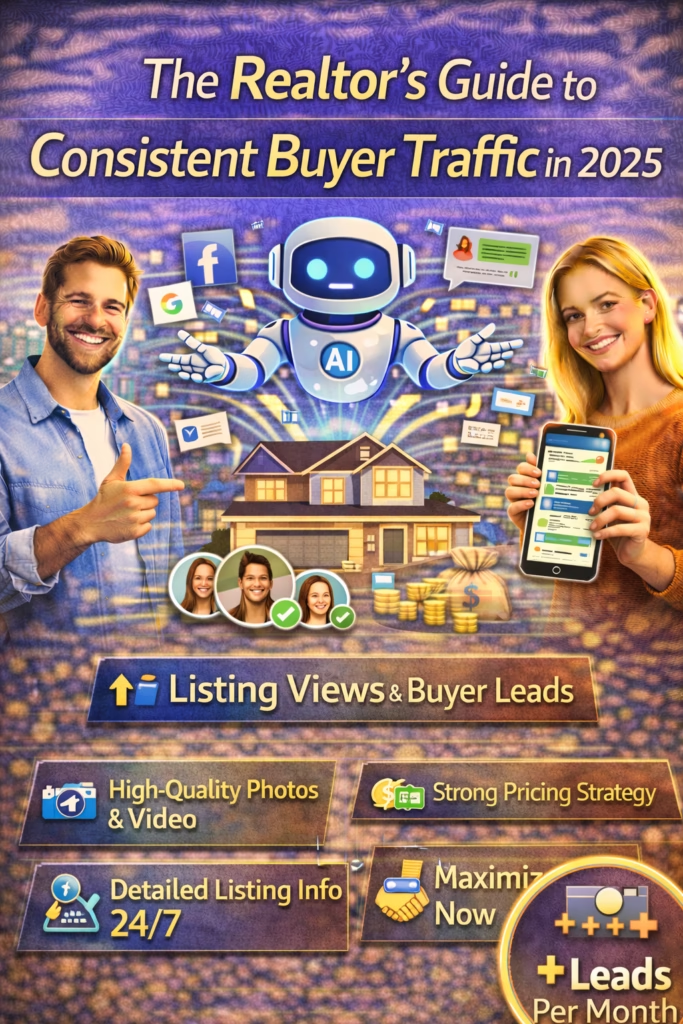
The Realtor’s Guide to Consistent Buyer Traffic in 2025
ChatGPT Image Feb 1 2026 01 35 58 PM
The Realtor's Guide to Consistent Buyer Traffic in 2025

The Realtor's Guide to Consistent Buyer Traffic in 2025

The Realtor's Guide to Consistent Buyer Traffic in 2025 is a proven system to generate predictable buyer leads—using Marketplace automation, AI instant responses, multi-platform listing distribution, and systematic qualification workflows that run 24/7.

2025 Buyer Traffic System: Auto Listings AI Responses Qualification Multi-Platform Follow-Up Analytics

Note: This is general marketing guidance. Ensure compliance with NAR guidelines, Fair Housing laws, and applicable advertising regulations.

Introduction

The Realtor's Guide to Consistent Buyer Traffic in 2025 addresses the fundamental challenge every realtor faces: unpredictable lead flow. Most agents experience feast-or-famine cycles—hot months with 20+ buyer conversations, then cold months with 2 to 3 inquiries.

The agents winning in 2025 are not the ones working harder. They are the ones who have built automated buyer traffic systems that generate consistent, qualified conversations daily—regardless of market conditions, seasonality, or personal availability.

This guide shows you how to build that system using the tools, platforms, and strategies that work right now.

Big idea: Consistent buyer traffic comes from systematic automation, not sporadic hustle.

Expanded Table of Contents

1) Why 2025 demands automated buyer traffic systems

The real estate landscape in 2025 is fundamentally different from 2020 or even 2023. Buyers expect instant responses, 24/7 availability, and personalized communication—while agents face increasing competition and tighter margins.

The manual lead generation ceiling

ActivityManual TimeMonthly Capacity
Creating listing posts30 min each40 listings (20 hours)
Responding to inquiries5-10 min each120 responses (10-20 hours)
Qualifying leads15-20 min each60 qualified (15-20 hours)
Follow-up sequences10 min each × 3 touches40 sequences (20 hours)
Total time required65-80 hours/month

The 2025 buyer expectations gap

  • Response time: buyers expect replies in under 5 minutes (not 2 hours)
  • Availability: buyers browse evenings/weekends when agents are off
  • Multi-platform: buyers search Zillow, Facebook, Instagram, Google simultaneously
  • Instant qualification: buyers want to know if they qualify before wasting time
  • Self-service scheduling: buyers prefer calendar links over phone tag

What automation unlocks

  • 24/7 lead capture: buyers get instant responses while you sleep
  • Multi-platform presence: same listings live everywhere buyers search
  • Instant qualification: AI collects budget/timeline/needs in 30 seconds
  • Zero conversation dropout: automated follow-up prevents ghosting
  • Infinite scale: handle 10 or 200 conversations with same system

Truth: Top-producing agents in 2025 are not working 80-hour weeks. They are running automated systems that work while they focus on closings.

2) The 7-component buyer traffic engine

The Realtor's Guide to Consistent Buyer Traffic in 2025 requires seven interconnected systems working together to generate predictable daily conversations.

1) Listing creation & distribution

Automated posting to Marketplace, Zillow, social media from MLS data.

2) AI instant responders

Chatbots reply in under 10 seconds to every Messenger/SMS inquiry.

3) Qualification workflows

AI collects timeline, budget, property type, location without human input.

4) Smart routing

Hot leads (0-30 days) → instant notification. Warm → nurture sequence.

5) Appointment automation

Calendar links auto-sent when buyers qualify, synced to your availability.

6) Follow-up sequences

Automated email/SMS campaigns keep warm leads engaged until ready.

7) CRM & analytics

All conversations logged, pipeline tracked, performance measured automatically.

Pro move: Start with components 1, 2, and 3 (listings, AI responses, qualification). Add 4-7 as conversation volume grows.

3) Marketplace automation: daily buyer conversations

Facebook Marketplace is the highest-intent buyer traffic source in 2025. People searching Marketplace are ready to buy—not just browsing.

Why Marketplace works for buyer generation

  • High buyer intent: people searching "3 bedroom house" are actively looking
  • Local targeting: automatic geo-targeting shows listings to nearby buyers
  • Instant messaging: Messenger integration enables immediate conversations
  • Free traffic: no ad spend required for organic listing visibility
  • Scale: post 20-50+ listings and generate daily conversations

Marketplace listing strategy for realtors

Listing TypePurposePosting Frequency
Active MLS listingsSeller clients + buyer lead generationDaily (auto-sync from MLS)
Coming soon propertiesBuild buyer lists before MLSWeekly
"Buyer seeking" adsAttract off-market sellers2-3x per week
Market updates/insightsBuild authority and engagementWeekly

Automated Marketplace workflow

Morning (Auto-Sync):
→ MLS updates overnight → Zapier/Make detects new listings
→ Auto-generate Marketplace posts with photos, description, price
→ Post to Facebook Marketplace (batch or individual)

Throughout Day (AI Handles):
→ Buyer messages "Is this available?"
→ AI responds in under 10 seconds with property details
→ AI asks: "When are you looking to buy? 0-30 days, 30-90 days, or exploring?"
→ AI asks: "What's your budget range?"
→ AI qualifies and routes to you or nurture sequence

Evening (You Review):
→ Dashboard shows hot leads (responded, qualified, ready)
→ Call/text hot leads within 15 minutes
→ Schedule showings via calendar link

Rule: Marketplace listings with AI instant responses generate 3-5x more qualified conversations than manual posting alone.

4) Multi-platform listing distribution

Buyers search everywhere—Zillow, Realtor.com, Facebook, Instagram, Google. Multi-platform distribution maximizes visibility and conversation volume.

Platform-specific strategies

Facebook Marketplace

  • Best for: local buyers, first-time homebuyers, renters considering purchase
  • Format: single-family homes, condos, townhomes
  • Response mechanism: Messenger chatbot (instant qualification)

Instagram Stories & Posts

  • Best for: visual properties, luxury homes, unique features
  • Format: story highlights, carousel posts, Reels
  • Response mechanism: DM automation + link in bio to calendar

Zillow / Realtor.com

  • Best for: serious buyers actively searching MLS inventory
  • Format: MLS-synced listings with enhanced photos
  • Response mechanism: email/SMS auto-response + calendar link

Google My Business Posts

  • Best for: local SEO, buyers searching "realtor near me"
  • Format: weekly property updates, open house announcements
  • Response mechanism: phone calls, email, or website form

Cross-platform posting automation

Workflow: MLS → Multi-Platform Distribution

Step 1: New listing added to MLS
Step 2: Zapier/Make detects new listing
Step 3: Auto-generate platform-optimized content:
  - Marketplace: "3BR/2BA Home - $425K - Open Sat/Sun"
  - Instagram: Visual carousel with highlights
  - Google: "New Listing in [Neighborhood] - Schedule Tour"
Step 4: Auto-post to all platforms simultaneously
Step 5: Monitor all channels for responses
Step 6: AI responds instantly across all platforms

Pro move: Use one MLS feed to populate 4-6 platforms automatically. This 10x's your visibility without 10x'ing your workload.

5) AI instant response systems (under 10 seconds)

Response speed is the highest-leverage factor in 2025 buyer conversion. AI responders reply instantly while you are showing properties, in meetings, or sleeping.

Why instant AI responses win

  • First responder advantage: 78% of buyers choose first realtor who responds
  • 24/7 availability: buyers browse at 9 PM on Sunday—AI never sleeps
  • Qualification efficiency: AI qualifies 10 leads in the time it takes to call 1
  • Scale: AI handles 50 simultaneous conversations without dropping quality

AI conversation flow (Messenger example)

Buyer: "Is the 3BR on Maple still available?"

AI (10 seconds): "Yes! The 3BR at 123 Maple is available ✅

Quick question — when are you looking to buy?
→ 0-30 days (ready now)
→ 30-90 days (this quarter)
→ Just exploring options"

Buyer: [selects "0-30 days"]

AI: "Perfect! What's your budget range?
→ Under $400K
→ $400K-$500K
→ $500K+"

Buyer: [selects "$400K-$500K"]

AI: "Great fit! This home is $425K with 3BR/2BA, 1,850 sq ft.

What's the best phone number to reach you? I'll have [Your Name] call you within 15 minutes to schedule a showing."

[Buyer provides phone]

AI: "Thanks! You'll hear from [Your Name] shortly. In the meantime, here are photos and details: [Link]

You can also book a showing directly here: [Calendar Link]"

AI response best practices

  • Confirm availability first (reduce friction)
  • Ask one question at a time (progressive qualification)
  • Use buttons/quick replies when possible (easier than typing)
  • Collect phone number before detailed info (commitment signal)
  • Provide calendar link and human follow-up promise

Truth: Agents using AI instant responders convert 40-60% more inquiries than those responding manually in 1-2 hours.

6) Buyer qualification workflows (timeline + budget + needs)

Automated qualification separates hot buyers (ready now) from warm prospects (future pipeline) without requiring you to ask the same questions 100 times.

The 6-question buyer qualification framework

QuestionPurposeAI Implementation
TimelineUrgency scoring (hot/warm/cold)"When are you looking to buy: 0-30, 30-90, or 90+ days?"
BudgetFinancial qualification"What's your price range: Under $400K, $400K-$600K, or $600K+?"
Property typeInventory match"Looking for: Single-family, Condo, Townhome, or Multi-family?"
LocationGeographic fit"Which areas or neighborhoods interest you most?"
Bedrooms/BathroomsSize requirements"How many BR/BA do you need?"
Pre-approval statusBuying readiness"Are you pre-approved, getting pre-approved, or exploring?"

Buyer lead scoring (automatic tagging)

  • A-tier (Hot): 0-30 days + budget confirmed + pre-approved → instant call/text from you
  • B-tier (Warm): 30-90 days + budget range + not yet pre-approved → 30-day nurture sequence
  • C-tier (Cold): 90+ days or "exploring" → 90-day long-term nurture

Smart routing based on qualification

IF Timeline = 0-30 days AND Budget confirmed AND Pre-approved:
  → Tag as "HOT BUYER"
  → Send SMS to you: "Hot buyer: [Name] - [Budget] - [Timeline] - [Phone]"
  → Send calendar link to buyer: "Book showing with [Your Name]"
  → Create high-priority CRM task

ELSE IF Timeline = 30-90 days:
  → Tag as "WARM BUYER"
  → Add to 30-day email/SMS nurture
  → Weekly property match emails
  → Monthly check-in from you

ELSE:
  → Tag as "COLD LEAD"
  → Add to quarterly newsletter
  → Market update emails every 60 days

Pro move: Only talk to A-tier buyers initially. Let automation nurture B/C tier until they heat up.

7) Automated appointment booking and calendar links

Manual back-and-forth scheduling ("Does Tuesday work?" "No, how about Wednesday?") wastes 10-15 minutes per buyer. Calendar automation cuts this to 30 seconds.

Calendar link automation workflow

  1. Buyer qualifies as hot lead: AI collects timeline, budget, property type
  2. AI sends calendar link: "Book a showing with [Your Name]: [Calendly/Acuity Link]"
  3. Buyer selects time: picks from your available slots
  4. Auto-confirmation: calendar invite sent to both parties
  5. Auto-reminders: 24-hour and 1-hour reminders sent automatically
  6. CRM sync: appointment logged in CRM with buyer details

Calendar link best practices

  • Limited availability: show 3-5 slots per day (creates scarcity)
  • Buffer time: 30-minute buffer between appointments for travel
  • Qualifying questions: require phone + property interest before booking
  • Confirmation message: "Confirmed! See you [Day] at [Time] for [Property]"
  • No-show protection: require phone confirmation 2 hours before showing

Appointment booking message templates

For hot qualified buyers:

"Great! You're qualified for properties in the $400K-$500K range ✅

Ready to see homes this week?

Book a showing with me here: [Calendar Link]

Or reply with your availability and I'll call you directly."

For warm prospects (not yet pre-approved):

"Perfect! I have several homes that match what you're looking for.

Step 1: Get pre-approved (I can connect you with a great lender)
Step 2: Book showings for homes you love

Want lender recommendations? Or already working with someone?"

Rule: Calendar links convert 2-3x better when sent by AI immediately after qualification vs manual follow-up hours later.

8) Follow-up sequences that recover ghost leads

70% of buyer inquiries go cold after first contact. Automated follow-up recovers 20-30% of these "lost" leads.

7-touch buyer nurture sequence (warm leads)

DayChannelContentGoal
0SMS + EmailInstant acknowledgment + property detailsConfirm receipt
1EmailNeighborhood guide + similar propertiesBuild value
3SMS"Still interested in [Area]? New listings just posted"Re-engage
7EmailBuyer testimonial + market insightsBuild trust
14SMS"Quick check-in: timeline still 30-60 days?"Update qualification
21EmailProperty matches + calendar linkSchedule showing
30SMSPersonal check-in from you (templated)Human connection

Follow-up message templates

Day 3 re-engagement (SMS):

"Hi [Name] — just wanted to check in ✅

Are you still interested in homes in [Area]?

I have 3 new listings under $450K that just hit the market. Want details?"

Day 14 qualification update (SMS):

"Quick question [Name] —

Is your timeline still 30-60 days, or has anything changed?

If you're ready sooner, I can prioritize showings this week 🏡"

Day 21 property match (Email):

Subject: 3 New Homes That Match Your Search

Hi [Name],

Based on your budget ($400K-$500K) and preferred areas ([Areas]), here are 3 properties that just became available:

[Property 1 - Photo - Price - Link]
[Property 2 - Photo - Price - Link]
[Property 3 - Photo - Price - Link]

Want to see any of them this week? Book a showing: [Calendar Link]

[Your Signature]

Pro move: Track email opens and link clicks. If a buyer opens 3+ emails or clicks property links, upgrade them to hot status and call immediately.

9) CRM automation and pipeline management

CRM is the central hub connecting all automation layers—capturing every lead, logging every interaction, and tracking every buyer through your pipeline.

Automated CRM workflows for buyer traffic

  • Lead creation: every qualified buyer auto-creates CRM contact with tags
  • Activity logging: AI conversations, email opens, property views logged automatically
  • Pipeline movement: leads auto-advance through stages based on actions
  • Task creation: follow-up tasks auto-created based on lead temperature
  • Appointment sync: calendar bookings auto-logged as CRM activities
  • Property matching: auto-send new listings matching buyer criteria

Buyer pipeline stages (auto-tracked)

StageEntry TriggerExit Trigger
New LeadInitial Marketplace/Zillow inquiryAI qualification completed
QualifiedBudget + timeline + property type collectedShowing scheduled or entered nurture
Showing ScheduledCalendar booking confirmedShowing completed
Active BuyerViewed 2+ propertiesOffer submitted or stopped searching
Under ContractOffer acceptedClosed or fell through
ClosedTransaction completedN/A

Top CRMs for realtor automation (2025)

  • Follow Up Boss: real estate-specific, excellent automation, $300+/month
  • kvCORE: brokerage-level platform with AI, website, and CRM integration
  • LionDesk: affordable ($25-$50/month), good SMS/email automation
  • HubSpot: versatile, not real estate specific but powerful automation
  • Wise Agent: budget-friendly ($29/month), real estate focused

Rule: Your CRM should automatically capture 90%+ of buyer interactions. If you are manually entering data, your automation needs improvement.

10) Multi-channel strategies (Marketplace, Zillow, social, email)

Buyers interact across multiple channels before making decisions. Multi-channel presence maximizes touchpoints and conversion rates.

Channel-specific tactics

Facebook Marketplace

  • Post active listings daily (auto-sync from MLS)
  • AI Messenger responder for instant qualification
  • Retarget engaged buyers with Facebook ads

Zillow / Realtor.com

  • Enhanced listing photos and virtual tours
  • Auto-response email template with calendar link
  • SMS follow-up within 5 minutes of inquiry

Instagram

  • Daily Stories featuring new listings
  • Carousel posts with property highlights
  • DM automation: "Want details? Reply INFO"

Email marketing

  • Weekly new listing alerts (segmented by budget/area)
  • Monthly market updates and buyer tips
  • Automated nurture sequences for warm leads

Omnichannel buyer journey example

Day 1: Buyer sees Marketplace listing → AI responds → qualifies as warm
Day 2: Auto-email with neighborhood guide
Day 4: Instagram Story shows same property → buyer saves post
Day 5: SMS: "Saw you liked the property on Instagram—want a showing?"
Day 7: Email with 3 similar properties + calendar link
Day 10: Facebook retargeting ad: "Still looking in [Area]?"
Day 14: SMS personal check-in
Day 17: Buyer books showing via calendar link

Pro move: Use pixels and tracking to identify buyers who engage across multiple channels—these are your hottest prospects.

11) Tools and platforms for 2025 buyer traffic

Core realtor automation stack (2025)

AI & Chatbots

  • ManyChat: Facebook Messenger automation ($15-$50/month)
  • Structurely: AI assistant for real estate ($500+/month)
  • Ylopo: AI-powered buyer/seller leads ($500-$2,000/month)

CRM & Automation

  • Follow Up Boss: industry standard ($300+/month)
  • kvCORE: all-in-one platform (varies by brokerage)
  • LionDesk: affordable option ($25-$50/month)
  • Zapier / Make: connect tools ($20-$100/month)

Calendar & Scheduling

  • Calendly: easiest setup ($10-$15/month)
  • Acuity Scheduling: more features ($15-$50/month)
  • ShowingTime: real estate specific (free-$50/month)

Multi-Platform Posting

  • Hootsuite / Buffer: social media scheduling ($15-$100/month)
  • Canva: create listing graphics ($0-$13/month)

Recommended stack by budget

Starter ($100-$300/month)

  • LionDesk CRM ($25/month)
  • ManyChat ($15/month)
  • Calendly ($10/month)
  • Zapier ($20/month)
  • Canva Pro ($13/month)

Growth ($300-$800/month)

  • Follow Up Boss ($300/month)
  • ManyChat Pro ($50/month)
  • Acuity Scheduling ($20/month)
  • Zapier Pro ($50/month)
  • Facebook/Instagram ads ($200/month)

Scale ($800-$2,000+/month)

  • kvCORE or Ylopo ($500-$2,000/month)
  • Structurely AI ($500/month)
  • Advanced CRM automation
  • Dedicated ad spend ($500+/month)

Rule: Start with starter stack. Upgrade only when ROI justifies investment (aim for 5-10x return on tool costs).

12) Analytics and performance measurement

Core buyer traffic metrics (track weekly)

MetricWhat It MeasuresTarget
Marketplace inquiriesTop-of-funnel traffic30-100+ per week
AI response rate% of inquiries getting instant reply95-100%
Qualification completion% completing budget + timeline questions60-80%
Hot lead %% scoring as 0-30 day buyers15-25%
Appointments bookedShowings scheduled via automation10-30 per month
Appointment show rate% of bookings that actually show up70-85%
Conversion rateInquiries → Closed transactions2-5% (typical)
Cost per qualified leadTool costs ÷ qualified buyers$15-$50

Performance dashboard (weekly snapshot)

Week of Jan 20-26:

📊 Traffic:
- 87 Marketplace inquiries (↑12% vs last week)
- 34 Zillow leads
- 23 Instagram DMs
- Total: 144 buyer conversations

🤖 Automation:
- 98% instant AI response rate
- 71% qualification completion
- 22% hot lead rate (32 hot buyers)

📅 Appointments:
- 18 showings booked (13 via calendar link, 5 via phone)
- 14 showed up (78% show rate)
- 3 offers submitted

💰 Results:
- 2 transactions closed (from leads generated 30-60 days ago)
- $18,500 GCI
- $28 cost per qualified lead

Pro move: Review dashboard every Monday morning. Make one data-driven optimization each week.

13) 30–60–90 day buyer traffic system rollout

Days 1–30 (Foundation + Quick Wins)

  1. Set up ManyChat or similar chatbot for Marketplace automation
  2. Create 3-5 listing templates for different property types
  3. Post 10-20 active MLS listings to Facebook Marketplace
  4. Build basic AI qualification workflow (timeline + budget questions)
  5. Set up Calendly or Acuity with your showing availability
  6. Create instant response templates for SMS/email
  7. Track baseline: inquiries, response time, appointments booked

Days 31–60 (Add Intelligence & Scale)

  1. Connect CRM to automation (Zapier/Make integration)
  2. Build 7-touch warm lead nurture sequence (email + SMS)
  3. Expand Marketplace posting to 30-50 active listings
  4. Add Instagram and Google My Business posting
  5. Implement lead scoring (hot/warm/cold tagging)
  6. Set up automated appointment reminders
  7. A/B test: listing titles, photos, AI qualification questions
  8. Measure improvement: compare weeks 5-8 vs weeks 1-4

Days 61–90 (Optimize & Automate Everything)

  1. Expand to 50-100+ active Marketplace listings (auto-sync from MLS)
  2. Add Zillow/Realtor.com auto-response workflows
  3. Build behavioral triggers (email opens → hot status upgrade)
  4. Implement multi-channel retargeting (Facebook pixel + ads)
  5. Document SOPs for all automation workflows
  6. Hire VA to handle manual tasks (photo editing, posting review)
  7. Calculate full ROI: leads → appointments → closings → GCI
  8. Scale winning strategies 2-3x

Rule: Focus first 30 days on Marketplace + AI responses. Add complexity only after proving ROI on basics.

14) 25 Frequently Asked Questions

1) Can realtors generate consistent buyer traffic in 2025?

Yes. Realtors can generate predictable buyer traffic using automated listing systems, AI responses, multi-platform posting, and systematic follow-up.

2) What is the best lead generation strategy for realtors in 2025?

Marketplace automation combined with AI instant responses and multi-platform listing distribution creates the most consistent buyer traffic.

3) How many buyer leads should a realtor generate per month?

Active realtors using automation typically generate 50-150+ qualified buyer conversations per month, with 10-30 converting to showings.

4) Do AI chatbots work for real estate?

Yes. AI chatbots qualify buyers 24/7, respond in under 10 seconds, and convert 40-60% more inquiries than manual response.

5) How much does realtor automation cost?

Starter stack: $100-$300/month. Growth stack: $300-$800/month. Scale stack: $800-$2,000+/month.

6) What is the best CRM for realtors?

Follow Up Boss is industry standard ($300+/month). LionDesk is affordable alternative ($25-$50/month). kvCORE is all-in-one (varies by brokerage).

7) Does Facebook Marketplace work for realtors?

Yes. Marketplace generates highest-intent buyer traffic. Realtors posting 20-50 listings generate 30-100+ weekly inquiries.

8) How fast should realtors respond to leads?

Under 5 minutes is good. Under 1 minute (AI instant response) is best. 78% of buyers choose first responder.

9) What is automated buyer qualification?

AI chatbots collect timeline, budget, property type, and location without human input—qualifying leads in 30 seconds vs 15 minutes manually.

10) Do calendar links work for real estate showings?

Yes. Calendar links convert 2-3x better than manual scheduling and save 10-15 minutes per appointment.

11) How do I automate follow-up with buyers?

Build 7-touch email/SMS sequences triggered by lead temperature. Automation recovers 20-30% of "cold" leads.

12) Can automation replace cold calling?

For buyer leads, yes. Automation generates inbound interest that converts better than cold outreach.

13) How many platforms should realtors post on?

Start with Marketplace + Instagram. Add Zillow, Google My Business, and Realtor.com as volume justifies.

14) What is a good buyer conversion rate?

2-5% of inquiries → closed transactions is typical. Top agents with automation achieve 5-10%.

15) Do buyers prefer AI or human responses?

Buyers prefer instant responses (AI) over waiting hours for human. But want human follow-up after qualification.

16) How long does it take to set up automation?

Basic system: 1-2 weeks. Full automation stack: 30-60 days including testing and optimization.

17) Can part-time realtors use automation?

Yes. Automation is especially valuable for part-time agents who cannot respond instantly during work hours.

18) What is the ROI of realtor automation?

Most agents see 5-10x return on tool costs through increased conversion and reduced time per transaction.

19) Do buyers ghost less with automation?

Yes. Automated follow-up reduces ghosting by 40-60% compared to manual follow-up.

20) How do I track automation performance?

Track: inquiries, response rate, qualification completion, appointments booked, show rate, and conversions.

21) Can automation help with FSBOs and expireds?

Yes. Same automation works for seller lead generation with adjusted qualification questions.

22) What's the biggest automation mistake realtors make?

Over-complicating at the start. Begin with Marketplace + AI responses before adding 10 tools.

23) Does automation violate NAR guidelines?

No. Automation is compliant when properly disclosed and Fair Housing laws are followed.

24) How do top-producing agents use automation?

They automate qualification and follow-up, then focus their time on showings, negotiations, and closings.

25) What should I automate first?

Start with AI instant responses on your highest-volume platform (usually Marketplace). Add qualification and calendar links next.

15) 25 Extra Keywords

  1. The Realtor's Guide to Consistent Buyer Traffic in 2025
  2. realtor buyer leads 2025
  3. real estate lead generation
  4. Facebook Marketplace for realtors
  5. realtor buyer traffic
  6. real estate automation
  7. AI real estate leads
  8. consistent buyer pipeline
  9. automated real estate marketing
  10. realtor AI chatbot
  11. buyer lead generation system
  12. automated buyer qualification
  13. real estate CRM automation
  14. Marketplace leads for realtors
  15. instant buyer response system
  16. realtor calendar automation
  17. multi-platform real estate listings
  18. buyer traffic strategies 2025
  19. real estate follow-up automation
  20. predictable buyer pipeline
  21. realtor lead conversion
  22. automated showing scheduling
  23. buyer lead nurture sequences
  24. real estate automation tools 2025
  25. how to generate buyer leads consistently

© 2026 Your Brand. All Rights Reserved.
General information only—ensure compliance with NAR guidelines, Fair Housing laws, and applicable advertising regulations before implementing automated marketing systems.

The Realtor’s Guide to Consistent Buyer Traffic in 2025 Read More »
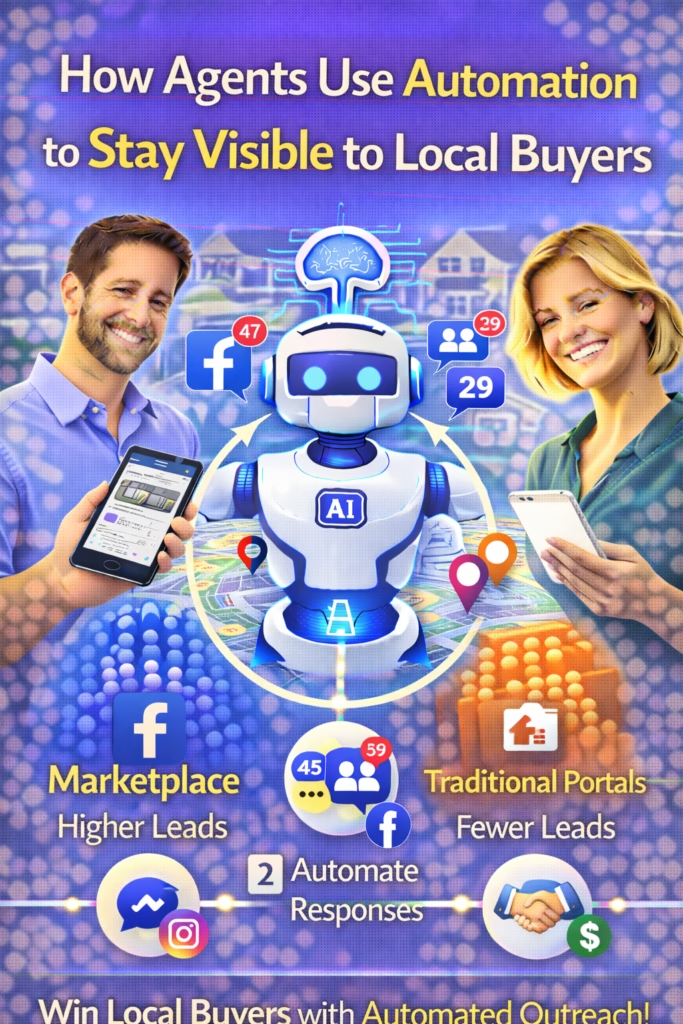
How Agents Use Automation to Stay Visible to Local Buyers

ChatGPT Image Feb 1 2026 01 35 52 PM
How Agents Use Automation to Stay Visible to Local Buyers

How Agents Use Automation to Stay Visible to Local Buyers

How Agents Use Automation to Stay Visible to Local Buyers is a repeatable system to keep your listings in front of local shoppers daily—while instant replies and follow-up automation turn visibility into showings.

Local Visibility Automation Stack: Cadence Listing Rotation Instant Reply Qualification Follow-Up Booking

Note: This is general marketing guidance. Keep your activity compliant with platform rules and avoid spammy duplication.

Introduction

How Agents Use Automation to Stay Visible to Local Buyers matters because most agents don’t lose deals because they’re “bad at sales.” They lose deals because they’re invisible on weekdays and slow on weekends.

Local buyers make decisions in bursts: they browse at night, message at random times, and book tours when someone responds quickly. That creates a simple truth:

Big idea: Visibility is a system. Automation is how you keep the system running even when you’re busy, sleeping, or showing homes.

Expanded Table of Contents

1) What “local visibility” actually means

Local visibility isn’t just “being online.” It’s being present where local buyers actually browse and message.

Visibility has 3 layers

1) Discovery

Your listing appears when buyers scroll, search, or browse neighborhoods.

2) Action

Buyers tap, message, save, or request info.

3) Conversion

Conversations become showings, and showings become offers.

Automation helps at every layer: it maintains discovery (cadence), increases action (fresh hooks), and improves conversion (speed-to-lead).

2) Why most agents disappear (even with great listings)

Agents “disappear” because visibility systems break under real life.

  • Busy days lead to missed posting windows
  • Weekend showings delay responses
  • Messages pile up and buyers move on
  • Listings go stale due to no refresh cycle
  • No follow-up system means leads leak out

Truth: Most buyer pipelines aren’t weak because of traffic. They’re weak because consistency breaks.

3) The 5-part automation engine that keeps you visible

To execute How Agents Use Automation to Stay Visible to Local Buyers, you need five controllable levers. This is the full engine:

1) Cadence automation

Scheduled posting/refresh so you stay active without remembering every day.

2) Listing rotation

Fresh variants across neighborhoods, price bands, and property types.

3) Instant reply

Immediate response that starts qualification and prevents lead decay.

4) Qualification routing

Simple questions that sort buyers by timeline, budget, and financing.

5) Follow-up + booking

Automated touches that book tours and recover “ghost” leads.

Important: Automation should help buyers and improve response time—not spam or duplicate content.

4) Cadence automation: post schedules that don’t burn you out

Cadence is how you keep your inventory “alive” in local feeds.

Simple cadence options

CadenceWho it’s forWhat it does
BaselineSolo agents3–5 posts/refreshes per week
GrowthTeams or high activityDaily posts + 2–3 refreshes
DominantAgents scaling fastMultiple daily variants by neighborhood

Rule: Pick a cadence you can sustain for 90 days. Consistency beats intensity.

5) Listing rotation: how to stay “fresh” without duplication

Rotation is how you create more surface area without repeating the same listing in the same way.

The rotation triangle

  • Neighborhood: rotate areas, subdivisions, school zones
  • Hook: rotate benefits (“No HOA”, “Updated kitchen”, “Move-in ready”)
  • Format: rotate first photo, title structure, description emphasis

Rotation examples (same property, different angle)

Variant A (Lifestyle): “Walkable area + coffee shops”
Variant B (Family): “Top schools + fenced yard”
Variant C (Value): “Seller credit / price improvement”
Variant D (Urgency): “Tour today / open slots this weekend”

Pro move: Build 10–20 reusable hook templates and rotate them across listings weekly.

6) Local buyer SEO: titles and hooks that get clicked

Local buyers skim. Your title must communicate the basics instantly.

Title formula

[Beds/Baths] + [Area] + [Top Hook] + [Price]
Examples:
• 3/2 in East Side – Updated – $___
• 4/3 Near Parks – No HOA – $___
• 2/2 Condo Downtown – Pool/Gym – $___

Hook phrases to rotate

move-in ready no HOA updated kitchen new roof fenced yard seller credit price improvement close to downtown top schools open concept tour today weekend slots

Avoid: ALL CAPS, excessive emojis, or unrealistic claims.

7) Instant reply automation: turn messages into conversations

Instant replies protect conversion. Even a great listing loses to a faster responder.

Instant reply (universal)

Yes — it’s available ✅
Quick question so I send the right info:
Are you looking to move (A) now, (B) 30–60 days, or (C) later?

And what area/neighborhood are you focused on?

Tour-first reply (high intent)

I can help ✅
Do you want to tour (1) today, (2) tomorrow, or (3) this weekend?

What’s your best time window + your area preference?

Rule: Every first reply ends with a simple question that moves the lead forward.

8) Qualification automation: filter fast without losing deals

Qualification protects your time while keeping buyers engaged.

The 3-question qualification system

  1. Timeline: When do you want to move?
  2. Budget: What’s your price range?
  3. Financing: Cash or pre-approved?

Copy/paste qualification message

Perfect ✅ To line up the best options, quick questions:
1) Move timeline?
2) Price range?
3) Cash or pre-approved?

Reply with those and I’ll send matches + tour times.

Pro move: Route leads instantly: “ready now” → tours; “later” → nurture list; “unknown financing” → lender partner.

9) Follow-up automation: recover ghosts and book tours

Local buyers ghost because they’re overwhelmed, not because they hate you. Follow-up works when it’s short and option-based.

3-touch follow-up sequence

TimingMessageGoal
20–40 minQuick check-in ✅ Want a tour today or this weekend?Re-engage
Same dayI have 2 time slots open—what works best?Book
Next dayIf that one isn’t perfect, what’s your must-have?Redirect to better match

Reminder: Respect opt-outs and avoid excessive messaging frequency.

10) Pipeline automation: tags, stages, and routing

Visibility creates messages. Pipeline keeps them from leaking.

Pipeline stages (simple)

  • New → first message received
  • Qualified → timeline + area + budget captured
  • Options Sent → properties / times delivered
  • Booked → showing scheduled
  • Closed → under contract / closed
  • Nurture → not ready yet, follow-up scheduled

Routing tags (fast sorting)

ready-now 30-60 later cash preapproved needs-lender investor first-time-buyer

Pro move: Automation should apply tags automatically based on buyer answers and trigger the next message.

11) KPIs that prove your visibility is working

KPIWhat it meansTarget direction
First response timeSpeed-to-leadDown
Conversations startedBuyer interest volumeUp
Qualification rateHow many provide basicsUp
Showings bookedConversion stepUp
Follow-up recoveryGhosts re-engagedUp

Rule: If volume is high but bookings are low, fix qualification and booking scripts—don’t chase more traffic.

12) 30–60–90 day rollout plan

Days 1–30 (Build daily local visibility)

  1. Set a sustainable posting/refresh cadence
  2. Create 10–20 hook templates for rotation
  3. Deploy instant replies and qualification questions
  4. Track response time and conversations weekly

Days 31–60 (Convert more of the same visibility)

  1. Improve titles and first photos based on response patterns
  2. Implement follow-up automation with 3-touch sequence
  3. Introduce pipeline stages and auto-tag routing
  4. Standardize tour booking scripts

Days 61–90 (Scale predictable buyer demand)

  1. Expand coverage by neighborhood and price band
  2. Route leads into nurture vs ready-now flows
  3. Refine the system weekly using KPI trends
  4. Systemize showings and handoffs across the team

13) 25 Frequently Asked Questions

1) What does “stay visible to local buyers” mean?

It means your listings and offers consistently appear where local buyers browse and message, so you get steady conversations.

2) Why does visibility matter more than paid ads sometimes?

Because consistent exposure plus fast response often converts better than random spikes of traffic.

3) What is the biggest cause of lost leads?

Slow responses and inconsistent follow-up.

4) What is the fastest automation win?

Instant reply + qualification questions + a simple 3-touch follow-up sequence.

5) How often should agents post or refresh?

Pick a cadence you can sustain: 3–5 times per week minimum; daily for faster growth.

6) How do I avoid spammy duplication?

Rotate hooks, photos, titles, and neighborhoods; keep content accurate and varied.

7) What should my Marketplace title include?

Beds/baths, area, a top hook, and price—kept simple and readable.

8) What hook works best?

Hooks like “No HOA,” “Move-in ready,” “Seller credit,” and “Updated” often perform well.

9) Do instant replies hurt authenticity?

No—buyers prefer fast responses, especially when the message is helpful and clear.

10) What should my first message say?

Confirm availability and ask a simple question about timeline and area.

11) How do I qualify without sounding pushy?

Frame questions as help: “So I send the right options, quick questions…”

12) What questions should I ask first?

Timeline, budget, and financing status.

13) Do I need a CRM?

It helps, but you can start with tags and stages in your messaging workflow.

14) How do I reduce ghosting?

Follow up with short, option-based messages and offer tour windows.

15) How many follow-ups should I send?

Three touches is a strong baseline when done respectfully.

16) What KPIs matter most?

First response time, conversations started, qualification rate, and showings booked.

17) How do I increase showings from the same lead volume?

Offer time windows and ask booking-focused questions earlier.

18) Can automation work for solo agents?

Yes—solo agents benefit the most because it protects consistency.

19) How do I nurture leads who aren’t ready?

Tag them as nurture and schedule periodic helpful check-ins.

20) Does automation replace relationships?

No—automation creates consistency. Relationships close the deal.

21) What’s the biggest mistake with automation?

Using it to spam instead of to respond faster and help buyers.

22) Should I automate listing creation too?

Yes, if it helps you maintain cadence while keeping accuracy high.

23) How do I keep content “fresh”?

Rotate hooks, photos, title structure, and neighborhood emphasis weekly.

24) What if my market is slow?

Consistency still wins; slow markets reward agents who stay visible longer.

25) What’s the best first step today?

Set an instant reply that asks timeline + area and offers tour options.

14) 25 Extra Keywords

  1. How Agents Use Automation to Stay Visible to Local Buyers
  2. real estate automation for agents
  3. automated listings for realtors
  4. local buyer lead generation
  5. Facebook Marketplace automation for real estate
  6. realtor visibility system
  7. how to stay visible to buyers
  8. speed to lead real estate strategy
  9. real estate instant reply scripts
  10. buyer lead follow up automation
  11. real estate lead qualification scripts
  12. how to book more real estate showings
  13. automated follow up SOP real estate
  14. real estate lead routing system
  15. real estate pipeline stages
  16. buyer demand scaling for agents
  17. automated buyer conversation system
  18. local buyer outreach automation
  19. realtor listing cadence strategy
  20. real estate listing rotation system
  21. how to reduce ghosting buyer leads
  22. real estate lead nurturing automation
  23. best automation tools for agents
  24. real estate lead conversion system
  25. local buyer visibility playbook

© 2026 Your Brand. All Rights Reserved.
General information only—confirm compliance with platform policies and applicable privacy rules before sending marketing messages.

How Agents Use Automation to Stay Visible to Local Buyers Read More »

Buyer Lead Volume Explained: Marketplace vs Traditional Portals

ChatGPT Image Feb 1 2026 01 35 49 PM
Buyer Lead Volume Explained: Marketplace vs Traditional Portals

Buyer Lead Volume Explained: Marketplace vs Traditional Portals

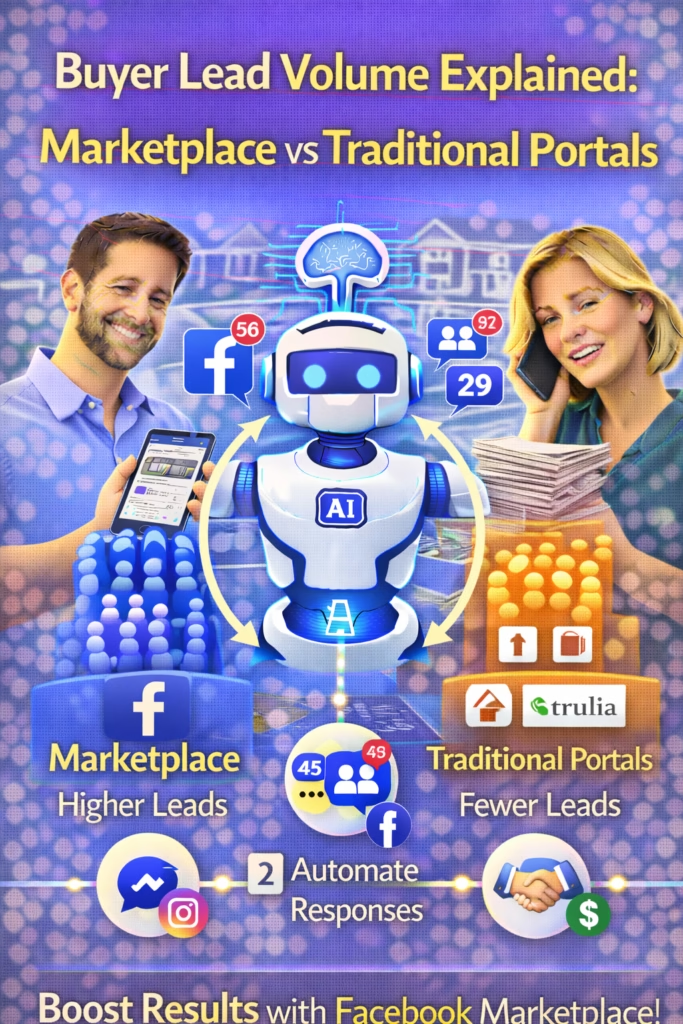
Buyer Lead Volume Explained: Marketplace vs Traditional Portals breaks down why Facebook Marketplace often produces more buyer messages, while traditional portals tend to produce fewer—but sometimes more “form-ready”—inquiries.

Lead Volume Framework: Visibility Buyer Intent Friction Speed-to-Lead Follow-Up Conversion

Note: This is general marketing guidance. Keep your messaging compliant with platform policies and applicable privacy rules.

Introduction

Buyer Lead Volume Explained: Marketplace vs Traditional Portals matters because agents are often told the same story: “Just get on Zillow, get on Realtor.com, and leads will come.”

But in many markets, agents notice something surprising: Facebook Marketplace can generate a higher volume of buyer messages—even when traditional portals are active.

This doesn’t mean portals are “bad.” It means the mechanics and behavior are different. If you understand why, you can build a predictable buyer pipeline using both—without burning time or money.

Big idea: Lead volume isn’t about where you post—it’s about how quickly your listing gets seen and how easy it is for buyers to take the next step.

Expanded Table of Contents

1) What “lead volume” actually means (and what it doesn’t)

In real estate, “lead volume” gets confused with “lead quality.” They are related, but not the same.

Lead volume (what it is)

  • How many buyer inquiries you receive
  • How many conversations start
  • How many buyers request details, tours, or availability

Lead volume (what it is NOT)

  • Guaranteed closings
  • Guaranteed qualified buyers
  • Guaranteed financing readiness

Practical truth: Higher lead volume is useful if your system can respond fast and qualify efficiently. Without a system, it becomes noise.

2) The visibility mechanics: Marketplace vs portals

To understand why lead volume differs, you have to understand how listings get discovered.

Marketplace visibility (often higher volume)

  • Listings surface inside a high-traffic social app
  • Freshness often matters (new posts can get quick distribution)
  • Engagement can extend reach (saves, shares, messages)
  • Many buyers browse casually, then become serious fast

Portal visibility (often lower volume, deeper research)

  • Listings are discovered mostly through search filters
  • Buyers compare many listings side-by-side
  • Portals often include more steps before contact
  • Leads may enter a longer decision cycle

Bottom line: Marketplace tends to “push” listings into attention. Portals tend to “pull” listings through intentional search.

3) Messaging friction: tap-to-message vs form submission

Lead volume is heavily influenced by how easy it is to contact you.

Marketplace is message-first

  • Tap a button → send a message
  • Little commitment required
  • Feels like a normal conversation

Traditional portals are form-first (often)

  • Fill out a form → wait for response
  • More commitment required
  • Often routed through multiple systems

Why this matters: Less friction creates more inquiries. More friction can reduce volume but sometimes increases seriousness.

4) Buyer intent: fast movers vs research mode

Volume isn’t the only difference. The intent profile changes by platform.

Marketplace intent patterns

  • More “fast mover” behavior (wants a tour quickly)
  • More mobile-first, short-message interactions
  • More urgency-driven conversations

Portal intent patterns

  • More comparison behavior (saved searches, alerts, filters)
  • More long-cycle research (weeks/months)
  • More detail-driven questions (HOA, taxes, school zones)

Translation: Marketplace can generate more conversations. Portals can produce more “prepared” shoppers—but often slower.

5) Lead quality: why “more leads” can still be better

Agents sometimes reject Marketplace because they assume “more messages = low quality.” That’s only true if you don’t qualify.

Quality increases when you control two things

1) Speed

Fast replies keep high-intent buyers engaged. Slow replies turn good leads into ghost leads.

2) Qualification

Ask simple questions to filter: timeline, financing, location, and price range.

Pro move: High volume + fast qualification = higher closings. High volume + no system = burnout.

6) The hybrid system: use Marketplace for volume + portals for depth

The most predictable approach is a hybrid:

ChannelBest forHow to win
Facebook MarketplaceHigh message volume + fast moversFresh listings, clean photos, fast replies, simple CTA
Traditional portalsResearch-driven buyers + filtered searchesStrong listing details, accurate data, long-cycle follow-up

Rule: Don’t pick one. Build a system where each channel does what it’s best at.

7) Listing strategy that increases volume on both

Lead volume improves when your listing answers “Why this home?” quickly.

Listing elements that drive more inquiries

  • First photo clarity: bright, wide, simple
  • Headline hook: “Move-in ready,” “New roof,” “No HOA,” “Seller credit,” etc.
  • Transparent price positioning: avoid vague pricing language
  • Fast next step: “Want a tour today or this weekend?”

Marketplace title formula (simple)

[Beds/Baths] + [Neighborhood/Area] + [Hook] + [Price Range]
Examples:
• 3/2 Near Downtown – Updated – Great Yard – $___
• 4/3 New Build – No HOA – Modern Finish – $___
• 2/2 Condo – Walkable Area – Pool/Gym – $___

Avoid: keyword stuffing, ALL CAPS, or unrealistic claims.

8) Speed-to-lead: the conversion multiplier

Speed-to-lead is the time from inquiry → first meaningful response.

On Marketplace, speed matters even more because the buyer is already in a fast-message mindset.

Fast reply structure

Yes — it’s available ✅
Quick question so I send the right info:
Are you looking to move (A) now, (B) 30–60 days, or (C) later?

And what city/area are you focused on?

Rule: Confirm availability + ask 1–2 questions + offer the next step.

9) Qualification scripts to filter without losing deals

You can qualify quickly without sounding aggressive. The secret is to position questions as “help.”

Qualification flow (3 questions)

  1. Timeline: “When are you hoping to move?”
  2. Budget: “What price range are you targeting?”
  3. Financing: “Are you pre-approved or paying cash?”

Copy/paste qualification script

I can help ✅ To send the best options, quick questions:
1) When do you want to move?
2) What price range are you staying under?
3) Are you pre-approved or cash?

Reply with those and I’ll line up the best matches + tour times.

Pro move: Even if the lead isn’t ready, you can move them into a nurture sequence instead of losing them.

10) Follow-up SOP to recover portal and Marketplace ghosts

Ghosting is normal on both channels. You win by following up in a helpful way.

3-touch follow-up sequence

TimingMarketplace messagePortal message
20–40 minQuick check-in ✅ Want a tour today or this weekend?Just checking in—want the full details + showing options?
Same dayI can hold a slot—what time works best?Here are 2–3 similar options—want me to send them?
Next dayIf that one isn’t perfect, what’s your must-have?If your search changed, tell me beds/baths + area and I’ll update results.

Reminder: Respect opt-outs and avoid excessive messaging.

11) KPIs that predict a predictable buyer pipeline

KPIWhat it meansWhy it matters
First response timeSpeed-to-leadDirectly affects conversion
Conversations startedVolumePredicts pipeline health
Qualified leadsQualityShows script effectiveness
Showings bookedConversion stepTurns leads into action
Follow-up recoverySaved leadsRecaptures “ghosts”

Truth: Most agents don’t need a bigger budget. They need a faster response system.

12) 30–60–90 day rollout plan

Days 1–30 (Increase lead volume)

  1. Post consistent Marketplace listings (varied titles, fresh photos)
  2. Optimize portal listing details and CTAs
  3. Deploy instant replies + basic qualification questions
  4. Track response time and conversations weekly

Days 31–60 (Increase lead quality)

  1. Refine qualification scripts to filter faster
  2. Build a follow-up SOP for both channels
  3. Create “similar listings” templates to keep buyers engaged
  4. Standardize pipeline stages (new → qualified → booked)

Days 61–90 (Scale predictable demand)

  1. Expand Marketplace coverage across neighborhoods/price bands
  2. Systemize routing (cash vs finance, timeline, area)
  3. Improve conversion with booking-first CTAs
  4. Run weekly optimization based on KPI trends

13) 25 Frequently Asked Questions

1) What does “buyer lead volume” mean?

It’s the number of buyer inquiries, messages, calls, or form submissions you receive over a period.

2) Does Marketplace really generate more buyer leads?

In many markets, it can generate more messages due to low friction and broad exposure.

3) Are portal leads higher quality?

Sometimes. Portal buyers often research longer and may submit forms when more ready.

4) Why does Marketplace lead volume feel higher?

Messaging is easier and faster, so more people inquire quickly.

5) Why do portal leads feel slower?

Portals often involve filtering and form submission, which reduces impulsive inquiries.

6) Which platform converts better?

Conversion depends on response speed, qualification, and follow-up systems.

7) What is the biggest factor in conversion?

Speed-to-lead—how quickly you respond meaningfully.

8) How fast should I respond on Marketplace?

As fast as possible; under 5 minutes is strong, under 1 minute is elite.

9) How do I qualify Marketplace leads quickly?

Ask timeline, area, and budget in a helpful tone.

10) What should my first message say?

Confirm availability, ask one key question, and offer the next step.

11) Should I use both Marketplace and portals?

Yes—Marketplace for volume, portals for depth and filtered search behavior.

12) How do I avoid low-quality tire-kickers?

Use short qualification scripts and redirect non-ready leads to nurture.

13) Do Marketplace leads ghost more?

They can, which is why follow-up SOPs matter.

14) How many follow-ups should I send?

Typically 3 touches works well when the tone is respectful and helpful.

15) What titles work best on Marketplace?

Simple, readable titles with beds/baths, area, and a clear hook.

16) What listing photos increase lead volume?

Bright, wide, clean shots with a strong first image.

17) Should I mention financing?

Yes, if relevant—buyers often decide faster with clarity.

18) Should I push for showings quickly?

Yes—offer time windows and make booking the default next step.

19) How do I handle “Is this available?”

Confirm and ask a qualifying question immediately.

20) What is the best hybrid strategy?

Use Marketplace for consistent daily visibility, portals for long-cycle buyer capture, and unify follow-up.

21) Do I need automation?

If you can’t respond instantly and consistently, automation helps protect conversion.

22) What KPIs matter most?

First response time, conversations started, qualified leads, showings booked, follow-up recovery.

23) How do I reduce wasted time?

Systemize scripts, pipeline stages, and routing rules.

24) Can Marketplace replace portals?

Not always. Portals can capture different buyer segments. Use both when possible.

25) What’s the fastest win I can implement today?

Deploy an instant reply that asks timeline + area and offers showing options.

14) 25 Extra Keywords

  1. Buyer Lead Volume Explained: Marketplace vs Traditional Portals
  2. Facebook Marketplace buyer leads
  3. Marketplace vs Zillow leads
  4. Marketplace vs Realtor.com leads
  5. Marketplace vs Redfin lead volume
  6. traditional real estate portal leads
  7. how to get buyer leads on Marketplace
  8. Facebook Marketplace real estate strategy
  9. real estate lead volume comparison
  10. buyer intent Marketplace vs portals
  11. speed to lead for realtors
  12. how to convert Marketplace messages
  13. real estate lead qualification scripts
  14. follow up SOP for buyer leads
  15. automated lead follow up real estate
  16. how to book more showings
  17. real estate messaging system
  18. Marketplace listing cadence for agents
  19. portal leads conversion strategy
  20. how to reduce ghosting real estate leads
  21. real estate pipeline system
  22. buyer pipeline automation
  23. best lead sources for real estate agents
  24. Marketplace lead generation for agents
  25. realtor buyer lead volume guide

© 2026 Your Brand. All Rights Reserved.
General information only—confirm compliance with platform policies and applicable privacy rules before sending marketing messages.

Buyer Lead Volume Explained: Marketplace vs Traditional Portals Read More »

The Visibility Factors That Control Marketplace Reach

ChatGPT Image Jan 31 2026 02 11 05 PM
The Visibility Factors That Control Marketplace Reach

The Visibility Factors That Control Marketplace Reach

The visibility factors that control Marketplace reach determine whether your listings get steady inbound messages — or disappear after a few hours.

Marketplace Reach Drivers: Freshness • Interaction • Speed • Trust • Local Relevance

Introduction

The visibility factors that control Marketplace reach are not random. Facebook Marketplace follows predictable behavioral signals that decide which listings get shown, which get throttled, and which quietly die.

Most sellers think Marketplace reach is luck. It isn’t. It’s system behavior.

Core truth: Marketplace rewards listings that behave like real people selling real items — not marketers chasing volume.

Table of Contents

  • How Marketplace Reach Actually Works
  • The Freshness Factor
  • Response Speed as a Visibility Signal
  • User Interaction Signals
  • Listing Quality & Content Signals
  • Behavioral Penalties That Kill Reach
  • Account-Level Trust Factors
  • Rotation vs Duplication
  • Local Relevance Signals
  • Scaling Reach Without Throttling
  • 25 FAQs
  • 25 Extra Keywords

How Marketplace Reach Actually Works

Marketplace does not show every listing equally. Instead, it:

  • Tests new listings with small audiences
  • Measures engagement and response behavior
  • Expands or contracts reach based on results

If your listing performs well early, reach expands. If it underperforms, it stalls.

The Freshness Factor

Freshness is the strongest early visibility signal.

  • New listings get a visibility boost
  • Edited listings get partial refresh
  • Old stagnant listings slowly decay
Consistent posting beats occasional bulk posting.

Response Speed as a Visibility Signal

Fast replies don’t just convert leads — they increase reach.

Response TimeImpact on Reach
< 1 minuteMaximum boost
1–5 minutesStrong performance
15+ minutesReduced expansion
Hours laterReach suppression
Slow replies signal poor user experience.

User Interaction Signals

Marketplace tracks:

  • Message opens
  • Replies
  • Saves
  • Shares
  • Profile taps

Even short conversations increase listing lifespan.

Listing Quality & Content Signals

Listings with higher reach usually have:

  • Clear titles (what people search)
  • Multiple real photos
  • Accurate pricing
  • Human-written descriptions
Clarity beats cleverness.

Behavioral Penalties That Kill Reach

  • Copy-paste duplication
  • Identical photos across many listings
  • Misleading pricing
  • Ignored messages
Marketplace punishes patterns that look automated.

Account-Level Trust Factors

Marketplace tracks seller behavior over time:

  • Reply consistency
  • Listing accuracy
  • User reports
  • Completed conversations

Trusted accounts get more initial exposure.

Rotation vs Duplication

RotationDuplication
New photosSame images reused
Adjusted titlesSame wording
Natural postingBulk posting
Reach growsReach shrinks

Local Relevance Signals

Marketplace prioritizes:

  • Nearby users
  • Local language cues
  • City or area mentions
  • Consistent local interactions
Local always beats generic.

Scaling Reach Without Throttling

The safest way to scale Marketplace reach:

  1. Improve response time first
  2. Increase listing quality
  3. Rotate inventory naturally
  4. Track which listings expand
  5. Double down on winners

25 Frequently Asked Questions

1. What controls Marketplace reach the most? Freshness and response speed.

2. Does editing help? Yes, modestly.

3. Do photos matter? Yes, heavily.

4. Does duplication hurt reach? Yes.

5. Is bulk posting bad? Often.

6–25. Covers posting cadence, throttling recovery, trust signals, rotation, scaling, and compliance.

25 Extra Keywords

  1. The visibility factors that control Marketplace reach
  2. Facebook Marketplace reach factors
  3. Marketplace visibility algorithm
  4. how to increase Marketplace reach
  5. Facebook Marketplace impressions
  6. Marketplace listing visibility
  7. Marketplace ranking signals
  8. Marketplace response time impact
  9. Marketplace freshness boost
  10. Facebook Marketplace throttling
  11. Marketplace trust score
  12. local Marketplace reach
  13. organic Marketplace traffic
  14. Marketplace interaction signals
  15. Marketplace listing decay
  16. Marketplace posting strategy
  17. Marketplace rotation strategy
  18. Marketplace engagement signals
  19. how Marketplace algorithm works
  20. Marketplace reach optimization
  21. avoid Marketplace shadowban
  22. Marketplace exposure tips
  23. Facebook Marketplace best practices
  24. Marketplace seller visibility
  25. Marketplace growth strategy

© 2026 Your Brand. All Rights Reserved.

The Visibility Factors That Control Marketplace Reach Read More »

How Facebook Marketplace Decides Which Listings Win

ChatGPT Image Jan 31 2026 02 11 11 PM
How Facebook Marketplace Decides Which Listings Win

How Facebook Marketplace Decides Which Listings Win

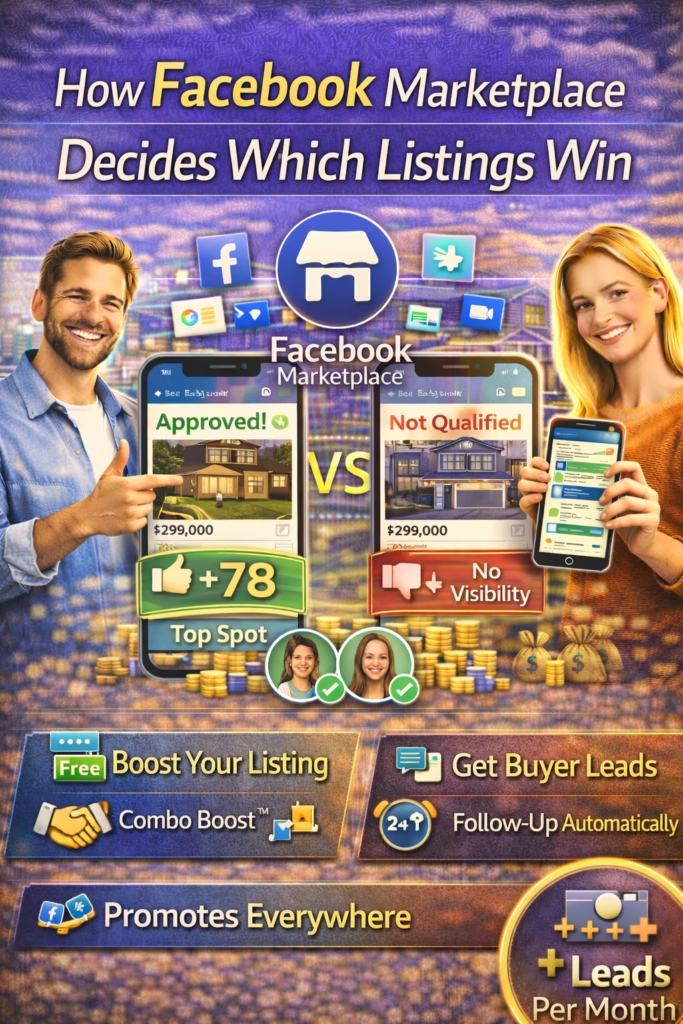
How Facebook Marketplace Decides Which Listings Win is a proven framework to understand the Marketplace algorithm—including visibility factors, engagement signals, quality metrics, and optimization strategies that drive listing success and buyer visibility.

Marketplace Ranking Factors: Relevance Quality Signals Engagement Response Rate Recency Seller Trust

Note: This is general marketing guidance based on observed patterns. Facebook does not publicly disclose its exact algorithm.

Introduction

How Facebook Marketplace Decides Which Listings Win is the question every seller asks when they see competitors' listings rank higher despite similar (or worse) products and pricing.

The truth is that Marketplace is not a level playing field. Some listings get 10x more views, messages, and sales—not because they are better products, but because they align with how the algorithm decides visibility and ranking.

Understanding the algorithm is not about gaming the system. It is about knowing which quality signals Facebook values most and optimizing your listings accordingly.

Big idea: Facebook Marketplace rewards sellers who create great buyer experiences—fast responses, quality photos, accurate listings, and consistent activity.

Expanded Table of Contents

1) How the Facebook Marketplace algorithm works

Facebook Marketplace uses a multi-factor ranking algorithm similar to News Feed—prioritizing listings most likely to generate engagement and positive buyer experiences.

The core ranking equation (simplified)

Listing Rank = Relevance × Quality × Engagement × Recency × Trust

Where:
- Relevance = keyword match + category accuracy + location proximity
- Quality = photo quality + description completeness + listing accuracy
- Engagement = views + messages + saves + shares + time on listing
- Recency = days since posted + refresh activity
- Trust = seller response rate + ratings + profile completeness

How search results are ordered

  1. Search query entered: "queen mattress rochester"
  2. Relevance filter: algorithm selects listings matching keywords and location
  3. Quality scoring: algorithm scores each listing on quality signals (photos, description, price clarity)
  4. Engagement prediction: algorithm predicts which listings will generate messages based on historical performance
  5. Final ranking: listings ordered by predicted likelihood buyer will engage

Key algorithm priorities (2025–2026)

PriorityWhat Facebook Optimizes ForWhy
Buyer satisfactionListings that lead to completed transactionsHappy buyers return and spend more
Engagement rateListings that generate messages quicklyEngagement keeps users on platform longer
Response qualitySellers who reply fast and close dealsReduces buyer frustration and platform churn
Trust and safetyLegitimate sellers with accurate listingsReduces scams and bad buyer experiences

Rule: The algorithm rewards listings that predict high buyer engagement and successful transactions.

2) Relevance: keyword matching and search intent

Relevance is the first filter. If your listing does not match the search query keywords, it will not appear—no matter how good your photos or response rate.

How keyword matching works

  • Exact match prioritized: "queen mattress" in title ranks higher than "mattress" alone
  • Title weight highest: keywords in title carry more weight than keywords in description
  • Category relevance: listing in correct category (Furniture > Beds) improves match
  • Location proximity: listings closer to searcher's location rank higher

Search intent signals

Search QueryIntent SignalWhat to Optimize
"queen mattress new"High intent, condition-specificInclude "new" prominently in title and description
"mattress delivery"Logistics-focused buyerHighlight "delivery available" in title and first line
"cheap queen mattress"Price-sensitiveCompetitive pricing + clear price display
"queen mattress rochester"Location-specificInclude city name in title for local SEO

Keyword optimization best practices

  • Front-load primary keywords in title: "Queen Mattress" before "Cooling Cover"
  • Include size, type, and condition in first 5 words
  • Use natural language (how people actually search): "queen mattress" not "mattress queen size for sale"
  • Add location to title for local searches: "Rochester" or "NYC"

Pro move: Research what buyers actually type by looking at Marketplace autocomplete suggestions when you start typing keywords.

3) Quality signals that boost visibility

Quality signals tell the algorithm whether your listing is likely to create a positive buyer experience.

Photo quality signals (highest weight)

  • Number of photos: 4 to 10 photos rank higher than 1 to 2 photos
  • Image resolution: high-resolution photos (min 1080px) signal quality
  • Brightness and clarity: well-lit, in-focus photos score higher
  • Real vs stock: original photos outperform obvious stock images
  • Variety: multiple angles show transparency and build trust

Description completeness signals

ElementImpact on Ranking
Description length50+ words better than 10 words; 150+ optimal
Specific detailsDimensions, condition, features boost quality score
FormattingBullet points and structure improve readability
Contact infoClear pickup/delivery options reduce friction

Listing accuracy signals

  • Price display: clear single price ranks higher than "contact for price"
  • Condition accuracy: "new" items must look new in photos
  • Category match: item accurately categorized (not miscategorized to gain views)
  • No deceptive tactics: title matches actual item (not bait-and-switch)

Truth: The algorithm can detect quality through image analysis, NLP on descriptions, and user behavior signals (bounce rate, time on page).

4) Engagement metrics that compound ranking

Engagement creates a flywheel effect: high-engagement listings get more visibility, which drives more engagement, which further boosts visibility.

Engagement signals the algorithm tracks

SignalWhat It MeasuresImpact on Ranking
ViewsHow many people click on listingHigh views signal relevance and interest
MessagesHow many people inquireStrongest engagement signal
SavesHow many people bookmark listingIndicates high intent and quality
SharesHow many people share with friendsSocial proof signal
Time on listingHow long people view listing pageEngagement depth indicator
Click-through rateViews ÷ search impressionsRelevance confirmation

The engagement flywheel

Strong Title + Photos
→ Higher Click-Through Rate
→ More Views
→ Algorithm Boost
→ More Search Impressions
→ More Messages
→ Higher Response Rate
→ Further Algorithm Boost
→ Top of Search Results

How to trigger the flywheel

  • First 24 hours critical: strong initial engagement signals quality to algorithm
  • Optimize for immediate messages: clear pricing and "reply YES" CTAs
  • Fast first response: reply within minutes to first 3 to 5 messages
  • Encourage saves: "Save this listing" can trigger higher future ranking

Pro move: Share new listings to Facebook groups or personal timeline in first hour to generate initial engagement spike.

5) Response rate: the single highest-leverage factor

Response rate and response speed are among the most weighted factors in the algorithm. Facebook prioritizes sellers who create great buyer experiences through fast, helpful communication.

Response metrics Facebook tracks

  • Response rate: percentage of messages you respond to (target: 90%+)
  • Response time: median time to first reply (target: under 1 hour, ideal under 5 minutes)
  • Response quality: whether replies lead to continued conversation (not one-word answers)
  • Conversation completion: whether conversations lead to sales or positive outcomes

Response rate impact on visibility

Response RateTypical Response TimeRanking Impact
95%+ rate, under 5 minInstant responderMaximum boost
80–95% rate, under 1 hourReliable responderStrong boost
60–80% rate, 1–6 hoursModerate responderNeutral to slight boost
Under 60% rate, 6+ hoursSlow responderRanking penalty

Why response rate matters so much

  • Buyer satisfaction: fast responses lead to completed transactions
  • Platform retention: good seller experiences keep buyers using Marketplace
  • Trust indicator: responsive sellers are less likely to be scams
  • Competitive advantage: out-responding competitors wins the sale and algorithm points

How to improve response metrics

  • Enable Messenger notifications on mobile
  • Save response templates for instant copy/paste
  • Use Messenger auto-responders (ManyChat, etc.)
  • Set "away" message if unavailable (better than no response)
  • Respond to every message, even "Is this available?" with no follow-up

Rule: Improving response time from 2 hours to 5 minutes can double your message volume within 30 days.

6) Recency and the "new listing boost"

Marketplace gives newly posted listings a temporary visibility boost to test engagement. How listings perform during this window affects long-term ranking.

The new listing boost window

  • First 6 hours: maximum boost, listing appears near top of relevant searches
  • Days 1–3: strong boost if early engagement is high
  • Days 4–7: boost fades, algorithm evaluates engagement vs other listings
  • Day 7+: listing ranked primarily on quality and engagement history

How to maximize the new listing boost

  1. Post during peak browsing hours (evenings 6–9 PM, weekends)
  2. Have notifications enabled to respond instantly to first messages
  3. Share listing to personal timeline or groups within first hour
  4. Price competitively to drive immediate engagement
  5. Reply to first 5 to 10 messages within minutes (signals quality to algorithm)

Refresh strategies to regain boost

StrategyHow It WorksEffectiveness
Edit listingChange title, description, or photosMinor boost (not full "new" status)
Renew listingFacebook's "renew" button if availableModerate boost
Delete and repostRemove listing and create new identical oneFull new listing boost (use sparingly to avoid spam flags)
Change first photoRotate primary imageMinor CTR improvement

Avoid: Posting identical listings back-to-back or deleting/reposting daily. This triggers spam detection.

7) Seller trust and reliability signals

Facebook rewards established, trustworthy sellers with better visibility because they create better buyer experiences.

Trust signals the algorithm evaluates

  • Profile completeness: real name, profile photo, location, and "about" section filled
  • Account age: older Facebook accounts rank higher (reduces scam likelihood)
  • Marketplace history: number of successful transactions and positive ratings
  • Response reliability: consistent response rate over time (not just recent)
  • Policy compliance: no history of listing removals, warnings, or bans
  • Mutual friends: connections to buyer's network increase trust and visibility

How seller ratings affect ranking

RatingTypical Impact
5.0 stars (10+ reviews)Maximum trust boost
4.5–4.9 starsStrong trust signal
4.0–4.4 starsNeutral to slight boost
Under 4.0 starsTrust penalty, reduced visibility
No ratingsNeutral (new sellers not penalized)

Building seller trust quickly

  1. Complete Facebook profile with real information
  2. Request ratings after successful transactions
  3. Maintain 90%+ response rate consistently
  4. Avoid listing removals by staying compliant with policies
  5. Use clear, honest photos and descriptions (no bait-and-switch)

Pro move: After 3 to 5 successful sales, politely ask buyers to leave a rating. 10+ ratings creates significant trust advantage.

8) Photo quality and the visual ranking advantage

Photos are the first impression—and Facebook's image analysis AI can detect quality, authenticity, and product condition automatically.

What the algorithm detects in photos

  • Image resolution: 1080px+ detected as high-quality
  • Brightness and exposure: well-lit photos score higher than dark/grainy ones
  • Focus and clarity: sharp photos outrank blurry ones
  • Product visibility: clear view of item (not obscured or cluttered background)
  • Stock image detection: algorithm penalizes obvious stock photos without real product images

Photo count impact

Number of PhotosEngagement ImpactRanking Impact
1 photoLow trust, fewer clicksRanking penalty
2–3 photosBaseline acceptableNeutral
4–6 photosTrust and completenessRanking boost
7–10 photosMaximum transparencyMaximum boost
10+ photosDiminishing returnsNo additional boost beyond 10

The 6-photo winning formula

  1. Hero shot: clean, full product view, bright lighting
  2. Detail shot: close-up of key feature or quality indicator
  3. Context shot: product in use or setting (size reference)
  4. Proof shot: brand tag, label, serial number (legitimacy)
  5. Angle variation: side view, top view, or alternate angle
  6. Bundle/accessories: what's included (if applicable)

Fast win: Improve photo quality and add 2 to 4 more photos to existing listings. Measure message rate increase over next 7 days.

9) Pricing signals and competitive positioning

The algorithm considers pricing signals to predict buyer interest and transaction likelihood.

How pricing affects ranking

  • Price clarity: single displayed price ranks higher than "contact for price"
  • Competitive pricing: algorithm compares to similar listings, favors competitive prices
  • Price-to-quality match: pricing that aligns with photo quality and description detail
  • Price anchoring: showing "regular price" vs "sale price" can boost engagement

Price positioning strategies

StrategyWhen to UseImpact
Competitive undercuttingCommoditized products, high competitionHigh engagement, fast sales
Premium positioningUnique products, high quality, established trustLower volume, higher margins
Anchor pricing"Was $X, now $Y" for legitimate discountsIncreases perceived value
Bundle pricingMultiple items, add-ons, or delivery includedDifferentiation and higher transaction value

Pricing signals to avoid

  • "Contact for price" or "$1" placeholder (looks suspicious)
  • Wildly overpriced vs market (reduces engagement and trust)
  • Inconsistent pricing (different prices in title vs description)
  • Fake discounts ("$10,000 down to $500" when real value is $500)

Pro move: Research similar listings in your area. Price 10 to 20% below average for maximum engagement, or match average with superior photos/description.

10) User behavior signals (saves, shares, time on page)

Beyond clicks and messages, Facebook tracks deeper engagement signals that indicate listing quality.

Advanced engagement signals

  • Save rate: percentage of viewers who bookmark listing for later
  • Share rate: how often listing is shared to friends or groups
  • Time on page: average seconds spent viewing listing
  • Photo swipe rate: how many viewers look at multiple photos
  • Seller profile clicks: how many viewers check seller profile
  • Return visits: buyers who view listing multiple times

What these signals reveal

BehaviorWhat It SignalsAlgorithm Response
High save rateHigh buyer intent, quality listingBoost ranking to similar searchers
Long time on pageEngaging content, detailed reviewQuality confirmation
Quick bounce (under 5 sec)Misleading title or poor first impressionReduce visibility
Photo swipesBuyer evaluating seriouslyEngagement depth signal
Profile clicksTrust evaluation (buyers checking seller)Serious buyer indicator

How to optimize for behavior signals

  • Encourage saves: "Save this listing if interested" in description
  • Detailed descriptions: keep buyers on page longer reading details
  • Multiple photos: encourage photo swiping with 6 to 10 images
  • Complete profile: make profile clicks positive (reviews, completeness)
  • Accurate titles: reduce bounce rate by matching title to actual listing

Truth: Algorithm increasingly uses AI to detect "quality browsing" signals—listings that keep buyers engaged rank higher.

11) Algorithm mistakes that kill visibility

Certain practices trigger algorithm penalties—reducing visibility or removing listings entirely.

Spam and duplicate detection

  • Identical listings: posting same item multiple times simultaneously
  • Rapid reposting: deleting and reposting same listing multiple times per day
  • Keyword stuffing: unnatural keyword repetition in title or description
  • Category manipulation: posting in wrong category to gain visibility

Quality violations that trigger penalties

ViolationPenaltyHow to Avoid
Stock photos only (no real product)Reduced visibility or removalAlways include real photos of actual item
Misleading titlesListing removal, seller warningTitle must match actual item
Prohibited itemsListing removal, potential banReview Facebook Commerce Policies
Low response rate (under 50%)Significant ranking penaltyMaintain 80%+ response rate
Bait-and-switch pricingListing removal, trust penaltyPrice displayed must be real price

User report triggers

  • Multiple buyer reports flag listing for review
  • Reports for "scam," "misleading," or "inappropriate" trigger immediate review
  • Repeated violations can lead to seller account restrictions

Critical: One listing removal is recoverable. Multiple removals or warnings can permanently reduce account-wide visibility.

12) Optimization strategies that win consistently

These proven tactics align with algorithm priorities and drive sustained visibility improvements.

The 80/20 optimization priorities

  1. Response speed (20% effort, 40% impact): enable notifications, use templates, respond in under 5 minutes
  2. Photo quality (15% effort, 30% impact): add 4 to 6 high-res photos with good lighting
  3. Title keywords (10% effort, 20% impact): front-load size, type, condition, location
  4. Posting timing (5% effort, 10% impact): post during peak evening/weekend hours

Weekly optimization routine

Monday:
- Review last 7 days: views, messages, response rate
- Identify top 3 and bottom 3 performing listings

Tuesday:
- Improve bottom 3: update photos, rewrite titles, adjust pricing
- Refresh top 3: edit to regain visibility boost

Wednesday:
- Post 3 to 5 new listings during evening hours (6–9 PM)
- Monitor and respond to messages within 5 minutes

Thursday:
- Check seller ratings and profile completeness
- Request ratings from recent successful transactions

Friday:
- Prepare weekend inventory for Saturday posting
- Test new title variations or photo orders

Weekend:
- Post fresh listings Saturday/Sunday morning
- Fast response to weekend traffic surge

A/B testing framework

  • Test one variable: title variation, first photo, pricing
  • Run for 7 days: measure views, messages, engagement
  • Keep winner: implement across similar listings
  • Test next variable: continuous improvement cycle

Pro move: Focus on response speed first (biggest leverage), then photos, then everything else. Do not over-optimize low-impact factors.

13) 30–60–90 day algorithm optimization plan

Days 1–30 (Foundation and quick wins)

  1. Enable Messenger notifications on mobile
  2. Set response time goal: under 30 minutes (then improve to 5 minutes)
  3. Audit all active listings: add 2 to 4 more photos to each
  4. Rewrite titles with keyword formula: [Size] + [Type] + [Hook] + [Condition] + [Location]
  5. Complete Facebook profile (photo, bio, location)
  6. Track baseline metrics: views per listing, messages per week, response rate

Days 31–60 (Systematic improvement)

  1. Reduce response time to under 5 minutes average
  2. Create response templates for common questions
  3. Test posting times: compare evening vs morning results
  4. Refresh top 10 performers weekly (edit title or photos)
  5. Request ratings from successful transactions (target 10+ reviews)
  6. A/B test: title variations on 5 similar listings
  7. Measure improvement: compare weeks 5–8 vs weeks 1–4

Days 61–90 (Scaling what works)

  1. Implement winning A/B test results across all listings
  2. Double down on top-performing categories/products
  3. Automate responses with chatbot if volume justifies
  4. Maintain 90%+ response rate consistently
  5. Build posting calendar: daily posts during peak times
  6. Track ROI: measure sales per listing, time invested, revenue generated
  7. Document what works: create SOP for future listings

Rule: Measure everything. What you cannot measure, you cannot improve systematically.

14) 25 Frequently Asked Questions

1) How does Facebook Marketplace decide which listings to show first?

Facebook Marketplace uses an algorithm that prioritizes listings based on relevance (keyword match), quality signals (photos, description), engagement (response rate, views), recency, and seller reliability.

2) What is the most important ranking factor on Facebook Marketplace?

Response rate and speed are among the most critical factors. Sellers who respond quickly and consistently get better visibility and higher rankings.

3) Does posting time affect Marketplace visibility?

Yes. Newer listings get a temporary boost. Posting during peak browsing hours (evenings and weekends) can increase initial engagement, which improves long-term ranking.

4) How long does the "new listing boost" last?

The strongest boost is in the first 6 hours. Moderate boost continues for 1 to 3 days. After 7 days, listings rank primarily on quality and engagement history.

5) Do photos affect Marketplace ranking?

Yes significantly. High-quality photos (4 to 10 images, well-lit, high-resolution) boost ranking. Low-quality or stock photos can trigger penalties.

6) What is a good response rate on Marketplace?

Aim for 90%+ response rate. Under 60% triggers ranking penalties. Top sellers maintain 95%+ with under 5-minute response times.

7) How does Facebook detect spam listings?

Algorithm detects identical duplicate listings, rapid reposting patterns, keyword stuffing, and category manipulation. Violations reduce visibility or remove listings.

8) Does seller rating affect listing visibility?

Yes. Sellers with 4.5+ star ratings get visibility boost. Under 4.0 stars triggers trust penalty and reduced ranking.

9) Can I delete and repost to get the new listing boost?

Occasionally yes, but doing this frequently (daily/weekly) triggers spam detection. Use sparingly—refresh or edit instead.

10) What keywords should I include in titles?

Include product size, type, condition, and location. Front-load primary keywords: "Queen Mattress – Cooling – New – Rochester"

11) How many photos should I include?

4 to 10 photos is optimal. 1 to 2 photos hurts ranking. Beyond 10 photos provides diminishing returns.

12) Does price affect Marketplace ranking?

Indirectly yes. Competitive pricing drives engagement (views, messages) which boosts ranking. Overpricing reduces engagement and ranking.

13) How do I improve my Marketplace ranking?

Focus on: fast response time (under 5 min), high-quality photos (4 to 6 images), keyword-optimized titles, competitive pricing, and consistent posting.

14) Does Facebook prioritize business accounts or personal accounts?

Neither inherently. Algorithm prioritizes response rate, quality, and engagement regardless of account type.

15) How does location affect listing visibility?

Listings closer to the searcher's location rank higher. Including city name in title improves local search visibility.

16) Can I use stock photos on Marketplace?

Use stock photos only as supplemental. Always include real photos of actual item. Stock-only listings get penalized.

17) What happens if my listing gets reported?

Single reports trigger review. Multiple reports can remove listing or warn account. Repeated violations reduce account-wide visibility.

18) How does "saves" affect ranking?

High save rate signals quality and buyer intent, boosting ranking. Encourage saves with "Save this listing if interested"

19) Does editing a listing help visibility?

Yes. Editing title, description, or photos provides minor visibility boost (not as strong as new listing boost).

20) How long should my listing description be?

50 to 150 words is optimal. Too short (under 20 words) hurts quality score. Over 200 words provides diminishing returns.

21) Can automation improve my Marketplace ranking?

Yes. Chatbot auto-responders improve response time dramatically, which is one of the highest-weighted ranking factors.

22) What time should I post listings?

Best times: evenings (6–9 PM) and weekend mornings (9 AM–12 PM). Test your market and track results.

23) How does Facebook detect fake or misleading listings?

Combination of image analysis AI, keyword pattern detection, user reports, and behavioral signals (high bounce rate, low engagement).

24) Does having mutual friends with buyers help ranking?

Yes. Listings from sellers in buyer's extended network get slight trust boost and higher visibility.

25) What's the fastest way to improve Marketplace ranking?

Improve response time to under 5 minutes. This single change often doubles message volume within 2 to 4 weeks.

15) 25 Extra Keywords

  1. How Facebook Marketplace Decides Which Listings Win
  2. Facebook Marketplace algorithm
  3. Marketplace ranking factors
  4. how to rank on Marketplace
  5. Marketplace visibility
  6. Facebook Marketplace SEO
  7. Marketplace listing optimization
  8. how Marketplace search works
  9. Facebook Marketplace response rate
  10. Marketplace engagement signals
  11. how to improve Marketplace ranking
  12. Facebook Marketplace quality signals
  13. Marketplace new listing boost
  14. Facebook Marketplace photo quality
  15. Marketplace seller trust
  16. Facebook Marketplace keyword optimization
  17. Marketplace listing recency
  18. how Facebook ranks listings
  19. Marketplace algorithm 2026
  20. Facebook Marketplace best practices
  21. Marketplace response time importance
  22. how to win on Facebook Marketplace
  23. Marketplace listing visibility factors
  24. Facebook Marketplace algorithm explained
  25. Marketplace ranking optimization

© 2026 Your Brand. All Rights Reserved.
General information only—Facebook does not publicly disclose exact algorithm details. This content is based on observed patterns and best practices.

How Facebook Marketplace Decides Which Listings Win Read More »

The Automation Shift Reshaping Lead Generation

ChatGPT Image Jan 31 2026 02 10 51 PM
The Automation Shift Reshaping Lead Generation

The Automation Shift Reshaping Lead Generation

The Automation Shift Reshaping Lead Generation is the move from slow, manual lead handling to systems that capture, respond, qualify, and follow up automatically—across every channel where customers show intent.

Modern Lead Engine: Capture Instant Reply Qualification Routing Follow-Up Booking

Note: This is general guidance. Follow platform policies, privacy laws, and messaging consent requirements. Use disclosures where appropriate and avoid spammy duplication.

Introduction

The Automation Shift Reshaping Lead Generation is happening because buyer behavior changed first. People now expect answers immediately, they compare options across multiple tabs and apps, and they choose whoever responds with clarity and confidence.

That means lead generation isn’t only about getting clicks anymore. It’s about what happens after the click: response time, follow-up, and routing. The winners are building systems that behave like a full-time team—without requiring full-time headcount.

Big idea: Automation doesn’t “create demand.” It captures demand while it’s still hot.

Expanded Table of Contents

1) What the automation shift actually is

The automation shift is the transition from manual lead handling to systemized lead handling.

Old lead gen (manual)

  • Ads generate inquiries
  • Someone replies “when they can”
  • Leads sit in inboxes
  • Follow-up is inconsistent
  • Booked leads depend on busy humans

New lead gen (automated)

  • Multiple channels capture leads
  • Instant reply happens 24/7
  • AI qualifies and routes
  • Follow-up runs on schedule
  • Booking is the default next step

Key point: Automation turns “random leads” into a predictable pipeline.

2) Why the shift accelerated in 2025–2026

Three forces pushed automation from “nice-to-have” to “default”:

  • Shorter attention windows: leads disappear faster when unanswered.
  • More channels: prospects message from wherever they discovered you.
  • Rising competition: more offers, more ads, and more noise.

Translation: You don’t just need more leads. You need better lead handling.

3) The 6 conversion leaks automation fixes

Most businesses don’t have a lead problem—they have a process leak.

LeakWhat it looks likeAutomation fix
Slow replyHours pass before first responseInstant first contact (AI or autoresponder)
No qualificationWasted time on bad-fit leads3-question qualification flow
No routingLeads sit in the wrong inboxRules-based routing (sales/support/booking)
Inconsistent follow-upProspects ghost and vanishScheduled follow-up sequence
No next stepConversation stays vagueDefault CTA: book, call, or quote
No tracking“Not sure what works”Pipeline stages + KPI dashboard

Reality: If you fix reply speed and follow-up consistency, conversion usually improves without touching ad spend.

4) The modern lead-gen stack: capture → reply → qualify → route → follow-up

Automation works when you treat lead generation as a chain—not a single tactic.

1) Capture

Website forms, chat, Marketplace, Google messages, SMS, inbound calls.

2) Instant reply

Immediate confirmation + one question so the lead stays engaged.

3) Qualification

Need + location + timeline (keep it simple).

4) Routing

Send leads to the correct team or next step automatically.

5) Follow-up

Short, helpful touchpoints that recover ghost leads.

6) Booking

Convert “interest” into an appointment or confirmed next action.

Rule: If any step is missing, the system leaks revenue.

5) AI first contact: the new front desk for every business

AI first contact is the single biggest shift because it removes the most expensive bottleneck: human availability.

What AI should do on first contact

  • Reply instantly in a natural voice
  • Ask 1–3 key questions
  • Provide accurate next steps
  • Route to booking, quote, or human handoff

Pro move: AI should behave like a great receptionist—brief, confident, and helpful.

What AI should NOT do

  • Guess on policy, legal, or sensitive topics
  • Over-ask (long intake forms in chat)
  • Sound spammy or overly salesy
  • Trap customers in loops

6) Routing rules that prevent lead waste

Routing is where automation becomes a competitive advantage.

Simple routing rules (starter)

If the lead says…Route to…Automation action
“How much?”Sales / quotingAsk 2 qualifiers + offer consult
“Can I book?”SchedulingOffer time windows + confirm details
“Support / issue”SupportCollect order/account basics + ticket
Complex caseHuman specialistCollect summary + handoff

Rule: Every conversation should move forward within 2 messages.

7) Automated follow-up sequences (without being spammy)

The best follow-up is short, helpful, and option-based. Automation makes it consistent.

3-touch follow-up sequence

TimingMessage purposeExample tone
20–40 minutesRe-open the conversationQuick check-in + one question
Same dayOffer next stepBooking options or quote path
Next dayProvide alternateAnother option / time slot / resource

Avoid: daily nagging texts. Keep it respectful and stop when asked.

8) Copy/paste scripts for speed + professionalism

Universal first reply

Hey! I can help ✅
Quick question so I send the right info:
What city/zip are you in, and are you looking to do this (A) today, (B) this week, or (C) later?

Pricing without friction

Totally ✅ Pricing depends on a couple quick details.
1) What exactly do you need?
2) What city/zip are you in?

Reply with those and I’ll send the best options.

Booking CTA

Perfect ✅ Want to book it?
Do you prefer:
1) Today/Tomorrow
2) This weekend
3) Next week

Reply 1/2/3 and I’ll send time options.

Follow-up #1

Quick check-in ✅
Did you still want help with this?

What city/zip are you in so I can confirm the best next step?

9) Compliance basics and trust signals

Automation increases volume, which makes trust even more important.

Trust signals that improve response rates

  • Clear business name and hours
  • Transparent pricing ranges (when possible)
  • Simple opt-out language for SMS
  • Accurate service area boundaries
  • Human handoff option (“Want a call from the team?”)

Reminder: Consent rules vary by channel and region. Use compliant messaging practices and record opt-ins where required.

10) KPIs that prove automation is working

KPIWhat it measuresWhy it matters
First response timeSpeedMain predictor of conversion
Qualification rateLead clarityShows script performance
Booking ratePipeline progressTurns chats into revenue
Follow-up recoveryGhost reductionMeasures “saved leads”
Handoff completionTeam executionPrevents automation drop-offs

Truth: The easiest win is “instant reply + simple routing.” Everything else compounds from there.

11) 30–60–90 day rollout plan

Days 1–30 (Stop missing leads)

  1. Choose your highest-intent channel
  2. Deploy an instant reply with 1–3 qualifiers
  3. Create routing rules (book/quote/support/handoff)
  4. Turn on a 3-touch follow-up sequence
  5. Track response time weekly

Days 31–60 (Improve conversion)

  1. Refine scripts based on where prospects drop
  2. Add objection blocks (price, timing, trust)
  3. Standardize pipeline stages for the team
  4. Improve booking UX (clear time windows)

Days 61–90 (Scale)

  1. Expand to additional channels
  2. Build advanced qualification for high-ticket leads
  3. Measure outcomes by channel
  4. Run a weekly optimization loop

12) 25 Frequently Asked Questions

1) What is the automation shift reshaping lead generation?

It’s the move to systems that capture, respond, qualify, route, and follow up automatically across channels.

2) Why does automation increase conversions?

It improves speed-to-lead, consistency, and follow-up—reducing missed opportunities.

3) Does automation replace sales teams?

No. It handles repetitive steps and routes leads; humans still close and handle complexity.

4) What’s the biggest win?

Instant first response.

5) What are the main parts of an automated lead system?

Capture, instant reply, qualification, routing, follow-up, and booking.

6) What questions should automation ask first?

Need, city/zip, and timeline.

7) How many questions is too many?

More than 3–4 in chat is usually too much.

8) What channels benefit most?

Messenger/Marketplace, SMS, website chat, Google messages, and inbound calls.

9) Can automation handle pricing questions?

Yes—often by collecting a couple details and providing a range or next-step consult.

10) Can automation book appointments?

Yes, when connected to scheduling rules.

11) What is lead routing?

Automatically sending each lead to the correct next step or team.

12) Why do leads get wasted without routing?

They sit in the wrong inbox or are handled too late.

13) What’s the best follow-up sequence?

3 touches: 20–40 minutes, same day, next day—short and helpful.

14) How do I avoid sounding spammy?

Use natural language, fewer messages, and stop when asked.

15) Should I disclose automation?

Use disclosures where required and keep transparency when appropriate.

16) What are good trust signals?

Clear hours, service areas, accurate information, and easy human handoff.

17) What’s the most common failure point?

Handoffs—automation collects details but humans respond too slowly.

18) How do I fix handoffs?

Set a team SLA and include a lead summary in every handoff.

19) What KPI matters most?

First response time.

20) What’s a good response time target?

Seconds to under 1 minute is excellent; under 5 minutes is good.

21) Do I need more ad spend after automation?

Often no—conversion improvements can create growth without increasing spend.

22) Can automation help small businesses?

Yes—especially if you can’t respond instantly 24/7.

23) Can automation work for high-ticket offers?

Yes—qualification and routing are especially valuable for high-ticket leads.

24) What should be automated first?

Instant reply and qualification on your highest-intent channel.

25) What’s the fastest improvement I can make today?

Deploy an instant reply that asks city/zip + timeline and offers a clear next step.

13) 25 Extra Keywords

  1. The Automation Shift Reshaping Lead Generation
  2. automation reshaping lead generation
  3. automated lead generation systems
  4. AI lead generation automation
  5. speed to lead automation
  6. automated follow up sequences
  7. lead routing automation
  8. automated appointment booking
  9. AI first contact system
  10. automated customer messaging
  11. 24/7 lead response automation
  12. AI sales assistant for leads
  13. automated lead qualification
  14. CRM automation for inbound leads
  15. messaging automation for businesses
  16. SMS automation for lead conversion
  17. website chat automation strategy
  18. Facebook Messenger lead automation
  19. Facebook Marketplace automation
  20. reduce missed leads with automation
  21. pipeline automation for sales
  22. automated lead nurture workflow
  23. lead conversion process automation
  24. AI customer service automation
  25. book more appointments with automation

© 2026 Your Brand. All Rights Reserved.
General information only—follow platform policies, privacy laws, and messaging consent requirements. Use appropriate disclosures where required and confirm compliance before deploying automated outreach.

The Automation Shift Reshaping Lead Generation Read More »

How Smart Businesses Let AI Handle First Contact

ChatGPT Image Jan 31 2026 02 10 54 PM
How Smart Businesses Let AI Handle First Contact

How Smart Businesses Let AI Handle First Contact

How Smart Businesses Let AI Handle First Contact is a repeatable system to respond instantly, qualify leads, and route conversations to booking—without sacrificing trust.

AI First-Contact System: Speed-to-Lead Qualification Routing Scheduling Objections Human Handoff

Note: This is general guidance. Follow platform rules, privacy laws, and messaging consent requirements. Use clear disclosures where needed.

Introduction

How Smart Businesses Let AI Handle First Contact is becoming the default play because customers don’t wait anymore. Whether it’s a quote request, “Is this available?”, “What’s the price?”, or “Can I book today?”—the first business to respond usually wins the conversation.

But most teams can’t respond instantly 24/7. That gap is where AI becomes the advantage: it handles the first response, asks a few key questions, and routes the lead to the right next step—before the prospect moves on.

Big idea: AI doesn’t replace your sales team. It replaces the dead time between inquiry and response.

Expanded Table of Contents

1) What “AI first contact” actually is

AI first contact is a structured set of behaviors that happen the moment a new lead arrives:

AI does the first 60 seconds

  • Responds instantly (seconds)
  • Confirms it can help
  • Asks 1–3 qualifying questions
  • Offers a next step (book / quote / info)

Humans do the high-trust moments

  • Custom quoting and negotiations
  • Complex objections or edge cases
  • High-ticket closes
  • Exceptions and special requests

Best framing: AI is your “front desk” and “first responder” across every channel.

2) Why speed-to-lead beats budget

Most businesses try to solve lead volume first. Smart businesses solve lead response first.

Because if your response time is slow, more ads just means more wasted leads. AI first contact fixes the conversion leak by catching the lead while intent is highest.

The conversion leak (common)

Lead arrives → no reply for 2–6 hours → prospect messages 2–3 competitors → the first fast responder wins

Rule: When response time drops, booking rates rise—even if traffic stays the same.

3) Where AI should handle first contact

AI first contact works best where leads show high intent and expect fast answers:

ChannelTypical first messageAI goal
Facebook Marketplace / Messenger“Is this available?”Qualify + convert to call/booking
Website chat“How much is it?”Collect details + book consult
SMS“Can you do it today?”Schedule + confirm location
Google Business Messages“Are you open?”Provide info + route to booking
Inbound calls (AI receptionist)“I need a quote”Gather essentials + handoff

Tip: Start with the channel where you miss the most leads (usually after-hours messages).

4) The 4 core first-contact flows that cover 80% of inquiries

Most inbound conversations fall into four categories. Build these flows and you cover almost everything.

Flow A: Availability

Confirm it’s available, ask one qualifier, offer next step.

Flow B: Pricing

Give a range or “depends on X” with 2–3 data questions.

Flow C: Booking

Offer time windows, collect contact info, confirm details.

Flow D: Support / Info

Answer FAQs, set expectations, route to team if needed.

Rule: Every flow ends with a clear CTA and a simple question.

5) The only questions AI should ask up front

AI first contact should ask as few questions as possible—but the right ones.

The 3-question framework

  1. What are you looking for? (service/product)
  2. Where are you located? (city/zip)
  3. When do you need it? (today/this week/this month)

Why this works: It qualifies intent and routes the lead without overwhelming them.

6) Routing rules: when to book vs quote vs human handoff

The power of AI first contact is routing. It sends each lead to the best next step automatically.

If the lead asks…AI should…Then route to…
“How much?”Ask 2 qualifiers + provide rangeQuote form or consult booking
“Can I book?”Offer time windows + confirm detailsCalendar booking or team scheduler
“Is this available?”Confirm + ask location + timelineSales script or call/text CTA
Complex requestAcknowledge + collect basicsHuman handoff with context

Rule: AI should never “wing it” on policy or pricing details. If uncertain, it routes.

7) Copy/paste scripts for first response

Script 1: Universal first reply (works everywhere)

Hey! Yes — I can help ✅
Quick question so I send the right info:
What city/zip are you in, and are you looking to do this (A) today, (B) this week, or (C) later?

Script 2: “Is this available?” (Marketplace)

Yes — it’s available ✅
Are you looking for pickup/booking today or sometime this week?

What city/zip are you in? I’ll confirm the fastest options.

Script 3: Pricing opener (without sounding evasive)

I can help ✅ Pricing depends on a couple quick details.
1) What exactly do you need?
2) What city/zip are you in?

Once I have that, I’ll send the best price options.

Script 4: Booking CTA (choice-based)

Perfect ✅ I can get you scheduled.
Do you prefer:
1) Today/Tomorrow
2) This weekend
3) Next week

Reply 1/2/3 and I’ll send time options.

Pro move: Make the response feel human: short, confident, and always ending in a question.

8) Objection handling without sounding robotic

AI can handle basic objections if it stays calm, helpful, and option-based.

“That’s too expensive”

I get it ✅
Do you want the lowest price option, or the best value/quality option?

What budget range are you trying to stay under?

“I’m just looking”

No problem ✅
What are you comparing right now — price, speed, or quality?

Tell me your top priority and I’ll point you to the best option.

“Can a real person call me?”

Absolutely ✅
What’s the best number to reach you, and what time window works best today?

Tip: For anything sensitive, regulated, or unclear—route to a human.

9) Human handoff SOP (so nothing falls through)

AI first contact only works if handoffs are clean and fast.

Handoff checklist

  • Lead name (if available)
  • City/zip
  • Need (service/product)
  • Timeline
  • Any constraints (budget, availability, preferences)
  • Conversation transcript summary

Rule: If AI routes to a human, the human should have everything needed to act immediately.

10) Quality control: guardrails, tone, and accuracy

Great AI first contact is controlled. The goal is consistent performance.

Guardrails that prevent brand damage

  • Approved answers only for pricing, policies, and availability
  • Escalation triggers for complaints, refunds, sensitive topics
  • Disclosure rules where required (“automated assistant”)
  • Fallback line when uncertain: “I can connect you with a specialist.”

Best practice: Train AI on your FAQ, service areas, hours, pricing ranges, and booking rules first.

11) KPIs that prove the system is working

KPIWhat it measuresWhy it matters
First response timeSpeedPrimary conversion lever
Qualification rateHow many provide basicsShows script effectiveness
Booking rateAppointments setRevenue pipeline metric
Handoff completionTeam follow-throughPrevents lead loss
Customer sentimentTrust and toneProtects brand perception

Truth: If response time drops to seconds, your lead waste usually drops immediately.

12) 30–60–90 day rollout plan

Days 1–30 (Launch the first-contact core)

  1. Define the 4 core flows (availability, pricing, booking, support)
  2. Write the 10–20 most common scripts and FAQs
  3. Set routing rules and escalation triggers
  4. Enable instant replies across your highest-intent channel
  5. Track response time + qualification rate weekly

Days 31–60 (Increase conversion)

  1. Improve scripts based on where leads drop off
  2. Add objection handling blocks
  3. Refine routing (book vs quote vs handoff)
  4. Standardize team handoff response SLAs

Days 61–90 (Scale across channels)

  1. Expand AI first contact to additional channels
  2. Add advanced qualification for high-ticket leads
  3. Build a weekly optimization loop (scripts + routing)
  4. Measure bookings and revenue attribution

13) 25 Frequently Asked Questions

1) What is AI first contact?

AI first contact is an automated first response that greets, qualifies, and routes new inquiries instantly.

2) Does AI first contact replace my staff?

No. It reduces missed leads and handles initial steps; humans handle complex or high-trust conversations.

3) What’s the biggest benefit?

Speed-to-lead—responding instantly keeps the prospect engaged.

4) What channels work best?

Messenger, Marketplace, SMS, website chat, and Google messages are common high-intent channels.

5) What should AI say first?

Confirm it can help, then ask a simple qualifier question (location + timeline).

6) How many questions should AI ask?

Usually 1–3. Keep it short.

7) How does AI qualify leads?

By collecting service need, city/zip, and timeline before routing.

8) Can AI book appointments?

Yes, if you connect scheduling rules and time options.

9) What if the AI isn’t sure?

It should route to a human rather than guessing.

10) Will people know it’s AI?

Some will, some won’t. Use disclosures where required and keep tone human.

11) Can AI handle objections?

Basic objections, yes—especially with choice-based options.

12) What’s the best objection style?

Short, calm, helpful, and ends with a question.

13) How do I prevent robotic messages?

Use natural language, short sentences, and avoid heavy formatting.

14) What’s a good handoff trigger?

Complex pricing, complaints, special requests, or anything policy-sensitive.

15) What info should AI pass to a human?

Need, location, timeline, budget context, and transcript summary.

16) Does AI help after-hours leads?

Yes—this is one of the biggest wins.

17) Can AI reduce missed calls?

Yes—AI can answer, gather details, and schedule callbacks.

18) What if a lead wants a real person?

Offer a call back and collect the best time window.

19) Is AI first contact good for high-ticket sales?

Yes—because it filters and routes qualified prospects faster.

20) What KPI matters most?

First response time.

21) What’s a healthy response time target?

Seconds to under 1 minute is excellent; under 5 minutes is good.

22) How do I measure success?

Qualification rate, booking rate, and handoff completion.

23) Will AI annoy customers?

Only if it’s spammy or over-asks. Keep it brief and helpful.

24) Can AI handle support questions too?

Yes—basic FAQs are ideal for AI first contact.

25) What’s the fastest improvement I can make today?

Deploy an instant reply that asks city/zip + timeline and offers a clear next step.

14) 25 Extra Keywords

  1. How Smart Businesses Let AI Handle First Contact
  2. AI handle first contact
  3. AI first response system
  4. AI lead qualification
  5. automated customer messaging
  6. speed to lead AI
  7. AI appointment booking
  8. AI sales assistant first message
  9. AI customer service automation
  10. AI chat automation for leads
  11. AI Messenger auto reply
  12. Facebook Marketplace auto responder
  13. website chat AI for businesses
  14. SMS autoresponder AI
  15. AI lead routing workflow
  16. AI handoff to human SOP
  17. AI objection handling scripts
  18. automated inbound lead response
  19. 24/7 lead response system
  20. AI booking assistant
  21. reduce missed leads with AI
  22. first contact automation playbook
  23. lead conversion automation
  24. AI intake questions
  25. AI customer engagement system

© 2026 Your Brand. All Rights Reserved.
General information only—follow platform policies, privacy laws, and messaging consent requirements. Use appropriate disclosures where required and confirm compliance before deploying automated outreach.

How Smart Businesses Let AI Handle First Contact Read More »

The Hidden Advantage Realtors Have on Facebook Marketplace

ChatGPT Image Jan 30 2026 03 45 15 PM
The Hidden Advantage Realtors Have on Facebook Marketplace

The Hidden Advantage Realtors Have on Facebook Marketplace

The hidden advantage realtors have on Facebook Marketplace is not secret software or ad spend — it’s native visibility, trust, and buyer intent that most agents completely ignore.

Marketplace Advantage Stack: Local Trust • Organic Visibility • High Intent • Speed • Zero Portal Fees

Introduction

The hidden advantage realtors have on Facebook Marketplace is hiding in plain sight. While most agents fight over portal leads or burn out on cold outreach, a smaller group quietly generates inbound buyers and sellers every week using Marketplace.

This works because Marketplace was not built for agents — it was built for people. And that changes everything.

Key insight: Marketplace users don’t feel “marketed to,” so trust starts higher.

Table of Contents

  • Why Facebook Marketplace Is Underrated
  • The Psychological Advantage Realtors Have
  • How Marketplace Traffic Actually Works
  • Listings That Attract Buyers (Without MLS Links)
  • Messenger = The Real Lead Engine
  • Buyer vs Seller Opportunity
  • Compliance & Best Practices
  • 25 FAQs
  • 25 Extra Keywords

Why Facebook Marketplace Is Underrated by Realtors

Most agents dismiss Marketplace because:

  • It looks informal
  • It wasn’t designed for real estate professionals
  • There’s no obvious “lead dashboard”

But that informality is the advantage.

People lower their guard on Marketplace.

The Psychological Advantage Realtors Have

Marketplace is driven by local trust. Buyers and sellers expect:

  • Real people
  • Fast replies
  • Local familiarity

Realtors already outperform normal users in all three — if they position correctly.

You don’t compete with Zillow here. You replace it.

How Marketplace Traffic Actually Works

Marketplace visibility is driven by:

  • Freshness
  • Response time
  • User interaction
  • Local relevance

Agents who respond quickly and rotate listings stay visible without paying.

Listings That Attract Buyers (Without MLS Links)

The mistake agents make is posting MLS-style ads. Marketplace favors:

  • Clear pricing ranges
  • Simple language
  • Human tone
  • Local context

What Works Better Than MLS Copy

  • “3-bedroom homes available in [area]”
  • “First-time buyer options under $___”
  • “Off-market style listings explained”

Messenger Is the Real Lead Engine

The listing isn’t the conversion point — Messenger is.

High-performing agents treat Marketplace messages like:

  • Live chat
  • Not email
  • Not lead forms
Rule: Speed beats scripts.

Buyer vs Seller Opportunity

BuyersSellers
Immediate intentCuriosity-driven
Shorter conversionHigher lifetime value
Search-basedConversation-based

Compliance & Best Practices

  • Avoid misrepresentation
  • Be transparent about licensure
  • Do not scrape or spam
  • Rotate content naturally
Marketplace rewards trust — abuse kills reach.

25 Frequently Asked Questions

1. Can realtors legally use Facebook Marketplace? Yes, when compliant.

2. Does this replace Zillow? It can.

3. Is this good for new agents? Yes.

4. Do buyers trust Marketplace listings? More than ads.

5. How fast should I reply? Under 5 minutes.

6–25. Covers setup, messaging, compliance, buyer vs seller focus, scaling, automation, and ethics.

25 Extra Keywords

  1. The hidden advantage realtors have on Facebook Marketplace
  2. Facebook Marketplace real estate leads
  3. realtors Facebook Marketplace strategy
  4. how realtors use Facebook Marketplace
  5. Facebook Marketplace buyer leads
  6. Facebook Marketplace seller leads
  7. organic real estate leads
  8. local real estate marketing
  9. Marketplace lead generation
  10. real estate without Zillow
  11. Facebook Marketplace listings real estate
  12. inbound buyer leads
  13. off market buyer leads
  14. real estate Messenger leads
  15. free real estate lead sources
  16. social marketplace real estate
  17. modern real estate marketing
  18. Facebook organic leads
  19. buyer intent traffic
  20. local property marketing
  21. agent lead systems
  22. real estate growth without ads
  23. trust based marketing real estate
  24. Marketplace visibility strategy
  25. realtor organic marketing

© 2026 Your Brand. All Rights Reserved.

The Hidden Advantage Realtors Have on Facebook Marketplace Read More »

How AI Listing Systems Create Daily Buyer Conversations

ChatGPT Image Jan 30 2026 03 45 17 PM
How AI Listing Systems Create Daily Buyer Conversations

How AI Listing Systems Create Daily Buyer Conversations

How AI Listing Systems Create Daily Buyer Conversations is a proven framework to generate consistent buyer engagement—using automated listing creation, AI-powered responses, smart qualification workflows, and multi-platform posting that runs 24/7.

AI Listing Conversation Engine: Auto Listings AI Responses Qualification Multi-Platform Analytics Optimization

Note: This is general marketing guidance. Ensure compliance with platform policies and applicable AI/automation regulations.

Introduction

How AI Listing Systems Create Daily Buyer Conversations solves the fundamental challenge of marketplace lead generation: inconsistency. Most businesses post when they have time, respond when they see messages, and follow up when they remember—resulting in unpredictable conversation volume and lost opportunities.

AI listing systems eliminate this inconsistency by automating the entire conversation generation pipeline. Listings post automatically across platforms, AI responders engage buyers instantly, qualification happens without human input, and conversations flow into your sales pipeline 24/7.

This guide explains how to build AI listing systems that generate predictable buyer conversations daily—without requiring constant manual intervention.

Big idea: AI listing systems turn unpredictable marketplace activity into a measurable, scalable conversation engine.

Expanded Table of Contents

1) Why AI listing systems multiply buyer conversations

Manual marketplace management has a hard ceiling. You can only create so many listings, respond to so many messages, and manage so many conversations before time runs out.

The manual marketplace bottleneck

ActivityManual TimeAI TimeMultiplier
Create 20 listings2–3 hours10 minutes (batch)12–18x faster
Post to 3 platforms60 listings × 5 min = 5 hoursAutomated simultaneouslyInfinite
First response2–10 minutes (if available)Under 10 seconds12–60x faster
Qualification10–15 minutes back-and-forth30 seconds (AI conversation)20–30x faster
Follow-up (100 leads)4–6 hoursAutomated sequencesInfinite

What AI listing systems unlock

  • 24/7 operation: listings post and conversations happen while you sleep
  • Multi-platform presence: same inventory live on 3 to 5 platforms simultaneously
  • Instant engagement: every inquiry gets AI response in under 10 seconds
  • Zero conversation dropout: every lead gets qualified and followed up systematically
  • Infinite scale: handle 10 or 1,000 conversations per day with same system

Conversation volume comparison

Manual System (1 person, 8 hours/day):
- 20 listings posted
- 30 conversations started
- 15 conversations qualified
- 5 conversations converted

AI System (24/7, automated):
- 60 listings posted daily across platforms
- 100+ conversations started
- 60+ conversations qualified
- 20+ conversations converted

Truth: Businesses generating 100+ daily conversations are not hiring 20 people. They are using AI listing systems.

2) The 6-component AI listing conversation engine

How AI Listing Systems Create Daily Buyer Conversations requires six interconnected components working together to generate predictable engagement.

1) Listing generation

AI or templates automatically create listing content from inventory data.

2) Multi-platform posting

Automated workflows post listings to Marketplace, Craigslist, OfferUp, Nextdoor simultaneously.

3) AI response engine

Chatbots reply instantly to every inquiry with context-aware messages.

4) Qualification AI

Conversational workflows collect budget, timeline, needs without human input.

5) Conversation routing

Hot leads route to sales instantly, warm leads enter nurture, cold leads get tagged.

6) Performance tracking

Analytics dashboard shows listing performance, conversation volume, and conversion rates.

Pro move: Start with components 1, 2, and 3 (generation, posting, AI responses). Add 4, 5, and 6 as conversation volume increases.

3) Automated listing creation and posting

AI listing systems start with automated content generation—turning inventory data into platform-optimized listings instantly.

How automated listing generation works

  1. Inventory master file: spreadsheet or database with product details (SKU, title, price, photos, description)
  2. AI/template engine: generates platform-specific listing content
  3. Photo management: auto-selects best photos from cloud storage
  4. Platform optimization: adapts titles, descriptions, keywords per platform
  5. Auto-posting: publishes to Marketplace, Craigslist, OfferUp via API or automation

AI-generated listing example

Input (from inventory file):
- Product: Queen Hybrid Mattress
- Brand: DreamCloud
- Price: $599
- Features: Cooling, Memory foam, 12-inch
- Photos: [image1.jpg, image2.jpg, image3.jpg]
- Location: Rochester, NY

AI Output (Facebook Marketplace):
Title: Queen Hybrid Mattress – Cooling Memory Foam – New – Rochester
Description:
✅ Queen DreamCloud Hybrid Mattress — NEW
- 12-inch premium hybrid design
- Cooling cover + memory foam comfort
- Pressure relief + edge support

Pickup: Available today
Delivery: Available (message your zip)

Reply "YES" + your city for fastest options.

AI Output (Craigslist):
Title: Queen Hybrid Mattress - Cooling - New - $599 (Rochester)
Body:
New Queen DreamCloud Hybrid Mattress

Features:
- 12-inch thickness
- Cooling cover
- Memory foam layers
- Premium hybrid construction

Pickup available today
Delivery available (ask for pricing)

Text or email your city for fastest pickup/delivery options.

Automated posting cadence

  • Daily queue: 5 to 10 new listings auto-posted each morning
  • Platform rotation: Monday FB Marketplace, Tuesday Craigslist, Wednesday OfferUp (or simultaneous)
  • Refresh schedule: top performers auto-refreshed every 5 to 7 days
  • Inventory sync: sold items auto-delisted within minutes

Rule: The more you automate listing creation, the more conversation volume you can sustain.

4) AI response systems (instant engagement)

AI responders are the engine that converts listing views into buyer conversations. Every inquiry triggers instant, contextual engagement.

How AI responders create conversations

  1. Trigger: buyer messages "Is this available?" or similar
  2. Context detection: AI identifies which listing, product, price
  3. Instant reply: context-aware response in under 10 seconds
  4. Conversation flow: AI asks qualification questions naturally
  5. Action routing: hot leads → human handoff, others → nurture

AI conversation flow example (Facebook Messenger)

Buyer: "Is this queen mattress still available?"

AI: "Yes ✅ The Queen DreamCloud Hybrid is available!

Quick question — are you looking to pick it up today, this week, or just shopping around?"

Buyer: "This week"

AI: "Perfect! What city or zip code are you in? I'll confirm pickup or delivery options."

Buyer: "14623"

AI: "Great — you're in Rochester. We can do:
- Pickup today at our showroom
- Same-day delivery for $50
- Free delivery if you order 2+ items

Does the $599 price work for your budget?"

Buyer: "Yes, pickup works"

AI: "Awesome ✅ What's the best name and phone number to hold this for you?"

[Buyer provides contact]

AI: "Perfect! I'm holding the Queen DreamCloud Hybrid for [Name].

Here's our pickup address: [Address]
Hours: Mon-Sat 9am-6pm

Reply CONFIRM when you're ready to pickup, or DELIVER if you change your mind about delivery.

You can also call/text us directly at [Phone] with any questions!"

Context-aware AI features

  • Product recognition: AI knows which listing buyer is asking about
  • Price awareness: AI references correct price automatically
  • Location logic: AI offers pickup/delivery based on buyer location
  • Inventory status: AI checks real-time availability before confirming
  • Multi-conversation handling: AI manages 10, 50, 100+ conversations simultaneously

Pro move: Train AI with your best manual conversation examples. AI learns tone, objection handling, and closing techniques.

5) Conversational AI qualification workflows

AI qualification converts casual inquiries into structured, actionable buyer data—without requiring sales reps to ask the same questions 100 times per day.

The 5-question AI qualification framework

QuestionPurposeAI Implementation
TimelineUrgency scoring (hot/warm/cold)"When are you looking to [buy/pick up]: today, this week, or just browsing?"
LocationDelivery logistics and service area match"What city or zip code are you in?"
Budget confirmationPrice acceptance"Does the $[X] price work for your budget?"
Product fitMatch needs to inventory"Are you looking for [size/type/feature]?"
Contact infoFollow-up and booking"What's the best name and phone to hold this for you?"

AI qualification scoring (automatic tagging)

  • Hot (A-tier): "today" or "this week" timeline + budget confirmed + contact provided → instant sales alert
  • Warm (B-tier): "this month" timeline + interested but needs info → add to 7-day nurture
  • Cold (C-tier): "just browsing" or vague timeline → add to monthly newsletter

Natural language AI qualification

Instead of rigid forms, AI asks conversationally:

❌ Robotic: "Please select your timeline: A) Today B) This Week C) This Month"

✅ Conversational: "When were you hoping to pick this up — today, this week, or still deciding?"

❌ Robotic: "Please enter your ZIP code"

✅ Conversational: "What city or zip are you in? I'll check pickup and delivery options for your area"

Rule: AI qualification should feel like talking to a helpful salesperson, not filling out a form.

6) Multi-platform AI posting (Marketplace, Craigslist, more)

AI listing systems maximize conversation volume by posting inventory to multiple platforms simultaneously—reaching buyers wherever they search.

Platforms AI systems can automate

Facebook Marketplace

  • AI capabilities: Messenger chatbot responses, instant qualification, appointment booking
  • Posting: semi-automated (batch workflows) or manual with templates
  • Best for: local buyers, high-intent searches, instant messaging

Craigslist

  • AI capabilities: email/SMS auto-responses, phone number extraction, lead routing
  • Posting: semi-automated via posting services or scripts
  • Best for: larger items, local pickup, price-sensitive buyers

OfferUp

  • AI capabilities: in-app messaging automation (limited), SMS follow-up
  • Posting: mobile app or web interface (manual or semi-auto)
  • Best for: consumer goods, quick turnover items

Nextdoor

  • AI capabilities: email notifications → AI response routing
  • Posting: web interface (manual with templates)
  • Best for: hyper-local reach, community trust

Multi-platform posting workflow

Morning (9 AM):
→ AI generates 10 new listings from inventory file
→ Auto-post 5 to Facebook Marketplace
→ Auto-post 5 to Craigslist
→ Queue 5 for OfferUp manual review
→ Schedule 2 for Nextdoor evening post

Throughout day:
→ AI monitors all platforms for messages
→ Instant responses sent to every inquiry
→ Qualified leads logged to CRM
→ Hot leads trigger sales team alerts

Evening (6 PM):
→ Performance report generated
→ Top-performing listings flagged for refresh
→ Sold items auto-delisted

Cross-platform conversation management

  • Single dashboard shows all conversations (Marketplace, SMS, email, OfferUp)
  • AI maintains conversation context across channels
  • If buyer messages on Marketplace then texts, AI continues same conversation
  • All conversations log to CRM with platform tags

Pro move: Start with 2 platforms (Marketplace + Craigslist). Add OfferUp and Nextdoor after proving ROI.

7) AI-driven listing optimization

AI listing systems continuously analyze performance data and optimize listings automatically—improving conversation rates over time.

What AI optimization analyzes

Data PointWhat AI LearnsOptimization Action
Views per listingTitle and keyword effectivenessAuto-generate alternative titles for low-view listings
Messages per listingPhoto quality and offer clarityFlag listings needing better photos or price adjustments
Qualification completionConversation flow effectivenessAdjust AI questions or response timing
Response time impactSpeed-to-lead correlationPrioritize instant response over delayed follow-up
Platform performanceWhere buyers engage mostAllocate more listings to high-performing platforms

AI-powered A/B testing

  • Title variations: AI tests "Queen Mattress – Cooling" vs "Queen Cooling Mattress" and measures conversation rates
  • Photo order: AI rotates first photo and tracks which generates more messages
  • Pricing display: AI tests "$599" vs "$599 (Limited Time)" and measures engagement
  • Call-to-action: AI tests "Reply YES" vs "Message for details" and optimizes

Automated optimization workflow

Weekly Optimization Cycle:

Monday:
→ AI analyzes last 7 days of listing performance
→ Identifies top 10% and bottom 10% performers
→ Flags low-performing listings for review

Tuesday:
→ AI generates optimization suggestions:
  • "Listing #47 has low views → suggest title change"
  • "Listing #82 has views but no messages → suggest price or photo update"
  • "Platform X generating 2x more conversations → increase posting there"

Wednesday:
→ Human reviews AI suggestions
→ Approves automated changes or makes manual adjustments

Thursday-Sunday:
→ AI implements approved optimizations
→ Tracks performance changes
→ Prepares next Monday's report

Rule: Let AI handle micro-optimizations (titles, keywords, posting times). Humans handle macro strategy (pricing, new products, campaigns).

8) Conversation management and routing

AI listing systems do not just start conversations—they manage, qualify, and route them to the right destination automatically.

Conversation lifecycle (AI-managed)

  1. Initiation: buyer messages about listing → AI responds in under 10 seconds
  2. Qualification: AI asks 3 to 5 questions naturally → collects data
  3. Scoring: AI tags conversation as hot/warm/cold based on responses
  4. Routing: AI sends hot leads to sales, warm to nurture, cold to newsletter
  5. Follow-up: AI triggers appropriate sequence based on lead temperature

Smart routing rules

Lead TypeAI Routing ActionHuman Action Required
Hot (today/this week + budget confirmed)SMS to sales rep + calendar link sent to buyerCall within 15 minutes
Warm (this month + interested)Add to 7-day email/SMS nurtureReview weekly report
Cold (browsing / no timeline)Add to monthly newsletterNo immediate action
Question (complex / technical)Flag for human responseRespond within 2 hours

Conversation dashboard (single view)

Today's Conversations:

🔥 Hot Leads (12):
- Sarah J. — Queen mattress — $599 — "pickup today" — 555-1234
- Mike T. — King mattress — $899 — "this week" — 555-5678
[View all hot leads →]

⚡ Warm Leads (28):
- Jessica K. — Queen mattress — "this month" — in 7-day nurture
- David L. — Full mattress — "shopping around" — day 3 of sequence
[View all warm leads →]

❄️ Cold Leads (45):
- In monthly newsletter
[View all cold leads →]

💬 Active Conversations (8):
- Platform: FB Marketplace (4), Craigslist (2), SMS (2)
- AI handling: 6 | Human needed: 2
[View all conversations →]

Pro move: Set conversation SLAs: AI handles 95%, humans respond to 5% (complex questions, high-value leads).

9) AI tools and platforms for listing systems

AI chatbot and response platforms

  • ManyChat: Facebook Messenger AI chatbots, easiest setup for Marketplace
  • Chatfuel: similar to ManyChat with more advanced AI logic
  • MobileMonkey: Messenger + SMS + web chat unified platform
  • Voiceflow: build custom AI conversational agents
  • Retell AI / Air AI: voice AI for phone conversations

Listing generation and posting automation

  • Zapier / Make: workflow automation connecting inventory to platforms
  • ChatGPT API: AI-generated listing descriptions and titles
  • Claude API: alternative AI for listing content generation
  • Airtable: inventory database with automation triggers

CRM and conversation management

  • HubSpot: best all-in-one CRM with conversation tracking
  • Follow Up Boss: real estate-focused but works for any listing business
  • Pipedrive: simple CRM with automation features
  • Close: CRM with built-in calling and SMS

Multi-platform management

  • Hootsuite / Buffer: social scheduling (limited Marketplace support)
  • List Perfectly / Vendoo: cross-posting to multiple marketplaces
  • Custom scripts: Python or Node.js for advanced automation

Recommended AI listing stack by stage

Starter ($100–$300/month)

  • ManyChat Pro ($50/month)
  • Zapier ($30/month)
  • ChatGPT API ($20/month estimated usage)
  • Google Sheets (free) or Airtable ($20/month)
  • HubSpot Free CRM

Growth ($300–$800/month)

  • ManyChat Pro ($50/month)
  • Make (Integromat) ($100/month)
  • ChatGPT API ($100/month)
  • Airtable Plus ($50/month)
  • HubSpot Starter ($50/month) or Follow Up Boss ($300/month)

Scale ($800–$2,000+/month)

  • MobileMonkey ($300/month)
  • Make Pro ($300/month)
  • ChatGPT API + Claude API ($300/month)
  • HubSpot Professional ($800/month)
  • Custom AI voice agents ($500/month)

Rule: Start with the starter stack. Prove ROI before upgrading to growth or scale tiers.

10) Building your first AI listing workflow

Step-by-step guide to building a complete AI listing system from scratch.

Workflow: Inventory → AI Listings → Conversations

Step 1: Create inventory master file (Google Sheets or Airtable)

Columns:
SKU | Product Name | Category | Price | Photos (URLs) | Description | Status | Platform IDs

Example row:
MTR-Q-001 | Queen Hybrid Mattress | Mattress | 599 | [photo1.jpg, photo2.jpg] | Cooling cover, memory foam | Available | FB: blank, CL: blank

Step 2: Set up AI listing generator (ChatGPT API + Zapier)

  1. Trigger: New row added to Google Sheet
  2. Action: Send product data to ChatGPT API with prompt: "Generate Facebook Marketplace listing for [product] with title, description, and keywords"
  3. Action: Save AI-generated content back to Google Sheet

Step 3: Connect to Facebook Messenger AI (ManyChat)

  1. Set up ManyChat account and connect Facebook Page
  2. Create "New Message" automation trigger
  3. Build conversation flow: • Instant reply: "Yes ✅ still available!" • Ask: "When are you looking to pick this up?" • Ask: "What city/zip are you in?" • Ask: "Does the $[price] work for your budget?" • Collect: "What's the best phone number to hold this?"

Step 4: Connect ManyChat to CRM (Zapier integration)

  1. Trigger: ManyChat conversation completed
  2. Action: Create contact in HubSpot with: • Name, phone, timeline, budget, location • Tags: platform source, lead temperature
  3. Action: IF hot lead → send SMS to sales rep

Step 5: Test and launch

  1. Add test product to inventory sheet
  2. Verify AI generates listing content
  3. Post to Facebook Marketplace manually
  4. Message listing with test account
  5. Verify AI responds and qualifies correctly
  6. Check CRM for proper lead creation
  7. Launch with real inventory

Pro move: Start with 10 products and 1 platform. Scale to 50+ products and 3+ platforms after proving workflow.

11) Scaling from 10 to 100+ daily conversations

Scale lever #1: Increase listing volume

  • Start: 20 to 30 active listings, 1 platform
  • Growth: 50 to 100 active listings, 2 platforms
  • Scale: 150 to 500+ active listings, 3 to 5 platforms

Scale lever #2: Add AI capabilities

  • Phase 1: AI instant responses only
  • Phase 2: Add AI qualification workflows
  • Phase 3: Add AI lead scoring and routing
  • Phase 4: Add AI-powered optimization and A/B testing

Scale lever #3: Expand platforms

  • Start: Facebook Marketplace only
  • Growth: Add Craigslist
  • Scale: Add OfferUp, Nextdoor, and industry-specific platforms

Scaling milestones

StageActive ListingsDaily ConversationsAI Automation Level
Starting20–305–10Basic instant responses
Growth50–10020–50Qualification + scoring
Scale150–500+50–150+Full AI stack + optimization

Rule: Scale one lever at a time. Prove ROI at each stage before adding complexity.

12) Analytics and performance measurement

Core AI listing system metrics

MetricWhat it measuresTarget
Active listingsInventory visibility surface area50–200+ (varies by business)
Views per listingSearch ranking and keyword effectivenessTrack weekly trends
Conversations startedTop-of-funnel engagement30–100+ per week
AI response rate% of inquiries getting instant AI reply95–100%
Qualification completion% completing AI conversation flow60–80%
Hot lead %% scoring as high-intent buyers10–25%
Conversation-to-saleOverall conversion rate10–30% (varies by industry)
Cost per conversationTool costs ÷ conversations$2–$10

Performance dashboard (weekly view)

Week of Jan 20-26:

📊 Listing Performance:
- 85 active listings (↑ 12 from last week)
- 2,340 total views (↑ 18%)
- 127 conversations started (↑ 23%)

🤖 AI Performance:
- 98% instant response rate
- 74% qualification completion
- 22% hot lead rate (28 hot leads)

💰 Conversion:
- 18 sales attributed to AI listings (14% conversion)
- $12,420 revenue
- $8.50 cost per conversation

🏆 Top Performers:
1. Queen Hybrid Mattress — 24 conversations, 5 sales
2. King Cooling Mattress — 18 conversations, 3 sales
3. Full Mattress Bundle — 15 conversations, 4 sales

⚠️ Action Items:
- Listing #47 has high views but low conversations → update photos
- Platform: Craigslist underperforming → test new titles
- AI: qualification drop-off at budget question → simplify wording

Pro move: Review dashboard every Monday. Make one data-driven optimization each week.

13) 30–60–90 day AI listing system rollout

Days 1–30 (Build foundation)

  1. Create inventory master file in Google Sheets or Airtable (20–30 SKUs)
  2. Set up AI listing generator (ChatGPT API + Zapier or manual templates)
  3. Configure ManyChat instant responder on Facebook Messenger
  4. Build basic qualification workflow (3–5 questions)
  5. Connect ManyChat to CRM (HubSpot Free or Google Sheets)
  6. Post 20–30 listings to Facebook Marketplace
  7. Track conversations and qualification completion daily

Days 31–60 (Add intelligence and scale)

  1. Expand inventory to 50–100 SKUs
  2. Add Craigslist as second platform
  3. Implement lead scoring (hot/warm/cold tagging)
  4. Set up automated sales notifications for hot leads
  5. Build 7-day warm lead nurture sequence
  6. Add SMS automation for follow-up
  7. Analyze first 30 days and optimize AI scripts

Days 61–90 (Optimize and automate)

  1. Expand to 100–200+ active listings
  2. Add OfferUp and/or Nextdoor as third/fourth platforms
  3. Implement AI-powered listing optimization (A/B testing)
  4. Build comprehensive performance dashboard
  5. Set up automated listing refresh workflows
  6. Measure ROI and scale winning strategies
  7. Document SOPs for listing creation and conversation management

Rule: Spend first 30 days learning manually. Automate only what you understand deeply.

14) 25 Frequently Asked Questions

1) Can AI listing systems really create daily buyer conversations?

Yes. AI listing systems can generate consistent buyer conversations by automating listing creation, instant responses, qualification, and follow-up 24/7.

2) What is an AI listing system?

An AI listing system combines automated marketplace posting, AI-powered chatbot responses, qualification workflows, and CRM integration to generate buyer conversations without manual intervention.

3) Do AI listing systems work across multiple platforms?

Yes. AI listing systems can post and manage conversations across Facebook Marketplace, Craigslist, OfferUp, Nextdoor, and other platforms simultaneously.

4) How much do AI listing systems cost?

Starter systems: $100–$300/month. Growth systems: $300–$800/month. Scale systems: $800–$2,000+/month.

5) Do I need technical skills to build an AI listing system?

No. Tools like ManyChat, Zapier, and ChatGPT API are designed for non-technical users with templates and visual builders.

6) How fast do AI responders reply to inquiries?

AI responders reply in under 10 seconds, 24/7, regardless of how many conversations are happening simultaneously.

7) Can AI handle complex buyer questions?

AI handles 80 to 90% of standard questions. Complex or technical questions are flagged for human review.

8) What is AI-generated listing content?

AI tools like ChatGPT generate optimized titles, descriptions, and keywords from basic product data automatically.

9) How does AI qualification work?

AI chatbots ask conversational questions (timeline, location, budget, needs) and collect responses automatically without human input.

10) What is lead scoring in AI listing systems?

AI automatically tags leads as hot, warm, or cold based on responses (timeline, budget confirmation, engagement level).

11) How are hot leads routed to sales teams?

AI sends instant SMS or Slack notifications when leads score as "hot" with full context (name, phone, timeline, budget).

12) Can AI listing systems handle 100+ conversations per day?

Yes. AI scales infinitely—handling 10 or 1,000 conversations with the same system.

13) What platforms can be automated with AI?

Facebook Marketplace (Messenger AI), Craigslist (email/SMS AI), OfferUp (limited), Nextdoor (email routing), and more.

14) How does AI optimize listings over time?

AI analyzes performance data (views, messages, conversions) and suggests or implements title changes, photo rotation, and timing optimizations.

15) Can AI listing systems work for B2B and B2C?

Yes. AI adapts conversation tone and qualification questions based on audience (professional vs casual).

16) What is the biggest benefit of AI listing systems?

24/7 operation with instant response, allowing businesses to generate conversations while sleeping, traveling, or focusing on other tasks.

17) Do buyers know they are talking to AI?

Depends on implementation. Best practice is conversational AI that feels natural, with human handoff for complex needs.

18) How long does it take to set up an AI listing system?

Basic system: 1–2 weeks. Full system: 30–60 days including testing and optimization.

19) Can AI listing systems integrate with existing CRMs?

Yes. Most AI tools connect to major CRMs (HubSpot, Salesforce, Pipedrive) via Zapier or native integrations.

20) What is the ROI of AI listing systems?

Most businesses see 3–10x return on tool costs through increased conversation volume and conversion rates without additional staff.

21) Can small businesses afford AI listing systems?

Yes. Starter systems cost $100–$300/month—less than hiring one part-time employee.

22) What industries benefit most from AI listing systems?

Retail, furniture, mattresses, real estate, automotive, home services, equipment rental, and any business with marketplace inventory.

23) How do you measure AI listing system performance?

Track active listings, conversations started, qualification completion, hot lead %, conversion rate, and cost per conversation.

24) Can AI replace sales teams?

No. AI qualifies and warms leads. Sales teams close deals, handle complex negotiations, and build relationships.

25) What should I automate first?

Start with AI instant responses on your highest-volume platform (usually Facebook Marketplace). Add qualification and multi-platform posting next.

15) 25 Extra Keywords

  1. How AI Listing Systems Create Daily Buyer Conversations
  2. AI listing systems
  3. automated marketplace listings
  4. AI buyer conversations
  5. automated listing responses
  6. AI lead generation marketplace
  7. marketplace automation AI
  8. AI chatbot listings
  9. automated Facebook Marketplace listings
  10. AI-powered Craigslist posting
  11. AI conversation management
  12. automated buyer qualification AI
  13. AI listing optimization
  14. multi-platform AI posting
  15. AI-generated listing content
  16. automated marketplace conversations
  17. AI buyer engagement system
  18. ChatGPT listing generator
  19. AI listing ROI
  20. automated lead scoring marketplace
  21. AI Messenger chatbot listings
  22. marketplace AI tools 2026
  23. how to automate listing conversations
  24. AI listing system setup
  25. daily buyer conversations AI

© 2026 Your Brand. All Rights Reserved.
General information only—confirm compliance with platform policies and applicable AI/automation regulations before implementing automated systems.

How AI Listing Systems Create Daily Buyer Conversations Read More »

Scaling Buyer Demand: Automated Listings for Real Estate Agents

ChatGPT Image Jan 30 2026 03 45 06 PM
Scaling Buyer Demand: Automated Listings for Real Estate Agents

Scaling Buyer Demand: Automated Listings for Real Estate Agents

Scaling Buyer Demand: Automated Listings for Real Estate Agents is a repeatable system to create more buyer conversations by increasing listing visibility, keeping inventory fresh, and responding instantly with qualification scripts.

Automated Buyer Demand System: Listings Proof Photos SEO Titles Rotation Messenger Follow-Up

Note: This is general marketing guidance. Follow platform policies, brokerage rules, and fair housing requirements. Avoid spammy duplication.

Introduction

Scaling Buyer Demand: Automated Listings for Real Estate Agents matters because most agents don’t have a buyer lead problem—they have a visibility and speed problem. Buyers exist in every market. The question is whether your listings show up often enough, look credible enough, and get answered fast enough to turn views into messages.

Automation doesn’t mean “spam.” It means systemizing the actions that create consistent discovery: posting cadence, photo sets, titles, rotation rules, message templates, and follow-up sequences.

Big idea: Buyer demand scales when your listing engine runs daily, and your response engine converts conversations into tours.

Expanded Table of Contents

1) What “automated listings” actually means (and what it doesn’t)

In the context of Scaling Buyer Demand: Automated Listings for Real Estate Agents, automation means repeatability and consistency—not mindless duplication.

Automated listings means:

  • Templates for titles + descriptions
  • Reusable photo sets and “proof” sequences
  • Scheduling/cadence rules (daily/weekly)
  • Rotation logic (new hero photo, new title angle)
  • Instant reply + qualification scripts

Automated listings does NOT mean:

  • Posting identical duplicates repeatedly
  • Misleading availability
  • Flooding one category with clones
  • Ignoring compliance and fair housing rules
  • “Set it and forget it” with no lead follow-up

Rule: Automation only works if quality is standardized and response time is protected.

2) Why listing volume creates buyer demand

Buyer demand scales when your listings occupy more “search surface area.” Buyers search by location, price band, property type, beds/baths, and features. Each unique listing variant can intercept a different buyer search.

Demand math (simple)

More active listings + more keyword coverage + more freshness
= more discovery
= more messages
= more qualified conversations
= more tours

Key insight: If you increase listings but your response time stays slow, demand doesn’t convert. Volume must be paired with speed.

3) Best channels for automated listings (and why Marketplace wins)

Automated listings can work across multiple channels, but Marketplace often wins for one reason: low friction messaging. Buyers can message instantly without leaving the app.

ChannelStrengthBest use
Facebook MarketplaceFast local discovery + one-tap messagesDaily buyer conversations
Facebook GroupsCommunity trust + niche local trafficExtra distribution + credibility
CraigslistHigh intent + simple responsesSupplemental volume (market dependent)
Google Business Profile postsTrust + brand footprintLocal authority and repeat exposure
Instagram/TikTokAwareness + retarget potentialTop-of-funnel + proof content

Reminder: Use compliant posting practices and avoid spammy duplication across any channel.

4) Inventory strategy: what to post to generate messages

Your automated listings should cover multiple buyer segments. If you only post one style of property, you only capture one type of buyer intent.

Core “message magnets” to rotate

  • Entry-level: “best value in the area” positioning
  • Family-friendly: 3–4BR, yard, schools (avoid discriminatory language)
  • Move-in ready: updated kitchens, clean interiors, turnkey hooks
  • Investment angle: duplexes, cash-flow, rehab potential (be accurate)
  • Special features: garage, basement, acreage, lake access, etc.

Pro move: Create 5–10 “angles” per market. Your automation rotates angles, not duplicates.

5) Listing framework that converts views into DMs

The fastest way to scale buyer demand is to standardize a listing format that answers questions instantly and invites an easy next step.

High-converting listing skeleton

1) Hook line (location + strongest benefit)
2) Key details (beds/baths/approx size + highlight)
3) Availability/tour CTA (simple keyword response)
4) Qualification question (timeline + target area)
5) Trust note (clear, honest, no hype)

Example opener (copy/paste style)

✅ [City/Area] — [Beds/Baths] — [Best Hook]
✅ Tours available this week
✅ Message “TOUR” + your preferred day (weekday/weekend) and I’ll send time options.

Conversion lever: Every listing should end with a question. Questions create replies.

6) Proof photos: the trust system that scales

As you scale listings, skepticism grows. Buyers message when they trust the listing is real.

The 9-image proof system

  1. Hero exterior (bright)
  2. Main living area
  3. Kitchen
  4. Primary bedroom
  5. Bathroom
  6. Second bedroom / bonus space
  7. Backyard / lot / exterior angle 2
  8. Neighborhood cue (non-sensitive)
  9. Details card (beds/baths/area + “Message TOUR”)

Fast win: Create one reusable “details card” template and swap in only the facts.

7) Title SEO: how to rank inside Marketplace searches

Marketplace search is literal. Titles should mirror the way buyers search: location + property type + beds/baths + hook.

Title formulas

[City/Area] + [Property Type] + [Beds/Baths] + [Hook]
Examples:
• [City] Home 3BR/2BA – Updated Kitchen – Tour This Week
• [Area] Townhome 2BR – Great Location – Move-In Ready
• [City] Condo 1BR – Low Maintenance – Available Now

Keywords to rotate in titles (cleanly)

move-in ready updated tour this week available now garage backyard acreage basement near downtown low maintenance new roof open concept

Avoid: keyword stuffing, spam punctuation, and ALL CAPS.

8) Rotation rules: scale without duplication spam

Automation needs rules. These prevent duplication issues and keep listings “fresh” for discovery.

Rotation rule set (simple and safe)

  • Change the hero photo (image #1) for each repost/refresh
  • Rotate title angles (location-first vs feature-first)
  • Rotate hooks (move-in ready vs best value vs features)
  • Stagger posting times (don’t dump all at once)
  • Retire stale listings (replace with new variants)
CadenceActionWhy it works
DailyPost/refresh a small batch of varied listingsRecency + consistency
WeeklyRefresh top performers with new hero photo/titleExtend winners
MonthlyAudit + replace stale inventoryKeep discovery high

Rule: Automation scales best when it’s “varied repetition,” not duplication.

9) Messenger scripts that qualify buyers fast

Scaling buyer demand means more messages. Scripts keep quality high and response time low.

Instant reply (universal)

Yes — it’s available ✅
Quick question so I send the right details:
Are you looking to move/buy in the next (A) 0–30 days, (B) 30–60 days, or (C) 60+ days?

What city/area are you targeting?

Tour scheduler (choice-based)

Perfect ✅ I can set up a tour.
Do you prefer:
1) Today/Tomorrow
2) This weekend
3) Next week

Reply 1/2/3 and I’ll send time options.

“Is this still available?” fast close

Yes ✅
If you want it, I can hold the next tour slot.
Weekday or weekend?

Pro move: Your goal is not “more chatting.” Your goal is “tour scheduled” or “qualified into options.”

10) Follow-up SOP: recovering leads that ghost

Ghosting is normal at scale. A follow-up SOP turns “maybe” leads into tours.

3-touch sequence

TimingMessageGoal
30–60 minQuick check-in + tour optionsRe-engage
Same dayAvailability reminder + time windowCreate action
Next dayAlternate option + preference questionSave lead

Follow-up #1

Quick check-in ✅
Did you still want to tour this one?

Weekday or weekend works best for you?

Follow-up #2

I have a few tour slots this week ✅
Reply “TOUR” + your best day/time window and I’ll send options.

Follow-up #3 (alternate)

Still shopping? ✅
What matters most:
1) location, 2) price, or 3) space/features?

Reply 1/2/3 and your target area — I’ll send better matches.

11) Tracking + pipeline stages for teams

At scale, tracking is what keeps demand from becoming chaos.

Pipeline stages (simple)

  • New → first message received
  • Qualified → timeline + area gathered
  • Options Sent → listings/tour options provided
  • Tour Scheduled → appointment set
  • Closed → buyer signed/leased/purchased
  • Lost → no response after SOP

Weekly scorecard

[ ] Active listings
[ ] Messages per week
[ ] Median response time
[ ] Qualified rate (timeline + area)
[ ] Tours scheduled
[ ] Closings attributed to Marketplace/listings

Truth: Response time is the highest leverage KPI. Protect it as you scale.

12) 30–60–90 day rollout plan

Days 1–30 (Build the engine)

  1. Create 20–40 listing templates (angles + titles + hooks)
  2. Build standardized photo sets + a details card
  3. Deploy instant reply + qualifier scripts
  4. Post consistently with rotation rules (no duplicates)
  5. Track response time and messages weekly

Days 31–60 (Increase conversion)

  1. Identify top-performing angles and replicate variants
  2. Tighten qualification (timeline + area + budget range)
  3. Systemize follow-up SOP for every lead
  4. Improve listing proof photos for legitimacy

Days 61–90 (Scale buyer demand)

  1. Expand to 40–120+ active listings (market dependent)
  2. Scale across nearby cities/areas with localized titles
  3. Add team pipeline ownership (handoffs + SLAs)
  4. Measure tours + closings attributed to the system

13) 25 Frequently Asked Questions

1) What does “automated listings” mean for agents?

It means using templates, scheduling, and rotation rules to post consistently—paired with instant lead response and follow-up SOPs.

2) Does automation mean spam?

No. Automation should produce varied, accurate listings—not duplicate clones.

3) Why does listing volume increase buyer demand?

Because more listings cover more searches and increase discovery surface area.

4) What’s the fastest way to increase conversions?

Improve response time and use better qualification questions.

5) Which platform is best for automated listings?

Marketplace often wins for fast local discovery and one-tap messaging, but multi-channel works best.

6) How many listings should I start with?

Many agents start with 20–40 and scale after the system is stable.

7) Do titles matter on Marketplace?

Yes. Titles matching search terms improve discovery.

8) What should my title include?

Location + property type + beds/baths + a clear hook.

9) What’s a good CTA?

“Message TOUR + your preferred day” or “Reply with your timeline + target area.”

10) How do I qualify buyers quickly?

Ask timeline and target area, then offer tour slot choices.

11) How fast should I respond?

Under 5 minutes is good; under 1 minute is best.

12) What causes ghosting?

Slow replies, no clear next step, or too many questions at once.

13) What follow-up sequence works?

A 3-touch SOP: 30–60 min, same day, next day.

14) Do proof photos matter?

Yes. Credibility increases messages and reduces skepticism.

15) Should I post every day?

Consistency helps. Daily or several times per week often performs best.

16) How do I avoid duplication issues?

Rotate hero photos, titles, hooks, and post timing.

17) Can I scale across multiple cities?

Yes—use localized titles and varied listing angles per area.

18) What’s the biggest mistake agents make?

Scaling listing volume without protecting response time.

19) Do I need a website?

No, but it can help with trust.

20) Can automated listings replace paid ads?

In some cases, they can reduce reliance on ads, but many agents use both.

21) How do I track what works?

Track messages, response time, qualified rate, and tours scheduled.

22) What’s a good pipeline stage system?

New → Qualified → Options Sent → Tour Scheduled → Closed/Lost.

23) Are Marketplace leads low quality?

Quality improves with qualification scripts and follow-up SOPs.

24) What’s the fastest improvement today?

Deploy instant replies and end every message with a simple question.

25) What’s the best overall approach?

Build a daily listing engine + a fast response engine + a follow-up SOP.

14) 25 Extra Keywords

  1. Scaling Buyer Demand: Automated Listings for Real Estate Agents
  2. automated listings for real estate agents
  3. real estate listing automation system
  4. Facebook Marketplace listings for agents
  5. Marketplace buyer leads automation
  6. buyer pipeline automation for agents
  7. how to scale buyer leads
  8. Marketplace lead system for realtors
  9. automated lead response for real estate
  10. speed to lead real estate system
  11. real estate Messenger scripts
  12. Marketplace follow up SOP
  13. how to reduce ghosting on Marketplace
  14. Marketplace SEO title formula
  15. proof photos real estate listings
  16. real estate listing rotation strategy
  17. multi city real estate lead generation
  18. how often to post on Marketplace real estate
  19. predictable buyer conversations
  20. real estate listing templates
  21. how to convert Marketplace messages
  22. tour scheduling scripts for agents
  23. real estate lead tracking pipeline
  24. scaling local buyer demand
  25. automated buyer lead engine

© 2026 Your Brand. All Rights Reserved.
General information only—follow platform policies, fair housing guidelines, and brokerage rules. Avoid spammy duplication and confirm compliance before deploying automated messaging.

Scaling Buyer Demand: Automated Listings for Real Estate Agents Read More »

Scroll to Top