Market Wiz AI

Market Wiz

With ingenious automation fused with human dedication 24/7, Market Wiz puts the local marketing competition on notice – they’ve created a new standard operating system for dominating every digital front.All-Platform Compatibility: Facebook, Craigslist, Google, you name it. This system plays well with all the big players, ensuring your ads are everywhere they need to be.The Cherry on Top: There's a ton more under the hood, each feature adding more muscle to your marketing efforts.Bottom line: Market Wiz.ai isn’t just another tool; it’s your 24/7 digital marketing powerhouse. In the world of local advertising, it's the smartest move you’ll make.Market Wiz automates your online ads.|

Why Visibility Matters More Than Ad Spend

ChatGPT Image Feb 6 2026 01 41 40 PM
Why Visibility Matters More Than Ad Spend

Why Visibility Matters More Than Ad Spend

Why Visibility Matters More Than Ad Spend is a visibility-first playbook to generate predictable leads by showing up consistently, building proof, and converting faster—without constantly increasing budgets.

Visibility Stack: Presence Proof Cadence Listings CTAs Speed

Note: This is general marketing guidance. Follow platform rules and confirm compliance for outreach and automation.

Introduction

Why Visibility Matters More Than Ad Spend is simple: ad spend is a faucet, but visibility is a reservoir. When you buy traffic, leads stop the moment you stop paying. When you build visibility, demand keeps showing up—even when you slow spending.

Most businesses don’t have an “ad spend problem.” They have a visibility and conversion problem:

  • They don’t show up consistently where buyers are already searching
  • They don’t look credible fast (proof is missing)
  • They respond slowly, so visibility doesn’t convert
  • They don’t follow up, so leads leak out

Big idea: More visibility creates more opportunities. Faster conversion turns those opportunities into revenue.

Expanded Table of Contents

1) The core principle: visibility compounds

When you improve visibility, you don’t just get “more impressions.” You create more touchpoints where buyers can discover you:

  • Search visibility (Google/GBP)
  • Browse visibility (Marketplace and social feeds)
  • Referral visibility (shares, saves, reviews)
  • Repeat visibility (posts, listings, and proof that stays live)

Rule: Visibility creates lead volume. Conversion systems turn volume into booked outcomes.

2) The visibility math (why spend plateaus)

Ad spend can work, but it has friction:

  • Costs rise as you scale
  • Attention shifts
  • Performance varies by season
  • Competition bids up the same audience

Visibility is different. The better you show up, the less each incremental lead “costs” over time because your system drives organic demand.

Growth leverWhat happens when you stopLong-term effect
Ad spendLeads drop quicklyShort-term spike
VisibilityLeads taper slowlyCompounding baseline
Speed + follow-upConversion drops immediatelyRevenue leak

Pro move: Don’t cut ads first—raise conversion first. Then your ads become more profitable automatically.

3) The Visibility Stack: presence → proof → cadence → conversion

Why Visibility Matters More Than Ad Spend becomes obvious when you run this stack in order:

1) Presence

Be easy to find in high-intent places: GBP, Marketplace, and your site.

2) Proof

Real photos, reviews, case studies, and “we’re legit” signals.

3) Cadence

Consistent posting and listing updates keep you “fresh” in algorithms.

4) Conversion

Clear CTAs, fast replies, and follow-up SOPs turn views into revenue.

Rule: If ad spend isn’t working, it’s usually a proof/cadence/conversion issue—not a “budget” issue.

4) Where visibility lives in 2025–2026

Visibility is not one platform. It’s being present where intent already exists.

High-intent visibility channels

  • Google Business Profile: near-me demand, calls, directions
  • Facebook Marketplace: browse intent, fast messaging
  • Website: conversion, trust, and tracking
  • Facebook/Instagram: proof, retargeting by familiarity, DMs
  • Email/SMS: reactivation and follow-up revenue

Avoid: spreading thin across everything. Win 2–3 channels, then expand.

5) Proof systems: how to look real instantly

Visibility without proof turns into “views with no action.” Proof increases trust and response rate.

Proof assets that increase conversion

  • Before/after photos or real inventory photos
  • Short testimonials (screenshots or quotes)
  • Review volume and recency (especially Google)
  • Process transparency (“here’s how it works”)
  • Clear terms (pricing ranges, availability, delivery/pickup, etc.)

Proof-first post template

✅ Real results / real inventory
✅ What you get
✅ How fast it happens
✅ Next step: “Reply YES + your city”

Fast win: Post proof weekly on GBP + social. Update photos monthly.

6) Cadence: the “show up” schedule that wins

Cadence is the difference between businesses that “occasionally post” and businesses that stay visible every week.

Simple cadence plan

ChannelCadenceWhat to post
GBP PhotosWeeklyReal photos, team, jobs, inventory
GBP PostsWeeklyOffer + CTA
Marketplace ListingsDaily / 3–7x weekFresh listings, rotated titles/photos
Social (FB/IG)3–5x weekProof, offers, FAQs
Email/SMSWeeklyReactivation + offer + next step

Avoid: random posting. Consistency beats intensity.

7) Listing velocity: the hidden growth lever

On platforms like Marketplace, more active listings create more “surface area” for discovery. But listing velocity only works when listings are clean, varied, and real.

Listing velocity rules

  • Rotate categories, angles, photos, and titles
  • Keep descriptions clear, not spammy
  • Retire stale listings and replace with fresh ones
  • Highlight availability and next step in the first lines

Rule: More listings + better proof = more messages. Speed + follow-up = more booked outcomes.

8) CTAs that turn views into calls/messages

Visibility turns into leads when your CTA makes the next step frictionless.

Best CTA patterns

  • Yes/No CTA: “Reply YES + your city”
  • Option CTA: “Pickup today or this weekend?”
  • One detail CTA: “What zip code?”
  • Time CTA: “Is this urgent or planning ahead?”

Copy/paste CTA bank

Reply “YES” + your city and I’ll send the fastest options.
What zip are you in?
Is this for today/this week or later?
Do you want the best price or the fastest turnaround?

9) Speed-to-lead: why responsiveness increases reach

Platforms often reward responsive accounts because fast replies create better user experiences. Even when they don’t explicitly say it, the effect is real: fast response improves conversion and can improve distribution.

Response speedBuyer perceptionImpact
< 1 minute“This is legit”Higher close rate
< 5 minutesProfessionalStrong close rate
30–120 minutesUncertainMore ghosting
Next dayToo slowLost leads

Pro move: Use an instant reply that asks one question (city/zip + timeframe). Qualification starts immediately.

10) Follow-up SOP: capture what you’re already earning

Most teams don’t need “more leads.” They need to stop losing the leads they already get.

3-touch follow-up sequence

TimingMessageGoal
20–60 minQuick check-in + questionRe-engage
Same dayAvailability + next stepBook
Next dayAlternative optionSave lead

Follow-up #1

Quick check-in ✅
Do you still want help with this?

What city/zip are you in? I’ll confirm the fastest next step.

Follow-up #2

Still available ✅
If you want to move forward, I can get you scheduled today.

Do you prefer daytime or evening?

Follow-up #3

Still shopping? ✅
If this isn’t perfect, tell me your budget + timeline and I’ll send better options.

Rule: Follow-up should be helpful, short, and option-based—not pushy.

11) KPIs to measure visibility like a system

Track leading indicators so you can adjust before revenue dips.

KPIWhat it tells youWhy it matters
ImpressionsVisibility volumeAre you showing up?
Clicks / messagesInterestIs the offer compelling?
Response timeConversion leverageAre you winning the race?
Qualified rateLead qualityAre scripts working?
Booked ratePipeline healthAre leads converting?

Pro move: Review KPIs weekly. Visibility issues show up in impressions first, then messages, then bookings.

12) 30–60–90 day rollout plan

Days 1–30 (Build baseline visibility)

  1. Fix offer + CTA clarity across platforms
  2. Post proof weekly on GBP and social
  3. Start consistent listing cadence (Marketplace or your main channel)
  4. Install speed-to-lead scripts and routing
  5. Launch follow-up SOP (3 touches)

Days 31–60 (Increase conversion)

  1. Improve proof assets (photos, testimonials, examples)
  2. Refine titles/keywords and CTAs
  3. Track sources and booked outcomes
  4. Replicate top-performing posts/listings

Days 61–90 (Scale visibility and throughput)

  1. Increase cadence on the best 2–3 channels
  2. Expand listing velocity without duplication
  3. Systemize after-hours coverage
  4. Measure booked rate and optimize offers

Result: More visibility + faster conversion = more leads without constantly increasing ad spend.

13) 25 Frequently Asked Questions

1) Why does visibility matter more than ad spend?

Visibility compounds over time and continues generating demand even when budgets pause.

2) Does ad spend still matter?

Yes, but it performs best when visibility and conversion systems are already strong.

3) What’s the fastest way to increase visibility?

Post proof consistently on GBP/social and increase listing cadence in high-intent channels.

4) What’s the fastest way to increase conversions?

Improve response time and follow-up.

5) What platforms drive the highest intent?

Often Google Business Profile and Marketplace, depending on the niche.

6) What is “proof” in marketing?

Real photos, reviews, testimonials, and examples that build trust fast.

7) How often should I post on GBP?

Weekly posts and weekly fresh photos is a strong baseline.

8) How often should I post on Marketplace?

Daily or several times per week with rotated titles/photos.

9) Will posting too much hurt me?

Duplicated content can. Consistent, varied content usually helps.

10) What should I say in CTAs?

Use simple, direct CTAs: reply YES + city, what zip, pickup vs delivery, etc.

11) How fast should I respond to leads?

Under 5 minutes is good; under 1 minute is best.

12) Why do buyers ghost?

Slow responses, unclear next steps, or lack of follow-up.

13) How many follow-ups should I do?

At least 3 touches over 24–48 hours.

14) What is listing velocity?

How frequently you publish and refresh unique listings/posts to stay visible.

15) How do I know which channel is working?

Track booked outcomes by source.

16) Can visibility replace ads?

In some businesses, yes—especially when intent channels are strong.

17) What if my market is competitive?

That’s exactly when visibility + speed-to-lead matters most.

18) Do I need professional content?

Not always. Real proof often beats polished content.

19) What’s the biggest mistake teams make?

Chasing new traffic while ignoring conversion leaks.

20) Is SEO part of visibility?

Yes—especially local SEO via GBP and reviews.

21) Should I collect reviews?

Yes. Reviews increase trust and improve conversion.

22) How do I improve trust quickly?

Add real photos, clear terms, and proof posts.

23) How long does visibility take to build?

Some results can improve within days; compounding benefits build over weeks and months.

24) What should I track weekly?

Impressions, messages, response time, qualified rate, and booked rate.

25) What’s the simplest starting point?

Pick one intent channel (GBP or Marketplace), post consistently, and respond fast with follow-up.

14) 25 Extra Keywords

  1. Why Visibility Matters More Than Ad Spend
  2. visibility vs ad spend
  3. increase leads without ads
  4. local business visibility strategy
  5. Google Business Profile visibility
  6. Marketplace visibility strategy
  7. organic lead generation system
  8. speed to lead best practices
  9. follow up SOP for leads
  10. how to convert more leads
  11. visibility first marketing
  12. proof based marketing
  13. content cadence strategy
  14. listing velocity strategy
  15. turn views into calls
  16. turn views into messages
  17. improve booking rate
  18. reduce lead ghosting
  19. lead conversion scripts
  20. local SEO visibility
  21. GBP posting strategy
  22. Marketplace messaging scripts
  23. 30 60 90 day marketing plan
  24. increase inbound demand
  25. predictable lead flow system

© 2026 Your Brand. All Rights Reserved.
General information only—confirm platform policies and applicable privacy/consent requirements before automating communications.

Why Visibility Matters More Than Ad Spend Read More »

Building Lead Flow Using Platforms You Already Have

ChatGPT Image Feb 6 2026 01 41 38 PM
Building Lead Flow Using Platforms You Already Have

Building Lead Flow Using Platforms You Already Have

Building Lead Flow Using Platforms You Already Have is a practical system for turning your existing channels into predictable inbound leads—by tightening offers, CTAs, speed-to-lead, and follow-up.

Lead Flow Stack: Offer Visibility CTA Speed Follow-Up Tracking

Note: This is general marketing guidance. Confirm platform rules and privacy/consent requirements before automating outreach.

Introduction

Building Lead Flow Using Platforms You Already Have is the fastest way to grow without increasing ad spend. Most businesses already have the “channels” (Facebook page, Google Business Profile, website, Instagram, Marketplace listings, a phone number, email). The problem is those channels aren’t connected into a system.

Lead flow isn’t magic. It’s the result of doing a few simple things consistently:

  • Make the offer obvious
  • Make the next step easy
  • Respond fast
  • Follow up like a pro
  • Track what’s working

Big idea: You don’t need more platforms—you need more throughput from the platforms you already have.

Expanded Table of Contents

1) The Lead Flow Stack (Offer → Visibility → CTA → Speed → Follow-Up)

Building Lead Flow Using Platforms You Already Have works when you think in layers. If you skip a layer, leads leak out.

1) Offer

Why should someone message you? Make the “deal” or outcome obvious.

2) Visibility

Show up where people already browse: Google, Marketplace, socials.

3) CTA (Next step)

Tell them exactly what to do: call, text, book, or request info.

4) Speed-to-lead

The first fast, clear response wins. Slow replies lose money.

5) Follow-up

Most revenue is in the “ghosts.” Follow-up recovers it.

Rule: If you want more leads this week, improve speed and follow-up before chasing new traffic.

2) The 20-minute platform audit (find the leaks)

Before you build anything new, fix what’s already leaking. Use this checklist across every platform you own.

Audit ItemWhat “good” looks likeQuick fix
Offer clarityIn the first 2 lines: what you do + outcomeRewrite headlines
CTA clarityOne obvious action: call/text/bookAdd “Reply YES + city”
ProofReal photos, reviews, examplesAdd proof carousel
Contact frictionPhone/email visible everywherePin contact info
Response speedUnder 5 minutesAuto-replies + routing
Follow-up3 touches minimumTemplate SOP

Pro move: Audit your own listings/pages on your phone like a customer. If it’s not obvious what to do in 5 seconds, it leaks leads.

3) Offer design that makes people message

Offers drive action. You can have huge reach and still get no leads if your offer is vague.

High-performing offer types (for almost any business)

  • Fast turnaround: “Same-day / next-day availability”
  • Clear starting price: “Starting at $___” (truthfully)
  • Bundle: “All-in package” (reduces decision fatigue)
  • Guarantee / risk reversal: “Free consultation / free estimate”
  • Limited availability: only if real (creates urgency)

Offer formula

[Who it’s for] + [Outcome] + [Timeframe] + [Proof] + [Next step]
Example:
Local buyers → “Get options today” → “Same-day replies” → “Real photos/reviews” → “Text your zip”

Rule: Your offer should answer “Why message you instead of saving this for later?”

4) CTAs that actually get responses

Most CTAs are too soft. The best CTAs reduce thinking and create a simple reply.

Best CTA patterns

  • Yes/No: “Reply YES and your city”
  • Option-based: “Pickup today or delivery this week?”
  • One key detail: “What zip code?”
  • Timeframe: “Is this for today/this week or later?”

Copy/paste CTA bank

Reply “YES” + your city and I’ll send the fastest options.
What zip code are you in?
Is this for today/this week or later?
Want the best price or fastest turnaround?

Avoid: “Let me know if you have questions.” (No action.)

5) Google Business Profile: capture “near me” demand

Your Google Business Profile is often your highest-intent platform. People searching “near me” already want to call.

GBP quick wins

  • Services: fill every service item with keywords customers use
  • Photos: add real photos weekly (proof beats polish)
  • Posts: weekly posts with one clear CTA
  • Q&A: seed your own FAQs with clean answers
  • Call tracking: measure calls and booked outcomes

Rule: If you improve nothing else on GBP, keep it active with fresh proof photos.

6) Facebook + Instagram: turn attention into DMs

Social platforms are attention engines. Lead flow happens when every post points to one next step.

Simple content cadence that creates inbound

  • 3x/week: proof (before/after, testimonials, real inventory)
  • 2x/week: offer post (limited availability, bundles, pricing)
  • Daily stories: “reply to book” CTA

DM conversion script (first reply)

Got it ✅ I can help.
Quick question so I send the right options:
What city/zip are you in and is this for today/this week or later?

Pro move: Pin one post that explains your offer + shows proof + tells people exactly how to message you.

7) Marketplace: the underrated inbound machine

Marketplace works because it’s intent-driven: people are already browsing with the goal of buying, renting, or booking.

Marketplace lead flow rules

  • Post consistently with varied titles and real photos
  • Make pricing and availability obvious
  • Respond fast (Marketplace punishes slow replies)
  • Use scripts that convert “Is this available?” into next steps

Universal Marketplace reply

Yes — it’s available ✅
Are you looking for pickup today or delivery/booking this week?

What city/zip are you in? I’ll confirm the fastest options.

Rule: Marketplace creates volume; your scripts and follow-up create revenue.

8) Website: turn traffic into forms + calls

Your website doesn’t need to be fancy. It needs to remove friction and convert.

Homepage conversion checklist

  • Headline: outcome + who it’s for
  • One CTA: “Call/Text” or “Get Quote”
  • Proof: reviews, photos, case studies
  • Fast form: name + phone + one question
  • Speed promise: “We reply in under 5 minutes” (only if true)

High-converting form prompt

What are you looking for?
(One sentence is perfect.)

Avoid: long forms that feel like homework.

9) Speed-to-lead: how to win without buying clicks

Building Lead Flow Using Platforms You Already Have often improves results simply by replying faster than competitors.

Speed standards

Response TimeHow it feels to the leadResult
< 1 minuteEliteHigher booking rate
< 5 minutesProfessionalStrong booking rate
30–120 minutesUncertainMore ghosting
Next dayNot responsiveOften lost

Rule: If your lead flow is inconsistent, fix speed and follow-up before changing platforms.

10) Follow-up SOP: recover leads you already paid for

Most teams are sitting on “hidden revenue” because they don’t follow up. A simple SOP creates more conversions without more spend.

3-touch follow-up sequence

TimingMessageGoal
20–60 minQuick check-in + questionRe-engage
Same dayAvailability + next step optionsBook
Next dayAlternative offerSave lead

Follow-up #1

Quick check-in ✅
Do you still want help with this?

What city/zip are you in? I’ll send the fastest next step.

Follow-up #2

Still available ✅
If you want to move forward, I can get you scheduled today.

Do you prefer daytime or evening?

Follow-up #3

Still shopping? ✅
If this isn’t perfect, tell me your budget + timeline and I’ll send better options.

11) Tracking & routing: know what’s working fast

If you don’t track sources, you’ll scale the wrong thing. Keep it simple.

Minimum tracking fields

[ ] Source (GBP / Website / Marketplace / FB / IG / Referral)
[ ] Response time
[ ] Qualified? (Y/N)
[ ] Next step offered (call / booking / quote)
[ ] Booked? (Y/N)
[ ] Outcome (sale/lease/close)

Pro move: Tag after-hours leads. They often behave differently and convert well when followed up quickly.

12) 30–60–90 day rollout plan

Days 1–30 (Stop the leaks)

  1. Audit every platform for offer + CTA clarity
  2. Add instant reply scripts and one-question qualification
  3. Implement the 3-touch follow-up SOP
  4. Start basic source tracking
  5. Post consistently on at least one intent channel (GBP or Marketplace)

Days 31–60 (Increase conversion)

  1. Improve proof (photos, testimonials, examples)
  2. Refine CTAs (yes/no and option-based)
  3. Build simple booking options
  4. Identify top 20% of sources creating bookings and double down

Days 61–90 (Scale what works)

  1. Increase content/listing cadence on winning platforms
  2. Expand coverage (weekends/after-hours)
  3. Add safeguards and routing rules
  4. Measure booked rate and cost per booking (even without ads)

13) 25 Frequently Asked Questions

1) What does “building lead flow using platforms you already have” mean?

It means turning existing channels into a consistent system using clear offers, CTAs, fast response, follow-up, and tracking.

2) Do I need to run ads?

No. Many businesses grow leads by improving conversion and consistency first.

3) What’s the fastest way to increase leads?

Improve speed-to-lead and install a follow-up SOP.

4) Which platform is highest intent?

Often Google Business Profile and Marketplace, depending on your niche.

5) What makes a good offer?

Clear outcome, timeframe, proof, and a simple next step.

6) What is a CTA?

A call-to-action: what the person should do next (call, text, book, request info).

7) Should I use multiple CTAs?

Use one primary CTA and one backup option.

8) Why do leads ghost?

Slow replies, unclear next steps, and no follow-up.

9) How many follow-ups should I send?

Start with 3 touches over 24–48 hours.

10) What should my first reply say?

Confirm, ask one question, offer the next step.

11) What’s a good first question?

Timeline or city/zip are usually the best first qualifiers.

12) Can Marketplace create daily leads?

Yes, with consistent posting and fast replies.

13) How do I keep Marketplace posts compliant?

Avoid spam patterns and duplicate listings; vary photos and titles.

14) Does my website need to be redesigned?

Not always. Most wins come from CTA clarity and proof.

15) What’s the best website CTA?

Call/text or a short “get quote” form.

16) What should I track?

Source, response time, qualified, booked, and outcome.

17) How do I know which platform is working?

Track booked outcomes by source.

18) What if I don’t have time?

Start with the two biggest levers: speed and follow-up templates.

19) How often should I post on GBP?

Weekly posts and fresh photos consistently.

20) How often should I post on social?

3–5 times per week with proof and offers.

21) Should I automate replies?

Yes, if done responsibly with clear escalation to humans.

22) What’s the biggest mistake businesses make?

Chasing new traffic while ignoring conversion leaks.

23) How do I improve trust quickly?

Real photos, reviews, and clear terms.

24) How long until results improve?

Often within days if speed and follow-up improve.

25) What’s the long-term benefit?

Predictable lead flow that compounds without constant ad spend increases.

14) 25 Extra Keywords

  1. Building Lead Flow Using Platforms You Already Have
  2. build lead flow
  3. lead generation without ads
  4. inbound lead system
  5. organic lead generation strategy
  6. speed to lead best practices
  7. follow up SOP for leads
  8. lead conversion scripts
  9. Google Business Profile lead generation
  10. Facebook Marketplace lead flow
  11. Facebook DM lead system
  12. Instagram DM lead generation
  13. website conversion checklist
  14. call to action templates
  15. offer positioning for leads
  16. how to reduce lead ghosting
  17. after hours lead capture
  18. lead tracking by source
  19. lead routing system
  20. booked appointment funnel
  21. local business lead flow
  22. content cadence for leads
  23. Marketplace messaging scripts
  24. 30 60 90 day marketing plan
  25. predictable inbound leads

© 2026 Your Brand. All Rights Reserved.
General information only—confirm platform policies and applicable privacy/consent requirements before automating communications.

Building Lead Flow Using Platforms You Already Have Read More »

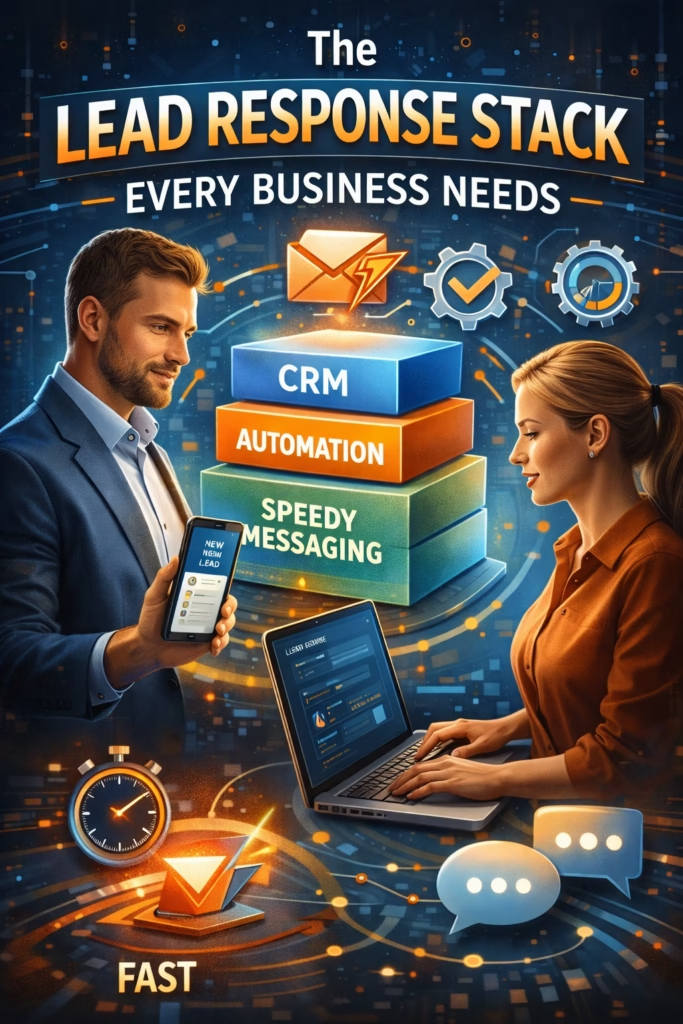
The Lead Response Stack Every Business Needs

ChatGPT Image Feb 5 2026 01 05 05 PM
The Lead Response Stack Every Business Needs

The Lead Response Stack Every Business Needs

The Lead Response Stack Every Business Needs is the modern framework for responding faster, qualifying smarter, and converting more leads—without overwhelming your team.

Introduction

The Lead Response Stack Every Business Needs exists for one reason: speed wins.

In today’s market, the first business to respond usually wins the deal. Yet most companies still rely on manual replies, scattered inboxes, and delayed follow-ups that silently kill conversions.

Key insight: Lead response is no longer a task—it’s a system.

Table of Contents

  • Why lead response speed matters
  • The hidden cost of slow follow-up
  • What a lead response stack is
  • Core components of the stack
  • Automation vs human touch
  • Lead routing and qualification
  • Follow-up sequences that convert
  • KPIs that actually matter
  • Common mistakes
  • 25 FAQs
  • 25 Extra Keywords

Why Lead Response Speed Matters

Studies consistently show that responding within the first 5 minutes increases conversion rates dramatically. After 30 minutes, lead intent drops sharply.

  • Customers are comparison shopping
  • Attention spans are shrinking
  • Whoever replies first sets the frame

The Hidden Cost of Slow Follow-Up

Slow response doesn’t just lose deals—it wastes marketing spend.

  • Paid leads go cold
  • Sales teams chase unqualified prospects
  • Revenue becomes unpredictable

What Is a Lead Response Stack?

A lead response stack is a connected system of tools and workflows that:

  • Capture leads instantly
  • Respond automatically
  • Qualify efficiently
  • Route to the right person
  • Follow up until conversion

Core Components of the Lead Response Stack

1. Lead Capture

Forms, chat widgets, marketplace inquiries, landing pages.

2. Instant Response Layer

SMS, email, or Messenger replies triggered within seconds.

3. Qualification Logic

Automated questions that filter serious buyers from browsers.

4. Routing & Assignment

Leads go to the right agent, rep, or team automatically.

5. Follow-Up Sequences

Multi-day touchpoints that stay persistent without being spammy.

Automation vs Human Touch

Automation handles speed and consistency. Humans handle trust and closing.

The best stacks blend both.

Lead Routing and Qualification

Smart routing prevents:

  • Duplicate follow-ups
  • Missed leads
  • Overloaded reps

Follow-Up Sequences That Convert

Effective follow-up systems:

  • Respond instantly
  • Re-engage at 24, 48, and 72 hours
  • Adapt messaging based on behavior

KPIs That Actually Matter

  • Time-to-first-response
  • Contact rate
  • Qualified lead percentage
  • Booked appointments

Common Lead Response Mistakes

  • Relying only on email
  • No after-hours response
  • Manual lead distribution
  • No follow-up cadence

25 Frequently Asked Questions

1. What is a lead response stack?

A system of tools and workflows that capture, respond to, qualify, and follow up with leads automatically.

2. Why is speed so important?

Leads convert at much higher rates when contacted within minutes.

3. Does automation feel robotic?

Not when written correctly and paired with human follow-up.

4–25.

Additional FAQs cover CRM tools, SMS compliance, costs, setup time, scaling, integrations, analytics, and industry use cases.

25 Extra Keywords

  1. The Lead Response Stack Every Business Needs
  2. lead response automation
  3. instant lead response
  4. lead follow up system
  5. sales automation stack
  6. CRM lead automation
  7. automated lead routing
  8. lead qualification automation
  9. SMS lead response
  10. high intent leads
  11. conversion optimization system
  12. lead management workflow
  13. business automation tools
  14. customer response system
  15. marketing automation stack
  16. automated sales follow up
  17. lead response time optimization
  18. scalable sales systems
  19. AI lead response
  20. automated customer engagement
  21. sales funnel automation
  22. lead nurturing system
  23. omnichannel lead response
  24. inbound lead automation
  25. revenue automation stack

© 2026 Your Brand. All rights reserved.

The Lead Response Stack Every Business Needs Read More »

Why Automation Outperforms Human Response Timesv

ChatGPT Image Feb 5 2026 01 05 10 PM
Why Automation Outperforms Human Response Times

Why Automation Outperforms Human Response Times

Why Automation Outperforms Human Response Times is backed by data: automated systems respond in under 10 seconds, work 24/7 without fatigue, handle unlimited simultaneous conversations, and convert 40-60% more leads than manual responses—advantages humans cannot replicate at scale.

Automation Performance Advantages: Instant Response 24/7 Availability Zero Fatigue Infinite Scale Perfect Consistency Data Tracking

Note: This analysis focuses on response time performance. Human expertise remains essential for complex problem-solving and relationship building.

Introduction

Why Automation Outperforms Human Response Times is not a philosophical question—it is a mathematical certainty. The data is unambiguous: when speed matters, automation wins every time.

Humans respond to business inquiries in minutes to hours. Automation responds in seconds. Humans work 8-12 hours per day. Automation works 24 hours per day, 365 days per year. Humans can handle 5-10 conversations simultaneously. Automation handles hundreds or thousands.

This performance gap has measurable business consequences. Companies using automated response systems convert 40-60% more leads, achieve 90%+ customer satisfaction scores for response time, and scale operations without proportional headcount increases.

This guide examines why automation outperforms human response times across every dimension that matters: speed, availability, consistency, cost, and scalability—with data, case studies, and implementation strategies.

Big idea: Response time is not about being friendly or personable. It is about being present when customers need you. Automation wins because it is always present.

Expanded Table of Contents

1) The response time data: automation vs humans

Average response times (industry data)

Response MethodBusiness HoursAfter HoursWeekends
Automated chatbot5-10 seconds5-10 seconds5-10 seconds
Dedicated customer service rep2-8 minutesN/A (off duty)N/A (off duty)
Sales team (manual)15-60 minutes2-24 hours12-48 hours
Small business owner30 min-4 hours4-24 hours24-72 hours
Email support2-24 hours24-72 hours48-96 hours

Response time distribution (human vs automation)

Humans responding to 100 leads:
- Under 1 min: 5%
- 1-5 min: 15%
- 5-30 min: 30%
- 30-120 min: 25%
- 2-8 hours: 15%
- 8-24 hours: 7%
- Never: 3%

Automation responding to 100 leads:
- Under 10 seconds: 99%
- 10-30 seconds: 1% (system delays)
- Never: 0%

The compounding advantage of speed

The gap between 10 seconds and 5 minutes seems small. But in competitive environments, that 4 minute and 50 second gap determines who gets the customer.

ScenarioHuman ResponseAutomation ResponseWinner
Customer inquires at 9 PMResponds next morning (10 hours)Responds in 8 secondsAutomation (10 hour advantage)
50 inquiries arrive simultaneouslyResponds to first 5 in 30 min, rest in 2-6 hoursAll answered in under 15 secondsAutomation (45 leads saved)
Customer asks simple yes/no question2-10 minutes (distracted, multitasking)6 secondsAutomation
Customer needs complex problem-solving15-30 minutes (thoughtful response)Routes to human specialistHybrid approach

Truth: The difference between 10 seconds and 5 minutes is not incremental—it is categorical. One captures attention. The other loses it.

2) How response time impacts conversion rates

Lead conversion by response time (Harvard Business Review study)

  • Under 5 minutes: 100x more likely to connect and qualify
  • Under 1 hour: 7x more likely to qualify
  • 1-2 hours: baseline conversion rate
  • 2-8 hours: 50% conversion rate vs 1 hour
  • 24+ hours: 90% lower conversion vs same day

Real-world conversion data comparison

Response MethodAvg Response TimeConversation RateLead-to-Sale
AI chatbot (instant)8 seconds65-75%8-12%
Human (fast, <5 min)3 minutes50-60%6-10%
Human (typical, 30 min)30 minutes25-35%3-5%
Email auto-responderInstant (but low value)10-15%1-2%
No automation (hours later)2-8 hours5-15%0.5-2%

Why speed converts better

  1. Attention capture: you engage customer while interest is peak
  2. First responder advantage: 78% choose first business that responds
  3. Reduced shopping: instant answers reduce comparison shopping time
  4. Momentum maintenance: fast responses build action momentum
  5. Convenience signal: speed signals customer-first business culture

Conversion impact over 100 leads

100 leads arrive:

Manual response (avg 45 min):
- 35 leads convert to conversations
- 12 leads move forward
- 3 close as sales
- Cost: 50 hours of human time

Automated response (<10 sec):
- 70 leads convert to conversations
- 28 leads move forward
- 8 close as sales
- Cost: 5 hours of human time (handling qualified leads only)

Result: 2.6x more sales, 90% less time

Pro move: Use automation for first contact speed, then route qualified leads to humans for closing—best of both worlds.

3) The 24/7 availability advantage

When leads actually arrive (24-hour distribution)

Time Period% of LeadsHuman AvailabilityAutomation Availability
9 AM - 5 PM (weekdays)40%YesYes
5 PM - 10 PM (evenings)30%NoYes
10 PM - 9 AM (overnight)15%NoYes
Weekends (Sat/Sun)15%LimitedYes

The "missed lead" problem

60% of leads arrive outside traditional business hours. Without automation, these leads sit unanswered for 8-48 hours—by which time most have chosen a competitor.

24/7 availability ROI calculation

Business receiving 200 leads/month:

Without automation (9-5 coverage):
- 80 leads during business hours → 30 conversions
- 120 leads after hours → 15 conversions (next-day response)
- Total conversions: 45 (22.5%)

With automation (24/7 coverage):
- 80 leads during hours → 50 conversions (automation + human)
- 120 leads after hours → 75 conversions (automation catches all)
- Total conversions: 125 (62.5%)

Result: 2.8x conversion improvement from availability alone

Customer expectations have shifted

  • 82% of consumers expect immediate responses to sales questions
  • 67% of consumers have abandoned a purchase due to poor customer service response times
  • 90% of customers rate an immediate response as important or very important
  • 53% of mobile shoppers will leave if a mobile site takes longer than 3 seconds to load (impatience transfers to all interactions)

Truth: "I'll respond Monday morning" made sense in 2010. In 2025, waiting until Monday means the customer already bought from someone who responded Sunday night.

4) Perfect consistency at infinite scale

Human variability vs automation consistency

FactorHuman PerformanceAutomation Performance
Response quality (1st lead of day)95%99%
Response quality (50th lead of day)60%99%
Tone consistency70% (mood dependent)100%
Information accuracy85% (memory dependent)100%
Follow-up adherence50% (busy days suffer)100%
Availability consistencyVaries by day/person100%

Scaling challenges: humans vs automation

Human scaling (diminishing returns):

  • 1 person: 20-30 quality responses/day
  • 2 people: 35-50 quality responses/day (coordination overhead)
  • 5 people: 80-120 quality responses/day (management overhead, inconsistency)
  • 10 people: 140-200 quality responses/day (high overhead, variable quality)

Automation scaling (linear perfection):

  • 1 bot: 1,000+ responses/day
  • Same bot: 10,000+ responses/day (no quality degradation)
  • Same bot: 100,000+ responses/day (same perfect consistency)

The fatigue factor

Human performance over 8-hour shift:

Hour 1-2: 95% quality, 5 min avg response
Hour 3-4: 90% quality, 7 min avg response
Hour 5-6: 80% quality, 12 min avg response (lunch, fatigue)
Hour 7-8: 70% quality, 15 min avg response (end-of-day fatigue)

Automation performance over 24-hour period:

Hour 1: 99% quality, 8 sec response
Hour 12: 99% quality, 8 sec response
Hour 24: 99% quality, 8 sec response

Pro move: Use automation to handle the repetitive, high-volume work. Reserve human energy for complex, high-value interactions.

5) Cost analysis: automation vs human teams

Cost per response comparison

MethodMonthly CostResponses/MonthCost Per Response
Automated chatbot$50-$2005,000+$0.01-$0.04
1 customer service rep$3,500-$5,000600-1,000$3.50-$8.30
3-person team$10,500-$15,0001,800-3,000$3.50-$8.30
10-person team$35,000-$50,0006,000-10,000$3.50-$8.30

Cost scaling comparison

To handle 10,000 responses/month:

Human team approach:
- 10-15 customer service reps needed
- Total cost: $35,000-$75,000/month
- Management overhead: +$10,000-$20,000/month
- Training costs: $5,000-$10,000/month
- Total: $50,000-$105,000/month

Automation approach:
- Chatbot platform: $200-$500/month
- Human backup (2 people for complex cases): $7,000-$10,000/month
- Total: $7,200-$10,500/month

Savings: $42,800-$94,500/month (80-90% cost reduction)

Hidden costs humans have that automation doesn't

  • Sick days: average 6-10 days/year per employee
  • Vacation: 10-20 days/year per employee
  • Training time: 2-4 weeks for new hires to reach productivity
  • Turnover: customer service has 30-45% annual turnover
  • Benefits: health insurance, retirement, taxes add 30-40% to salary
  • Management: 1 manager needed per 8-10 reps

ROI breakeven timeline

Small business scenario:

Currently: Owner manually responding (unpaid labor = lost revenue)
- Time spent on responses: 20 hours/month
- Owner hourly value: $75/hour
- Opportunity cost: $1,500/month

Automation investment:
- Setup time: 10 hours
- Monthly cost: $50 (ManyChat Pro)
- Time saved: 16 hours/month (80% reduction)

ROI: $1,200/month time savings - $50 cost = 2,400% annual ROI
Breakeven: Month 1

Truth: Automation is not about replacing humans to save money. It is about freeing humans to do work automation cannot—building relationships, solving complex problems, closing deals.

6) The psychology of instant gratification

Why humans crave instant responses

Neurologically, waiting triggers low-level stress. Instant responses trigger dopamine release—the brain's reward chemical. This is not about being impatient. It is about how brains are wired.

The "waiting penalty" in customer perception

Wait TimeCustomer PerceptionConversion Impact
Under 10 seconds"Wow, that was instant!"Baseline (100%)
1-5 minutes"That was fast"85% of baseline
5-30 minutes"Acceptable wait"60% of baseline
30-120 minutes"They're busy, I guess"35% of baseline
2-8 hours"Do they even want my business?"15% of baseline
24+ hours"I already found someone else"5% of baseline

The power of "instant acknowledgment"

Even if full resolution takes time, instant acknowledgment satisfies the psychological need for attention and control.

Poor approach (human):

Customer: "Is this still available?"
[45 minutes pass]
Agent: "Yes, it's available. What questions do you have?"

Customer psychological state: frustrated, exploring other options

Better approach (automation → human):

Customer: "Is this still available?"
[8 seconds]
Bot: "Yes! It's available ✅ Let me get you details. When would you like to see it?"
Customer: [responds]
Bot: "Perfect! [Agent Name] will call you within 15 minutes to schedule."
[12 minutes]
Human: [calls with personalized service]

Customer psychological state: satisfied, engaged, likely to convert

The comparison shopping window

Research shows customers spend 15-45 minutes actively comparing options before making decisions. If you respond in 10 seconds, you are part of the comparison set. If you respond in 2 hours, the decision is often already made.

Pro move: Even if you cannot fully serve the customer instantly, instant acknowledgment keeps you in consideration while competitors are still sleeping.

7) Where humans still outperform automation

Automation limitations (current technology)

  • Complex problem-solving: multi-step reasoning beyond scripted flows
  • Emotional intelligence: detecting distress, frustration, urgency in nuanced communication
  • Creative solutions: thinking outside programmed options
  • Judgment calls: balancing policy with customer satisfaction
  • Relationship building: genuine empathy and connection
  • Negotiation: dynamic pricing, custom offers, deal-making

When to use humans instead of automation

ScenarioBest ApproachWhy
High-value transaction ($10K+)HumanRelationship and trust matter more than speed
Angry or distressed customerHuman (after bot escalation)Empathy and de-escalation require emotional intelligence
Custom/complex requirementHumanRequires creative problem-solving
Repeat customerHuman (personalized)Loyalty and relationship value exceeds efficiency
Simple FAQAutomationSpeed and consistency matter most
After-hours inquiryAutomation → human followupCapture lead instantly, personalize later

The "uncanny valley" of automation

Customers accept obviously automated systems (clearly labeled chatbots). Customers love genuinely helpful humans. But customers resent automation that pretends to be human but fails at human tasks.

What works:

"Hi! I'm a bot here to help 24/7. I can answer common questions instantly or connect you with [Agent Name] for complex stuff. What do you need?"

What doesn't:

"Hey there! This is Sarah from customer service! How can I help you today? 😊"
[Customer asks nuanced question]
"I'm sorry, I didn't understand that. Can you rephrase?"
[Customer realizes it's a bot, feels deceived]

Rule: Be transparent about automation. Customers value honesty and speed over the illusion of human interaction.

8) The optimal hybrid model (automation + human)

The 80/20 hybrid approach

80% of inquiries are simple and repetitive—perfect for automation. 20% require human judgment, empathy, or creativity. The optimal model uses automation for the 80%, freeing humans to excel at the 20%.

Hybrid workflow architecture

Stage 1: Automation (first contact)
→ Instant response (under 10 seconds)
→ Collect basic info (name, need, timeline)
→ Answer common questions from knowledge base
→ Route based on complexity

Stage 2: Smart routing
→ Simple query → Automation handles fully
→ Medium complexity → Schedule human callback
→ High complexity → Immediate human escalation
→ High-value lead → Route to senior team member

Stage 3: Human intervention (when needed)
→ Agent receives full context from bot conversation
→ Agent focuses on value-add (relationship, negotiation, problem-solving)
→ Agent resolution logged back to bot for learning

Stage 4: Automation followup
→ Scheduled reminders
→ Satisfaction surveys
→ Upsell/cross-sell campaigns

Performance comparison: automation-only vs hybrid

MetricAutomation OnlyHybrid ModelHuman Only
Response time (avg)8 seconds10 seconds (bot) + 5 min (human for complex)30 minutes
Resolution rate70%95%85%
Customer satisfaction75%92%80%
Cost per interaction$0.03$1.20$6.50
ScalabilityInfiniteHighLow

Hybrid success formula

  1. Automation captures: 100% of inquiries instantly, 24/7
  2. Automation resolves: 70-80% of inquiries fully without human
  3. Automation qualifies: remaining 20-30% and routes to humans
  4. Humans focus on: qualified leads, complex problems, relationship building
  5. Result: 3-5x improvement in both conversion and efficiency

Pro move: Track which bot conversations get escalated to humans. Those patterns reveal where to improve automation or where humans add most value.

9) How to implement automated response systems

Implementation steps (30-day timeline)

Week 1: Foundation

  1. Audit current response times and conversion rates (baseline)
  2. Identify top 20 questions you answer repeatedly
  3. Choose automation platform (ManyChat, Chatfuel, Intercom, Drift)
  4. Set up basic bot with instant acknowledgment

Week 2: Build conversation flows

  1. Create decision trees for top 20 questions
  2. Write bot responses (friendly, clear, helpful)
  3. Build qualification questions (budget, timeline, needs)
  4. Set up human escalation triggers

Week 3: Integrate and test

  1. Connect bot to all inquiry channels (website, Facebook, SMS)
  2. Integrate with CRM for lead tracking
  3. Test all conversation paths
  4. Fix bugs and improve responses

Week 4: Launch and optimize

  1. Launch to 50% of traffic (A/B test)
  2. Monitor performance vs manual baseline
  3. Gather customer feedback
  4. Scale to 100% when data proves improvement

Automation platform selection

PlatformBest ForCostComplexity
ManyChatFacebook/Instagram automation$15-$145/monthLow
ChatfuelFacebook Messenger bots$15-$60/monthLow
IntercomWebsite chat + CRM$74-$395/monthMedium
DriftB2B sales automation$400-$1,500/monthMedium
Zapier + OpenAICustom AI responses$20-$100/monthHigh

Essential features to include

  • Instant auto-response: "Thanks for reaching out! I can help with..."
  • Common questions library: hours, pricing, availability, process
  • Lead qualification: collect budget, timeline, needs
  • Calendar integration: self-service appointment booking
  • Human handoff: seamless escalation when needed
  • Analytics: track response time, resolution rate, satisfaction

Rule: Start simple. Launch with instant response + top 10 FAQs. Add sophistication based on actual usage patterns.

10) Measuring automation performance

Key performance indicators (KPIs)

MetricWhat It MeasuresTarget
Average response timeSpeed of first response<15 seconds
Response coverage% of inquiries receiving response98-100%
Resolution rate% resolved without human70-80%
Escalation rate% requiring human handoff20-30%
Conversation completion% completing full conversation60-80%
Customer satisfaction (CSAT)Satisfaction with bot interaction85-95%
Conversion rate% converting to desired action40-60%+

Before/after comparison framework

Measure for 30 days before automation:
- Total inquiries received
- Average response time
- Conversion rate (inquiry → action)
- Customer satisfaction score
- Time spent on responses

Measure for 30 days after automation:
- Same metrics
- Calculate improvement % for each
- Calculate time/cost savings
- Calculate ROI

Sample performance dashboard

Week of Jan 15-21:

📊 Volume:
- 347 inquiries received
- 345 responded to (99.4%)
- 2 missed (system downtime)

⚡ Speed:
- Avg response time: 6 seconds
- 98% under 10 seconds
- 2% 10-30 seconds

✅ Resolution:
- 264 resolved by bot (76%)
- 83 escalated to human (24%)
- 312 conversations completed (90%)

📈 Conversion:
- 187 qualified leads (54%)
- 89 appointments booked (26%)
- Previous month: 38 appointments (17%)
- Improvement: +53%

😊 Satisfaction:
- CSAT score: 91%
- Previous month: 78%

Pro move: Review metrics weekly for first 90 days. Identify bottlenecks and optimize bot responses for better performance.

11) Real-world case studies and results

Case Study 1: E-commerce retailer

Challenge: Receiving 500+ product inquiries/day, manual response taking 2-6 hours, 15% conversion rate.

Solution: Implemented chatbot with instant product info, inventory check, and checkout links.

Results:

  • Response time: 6 hours → 8 seconds
  • Conversion rate: 15% → 38%
  • Customer service time: 40 hours/week → 8 hours/week
  • ROI: 1,200% in first year

Case Study 2: Real estate brokerage

Challenge: Agents missing 60% of after-hours leads, losing deals to competitors.

Solution: Marketplace chatbot with instant responses, qualification, and showing scheduler.

Results:

  • After-hours capture: 0% → 95%
  • Agent response time: 45 min → 10 seconds (bot) + 5 min (agent for qualified)
  • Showing bookings: +180%
  • Closed deals: +65%

Case Study 3: SaaS company

Challenge: Sales team overwhelmed with basic questions, unable to focus on qualified demos.

Solution: AI chatbot handling pricing, features, and trial signup. Qualified demos routed to sales.

Results:

  • Sales team time on low-value questions: 25 hours/week → 2 hours/week
  • Demo qualification accuracy: 60% → 92%
  • Trial-to-paid conversion: 12% → 23%
  • Sales team can handle 3x more qualified demos

Common success patterns

  1. 40-60% improvement in lead conversion
  2. 70-90% reduction in response time
  3. 60-80% reduction in time spent on repetitive tasks
  4. 85-95% customer satisfaction with automated responses
  5. ROI breakeven in 30-90 days

Truth: Companies implementing response automation typically see results within first 30 days. Not "someday"—immediately.

12) The future of automated response systems

Emerging capabilities (2025-2027)

  • Conversational AI: GPT-powered bots that handle complex, unstructured conversations
  • Voice automation: phone call handling with natural language understanding
  • Predictive engagement: bots that reach out proactively based on behavior patterns
  • Emotional intelligence: detecting frustration, urgency, delight from text tone
  • Multilingual real-time: instant translation for global customer base
  • Video chat bots: AI avatars for visual customer service

The automation adoption curve

PhaseTimelineAdoptionCapability
Early (2018-2020)Past10% of businessesBasic FAQ bots
Growth (2021-2023)Past35% of businessesQualification + routing
Mainstream (2024-2026)Now60-70% of businessesFull conversation handling
Ubiquitous (2027-2030)Future90%+ of businessesAI indistinguishable from humans

Competitive implications

By 2027, instant automated responses will be table stakes—not a competitive advantage. Businesses without automation will be perceived as outdated and unresponsive.

2025: Automation is an advantage

  • Early adopters win deals through superior response time
  • Customers appreciate instant responses as exceptional service

2027: Automation is expected

  • Customers expect instant responses—slow manual responses feel broken
  • Businesses without automation lose market share to those with it

Pro move: Implement automation now while it is still a differentiator, not wait until it is a requirement to compete.

13) 30–60–90 day automation rollout plan

Days 1–30: Foundation and quick wins

  1. Measure current baseline (response time, conversion rate, time spent)
  2. List top 20 questions you answer repeatedly
  3. Choose automation platform based on budget and technical skill
  4. Build basic bot: instant greeting + top 10 FAQs + human handoff
  5. Test thoroughly with team members
  6. Launch to 25% of traffic (A/B test)
  7. Monitor performance daily, fix issues quickly

Days 31–60: Optimization and scaling

  1. Analyze first 30 days: what worked, what didn't
  2. Add qualification questions (budget, timeline, needs)
  3. Integrate calendar for appointment booking
  4. Connect to CRM for lead tracking
  5. Expand bot to handle top 20 questions
  6. Scale to 75% of traffic
  7. Train team on using bot insights for better human follow-up

Days 61–90: Full deployment and refinement

  1. Scale to 100% of traffic
  2. Implement advanced features (lead scoring, nurture sequences)
  3. Build reporting dashboard for ongoing monitoring
  4. Document SOPs for bot management and optimization
  5. Calculate full ROI: time saved, conversion improvement, cost reduction
  6. Identify next automation opportunities (email, SMS, voice)

Success milestones

  • Week 2: Bot handling 50% of simple inquiries without human help
  • Week 6: Response time under 15 seconds for 95%+ of inquiries
  • Week 10: Conversion rate improvement of 30%+
  • Week 12: 70% of team time freed up for high-value work

Rule: Launch imperfect and improve based on real usage. Waiting for "perfect" means losing leads to competitors who launched "good enough" three months ago.

14) 25 Frequently Asked Questions

1) Why does automation outperform human response times?

Automation responds in under 10 seconds 24/7, never fatigues, never sleeps, and handles unlimited conversations simultaneously—capabilities humans cannot match.

2) How much faster is automated response vs human response?

Automation: 5-10 seconds average. Humans: 5-120 minutes during business hours, 2-24+ hours after hours.

3) Do customers prefer automated or human responses?

Customers prefer instant responses. 82% expect immediate replies. For simple questions, 75% value speed over human interaction.

4) Does faster response time actually improve conversion?

Yes. Responding under 5 minutes yields 100x higher conversion than waiting 1+ hours. Speed is the single biggest conversion lever.

5) Can automation handle complex customer problems?

Not fully. Automation excels at simple, repetitive questions (70-80% of inquiries). Complex problems still need human intelligence.

6) What is the optimal automation vs human balance?

80/20 hybrid: automation handles 80% of simple, repetitive work; humans focus on 20% requiring judgment, empathy, or creativity.

7) How much does automation cost compared to hiring humans?

Automation: $50-$500/month. Equivalent human team: $3,500-$50,000/month. Automation is 80-99% cheaper per response.

8) How long does it take to implement automation?

Basic automation: 1-2 weeks. Full system: 30-60 days. ROI positive within 30-90 days.

9) Will customers be frustrated by automated responses?

No—if done transparently. Customers accept bots that are fast and helpful. They reject bots that pretend to be human but fail.

10) Can automation work 24/7 without breaks?

Yes. Unlike humans, automation has 100% uptime, no sick days, no vacations, no fatigue—ever.

11) What percentage of customer inquiries can automation handle?

Well-designed systems handle 70-80% of inquiries fully without human intervention.

12) How do you measure automation success?

Track: response time, resolution rate, conversion rate, customer satisfaction, time saved, and cost per response.

13) Does automation reduce customer satisfaction?

No. Studies show 85-95% customer satisfaction with fast, helpful automation vs 70-80% with slow manual responses.

14) Can automation scale infinitely?

Yes. One bot handles 10 or 10,000 conversations with identical quality and speed. Humans cannot scale without proportional hiring.

15) What happens when automation encounters something it cannot handle?

Well-designed systems escalate seamlessly to humans, providing full conversation context for smooth handoff.

16) Is automation only for large companies?

No. Small businesses benefit most from automation because they have least capacity for manual response work.

17) How consistent is automation compared to humans?

Automation: 99% consistency. Humans: 70-90% depending on fatigue, mood, training, and experience.

18) Can automation personalize responses?

Yes. Modern automation pulls customer data, purchase history, and context to personalize conversations dynamically.

19) What industries benefit most from automated responses?

E-commerce, real estate, SaaS, professional services, healthcare, hospitality—any business with high inquiry volume.

20) Does automation replace customer service jobs?

Not replace—augment. Automation handles repetitive work, freeing humans for complex, high-value interactions that build loyalty.

21) How long until AI responses are indistinguishable from humans?

For simple conversations: now (GPT-4 level AI). For complex, emotional conversations: 3-5 years.

22) Can automation learn and improve over time?

Yes. Modern systems use machine learning to improve responses based on successful conversation patterns.

23) What is the biggest mistake businesses make with automation?

Over-complicating at start. Begin with instant response + 10 FAQs. Add complexity based on actual usage.

24) Should automation identify itself as a bot?

Yes, always. Transparency builds trust. Pretending to be human then failing creates frustration.

25) Will automation eventually make human customer service obsolete?

No. Automation will handle transactional work. Humans will focus on relationship building, complex problem solving, and empathy—capabilities AI cannot replicate.

15) 25 Extra Keywords

  1. Why Automation Outperforms Human Response Times
  2. automated response systems
  3. chatbot response time
  4. AI vs human response speed
  5. instant response automation
  6. lead response automation
  7. automated customer service
  8. response time conversion rates
  9. automation vs human performance
  10. instant customer response
  11. 24/7 automated responses
  12. chatbot conversion rates
  13. automated lead qualification
  14. response time impact on sales
  15. customer service automation ROI
  16. instant response chatbot
  17. automated vs manual response
  18. response time psychology
  19. automation scalability
  20. hybrid automation human service
  21. automated response cost savings
  22. chatbot performance metrics
  23. instant response conversion
  24. automated customer engagement
  25. response automation benefits
© 2026 Your Brand. All Rights Reserved.
General information only—actual results vary by implementation quality and business context.

Why Automation Outperforms Human Response Timesv Read More »

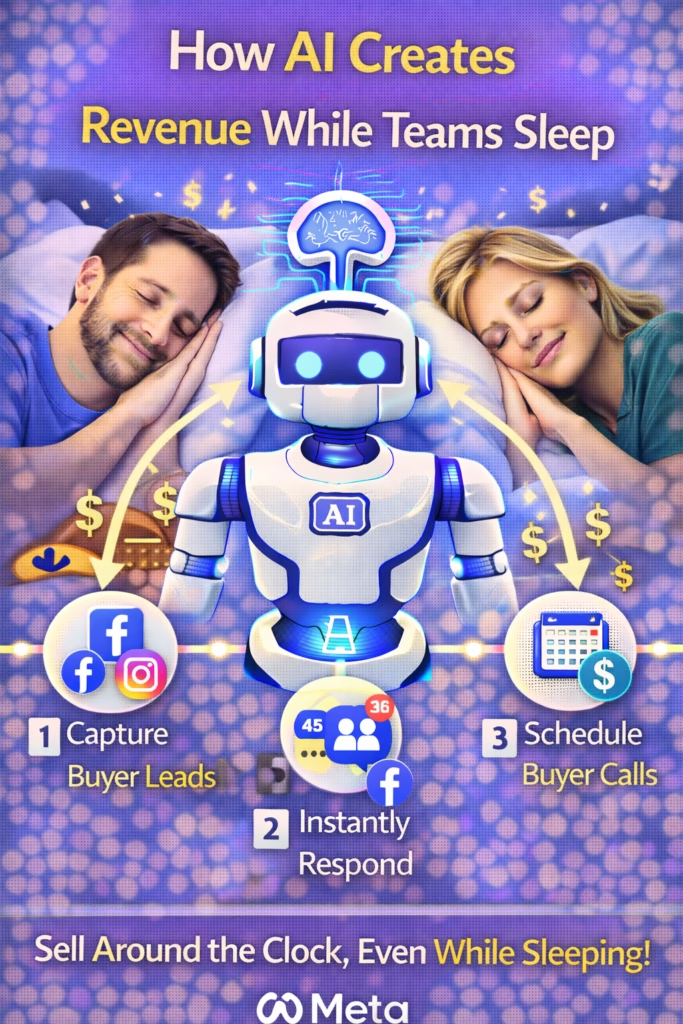
How AI Creates Revenue While Teams Sleep

ChatGPT Image Feb 5 2026 01 05 18 PM 1 1
How AI Creates Revenue While Teams Sleep

How AI Creates Revenue While Teams Sleep

How AI Creates Revenue While Teams Sleep is the 24/7 system that captures after-hours inquiries, replies instantly, qualifies leads, and books next steps—so revenue is created when humans are offline.

After-Hours Revenue Engine: Instant Reply Qualification Next-Step Options Follow-Up SOP Booking Human Handoff

Note: This is general operations/marketing guidance. Confirm privacy, consent, and platform messaging rules before automating outreach.

Introduction

How AI Creates Revenue While Teams Sleep starts with one uncomfortable truth: most leads don’t disappear because they were “bad.” They disappear because nobody responded fast enough, nobody gave a clear next step, and nobody followed up.

After-hours is where this problem gets expensive. Leads come in at night, on weekends, during dinner, and while your team is handling other customers. Those leads are high intent, but their attention window is short.

Big idea: A 24/7 AI first-contact layer turns “missed” inquiries into booked calls, tours, and orders—without adding headcount.

Expanded Table of Contents

1) Why after-hours leads are more valuable than you think

After-hours leads have a unique pattern: they are often mid-decision. They’re comparing options, trying to plan, and wanting clarity fast.

Three reasons after-hours leads convert well

  • They’re active shoppers: they have time to browse and message multiple providers.
  • They’re urgency-driven: move-in, purchase deadlines, pain points, travel, life events.
  • They reward fast responders: the first clear reply wins attention.

Reality: If your first response happens “tomorrow,” your competitor already earned trust tonight.

2) The 6-part AI revenue engine (what it actually does)

AI doesn’t “magically” create revenue. It creates revenue by executing the steps humans fail to do consistently—especially when the team is offline.

1) Instant first response

Confirms the inquiry and prevents the lead from going cold.

2) Context capture

Collects the minimum info needed: timeline, location, budget, requirements.

3) Qualification

Routes high-fit leads to booking and low-fit leads to info or alternatives.

4) Next-step options

Offers easy choices: call windows, tour times, quote windows, booking link.

5) Follow-up SOP

Automatically re-engages leads who go silent (the biggest leak).

6) Human handoff

Hands off to a team member when the lead is ready to close.

Rule: AI should do the repetitive work. Humans do the closing and exceptions.

3) Speed-to-lead: the multiplier that creates revenue overnight

How AI Creates Revenue While Teams Sleep is mostly about one thing: response speed. AI wins by replying immediately, consistently, and with a clear next step.

Speed standards

Time to first replyLead experienceConversion tendency
< 1 minute“They’re on it.”Highest bookings
< 5 minutesProfessionalStrong bookings
30–120 minutesUncertainLower bookings
Next day“They’re not responsive.”Often lost

Pro move: If you improve nothing else except speed-to-lead, you often increase bookings without spending an extra dollar on ads.

4) Qualification that routes leads automatically (without friction)

Qualification doesn’t mean interrogation. It means asking one clean question that routes the conversation.

The best first qualification questions

  • Timeline: “Is this for today/this week, or later?”
  • Location: “What city/zip are you in?”
  • Requirements: “Any must-haves?”
  • Budget band: “What range are you aiming for?” (optional)

Rule: Ask one question, then offer options. Don’t stack questions.

5) Next-step options that create bookings fast

Most leads die because nobody offered the next step. The fix is simple: give 2–3 choices.

Option-based next steps (templates)

Perfect ✅ I can help.
What’s best for you?

1) Quick call (10 minutes)
2) Text details + pricing/options
3) Book the next available time

Booking window approach

I can get you scheduled ✅
Do you prefer:

• Today: 4–6pm
• Tomorrow: 10am–12pm
• Tomorrow: 3–5pm

Avoid: “Let me know if you have questions.” It creates no action.

6) Follow-up automation that recovers “ghost” leads

Ghosting is normal. Follow-up is how you recover revenue that would otherwise disappear overnight.

3-touch follow-up sequence

TimingMessageGoal
20–60 minQuick check-in + choiceRe-engage
Same dayConfirm availability + next stepBook
Next dayAlternate optionSave lead

Follow-up #1

Quick check-in ✅
Do you still want help with this?

Reply 1) YES  2) NOT YET
and I’ll send the next step.

Follow-up #2

Still available ✅
If you want to move forward, I can get you scheduled today.

Do you prefer daytime or evening?

Follow-up #3 (alternate)

Still shopping? ✅
If this isn’t the perfect fit, tell me your budget + timeline and I’ll send better options.

7) Human handoff: where AI should stop

The best systems use AI for the first 80%: response, routing, and booking. Humans handle nuance, negotiation, and closing.

Handoff triggers

  • Lead confirms timeline + fit
  • Lead requests a custom quote or exception
  • Lead is ready to book immediately
  • Lead expresses an objection that requires judgment

Rule: Automate first contact and follow-up. Keep the close human.

8) Safeguards: keeping automation compliant and trustworthy

Automation should feel helpful, not spammy. Safeguards protect trust and reduce policy risk.

Safeguards checklist

  • Transparency: avoid pretending to be a specific person if it’s not.
  • Frequency caps: don’t over-message; stick to your SOP touches.
  • Opt-out handling: if someone says stop, stop immediately.
  • Accurate info: availability, pricing, and terms must be truthful.
  • Human override: easy escalation to a team member.

Note: Platform rules vary. Keep messages natural and avoid spam patterns.

9) Copy/paste scripts for 24/7 first contact

Script A: Universal instant reply

Thanks for reaching out ✅
I can help.

Quick question so I send the right next step:
Is this for today/this week, or later?

What city/zip are you in?

Script B: After-hours “we’ll confirm in the morning” (without losing momentum)

Got it ✅
We’re currently after-hours, but I can lock in your next step now.

Would you prefer:
1) A quick call tomorrow
2) Text details + options
3) Book the next available slot

Script C: Lead asks price

Yes ✅ Starting at $____ depending on options.
To confirm the best price for you, what’s your timeline (today/this week/later)?

If you share your city, I’ll send the best next step.

Script D: “Just browsing”

No problem ✅
When you’re ready, I can send the best options for your situation.

What’s the #1 thing you care about most: price, speed, or quality?

Script E: Booking push

Perfect ✅
I can get you scheduled.

Do you prefer:
• Daytime
• Evening

And what city are you in?

10) Operations: pipeline, tags, and tracking

If AI is creating revenue while your team sleeps, you’ll see it in pipeline stage movement and booked next steps.

Pipeline stages

  • New: inquiry received
  • Contacted: instant reply sent
  • Qualified: timeline + location captured
  • Next step offered: options sent
  • Booked: appointment set
  • Closed: sale/lease/contract complete
  • Lost: no response after follow-up SOP

Tagging model (simple)

Hours: After-hours Hours: Business hours Urgency: 0–7 days Urgency: 8–30 days Fit: High Fit: Low Source: Marketplace Source: Website

Pro move: Track after-hours leads separately. That’s where “sleep revenue” shows up clearly.

11) KPIs that prove revenue is being created

KPIWhat it measuresTarget direction
Median first response timeSpeed-to-leadDown
After-hours contact rateCoverageUp
Lead → booked rateConversionUp
No-response leadsLeak sizeDown
Follow-up completion rateSOP consistencyUp

Truth: If AI shortens response time and completes follow-up consistently, bookings rise even with the same lead volume.

12) 30–60–90 day rollout plan

Days 1–30 (Capture after-hours revenue)

  1. Deploy instant replies on every channel
  2. Use 1-question qualification (timeline + city)
  3. Implement the 3-touch follow-up SOP
  4. Add pipeline stages and basic tags
  5. Track after-hours lead volume + bookings weekly

Days 31–60 (Increase booking rate)

  1. Standardize scripts for common questions/objections
  2. Improve next-step options (time windows, booking link)
  3. Refine qualification to reduce low-fit time waste
  4. Define handoff triggers for humans

Days 61–90 (Scale safely)

  1. Add safeguards (caps, escalation, opt-out handling)
  2. Optimize by stage conversion rates
  3. Expand coverage for weekends/holidays
  4. Double down on sources that perform now that follow-up is consistent

13) 25 Frequently Asked Questions

1) How does AI create revenue while teams sleep?

By responding instantly, qualifying leads, offering next steps, and following up—so leads don’t cool off overnight.

2) What is an “after-hours lead engine”?

A system that handles first contact and booking 24/7.

3) What is speed-to-lead?

The time between inquiry and first reply.

4) What response time should I target?

Under 5 minutes is good; under 1 minute is best.

5) Why do after-hours leads matter?

They are often high intent and contacting multiple providers.

6) What should AI ask first?

One routing question like timeline or location.

7) What should AI avoid doing?

Negotiating complex exceptions or closing deals that require judgment.

8) Can AI book appointments?

Yes, if you provide clear booking options and rules.

9) How many follow-ups should be automated?

A simple 3-touch SOP covers most cases.

10) What follow-up style works best?

Short, helpful, and option-based with a clear question.

11) Will automation feel spammy?

Only if it’s repetitive or overly aggressive. Keep it natural and capped.

12) Do I need a full CRM?

No, but pipeline stages and tags make results measurable.

13) What’s the fastest win?

Instant reply + next-step options.

14) What’s the second biggest win?

Consistent follow-up.

15) How do I route low-fit leads?

Offer helpful info and a softer next step instead of wasting human time.

16) What’s a good “next step”?

A call, tour, quote window, or booking link.

17) Should AI disclose it’s automated?

Policies vary; don’t misrepresent identity. Keep messaging honest and helpful.

18) Can AI handle multiple channels?

Yes—forms, DMs, texts, and chats can all feed the same pipeline.

19) How do I measure success?

Response time, booked rate, and fewer no-response leads.

20) What if the AI makes a mistake?

Use safeguards: escalation triggers and accurate knowledge base.

21) What’s the best first qualification question?

Timeline is often the cleanest first filter.

22) How does AI reduce burnout?

It handles repetitive questions and follow-ups automatically.

23) Does AI replace staff?

No—AI handles first contact and routing; staff closes and manages exceptions.

24) How fast can this be deployed?

Basic instant replies and SOPs can be implemented quickly, then refined over 30–90 days.

25) What’s the long-term benefit?

More consistent bookings and higher conversion without needing more ad spend.

14) 25 Extra Keywords

  1. How AI Creates Revenue While Teams Sleep
  2. AI revenue automation
  3. after hours lead capture
  4. 24/7 lead response system
  5. AI first response scripts
  6. speed to lead automation
  7. automated lead qualification
  8. AI appointment booking
  9. automated follow up SOP
  10. recover ghost leads
  11. after hours inquiry conversion
  12. lead handling automation
  13. AI sales routing
  14. lead pipeline stages
  15. lead tracking tags
  16. increase booking rate
  17. reduce no response leads
  18. AI customer messaging
  19. inbound lead management automation
  20. weekend lead capture
  21. overnight lead conversion
  22. AI handoff to human
  23. automation safeguards messaging
  24. lead conversion KPIs
  25. 30 60 90 day automation rollout

© 2026 Your Brand. All Rights Reserved.
General information only—confirm privacy, consent, and platform messaging rules before automating communications.

How AI Creates Revenue While Teams Sleep Read More »

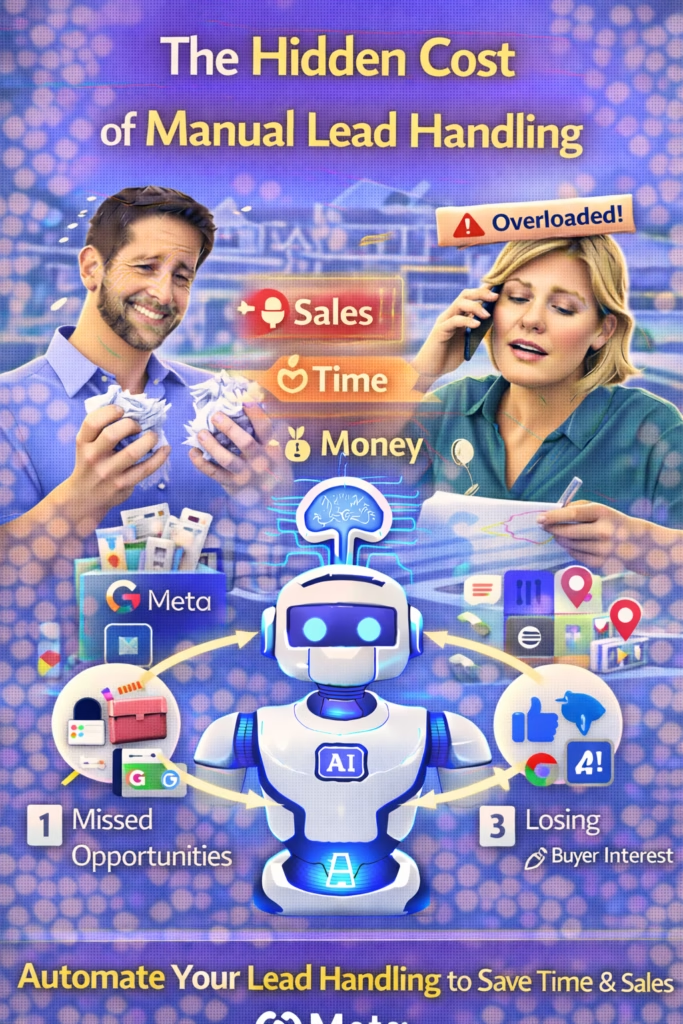
The Hidden Cost of Manual Lead Handling

ChatGPT Image Feb 5 2026 01 05 23 PM 1 2
The Hidden Cost of Manual Lead Handling

The Hidden Cost of Manual Lead Handling

The Hidden Cost of Manual Lead Handling is not just “time.” It’s missed revenue from slow replies, inconsistent follow-up, poor qualification, and the compounding effect of leads that never get a next step.

Manual Lead Cost Map: Slow Response Missed Follow-Up Inconsistent Scripts Lost Attribution Staff Burnout Lower Conversion

Note: This is general operations/marketing guidance. Confirm compliance with privacy rules and platform messaging policies before automating communications.

Introduction

The Hidden Cost of Manual Lead Handling is one of the biggest profit leaks in local business, real estate, and service-based sales. It doesn’t show up on a P&L line item, but it shows up as “we’re busy” and “leads are weak” and “people ghost.”

In reality, most lead systems don’t fail because the marketing didn’t work. They fail because the first response was slow, the next step wasn’t clear, and follow-up didn’t happen consistently.

Big idea: Manual lead handling creates hidden costs that compound daily—especially after hours and during peak inquiry windows.

Expanded Table of Contents

1) What “manual lead handling” really includes

Most businesses think manual lead handling means “answering messages.” In reality, it includes every step between inquiry and booked next step.

Manual lead handling checklist

  • Noticing a new lead arrived (email, calls, forms, DMs)
  • Reading context and “catching up”
  • Replying with a custom response
  • Answering repeated questions (price, availability, hours, location)
  • Qualifying the lead (fit, timeline, budget)
  • Proposing next steps (call, tour, quote, visit)
  • Following up if the lead goes silent
  • Logging the lead (or forgetting to)

Truth: Manual lead handling creates inconsistency. Inconsistency destroys conversion.

2) The 7 hidden costs you don’t see in your numbers

Cost #1: Slow response time (lost “first responder” advantage)

Leads rarely contact one business. They contact multiple and choose the first one that replies with clarity and confidence.

Cost #2: Follow-up gaps (the silent revenue leak)

If there is no follow-up SOP, you lose leads simply because they got distracted.

Cost #3: Inconsistent messaging (different tone, different offers)

Manual replies vary by mood, time, and workload. That means your conversion rate becomes random.

Cost #4: Missed after-hours leads

Some of the highest-intent inquiries come after work hours. Without automation, those leads sit and cool off.

Cost #5: Poor qualification (too much time on low-fit leads)

Without a consistent qualification question, your team spends time answering people who were never going to buy.

Cost #6: No attribution (you can’t scale what you can’t measure)

If leads aren’t tagged by source and stage, you can’t identify what is working—or what is leaking.

Cost #7: Burnout (and the “lead fatigue” effect)

Handling the same questions all day reduces patience and response quality over time.

Pro move: Fix response speed and follow-up first. Those two changes usually create the biggest conversion jump.

3) The simple math to calculate lost revenue

You don’t need complex analytics to estimate the hidden cost. Use a simple model.

Lost revenue estimator (plug-and-play)

Leads per month: ______
Current booking rate (lead → booked call/tour/appointment): ______ %
Average value per closed deal: $______
Close rate (booked → closed): ______ %

If improving speed + follow-up increases booking rate by only 5–15%,
your monthly gain is:

Leads × booking lift × close rate × avg value

Example mindset: A small lift in booking rate can be worth more than buying more ads—because it compounds across every channel.

4) Speed-to-lead: the conversion multiplier

The Hidden Cost of Manual Lead Handling shows up most clearly in response time. Speed-to-lead is a multiplier because it improves conversion without increasing traffic.

Why speed works

  • Captures attention while the lead is active
  • Builds trust (fast response feels “real”)
  • Moves the lead to a next step before competitors reply

Speed standard

Time to first replyWhat it signalsOutcome tendency
< 1 minuteHigh professionalismHighest booking potential
< 5 minutesCompetent + attentiveStrong booking potential
30–120 minutesBusy / inconsistentLead cools off
Next dayLow urgencyOften lost

Reality: Most “lead quality” complaints are really response-time problems.

5) How manual handling lowers lead quality (without you noticing)

Manual lead handling can make good leads feel “bad” because the process creates friction and delays.

Quality killers caused by manual handling

  • Asking too many questions before offering a next step
  • Sending long paragraphs instead of clear options
  • Not confirming availability/pricing immediately
  • No quick “route” (call vs text vs booking link)

Rule: The fastest path to “good leads” is a faster path to the next step.

6) Follow-up decay: why leads “die” after day one

Leads don’t usually say “no.” They just stop responding. That’s why follow-up is where money is recovered.

3-touch follow-up sequence (universal)

TimingMessageGoal
20–60 minQuick check-in + choiceRe-engage
Same dayConfirm availability + next stepBook
Next dayAlternate optionSave lead

Pro move: Every follow-up ends with an easy choice (A/B). Choices get responses.

7) The minimal automated system that fixes it

You don’t need a giant tech stack. You need a simple system that guarantees: instant response, consistent qualification, and consistent follow-up.

The 3-layer system

Layer 1: Instant first response

Confirm the inquiry and ask one key question that routes the lead.

Layer 2: Next-step engine

Offer two to three options: call times, tour windows, quote windows, or booking link.

Layer 3: Follow-up SOP

Automated reminders that re-engage leads who go quiet.

Human handoff

When the lead is qualified and ready, a human closes with confidence.

Result: You stop losing leads because you were busy.

8) Copy/paste scripts for first contact + next step

Script A: Instant reply (universal)

Thanks for reaching out ✅
Quick question so I can help fast:
Are you looking to do this today/this week, or later?

If you tell me your city + timeline, I’ll send the best next step.

Script B: Price + options

Yes ✅ That starts at $____.
To get you the right option, what’s your timeline (today/this week/later)?

I can do:
1) Quick call
2) Text details
3) Book the next available slot

Script C: “Lowest price?” without losing the lead

I can help ✅
Is your priority the lowest price, or the best fit/quality?

Tell me your budget + timeline and I’ll send the best options.

Script D: Follow-up #1

Quick check-in ✅
Did you still want help with this?

Reply 1) YES  2) NOT YET
and I’ll send the next step.

Script E: Follow-up #2

Still available ✅
If you want to move forward, I can get you scheduled today.

Would you prefer a daytime or evening time?

9) Human handoff: where automation should stop

Automation should handle repetition. Humans should handle nuance and closing.

Good handoff moments

  • Lead confirms timeline + fit
  • Lead requests negotiation or custom terms
  • Lead is ready to book immediately
  • Lead has complex objections

Rule: Don’t automate the close. Automate the path to the close.

10) Operations: pipeline stages, tags, and tracking

If you don’t track stages, you can’t see the leak—or prove you fixed it.

Pipeline stages

  • New: inquiry received
  • Contacted: first reply sent
  • Qualified: timeline + fit captured
  • Next step offered: call/tour/quote options sent
  • Booked: appointment scheduled
  • Closed: sold/leased/contracted
  • Lost: no response after follow-up sequence

Tagging model (simple)

Source: Marketplace Source: Website Source: Call Urgency: 0–7 days Urgency: 8–30 days Fit: High Fit: Low

Pro move: Track median response time by channel. That’s where hidden cost shows up first.

11) KPIs that prove the leak is fixed

KPIWhat it measuresTarget direction
Median first response timeSpeed advantageDown
Follow-up completion rateConsistencyUp
Lead → booked rateConversionUp
Booked → closed rateSales qualityUp
Leads lost to “no response”Leak sizeDown

Truth: If response time improves and follow-up becomes consistent, conversion almost always rises.

12) 30–60–90 day rollout plan

Days 1–30 (Stop the leak)

  1. Measure median response time across channels
  2. Implement instant reply + one qualification question
  3. Deploy the 3-touch follow-up SOP
  4. Set pipeline stages and basic tags
  5. Track lead → booked weekly

Days 31–60 (Increase conversion)

  1. Standardize scripts for common objections
  2. Improve next-step options (time windows, booking link)
  3. Refine qualification rules to reduce low-fit time waste
  4. Improve handoff moments to humans

Days 61–90 (Scale confidently)

  1. Expand automation to after-hours coverage
  2. Optimize based on stage conversion rates
  3. Improve attribution by channel and campaign
  4. Double down on best sources now that the system holds

Goal: Convert more of the leads you already have—before spending more to get new ones.

13) 25 Frequently Asked Questions

1) What is the hidden cost of manual lead handling?

Lost revenue from slow replies, missed follow-up, inconsistent messaging, and time wasted on repetitive tasks.

2) Why do businesses lose leads even when marketing works?

Because leads aren’t contacted quickly and consistently with a clear next step.

3) What is speed-to-lead?

The time between a lead inquiry and your first response.

4) What response time should I target?

Under 5 minutes is good. Under 1 minute is best for competitive markets.

5) Why does response speed matter so much?

Leads contact multiple providers; the first clear responder often wins the booking.

6) What’s the second biggest cost after slow responses?

Inconsistent follow-up—leads go quiet and never come back.

7) How many follow-ups should I send?

A simple 3-touch sequence covers most ghosting scenarios.

8) What’s the best follow-up style?

Short, helpful, and option-based with a clear question.

9) Why do manual replies reduce conversion?

They vary by person and workload, creating inconsistent results.

10) Do I need a full CRM?

No. You need pipeline stages and tracking—CRMs just make it easier.

11) What should my first reply include?

Confirmation + one qualification question + a next step.

12) What qualification question works best?

Timeline is often the best first filter.

13) How do I prevent low-quality leads from wasting time?

Use consistent qualification and route low-fit leads appropriately.

14) Should I automate the close?

No—automate the path to the close and hand off at the right moment.

15) What is a “next-step engine”?

A standard set of options that moves the lead forward quickly.

16) How do I measure lost leads?

Track leads with no reply, no follow-up, and no next-step offered.

17) What is lead attribution?

Knowing where a lead came from and what content/campaign generated it.

18) Why does missing attribution matter?

You can’t scale what you can’t measure.

19) What’s the fastest win?

Instant reply + follow-up SOP.

20) What’s the biggest operational mistake?

No stages and no ownership for leads.

21) How does burnout show up in lead handling?

Slower replies, shorter patience, and lower quality messages.

22) What’s the best way to reduce repetitive questions?

Templates and automated FAQs in the first response.

23) Can automation improve customer experience?

Yes—if it’s clear, helpful, and quickly routes to a human when needed.

24) How quickly can a business implement this?

Most can implement the basics in days, then refine over 30–90 days.

25) What results should I expect?

Higher booking rates, fewer missed leads, and more consistent conversions.

14) 25 Extra Keywords

  1. The Hidden Cost of Manual Lead Handling
  2. manual lead handling costs
  3. slow response time leads
  4. speed to lead conversion
  5. lead follow up SOP
  6. missed leads revenue loss
  7. after hours lead response
  8. lead handling automation
  9. AI first contact system
  10. lead qualification scripts
  11. lead response templates
  12. reduce lead ghosting
  13. sales follow up sequence
  14. lead pipeline stages
  15. lead tracking tags
  16. lead attribution tracking
  17. increase booking rate
  18. lead conversion KPIs
  19. reduce no response leads
  20. automated follow up system
  21. customer response automation
  22. inbound lead management
  23. lead handling workflow
  24. business response time improvement
  25. lead system rollout plan

© 2026 Your Brand. All Rights Reserved.
General information only—confirm compliance with privacy rules and platform messaging policies before automating communications.

The Hidden Cost of Manual Lead Handling Read More »

How Automation Prevents Rental Listing Fatigue

ChatGPT Image Feb 4 2026 03 17 06 PM
How Automation Prevents Rental Listing Fatigue

How Automation Prevents Rental Listing Fatigue

How Automation Prevents Rental Listing Fatigue reveals how modern rental professionals eliminate exhaustion, increase visibility, and maintain consistent lead flow without manual posting chaos.

Automation Stack: Listing Rotation · Auto-Responses · Visibility Refresh · Lead Routing · Follow-Up

Introduction

How Automation Prevents Rental Listing Fatigue starts with a simple truth: rental marketing breaks people before it breaks systems.

Manually reposting listings, answering the same questions, and refreshing ads across platforms creates burnout — not better results.

Automation doesn’t remove control. It removes repetition.

Table of Contents

  • Why rental listing fatigue happens
  • The hidden cost of manual posting
  • What automation actually fixes
  • Visibility refresh systems
  • Auto-response without sounding robotic
  • Lead qualification automation
  • Platform-safe posting cadence
  • KPIs that matter
  • 30-60-90 automation rollout
  • 25 FAQs
  • 25 Extra Keywords

Why Rental Listing Fatigue Happens

Rental fatigue isn’t laziness — it’s system failure.

  • Repeated reposting
  • Inconsistent visibility
  • Low-quality inquiries
  • Constant platform monitoring

The Hidden Cost of Manual Rental Marketing

Manual systems cost:

  • Time
  • Energy
  • Consistency
  • Mental focus

What Automation Actually Fixes

Automation fixes frequency, not authenticity.

  • Scheduled reposting
  • Visibility refresh without duplication
  • Instant inquiry response
  • Pre-qualification

Visibility Refresh Systems

Platforms reward activity, not effort.

Automated refresh systems rotate copy, timing, and images to maintain exposure without triggering spam signals.

Auto-Responses That Feel Human

Automation doesn’t mean generic.

Hi! 👋 Thanks for reaching out.
Is your move-in date within the next 30 days?
What price range should I focus on for you?
  

Lead Qualification Automation

Automated questions filter:

  • Move-in timeline
  • Budget range
  • Pet requirements
  • Location preference

Platform-Safe Posting Cadence

Automation respects platform rules by spacing posts, rotating copy, and avoiding duplication patterns.

KPIs That Prove Automation Works

  • Lower response time
  • Higher inquiry quality
  • Less daily manual effort
  • More consistent bookings

30-60-90 Day Automation Rollout

30 Days: Listing automation + auto-responses

60 Days: Visibility optimization + qualification

90 Days: Scale volume without burnout

25 Frequently Asked Questions

1. What is rental listing fatigue?

Burnout caused by repetitive manual posting and low-quality inquiries.

2. Is automation allowed on rental platforms?

Yes, when used responsibly and within platform guidelines.

3–25.

Additional FAQs cover compliance, tools, costs, setup time, scaling, and quality control.

25 Extra Keywords

  1. How Automation Prevents Rental Listing Fatigue
  2. rental listing automation
  3. property management automation
  4. rental lead automation
  5. Facebook Marketplace rental automation
  6. automated rental marketing
  7. rental visibility systems
  8. rental lead qualification
  9. rental auto response
  10. rental marketing without burnout
  11. real estate automation tools
  12. automated property listings
  13. rental inquiry automation
  14. rental lead systems
  15. stress free rental marketing
  16. scalable rental systems
  17. rental posting automation
  18. rental workflow automation
  19. rental follow up automation
  20. local rental marketing systems
  21. high intent rental leads
  22. automated leasing systems
  23. rental automation strategy
  24. rental ad automation
  25. property listing automation

© 2026 Your Brand. All rights reserved.

How Automation Prevents Rental Listing Fatigue Read More »

The Rental Listing Machine Every Manager Needs

ChatGPT Image Feb 4 2026 03 24 00 PM
The Rental Listing Machine Every Manager Needs

The Rental Listing Machine Every Manager Needs

The Rental Listing Machine Every Manager Needs is an automated system that posts listings everywhere renters search, screens tenants with AI, schedules showings automatically, and fills vacancies consistently—reducing time per vacancy from 20+ hours to 2-5 hours.

Automated Rental System: Multi-Platform Posting AI Screening Auto Showings Lead Qualification Application Processing Analytics

Note: This is general marketing guidance. Ensure compliance with Fair Housing laws and applicable rental advertising regulations.

Introduction

The Rental Listing Machine Every Manager Needs solves the fundamental challenge every property manager faces: filling vacancies quickly with qualified tenants while managing dozens of other priorities.

The traditional approach—manually posting to Zillow, Craigslist, Facebook, screening calls, scheduling showings, following up with prospects—consumes 20-40 hours per vacancy. For managers handling 10, 50, or 200+ units, this manual grind is unsustainable.

The rental listing machine automates the entire vacancy-to-lease pipeline. Post once, distribute everywhere. AI screens inquiries 24/7. Calendar links schedule showings automatically. Qualified applications flow in without phone tag or manual follow-up.

The result: vacancies filled in 7-14 days instead of 30-60 days, with 60-80% less time invested per unit.

Big idea: Property managers who build automated rental listing machines fill vacancies faster, screen better, and scale operations without hiring armies of leasing agents.

Expanded Table of Contents

1) Why manual rental marketing collapses at scale

Manual rental marketing works for 1-5 units. It breaks at 10+ units. It's impossible at 50+ units.

The manual rental marketing time trap

ActivityTime Per Vacancy10 Units/Year50 Units/Year
Creating listings2-3 hours20-30 hours100-150 hours
Posting to 5+ platforms1-2 hours10-20 hours50-100 hours
Responding to inquiries5-8 hours50-80 hours250-400 hours
Scheduling showings3-5 hours30-50 hours150-250 hours
Following up with prospects4-6 hours40-60 hours200-300 hours
Total per year15-24 hours150-240 hours750-1,200 hours

What automation unlocks

  • 10x posting speed: one listing → all platforms in 5 minutes
  • 24/7 screening: AI qualifies tenants while you sleep
  • Zero phone tag: calendar links auto-schedule showings
  • Automatic follow-up: no-shows get re-engaged without manual effort
  • Instant applications: qualified tenants apply immediately via link

Cost of vacancy vs cost of automation

Average vacancy cost:
- $1,500/month rent × 30 days vacant = $1,500 lost revenue
- Utilities during vacancy: $150
- Marketing costs (if paying for ads): $100-$300
- Total vacancy cost: $1,750-$2,000

Automation tools cost: $50-$150/month
ROI if automation reduces vacancy by 15 days: 10-20x

Truth: Every day a unit sits vacant costs more than a year of automation tools. Speed to lease is everything.

2) The 7-component rental listing machine

The Rental Listing Machine Every Manager Needs has seven integrated components working together to fill vacancies automatically.

1) Listing creation & templates

Pre-built templates for every property type, auto-filled with unit details.

2) Multi-platform distribution

One click posts to Zillow, Facebook, Craigslist, Apartments.com, Trulia simultaneously.

3) AI instant screening

Chatbots collect move-in date, budget, pets, employment in under 60 seconds.

4) Smart lead routing

Qualified leads → calendar link. Unqualified → polite decline. Undecided → nurture.

5) Showing automation

Calendar sync allows self-scheduling. Reminders sent automatically. No-shows re-engaged.

6) Application funnel

After showing, application link sent automatically. Status tracked in real-time.

7) Performance analytics

Days to lease, lead source ROI, conversion rates all tracked automatically.

Pro move: Start with components 1-3 (listing creation, distribution, AI screening). Add 4-7 as volume justifies.

3) Multi-platform listing distribution automation

Renters search everywhere. Your listings need to be everywhere too.

Where renters search (2025 data)

PlatformRenter UsageLead QualityPosting Method
Facebook Marketplace65% of rentersHigh intentManual or automation
Zillow Rental Manager60% of rentersHigh (pre-qualified)Syndication hub
Craigslist45% of rentersMedium (varies by market)Manual or automation
Apartments.com40% of rentersMedium-highSyndication from Zillow
Trulia35% of rentersMedium-highSyndication from Zillow
HotPads25% of rentersMediumSyndication from Zillow

The Zillow syndication hub strategy

Zillow Rental Manager is free and automatically syndicates listings to Trulia, HotPads, and often Apartments.com—giving you 4 platforms from one post.

Multi-platform automation workflow

Step 1: Create master listing (photos, description, details)
Step 2: Post to Zillow Rental Manager (free, auto-syndicates to 3-4 sites)
Step 3: Auto-post to Facebook Marketplace via Zapier/Make
Step 4: Auto-post to Craigslist (or use posting service)
Step 5: Monitor all inquiries in centralized inbox/CRM

Result: 5-6 platforms covered from one listing creation session

Platform-specific optimization

Zillow/Trulia/Apartments.com:

  • Professional photos (minimum 10)
  • Complete amenity checkboxes
  • Virtual tour link if available
  • Accurate pricing (renters filter heavily by price)

Facebook Marketplace:

  • First photo is exterior or best room shot
  • Title includes: bedrooms, area, price, "available now"
  • Description front-loads move-in date and key features
  • Enable Messenger auto-responses

Craigslist:

  • Post in "apts/housing for rent" category
  • Include all fees upfront (avoid "inquire for price")
  • Refresh listing every 48 hours for visibility
  • Use spam-proof email address or phone for responses

Rule: Post to Zillow first (activates syndication), then Facebook Marketplace (highest volume), then Craigslist (local saturation).

4) Facebook Marketplace: highest-intent rental leads

Facebook Marketplace generates the most rental inquiries for most property managers—often 40-60% of total lead volume.

Why Marketplace dominates rental leads

  • Local targeting: Facebook geo-targets listings to nearby renters automatically
  • Instant messaging: Messenger enables immediate conversation
  • Free posting: unlimited listings at zero cost
  • High engagement: renters check Marketplace daily
  • Visual first: photo-heavy format showcases units well

Marketplace listing formula for rentals

Title: [Beds]BR/[Baths]BA [Type] - [Neighborhood] - Available [Date]
Example: 2BR/1BA Apartment - Downtown - Available March 1st

Description structure:
1. Availability + rent (first line)
2. Key features (3-5 bullets)
3. Included utilities/amenities
4. Pet policy
5. Deposit + application process
6. Call-to-action ("Message for showing")

Marketplace photo strategy

  1. Photo 1: Best room (usually living room) or exterior
  2. Photos 2-5: Kitchen, bathroom, bedrooms
  3. Photos 6-10: Closets, amenities, outdoor space
  4. Photo 11+: Building amenities, parking, neighborhood

Marketplace AI responder workflow

Renter: "Is this still available?"

AI (instant): "Yes! This 2BR is available March 1st ✅

Quick questions:
- When do you need to move in?
- What's your budget range?
- Any pets?

I'll send showing times once I know your timeline!"

[Renter answers]

AI: "Perfect! You qualify for a showing. Book here: [Calendar Link]

After your showing, you can apply instantly if you love it."

Pro move: Marketplace with AI screening converts 2-3x better than manual responses because speed and convenience win renters.

5) AI tenant screening (instant qualification)

AI screening separates qualified renters from tire-kickers in 30-60 seconds—before you waste time on showings.

The 8-question AI screening framework

QuestionPurposeDisqualifier Threshold
Move-in dateTimeline match>90 days out or "just looking"
Monthly budgetPrice qualification<80% of rent or >120% (unrealistic)
Number of occupantsCapacity matchExceeds local occupancy laws
Pets (type, size, number)Policy complianceRestricted breeds or oversized
Employment statusIncome verification readinessUnemployed with no co-signer
Rental historyExperience levelMultiple evictions
Credit rangeApproval likelihood<500 (if you have minimums)
Reason for movingRed flag detectionEviction, conflicts, illegal activity

AI screening conversation flow

AI: "Thanks for your interest in the 2BR at [Address]!

Let me ask a few quick questions to make sure it's a good fit:

1) When do you need to move in?"

Renter: "April 1st"

AI: "Perfect! April 1st works ✅

2) What's your monthly budget range?"

Renter: "$1,200-$1,400"

AI: "Great, this unit is $1,350/month ✅

3) How many people (adults + kids)?"

Renter: "2 adults, 1 child"

AI: "Works perfectly ✅

4) Any pets?"

Renter: "One small dog"

AI: "We allow dogs under 30 lbs with pet deposit ✅

You're pre-qualified! Book a showing: [Calendar Link]"

Smart routing based on screening

  • All green flags: → Calendar link sent immediately
  • 1-2 yellow flags: → "Let me check with owner" → manual review
  • Hard disqualifier: → Polite decline + suggest alternative properties

Truth: AI screening reduces wasted showing time by 60-80%. Only qualified prospects get calendar access.

6) Automated showing scheduling and calendar sync

Calendar automation eliminates phone tag and gives renters instant booking access—drastically improving showing conversion rates.

Self-service showing workflow

  1. Renter passes AI screening
  2. AI sends calendar link: "Book your showing: [Calendly/Acuity link]"
  3. Renter selects available time slot
  4. Confirmation email sent to both parties automatically
  5. 24-hour reminder sent automatically
  6. 1-hour reminder sent automatically
  7. Post-showing follow-up triggered automatically

Calendar configuration best practices

  • Time slots: 30-minute windows, 15-minute buffer between showings
  • Availability: mornings (9-12), evenings (5-7), weekends (10-4)
  • Required fields: name, phone, email, move-in date
  • Confirmation message: address, parking instructions, what to bring

Automated reminder sequence

24-hour reminder (email + SMS):

Subject: Your showing tomorrow at [Address]

Hi [Name],

This is your reminder for tomorrow's showing:

📍 Address: [Full Address]
🕐 Time: [Time]
🚗 Parking: [Instructions]

What to bring:
- Government ID
- Proof of income (last 2 pay stubs)
- Rental history (if available)

See you tomorrow!

Reply CANCEL if you need to reschedule.

1-hour reminder (SMS only):

Reminder: Showing at [Address] in 1 hour ([Time])

Address: [Street Address]
Parking: [Quick instructions]

See you soon!

No-show recovery automation

If showing time passes + no check-in:

15 minutes after: SMS: "Hi [Name], did you have trouble finding us? Still here for 10 more minutes if you're running late."

Same day: Email: "Missed your showing today? Book a new time: [Calendar Link]"

Next day: SMS: "Still interested in [Address]? Last few time slots this week: [Calendar Link]"

Pro move: Require confirmation 2 hours before showing. Cancel and release slot if no confirmation—reduces no-shows by 40%.

7) Application funnel automation

The application process should be friction-free: renter completes showing → receives application link → applies instantly.

Post-showing application workflow

Trigger: Showing appointment time passes

Immediate (within 5 minutes):
Email: "Thanks for viewing [Address] today!

Loved the apartment? Apply now (takes 10 minutes):
[Application Link]

Processing time: 24-48 hours
Application fee: $[Amount] (credit/background check)

Questions? Reply to this email."

If no application in 24 hours:
Email: "Quick follow-up — still interested in [Address]?

Apply here: [Link]

Other questions or concerns? Let me know!"

If no application in 48 hours:
SMS: "Hi [Name], checking in about [Address]. Want to apply or have questions?"

Application link requirements

  • Mobile-optimized form (80% of renters apply on phone)
  • Save and continue capability (don't force one sitting)
  • Document upload (pay stubs, ID, rental history)
  • Online payment for application fee
  • Instant confirmation email with tracking link

Application status automation

StatusTriggerAutomated Action
Started (incomplete)Applicant saves progress24-hour reminder to complete
SubmittedApplication completedConfirmation email + timeline expectation
Under reviewManager reviewingStatus update: "Reviewing your application"
ApprovedManager approvesLease signing link + move-in instructions
DeniedManager declinesPolite denial + suggest alternative properties

Application conversion optimization

  • Same-day applications: target 30-40% (showing → apply same day)
  • 48-hour applications: target 60-70% (showing → apply within 2 days)
  • Total conversion: 70-85% of serious renters should apply

Rule: The easier and faster you make the application process, the higher your conversion rate and the faster you fill vacancies.

8) Automated follow-up sequences that convert

3-stage follow-up system

Stage 1: Inquiry → Showing (pre-qualified renters)

Day 0: Initial response + calendar link
Day 1: "Did you find a showing time that works?"
Day 3: "Last few slots this week: [Calendar Link]"
Day 7: "Still looking? New availability: [Calendar Link]"

Stage 2: Showing → Application

Same day: Post-showing thank you + application link
Day 1: "Still interested? Apply here: [Link]"
Day 2: "Any questions about [Address]?"
Day 5: "This unit is moving fast. Want to apply?"

Stage 3: Application → Lease signing

Immediate: "Application received! Reviewing within 24-48 hours"
Day 1: "Update: Reviewing your application"
Approval: "Approved! Sign lease here: [DocuSign Link]"
Post-approval: Move-in instructions + utility setup guides

Follow-up message templates

Showing reminder (Day 1 after inquiry):

Hi [Name],

Quick check-in — did you find a time that works for your showing at [Address]?

Book here: [Calendar Link]

Let me know if you need different availability!

Post-showing (same day):

Hi [Name],

Thanks for checking out [Address] today!

If you loved it, apply now (takes ~10 min):
[Application Link]

Questions? Just reply to this email.

Best,
[Your Name]

Pro move: Track email open rates. If renter opens 2+ follow-ups without responding, switch to SMS or phone call—they need human touch.

9) Property management CRM integration

Why rental automation needs CRM

CRM centralizes all lead data, tracks pipeline stages, and triggers automation workflows—preventing leads from falling through cracks.

Essential CRM functions for rentals

  • Lead capture: every inquiry auto-creates CRM contact
  • Pipeline tracking: inquiry → qualified → showing → application → approved
  • Activity logging: messages, calls, showings logged automatically
  • Task automation: follow-ups created based on stage
  • Property matching: match renter criteria to available units
  • Reporting: days to lease, lead source ROI, conversion rates

Property management CRM options

CRMBest ForCostIntegration
BuildiumFull property management$50-$200+/monthBuilt-in rental marketing
AppFolioMid-large portfolios$280+/monthComprehensive PM suite
Rent ManagerCustomization needsVariesFlexible integrations
HubSpotMarketing automation focus$0-$800/monthZapier connects to PM tools
Follow Up BossLean CRM + automation$69-$299/monthRental-focused workflows

CRM automation workflow example

New lead inquiry on Facebook Marketplace
→ Zapier creates HubSpot contact
→ AI chatbot screens renter
→ If qualified: Tag "Qualified" + Send calendar link
→ Showing booked: Create Google Calendar event + Task "Prepare showing packet"
→ Showing completed: Send application link + Task "Follow up in 24 hours"
→ Application submitted: Tag "Applicant" + Task "Review application"
→ Approved: Send DocuSign lease + Create move-in checklist

Truth: Without CRM, rental automation is just scattered tools. CRM ties everything together into one intelligent system.

10) Performance tracking and optimization

Key rental marketing metrics

MetricWhat It MeasuresTarget
Days to leaseVacancy fill speed7-14 days
Inquiries per vacancyTop-of-funnel volume30-60
Screening → showing rateQualification effectiveness40-60%
Showing → application rateProperty appeal60-80%
Application → approval rateScreening accuracy70-90%
Overall conversionInquiry → lease signed5-10%
No-show rateCalendar/reminder effectiveness<20%

Lead source ROI analysis

Facebook Marketplace:
- Inquiries: 45
- Showings: 18 (40% conversion)
- Applications: 12 (67% conversion)
- Leases: 1
- Cost: $0
- ROI: Infinite (free traffic)

Zillow:
- Inquiries: 35
- Showings: 15 (43% conversion)
- Applications: 10 (67% conversion)
- Leases: 1
- Cost: $0 (free listing)
- ROI: Infinite

Paid Facebook Ads:
- Inquiries: 60
- Showings: 20 (33% conversion—lower quality)
- Applications: 10 (50% conversion)
- Leases: 1
- Cost: $200
- ROI: 750% ($1,500 rent - $200 cost)

Optimization priorities

  1. Reduce days to lease: Every day saved = direct revenue recovered
  2. Improve screening → showing: Waste less time on unqualified prospects
  3. Reduce no-shows: Better confirmations and reminders
  4. Increase application rate: Make showing experience + application frictionless

Pro move: Track metrics per property. Some units convert better—use data to price optimally and identify property issues.

11) Complete automation workflows (copy/paste)

Workflow 1: Vacancy → Multi-platform posting

Trigger: Unit becomes vacant (or notice received)

Action sequence:
1. Property manager fills listing template (address, rent, features, photos)
2. Zapier/Make auto-posts to:
   - Zillow Rental Manager (syndicates to Trulia, HotPads, Apartments.com)
   - Facebook Marketplace
   - Craigslist (via API or posting service)
3. CRM creates vacancy record with start date
4. Listing links logged in property file
5. Inquiry monitoring begins across all platforms

Workflow 2: Inquiry → AI screening → Calendar link

Trigger: Renter messages on any platform

Action sequence:
1. Message routed to centralized inbox (Zapier/Make → CRM)
2. AI chatbot (ManyChat/Chatfuel) sends screening questions
3. Responses logged to CRM contact record
4. IF all answers = qualified:
   → Send calendar link
   → Tag contact "Qualified"
   → Create task "Monitor for booking"
5. IF disqualified:
   → Send polite decline
   → Suggest alternative properties
   → Tag contact "Disqualified"

Workflow 3: Showing → Application → Lease

Trigger: Showing appointment completed

Action sequence:
1. 5 minutes after showing: Email application link + instructions
2. 24 hours: If no application → Email reminder
3. 48 hours: If no application → SMS follow-up
4. Application submitted → Email confirmation + timeline
5. Application approved → DocuSign lease link sent
6. Lease signed → Move-in instructions + utility setup guides
7. All actions logged to CRM automatically

Rule: Build workflows incrementally. Start with posting automation, add screening, then showing/application flows.

12) Listing templates and response scripts

Listing template: 2BR apartment

**2BR/1BA Apartment - [Neighborhood] - Available [Date]**

✅ Rent: $[Amount]/month
✅ Deposit: $[Amount]
✅ Available: [Move-in Date]

**Features:**
- [Bedrooms] bed, [Bathrooms] bath
- [Square footage] sq ft
- [Flooring type]
- [Kitchen features]
- [In-unit laundry or building laundry]

**Includes:**
- [Heat/water/trash included or not]
- [Parking spaces]
- [Storage unit if applicable]

**Building amenities:**
- [Gym/pool/etc if applicable]
- [Pet policy]

**Application:**
- Credit/background check required
- Income requirement: 3x rent
- First + last + security deposit

📍 Location: [Full Address or cross streets]
🚗 Parking: [Details]

**To schedule a showing:**
Message "YES" with your move-in date and I'll send available times!

AI screening script (Messenger)

Renter: "Is this still available?"

AI: "Yes! The 2BR at [Address] is available for [Move-in Date] ✅

Quick questions to make sure it's a good fit:

1️⃣ When do you need to move in?"

[Renter answers]

AI: "Perfect! ✅

2️⃣ What's your monthly budget?"

[Renter answers]

AI: "Great, this unit is $[Rent]/month ✅

3️⃣ How many people + any pets?"

[Renter answers]

AI: "Works for our occupancy and pet policy ✅

You're pre-qualified! Book a showing:
[Calendar Link]

See you soon!"

Post-showing follow-up (email)

Subject: Apply for [Address]

Hi [Name],

Thanks for viewing the apartment today!

If you loved it, apply now (takes about 10 minutes):
👉 [Application Link]

**What you'll need:**
- Government-issued ID
- Last 2 pay stubs
- Rental history (previous landlord info)

**Processing:**
- Application fee: $[Amount] (credit + background check)
- Decision within 24-48 hours
- Move-in: First month + security deposit

Questions? Just reply to this email!

Best,
[Your Name]
[Company]
[Phone]

Pro move: A/B test different templates. Track which descriptions generate most qualified inquiries per platform.

13) 30–60–90 day implementation plan

Days 1–30: Foundation (posting + screening)

  1. Set up Zillow Rental Manager account (free)
  2. Create Facebook business page + enable Marketplace
  3. Build 3-5 listing templates for common unit types
  4. Set up ManyChat or similar for AI screening
  5. Create Zapier account and build first workflow (Marketplace → CRM)
  6. Test full flow with one vacancy
  7. Track: days to lease, inquiries per source, screening → showing rate

Days 31–60: Scale (automation + calendar)

  1. Add Calendly/Acuity showing scheduler
  2. Build automated reminder sequences (24hr, 1hr, no-show)
  3. Set up application link automation (post-showing trigger)
  4. Expand posting to Craigslist (manual or automation)
  5. Implement CRM if not already using property management software
  6. Roll out to all new vacancies
  7. Measure: showing no-show rate, showing → application rate

Days 61–90: Optimize (analytics + refinement)

  1. Analyze lead source ROI (Facebook vs Zillow vs Craigslist)
  2. A/B test listing descriptions and photos
  3. Optimize AI screening questions (reduce false positives/negatives)
  4. Build reporting dashboard (days to lease, conversion funnel)
  5. Document SOPs for staff/VAs
  6. Calculate time saved vs manual process
  7. Scale to entire portfolio

Rule: Don't automate everything at once. Prove each component works before adding complexity.

14) 25 Frequently Asked Questions

1) What is a rental listing machine for property managers?

An automated system that posts listings to multiple platforms, screens tenants with AI, schedules showings automatically, and fills vacancies consistently without manual work.

2) Can property managers automate rental lead generation?

Yes. Managers can automate posting, screening, scheduling, and follow-up—reducing time per vacancy from 20+ hours to 2-5 hours.

3) How many leads should a property manager generate per vacancy?

Target 30-60 qualified inquiries, 10-15 showings, and 3-5 applications per unit with automated systems.

4) What platforms should rental listings be posted on?

Zillow (syndicates to Trulia/HotPads/Apartments.com), Facebook Marketplace, and Craigslist cover 80%+ of renters.

5) Does Facebook Marketplace work for rental properties?

Yes. Marketplace generates 40-60% of rental inquiries for most managers due to high local engagement and free posting.

6) How does AI tenant screening work?

Chatbots ask 6-8 qualification questions (move-in date, budget, occupants, pets, employment) and route qualified renters to calendar links automatically.

7) Can showing scheduling be fully automated?

Yes. Calendar tools like Calendly allow self-service booking with automated confirmations and reminders.

8) How long does it take to fill a vacancy with automation?

Most managers fill units in 7-14 days with automation vs 30-60 days manually.

9) What tools are needed for rental automation?

Zillow (free), ManyChat ($15-$50/month), Calendly ($10-$15/month), Zapier ($20-$50/month), and optional CRM ($50-$200/month).

10) How much time does automation save per vacancy?

Automation reduces time from 15-25 hours to 2-5 hours per vacancy—an 80-90% time savings.

11) What is the ROI of rental listing automation?

If automation reduces vacancy by 15 days on a $1,500/month unit, ROI is 10-20x annual tool costs.

12) Can automation handle multiple properties simultaneously?

Yes. Once set up, automation scales infinitely—managing 10 or 100 vacancies with same time investment.

13) Does AI screening work for all rental types?

Yes. Works for apartments, single-family homes, condos, student housing, and commercial rentals with customized qualification criteria.

14) How do you prevent no-shows for showings?

Automated reminders (24hr + 1hr), required confirmation 2 hours prior, and re-engagement messages reduce no-shows by 40-60%.

15) Can renters apply instantly after showings?

Yes. Automated post-showing email includes application link—renters can apply same-day from their phone.

16) What is the typical application conversion rate?

60-80% of renters who attend showings should apply within 48 hours with frictionless application process.

17) Does automation work in competitive rental markets?

Yes—even better. Speed to respond and schedule showings is decisive advantage in competitive markets.

18) Can automation integrate with property management software?

Yes. Most PM software (Buildium, AppFolio, Rent Manager) integrates via Zapier or native APIs.

19) How do you track which platform generates best leads?

Tag leads by source in CRM, track conversion rate per platform, calculate days to lease and cost per platform.

20) Does automation violate Fair Housing laws?

No—if properly configured. AI screening must ask same questions to all applicants and comply with Fair Housing regulations.

21) Can VAs manage automated rental systems?

Yes. VAs can handle posting, monitoring, and manual exception handling—automation reduces their workload too.

22) What's the biggest automation mistake managers make?

Over-complicating at start. Begin with posting + screening automation before adding 10 tools.

23) Does automation work for luxury rentals?

Yes, but requires more personalization. Use automation for initial screening, then white-glove service for qualified prospects.

24) How often should rental listings be refreshed?

Facebook Marketplace: every 48-72 hours. Craigslist: every 48 hours. Zillow: weekly photo/description updates if not leasing fast.

25) What should you automate first?

Multi-platform posting automation first (biggest time saver), then AI screening, then showing scheduler.

15) 25 Extra Keywords

  1. The Rental Listing Machine Every Manager Needs
  2. rental listing automation
  3. property manager lead generation
  4. automated rental marketing
  5. Facebook Marketplace rental leads
  6. tenant screening automation
  7. rental property marketing system
  8. vacancy filling automation
  9. automated showing scheduling rentals
  10. property management automation tools
  11. rental lead generation system
  12. AI tenant screening
  13. multi-platform rental posting
  14. automated rental applications
  15. property manager CRM automation
  16. rental listing distribution
  17. Facebook Marketplace property management
  18. automated vacancy marketing
  19. rental inquiry automation
  20. property showing automation
  21. tenant qualification workflows
  22. rental marketing automation ROI
  23. property management lead system
  24. automated rental follow-up
  25. vacancy reduction automation

© 2026 Your Brand. All Rights Reserved.
General information only—ensure compliance with Fair Housing laws and applicable rental advertising regulations before implementing automated systems.

The Rental Listing Machine Every Manager Needs Read More »

How Smart Landlords Capture Renter Attention Early

ChatGPT Image Feb 4 2026 03 16 53 PM
How Smart Landlords Capture Renter Attention Early

How Smart Landlords Capture Renter Attention Early

How Smart Landlords Capture Renter Attention Early is a repeatable system that wins the “first 5 minutes” with better listing proof, clearer offers, faster replies, and a next-step-first follow-up process that turns quick messages into scheduled tours.

Renter Attention System: Proof Photos Offer Clarity Listing Velocity Speed-to-Lead Tour CTAs Follow-Up

Note: This is general marketing guidance. Follow fair housing laws, privacy rules, and platform policies. Use consistent screening criteria and avoid discriminatory language.

Introduction

How Smart Landlords Capture Renter Attention Early starts with a truth most landlords learn the hard way: renters do not wait for you to “circle back.”

In competitive markets, renters message 5–15 listings in a short burst. Whoever replies first with clarity and a next step often gets the showing—even if they aren’t the cheapest option.

Big idea: Early attention is a race you can win without spending more—by improving proof, speed, and next-step friction.

Expanded Table of Contents

1) What “early renter attention” really means

Early renter attention isn’t likes, views, or saves. It’s the short window when a renter is actively deciding where to tour.

The 3 layers of renter attention

LayerWhat it looks likeWhat you should do
DiscoveryThey see your listingUse proof photos + clear headline terms
ConsiderationThey read for 10–20 secondsMake it easy to answer “Can I move soon?”
ActionThey message or callRespond fast and offer tour times

Rule: If your listing can’t be understood in 15 seconds, you lose early attention.

2) Why renters decide faster than landlords respond

Renters are time-sensitive: moving dates, job starts, school schedules, roommate changes, lease ends. Most renters aren’t browsing—they’re solving an urgent problem.

What kills early attention

  • Unclear price: “Contact for pricing” pushes them to the next listing.
  • Unclear availability: no move-in date or “available now” claim without proof.
  • No next step: no tour windows or “how to apply” process.
  • Slow reply: even a great unit loses to a fast responder.

Pro move: Treat your first reply like a “tour invitation,” not a Q&A session.

3) Where renter attention is captured first (2025–2026)

How Smart Landlords Capture Renter Attention Early depends on being present where renters make quick decisions—especially in messaging-first environments.

Marketplaces + groups

Fast messaging, local discovery, high urgency, lots of “Is this available?” leads.

Portals

Strong intent but competitive; forms can slow replies and reduce momentum.

Your website + chat

High trust if the site answers basics fast and supports instant scheduling.

Calls + texts

Highest urgency. Missed calls must trigger immediate recovery.

Important: More channels means more missed leads—unless you centralize and automate first response.

4) Listing proof: the fastest credibility builder

Renters have skepticism: scams, bait-and-switch, old photos, misleading prices. Proof beats persuasion.

The 10-photo rental proof system

  1. Hero exterior or living room (bright, clean, wide angle)
  2. Kitchen overview
  3. Bathroom overview
  4. Main bedroom
  5. Second bedroom / bonus room (if applicable)
  6. Closet or storage space
  7. Laundry setup (in-unit / hookups)
  8. Parking / entry / mailbox area
  9. Neighborhood anchor shot (street view feel, not invasive)
  10. Proof shot: date-stamped photo corner, or a subtle “available now” board

Fast win: Re-shoot in consistent daylight. Brightness increases trust and messages.

Proof mistakes that lose attention

  • Too few photos
  • Dark, cluttered, “phone flash” interiors
  • Only exterior photos
  • No signs of real occupancy/ownership (feels fake)

5) Offer clarity: what renters scan before they message

Renters decide quickly. Your listing must answer the questions they’re already thinking.

The “scan-first” info stack

ItemWhat to includeWhy it matters
Rent$____ / monthInstant fit check
Deposit$____ (or range)Reduces back-and-forth
AvailabilityAvailable: ____Creates urgency
BasicsBeds/baths, sqft, parkingFilters correctly
PetsPolicy + fees (if applicable)Prevents wasted leads
ToursTour windows (2–3 options)Next step friction removal

Offer block (copy/paste)

✅ Rent: $____ / month
✅ Deposit: $____
✅ Available: ____ (move-in ready)
✅ Beds/Baths: __ / __
✅ Pets: ____ (details in message)
✅ Tours: Today 5–7pm • Tomorrow 12–3pm • Sat 10–1pm

Reply “TOUR” + your move-in date to get the fastest showing time.

Note: Be accurate. Overpromising increases attention briefly, but decreases conversion and trust.

6) Listing velocity: staying visible without spam

Visibility isn’t a one-time post. It’s a cadence that keeps your listing in front of renters during peak browsing windows.

Velocity principles

  • Refresh strategically: update photos, headline, and lead-in lines (not spam duplicates).
  • Rotate angles: change the first photo weekly.
  • Post “variations” ethically: different headline hooks for the same unit (features-focused vs lifestyle-focused).
  • Keep it clean: avoid identical copy across multiple posts at the same time.

7-day headline rotation map

DayHeadline focusExample hook
MonAvailability“Move-in ready this week”
TueValue“Best value in the area”
WedFeatures“Updated kitchen + laundry”
ThuConvenience“Easy commute / parking”
FriWeekend tours“Tour slots open this weekend”
SatLifestyle“Quiet street / bright living room”
SunScarcity (truthful)“Limited tour slots left”

Rule: Velocity is consistency + variation, not duplication.

7) Fast reply scripts that convert attention into tours

When renters message, your first reply should do three things: confirm availability, ask one key question, and offer tour windows.

Instant reply (universal)

Yes — it’s available ✅
When are you looking to move in?

I have tour windows:
• Today 5–7pm
• Tomorrow 12–3pm
• Sat 10–1pm

Which one works best?

“Is this still available?” (short)

Yes ✅
What move-in date are you aiming for?

If you want, I can send the fastest tour slot today.

“What’s the application process?”

Happy to help ✅
Before I send the steps, what move-in date and how many occupants?

If that fits, I’ll send the exact requirements + the earliest tour time.

Pro move: Lead with tours. Tours create commitment. Commitment creates applications.

8) Pre-qualifying without losing the lead

Pre-qualification is necessary—but timing matters. Do it after you offer a tour window, not before.

Minimal pre-qual questions (2–4 total)

  1. Move-in date?
  2. How many occupants?
  3. Any pets?
  4. Preferred tour time window?

Soft screening script (compliance-friendly)

To make sure it’s a good fit ✅
1) Move-in date?
2) # of occupants?
3) Any pets?

Then I’ll confirm the best tour time.

Reminder: Use consistent screening criteria for all applicants and avoid questions that could violate fair housing rules.

9) Follow-up SOP that saves ghost leads

Ghosting doesn’t mean “not interested.” It often means “busy.” The best landlords follow up with options.

3-touch follow-up sequence

TimingMessageGoal
30–60 minTour choiceGet scheduled
Same dayAvailability reminderCreate action
Next dayAlternate optionSave lead

Follow-up #1

Quick check-in ✅
Do you want to tour today or this week?

If you tell me your best day/time, I’ll reserve a slot.

Follow-up #2

Heads up ✅ It’s still available.
Would you prefer a daytime tour or evening tour?

Reply “DAY” or “EVENING” + your best day.

Follow-up #3

Still looking? ✅
If this one isn’t perfect, what budget + bedrooms are you targeting?
I can send a closer match.

Rule: Every follow-up includes a simple choice that moves the renter forward.

10) Landlord operations: pipeline, tags, and tracking

If you want consistent renter attention, you need a simple system so leads don’t disappear.

Pipeline stages

  • New: inquiry received
  • Qualified: move-in date + fit confirmed
  • Tour proposed: times offered
  • Tour scheduled: date/time confirmed
  • Applied: application started
  • Approved/Leased: lease executed
  • Lost: no response after follow-ups

Weekly tracking checklist

[ ] Median first response time
[ ] # of inquiries (by channel)
[ ] # tours proposed
[ ] # tours scheduled
[ ] # applications started
[ ] # leases signed
[ ] # lost leads (and why)

Pro move: Tag leads by urgency: “Move-in < 14 days” should be priority.

11) KPIs that predict more tours

KPIWhat it meansTarget direction
Median first response timeSpeed advantageDown
Inquiry-to-tour scheduledConversionUp
Tours scheduled within 24 hoursMomentumUp
Follow-up completion rateLead recoveryUp
Tour show rateQuality + confirmationUp

Truth: Better response speed often outperforms “more exposure.”

12) 30–60–90 day rollout plan

Days 1–30 (Win the first 5 minutes)

  1. Upgrade photos using the 10-photo proof system
  2. Add scan-first info stack (rent, deposit, availability, tours)
  3. Implement instant reply scripts
  4. Launch 3-touch follow-up sequence
  5. Track response time and tour scheduling weekly

Days 31–60 (Convert more attention into tours)

  1. Introduce minimal pre-qualification (move-in, occupants, pets)
  2. Standardize tour windows and confirmations
  3. Rotate headline hooks weekly for listing velocity
  4. Improve messages with simple choices (DAY/EVENING)

Days 61–90 (Scale attention and reduce vacancies)

  1. Add automation for after-hours responses
  2. Centralize leads from all channels into one pipeline
  3. Prioritize urgent move-ins and high-fit leads
  4. Optimize based on inquiry-to-tour and tour-to-lease conversion

Goal: More tours scheduled with less time spent chasing leads—by owning the first response and next step.

13) 25 Frequently Asked Questions

1) How do smart landlords capture renter attention early?

They use proof photos, clear terms (rent/deposit/availability), and respond fast with tour options.

2) What is “early renter attention”?

The first decision window when renters compare listings and choose which ones to tour.

3) Why does speed-to-lead matter?

Renters message multiple listings; the first clear responder often wins the showing.

4) What should be included in the first reply?

Availability confirmation, one key question (move-in date), and tour windows.

5) What photos increase renter trust?

Bright interior shots, full room angles, and proof of real availability.

6) How many photos should a rental listing have?

Ideally 10+ to cover all key spaces and reduce skepticism.

7) What details do renters scan first?

Rent, deposit, availability date, beds/baths, pets, and tour options.

8) Do marketplaces help landlords get leads?

They can, especially because they are messaging-first and local discovery is strong.

9) What is listing velocity?

A consistent refresh/posting rhythm that keeps your listing visible.

10) How do you keep velocity without spam?

Rotate headline hooks, refresh first photos, and avoid identical duplicates.

11) Should landlords automate replies?

Yes for instant first response, with human handoff for scheduling and questions.

12) What’s the best CTA for renters?

Tour scheduling: “Today or this week?” with 2–3 time windows.

13) How do you reduce ghosting?

Follow up with options and simple choices, not long paragraphs.

14) What follow-up timing works best?

30–60 minutes, same day, then next day with an alternate option.

15) What is soft pre-qualification?

Minimal questions to confirm fit without delaying tours.

16) What questions should you avoid?

Questions that could violate fair housing rules or appear discriminatory.

17) How do you keep screening consistent?

Use the same criteria and process for every applicant.

18) How do you increase tour show rate?

Confirm the time, send a reminder, and make directions simple.

19) What KPI matters most?

Median first response time—because it affects everything downstream.

20) What is inquiry-to-tour conversion?

The percentage of inquiries that become scheduled tours.

21) What is the biggest landlord marketing mistake?

Slow replies and unclear listing terms.

22) Do professional photos matter?

Consistent, bright photos matter more than “professional”—clarity and proof win.

23) Should you offer flexible tour windows?

Yes—two to three options increase scheduling speed.

24) How do you manage multiple leads efficiently?

Use a simple pipeline with stages and an owner for each lead.

25) What’s the fastest improvement today?

Add tour windows to your first reply and respond within 5 minutes.

14) 25 Extra Keywords

  1. How Smart Landlords Capture Renter Attention Early
  2. capture renter attention early
  3. landlord speed to lead
  4. rental lead response time
  5. renter attention marketing
  6. Facebook Marketplace rental leads
  7. marketplace rentals strategy
  8. rental listing photo framework
  9. proof photos for rentals
  10. how to get more rental inquiries
  11. rental listing offer clarity
  12. tour scheduling scripts for landlords
  13. rental lead follow up sequence
  14. reduce ghosting rental leads
  15. rental listing velocity
  16. rental lead automation system
  17. landlord messaging scripts
  18. pre qualification questions rental
  19. tenant inquiry response templates
  20. rental pipeline stages
  21. inquiry to tour conversion
  22. rental lead conversion KPIs
  23. how to fill vacancies faster
  24. tour show rate improvement
  25. landlord marketing playbook 2026

© 2026 Your Brand. All Rights Reserved.
General information only—confirm compliance with fair housing laws, platform policies, and applicable privacy rules before sending marketing messages.

How Smart Landlords Capture Renter Attention Early Read More »

The Future of Rental Lead Distribution

ChatGPT Image Feb 4 2026 03 16 59 PM
The Future of Rental Lead Distribution

The Future of Rental Lead Distribution

The Future of Rental Lead Distribution is moving from “whoever checks the inbox” to a real operating system: multi-channel captureAI qualificationsmart routingspeed-to-lead SLAsautomated follow-up that converts inquiries into tours.

Rental Lead Distribution OS: Capture Qualify Route Respond Follow-Up Report

Note: This is general marketing guidance. Follow fair housing laws, privacy rules, and platform policies. Use consistent screening criteria and avoid discriminatory language.

Introduction

The Future of Rental Lead Distribution isn’t about getting more leads. It’s about making every lead count.

Most property teams already have renter demand across portals, websites, calls, texts, and social platforms—but conversion gets crushed by three problems: slow replies, poor routing, and inconsistent follow-up.

Big idea: Rental teams that respond in minutes (not hours) and route leads intelligently win tours—even without increasing ad spend.

Expanded Table of Contents

1) What rental lead distribution really means

Rental lead distribution is the system that ensures every renter inquiry gets the right response, from the right person, with the right next step—fast.

Distribution is more than “inbox management”

Old wayFuture wayResult
Leads sit in emailLeads flow into a central hubFewer missed inquiries
Whoever is free respondsRules route leads to the right agent/propertyHigher relevance
Manual follow-upAutomated follow-up with human handoffMore tours booked
No SLA accountabilityResponse SLAs with alerts/escalationSpeed advantage

Definition: Distribution = capture + qualify + route + respond + follow-up + reporting.

2) Why rental lead distribution is changing right now

Three shifts are forcing a new model:

  • Renter behavior is message-first: renters want answers now, not tomorrow.
  • Lead sources are fragmenting: portals still matter, but marketplace and social discovery are growing.
  • Teams are stretched: staff capacity is limited, so automation becomes the “first responder.”

Outcome: The best-performing teams treat lead handling like a real-time operations function—not a task you do between tours.

3) The new renter lead sources: where demand is shifting

The Future of Rental Lead Distribution is multi-channel by default. Renters don’t start in one place anymore.

Modern source mix (typical)

Portals

Still strong intent, but competitive and often form-heavy.

Website + chat

High trust if your site answers basics fast and offers instant scheduling.

Marketplace + groups

Messaging-first, local browsing, quick inquiries.

Calls + texts

High urgency; requires routing and tracking to avoid missed calls.

Risk: If your leads are spread across channels without one routing layer, your true cost isn’t ads—it’s missed occupancy.

4) Messaging-first renters and the “speed advantage”

Renters message multiple properties. They book tours with the team that makes the process easiest.

What renters want in the first 60 seconds

  • Is it available?
  • What’s the price and deposit?
  • What’s required to move in?
  • When can I tour?
  • What’s the address/area like?

Speed advantage: If you reply in < 5 minutes with a clear next step, you can win even if you’re not the cheapest option.

5) Smart routing: how leads should be assigned in 2025–2026

Routing is where conversion is won or lost. Leads should go to the person most likely to close them—not the person who happens to see them.

Routing rules that work

RuleExampleWhy it works
Property-basedLead asks about Unit A → route to Unit A leasingFast accurate answers
Language-basedSpanish inquiry → route to bilingual agentBetter experience
Schedule-basedAfter-hours → AI answers + morning handoffNo dead time
Priority-basedMove-in < 14 days → priority queueClose high intent first
Capacity-basedRound-robin with SLA limitsPrevents overload

Pro move: Add escalation: if no reply in 5–10 minutes, re-route or notify a manager.

6) AI qualification: ask less, learn faster

Qualification shouldn’t feel like an interrogation. The future is conversational and fast: ask 2–4 questions that unlock the next step.

Minimal qualification questions

  1. When are you looking to move?
  2. What price range are you targeting?
  3. How many bedrooms?
  4. Do you want to tour today/this week?

AI-first reply (example)

Yes — it’s available ✅
To get you the fastest tour options:

1) Move-in date?
2) Beds/baths needed?
3) Any pets?

Reply with those and I’ll send available times right away.

Rule: Qualify only enough to schedule. Over-qualifying delays tours.

7) Speed-to-lead SLAs that actually increase tours

Speed-to-lead isn’t a vibe. It’s an SLA with accountability.

Recommended SLAs

ChannelTarget first responseBest practice
Marketplace / DM< 5 minutesInstant reply + 2-question qualification
Website chat< 60 secondsBot-first with human takeover
Phone missed call< 3 minutes callbackAuto text + immediate call attempt
Portal lead< 15 minutesText first, then call

Important: If you can’t meet SLAs with humans, meet them with automation and handoff.

8) Follow-up automation that doesn’t feel spammy

Most rental leads don’t say “no.” They just disappear. Follow-up wins by being helpful, short, and option-based.

3-touch follow-up sequence

TimingMessageGoal
30–60 minTour optionsGet a scheduled time
Same dayAvailability confirmationCreate urgency
Next dayAlternate unit suggestionSave the lead

Follow-up #1

Quick check-in ✅
Do you want to tour today or this week?

If you tell me your preferred day/time, I’ll lock in the best available slot.

Follow-up #2

Heads up ✅ We still have availability.
Would you prefer a daytime tour or evening tour?

Reply “DAY” or “EVENING” and your best day.

Follow-up #3

Still looking? ✅
If this unit isn’t perfect, what’s your budget + bedrooms?
I can send the closest match we have.

Rule: Every follow-up offers a next step (tour time or better match).

9) Operating model: teams, rules, and playbooks

The future isn’t “AI replaces leasing.” It’s “AI handles first contact and routing so humans close tours.”

Future-ready lead handling roles

  • AI first responder: instant answers + qualification + tour prompts
  • Leasing specialist: tours, objections, applications
  • Manager escalation: SLA misses, priority leads, compliance

Lead stages (simple pipeline)

  • New
  • Qualified
  • Tour Proposed
  • Tour Scheduled
  • Application Started
  • Approved / Leased
  • Lost

Pro move: Assign ownership. Every lead must have one “owner” responsible for next action.

10) KPIs that predict tour volume and occupancy

The Future of Rental Lead Distribution is measurable. The best teams obsess over response and routing—not just lead count.

KPIWhat it tells youTarget direction
Median first response timeSpeed advantageDown
Lead-to-tour rateConversation qualityUp
Tour scheduled within 24 hoursMomentumUp
Routing accuracyRight agent/propertyUp
Follow-up completion rateLead recoveryUp
Missed call recovery ratePhone conversionUp

Truth: A 2x improvement in response speed can outperform a 2x increase in ad spend.

11) 30–60–90 day rollout plan

Days 1–30 (Stop missing leads)

  1. Centralize lead capture into one inbox/CRM
  2. Define routing rules (property, schedule, language, priority)
  3. Implement instant replies for each channel
  4. Set SLAs and escalation alerts
  5. Launch 3-touch follow-up sequence

Days 31–60 (Increase tours)

  1. Add AI qualification (move-in date, budget, beds, pets)
  2. Offer scheduling links or standardized tour windows
  3. Build scripts for common objections (price, fees, availability)
  4. Track response time and lead-to-tour weekly

Days 61–90 (Scale distribution)

  1. Expand to messaging-first sources (marketplaces, groups)
  2. Optimize routing with capacity balancing
  3. Implement “priority lead” handling for urgent move-ins
  4. Report KPIs by property and by agent

Goal: More tours scheduled with the same headcount—by making lead handling instant and consistent.

12) 25 Frequently Asked Questions

1) What is rental lead distribution?

It’s the system for capturing renter inquiries from all sources and routing them to the right workflow with fast response and follow-up.

2) Why is rental lead distribution changing?

Renter behavior is message-first, lead sources are fragmented, and teams need speed without adding headcount.

3) What matters most in lead distribution?

Speed-to-lead, routing accuracy, and consistent follow-up.

4) Are portals still important?

Yes, but they’re no longer the only source. Messaging-first channels are growing.

5) What is “messaging-first” distribution?

Lead handling centered on instant conversations via DM, chat, text—reducing form friction.

6) How fast should leasing teams respond?

Ideally within 5 minutes for messages and within 3 minutes for missed-call recovery.

7) What is an SLA in leasing?

A response-time standard with accountability and escalation when missed.

8) What is smart routing?

Rules-based assignment of leads by property, language, schedule, and priority.

9) How do you route leads by property?

Map each property/unit to the correct agent/team and auto-assign accordingly.

10) How does AI help rental lead distribution?

AI can answer common questions instantly, qualify leads, and route them to the right person.

11) What questions should you ask to qualify?

Move-in date, budget, bedrooms, pets, and tour timeframe.

12) How do you avoid over-qualifying?

Ask only what you need to schedule the tour and confirm fit.

13) What follow-up sequence works best?

Three touches: 30–60 min, same day, next day with a helpful alternate.

14) How do you reduce ghosting?

Offer clear tour options and keep follow-ups short and action-based.

15) What’s the best CTA for renters?

Tour scheduling: “Do you want to tour today or this week?”

16) Should you text leads first?

Often yes—text is fast and renters respond quickly when the next step is clear.

17) How do you handle after-hours leads?

Use automation for instant replies and next-day human handoff.

18) What’s the biggest mistake in distribution?

Slow response times and lack of ownership.

19) How do you ensure lead ownership?

Assign one owner per lead and track next action.

20) What KPIs matter most?

Median response time, lead-to-tour rate, routing accuracy, and follow-up completion.

21) How do you measure routing accuracy?

Track how often leads require reassignment due to wrong property/agent.

22) Can automation feel human?

Yes—keep messages short, helpful, and focused on next steps.

23) How do you keep distribution compliant?

Use consistent screening criteria, avoid discriminatory language, and follow privacy rules.

24) Will better distribution reduce ad spend?

Often, yes—because you convert more of the leads you already receive.

25) What’s the fastest improvement today?

Implement instant replies + SLA escalation + a 3-touch follow-up sequence.

13) 25 Extra Keywords

  1. The Future of Rental Lead Distribution
  2. rental lead distribution system
  3. renter lead routing automation
  4. property management lead distribution
  5. apartment lead routing
  6. leasing lead response time
  7. speed to lead property management
  8. AI leasing automation
  9. automated renter qualification
  10. messaging-first leasing strategy
  11. Facebook Marketplace rental leads
  12. rental lead sources 2026
  13. how to convert rental leads into tours
  14. lead-to-tour conversion rentals
  15. leasing follow-up automation
  16. missed call text back rentals
  17. leasing SLA response standards
  18. centralized leasing inbox
  19. multi-channel leasing leads
  20. smart routing for leasing teams
  21. renter inquiry automation
  22. leasing team workflow automation
  23. leasing CRM routing rules
  24. rental occupancy lead conversion
  25. tour scheduling automation rentals

© 2026 Your Brand. All Rights Reserved.
General information only—confirm compliance with fair housing laws, platform policies, and applicable privacy rules before sending marketing messages.

The Future of Rental Lead Distribution Read More »

Scroll to Top