
Market Wiz AI

Market Wiz

With ingenious automation fused with human dedication 24/7, Market Wiz puts the local marketing competition on notice – they’ve created a new standard operating system for dominating every digital front.All-Platform Compatibility: Facebook, Craigslist, Google, you name it. This system plays well with all the big players, ensuring your ads are everywhere they need to be.The Cherry on Top: There's a ton more under the hood, each feature adding more muscle to your marketing efforts.Bottom line: Market Wiz.ai isn’t just another tool; it’s your 24/7 digital marketing powerhouse. In the world of local advertising, it's the smartest move you’ll make.Market Wiz automates your online ads.|

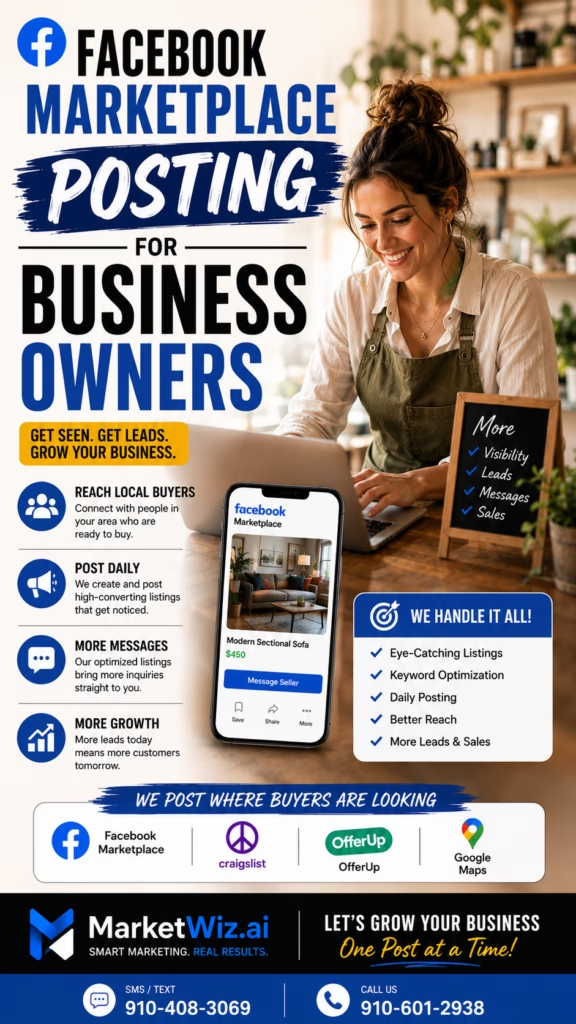
Multi-Marketplace Posting for Small Business Growth

ChatGPT Image Mar 26 2026 01 46 30 PM
Multi-Marketplace Posting for Small Business Growth

Multi-Marketplace Posting for Small Business Growth

Multi-Marketplace Posting for Small Business Growth explains how small businesses can create stronger visibility, more inquiries, and steadier local momentum by posting consistently across multiple marketplaces and local discovery channels.

Introduction

Multi-Marketplace Posting for Small Business Growth is one of the most practical strategies a small business can use when it needs more exposure without relying on only one source of attention. Many small businesses struggle with inconsistent inquiries not because their offer is weak, but because their visibility is too narrow. They may post on one platform, wait, and hope that channel alone brings enough results. In many markets, that simply is not enough.

Local buyers are scattered. Some search Facebook Marketplace. Some browse Craigslist. Some check OfferUp. Others use Nextdoor or rely on Google and local discovery tools. That means growth often comes from repeated visibility across several places rather than isolated effort on only one. When a business shows up across multiple platforms consistently, more people see it, more people recognize it, and more people have the chance to respond when the timing is right.

Small business growth often improves when posting becomes a system instead of a one-platform habit.

This does not mean posting the exact same thing everywhere without thought. Strong multi-marketplace posting is structured. It respects platform differences, buyer intent, local trust, and listing quality. It combines visibility with repetition so the business becomes both easier to find and easier to remember.

For small businesses, this creates several advantages. It reduces dependence on any one platform. It increases lead opportunities. It improves local brand familiarity. And it helps the business feel more active and established in the market. The result is not just more activity. It is often stronger overall growth conditions.

Main idea: Small businesses grow faster when consistent multi-marketplace posting creates repeated local visibility across the places buyers already use.

Table of Contents

  • 1) Why posting across multiple marketplaces matters
  • 2) How local buyers use different platforms
  • 3) The downside of relying on only one posting channel
  • 4) Common marketplaces that support local growth
  • 5) Repetition, familiarity, and stronger business recognition
  • 6) Why consistency matters more than random bursts
  • 7) Platform-specific posting strategy
  • 8) How listing quality affects growth
  • 9) Trust signals across multiple platforms
  • 10) Lead generation benefits of multi-marketplace posting
  • 11) Common posting mistakes small businesses make
  • 12) Measuring growth beyond immediate leads
  • 13) A practical posting framework for small businesses
  • 14) Final thoughts
  • 15) FAQs
  • 16) Extra keywords

1) Why Posting Across Multiple Marketplaces Matters

Posting across multiple marketplaces matters because the local market is fragmented. Buyers do not all behave the same way or search in the same place. A business that only posts in one channel misses the people searching everywhere else. That reduces exposure and limits how many real inquiry opportunities can happen.

When a small business posts across multiple marketplaces, it increases the number of surfaces where discovery can happen. That creates more chances for leads, more chances for recognition, and more chances for the business to feel familiar in the market.

Why multi-marketplace posting helps:

  • More local visibility
  • More buyer discovery points
  • Less dependence on one channel
  • Stronger repeated exposure
  • More stable opportunity flow

This makes posting a growth activity rather than just a single-platform tactic.

2) How Local Buyers Use Different Platforms

Different local buyers prefer different environments. Some buyers are highly active on Facebook Marketplace. Others still use Craigslist for direct local searching. Some people compare quick local deals on OfferUp. Others want neighborhood trust and community relevance on Nextdoor. Some begin with Google or local map-based discovery.

Because these behaviors vary, businesses benefit from showing up where each type of local buyer already feels comfortable searching. That is why multi-marketplace posting is not about duplication for its own sake. It is about meeting the market where the market already is.

Small business growth improves when posting aligns with how buyers actually search, not just where the business prefers to post.

The wider the business’s relevant posting footprint becomes, the greater its chance of matching real buyer intent across more situations.

3) The Downside of Relying on Only One Posting Channel

When a small business relies too heavily on one platform, it creates a fragile lead system. If that channel becomes crowded, shifts in performance, changes visibility, or simply slows down, the business can experience immediate drops in inquiries. That kind of dependence creates instability.

Single-channel posting also reduces recognition in the broader local market. Even if the business performs decently in one place, it may remain invisible to the many people looking elsewhere.

Big risk: A one-platform posting strategy creates a smaller market footprint and greater lead-flow vulnerability.

Multi-marketplace posting solves this by broadening visibility and reducing the chance that one weak-performing channel controls the entire local pipeline.

4) Common Marketplaces That Support Local Growth

Not every business will use the exact same combination of channels, but many small businesses benefit from a mix of marketplaces and local visibility platforms.

  • Facebook Marketplace
  • Craigslist
  • OfferUp
  • Nextdoor
  • Google Business visibility
  • Local landing pages and websites
  • Direct phone and form entry points

Each channel can play a different role in growth. Some help with immediate buyer action. Some help with repeated visibility. Some improve trust. Some support local familiarity. A strong strategy recognizes this and uses each platform as part of a broader posting ecosystem.

These channels can support:

  • Immediate inquiries
  • Local trust
  • Repeated brand exposure
  • Lead stability
  • Growth through broader market presence

5) Repetition, Familiarity, and Stronger Business Recognition

One of the biggest benefits of multi-marketplace posting is repeated exposure. A buyer may not act the first time they see a business. But if they encounter the same business again on another platform, and then again later, the brand starts to feel familiar. Familiarity reduces hesitation and often improves later response rates.

This is especially powerful for small businesses because brand recognition is often limited compared with larger competitors. Repeated posting across multiple marketplaces helps close that visibility gap.

Repeated exposure across several platforms can make a small business feel larger, more established, and more trustworthy.

Recognition often grows quietly before it shows up as inquiries. But once it builds, it strengthens local positioning significantly.

6) Why Consistency Matters More Than Random Bursts

Growth rarely comes from posting heavily for a few days and then disappearing. It usually comes from consistent presence over time. Random bursts may create temporary spikes, but consistency builds familiarity, trust, and more stable opportunity flow.

For small businesses, this matters because consistency helps the market keep seeing the business in useful places. A company that appears steadily across several channels is more likely to feel active and dependable than one that posts unpredictably.

Consistency turns posting into momentum.

That momentum is important not only for exposure, but for memory. Buyers tend to remember businesses that continue to show up.

7) Platform-Specific Posting Strategy

Multi-marketplace posting works best when each platform is treated with respect for its own buyer behavior. A good strategy does not blindly repeat the same message everywhere. It keeps the business recognizable, but still adapts to platform context and user expectations.

That means thinking about:

  • How buyers use each platform
  • What kind of wording fits that environment
  • Which offers make the most sense there
  • What type of trust signals matter most
  • How quickly buyers are likely to act
Recognizable brand presence
+ platform-aware messaging
+ consistent posting
= stronger marketplace growth strategy

This helps the business stay visible without feeling irrelevant or generic in each channel.

8) How Listing Quality Affects Growth

Posting more does not help much if the listings themselves are weak. Poor titles, vague descriptions, bad photos, weak trust signals, and thin details can reduce the value of all that exposure. Growth comes from quality visibility, not just quantity.

Strong listings usually include:

  • Clear titles
  • Specific descriptions
  • Real photos
  • Practical details
  • Local relevance
  • Simple next steps

These things matter across every platform because buyers respond better when the business feels real, useful, and trustworthy.

Weak listings waste strong posting effort.

9) Trust Signals Across Multiple Platforms

Trust is one of the biggest growth drivers in local marketing. Posting across multiple marketplaces increases exposure, but trust is what turns exposure into response. When buyers keep seeing a business presented clearly and credibly in several places, trust becomes easier to build.

Important trust signals include:

  • Consistent business identity
  • Clear descriptions
  • Local wording
  • Professional tone
  • Real images
  • Useful contact or next-step information

These signals carry across platforms. If buyers encounter the business more than once, consistency in trust-building details strengthens their confidence.

Multi-marketplace posting is more powerful when every platform reinforces the same sense of credibility.

10) Lead Generation Benefits of Multi-Marketplace Posting

Multi-marketplace posting supports lead generation by creating more paths into the business. Instead of waiting for one platform to produce all inquiries, the business benefits from several different entry points. That often leads to more stable overall activity.

Lead-generation advantages include:

  • More chances for direct inquiries
  • More buyer discovery pathways
  • Improved visibility frequency
  • Better brand familiarity before contact
  • Reduced risk when one platform underperforms

For small businesses, that stability can be a major growth lever because it creates more reliable top-of-funnel conditions.

Growth improves when more qualified local people have more ways to find the business.

11) Common Posting Mistakes Small Businesses Make

Many small businesses underperform with multi-marketplace posting because they approach it without enough structure. They may post inconsistently, repeat poor copy everywhere, ignore trust signals, or fail to connect the increased visibility to a good response system.

Common mistakes include:

  • Posting only once in a while
  • Relying on one marketplace too heavily
  • Using generic or weak listings
  • Ignoring platform-specific intent
  • Not adapting copy where needed
  • Failing to respond quickly to inquiries
  • Not tracking which channels perform best

Posting everywhere poorly is not a growth strategy. Posting consistently and well is.

12) Measuring Growth Beyond Immediate Leads

Not all growth from multi-marketplace posting appears immediately in lead volume. Some of it appears first as stronger recognition, better trust in conversations, or more mentions from people who say they have seen the business before. These signals matter because they suggest the market is becoming more familiar with the company.

Useful growth signals to watch:

  • Inquiry consistency over time
  • Recognition during first contact
  • Improved conversion confidence
  • More mentions of previous exposure
  • Better overall trust in local conversations

These signs often show that posting is doing more than just creating short-term attention. It is strengthening long-term local positioning.

Repeated posting often builds future conversion power before immediate volume fully reflects it.

13) A Practical Posting Framework for Small Businesses

If a business wants to apply Multi-Marketplace Posting for Small Business Growth in a practical way, it helps to use a structured framework.

Step 1: Identify the marketplaces local buyers actually use
Step 2: Build strong, trust-focused listings
Step 3: Post consistently across the most relevant platforms
Step 4: Keep business positioning recognizable
Step 5: Adjust wording for platform behavior where needed
Step 6: Route all responses into one lead-handling system
Step 7: Track which channels produce the best results
Step 8: Improve what strengthens visibility, trust, and inquiries

This framework works because it treats posting as part of a growth system rather than a random task. It combines visibility with quality and follow-through.

Small business growth is stronger when multi-marketplace posting becomes a repeatable operating habit.

14) Final Thoughts

Multi-Marketplace Posting for Small Business Growth gives small businesses a better way to compete for local attention. Instead of depending on one platform or one posting habit, they can create a broader, more resilient local presence by showing up in several relevant places where buyers already search.

That broader presence does more than increase exposure. It builds familiarity. It improves trust through repetition. It creates more stable lead opportunities. And it helps the business feel more active and more established in the market.

Final takeaway: Multi-marketplace posting helps small businesses grow by turning repeated cross-platform local visibility into stronger recognition, stronger trust, and more opportunities to generate leads.

15) FAQs

1) What is multi-marketplace posting for small business growth?

It is the practice of posting consistently across several marketplaces and local discovery channels to improve exposure, inquiries, and business momentum.

2) Why does posting across multiple marketplaces help small businesses?

Because local buyers search in different places, and broader visibility creates more chances to be discovered.

3) How does multi-marketplace posting support growth?

It supports growth by expanding visibility, increasing inquiry opportunities, improving familiarity, and reducing reliance on one platform.

4) What types of businesses benefit most?

Furniture stores, mattress stores, contractors, movers, painters, retailers, wellness companies, and many other local businesses benefit strongly.

5) What is the biggest mistake businesses make?

One of the biggest mistakes is posting inconsistently or relying too heavily on one marketplace.

6) Should every marketplace post be identical?

No. The business should stay recognizable, but it should still adapt to how buyers use each platform.

7) Why is repeated exposure important?

Because buyers are more likely to trust and remember businesses they have seen multiple times.

8) Is consistency more important than random heavy posting?

Yes. Consistent visibility usually creates stronger growth than short posting bursts followed by long gaps.

9) What platforms are commonly included?

Common platforms include Facebook Marketplace, Craigslist, OfferUp, Nextdoor, Google, and local websites or landing pages.

10) Can this strategy improve trust too?

Yes. When buyers see a business clearly and credibly across several places, trust often improves.

11) Why is listing quality important?

Because weak listings reduce the value of visibility. Strong titles, details, and trust signals help exposure turn into response.

12) Does multi-marketplace posting replace lead generation systems?

No. It supports them by creating more entry points, but the business still needs strong follow-up and response handling.

13) What happens if a business only posts on one channel?

It limits exposure and becomes more vulnerable if that one platform slows down or changes performance.

14) Does every platform attract the same buyer?

No. Different marketplaces attract different intent and different discovery behaviors, which is why using multiple channels helps.

15) Can small businesses look more established through repeated posting?

Yes. Cross-platform repetition can make even a small business feel more active, familiar, and credible in the market.

16) What trust signals matter across marketplaces?

Clear descriptions, local wording, real photos, specific details, and consistent business identity all matter.

17) Should businesses track results by platform?

Yes. Tracking which channels create the best inquiries helps improve strategy over time.

18) Can this strategy work for both products and services?

Yes. Both product sellers and service providers can benefit when they show up where local buyers already search.

19) What weakens growth from multi-marketplace posting?

Weak listings, poor consistency, generic copy, and lack of lead-handling process can all reduce results.

20) Can repeated posting help even before leads increase?

Yes. It can build recognition and familiarity first, which often improves response later.

21) How does this fit with Google or websites?

It works well alongside them by increasing local discovery and feeding more opportunities into the broader marketing system.

22) Should a business post everywhere possible?

No. It should focus on the most relevant marketplaces where local buyers in that category are actually active.

23) Why is recognition so important for small business growth?

Because people often choose businesses they have seen and trust more quickly than businesses that feel unfamiliar.

24) Is multi-marketplace posting a short-term or long-term strategy?

It can support both, but it is especially powerful long-term because repeated exposure compounds over time.

25) What is the core principle behind multi-marketplace posting for growth?

The core principle is that consistent visibility across relevant platforms creates stronger familiarity, stronger trust, and more opportunities for local business growth.

16) Extra Keywords

  1. Multi-Marketplace Posting for Small Business Growth
  2. multi-marketplace posting
  3. small business growth
  4. Facebook Marketplace posting
  5. Craigslist posting
  6. OfferUp posting
  7. local business marketing
  8. cross-platform posting
  9. local posting strategy
  10. marketplace visibility for small business
  11. local lead generation
  12. small business posting system
  13. multi-channel local marketing
  14. marketplace inquiry generation
  15. cross-marketplace visibility
  16. small business brand familiarity
  17. local customer discovery
  18. marketplace growth strategy
  19. consistent listing strategy
  20. small business marketplace marketing
  21. local business recognition
  22. multi-platform posting strategy
  23. local marketplace exposure
  24. small business lead flow
  25. cross-platform local growth

© 2026 Your Brand

Multi-Marketplace Posting for Small Business Growth Read More »

How Businesses Build a Cross-Platform Lead System

ChatGPT Image Mar 25 2026 11 15 17 AM
How Businesses Build a Cross-Platform Lead System

How Businesses Build a Cross-Platform Lead System

How Businesses Build a Cross-Platform Lead System explains how businesses generate leads across multiple platforms using one coordinated process built on visibility, trust, consistency, quick response, strong follow-up, and platform-specific communication.

Cross-Platform Lead Drivers: Organic Visibility Marketplace Presence Local SEO Referrals Fast Replies Follow-Up

Note: This is general guidance. Keep all marketing truthful, useful, platform-appropriate, and aligned with applicable privacy, messaging, and platform rules.

Introduction

How Businesses Build a Cross-Platform Lead System starts with understanding a simple problem: most businesses are too dependent on one source of leads.

A stronger business is not built on one lead source. It is built on a system that works across several places at once.

When a business depends on one platform, one traffic source, or one marketing method, growth becomes fragile. If that platform changes, performance drops, costs rise, or visibility disappears, the pipeline weakens immediately. That is why the strongest businesses build lead systems instead of channel addictions.

A cross-platform lead system is not just being active in many places. It is a coordinated process that helps the business get found, build trust, capture inquiries, respond quickly, follow up consistently, and measure what actually turns into revenue. The platforms may be different, but the system behind them should feel connected.

For many businesses, the cross-platform mix includes Craigslist, Facebook Marketplace, OfferUp, Nextdoor, Google Business Profile, local SEO, referrals, organic content, and email follow-up. Each platform does a slightly different job. Some create practical local demand. Some create trust. Some create discoverability. Some recover opportunities that did not close the first time. Together, they form a stronger acquisition engine than any single channel can provide by itself.

The power of a cross-platform system is not just more reach. It is more resilience. The business is easier to find. Easier to trust. Easier to contact. Easier to remember. And because the same operational system supports all the channels, the business can improve without reinventing everything every week.

Big idea: Businesses build a cross-platform lead system by coordinating several visibility and trust channels into one repeatable process for attracting, handling, and converting leads.

Expanded Table of Contents

1) Why a cross-platform lead system matters

A cross-platform lead system matters because customers do not always discover a business in one place. Some people search Google. Some browse marketplaces. Some ask neighbors. Some see social content. Some respond to referrals. Some come back through follow-up after an earlier inquiry. A business that can capture opportunity from several of those behaviors becomes much stronger over time.

This also improves stability. If one channel weakens temporarily, other channels can continue producing leads. That lowers the risk of sudden pipeline collapse and gives the business more room to optimize intelligently.

Why cross-platform mattersWhat it improvesBusiness effect
Multiple discovery pathsVisibilityMore lead opportunities
Multiple trust touchpointsCredibilityBetter conversion odds
Less dependence on one sourceResilienceLower acquisition risk
More reusable assetsEfficiencyStronger growth system

Rule: A cross-platform lead system matters because it turns several discovery paths into one coordinated acquisition process.

2) The difference between being on many platforms and having a real system

Many businesses confuse activity with systems. Posting in several places is not the same as building a lead system. Without coordination, the business is simply busy in more places. With coordination, the business becomes easier to scale and easier to improve.

A real system has structure. Each channel serves a purpose. The core offer stays recognizable. The response process stays consistent. The follow-up process stays active. The business tracks what worked and improves weak points. That is what turns scattered activity into a lead engine.

What a real system includes

  • Defined channel roles
  • Consistent trust signals
  • Fast response workflows
  • Clear follow-up process

What scattered activity looks like

  • Random posting
  • Inconsistent messaging
  • Slow replies
  • No tracking or learning

Pro move: The goal is not to be everywhere. The goal is to make every useful platform work together.

3) The core role each platform can play

One of the best ways to build a cross-platform lead system is to assign a clear job to each platform. When the business understands why each channel exists, it becomes much easier to organize marketing effort and measure performance.

Typical platform roles

  • Craigslist: practical local lead capture
  • Facebook Marketplace: organic listing visibility and inquiries
  • OfferUp: local inventory and direct-response interest
  • Nextdoor: neighborhood trust and recommendations
  • Google Business Profile: local search and map discovery
  • Local SEO pages: ongoing organic search visibility
  • Email: follow-up, reminders, reactivation
  • Referrals: warm lead generation
  • Organic content: trust-building and discovery support

Rule: The system becomes easier to manage when every platform has a defined role instead of vague expectations.

4) Marketplaces as lead capture channels

Marketplaces are often the direct-response layer of a cross-platform lead system. They help businesses capture practical local demand from people who are already browsing for solutions, products, or nearby opportunities.

These channels tend to work especially well when the offer is clear, the visuals are believable, the pricing or value is understandable, and the business replies fast.

Why marketplaces matter

  • They create fast practical visibility
  • They support multiple listing angles
  • They capture local demand already in motion
  • They can produce direct inbound inquiries

Rule: Marketplaces are important because they help the business meet local demand close to the point of action.

5) Search, maps, and local discovery channels

Search and maps are often the high-intent layer of the lead system. When people search for a nearby service or solution, the business has a chance to be found without creating demand from scratch. That is why Google Business Profile and local SEO are such important cross-platform assets.

Why search and maps matter

  • They capture existing demand
  • They create recurring visibility
  • They support local trust with reviews
  • They often generate high-quality inquiries

Search visibility is powerful because the customer is already looking when the business gets discovered.

6) Community platforms and referral channels

Community platforms and referral channels create a different kind of lead: warmer, more trust-driven, and often easier to convert. Nextdoor, referrals, reviews, and neighborhood reputation all fit into this layer of the system.

Why this layer matters

  • Builds trust faster
  • Creates word-of-mouth effects
  • Generates warmer leads
  • Supports business credibility across channels

For many local businesses, these trust channels are what make the whole lead system more efficient. The customer arrives with more confidence before the sales conversation even begins.

Rule: Community and referral channels matter because they add trust that pure visibility alone cannot create.

7) Content and trust-building channels

Content helps unify a cross-platform system because it can be reused, adapted, and distributed across multiple places. One helpful article, one useful before-and-after example, or one clear explainer can support SEO, email, social posts, community content, and follow-up at the same time.

What content can do inside the system

  • Build authority
  • Support trust before contact
  • Improve search discovery
  • Create reusable marketing assets

Useful content types

  • FAQs
  • Problem-solution blog posts
  • Short-form videos
  • Before-and-after proof
  • Local educational posts

Rule: Content strengthens the lead system because it makes the business easier to trust in more than one place.

8) Adapting messaging by platform

A cross-platform system should not sound identical everywhere. The offer can remain consistent, but the language, length, and framing should match the platform. A marketplace post should feel different from a neighborhood post. A search description should feel different from an email follow-up.

What should adapt by platform

  • Tone
  • Length
  • Call to action
  • Visual style
  • Problem framing

What should remain consistent

  • Core offer
  • Main trust signals
  • Business identity
  • Main next-step logic

Strong cross-platform messaging feels consistent in value but natural in each channel’s language.

9) Keeping trust and identity consistent

Even when messaging adapts, the business still needs to feel recognizable across platforms. The customer may discover the business in one place and verify it in another. If the trust signals feel disconnected, confusion can weaken conversion.

Trust consistency usually comes from

  • Similar offer framing
  • Clear business identity
  • Recognizable contact pathways
  • Aligned proof and credibility signals

Rule: A cross-platform lead system works better when the business feels connected wherever the prospect finds it.

10) Building the response and lead-routing system

Lead generation across multiple platforms only works when the business can handle incoming inquiries well. That means response speed, saved templates, qualification questions, and a simple routing process matter just as much as visibility.

Simple first-reply template

Thanks for reaching out ✅

Happy to help. What area are you in, and what are you looking for most right now?

What the response system should do

  • Protect momentum
  • Qualify leads quickly
  • Move people toward next steps
  • Keep communication consistent across platforms

Rule: A lead system is only as strong as the speed and consistency of its response process.

11) Building the follow-up system

Not every lead converts immediately. That is true on every platform. A cross-platform lead system becomes much stronger when the business has a repeatable follow-up process that works no matter where the lead first came from.

Simple follow-up sequence

Day 0: Fast reply + one useful question
Day 1: Check whether they are still looking
Day 3: Offer the best next step
Day 5: Share a reminder, proof point, or useful option
Day 7: Close politely while leaving the door open

Good follow-up protects value across all channels because it ensures the business is not wasting the visibility it worked to create.

Follow-up is what turns cross-platform attention into cross-platform revenue.

12) Measuring and tracking performance by source

Businesses should measure the lead system by source so they can see which channels create the strongest visibility, warmest leads, and best conversion outcomes. Without this, the business cannot tell which parts of the system deserve more attention.

KPIWhat it measuresTarget direction
Inquiries by sourceLead volume mixClearer over time
Qualified lead rateLead quality by platformUp
Median response timeSpeed-to-leadDown
Booked next stepsPipeline creationUp
Close rateRevenue conversionUp
Referral/review growthTrust system strengthUp
Top channel efficiencyBest-performing source mixClearer over time

Rule: Tracking by source makes the lead system smarter because it shows what is creating real business outcomes.

13) Common mistakes when building a cross-platform lead system

The most common mistake is trying to scale breadth before building consistency. Another is using the same exact content everywhere without adapting it. Another is failing to connect visibility with fast replies and follow-up.

Common mistakes

  • Too many platforms too quickly
  • No response system
  • No follow-up process
  • Weak measurement discipline
  • Inconsistent trust signals

Avoid: building a platform presence that looks bigger than your operational system can actually support.

Rule: A smaller well-run lead system beats a larger scattered one almost every time.

14) How businesses scale a working lead system

Scaling comes after clarity. Once the business knows which titles, offers, posts, platforms, and reply methods work best, it can expand them intelligently instead of randomly.

What scaling usually includes

  • Documenting best-performing channel patterns
  • Reusing strong content across platforms
  • Keeping templates ready for speed
  • Doubling down on high-converting lead sources
  • Reviewing KPIs regularly

Scaling works best when businesses expand proven patterns instead of expanding guesswork.

15) 30–60–90 day rollout plan

Days 1–30: Build the foundation

  1. Choose 3 to 5 core platforms
  2. Clarify the core offer and trust signals
  3. Improve profile, listing, and post quality
  4. Create simple reply and follow-up templates
  5. Start tracking lead source and booked next steps

Days 31–60: Improve coordination

  1. Adapt messaging by platform more intentionally
  2. Reuse strong content and proof across channels
  3. Improve response speed and consistency
  4. Review which platforms create stronger lead quality

Days 61–90: Scale what works

  1. Document best-performing channel tactics
  2. Expand the strongest platform patterns
  3. Review KPIs weekly
  4. Double down on sources producing real pipeline and revenue

Rule: Businesses build the strongest cross-platform lead systems by first coordinating a few channels well, then scaling proven patterns.

16) 25 Frequently Asked Questions

1) What is a cross-platform lead system?

It is a coordinated system for generating and converting leads from multiple platforms instead of relying on only one source.

2) Why do businesses need one?

Because depending on one source of leads creates risk and limits growth stability.

3) Can it work without paid advertising?

Yes. Many strong systems use organic platforms and follow-up instead of paid ads.

4) What platforms are usually included?

Common ones include Craigslist, Facebook Marketplace, OfferUp, Nextdoor, Google Business Profile, local SEO, email, and referrals.

5) What is the biggest benefit?

More stable growth through multiple lead sources and trust touchpoints.

6) Does each platform need different messaging?

Yes. The core offer stays consistent, but the presentation should fit the platform.

7) Why is consistency so important?

Because trust builds faster when the business feels recognizable across several places.

8) Do businesses need follow-up?

Yes. Many leads do not convert on the first contact.

9) Can one person manage the system?

Yes, with templates, SOPs, and disciplined workflows.

10) What is the biggest mistake businesses make?

Trying to be everywhere without a real system for replies, follow-up, and measurement.

11) How do marketplaces fit in?

They are often the practical direct-response layer of the system.

12) How does Google Business Profile fit in?

It helps the business show up in local search and maps when prospects are already looking.

13) Why do referrals matter?

They create warmer leads and strengthen trust.

14) Does content help the system perform better?

Yes. Content builds trust, supports discovery, and creates reusable assets.

15) Do businesses need a CRM?

Not necessarily, but they do need a simple way to track lead source and follow-up status.

16) How do businesses stay organized?

With templates, channel-specific SOPs, shared assets, and weekly review routines.

17) What role does response speed play?

It is critical because fast replies protect momentum and improve conversion.

18) Should every platform have the same offer?

The core offer can remain the same, but the framing should match the audience and context.

19) How do businesses know what is working best?

By tracking inquiries, qualified leads, booked next steps, and close rate by source.

20) Can small businesses compete with larger brands this way?

Yes. Small businesses often win with speed, relevance, and stronger local trust signals.

21) Should content be reused across platforms?

Yes, but it should be adapted rather than copied blindly.

22) How quickly can the system start working?

Often within a few weeks for early traction, with stronger results over 30 to 90 days.

23) Should winning patterns be documented?

Yes. Documentation makes the best tactics easier to repeat and scale.

24) What metrics matter most?

Inquiries by source, qualified lead rate, response time, booked next steps, close rate, and channel efficiency.

25) What is the main lesson behind building a cross-platform lead system?

That stronger growth comes from coordinating multiple trust and visibility channels into one repeatable lead-handling process.

17) 25 Extra Keywords

  1. How Businesses Build a Cross-Platform Lead System
  2. cross-platform lead system
  3. multi-channel lead generation
  4. local lead generation system
  5. organic lead system
  6. marketplace lead generation
  7. local marketing system
  8. customer acquisition system
  9. Craigslist lead system
  10. Facebook Marketplace lead generation
  11. OfferUp lead strategy
  12. Nextdoor lead generation
  13. Google Business Profile leads
  14. local SEO lead system
  15. referral lead system
  16. email follow-up system
  17. organic multi-channel marketing
  18. cross-platform trust strategy
  19. lead source tracking
  20. cross-platform customer pipeline
  21. 2026 lead generation strategy
  22. small business lead system
  23. multi-platform customer acquisition
  24. cross-platform sales pipeline
  25. organic local growth system

© 2026 Your Brand. All Rights Reserved.
General information only—confirm compliance with platform policies and applicable privacy, advertising, and messaging rules before posting, outreach, or automating follow-ups.

How Businesses Build a Cross-Platform Lead System Read More »

Multi-Channel Marketing Without Advertising Costs

ChatGPT Image Mar 25 2026 11 15 27 AM
Multi-Channel Marketing Without Advertising Costs

Multi-Channel Marketing Without Advertising Costs

Multi-Channel Marketing Without Advertising Costs explains how businesses grow by combining multiple organic channels like marketplaces, local SEO, referrals, community platforms, email, and content into one coordinated system that creates leads and sales without depending on paid ads.

No-Cost Growth Drivers: Organic Visibility Local SEO Referrals Marketplace Presence Useful Content Follow-Up

Note: This is general guidance. Keep all marketing truthful, useful, platform-appropriate, and aligned with applicable privacy, messaging, and platform rules.

Introduction

Multi-Channel Marketing Without Advertising Costs is built on a simple but powerful idea: businesses do not need to rely entirely on paid ads to grow.

You do not need one expensive channel when you can build several organic channels that work together.

Many businesses fall into the same trap. They think customer acquisition begins and ends with ad spend. If paid ads perform, the business grows. If paid ads get expensive, unstable, or inconsistent, the growth slows down. That approach makes the business dependent on one lever it does not fully control. Multi-channel marketing without advertising costs is the alternative.

Instead of relying only on paid visibility, the business builds organic visibility in several places at once. That can include Craigslist, Facebook Marketplace, OfferUp, Nextdoor, Google Business Profile, local SEO content, referrals, reviews, email follow-up, short-form content, direct community presence, and customer reactivation systems. None of those channels has to carry the whole weight alone. The power comes from coordination.

That coordination matters because every organic channel has strengths and weaknesses. Craigslist may create practical local inquiries. Google Business Profile may create local search visibility. Nextdoor may strengthen neighborhood trust. Referrals may create warm leads. Email may help recover old leads and reactivate customers. Organic content may help the business get discovered over time. When those channels support one another, the business becomes far less dependent on any single source of traffic.

This kind of strategy is especially useful for local businesses and practical service categories where trust, visibility, and consistency matter more than flashy branding. It is also useful for businesses that want stronger margins, lower customer acquisition risk, and more durable growth systems. A business that learns to create leads without needing to buy every click becomes harder to disrupt and easier to scale sustainably.

Big idea: Multi-channel marketing without advertising costs works when businesses combine several organic visibility, trust, and follow-up systems into one repeatable customer acquisition engine.

Expanded Table of Contents

1) Why multi-channel organic marketing works

Multi-channel organic marketing works because customers do not discover businesses in only one place. Some find a company through search. Others through community platforms. Others through marketplaces. Others through a recommendation. Others through follow-up after an earlier inquiry. When the business is present in several relevant places, discovery becomes more consistent.

This also improves trust. A company that appears in multiple places often feels more established and more credible than one that appears only once. If a customer sees the business on Google, then sees a useful post on a marketplace, then notices a recommendation on Nextdoor, the combined effect can be much stronger than any single exposure alone.

Why multi-channel helpsWhat it changesBusiness benefit
More visibility sourcesLess dependence on one channelLower acquisition risk
More trust touchpointsStronger perceived credibilityBetter conversion potential
More discovery pathsMore ways to generate leadsHigher opportunity volume
More reuse of assetsBetter efficiencyLower marketing cost

Rule: Multi-channel marketing works because customers discover, compare, and trust businesses through more than one path.

2) Why growth without ad costs matters

Growth without advertising costs matters because paid advertising can become unstable, expensive, and difficult to rely on as the only customer acquisition method. A business that must pay for every lead is often more fragile than one that can generate leads organically.

No-cost marketing does not mean no effort. It means effort is invested into assets and systems that keep working without requiring constant ad spend. Reviews, recommendations, content, organic listings, SEO pages, customer follow-up, and referral systems can all keep producing value long after they are created.

Benefits of low-cost growth systems

  • Stronger margins
  • Lower dependence on ad platforms
  • More stable long-term acquisition
  • Greater control over growth assets

Weaknesses of ad-only dependence

  • Cost volatility
  • Platform dependence
  • Lower resilience
  • Growth slows when spend stops

Pro move: The goal is not to avoid all spending forever. The goal is to avoid needing paid ads just to stay alive.

3) The core free channels businesses can use

Different businesses will choose different organic channels, but most strong no-cost systems pull from a similar list of options. The key is choosing channels that match where the customer already looks and how trust is built in that category.

Core organic channels often include

  • Craigslist
  • Facebook Marketplace
  • OfferUp
  • Nextdoor
  • Google Business Profile
  • Local SEO content
  • Referrals and recommendations
  • Email follow-up and reactivation
  • Organic short-form social content
  • Customer review systems

Rule: The best channel mix is the one that matches customer behavior, not the one that looks trendy.

4) Marketplace channels and practical lead capture

Marketplaces like Craigslist, Facebook Marketplace, and OfferUp can create practical local visibility without paid advertising. These channels often work best for businesses that can communicate clear offers, useful local relevance, and fast next steps.

Marketplace channels are strong because users often arrive with intent. They may be looking for something specific, nearby, and actionable. That makes these channels especially useful for service businesses, local retail, used inventory, and practical local offers.

Why marketplaces matter

  • They create practical local exposure
  • They can produce direct inquiries fast
  • They support multiple listing variations
  • They help capture local demand without ad spend

Rule: Marketplaces are powerful in no-cost marketing because they capture practical demand already happening in the local market.

5) Local SEO and Google Business Profile

Google Business Profile and local SEO are among the most valuable no-cost channels because they help the business show up when customers are already searching. This is different from interruption marketing. The demand already exists. The job is to become visible and trustworthy inside that demand.

Why local SEO matters

  • Improves discovery in local search
  • Creates ongoing traffic without paying per click
  • Strengthens trust with reviews and local presence
  • Supports long-term visibility

Google Business Profile helps by improving

  • Map visibility
  • Review credibility
  • Local action opportunities
  • Call and website visit potential

Pro move: Local SEO is one of the few channels that can keep working while the business is asleep because search demand keeps happening.

6) Community and neighborhood channels

Community channels like Nextdoor help businesses build a different kind of visibility: local familiarity and trust. These channels are especially useful when neighborhood recommendations, nearby comfort level, and word-of-mouth matter heavily.

Why community channels work

  • They strengthen trust
  • They support recommendations
  • They make the business feel local
  • They can create warm neighborhood leads

For many service businesses, community channels can be one of the strongest unpaid lead sources because trust and proximity are often the deciding factors.

Rule: Community channels matter because local trust can outperform raw reach in many buying decisions.

7) Referral and recommendation channels

Referrals are one of the most powerful no-cost channels because they often create warmer, faster-moving leads. A referral already carries trust. The business does not have to create credibility from zero.

Strong referral systems often include

  • Asking satisfied customers consistently
  • Making it easy to recommend the business
  • Following up after successful outcomes
  • Using reviews and recommendations visibly

Businesses often underuse referrals because they do not systematize them. But referrals become much stronger when the business actively designs for them instead of waiting passively.

Rule: Referrals are stronger when they are treated as a system, not a lucky bonus.

8) Organic content channels and trust-building

Content helps businesses grow organically because it builds trust and visibility over time. That content can take the form of blog posts, local educational content, short-form videos, FAQs, before-and-after examples, or useful platform-native posts.

Why content matters in no-cost marketing

  • Builds authority
  • Supports discovery
  • Creates reusable assets
  • Improves trust before contact

Helpful content types

  • Local service explanations
  • Problem-solution articles
  • Short-form video tips
  • Customer proof and examples
  • Neighborhood-relevant educational posts

Useful content makes the business easier to trust before the customer ever reaches out.

9) Email, reactivation, and follow-up channels

Email is one of the most overlooked no-cost marketing channels. While it may not always create the first touch, it often helps convert leads that did not act immediately and reactivate past customers who are already familiar with the business.

Email and follow-up can support

  • Lead nurturing
  • Customer reminders
  • Seasonal offers
  • Past-customer reactivation
  • Ongoing visibility without ad spend

Simple follow-up sequence

Day 0: Fast first reply
Day 1: Check if they still need help
Day 3: Offer the best next step
Day 5: Share a useful reminder or offer
Day 7: Close politely while leaving the door open

Rule: Follow-up channels increase the value of every organic lead source because not every lead converts immediately.

10) Keeping the message consistent across channels

One of the keys to multi-channel marketing is message consistency. The business should not sound identical everywhere, but the core offer, core trust signals, and core positioning should feel connected across channels.

What should stay consistent

  • Core offer
  • Main trust signals
  • Business identity
  • Main call to action

What should adapt by platform

  • Tone
  • Length
  • Visual style
  • Post structure
  • Audience framing

Rule: Strong multi-channel marketing feels consistent in value but adapted in delivery.

11) The operational system behind organic growth

No-cost marketing still requires systems. Without an operational backbone, the business spreads too thin, misses leads, replies too slowly, or fails to follow up. The channels only work well when the operations behind them are strong.

What the operational system should include

  • Simple posting schedules
  • Saved reply templates
  • Follow-up workflows
  • Content reuse across channels
  • Weekly review rhythm

Organic growth fails less from lack of channels and more from lack of follow-through.

12) How to measure multi-channel success

Without ad dashboards, businesses still need measurement. The right KPIs help determine whether the organic channel mix is producing real business value.

KPIWhat it measuresTarget direction
Inquiries by channelLead volume source mixClearer over time
Qualified lead rateLead qualityUp
Median response timeSpeed-to-leadDown
Booked next stepsPipeline creationUp
Close rateRevenue conversionUp
Review/referral growthTrust engine strengthUp
Top-performing channelsChannel efficiencyClearer over time

Rule: The best multi-channel strategy is the one that turns multiple organic touchpoints into qualified local pipeline.

13) Common mistakes in no-cost multi-channel marketing

The biggest mistake is trying to be everywhere without a system. When the business spreads too thin, quality drops, reply speed slows, and consistency disappears. Another common mistake is copying the same exact content everywhere without adapting it to the platform.

Common mistakes

  • Too many channels at once
  • No follow-up workflow
  • Weak response speed
  • No measurement discipline
  • Generic content reused without adaptation

Avoid: trying to win every channel at once before building a repeatable operating rhythm.

Rule: Multi-channel works best when a business builds depth before chasing total breadth.

14) How businesses scale what works

Scaling a no-cost strategy is about repeating proven patterns, not adding random activity. That means documenting winning titles, post formats, offers, reply templates, review requests, and reactivation messages.

What scaling usually includes

  • Documenting best-performing posts
  • Reusing strong offers and CTAs
  • Keeping reply templates ready
  • Expanding only what already works
  • Reviewing performance regularly

Scaling works best when the business expands proven assets instead of adding random marketing activity.

15) 30–60–90 day rollout plan

Days 1–30: Build the foundation

  1. Choose 3 to 5 core organic channels
  2. Strengthen profile and listing quality across those channels
  3. Set up review, referral, and follow-up basics
  4. Create simple content and posting SOPs
  5. Track inquiries and booked next steps

Days 31–60: Improve coordination

  1. Reuse strong content across channels intelligently
  2. Test offers, titles, and local CTAs
  3. Improve response speed and follow-up consistency
  4. Review which channels produce better lead quality

Days 61–90: Scale what works

  1. Document best-performing channel tactics
  2. Expand the strongest organic patterns
  3. Review KPIs weekly
  4. Double down on trust-building channels producing real customers

Rule: Multi-channel organic growth becomes powerful when small repeatable systems start reinforcing each other.

16) 25 Frequently Asked Questions

1) What is multi-channel marketing without advertising costs?

It is a strategy where businesses use several organic channels together to create leads and sales without paying for ads.

2) Can businesses really grow without paid advertising?

Yes. Many businesses can grow through local SEO, marketplaces, referrals, community platforms, email, and organic content.

3) Why does multi-channel work better than one channel?

Because it creates more ways for customers to find and trust the business.

4) What are the best free channels for local businesses?

Google Business Profile, Craigslist, Facebook Marketplace, OfferUp, Nextdoor, referrals, email, and local SEO are often strong options.

5) What is the biggest benefit of marketing without ad costs?

Stronger long-term acquisition without depending entirely on paid spend.

6) Does local SEO count as no-cost marketing?

Yes. It is one of the most valuable no-cost channels because it builds search visibility over time.

7) Can Craigslist be part of this strategy?

Yes. Craigslist can create practical local inquiries without paid ads.

8) Can Facebook Marketplace work organically?

Yes. Organic Marketplace listings can generate visibility and leads when maintained well.

9) Does Nextdoor help with organic growth?

Yes. It can help create trust, recommendations, and neighborhood leads.

10) Why does follow-up matter so much?

Because many organic leads do not convert on the first contact.

11) What role do referrals play?

They create warm leads without needing new ad spend.

12) Can email still help?

Yes. Email is useful for nurture, reactivation, and reminders.

13) Do businesses need content to grow organically?

Usually yes, because content builds trust, visibility, and discoverability.

14) What kinds of businesses benefit most?

Many local service businesses, retailers, contractors, movers, wellness providers, and practical local companies benefit strongly.

15) Can one person manage a multi-channel strategy?

Yes, with templates, SOPs, content reuse, and disciplined scheduling.

16) Why is consistency important?

Because trust builds faster when the business appears active and reliable across multiple places.

17) Should the business use the exact same message everywhere?

No. The core offer should stay consistent, but delivery should match the platform.

18) What is the biggest mistake in this strategy?

Spreading too thin without a real system for replies, follow-up, and measurement.

19) How should businesses choose channels?

By focusing on where their customers already look and where trust is actually built in that category.

20) Can organic channels create real sales?

Yes. They can create calls, bookings, visits, and closed deals when executed well.

21) How should success be measured?

Track inquiries, qualified leads, response time, booked next steps, close rate, reviews, referrals, and channel performance.

22) Is reputation management part of no-cost marketing?

Yes. Reviews and recommendations are major trust drivers in organic growth.

23) How quickly can this start working?

Often within a few weeks for early traction, with stronger results over 30 to 90 days.

24) Should winning tactics be documented?

Yes. Documentation makes the system easier to repeat and scale.

25) What is the main lesson behind multi-channel marketing without advertising costs?

That businesses can build real growth without paid ads when they combine trust, visibility, consistency, useful content, and strong follow-through.

17) 25 Extra Keywords

  1. Multi-Channel Marketing Without Advertising Costs
  2. organic marketing strategy
  3. free marketing channels
  4. multi-channel organic marketing
  5. local business marketing without ads
  6. no ad spend marketing
  7. lead generation without paid ads
  8. free customer acquisition
  9. organic local SEO strategy
  10. Google Business Profile marketing
  11. Craigslist organic leads
  12. Facebook Marketplace organic marketing
  13. OfferUp lead generation
  14. Nextdoor local marketing
  15. referral marketing system
  16. email reactivation marketing
  17. organic content marketing
  18. local review strategy
  19. community-based marketing
  20. organic trust-building marketing
  21. 2026 organic marketing strategy
  22. local business growth without ads
  23. multi-channel lead system
  24. organic customer pipeline
  25. marketing without paid advertising

© 2026 Your Brand. All Rights Reserved.
General information only—confirm compliance with platform policies and applicable privacy, advertising, and messaging rules before posting, outreach, or automating follow-ups.

Multi-Channel Marketing Without Advertising Costs Read More »

Multi-Marketplace Visibility for Local Businesses

ChatGPT Image Mar 25 2026 11 15 08 AM
Multi-Marketplace Visibility for Local Businesses

Multi-Marketplace Visibility for Local Businesses

Multi-Marketplace Visibility for Local Businesses explains how local companies can improve exposure, build familiarity, and generate more leads by showing up consistently across multiple local marketplaces and buyer-discovery platforms.

Introduction

Multi-Marketplace Visibility for Local Businesses is one of the most practical ways to strengthen local marketing without depending entirely on a single channel. Many businesses make the mistake of relying too heavily on one platform and then wondering why their lead flow rises and falls so unpredictably. The truth is simple: local buyers are spread out. Some browse Facebook Marketplace. Others search Craigslist. Some compare options on OfferUp. Others discover businesses through Google, Nextdoor, or direct local searches.

That means visibility matters most when it is distributed. A business that appears in several relevant places creates more opportunities to be noticed, remembered, trusted, and contacted. This is especially important for local companies that need steady inbound inquiries rather than one-time bursts of attention.

The more places your local customer can naturally find you, the stronger your visibility advantage becomes.

Multi-marketplace visibility does not mean posting randomly everywhere. It means building a system where the business shows up consistently across the channels that local buyers actually use. When that happens, several benefits begin to stack. Exposure increases. Familiarity improves. Trust grows through repetition. Lead opportunities expand. And the business becomes less vulnerable to changes on any single platform.

For local businesses, this is a major advantage. Visibility is not only about being seen once. It is about becoming recognizable in the market. A company that appears repeatedly across multiple local environments begins to feel more established and more credible than one that only shows up occasionally in one place.

Main idea: Multi-marketplace visibility helps local businesses grow by turning repeated exposure across multiple channels into stronger trust, stronger familiarity, and more inquiry opportunities.

Table of Contents

  • 1) Why multi-marketplace visibility matters
  • 2) How local buyers behave across different platforms
  • 3) The risk of relying on only one channel
  • 4) Common marketplaces and local visibility channels
  • 5) Brand familiarity through repeated cross-platform exposure
  • 6) Listing consistency and stronger recognition
  • 7) Platform-specific buyer intent and why it matters
  • 8) Trust signals that carry across marketplaces
  • 9) How multi-marketplace visibility supports lead generation
  • 10) Common mistakes businesses make
  • 11) Measuring visibility beyond immediate leads
  • 12) How multi-marketplace visibility fits into a full marketing system
  • 13) A practical framework for local businesses
  • 14) Final thoughts
  • 15) FAQs
  • 16) Extra keywords

1) Why Multi-Marketplace Visibility Matters

Visibility matters because local customers do not all discover businesses the same way. Some are marketplace-driven. Some are search-driven. Some respond to neighborhood recommendations. Some compare multiple sources before taking action. A business that only appears on one channel limits its chances of reaching these different types of buyers.

Multi-marketplace visibility matters because it creates broader practical reach without requiring the business to rely on a single discovery path. It also improves resilience. If one channel slows down, others can continue producing attention and inquiries.

Benefits of multi-marketplace visibility include:

  • Wider exposure in local markets
  • More opportunities for buyer discovery
  • Reduced dependence on one platform
  • Stronger familiarity through repetition
  • More stable lead flow potential

For businesses that need steady local activity, this kind of visibility can be far more valuable than trying to force all results through one source.

2) How Local Buyers Behave Across Different Platforms

Local buyers do not act the same way across every platform. That is one of the biggest reasons a multi-marketplace strategy works. Different platforms attract different behaviors. Some people want fast price comparison. Others want convenience. Others want neighborhood trust or direct proximity. Still others want to search by product, service, or location.

Because of this, a business that appears across multiple relevant channels increases the chance of matching the customer where that customer already feels comfortable searching. That is a huge advantage in local marketing.

Local visibility improves when the business adapts to where buyers already are instead of forcing buyers to come to one place.

This also means businesses should think strategically about why each platform matters. The goal is not to duplicate blindly. The goal is to create local presence where real buyer intent already exists.

3) The Risk of Relying on Only One Channel

One of the biggest local marketing risks is becoming overly dependent on a single platform. If that platform changes, slows down, becomes more competitive, or simply stops producing at the same level, the business can feel immediate pipeline pressure. That kind of dependence is dangerous, especially for businesses that need steady lead flow.

Relying on only one channel can create problems such as:

  • Inconsistent lead volume
  • Reduced exposure to other buyer types
  • Higher vulnerability to platform shifts
  • Weaker local familiarity overall
  • Less data about what channels actually work best

Multi-marketplace visibility helps solve this by spreading opportunity across a wider local footprint. It gives the business more surface area in the market.

Big mistake: Treating one marketplace as the entire lead engine instead of one part of a broader visibility system.

4) Common Marketplaces and Local Visibility Channels

Depending on the industry, a local business may benefit from visibility across several different channels. These often include traditional marketplaces, local discovery platforms, and supporting search channels.

  • Facebook Marketplace
  • Craigslist
  • OfferUp
  • Nextdoor
  • Google Business visibility
  • Local landing pages and websites
  • Direct form and call entry points

Each channel plays a slightly different role. Some are stronger for immediate product inquiries. Some are better for local service trust. Some support visibility even when the lead does not happen right away. The best businesses do not confuse these roles. They use them together.

Different channels often support different outcomes:

  • Immediate inquiries
  • Local familiarity
  • Brand trust
  • Repeat exposure
  • Search support

5) Brand Familiarity Through Repeated Cross-Platform Exposure

One of the most overlooked benefits of multi-marketplace visibility is familiarity. A local customer may not respond the first time they see a business. But if that same business keeps appearing across several relevant platforms, the brand starts to feel more recognizable. Recognition often reduces hesitation later.

This is why repeated exposure matters. A business seen once may be forgotten. A business seen multiple times in different places starts to feel more real, more established, and more trustworthy.

Cross-platform repetition helps transform a business from unknown to familiar.

For local businesses, that kind of familiarity can be the difference between being ignored and being considered. Buyers often trust what they feel they have seen before.

6) Listing Consistency and Stronger Recognition

Consistency across platforms helps strengthen recognition. That does not mean every listing must be identical. In fact, smart variation is often useful. But the business should still feel recognizable in its messaging, offer style, tone, and trust signals. A company that looks clear and credible in multiple places creates a stronger brand impression than one that feels inconsistent everywhere.

Consistency can show up through:

  • Clear business positioning
  • Recognizable wording style
  • Reliable offer structure
  • Stable trust-building details
  • Clear local relevance

When buyers encounter this consistency across marketplaces, it makes the business easier to remember and easier to trust.

Recognition grows when repeated visibility feels coherent rather than random.

7) Platform-Specific Buyer Intent and Why It Matters

Not every marketplace visitor wants the same thing. Some are browsing for deals. Some want local pickup. Some want fast service. Some are comparing multiple options. Some want neighborhood trust. Understanding this helps local businesses use multiple platforms more intelligently.

Platform-specific buyer intent matters because it influences how listings should be framed. A good multi-marketplace strategy is not just about posting more. It is about aligning the business with the type of intent each platform naturally attracts.

Marketplace visibility works best when:
platform behavior
+ local need
+ listing relevance
+ trust signals
all work together.

This is why a multi-channel strategy often outperforms a single-channel one. It reaches different layers of local intent instead of assuming every buyer behaves the same way.

8) Trust Signals That Carry Across Marketplaces

Trust is one of the most important parts of local visibility because people do not just respond to exposure. They respond to exposure that feels credible. Across multiple marketplaces, businesses need trust signals that consistently communicate legitimacy and local relevance.

Important trust signals often include:

  • Real photos
  • Clear descriptions
  • Specific details
  • Professional tone
  • Local wording
  • Clear next steps

These signals matter because a buyer who encounters the business in more than one place is more likely to trust it when the messaging feels stable and believable each time.

Weak trust signals reduce the value of visibility, even when exposure volume is high.

9) How Multi-Marketplace Visibility Supports Lead Generation

Multi-marketplace visibility supports lead generation by increasing the number of chances a local buyer has to find, notice, and contact the business. The more qualified places a business appears, the more opportunities exist for real inquiry activity.

That helps lead generation in several ways:

  • More top-of-funnel exposure
  • More local entry points
  • Stronger brand familiarity before contact
  • Better stability when one channel slows
  • More opportunities to match different buyer behaviors

In other words, multi-marketplace visibility does not replace lead generation. It strengthens the conditions that make lead generation work better.

Visibility across multiple platforms creates more doors through which local leads can enter.

10) Common Mistakes Businesses Make

Many businesses fail to get the full benefit of multi-marketplace visibility because they approach it without enough structure. They may post inconsistently, use weak listings, treat every platform the same, or fail to connect the increased visibility to strong response systems.

Common mistakes include:

  • Posting on only one or two channels randomly
  • Using identical low-quality copy everywhere
  • Ignoring local trust signals
  • Not adapting to platform-specific intent
  • Failing to respond quickly to leads
  • Not tracking which marketplaces produce results

Visibility works best when it is part of a local marketing system, not just a list of places to drop the same post.

More channels do not automatically create better results. Better systems do.

11) Measuring Visibility Beyond Immediate Leads

Not all visibility value shows up immediately as a lead. Some of it appears later as recognition, stronger trust, or easier conversions. This is why businesses should think beyond direct lead count when evaluating cross-platform exposure.

Useful visibility-related signals include:

  • Improved inquiry consistency
  • Stronger brand recognition during conversations
  • More mentions of having seen the business before
  • Better trust in first contact
  • More stable response quality over time

These softer signals often indicate that the market is becoming more familiar with the business. That familiarity can become a major advantage later, especially in competitive local categories.

Good visibility often improves future conversion before it visibly improves immediate volume.

12) How Multi-Marketplace Visibility Fits into a Full Marketing System

Multi-marketplace visibility works best when it is connected to a larger local marketing system. It should support and reinforce other channels rather than standing alone. Strong businesses often combine marketplace visibility with Google presence, landing pages, messaging workflows, SMS or phone handling, and follow-up systems.

Multi-marketplace visibility works well alongside:

  • Google Business visibility
  • Website landing pages
  • SMS and phone response systems
  • Lead routing workflows
  • Local reputation and review-building
  • Follow-up automation

This creates a stronger overall system. Marketplaces generate exposure. The rest of the business infrastructure helps turn that exposure into organized lead handling and conversion.

The strongest local businesses connect marketplace visibility to a real backend lead system.

13) A Practical Framework for Local Businesses

If a business wants to apply Multi-Marketplace Visibility for Local Businesses in a practical way, it helps to follow a simple framework.

Step 1: Identify the marketplaces local buyers actually use
Step 2: Build clear, trust-focused listings for each channel
Step 3: Stay visible consistently across those platforms
Step 4: Keep brand messaging recognizable
Step 5: Adapt offers to platform-specific intent
Step 6: Route all leads into one organized response system
Step 7: Track which channels produce the best inquiries
Step 8: Improve what builds familiarity and conversion

This approach works because it combines visibility, trust, and process. It does not just try to appear in more places. It tries to appear in the right places, in the right way, with the right follow-through.

Strong marketplace visibility is not random exposure. It is structured local presence.

14) Final Thoughts

Multi-Marketplace Visibility for Local Businesses gives companies a smarter way to compete for local attention. Instead of waiting for one platform to carry the full burden, businesses can create stronger local presence by showing up in multiple places where real buyers already spend time.

This approach creates more than reach. It creates familiarity. It creates trust through repetition. It creates better resilience against platform shifts. And it creates more opportunities for local customers to notice, remember, and contact the business when they are ready.

Final takeaway: Multi-marketplace visibility helps local businesses grow by turning cross-platform local exposure into stronger recognition, stronger trust, and more lead opportunities.

15) FAQs

1) What is multi-marketplace visibility for local businesses?

It means showing up consistently across several local marketplaces and discovery channels instead of depending on only one platform.

2) Why does multi-marketplace visibility matter?

Because local buyers search in different places, and broader local exposure creates more opportunities to be noticed and contacted.

3) How does appearing on multiple marketplaces help?

It helps by increasing exposure, building familiarity, reducing channel dependence, and improving lead opportunities from different buyer behaviors.

4) What types of local businesses benefit most?

Retailers, service businesses, contractors, furniture stores, mattress stores, movers, wellness businesses, and many other local companies benefit from it.

5) What is the biggest mistake businesses make?

One of the biggest mistakes is relying too heavily on one platform or being inconsistent across the others.

6) Does multi-marketplace visibility replace lead generation?

No. It strengthens lead generation by creating more entry points and more trust-building exposure.

7) Should every listing be identical across platforms?

No. The business should stay recognizable, but listings should still respect platform-specific intent and user behavior.

8) Why is repeated exposure important?

Because familiarity increases trust. Buyers often respond better to businesses they have seen more than once.

9) Do trust signals matter across marketplaces?

Yes. Trust signals help buyers feel confident no matter where they encounter the business.

10) What platforms are commonly included?

Common channels include Facebook Marketplace, Craigslist, OfferUp, Nextdoor, Google, websites, and other local discovery points.

11) Why is relying on one channel risky?

Because lead flow can drop quickly if that one platform changes, becomes more competitive, or stops performing the same way.

12) How does this improve local brand recognition?

Repeated appearance across multiple places makes the business easier to remember and more likely to feel established.

13) Does this strategy help with local trust?

Yes. When buyers keep seeing a business presented clearly and credibly, trust often improves.

14) Do all marketplaces attract the same type of buyers?

No. Different platforms often attract different buyer intent, which is one reason cross-platform visibility is so useful.

15) What should businesses track?

They should track inquiries by platform, response quality, recognition signals, and which channels lead to the strongest conversions.

16) Can visibility improve results even before lead volume rises?

Yes. Familiarity and recognition often improve first, and those can support better conversions later.

17) Is consistency more important than volume?

Usually yes. Consistent quality presence often beats random bursts of activity.

18) Can this work for service businesses as well as product sellers?

Yes. Both can benefit when they show up where local buyers already search.

19) What weakens multi-marketplace visibility most?

Weak listings, inconsistent posting, poor trust signals, and no lead-handling system can all reduce results.

20) How does this fit with Google and website traffic?

It works well alongside them by creating more local discovery opportunities that support the broader marketing system.

21) Should a business use every possible marketplace?

No. It should use the marketplaces most relevant to how local buyers in that category actually search.

22) Why is recognition valuable in local marketing?

Because people often trust and contact businesses they recognize faster than businesses they have never seen before.

23) Does multi-marketplace visibility support long-term growth?

Yes. Strong repeated exposure can improve awareness, trust, and lead stability over time.

24) What is the main goal of a multi-marketplace strategy?

The main goal is to create broader local exposure and convert that exposure into stronger trust and more lead opportunities.

25) What is the core principle behind multi-marketplace visibility?

The core principle is that showing up consistently in several relevant local places creates stronger business recognition and stronger local response potential.

16) Extra Keywords

  1. Multi-Marketplace Visibility for Local Businesses
  2. multi-marketplace visibility
  3. local business visibility
  4. Facebook Marketplace marketing
  5. Craigslist marketing
  6. OfferUp marketing
  7. local lead generation
  8. cross-platform visibility
  9. local marketplace marketing
  10. multi-channel local marketing
  11. local business exposure
  12. marketplace lead generation
  13. local buyer visibility
  14. marketplace brand awareness
  15. cross-platform local reach
  16. local business recognition
  17. marketplace trust signals
  18. consistent listing strategy
  19. local discovery platforms
  20. marketplace inquiry generation
  21. local visibility strategy
  22. multi-platform lead flow
  23. local customer discovery
  24. marketplace marketing system
  25. cross-marketplace local presence

© 2026 Your Brand

Multi-Marketplace Visibility for Local Businesses Read More »

Automated Lead Generation Across Multiple Platforms

ChatGPT Image Mar 25 2026 11 15 12 AM
Automated Lead Generation Across Multiple Platforms

Automated Lead Generation Across Multiple Platforms

Automated Lead Generation Across Multiple Platforms explains how businesses can build a repeatable system for creating visibility, capturing inquiries, responding faster, and converting more leads across several channels at the same time.

Introduction

Automated Lead Generation Across Multiple Platforms is one of the most practical ways modern businesses create consistency in their sales pipeline. The biggest problem many companies face is not that there are no places to find leads. The problem is fragmentation. Buyers are spread across multiple channels. Some look on Craigslist. Others browse Facebook Marketplace. Others search Google, check Nextdoor, visit websites, fill out forms, send text messages, or respond through local listings and marketplaces.

If a business depends on only one platform, it limits reach. If it tries to manage every platform manually, it often becomes inconsistent, slow, and overwhelmed. That is where automation changes the game. Automation makes it possible to stay visible across multiple channels, capture incoming interest more efficiently, organize lead data, reply faster, and follow up without losing momentum.

The goal of automation is not to replace marketing. It is to make good marketing consistent at scale.

This matters for local businesses, service businesses, retailers, home service providers, wellness companies, real estate groups, and many other sales-driven organizations. The more platforms a business uses well, the more opportunities it creates. The more automated the lead-handling process becomes, the less waste happens after those opportunities arrive.

Automated lead generation is not just about posting more. It is about connecting visibility to response, response to follow-up, and follow-up to conversion. A business does not benefit much from multi-platform exposure if every new inquiry still depends on slow manual handling. On the other hand, a business that automates the right parts of the system can create faster response times, stronger organization, and a steadier flow of opportunities without adding chaos.

Main idea: Multi-platform lead generation becomes far more valuable when automation connects all the moving pieces into one repeatable system.

Table of Contents

  • 1) Why multi-platform lead generation matters
  • 2) Why automation becomes necessary as channels increase
  • 3) The difference between manual and automated lead systems
  • 4) Common platforms used in automated lead generation
  • 5) Visibility automation across multiple channels
  • 6) Lead capture and intake automation
  • 7) Speed-to-lead and automated first response
  • 8) Lead routing, tagging, and organization
  • 9) Follow-up automation and nurturing
  • 10) Conversion systems and appointment flow
  • 11) Common mistakes in automation strategy
  • 12) How businesses measure multi-platform automation performance
  • 13) A simple framework for automated lead generation
  • 14) Final thoughts
  • 15) FAQs
  • 16) Extra keywords

1) Why Multi-Platform Lead Generation Matters

Lead generation across multiple platforms matters because customer attention is fragmented. Different people search in different ways. Some buyers prefer classifieds. Some trust local search. Some engage with social marketplaces. Some react to neighborhood platforms. Some fill out forms after visiting a website. If a business shows up in only one place, it misses other groups of qualified buyers who are already looking elsewhere.

Multi-platform presence creates several advantages:

  • Wider local and digital reach
  • More lead sources
  • Less dependence on one channel
  • Stronger brand familiarity through repetition
  • Higher chance of capturing intent where it happens

That is especially important for businesses that need ongoing inbound opportunities. A business that appears on multiple relevant platforms often stays in front of prospects more consistently than one that relies on a single source.

Multi-platform lead generation helps businesses:

  • Reduce channel risk
  • Reach more local intent
  • Increase visibility frequency
  • Build a larger pipeline
  • Create more chances to convert

2) Why Automation Becomes Necessary as Channels Increase

As soon as a business operates across multiple channels, manual effort becomes harder to manage. Posting schedules get missed. Leads come in at different times and from different sources. Messages get delayed. Notes get lost. Follow-up becomes inconsistent. Even strong lead flow can turn into weak results if the business does not have a system to manage complexity.

Automation helps because it reduces the number of critical tasks that rely on perfect memory or constant manual effort. It allows businesses to create predictable workflows for tasks that happen repeatedly.

The more lead sources a business uses, the more valuable automation becomes.

This does not mean every step should be fully automated. It means the business should automate the repetitive, time-sensitive, and organization-heavy parts of the process so human attention can focus on better conversations and better closing.

3) The Difference Between Manual and Automated Lead Systems

A manual lead system depends on people remembering what to post, when to respond, where to store information, and when to follow up. It can work at small scale, but it often breaks under growth. An automated system uses processes and tools to keep those core actions happening consistently.

Manual system:
Post manually
Check messages manually
Sort leads manually
Follow up manually
Track results manually

Automated system:
Schedule or automate visibility
Capture leads automatically
Trigger quick response
Route and tag inquiries
Launch follow-up workflows
Track activity consistently

The benefit is not only time savings. It is reliability. Automated systems reduce dropped leads, missed follow-ups, and inconsistent response patterns. That makes the overall lead engine much stronger.

Automation improves not only scale, but operational consistency.

4) Common Platforms Used in Automated Lead Generation

Businesses use different combinations of channels depending on what they sell, who they serve, and how their market behaves. In many local and service-driven industries, lead generation may include several of the following platforms:

  • Craigslist
  • Facebook Marketplace
  • OfferUp
  • Nextdoor
  • Google Business and local search
  • Website landing pages
  • Contact forms
  • SMS and phone call entry points
  • Email inquiry capture

Each platform attracts a different type of intent. Some channels are stronger for fast-response buyers. Others are stronger for trust-building or local familiarity. A strong multi-platform strategy recognizes these differences and uses automation to connect them rather than treating each platform as isolated.

Mistake to avoid: Adding more platforms without building the backend process to handle them properly.

5) Visibility Automation Across Multiple Channels

The first stage of automated lead generation is visibility. If the business is not consistently visible, the rest of the funnel has little to work with. Visibility automation helps businesses maintain presence across multiple platforms through scheduled publishing, listing rotation, content variation, and structured posting systems.

Visibility automation can help with:

  • Consistent listing schedules
  • Cross-platform posting
  • Offer rotation
  • Regional market coverage
  • Content freshness

This matters because inconsistent visibility produces inconsistent leads. Businesses often blame the platform when the real problem is that they are not showing up often enough, or not showing up with enough structure, to create momentum.

Visibility automation creates the top-of-funnel consistency that manual systems often fail to maintain.

6) Lead Capture and Intake Automation

Once visibility produces interest, lead capture becomes the next critical step. Businesses need systems that collect and centralize inquiries from multiple sources so nothing important gets lost. This is where intake automation becomes valuable.

Lead capture automation can do things like:

  • Pull inquiry data from forms or messages
  • Organize contacts in one place
  • Track source platforms
  • Store timestamps and basic lead details
  • Trigger next-step workflows

Without this, businesses often deal with scattered messages, inconsistent records, and weak follow-through. With proper intake automation, every new lead becomes easier to identify, respond to, and manage.

Good intake automation should answer:

  • Where did the lead come from?
  • When did it arrive?
  • What are they asking for?
  • Who owns the next step?
  • What follow-up should happen next?

7) Speed-to-Lead and Automated First Response

One of the biggest advantages of automation is faster speed-to-lead. In many markets, the business that responds first wins more conversations. A prospect who reaches out today may contact several options quickly. Delayed response turns marketing spend and visibility effort into lost opportunity.

Automated first response helps by acknowledging the lead instantly and keeping the conversation alive until a human or deeper workflow takes over. That can include confirmation messages, quick qualifiers, or information-based replies.

Automation is often most valuable in the first few minutes after the lead arrives.

Fast response signals professionalism, availability, and organization. It also reduces the chance that the lead moves on before the business ever engages.

Lead arrives
→ instant acknowledgment
→ source tracking
→ qualification step
→ human follow-up or appointment workflow

8) Lead Routing, Tagging, and Organization

Once leads are coming in from different channels, organization becomes essential. Not all leads are the same. Some are local. Some are high intent. Some are early-stage. Some relate to different services or markets. Routing and tagging automation helps businesses keep that complexity manageable.

Good organization can include:

  • Source tags
  • Service tags
  • Location tags
  • Lead stage markers
  • Priority levels
  • Assigned owner or team handoff

These systems improve follow-up quality because they help businesses respond based on context instead of treating every inquiry exactly the same way.

Organization is part of conversion. Better structured leads are easier to close.

9) Follow-Up Automation and Nurturing

Many businesses lose leads after the first response because the follow-up process is weak. Prospects get distracted, compare options, delay decisions, or stop replying temporarily. Follow-up automation helps maintain contact without depending on someone to remember every touchpoint manually.

Follow-up automation can support:

  • Reminder messages
  • Scheduling prompts
  • Quote follow-up
  • Unanswered lead reactivation
  • Multi-step nurture sequences

This is important because not every lead is ready instantly. Some need repeated, well-timed follow-up before they convert. Automation helps keep those opportunities alive.

Big mistake: Creating automated lead flow without building automated follow-up.

10) Conversion Systems and Appointment Flow

The real purpose of automated lead generation is not just to create inquiries. It is to create revenue-producing conversations and outcomes. That means the automation system should support conversion steps such as quote requests, appointment setting, phone calls, consultation scheduling, or showroom visits.

Strong conversion-focused systems often include:

  • Clear next-step prompts
  • Appointment booking workflows
  • Calendar integration
  • Sales notifications
  • Lead status updates
  • Follow-up after no-show or no-response events

When this is connected well, the business is not simply collecting names. It is moving people toward real action in a repeatable way.

Lead generation becomes more valuable when the system is built for movement, not just capture.

11) Common Mistakes in Automation Strategy

Automation can improve lead generation dramatically, but only if it is designed with the right goals. Many businesses automate the wrong things or automate too shallowly. They may focus only on posting, or only on message replies, while leaving the rest of the funnel weak.

Common mistakes include:

  • Automating visibility but not follow-up
  • Using generic responses with no qualification logic
  • Failing to track lead source
  • Not routing leads properly
  • Ignoring response quality
  • Creating automation with no human handoff clarity
  • Measuring volume but not conversion

Automation should strengthen the full process, not just make one small part happen faster.

Automation without system design often creates more noise, not better results.

12) How Businesses Measure Multi-Platform Automation Performance

To improve an automated lead generation system, businesses need to track more than raw lead volume. They need to understand how each platform contributes, how fast leads are handled, and which workflows actually convert.

Useful metrics include:

  • Leads by platform
  • Response speed
  • Appointment rate
  • Conversion rate by source
  • Follow-up completion rate
  • Lead-to-sale time
  • No-response recovery rate

Tracking these metrics helps businesses refine both the front-end visibility strategy and the backend automation system. That is how lead generation becomes more efficient over time.

What gets measured gets improved, especially in automated systems.

13) A Simple Framework for Automated Lead Generation

If a business wants to apply Automated Lead Generation Across Multiple Platforms in a practical way, the easiest path is to think in clear stages.

Step 1: Identify the most important lead platforms
Step 2: Build consistent visibility across those channels
Step 3: Capture all inquiries into one organized system
Step 4: Trigger fast first response
Step 5: Route and tag leads correctly
Step 6: Launch follow-up workflows
Step 7: Move leads toward calls, quotes, or appointments
Step 8: Measure platform and workflow performance
Step 9: Improve what converts best
Step 10: Repeat consistently

This framework works because it treats automation as an end-to-end process. It starts with visibility, but it does not stop there. It connects reach to response and response to conversion.

The strongest automated systems do not only generate more leads. They make those leads easier to manage and easier to close.

14) Final Thoughts

Automated Lead Generation Across Multiple Platforms gives businesses a practical way to scale without losing consistency. It recognizes a simple truth: prospects are spread across different channels, and manual systems often break as complexity increases. Automation helps bring structure to that complexity.

When done well, automation creates more than convenience. It creates operational strength. It helps businesses show up more consistently, respond more quickly, organize leads more clearly, and follow up more reliably. Those improvements compound. Over time, they often create better conversion rates and stronger growth.

Final takeaway: Multi-platform lead generation works best when automation connects visibility, capture, response, follow-up, and conversion into one organized system.

15) FAQs

1) What is automated lead generation across multiple platforms?

It is a system where businesses automate visibility, lead capture, response, organization, and follow-up across several channels instead of relying on just one platform or fully manual effort.

2) Why does multi-platform lead generation matter?

Because customers search in different places. Businesses reach more qualified opportunities when they appear across multiple relevant channels.

3) How does automation improve lead generation?

Automation improves lead generation by making posting, response, lead intake, follow-up, and organization more consistent and faster.

4) What kinds of businesses benefit from this approach?

Service businesses, local retailers, contractors, furniture stores, mattress stores, wellness brands, real estate groups, and many other sales-driven businesses benefit from it.

5) What is the biggest mistake with automation?

One of the biggest mistakes is automating exposure without automating lead handling and follow-up.

6) Do businesses need multiple platforms to generate leads effectively?

Not always, but multi-platform systems often create stronger resilience and wider reach than depending on a single channel.

7) What platforms are commonly used in multi-platform lead generation?

Common platforms include Craigslist, Facebook Marketplace, OfferUp, Nextdoor, Google, websites, forms, calls, text, and email inquiries.

8) What does visibility automation do?

It helps keep the business active and visible across platforms through structured posting, rotation, and scheduling processes.

9) Why is lead capture automation important?

Because leads from different sources can easily become scattered, delayed, or lost without a system that collects them centrally.

10) How important is speed-to-lead?

It is extremely important. Faster response often increases conversation rates and reduces the chance that the prospect chooses someone else first.

11) What is automated first response?

It is an instant acknowledgment or reply that keeps the lead engaged while the next step in the sales process is triggered.

12) Why should leads be tagged or routed?

Because different leads have different priorities, services, locations, and conversion paths. Tagging improves organization and follow-up quality.

13) Does automation replace human sales conversations?

No. Good automation supports and improves them by handling repetitive steps and making human follow-up faster and more informed.

14) What role does follow-up automation play?

It helps businesses keep warm leads engaged after the first response and recover opportunities that might otherwise fade away.

15) Can automation help appointment setting?

Yes. It can support booking prompts, reminders, scheduling workflows, and sales handoffs.

16) What happens if a business gets more leads but has no system?

It often creates more chaos instead of more revenue because missed responses and weak follow-up waste the increased attention.

17) What metrics should businesses track?

They should track leads by source, response speed, appointments, conversion rate, and follow-up performance.

18) Is automation useful for local businesses only?

No. It is useful for both local and broader businesses, though it is especially powerful for businesses managing many local lead sources.

19) What is the difference between manual and automated systems?

Manual systems depend heavily on memory and repeated effort. Automated systems create repeatable workflows that reduce inconsistency.

20) Can automation improve lead quality too?

Yes, when it includes better qualification, routing, and follow-up rather than just faster exposure.

21) Should businesses automate everything?

No. They should automate the repetitive and time-sensitive parts while keeping important human interaction where it matters most.

22) What makes a strong automated lead generation system?

A strong system connects visibility, capture, response, routing, nurturing, and conversion into one organized process.

23) Why do some automation systems underperform?

Because they are often incomplete, poorly connected, or focused on volume without enough attention to conversion quality.

24) Can automated lead generation support long-term growth?

Yes. Strong systems create consistency, and consistency often leads to better operational performance and scalable growth.

25) What is the core principle behind automated lead generation across multiple platforms?

The core principle is using automation to make multi-channel visibility and lead handling more organized, faster, and more conversion-friendly.

16) Extra Keywords

  1. Automated Lead Generation Across Multiple Platforms
  2. automated lead generation
  3. multi platform lead generation
  4. lead generation automation
  5. automated marketing systems
  6. local business lead generation
  7. cross platform lead generation
  8. lead capture automation
  9. speed to lead automation
  10. lead routing automation
  11. follow up automation
  12. multi channel lead generation
  13. automated lead funnel
  14. lead nurturing automation
  15. local marketing automation
  16. marketplace lead generation
  17. classified lead automation
  18. Facebook Marketplace lead generation
  19. Craigslist lead automation
  20. Nextdoor lead generation
  21. automated inquiry management
  22. lead conversion automation
  23. appointment automation
  24. multi source lead tracking
  25. scalable lead generation system

© 2026 Your Brand

Automated Lead Generation Across Multiple Platforms Read More »

Nextdoor Marketing That Drives Word-of-Mouth Leads

ChatGPT Image Mar 24 2026 01 02 17 PM
Nextdoor Marketing That Drives Word-of-Mouth Leads

Nextdoor Marketing That Drives Word-of-Mouth Leads

Nextdoor Marketing That Drives Word-of-Mouth Leads explains how local businesses use neighborhood trust, community relevance, recommendations, useful content, and fast follow-through to turn local visibility into real referrals, real inquiries, and real customers.

Nextdoor Word-of-Mouth Drivers: Neighborhood Trust Recommendations Useful Posts Local Relevance Fast Replies Follow-Up

Note: This is general guidance. Keep all business communication truthful, useful, community-aware, and aligned with platform policies and local marketing requirements.

Introduction

Nextdoor Marketing That Drives Word-of-Mouth Leads works because Nextdoor is not just another place to publish promotions. It is a platform where local trust and neighborhood relevance influence who gets noticed and who gets chosen.

Word-of-mouth leads do not usually come from loud marketing. They come from trusted local visibility.

Many local businesses want more referrals, more recommendations, and more warm leads, but they often chase those results in ways that feel too broad or too transactional. They try to force referral-style outcomes using generic marketing language that does not match how people actually make neighborhood decisions. Nextdoor changes the equation because it places businesses inside a local, trust-sensitive environment where nearby recommendations matter.

That makes the platform especially powerful for businesses that depend on local confidence. A homeowner choosing a cleaner, painter, contractor, repair company, mover, or wellness provider often cares deeply about whether someone nearby has had a good experience. A neighborhood-based recommendation can carry more weight than a polished ad because it feels closer to real life. That is why businesses that market well on Nextdoor usually focus on building trust, not just pushing messages.

Word-of-mouth leads on Nextdoor are rarely accidental. They come from a repeatable pattern. The business shows up clearly. The profile looks credible. The posts feel useful, local, and community-aware. The recommendations are visible. The business replies quickly. The next step is easy. The follow-up is professional. Over time, that pattern turns visibility into neighborhood familiarity, familiarity into trust, and trust into referrals and inbound inquiries.

Businesses that struggle on Nextdoor usually make one of two mistakes. They either treat it like a generic advertising channel and sound too promotional, or they show up too rarely to build meaningful neighborhood memory. The businesses that win tend to be the ones that stay useful, stay local, and stay consistent. They understand that the goal is not just to be seen. The goal is to be the business people feel comfortable mentioning when a neighbor asks for help.

Big idea: Nextdoor marketing drives word-of-mouth leads when local businesses combine trust, community relevance, recommendations, useful communication, and fast follow-through into one repeatable local marketing system.

Expanded Table of Contents

1) Why Nextdoor is strong for word-of-mouth marketing

Nextdoor is strong for word-of-mouth marketing because the platform is organized around neighborhoods and nearby trust. Unlike broad platforms where the audience can feel distant or anonymous, Nextdoor gives businesses access to people who care whether a company feels locally credible and practically useful.

That matters because word-of-mouth leads are different from colder leads. They often come with more trust at the start. The person has either seen a recommendation, heard about the business from someone nearby, or noticed enough positive neighborhood signals to feel more comfortable reaching out.

What makes Nextdoor differentWhy it mattersLead generation effect
Neighborhood-based audiencePeople care about nearby providersStronger local fit
Recommendation cultureSocial proof carries more weightWarmer leads
Community contextTrust matters more than hypeBetter referral quality
Practical local discoveryUsers often seek usable solutionsHigher action potential

Rule: Nextdoor works best for word-of-mouth leads because it combines local visibility with neighborhood trust.

2) How neighborhood trust creates referral-style leads

Neighborhood trust is what turns ordinary visibility into referral-style interest. A business may not have been directly recommended in every case, but when enough local trust signals are visible, the business begins to feel like it belongs in the neighborhood conversation.

That feeling matters. When neighbors think a business is credible, nearby, and useful, they are more likely to mention it, respond to it, or choose it. Trust is what makes the lead warmer before the business even begins the sales conversation.

What strengthens neighborhood trust

  • Visible recommendations
  • Useful local content
  • Clear business identity
  • Professional and fast replies

What weakens neighborhood trust

  • Generic promotional language
  • No neighborhood context
  • Weak profile presentation
  • Slow or sloppy communication

Pro move: Businesses win more word-of-mouth leads when they market in a way that feels mentionable, not just visible.

3) What types of businesses benefit most

Nextdoor word-of-mouth strategies tend to work best for businesses that solve local, trust-sensitive problems. These are often the kinds of businesses people ask neighbors about before making a decision.

Businesses that often perform well

  • Home service companies
  • Painters, remodelers, and contractors
  • Cleaning businesses
  • Movers and hauling services
  • Repair and maintenance companies
  • Wellness and personal care providers
  • Pet-related services
  • Neighborhood-relevant local retail

The common pattern is simple: people want nearby help, but they also want reassurance. That is why referral-style marketing works so well here. The business is not just selling. It is entering a neighborhood trust cycle.

Rule: Nextdoor performs best when the service or product benefits from trust, proximity, and local recommendation behavior.

4) Profile strategy and visible credibility

A strong profile helps drive word-of-mouth leads because it supports the first impression every time the business appears. If a neighbor clicks through and the business looks unclear, incomplete, or generic, trust weakens immediately.

A strong profile should support

  • Clear business identity
  • Obvious local positioning
  • Simple explanation of services or offers
  • Credible visual presentation
  • Easy contact path

Why profile quality matters

  • Improves confidence in the business
  • Supports recommendations and messages
  • Reduces uncertainty
  • Makes every post more believable

Rule: A better profile improves word-of-mouth acquisition because it makes the business easier to trust and easier to mention.

5) Recommendations as a lead engine

Recommendations are one of the strongest lead drivers on Nextdoor because they function like neighborhood-endorsed proof. A recommendation does more than praise the business. It lowers risk for the next customer.

Businesses that actively and professionally ask satisfied customers for recommendations usually create stronger long-term momentum because those recommendations continue working even when the business is not actively posting.

Strong recommendation strategy includes

  • Asking consistently after positive outcomes
  • Making the request simple
  • Treating recommendations as part of the acquisition process
  • Following up with appreciation and professionalism

Recommendations often outperform ordinary promotion because they borrow the trust of the neighborhood itself.

6) Useful content that gets remembered and shared

Useful content is one of the best ways to drive word-of-mouth leads on Nextdoor because it keeps the business visible in a positive, community-friendly way. A useful post can build familiarity long before the user is ready to buy.

Useful post types that often work well

  • Neighborhood tips
  • Seasonal service advice
  • Problem-solution style posts
  • Educational explanations
  • Practical homeowner or local care guidance

Why useful posts drive better leads

  • Build authority
  • Create familiarity
  • Feel more shareable
  • Support recommendation behavior

Rule: Useful content improves word-of-mouth because people are more likely to remember and refer businesses that consistently help.

7) Offers and promotions that still feel local

Offers can help on Nextdoor, but the best ones feel useful and neighborhood-appropriate rather than overly aggressive. People on Nextdoor often respond better when the offer feels practical and relevant instead of loud.

What strong local offers usually do

  • Clarify the value quickly
  • Feel timely and useful
  • Support a simple next step
  • Fit local needs naturally

Offer angles that often work

  • Neighborhood introductory offers
  • Seasonal local service specials
  • Practical bundle or convenience offers
  • Value-based community promotions

Pro move: The best Nextdoor offers feel like helpful opportunities, not hard-sell interruptions.

8) Visible proof and before-and-after credibility

Visible proof helps word-of-mouth leads because it gives neighbors something concrete to believe. Before-and-after content, when appropriate, can make the result easier to understand and easier to mention in local conversations.

Why visible proof works

  • Shows real outcomes
  • Supports trust quickly
  • Makes the service more tangible
  • Helps neighbors picture the benefit

Best use cases

  • Painting and remodeling
  • Cleaning and pressure washing
  • Repairs and maintenance
  • Landscaping and curb-appeal work

Rule: Visible proof strengthens referral-style marketing because it turns claims into credible evidence.

9) Local relevance and neighborhood fit

Word-of-mouth leads on Nextdoor improve when the business clearly fits the neighborhood context. If the posts feel too generic, too broad, or disconnected from local realities, people are less likely to engage or recommend the business.

Ways to improve neighborhood fit

  • Use local references naturally
  • Speak to nearby needs and concerns
  • Show clear service-area coverage
  • Write with community awareness

Simple local CTA

Reply with your neighborhood or area and what you need help with so we can point you in the right direction.

Rule: Local relevance helps drive word-of-mouth because neighbors are more likely to mention businesses that clearly feel nearby and useful.

10) Posting cadence and staying top of mind

Word-of-mouth often comes from repeated exposure plus trust. That is why consistency matters. Businesses that show up usefully over time are more likely to be remembered when someone nearby asks for help.

Healthy cadence

  • Consistent local visibility
  • Useful recurring presence
  • More familiarity over time
  • Stronger recommendation potential

Weak cadence

  • Long inactivity gaps
  • Only posting when desperate
  • No useful rhythm
  • Less neighborhood memory

Rule: Consistency helps word-of-mouth marketing because people refer businesses they remember and trust.

11) Fast replies and warm-lead conversion

Word-of-mouth leads are often warmer than cold leads, but they still need fast response. A strong neighborhood recommendation can quickly lose momentum if the business replies too slowly or too vaguely.

Simple first-reply template

Thanks for reaching out ✅

Happy to help. What neighborhood/area are you in, and what do you need help with most right now?

Why fast replies matter

  • Protect momentum
  • Show professionalism
  • Improve qualification speed
  • Increase confidence
  • Turn warm interest into real opportunity

Warm neighborhood leads are most valuable when the business answers quickly enough to keep trust moving forward.

12) Follow-up that protects neighborhood goodwill

Follow-up matters on Nextdoor because many leads do not move immediately. Some neighbors want more time, more information, or a better moment to act. Good follow-up helps the business recover that interest without feeling too aggressive.

Simple follow-up sequence

Day 0: Fast reply + one useful question
Day 1: Check whether they are still looking
Day 3: Offer the best next step
Day 5: Ask whether a call, quote, visit, or more details would help
Day 7: Close politely while leaving the door open

Rule: Good follow-up protects both conversion and neighborhood reputation because it stays helpful rather than pushy.

13) Measuring word-of-mouth lead performance

Businesses should not judge Nextdoor only by impressions or casual engagement. The better question is whether the platform is producing repeatable trust-driven customer acquisition.

KPIWhat it measuresTarget direction
RecommendationsNeighborhood trust strengthUp
InquiriesLead flowUp
Median response timeSpeed-to-leadDown
Booked calls or visitsPipeline creationUp
Close rateCustomer conversionUp
Top-performing post typesContent learningClearer over time
Offer performanceAction-driving efficiencyClearer over time

Rule: The strongest Nextdoor strategy is the one that turns neighborhood trust into repeatable local customer acquisition.

14) How businesses scale what works on Nextdoor

Scaling word-of-mouth marketing on Nextdoor does not mean flooding the platform with more promotions. It means repeating the trust-building patterns that already create recommendations, replies, and local action.

What scaling usually includes

  • Documenting top-performing post formats
  • Repeating strong recommendation requests
  • Reusing effective local offers
  • Keeping reply templates ready
  • Reviewing performance regularly

Nextdoor scales best when businesses expand useful, trust-building patterns instead of expanding generic advertising.

15) 30–60–90 day rollout plan

Days 1–30: Build the trust foundation

  1. Strengthen the business profile
  2. Begin posting useful neighborhood-relevant content
  3. Ask satisfied customers for recommendations
  4. Create one or two strong local offers
  5. Install a fast reply process
  6. Track inquiries and booked next steps

Days 31–60: Improve neighborhood momentum

  1. Test educational vs offer-focused posts
  2. Use more visible proof where appropriate
  3. Review which post types create more warm leads
  4. Improve follow-up consistency

Days 61–90: Scale what drives referrals

  1. Document best-performing post types
  2. Repeat strong recommendation and offer patterns
  3. Review KPIs weekly
  4. Double down on tactics creating real word-of-mouth leads

Rule: Word-of-mouth lead flow improves fastest when neighborhood trust becomes a repeatable operating system.

16) 25 Frequently Asked Questions

1) What is Nextdoor marketing that drives word-of-mouth leads?

It is local marketing built around neighborhood trust, recommendations, useful content, local relevance, and fast follow-through.

2) Does Nextdoor still work for word-of-mouth leads?

Yes. It can still work very well because the platform is built around neighborhood trust and local recommendations.

3) Why is Nextdoor strong for word-of-mouth marketing?

Because nearby recommendations often matter more than broad advertising when people choose local businesses.

4) What businesses do best with this strategy?

Many home services, repair businesses, movers, cleaners, contractors, wellness providers, and neighborhood-relevant businesses do well.

5) What is the biggest advantage of Nextdoor?

Neighborhood trust and locally relevant social proof.

6) Do recommendations really matter?

Yes. Recommendations are one of the strongest Nextdoor lead drivers.

7) How do businesses get more word-of-mouth leads there?

By combining a strong profile, useful posts, recommendations, good offers, fast replies, and follow-up.

8) Should businesses ask for recommendations?

Yes. Asking satisfied customers consistently is one of the smartest strategies on Nextdoor.

9) Do useful posts work better than generic promotions?

Usually yes, because they build trust before asking for action.

10) How important is local relevance?

Extremely important, because the platform is neighborhood-based.

11) Do offers help?

Yes, when they feel useful and locally relevant rather than overly promotional.

12) Does reply speed matter?

Yes. Fast replies help convert warm neighborhood interest into real leads.

13) Can Nextdoor generate real appointments and sales?

Yes. It can generate calls, quotes, visits, bookings, and customers.

14) Should businesses use before-and-after examples?

Yes, when appropriate, because visible proof strengthens credibility.

15) What kinds of posts work best?

Useful, local, educational, and proof-based posts often work best.

16) Does posting consistency matter?

Yes. Familiarity grows through repeated useful visibility.

17) Can one person manage this effectively?

Yes, with templates, a plan, and fast communication.

18) What is the biggest mistake businesses make?

Treating Nextdoor like generic advertising instead of neighborhood trust marketing.

19) Why does trust matter more on Nextdoor?

Because neighbors often choose based on reputation and local comfort level.

20) Can small businesses compete well?

Yes. Small businesses often do very well because proximity and responsiveness matter so much.

21) How should businesses measure performance?

Track recommendations, inquiries, booked next steps, response time, and close rate.

22) Should businesses create educational neighborhood posts?

Yes. Educational posts help build authority and recommendation potential.

23) How quickly can results improve?

Often within a few weeks after improving profile quality, posts, recommendations, and reply speed.

24) Should winning strategies be documented?

Yes. Documentation makes the best word-of-mouth patterns easier to repeat.

25) What is the main lesson behind Nextdoor marketing that drives word-of-mouth leads?

That word-of-mouth leads come from trust, relevance, usefulness, and consistent follow-through, not just visibility alone.

17) 25 Extra Keywords

  1. Nextdoor Marketing That Drives Word-of-Mouth Leads
  2. Nextdoor marketing
  3. word-of-mouth leads
  4. Nextdoor recommendations
  5. Nextdoor local business marketing
  6. Nextdoor lead generation
  7. neighborhood marketing
  8. local word-of-mouth marketing
  9. Nextdoor trust strategy
  10. Nextdoor referral leads
  11. Nextdoor useful posts
  12. Nextdoor business profile strategy
  13. Nextdoor neighborhood trust
  14. Nextdoor local relevance
  15. Nextdoor offers for local business
  16. Nextdoor response speed
  17. Nextdoor follow-up system
  18. Nextdoor booked appointments
  19. Nextdoor customer conversion
  20. community-based marketing
  21. 2026 Nextdoor marketing strategy
  22. Nextdoor recommendation strategy
  23. Nextdoor small business growth
  24. local referral marketing
  25. Nextdoor neighborhood leads

© 2026 Your Brand. All Rights Reserved.
General information only—confirm compliance with platform policies and applicable privacy, advertising, and messaging rules before posting or automating follow-ups.

Nextdoor Marketing That Drives Word-of-Mouth Leads Read More »

Nextdoor Customer Acquisition Strategies

ChatGPT Image Mar 24 2026 01 02 24 PM
Nextdoor Customer Acquisition Strategies

Nextdoor Customer Acquisition Strategies

Nextdoor Customer Acquisition Strategies explains how local businesses turn neighborhood visibility into real customers through stronger trust signals, better community relevance, useful posts, recommendations, offers, quick replies, and disciplined follow-up.

Nextdoor Acquisition Drivers: Neighborhood Trust Local Relevance Recommendations Useful Posts Fast Replies Follow-Up

Note: This is general guidance. Keep all business communication truthful, useful, community-aware, and aligned with platform policies and local marketing requirements.

Introduction

Nextdoor Customer Acquisition Strategies work best when businesses understand one important difference between Nextdoor and many other marketing channels: people are not just looking for ads there. They are looking for trust.

Nextdoor customer acquisition works because neighborhood trust still influences buying decisions.

Many local businesses make the mistake of treating every platform the same way. They use the same generic promotional language everywhere, assume every audience responds to the same message, and then wonder why some channels feel weak. Nextdoor is different because it is built around neighborhoods, nearby conversations, local recommendations, and practical trust. That makes it especially valuable for businesses that solve local problems and can communicate in a more useful, community-aware way.

People on Nextdoor often care about nearby fit, real-world credibility, and whether a business feels dependable enough to invite into their home, visit in person, or contact for help. That is why customer acquisition on Nextdoor depends less on flashy advertising and more on believable, local, relevant communication. Strong businesses on Nextdoor usually win because they look trustworthy, stay useful, and make it easy for neighbors to move from awareness to action.

That action might be a message, a call, a quote request, a website visit, an in-store visit, a recommendation, or a booked service. But none of those outcomes happen consistently by accident. Businesses that acquire customers well on Nextdoor usually follow a system. They build a stronger local profile. They create useful posts instead of empty promotions. They ask for recommendations from satisfied customers. They use offers strategically. They reply quickly. They follow up professionally. They measure what works and repeat it.

Nextdoor can be especially strong for businesses where trust and proximity matter heavily. Home services, cleaning, repair, remodeling, moving, wellness, pet services, local retail, and neighborhood-relevant providers often benefit the most because neighbors want someone who feels close, dependable, and recommended. When the business communicates that clearly, Nextdoor becomes more than a visibility channel. It becomes a neighborhood-based customer acquisition system.

Big idea: Nextdoor customer acquisition works best when local businesses combine trust, neighborhood relevance, useful communication, strong recommendations, fast response, and repeatable follow-through.

Expanded Table of Contents

1) Why Nextdoor works for customer acquisition

Nextdoor works for customer acquisition because it brings together three important forces: geographic relevance, local trust, and practical neighborhood intent. A business is not trying to reach a random audience. It is trying to reach nearby people who may actually become nearby customers.

That makes Nextdoor different from broader social platforms. The audience is usually more location-specific. The conversations often involve practical neighborhood concerns. The recommendations carry more weight because they come from a local context. For a business that depends on nearby customers, that is extremely valuable.

Why Nextdoor mattersWhat it createsCustomer acquisition benefit
Neighborhood audienceGeographic relevanceBetter local fit
Community-based platformStronger trust signalsHigher credibility
Recommendation cultureSocial proofBetter conversion potential
Local problem-solving behaviorPractical discoveryMore usable inquiries

Rule: Nextdoor works best when the business uses neighborhood trust and relevance as its main customer acquisition advantages.

2) Neighborhood trust as the core advantage

Trust matters everywhere in marketing, but it matters differently on Nextdoor. On many platforms, trust is built through branding, repetition, or broad reach. On Nextdoor, trust is often built through proximity, familiarity, recommendations, and usefulness.

People using Nextdoor often want to know whether a business feels safe, dependable, nearby, and relevant to their neighborhood reality. That is why trust is not just a nice extra. It is the center of the customer acquisition strategy.

What builds trust on Nextdoor

  • Recommendations
  • Useful posts
  • Clear local identity
  • Fast professional replies

What weakens trust on Nextdoor

  • Generic ad-like content
  • No local context
  • Weak profile details
  • Slow or poor communication

Pro move: On Nextdoor, trust often matters more than polish because neighbors are evaluating whether the business feels reliable enough to choose.

3) What types of businesses perform best on Nextdoor

Not every business category performs the same on Nextdoor, but many local businesses do very well when their offer is neighborhood-relevant and trust-sensitive. This includes businesses that solve practical problems close to home or benefit from word-of-mouth style endorsement.

Business types that often perform well

  • Home service companies
  • Cleaning businesses
  • Painters, remodelers, and contractors
  • Movers and hauling services
  • Local wellness and care providers
  • Pet-related services
  • Repair businesses
  • Neighborhood retail and specialty local stores

The common thread is not just locality. It is relevance to neighborhood trust and daily life. When a business feels like a natural fit for local conversations and local needs, Nextdoor becomes a strong acquisition channel.

Rule: Nextdoor tends to work best for businesses that solve practical local needs and benefit from community trust.

4) Profile strategy and first-impression credibility

A strong profile is one of the first customer acquisition assets on Nextdoor. Before a neighbor responds, they often want to know who the business is, what it does, and whether it looks real and reliable.

A strong business profile should support

  • Clear business identity
  • Obvious service or offer description
  • Strong local positioning
  • Trustworthy visual presentation
  • Easy contact path

Why profile quality matters

  • Improves first impressions
  • Supports recommendations and replies
  • Reduces uncertainty
  • Makes every post more credible

Rule: A better profile improves acquisition because it supports trust before the first conversation begins.

5) Recommendation strategy and social proof

Recommendations are one of the strongest acquisition tools on Nextdoor because they act as local social proof. A business is not just telling neighbors it is trustworthy. Actual neighbors are reinforcing that idea.

This is especially powerful for services where people care about reliability, professionalism, safety, or quality of work. A recommendation reduces uncertainty and helps shorten the distance between interest and contact.

Good recommendation strategy includes

  • Asking satisfied customers consistently
  • Timing the ask after positive outcomes
  • Making the request simple and polite
  • Treating recommendations as part of the acquisition system

Pro move: Recommendations often convert better than generic promotion because they borrow the trust of the neighborhood itself.

6) Useful posting strategies that attract local customers

Businesses that acquire customers well on Nextdoor usually post in a way that feels useful first and promotional second. That does not mean they never promote. It means their promotion is supported by relevance and value.

Post types that often work well

  • Educational neighborhood-relevant tips
  • Seasonal advice tied to local needs
  • Service explanations that reduce confusion
  • Problem-solution style posts
  • Local updates tied to practical customer concerns

Why useful posts help acquisition

  • Build authority
  • Create familiarity
  • Increase trust
  • Keep the business top of mind

Rule: Useful content attracts better Nextdoor customers because it builds trust before the sales conversation starts.

7) Offer and promotion strategies that create action

Offers still matter on Nextdoor, but the best offers usually feel practical and relevant rather than overly aggressive. A neighborhood audience tends to respond better when the offer feels timely, helpful, and easy to understand.

What strong offers usually do

  • Create a simple reason to act now
  • Clarify what the customer gets
  • Stay relevant to local needs
  • Feel believable and useful

Good offer angles

  • Seasonal need-based offers
  • Neighborhood introductory offers
  • Clear limited-time service incentives
  • Value-based local promotions

Pro move: On Nextdoor, useful offers usually outperform loud offers because the audience is evaluating trust along with value.

8) Before-and-after content and visible proof

Before-and-after content can be highly effective on Nextdoor because it gives visual proof of the result. For service businesses especially, visible proof often does more than generic claims ever could.

Why before-and-after content works

  • Shows real outcomes
  • Supports trust quickly
  • Helps neighbors imagine the result
  • Strengthens recommendation-style credibility

Best use cases

  • Painting and remodeling
  • Cleaning and pressure washing
  • Repairs and maintenance
  • Landscaping or visual service improvements

Rule: Visible proof improves acquisition because it reduces uncertainty and makes the business easier to trust.

9) Local relevance and neighborhood fit

Local relevance matters heavily on Nextdoor because the platform is built around neighborhoods. Businesses that sound generic or detached from the local environment usually struggle more than businesses that clearly feel nearby, relevant, and community-aware.

Ways to improve neighborhood fit

  • Use local references naturally
  • Speak to real neighborhood needs
  • Show awareness of seasonal local issues
  • Make the service area obvious

Simple local CTA

Reply with your neighborhood or area and what you need help with so we can point you in the right direction.

Rule: Customer acquisition improves when neighbors can quickly tell that the business is relevant to their area and needs.

10) Posting cadence and consistency

Nextdoor customer acquisition usually improves when the business stays visible consistently without becoming noise. A steady posting cadence helps the business remain familiar, build credibility, and create more chances for recommendations, replies, and action.

Healthy cadence

  • Consistent local presence
  • Useful recurring content
  • Regular offer visibility
  • More familiarity over time

Weak cadence

  • Long inactivity gaps
  • Only posting when desperate for leads
  • Generic promotions only
  • No rhythm or learning

Rule: Consistency helps Nextdoor customer acquisition because familiarity and trust grow over repeated local visibility.

11) Fast response and conversion momentum

Even on a trust-based platform, speed still matters. A neighbor who reaches out is showing real interest. If the business replies slowly or unhelpfully, the momentum can fade or shift to another option.

Simple first-reply template

Thanks for reaching out ✅

Happy to help. What neighborhood/area are you in, and what do you need help with most right now?

Why reply speed matters

  • Shows professionalism
  • Protects momentum
  • Improves qualification speed
  • Increases customer confidence
  • Raises conversion potential

Fast, useful replies often turn neighborhood interest into real customers before that interest cools down.

12) Follow-up strategies that recover opportunity

Not every Nextdoor lead converts immediately. Some neighbors are comparing options, waiting for timing, or simply distracted. Follow-up helps turn more of that interest into actual business.

Simple follow-up sequence

Day 0: Fast reply + one useful question
Day 1: Check if they are still looking
Day 3: Offer the best next step
Day 5: Ask whether a call, quote, visit, or more details would help
Day 7: Close politely while leaving the door open

Rule: Follow-up increases acquisition efficiency because it captures more value from the trust and attention already earned.

13) How businesses measure customer acquisition on Nextdoor

Businesses should not judge Nextdoor only by views or casual engagement. The better question is whether the platform is producing qualified local pipeline and repeatable customer acquisition patterns.

KPIWhat it measuresTarget direction
InquiriesInitial customer interestUp
RecommendationsLocal social proof strengthUp
Median response timeSpeed-to-leadDown
Booked calls or visitsPipeline creationUp
Close rateCustomer conversionUp
Top-performing post typesContent learningClearer over time
Offer performanceAction-driving efficiencyClearer over time

Rule: The best Nextdoor strategy is the one that produces repeatable, local, trust-driven customer acquisition.

14) How to scale what works on Nextdoor

Scaling on Nextdoor is not about posting more generic content. It is about expanding the parts of the strategy that already earn trust and action. That usually means documenting the best offers, best post types, strongest recommendation asks, and most effective reply patterns.

What scaling usually includes

  • Documenting top-performing post structures
  • Reusing strong neighborhood offers
  • Systematizing recommendation requests
  • Keeping reply templates ready
  • Reviewing performance regularly

Nextdoor scales best when businesses expand trust-building patterns instead of expanding generic promotion.

15) 30–60–90 day rollout plan

Days 1–30: Build the foundation

  1. Strengthen the business profile
  2. Start posting useful neighborhood-relevant content
  3. Ask satisfied customers for recommendations
  4. Create one or two strong local offers
  5. Install a fast reply process
  6. Track inquiries and booked next steps

Days 31–60: Improve consistency

  1. Test educational vs offer-driven posts
  2. Review which neighborhoods or post types respond best
  3. Improve follow-up consistency
  4. Use more visible proof where appropriate

Days 61–90: Scale what works

  1. Document best-performing post formats
  2. Repeat strong offer and recommendation patterns
  3. Review KPIs weekly
  4. Double down on tactics producing real local customers

Rule: Nextdoor customer acquisition improves most when trust-building tactics become a repeatable system.

16) 25 Frequently Asked Questions

1) What are Nextdoor customer acquisition strategies?

They are the methods businesses use to attract nearby customers through local relevance, trust, recommendations, useful posts, offers, and follow-up.

2) Does Nextdoor still work in 2026?

Yes. It can still work very well for local businesses that rely on neighborhood trust and proximity.

3) Why is Nextdoor good for local businesses?

Because the audience is local and often values nearby trust and recommendations.

4) What kind of businesses do well there?

Many home services, cleaners, repair companies, movers, wellness providers, and neighborhood-relevant retailers do well.

5) What is the biggest advantage of Nextdoor?

Neighborhood trust and local social proof.

6) How do businesses get customers on Nextdoor?

By using a strong profile, useful posts, recommendations, offers, fast replies, and follow-up.

7) Do recommendations really matter?

Yes. They are one of the strongest trust signals on the platform.

8) Should businesses post offers?

Yes, when the offers are clear, useful, and locally relevant.

9) How important is local relevance?

Extremely important, because Nextdoor is built around neighborhoods.

10) Does reply speed matter?

Yes. Fast replies protect momentum and improve conversion.

11) What kind of posts work best?

Useful, clear, local, community-aware posts usually work best.

12) Can Nextdoor generate real leads and sales?

Yes. It can generate calls, quotes, visits, and real customers.

13) Should businesses use before-and-after examples?

Yes, when appropriate, because visible proof strengthens trust.

14) Does posting consistency matter?

Yes. Consistency helps build familiarity and credibility over time.

15) Can one person manage it effectively?

Yes, with templates, discipline, and fast responses.

16) What is the biggest mistake on Nextdoor?

Treating it like generic advertising instead of a trust-based local platform.

17) Should businesses ask for recommendations?

Yes. Asking satisfied customers is one of the smartest Nextdoor strategies.

18) How should businesses measure results?

Track inquiries, booked calls or visits, recommendations, response speed, and close rate.

19) Do offers help?

Yes. Clear, relevant offers can create action when they feel useful.

20) Why does trust matter more on Nextdoor?

Because neighbors often rely on community reputation when choosing businesses.

21) Can small businesses compete well?

Yes. Small local businesses can do very well because proximity and responsiveness matter heavily.

22) Should businesses create educational posts?

Yes. Educational content helps build trust and authority locally.

23) How quickly can results improve?

Often within a few weeks after improving profile quality, recommendations, post quality, and reply speed.

24) Should winning strategies be documented?

Yes. Documentation makes the best tactics easier to repeat and scale.

25) What is the main lesson behind Nextdoor customer acquisition?

That local customers are won through neighborhood trust, relevance, useful communication, and fast follow-through.

17) 25 Extra Keywords

  1. Nextdoor Customer Acquisition Strategies
  2. Nextdoor customer acquisition
  3. Nextdoor marketing
  4. Nextdoor local business marketing
  5. Nextdoor lead generation
  6. Nextdoor neighborhood marketing
  7. Nextdoor recommendations
  8. Nextdoor local customers
  9. Nextdoor trust strategy
  10. Nextdoor offer strategy
  11. Nextdoor posting strategy
  12. Nextdoor business profile strategy
  13. Nextdoor before and after posts
  14. Nextdoor local relevance
  15. Nextdoor response speed
  16. Nextdoor follow-up system
  17. Nextdoor booked appointments
  18. Nextdoor neighborhood leads
  19. Nextdoor customer conversion
  20. local customer acquisition
  21. 2026 Nextdoor marketing strategy
  22. Nextdoor home service marketing
  23. Nextdoor small business growth
  24. community-based customer acquisition
  25. Nextdoor business recommendations

© 2026 Your Brand. All Rights Reserved.
General information only—confirm compliance with platform policies and applicable privacy, advertising, and messaging rules before posting or automating follow-ups.

Nextdoor Customer Acquisition Strategies Read More »

Nextdoor Visibility Techniques for Local Companies

ChatGPT Image Mar 24 2026 01 01 58 PM
Nextdoor Visibility Techniques for Local Companies

Nextdoor Visibility Techniques for Local Companies

Nextdoor Visibility Techniques for Local Companies explains how neighborhood-based visibility can help local businesses become more familiar, more trusted, and more effective at staying in front of nearby customers.

Introduction

Nextdoor Visibility Techniques for Local Companies matter because visibility is often the first step in local trust. A company cannot become the obvious neighborhood choice if local residents do not see it, recognize it, or remember it. Many businesses spend time chasing broad exposure across large platforms while overlooking the value of simply being present in the right local setting.

Nextdoor offers a different kind of visibility. It is not only about broad reach. It is about neighborhood relevance. Businesses that appear consistently and appropriately inside community-based spaces can become more familiar to nearby residents, and that familiarity often leads to stronger trust, more recommendations, and easier conversions later.

Visibility on Nextdoor works best when it helps a business feel known in the neighborhood, not merely seen inside a feed.

For local companies, that distinction matters. A contractor, cleaner, painter, landscaper, retailer, mover, wellness provider, or home service company often wins not because it reached the most people overall, but because it became recognizable to the right nearby people. That is where Nextdoor can be useful. It gives local companies a chance to stay visible inside a community context where trust, proximity, and familiarity matter.

Strong visibility on Nextdoor does not come from one trick. It comes from a combination of a credible business profile, useful local content, steady presence, appropriate tone, and visible trust signals. When these pieces work together, the company stops feeling like a random advertiser and starts feeling like a real local option.

Main idea: Nextdoor visibility helps local companies grow when it turns neighborhood exposure into familiarity, and familiarity into trust.

Table of Contents

  • 1) Why visibility matters for local companies
  • 2) What makes Nextdoor visibility unique
  • 3) Strong business profiles as a visibility foundation
  • 4) Consistency and repeated neighborhood exposure
  • 5) Content techniques that improve visibility
  • 6) Why helpful posts outperform generic promotions
  • 7) Local relevance and neighborhood fit
  • 8) Recommendations and social proof as visibility multipliers
  • 9) Tone, trust, and community credibility
  • 10) Mistakes that reduce visibility quality
  • 11) Measuring visibility beyond direct leads
  • 12) How Nextdoor fits into local marketing strategy
  • 13) A practical visibility framework
  • 14) Final thoughts
  • 15) FAQs
  • 16) Extra keywords

1) Why Visibility Matters for Local Companies

Visibility matters because people rarely buy from businesses they have never noticed. In local markets, this is even more important. Nearby customers often want providers who feel familiar, accessible, and relevant to the area. When a company appears regularly in the local environment, it becomes easier to remember and easier to trust.

Better local visibility often contributes to:

  • Stronger brand recognition
  • Higher trust during first contact
  • More recommendations
  • Better response rates
  • Easier recall when a need becomes urgent

That is why visibility is not only about traffic. It is also about mental presence. A local company that stays in view often becomes the company residents think of first later.

Strong visibility can lead to:

  • Recognition
  • Familiarity
  • Trust
  • Recall
  • Better local positioning

2) What Makes Nextdoor Visibility Unique

Nextdoor visibility is unique because it exists inside a neighborhood-centered environment. Users are not just browsing broad internet content. They are looking at discussions, recommendations, and information connected to where they live. That means visibility on Nextdoor can feel more personal and more relevant than visibility on larger, less local platforms.

Local companies benefit because their exposure is happening closer to the context that matters most: nearby trust. If a business becomes visible repeatedly on a platform built around local interaction, it can build recognition more efficiently among the people most likely to become customers.

Nextdoor visibility is stronger when the business feels connected to the neighborhood, not detached from it.

This is why the best visibility strategies on Nextdoor are not just about getting impressions. They are about fitting naturally into a neighborhood-based environment where relevance matters more than reach alone.

3) Strong Business Profiles as a Visibility Foundation

Before a company improves visibility through posting or engagement, it needs a credible business profile. A strong profile supports every other visibility technique because it shapes the first impression residents get when they check who the business is.

A solid profile should clearly communicate:

  • Business name
  • What the company does
  • Where it serves
  • Relevant local information
  • Professional imagery
  • A clear description of services or products

Even if a post gets seen, weak profile quality can reduce the value of that visibility. A stronger profile makes the company look more complete, more credible, and more ready to serve the neighborhood.

Visibility is more effective when the business profile reinforces trust the moment someone checks it.

4) Consistency and Repeated Neighborhood Exposure

One appearance may introduce a business. Repeated appearances make it recognizable. That is why consistency is such an important visibility technique on Nextdoor. People tend to trust what they see more than once, especially when it appears in a steady, relevant, and useful way.

Repeated neighborhood exposure helps by:

  • Keeping the business name in view
  • Reinforcing what the business is known for
  • Building familiarity over time
  • Making the company feel more established
  • Improving the chance of later recall

Consistency does not mean posting constantly without purpose. It means maintaining a visible presence with content and activity that continues to support local relevance.

Inconsistent visibility weakens recognition, even if individual posts are strong.

5) Content Techniques That Improve Visibility

Content plays a major role in visibility because the more relevant and useful a post is, the more likely it is to be noticed, remembered, and associated positively with the business. The best Nextdoor visibility techniques usually involve content that feels appropriate for the neighborhood setting.

Useful visibility-friendly content themes include:

  • Seasonal reminders
  • Helpful homeowner tips
  • Neighborhood-relevant advice
  • Before-and-after examples
  • Local service updates
  • Community-aware announcements

These kinds of posts do more than fill space. They help residents see the business as relevant and useful to local life. That improves both visibility quality and long-term memory value.

Visibility improves when content gives people a reason to notice the company beyond a sales pitch.

6) Why Helpful Posts Outperform Generic Promotions

Generic promotions often struggle because they feel disconnected from the neighborhood environment. Helpful posts usually perform better because they fit how residents use Nextdoor. People visit the platform to stay informed, ask for advice, and discover useful local options. Content that aligns with that behavior tends to feel more natural and more welcome.

Helpful posts can still support business goals. In fact, they often support them better because they create trust while maintaining visibility. Residents are more likely to notice and remember businesses that appear useful rather than aggressively self-promotional.

For example, a painting company may gain more long-term visibility from sharing timely local repainting advice than from repeatedly posting the same broad sales offer. The same is true for cleaning companies, remodelers, landscapers, and many other local categories.

Useful visibility is stronger than forced visibility because it creates a better impression.

7) Local Relevance and Neighborhood Fit

Local relevance is essential because Nextdoor is organized around place. A business that feels generic or disconnected from the surrounding neighborhoods may still appear, but it will often feel less memorable and less trustworthy. A company that sounds like it genuinely serves the area tends to make a stronger impression.

Neighborhood fit can come through:

  • Service area clarity
  • Natural local wording
  • Practical relevance to local needs
  • Community-aware messaging
  • Consistency with neighborhood tone

The more naturally a company fits the neighborhood context, the stronger its visibility becomes.

This matters because people do not only remember what they see. They remember what feels relevant to them.

8) Recommendations and Social Proof as Visibility Multipliers

One of the most powerful visibility techniques on Nextdoor is earning visible trust from other residents. Recommendations, positive mentions, and public validation make the business more noticeable and more credible at the same time. That creates a multiplier effect. The company is not only seen more. It is also seen more favorably.

Social proof helps because local residents trust nearby opinions. A recommendation from someone in the same area often carries more weight than a generic marketing statement from the business itself.

Social proof can strengthen visibility by increasing:

  • Trust
  • Attention
  • Recall
  • Community familiarity
  • Response confidence

When a company becomes both visible and recommended, it starts to occupy a stronger position in the local market.

9) Tone, Trust, and Community Credibility

Visibility alone is not enough if the business does not sound credible. The tone of posts and profile messaging affects whether residents interpret the company as trustworthy, helpful, and local, or as just another advertiser trying to interrupt the feed.

On Nextdoor, strong tone is usually:

  • Clear
  • Helpful
  • Friendly
  • Professional
  • Respectful
  • Low-pressure

That kind of tone supports visibility because it makes the company easier to accept inside a community setting. Businesses that sound too generic, overly corporate, or too aggressively promotional often weaken the value of the attention they receive.

Weak tone can turn visibility into resistance instead of trust.

10) Mistakes That Reduce Visibility Quality

Many local companies focus only on being seen and overlook how they are being seen. That is a mistake because poor-quality visibility often does less to help the brand. Some businesses post inconsistently, use generic language, over-promote, or fail to align with neighborhood context. These choices reduce the trust-building value of visibility.

Common mistakes include:

  • Posting only sales-heavy content
  • Ignoring local relevance
  • Using weak or incomplete profiles
  • Being inconsistent
  • Failing to build social proof
  • Using tone that does not fit the platform

Better visibility is not just more visibility. It is visibility that improves how residents perceive the company.

11) Measuring Visibility Beyond Direct Leads

Not all visibility value appears immediately as a lead. Some of it shows up later as stronger recall, easier trust during conversations, or more recognition in the community. That is why local companies should think beyond direct inquiry count when evaluating Nextdoor.

Visibility-related signs to watch include:

  • More profile views
  • Better engagement quality
  • More recommendations
  • Recognition during calls or messages
  • Improved trust in first conversations

Visibility often does its best work before a lead ever arrives.

A business that is becoming more familiar in the neighborhood may be increasing future conversion potential even before short-term response spikes.

12) How Nextdoor Fits into Local Marketing Strategy

Nextdoor should usually be part of a broader local marketing system. It is especially effective as a neighborhood trust and visibility channel. While other platforms may help with search, broader awareness, or paid lead generation, Nextdoor often strengthens local familiarity and community credibility.

Nextdoor works well alongside:

  • Google Business visibility
  • Local landing pages
  • Facebook Marketplace or local groups
  • Email or SMS follow-up
  • Referral systems
  • Review-building efforts

In that system, Nextdoor often serves as the channel that helps the company feel more known and more trusted within the community it serves.

The best local strategies combine visibility, trust, and follow-up across multiple nearby touchpoints.

13) A Practical Visibility Framework

If a company wants to apply Nextdoor Visibility Techniques for Local Companies consistently, it helps to follow a simple framework.

Step 1: Build a strong, credible business profile
Step 2: Clarify the neighborhoods and needs you serve
Step 3: Post content that feels useful and local
Step 4: Stay visible consistently
Step 5: Use community-appropriate tone
Step 6: Encourage recommendations and trust signals
Step 7: Track recognition, engagement, and response quality
Step 8: Repeat what increases familiarity and trust

This approach works because it improves both the quantity and the quality of local visibility. The company becomes easier to see, easier to remember, and easier to trust.

Strong visibility comes from repeated useful presence, not random appearances.

14) Final Thoughts

Nextdoor Visibility Techniques for Local Companies are really about becoming part of the neighborhood’s awareness. Local businesses do not just need exposure. They need exposure that feels credible, relevant, and community-aligned. That is what creates real value on a neighborhood platform.

Companies that show up well on Nextdoor often become more familiar long before someone is ready to buy. Later, that familiarity makes trust easier. It makes recommendations more likely. It makes the company feel like a known local option instead of an unknown one.

Final takeaway: Nextdoor visibility works best when local companies use it to stay helpful, recognizable, and trustworthy in the neighborhoods they serve.

15) FAQs

1) What are Nextdoor visibility techniques for local companies?

They are strategies that help local businesses become more visible and more memorable on Nextdoor through better profiles, consistent posting, local relevance, and trust-building activity.

2) Why is visibility important on Nextdoor?

Because local customers are more likely to notice and trust businesses they have seen repeatedly in a neighborhood context.

3) Can Nextdoor help a business become more recognizable?

Yes. Repeated neighborhood exposure can make a company more familiar, which often improves trust and future response rates.

4) What kinds of businesses benefit most?

Home service businesses, contractors, painters, landscapers, movers, retailers, wellness providers, and many neighborhood-focused companies benefit strongly.

5) What is the biggest visibility mistake on Nextdoor?

One of the biggest mistakes is posting only promotional material without enough local usefulness or neighborhood relevance.

6) Does profile quality affect visibility results?

Yes. A stronger business profile makes all other visibility efforts more credible and more effective.

7) How important is consistency?

Very important. Repeated exposure builds recognition, and recognition supports trust over time.

8) Why do helpful posts perform better?

Because Nextdoor users often respond better to useful, community-aware content than to generic advertising.

9) Does local wording matter?

Yes. Local wording helps the company feel more connected to the neighborhoods it serves.

10) Can recommendations improve visibility?

Absolutely. Recommendations increase both trust and attention, making the business more visible in a stronger way.

11) What tone works best on Nextdoor?

A clear, respectful, helpful, and low-pressure tone usually works best because it fits the platform’s community setting.

12) Is Nextdoor only useful for direct leads?

No. It is also valuable for neighborhood awareness, recognition, credibility, and local trust-building.

13) What weakens visibility quality?

Generic messaging, poor profile setup, inconsistent posting, and overly aggressive promotion can all weaken visibility value.

14) Should local companies engage regularly?

Yes, as long as the engagement adds value and fits the neighborhood context. Consistent quality presence is important.

15) What is neighborhood fit?

Neighborhood fit means the business sounds relevant, useful, and appropriate for the local audience rather than generic or disconnected.

16) Can visibility improve trust before leads appear?

Yes. Visibility often builds familiarity first, and that familiarity can make future leads easier to convert.

17) What should businesses post about?

Helpful local tips, seasonal reminders, service-relevant advice, before-and-after examples, and neighborhood-relevant updates can all help.

18) Is social proof important for visibility?

Yes. Social proof makes visibility more persuasive because it adds community validation to the company’s presence.

19) How should businesses measure visibility?

They should look at engagement quality, profile interest, recommendation activity, recognition in conversations, and overall trust signals over time.

20) Can Nextdoor support long-term growth?

Yes. Strong neighborhood visibility can create long-term advantages in trust, recall, and community positioning.

21) Should every post try to sell something?

No. Many of the strongest visibility posts are useful, community-relevant, and trust-building rather than purely promotional.

22) Does Nextdoor work better with other local channels?

Yes. It often performs best when combined with Google visibility, local web presence, referrals, and follow-up systems.

23) Why does recognition matter so much?

Because people are more likely to trust and contact businesses they recognize than businesses they have never noticed before.

24) What is the core purpose of visibility on Nextdoor?

The core purpose is to help the company become more familiar, more trusted, and more relevant to the local community.

25) What is the main principle behind strong Nextdoor visibility?

The main principle is that useful, repeated, neighborhood-relevant presence creates stronger local awareness and stronger trust.

16) Extra Keywords

  1. Nextdoor Visibility Techniques for Local Companies
  2. Nextdoor visibility
  3. local companies
  4. Nextdoor marketing
  5. neighborhood visibility
  6. local business marketing
  7. Nextdoor local presence
  8. Nextdoor neighborhood awareness
  9. Nextdoor trust building
  10. Nextdoor local recognition
  11. Nextdoor community visibility
  12. Nextdoor business profile optimization
  13. Nextdoor local business visibility
  14. Nextdoor recommendations
  15. Nextdoor local relevance
  16. Nextdoor community marketing
  17. Nextdoor neighborhood trust
  18. Nextdoor local business growth
  19. Nextdoor visibility strategy
  20. Nextdoor helpful posting
  21. Nextdoor local credibility
  22. Nextdoor repeated exposure
  23. Nextdoor small business visibility
  24. Nextdoor neighborhood fit
  25. Nextdoor local familiarity

© 2026 Your Brand

Nextdoor Visibility Techniques for Local Companies Read More »

Nextdoor Marketing That Strengthens Community Presence

ChatGPT Image Mar 24 2026 01 02 03 PM
Nextdoor Marketing That Strengthens Community Presence

Nextdoor Marketing That Strengthens Community Presence

Nextdoor Marketing That Strengthens Community Presence explains how local businesses can use Nextdoor to become more visible, more trusted, and more connected within the neighborhoods they serve.

Introduction

Nextdoor Marketing That Strengthens Community Presence matters because local growth is not built only on reach. It is built on trust, relevance, and familiarity. Many businesses focus heavily on visibility alone, but neighborhood-based marketing works differently. In local communities, people want to know who you are, whether you are nearby, whether you are reliable, and whether others in the area recognize your name.

That is where Nextdoor becomes powerful. Unlike broader platforms that are designed around entertainment, viral content, or broad demographic targeting, Nextdoor is built around neighborhoods. It is local by design. That means businesses are not just chasing attention. They are showing up in a setting where people care about nearby recommendations, local providers, neighborhood conversations, and trusted services.

Community presence is not created by being loud. It is created by being visible, helpful, relevant, and consistently local.

For many businesses, especially service-based and neighborhood-focused businesses, this matters more than raw impressions. A painter, cleaner, roofer, landscaper, contractor, mattress store, local retailer, or wellness provider does not necessarily need millions of views. They need to be recognized and trusted by the right nearby people.

Nextdoor can help make that happen. When a business appears consistently, speaks naturally, contributes value, and aligns with neighborhood needs, it becomes more familiar. Over time, that familiarity becomes trust. And trust becomes recommendations, replies, inquiries, and stronger long-term positioning in the community.

Main idea: Nextdoor marketing works best when it helps a business feel like part of the neighborhood, not just another advertiser inside it.

Table of Contents

  • 1) Why community presence matters in local marketing
  • 2) What makes Nextdoor different from other platforms
  • 3) How local trust grows through neighborhood visibility
  • 4) Why helpful content beats overly promotional content
  • 5) Business types that benefit most from Nextdoor
  • 6) Profile strength and local credibility
  • 7) Posting strategies that build neighborhood familiarity
  • 8) Tone, wording, and community fit
  • 9) Recommendations, replies, and social proof
  • 10) Consistency and long-term recognition
  • 11) Common mistakes that weaken community presence
  • 12) How Nextdoor fits into broader local marketing
  • 13) A simple framework for stronger neighborhood presence
  • 14) Final thoughts
  • 15) FAQs
  • 16) Extra keywords

1) Why Community Presence Matters in Local Marketing

Community presence matters because local buying behavior is shaped by familiarity. People are more likely to notice, trust, and choose businesses that seem connected to the area. This is especially true in neighborhoods where word-of-mouth, recommendations, and perceived reliability carry more weight than broad branding alone.

When a business has stronger community presence, several things tend to improve:

  • Trust during first contact
  • Recognition in local conversations
  • Recommendation potential
  • Response quality from nearby prospects
  • Long-term neighborhood credibility

A business that feels familiar often feels safer to hire or buy from. That is why local presence is not just a soft branding goal. It directly influences conversions.

Strong community presence can create:

  • Familiarity
  • Trust
  • Recall
  • Referrals
  • Higher local response rates

2) What Makes Nextdoor Different from Other Platforms

Nextdoor is different because its context is different. It is not primarily a broad discovery platform. It is a neighborhood platform. People use it to stay informed, ask questions, request recommendations, discuss local issues, and discover nearby businesses that feel relevant to where they live.

This makes the environment more trust-sensitive than many other platforms. Content that feels too generic or too sales-heavy can stand out in the wrong way. On the other hand, businesses that seem genuinely local and useful can build a stronger impression.

On Nextdoor, local relevance is not a bonus. It is the foundation of how the platform works.

This is why marketing on Nextdoor should feel more community-aware than mass-market. The best businesses do not just show up. They show up in a way that fits the neighborhood conversation.

3) How Local Trust Grows Through Neighborhood Visibility

Trust grows when people see a business more than once and in the right context. On Nextdoor, that context is neighborhood-centered. If residents keep noticing the same business name attached to helpful posts, useful updates, recommendations, or relevant services, the business becomes easier to trust.

That trust does not always happen instantly. It often builds in stages:

  1. First, the business becomes visible.
  2. Then it becomes familiar.
  3. Then it becomes recognized.
  4. Then it becomes trusted enough to contact or recommend.

This is why presence matters. Not every post needs to trigger immediate action. Some posts are doing brand work in the background by helping people remember that the business exists and seems legitimate.

Important: On Nextdoor, visibility has more value when it feels connected to neighborhood trust.

4) Why Helpful Content Beats Overly Promotional Content

Nextdoor users often respond better to useful content than to hard-selling language. That is because the platform feels more like a neighborhood conversation than a traditional ad feed. Businesses that lead with usefulness often fit the environment better and create stronger goodwill.

Helpful content can include:

  • Practical local tips
  • Seasonal advice
  • Service reminders
  • Neighborhood-specific solutions
  • Community updates related to the business category

This does not mean businesses should never promote themselves. It means the promotion works better when it is wrapped in relevance and usefulness. Residents are more open to businesses that seem to add value rather than simply demand attention.

Mistake to avoid: Treating Nextdoor like a generic ad board instead of a community-centered platform.

5) Business Types That Benefit Most from Nextdoor

Nextdoor tends to be especially valuable for businesses that serve homeowners, families, neighborhoods, and locally driven demand. The strongest fit is often with businesses people are likely to ask neighbors about.

Examples include:

  • Painters
  • Roofers
  • Pressure washing companies
  • Landscapers
  • HVAC and plumbing services
  • House cleaners
  • Movers
  • Remodelers
  • Mattress and furniture stores
  • Local wellness providers

These businesses benefit because neighborhood trust and recommendation behavior play a major role in buying decisions. People want providers who feel known, nearby, and dependable.

The more a business depends on local trust, the more valuable community presence becomes.

6) Profile Strength and Local Credibility

Before any post performs well, the business profile itself needs to support trust. On Nextdoor, credibility starts with basic presentation. A weak or incomplete profile can reduce confidence. A stronger profile helps the business feel more established and more legitimate in the neighborhood.

Important profile elements often include:

  • Clear business name
  • Accurate category or service description
  • Consistent local information
  • Professional imagery
  • Relevant business details
  • Clear explanation of what the business does

These elements matter because community presence is not only about posting. It is also about the impression left when someone checks who you are.

7) Posting Strategies That Build Neighborhood Familiarity

The goal of posting on Nextdoor should not only be to create one lead. It should also be to create repeated, positive recognition. That means businesses need a consistent posting strategy that keeps them visible without becoming repetitive or overly promotional.

Strong Nextdoor posting themes can include:

  • Helpful local reminders
  • Seasonal neighborhood tips
  • Community-focused updates
  • Before-and-after results
  • Service area highlights
  • Educational posts related to common homeowner needs

Repeated exposure to posts like these helps residents recognize the business as active, useful, and relevant. That is how neighborhood familiarity grows.

Consistency matters more when the content reinforces local usefulness.

8) Tone, Wording, and Community Fit

How a business sounds on Nextdoor matters almost as much as what it says. Tone influences whether the post feels like it belongs in the neighborhood feed. Overly aggressive selling can create distance. Natural, respectful, and helpful wording tends to perform better.

Strong Nextdoor tone is usually:

  • Friendly
  • Clear
  • Professional
  • Local
  • Useful
  • Low-pressure

Businesses do not need to sound casual in a sloppy way. They need to sound appropriate for the setting. A neighborhood platform responds better to human clarity than to hard-edged ad language.

Community presence strengthens when the business sounds like a trusted local participant, not just a marketer.

9) Recommendations, Replies, and Social Proof

One of the biggest strengths of Nextdoor is that local trust can become visible through recommendations, comments, and replies. Social proof on a neighborhood platform is especially powerful because it is grounded in proximity. A recommendation from someone nearby often carries more weight than a generic testimonial from somewhere else.

This means businesses should think beyond one-way posting. They should also think about how their presence encourages:

  • Recommendations
  • Positive replies
  • Recognition from neighbors
  • Word-of-mouth reinforcement

These signals help convert visibility into credibility. Once local people start validating the business publicly, the brand begins to feel more embedded in the community.

Neighborhood proof is one of the strongest forms of local trust a business can earn.

10) Consistency and Long-Term Recognition

Community presence is rarely built in a week. It grows through repeated, credible appearances over time. Businesses that post once and disappear miss much of the awareness value Nextdoor can create. Businesses that remain visible and relevant have a better chance of becoming known.

Consistency supports recognition in several ways:

  • It keeps the business name in view
  • It reinforces what the business is known for
  • It makes the business feel established
  • It improves recall when a need arises later

This is why Nextdoor should be treated as a long-term local relationship channel, not only an instant-response tool.

Inconsistent visibility weakens recognition, even when individual posts are strong.

11) Common Mistakes That Weaken Community Presence

Many businesses underperform on Nextdoor because they use the wrong mindset. They push too hard, sound too generic, or fail to connect with local context. When that happens, the business may still be seen, but it does not become trusted or remembered in the right way.

Common mistakes include:

  • Posting only sales-heavy content
  • Ignoring neighborhood tone
  • Lacking useful information
  • Showing up inconsistently
  • Using generic copy with no local relevance
  • Failing to build profile credibility
  • Not encouraging or earning recommendations

These mistakes reduce not only short-term response, but also long-term trust and neighborhood familiarity.

12) How Nextdoor Fits Into Broader Local Marketing

Nextdoor works best when it supports a broader local strategy. It does not need to do everything on its own. Instead, it can reinforce neighborhood trust while other channels support search visibility, lead capture, and follow-up.

Nextdoor pairs well with:

  • Google Business visibility
  • Local website landing pages
  • Facebook Marketplace or local groups
  • SMS and call follow-up
  • Email nurture
  • Referral systems

In that system, Nextdoor often plays the role of trust reinforcement. It helps the business feel known in the community, which supports performance across other local channels too.

The strongest local strategies connect visibility, trust, and follow-up across multiple neighborhood touchpoints.

13) A Simple Framework for Stronger Neighborhood Presence

If a business wants to apply Nextdoor Marketing That Strengthens Community Presence consistently, it helps to work from a simple framework.

Step 1: Build a credible local business profile
Step 2: Post content that feels helpful and neighborhood-relevant
Step 3: Use clear, respectful, low-pressure wording
Step 4: Stay visible consistently
Step 5: Encourage trust through proof and recommendations
Step 6: Engage like a local business, not a generic advertiser
Step 7: Track what builds trust and recognition
Step 8: Repeat what strengthens neighborhood familiarity

This framework works because it aligns with how community presence is actually built: through trust, repetition, usefulness, and fit with the local environment.

Strong community presence comes from showing up well, not just showing up often.

14) Final Thoughts

Nextdoor Marketing That Strengthens Community Presence is about more than promotion. It is about becoming recognizable and trustworthy in the neighborhoods that matter most to the business. On a platform built around local relevance, businesses that feel nearby, useful, and credible gain an advantage that is difficult to fake with broad advertising alone.

Nextdoor is powerful because it helps businesses move from being unknown to being familiar. And in local markets, familiarity is often the first step toward trust, recommendations, and long-term growth.

Final takeaway: Nextdoor strengthens community presence when a business uses the platform to be consistently local, genuinely useful, and visibly trustworthy.

15) FAQs

1) How does Nextdoor marketing strengthen community presence?

It strengthens community presence by helping businesses become more visible, more familiar, and more trusted within the neighborhoods they serve.

2) Why is Nextdoor important for local trust?

Because the platform is built around neighborhood interaction, which makes local recommendations and community familiarity especially valuable.

3) Can Nextdoor help a business feel more local?

Yes. Its neighborhood-based structure makes it easier for a business to appear connected to the area and relevant to nearby residents.

4) What kind of businesses do best on Nextdoor?

Home service businesses, local retailers, contractors, movers, painters, cleaners, and other neighborhood-focused businesses often benefit the most.

5) What is the biggest mistake on Nextdoor?

One of the biggest mistakes is treating it like a generic ad channel instead of a trust-based neighborhood platform.

6) Should businesses post only promotions on Nextdoor?

No. Helpful, relevant, community-aware content usually performs better than purely promotional posting.

7) Why does helpful content matter so much?

Because residents respond better to businesses that seem useful and trustworthy rather than overly sales-focused.

8) Does profile quality matter on Nextdoor?

Yes. A strong profile helps support trust and credibility before someone ever responds to a post.

9) How does consistency help community presence?

Consistency creates recognition. Repeated positive visibility helps the business feel established and familiar over time.

10) Are recommendations important on Nextdoor?

Very important. Local recommendations act as strong neighborhood proof and can significantly improve trust.

11) What tone works best on Nextdoor?

A clear, friendly, respectful, low-pressure tone usually fits the platform best.

12) Can Nextdoor support long-term growth?

Yes. By strengthening local familiarity and trust, it can improve response quality and long-term neighborhood reputation.

13) Should a business sound highly polished and corporate on Nextdoor?

Not usually. Professional is good, but overly corporate language can feel less natural in a neighborhood setting.

14) What role does local relevance play?

It is central. Posts that reflect neighborhood needs and local context are more likely to feel appropriate and trustworthy.

15) Can awareness on Nextdoor help other marketing channels?

Yes. A business that feels familiar on Nextdoor may also convert better through Google, website visits, or referral conversations.

16) Is Nextdoor better for trust than broad social platforms?

In many local contexts, yes, because the platform is tied more directly to neighborhood relationships and recommendations.

17) How often should a business show up on Nextdoor?

Often enough to remain visible and relevant, but with content that supports trust rather than creating fatigue.

18) What weakens community presence the most?

Generic copy, overly promotional content, inconsistency, and lack of local fit can all weaken the impression a business makes.

19) Can Nextdoor help businesses that rely on homeowner trust?

Absolutely. Businesses that depend on homeowner confidence often benefit strongly from neighborhood-based visibility and recommendations.

20) Should businesses engage with neighborhood conversations?

When appropriate, yes. Community-aware engagement can strengthen presence and make the business feel more connected.

21) What does strong community presence actually look like?

It looks like recognition, familiarity, local trust, positive recommendations, and easier first-contact conversations.

22) Is Nextdoor only good for leads?

No. It is also valuable for visibility, reputation, familiarity, and neighborhood trust building.

23) What should a business measure on Nextdoor?

It should watch visibility, engagement quality, recommendations, inquiry quality, and signs of increased local familiarity over time.

24) How should businesses think about Nextdoor strategically?

As a neighborhood trust and awareness channel that supports broader local growth rather than just a place to run ads.

25) What is the core principle behind stronger community presence on Nextdoor?

The core principle is that local trust grows when businesses are consistently visible, genuinely helpful, and clearly connected to the neighborhood.

16) Extra Keywords

  1. Nextdoor Marketing That Strengthens Community Presence
  2. Nextdoor marketing
  3. community presence
  4. Nextdoor local visibility
  5. neighborhood marketing
  6. local business marketing
  7. Nextdoor community trust
  8. Nextdoor neighborhood awareness
  9. Nextdoor business growth
  10. Nextdoor local reputation
  11. Nextdoor trust building
  12. Nextdoor neighborhood presence
  13. Nextdoor local business visibility
  14. Nextdoor recommendations
  15. Nextdoor local engagement
  16. Nextdoor homeowner marketing
  17. Nextdoor posting strategy
  18. Nextdoor local familiarity
  19. Nextdoor community branding
  20. Nextdoor service business marketing
  21. Nextdoor neighborhood trust
  22. Nextdoor local awareness
  23. Nextdoor community marketing
  24. Nextdoor local credibility
  25. Nextdoor neighborhood business growth

© 2026 Your Brand

Nextdoor Marketing That Strengthens Community Presence Read More »

Why Craigslist Traffic Still Converts for Local Businesses

ChatGPT Image Mar 23 2026 11 23 33 AM
Why Craigslist Traffic Still Converts for Local Businesses

Why Craigslist Traffic Still Converts for Local Businesses

Why Craigslist Traffic Still Converts for Local Businesses explains why Craigslist users still turn into real leads, calls, appointments, visits, and sales for local companies, and how practical buyer intent, trust, relevance, and response speed work together to make that happen.

Craigslist Traffic Conversion Factors: Local Intent Strong Titles Trust Signals Real Photos Fast Replies Follow-Up

Note: This is general guidance. Keep all posts truthful, useful, responsibly varied, and aligned with applicable platform rules and local marketing requirements.

Introduction

Why Craigslist Traffic Still Converts for Local Businesses comes down to a very simple truth: the platform still attracts people with practical local intent.

Craigslist traffic still converts because many users arrive ready to solve a real problem, not just browse casually.

For years, businesses have been told to focus only on the newest platforms, the most visually polished channels, or the most algorithm-driven distribution systems. In that environment, older platforms often get dismissed too quickly. Craigslist is one of the clearest examples. It may not look modern, but it still attracts users with real needs, real timing, and real willingness to take action when they see something that fits.

That matters because conversion begins with intent. A local business does not necessarily need the largest audience. It needs the right audience. Craigslist often delivers exactly that kind of attention in categories where buyers want nearby products, services, appointments, estimates, or fast solutions. When the listing matches that mindset, the traffic can convert at a surprisingly strong rate.

The key is understanding what kind of traffic Craigslist actually produces. It is often practical, not passive. It is often local, not broad. It is often immediate, not delayed. People may be looking for a contractor, a store, a repair, a mattress, a moving service, a pickup opportunity, or another practical solution they can act on quickly. That kind of traffic can be extremely valuable for local businesses because the distance between interest and action is often short.

But traffic does not convert automatically. The business has to meet that attention with the right signals. The post has to look clear, current, and useful. The title has to attract the right click. The copy has to reduce uncertainty. The visuals have to feel believable. The response has to be fast enough to capture the lead before momentum disappears. The follow-up has to recover the people who do not act instantly. That is why conversion is never just about traffic volume. It is about traffic quality and lead handling quality working together.

Big idea: Craigslist traffic still converts for local businesses because it often comes from practical local buyers who are willing to act quickly when the listing feels relevant, trustworthy, and easy to respond to.

Expanded Table of Contents

1) Why Craigslist traffic still converts

Craigslist traffic still converts because it often comes from people who are actively looking for something useful nearby. That is very different from traffic sources where people are scrolling for entertainment, killing time, or only half-paying attention. On Craigslist, many users arrive with a practical task in mind.

That practical mindset makes the traffic more conversion-friendly in the right categories. Users may want to compare options quickly, contact someone today, or solve something this week. Local businesses benefit when the offer matches that urgency and clarity.

Traffic source quality factorWhy it mattersConversion effect
Practical intentUsers are looking for a solutionHigher action potential
Local focusUsers want nearby relevanceBetter fit for local businesses
Low-friction browsingUsers compare options directlyFaster decision-making
Utility-driven behaviorClarity matters more than hypeClear businesses can compete well

Rule: Craigslist traffic converts best when the business matches practical local demand with a clear and believable listing.

2) The role of practical local intent

Practical local intent is the main reason Craigslist traffic still works. Many users are not there to pass time. They are there to get something done. They may need a store visit, a service estimate, a repair, a delivery option, a moving solution, or a product they can get soon.

That kind of intent is highly valuable because the business does not have to create demand from scratch. The demand already exists. The listing simply has to present the business as a believable and relevant answer.

Signs of strong local intent

  • Need-based browsing
  • Specific questions
  • Timeline awareness
  • Nearby fit matters

Signs of weaker traffic

  • General curiosity only
  • No clear local fit
  • Low response commitment
  • Unclear next-step interest

Pro move: The more directly a listing answers a practical local need, the more likely Craigslist traffic is to convert.

3) What kind of Craigslist traffic converts best

Not all Craigslist traffic is equal. The best-converting traffic usually comes from users who have three things at once: local fit, clear need, and practical timing. When those conditions overlap, the business is more likely to receive a usable lead instead of a low-intent message.

Traits of higher-converting Craigslist traffic

  • Located inside the service or sales area
  • Searching with a practical need
  • Willing to compare quickly
  • Open to taking a next step soon
  • Responds well to clarity and trust signals

Examples of next steps from strong traffic

  • Calling the business
  • Booking an appointment
  • Requesting an estimate
  • Asking about delivery or pickup
  • Scheduling a visit

Rule: The best Craigslist traffic is not the largest audience. It is the most aligned local audience.

4) How titles shape traffic quality

Titles do more than get clicks. They shape what type of traffic clicks. A clear, specific title helps attract the right users and filters out some of the weaker, less relevant attention.

Simple title formula

[What it is] + [Main benefit] + [Local or timing angle]

Why titles influence conversion

  • They set expectations early
  • They attract more aligned clicks
  • They reduce confusion before the post opens
  • They help qualify buyer intent earlier

That means good titles do not just improve visibility. They improve traffic quality. Better traffic quality usually leads to better conversion performance.

Rule: Better titles create better traffic because they attract people who are more likely to fit the offer.

5) Why trust signals matter after the click

Once the user opens the listing, conversion depends heavily on trust. Craigslist traffic often moves quickly, which means people make fast judgments. They want to know whether the post is real, current, useful, and worth contacting.

Strong trust signals include

  • Clear explanation of the offer
  • Simple and believable wording
  • Real photos when appropriate
  • Local relevance
  • A direct and useful next step

What weakens trust

  • Vague copy
  • Overly generic visuals
  • No local connection
  • Unclear next-step instructions

Pro move: Craigslist traffic converts better when the post feels like a practical answer, not just an advertisement.

6) Real photos and believable presentation

Real photos often improve Craigslist traffic conversion because they make the listing feel grounded and believable. Users do not necessarily need polished creative. They need confidence that the offer is real and worth pursuing.

Why believable visuals matter

  • Support trust quickly
  • Reduce suspicion
  • Make the offer feel more concrete
  • Increase confidence before contact

Simple photo testing SOP

[ ] Choose 3 first-image options
[ ] Test each across several posting cycles
[ ] Track inquiries per post
[ ] Keep the strongest performer
[ ] Re-test monthly

Rule: Traffic converts better when the visual presentation feels believable enough to support the written offer.

7) Local relevance and fit

Local relevance improves conversion because Craigslist users often care deeply about nearby fit. A listing that clearly serves the user’s area feels more actionable than one that sounds generic or distant.

Ways to strengthen local fit

  • Mention the city or service area naturally
  • Clarify pickup, delivery, estimate, or visit availability
  • Use timing language when true
  • Make the call to action location-aware

Simple local CTA

Reply with your city/area and what you need most so we can point you in the right direction.

Rule: Craigslist traffic converts better when the user can quickly tell the offer fits their local situation.

8) Posting cadence, freshness, and traffic quality

Cadence affects traffic quality because freshness often affects visibility and trust. Listings that feel current are more likely to get quality attention than stale or inconsistent posts. A business that stays present with a steady cadence often attracts stronger, more usable traffic over time.

Healthy cadence effects

  • More current-looking presence
  • Cleaner testing patterns
  • Better visibility rhythm
  • Stronger ongoing demand capture

Weak cadence effects

  • Inconsistent exposure
  • Less freshness
  • Harder optimization
  • More erratic traffic quality

Rule: A steady posting cadence helps attract better Craigslist traffic because it supports freshness and consistency.

9) Category fit and conversion quality

Category choice has a direct effect on what kind of traffic the business receives. Good category fit improves the match between the offer and the user mindset. Poor category fit can create traffic that looks active but converts weakly.

Why category fit matters

  • Shapes audience relevance
  • Improves traffic quality
  • Helps reduce wasted attention
  • Supports better conversion performance

Businesses that want stronger Craigslist conversion should test category performance instead of assuming the first placement is the best one.

Rule: Better categories create better traffic because they place the offer in front of more relevant local users.

10) Why response speed changes the conversion outcome

Traffic can be strong and still fail to convert if the business responds too slowly. Craigslist leads often move fast. Many users contact multiple businesses or options in a short period. That means response speed is one of the biggest factors determining whether traffic becomes revenue.

Simple first-reply template

Thanks for reaching out ✅

Happy to help. What city/area are you in, and what are you looking for most right now?

Why fast response matters

  • Protects momentum
  • Builds trust immediately
  • Improves qualification speed
  • Reduces lead leakage
  • Turns traffic into next steps

Strong Craigslist traffic is worth much more when the business replies before the opportunity cools down.

11) Follow-up and recovered conversions

Not every lead from Craigslist traffic converts immediately. Some people are comparing options, waiting for timing, or simply distracted. Follow-up helps the business recover value from traffic that was already strong enough to produce an initial inquiry.

Simple follow-up sequence

Day 0: Fast reply + one practical question
Day 1: Check whether they are still looking
Day 3: Offer the best next step
Day 5: Ask if a call, visit, quote, or more details would help
Day 7: Close politely while leaving the door open

Rule: Craigslist traffic converts more fully when the business has a system for recovering leads that do not move instantly.

12) How businesses measure Craigslist traffic conversion

Businesses should not measure Craigslist traffic only by clicks or reply volume. The real question is whether the traffic turns into qualified local pipeline and real business outcomes.

KPIWhat it measuresTarget direction
Inquiries per postTraffic-to-action strengthUp
Qualified lead rateTraffic qualityUp
Median response timeSpeed-to-leadDown
Booked next stepsPipeline creationUp
Close rateRevenue conversionUp
Winning title-image patternsCreative learningClearer over time
Follow-up recovery rateRecovered opportunityUp

Rule: Craigslist traffic is valuable when it produces qualified, local, actionable opportunities rather than just raw attention.

13) Why small local businesses can still win here

Small local businesses can still win on Craigslist because the platform often rewards practicality over polish. A clear, useful, believable local listing can compete very effectively, even against larger brands with more resources.

This is especially true when the business understands its audience well, responds quickly, and maintains strong local relevance. On Craigslist, the buyer often cares more about fit, timing, and trust than about brand size alone.

Why smaller businesses can compete

  • Clarity matters more than complexity
  • Local fit matters more than big-brand appearance
  • Fast response creates real competitive advantage
  • Practical offers often outperform over-produced ones

Pro move: Small businesses can win Craigslist traffic by being more relevant and more responsive than larger competitors.

14) 30–60–90 day rollout plan

Days 1–30: Improve conversion basics

  1. Strengthen titles and opening lines
  2. Clarify categories and local relevance
  3. Use stronger real images where appropriate
  4. Install a fast reply process
  5. Track inquiries and booked next steps

Days 31–60: Improve traffic quality

  1. Test title and first-image variations
  2. Review which categories generate stronger leads
  3. Refine local CTA language
  4. Improve follow-up consistency

Days 61–90: Scale what converts

  1. Document winning post patterns
  2. Expand strong category-title combinations
  3. Review KPIs weekly
  4. Double down on traffic sources producing real booked outcomes

Rule: Craigslist traffic converts more consistently when the business improves clarity, trust, and speed in a repeatable way.

15) 25 Frequently Asked Questions

1) Why does Craigslist traffic still convert for local businesses?

Because many users still arrive with practical local intent and are willing to act quickly when a listing fits.

2) Is Craigslist traffic still valuable?

Yes. In many local categories, it still brings action-oriented users.

3) What kind of traffic converts best?

Traffic from users with strong local fit, clear need, and practical timing usually converts best.

4) Why do local buyers still use Craigslist?

Because it is simple, useful, and practical for finding nearby options.

5) Do titles affect conversion?

Yes. Titles shape both traffic quality and click quality.

6) Does local relevance improve conversions?

Yes. Nearby fit makes the listing easier to act on.

7) Do real photos help conversion?

Usually yes, because believable visuals improve trust.

8) Why does response speed matter so much?

Because many Craigslist leads contact multiple options quickly.

9) Can Craigslist traffic become real appointments and sales?

Yes. It can lead to calls, visits, estimates, bookings, and purchases.

10) What makes Craigslist traffic lower quality?

Weak titles, vague copy, poor category fit, and slow responses all reduce quality.

11) Do small businesses still benefit from Craigslist traffic?

Yes. Small businesses often compete well with clarity and fast replies.

12) What businesses see the best results?

Many practical local businesses, especially those solving direct local needs.

13) Does posting cadence affect conversion?

Yes. Freshness and consistency often support better traffic quality.

14) Why does trust matter so much?

Because users make fast decisions about whether a listing feels real and useful.

15) What are strong trust signals?

Clear titles, useful copy, real photos, local fit, and fast replies.

16) Does follow-up matter after inquiry?

Yes. It helps recover leads that do not convert immediately.

17) Can one person manage Craigslist traffic well?

Yes, with good templates, consistent posting, and fast replies.

18) How should businesses measure conversion?

By tracking inquiries, qualified leads, response speed, booked next steps, and close rate.

19) Does category choice affect traffic conversion?

Yes. Better categories create more relevant traffic.

20) Why do vague posts attract weak traffic?

Because they do not clearly tell the right buyer why the offer matters.

21) Can Craigslist outperform newer channels sometimes?

Yes. In practical local categories, the intent can be stronger and more direct.

22) What should businesses improve first if traffic is not converting?

Start with titles, first lines, local wording, visuals, and response speed.

23) How quickly can conversion improve?

Often within one to two weeks for early movement, with stronger results over 30 to 90 days.

24) Should winning patterns be documented?

Yes. Documentation makes the strongest conversion patterns easier to repeat.

25) What is the main reason Craigslist traffic still converts?

Because practical local buyer intent still exists there, and clear businesses can still capture it.

16) 25 Extra Keywords

  1. Why Craigslist Traffic Still Converts for Local Businesses
  2. Craigslist traffic
  3. Craigslist conversions
  4. Craigslist local business marketing
  5. Craigslist traffic strategy
  6. Craigslist local traffic
  7. Craigslist lead generation
  8. Craigslist local leads
  9. Craigslist local intent
  10. Craigslist title strategy
  11. Craigslist trust signals
  12. Craigslist real photo strategy
  13. Craigslist category strategy
  14. Craigslist response speed
  15. Craigslist follow-up system
  16. Craigslist booked appointments
  17. Craigslist local pipeline
  18. Craigslist conversion strategy
  19. Craigslist practical traffic
  20. Craigslist local conversion
  21. 2026 Craigslist lead strategy
  22. organic Craigslist leads
  23. local classifieds traffic
  24. Craigslist business growth traffic
  25. Craigslist action-oriented traffic

© 2026 Your Brand. All Rights Reserved.
General information only—confirm compliance with platform policies and applicable privacy, advertising, and messaging rules before posting or automating follow-ups.

Why Craigslist Traffic Still Converts for Local Businesses Read More »

Scroll to Top