
Market Wiz AI

Market Wiz

With ingenious automation fused with human dedication 24/7, Market Wiz puts the local marketing competition on notice – they’ve created a new standard operating system for dominating every digital front.All-Platform Compatibility: Facebook, Craigslist, Google, you name it. This system plays well with all the big players, ensuring your ads are everywhere they need to be.The Cherry on Top: There's a ton more under the hood, each feature adding more muscle to your marketing efforts.Bottom line: Market Wiz.ai isn’t just another tool; it’s your 24/7 digital marketing powerhouse. In the world of local advertising, it's the smartest move you’ll make.Market Wiz automates your online ads.|

Turning Platforms Into Lead Assets
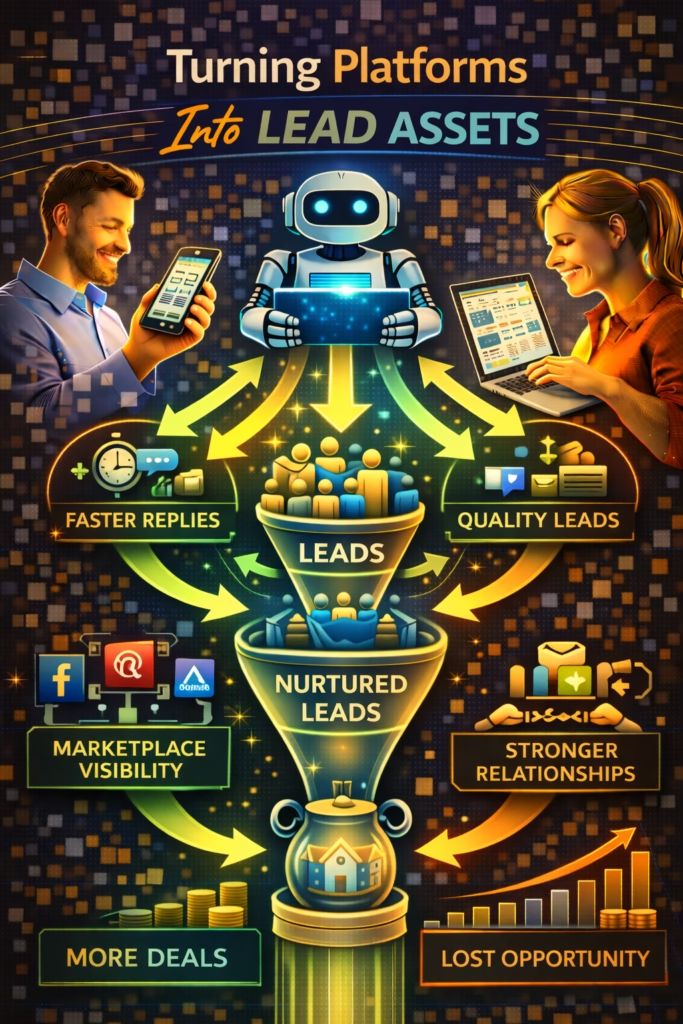
ChatGPT Image Feb 25 2026 02 07 30 PM
Turning Platforms Into Lead Assets

Turning Platforms Into Lead Assets

Turning Platforms Into Lead Assets is the blueprint for transforming “rented attention” into compounding lead systems—through consistent cadence, proof stacking, response speed, follow-up workflows, and compliant automation.

Lead Asset Drivers: Cadence Freshness Proof Conversion Follow-Up Retargeting

Note: This is general guidance. Follow each platform’s rules, keep claims truthful, avoid spam/duplication, and confirm compliance before automating messaging or posting.

Introduction

Turning Platforms Into Lead Assets starts with a mindset shift: you’re not “posting.” You’re building an asset.

Most businesses treat platforms like a slot machine. They post when they remember, run a promo when leads dip, and hope the algorithm smiles on them.

That approach creates spikes. Assets create compounding.

When you treat platforms as assets, every action has a job:

  • Cadence creates stability and “freshness” signals.
  • Proof builds trust and improves conversion rate.
  • Response speed prevents lead drop-off.
  • Follow-up turns inquiries into booked next steps.
  • Retargeting captures the “not ready yet” buyers.

Big idea: You don’t need more platforms. You need a system that turns each platform into a lead-producing machine.

Expanded Table of Contents

1) What a “lead asset” actually is

A lead asset is a channel component that produces inquiries predictably because it’s been built to compound over time.

Examples of lead assets

  • An optimized marketplace listing library with rotating angles and photos
  • A Google Business Profile with consistent posts, photos, and review momentum
  • A short-form content library that produces inbound traffic weekly
  • A follow-up workflow that converts old leads into appointments
  • A retargeting audience that keeps your brand in front of intent buyers

Rule: If it only works when you “push,” it’s not an asset. If it works because you built a repeatable system, it is.

2) The platform asset stack (visibility → proof → conversion)

Turning Platforms Into Lead Assets is easiest when you use a simple stack:

LayerGoalWhat you build
VisibilityEarn impressions and clicksCadence + keywords + thumbnails + variety
ProofIncrease trust and message rateReviews, real photos, results, social proof
ConversionTurn leads into booked next stepsFast response + scripts + follow-up SOP
RetentionIncrease LTV and referralsAfter-sale messaging + review asks + reactivation

Rule: Most businesses chase visibility and ignore proof and conversion. The winners build the whole stack.

3) Platform types: marketplace, local search, social, and messaging

Not all platforms behave the same. Lead assets work when you match the system to the platform’s incentives.

Marketplaces

Incentive: recency + engagement + trust.

Assets: rotating listing library, fast replies, photo testing.

Local search (GBP / Maps)

Incentive: proximity + relevance + prominence.

Assets: reviews, photos, consistent posts, category alignment.

Social (TikTok/IG/FB)

Incentive: watch time + saves + shares.

Assets: repeatable short-form formats + content batching.

Messaging / CRM

Incentive: speed and follow-through.

Assets: scripts, routing, follow-up sequences, next-step booking.

Pro move: Build one platform into an asset first. Then replicate the system across platforms.

4) Cadence systems that don’t collapse

Cadence is the heartbeat of your lead asset. Without it, the platform assumes you’re inactive and stops distributing your content as often.

The “Minimum Viable Cadence” framework

  • Daily: 5–20 minutes of response + follow-up
  • Daily: 1–5 visibility actions (post/refresh/rotate)
  • Weekly: 60 minutes batching + one A/B test
  • Monthly: proof refresh (reviews, photos, top posts)

Daily cadence checklist (copy/paste)

[ ] Respond to new leads immediately
[ ] Follow up on open conversations (5–15)
[ ] Post/refresh 1–3 assets (with variation)
[ ] Upgrade 1 weak asset (photo/title/hook)
[ ] Capture 1 proof item (screenshot/review/before-after)

Rule: Small, sustainable daily cadence beats big bursts followed by silence.

5) Freshness loops: how recency compounds reach

Freshness is one of the most reliable platform incentives because it’s measurable and correlated with buyer satisfaction.

Freshness actions that are usually low-risk

  • Rotate first photo (thumbnail testing)
  • Rewrite title for clarity and intent
  • Update first 1–2 lines (hook) to improve CTR
  • Refresh proof (new photos, new reviews, new results)
  • Replace stale assets with stronger variants

Avoid: rapid repetitive edits, duplicate reposting, or manipulative behavior. Keep changes meaningful and spaced out.

Pro move: Treat freshness like maintenance. A little consistent upkeep beats rebuilding everything every month.

6) Content rotation without duplication (anti-flag framework)

Consistency fails when businesses repeat the same content and trigger spam signals. You need a rotation system.

The 5-axis rotation checklist

  • Angle: value / speed / premium / trust / convenience
  • Thumbnail: 3–5 first-photo candidates
  • Hook: 3–5 opening lines per offer
  • Features: rotate benefit emphasis
  • Timing: stagger time windows

Angle matrix (example)

AngleHookCTA
Value“Strong option if you want quality without overspending.”“What’s your budget range?”
Speed“Available now—quick next steps.”“Today or this week?”
Premium“For buyers who want the best experience.”“What matters most to you?”
Trust“Real photos, transparent details.”“What city/zip are you in?”
Convenience“Simple process—fast answers.”“Want the fastest option?”

Rule: Posting more without rotation increases risk. Posting consistently with rotation increases reach.

7) Proof stacking: the fastest way to improve conversion

Proof is the most underrated lead asset lever. Proof turns skeptical buyers into quick “yes” decisions.

Proof stack components

  • Real photos (not just stock)
  • Reviews and testimonials
  • Before/after examples
  • Process transparency (what happens next)
  • Outcome clarity (what the buyer gets)

Proof placement strategy

First impression

Use a strong thumbnail and a clarity-first hook.

Mid-scroll

Add proof bullets (reviews, results, guarantees if applicable).

Message stage

Send proof as a short screenshot or one-line testimonial at the right moment.

Close

Offer a simple next step with low friction.

Pro move: Build a “proof folder” and add to it weekly. Proof is an asset that compounds conversions.

8) Conversion workflows: from message to booked next step

A platform becomes a lead asset when it produces booked next steps, not just messages.

The conversion ladder

  1. Impression
  2. Click
  3. Scroll
  4. Message
  5. Fast reply
  6. Qualification
  7. Booked next step

Instant reply template (universal)

Yes — I can help ✅

What city/zip are you in, and are you looking to do this today or this week?
I’ll confirm the best next step.

Qualification questions (keep it simple)

  • Where are you located?
  • What’s your timeline (today/this week/this month)?
  • What matters most: price, speed, or quality?

Rule: Keep conversion friction low. One question beats five paragraphs.

9) Follow-up systems that recover “lost” leads

Most leads don’t say “no.” They say nothing. Follow-up turns silence into sales.

Follow-up schedule (simple and effective)

TimeGoalMessage
+2 hoursKeep momentum“Just checking—do you want the fastest option today or this week?”
+24 hoursRecover intent“Still want help with this? City/zip + timeline and I’ll line it up.”
+72 hoursOffer clarity“If you tell me what matters most (price/speed/quality), I’ll recommend the best option.”
+7 daysReactivation“Last quick check—should I keep this open for you?”

Pro move: Follow-up is not pressure. It’s service. Buyers get busy. Your job is to make it easy to continue.

10) Compliant automation: what to automate and what not to

Automation can strengthen your lead asset—if it stays compliant and human-like.

Automate (usually safe)

  • Instant replies that ask one question
  • Routing leads to the right person
  • Follow-up reminders
  • KPI tracking and reporting
  • Template libraries for approved messaging

Be careful with

  • Bulk messaging
  • High-volume repetitive posting
  • Anything that mimics spam patterns
  • Claims you can’t support

Important: Always follow platform rules. Avoid spam-like patterns, keep messages truthful, and ensure automation enhances buyer experience.

11) Retargeting layers: capturing buyers who aren’t ready

Retargeting turns “not now” into “later.” It’s how platforms become long-term assets.

Retargeting asset examples

  • Website visitor audiences
  • Engaged video viewers
  • Messenger/DM re-engagement audiences (where allowed)
  • Email list reactivation sequences

Rule: Retargeting isn’t just ads. It’s any system that keeps you in the buyer’s world after the first touch.

12) KPIs and dashboards for lead assets

KPIWhat it measuresTarget direction
Actions/dayCadence stabilityStable
Active assetsSurface areaUp
Messages/dayDemandUp
Messages per assetQuality per unitUp
Median response timeSpeed-to-leadDown
Booked next stepsRevenue predictorUp
Lead leakageFollow-up failureDown
Flags/removalsCompliance riskDown

Pro move: Measure “booked next steps” weekly. It’s the KPI that turns platforms into predictable revenue.

13) 30–60–90 day rollout plan

Days 1–30 (Build the foundation)

  1. Choose one primary platform and build a baseline cadence
  2. Create 3–5 angles and 10–20 content variants
  3. Deploy instant reply + follow-up schedule
  4. Start KPI tracking (messages/day, response time, booked steps)
  5. Begin proof stacking weekly

Days 31–60 (Expand and optimize)

  1. Increase surface area with varied assets
  2. Run weekly A/B tests on thumbnails/titles/hooks
  3. Replace weak performers systematically
  4. Add retargeting or reactivation layer (if applicable)

Days 61–90 (Systemize and replicate)

  1. Document SOPs for posting, rotation, response, follow-up
  2. Automate low-risk steps (routing, reminders, reporting)
  3. Replicate the system to a second platform
  4. Double down on winners by angle/category/location

Rule: Platforms become assets when you build systems that compound—cadence + proof + conversion + follow-up.

14) 25 Frequently Asked Questions

1) What does “Turning Platforms Into Lead Assets” mean?

It means building repeatable systems on platforms so they produce leads consistently—rather than relying on one-off posts.

2) What is a lead asset?

A channel component that produces inquiries predictably: optimized profiles, listing libraries, content libraries, follow-up flows, and audiences.

3) Why do platforms outperform “campaigns” for many local businesses?

Because platforms can compound distribution via freshness, engagement, trust, and proof signals over time.

4) What’s the first platform I should turn into an asset?

The one where your buyers already have intent (often marketplaces or Google/Maps).

5) Do I need to be on every platform?

No—one strong asset beats five neglected channels.

6) What’s the most important lever for turning platforms into assets?

Consistency: stable cadence + fast response + follow-up.

7) How does posting cadence affect results?

Cadence strengthens freshness signals and keeps your inventory/content in circulation.

8) What is a freshness loop?

A cycle where consistent updates create engagement, which increases distribution, which creates more leads.

9) How do I avoid duplication and flags?

Rotate angles, photos, hooks, feature emphasis, and timing windows—while keeping everything truthful.

10) What matters more: volume or quality?

Quality per asset and response speed usually outperform raw volume.

11) How fast should I respond to leads?

Under 5 minutes is strong; under 1 minute is best.

12) What’s the best first reply?

Confirm help/availability and ask one question that advances the next step (city/zip + timeline).

13) Why is follow-up so important?

Most leads go silent, not “no.” Follow-up recovers sales you already paid for with effort.

14) What follow-up schedule works best?

2 hours, 24 hours, 72 hours, and 7 days is a simple, effective sequence.

15) What is proof stacking?

Collecting and deploying proof assets (reviews, photos, results) weekly to increase conversion.

16) Where should proof appear?

In thumbnails/photos, mid-scroll bullets, and in-message screenshots at the decision moment.

17) What should I automate?

Instant replies, routing, reminders, reporting, and templated follow-ups (where allowed).

18) What should I be cautious automating?

High-volume repetitive posting and bulk messaging—these can trigger spam signals or policy issues.

19) What are the best KPIs for lead assets?

Messages/day, response time, booked next steps, and messages per asset.

20) What KPI predicts revenue best?

Booked next steps (appointments, pickups, quotes), not views.

21) How long does it take to build a lead asset?

Often 30–90 days of consistent execution for compounding results.

22) Can lead assets work without paid ads?

Yes—organic systems can compound through consistency, proof, and conversion workflows.

23) Do I need new content daily?

No—rotate and refresh strategically. Consistent variety matters more than constant novelty.

24) How do I scale to more platforms?

Document SOPs and replicate the same cadence + rotation + response + follow-up system.

25) What’s the biggest mistake people make?

Treating platforms like a slot machine instead of building a lead asset system.

15) 25 Extra Keywords

  1. Turning Platforms Into Lead Assets
  2. platform lead assets
  3. marketplace lead asset system
  4. Facebook Marketplace lead generation
  5. social media lead system
  6. local SEO lead asset
  7. Google Business Profile lead asset
  8. compounding lead generation strategy
  9. freshness loop marketing
  10. posting cadence framework
  11. content rotation anti-flag
  12. avoid duplicate listing flags
  13. proof stacking strategy
  14. testimonial marketing system
  15. response speed lead conversion
  16. speed-to-lead marketplace
  17. follow-up SOP for leads
  18. lead leakage prevention
  19. booked next steps KPI
  20. messages per listing KPI
  21. organic lead asset blueprint
  22. retargeting layers for local business
  23. compliant marketing automation
  24. 2026 lead generation blueprint
  25. turn platforms into revenue system

© 2026 Your Brand. All Rights Reserved.
General information only—confirm compliance with platform policies and applicable privacy/marketing rules before posting, messaging, or automating follow-ups.

Turning Platforms Into Lead Assets Read More »

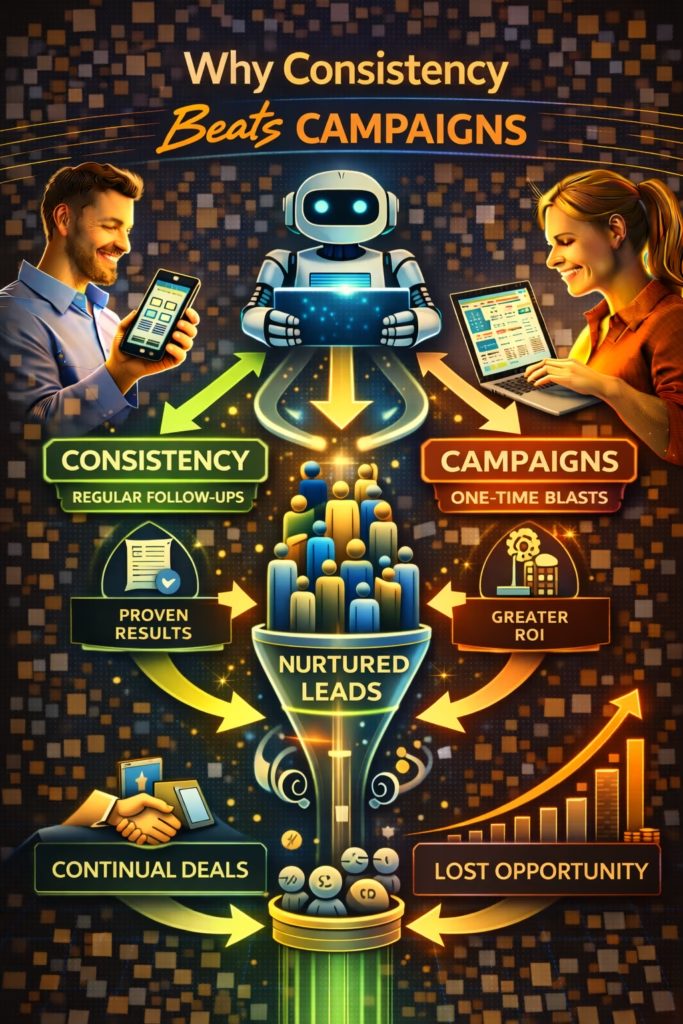
Why Consistency Beats Campaigns

ChatGPT Image Feb 25 2026 02 07 33 PM
Why Consistency Beats Campaigns

Why Consistency Beats Campaigns

Why Consistency Beats Campaigns is the blueprint for compounding leads and visibility—by using steady, compliant daily action to improve trust, freshness, engagement, and conversion signals.

Compounding Drivers: Cadence Freshness Asset Upgrades Follow-Up Response Speed Testing

Note: This is general guidance. Follow platform rules, avoid misleading claims, rotate content responsibly, and do not spam duplicate listings or messages.

Introduction

Why Consistency Beats Campaigns comes down to one uncomfortable truth: most businesses don’t lose because they’re “bad at marketing.” They lose because they only market when they feel like it.

They run a big push. They get a spike. They feel relief. Then life happens—operations get busy, the momentum fades, and the lead flow drops back to zero.

The platform didn’t “change.” The buyer didn’t “stop buying.” The business stopped showing up.

Campaigns are bursts. Consistency is a system. Bursts can win for a weekend. Systems win for years.

In 2025–2026, marketplaces, social platforms, and local search all reward the same thing: stable activity + engagement + trust + speed. That’s why a smaller business with consistent daily execution often outperforms a larger competitor running occasional promotions.

Big idea: Consistency is not “doing more.” It’s doing the right small things repeatedly—so results compound instead of resetting.

Expanded Table of Contents

1) What “consistency” really means (and what it doesn’t)

Consistency is not “posting every hour.” It’s not “being everywhere.” And it’s definitely not repeating the same content until you get flagged.

Why Consistency Beats Campaigns is about building a repeatable baseline—so you keep earning attention, conversations, and conversions even when you’re busy.

Consistency means

  • A predictable cadence: small daily actions that don’t collapse
  • Asset upgrades: improving first photos, titles, hooks, offers, and proof
  • Follow-up discipline: a process that prevents leads from disappearing
  • Response standards: speed-to-lead stays fast
  • Testing rhythm: you improve systematically instead of guessing

Consistency does NOT mean

  • Copy-pasting identical listings or posts (high flag risk)
  • Doing “more” when your process is broken
  • Running discounts as your only lever
  • Operating without a scoreboard (KPIs)

Rule: Consistency is “repeatable quality,” not “repeatable noise.”

2) Why campaigns spike and fade

Campaigns often feel productive because they produce visible activity: new ads, new creatives, a promotion, a blast of posts. But the results usually follow the same curve:

Week 1: The spike

More impressions, more clicks, more inquiries—because the platform is “testing” your new activity and your audience notices the burst.

Week 2–3: The fade

Engagement stabilizes. If you don’t keep showing up, distribution decreases because signals weaken and buyers move on.

Week 4: The reset

Your pipeline empties. Response speed slows. Follow-ups lag. Momentum disappears.

Week 5: Panic marketing

You run another campaign—often with lower quality, less testing, and more discounting.

Campaigns fail when they’re used as a substitute for a system.

Campaign-only behaviorResultWhat consistency fixes
Marketing happens in burstsLeads are unpredictableBaseline keeps pipeline stable
Creatives are rushedCTR and conversion sufferWeekly improvement cadence
Follow-ups are inconsistentLead leakage increasesFollow-up SOP + templates
Response speed dropsConversations dieInstant reply + routing
No KPI trackingGuesswork and randomnessSimple dashboard and tests

Rule: If your results only appear during campaigns, you don’t have marketing—you have occasional promotion.

3) The compounding model: how consistency creates durable growth

Why Consistency Beats Campaigns is easiest to understand as a compounding loop:

  1. Consistent activity increases visibility and surface area.
  2. Visibility generates clicks, saves, messages, and calls.
  3. Fast response + follow-up increases conversions.
  4. Conversions create proof: reviews, screenshots, testimonials, before/after photos.
  5. Proof improves trust and conversion rates—making each future impression worth more.
  6. Data reveals winners—so you double down intelligently.

Pro move: Your goal is not “more posts.” Your goal is a loop that turns activity into proof and proof into higher conversion.

The “small daily wins” checklist

This is the simplest form of consistency that still compounds:

  • 1–3 visibility actions (post, refresh, rotate first photo, update titles)
  • 10–30 minutes of response + follow-ups
  • 1 improvement action (upgrade a weak thumbnail, add clearer bullets, refine CTA)
  • 1 proof capture (screenshot, testimonial request, before/after, delivered order photo)

Rule: If you do 3–10 meaningful actions daily, you outpace most competitors within 30–90 days.

4) The platform signals consistency improves

Many platforms can’t “see” your business quality directly. They infer it through behavior and outcomes. Consistency improves the signals platforms can measure.

SignalWhat the platform seesWhat consistency does
FreshnessNew posts, meaningful updatesKeeps your presence current
EngagementClicks, saves, watch time, messagesCreates repeatable engagement
ReliabilityResponse speed and completionReduces abandoned conversations
QualityCTR, message rate, conversionImproves assets steadily
RiskDuplication/spam patternsVaried templates reduce flags

Consistency is a trust signal

Buyers behave differently when they feel a seller is active:

  • They message sooner (fear of missing out / faster response expectation)
  • They trust availability more (freshness)
  • They commit to next steps more (less uncertainty)

Translation: Consistency doesn’t just win distribution. It wins buyer confidence.

5) Build your baseline system (daily + weekly)

If Why Consistency Beats Campaigns had a single actionable takeaway, it’s this:

Build a baseline you can keep even on your busiest week.

Daily baseline (30–60 minutes)

Visibility

  • Post or refresh 1–5 items
  • Rotate first photo on one listing
  • Update one title for clarity

Conversion

  • Instant reply to new leads
  • Follow-up on 5–15 open conversations
  • Confirm next step (appointment/pickup/quote)

Improvement

  • Upgrade one weak listing/post
  • Save winning hooks and CTAs
  • Capture one proof asset

Weekly baseline (60–90 minutes)

  • Batch 10–30 variations (angles + hooks + CTAs)
  • Review top performers and extract patterns
  • Replace or rewrite bottom performers
  • Run 1 simple A/B test (first photo OR title OR hook)
  • Update your KPI dashboard

Baseline templates you can reuse

Daily (10 minutes):
[ ] Respond to all new leads
[ ] Send follow-up to open conversations
[ ] Confirm one next step (appointment/pickup/quote)

Daily (20 minutes):
[ ] Post/refresh one item
[ ] Rotate first photo on one listing
[ ] Improve one title or first line

Weekly (60 minutes):
[ ] Write 5 angles x 3 hooks each (15 hooks total)
[ ] Choose 10 photos/thumbnails and label by angle
[ ] Queue/schedule with variation and staggered timing

Rule: If you can’t do it in a busy week, it’s not a baseline—it’s a fantasy.

6) Cadence frameworks (solo, small team, multi-location)

Consistency is not one cadence. It’s the cadence you can sustain.

Solo operator (minimum viable consistency)

  • Visibility: 1–3 actions/day
  • Conversion: 15–30 minutes/day responding + following up
  • Weekly: upgrade top 3 assets (thumbnail/title/hook)

Small team (consistent output without chaos)

  • Visibility: 10–30 actions/day across roles (where allowed)
  • Quality control: one person checks duplication risk and accuracy
  • Weekly: A/B test one variable and document results

Multi-location (consistency with localization)

  • Localize keywords, offers, and proof (city/area references)
  • Stagger schedules by market to avoid unnatural spikes
  • Track KPIs per market (messages/day, booked steps, response time)
Team typePrimary constraintConsistency solution
SoloTimeSmall checklist + batching
Small teamCoordinationSOPs + QA + roles
Multi-locationVariation and trackingTemplates + localization + dashboards

Pro move: Stability beats intensity. Avoid “big days” followed by silence.

7) Content rotation without duplication (anti-flag framework)

One reason people abandon consistency is fear: “If I post regularly, I’ll get flagged.” That fear is valid—if your content is repetitive.

Why Consistency Beats Campaigns requires variety inside a stable cadence.

The 5-axis variety checklist

  • Angle: value vs speed vs premium vs trust vs convenience
  • First photo: rotate thumbnail candidates
  • Hook: first 1–2 lines change meaningfully
  • Feature emphasis: highlight different benefits honestly
  • Timing: stagger time windows rather than bursts

Angle library (use this to generate endless variety)

Value

“Best option if you want quality without overspending.”

Budget-friendly Clear details

Speed

“Available now—fast pickup/delivery options.”

Availability Convenience

Premium

“For buyers who want a better experience and long-term value.”

Upgraded Best-in-class

Trust

“Real photos, transparent details, straightforward process.”

Proof No surprises

Payments

“Options available—ask what fits your budget.”

Flexible Accessible

Bundle

“Bundle options available to simplify your decision.”

Simplify Best deal

Avoid: identical titles, identical first photos, identical hooks, or mass-posting the same item repeatedly. Keep changes meaningful, spaced, and truthful.

8) Offer sequencing: consistency without discounting

Many businesses use campaigns because it’s the easiest lever: “Run a sale.” But that trains buyers to wait—and forces you to keep discounting to create urgency.

Why Consistency Beats Campaigns gives you better options: sequence offers without racing to the bottom.

The 4-tier offer ladder

TierWhat it isWhy it works
1) ClarityClear details, proof, processReduces uncertainty (higher conversion)
2) ConvenienceDelivery, scheduling, fast answersSaves time (buyers pay for ease)
3) ConfidenceWarranty, guarantee, reviewsIncreases trust (less price sensitivity)
4) IncentiveLimited promo / bonusOnly after value is clear

Consistency-friendly incentives (low-risk)

  • Free add-on for fast scheduling (bonus, not discount)
  • Priority delivery window
  • Bundle upgrade option
  • Consultation/measurement included
  • Limited availability messaging (truthful)

Pro move: Use consistency to improve clarity and trust first. Incentives become optional when conversion is strong.

9) Response speed: the hidden consistency multiplier

You can post perfectly and still lose—if you reply late. Consistency is not just outward marketing. It’s also inward operations: how reliably you handle leads.

Rule: Consistent lead response turns attention into revenue. Inconsistent response turns attention into wasted effort.

Instant reply (universal)

Yes — it’s available ✅

What city/zip are you in, and are you looking to do this today or this week?
I’ll confirm the fastest options.

Follow-up reply (24 hours later)

Quick follow-up — do you still want help with this?

If you tell me your city/zip + your timeline (today/this week),
I’ll line up the best next step.

Why response speed compounds

  • Higher conversion: you catch the buyer while intent is hot
  • More completed conversations: fewer drop-offs
  • Better data: you learn which angles trigger real demand
  • Stronger trust: buyers feel the process is “easy”

Pro move: If you can’t reply quickly, reduce posting volume and protect conversion first. Consistency must include response standards.

10) Testing plan: scale winners, retire losers

The fastest way to make consistency profitable is to avoid repeating the wrong thing. Testing prevents you from consistently executing a losing strategy.

Test priority order (highest impact first)

  1. First photo / thumbnail
  2. Title clarity + intent
  3. Hook line (first 1–2 sentences)
  4. CTA question
  5. Offer sequencing
  6. Posting windows

Simple test process

1) Choose ONE variable
2) Run for 3–7 days (same product/service)
3) Track messages/day + booked next steps
4) Keep the winner
5) Document the result
6) Test the next variable

Example test card (copy/paste)

TEST NAME: Thumbnail A vs B
DATES: ______ to ______
VARIABLE: First photo only
CONTROL: A
CHALLENGER: B
RESULTS:
- Messages/day: A ___ | B ___
- Booked next steps: A ___ | B ___
WINNER: ______
NOTES: __________________________________

Rule: Consistency without testing can lock you into average results. Consistency with testing produces compounding upgrades.

11) KPIs and dashboards for “consistency health”

Consistency becomes easy when you can see it working. Your dashboard should be simple, not overwhelming.

KPIWhat it measuresTarget direction
Actions/dayCadence stabilityStable
Active assetsSurface area (listings/posts/videos)Up
Messages/dayDemand + distributionUp
Messages per assetQuality per unitUp
Median response timeSpeed-to-leadDown
Booked next stepsRevenue predictorUp
Lead leakageUnanswered / un-followed leadsDown
Flags/removalsCompliance riskDown

The 3 numbers that matter most

  • Messages/day (are you creating demand?)
  • Response time (are you converting demand?)
  • Booked next steps (is it turning into revenue?)

Pro move: Track “booked next steps” as your north star. Views and likes don’t pay bills—next steps do.

12) 30–60–90 day rollout plan

Days 1–30 (Stabilize consistency)

  1. Choose a sustainable daily baseline (30–60 minutes)
  2. Deploy instant replies + follow-up templates
  3. Improve first photos and titles on top assets
  4. Start a simple KPI dashboard (messages/day, response time, booked steps)
  5. Create a small angle library (value/speed/premium/trust)

Days 31–60 (Increase surface area safely)

  1. Expand asset count with varied angles and visuals
  2. Rotate thumbnails on a schedule (3–7 day tests)
  3. Replace bottom performers weekly
  4. Add proof weekly (reviews, screenshots, before/after)
  5. Run one A/B test per week and document it

Days 61–90 (Systemize and scale)

  1. Document SOPs: posting, rotation, replies, follow-up, QA
  2. Automate low-risk steps (templated replies, reminders, reporting)
  3. Double down on winners by angle/category/location
  4. Reduce wasted actions and protect response speed
  5. Plan “campaigns” as multipliers—not lifelines

Rule: In 90 days, consistent daily action becomes a system. Systems outperform campaigns because they don’t reset.

13) 25 Frequently Asked Questions

1) What does “Why Consistency Beats Campaigns” mean in marketing?

It means steady daily execution compounds trust, distribution, and conversions—while campaign spikes often fade when the burst ends.

2) Are campaigns still useful if consistency is better?

Yes. Campaigns work best as a multiplier on top of a consistent baseline, not as a replacement for it.

3) Why do inconsistent campaigns fail for many small businesses?

Because the business resets between pushes—momentum, platform signals, and operational habits don’t compound.

4) What’s the biggest advantage of consistency?

Compounding: better assets, better trust, better response speed, and better distribution over time.

5) How does consistency improve organic reach?

It strengthens freshness and engagement signals while avoiding spam patterns through responsible variety.

6) How many actions per day are enough to be “consistent”?

Enough to be sustainable. Many businesses win with 5–20 quality actions per day.

7) What’s the difference between activity and spam?

Activity is meaningful, varied, and compliant. Spam is repetitive, duplicate, manipulative, or misleading.

8) How do I stay consistent with limited time?

Use a daily checklist, batch weekly content, and template repetitive steps like replies and follow-ups.

9) What channels benefit most from consistency?

Marketplaces, local SEO/GBP, short-form video, social posting, and email follow-up.

10) Does consistency matter more than creativity?

Usually yes. Consistent good-enough creative beats rare bursts of excellent creative that don’t repeat.

11) How does consistency improve conversion rates?

It improves response time, follow-up discipline, proof accumulation, and first-impression assets (photos/titles/hooks).

12) What’s a baseline marketing system?

A minimum daily/weekly routine that keeps leads flowing: cadence, speed-to-lead, follow-ups, upgrades, and tracking.

13) What is the best cadence for Facebook Marketplace posting?

A steady rhythm you can sustain with content variety and compliance—avoid big spikes followed by silence.

14) How do I rotate content without duplicating?

Rotate angle, first photo, hook, feature emphasis, and timing windows while keeping details truthful.

15) Why does response speed matter so much?

It prevents lead drop-off. Faster replies keep intent alive and increase booked next steps.

16) What KPIs prove consistency is working?

Messages/day, booked next steps, response time, message-to-appointment conversion, and lead leakage.

17) How long until consistent marketing shows results?

Often 7–14 days for early lift, and 30–90 days for compounding gains.

18) Should I pause everything and run one big campaign?

Usually no. Build the baseline first. Then run campaigns as multipliers.

19) What’s the best way to avoid burnout while staying consistent?

Keep the baseline small, batch weekly, reuse templates, and track only a few core KPIs.

20) How do I create a weekly content batch in 60 minutes?

Pick 3–5 angles, write short hooks, reuse structure, rotate photos, and queue with staggered timing.

21) Do I need new creative every day?

No. You need varied creative regularly—rotate first images, headlines, hooks, and refresh winners on schedule.

22) How do I test what works without guessing?

Change one variable at a time, run 3–7 days, and track messages/day plus booked next steps.

23) What’s the #1 mistake when trying to be consistent?

Doing too much at once. A small sustainable baseline wins long-term.

24) What does a 30–60–90 day consistency plan look like?

Stabilize routines and response first, then expand surface area and tests, then document SOPs and scale winners.

25) How do I keep consistency while staying compliant on marketplaces?

Avoid duplicates, keep claims truthful, rotate responsibly, maintain human-like patterns, and prioritize meaningful improvements over raw volume.

14) 25 Extra Keywords

  1. Why Consistency Beats Campaigns
  2. consistency marketing strategy
  3. campaign vs consistency marketing
  4. daily marketing habits for small business
  5. compounding marketing growth
  6. consistent posting cadence
  7. marketplace consistency strategy
  8. Facebook Marketplace posting cadence
  9. avoid duplicate listing flags
  10. anti-flag content rotation
  11. response speed lead conversion
  12. speed-to-lead improvement
  13. follow-up SOP for leads
  14. baseline marketing system
  15. local SEO consistency plan
  16. GBP posting consistency
  17. content batching workflow
  18. marketing KPI dashboard
  19. messages per listing KPI
  20. booked next steps metric
  21. organic lead generation system
  22. 2026 marketing consistency blueprint
  23. small business marketing routine
  24. testing plan for marketing assets
  25. compounding visibility strategy

© 2026 Your Brand. All Rights Reserved.
General information only—confirm compliance with platform policies and applicable privacy/marketing rules before posting, messaging, or automating follow-ups.

Why Consistency Beats Campaigns Read More »

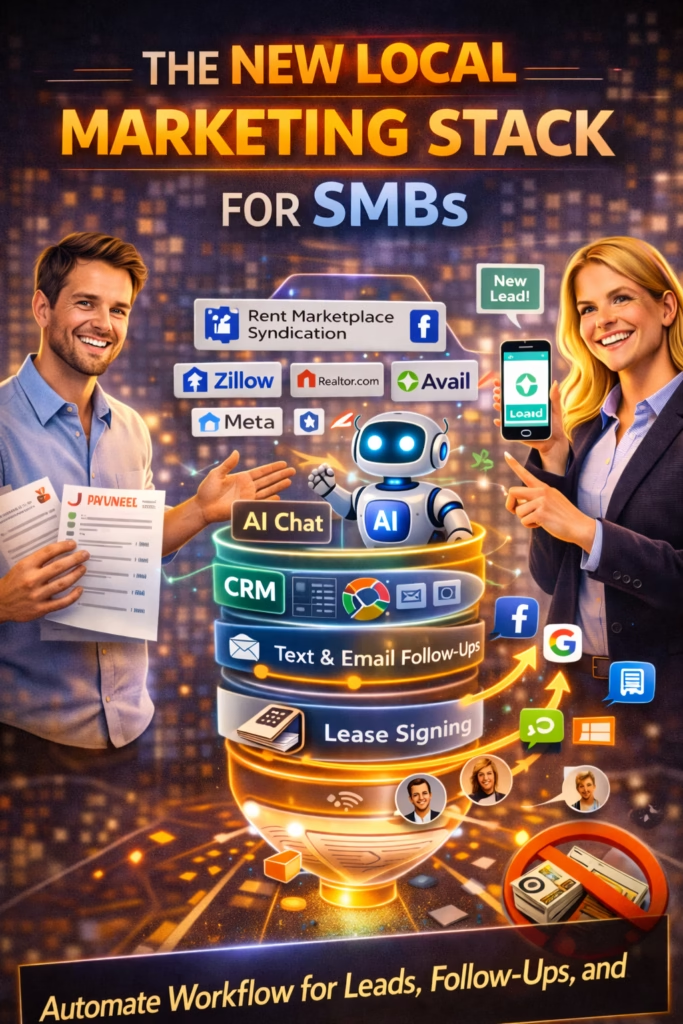
The New Local Marketing Stack for SMBs

ChatGPT Image Feb 25 2026 02 07 24 PM
The New Local Marketing Stack for SMBs

The New Local Marketing Stack for SMBs

The New Local Marketing Stack for SMBs is the blueprint for generating consistent leads with a modern, lean stack that compounds: visibility, trust, speed-to-lead, and conversion—without chaos or guesswork.

Stack Layers: Visibility Proof Conversion Automation Tracking SOPs

Note: This is general guidance. Follow platform policies, avoid misleading claims, and keep messaging, reviews, and automation compliant with applicable laws and privacy rules.

Introduction

The New Local Marketing Stack for SMBs is the response to one hard reality:

Small businesses don’t lose because they lack effort. They lose because their marketing is fragmented.

They post sometimes. They run ads occasionally. They get a few reviews, then forget. They miss leads because they respond late. They switch tools every month. And the result is a pipeline that feels random.

The modern solution is not “more tactics.” It’s a stack—a small set of channels and systems that work together:

  • Visibility so you show up when buyers search
  • Proof so buyers trust you quickly
  • Conversion so inquiries become appointments
  • Automation so leads don’t leak while you’re busy
  • Tracking so you can improve what’s working

Big idea: The stack turns local marketing from “random” into “reliable.”

Expanded Table of Contents

1) What the new local marketing stack is (and isn’t)

The New Local Marketing Stack for SMBs is a lean set of channels + systems that work together to produce predictable leads.

What it is

  • A repeatable weekly routine
  • A set of owned assets (profiles, proof, pages)
  • A conversion system that protects leads from slow response
  • A simple way to track results and improve monthly

What it is not

  • Buying random tools and hoping it works
  • Posting every day forever just to “stay visible”
  • Depending on paid ads as the only fuel source
  • Complicated analytics that no one maintains

Pro move: A stack is not a list of tools. It’s a sequence: attract → prove → convert → follow up → measure.

2) The 7 principles that make the stack work

  1. Intent beats attention: show up where people are already searching.
  2. Proof beats persuasion: reviews + real photos reduce friction.
  3. Speed beats spend: fast follow-up wins leads you didn’t pay for.
  4. Clarity beats creativity: buyers act when the next step is obvious.
  5. Consistency beats bursts: steady activity compounds visibility.
  6. Systems beat talent: SOPs create reliable outcomes.
  7. Tracking beats guessing: weekly metrics prevent wasted effort.

Rule: If you can’t maintain it weekly, it’s not part of your stack.

3) The 6 layers of the new local marketing stack

LayerPurposeExamples
VisibilityGet discovered by intentGBP, local SEO, directories
ProofBuild trust fastReviews, photos, testimonials
ContentCompound proof + demandShort-form, before/after, FAQs
ConversionTurn inquiries into bookingsOffers, scripts, next-step flow
AutomationStop lead leakageInstant replies, reminders, follow-up
TrackingImprove monthlyDashboards, KPIs, QA checks

Pro move: Add layers in order. Most SMBs try to automate before they have clarity and proof.

4) Visibility layer: where local intent lives

Local marketing is not about “being everywhere.” It’s about showing up where buyers already look:

  • Google Maps / “near me” searches
  • Local organic search (service + city)
  • Marketplaces (for retail and many local service categories)
  • Local groups / communities (when done responsibly)

Rule: Local intent channels convert better than broad reach channels.

5) Google Business Profile: the foundation asset

Google Business Profile is the highest leverage part of The New Local Marketing Stack for SMBs because it captures demand that already exists.

GBP setup essentials

  • Correct category + services
  • Strong photo library (real, updated)
  • Review cadence (steady requests)
  • Quick replies (calls/messages)
  • Weekly posting routine (light but consistent)

GBP weekly SOP (20–30 minutes)

[ ] Add 5–10 new photos
[ ] Publish 1 post (offer/proof/update)
[ ] Ask 5 customers for reviews
[ ] Reply to all reviews
[ ] Check Q&A and messages

Pro move: Treat photos like inventory. Fresh photos keep profiles active and trustworthy.

6) Local SEO pages: turning searches into calls

Local SEO pages turn “service + city” searches into conversions when done with clarity and proof.

What a local page needs

  • Clear headline: what you do + where
  • Proof: photos, reviews, short testimonials
  • Specific services + FAQs
  • Fast contact options (call/text/form)
  • Trust signals: licensing/insurance (if applicable), process transparency

Local page structure template

H1: [Service] in [City]
Intro: who it’s for + outcome
Proof: photos + reviews
Services: bullets
Process: 3 steps
FAQ: 8–12
CTA: call/text + short form

Rule: The best local pages answer objections quickly and make the next step obvious.

7) Proof layer: reviews, photos, and trust velocity

Proof is the difference between “a click” and “a booked appointment.” In the new stack, proof is a system—not a one-time effort.

Proof assets that convert

  • Real photos (before/after or inventory)
  • Google reviews (steady cadence)
  • Short testimonials (1–2 lines)
  • Process transparency (“here’s what happens next”)

Weekly proof habit

[ ] Capture 3–5 new photos
[ ] Save 1 customer quote/testimonial
[ ] Request 5 reviews
[ ] Create 1 proof post from the best result

Pro move: Proof replaces discounting. When trust is high, price sensitivity drops.

8) Content layer: short-form proof that compounds

You don’t need to post daily. You need a repeatable loop that turns normal work into proof.

The 3-post weekly loop

Post typeWhat to showWhy it works
Proofbefore/after or resultinstant trust
FAQanswer one common questionreduces objections
Updateavailability, inventory, seasonal tipkeeps you current

Rule: Content is a sales asset. Keep it clear, real, and useful.

9) Marketplace layer: fast demand capture (when relevant)

Marketplaces can be a major part of The New Local Marketing Stack for SMBs for retail and many local service categories because they produce fast feedback loops.

Marketplace growth is built on

  • Variety: multiple angles and listings
  • Freshness: steady cadence
  • Strong thumbnails: click-through wins
  • Fast replies: speed-to-lead closes the loop

Avoid: Identical duplicate posting. Rotate photos, angles, hooks, and timing responsibly.

10) Conversion layer: scripts, offers, and next steps

Visibility creates inquiries. Conversion turns inquiries into scheduled work.

Conversion basics

  • One clear offer
  • One simple next step
  • One question CTA
  • Short scripts that sound human

Universal CTA question

What city/zip are you in, and are you looking for today or this week?

Pro move: Ask one question at a time. Multi-question messages reduce reply rate.

11) Speed-to-lead: the new competitive advantage

Speed-to-lead is one of the highest leverage parts of The New Local Marketing Stack for SMBs because it costs nothing and wins leads others lose.

Instant reply template

Yes — I can help ✅
What city/zip are you in and are you trying to do this today or this week?

If you share a quick detail, I’ll confirm the fastest next step.

Speed SOP

[ ] Reply within 5 minutes whenever possible
[ ] Ask one qualifying question
[ ] Offer a next step (schedule/quote/pickup time)
[ ] Confirm the plan in one message

Rule: If response speed is slow, every channel becomes expensive—even “free” ones.

12) Automation layer: stop lead leakage

Automation in the new stack is not about spamming. It’s about protecting leads when you’re busy.

Automation that helps (and stays safe)

  • Instant “we got your message” reply
  • Follow-up reminders for unbooked leads
  • Appointment confirmations
  • Review request after completion

Important: Keep automation compliant and human. Avoid aggressive sequences and misleading claims.

13) Lightweight CRM: don’t lose follow-ups

You don’t need an enterprise CRM. You need a place where leads can’t disappear.

Minimum fields

Name | Phone/Email | Source | Need | Status | Next Step | Follow-up Date | Notes

Pro move: Track “next step” for every lead. Leads die in the gap between messages.

14) Tracking dashboards: what to measure weekly

KPIWhat it measuresTarget direction
Leads by sourceChannel performanceStable / Up
Median response timeLead leakage riskDown
Booked next stepsPipeline healthUp
Close rateOffer + trust qualityUp
Revenue per leadLead qualityUp
Review velocityTrust growthUp

Rule: Weekly tracking beats monthly panic.

15) Budget tiers: lean, growth, and multi-location

The new stack is flexible. You can run it lean or invest in speed and content production.

TierMonthly tools budgetBest forWhat you get
Lean$0–$150Solo SMBGBP + basic tracking + manual follow-up + simple content loop
Growth$150–$750Busy teamsAutomation + lightweight CRM + better content throughput + faster response coverage
Multi-location$750–$2,500+Operators across citiesStandardized SOPs, dashboards per market, scalable proof/content, response coverage

Pro move: Spend on anything that improves speed-to-lead and proof production. Those are the two biggest multipliers.

16) Setup checklist: build the stack in 7 days

Day 1: Offer + scripts

  • Write your one-sentence offer
  • Create your instant reply
  • Create your one-question CTA

Day 2: Proof library

  • Collect 25–50 real photos
  • Collect 5 testimonials or customer quotes

Day 3: GBP cleanup

  • Update categories, services, photos
  • Create review request process

Day 4: Local page or landing page

  • Create a clean page with proof + CTA
  • Add FAQs and process

Day 5: Marketplace setup (if relevant)

  • Create varied listings with strong thumbnails
  • Stagger posting schedule

Day 6: Tracking dashboard

  • Set up a simple lead tracker
  • Define status stages

Day 7: SOPs + weekly rhythm

  • Document daily/weekly tasks
  • Assign responsibilities
  • Set the first review and proof targets

Rule: Setup is a sprint. Maintenance is the moat.

17) 30–60–90 day rollout plan

Days 1–30 (Stabilize)

  1. Execute GBP weekly routine
  2. Launch proof + FAQ + update content loop
  3. Deploy instant reply + simple follow-up
  4. Track response time and booked next steps

Days 31–60 (Grow)

  1. Increase proof production
  2. Improve conversion scripts and CTAs
  3. Add partnerships and referral routine
  4. Expand local pages by city/service

Days 61–90 (Scale)

  1. Standardize SOPs
  2. Build dashboards per market
  3. Automate reminders and review requests
  4. Double down on best sources

Pro move: Measure weekly, optimize monthly, and commit for 90 days. That’s where compounding shows up.

18) 25 Frequently Asked Questions

1) What is the new local marketing stack for SMBs?

A lean set of channels and systems that work together: GBP, local SEO, reviews, proof content, speed-to-lead, follow-up, tracking, and SOPs.

2) Why do I need a stack instead of tactics?

A stack compounds visibility, trust, and conversion. Tactics create inconsistent results and wasted effort.

3) What is the fastest local channel?

Often GBP and marketplaces because they capture active intent—combined with fast replies.

4) Do I need paid ads in the stack?

No. Ads can be optional accelerators once your organic conversion is proven.

5) What matters most in GBP?

Correct category, fresh photos, review cadence, and responsiveness.

6) How often should I add photos?

Weekly is strong. Consistent updates help trust and activity signals.

7) What’s the best way to get reviews?

Ask consistently after every successful job, using a direct link and a short request.

8) Do I need a website?

A website helps, but a clean landing page or strong GBP can work to start.

9) What should a local SEO page include?

Clear headline, proof, service bullets, process steps, FAQs, and a strong CTA.

10) How does short-form content help locally?

It builds proof and trust and keeps you current without heavy production.

11) How often should I post content?

3 times per week is enough for most SMBs if you stay consistent.

12) Should I use marketplaces?

Yes if your niche fits. They can be a fast demand capture channel.

13) How do I avoid duplicate flags on marketplaces?

Use truthful variety: rotate photos, hooks, titles, angles, and timing.

14) What is speed-to-lead?

How quickly you respond after an inquiry. Faster responses increase bookings.

15) What response time should I target?

Under 5 minutes is strong. Under 1 minute is best when possible.

16) What’s the best CTA question?

“What city/zip are you in, and are you looking for today or this week?”

17) What automation is safe and helpful?

Instant replies, follow-up reminders, appointment confirmations, and review requests—kept human and compliant.

18) Do I need a CRM?

Not necessarily. Start with a sheet, then upgrade when follow-ups become hard to manage.

19) What should I track weekly?

Leads by source, response time, booked next steps, close rate, review velocity.

20) How do partnerships fit in?

Partners can send warm leads consistently. Make it simple for them to refer.

21) How do referrals fit in?

Referrals compound and convert well. You need a consistent ask routine.

22) What’s the biggest mistake SMBs make?

Inconsistency—doing a burst of effort and then stopping.

23) How long until results improve?

Often within 30–90 days of consistent execution, depending on competition.

24) What’s the most leverage upgrade?

Speed-to-lead + proof production. Those two multipliers lift every channel.

25) What’s the simplest way to start this week?

Clean GBP, start weekly review requests, build an instant reply script, and post proof consistently.

19) 25 Extra Keywords

  1. The New Local Marketing Stack for SMBs
  2. local marketing stack for SMBs
  3. small business local marketing stack
  4. local lead generation stack
  5. Google Business Profile marketing stack
  6. GBP optimization for SMBs
  7. local SEO stack 2026
  8. local SEO pages for small business
  9. review generation system SMB
  10. reputation management for local business
  11. speed to lead local marketing
  12. instant reply system for leads
  13. follow-up automation for SMBs
  14. lightweight CRM for small business
  15. marketing dashboard for SMBs
  16. local marketing SOPs
  17. short form content for local business
  18. before and after marketing strategy
  19. Facebook Marketplace lead generation
  20. Craigslist marketing for small business
  21. OfferUp marketing strategy
  22. partnership marketing local
  23. referral system for SMB
  24. local marketing stack checklist
  25. 2025 2026 local marketing strategy

© 2026 Your Brand. All Rights Reserved.
General information only—confirm compliance with platform policies and applicable privacy/marketing rules before posting, messaging, or automating follow-ups.

The New Local Marketing Stack for SMBs Read More »

Lead Generation Without Monthly Marketing Bills

ChatGPT Image Feb 25 2026 02 07 27 PM
Lead Generation Without Monthly Marketing Bills

Lead Generation Without Monthly Marketing Bills

Lead Generation Without Monthly Marketing Bills is the blueprint for building a predictable pipeline without paying a recurring retainer—by turning organic intent, proof, and speed-to-lead into a compounding system you control.

Core Pillars: Offer Proof Distribution Speed-to-Lead Follow-Up Tracking

Note: This is general guidance. Follow platform rules, avoid misleading claims, and keep all outreach compliant with applicable marketing and privacy regulations. Do not spam duplicate listings or automated messages.

Introduction

Lead Generation Without Monthly Marketing Bills exists because most small businesses get trapped in a cycle:

  • They need leads.
  • They pay a monthly marketing bill.
  • They can’t tell what’s working.
  • They stop paying—and the leads stop instantly.

Here’s the shift: If your leads disappear the moment you stop paying, you don’t have marketing—you have rent.

This guide is for building an engine you can run, improve, and scale without relying on a recurring retainer. That doesn’t mean “never spend money.” It means your baseline lead flow comes from assets you own and processes you control—so your growth doesn’t depend on writing the same monthly check forever.

Big idea: You want a system where your marketing bill is optional—not required for survival.

Who this is for

Local services

Contractors, home services, medical/wellness, cleaning, painting, HVAC, roofing, remodelers, landscaping—anyone selling trust and results.

Local retail

Mattress/furniture stores, appliance sellers, dealers, specialty retail, and showrooms that can win through inventory visibility and fast follow-up.

Multi-location

Operators who need consistent lead flow across markets without managing a separate ad budget and agency relationship for every city.

Expanded Table of Contents

1) What “Lead Generation Without Monthly Marketing Bills” actually means

Lead Generation Without Monthly Marketing Bills does not mean “never spend money on marketing again.” It means you build a pipeline that does not depend on recurring retainers to exist.

The difference between “renting” and “owning” leads

ApproachWhat happens if you stop paying?Long-term outcome
Rented leads (retainer-only)Leads drop immediatelyYou stay dependent
Owned engine (organic assets + process)Leads continue (with maintenance)You gain control
Hybrid (owned engine + optional paid boost)Baseline remains stableYou scale on your terms

Goal: Build a baseline lead engine you can maintain with a clear weekly routine—then use paid spend as an accelerator, not a life support system.

2) The mindset shift: from paying for leads to owning a lead engine

Most businesses don’t have a marketing problem—they have a system ownership problem. They outsource everything, lose visibility, and become dependent on someone else’s process.

Ownership is a checklist

  • You own the accounts: Google Business Profile, social pages, marketplace profiles, review links, tracking sheets.
  • You own the assets: real photos, before/after library, testimonials, FAQs, offer templates, scripts.
  • You own the SOP: what happens daily, weekly, monthly—regardless of who executes.
  • You own the metrics: leads by source, response time, booked next steps, close rate.

Rule: If you can’t explain your lead flow in one page, it’s not a system—it’s hope.

The “no monthly bill” promise you can actually keep

You can’t promise “zero effort.” Organic lead generation still requires consistent activity. The difference is that your effort compounds into assets and habits that create stability.

Replace monthly bills with monthly habits: post, respond, collect proof, refresh listings, ask for reviews, track outcomes.

3) The four-part math that makes organic leads predictable

Lead Generation Without Monthly Marketing Bills becomes predictable when you treat it like math, not vibes.

The simple formula

Leads = (Visibility) × (Click/Inquiry Rate) × (Response Speed) × (Follow-Up Completion)

Most businesses obsess over visibility (traffic) and ignore the multipliers that cost nothing:

Visibility

Where you show up: Google, marketplaces, partner referrals, community groups, local directories, maps.

Inquiry rate

How often viewers become messages/calls: thumbnails, titles, offers, proof, clarity.

Response speed

How quickly you reply: under 5 minutes is strong; under 1 minute is elite.

Follow-up completion

How many leads get a next step: quote scheduled, appointment booked, pickup arranged.

Rule: You don’t need “more leads” first. You need to stop losing the leads you already earned.

4) Offer engineering: make your service easy to say “yes” to

Lead Generation Without Monthly Marketing Bills fails when your offer is vague. Organic channels punish confusion because people scroll fast and compare instantly.

The “clarity stack”

  • What you do (specific outcome)
  • Who it’s for (ideal customer)
  • What’s included (scope boundaries)
  • What makes you different (proof, process, speed, guarantee if appropriate)
  • How to start (one simple next step)

Offer templates that convert organically

“Fast Start” offer

Speed Clarity Low friction

We can get you scheduled fast ✅
Reply with your city/zip + what you need done.
I’ll confirm the quickest available option.

“Proof First” offer

Trust Real photos Process

Real photos + transparent details ✅
Tell me what you’re trying to solve and your timeline.
I’ll recommend the best next step.

“Premium Experience” offer

Quality No discount Positioning

For people who want it done right ✅
Share your zip + your goal.
I’ll confirm what’s possible and the cleanest process.

Pro move: Keep your first line readable on mobile. Assume your audience only reads the title + the first 2 lines before deciding.

5) Proof engine: how trust replaces ad spend

When you stop paying monthly marketing bills, you stop “buying attention.” The alternative is earning trust faster than competitors.

Proof types that work everywhere

  • Real photos: before/after, in-process, finished result, inventory shots, delivery shots
  • Short testimonials: 1–2 sentences in the customer’s words
  • Reviews: especially Google reviews for local businesses
  • Process transparency: what happens next, how long it takes, what’s included
  • Consistency: steady posts and steady responses

Build a weekly proof habit

Weekly Proof SOP (30 minutes)
[ ] Collect 3 photos (before/after or product/inventory)
[ ] Write 1 “story caption” (problem → process → result)
[ ] Ask 5 customers for reviews (simple link + one sentence request)
[ ] Save everything in a Proof Folder by month

Rule: Proof reduces “price pressure.” When buyers trust you, they stop shopping you like a commodity.

6) Distribution without ads: where organic intent lives in 2025–2026

Lead Generation Without Monthly Marketing Bills is mostly a distribution game—finding places where people already want what you sell.

Organic intent sources (ranked by common speed-to-results)

ChannelWhy it worksTypical speed
Marketplaces (FB Marketplace, Craigslist, OfferUp)High purchase intent, local reach, fast feedback loopsDays
Google Business Profile (Maps)People searching “near me” with immediate demandWeeks
ReferralsWarm trust transfers, higher close ratesWeeks to months
PartnershipsBorrowed audiences and steady deal flowWeeks
Local content (shorts/posts)Proof building + retargeting effect without adsWeeks

Pro move: Pick 2–3 channels you can sustain, not 8 channels you abandon.

7) Google Business Profile + local SEO: the no-monthly-bill foundation

If you only build one owned channel, start here. A strong Google Business Profile can become the backbone of Lead Generation Without Monthly Marketing Bills.

GBP fundamentals that matter

  • Accurate business info: name, address/service area, phone, hours
  • Primary category: choose the closest match to what you sell
  • Service details: clear list of what you do and where
  • Photos: real, frequent, and relevant (weekly is strong)
  • Reviews: steady cadence beats “big bursts”
  • Posts: light consistency helps, but proof and reviews matter more

Simple GBP weekly routine

GBP Weekly Routine (20–30 minutes)
[ ] Add 5–10 new photos (real, not stock)
[ ] Publish 1 post (offer / update / proof)
[ ] Request 5 reviews (recent customers)
[ ] Reply to all reviews (short + professional)
[ ] Check Q&A and messages

Rule: GBP is a compounding asset. It rewards consistency and proof, not one-time optimization.

8) Marketplaces: the fastest “free” demand capture channel

Marketplaces are often the quickest path to Lead Generation Without Monthly Marketing Bills because they concentrate local intent. People are actively browsing to buy now, not “someday.”

Marketplace success is a system

Surface area

More varied listings = more chances to match different buyer intents and keywords.

Freshness

Steady activity outperforms bursts. Small daily actions compound visibility.

Click-through

Your first photo and title are your “organic ad.” Make them win the scroll.

Speed-to-lead

Fast responses capture demand before buyers move on to the next listing.

Anti-flag, anti-duplication framework

Important: Do not spam identical duplicates. “More posts” only works when it is varied, truthful, and compliant.

RiskWhat triggers itSafer alternative
Duplicate flagsSame title/description repeatedlyRotate angles + rewrite hooks + change first photo
Spam patternsBurst posting identical itemsStagger schedule + mix categories + post consistently
Low trustStock images, vague detailsReal photos + clear bullets + transparent process
Lead leakageSlow replies, weak CTAInstant reply + one-question CTA + next step

Marketplace listing template (universal)

Title: [What it is] + [Benefit/Outcome] + [Local hook]
First line: Real photos + clear details ✅
Bullets: 5–8 key points (what, condition, size, availability, options)
Trust: proof / small testimonial / process clarity
CTA: What city/zip are you in and are you looking for today or this week?

Rule: On marketplaces, your response time is part of your ranking—because it changes outcomes.

9) Partnerships: turn other people’s audiences into your pipeline

Partnerships are one of the most underrated pieces of Lead Generation Without Monthly Marketing Bills because they can create steady monthly volume without posting more content.

High-fit partner categories (examples)

  • Realtors and property managers
  • Contractors in adjacent trades (non-competing)
  • Local businesses serving the same customer base
  • Community organizations and local groups
  • Vendors and suppliers who know who’s buying now

Partnership outreach script (simple)

Hey [Name] — quick question.
Do you ever run into clients who need [your service]?

I can take care of them fast and keep you updated.
Happy to send you leads too when I see a fit.

If you want, I can share a simple referral process that’s easy for your team.

Pro move: Make partnership referrals easy: one text, one form, or one shared note. Complexity kills referrals.

10) Referrals: build compounding leads with a simple ask

Referrals are the purest version of Lead Generation Without Monthly Marketing Bills: they cost almost nothing and convert at higher rates because trust transfers.

The 3 rules of referrals

  1. Ask at the right moment: right after a win, when the customer is happiest.
  2. Make it easy: one sentence, one link, one contact method.
  3. Reward appropriately: a small gift card, a service credit, or something meaningful in your niche.

Referral ask script (text or email)

Quick favor — if you know anyone who needs [service] in [city],
would you mind sending them my info?

I’ll take great care of them.
(And I can send you a small thank-you if it turns into a job.)

Rule: Referrals don’t happen because you did good work. They happen because you asked in a simple, repeatable way.

11) Content loops: proof and demand without posting every day

Content helps Lead Generation Without Monthly Marketing Bills because it creates proof, answers objections, and keeps you top-of-mind—without paying to show up.

The easiest content loop

You don’t need to be an influencer. You need a repeatable loop that turns your normal work into proof.

InputOutputWhy it works
Before/after photosShort post + carouselInstant proof, easy to produce
Customer questionFAQ post or 15–30s videoHigh relevance, reduces objections
Process clip“How it works” reelBuilds trust and professionalism
Common mistakeTip postPositions you as the expert
Inventory/service availabilityWeekly updateCreates urgency and clarity

Content schedule that doesn’t burn you out

Low-effort Weekly Content (45 minutes total)
Mon: 1 proof post (before/after)
Wed: 1 FAQ/tip post
Fri: 1 availability/update post
Daily: reply fast + save good questions for next week

Pro move: Treat content as a “sales asset,” not entertainment. Your goal is clarity + trust, not viral fame.

12) Speed-to-lead: the multiplier most businesses ignore

If you want Lead Generation Without Monthly Marketing Bills to work, you need to stop losing leads to time.

Why speed wins

  • Buyers message multiple sellers.
  • The first helpful reply often wins.
  • Fast replies create momentum and reduce drop-off.
  • Better outcomes reinforce visibility on many platforms.

Universal instant reply (copy/paste)

Yes — I can help ✅
What city/zip are you in, and are you looking for today or this week?

If you share a quick detail (size/issue/model), I’ll confirm the fastest next step.

Speed-to-lead SOP

Speed SOP
[ ] Reply within 5 minutes whenever possible
[ ] Ask one simple question to qualify
[ ] Offer the next step (schedule / quote / pickup time)
[ ] Confirm and summarize the plan in one message

Rule: The cheapest lead is the one you already earned—but didn’t lose to slow response.

13) Follow-up system: convert more leads without more traffic

Follow-up is the hidden engine behind Lead Generation Without Monthly Marketing Bills. If you follow up well, you need fewer new leads to hit the same revenue.

Two-step follow-up that stays human

TimingMessageGoal
Same dayJust checking in — did you still want to move forward this week? If you share your zip, I’ll confirm the quickest option.Recover warm leads
Next dayNo rush — if you tell me your timeline, I’ll recommend the simplest next step.Convert “later” buyers

Qualification questions that increase close rate

  • “What city/zip are you in?”
  • “Are you trying to do this today, this week, or later?”
  • “What’s the #1 thing you want to solve?”
  • “Do you have photos/details you can share?”

Pro move: Ask one question at a time. Multi-question messages reduce reply rate.

14) Tracking & dashboards: know what works without complex analytics

You can’t scale Lead Generation Without Monthly Marketing Bills if you can’t see what’s working. But tracking does not need to be complicated.

The minimum viable dashboard

MetricWhat it tells youTarget direction
Leads by sourceWhere demand is coming fromStable / Up
Median response timeLead leakage riskDown
Booked next stepsPipeline healthUp
Close rateOffer + trust qualityUp
Revenue per leadLead qualityUp
Flags/removals (if marketplaces)Compliance riskDown

Simple lead tracking row (copy/paste)

Date | Source | Name | Need | Status | Next Step | Follow-up Date | Notes

Rule: The best tracking system is the one you actually use every day.

15) SOPs: make it repeatable (solo, team, multi-location)

Lead Generation Without Monthly Marketing Bills works when it becomes routine. SOPs are what turn “good weeks” into “good months.”

Solo operator daily SOP (20–45 minutes)

  • 10 minutes: respond to all inquiries + book next steps
  • 10 minutes: post or refresh 1–3 items (where relevant)
  • 10 minutes: request reviews or referrals (recent customers)
  • 5 minutes: log leads + status

Small team SOP (role split)

RoleDaily responsibilitiesWhy it matters
ResponderReply fast, qualify, book next stepStops lead leakage
PublisherPost/refresh, rotate proof, maintain varietyMaintains visibility
QA/TrackerLog sources, check duplication risk, update dashboardMakes scaling safe

Multi-location SOP (staggered rhythm)

  • Stagger posting by city to avoid “burst” patterns
  • Use localized variations: city keywords, photos, offers
  • Track KPIs per location: leads, response time, booked next steps
  • Promote winning angles across markets while keeping variety

Pro move: Document what “good” looks like (examples of winning posts, replies, and proof) so execution stays consistent.

16) 30–60–90 day rollout plan

Days 1–30 (Stabilize the engine)

  1. Define a clear offer + one-question CTA
  2. Set up basic tracking (source, status, next step)
  3. Implement instant reply + same-day follow-up
  4. Start weekly proof habit (photos + 5 review requests)
  5. Pick 2 channels to execute consistently (GBP + marketplace, or GBP + referrals)

Days 31–60 (Increase visibility safely)

  1. Expand surface area with truthful variety
  2. Improve thumbnails/titles (A/B test simple changes)
  3. Build 3–5 partnership relationships
  4. Publish 3 posts/week (proof + FAQ + update) or batch content biweekly
  5. Improve close rate through better qualification and next-step clarity

Days 61–90 (Compound into a system)

  1. Document SOPs and “winning examples”
  2. Standardize follow-up and scheduling process
  3. Increase review velocity through a consistent ask
  4. Track revenue per lead and double down on the best sources
  5. Optional: add a small paid boost only after organic conversion is stable

Rule: You don’t escape monthly marketing bills by doing everything once. You escape them by doing the right small things consistently.

17) 25 Frequently Asked Questions

1) What does “Lead Generation Without Monthly Marketing Bills” mean?

It means building a lead system that doesn’t rely on paying a recurring marketing retainer—using owned assets, organic intent channels, and repeatable processes.

2) Can I get leads without running paid ads?

Yes. Marketplaces, Google Business Profile, referrals, partnerships, and content loops can generate consistent organic leads when executed consistently.

3) What’s the fastest way to get organic leads?

For many niches, marketplaces and Google Business Profile are fastest because they capture active buyer intent.

4) Do I need a website?

A website helps, but you can start with GBP + a simple contact method. Clarity and follow-up matter more than a complex site.

5) What are the pillars of a no-monthly-bill lead engine?

Offer clarity, proof, distribution, speed-to-lead, follow-up, and simple tracking.

6) How do I build trust without ads?

Use real photos, reviews, testimonials, clear process explanations, and fast responses.

7) What if I have no reviews?

Start a consistent review request routine. Ask every happy customer and make it easy with a direct link.

8) How often should I post on marketplaces?

As often as you can sustain without duplicating. Consistency beats bursts.

9) How do I avoid getting flagged for duplicates?

Rotate photos, rewrite titles/hooks, vary angles, stagger timing, and keep everything truthful and compliant.

10) What should my instant reply say?

Confirm you can help, ask one qualifying question (city/zip + timeline), then offer the next step.

11) What response time should I aim for?

Under 5 minutes is strong; under 1 minute is best when possible.

12) Why does speed-to-lead matter so much?

Buyers message multiple sellers. Fast, helpful replies win more conversations and reduce lead drop-off.

13) What’s the simplest follow-up process?

One same-day check-in and one next-day check-in, each with a helpful question and clear next step.

14) How do referrals fit into this plan?

Referrals compound over time and convert well because trust transfers. You need a consistent ask to activate them.

15) What is a partnership lead loop?

A repeatable system where complementary businesses send you warm leads, and you send them leads in return.

16) What should I track weekly?

Leads by source, response time, booked next steps, close rate, and revenue per lead.

17) How long until I see results?

Marketplaces can produce leads quickly. GBP/local SEO usually compounds over weeks. Most see momentum in 30–90 days.

18) Can this work for premium services?

Yes. Premium offers often win organically when proof and positioning are strong.

19) Do discounts matter?

Not always. Discounts can help, but trust and clarity often matter more than price in local services.

20) What content should I post if I hate content?

Proof content: before/after, customer questions, simple process clips, and short updates. Keep it practical.

21) How do I create proof fast?

Document your work, collect a few testimonials, take consistent photos, and present your process clearly.

22) Should I use a CRM?

It helps, but you can start with a simple sheet. The goal is tracking next steps so leads don’t disappear.

23) What’s the biggest mistake in organic lead generation?

Inconsistency—posting or optimizing for a week, then stopping. Organic systems compound with steady activity.

24) Can I eventually add paid ads?

Yes. Paid spend works best once your organic offer and follow-up convert well, so you’re scaling a proven system.

25) What’s the simplest way to start today?

Write a clear offer, set up an instant reply, ask for 5 reviews, and pick one channel (GBP or marketplace) to execute daily for 14 days.

18) 25 Extra Keywords

  1. Lead Generation Without Monthly Marketing Bills
  2. lead generation without monthly marketing bills
  3. no monthly marketing
  4. no retainer marketing strategy
  5. organic lead generation system
  6. free lead generation for small business
  7. local lead generation without ads
  8. Google Business Profile lead generation
  9. GBP optimization for leads
  10. local SEO without monthly fees
  11. marketplace lead generation strategy
  12. Facebook Marketplace leads for business
  13. Craigslist lead generation blueprint
  14. OfferUp lead generation for local sellers
  15. speed to lead conversion
  16. instant reply scripts for leads
  17. follow-up system for local leads
  18. referral lead generation system
  19. partnership marketing for local business
  20. proof marketing strategy
  21. before and after marketing system
  22. how to get leads without paying for ads
  23. 2026 lead generation plan
  24. organic pipeline building
  25. lead tracking dashboard for small business

© 2026 Your Brand. All Rights Reserved.
General information only—confirm compliance with platform policies and applicable privacy/marketing rules before posting, messaging, or automating follow-ups.

v

Lead Generation Without Monthly Marketing Bills Read More »

Marketplace Freshness: The Ranking Factor Nobody Talks About

ChatGPT Image Feb 24 2026 01 27 37 PM
Marketplace Freshness: The Ranking Factor Nobody Talks About

Marketplace Freshness: The Ranking Factor Nobody Talks About

Marketplace Freshness: The Ranking Factor Nobody Talks About is the hidden lever behind consistent visibility: listings that stay “fresh” through safe updates, rotations, and engagement tend to perform better than listings that sit untouched.

Freshness System: Refresh Rotate Vary Engage Measure Repeat

Note: Marketplaces do not publish every ranking factor. Use freshness tactics responsibly and avoid spammy duplication.

Introduction

Marketplace Freshness: The Ranking Factor Nobody Talks About exists because marketplaces have the same problem as search engines: they must keep results useful. Buyers hate clicking listings that are old, stale, sold, or unresponsive. So platforms naturally prioritize what looks current, available, and likely to lead to a successful transaction.

If you’ve ever posted something and seen a burst of messages in the first 24–48 hours—then watched it die—you’ve already experienced the freshness effect. The marketplace gave your listing a “new listing window,” tested engagement, and then allocated visibility elsewhere as the listing aged.

Freshness is not a hack. It’s a predictable system: keep your best listings updated, keep your inventory rotating, keep your engagement strong, and your placement becomes more consistent.

Big idea: Freshness doesn’t just create visibility. Freshness protects visibility.

Expanded Table of Contents

1) What “freshness” actually means on marketplaces

Marketplace Freshness: The Ranking Factor Nobody Talks About can be described in plain language:

Freshness = how recently your listing looks updated, active, and likely to be available.

Freshness is not just “time since posted”

  • Time: newer listings often get a short visibility boost
  • Activity: listings with engagement stay “alive” longer
  • Updates: thoughtful edits can revive performance
  • Availability: sold/stale listings create poor buyer experience

Rule: Freshness is the platform’s confidence that your listing is still worth showing.

2) Why platforms reward freshness

Marketplaces want buyers to find what they want quickly. That means reducing dead ends.

Platforms reward freshness because it improves:

  • Buyer satisfaction: fewer wasted clicks
  • Engagement: more messages, more replies
  • Completion: more transactions, more repeat usage
  • Trust: fewer scams and misleading listings

Important: If your listings look stale or you reply slowly, the platform has less reason to show you.

3) Freshness signals that influence performance

Marketplace Freshness: The Ranking Factor Nobody Talks About is really a bundle of signals that suggest “this listing is alive.”

Recent edits

Updated photos, clearer titles, better descriptions can revive interest.

Engagement

Clicks, saves, shares, messages, and replies indicate usefulness.

Response speed

Fast replies reduce buyer drop-off and increase completed conversations.

Listing hygiene

Accurate condition, pricing clarity, and updated availability reduce dead ends.

Pro move: Freshness + engagement is the real combination. One without the other is weaker.

4) Refresh vs repost: what to do (and what to avoid)

Businesses often confuse “freshness” with “reposting identical duplicates.” That’s where problems happen.

Refresh (safe, healthy)

  • Swap in a new first photo
  • Update title with different high-intent wording
  • Add a new detail (delivery window, bundle option, availability)
  • Clarify condition and proof

Repost identical duplicates (risky)

  • Same photos, same title, same description, same time
  • High volume of near-identical listings
  • Creates spam signals and poor buyer experience

Avoid: “spray and pray” duplication. The goal is sustainable visibility, not short spikes.

Rule: Refresh winners. Rotate inventory. Keep listings unique.

5) Safe freshness cadence: daily, weekly, monthly

Marketplace Freshness: The Ranking Factor Nobody Talks About becomes a system when you schedule it.

Recommended cadence

CadenceWhat you doWhy it works
DailyPost or refresh a small set of listingsMaintains steady visibility
WeeklyRefresh top performers (new hero photo + title tweak)Revives winners and extends lifespan
MonthlyRetire stale listings and replace with new offersPrevents “graveyard” inventory

Pro move: Treat freshness like content publishing. Small, consistent actions beat occasional blasts.

6) Inventory rotation strategy (how to stay “new” without spam)

Rotation is how you keep the marketplace seeing you as active without looking spammy.

Rotation map (simple)

  • Core listings: your best-selling offers (refresh weekly)
  • Support listings: variations by size/type/price (rotate daily)
  • Seasonal listings: promos, bundles, clearance (rotate monthly)

Rotation example

Mon: Core offer A + variation 1
Tue: Core offer B + variation 2
Wed: Budget variation + bundle
Thu: Premium variation + delivery highlight
Fri: Weekend urgency offer
Sat: Refresh the top performer
Sun: Clearance / limited stock

Rule: Your account should look active and varied—not repetitive.

7) Photo + title variation that keeps listings healthy

Marketplace Freshness: The Ranking Factor Nobody Talks About is amplified by variation because it keeps your content “unique” while still matching buyer searches.

The safest variation levers

Photo order

Change the first photo (hero image) first. It impacts click-through.

Title wording

Swap keywords while keeping meaning: “delivery available” vs “same-day delivery.”

Offer framing

Highlight bundles, pickup windows, financing, or limited stock (only if real).

Description structure

Keep it clean: bullets, short lines, and a clear call-to-action.

Avoid: changing nothing but reposting. That’s not freshness—it’s duplication.

8) Engagement + response speed: freshness multiplier

Freshness can earn you an initial visibility window. Engagement determines whether that window extends.

The freshness multiplier

Fresh listing or refreshed listing
→ more initial impressions
→ if buyers click + message + you respond fast
→ higher engagement signals
→ listing stays visible longer

Fast reply script (universal)

Yes — it’s available ✅
Are you looking for pickup today or delivery this week?

What city/zip are you in? I’ll confirm the fastest options.

Rule: Freshness creates the opportunity. Speed converts it.

9) SOPs, checklists, and copy/paste templates

Weekly freshness checklist

[ ] Identify top 10 listings by messages
[ ] Swap hero photo on each (new first photo)
[ ] Update title with a new keyword hook
[ ] Ensure description has a clear next step
[ ] Confirm availability/price is accurate
[ ] Monitor response time for 48 hours after refresh

Refresh template (description add-on)

✅ Available now
✅ Pickup today / delivery options
✅ Message your city/zip for the fastest next step

Follow-up sequence

#1 Quick check-in ✅
Did you still want this one?
What city/zip are you in so I can confirm options?

#2 Same-day ✅
If you want it, I can confirm the fastest pickup/delivery window.
What city/zip are you in?

#3 Alternate ✅
If this one isn’t perfect, tell me what you need + your city.
I’ll send a better match.

10) KPIs to measure freshness impact

KPIWhat it tells youDirection
Messages per listing (first 48 hours)Freshness window strengthUp
Click-to-message ratePhoto/title effectivenessUp
Median response timeAbility to capitalize on freshnessDown
Listing lifespanHow long it keeps producing leadsUp
Stale listing countInventory hygieneDown

Pro move: Track performance by “refresh date” so you can see what cadence works in your market.

11) 30–60–90 day rollout plan

Days 1–30 (Build the freshness foundation)

  1. Create 30–80 unique listings across your core offers
  2. Implement daily posting/refresh cadence (small, consistent)
  3. Use saved replies for fast response speed
  4. Run a 3-touch follow-up sequence
  5. Track messages per listing for 48 hours after refresh

Days 31–60 (Optimize winners)

  1. Identify top 10 listings and refresh weekly
  2. Test new hero photos and title hooks
  3. Rotate support listings to prevent staleness
  4. Improve proof photos and clarity to increase engagement

Days 61–90 (Scale predictably)

  1. Expand listing volume while maintaining uniqueness
  2. Add automation for after-hours response speed
  3. Create a weekly freshness “maintenance” routine
  4. Double down on the cadence that produces the best lifespan

Outcome: Sustainable visibility through safe freshness—not risky spam tactics.

12) 25 Frequently Asked Questions

1) What is Marketplace freshness?

It’s how new, updated, and active your listings appear to the platform.

2) Does freshness impact visibility?

It can—fresh listings often receive more initial exposure.

3) How long does the “new listing boost” last?

It varies, but many sellers see the biggest spike in 24–48 hours.

4) Is freshness a ranking factor?

Marketplaces don’t publish all factors, but freshness commonly influences exposure.

5) Should I repost the same listing daily?

No. That can look spammy. Refresh and rotate instead.

6) What’s a safer alternative to reposting?

Update photos, titles, and details on a schedule.

7) What’s the best freshness cadence?

Daily small actions, weekly refresh winners, monthly cleanup.

8) How do photos impact freshness?

New hero photos can revive clicks and messages.

9) What is listing hygiene?

Keeping listings accurate, available, and non-stale.

10) How do I keep listings from going stale?

Refresh winners, rotate inventory, and retire dead listings.

11) Does engagement matter more than freshness?

They work together. Freshness creates opportunity; engagement extends it.

12) Does response speed affect freshness performance?

Yes—fast replies improve engagement outcomes during the freshness window.

13) What should I change when refreshing?

Hero photo, title hook, and a small description improvement.

14) What should I avoid changing?

Avoid misleading edits that change the listing’s true offer or condition.

15) Can I rotate the same product with different angles?

Yes, if listings remain truthful and meaningfully varied.

16) How many listings should I have active?

Depends on market, but many businesses run 30–120+ unique listings.

17) Does price affect freshness?

Price impacts engagement and conversion, which influences performance.

18) What KPI proves freshness works?

Messages per listing in the first 48 hours after refresh.

19) How do I track listing lifespan?

Record refresh date and watch how long it keeps generating inquiries.

20) What’s the biggest freshness mistake?

Posting identical duplicates too frequently.

21) Does refreshing guarantee ranking?

No, but it can improve engagement and visibility opportunities.

22) Can automation help freshness?

Automation helps by protecting response speed during fresh visibility windows.

23) How do I keep the system manageable?

Use a weekly checklist and rotate a small set daily.

24) What’s the fastest freshness win today?

Swap your hero photo and improve your title hook.

25) What’s the long-term benefit?

More consistent visibility without relying on risky spam tactics.

13) 25 Extra Keywords

  1. Marketplace Freshness: The Ranking Factor Nobody Talks About
  2. Marketplace freshness
  3. Marketplace ranking factor
  4. refresh Marketplace listings
  5. Marketplace visibility strategy
  6. Facebook Marketplace freshness
  7. listing refresh cadence
  8. refresh vs repost Marketplace
  9. Marketplace listing rotation
  10. avoid duplicate listings
  11. Marketplace listing health
  12. Marketplace engagement signals
  13. Marketplace response speed
  14. freshness window 48 hours
  15. messages per listing KPI
  16. Marketplace title variation
  17. Marketplace photo variation
  18. weekly refresh checklist
  19. daily posting cadence
  20. Marketplace inventory rotation
  21. Marketplace algorithm signals
  22. reduce stale listings
  23. increase listing lifespan
  24. Marketplace follow up sequence
  25. safe Marketplace scaling

© 2026 Your Brand. All Rights Reserved.
General information only—marketplace algorithms vary and are not fully disclosed. Follow platform rules and applicable privacy/consent requirements.

Marketplace Freshness: The Ranking Factor Nobody Talks About Read More »

Why Response Speed Impacts Marketplace Placement

ChatGPT Image Feb 24 2026 01 27 40 PM
Why Response Speed Impacts Marketplace Placement

Why Response Speed Impacts Marketplace Placement

Why Response Speed Impacts Marketplace Placement comes down to one thing: marketplaces want buyers to get answers fast. Faster replies create engagement and completion signals that support stronger listing performance and visibility.

Placement Flywheel: Fast Reply More Chats Higher Engagement Better Outcomes Stronger Placement

Note: Marketplaces do not publish every ranking factor. Focus on user experience and platform compliance.

Introduction

Why Response Speed Impacts Marketplace Placement is one of the most misunderstood advantages in local marketing. Most sellers think placement is only about “posting more” or “having a lower price.” But marketplaces are recommendation engines. Their job is to show listings that keep buyers engaged and help them complete a purchase.

When you reply fast, you don’t just win the lead—you also increase the marketplace’s confidence that your listing is useful. That can translate into more visibility over time because your listings generate higher engagement and fewer dead-end conversations.

Big idea: Response speed is both a conversion lever and a performance signal.

Expanded Table of Contents

1) How Marketplace placement usually works

Marketplaces rarely publish exact ranking formulas. But most modern platforms follow a predictable pattern: they promote listings that are relevant, trusted, and engaging.

Common placement ingredients

  • Relevance: does your title and category match what the buyer searched?
  • Freshness: is the listing recent or recently refreshed?
  • Engagement: do buyers click, message, save, and interact?
  • Trust: do photos and content look legitimate?
  • Outcomes: do conversations lead to successful transactions?

Key insight: Response speed influences engagement and outcomes—two major drivers of performance.

2) The engagement signals response speed improves

Why Response Speed Impacts Marketplace Placement becomes obvious when you look at what speed changes inside the platform: buyer behavior.

Signals that improve when you respond fast

More completed conversations

Fast replies reduce “dead chats” where the buyer gives up.

Higher reply rate

Buyers are more likely to keep interacting when momentum is high.

More saves and shares

Helpful conversations increase buyer confidence.

Higher conversion actions

More bookings, pickups, deliveries, calls—whatever your next step is.

Rule: Marketplaces want buyers to stay inside the platform. Fast response helps that happen.

3) Response speed benchmarks that win

Speed-to-lead is a competitive game. On marketplaces, buyers often message multiple sellers at once. The first helpful reply frequently wins.

Benchmarks

Response TimeCompetitive LevelWhat it does
< 1 minuteEliteWins the majority of multi-seller races
< 5 minutesStrongCompetitive in most local markets
15+ minutesWeakBuyer likely moved on
HoursVery weakHigh ghosting, low placement momentum

Important: You don’t need to be perfect—just consistently faster than your competitors.

4) The placement flywheel: why speed compounds

Why Response Speed Impacts Marketplace Placement is best understood as a flywheel:

Faster Replies
→ More buyer engagement (messages, replies, saves)
→ More successful outcomes (bookings, purchases)
→ Better listing performance signals
→ More visibility and placement
→ More inbound leads
→ (repeat)

Pro move: Don’t treat speed like a “nice to have.” It’s the engine of compounding visibility.

5) Inbox SOP: how to stay fast without chaos

Speed requires a simple process. If your inbox feels messy, response time slows down automatically.

Fast inbox rules

  • Rule #1: Every first reply ends with one question
  • Rule #2: Ask for city/zip early
  • Rule #3: Offer two options (pickup vs delivery / today vs this week)
  • Rule #4: Use saved replies (don’t type from scratch)
  • Rule #5: Follow-up automatically if they go quiet

Outcome: Less typing, more conversations completed, better performance signals.

6) Copy/paste scripts for instant replies

Your first message should confirm availability, reduce friction, and capture one key detail.

Universal “Is this available?” reply

Yes — it’s available ✅
Are you looking for pickup today or delivery this week?

What city/zip are you in? I’ll confirm the fastest options.

Price question reply

Yep ✅ It’s $___.
Pickup is available today, and delivery depends on your area.

What city/zip are you in?

“Lowest price?” reply (without losing the lead)

I can help ✅
Is your priority the lowest price, or the best value/quality?

Tell me what you’re looking for + your city and I’ll send the best options.

Rule: Every message ends with a question. Questions keep the conversation alive.

7) Follow-up sequences that revive ghosted leads

On marketplaces, ghosting happens even when the buyer is interested. They get distracted, they message multiple sellers, or they forget.

3-touch follow-up sequence

TimingMessageGoal
20–40 minQuick check-in + one questionRestart
Same dayConfirm availability + optionsBook
Next dayAlternate optionSave

Follow-up scripts

#1 Quick check-in ✅
Did you still want this one?
What city/zip are you in so I can confirm pickup/delivery options?

#2 Same-day ✅
Heads up — we’ve had a few people asking about it today.
If you want it, I can confirm the fastest pickup/delivery window.
What city/zip are you in?

#3 Alternate ✅
If this one isn’t perfect, tell me what you need (size/type/budget) and your city.
I’ll send a better match.

8) Listing health: visibility without spam

Response speed helps placement—but your listing health matters too. You want “freshness” without spammy duplication.

Healthy listing practices

  • Rotate photos and titles (avoid identical duplicates)
  • Refresh winners weekly (new first photo, slightly adjusted title)
  • Retire stale listings and replace with new offers
  • Keep descriptions clear and truthful
  • Use real proof photos whenever possible

Avoid: mass-posting identical listings with identical photos at the same time.

9) Automation options for 24/7 response speed

Why Response Speed Impacts Marketplace Placement also explains why automation is becoming non-negotiable: buyers browse outside business hours.

Automation layers

Level 1: Saved replies

Fast copy/paste templates for common questions.

Level 2: Instant reply + qualifier

Auto-response that asks city/zip and timeline.

Level 3: AI follow-up

Adaptive conversations that qualify and route to booking.

Level 4: Human handoff

Escalate hot leads to staff immediately with context.

Rule: Even basic automation can cut response time dramatically—and that compounds visibility.

10) KPIs that show placement + conversion improving

KPIWhat it meansTarget
Median response timeSpeed-to-lead health< 5 minutes (good), < 1 minute (best)
Reply rateConversation momentumUpward trend
Messages per listingListing performanceUpward trend
Bookings / next stepsConversion outcomesUpward trend
Stale chatsUnrecovered drop-offDownward trend

Pro move: Track response time by hour-of-day. Nights and weekends are where automation wins.

11) 30–60–90 day rollout plan

Days 1–30 (Get fast)

  1. Install 5–10 saved replies for common questions
  2. Implement “city/zip + pickup/delivery” in every first message
  3. Set follow-up sequence (3 touches)
  4. Clean up listings: rotate photos, avoid duplicates
  5. Measure median response time weekly

Days 31–60 (Get consistent)

  1. Assign inbox ownership by shifts
  2. Deploy instant reply automation after hours
  3. Improve proof photos and clarity to increase engagement
  4. Refresh top performers weekly

Days 61–90 (Scale placement)

  1. Add AI follow-up to qualify and route hot leads
  2. Expand listing volume while maintaining uniqueness
  3. Track performance by listing type and double down on winners
  4. Optimize scripts using real conversations

Outcome: Faster conversations, higher engagement, stronger listing performance, and improved visibility.

12) 25 Frequently Asked Questions

1) Does response speed affect Marketplace placement?

It can. Fast replies improve engagement and outcomes, which can support stronger listing performance and visibility.

2) What response time is considered fast?

Under 5 minutes is strong. Under 1 minute is elite.

3) Why does speed matter so much?

Buyers message multiple sellers. The first helpful reply often wins.

4) Is placement only about speed?

No—relevance, trust, photos, and listing health matter too.

5) What signals does speed improve?

Reply rate, completed conversations, and conversion outcomes.

6) What’s the best first reply format?

Confirm availability + ask one question + offer next step.

7) Should I ask for city/zip?

Yes. It reduces friction and improves routing.

8) What causes slow response times?

Inbox overload, lack of templates, and unclear ownership.

9) What’s the fastest fix?

Saved replies and a simple “pickup or delivery + city” question.

10) How do I reduce ghosting?

Run a 3-touch follow-up sequence.

11) Does after-hours response matter?

Yes—many buyers browse at night and weekends.

12) Can automation help placement?

It can by improving response speed and engagement consistency.

13) What is the placement flywheel?

Fast replies → more engagement → better outcomes → stronger placement → more leads.

14) Should I use identical duplicate listings?

No. Rotate unique listings to stay compliant and healthy.

15) What’s the role of photos?

Photos build trust and increase messages.

16) Does price affect placement?

Price affects conversion and engagement, which can influence performance.

17) How often should I refresh listings?

Weekly for top performers, plus consistent posting cadence.

18) What KPIs should I track?

Response time, reply rate, messages per listing, and bookings.

19) How do I create a fast inbox SOP?

Templates + ownership + follow-up + one-question qualification.

20) What is “stale chat”?

A conversation where the lead never replies again.

21) Can AI handle the inbox?

It can help qualify, respond, and follow up—then hand off hot leads.

22) How do I avoid sounding robotic?

Use short, natural messages and one question at a time.

23) What’s the best question to end each message with?

City/zip + pickup/delivery timeline.

24) Can speed improve even without AI?

Yes—saved replies and a simple SOP can cut response time drastically.

25) What’s the long-term benefit?

Higher conversion and stronger listing performance that compounds visibility.

13) 25 Extra Keywords

  1. Why Response Speed Impacts Marketplace Placement
  2. Marketplace response time
  3. speed to lead Marketplace
  4. improve Marketplace placement
  5. Marketplace ranking factors
  6. Facebook Marketplace response speed
  7. Marketplace listing performance
  8. Marketplace engagement signals
  9. Marketplace visibility strategy
  10. Marketplace inbox SOP
  11. instant reply templates Marketplace
  12. Marketplace follow up sequence
  13. reduce ghosting Marketplace leads
  14. Marketplace conversion scripts
  15. Marketplace listing health
  16. Marketplace refresh cadence
  17. avoid duplicate listings Marketplace
  18. Marketplace response automation
  19. 24/7 Marketplace follow up
  20. Marketplace lead conversion
  21. Marketplace speed benchmarks
  22. engagement improves placement
  23. Marketplaces reward fast replies
  24. Marketplace messaging automation
  25. increase messages per listing

© 2026 Your Brand. All Rights Reserved.
General information only—marketplace algorithms vary and are not fully disclosed. Follow platform rules and applicable privacy/consent requirements.

Why Response Speed Impacts Marketplace Placement Read More »

How Listing Activity Influences Buyer Exposure

ChatGPT Image Feb 24 2026 01 27 33 PM
How Listing Activity Influences Buyer Exposure

How Listing Activity Influences Buyer Exposure

How Listing Activity Influences Buyer Exposure is the blueprint for compounding visibility—by using consistent, compliant activity to strengthen freshness, engagement, trust, and conversion signals.

Exposure Drivers: Cadence Freshness Edits Photo Rotation Engagement Response Speed

Note: This is general guidance. Follow platform rules, avoid misleading claims, and rotate content responsibly. Do not spam duplicate listings.

Introduction

How Listing Activity Influences Buyer Exposure is about one truth most businesses learn the hard way:

Exposure is not just about what you post. It’s about how consistently you stay active.

Marketplaces and social commerce platforms are built to reward current, engaging, trustworthy listings. That’s why two businesses selling the same thing can get wildly different results.

One posts inconsistently, answers late, and uses repetitive content. The other posts steadily, rotates angles, updates photos, and replies fast. The second business gets more exposure—not because they’re “lucky,” but because their activity produces better signals.

Big idea: Listing activity is a compounding asset. Every day you show up correctly, your exposure becomes easier to earn.

Expanded Table of Contents

1) What “listing activity” really means

Listing activity is the full set of behaviors that tell a marketplace: “This seller is active, this listing is current, and buyers are interacting with it.”

Activity includes

  • Posting new listings
  • Refreshing or renewing listings (where allowed)
  • Updating photos and first thumbnail
  • Editing titles and first lines for clarity
  • Adjusting price honestly and transparently
  • Responding quickly to messages
  • Following up on inactive leads

Important: Activity is not “spam.” It’s consistent, varied, and compliant optimization.

2) Why activity influences exposure

Marketplaces want buyers to have a good experience. Activity is a proxy for:

  • Recency: the listing is likely still available
  • Seller reliability: the seller is responsive
  • Buyer interest: people click and message it
  • Lower risk: fewer disputes and fewer abandoned conversations
Buyer behaviorPlatform interpretationExposure effect
Clicks your listingInteresting thumbnail/titlePotentially up
Saves itHigh purchase intentUp
Messages youStrong interestUp
You reply fastReliable sellerUp
You don’t replyBad experience riskDown

Rule: Exposure follows outcomes. Activity improves outcomes.

3) The freshness loop: how recency compounds reach

Freshness is one of the strongest exposure multipliers because it’s easy to measure and easy to reward.

What “freshness” signals look like

Newness

New listings create a spike in exposure because they are current and untested.

Current updates

Photo rotation and clarity edits can revive engagement without spamming duplicates.

Consistent cadence

Small daily activity teaches the platform you’re stable and reliable.

Low abandonment

Fast replies keep buyers engaged, improving outcomes.

Pro move: You don’t need high volume. You need reliable rhythm.

4) Surface area: why more varied listings increase exposure

Exposure is partly math. More surface area means more chances to appear for more intents.

Surface area comes from variety

  • Different buyer intents (value, speed, premium, trust)
  • Different keywords (what buyers actually type)
  • Different photos (different thumbnails)
  • Different offers (delivery, financing, bundles, availability)

Surface-area map (example)

IntentAngleFirst-line hook
ValueBest price/value“Solid option if you want quality without overspending.”
SpeedAvailable now“Fast pickup/delivery—reply with your city.”
PremiumUpgraded quality“For buyers who want the best experience.”
TrustReal proof“Real photos + transparent details.”
PaymentsFinancing options“Options available—ask what fits your budget.”

Rule: If you want more exposure, don’t just post more. Post more variety.

5) The engagement loop: clicks and messages create distribution

Listing activity creates engagement. Engagement creates more exposure. That’s the loop.

Engagement ladder

  1. Impression: buyer sees listing in feed/search
  2. Click: thumbnail/title wins the scroll
  3. Scroll: photos + bullets keep attention
  4. Message: hook + offer triggers inquiry
  5. Reply: fast response keeps momentum
  6. Next step: appointment/pickup/quote scheduled

Pro move: Optimize for messages, not views. Messages are the strongest intent signal you can earn.

6) Edits, renewals, and refreshes (what to do safely)

Activity does not always mean creating brand-new listings. Smart “maintenance activity” can lift exposure without increasing duplication risk.

Safe maintenance activity

  • Swap the first photo with a stronger thumbnail
  • Rewrite the title for clarity and intent
  • Update availability timelines
  • Improve bullet list structure
  • Update pricing honestly (if needed)

Avoid: Rapid repetitive edits that make listings look manipulated. Keep changes meaningful and spaced out.

Clarity upgrade template

Title: [What it is] + [Hook] + [Option]
First line: Real photos + clear details ✅
CTA: What city are you in and are you looking for today or this week?

7) Photo rotation: the easiest activity upgrade

If you want higher exposure with low risk, start with the first photo.

Why the first photo matters

  • It drives click-through (CTR)
  • CTR drives engagement
  • Engagement drives exposure

First-photo rotation SOP

[ ] Pick 3 strong thumbnail candidates
[ ] Test each for 3–7 days
[ ] Track messages/day (or messages per listing)
[ ] Keep the winner
[ ] Repeat monthly

Rule: A better thumbnail can outperform doubling your posting volume.

8) Cadence frameworks (solo, small team, multi-location)

The best cadence is the one you can sustain.

Solo operator cadence

  • Post/refresh: 2–5 actions/day
  • Weekly: improve top 5 listings (photo + title)
  • Monthly: replace bottom performers

Small team cadence

  • Post/refresh: 10–30 actions/day split across accounts/roles (where allowed)
  • Daily: QA one batch for duplication risk
  • Weekly: A/B test thumbnails + titles

Multi-location cadence

  • Create localized variations (city keywords, photos, offers)
  • Stagger schedules by market
  • Track KPIs per location (messages, booked steps)

Pro move: Cadence should be steady—avoid “big spikes” followed by silence.

9) Variety vs duplicates: the anti-flag framework

Exposure drops when your activity looks like duplication or spam. The solution is variety that still stays truthful.

Variety checklist

  • Different angle (value vs speed vs premium vs trust)
  • Different first photo
  • Different opening hook line
  • Different feature emphasis
  • Different posting time windows

Important: Avoid posting identical duplicates. Rotate responsibly and follow platform rules.

10) Response speed: activity that boosts conversion and trust

When listing activity generates messages, your response behavior becomes part of the system. Fast responses keep the loop alive.

Instant reply (universal)

Yes — it’s available ✅
Are you looking to do this today or this week?

What city/zip are you in? I’ll confirm the fastest options.

Why fast replies increase exposure indirectly

  • More conversations reach a next step
  • Fewer leads abandon
  • Better outcomes reinforce distribution

Rule: If you can’t respond fast, your “posting activity” is wasted activity.

11) Testing plan: prove which activity increases exposure

Testing prevents guesswork and helps you scale what works.

Test priority order

  1. First photo
  2. Title clarity
  3. Hook line (first 1–2 sentences)
  4. CTA question
  5. Posting time window

Simple test process

1) Choose one variable
2) Run for 3–7 days
3) Track messages/day + booked next steps
4) Keep the winner
5) Test the next variable

12) KPIs for exposure and activity health

KPIWhat it measuresTarget direction
Actions/dayCadence consistencyStable
Active listingsSurface areaUp
Messages/dayExposure + engagementUp
Messages per listingListing qualityUp
Median response timeSpeed-to-leadDown
Booked next stepsRevenue predictorUp
Flags/removalsCompliance riskDown

Pro move: Track “booked next steps,” not just messages. That’s what turns exposure into revenue.

13) 30–60–90 day rollout plan

Days 1–30 (Stabilize activity)

  1. Set a sustainable daily cadence
  2. Improve first photos and titles for clarity
  3. Deploy instant replies + one-question CTA
  4. Start tracking messages/day and response time
  5. Rotate 3–5 listing angles to avoid duplication

Days 31–60 (Increase exposure safely)

  1. Expand surface area with varied listings
  2. Refresh top performers weekly
  3. Retire weak listings and replace with better angles
  4. Run A/B tests on thumbnails and titles

Days 61–90 (Compound into a system)

  1. Document SOPs for posting and rotation
  2. Automate response speed where appropriate
  3. Double down on winners by category/angle
  4. Measure booked next steps and optimize weekly

Rule: Exposure grows when activity is consistent, content is varied, and messaging is fast.

14) 25 Frequently Asked Questions

1) What is listing activity in a marketplace?

Ongoing actions around your listings—posting, refreshing, updating, rotating photos, and responding to buyers.

2) Does posting more increase buyer exposure?

Consistent posting can increase exposure, but duplicates and spam patterns can reduce reach.

3) What is the fastest way to increase exposure?

Improve your first photo and title, maintain steady cadence, and reply faster.

4) What does “freshness” mean?

Recency and consistent activity that signals listings are current.

5) How often should I post?

As often as you can sustain consistently without duplicating content.

6) Is refreshing listings better than posting new ones?

Both can help—new listings add surface area; refreshes can revive engagement.

7) Can edits increase exposure?

Meaningful edits (better photo/title clarity) can improve engagement and outcomes.

8) What edits matter most?

First photo, title clarity, and the first 1–2 lines of the description.

9) Why does the first photo matter so much?

It drives click-through, which drives engagement and exposure.

10) Does engagement affect exposure?

Yes—clicks, saves, and messages signal buyer interest.

11) What’s the best CTA?

A single question like: “What city are you in and are you looking for today or this week?”

12) How does response time matter?

Fast replies reduce lead leakage and improve outcomes, which can support exposure.

13) What response time should I aim for?

Under 5 minutes is strong; under 1 minute is best.

14) Why do listings lose exposure over time?

Freshness fades and engagement slows unless you maintain activity.

15) What causes listings to get flagged?

Duplication patterns, misleading claims, and policy-risk behavior.

16) How do I rotate content safely?

Change angle, title, first photo, and opening hook while keeping details truthful.

17) Does posting in bursts hurt?

It can—burst patterns can look spammy and reduce stability.

18) What cadence works best?

A steady daily or near-daily rhythm that you can sustain.

19) How do I scale activity as a team?

Use SOPs, QA checks, varied templates, and staggered schedules.

20) How do I measure exposure?

Messages/day, messages per listing, and booked next steps are strong indicators.

21) What KPI predicts revenue best?

Booked next steps (appointments/pickups/deliveries), not views.

22) Should I use stock photos?

Real photos typically perform better and build trust.

23) How long until activity changes results?

Often within 1–2 weeks, with compounding gains over 30–90 days.

24) Can exposure grow without paid ads?

Yes—organic exposure is driven by freshness, engagement, and trust signals.

25) What’s the biggest mistake businesses make?

Inconsistent activity and slow response times.

15) 25 Extra Keywords

  1. How Listing Activity Influences Buyer Exposure
  2. listing activity buyer exposure
  3. marketplace listing activity
  4. Facebook Marketplace exposure
  5. increase listing exposure
  6. listing freshness strategy
  7. posting cadence marketplace
  8. how to get more marketplace views
  9. marketplace engagement signals
  10. marketplace visibility system
  11. listing refresh strategy
  12. photo rotation marketplace
  13. best time to post marketplace
  14. avoid duplicate listing flags
  15. anti-flag posting framework
  16. messages per listing KPI
  17. marketplace conversion optimization
  18. response time marketplace
  19. speed to lead marketplace
  20. surface area strategy listings
  21. marketplace listing optimization checklist
  22. organic marketplace growth
  23. 2026 marketplace marketing strategy
  24. increase buyer exposure organically
  25. listing activity compounding reach

© 2026 Your Brand. All Rights Reserved.
General information only—confirm compliance with platform policies and applicable privacy/marketing rules before posting, messaging, or automating follow-ups.

How Listing Activity Influences Buyer Exposure Read More »

Marketplace Ranking Signals Explained for Businesses

ChatGPT Image Feb 24 2026 01 27 35 PM
Marketplace Ranking Signals Explained for Businesses

Marketplace Ranking Signals Explained for Businesses

Marketplace Ranking Signals Explained for Businesses is the blueprint for earning consistent visibility—by optimizing freshness, engagement, relevance, seller trust, response speed, listing quality, and compliance.

Ranking Signals: Freshness Engagement Relevance Trust Response Speed Compliance

Note: This is general guidance. Follow platform rules, avoid misleading claims, rotate content responsibly, and do not spam duplicate listings.

Introduction

Marketplace Ranking Signals Explained for Businesses exists for one reason: most businesses think marketplaces are “random.” They’re not.

Marketplaces are ranking systems. They’re designed to show buyers what they’re most likely to click, message, and complete a transaction with—while filtering out spam and low-trust sellers.

So if your listings disappear, it’s rarely because the platform “hates you.” It’s usually because one of the core signals is weak:

  • Your listings aren’t fresh enough
  • Your content doesn’t earn engagement
  • Your seller profile lacks trust signals
  • Your response time is slow
  • Your listings look duplicative or policy-risky

Big idea: Marketplaces reward what buyers trust and interact with—and suppress what looks repetitive, misleading, or low-performing.

Expanded Table of Contents

1) How marketplace ranking generally works

Marketplaces typically rank listings based on one core objective:

Show buyers the listings most likely to lead to a successful outcome (click → message → transaction) with low risk.

In plain language

  • Relevance: does the listing match what the buyer wants?
  • Performance: do buyers click/message/save it?
  • Trust: does the seller behave like a real business/person?
  • Freshness: is it active and recent?
  • Safety/compliance: does it look spammy or policy-risky?

Rule: Ranking is a prediction engine. Your job is to create signals that make the platform confident your listing will convert without issues.

2) The ranking signal map (what matters most)

Different marketplaces weigh signals differently, but these buckets are consistently important.

Signal bucketWhat it meansWhat you can control
FreshnessRecency + consistent activityCadence, refresh, rotation
EngagementClicks, saves, messagesPhotos, titles, hooks
RelevanceMatch buyer intentKeywords, categories, details
TrustSeller reliabilityResponse rate, profile, behavior
Conversion behaviorMessage → next stepScripts, speed, follow-up
ComplianceLow spam riskVariety, honesty, policy fit

Pro move: The fastest path to ranking improvements is usually: freshness + engagement + response speed.

3) Freshness signals: posting cadence and recency

Freshness is one of the strongest marketplace signals because it’s easy for platforms to measure and easy for buyers to feel.

Freshness shows up as

  • New listings posted consistently
  • Existing listings refreshed (where allowed)
  • Updated photos, titles, and details
  • Active seller behavior without spam patterns

Cadence framework (safe + scalable)

  • Daily: post/refresh a small number of varied listings
  • Weekly: update top performers (new first photo + title tweak)
  • Monthly: retire stale listings; replace with new angles

Avoid: “Burst posting” 30 near-identical listings then disappearing. That looks like spam behavior and often underperforms.

4) Engagement signals: clicks, saves, shares, messages

Engagement is the platform’s feedback loop. If buyers click and message your listing, the marketplace learns that your listing belongs higher.

Engagement signals you can influence

  • Thumbnail click (your first photo wins or loses the scroll)
  • Title clarity (buyers understand in 1 second)
  • Detail scan (pricing, availability, options)
  • Message rate (your hook triggers questions)

High-performing listing structure

✅ Clear title (what it is + key hook)
✅ Clean first photo (bright, centered, real)
✅ Price clarity (truthful, no bait)
✅ Fast options (pickup/delivery/appointment)
✅ One question CTA (city + timeline)

Rule: If you want more rank, earn more messages—but do it with clarity, not tricks.

5) Relevance signals: matching intent and keywords

Relevance is how marketplaces decide if your listing should show for a search or a buyer profile.

Relevance is driven by

  • Title keywords (what buyers actually type)
  • Category accuracy
  • Description detail (features, condition, included items)
  • Attributes and tags (size, brand, color, etc.)

Keyword strategy (business-friendly)

Keyword typeExampleWhere to use
Exact item/service“sectional sofa” / “interior painting”Title + first line
Buyer intent“delivery available” / “same-week scheduling”Title or bullet list
Problem/benefit“back pain relief” / “stain blocking primer”Description
LocationCity/area keywordsWhere allowed + description

Pro move: Write listings for humans, then make sure the words humans use are present. Keyword stuffing hurts readability and can look spammy.

6) Trust signals: seller reputation and account health

Marketplaces protect buyers. Sellers who look reliable tend to earn more distribution.

Trust signals typically include

  • Consistent response behavior (fast replies, low ghosting)
  • Low dispute/negative interaction patterns
  • Stable account activity (not “new + spammy”)
  • Profile completeness (basic credibility)
  • Listing honesty (no misleading claims)

Rule: A marketplace would rather show a slightly worse deal from a trusted seller than a “perfect deal” from a risky-looking seller.

7) Content quality signals: photos, clarity, and completeness

Good content increases engagement and reduces refunds, disputes, and bad experiences—so platforms reward it.

Photo quality checklist

  1. Bright lighting
  2. Clean background
  3. Centered product/service outcome
  4. Multiple angles
  5. Close-ups of details/condition
  6. Context photo (subtle proof it’s real)

Listing clarity checklist

[ ] What it is (simple)
[ ] What’s included
[ ] Condition (truthful)
[ ] Price (clear)
[ ] Options (delivery/pickup/appointment)
[ ] Next step (one question CTA)

Pro move: Add one line that signals legitimacy: “Happy to answer questions—tell me your city and timeline.”

8) Pricing & offer clarity signals

Buyers hate bait. Platforms hate bait more—because bait creates negative outcomes.

What pricing clarity looks like

  • One real price or an honest range
  • No hidden “must qualify” hooks in the first line
  • Terms explained simply (if financing is offered, be clear)

Offer block (copy/paste)

✅ Price: $____ (or $____–$____ depending on options)
✅ Availability: (today/this week)
✅ Next step: Reply with your city + timeline

Avoid: $1 placeholder pricing unless the platform/vertical expects it and you explain it clearly. It often attracts low-quality clicks and can reduce trust.

9) Location & delivery signals

Marketplaces are proximity-driven. Location relevance matters because it predicts purchase likelihood.

Location optimization (safe + effective)

  • Use accurate location settings
  • Be consistent with service areas
  • Offer delivery where possible (and state it clearly)
  • Include “near” landmarks only if truthful and allowed

Rule: The platform wants to show nearby listings that convert quickly. Help it by making location and options obvious.

10) Variety vs duplicates: the anti-flag framework

Most visibility issues come from “duplicate patterns.” Marketplaces attempt to suppress repetitive, near-identical content—even if your intent is legitimate.

What “variety” actually means

  • Different titles (different intent angle)
  • Different first photos (different thumbnail)
  • Different opening paragraph (different hook)
  • Different feature emphasis (different buyer objection)
  • Different posting times (avoid burst patterns)

Safe rotation example (same product/service, different angle)

AngleTitle exampleFirst line example
Value“Best Value ___ (Delivery Available)”“Solid option if you want quality without overspending.”
Speed“Available Today — ___ Ready”“Fast pickup/delivery options—reply with your city.”
Premium“Premium ___ (Upgraded)”“For buyers who want comfort/quality first.”
Trust“Real Photos — ___ (Clean Condition)”“Transparent details + quick answers.”

Important: Do not spam duplicates. Rotate responsibly, keep details accurate, and follow platform rules.

11) Response speed signals and conversion behavior

Speed-to-lead is a hidden ranking accelerator. If your listings generate messages that get fast replies, marketplaces often see better outcomes and may reward distribution.

Instant reply script (universal)

Yes — it’s available ✅
Are you looking to do this today or this week?

What city/zip are you in? I’ll confirm the fastest options.

Why this works

  • Confirms availability (reduces uncertainty)
  • Asks one question (keeps replies high)
  • Captures location + timeline (qualifies)
  • Moves toward a next step (conversion)

Rule: Ranking improves when the platform sees “click → message → helpful reply → action.”

12) A/B testing plan: prove what boosts rank

You don’t need complex analytics to test marketplace ranking improvements. You need controlled experiments.

What to test first

  • First photo (thumbnail)
  • Title hook (value vs speed vs premium)
  • Price presentation (single vs range)
  • CTA line (city/timeline question)

Simple test rules

  1. Change one variable at a time
  2. Run for 3–7 days (or a consistent view window)
  3. Track messages per view (or messages per day if views are hidden)
  4. Keep the winner, then test the next variable

Pro move: Most gains come from first photo + title clarity, not rewriting the entire description.

13) KPIs to track ranking improvements

KPIWhat it indicatesTarget direction
Active listings/assetsSurface areaUp
Messages per day/weekVisibility + engagementUp
Message-to-next-step rateConversionUp
Median response timeSpeed-to-leadDown
Listing removals/flagsCompliance riskDown

Rule: If messages rise while flags stay low and response time improves, you’re building positive ranking momentum.

14) 30–60–90 day rollout plan

Days 1–30 (Fix the fundamentals)

  1. Standardize photo order and listing clarity
  2. Deploy instant replies + one-question CTA
  3. Start a consistent cadence (small daily activity)
  4. Rotate 3–5 angles per offer/product category
  5. Track messages/day and response time

Days 31–60 (Increase surface area safely)

  1. Scale listings with variety (titles/photos/hooks)
  2. Refresh top performers weekly
  3. Retire weak performers and replace with new angles
  4. Run simple A/B tests on thumbnails and titles

Days 61–90 (Compound with systems)

  1. Formalize SOPs (posting, messaging, follow-up, QA)
  2. Increase speed-to-lead with automation where appropriate
  3. Double down on best categories/angles
  4. Track booked next steps and closes (not just messages)

Pro move: Don’t chase “viral.” Chase consistency + compliance + conversion.

15) 25 Frequently Asked Questions

1) What are marketplace ranking signals?

Signals are measurable factors that influence how your listings appear in search and feeds—freshness, engagement, relevance, trust, and compliance.

2) Do marketplaces use algorithms like search engines?

Yes. They rank listings based on predicted outcomes and risk reduction.

3) What’s the fastest way to improve visibility?

Improve freshness with consistent cadence, increase engagement with better photos/titles, and reduce lead leakage with faster replies.

4) Does posting more always help?

Not if it creates duplicates. More variety helps; more duplication hurts.

5) What is freshness?

Recency and consistent seller activity, including posting and safe refreshing.

6) What engagement matters most?

Clicks and messages are usually the strongest indicators of buyer interest.

7) How do I improve engagement?

Use a clean first photo, clear title, truthful pricing, and a simple next step.

8) What is relevance in a marketplace?

How well your title, category, and details match buyer intent and searches.

9) Should I stuff keywords?

No—write for humans and include natural keywords buyers use.

10) What trust signals matter?

Response behavior, account stability, accurate listings, and low disputes.

11) Does response time affect rank?

It can—faster responses often improve outcomes and reduce lead leakage.

12) What response time should I target?

Under 5 minutes is strong; under 1 minute is best.

13) What’s the best first message script?

Confirm availability, ask timeline, ask city/zip, offer options.

14) Why do listings get suppressed?

Often due to duplication patterns, low engagement, or compliance risk signals.

15) What’s the biggest duplication mistake?

Posting near-identical titles, photos, and descriptions repeatedly in short windows.

16) How do I rotate content safely?

Change angle, title, first photo, hook line, and feature emphasis while keeping details truthful.

17) Does price affect ranking?

Pricing clarity affects trust and engagement, which can affect distribution indirectly.

18) Should I use $1 placeholder pricing?

Usually avoid it unless it’s normal for your category and you explain it clearly.

19) Does location matter?

Yes—marketplaces are proximity-driven. Accurate locations often perform better.

20) What should I test first?

First photo and title hook. Those drive the most engagement impact.

21) How long do tests take?

Usually 3–7 days per variable, depending on inquiry volume.

22) What KPIs should I track?

Active listings, messages, response time, next-step rate, and flags/removals.

23) What KPI predicts revenue best?

Booked next steps (appointments/pickups/deliveries), not just messages.

24) Can businesses rank without paid ads?

Yes—organic visibility is driven by performance and trust signals.

25) What’s the biggest long-term advantage?

A consistent, compliant posting + messaging system that compounds visibility and conversions.

16) 25 Extra Keywords

  1. Marketplace Ranking Signals Explained for Businesses
  2. marketplace ranking signals
  3. Facebook Marketplace ranking
  4. marketplace SEO
  5. listing ranking factors
  6. marketplace algorithm explained
  7. optimize marketplace listings
  8. increase marketplace visibility
  9. marketplace freshness signals
  10. marketplace engagement signals
  11. seller trust signals marketplace
  12. response time marketplace ranking
  13. anti-flag duplicate listing strategy
  14. marketplace posting cadence
  15. marketplace listing photo strategy
  16. best marketplace titles
  17. marketplace keyword strategy
  18. marketplace listing relevance
  19. marketplace offer positioning
  20. location relevance marketplace
  21. marketplace A/B testing plan
  22. messages per listing KPI
  23. marketplace conversion optimization
  24. marketplace compliance best practices
  25. 2026 marketplace marketing strategy

© 2026 Your Brand. All Rights Reserved.
General information only—confirm compliance with platform policies and applicable privacy/marketing rules before posting, messaging, or automating follow-ups.

Marketplace Ranking Signals Explained for Businesses Read More »

AI as the Front Line of Sales Conversations

ChatGPT Image Feb 23 2026 01 45 30 PM
AI as the Front Line of Sales Conversations

AI as the Front Line of Sales Conversations

AI as the Front Line of Sales Conversations is the blueprint for turning speed-to-lead into a competitive moat—using AI to respond instantly, qualify buyers, route high-intent leads, and keep follow-up consistent across every channel.

Front-Line AI System: Instant Reply Qualify Route Objections Follow-Up Track

Note: This is general guidance. Keep claims accurate, respect platform policies and privacy rules, and avoid misleading promises. Escalate sensitive issues to a human.

Introduction

AI as the Front Line of Sales Conversations is happening because buyers have changed.

They don’t “wait for you to get back to them.” They message three options, skim the fastest reply, and book the seller who makes the next step easiest.

So the real question is not, “Should we use AI?” It’s this:

Can your business respond, qualify, and schedule next steps fast enough to win?

Big idea: AI doesn’t replace sales. It replaces delay, inconsistency, and missed follow-up.

Expanded Table of Contents

1) Why front-line AI wins now

In almost every local market and online marketplace, buyers have two behaviors that matter:

  • They message multiple sellers
  • They choose the fastest, clearest next step

Front-line AI solves three expensive problems

1) Delay

AI replies instantly, even after hours and on weekends.

2) Inconsistency

Every lead gets the same professional process (not random replies).

3) Lead leakage

AI follows up with a consistent SOP so leads don’t disappear.

Rule: If your close rate is “fine” but response time is slow, you’re not losing because of sales—you’re losing because of time.

2) Speed-to-lead: the new conversion baseline

Speed-to-lead is now a competitive requirement. The best offer doesn’t win if the buyer never hears back.

Response timePerceptionTypical outcome
< 1 minuteProfessional, readyHighest conversation share
< 5 minutesReliableStrong conversion
15–60 minutesBusy / uncertainLead drifts
Hours+UnavailableHigh leakage

Pro move: Don’t try to “sell” in the first message. Win the second message first.

3) Conversation design: what front-line AI should actually do

Front-line AI is not a chatbot that answers everything. It’s a system that moves the lead forward with minimal friction.

Front-line AI job description

  • Confirm availability and capability
  • Ask one qualification question
  • Offer the next step (options)
  • Escalate high intent instantly
  • Follow up consistently when the lead goes quiet

What “good” feels like to the buyer

Short

No essays. One question per message.

Helpful

Answers + next step, not vague encouragement.

Confident

Clear options and clear timeline.

Rule: AI should increase momentum, not increase words.

4) The one-question qualification framework

Qualification is where most sales conversations fail. Not because people are rude—because nobody asks a question that moves the lead.

Universal question

“Are you looking to do this today or this week?”

Service businesses

Yes — we can help ✅
What city are you in, and is this for today or this week?

Inventory / product

Yes — it’s available ✅
Are you trying to pick up today or later this week?

Real estate / rentals

Yes — still available ✅
Are you looking to move this week or this month?

Avoid: Asking 6 questions at once. Leads drop when it feels like a form.

5) Lead routing: escalate high-intent in real time

Not every lead should be treated the same. The best leads need the fastest human attention.

High-intent triggers

  • “I can pay today.”
  • “What’s the address?”
  • “Can we schedule now?”
  • They answer quickly and clearly

Routing rules

Lead typeAI actionHuman action
High intentCollect essentials + notify instantlyJump in within minutes
Medium intentQualify + offer 2–3 next-step optionsReview in queue
Low intentAnswer basics + set follow-upOnly if they re-engage

Handoff summary (copy/paste)

Lead summary ✅
- Source: ______
- City/Zip: ______
- Timeline: ______
- Need: ______
- Best next step offered: ______

6) Objection handling without sounding robotic

Front-line AI should not “argue.” It should acknowledge, clarify, and move to a next step.

Price objection

I hear you ✅
To point you to the best option, what budget range are you trying to stay under?

“Need to think” objection

Totally fair ✅
What’s the main thing you’re deciding between—price, timing, or options?

“Is this legit?” objection

Yes ✅
Happy to answer anything. What city are you in and when are you looking to do this?

Pro move: Objection handling should end with a question every time.

7) Human handoff: when AI should step aside

AI wins at consistency. Humans win at nuance. You need both.

Escalate to a human when

  • The lead is negotiating
  • There’s a complaint or emotional situation
  • There are legal/compliance questions
  • The lead is ready to pay/apply/book immediately

Clean escalation message

Got it ✅
I’m looping in a team member now to get this handled quickly.
What’s the best number/email to reach you, and are you looking for today or this week?

Rule: AI should never pretend to be human. It should be helpful and transparent.

8) Follow-up SOP: where the hidden revenue lives

Most “lost” leads aren’t lost. They’re un-followed-up.

3-touch follow-up sequence

TimingMessageGoal
20–40 minQuick check + questionRe-engage
Same dayOptions + next stepBook
Next dayAlternate optionSave

Follow-up #1

Quick check-in ✅
Did you still want to move forward?

Are you looking to do this today or this week?

Follow-up #2

I can send the best options ✅
Reply with your city + timeline and I’ll confirm the next step.

Follow-up #3

If this isn’t the perfect fit ✅
Tell me your budget + must-haves and I’ll point you in the right direction.

9) Multi-channel consistency: Marketplace, web, SMS, email

AI works best when your business uses one consistent process across channels. The copy changes slightly, but the structure stays the same.

Universal structure

  • Confirm
  • Ask a timeline question
  • Ask for city/zip (if relevant)
  • Offer 2–3 next steps
  • Escalate high intent

Pro move: Standardize the “next step.” When the next step is consistent, conversions are predictable.

10) Guardrails: compliance, accuracy, and safety

Front-line AI should be designed to protect trust.

Guardrails checklist

  • No false promises or guarantees
  • No misleading urgency (“others are buying now”) unless true and allowed
  • Respect platform messaging limits and policies
  • Escalate sensitive issues
  • Collect only necessary data and store it responsibly

Reminder: If you use text/email marketing, confirm consent requirements and applicable regulations. Keep opt-out pathways where required.

11) QA and training: making AI better every week

AI improves when you review conversations like a coach—not like a critic.

Weekly QA checklist

[ ] Review top 20 conversations
[ ] Identify the #1 drop-off point
[ ] Rewrite the first reply (shorter, clearer)
[ ] Add one new objection script
[ ] Improve escalation rules for high-intent leads
[ ] Track response time + booked next steps

Rule: The best AI systems are trained by real conversations, not theories.

12) KPIs that prove the system is working

KPIWhat it meansTarget direction
Median response timeSpeed-to-leadDown
Conversation rateLeads that reply backUp
Qualified rateCity + timeline capturedUp
Booked rateNext steps scheduledUp
Follow-up recoverySaved leadsUp

Best KPI: Booked next steps. If that rises, revenue follows.

13) 30–60–90 day rollout plan

Days 1–30 (Install speed)

  1. Deploy instant replies on every channel
  2. Standardize the one-question qualification framework
  3. Add routing rules for high-intent triggers
  4. Deploy 3-touch follow-up SOP
  5. Track response time + booked next steps weekly

Days 31–60 (Improve conversion)

  1. Expand objection scripts based on real conversations
  2. Tighten handoff summaries so humans close faster
  3. Improve next-step options (appointments, pickup, quote)
  4. Set weekly QA cadence and score conversations

Days 61–90 (Scale and compound)

  1. Increase channel coverage while keeping one process
  2. Automate reporting and action plans
  3. Retire weak scripts and double down on winners
  4. Document SOPs so the system runs without you

Rule: AI wins by being fast and consistent. You win by measuring and improving it weekly.

14) 25 Frequently Asked Questions

1) What does it mean to use AI as the front line of sales conversations?

It means AI acts as the first responder—replying instantly, qualifying, routing high-intent leads, and following up consistently.

2) Will AI replace human salespeople?

Usually no. AI handles speed and repetition; humans handle nuance, negotiation, and decisions.

3) What is the biggest benefit of front-line AI?

Speed-to-lead and consistency, which reduces lead leakage.

4) What is speed-to-lead?

How quickly you respond after a lead contacts you.

5) What response time should I aim for?

Under 5 minutes is strong; under 1 minute is best-in-class.

6) What should the first AI message do?

Confirm and ask one qualification question.

7) What is the best universal qualification question?

“Are you looking to do this today or this week?”

8) Should AI send long messages?

No—short messages with one question convert better.

9) How does AI qualify leads?

By collecting minimal info like timeline, city/zip, and need.

10) What is lead routing?

Escalating high-intent leads to humans faster while AI handles lower-intent leads.

11) What are high-intent triggers?

“Ready to pay,” “schedule now,” “address,” “invoice,” fast clear replies.

12) How should AI handle price objections?

Acknowledge and ask budget range or priorities.

13) How should AI handle “I need to think”?

Ask what factor they’re deciding between and offer the next step.

14) When should AI escalate to a human?

Negotiation, complaints, legal issues, or immediate purchase intent.

15) Should AI pretend to be human?

No. It should be transparent and helpful.

16) What is a follow-up SOP?

A consistent sequence of touches for leads who go quiet.

17) How many follow-ups should I send?

Three touches is a strong baseline.

18) What’s the #1 reason leads ghost?

They’re talking to multiple sellers and choose the fastest next step.

19) What channels can front-line AI cover?

DMs, website chat, SMS/email (where permitted), and other inbound channels.

20) What guardrails matter most?

Accuracy, no false promises, compliance, and human escalation for sensitive issues.

21) How do I improve AI performance?

Weekly QA: review conversations, adjust scripts, refine routing rules.

22) What KPIs should I track?

Response time, conversation rate, qualified rate, booked rate, follow-up recovery.

23) What KPI predicts revenue best?

Booked next steps.

24) How fast can I see improvements?

Often immediately from faster responses and consistent follow-up.

25) What’s the fastest improvement today?

Install instant replies that end with one question and deploy a follow-up SOP.

15) 25 Extra Keywords

  1. AI as the Front Line of Sales Conversations
  2. AI sales conversations
  3. AI lead response
  4. automated sales chat
  5. conversational AI sales
  6. AI qualification system
  7. speed to lead AI
  8. AI follow up automation
  9. lead routing automation
  10. high intent lead escalation
  11. instant reply scripts
  12. objection handling scripts
  13. AI sales assistant
  14. front line AI chatbot
  15. pipeline automation
  16. sales automation for local business
  17. 24/7 lead response
  18. reduce lead leakage
  19. book more appointments automation
  20. AI customer acquisition
  21. AI messaging workflows
  22. automated appointment setting
  23. 2026 sales automation blueprint
  24. multi-channel lead response
  25. AI sales system KPIs

© 2026 Your Brand. All Rights Reserved.
General information only—confirm compliance with platform policies and applicable privacy/marketing rules before deploying automated messaging, routing, or follow-up sequences.

AI as the Front Line of Sales Conversations Read More »

Why AI Follow-Up Beats CRM Reminders

ChatGPT Image Feb 23 2026 01 45 37 PM
Why AI Follow-Up Beats CRM Reminders

Why AI Follow-Up Beats CRM Reminders

Why AI Follow-Up Beats CRM Reminders is simple: reminders don’t follow up—people do. AI follow-up actually runs the conversation, qualifies intent, and moves leads to booking without relying on human consistency.

AI Follow-Up Advantage: Instant Consistent Adaptive 24/7 Qualified Booked

Note: This is general guidance. Ensure automated messaging follows platform rules and applicable privacy/consent requirements.

Introduction

Why AI Follow-Up Beats CRM Reminders is one of the most important shifts in modern lead conversion. A CRM can store contacts, track stages, and remind your team to follow up. But reminders don’t create conversations—and conversations are where sales happen.

In real businesses, reminders get missed. The team gets busy. A staff member goes to lunch. An appointment runs long. A Marketplace inbox floods. The reminder becomes another notification in a sea of notifications—and the lead goes cold while the buyer chooses someone else.

AI follow-up solves the problem at the source. Instead of “remembering to message,” the system messages immediately, asks the right question, adapts to the lead’s intent, and continues until a next step is secured.

Big idea: CRMs organize leads. AI follow-up converts leads.

Expanded Table of Contents

1) CRM reminders vs AI follow-up: what’s the real difference?

Why AI Follow-Up Beats CRM Reminders starts with one simple truth:

Reminders are internal. AI follow-up is external.

CRM reminders

  • Notify a human to take action later
  • Depend on staff time and attention
  • Often delayed
  • Messaging varies by person

AI follow-up

  • Messages the lead immediately
  • Runs 24/7 without fatigue
  • Asks qualifying questions
  • Moves toward booking with next steps

Rule: If your conversion depends on people “remembering,” you will lose leads.

2) Why reminders fail in real businesses

CRM reminders fail because they assume a perfect world: perfect staffing, perfect attention, perfect consistency. Real businesses don’t operate that way.

What actually happens

  • Leads come in at night and on weekends
  • Staff gets interrupted by customers and operations
  • Messages pile up across multiple inboxes
  • Follow-up becomes “when we have time”
  • By the time the reminder is acted on, the buyer has moved on

Reality check: Reminders can’t protect speed-to-lead, and speed-to-lead is where the sale starts.

3) Speed-to-lead: the conversion lever reminders can’t fix

Why AI Follow-Up Beats CRM Reminders is obvious when you look at response time. A reminder can happen instantly—but the human response rarely does.

Speed-to-lead targets

Response TimeWhat it signals to the buyerImpact
< 1 minuteProfessional, readyHighest conversion potential
< 5 minutesAttentiveStrong performance
15–60 minutesUncertainLead cools quickly
Hours+Low priorityHigh drop-off risk

Rule: If you can’t respond fast, you need automation—because the buyer is not waiting.

4) Adaptive conversation beats one-size follow-up

Most CRM reminders lead to one of two outcomes: no follow-up, or generic follow-up. AI follow-up can do better because it adapts.

How AI follow-up adapts

  • Asks one question at a time (reduces friction)
  • Changes tone based on lead behavior
  • Offers options when the lead is ready
  • Shares proof when the lead hesitates
  • Stops when the lead opts out or becomes unqualified

Pro move: AI follow-up should feel like a helpful concierge, not a robot.

5) Intent detection: why AI knows who is “hot” faster

Why AI Follow-Up Beats CRM Reminders is also about prioritization. Humans often treat leads in the order they see them. AI can prioritize by intent.

High-intent signals

“Can I do this today?” “What’s the earliest appointment?” shares city/zip asks about payment/financing asks about delivery/availability asks for address or directions

Low-intent signals

“just looking” “maybe later” no replies after questions only “lowest price?”

Rule: Not all leads deserve the same treatment. AI can triage instantly.

6) Objection handling at scale (without sounding scripted)

Reminders don’t handle objections. Humans do. But humans get inconsistent and tired. AI follow-up can handle common objections consistently—then hand off the unusual ones.

Common objections AI can handle

  • Price questions
  • Availability
  • Delivery/pickup timing
  • “Is this legit?” trust questions (proof + clarity)
  • Basic feature comparisons

Objection scripts (copy/paste style)

Price?
Totally fair ✅
Are you optimizing for the lowest price, or the best fit/comfort/result?

Tell me your budget range + your city and I’ll send the best options today.
Still available?
Yes ✅
Are you trying to do this today or this week?

What city/zip are you in? I’ll confirm the fastest options.

Important: AI should not “make up” policies or guarantees. Use approved answers only.

7) Multi-touch sequences that recover ghosted leads

Most leads don’t close on the first touch. Ghosting is normal. The difference is whether you have a system that politely continues.

3-touch baseline sequence

TimingMessageGoal
20–40 minutesQuick check-in + 1 questionRestart
Same dayOptions-based next stepBook
Next dayAlternate option + proofSave

Sequence scripts

#1 Quick check-in ✅
Just checking in — did you still want help with this?
Are you trying to do it today or this week?

#2 Options ✅
Which works best:
A) Today 4–6
B) Tomorrow 12–2
C) Saturday 10–12

#3 Alternate ✅
If that option isn’t perfect, tell me your budget + timeline and I’ll send a better match.

Rule: AI follow-up wins because it never “forgets.”

8) Human handoff rules: where AI should stop

AI follow-up works best with clear guardrails. The goal is to move the lead forward—not to replace humans entirely.

Hand off to a human when

  • The lead asks for a custom quote or special terms
  • The lead has an unusual objection or edge-case policy question
  • The lead is ready to buy and needs a final confirmation
  • The conversation becomes emotional or sensitive

Handoff message

Got it ✅
I’m going to loop in a specialist to confirm the best option for you.

What’s the best phone number and the best time today?

Pro move: AI should hand off with context so humans don’t restart the conversation.

9) Marketplace + social inboxes: where reminders break first

Marketplaces and social platforms are where CRM reminders are weakest—because the lead doesn’t live inside the CRM at first. The lead lives inside Messenger, Marketplace, DMs, and comment threads.

Why AI follow-up wins on social

  • Instant replies in the same inbox the lead used
  • Auto-qualification without moving the lead elsewhere
  • Consistent follow-up without staff being glued to the phone
  • Routing to booking once intent is clear

Marketplace instant reply

Yes — it’s available ✅
Pickup today or delivery this week?

What city/zip are you in? I’ll confirm the fastest options.

10) The best setup: AI follow-up + CRM visibility

Why AI Follow-Up Beats CRM Reminders does not mean “throw away your CRM.” A CRM is still useful—but it should be the system of record, not the engine of conversion.

Best practice architecture

  • AI follow-up: handles the conversation layer
  • CRM: stores lead info, stages, notes, and attribution
  • Automation: syncs events (new lead, booked, no-show, closed)
  • Humans: close complex deals and handle exceptions

Rule: Use the CRM to manage visibility. Use AI to manage momentum.

11) KPIs that prove AI follow-up is outperforming

KPIWhat it meansDirection
Median response timeSpeed-to-lead protectionDown
Qualification rateLeads providing city/timeline/budgetUp
Booked rateLeads moving to a scheduled next stepUp
Follow-up recoveryGhosted leads revivedUp
Time-to-next-stepHow quickly options are offeredDown

Pro move: Compare “booked rate per 100 leads” before and after AI follow-up. That’s the real test.

12) 30–60–90 day rollout plan

Days 1–30 (Install speed + consistency)

  1. Enable instant replies in every inbound channel
  2. Deploy one-question qualification
  3. Install a 3-touch follow-up sequence
  4. Define handoff rules for “human needed” leads
  5. Track response time and booked rate weekly

Days 31–60 (Increase bookings)

  1. Add options-based scheduling messages
  2. Expand objection handling for common questions
  3. Improve lead routing (Hot/Warm/Cold)
  4. Sync stages to your CRM for visibility

Days 61–90 (Scale without payroll)

  1. Expand to more channels (marketplaces, social DMs, forms)
  2. Refine flows based on conversion data
  3. Build dashboards and accountability
  4. Train staff on handoffs and closing scripts

Outcome: More booked conversations and fewer lost leads—without relying on “remembering.”

13) 25 Frequently Asked Questions

1) What’s the difference between AI follow-up and CRM reminders?

CRM reminders notify humans; AI follow-up actually messages, qualifies, and follows through.

2) Why do CRM reminders fail?

They depend on human time, attention, and consistency—often delayed or missed.

3) What’s the biggest advantage of AI follow-up?

Instant, consistent engagement that moves leads to booking.

4) Is AI follow-up only for big companies?

No—small businesses benefit the most because they can’t staff 24/7.

5) Does AI follow-up replace a CRM?

No. The best setup is AI for momentum, CRM for visibility and recordkeeping.

6) How fast should AI respond?

Ideally under 60 seconds.

7) What should the first AI message do?

Confirm, ask one qualifier question, and offer the next step.

8) How many follow-ups should AI send?

Three touches is a strong baseline, adjustable by industry.

9) Will AI annoy leads?

Not if messages are short, helpful, and option-based.

10) Can AI book appointments?

Yes—options-based scheduling works very well.

11) What if a lead asks a complex question?

Use handoff rules and route to a human.

12) What’s intent detection?

Identifying buying readiness from words and behavior signals.

13) Can AI handle objections?

Common objections, yes; unusual or sensitive ones should hand off.

14) Why does AI outperform humans in consistency?

It doesn’t forget, doesn’t get tired, and always follows the playbook.

15) What channels can AI handle?

SMS, web chat, forms, social DMs, and marketplace inboxes (where allowed).

16) What’s the biggest risk with AI follow-up?

Poorly configured answers or lack of guardrails. Use approved responses.

17) Do we still need human salespeople?

Yes—humans close complex deals and build relationships.

18) How do we keep AI from sounding robotic?

Use natural language and one question at a time.

19) What’s the best qualifier question?

Timeline: “Today or this week?” plus city/zip.

20) How do we measure success?

Booked rate, response time, follow-up recovery, and time-to-next-step.

21) Does AI help with lead drop-off?

Yes—drop-off shrinks when response and follow-up are consistent.

22) Is AI follow-up compliant?

It can be, if you follow platform rules and applicable consent/privacy requirements.

23) What about “do not contact” requests?

AI should recognize opt-outs and stop immediately.

24) Can AI prioritize hot leads?

Yes—by detecting high-intent signals and routing faster.

25) What’s the simplest upgrade from CRM reminders?

Install instant reply + a 3-touch sequence + booking options.

14) 25 Extra Keywords

  1. Why AI Follow-Up Beats CRM Reminders
  2. AI follow up system
  3. CRM reminder vs AI follow up
  4. automated lead follow up
  5. conversational AI follow up
  6. speed to lead AI
  7. AI lead qualification
  8. AI lead routing
  9. automated appointment booking
  10. options based scheduling
  11. multi touch follow up automation
  12. missed call text back automation
  13. marketplace inbox automation
  14. reduce lead drop off
  15. stop lead leakage
  16. improve booked rate
  17. follow up recovery rate
  18. 24/7 lead response system
  19. AI managed leads
  20. AI sales assistant follow up
  21. CRM with AI follow up
  22. lead conversion automation
  23. automated nurture sequences
  24. intent detection for leads
  25. AI handoff to human sales

© 2026 Your Brand. All Rights Reserved.
General information only—confirm compliance with platform policies and applicable privacy/consent rules before automating marketing messages.

Why AI Follow-Up Beats CRM Reminders Read More »

Scroll to Top