
Facebook Marketplace Marketing for Local Service Providers
Discover how local contractors, home improvement companies, maintenance professionals, and other service businesses can build stronger Facebook visibility, reach nearby customers, improve lead quality, and create more consistent customer acquisition opportunities through compliant organic marketing, community engagement, and AI-supported follow-up.
1. Why Facebook Marketing Matters for Local Service Providers
Local service businesses operate in highly competitive markets where visibility, customer trust, and response speed can influence whether an inquiry becomes a paying customer.
A homeowner researching a painting contractor, an HVAC company, or a local plumbing professional may encounter several competing businesses before making a decision.
Many companies attempt to win these customers through paid search campaigns, sponsored social advertisements, and traditional lead generation services.
These approaches can be useful, but they may also create ongoing advertising expenses.
Facebook offers additional ways for businesses to build local recognition, demonstrate their work, answer customer questions, and maintain a visible presence in their communities.
However, businesses need to understand an important distinction: Facebook Marketplace is primarily a commerce environment for eligible goods, not a general classified advertising section for standalone services.
Service providers should therefore avoid posting prohibited service offers as if they were physical products.
Instead, a practical Facebook marketing strategy combines eligible Marketplace commerce activity, Facebook Pages, permitted local group participation, and other appropriate Facebook tools.
Key takeaway: The strongest Facebook marketing strategy for a local service provider is not about forcing service advertisements into Marketplace. It is about reaching local customers through the Facebook features that actually support the business and its offers.
This guide explains how to build that system with organic visibility, useful content, better lead qualification, and measurable customer acquisition.
2. Understand Facebook Marketplace and Its Role in Local Marketing
Facebook Marketplace is designed to help people discover and evaluate eligible items offered through Facebook's commerce environment.
Customers may browse by location, category, price, and other available filters.
For eligible physical products, Marketplace can provide a way to reach nearby buyers.
For standalone services, however, Marketplace listing eligibility is restricted.
Businesses should not create a fake product listing simply to advertise painting, plumbing, HVAC repair, landscaping, or another service.
Doing so can misrepresent the offer and may result in listing removal or other account restrictions.
Local service providers can still use Facebook as a broader marketing environment.
A business Page can communicate company information and publish project content.
Relevant Facebook groups may provide community discussion opportunities when group rules allow business participation.
Approved advertising formats can also support paid promotion when a company chooses to invest.
The correct strategy begins by matching the business's actual offer with the appropriate Facebook feature.
3. Identify Which Local Business Offers Are Eligible for Marketplace
Some local service providers also sell physical products.
For example, a flooring company might offer eligible flooring materials for sale.
A home improvement retailer may sell eligible fixtures, supplies, or other tangible goods.
A building supplier may offer physical products that qualify under Meta's current commerce policies.
These offers should be evaluated based on the actual product, seller eligibility, category rules, and applicable transaction requirements.
Examples of different marketing situations:
| Business Offer | Recommended Facebook Approach | Important Consideration |
|---|---|---|
| Interior house painting | Business Page, permitted groups, approved ads | Do not disguise a painting service as a Marketplace product. |
| Eligible flooring materials | Marketplace where eligible, Page content | List actual physical inventory accurately. |
| Plumbing repair | Business Page, local community content, approved ads | Standalone services are not ordinary Marketplace goods. |
| Eligible home improvement products | Marketplace where permitted, Page content | Verify product and seller eligibility. |
| HVAC maintenance | Business Page, educational posts, approved ads | Use service-appropriate marketing channels. |
Businesses should review current Meta commerce policies before publishing any Marketplace offer.
A product being connected to a service business does not automatically make it eligible.
4. Understand Local Customer Intent on Facebook
Local customer intent refers to the reason a person is researching a product, asking a community question, or contacting a business.
Someone searching for a local contractor may need immediate assistance.
Another homeowner may be planning a renovation several months ahead.
A third person may simply be comparing companies and gathering information.
These customers need different types of content.
Immediate Need
Customers looking for timely assistance, availability, or urgent information.
Project Planning
Customers comparing materials, timelines, estimates, and project approaches.
Business Research
Customers evaluating local companies, work quality, reputation, and contact information.
Product Shopping
Customers browsing eligible physical goods and comparing specifications or prices.
Understanding customer intent helps businesses create more relevant Facebook content and avoid using the same message for every audience.
5. Optimize Your Facebook Business Page for Local Discovery
A Facebook business Page provides a central location for company information, content, and customer interaction.
For service providers, this can be more appropriate than trying to advertise services through Marketplace listings.
A useful Page should clearly identify the business and explain what it offers.
Important Page elements include:
- Accurate business name.
- Relevant business category.
- Clear business description.
- Correct contact information.
- Genuine operating location or service area.
- Appropriate business hours.
- Professional profile and cover images.
- Useful project and educational content.
- Available contact or inquiry options.
Businesses should verify that their Page information matches their actual operations.
Outdated phone numbers, incorrect service areas, or vague descriptions can create unnecessary customer confusion.
6. Use Local Keywords Naturally in Facebook Business Content
Local keyword research helps service providers understand how customers describe their needs.
A painting company may create content about interior painting, exterior siding, or cabinet refinishing.
An HVAC company may publish educational content about cooling performance, airflow, or equipment maintenance.
A landscaping company may discuss lawn care, seasonal cleanup, or outdoor maintenance.
When relevant, businesses can reference cities and neighborhoods they genuinely serve.
However, keyword repetition should never replace useful information.
Facebook does not publish a formula guaranteeing greater distribution based on keyword frequency.
Local terms should support clarity and customer understanding.
Local visibility principle: Write Facebook content for real nearby customers. Use accurate service terminology and geographic references, but avoid keyword stuffing or misleading locations.
7. Create a Facebook Content Strategy for Local Service Businesses
Consistent content can help customers understand what a business does and recognize its experience over time.
For service providers, the most useful posts often answer practical customer questions.
A contractor might explain common maintenance concerns.
A painting company might demonstrate the visual difference between different finishes.
A flooring professional might explain material selection considerations.
A business should focus on topics relevant to its actual services and customer base.
Useful content categories:
- Educational tips.
- Project explanations.
- Authentic completed work.
- Seasonal maintenance guidance.
- Frequently asked questions.
- Product information.
- Business updates.
- Community involvement.
A content calendar can help organize these topics without making every post feel like a repetitive sales advertisement.
8. Write Facebook Posts That Encourage Relevant Customer Inquiries
Effective Facebook marketing copy should communicate a clear topic and provide useful information.
A strong opening can identify a common customer problem or question.
The main content should explain the relevant solution, consideration, or available offer.
The closing can provide an appropriate next step for interested customers.
A practical post structure:
Identify the Customer Need
Open with a relevant question, problem, or project consideration.
Provide Useful Information
Explain the topic clearly without exaggerated promises.
Establish Relevance
Describe the work or products the business genuinely offers.
Explain the Next Step
Tell interested customers how to request information or contact the business.
Clear writing can improve customer understanding and reduce unnecessary back-and-forth questions.
9. Use Authentic Project Photography to Build Local Trust
Visual content can help prospective customers understand the type of work a service provider performs.
For contractors, project photographs may communicate finishes, materials, workmanship, and overall project style.
Images should accurately represent real work and should be used with appropriate permission.
Before-and-after photographs can be informative when both images genuinely represent the same project.
Businesses should avoid misleading editing, fabricated project images, or photographs that imply work they did not perform.
Useful photography practices:
- Show relevant project details.
- Use clear lighting and sharp images.
- Represent materials accurately.
- Include appropriate wide and close-up views.
- Respect customer privacy.
- Obtain permission where needed.
- Avoid false claims about completed projects.
Authentic visual evidence can support a more credible business presence.
10. Use Facebook Reels and Short Videos for Local Brand Awareness
Short-form video offers another way to explain local services and demonstrate professional knowledge.
A brief video can show a project process, answer a common question, or introduce a useful maintenance tip.
Service businesses do not need complex productions for every post.
Clear footage, accurate information, readable captions, and a focused topic can make a video easier to understand.
Potential video topics:
- Common homeowner maintenance questions.
- Material selection tips.
- Project preparation guidance.
- Workmanship details.
- Seasonal property care.
- Product comparisons.
- Business introductions.
- Frequently requested explanations.
Businesses should avoid promising that any particular video format will automatically receive broad distribution.
Content performance depends on many factors, including audience interest and platform behavior.
11. Use Local Facebook Groups Without Spamming Communities
Community groups can help local businesses participate in conversations relevant to their geographic area.
Some groups permit business recommendations or promotional posts.
Others restrict advertising entirely or allow it only on designated days.
Businesses should read and follow each group's rules before posting.
Helpful participation can include answering relevant questions, providing general educational information, or responding when a member explicitly requests recommendations.
Repeated promotional messages across unrelated groups may be perceived as spam.
The objective should be genuine community relevance, not maximum posting volume.
12. Build Local Recognition Through Community Engagement
Local service providers often depend on customer confidence and community familiarity.
A Facebook presence can support that familiarity when a business participates in relevant discussions and provides useful information.
For example, a landscaping company might share seasonal property care tips.
A painting contractor might explain how weather conditions affect exterior painting schedules.
A home improvement company might discuss practical planning considerations for renovations.
These contributions can demonstrate knowledge without turning every interaction into a sales pitch.
Community engagement should remain respectful, accurate, and appropriate to the discussion.
13. Target Genuine Service Areas With Accurate Local Messaging
Geographic relevance matters for businesses that serve customers within defined operating areas.
A contractor may work in one city and several surrounding communities.
A mobile service provider may cover a larger regional territory.
Marketing content should accurately reflect those service boundaries.
Businesses can reference locations they genuinely serve when those references are useful to customers.
However, creating misleading location claims can damage trust and may conflict with platform requirements.
Clear service-area information helps customers determine whether a business can realistically assist them.
14. Adapt Facebook Marketing to Different Local Service Industries
Different service industries attract customers with different priorities.
A homeowner researching electrical work may prioritize qualifications and project safety.
Someone planning a painting project may focus on finish quality, color choices, and scheduling.
A landscaping customer may care about seasonal availability and property maintenance needs.
| Industry | Useful Content | Customer Consideration |
|---|---|---|
| HVAC | Cooling tips, maintenance education, equipment information | Comfort, availability, technical suitability |
| Painting | Project photos, finishes, preparation guidance | Appearance, workmanship, project scope |
| Plumbing | Common plumbing questions, maintenance information | Problem type, scheduling, repair scope |
| Flooring | Material comparisons, completed projects, product information | Durability, appearance, installation requirements |
| Landscaping | Seasonal care, outdoor project examples | Property needs, timing, maintenance |
| Cleaning | Scope explanations, preparation tips, work examples | Property size, cleaning requirements, availability |
Industry-specific content helps prospects recognize whether the business matches their particular needs.
15. Turn Facebook Messenger Inquiries Into Qualified Opportunities
Facebook Messenger can be an important communication channel for businesses that enable it.
Prospective customers may use Messenger to ask about availability, pricing, locations, or project requirements.
A useful response should address the actual question and explain the next step.
Generic replies that ignore customer details can create frustration.
Businesses should develop a process for reviewing new messages, assigning responsibility, and documenting relevant lead information.
Where automation is used, it should comply with Meta's messaging requirements and applicable privacy rules.
16. Improve Response Speed Without Sacrificing Accuracy
Potential customers may compare several local businesses before selecting one.
A practical response workflow helps reduce avoidable delays.
However, speed should not come at the expense of accurate information.
If a customer asks for a project estimate, the business should gather the information needed to provide a responsible quote.
If availability is uncertain, the response should say so rather than invent an appointment time.
Reliable communication supports a better customer experience and more effective lead management.
17. Qualify Facebook Leads for Local Service Businesses
Not every inquiry represents a suitable sales opportunity.
Some prospects may be outside the company's operating area.
Others may need work the business does not perform.
A simple qualification process helps identify relevant opportunities without creating unnecessary friction.
Useful qualification questions:
- What type of work do you need?
- Where is the project located?
- What is the approximate scope?
- When are you hoping to begin?
- Are there important project requirements?
- What is your preferred contact method?
These questions should be adapted to the business and the customer's specific inquiry.
The purpose is to determine whether the company can genuinely help.
18. Build a Professional Facebook Lead Follow-Up System
Some customers request information before they are ready to schedule a project.
A structured follow-up process can help businesses maintain appropriate communication.
For example, a contractor may follow up after sending an estimate to answer outstanding questions.
A flooring company may provide requested material details.
A painting company may confirm scheduling information.
Follow-up should respect customer preferences and applicable messaging requirements.
Businesses should avoid repeated unsolicited messages or manufactured urgency.
19. Use AI Automation to Support Local Facebook Marketing
AI can help service providers manage repetitive marketing and administrative tasks.
Potential applications include drafting content from verified business information, organizing lead records, and summarizing customer inquiries.
AI can also support authorized customer messaging workflows when the business follows platform rules and maintains oversight.
Content Planning
Organize educational posts, project topics, and local marketing themes.
Lead Organization
Record inquiry details, customer needs, and appropriate next steps.
Response Assistance
Prepare accurate replies based on approved business information.
Marketing Reporting
Summarize inquiries, qualified opportunities, and completed customer outcomes.
Automation should not be used to create fake engagement, spam groups, circumvent Marketplace restrictions, or bypass messaging policies.
The most valuable workflows improve consistency while preserving customer trust.
20. Organize Facebook Leads With CRM and Sales Tracking
A CRM system can help local service providers manage inquiries from multiple Facebook features.
Without organized tracking, businesses may lose visibility into which conversations result in estimates, appointments, or completed jobs.
A simple lead record can include the source, customer request, service area, qualification status, and next action.
| Lead Stage | Meaning | Next Action |
|---|---|---|
| New Inquiry | Customer contacts the business | Review and respond |
| Contacted | Conversation established | Clarify customer needs |
| Qualified | Request matches business capabilities | Advance the opportunity |
| Estimate Requested | Customer seeks project pricing | Collect project information |
| Appointment | Visit or consultation arranged | Confirm details |
| Job Won | Customer approves the work | Record the outcome |
| Follow-Up | Customer remains interested | Continue appropriate communication |
CRM tracking helps businesses evaluate whether their Facebook marketing produces meaningful commercial results.
21. Build Customer Confidence With Genuine Reviews and Testimonials
Customer feedback can help prospective buyers understand a business's past experiences.
Service providers should use genuine testimonials and avoid fabricated reviews.
Where customers share photographs or project details, businesses should obtain appropriate permission before republishing them.
Feedback can also help identify common customer priorities.
A company may discover that clients value clear communication, punctuality, or detailed project explanations.
These insights can guide future content and customer experience improvements.
22. Plan Seasonal Facebook Marketing for Local Demand
Many local service industries experience seasonal changes in customer interest.
Exterior painting may depend on weather conditions.
HVAC inquiries may increase during periods of extreme temperature.
Landscaping needs often change throughout the year.
Businesses can prepare educational content that reflects relevant seasonal concerns.
Seasonal marketing should remain accurate and should not manufacture emergencies or false scarcity.
A useful calendar helps teams plan content before demand changes.
23. Connect Facebook Marketing With Google Maps and Other Channels
Local customers may encounter a business through several different channels before making contact.
A homeowner might first see a Facebook project post, then research the company on Google.
Another customer may discover a business through a community recommendation and visit its website.
Businesses should maintain accurate information across their marketing presence.
Facebook can support community engagement and social discovery.
An eligible Google Business Profile can support local business discovery and provide additional company information.
A website can explain services, qualifications, and inquiry processes in greater detail.
A coordinated strategy reduces the risk of contradictory business information.
24. Compare Organic Facebook Marketing With Paid Advertising
Paid advertising and organic marketing serve different purposes.
Paid campaigns purchase promotional distribution through available advertising systems.
Organic marketing focuses on content, community participation, and customer engagement without paying for each post's distribution.
However, organic marketing still requires time, planning, and operational resources.
| Factor | Organic Facebook Marketing | Paid Facebook Advertising |
|---|---|---|
| Distribution | Audience and platform-driven discovery | Purchased advertising delivery |
| Primary Costs | Content, labor, management | Media spend plus management |
| Targeting | Content relevance and community participation | Available campaign targeting options |
| Measurement | Engagement, inquiries, leads, customers | Campaign metrics, leads, conversions |
| Limitations | Unpredictable organic distribution | Budget and campaign performance dependence |
A business should compare both approaches using qualified leads, completed jobs, and customer acquisition costs.
Organic Facebook marketing may reduce reliance on paid ads for some companies, but results must be measured.
25. Avoid Common Facebook Marketing Mistakes for Service Providers
Poorly planned Facebook activity can waste staff time and weaken customer trust.
Common mistakes include:
- Posting standalone services as prohibited Marketplace listings.
- Disguising services as physical products.
- Publishing repetitive promotional spam in groups.
- Using misleading project photographs.
- Claiming locations the business does not serve.
- Ignoring customer questions.
- Providing inaccurate pricing or availability.
- Making unsupported performance guarantees.
- Using unauthorized messaging automation.
- Failing to track qualified leads.
- Neglecting customer follow-up.
- Measuring only likes instead of customer outcomes.
Correcting these issues helps businesses build a more reliable and professional marketing process.
26. Measure Facebook Marketing Performance With Useful Metrics
A successful local marketing strategy should be evaluated using more than reactions or follower counts.
Engagement metrics can provide context, but businesses also need to know whether their marketing generates relevant inquiries.
Useful measurements include customer messages, qualified leads, estimate requests, appointments, completed jobs, and revenue.
Businesses should use available Facebook insights alongside internal sales records.
Not every customer interaction will be fully attributable to one post or channel.
Customer source questions and CRM notes can provide additional context when evaluating results.
27. Calculate Facebook Customer Acquisition Cost and Marketing ROI
Customer acquisition cost measures how much a business spends to acquire a customer through a defined marketing activity.
A simplified formula divides relevant acquisition expenses by the number of customers acquired.
For example, if a company spends $800 on content production and marketing management and acquires eight customers attributable to that effort, the calculated cost is $100 per customer.
This is an illustrative example, not a typical Facebook result.
Businesses should also consider gross profit, job value, repeat business, and customer lifetime value.
A low cost per inquiry does not necessarily mean the marketing is profitable.
The most important outcome is sustainable customer acquisition that supports the company's financial goals.
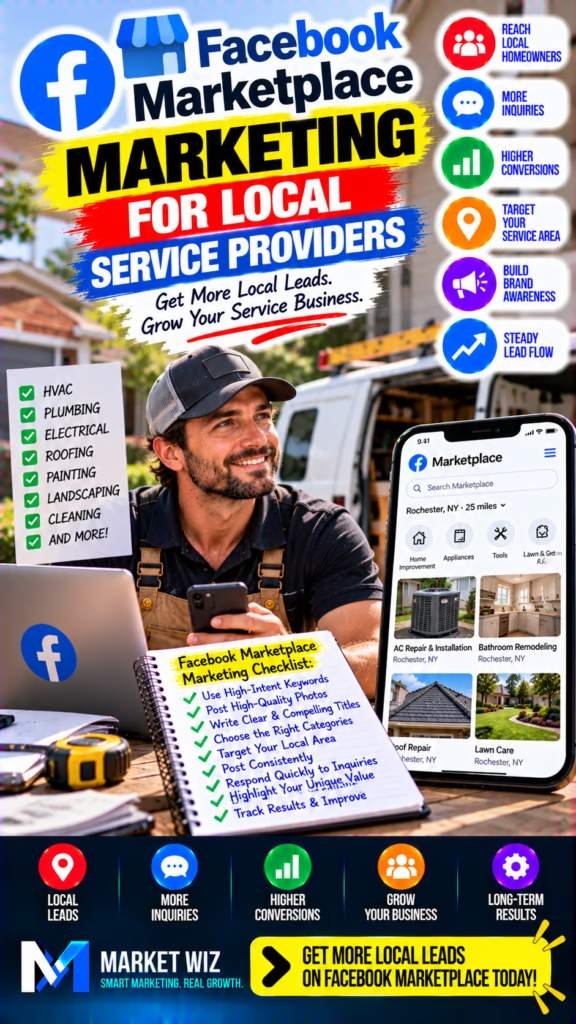
28. Facebook Marketing Checklist for Local Service Providers
A practical checklist can help teams manage their marketing activity more consistently.
Verify Platform Eligibility
Review Meta policies and choose the appropriate Facebook feature for the actual offer.
Optimize the Business Page
Confirm business details, contact information, categories, and geographic coverage.
Identify Customer Needs
Research common local questions and relevant service topics.
Prepare Useful Content
Develop educational posts, authentic visuals, and clear business information.
Participate Appropriately in Communities
Follow group rules and contribute relevant information without spamming.
Manage Customer Inquiries
Respond accurately and establish a clear lead qualification process.
Organize Follow-Up
Track interested prospects and maintain appropriate communication.
Measure Business Outcomes
Review qualified leads, appointments, completed jobs, and acquisition costs.
29. Build a 90-Day Facebook Marketing Plan for Local Services
A 90-day framework can help local service providers improve their Facebook presence in a structured way.
Days 1–30: Build the Foundation
- Review Meta commerce and messaging policies.
- Audit the business Page.
- Confirm accurate service areas.
- Identify customer questions.
- Organize authentic project photographs.
- Create an educational content calendar.
- Establish inquiry tracking.
Days 31–60: Improve Engagement and Lead Quality
- Publish useful business content.
- Participate in appropriate local groups.
- Review customer questions.
- Improve response workflows.
- Refine lead qualification.
- Document common objections.
- Maintain accurate business information.
Days 61–90: Evaluate Customer Acquisition
- Review qualified lead volume.
- Measure appointments and estimates.
- Track completed jobs.
- Calculate relevant acquisition costs.
- Identify stronger content topics.
- Improve follow-up procedures.
- Plan ongoing marketing activity.
This plan supports organized testing and improvement.
It does not guarantee specific reach, lead volume, or sales results.
30. Build a Sustainable Local Facebook Customer Acquisition System
Long-term Facebook marketing should connect business visibility with genuine customer needs.
For service providers, the most important goal is not to publish the greatest possible number of posts.
It is to maintain a credible business presence that helps suitable customers discover, evaluate, and contact the company.
This requires accurate information, useful content, professional communication, and organized lead follow-up.
Businesses should also understand which Facebook features are appropriate for their actual offers.
Eligible physical goods may have Marketplace opportunities.
Standalone services should use service-appropriate Facebook marketing channels rather than misleading commerce listings.
When combined with CRM tracking and practical performance measurement, these activities can support a more sustainable customer acquisition process.
Final strategy: Build visibility through the right Facebook channels, publish useful and authentic content, engage with local customers professionally, and measure success by qualified leads and completed business outcomes.
30 Frequently Asked Questions About Facebook Marketplace Marketing for Local Service Providers
1. Can local service providers advertise on Facebook Marketplace?
Facebook Marketplace generally restricts standalone service listings. Local service providers should use eligible Facebook Pages, groups, and advertising formats rather than disguising services as physical products.
2. What is Facebook Marketplace marketing for local service providers?
It is a broader local Facebook marketing approach that recognizes Marketplace commerce opportunities where eligible while using Pages, groups, and other permitted Facebook features to promote local services.
3. How can service businesses generate organic leads on Facebook?
Service businesses can share useful Page content, participate appropriately in local groups, respond to customer questions, and build trust through authentic work examples and clear contact information.
4. Is Facebook Marketplace free for local businesses?
Some eligible local listings can be created without an upfront listing fee, but fees, commerce eligibility, and platform rules vary. Standalone services should not be posted as prohibited Marketplace listings.
5. What types of products can local service businesses list on Marketplace?
Businesses may list eligible physical products they genuinely offer when their accounts, products, and transactions meet Meta's current commerce policies and Marketplace requirements.
6. Can HVAC companies use Facebook Marketplace?
HVAC companies can use Facebook Pages, eligible groups, and approved advertising formats to market their services. Marketplace listings should be limited to eligible physical goods and compliant offers.
7. Can painters promote their work on Facebook?
Yes. Painting companies can share project photographs, customer education, and contact information through appropriate Facebook Pages, groups, and advertising formats.
8. Can plumbers generate leads through Facebook?
Plumbers can use Facebook business content, community participation, and approved advertising to reach local customers seeking plumbing assistance.
9. What is the best Facebook marketing strategy for local contractors?
A strong approach combines accurate business information, useful project content, appropriate local group participation, prompt lead responses, and performance tracking.
10. How do Facebook groups help local service providers?
Relevant community groups can help businesses build recognition and answer local questions when promotional activity follows group rules and Facebook policies.
11. How often should local service businesses post on Facebook?
Posting frequency should reflect content quality, audience interest, available resources, and platform or group rules rather than an arbitrary volume target.
12. Do Facebook posts help local business SEO?
Facebook activity can support brand discovery and referral traffic, but posting does not guarantee higher Google rankings or Google Maps placement.
13. How can local service providers improve Facebook visibility?
Complete business information, share useful local content, publish authentic examples, engage with customer questions, and maintain consistent communication.
14. What photos work best for Facebook service marketing?
Clear, authentic photographs of completed projects, relevant equipment, work details, and permitted customer examples can help demonstrate what a business offers.
15. Can local service providers use Facebook Reels?
Yes. Short videos can demonstrate projects, explain common customer problems, introduce staff, and provide useful information.
16. How important is Facebook Messenger for customer acquisition?
Messenger can provide a convenient inquiry channel when enabled. Prompt, accurate responses may help businesses qualify interest and coordinate next steps.
17. Can AI respond to Facebook business inquiries?
AI can support authorized business messaging workflows, but businesses must follow Meta's current messaging, automation, privacy, and platform requirements.
18. How do I qualify Facebook leads for local services?
Ask relevant questions about the customer's location, requested work, project scope, timing, and contact preferences.
19. Can Facebook marketing reduce dependence on paid advertising?
Organic Facebook activity may provide an additional customer acquisition channel, but its ability to reduce paid advertising needs depends on actual business results.
20. How can contractors build trust on Facebook?
Use authentic work examples, accurate business information, professional communication, and genuine customer feedback shared with appropriate permission.
21. Should local businesses use Facebook Pages or personal profiles?
A Facebook Page is generally the appropriate presence for representing a business publicly, while personal profiles should be used according to Meta's identity and account rules.
22. How can service providers target nearby customers on Facebook?
Use accurate location information, relevant community participation, locally useful content, and permitted geographic targeting within eligible advertising products.
23. What are common Facebook marketing mistakes for contractors?
Common mistakes include prohibited Marketplace service listings, repetitive group spam, inaccurate claims, misleading photos, weak contact information, and poor lead follow-up.
24. How can Facebook marketing work with Google Business Profile?
Facebook can support social discovery and customer engagement, while an eligible Google Business Profile helps customers find accurate local business information through Google.
25. How can local service providers track Facebook leads?
Track inquiry sources, qualified leads, appointments, estimates, completed jobs, revenue, and customer acquisition costs using available platform data and business records.
26. What is a good Facebook lead conversion rate?
There is no universal conversion rate for local service providers. Results vary by industry, market, offer, qualification process, and customer demand.
27. Can Facebook marketing help small service businesses compete?
Yes. Useful content, authentic project examples, community engagement, and organized follow-up can help smaller businesses establish visibility without relying exclusively on large advertising budgets.
28. How long does organic Facebook marketing take to work?
Results depend on existing audience, local competition, content relevance, engagement, and customer demand. Consistent activity does not guarantee a particular timeline.
29. What is the role of automation in Facebook local marketing?
Compliant automation can help organize content planning, lead records, response workflows, and reporting while preserving platform compliance and appropriate human oversight.
30. What is the best long-term Facebook marketing approach for local service providers?
Build an accurate business presence, share genuinely useful content, engage appropriately with local communities, respond professionally to leads, and measure completed customer outcomes.
30 Additional SEO Keywords for Facebook Local Service Marketing
These keyword themes can support educational content planning, website SEO, and local marketing research. Use relevant phrases naturally and avoid keyword stuffing.
Conclusion: Build Stronger Local Visibility and Customer Acquisition Through Facebook
Facebook can play an important role in helping local service providers establish recognition, communicate with nearby customers, and develop new business opportunities.
The most effective approach begins with understanding which Facebook features are appropriate for the business.
Marketplace may offer opportunities for eligible physical products, but standalone service advertising belongs in suitable business marketing channels.
A well-maintained Facebook Page, useful educational content, authentic project photographs, and respectful community participation can help customers learn more about a company before making contact.
Professional messaging and lead qualification can then help businesses identify relevant opportunities and coordinate the next step.
When Facebook activity is combined with Google Business Profile, website content, and organized customer relationship management, businesses can build a more connected local marketing presence.
Market Wiz AI helps businesses develop organized organic marketing workflows, strengthen multi-channel visibility, and improve customer engagement through AI-supported marketing processes.
The long-term objective is not simply to produce more posts. It is to create a practical system for attracting relevant customers, managing inquiries, and turning marketing activity into measurable business growth.
Grow Your Local Business Without Relying Entirely on Paid Ads
Explore how Market Wiz AI can help your business build a stronger organic marketing presence, improve local customer engagement, coordinate multi-channel promotion, and support lead management with smarter AI-powered workflows.
Grow Your Local Business With Market Wiz AI →