
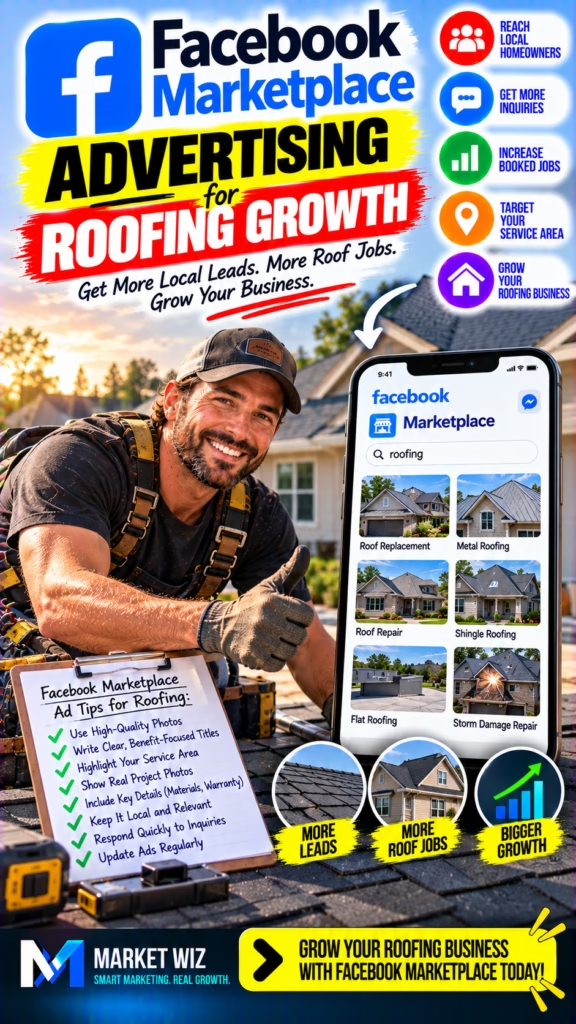
Facebook Marketplace Advertising for Roofing Growth
Discover how roofing contractors, roofing suppliers, and local roofing businesses can use Facebook's marketing ecosystem to improve visibility, attract relevant customers, promote eligible roofing products, generate qualified inquiries, and build a measurable growth strategy. Learn the important differences between Facebook Marketplace, Facebook business pages, Meta advertising campaigns, and local SEO.
Introduction: Facebook Marketing Opportunities for Roofing Companies
Roofing is a competitive local industry. Homeowners may compare several contractors before scheduling an inspection, requesting a repair estimate, or committing to a full roof replacement.
Commercial property owners and facility managers may follow a different process, evaluating contractor qualifications, project scope, insurance documentation, warranties, scheduling, and long-term maintenance requirements.
For both residential and commercial roofing businesses, customer acquisition requires visibility, credibility, timely communication, and a clear explanation of what the company provides.
Facebook can be part of that marketing strategy.
However, an important distinction is often overlooked: Facebook Marketplace generally prohibits service listings.
Roofing installation, roof replacement, leak repair, inspections, and other contractor work are services. They should not be advertised as ordinary Marketplace product listings.
This does not mean roofing companies cannot market themselves on Facebook.
Roofers can use eligible Meta advertising products, Facebook business pages, organic content, and other permitted business features to reach prospective customers.
Businesses that genuinely sell physical roofing products may also evaluate Facebook Marketplace for eligible merchandise, subject to current commerce policies and seller requirements.
Why This Distinction Matters
A roofing contractor advertising labor and installation has a different offering from a building materials supplier selling physical bundles of roofing shingles.
The supplier may have eligible merchandise that can be listed on Facebook Marketplace.
The contractor should use advertising and business features that permit service promotion.
Confusing these two activities can create problems with listing eligibility, account compliance, and customer expectations.
Important: Facebook Marketplace generally does not permit listings for roofing services. This guide distinguishes eligible physical roofing product listings from compliant Facebook and Meta advertising strategies for roofing contractors. Never disguise roofing labor, inspections, or installation as a product listing.
What Roofing Businesses Can Learn From This Guide
The following sections explain how roofing businesses can build a complete Facebook marketing strategy while respecting platform rules.
The guide covers local audiences, product eligibility, business pages, Meta lead campaigns, project photography, customer messaging, storm-related advertising, commercial roofing, Google Maps SEO, website optimization, campaign measurement, and practical growth planning.
It also explores how Market Wiz AI's organic-first approach can help roofing businesses coordinate multiple marketing channels instead of relying on a single source of inquiries.
1. Understand How Facebook Marketplace Fits Into Roofing Marketing
Facebook Marketplace is a commerce discovery experience that primarily supports eligible physical products.
People use it to browse merchandise available in their area, compare prices, review photographs, and communicate with sellers.
This structure can be useful for certain building materials and roofing-related merchandise.
However, it is not a general contractor advertising directory.
Roofing Services vs. Roofing Products
Roofing services include labor, installation, repairs, inspections, and professional contracting work.
Roofing products include physical merchandise such as eligible bundles of shingles, metal panels, flashing, and related materials.
A roofing business must identify which offering it intends to advertise before choosing a Facebook feature.
| Roofing Offering | Facebook Marketplace | Other Meta Marketing Options |
|---|---|---|
| Roof replacement labor | Generally prohibited as a service listing. | Eligible Meta advertising and business features. |
| Roof leak repair | Generally prohibited as a service listing. | Eligible Meta advertising and business features. |
| Roof inspection | Generally prohibited as a service listing. | Eligible Meta advertising and business features. |
| Physical roofing shingles | May be eligible, subject to commerce policies. | Other eligible product advertising options. |
| Metal roofing panels | May be eligible as physical merchandise. | Eligible product advertising options. |
| Roofing project portfolio | Not a standalone product listing. | Facebook Page posts and eligible advertisements. |
This distinction should guide the entire marketing campaign.
2. Identify the Right Local Audience for Roofing Growth
Roofing businesses serve customers with different needs, budgets, timelines, and property types.
A homeowner with an active leak may be looking for immediate help.
Another homeowner may be planning a replacement several months in advance.
A property manager may need a contractor capable of coordinating work across multiple buildings.
A commercial facility manager may require a detailed proposal and documentation before approving a project.
Common Roofing Customer Segments
- Homeowners evaluating roof replacement.
- Homeowners experiencing roof leaks.
- Property owners considering metal roofing.
- Rental property managers.
- Commercial property owners.
- Facility managers.
- General contractors seeking subcontractors.
- Buyers of eligible roofing materials.
Marketing messages should reflect the actual customer problem.
For example, educational content about roof age and maintenance may appeal to homeowners planning future work.
Commercial roofing content may focus on scheduling, documentation, and long-term maintenance.
Businesses should use only targeting options permitted by Meta and applicable law.
3. Verify Facebook Marketplace Eligibility Before Advertising Roofing Products
A roofing supplier may be interested in listing physical merchandise on Facebook Marketplace.
Before doing so, the business should confirm that the specific product is permitted.
Meta Commerce Policies include restrictions on certain product categories and selling practices.
Seller eligibility and available features can also vary by account and location.
Potential Roofing Product Categories
- Eligible roofing shingles.
- Eligible metal roofing panels.
- Roof flashing materials.
- Gutter components.
- Roofing underlayment products.
- Roofing fasteners and accessories.
- Eligible surplus building materials.
- Other permitted physical roofing supplies.
These are examples for eligibility review, not guarantees that every item can be listed.
A business should check current restrictions before publishing.
Do Not Misrepresent Roofing Services
A contractor should not advertise a nominally priced shingle bundle when the actual purpose is to sell a full roofing installation.
A service cannot become an eligible Marketplace product simply by changing its title.
Separate roofing material sales from roofing contracting services. Use Facebook Marketplace only for genuinely eligible physical merchandise, and use supported Meta business and advertising products to promote professional roofing work.
4. Build a Professional Facebook Business Page for Your Roofing Company
A Facebook business page can serve as a public-facing presence for a roofing contractor.
It allows a company to present business information, publish updates, share project photographs, and communicate through supported features.
A complete page can help prospective customers understand who the business is and what work it performs.
Important Business Page Information
- Accurate roofing company name.
- Business logo or appropriate profile image.
- Relevant roofing business category.
- Actual service area.
- Business phone number.
- Website address.
- Operating hours.
- Supported contact options.
- Accurate description of roofing capabilities.
A roofing business should not claim licensing, certification, or insurance coverage it does not possess.
It should also avoid representing itself as a manufacturer or authorized installer without appropriate authorization.
Consistency across Facebook, the company website, and Google Business Profile can help customers recognize the business.
5. Use Eligible Facebook Ads to Generate Roofing Leads
Meta advertising offers ways for eligible businesses to promote services through paid campaigns.
For roofing contractors, this is generally more appropriate than attempting to list roofing labor on Facebook Marketplace.
Campaign objectives and available features may include generating leads, directing people to a website, or encouraging supported forms of customer contact.
Actual options depend on current Meta products, account eligibility, and campaign settings.
Roofing Advertising Campaign Goals
Estimate Requests
Encourage interested property owners to request information about a legitimate roofing estimate.
Website Visits
Direct potential customers to relevant roofing service pages and project information.
Customer Inquiries
Use eligible contact options to answer questions and discuss scheduling.
Local Awareness
Introduce the company to customers within its actual service area.
The best objective depends on the roofing company's sales process.
A company with an experienced estimator may prioritize qualified inspection requests.
A newer company may need to establish local awareness while building a portfolio of completed projects.
6. Define Geographic Coverage for Roofing Advertising
Roofing is usually a geographically constrained business.
Crews need to travel to job sites, transport materials, coordinate equipment, and complete work within practical operating areas.
Advertising outside those areas can generate inquiries the company cannot serve.
How to Define a Roofing Service Area
Begin by identifying the cities, towns, and communities the company actually serves.
Consider crew availability, transportation costs, project minimums, and scheduling requirements.
A roofing company may be willing to travel farther for a large commercial project than for a minor residential repair.
Those differences should be reflected in the company's marketing plan.
Use Available Geographic Controls
Meta provides geographic advertising controls, but available targeting features can change.
Businesses should use supported settings and confirm that campaign delivery matches their operating area.
Local marketing principle: The objective is not to reach the largest possible audience. It is to reach relevant customers in locations where the roofing company can realistically perform the advertised work.
7. Write Effective Facebook Advertising Copy for Roofing Companies
Roofing advertising should clearly communicate what the company offers.
The message should be understandable without relying on exaggerated claims.
Homeowners often want to know whether the company handles their particular roofing problem, serves their location, and provides a clear next step.
Useful Roofing Advertising Elements
- Relevant roofing service.
- Actual geographic coverage.
- Accurate business credentials.
- Realistic description of the work.
- Authentic project photographs.
- Clear estimate or consultation process.
- Appropriate contact information.
Roof Replacement Planning
Planning a roof replacement for your home? Our roofing team works with homeowners in our local service area to evaluate roofing needs, discuss material options, and prepare project estimates.
Contact us to learn about scheduling an evaluation.
This example is intended for an eligible Meta advertising format, not a Facebook Marketplace service listing.
Businesses should tailor the message to their actual capabilities.
8. Use Authentic Roofing Project Photography to Build Credibility
Roofing is a visual industry.
Customers may want to see examples of completed work before contacting a contractor.
Authentic project photographs can help explain the company's experience and workmanship.
Useful Roofing Photograph Types
- Completed residential roofs.
- Metal roofing installations.
- Shingle replacement projects.
- Commercial roofing work.
- Roof flashing details.
- Gutter installations.
- Roofing material options.
- Permitted before-and-after project photographs.
Businesses should obtain appropriate permission before using customer property photographs.
They should also avoid implying that stock photographs or unrelated projects are examples of their own work.
Before-and-After Photography
Before-and-after images can help explain the scope of a completed project.
However, the photographs should represent the actual work.
Misleading edits, fabricated damage, or unrelated images can create false expectations.
9. Create Roofing Videos for Facebook Reels and Organic Content
Short videos can help roofing businesses explain services, showcase workmanship, and answer common homeowner questions.
Videos may be published through supported Facebook business features.
The objective should be useful communication rather than sensational claims.
Roofing Video Ideas
- How homeowners can recognize common roof wear.
- Differences between roofing material options.
- What happens during a roofing estimate.
- How roof replacement projects are planned.
- Examples of completed roofing work.
- Questions to ask before hiring a contractor.
- General roof maintenance considerations.
- How commercial roofing inspections differ from residential evaluations.
Videos should avoid encouraging homeowners to climb onto unsafe roofs.
Roof inspections and repair work may involve fall hazards and should be performed by appropriately qualified professionals.
A roofing company can use video to educate customers while emphasizing safe professional evaluation.
10. Generate Qualified Roof Replacement Inquiries
Roof replacement is often a significant purchase.
Homeowners may compare materials, contractor qualifications, warranties, financing options, and scheduling before making a decision.
Marketing should reflect this decision process.
Questions Potential Customers May Have
- Does the company serve my location?
- What roofing materials are available?
- How is a replacement estimate prepared?
- What affects project pricing?
- How long might the work take?
- What warranties are offered?
- Does the company carry applicable licensing and insurance?
- What preparation is required before work begins?
A useful advertisement can introduce the service.
The website and follow-up process can provide more detailed information.
Roofing companies should avoid advertising fixed replacement prices unless the offer accurately explains its scope and limitations.
11. Promote Roof Repair Through Compliant Facebook Advertising
Roof repair customers may have different needs from roof replacement customers.
A homeowner may notice a leak, missing shingles, damaged flashing, or visible deterioration.
Some situations require timely professional attention.
A roofing company can promote legitimate repair capabilities through eligible Meta advertising formats.
However, roof repair services should not be listed as products on Facebook Marketplace.
Accurate Roof Repair Messaging
Advertising should explain the types of repairs the company actually performs.
It should not promise that every leak can be repaired immediately.
It should not guarantee a particular diagnosis before inspection.
It should not exaggerate the severity of a homeowner's roofing problem.
Create separate, eligible advertising content for roof repairs and full replacements. These customers often have different timelines and information needs, so their inquiries should be handled with appropriate qualification and scheduling.
12. Develop Responsible Storm Damage Roofing Campaigns
Storms can create roofing problems that require professional evaluation.
After severe weather, homeowners may have questions about visible damage, temporary protection, repairs, and insurance procedures.
Roofing businesses should approach this topic carefully.
Responsible Storm-Related Advertising
- Use accurate descriptions of available services.
- Avoid fabricated storm damage photographs.
- Do not claim every roof in an area is damaged.
- Do not promise insurance approval.
- Do not imply affiliation with an insurance company without authorization.
- Explain inspection and estimate procedures truthfully.
- Follow applicable contractor and insurance-related laws.
An advertisement should not create unnecessary fear.
It should provide practical information about the company's legitimate capabilities.
Contractors should also avoid guaranteeing insurance coverage or claim outcomes.
13. Market Metal Roofing Installation and Eligible Metal Roofing Products
Metal roofing is a distinct category within the roofing industry.
Customers may be interested in appearance, durability, installation requirements, maintenance, and material options.
A roofing contractor promoting metal roof installation should use eligible service advertising formats.
A supplier selling eligible physical metal roofing panels may evaluate Facebook Marketplace.
Metal Roofing Content Ideas
- Examples of completed metal roofs.
- Descriptions of available panel profiles.
- Color and finish options.
- General maintenance considerations.
- Project planning information.
- Accurate material specifications.
- Delivery and installation distinctions.
Businesses should not claim that a particular roofing system is maintenance-free or suitable for every building.
Product performance depends on materials, installation, building conditions, and other factors.
14. Create Shingle Roofing Campaigns That Answer Homeowner Questions
Asphalt shingles are familiar to many residential roofing customers.
However, homeowners may not understand the differences among available products or installation systems.
Educational marketing can help customers prepare for conversations with a contractor.
Useful Shingle Roofing Topics
- Common shingle styles.
- Available color options.
- General warranty considerations.
- Ventilation requirements.
- Underlayment and flashing.
- Signs that warrant professional evaluation.
- Factors affecting roof replacement cost.
Roofing suppliers should accurately identify physical merchandise offered for sale.
Roofing contractors should promote installation and repair through permitted advertising channels.
The two business models should not be confused in Facebook Marketplace listings.
15. Use Facebook Marketing to Support Commercial Roofing Growth
Commercial roofing customers often require more detailed information than residential buyers.
A facility manager may need to coordinate inspections, budgets, vendor approvals, and project schedules.
A property owner may be evaluating roof maintenance across multiple buildings.
A general contractor may need a qualified roofing subcontractor.
Commercial Roofing Marketing Topics
- Types of commercial roofing systems.
- Documented project experience.
- Maintenance planning.
- Inspection procedures.
- Scheduling considerations.
- Safety and compliance practices.
- Insurance and qualification documentation.
- Long-term property management needs.
Commercial roofing campaigns should direct inquiries toward an appropriate qualification process.
A small repair inquiry and a large commercial replacement project should not be handled identically.
The business should track qualified opportunities and completed contracts rather than relying on message counts.
16. Participate in Facebook Groups Without Spamming Local Communities
Local Facebook Groups may provide opportunities for businesses to participate in community discussions.
However, each group can establish its own rules.
Some groups permit business recommendations.
Others limit promotional content or prohibit advertisements.
Responsible Group Participation
- Read group rules before posting.
- Provide useful answers to legitimate questions.
- Identify business relationships when appropriate.
- Avoid repetitive promotional posts.
- Do not use deceptive personal recommendations.
- Respect moderator decisions.
- Follow Meta policies.
A roofing contractor can contribute practical knowledge without turning every discussion into a sales pitch.
For example, a general explanation of why roof leaks can have multiple causes may be useful to homeowners.
Specific diagnosis should still be left to an appropriate professional evaluation.
17. Use Genuine Roofing Customer Reviews to Support Credibility
Roofing customers may consider previous customer experiences when evaluating contractors.
Reviews and testimonials can provide context about communication, scheduling, workmanship, and the overall customer experience.
However, testimonials must be authentic.
Responsible Review Practices
- Request feedback from genuine customers.
- Do not fabricate testimonials.
- Do not selectively misrepresent customer experiences.
- Obtain permission before using identifiable customer content.
- Disclose material incentives or relationships when required.
- Respond professionally to legitimate criticism.
A roofing business should not promise perfect outcomes based on a single testimonial.
Individual projects can differ in scope, materials, property conditions, and scheduling.
Trust is better supported by accurate business information and consistent customer treatment.
18. Build a Faster and More Organized Roofing Lead Response Process
A roofing inquiry often begins with a simple question.
The customer may want to know whether the company serves their area or can evaluate a particular roofing issue.
The business needs a reliable process for receiving and answering these questions.
Useful Initial Qualification Questions
- What city or area is the property in?
- Is the inquiry about repair, replacement, or another roofing need?
- Is the property residential or commercial?
- What is the general project timeline?
- What information is needed before scheduling?
The conversation should remain natural and relevant.
Businesses should avoid collecting unnecessary sensitive information.
They should also avoid promising appointments that have not been confirmed.
Roof Replacement Inquiry
Thanks for reaching out. We can help you learn about our roof replacement process. What city is the property located in?
Roof Leak Inquiry
Thanks for contacting us. We can check whether your property is within our service area and discuss available inspection options. What city is the property in?
Any automated or assisted response system should operate through supported communication features and authorized integrations.
19. Use AI to Improve Roofing Marketing Content and Lead Organization
Artificial intelligence can help roofing businesses organize marketing tasks.
It can assist with drafting educational content, preparing advertising variations, summarizing common customer questions, and structuring campaign reports.
However, AI output must be checked against actual business information.
Practical AI Applications
Advertising Drafts
Prepare copy for eligible Meta campaigns using verified roofing services and geographic coverage.
Educational Content
Develop general roofing maintenance articles and homeowner information.
Response Templates
Organize accurate answers to common scheduling and service-area questions.
Performance Reporting
Summarize qualified leads, estimates, signed contracts, and marketing expenses.
AI Limitations Roofing Companies Must Respect
AI should not invent roofing credentials, licenses, customer reviews, insurance coverage, project photographs, warranties, or inspection results.
It should not diagnose roof damage from incomplete information or guarantee insurance outcomes.
Unauthorized platform automation, scraping, spam, and account restriction circumvention may violate platform terms.
The company remains responsible for advertising accuracy and customer communication.
20. Track Roofing Leads From Initial Inquiry to Signed Contract
A roofing company needs to understand what happens after an advertisement generates interest.
An inquiry is not the same as an inspection.
An inspection is not the same as a signed contract.
A signed contract is not the same as a completed and paid project.
These stages should be tracked separately.
| Lead Stage | What to Track | Business Value |
|---|---|---|
| New Inquiry | Source, date, and general roofing need. | Measures initial interest. |
| Qualified Lead | Relevant project and service-area fit. | Measures potential opportunity. |
| Inspection Scheduled | Confirmed appointment details. | Tracks progression. |
| Estimate Delivered | Proposal date and project scope. | Measures sales activity. |
| Contract Signed | Accepted project agreement. | Measures customer acquisition. |
| Project Completed | Completed work and financial outcome. | Supports profitability analysis. |
A structured lead process can help the company identify missed follow-ups and understand which marketing channels produce valuable projects.
Customer information should be stored and used according to applicable privacy requirements.
21. Understand Facebook Advertising Costs for Roofing Companies
Roofing advertising costs vary.
There is no universal Facebook cost per roofing lead.
Costs can depend on geography, competition, campaign settings, audience size, creative quality, seasonality, and other factors.
A company advertising in a competitive metropolitan market may experience different results from a contractor operating in a smaller region.
Marketing Expenses to Include
- Meta advertising spend.
- Creative production.
- Campaign management.
- Website or landing page costs.
- Lead qualification labor.
- Estimator time.
- Follow-up expenses.
- Other attributable marketing costs.
A low cost per message may appear attractive but provide limited value if the inquiries are not qualified.
The company should compare the cost of acquiring actual customers.
22. Calculate Roofing Marketing ROI Using Completed Jobs
Return on investment is more meaningful when it reflects completed business outcomes.
A roofing company may receive numerous inquiries but sign only a few contracts.
Another campaign may generate fewer inquiries but produce more profitable projects.
Comparing message counts alone can lead to poor decisions.
Campaign Financials
Advertising and marketing expenses: $1,500.
Attributable completed roofing revenue: $30,000.
Direct job costs: $22,000.
Contribution before marketing expenses: $8,000.
Contribution after marketing expenses: $6,500.
Simplified Marketing ROI
($8,000 − $1,500) ÷ $1,500 × 100 = approximately 433%
This is a hypothetical calculation for educational purposes. It is not a forecast or a typical result.
Businesses should use actual financial records and appropriate attribution methods.
Overhead, financing, refunds, warranty obligations, and other costs may also affect overall profitability.
23. Combine Facebook Roofing Marketing With Google Maps SEO
Many customers use Google Search and Google Maps to find roofing companies.
An eligible roofing business can maintain a Google Business Profile to provide accurate information about its services and operating area.
Google's local results consider relevance, distance, and prominence.
Businesses cannot purchase or guarantee a particular organic Google Maps ranking.
Google Business Profile Considerations
- Accurate business name.
- Appropriate primary category.
- Relevant additional categories when applicable.
- Correct business hours.
- Accurate phone number.
- Eligible service-area configuration.
- Genuine project photographs.
- Accurate business description.
- Authentic customer reviews.
A roofing contractor operating from a private address should follow Google's service-area business guidelines rather than displaying an ineligible location.
Facebook advertising and Google Maps SEO can support different stages of customer discovery.
However, Facebook activity does not guarantee improved Google Maps rankings.
24. Build a Roofing Website That Supports Facebook Lead Generation
A roofing website provides space to explain services in greater detail.
Customers who discover the business through Facebook may visit its website before requesting an estimate.
The website should make important information easy to find.
Recommended Roofing Website Content
- Residential roofing services.
- Commercial roofing capabilities.
- Roof repair information.
- Roof replacement information.
- Metal roofing options.
- Project photographs.
- Service area details.
- Business credentials.
- Estimate request process.
- Contact information.
The website should work well on mobile devices.
Forms should clearly communicate what information is being requested and how it will be used.
A successful form submission should reach the appropriate business workflow.
A professional website can complement advertising without guaranteeing conversions.
25. Create an Organic Facebook Content Strategy for Roofers
Organic Facebook content can help roofing businesses maintain a consistent public presence.
It can also answer common questions before customers contact the company.
Organic reach varies, and businesses should not expect every post to receive broad distribution.
Useful Organic Roofing Content Categories
- Completed project highlights.
- General roof maintenance education.
- Material comparisons.
- Seasonal preparation tips.
- Company updates.
- Team introductions.
- Customer-approved project stories.
- Frequently asked roofing questions.
Content should be relevant to the company's actual capabilities.
Businesses should avoid making every post a repetitive sales message.
A useful educational post can demonstrate familiarity with common roofing concerns while encouraging customers to seek appropriate professional evaluation.
26. Evaluate Retargeting and Follow-Up Advertising Opportunities
Some roofing customers need time before choosing a contractor.
They may visit a website, review project examples, and compare estimates over several weeks.
Eligible Meta advertising features may allow businesses to reach relevant audiences based on supported signals and settings.
However, retargeting capabilities depend on current platform products, privacy settings, user consent requirements, and applicable law.
Retargeting Content Ideas
- Authentic completed roofing projects.
- Information about estimate procedures.
- Material comparison resources.
- Company qualifications.
- General maintenance education.
- Clear contact information.
Businesses should not imply that they know a particular person's private property condition.
They should also avoid misleading personalized claims or unauthorized tracking.
Retargeting should be evaluated by incremental business value rather than assumed effectiveness.
27. Develop Seasonal Roofing Marketing Campaigns
Roofing demand can vary with weather, regional conditions, construction activity, and customer budgets.
A seasonal marketing calendar can help companies prepare relevant content and manage capacity.
However, weather conditions and roofing demand differ substantially by region.
Seasonal Campaign Considerations
- Spring roof maintenance education.
- Summer project planning.
- Autumn preparation and inspections.
- Winter weather considerations.
- Regional storm-related concerns.
- Commercial maintenance schedules.
Businesses should avoid presenting every seasonal change as an emergency.
Marketing should accurately describe the company's availability and capabilities.
If demand increases after severe weather, scheduling expectations should remain realistic.
28. Compare Facebook Marketing With Craigslist for Roofing Lead Generation
Roofing companies may evaluate Craigslist as an additional marketing channel.
Unlike Facebook Marketplace, Craigslist provides categories for eligible service advertisements.
Roofing contractors may be able to advertise legitimate services in appropriate Craigslist categories, subject to current posting fees, geographic requirements, and platform policies.
Important Differences
| Feature | Craigslist | Facebook / Meta |
|---|---|---|
| Roofing service listings | May be eligible in service categories. | Generally prohibited on Marketplace. |
| Paid roofing advertising | Category-based classified posting fees may apply. | Eligible Meta advertising campaigns. |
| Business content | Classified advertisement format. | Facebook Pages and supported content features. |
| Roofing material sales | Eligible product categories may be available. | Eligible Marketplace products may be supported. |
| Customer communication | Listing-dependent contact options. | Supported Meta messaging and lead features. |
A roofing company can consider multiple channels, but each platform requires a compliant approach.
The business should measure qualified estimates and completed jobs rather than treating every inquiry as equivalent.
29. Avoid Common Facebook Marketing Mistakes in the Roofing Industry
Roofing advertising can become ineffective or misleading when businesses focus on attention rather than accuracy.
Some mistakes create poor customer experiences.
Others can violate platform rules or applicable advertising laws.
Common Roofing Marketing Mistakes
- Listing roofing services on Facebook Marketplace.
- Disguising installation labor as a physical product.
- Using photographs of work the company did not perform.
- Inventing customer reviews.
- Making unsupported licensing claims.
- Advertising unavailable appointment times.
- Promising insurance claim approval.
- Exaggerating storm damage.
- Using misleading financing language.
- Targeting locations the company does not serve.
- Ignoring customer inquiries.
- Failing to track estimate outcomes.
- Using unauthorized automation.
- Publishing repetitive spam.
- Failing to distinguish leads from signed contracts.
A sustainable roofing marketing strategy should be based on truthful information and measurable results.
Companies should review platform rules regularly because features and policies can change.
30. Build a Complete Facebook Roofing Growth Strategy for 2026
A successful roofing marketing program requires more than publishing advertisements.
It involves understanding the local market, identifying the right customers, communicating genuine capabilities, responding professionally, and measuring business outcomes.
The following framework can help roofing contractors and suppliers organize their marketing efforts.
Phase 1: Define the Roofing Business Model
Determine whether the company provides roofing services, sells physical roofing products, or operates both types of business.
A contractor offering installation and repair should use eligible service marketing channels.
A supplier selling physical materials may evaluate appropriate product listing channels.
Businesses with both activities should keep the offerings clearly distinguished.
Phase 2: Identify Core Roofing Services
List the services the company actually provides.
These may include roof replacement, roof repair, metal roofing installation, commercial roofing, or other legitimate capabilities.
Do not advertise services the business cannot perform.
Confirm licensing and other legal requirements where applicable.
Phase 3: Define the Actual Service Area
Identify cities and communities the roofing company can serve.
Consider travel requirements, crew availability, project types, and operating costs.
A realistic geographic strategy helps avoid inquiries outside the company's capabilities.
Phase 4: Build a Credible Facebook Business Presence
Create or improve the company's Facebook business page.
Use accurate contact information.
Describe roofing capabilities truthfully.
Add authentic project content when appropriate.
Keep business information current.
Phase 5: Verify Marketplace and Advertising Eligibility
Review current Meta Commerce Policies.
Confirm which physical products, if any, are eligible for Marketplace.
Use permitted Meta advertising formats for roofing services.
Do not attempt to bypass restrictions through misleading listing categories.
Phase 6: Prepare Authentic Roofing Project Content
Organize completed project photographs.
Obtain necessary permissions.
Record accurate project descriptions.
Avoid fabricated before-and-after comparisons.
Showcase work the company actually performed.
Phase 7: Create Service-Specific Advertising Messages
Develop distinct content for roof repairs, replacements, metal roofing, and commercial projects where relevant.
Different customers have different questions.
Use accurate descriptions and clear next steps.
Avoid exaggerated claims.
Phase 8: Establish a Lead Qualification Process
Determine what information is needed to evaluate an inquiry.
Typical questions may involve location, property type, general roofing need, and project timing.
Avoid requesting unnecessary personal information.
Keep the initial conversation practical.
Phase 9: Coordinate Inspection Scheduling
Provide realistic scheduling information.
Confirm appointments before treating them as booked.
Explain what customers should expect from an evaluation.
Do not promise immediate availability without verifying capacity.
Phase 10: Improve Estimate Follow-Up
A customer may need time to review a roofing proposal.
Establish a professional follow-up process.
Answer legitimate questions.
Clarify scope, materials, warranties, and scheduling when relevant.
Respect customer preferences and applicable communication laws.
Phase 11: Measure Qualified Leads
Track inquiries that match the company's service area and capabilities.
Separate irrelevant messages from legitimate opportunities.
Record the marketing source when reasonably identifiable.
Use consistent definitions across campaigns.
Phase 12: Track Estimates and Signed Contracts
Record scheduled inspections.
Track delivered estimates.
Record accepted proposals.
Measure completed jobs.
These outcomes provide more meaningful information than advertising engagement alone.
Phase 13: Calculate Customer Acquisition Costs
Include advertising spend.
Include management and creative costs.
Consider lead qualification and estimator labor.
Compare costs with acquired customers and project contribution.
Avoid assuming that every lead has equal financial value.
Phase 14: Develop a Consistent Organic Content Calendar
Publish useful roofing information at a manageable pace.
Share genuine project updates.
Explain material options.
Answer common homeowner questions.
Avoid repetitive promotional spam.
Phase 15: Build a Useful Roofing Website
Create clear service pages.
Explain the company's geographic coverage.
Present authentic project examples.
Provide accurate contact information.
Make estimate requests straightforward.
Phase 16: Improve Google Business Profile
Maintain an eligible and accurate Google Business Profile.
Use appropriate categories.
Keep business hours current.
Follow service-area business guidelines.
Encourage genuine customer feedback without offering prohibited incentives.
Phase 17: Evaluate Additional Marketing Channels
Consider appropriate local search, classified advertising, and business outreach channels.
Eligible roofing services may be advertised in suitable Craigslist categories.
Other channels should be evaluated according to audience relevance, platform policies, and measured results.
Phase 18: Review Marketing Performance Monthly
Compare qualified leads.
Review completed inspections.
Measure estimate acceptance.
Track signed contracts and completed projects.
Evaluate costs and profitability.
Use the findings to refine future marketing activity.
Complete roofing marketing framework: Define services → identify customers → verify platform eligibility → build a credible business presence → prepare authentic project content → run eligible campaigns → qualify inquiries → schedule inspections → deliver estimates → track signed contracts → calculate acquisition costs → improve local SEO → publish useful content → review profitability.
Why Roofing Marketing Requires More Than Visibility
A roofing company can attract attention without generating profitable work.
A campaign may produce many inquiries from customers outside the service area.
Another campaign may generate requests for services the company does not provide.
A third campaign may produce qualified inspections and completed projects.
The difference is not simply the number of people who saw the advertisement.
The difference is how well the marketing reaches relevant customers and supports the company's sales process.
Why Trust Matters in Roofing Customer Acquisition
Roofing projects can involve substantial expense and important property decisions.
Customers may want to evaluate business credentials, previous work, materials, and warranties.
Accurate project information helps them understand the company's capabilities.
Professional communication can reduce uncertainty.
Fabricated reviews and misleading claims undermine that process.
Why Roofing Contractors Need a Clear Estimate Process
A roofing estimate should reflect the actual scope of work.
Customers may need information about materials, labor, scheduling, disposal, and other project requirements.
Marketing should not replace a proper evaluation.
An advertisement can invite a customer to request an estimate.
It should not promise an exact price without sufficient information.
How Roofing Businesses Can Improve Lead Quality
Lead quality begins with accurate advertising.
A campaign for roof replacement should clearly identify that service.
A commercial roofing campaign should describe relevant capabilities.
A materials listing should accurately represent physical inventory.
Clear communication helps customers determine whether the business is a suitable match.
How Roofing Companies Can Build Long-Term Local Visibility
A long-term strategy can combine several appropriate channels.
A credible website provides detailed information.
Google Business Profile supports eligible local business discovery.
Facebook business content can introduce completed projects and educational information.
Meta advertising can support eligible customer acquisition campaigns.
Other classified and search channels may provide additional opportunities.
The business should measure each channel according to its role.
Why Organic-First Marketing Can Complement Paid Advertising
Paid advertising can provide additional reach, but it is not the only way to maintain a local business presence.
Useful website content, authentic project updates, accurate business profiles, and professional customer communication can support broader visibility.
Organic-first does not mean every channel is free or that visibility is guaranteed.
It means building useful marketing assets that do not depend entirely on continuous paid impressions.
How Market Wiz AI Supports Roofing Marketing Workflows
Market Wiz AI helps businesses organize organic-first marketing strategies and evaluate opportunities across local search, content, classified advertising, and appropriate social marketing channels.
For roofing businesses, relevant activities may include Google Maps SEO, website optimization, compliant advertising content preparation, and lead management workflows.
Marketing recommendations should reflect actual services, geographic coverage, and platform eligibility.
No specific ranking, lead volume, or revenue result is guaranteed.
Creating a Sustainable Roofing Growth System
A sustainable roofing marketing system should be built around accurate information.
It should identify genuine customer needs.
It should use permitted advertising channels.
It should communicate realistic scheduling expectations.
It should organize customer inquiries.
It should track estimates, contracts, and completed work.
It should also adapt to changes in platform policies and local demand.
The objective is not simply to generate more messages.
The objective is to help the roofing company attract relevant customers, deliver professional work, and measure profitable growth.
30 Frequently Asked Questions About Facebook Marketplace Advertising for Roofing Growth
1. Can roofing contractors advertise on Facebook Marketplace?
Facebook Marketplace generally prohibits service listings, including roofing installation and repair services. Roofing contractors should use eligible Meta advertising products, Facebook business features, and other compliant channels to promote their services.
2. Can roofing companies sell roofing materials on Facebook Marketplace?
Eligible physical roofing products may be listed on Facebook Marketplace when they comply with Meta Commerce Policies, seller eligibility requirements, and applicable product restrictions. A roofing service cannot be disguised as a product sale.
3. Is Facebook Marketplace good for roofing lead generation?
Facebook Marketplace may help eligible roofing material sellers reach product buyers, but it is generally not an appropriate listing channel for roofing services. Roofing contractors can pursue leads through compliant Meta Ads, Facebook business pages, and other marketing channels.
4. What is the best Facebook advertising strategy for roofers?
A useful strategy combines a professional Facebook business presence, accurate project content, appropriate Meta lead or website campaigns, clear geographic coverage, prompt follow-up, and tracking of qualified estimates and completed roofing jobs.
5. Can roofers advertise roof repairs through Facebook Marketplace?
Roof repair is a service, and Facebook Marketplace generally prohibits service listings. Contractors should promote repair work through permitted Meta advertising formats or other eligible business channels.
6. Can roofing businesses advertise roof replacement on Facebook?
Yes. Roofing businesses can advertise roof replacement through eligible Facebook and Meta advertising products, subject to current advertising policies and applicable laws. This is different from creating a prohibited service listing on Facebook Marketplace.
7. How much do Facebook roofing ads cost?
Costs vary by geographic market, audience, competition, campaign objective, creative quality, and season. Roofing companies should evaluate cost per qualified estimate and cost per acquired customer rather than relying on a universal cost-per-lead figure.
8. What roofing products might be eligible for Facebook Marketplace?
Potentially eligible physical products may include certain roofing materials, flashing, gutters, and related supplies. Each listing must comply with current Meta Commerce Policies, product restrictions, and seller requirements.
9. Can roofing companies use Facebook Groups for marketing?
Roofing companies may participate in relevant Facebook Groups when group rules and Meta policies allow it. They should provide useful information, disclose their business identity when appropriate, and avoid repetitive promotional spam.
10. Do before-and-after roofing photos help marketing?
Authentic before-and-after photographs can demonstrate completed roofing work and help homeowners evaluate workmanship. Businesses should obtain appropriate permissions and avoid misleading edits or unsupported claims.
11. How can roofing contractors target local homeowners on Facebook?
Contractors can configure eligible Meta campaigns using supported geographic targeting and audience options. They should verify current targeting availability and comply with Meta policies and applicable advertising laws.
12. What should a roofing Facebook ad include?
A roofing ad should clearly identify the relevant service, actual service area, accurate business information, authentic project imagery, and a straightforward next step such as requesting an estimate.
13. Can AI help roofing companies with Facebook advertising?
AI can assist with drafting accurate advertising copy, organizing campaign ideas, preparing response templates, and analyzing results. Businesses must verify claims and use authorized platform integrations for automation.
14. Can roofing contractors automate Facebook messages?
Roofing businesses may use supported Meta messaging features and authorized integrations where permitted. Automated responses should be accurate, respect customer privacy, and avoid unsupported promises or unauthorized platform access.
15. How quickly should roofing companies respond to leads?
Roofing companies should respond as promptly as practical during their stated operating hours, prioritize urgent inquiries appropriately, and maintain accurate expectations about inspection and scheduling availability.
16. Is Facebook advertising better than Google Ads for roofers?
Neither is universally better. Google Ads may reach customers actively searching for roofing work, while Meta Ads may help generate awareness and inquiries. Results depend on campaign execution, local demand, and customer acquisition costs.
17. Does Google Maps SEO help roofing companies?
Google Maps SEO can help eligible roofing businesses improve the completeness and relevance of their local business presence. Rankings depend on multiple factors, including relevance, distance, and prominence, and are not guaranteed.
18. Should roofers advertise emergency roof repairs on Facebook?
Roofers may promote legitimate emergency repair services through eligible Meta advertising formats. Claims about emergency availability, response times, insurance coverage, and repair capabilities must be accurate.
19. Can roofers use customer reviews in Facebook advertising?
Businesses may use genuine customer testimonials when they have appropriate permission and comply with applicable endorsement rules and platform policies. Reviews must not be fabricated or presented misleadingly.
20. How do roofing companies generate organic Facebook leads?
Organic approaches can include useful Facebook Page content, authentic project updates, educational posts, community participation where permitted, and professional responses to legitimate customer questions.
21. Can Facebook advertising help commercial roofing companies?
Eligible Meta advertising campaigns may help commercial roofers reach relevant audiences and build awareness. Commercial roofing sales often require longer qualification processes and should be measured by qualified opportunities and closed contracts.
22. How should roofers market metal roofing on Facebook?
Roofers can promote metal roofing installation through eligible service advertising formats, while suppliers may list eligible physical metal roofing products on Marketplace when permitted. The advertised offering must be represented accurately.
23. Can roofing businesses promote financing in Facebook ads?
Financing claims must be accurate, appropriately disclosed, and compliant with applicable lending, consumer protection, and Meta advertising requirements. Businesses should not promise universal approval or hide material terms.
24. How do roofers measure Facebook advertising ROI?
Track campaign spending, qualified leads, completed inspections, estimates, signed contracts, job revenue, and direct costs. Compare attributable profit with marketing expenses rather than relying on message volume alone.
25. What are common Facebook marketing mistakes for roofers?
Common mistakes include posting prohibited services on Marketplace, using misleading storm damage claims, publishing inaccurate prices, ignoring inquiries, targeting areas the company cannot serve, and failing to track completed jobs.
26. Can roofing contractors advertise without paid Facebook ads?
Yes. Roofing contractors can maintain a Facebook business page, publish useful organic content, participate in permitted community discussions, and combine these efforts with local SEO and other compliant channels.
27. Should roofing businesses use Craigslist as well as Facebook?
Eligible roofing service advertisements may fit Craigslist's appropriate service categories, subject to fees and policies. Facebook service promotion should use permitted business and advertising features rather than prohibited Marketplace service listings.
28. How important is a roofing company website?
A useful roofing website can explain services, service areas, credentials, project examples, contact information, and estimate processes. It also provides a destination for eligible advertising campaigns and organic search traffic.
29. What is the best roofing marketing strategy for 2026?
An effective strategy combines a credible website, eligible Google Business Profile, useful local content, compliant Meta advertising, professional lead follow-up, accurate project information, and measurement of completed roofing contracts.
30. How can Market Wiz AI help roofing businesses grow?
Market Wiz AI helps roofing businesses organize organic-first marketing strategies, improve local SEO, prepare compliant advertising content, develop lead management workflows, and evaluate opportunities across appropriate digital marketing channels.
30 Additional SEO Keywords for Facebook Marketplace Advertising and Roofing Growth
These related search phrases can support educational articles, roofing marketing guides, and other relevant website content. Use keywords naturally and accurately. Do not use them to create prohibited Facebook Marketplace service listings.
Final Thoughts: Facebook Marketplace Advertising for Roofing Growth
Facebook can be a valuable part of a roofing company's marketing strategy, but businesses must understand the differences between Facebook Marketplace, Facebook business pages, and Meta advertising products.
Facebook Marketplace primarily supports eligible physical merchandise.
Roofing installation, roof replacement, repairs, inspections, and other contractor activities are services and generally cannot be advertised as Marketplace product listings.
Roofing suppliers may evaluate Marketplace for genuinely eligible physical products, including certain roofing materials and related merchandise.
Roofing contractors should use appropriate Meta advertising formats and other supported business features to promote professional services.
A strong roofing marketing strategy begins with accurate business information and clear service descriptions.
The company should identify its geographic coverage, communicate its actual capabilities, and use authentic project photography.
Educational content can help homeowners understand roofing materials, maintenance considerations, inspection procedures, and project planning.
Paid Meta campaigns may support qualified inquiries when properly configured and managed.
However, advertising performance varies by market, competition, customer demand, and campaign execution.
Roofing businesses should measure more than impressions and messages.
Qualified leads, completed inspections, delivered estimates, signed contracts, and profitable completed jobs provide more useful information.
AI can assist with content preparation, lead organization, and reporting, but it should not fabricate business credentials, customer reviews, product details, or project results.
Direct platform automation must use authorized methods.
Google Maps SEO, a useful roofing website, and other compliant local marketing channels can complement Facebook advertising.
A coordinated organic-first strategy can help businesses develop a broader marketing presence without depending entirely on paid campaigns.
Market Wiz AI helps businesses evaluate local marketing opportunities, prepare accurate content, improve local search visibility, and organize lead management processes.
Actual results depend on the business, location, competitive environment, operational capacity, and customer demand.
The most effective Facebook roofing growth strategy is not about forcing roofing services into Facebook Marketplace. It is about using the right permitted advertising channels, reaching relevant property owners, building credibility, and converting qualified opportunities into completed roofing projects.
Grow Your Roofing Business With Smarter Local Marketing
Market Wiz AI helps roofing businesses build organic-first marketing strategies through Google Maps SEO, website optimization, compliant social advertising content, classified marketing planning, and organized lead generation workflows. Improve your local visibility, communicate your roofing capabilities clearly, and build a more measurable customer acquisition process.
Get Started With Market Wiz AI© 2026 Market Wiz AI. Facebook, Facebook Marketplace, and Meta are trademarks or products of Meta Platforms, Inc. Market Wiz AI is not affiliated with or endorsed by Meta Platforms, Inc. Facebook Marketplace generally prohibits service listings, including roofing repair, installation, and replacement services. Physical product eligibility depends on current Meta Commerce Policies and seller requirements. Businesses must follow applicable advertising laws, contractor licensing requirements, consumer protection rules, privacy obligations, and platform terms. Platform features, targeting options, advertising costs, and policies may change. No specific lead volume, customer acquisition cost, search ranking, contract value, or revenue outcome is guaranteed. Results depend on local demand, competition, campaign execution, business operations, and other factors.