
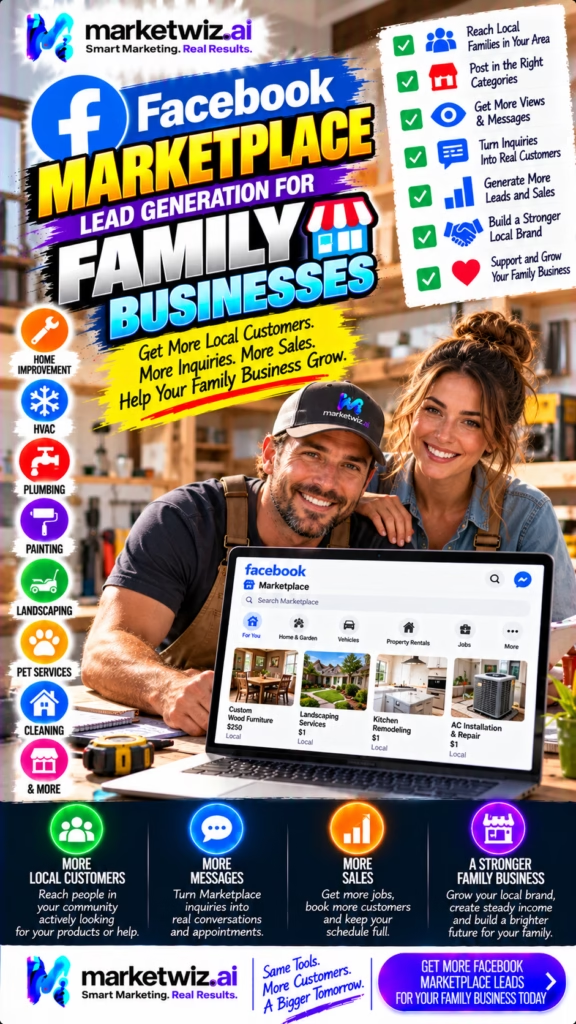
Facebook Marketplace Lead Generation for Family Businesses
Discover how family-owned businesses can use Facebook Marketplace, organic Facebook marketing, authentic community relationships, customer-focused product listings, AI-assisted follow-up, and Google Maps SEO to attract nearby buyers, build customer trust, and create more qualified sales opportunities.
Updated October 20261. Why Facebook Marketplace Lead Generation Matters for Family Businesses
Family-owned businesses are an important part of local economies. Many operate with smaller teams, limited marketing budgets, and strong relationships with the communities they serve. Their success often depends on attracting customers consistently while maintaining the personalized experience that makes a family business distinctive.
Traditional advertising can create challenges for these companies. Print campaigns, direct mail, radio, and paid digital advertising may require substantial investment before results become clear. Meanwhile, larger competitors may have dedicated marketing departments and greater resources for customer acquisition.
Facebook Marketplace lead generation for family businesses offers a different opportunity for companies that sell eligible physical products. Marketplace can help nearby buyers discover merchandise without requiring every customer interaction to begin with a paid advertising campaign.
Facebook's broader business ecosystem also provides opportunities for family-owned service companies, contractors, local specialists, and retailers to share helpful information and build relationships with customers.
The distinction between these channels matters. Marketplace is primarily designed for eligible physical goods, and service-only listings are generally prohibited. Family businesses offering professional services should use appropriate Facebook Pages, permitted Groups, or eligible advertising formats instead.
Core strategy: Family businesses can combine compliant Marketplace product listings with authentic business storytelling, useful Facebook content, local search visibility, and organized customer follow-up to create a more sustainable lead generation system.
The goal is not simply to receive more messages. It is to attract relevant customers, answer their questions accurately, and convert appropriate opportunities into profitable, long-term relationships.
2. Understand the Unique Marketing Advantages of Family-Owned Businesses
Family businesses often possess advantages that large competitors cannot easily reproduce. Their owners may know customers personally, understand neighborhood preferences, and make operational decisions without several layers of corporate approval.
These characteristics can influence the customer experience. A local furniture store may provide knowledgeable product guidance. A family-owned appliance retailer may understand common delivery challenges in nearby neighborhoods. A specialty shop may stock merchandise based on direct customer requests.
However, these advantages only support marketing when the business communicates them honestly. A company should not assume that family ownership automatically makes its products better or its prices more competitive.
Potential family business strengths
Local Knowledge
Understanding neighborhood preferences, seasonal demand, and practical customer needs.
Personalized Communication
Providing relevant product information and helpful responses without unnecessary complexity.
Authentic Business History
Sharing genuine stories about how the company started and developed within the community.
Operational Flexibility
Adjusting product offerings, communication processes, and marketing priorities as customer needs change.
A thoughtful Facebook marketing strategy can highlight these strengths through authentic photographs, accurate product information, educational posts, and professional customer interactions.
3. Understand How Facebook Marketplace Generates Local Buyer Interest
Facebook Marketplace allows eligible sellers to present physical products to potential buyers. A typical listing may include a title, photographs, price, product category, condition, description, and location information.
People browsing Marketplace may be looking for an available item nearby, comparing prices, or evaluating whether a product meets their needs.
For a family-owned retailer, this creates an opportunity to present actual merchandise in a format that helps customers make purchasing decisions.
Marketplace visibility is not guaranteed. Distribution can depend on product relevance, location, customer preferences, listing quality, account eligibility, and platform systems.
Four ways Facebook can support a family business
- Marketplace: Present eligible physical products to potential buyers.
- Facebook Pages: Share company information, educational content, and appropriate promotions.
- Facebook Groups: Participate in local communities when commercial activity is permitted.
- Paid advertising: Reach relevant audiences through supported advertising objectives and targeting controls.
Each channel has different rules and capabilities. Family businesses should choose the channel based on the actual offer rather than trying to make every type of promotion fit Marketplace.
4. Follow Facebook Marketplace Rules Before Building a Lead Generation Campaign
Compliance is essential for family businesses that want dependable marketing operations. A campaign should not rely on listings that misrepresent what is being sold or violate Meta's current Commerce Policies.
Marketplace generally prohibits service-only listings. For example, a family-owned painting company should not create a listing for a paintbrush when the real offer is residential painting labor. Similarly, a plumbing contractor should not disguise installation work as a product sale.
Family businesses that sell eligible physical goods should accurately describe the merchandise, its condition, and its price.
Marketplace compliance checklist
- Confirm that the product is eligible for sale.
- Use the correct product category.
- Describe the actual item being offered.
- Display an accurate asking price.
- Use authentic photographs.
- Disclose relevant condition details.
- Avoid misleading availability claims.
- Do not disguise professional services as products.
- Avoid repetitive or spam-like listings.
- Use authorized selling and messaging features.
Protect the Family Business Reputation
A family-owned company's reputation may have taken years or generations to develop. Accurate listings and responsible marketing practices help protect that reputation while creating a more reliable customer experience.
Businesses should review current Meta requirements before publishing campaigns because eligibility and platform features can change.
5. Identify Which Family Businesses Can Benefit From Marketplace
Marketplace opportunities depend primarily on what a company sells, not whether it is independently owned, family-operated, or part of a larger organization.
Family businesses offering eligible physical merchandise may find Marketplace useful for product discovery. Those providing labor, appointments, or professional services should focus their promotional efforts on suitable Facebook channels.
Family-owned businesses with potential product opportunities
- Furniture and mattress stores
- Appliance retailers
- Home improvement product dealers
- Outdoor furniture retailers
- Equipment and tool sellers
- Storage and organization retailers
- Garden product shops
- Office furniture businesses
- Eligible building material suppliers
- Local specialty merchandise retailers
A family-owned HVAC company, for example, may promote its installation expertise through a Facebook business Page. If it also sells eligible physical merchandise, those products may represent a separate Marketplace opportunity.
The marketing plan should reflect the actual business model and the products or services customers can genuinely purchase.
6. Create a Professional Facebook Presence That Reflects Your Family Business
Before investing heavily in Facebook marketing, family businesses should establish a credible public presence. Customers may want to learn who operates the company, where it is located, and how to contact it.
A professional Facebook business Page can provide this information while offering a place to share company updates and educational content.
For a family-owned business, the Page can also communicate its history and community connections. However, storytelling should support rather than replace useful business information.
Important Facebook Page elements
- Accurate business name
- Professional profile image
- Relevant cover photograph
- Correct contact information
- Current operating hours
- Truthful location or service-area information
- Clear description of products or capabilities
- Authentic company photographs
- Useful customer information
- Consistent business branding
Customers should not need to search through several outdated posts to determine whether the company is still operating or how to reach it.
7. Use Your Family Business Story to Build Genuine Customer Connections
Family ownership can be a meaningful part of a company's identity. A business founded by parents, continued by their children, or operated by several relatives may have a story that helps customers understand its history and values.
That story can become useful marketing content when presented accurately and naturally. It should not rely on exaggerated claims about community loyalty or product superiority.
Family business storytelling ideas
- How the business originally started
- Why the family entered the industry
- How the product selection has changed
- Milestones in the company's history
- Introductions to participating family members
- Authentic behind-the-scenes operations
- Community activities the business genuinely supports
- Lessons learned from serving local customers
Brand storytelling principle: The strongest family business story explains something real about the company. Authenticity is more valuable than invented traditions or unsupported claims.
These stories are especially suitable for Facebook Page posts and videos. Marketplace product listings should remain focused on the actual merchandise being sold.
8. Choose the Right Products for Facebook Marketplace Lead Generation
Not every product deserves the same marketing priority. A family-owned retailer may carry hundreds of items, but some merchandise may be more suitable for local Marketplace discovery than others.
The business should consider availability, buyer demand, product condition, price competitiveness, and fulfillment requirements.
Products with accurate specifications and useful photographs are generally easier to present clearly.
Product selection considerations
- Current inventory availability
- Eligibility under Commerce Policies
- Local customer demand
- Product condition
- Price and profit margin
- Photography quality
- Ease of explaining specifications
- Pickup or delivery feasibility
- Seasonal relevance
- Customer support requirements
A retailer should not prioritize an item simply because it attracts attention if the product is unavailable, unprofitable, or difficult to fulfill.
The goal is to promote merchandise that can generate realistic and worthwhile customer opportunities.
9. Write Marketplace Listing Titles That Attract Relevant Buyers
An effective Marketplace title should clearly identify the product. Family businesses should use specific, relevant descriptions rather than vague promotional language.
Buyers often need to understand the product type, size, brand, or important feature before deciding whether to view a listing.
Examples of clear product titles
- Solid Wood Dining Table – Six Seats
- Queen Mattress – Brand and Model Listed
- Stainless Steel Refrigerator – Used Condition
- Outdoor Patio Furniture Set – Five Pieces
- Heavy-Duty Garage Storage Cabinet
- Commercial Office Desk – Dimensions Included
- Wooden Bookshelf – Natural Finish
- Portable Generator – Model and Capacity Listed
These examples illustrate title structure, not verified inventory. A family business should publish only titles that accurately describe products it actually offers.
Unrelated keywords, false discounts, and exaggerated urgency can create misleading expectations and weaken customer trust.
10. Use Authentic Product Photography to Improve Marketplace Inquiries
Product photographs are among the most important elements of a local selling experience. Customers want to see what they may be purchasing, especially when evaluating used furniture, appliances, or specialized equipment.
Family businesses do not necessarily need expensive photography equipment to create useful images. Good lighting, clean backgrounds, and accurate product representation can make a meaningful difference.
Photography best practices
- Photograph the actual available item.
- Use natural or balanced lighting.
- Show the product from several angles.
- Include close-ups of important features.
- Photograph visible defects honestly.
- Show accessories included in the sale.
- Remove distracting background clutter.
- Avoid misleading image enhancements.
- Use consistent image quality.
- Update photographs when inventory changes.
A family-owned furniture store might photograph a dining table from the front, side, and overhead while including close-ups of the wood finish.
An appliance retailer may benefit from showing model information, interior condition, and any visible cosmetic wear.
Useful photographs reduce uncertainty and help customers ask more specific questions.
11. Create Detailed Marketplace Descriptions That Encourage Qualified Leads
A product description should answer the questions a reasonable buyer would ask before making contact.
For family-owned retailers, detailed descriptions can save time by reducing repetitive conversations about product dimensions, condition, and availability.
A useful description should be informative without becoming unnecessarily complicated.
Recommended product description structure
- Product name and category
- Brand and model, when relevant
- Dimensions or capacity
- Materials and important features
- Actual condition
- Known defects or limitations
- Included accessories
- Genuine asking price
- Pickup or delivery information
- Verified warranty details, if applicable
Write for Customer Clarity
The best description helps a buyer decide whether the item fits their needs. Avoid filling listings with unrelated keywords or promotional claims that do not explain the product itself.
When a product requires professional installation, businesses should avoid making unsupported safety or compatibility claims.
12. Develop Transparent Marketplace Pricing for Family-Owned Retailers
Pricing influences both customer interest and the quality of incoming inquiries. A listing with an unrealistic price may generate attention without producing serious buyers.
Family businesses should display genuine asking prices and explain relevant transaction details.
Customers may also need to understand whether delivery, accessories, or optional features affect the final cost.
| Pricing Element | Customer Question | Recommended Approach |
|---|---|---|
| Asking Price | What does the item cost? | Display the actual price. |
| Product Condition | Is it new or used? | Describe condition truthfully. |
| Accessories | What is included? | Identify included components. |
| Delivery | Is delivery available? | Explain genuine availability and charges. |
| Warranty | Is there coverage? | State only verified terms. |
| Discounts | Are there conditions? | Explain legitimate offer requirements. |
Family businesses should avoid using misleading placeholder prices simply to generate messages.
Accurate pricing helps customers understand the offer before beginning a conversation.
13. Target Nearby Customers With Accurate Local Business Information
Local relevance is a major consideration for many Marketplace buyers. Customers may prefer merchandise that is available nearby or can be delivered within a practical geographic area.
Family-owned businesses should represent their actual location and fulfillment capabilities accurately.
A business with one storefront should not claim several physical locations merely to attract additional inquiries.
Local marketing considerations
- Actual storefront location
- Supported Marketplace location settings
- Available pickup arrangements
- Genuine delivery coverage
- Customer travel convenience
- Relevant nearby communities
- Supported paid advertising location controls
- Consistency across business profiles
A family-owned store serving several nearby towns can communicate that coverage without pretending to maintain a storefront in every community.
Truthful geographic information supports better customer expectations and more useful inquiries.
14. Build an Organic-First Facebook Lead Generation Strategy
An organic-first marketing strategy prioritizes useful content, accurate business information, eligible product listings, and genuine customer engagement before relying heavily on paid advertising.
This approach can be especially relevant to family-owned businesses that want to manage marketing costs while building a consistent local presence.
Organic marketing still requires time, planning, and operational resources. It should not be described as completely cost-free.
Organic Facebook marketing activities
- Maintaining a professional business Page
- Publishing helpful customer information
- Creating eligible Marketplace listings
- Sharing authentic product demonstrations
- Participating in permitted community discussions
- Answering customer questions
- Sharing genuine company updates
- Reviewing engagement and sales outcomes
Organic-first principle: Start by making the business easier to discover, understand, and contact. Paid advertising can then complement a foundation built on accurate information and professional customer experiences.
Organic reach is not guaranteed, and performance may vary by audience, content, competition, and platform distribution.
15. Use Local Facebook Groups to Strengthen Community Relationships
Family-owned businesses often depend on strong community connections. Local Facebook Groups may provide opportunities to participate in neighborhood conversations and answer relevant questions.
However, Groups are not unrestricted advertising channels. Each community may establish its own rules about business promotion.
Family businesses should review those rules and participate respectfully.
Responsible Group marketing practices
- Follow administrator guidelines.
- Disclose commercial affiliations.
- Provide helpful information.
- Share promotions only when allowed.
- Avoid repetitive advertisements.
- Respect noncommercial discussions.
- Do not fabricate customer recommendations.
- Respond professionally to legitimate questions.
For example, a family-owned furniture retailer may be able to participate in a Group that permits local business offers.
A family-owned contractor may be able to answer general homeowner questions in a community that allows professional participation.
The objective is to contribute relevant information, not overwhelm local communities with promotional posts.
16. Facebook Marketplace Lead Generation for Family-Owned Furniture Stores
Furniture can be a natural fit for product-focused local marketing when items are eligible and accurately represented.
Family-owned furniture stores may offer products such as sofas, dining tables, bed frames, desks, chairs, and storage furniture.
Customers often want to compare appearance, dimensions, condition, and price before contacting a seller.
Furniture listing priorities
- Accurate product dimensions
- Authentic photographs
- Material and finish details
- New or used condition
- Available colors or configurations
- Actual inventory availability
- Transparent pricing
- Pickup or delivery arrangements
A family-owned furniture business should update its listings when inventory changes.
Continuing to advertise sold-out products can frustrate potential customers and create unnecessary conversations.
Accurate merchandise information helps buyers determine whether a product is suitable before visiting the store.
17. Facebook Marketplace Lead Generation for Family-Owned Appliance Stores
Appliance retailers may use eligible Marketplace listings to present available refrigerators, washers, dryers, and other permitted merchandise.
Appliance buyers often need more technical information than buyers of simple household accessories.
Dimensions, model numbers, condition, included components, and delivery arrangements can influence purchasing decisions.
Important appliance listing information
- Brand and model number
- Accurate product dimensions
- New, used, or refurbished condition
- Known operational limitations
- Visible cosmetic condition
- Included accessories
- Actual availability
- Verified warranty terms
- Pickup or delivery information
- Transparent pricing
A family-owned appliance store should not promise warranty coverage, installation compatibility, or product performance without appropriate support.
Clear technical information can help attract buyers who are genuinely interested in the available merchandise.
18. Facebook Marketing for Family-Owned Home Improvement Businesses
Family-owned home improvement companies may sell physical products, provide professional labor, or operate a combination of both business models.
Their Facebook strategy should distinguish between merchandise and professional services.
A business selling eligible building materials, storage products, or home fixtures may have Marketplace opportunities for those actual products.
A company primarily offering painting, roofing, plumbing, electrical work, or renovation labor should promote those services through appropriate Facebook channels.
Useful service-business content
- Authentic completed project photographs
- Educational homeowner tips
- Explanations of common problems
- Verified professional qualifications
- Seasonal maintenance information
- Team introductions
- Accurate service-area details
- Genuine customer feedback
Family ownership may provide an interesting part of the company's story, but the marketing content should also explain what the business actually does.
19. Build Customer Trust Through Authentic Reviews and Family Business Values
Trust plays an important role in local purchasing decisions. Customers may want reassurance that a business is legitimate, communicates clearly, and follows through on its commitments.
Family businesses can demonstrate these qualities through accurate information, authentic customer experiences, and professional communication.
A company's family history may help establish familiarity, but it should not replace evidence of product quality or dependable operations.
Customer Trust Framework
Combine accurate product information, genuine reviews, clear transaction details, professional responses, and consistent fulfillment. Trust grows when the customer experience matches the business's claims.
Reviews should be genuine. Businesses should never fabricate testimonials or misrepresent customer feedback.
When sharing photographs or stories involving customers, obtain appropriate permission and protect personal information.
20. Combine Organic Facebook Marketing With Paid Advertising When Appropriate
Organic Facebook marketing can help family businesses establish a useful presence, but paid advertising may provide additional reach when the business has a clear objective.
Paid campaigns should be evaluated based on the company's actual products, customers, and available budget.
A family-owned retailer might use suitable advertising to increase awareness of its available merchandise. A service-oriented family business might use eligible campaign formats to promote its professional capabilities.
Before launching a paid campaign
- Define the campaign objective.
- Identify the intended audience.
- Confirm the actual geographic market.
- Prepare accurate advertising creative.
- Clarify the product or business offer.
- Establish inquiry handling responsibilities.
- Set a realistic test budget.
- Track qualified business outcomes.
Advertising costs alone do not determine success. A campaign should be evaluated against customer acquisition, sales, and relevant profit.
Family businesses should avoid scaling advertising spending before they understand the quality of incoming opportunities.
21. Improve Facebook Lead Quality Instead of Chasing Message Volume
A large number of Facebook messages may appear encouraging, but message volume alone does not determine whether a marketing campaign is successful.
Some customers may be researching future purchases. Others may be outside the business's delivery area or interested in products that are unavailable.
A qualified lead is an inquiry that reasonably matches the business's offer and represents a legitimate potential customer opportunity.
Lead qualification considerations
- What product or offering interests the customer?
- Is the requested item available?
- Is the customer within the relevant market?
- Does the customer understand the price?
- Are fulfillment arrangements practical?
- What additional information is needed?
- What is the appropriate next step?
Qualification should remain simple and respectful. Family businesses should avoid collecting unnecessary personal information or creating excessive barriers to customer communication.
22. Respond Quickly and Professionally to Facebook Customer Inquiries
Family businesses often operate with limited staff. The same people may handle inventory, customer support, deliveries, and daily operations.
This can make consistent customer response times challenging, especially when inquiries arrive outside normal business hours.
A practical response process helps ensure that customer questions are handled accurately and assigned to the right person.
Simple family business response workflow
Identify the Inquiry
Determine which product or business question the customer is asking about.
Confirm Accurate Information
Check inventory, pricing, availability, or other relevant details before replying.
Explain the Next Step
Provide the appropriate purchase, pickup, delivery, or appointment information.
Track the Conversation
Record necessary details through an authorized and privacy-conscious process.
A small family business does not need a complicated communication system to improve consistency.
Clear responsibilities, accurate information, and realistic response expectations can make customer interactions more dependable.
23. Use AI-Assisted Facebook Lead Management to Support a Small Family Team
AI-assisted tools may help family businesses manage repetitive administrative work and organize incoming customer inquiries.
For example, an approved workflow may help staff prepare response suggestions, summarize customer questions, or identify inquiries that require follow-up.
These capabilities can be useful when a family business has a small team handling several responsibilities.
However, AI tools should operate within applicable platform rules, privacy requirements, and authorized integrations.
Potential AI-assisted applications
- Drafting accurate response suggestions
- Organizing common customer questions
- Summarizing inquiry details
- Supporting internal follow-up reminders
- Helping staff locate product specifications
- Identifying incomplete inquiry information
- Supporting authorized CRM processes
- Reviewing aggregate customer question trends
Important: AI should not invent product availability, fabricate prices, promise unapproved discounts, or make commitments the family business cannot fulfill. Human oversight and authorized communication workflows remain essential.
The purpose of AI-assisted lead management is to support the family team, not to replace accurate business information or responsible customer service.
24. Organize Facebook Leads With a Simple CRM System
As a family business grows, customer inquiries may arrive through Facebook, phone calls, website forms, and other channels.
Without an organized system, important conversations may be difficult to track. Staff members may not know whether another person has already responded or scheduled the next step.
A customer relationship management system can help organize legitimate business opportunities.
| CRM Field | Purpose | Potential Benefit |
|---|---|---|
| Inquiry Date | Record first contact | Evaluate response timing |
| Customer Name | Identify the inquiry | Organize communication |
| Product Interest | Understand the request | Improve follow-up relevance |
| General Location | Check geographic suitability | Reduce unsuitable opportunities |
| Assigned Team Member | Clarify responsibility | Prevent missed follow-up |
| Current Status | Track progress | Improve accountability |
| Completed Sale | Record outcomes | Support performance analysis |
Family businesses should use appropriate access controls, authorized integrations, and responsible customer data practices.
A simple, consistently maintained CRM process is often more useful than a complex system that staff members rarely update.
25. Combine Facebook Marketplace Lead Generation With Google Maps SEO
Facebook Marketplace and Google Maps serve different customer discovery needs.
Marketplace can help eligible sellers present physical products to interested buyers. Facebook Pages can communicate business information and expertise.
Google Maps and local search can help customers discover businesses when searching for nearby products or providers.
For family-owned businesses, consistent information across these channels is important.
Google Maps SEO priorities
- Accurate business name
- Correct phone number
- Relevant business categories
- Truthful location or service area
- Current operating hours
- Authentic business photographs
- Useful website information
- Genuine customer reviews
- Consistent contact details
- Ongoing profile maintenance
A family-owned furniture store may benefit when customers can discover its storefront through local search and evaluate available merchandise through appropriate Facebook channels.
A family-owned contractor may use Google Business Profile and Facebook Page content to communicate its capabilities.
No provider can guarantee a specific Google Maps ranking. Local visibility depends on Google's systems and factors such as relevance, distance, and prominence.
26. Build a Consistent Facebook Content Calendar for Your Family Business
Family-owned businesses may struggle to publish consistently because owners and staff are occupied with daily operations.
A practical content calendar can reduce that burden by organizing topics in advance.
Content should reflect actual inventory, customer questions, business activities, and relevant seasonal demand.
Example weekly family business content plan
| Day | Content Theme | Marketing Purpose |
|---|---|---|
| Monday | Helpful customer tip | Build expertise |
| Tuesday | Authentic product highlight | Explain available merchandise |
| Wednesday | Family business story | Build familiarity |
| Thursday | Frequently asked question | Address customer concerns |
| Friday | Permitted product promotion | Encourage relevant inquiries |
| Saturday | Behind-the-scenes business update | Show authentic operations |
| Sunday | Content and performance review | Improve future marketing |
This schedule is illustrative. A family business should adapt its publishing frequency to available resources and customer interests.
Quality and relevance are more valuable than repetitive posting for the sake of volume.
27. Measure Facebook Marketplace Lead Generation ROI for Family Businesses
Family businesses often need to make careful decisions about marketing spending. Every campaign should be evaluated against outcomes that matter to the company.
Marketplace views and Facebook messages can indicate customer interest, but they do not automatically represent profitable sales.
A useful measurement system connects marketing activity to qualified inquiries, completed transactions, and relevant financial results.
Important family business marketing metrics
- Product listing views
- Customer inquiries
- Qualified leads
- Response times
- Appointments or store visits
- Completed transactions
- Attributed revenue
- Relevant gross profit
- Marketing costs
- Customer acquisition cost
Example ROI Calculation
Suppose a family-owned retailer attributes $8,000 in revenue to a campaign. If the associated cost of goods and other relevant variable expenses total $5,000, the contribution before marketing is $3,000. With $1,000 in campaign-related marketing costs, the illustrative net contribution is $2,000. Using net marketing return divided by marketing cost, the example ROI is 200%. Actual accounting and attribution methods may differ.
The business should use consistent attribution methods and avoid crediting every sale to a single marketing channel without supporting evidence.
Tracking meaningful outcomes helps family owners decide where to invest their time and advertising resources.
28. Avoid Common Facebook Marketplace Marketing Mistakes
Family businesses may be tempted to copy advertising tactics used by larger competitors or unfamiliar online sellers.
However, some shortcuts can create misleading listings, waste staff time, or damage customer trust.
Common mistakes to avoid
- Publishing prohibited service-only listings
- Disguising professional labor as merchandise
- Advertising unavailable inventory
- Using inaccurate product prices
- Publishing misleading photographs
- Choosing unrelated product categories
- Claiming false business locations
- Creating repetitive spam-like listings
- Using unauthorized automation
- Ignoring legitimate customer inquiries
- Fabricating customer testimonials
- Making unsupported performance promises
- Failing to track actual sales
- Neglecting Facebook Page information
- Relying entirely on one marketing channel
Family businesses should prioritize accuracy, transparency, and professional communication.
These principles support a better customer experience and help protect the reputation the family has worked to build.
29. Follow a 90-Day Facebook Marketplace Lead Generation Plan
A structured 90-day plan can help family-owned businesses develop their Facebook marketing without overwhelming a small team.
The objective is to establish accurate business information, launch appropriate marketing activities, and evaluate real customer outcomes.
Days 1–30: Build the Foundation
- Review current Meta Commerce Policies.
- Audit the Facebook business Page.
- Confirm accurate business information.
- Identify eligible physical products.
- Organize current inventory data.
- Prepare authentic product photographs.
- Document the genuine family business story.
- Create a practical content calendar.
- Assign customer inquiry responsibilities.
- Establish basic lead tracking.
Days 31–60: Launch and Refine
- Publish eligible Marketplace listings.
- Share useful Facebook Page content.
- Participate in permitted local Groups.
- Review customer questions.
- Improve product titles and descriptions.
- Update inventory availability.
- Evaluate response times.
- Test suitable paid advertising if appropriate.
- Record qualified customer opportunities.
- Review early sales outcomes.
Days 61–90: Optimize for Long-Term Growth
- Analyze completed sales and appointments.
- Review relevant marketing costs.
- Identify effective product categories.
- Improve underperforming listings.
- Review authentic customer feedback.
- Coordinate Facebook with Google Maps SEO.
- Improve authorized CRM workflows.
- Plan upcoming seasonal campaigns.
- Adjust marketing priorities based on results.
- Document repeatable operating procedures.
90-Day Family Business Objective
Create a manageable, compliant, and measurable local Facebook marketing system that supports the family's operational capacity while generating legitimate customer opportunities.
30. Build a Sustainable Facebook Lead Generation System for Future Family Business Growth
A successful family business may operate across several generations, but its marketing methods must evolve as customers change how they discover products and evaluate local companies.
Facebook Marketplace can be one useful component of that marketing system for businesses selling eligible physical merchandise.
Facebook Pages can communicate company information, authentic family history, product knowledge, and professional expertise.
Permitted Facebook Groups may support genuine community engagement.
Paid advertising may complement organic marketing when the company has a clear objective and can measure outcomes.
Google Maps SEO can help customers discover the business through local search.
AI-assisted tools can support approved communication and internal lead organization.
CRM processes can help family members and employees coordinate customer follow-up and track completed transactions.
These elements work best when connected through consistent business information and clearly defined responsibilities.
Market Wiz AI focuses on organic-first local marketing, Facebook visibility strategies, Google Maps SEO, AI-assisted lead management, and coordinated customer acquisition.
For family-owned businesses, the long-term goal should be a marketing process that supports growth without sacrificing the personalized customer experience that makes the company distinctive.
Regular performance reviews, accurate inventory management, professional communication, and responsible technology use can help create a more dependable foundation for future business development.
Conclusion: Grow Your Family Business With Smarter Facebook Marketplace Lead Generation
Facebook Marketplace lead generation for family businesses can provide valuable customer acquisition opportunities when companies understand the platform's purpose and build their marketing around genuine customer needs.
For family-owned retailers selling eligible physical products, Marketplace can help nearby buyers discover available merchandise and begin relevant purchasing conversations.
Strong listings should include accurate product titles, authentic photographs, detailed descriptions, transparent pricing, and truthful availability information.
These elements help customers evaluate products before contacting the seller and can reduce unnecessary questions or misunderstandings.
Family businesses that primarily provide professional services should use appropriate Facebook business marketing channels rather than disguising services as Marketplace products.
A professional Facebook Page can communicate the company's capabilities, history, values, and customer information.
Authentic storytelling can be especially useful for family-owned businesses. A genuine account of how the company started, who operates it, and how it serves customers can help create familiarity.
However, family ownership should complement rather than replace accurate product information and dependable operations.
Local Facebook Groups may offer additional opportunities for community engagement when commercial participation is permitted.
Businesses should respect community guidelines and avoid repetitive or intrusive promotion.
An organic-first strategy can help family businesses establish useful marketing assets before committing heavily to paid advertising.
Those assets may include professional business profiles, educational content, eligible product listings, authentic photographs, and consistent customer communication.
Paid Facebook advertising may expand reach when the company has a suitable campaign objective and the resources to manage incoming inquiries.
Marketing success should not be measured only by the number of messages a business receives.
Qualified leads, completed purchases, customer acquisition costs, and relevant profit provide more meaningful performance information.
A family business with limited staff may also benefit from clearly assigned customer response responsibilities.
Prompt, accurate replies can help customers understand product availability, pricing, pickup arrangements, and next steps.
AI-assisted tools may support this work through authorized workflows, response suggestions, and internal inquiry organization.
However, AI should never invent product information or make commitments the company cannot fulfill.
An organized CRM process can help family members coordinate follow-up and prevent legitimate customer opportunities from being overlooked.
Google Maps SEO can complement Facebook marketing by helping customers discover and evaluate the business through local search.
Consistent business information across Facebook, Google Business Profile, and the company website supports a clearer customer experience.
For family-owned businesses, sustainable marketing should reinforce the strengths that already make the company valuable: local knowledge, authentic relationships, accurate information, and dependable communication.
Market Wiz AI helps businesses develop organic-first visibility, Facebook marketing strategies, Google Maps SEO, AI-assisted lead management, and coordinated customer acquisition.
The objective is to create a practical marketing system that connects relevant customers with genuine offers and supports measurable business growth.
Ultimately, Facebook Marketplace lead generation for family businesses works best when companies use Marketplace for eligible products, promote services through appropriate channels, communicate their authentic story, respond professionally, and make marketing decisions based on real customer outcomes.
Frequently Asked Questions About Facebook Marketplace Lead Generation for Family Businesses
1. What is Facebook Marketplace lead generation for family businesses?
Facebook Marketplace lead generation for family businesses involves using eligible product listings to attract nearby buyers and combining them with appropriate Facebook business marketing channels to build awareness and generate customer opportunities.
2. Can family-owned businesses sell products on Facebook Marketplace?
Yes. Eligible family-owned businesses may sell permitted physical products through supported Marketplace features, subject to account eligibility, product restrictions, and current Meta policies.
3. Can family businesses advertise services directly on Marketplace?
Facebook Marketplace generally prohibits service-only listings. Family businesses offering professional services should use Facebook Pages, permitted Groups, or suitable advertising formats rather than disguising services as products.
4. How can a family business get more local Facebook leads?
A family business can improve lead opportunities through accurate business information, useful Facebook Page content, eligible product listings, permitted community engagement, and responsive customer communication.
5. Is Facebook Marketplace free for family businesses?
Some eligible Marketplace listings may be free, but selling fees or promotional costs can apply depending on the transaction, selling method, location, and account features.
6. Which family-owned businesses benefit most from Marketplace?
Family-owned furniture stores, appliance retailers, equipment sellers, and other businesses offering eligible physical merchandise may find Marketplace useful for local product discovery.
7. What makes a family business Marketplace listing effective?
An effective listing uses an accurate product title, authentic photographs, detailed specifications, transparent pricing, truthful condition information, and clear fulfillment details.
8. How important are product photographs for Marketplace leads?
Clear photographs help buyers evaluate actual product appearance, condition, dimensions, and features before contacting the seller.
9. Should family businesses mention their family ownership in marketing?
Yes, when accurate and relevant. Sharing a genuine family business story can help communicate the company's background, values, and connection to its community.
10. Can family businesses use local Facebook Groups for marketing?
Yes, when Group rules allow business participation. Businesses should provide relevant content, disclose commercial interests, and avoid repetitive promotional spam.
11. How can family businesses improve Facebook response times?
Assign inquiry responsibilities, establish operating-hour expectations, prepare accurate product information, and use approved communication workflows.
12. Can AI help family businesses manage Facebook leads?
AI can assist with drafting responses, organizing questions, summarizing inquiries, and supporting authorized workflows when used with appropriate privacy protections and human oversight.
13. How should family businesses price Marketplace products?
Use genuine asking prices that reflect the actual product, condition, included accessories, and applicable transaction details. Avoid misleading prices designed only to attract clicks.
14. How can family businesses build trust with local buyers?
Maintain accurate business information, use authentic product images, share genuine customer feedback, communicate professionally, and fulfill promises consistently.
15. Can Facebook Marketplace help family-owned furniture stores?
Eligible furniture products can be suitable for Marketplace when listings accurately describe available inventory, dimensions, condition, price, and pickup or delivery arrangements.
16. Does Facebook Marketplace work for family-owned appliance stores?
Eligible appliance listings may attract local buyers when the business provides accurate model information, product condition, availability, pricing, and fulfillment details.
17. How can family businesses reach nearby customers on Facebook?
Use truthful business location information, relevant local content, supported location settings, and eligible advertising controls that reflect the actual market served.
18. Should family businesses use paid Facebook advertising?
Paid Facebook advertising may complement organic marketing when a business has clear objectives, appropriate creative, measurable outcomes, and sufficient resources to handle inquiries.
19. How often should a family business post on Facebook?
Posting frequency should reflect the business's resources and audience needs. Useful, consistent content is generally preferable to repetitive or low-quality posting.
20. Can a family business generate leads without paid advertising?
Organic Facebook marketing can support customer discovery through useful Page content, eligible Marketplace listings, and permitted community engagement, although results vary.
21. How do family businesses qualify Facebook leads?
Ask relevant questions about the product or customer need, general location, timing, and preferred next step while collecting only necessary information.
22. Why should family businesses use a CRM for Facebook leads?
A CRM can organize customer inquiries, assign responsibilities, track follow-up, record appointments or sales, and support performance measurement through authorized workflows.
23. Does Google Maps SEO help family businesses generate leads?
Yes. Accurate Google Business Profile information, genuine reviews, and useful local website content can complement Facebook marketing by supporting business discovery through local search.
24. How can family businesses measure Facebook lead generation ROI?
Track relevant marketing costs, qualified inquiries, completed sales, attributed revenue, and profit instead of relying only on views, clicks, or messages.
25. What Facebook Marketplace mistakes should family businesses avoid?
Avoid prohibited service-only listings, misleading prices, inaccurate photographs, unavailable inventory, false locations, duplicate spam, and unauthorized automation.
26. Can family businesses share customer reviews on Facebook?
Yes. Genuine reviews and testimonials may support credibility when shared accurately and with appropriate permission. Fabricated or misleading feedback should never be used.
27. How long does Facebook Marketplace lead generation take?
There is no guaranteed timeline. Results depend on product demand, competition, listing quality, audience interest, platform distribution, and customer response processes.
28. How can family businesses compete with larger companies on Facebook?
Family businesses can emphasize genuine local knowledge, accurate inventory, responsive communication, personalized customer experiences, and authentic community relationships.
29. What is an organic-first Facebook strategy for family businesses?
An organic-first strategy prioritizes accurate business profiles, helpful content, eligible product listings, genuine community engagement, and consistent customer follow-up before relying heavily on paid advertising.
30. What is the best Facebook Marketplace lead generation strategy for family businesses?
Use Marketplace for eligible physical products, promote services through appropriate Facebook channels, communicate the family's genuine business story, respond professionally, track outcomes, and complement Facebook with local SEO.
30 Additional SEO Keywords for Facebook Marketplace Lead Generation for Family Businesses
These related keyword phrases expand topical coverage for family-owned business marketing, Facebook Marketplace product discovery, organic customer acquisition, local business visibility, AI-assisted lead management, and Google Maps SEO.
Help Your Family Business Reach More Local Customers
Market Wiz AI helps family-owned businesses strengthen organic visibility, develop compliant Facebook marketing strategies, improve Google Maps SEO, organize customer inquiries, and use AI-assisted lead management to create more consistent customer acquisition opportunities. Build a coordinated marketing system that supports your family's business goals, customer relationships, and long-term growth.
Call MarketWiz.ai: (910) 601-2938