
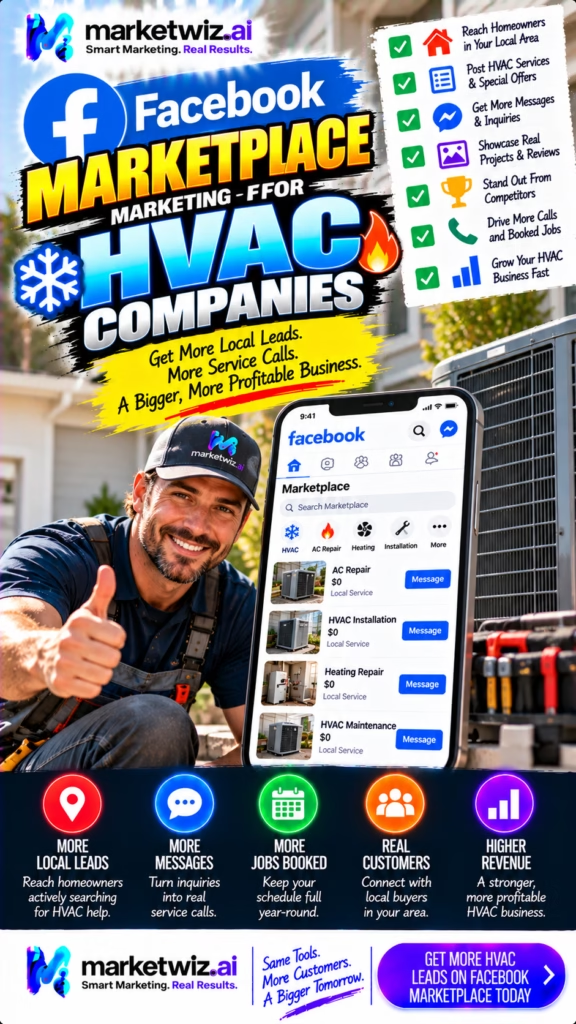
Facebook Marketplace Marketing for HVAC Companies
Discover how heating and cooling businesses can use eligible Facebook Marketplace product listings, professional Facebook Pages, local community marketing, targeted advertising, AI-assisted customer follow-up, and organic-first visibility strategies to attract more qualified local customers and grow their HVAC business.
Updated October 20261. Why Facebook Marketing Matters for HVAC Companies
Heating, ventilation, and air conditioning businesses operate in a competitive local marketplace. Homeowners may need urgent cooling repairs, scheduled furnace maintenance, complete system replacements, or advice about improving comfort and energy efficiency.
Traditional HVAC marketing often emphasizes search engines, referrals, direct mail, and paid advertising. Facebook adds another way to reach local audiences, educate potential customers, and remain visible before a heating or cooling problem becomes urgent.
Facebook Marketplace marketing for HVAC companies requires a careful distinction between eligible physical products and contractor services. Marketplace is designed primarily for permitted goods, and service-only listings are generally prohibited. HVAC businesses should not disguise repair, installation, or maintenance work as products to bypass these restrictions.
Instead, companies can build a broader Facebook strategy that uses Marketplace for eligible product inventory while relying on Facebook Pages, permitted Groups, and suitable advertising formats to promote professional HVAC work.
Core strategy: Use the right Facebook channel for the right offer. Sell eligible physical products through supported Marketplace features, promote HVAC services through appropriate business marketing channels, and connect all legitimate inquiries to a reliable customer follow-up process.
This approach helps HVAC contractors create a more sustainable marketing system without depending on prohibited listing tactics or unrealistic lead generation promises.
2. Understand Facebook Marketplace Rules Before Advertising HVAC Offers
The first step in any HVAC Marketplace strategy is understanding which types of listings the platform permits. Facebook Marketplace generally restricts service-only listings, meaning a contractor should not publish an advertisement for AC repair or furnace installation as though the service were a physical product.
Businesses with legitimate physical inventory may have eligible selling opportunities, depending on the product, account eligibility, location, and current Meta Commerce Policies.
For example, a permitted thermostat offered as a genuine standalone product is different from an advertisement for a technician to install a thermostat. The former is a physical product listing; the latter is a service offer that belongs in another marketing channel.
Important compliance principles
- Advertise only products actually available for sale.
- Use accurate prices and descriptions.
- Choose relevant product categories.
- Do not disguise labor as merchandise.
- Avoid duplicate or misleading listings.
- Respect product restrictions and manufacturer requirements.
- Use only supported account and selling features.
- Review current Meta policies before launching campaigns.
The specific rules and eligibility requirements can change. HVAC companies should verify the current requirements rather than assuming a strategy that worked previously remains permitted.
3. Identify Eligible HVAC Products That May Fit Marketplace
Some HVAC companies sell physical products in addition to providing installation, repair, and maintenance. Those products may offer legitimate Marketplace opportunities when the item and selling arrangement comply with applicable policies.
Potential categories can include thermostats, replacement filters, portable climate-control equipment, and certain equipment components. However, eligibility is not automatic, and businesses must consider product restrictions, safety requirements, and local regulations.
Thermostats
Permitted new or used thermostats with accurate compatibility, condition, and model information.
Air Filters
Eligible filter products with clearly identified dimensions, quantities, and specifications.
Portable Equipment
Permitted portable heating or cooling products with accurate operating and safety details.
HVAC Components
Eligible physical components where sale is permitted and specifications are accurately disclosed.
Equipment that requires professional handling, specialized installation, or regulatory compliance deserves additional scrutiny. Sellers should never imply that a product is suitable for every home or that buyers can safely install regulated equipment themselves.
A product-based Marketplace campaign should be built around genuine inventory and customer needs, not around using a low-cost item as a pretext for an unrelated service advertisement.
4. Understand How Local Homeowners Choose HVAC Companies
HVAC customers often begin searching for help because of a specific problem. Their air conditioner may no longer cool properly, a furnace may make unusual noises, or an older system may require replacement.
Other homeowners are planning ahead. They may want a maintenance inspection, improved indoor comfort, or information about a high-efficiency system.
These different situations influence the marketing message. Someone facing a cooling failure needs clear information about actual availability and scheduling. A homeowner comparing replacement options may need educational content about system sizing, efficiency, and installation considerations.
Common HVAC customer motivations
- Restoring heating or cooling
- Reducing unexpected breakdowns
- Improving indoor comfort
- Evaluating replacement equipment
- Planning seasonal maintenance
- Addressing uneven temperatures
- Understanding repair versus replacement options
- Finding a reliable local contractor
Effective Facebook marketing should address these needs directly while avoiding exaggerated savings claims or promises that cannot be substantiated.
5. Build a Professional Facebook Page for Your HVAC Business
For most HVAC contractors, the Facebook business Page is a more appropriate foundation for service marketing than Marketplace. A professional Page can explain the company's work, present legitimate business information, and publish educational or promotional content within applicable platform rules.
The Page should accurately identify the company, its actual service area, contact information, and available capabilities. Businesses should not claim to be licensed, insured, or certified unless those statements are accurate and current.
Facebook Page essentials
- Accurate business name
- Professional logo and cover image
- Current phone number
- Correct website address
- Actual business hours
- Relevant service-area information
- Clear description of HVAC capabilities
- Authentic project photographs
- Useful educational content
- Consistent customer communication
A complete Page can also support customers who discover the business through referrals, Facebook advertising, or community discussions and want to learn more before making contact.
6. Create Organic HVAC Content That Builds Local Awareness
Organic Facebook content helps HVAC companies remain visible to people who follow the business or encounter its posts through legitimate sharing and community engagement.
The most useful content is not always a direct advertisement. Educational posts can answer common questions, explain seasonal maintenance considerations, or help homeowners understand what to expect during an HVAC appointment.
For example, a post explaining why air filters need periodic attention can provide value without making unsupported claims about a particular product.
Organic Content Framework
Balance practical homeowner education, authentic company updates, real project examples, and appropriate promotional offers. The objective is to demonstrate competence and availability without turning every post into a repetitive sales pitch.
Companies should avoid publishing technical instructions that encourage unqualified homeowners to perform dangerous electrical, refrigerant, gas, or combustion-related work.
7. Write Accurate Marketplace Titles for Eligible HVAC Products
When an HVAC business sells eligible physical products, the listing title should identify the actual item clearly. Relevant brand, model, dimensions, and condition details can help buyers determine whether the product matches their needs.
A title such as "Best AC Deal Today" is vague and may not explain what is being sold. A more descriptive title identifying a real thermostat model or filter size gives buyers more useful information.
Product title examples
- Programmable Thermostat – Brand and Model Listed
- 20x25x1 HVAC Air Filters – Sealed Package
- Portable Air Conditioner – Model Details Included
- Window Air Conditioner – Tested Condition
- Replacement Thermostat – Compatibility Details
- Portable Dehumidifier – Capacity Listed
These examples should only be used when they accurately describe real, eligible inventory. Do not insert unrelated keywords, misleading prices, or installation promises into product titles.
8. Use Professional Photographs for HVAC Products and Project Marketing
Photography serves two different purposes in an HVAC Facebook strategy. Marketplace product listings need clear photographs of the actual items being offered. Facebook Page marketing can also feature authentic completed projects, equipment upgrades, and team activity.
For a physical product, buyers may want to see the model label, packaging, accessories, and visible condition. For a project post, a well-composed photograph can help illustrate the type of work the company performs.
Photography best practices
- Use original images whenever possible.
- Show the actual product in Marketplace listings.
- Capture model labels and important details.
- Use clear lighting and uncluttered backgrounds.
- Disclose visible damage or wear.
- Obtain permission before sharing customer property.
- Avoid exposing private addresses or personal details.
- Do not misrepresent another contractor's work as your own.
Authentic photographs can support buyer confidence and help differentiate a legitimate local business from generic or misleading promotional material.
9. Write Detailed HVAC Product Descriptions That Answer Buyer Questions
HVAC products can involve technical specifications that matter more than appearance. A thermostat may require particular system compatibility, while a filter must match the correct dimensions and other relevant specifications.
A useful Marketplace description should explain the actual product rather than relying on general advertising claims.
Product description checklist
- Exact product name
- Manufacturer and model
- Condition
- Dimensions or capacity
- Compatibility information
- Included accessories
- Known limitations
- Accurate asking price
- Pickup or delivery details
- Applicable warranty information, if verified
Sellers should not promise that equipment will work with every HVAC system. Where compatibility depends on professional assessment, the listing should say so.
Complete descriptions may reduce repetitive questions and help buyers make more informed purchasing decisions.
10. Develop Transparent Pricing for HVAC Product Marketing
Pricing influences how buyers evaluate physical products. An eligible thermostat, portable air conditioner, or other HVAC-related item should be priced according to its actual condition, specifications, and market value.
A misleading low price may attract attention but can create distrust when buyers discover that the advertised amount does not reflect the actual offer.
| Pricing Factor | Buyer Concern | Best Practice |
|---|---|---|
| Product Condition | Is the item new, used, or refurbished? | Disclose actual condition |
| Model Compatibility | Will it work with the intended system? | Provide verified specifications |
| Included Accessories | What comes with the purchase? | List included components |
| Warranty | Is coverage available? | Describe only verified coverage |
| Delivery | Are there additional charges? | Disclose applicable costs |
| Installation | Is labor included? | Keep service offers in appropriate channels |
For HVAC service marketing outside Marketplace, companies should likewise avoid advertising prices that omit unavoidable charges or misrepresent the conditions of an offer.
11. Use Local Facebook Groups to Reach Homeowners Appropriately
Community Facebook Groups can help local contractors participate in neighborhood conversations when the Group's rules permit business involvement.
Some Groups allow promotional posts on designated days. Others restrict commercial activity or prohibit it entirely. HVAC businesses should review and respect those rules.
Useful participation may include answering general homeowner questions, sharing permitted seasonal reminders, or responding when someone specifically requests recommendations for local contractors.
Community engagement principles
- Read Group rules before posting.
- Be transparent about business affiliation.
- Offer genuinely useful information.
- Avoid repetitive promotional posts.
- Respect administrator decisions.
- Do not post misleading testimonials.
- Respond professionally to questions.
- Protect customer privacy.
The goal is to become a credible local resource, not to overwhelm community discussions with advertisements.
12. Plan Seasonal HVAC Facebook Marketing Campaigns
Heating and cooling demand changes throughout the year. In many climates, air conditioning inquiries increase during warmer weather, while heating concerns become more important as temperatures fall.
HVAC businesses can plan educational and promotional content around these predictable seasonal needs.
Seasonal content opportunities
- Spring cooling preparation
- Summer AC performance education
- Fall heating system preparation
- Winter furnace safety awareness
- Filter replacement reminders
- Thermostat education
- Indoor comfort tips
- System replacement planning
Seasonal messaging should reflect the actual local climate. A contractor in Florida may have different priorities from a company operating in upstate New York.
Avoid implying that every system requires the same maintenance schedule or that a particular seasonal action guarantees lower energy bills.
13. Market Air Conditioning Repair Through Appropriate Facebook Channels
Air conditioning problems can create urgent homeowner needs, particularly during extended periods of hot weather. Facebook Pages and eligible advertising formats can help contractors communicate their actual repair capabilities.
An effective AC repair message should explain the general types of problems the company handles, its genuine service area, and how customers can request assistance.
Companies should avoid promising immediate arrival unless they can consistently fulfill that commitment.
Example positioning: Local air conditioning diagnostics and repair for homeowners in the company's actual service area, with clear information about appointment availability and customer contact options.
This kind of service promotion belongs in suitable Facebook business marketing channels rather than a prohibited service-only Marketplace listing.
14. Promote Furnace and Heating Work With Trust-Focused Content
Heating-related marketing often requires additional attention to safety and customer confidence. A homeowner experiencing furnace trouble may need qualified technical assistance rather than generic do-it-yourself instructions.
Facebook content can explain common warning signs, the importance of professional assessment, and how customers can contact the company.
Businesses should be careful with claims involving gas systems, carbon monoxide, combustion, or other potentially dangerous conditions.
Helpful heating content topics
- Signs a furnace needs professional attention
- Heating maintenance planning
- Understanding unusual system noises
- Thermostat troubleshooting basics
- When to request professional diagnostics
- Heating system replacement considerations
When discussing possible emergencies, companies should direct customers toward appropriate safety procedures and qualified emergency resources rather than encouraging unsafe equipment handling.
15. Generate HVAC System Replacement Inquiries With Educational Marketing
Replacing an HVAC system is a significant purchasing decision. Homeowners may compare equipment types, energy efficiency, installation requirements, financing options, and contractor qualifications.
Facebook content can support this research process by explaining how professional assessments help determine appropriate equipment and installation requirements.
The company should avoid suggesting that one equipment size or configuration fits every property.
Replacement marketing topics
- Repair versus replacement considerations
- Professional load calculations
- Equipment efficiency terminology
- Ductwork considerations
- Installation planning
- Available product options
- Verified warranty information
- Accurate financing disclosures
Educational marketing can attract homeowners who are researching options before requesting an estimate.
16. Market Ductless Mini-Splits Without Misrepresenting Installation Services
Ductless mini-split systems may interest homeowners who want to improve comfort in particular rooms, add climate control to an addition, or evaluate alternatives to existing equipment.
An HVAC company can publish educational content about these systems through its Facebook Page and other appropriate promotional channels.
If the company sells an eligible physical mini-split product through Marketplace, the listing should accurately describe the actual equipment.
It should not disguise installation labor as a product, promise universal compatibility, or encourage unqualified refrigerant and electrical work.
Separate Product Sales From Service Promotion
Use product listings only for legitimate eligible goods. Use Facebook business content and permitted advertising to explain professional consultation, installation, and other contractor capabilities.
17. Build HVAC Maintenance Awareness Through Facebook Content
Maintenance-related content can help homeowners understand why periodic professional attention may be useful for their equipment.
Facebook posts can discuss filter care, seasonal preparation, and the importance of following manufacturer recommendations.
HVAC businesses can also explain their actual maintenance offerings through appropriate channels.
Maintenance content ideas
- Seasonal system preparation
- Filter inspection reminders
- Thermostat settings education
- Condensate drainage awareness
- Outdoor equipment clearance
- Professional inspection information
- Manufacturer maintenance recommendations
- Customer scheduling reminders
Avoid presenting every maintenance recommendation as universally applicable. Different equipment types and manufacturers may have different requirements.
18. Handle Emergency HVAC Marketing Responsibly
Some heating and cooling problems require urgent attention. Customers may search for assistance during extreme weather or after a sudden system failure.
A contractor advertising emergency availability must accurately represent its operating hours, response capabilities, and geographic coverage.
If the company does not provide around-the-clock appointments, its marketing should not imply that 24-hour assistance is available.
For safety-related situations involving suspected gas leaks, carbon monoxide, fire, or other immediate hazards, marketing content should not substitute for emergency guidance from appropriate authorities.
Clear expectations help protect customers and reduce frustration when appointments cannot be provided immediately.
19. Use Facebook to Support Commercial HVAC Marketing
Commercial HVAC customers have different priorities from residential homeowners. Property managers, facility operators, business owners, and commercial real estate professionals may care about equipment uptime, scheduling, compliance, and operational disruption.
Facebook can support awareness through professional project content and suitable advertising, although it may not be the strongest acquisition channel for every business-to-business audience.
Commercial content opportunities
- Verified commercial project examples
- Building maintenance education
- Equipment replacement planning
- Scheduling coordination
- Facility comfort considerations
- Professional team capabilities
- Relevant certifications, when verified
- Authentic customer success stories
Commercial HVAC marketing may also benefit from complementary channels such as local search, professional networking, and direct business development.
20. Build HVAC Customer Trust With Authentic Reviews and Project Examples
HVAC work often takes place inside customers' homes or businesses, making trust an important factor in contractor selection.
Authentic reviews can help prospective customers understand how a company communicates, handles appointments, and approaches its work.
Businesses should never fabricate reviews, misrepresent testimonials, or present another company's projects as their own.
Before sharing photographs of a customer's property, obtain any necessary permission and avoid exposing private information.
Trust-Building Content
Use genuine customer feedback, accurate project descriptions, transparent business information, and consistent communication. Credibility comes from evidence and customer experience, not exaggerated promises.
21. Use Facebook Advertising to Reach Relevant HVAC Audiences
Paid Facebook advertising can complement organic content by helping an HVAC company reach people within an appropriate geographic area.
The campaign should begin with a clear objective, such as generating inquiries, increasing awareness, or promoting a specific legitimate offer.
Available targeting controls and advertising features may vary, and campaigns must comply with Meta's advertising policies.
Before launching a campaign
- Define the actual service area.
- Choose a relevant campaign objective.
- Use accurate business information.
- Explain the offer clearly.
- Prepare a customer response process.
- Set a realistic test budget.
- Track qualified inquiries.
- Measure booked and completed jobs.
Additional impressions or clicks do not necessarily translate into profitable work. Campaigns should be judged by meaningful business outcomes.
22. Design a Better HVAC Lead Qualification Process
HVAC companies need enough information to understand a customer's request, but excessive questioning can make the initial interaction unnecessarily difficult.
A practical qualification process should focus on the information needed to determine whether the company can help and what the appropriate next step should be.
Identify the General Need
Determine whether the customer is asking about heating, cooling, maintenance, replacement, or another relevant issue.
Confirm the Service Area
Ask for a general city or ZIP code when needed to verify that the location is within the company's coverage.
Clarify Timing
Understand whether the request is urgent or whether the customer is planning a future appointment.
Arrange an Appropriate Follow-Up
Offer a realistic next step using the company's actual scheduling and communication process.
Collect only the customer information reasonably necessary for the inquiry and handle personal data appropriately.
23. Improve Facebook Lead Response Times for HVAC Inquiries
An HVAC customer may contact several local businesses while trying to arrange an appointment. Delayed responses can make it harder to continue the conversation.
Companies should establish a practical process for reviewing Facebook inquiries during their operating hours.
For urgent requests, the response should accurately communicate whether assistance is available and when the customer can expect further contact.
Response process essentials
- Assign responsibility for incoming inquiries.
- Monitor approved messaging channels.
- Confirm actual service availability.
- Provide concise answers.
- Escalate urgent requests appropriately.
- Document relevant customer details.
- Avoid promising unconfirmed appointments.
- Respect privacy and communication preferences.
A prompt, accurate response supports a better customer experience even when the company cannot accept every request.
24. Use AI-Assisted Follow-Up to Organize HVAC Customer Inquiries
AI-assisted systems can help HVAC businesses prepare draft responses, organize incoming questions, summarize inquiries, and support internal lead management.
These tools can be particularly useful when multiple employees handle customer communications across several channels.
However, automation capabilities vary by platform, account, and approved integration. Businesses should not assume that unrestricted automated messaging is permitted on Facebook.
Appropriate AI-supported workflows
- Drafting accurate response suggestions
- Organizing customer requests
- Summarizing conversations for staff
- Identifying missing scheduling details
- Supporting approved CRM updates
- Flagging urgent inquiries for review
- Preparing internal follow-up reminders
- Analyzing aggregate lead outcomes
AI implementation rule: Use only authorized messaging integrations and approved workflows. AI should not diagnose equipment without appropriate professional involvement, invent appointment availability, or make unverified technical promises.
25. Connect Facebook HVAC Inquiries to an Organized CRM Process
A customer inquiry has limited value if the company loses track of it before an appointment is arranged.
An organized customer relationship management process can help HVAC businesses record legitimate inquiries, track follow-up responsibilities, and measure sales outcomes.
The specific integration method should be supported by the platform and comply with applicable privacy and data-handling requirements.
| CRM Field | Purpose | Example Use |
|---|---|---|
| Inquiry Date | Track when contact began | Follow-up prioritization |
| Customer Name | Identify the inquiry | Communication records |
| General Location | Confirm coverage | Service-area screening |
| Requested Work | Understand customer needs | Appropriate routing |
| Urgency | Determine timing | Scheduling decisions |
| Appointment Status | Track progress | Operational coordination |
| Job Outcome | Measure results | Marketing evaluation |
Businesses should avoid collecting unnecessary sensitive information and should establish appropriate access controls for customer records.
26. Combine Facebook Marketing With Google Maps SEO for HVAC Growth
Facebook marketing can create awareness and customer conversations, while Google Maps and local search can help customers discover HVAC companies when they are actively looking for nearby providers.
These channels can complement one another. A homeowner might first encounter an HVAC company's educational content on Facebook and later search for local heating and cooling contractors.
An accurate Google Business Profile can help present legitimate business information within Google's local search experiences.
Local SEO priorities
- Accurate business name
- Correct phone number
- Appropriate business categories
- Actual service-area information
- Consistent operating hours
- Authentic photographs
- Useful website content
- Genuine customer reviews
- Relevant service information
- Ongoing profile maintenance
No provider can guarantee a specific Google Maps ranking. Results depend on Google's systems, local competition, business relevance, and other factors.
27. Track HVAC Facebook Marketing Performance and Return on Investment
Marketing performance should be measured through more than post engagement, advertising clicks, or message volume.
An HVAC business ultimately needs to understand which campaigns generate qualified customer opportunities and profitable completed work.
| Metric | What It Measures | Why It Matters |
|---|---|---|
| Reach | Audience exposure | Awareness indicator |
| Messages | Incoming conversations | Initial interest |
| Qualified Leads | Relevant inquiries | Customer fit |
| Booked Appointments | Scheduled visits | Sales progression |
| Completed Jobs | Finished work | Operational outcomes |
| Attributed Revenue | Sales linked to marketing | Revenue impact |
| Gross Profit | Revenue after direct costs | Profitability context |
| Marketing Spend | Campaign investment | Cost management |
A simple return-on-investment calculation can compare attributable profit against relevant marketing costs. Companies should use consistent attribution methods and avoid treating every inquiry as a completed sale.
28. Avoid Common Facebook Marketing Mistakes Made by HVAC Contractors
HVAC marketing can underperform when businesses use inappropriate listing formats, publish generic content, or fail to respond to legitimate customer inquiries.
Some mistakes also create policy or reputational risks.
Problems to avoid
- Publishing service-only Marketplace listings
- Misrepresenting labor as a physical product
- Using inaccurate equipment prices
- Claiming false licensing or certifications
- Advertising outside the actual service area
- Publishing fabricated customer reviews
- Using unauthorized automated messaging
- Making unsupported energy-savings claims
- Ignoring customer questions
- Failing to track appointments and jobs
- Promising emergency response that is unavailable
- Posting customer property without permission
- Using repetitive spam-like content
- Neglecting business profile accuracy
A sustainable strategy begins with accurate information, compliant channel selection, professional communication, and measurable business outcomes.
29. Follow a 90-Day Facebook Marketing Plan for HVAC Companies
A structured plan can help HVAC businesses establish a consistent marketing process without trying to implement every tactic at the same time.
Days 1–30: Build the Foundation
- Review Meta's current policies.
- Audit the Facebook business Page.
- Confirm contact information and service areas.
- Identify any eligible physical product inventory.
- Prepare authentic photographs.
- Create an educational content calendar.
- Establish customer response responsibilities.
- Define basic lead tracking.
Days 31–60: Publish and Engage
- Publish useful seasonal content.
- Share authentic project examples.
- Participate in permitted local Groups.
- Improve eligible product listings.
- Review customer inquiries.
- Refine response procedures.
- Evaluate suitable paid campaign opportunities.
- Maintain accurate business information.
Days 61–90: Measure and Optimize
- Review qualified lead volume.
- Measure appointment conversion.
- Track completed jobs.
- Evaluate advertising costs.
- Identify effective content topics.
- Improve underperforming offers.
- Coordinate Facebook with Google Maps SEO.
- Plan the next campaign cycle.
90-Day Objective
Build a compliant, measurable Facebook marketing system that helps local customers understand the HVAC company's capabilities and provides a reliable path from inquiry to appointment and completed work.
30. Build a Long-Term Organic-First HVAC Marketing System
The strongest HVAC marketing programs do not depend entirely on a single Facebook post, Marketplace listing, or advertising campaign.
They connect several legitimate customer acquisition channels to a consistent business process.
Facebook Pages can support education and local awareness. Eligible Marketplace listings can support genuine product sales. Permitted Groups can create community engagement opportunities. Paid advertising can expand reach when the economics make sense.
Google Maps SEO and a useful business website can help customers who are actively searching for HVAC companies.
Reliable follow-up helps ensure that legitimate inquiries receive appropriate attention.
Customer records and reporting help management understand which marketing activities are producing meaningful results.
Market Wiz AI focuses on organic-first marketing, local visibility, AI-assisted communication, and coordinated lead generation for businesses seeking a more organized approach to customer acquisition.
No channel guarantees a specific number of appointments or sales.
However, HVAC companies can improve the factors they control: accurate business information, useful content, appropriate advertising, professional follow-up, and consistent measurement.
Conclusion: A Smarter Facebook Marketplace Marketing Strategy for HVAC Companies
Facebook Marketplace marketing for HVAC companies works best when businesses understand the difference between physical product sales and professional heating and cooling services.
Marketplace can provide opportunities for eligible physical products, but it is not a general-purpose classified advertising channel for contractor labor.
Repair, installation, maintenance, and diagnostic work should be promoted through appropriate business marketing channels.
For many HVAC companies, the Facebook business Page will serve as the primary foundation for organic content.
A professional Page allows the company to explain its capabilities, share useful information, and present authentic project examples.
Local community Groups may provide additional opportunities when their rules permit business participation.
Paid Facebook advertising can support geographic reach and customer acquisition when campaigns are designed around clear objectives and measurable outcomes.
Eligible Marketplace listings should focus on actual physical products, accurate specifications, transparent pricing, and honest condition disclosures.
HVAC companies should not create misleading listings to redirect customers toward unrelated services.
They should also avoid unsupported claims about equipment performance, energy savings, warranties, or professional credentials.
Effective HVAC marketing begins with understanding the homeowner's actual needs.
Someone facing a sudden air conditioning failure has different priorities from someone researching a future system replacement.
Seasonal content can address heating and cooling preparation, while educational posts can help homeowners understand equipment options and maintenance considerations.
Authentic photographs, accurate business details, and genuine customer feedback can help establish confidence.
Customer communication is equally important.
An inquiry should lead to an accurate response and a practical next step.
Businesses should explain their real availability, service area, and scheduling process.
They should avoid promising appointments that have not been confirmed.
AI-assisted tools can support message organization and internal follow-up when used through authorized workflows.
However, technology should not replace appropriate professional judgment or invent technical diagnoses.
Customer relationship management helps organize inquiries and track outcomes.
The most useful metrics include qualified leads, booked appointments, completed jobs, revenue, and relevant costs.
Views, clicks, and messages can be helpful indicators, but they do not automatically represent profitable customer acquisition.
HVAC companies should also consider how Facebook works alongside Google Maps SEO, their business website, and other local marketing channels.
A homeowner may encounter a company's content on Facebook and later evaluate the business through local search.
Consistent information across these channels supports a more professional customer experience.
For companies building a long-term marketing program, the objective should be a repeatable process: attract relevant attention, provide accurate information, respond professionally, qualify legitimate inquiries, schedule appropriate work, and measure the results.
That process can be improved through regular content reviews, customer feedback, campaign analysis, and operational coordination.
The strongest approach to Facebook Marketplace marketing for HVAC companies is therefore not based on posting as many advertisements as possible.
It is based on choosing the correct marketing channel, presenting genuine offers, building local credibility, and converting appropriate customer interest into real business opportunities.
Market Wiz AI helps businesses coordinate organic-first marketing, local search visibility, Facebook strategies, and AI-assisted lead management with an emphasis on accurate information and measurable growth.
Frequently Asked Questions About Facebook Marketplace Marketing for HVAC Companies
1. Can HVAC companies use Facebook Marketplace for marketing?
HVAC companies can use eligible Marketplace features to sell permitted physical products. Service-only listings are generally prohibited, so HVAC repair, installation, and maintenance should be promoted through appropriate Facebook channels.
2. Can HVAC contractors advertise repair services on Marketplace?
Facebook Marketplace generally prohibits service-only listings. HVAC contractors should use Facebook Pages, eligible Groups, or suitable advertising channels to promote repair work.
3. What HVAC products may be suitable for Marketplace?
Depending on Meta's current policies, eligible products may include permitted thermostats, air filters, portable climate-control equipment, and other legitimate physical goods with accurate descriptions.
4. How can HVAC companies generate leads through Facebook?
HVAC businesses can use Facebook Pages, educational posts, permitted community Group participation, targeted advertising, and timely customer follow-up to generate inquiries.
5. Is Facebook Marketplace free for HVAC businesses?
Some eligible Marketplace listings may be free to publish, while selling fees or paid promotional costs may apply depending on the feature, transaction type, and location.
6. Does Facebook Marketplace work for HVAC equipment sales?
It may support sales of eligible physical equipment where the product and seller meet applicable platform rules, local regulations, and any manufacturer restrictions.
7. How should HVAC companies write Marketplace titles?
Titles should identify the actual physical product and include accurate brand, model, size, and condition details when relevant.
8. What photographs work best for HVAC product listings?
Clear original photographs showing the actual product, relevant model labels, included accessories, and visible condition help buyers evaluate listings.
9. Can HVAC businesses promote installation through Facebook Groups?
Some community Groups allow business promotions, while others prohibit them. HVAC companies should follow each Group's rules and Meta's applicable policies.
10. How can Facebook Pages help HVAC companies?
Facebook Pages can present company information, educational content, authentic project examples, customer updates, and permitted promotional material.
11. Should HVAC companies run Facebook ads?
Paid Facebook advertising can be useful when businesses have clear geographic targeting, a defined offer, appropriate tracking, and a process for responding to inquiries.
12. How can HVAC companies target local customers?
Use accurate service-area information, relevant local content, and supported advertising location controls while avoiding misleading claims about where the company operates.
13. Can HVAC companies market emergency repairs on Facebook?
Yes, through appropriate channels such as Facebook Pages and eligible advertising formats, provided the business accurately represents availability and capabilities.
14. How can HVAC companies market seasonal maintenance?
Publish useful seasonal education, explain maintenance options accurately, and use permitted Facebook marketing channels to reach customers before peak demand.
15. Does Facebook marketing help HVAC replacement sales?
Facebook marketing may help educate homeowners about replacement options and generate inquiries, although sales depend on demand, qualifications, pricing, and follow-up.
16. Can HVAC companies advertise ductless mini-splits?
Eligible physical mini-split products may be listed where permitted, but installation-only offers should not be disguised as Marketplace product listings.
17. How important are customer reviews for HVAC marketing?
Authentic reviews can help potential customers evaluate reliability, communication, and overall customer experience.
18. Can HVAC companies use before-and-after photos?
Yes, in appropriate promotional channels, provided the photographs are authentic, permission is obtained where needed, and claims are not misleading.
19. What should an HVAC company post on Facebook?
Useful topics include maintenance education, seasonal preparation, equipment explanations, authentic project highlights, staff introductions, and company updates.
20. How fast should HVAC companies respond to Facebook inquiries?
Respond as promptly as practical, particularly for time-sensitive inquiries, while clearly communicating actual availability and emergency limitations.
21. Can AI help HVAC companies respond to Facebook leads?
AI can assist with response drafting, inquiry organization, and approved workflows, subject to Meta's rules, privacy requirements, and human oversight.
22. What information should HVAC businesses collect from leads?
Collect only information reasonably necessary to respond, such as the general location, type of HVAC issue, preferred contact method, and scheduling needs.
23. How can HVAC companies reduce low-quality Facebook leads?
Use accurate offers, clear service areas, appropriate audience targeting, relevant qualifying questions, and consistent follow-up procedures.
24. Does Google Maps SEO complement HVAC Facebook marketing?
Yes. An accurate Google Business Profile and useful local website content can complement Facebook visibility by helping customers discover and evaluate the company through search.
25. Can HVAC businesses market commercial HVAC work on Facebook?
Yes. Appropriate Facebook content and advertising can explain commercial capabilities, although other channels may be more effective for some business-to-business audiences.
26. How much should HVAC companies spend on Facebook advertising?
Budgets should reflect market competition, business margins, capacity, customer acquisition goals, and measured results rather than a universal spending formula.
27. How do HVAC companies measure Facebook marketing ROI?
Track campaign costs, qualified leads, booked appointments, completed jobs, attributed revenue, and relevant gross profit.
28. What Facebook marketing mistakes should HVAC companies avoid?
Avoid prohibited service-only Marketplace listings, misleading equipment claims, inaccurate service areas, unauthorized automation, weak follow-up, and unsupported performance guarantees.
29. How long does Facebook marketing take to produce HVAC leads?
There is no guaranteed timeline. Results vary by local demand, competition, channel, offer quality, advertising investment, and follow-up.
30. What is the best Facebook marketing strategy for HVAC companies?
Combine compliant product listings where eligible, professional Facebook Page content, permitted Group participation, targeted advertising when appropriate, strong customer follow-up, and complementary Google Maps SEO.
30 Additional SEO Keywords for HVAC Facebook Marketplace Marketing
These related keyword phrases expand topical coverage for HVAC Facebook advertising, organic local visibility, permitted Marketplace product listings, customer acquisition, and AI-assisted lead management.
Grow Your HVAC Business With Smarter Organic-First Marketing
Market Wiz AI helps HVAC companies strengthen local visibility, develop compliant Facebook marketing strategies, improve Google Maps SEO, organize customer inquiries, and use AI-assisted lead management to connect qualified homeowners with the right business opportunities. Build a coordinated marketing system designed around accurate information, professional follow-up, and measurable growth.
Call MarketWiz.ai: (910) 601-2938