
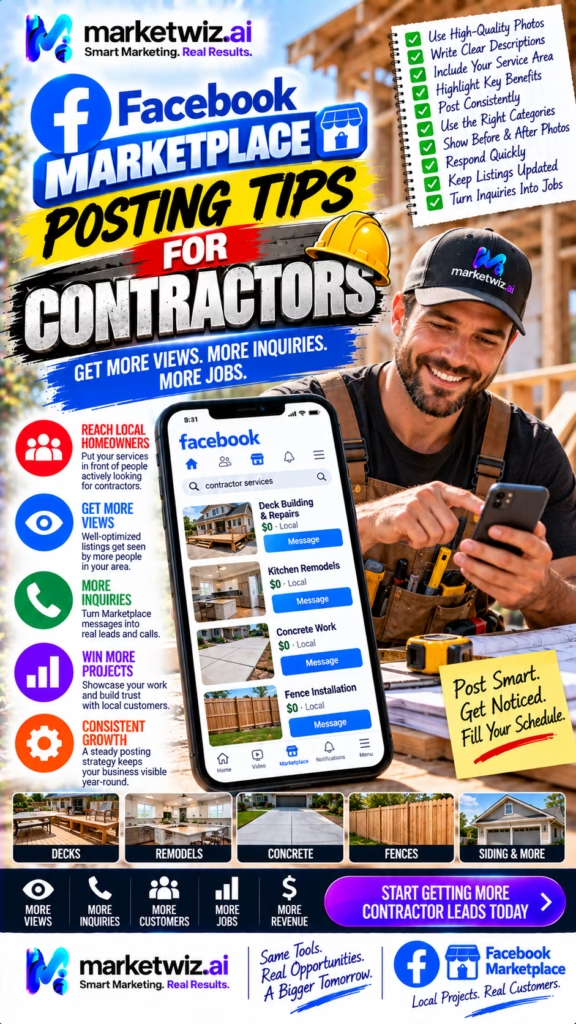
Facebook Marketplace Posting Tips for Contractors
Facebook Marketplace can give contractors another way to reach local customers, showcase eligible products and project-related offerings, and generate conversations inside the markets they serve. The strongest results come from combining better listings with local targeting, compelling visuals, fast lead response, qualification, CRM tracking, follow-up, and a broader multi-channel marketing strategy.
Updated October 20261. Understand How Facebook Marketplace Fits Contractor Marketing
Contractors usually depend on local demand. A roofing company, painter, flooring contractor, fence installer, concrete company, garage door company, remodeler, landscaper, or other trade business generally needs customers within a realistic operating territory.
That local nature is one reason Facebook can be useful as part of a contractor marketing strategy. Marketplace puts locally oriented content in an environment where people are already browsing products and opportunities near them.
The key is understanding what Marketplace is and what it is not. Contractors should review current platform requirements and use Marketplace only for listings and products that are appropriate for that surface.
Broader contractor promotion can also use other Facebook surfaces, social media content, Google Maps, local SEO, websites, referrals, paid advertising, and other customer acquisition channels.
Marketplace should be treated as one customer acquisition channel, not the entire marketing strategy. Its value increases when incoming opportunities connect to an organized lead and sales process.
2. Build Contractor Listings Around Customer Intent
Strong marketing starts with understanding what the customer is trying to accomplish. Contractors often weaken their messaging by attempting to communicate every possible capability in one generic advertisement.
A homeowner researching a new fence has different priorities from someone considering interior painting. A property owner comparing flooring options has different questions from a customer planning a concrete patio.
Separate these needs into clear marketing concepts.
Replacement Projects
Focus content around replacing aging, damaged, outdated, or inefficient property components.
Property Upgrades
Showcase projects designed to improve appearance, functionality, comfort, usability, or curb appeal.
New Construction
Create separate content for homeowners, builders, investors, and property owners planning new projects.
Specific Products
Where Marketplace permits the listing, use accurate product information, specifications, pricing, condition, and availability.
The more closely a listing matches the customer's actual need, the easier it becomes to create relevant images, titles, descriptions, and qualification questions.
3. Define the Contractor's Real Local Service Area
Contractors should know exactly where they want leads before increasing posting volume. More inquiries are not automatically better if many come from locations the company cannot efficiently serve.
Build a simple geographic framework around the company's actual operating territory.
This can include:
- Primary city
- Secondary cities
- Counties
- ZIP codes
- Neighborhoods
- High-value project areas
- Expansion markets
- Maximum practical travel distance
- Areas the company does not cover
This same geographic framework can support Facebook marketing, Google Maps optimization, local SEO, landing pages, sales routing, and performance reporting.
Local Precision Matters
A contractor may benefit more from a smaller number of qualified inquiries inside profitable territory than from a large volume of conversations scattered across locations the company cannot realistically serve.
4. Separate Contractor Marketing by Project Category
One of the simplest ways to improve contractor marketing is to stop combining unrelated project types into the same message.
If a company offers several categories, each category can have its own visual theme, customer intent, qualification questions, and lead workflow.
Examples include:
- Exterior painting
- Interior painting
- Cabinet painting
- Roof replacement
- Metal roofing
- Vinyl flooring
- Hardwood flooring
- Fence installation
- Deck construction
- Concrete driveways
- Concrete patios
- Garage doors
- Windows
- Siding
- Remodeling projects
The exact categories should reflect the contractor's real business rather than creating content for work the company does not perform.
5. Build Every Marketplace Listing From Accurate Information
Accuracy should be the foundation of every contractor listing. Marketing becomes weaker when the customer clicks on one concept and discovers that the details, product, price, availability, or location do not match what was presented.
Before publishing, verify every important element.
6. Make the First Marketplace Image Stop the Scroll
Marketplace is highly visual. Customers often browse quickly from a phone, which means the primary image may determine whether they inspect the listing or continue scrolling.
Contractors should select images that make the subject immediately understandable. The customer should not have to guess what the listing is about.
A strong first image generally has:
- A clearly visible product or project
- Good natural or professional lighting
- Minimal distracting clutter
- A realistic property context
- Strong composition
- Mobile-friendly framing
- A direct relationship to the title
The image should communicate before the description does. Customers should understand the basic listing concept almost immediately.
7. Use Real Contractor Project Photos Whenever Possible
Contractors have an advantage that many businesses overlook: completed projects naturally create visual marketing assets.
A finished deck, painted home, new roof, remodeled kitchen, concrete driveway, fence, garage door, or flooring installation can show customers what the company actually produces.
Real project photography can support both marketing and trust when the company owns or has permission to use the images.
Build a project photo library containing:
- Before photos
- After photos
- Wide exterior views
- Close-up workmanship
- Different materials
- Different colors
- Different project sizes
- Different architectural styles
- Residential projects
- Commercial projects where relevant
Over time, this library can support Marketplace, Facebook Pages, Instagram, Google Business Profile content, websites, landing pages, short-form video, and sales presentations.
8. Use Before-and-After Contractor Content to Show Transformation
Before-and-after content can be especially effective for contractors because it communicates the result of a project visually.
Instead of merely telling homeowners that a company improves properties, the marketing can show the difference between the starting point and completed work.
Transformation content works naturally for:
- Painting
- Flooring
- Roofing
- Deck construction
- Fencing
- Concrete
- Garage doors
- Landscaping
- Remodeling
- Siding
- Windows
- Exterior renovations
Use authentic project transformations and avoid representing unrelated images as the contractor's own work.
9. Write Marketplace Titles That Explain the Listing Quickly
Contractor titles should be specific enough that customers understand what they are looking at without reading several paragraphs.
Vague wording can reduce clarity. Overly complicated wording can have the same effect.
A useful title typically focuses on the primary product, material, project category, size, style, or other relevant characteristic.
Depending on the listing, useful title elements can include:
- Product type
- Material
- Size
- Style
- Condition
- Configuration
- Relevant location information
Accuracy matters more than hype. The title should match what the customer sees after opening the listing.
10. Write Contractor Descriptions for Mobile Readers
Most customers do not need a wall of text to understand a Marketplace listing. They need the important information arranged clearly.
Contractors should make descriptions easy to scan from a phone.
A useful structure can include:
- A short opening statement
- What the listing contains
- Important specifications
- Materials or features
- Accurate price information when applicable
- Availability
- Relevant geographic information
- A clear next step
Clarity Beats Filler
Every paragraph should help the customer understand the product, project, availability, business, or next step. Remove language that adds length without adding useful information.
11. Create Specific Listings Instead of One Generic Contractor Ad
A contractor offering several products or project categories can create more relevant marketing by separating them.
For example, a fencing company may have customers interested in wood privacy fencing, vinyl fencing, aluminum fencing, or other products. A flooring company may serve customers researching luxury vinyl plank, hardwood, refinishing, or tile.
Specific content gives each customer a clearer reason to engage.
One Customer Need
Build each concept around a clear problem, product, project, or customer objective.
One Visual Theme
Match the primary image to the specific product or project being presented.
One Clear Message
Avoid mixing unrelated contractor categories into one confusing description.
One Next Step
Make it easy for an interested customer to understand how the conversation should continue.
12. Keep Marketplace Location Information Accurate
Location affects customer expectations. A person browsing locally may assume the listing is relevant to that area.
Contractors should therefore avoid using misleading locations simply to increase visibility.
Instead, organize marketing around legitimate service territories and business operations.
For multi-market contractors, track:
- Which city generated the inquiry
- Customer property location
- Project category
- Lead quality
- Appointment outcome
- Estimate value
- Sale value
Geographic reporting helps determine where demand and profitable opportunities are actually coming from.
13. Use the Most Appropriate Marketplace Category
Category selection helps platforms and customers understand the nature of a listing. Contractors should select the most appropriate available category for the eligible item being offered rather than choosing an unrelated category merely for additional exposure.
The listing title, description, product details, images, category, and location should work together consistently.
Consistency Improves Customer Understanding
When the image, title, category, description, price, and location all describe the same thing, customers can evaluate the listing with less confusion.
14. Make Contractor Pricing Clear When Pricing Is Included
Pricing can become confusing when a listing appears to show one amount but the customer later learns that the number represented something entirely different.
Contractors should make displayed pricing accurate for the item or offer being presented.
Custom construction and home improvement projects can vary based on dimensions, materials, property conditions, labor, options, location, and project scope. Where a listing involves a specific product, the price should correspond to that product as represented.
Clear pricing information helps reduce mismatched expectations and unnecessary conversations.
15. Build Trust Beyond the Marketplace Listing
Customers may research a contractor after discovering the business through Facebook.
They may search the company name on Google, read reviews, look at project photos, visit the website, inspect social profiles, or compare the business with local competitors.
Marketplace performance can therefore be influenced by the contractor's broader online presence.
Important trust assets can include:
- Accurate business information
- Google Business Profile
- Customer reviews
- Professional website
- Project galleries
- Local landing pages
- Social media profiles
- Consistent branding
- Useful customer education
The Marketplace listing may create the first interaction, but the rest of the contractor's digital presence can help customers decide whether to continue.
16. Respond Quickly When Marketplace Inquiries Arrive
Contractors often focus heavily on generating leads while giving less attention to what happens immediately after the lead appears.
A potential customer may be contacting several companies. A slow or disorganized response can create friction even when the original marketing performed well.
Build a response process before increasing posting volume.
The process should define:
- Who monitors new inquiries
- How inquiries are acknowledged
- Which qualification questions are asked
- When contact information is collected
- How qualified leads are routed
- How appointments are scheduled
- How lead information is recorded
This turns lead response into an operating system rather than an improvised activity.
17. Qualify Contractor Leads With a Short Conversation
Qualification does not need to feel like an interrogation. A few useful questions can determine whether the inquiry matches the contractor's operating territory and project capabilities.
Useful contractor qualification questions may include:
- What city is the property in?
- What type of project are you planning?
- Is this residential or commercial?
- What is the approximate scope or size?
- Are you replacing something existing or building new?
- What timeline are you considering?
- Do you have photos of the current property or project area?
Additional questions can be added based on the trade. A roofer may need different information from a flooring contractor, painter, fence installer, or garage door company.
18. Measure Qualified Leads Instead of Only Marketplace Messages
Message volume can be useful, but it does not automatically represent business value.
A contractor could receive many inquiries while generating very few estimates if those inquiries are outside the service area, unrelated to the company's work, or otherwise poor fits.
Track the entire funnel.
| Metric | What It Tells the Contractor |
|---|---|
| Inquiries | How many conversations the marketing generated |
| Qualified Leads | How many inquiries matched basic project and location criteria |
| Appointments | How many leads progressed into the sales process |
| Estimates | How many opportunities received a real proposal |
| Sales | How many estimates became customers |
| Revenue | The business value associated with the marketing source |
19. Move Marketplace Leads Into a Tracking System
Contractor leads should not remain scattered across inboxes, personal phones, message threads, notebooks, and employee memory.
A simple tracking system can dramatically improve visibility into what happens after the first inquiry.
A contractor lead record can include:
- Lead date
- Customer name
- Phone number when provided
- Email when provided
- Lead source
- Marketplace listing
- Customer city
- Project category
- Project notes
- Lead status
- Appointment date
- Estimate amount
- Sale amount
- Follow-up date
Even a simple structured system can provide more useful information than leaving every lead inside Facebook conversations.
20. Connect Contractor Marketplace Leads to a CRM
As lead volume grows, a CRM can provide a clearer view of the contractor's sales pipeline.
The business can see which leads are new, which have been qualified, which need appointments, which received estimates, and which require follow-up.
Example contractor CRM stages include:
- New inquiry
- Qualification in progress
- Qualified
- Appointment requested
- Appointment scheduled
- Estimate in progress
- Estimate delivered
- Follow-up
- Won
- Lost
- Future project
Marketing Data Becomes More Valuable After the Lead Arrives
Connecting lead sources to CRM outcomes allows contractors to identify which listings and markets generate appointments, estimates, sales, and revenue.
21. Follow Up After Contractor Estimates
Many home improvement decisions are not made immediately. Customers may collect several estimates, discuss the project with family members, compare materials, adjust budgets, or delay work until a later date.
Without an organized follow-up process, legitimate opportunities can disappear even after the contractor invested time preparing an estimate.
Track information such as:
- Date the estimate was delivered
- Customer questions
- Requested changes
- Alternative materials or options
- Project timing
- Next follow-up date
- Final outcome
Follow-up should be professional, relevant, and consistent with customer preferences and applicable communication requirements.
22. Test Different Contractor Marketplace Creative
Contractors should not assume that one image or listing concept will always attract the strongest customers.
Different creative themes may appeal to different segments of the local market. Testing can reveal which approaches produce more qualified conversations.
Creative concepts can include:
- Finished project hero image
- Before-and-after transformation
- Specific product or material
- Close-up craftsmanship
- Exterior curb-appeal transformation
- Interior renovation transformation
- Project category focus
- Seasonal project concept
- Different architectural styles
- Different property types
The objective is not to change creative randomly. Test meaningful differences and compare the resulting lead quality.
23. Keep Contractor Content Fresh Without Becoming Repetitive
Contractors continually complete new work. That creates a natural source of fresh marketing material.
Instead of repeatedly recycling one project photo, businesses can build a content workflow around recently completed jobs, new products, different materials, project categories, customer questions, and local markets.
A growing photo and content library makes it easier to create distinct marketing without relying on nearly identical posts.
Turn Completed Projects Into Marketing Assets
Every appropriate completed project can potentially create photographs, before-and-after content, social posts, website gallery material, Google Business Profile updates, and future advertising concepts.
24. Compare Marketplace Performance Across Contractor Markets
Contractors serving several cities should measure those markets separately.
One city may produce more inquiries while another generates fewer but larger projects. A third market may produce strong appointment rates but require too much travel.
Compare markets using:
- Inquiry volume
- Qualified lead volume
- Appointment rate
- Estimate rate
- Close rate
- Average project value
- Project categories
- Travel requirements
- Revenue
This information can help the contractor decide where to expand, where to improve targeting, and where to reduce low-value activity.
25. Use AI to Support Contractor Marketplace Marketing
AI can help contractors reduce repetitive marketing and administrative work. The technology is most useful when it operates from accurate business, product, project, and geographic information.
AI can assist with:
- Listing drafts
- Title variations
- Description organization
- Creative concepts
- Project content ideas
- Lead summaries
- Qualification workflows
- CRM preparation
- Lead routing
- Follow-up reminders
- Reporting
- Market comparisons
AI should scale verified information, not invent it. Contractors should review automated content for accurate pricing, materials, project details, locations, warranties, availability, and other customer-facing claims.
26. Combine Facebook Marketplace With Other Contractor Marketing Channels
Marketplace can be useful, but contractors should avoid building their entire customer acquisition strategy around a single platform.
Customers discover contractors in many different ways. Some browse Facebook. Others search Google. Some read reviews, ask neighbors, visit websites, see short-form videos, or respond to advertising.
Facebook Marketplace
Can create local product discovery and conversations when listings are appropriate for the platform.
Google Maps
Can connect contractors with customers actively searching for local businesses and project solutions.
Local SEO
Can build organic visibility around project categories, customer questions, and geographic search terms.
Social Content
Can continually showcase completed projects, transformations, expertise, products, and company activity.
A diversified system can create multiple paths for customers to discover and verify the contractor.
27. Measure Contractor Marketplace Success by Sales Outcomes
Marketplace views and messages can help diagnose listing performance, but they should not be the final measurement of success.
Contractors make money when marketing contributes to profitable projects.
| Stage | Key Question |
|---|---|
| Visibility | Are appropriate customers discovering the listing? |
| Inquiry | Are listings generating real customer conversations? |
| Qualification | Do those customers fit the contractor's market and project criteria? |
| Appointment | Are qualified leads entering the sales process? |
| Estimate | Are appointments becoming legitimate proposals? |
| Sale | Are estimates becoming customers? |
| Revenue | How much business value is associated with the marketing source? |
28. Avoid Common Facebook Marketplace Posting Mistakes
Many contractor Marketplace problems come from weak fundamentals rather than a lack of posting volume.
Common mistakes include:
- Using unrelated images
- Using low-quality project photos
- Publishing vague titles
- Using inaccurate product information
- Using misleading prices
- Promoting unavailable inventory
- Using incorrect locations
- Choosing unrelated categories
- Writing descriptions with little useful information
- Combining too many unrelated project categories
- Repeating the same creative constantly
- Responding too slowly
- Failing to qualify leads
- Failing to track inquiries
- Ignoring estimate follow-up
- Measuring success only by messages
- Depending entirely on one platform
- Failing to review current Marketplace requirements
Better posting is only one part of the solution. Strong contractor marketing also requires good lead response, qualification, tracking, follow-up, and sales measurement.
29. Build a Repeatable Contractor Marketplace Workflow
Contractors can make Marketplace easier to manage by turning the process into a repeatable operating system.
30. Follow a 90-Day Facebook Marketplace Plan for Contractors
Contractors can use a 90-day framework to establish the foundation, improve lead handling, test meaningful variations, and identify which parts of the strategy deserve additional attention.
Days 1–30: Build the Foundation
- Define the actual service area
- Review current Marketplace requirements
- Identify eligible listing opportunities
- Separate project categories
- Organize real project photography
- Build initial listing concepts
- Create qualification questions
- Set up lead tracking
- Define CRM stages
- Establish baseline metrics
Days 31–60: Improve Listings and Lead Handling
- Compare primary images
- Improve titles
- Improve descriptions
- Compare project categories
- Analyze geographic lead quality
- Improve response speed
- Refine qualification
- Improve CRM routing
- Build estimate follow-up
- Track appointment and estimate rates
Days 61–90: Scale What Produces Business
- Identify stronger project categories
- Identify stronger geographic markets
- Expand successful creative themes
- Add fresh project content
- Automate repetitive administration
- Improve sales routing
- Measure close rates
- Measure average project value
- Measure revenue by source
- Reduce weak listing concepts
- Connect Marketplace reporting to broader marketing data
The contractor Marketplace framework: accurate local targeting + appropriate listings + strong images + clear titles + useful descriptions + fast response + lead qualification + CRM tracking + estimate follow-up + AI-assisted workflows + multi-channel marketing + revenue measurement.
Turn Facebook Marketplace Posting Into a More Organized Contractor Lead Strategy
Facebook Marketplace posting for contractors becomes more valuable when the business looks beyond the act of publishing listings.
Posting is only the beginning.
A stronger strategy starts by identifying exactly what the contractor wants to promote and which customers are most relevant to that offering.
Contractors often perform several different types of work, but those project categories should not automatically be combined into one generic message. Customers searching for fencing, flooring, roofing, painting, concrete, remodeling, garage doors, decks, windows, or other improvements have different priorities.
Specific marketing creates clearer customer expectations.
Visual presentation is equally important. Contractors naturally produce highly visual work, and every appropriate completed project can become part of the company's marketing library.
Real project photos can show materials, craftsmanship, design, scale, property types, colors, finishes, and transformations. Before-and-after content can make the result especially easy to understand.
The primary image should make the subject clear before the customer even reads the description.
Titles should reinforce that visual message. Descriptions should then answer the most important questions without overwhelming mobile users with unnecessary text.
Accuracy remains essential throughout the listing.
Product information, pricing, location, specifications, availability, condition, and other details should accurately represent what the customer is seeing. Contractors should also review current Marketplace rules because platform requirements can change.
Geographic targeting is another major component.
Most contractors operate within a defined service area. The goal is not simply to generate as many messages as possible. The goal is to generate opportunities from customers located where the business can efficiently complete profitable projects.
This is why contractors should measure lead quality by market.
One city may generate a large number of inquiries but relatively few estimates. Another may produce fewer conversations but higher-value projects. A third may produce excellent customers but create excessive travel time.
Without geographic tracking, these differences can remain hidden.
Lead response is equally important.
Contractors frequently spend substantial effort generating inquiries while leaving the response process informal. New leads may sit inside inboxes until someone notices them, receive inconsistent questions, or disappear after the first conversation.
A defined qualification workflow creates more consistency.
Basic information such as customer location, project category, approximate scope, property type, timeline, and project photos can help determine whether an inquiry should progress into the contractor's sales process.
Qualified opportunities should then move into a tracking system or CRM.
This gives the contractor visibility beyond the initial Facebook conversation. The company can see whether the lead became an appointment, whether an estimate was delivered, whether follow-up occurred, and whether the project was won.
This changes the way Marketplace performance is measured.
Instead of focusing only on views or messages, the contractor can evaluate qualified leads, appointment rates, estimates, close rates, average project value, and revenue.
Those measurements can reveal which listing concepts deserve additional attention and which ones should be changed.
AI can help make this process more scalable.
Contractors can use AI to assist with listing drafts, creative ideas, lead summaries, qualification workflows, CRM organization, lead routing, follow-up reminders, reporting, and other repetitive tasks.
The underlying information should remain verified.
AI should not invent pricing, products, materials, warranties, availability, project history, locations, or customer-facing claims. Automation works best when it helps the business organize and scale information that is already accurate.
Marketplace should also work alongside the contractor's wider marketing ecosystem.
A customer may discover the company on Facebook and then search its name on Google. Another customer may find the business through Google Maps and later review its Facebook content. Others may arrive through organic search, referrals, paid campaigns, social media, or other local channels.
These customer journeys overlap.
A contractor with a professional website, strong Google Business Profile, authentic reviews, useful project galleries, local SEO visibility, active social content, and organized lead follow-up can create a stronger overall customer experience than a business depending on isolated listings alone.
The ultimate objective is not to post the largest number of Marketplace listings.
It is to create a repeatable local customer acquisition process where appropriate listings generate attention, attention creates qualified conversations, qualified conversations move into appointments and estimates, estimates receive consistent follow-up, and completed projects can be traced back to the marketing that helped generate them.
When contractors connect these pieces, Facebook Marketplace can become one useful component of a broader growth system built around local visibility, strong creative, accurate information, organized lead management, AI-assisted automation, and measurable business outcomes.
Frequently Asked Questions About Facebook Marketplace Posting for Contractors
1. Can contractors use Facebook Marketplace for lead generation?
Contractors can evaluate Facebook Marketplace as part of a local marketing strategy when the products or listings being promoted are appropriate for Marketplace and comply with current platform requirements.
2. Why can Facebook Marketplace be useful for contractors?
Marketplace is locally oriented and can help eligible contractor-related products or listings appear in front of people browsing within specific geographic markets.
3. What types of contractors can benefit from Facebook marketing?
Facebook marketing can support many contractor categories, including roofing, painting, flooring, remodeling, fencing, concrete, garage doors, HVAC, plumbing, landscaping, decks, windows, siding, and other local trades.
4. What makes a strong Facebook Marketplace contractor listing?
A strong listing uses accurate information, relevant images, a clear title, useful details, appropriate location and category information, and a simple customer next step.
5. Should contractors use real project photos?
Real project photography can help demonstrate workmanship and project types when the contractor has permission to use the images and represents the work accurately.
6. How important is the first Marketplace image?
The first image is important because customers often browse quickly on mobile devices and may use the image to decide whether a listing deserves additional attention.
7. How should contractors write Marketplace titles?
Titles should clearly and accurately describe the eligible product, material, project-related item, or listing concept using language customers can understand quickly.
8. How should contractors write Marketplace descriptions?
Descriptions should explain what is being offered, important details, relevant geographic information, specifications when applicable, and the appropriate next step.
9. Should contractors target specific cities?
Contractors should focus marketing on legitimate operating territories so incoming opportunities are more likely to be practical for the business to serve.
10. Can contractors target multiple local markets?
Contractors serving multiple legitimate areas can organize marketing around different cities or territories while keeping location information accurate and following platform requirements.
11. Should every contractor listing use the same copy?
Different products, materials, project categories, customer needs, and geographic markets may benefit from distinct content instead of one generic listing.
12. How often should contractors change Marketplace images?
Contractors can test different authorized project images and creative concepts while measuring which approaches generate useful customer inquiries.
13. How quickly should contractors respond to Marketplace inquiries?
New inquiries should enter a defined response workflow promptly so potential customers receive useful information and can move toward qualification.
14. What should contractors ask new Marketplace leads?
Useful questions may include location, project type, approximate scope, property type, desired timeline, and other information needed to determine whether the opportunity fits the contractor.
15. How can contractors improve Marketplace lead quality?
Lead quality can improve through accurate targeting, specific listings, clear information, strong imagery, useful qualification questions, and consistent tracking.
16. Should contractors track Marketplace leads?
Yes. Tracking inquiries, qualified leads, appointments, estimates, sales, revenue, and lead sources helps contractors evaluate actual marketing performance.
17. Can contractor Marketplace leads be connected to a CRM?
Contractors can organize appropriate lead information in a CRM to manage qualification, appointments, estimates, follow-up, and sales outcomes.
18. Can AI help contractors manage Marketplace leads?
AI can assist with repetitive tasks such as content drafting, lead organization, qualification workflows, CRM preparation, routing, reminders, and reporting.
19. Can AI help write contractor Marketplace listings?
AI can help create drafts from verified business, product, and project information, but contractors should review content for accuracy and current platform compliance.
20. Should contractors follow up with Marketplace leads?
Appropriate follow-up can help contractors stay organized when potential customers are comparing estimates, planning future work, or waiting to make a decision.
21. What Marketplace metrics should contractors track?
Useful metrics include inquiries, qualified leads, appointments, estimates, sales, conversion rates, average project value, revenue, and performance by listing or market.
22. Should contractors track leads by project type?
Tracking leads by project type can reveal which categories generate stronger opportunities, higher appointment rates, larger estimates, and more revenue.
23. Can contractors combine Marketplace with Google Maps?
Yes. Marketplace can be evaluated alongside Google Maps, local SEO, website marketing, social media, referrals, advertising, and other customer acquisition channels.
24. Can contractors combine Facebook Marketplace with Craigslist?
Contractors can test multiple local marketing channels while following the current rules of each platform and measuring performance separately.
25. What are common Facebook Marketplace mistakes contractors make?
Common mistakes include weak photos, vague titles, inaccurate information, poor local targeting, repetitive content, slow response, weak qualification, inadequate tracking, and ignoring platform requirements.
26. Should contractors use before-and-after photos?
Before-and-after photography can be useful for showing legitimate project transformations when the contractor owns or has permission to use the images.
27. Can Facebook Marketplace work for small contractors?
Local marketing channels can be useful for contractors of different sizes when the company has appropriate listings, accurate geographic targeting, and a reliable process for handling inquiries.
28. Should a contractor rely only on Facebook Marketplace?
A diversified marketing strategy can reduce dependence on one platform and may include Google Maps, SEO, referrals, social media, advertising, and other relevant channels.
29. How can contractors stand out on Facebook Marketplace?
Contractors can improve presentation through relevant project imagery, accurate listing information, specific titles, local relevance, organized responses, qualification, and consistent follow-up.
30. How should contractors start a Facebook Marketplace strategy?
Start by defining target markets, customer needs, eligible listings, approved imagery, qualification questions, response workflows, lead tracking, and the business metrics used to evaluate results.
30 Additional SEO Keywords
These supporting keyword themes expand the article around Facebook Marketplace, contractor marketing, local lead generation, home improvement advertising, contractor sales, and AI-assisted customer acquisition.
Build a Stronger Contractor Lead Generation System
Market Wiz AI helps contractors and local businesses build organized customer acquisition systems using Facebook Marketplace strategies, Google Maps optimization, local SEO, AI automation, multi-channel marketing, lead qualification, CRM workflows, and follow-up.
Call MarketWiz.ai: (910) 601-2938