

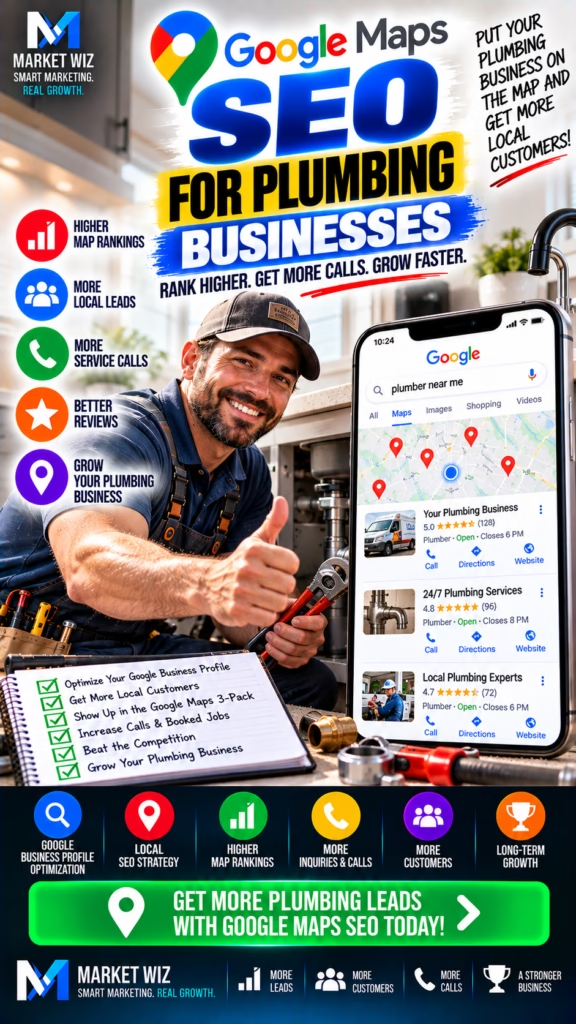
Google Maps SEO for Plumbing Businesses
Plumbing businesses can use Google Maps SEO as part of a broader local customer acquisition strategy to increase visibility when homeowners, property managers, and businesses search for plumbing solutions. The strongest approach combines an accurate Google Business Profile, local SEO, authentic reviews, useful plumbing content, fast lead response, CRM tracking, AI automation, and measurable sales performance.
Why Google Maps SEO Matters for Plumbing Businesses
Plumbing is fundamentally local. When a homeowner discovers a leaking pipe, clogged drain, failing water heater, low water pressure, sewer concern, or another plumbing problem, the customer usually needs a company that can actually serve the property.
This creates strong local search intent.
Potential customers may open Google, search for a plumber, compare nearby businesses, read reviews, inspect photos, visit websites, and contact one or more companies.
Google Maps SEO helps plumbing companies strengthen their presence during this customer research process.
Local visibility is most valuable when it connects directly to a complete plumbing lead generation system. The objective is not simply to appear in local search. The business also needs to answer calls, qualify leads, schedule appointments, track opportunities, follow up, and measure which marketing activity produces real revenue.
Understand Local Search Intent for Plumbing Customers
Plumbing searches can represent very different customer situations. Some involve immediate property concerns. Others involve planned upgrades, renovations, maintenance, or larger projects.
Someone searching after discovering water around a pipe connection may behave differently from a homeowner researching a future water heater replacement.
A property manager looking for a commercial plumbing provider may have another buying process entirely.
Match marketing to the customer's actual need
Plumbing companies can build stronger local marketing by organizing their website, Google Business Profile, content, and lead workflows around the legitimate types of plumbing work they perform.
This creates a more relevant experience from search through customer contact.
Build a Strong Google Business Profile for Your Plumbing Company
A Google Business Profile can become one of the most visible digital assets for a local plumbing business.
Customers may use the profile to understand the business, review contact information, inspect hours, read customer feedback, view photos, visit the website, and determine whether the company appears relevant to their needs.
Accuracy should be the foundation of the profile.
Keep important business information current
Phone numbers, website links, business hours, categories, and other customer-facing details should accurately represent the company.
Plumbing companies should periodically review this information and follow Google's current Business Profile policies and eligibility requirements.
Choose Accurate Categories for Your Plumbing Business
Business categories help describe the nature of the company.
Plumbing businesses should select categories that accurately represent their real operations rather than adding unrelated categories merely to attempt to gain additional visibility.
The profile should give customers a clear and truthful understanding of what the business does.
Build around relevance
Accurate categorization supports a cleaner customer experience and avoids confusing prospects with offerings the company does not actually provide.
Build Local SEO Around Specific Plumbing Needs
Plumbing companies often provide several different types of work. Organizing marketing around these customer needs can create stronger relevance across Google Maps, organic search, website content, and other marketing channels.
Leak Repair
Create useful content around visible leaks, pipe concerns, fixture leaks, water line problems, and professional plumbing evaluation.
Drain Cleaning
Build relevant pages and content around clogged drains, slow drains, recurring drain problems, and appropriate professional solutions.
Water Heaters
Help customers researching water heater repair, replacement, installation, maintenance, and different equipment options.
Repiping
Create educational content for property owners researching aging pipes, recurring pipe problems, and whole-property repiping.
Sewer Lines
Build useful information around sewer inspections, sewer line concerns, repairs, replacements, and related plumbing work.
Commercial Plumbing
Develop content for property managers, facility managers, businesses, multifamily properties, offices, retail locations, and other commercial buyers.
Align Plumbing SEO With Real Service Areas
Plumbing companies need visibility in locations they can realistically serve.
Leads from areas outside the company's normal operating territory can consume staff time without producing useful business opportunities.
Local SEO strategy should therefore reflect the company's actual geographic coverage.
Create useful location relevance
Plumbing companies can create useful information for communities they genuinely serve while avoiding misleading location claims, fake offices, or inaccurate representations.
Google Business Profile location and service-area settings should follow current Google requirements.
Connect Google Maps SEO to a Strong Plumbing Website
Google Maps may introduce the customer to the plumbing company, but the website can become an important next step in the decision process.
Customers may visit the website to confirm what the company does, understand its service coverage, learn about plumbing solutions, and decide whether to make contact.
Make the website easy to understand
A plumbing website should communicate the company's legitimate offerings clearly instead of forcing customers to search through vague or generic content.
Clear pages for important plumbing categories can help customers quickly find relevant information.
Use Local SEO to Strengthen Plumbing Visibility
Google Maps SEO should be part of the company's broader local search strategy.
The website, Google Business Profile, customer reviews, local content, business information, reputation, and other online signals together create the digital experience customers encounter.
A plumbing company that focuses only on its map listing while ignoring its website and customer journey may leave significant opportunities unused.
Build useful content instead of keyword filler
Search-optimized plumbing content should still be written for real people.
Pages can answer customer questions, explain plumbing processes, describe legitimate capabilities, discuss project considerations, and help customers understand what happens next.
Target Plumbing Keywords With Real Customer Intent
Customers use different searches depending on the plumbing problem, property type, urgency, and stage of the buying process.
A homeowner searching for drain cleaning may have a different need from someone comparing water heater options or researching repiping.
Important plumbing search themes can include:
- Plumber
- Plumbing company
- Plumbing repair
- Leak repair
- Drain cleaning
- Water heater repair
- Water heater replacement
- Water heater installation
- Repiping
- Pipe repair
- Sewer line repair
- Sewer camera inspection
- Commercial plumbing
- Residential plumbing
Keyword targeting should reflect the plumbing company's real offerings and legitimate geographic coverage.
Create Dedicated Pages for Important Plumbing Services
A single generic plumbing page may not provide enough information for customers researching different types of work.
Dedicated pages can explain individual offerings in greater depth.
For example, a water heater page can address different replacement considerations, while a repiping page can explain what property owners may expect during a larger plumbing project.
Give every important customer journey a useful destination
Dedicated content can improve usability, create stronger topical organization, and give the company useful landing pages for search, social media, advertising, email, and other marketing channels.
Create Useful Plumbing Location Pages
Plumbing companies serving multiple communities may benefit from location-focused website content when those pages provide genuine customer value.
Useful location pages can explain service coverage, relevant plumbing capabilities, local customer considerations, nearby projects where appropriate, and how customers in that area can make contact.
Avoid mass-produced location pages
Simply changing a city name across dozens of nearly identical pages does not create a strong customer experience.
Location content should be useful, accurate, and connected to places the plumbing company actually serves.
Build an Authentic Google Review Strategy for Your Plumbing Company
Plumbing work requires customers to trust a company with important systems inside their homes and properties.
Prospective customers may therefore pay close attention to reviews when deciding which plumber to contact.
Authentic reviews can help customers understand previous experiences involving communication, professionalism, scheduling, workmanship, and other parts of the customer journey.
Create a consistent review process
Plumbing companies can develop a process for inviting eligible customers to provide honest feedback after appropriate customer interactions.
Review generation should follow Google's current policies and should never rely on fake reviews, deceptive practices, or prohibited manipulation.
Respond Professionally to Plumbing Reviews
Review responses can become part of the company's public reputation.
A short, professional response to positive feedback demonstrates appreciation. Critical feedback should be addressed calmly and without revealing private customer information.
Write responses for future customers too
Prospective customers may evaluate how the company handles both praise and criticism.
Professionalism in public responses can therefore matter beyond the original customer interaction.
Use Authentic Plumbing Photos to Strengthen Local Trust
Real visual content can help customers understand the business before making contact.
Appropriate images may include technicians, company vehicles, equipment, water heater installations, pipe projects, approved before-and-after images, commercial projects, and other legitimate company activity.
Customer privacy should always be protected.
Build a plumbing media library
Approved photos and videos can be organized by project category and reused across Google Business Profile, website pages, social media, short-form video, proposals, and marketing campaigns.
Create Plumbing Content Around Real Customer Questions
Customers often describe plumbing symptoms rather than technical diagnoses.
They may notice a dripping connection, slow drain, inconsistent hot water, unusual water pressure, aging pipes, recurring backups, or another concern.
Educational content can help customers understand when professional evaluation may be appropriate without attempting to diagnose every situation remotely.
Useful plumbing content topics include:
- Common signs of a plumbing leak
- Why drains may repeatedly become clogged
- Questions to ask before replacing a water heater
- What homeowners should know about older pipes
- What happens during a sewer camera inspection
- What to expect during a repiping project
- How property owners can prepare for a plumbing appointment
- When recurring plumbing problems deserve professional evaluation
Turn Google Maps Visibility Into Plumbing Calls
Strong local visibility creates value only when customers can make contact easily.
Phone calls remain especially important for plumbing companies because many customers want to explain the problem and determine what should happen next.
The company should make its customer contact process clear across Google, the website, and other marketing channels.
Do not lose the lead after earning the click
An unanswered call, delayed response, confusing voicemail process, or untracked website inquiry can turn successful marketing into a missed opportunity.
Improve Plumbing Lead Response Speed
Many plumbing customers are motivated to act quickly.
Water-related problems can create property concerns, disrupt normal household activity, or affect a business location.
Customers may therefore contact several plumbing companies within a relatively short period.
Google Maps SEO and lead response should be optimized together. Generating additional plumbing inquiries has limited value if the company does not have a reliable process for answering, routing, qualifying, scheduling, and following up with those leads.
Qualify Plumbing Leads Before Scheduling
Basic lead qualification can help staff understand the customer's general situation and route the inquiry appropriately.
Qualification is not a substitute for professional plumbing diagnosis. Technical decisions should remain with qualified personnel.
Useful initial lead information can include:
- Customer name
- Phone number
- Email address when appropriate
- Property address or service location
- General plumbing concern
- Residential or commercial property type
- Relevant urgency information
- Preferred appointment timing
- Other information required for proper routing
Use AI Automation to Support Plumbing Lead Generation
Plumbing businesses can receive calls and inquiries while technicians, dispatchers, sales staff, and owners are already occupied with active customers.
AI and workflow automation can help organize parts of the customer acquisition process.
AI automation can support:
- New lead notifications
- Basic information collection
- CRM record creation
- Lead routing
- Appointment requests
- Customer reminders
- Estimate follow-up
- Internal task creation
- Lead status tracking
- Customer follow-up workflows
Technical plumbing diagnosis, safety decisions, code-related matters, pricing commitments, and contractual decisions should remain under appropriate qualified human oversight.
Track Google Maps Plumbing Leads in a CRM
A plumbing company should be able to understand what happens after a new lead arrives.
Without tracking, the business may know that the phone is ringing but have little visibility into how many inquiries become appointments, estimates, completed jobs, or repeat customers.
Useful plumbing CRM fields include:
- Lead date
- Customer name
- Phone number
- Property location
- Lead source
- Plumbing need
- Appointment status
- Assigned technician or representative
- Estimate status
- Follow-up status
- Job status
- Job value
- Closed or lost reason where appropriate
Turn Qualified Plumbing Leads Into Appointments
A marketing lead becomes more meaningful when the customer reaches an appropriate next step.
Depending on the inquiry, that step may involve a repair appointment, inspection, estimate, installation consultation, commercial plumbing discussion, or another legitimate interaction.
Make scheduling easy to understand
Customers should know what happens after they contact the company and when they can expect the next communication.
Reducing unnecessary scheduling friction can improve both customer experience and internal efficiency.
Build Follow-Up Into Plumbing Lead Generation
Not every plumbing opportunity closes immediately.
Larger projects such as repiping, water heater replacement, commercial work, sewer projects, and renovation plumbing may involve estimates, internal decision-making, comparison shopping, or additional planning.
A structured follow-up system keeps these opportunities visible.
Match follow-up to the opportunity
A customer who has already received an estimate should not receive the same message as a new lead who has never scheduled.
CRM stages and automation can help plumbing companies make follow-up more relevant.
Use Google Maps SEO for Commercial Plumbing Leads
Commercial plumbing customers may include property managers, facility managers, building owners, retailers, restaurants, offices, warehouses, hotels, multifamily operators, and other businesses.
These decision-makers may research local plumbing companies through Google before beginning a conversation.
Commercial buyers can have different priorities from residential customers, including property type, response procedures, ongoing maintenance needs, vendor requirements, and project scale.
Create content for commercial decision-makers
Plumbing businesses that legitimately perform commercial work can create pages explaining capabilities, property types, geographic coverage, project experience, and customer contact processes.
Use Short-Form Video to Strengthen Plumbing Visibility
Plumbing contains many topics that can be explained visually.
Short videos can help customers understand common plumbing systems, project processes, warning signs, and professional solutions without overwhelming them with technical information.
Useful plumbing video topics include:
- What happens during a sewer camera inspection
- Signs of a possible plumbing leak
- What to know before replacing a water heater
- How professional drain cleaning works
- What homeowners should know about older piping
- What happens during a repiping project
- Commercial plumbing project highlights
- Completed installation walkthroughs
Track Plumbing Leads Back to Their Marketing Source
Plumbing companies can make stronger marketing decisions when they understand where customers originate.
Depending on the company's technology and privacy practices, attribution may include website analytics, CRM source fields, campaign tracking, appropriate call tracking, and direct customer feedback.
The objective is to connect marketing activity with meaningful customer acquisition outcomes.
Measure Google Maps SEO From Visibility to Plumbing Revenue
Local SEO performance should ultimately connect to business outcomes.
| Stage | Metric | Business Question |
|---|---|---|
| Visibility | Local search and profile activity | Are relevant local customers discovering the plumbing business? |
| Contact | Calls and inquiries | Is local visibility creating customer conversations? |
| Qualification | Qualified plumbing leads | Are inquiries relevant to the company's work and service territory? |
| Scheduling | Appointments | Are qualified leads moving into real customer interactions? |
| Sales | Estimates and opportunities | Are appointments creating legitimate plumbing opportunities? |
| Conversion | Booked jobs | How many opportunities become paying customers? |
| Revenue | Attributed job value | What measurable business value is associated with local marketing? |
Measure Plumbing Lead Quality, Not Just Lead Volume
More inquiries do not automatically mean better marketing.
A plumbing company may receive many low-value or poorly matched inquiries while another campaign produces fewer but more relevant opportunities.
Marketing should therefore be evaluated using lead quality, appointment rates, conversion rates, average job value, customer acquisition costs, and attributed revenue.
Different plumbing leads can have very different values
A small repair, whole-property repipe, water heater replacement, commercial account, and major sewer project may each create very different business economics.
Good reporting should help the company understand those differences.
Optimize Plumbing SEO Using Real Customer Data
Once the company tracks lead sources and sales outcomes, it can begin improving marketing based on real performance.
Certain communities may generate stronger opportunities. Specific website pages may create more calls. Some plumbing categories may produce higher-value projects. Another market may create many leads but weak conversion.
These insights can guide future marketing decisions.
Connect SEO decisions to operational capacity
A plumbing business should also consider whether its team can effectively serve the demand being generated.
Marketing that overwhelms dispatch, scheduling, or technician capacity can create a poor customer experience even when visibility is strong.
Common Google Maps SEO Mistakes Plumbing Businesses Should Avoid
Plumbing companies can weaken local marketing by focusing on shortcuts rather than building a reliable customer acquisition system.
Common mistakes include:
- Using inaccurate business information
- Creating misleading locations
- Using ineligible or duplicate profiles
- Selecting unrelated business categories
- Ignoring customer reviews
- Using fake or manipulated reviews
- Having an outdated plumbing website
- Publishing thin or repetitive location pages
- Creating generic content with little customer value
- Failing to answer calls quickly
- Failing to track website inquiries
- Not using a CRM
- Failing to follow up with estimates
- Tracking rankings without tracking revenue
- Ignoring current Google Business Profile policies
Build a Complete Google Maps SEO System for Your Plumbing Business
The strongest plumbing SEO strategy connects customer discovery with response, qualification, scheduling, sales, follow-up, and reporting.
Define Your Plumbing Growth Priorities
Identify the repair, drain, water heater, repiping, sewer, commercial, or other legitimate plumbing opportunities the company wants to grow.
Define Your Real Service Territory
Focus local SEO on communities and properties the plumbing business can realistically serve.
Strengthen Google Business Profile
Maintain accurate business information, relevant categories, authentic photos, and other supported customer-facing details.
Build Strong Website Content
Create useful pages around plumbing needs, customer questions, real service areas, projects, and legitimate company expertise.
Develop an Authentic Review Process
Invite eligible customers to provide honest feedback while following current platform policies.
Improve Lead Response
Make sure calls and digital inquiries are answered, routed, documented, and handled efficiently.
Qualify and Schedule
Collect appropriate customer information and move qualified opportunities toward the correct next step.
Track Everything in a CRM
Connect lead source, appointment, estimate, job status, follow-up, and revenue.
Measure and Optimize
Use real customer and revenue data to improve the plumbing marketing system over time.
Turn Google Maps SEO Into Long-Term Plumbing Growth
Local SEO is not a one-time project.
Plumbing companies change. Service territories expand. Teams grow. Customer demand shifts. New photos become available. Reviews accumulate. Website content becomes outdated. Competitors change their marketing.
The company's local digital presence should evolve with those changes.
Businesses can continue improving customer-facing information, adding useful content, publishing approved project media, earning authentic reviews, strengthening lead response, and improving CRM tracking.
The long-term goal is not simply to rank a plumbing business in Google Maps. The larger opportunity is to create a customer acquisition system where local visibility consistently turns into qualified conversations, appointments, estimates, booked jobs, repeat customers, and measurable revenue.
30 FAQs About Google Maps SEO for Plumbing Businesses
1. What is Google Maps SEO for plumbing businesses?
Google Maps SEO for plumbing businesses is the process of strengthening a plumbing company's local online presence through an accurate Google Business Profile, relevant categories, authentic reviews, useful photos, strong website content, local SEO, and consistent business information.
2. Can Google Maps generate plumbing leads?
Google Maps can contribute to plumbing lead generation by helping local customers discover plumbing companies while researching repairs, installations, drain problems, water heaters, leaks, repiping, sewer issues, and other plumbing needs.
3. Why is Google Maps important for plumbers?
Many plumbing searches have strong local intent because customers need a company that actually serves their property location and can respond within an appropriate timeframe.
4. What is a Google Business Profile for a plumbing company?
A Google Business Profile is an eligible business listing that can display company information across Google Search and Maps, including contact details, categories, hours, reviews, photos, website links, and other supported information.
5. How can plumbers improve Google Maps visibility?
Plumbing businesses can strengthen local visibility by maintaining accurate business information, selecting appropriate categories, earning authentic reviews, publishing useful photos, strengthening their website, creating helpful local content, and following Google's current guidelines.
6. Do Google reviews matter for plumbing companies?
Authentic reviews can help prospective plumbing customers evaluate previous customer experiences and build confidence before making contact.
7. Should plumbers respond to Google reviews?
Professional review responses can show customers that the plumbing company actively monitors feedback and takes customer communication seriously.
8. Can Google Maps generate drain cleaning leads?
Customers researching clogged drains and related drain problems may use Google Search and Maps to discover local plumbing companies that provide relevant solutions.
9. Can Google Maps generate water heater leads?
Google Maps can help customers discover local plumbers when researching water heater repair, replacement, installation, and related plumbing needs.
10. Can Google Maps help plumbers get leak repair leads?
Customers dealing with visible or suspected plumbing leaks often search locally, making strong local visibility useful for plumbing companies that legitimately provide leak-related work.
11. Should plumbing companies create pages for individual plumbing services?
Useful pages for legitimate plumbing offerings can help customers understand what the company does and can strengthen the overall relevance and organization of the website.
12. Should plumbers create city-specific website pages?
Useful location content can explain legitimate service coverage and provide relevant information for customers in communities the plumbing company actually serves.
13. Can local SEO generate more plumbing calls?
Local SEO can support plumbing customer acquisition by helping the company become more visible during relevant local searches and by connecting customers to useful contact and website information.
14. Should plumbers add photos to Google Business Profile?
Authentic photos can help customers understand the plumbing company, its team, vehicles, equipment, completed work, and overall professionalism when customer privacy is respected.
15. How quickly should plumbing companies respond to leads?
Prompt response is important because many plumbing inquiries involve immediate property concerns and customers may contact multiple companies.
16. Can AI help plumbing companies respond to leads?
AI can support initial response, information collection, CRM updates, lead routing, scheduling workflows, reminders, and follow-up while technical plumbing diagnosis and important customer commitments remain under qualified human oversight.
17. Should plumbing businesses use a CRM?
A CRM can help plumbing businesses organize customer inquiries, appointments, estimates, lead sources, follow-up, job status, and attributed revenue.
18. What information should plumbers collect from new leads?
Useful information may include customer name, contact details, property location, general plumbing concern, urgency, preferred appointment timing, and other information needed to route the inquiry appropriately.
19. Can Google Maps SEO help commercial plumbing businesses?
Commercial plumbing companies can benefit from strong local visibility when property managers, facility managers, businesses, and other commercial decision-makers research plumbing providers.
20. Can Google Maps help generate repiping leads?
Customers researching older pipes, recurring plumbing problems, or whole-property repiping may use local search to compare plumbing companies and learn about available options.
21. Can Google Maps help generate sewer line leads?
Local visibility can help customers discover plumbing companies when researching sewer line concerns, sewer camera inspections, repairs, replacements, and other relevant work.
22. Should plumbers track phone calls from marketing?
Appropriate lead-source and call tracking can help plumbing businesses understand which marketing activities contribute to qualified conversations, appointments, estimates, and revenue.
23. What plumbing marketing metrics should be tracked?
Useful metrics can include calls, website inquiries, qualified leads, appointments, estimates, booked jobs, conversion rates, customer acquisition costs, average job value, and attributed revenue.
24. Can social media support plumbing Google Maps SEO?
Social media can complement local search marketing by showcasing company activity, educational content, projects, technicians, seasonal information, and other useful customer-facing material.
25. Does a plumbing website matter for Google Maps SEO?
A useful, technically sound plumbing website with accurate business information, clear service content, and relevant local information can support the company's broader online presence.
26. What are common Google Maps SEO mistakes for plumbers?
Common mistakes include inaccurate business information, misleading locations, weak websites, poor review management, inconsistent lead response, thin local content, duplicate or ineligible profiles, and weak lead tracking.
27. How can plumbers convert more Google leads into appointments?
Plumbing companies can improve conversion through fast response, clear communication, appropriate qualification, efficient scheduling, professional customer interactions, and organized follow-up.
28. Is Google Maps enough for plumbing marketing?
Plumbing companies generally benefit from a diversified strategy that can include Google Maps, local SEO, a strong website, reviews, social media, referral marketing, CRM follow-up, and other appropriate customer acquisition channels.
29. How can plumbing companies scale local SEO?
Plumbing companies can scale by standardizing website optimization, local content, review processes, Google Business Profile management, lead response, CRM tracking, follow-up, reporting, and other compliant marketing activities.
30. What is the goal of Google Maps SEO for plumbing businesses?
The goal is to turn relevant local visibility into qualified customer conversations, calls, appointments, estimates, booked plumbing work, repeat customers, and measurable revenue.
30 Additional SEO Keywords for Plumbing Businesses
These keyword themes can support plumbing website content, local landing pages, Google Business Profile strategy, blog content, social media, local SEO, and broader customer acquisition campaigns.
Build a Stronger Plumbing Lead Generation System With Google Maps SEO
Google Maps SEO for plumbing businesses can become one of the most valuable components of a broader local customer acquisition strategy.
Plumbing is naturally connected to geography. Homeowners, property managers, businesses, and facility operators usually need a company that can physically serve a specific property.
That makes local search visibility particularly important.
A customer may begin the buying process after noticing water under a sink, dealing with a clogged drain, losing hot water, discovering an aging pipe problem, or experiencing another plumbing concern.
The customer may search Google, open Maps, compare nearby companies, inspect reviews, view photos, visit websites, and call one or more businesses.
Every stage of that process creates an opportunity for a plumbing company to strengthen its customer experience.
The Google Business Profile should accurately represent the company.
Business information should be current. Categories should match real operations. Photos should be authentic and appropriate. Customer reviews should be genuine. The website link should lead to a useful destination.
The plumbing website should continue the experience.
Customers should be able to understand what the business does, where it operates, what types of plumbing needs it addresses, and how to contact the company.
Important plumbing categories can receive dedicated pages.
Drain cleaning, water heater work, leak repair, repiping, sewer projects, commercial plumbing, pipe repair, and other legitimate offerings may each involve different customer questions.
Providing useful information for these customer journeys can improve the quality of the website while strengthening its overall topical organization.
Local content can add geographic relevance.
Plumbing companies serving multiple communities can create useful location information for areas they genuinely serve.
The objective should not be to manufacture hundreds of nearly identical city pages.
The objective is to help real customers understand whether the company serves their location and what relevant plumbing capabilities are available.
Customer reviews can become another important trust signal.
Plumbing work takes place inside homes, commercial buildings, rental properties, and other important spaces.
Customers may want confidence that the company communicates professionally, arrives as expected, explains the work clearly, and handles the overall experience appropriately.
Authentic reviews provide previous customers with a way to share their experiences.
Plumbing companies can create consistent processes for inviting honest customer feedback while following current platform rules.
Photos and video can further strengthen the digital presence.
Real project media can show technicians, vehicles, water heater installations, plumbing equipment, repiping projects, commercial work, and other legitimate business activity.
These assets can support Google Business Profile, website content, social media, short-form video, and broader marketing campaigns.
But generating visibility is only one part of customer acquisition.
Plumbing businesses also need to handle incoming leads effectively.
A customer dealing with a plumbing concern may contact several businesses quickly.
If the company fails to answer, delays its response, loses the inquiry, or never follows up, strong Google visibility may not translate into revenue.
Lead response should therefore be treated as part of SEO performance.
Calls and inquiries need to be documented. Basic customer information needs to be collected. Opportunities need to be routed to the correct person. Appointments need to be scheduled efficiently.
AI automation can support portions of this process.
New inquiries can trigger notifications. CRM records can be created. Customer information can be organized. Appointment workflows can be supported. Follow-up tasks can be generated.
Automation should support the plumbing team rather than replace qualified technical judgment.
Plumbing systems can involve water supply, drainage, gas lines, fixtures, water heaters, sewer systems, building codes, safety requirements, and other technical considerations.
Qualified professionals should remain responsible for technical diagnosis, safety decisions, project recommendations, pricing commitments, and contractual work.
CRM tracking can connect the entire marketing system.
Every lead can be associated with a source.
The company can track whether the lead was qualified, whether an appointment was scheduled, whether an estimate was provided, whether the customer followed through, whether the job was completed, and how much revenue resulted.
This provides a much stronger way to evaluate Google Maps SEO.
Rankings and visibility can still be useful indicators, but they are not the final business objective.
Plumbing companies ultimately need customers and profitable work.
That means marketing reporting should progress from visibility to contact, qualification, scheduling, estimates, booked work, and revenue.
Lead quality should also be considered.
Different plumbing inquiries have different values.
A small repair may have different economics from a whole-home repiping project. A water heater replacement may differ from a recurring commercial relationship. A sewer project may involve a different sales cycle from routine drain work.
Tracking these differences allows the business to make better decisions about where to invest marketing resources.
The company may discover that certain locations produce stronger commercial opportunities.
Another area may produce more water heater replacements.
A specific website page may consistently generate qualified calls.
Another page may attract traffic but few customers.
This information can be used to improve content, geographic focus, internal workflows, and marketing priorities.
Google Maps SEO can also work alongside additional customer acquisition channels.
Social media can keep the company visible before customers experience an immediate plumbing need.
Short-form video can explain common plumbing concerns and showcase legitimate projects.
Organic SEO can expand website visibility beyond map-based discovery.
Referral marketing can generate new customers through existing relationships.
B2B outreach can help commercial plumbing companies reach property managers and other business decision-makers.
CRM automation can prevent qualified opportunities from disappearing after the first interaction.
The strongest strategy connects these channels instead of operating them as isolated marketing activities.
A customer might first see a plumbing video on social media.
Weeks later, that customer may experience a plumbing problem and search Google for a local company.
The familiar company name may appear in Maps.
The customer may read reviews, visit the website, and call.
The call can enter the CRM, become an appointment, lead to an estimate, and eventually become a completed job.
That complete customer journey is more valuable than focusing on a single ranking position.
Long-term plumbing growth requires consistency.
Business information remains accurate. New reviews are earned authentically. Useful content continues to be published. Project photos are organized. Website pages are updated. Calls are answered. Leads are tracked. Estimates receive follow-up. Revenue is attributed whenever practical.
Over time, this creates a stronger digital footprint and a more disciplined sales process.
That is the larger opportunity behind Google Maps SEO for plumbing businesses.
The objective is not simply to get a plumbing company listed.
It is to build a local customer acquisition system that helps relevant customers discover the company, understand its capabilities, evaluate its reputation, make contact, receive a professional response, schedule the appropriate next step, and become measurable business revenue.
When Google Maps SEO, Google Business Profile optimization, local website content, authentic reviews, social media, AI automation, CRM tracking, fast response, qualification, follow-up, and reporting work together, plumbing companies can build a much more scalable approach to local growth.
Build a More Powerful Lead Generation System for Your Plumbing Business
Market Wiz AI helps established businesses build scalable customer acquisition systems using Google Maps optimization, local SEO, social marketing, AI automation, rapid lead response, CRM workflows, qualification, follow-up, multi-channel visibility, and performance tracking.
Get Started With Market Wiz AI© Market Wiz AI. Google, Google Maps, and Google Business Profile are trademarks of Google LLC. Market Wiz AI is not affiliated with or endorsed by Google unless expressly stated. Google Business Profile guidelines, eligibility requirements, ranking systems, features, and availability may change over time.














Combine Google Maps SEO With Plumbing Social Media
Search marketing reaches customers when they are actively looking for information. Social media can keep the plumbing company visible before that moment arrives.
Facebook, Instagram, TikTok, YouTube Shorts, and other appropriate channels can be used to distribute useful plumbing content.
Plumbing social content can include: