

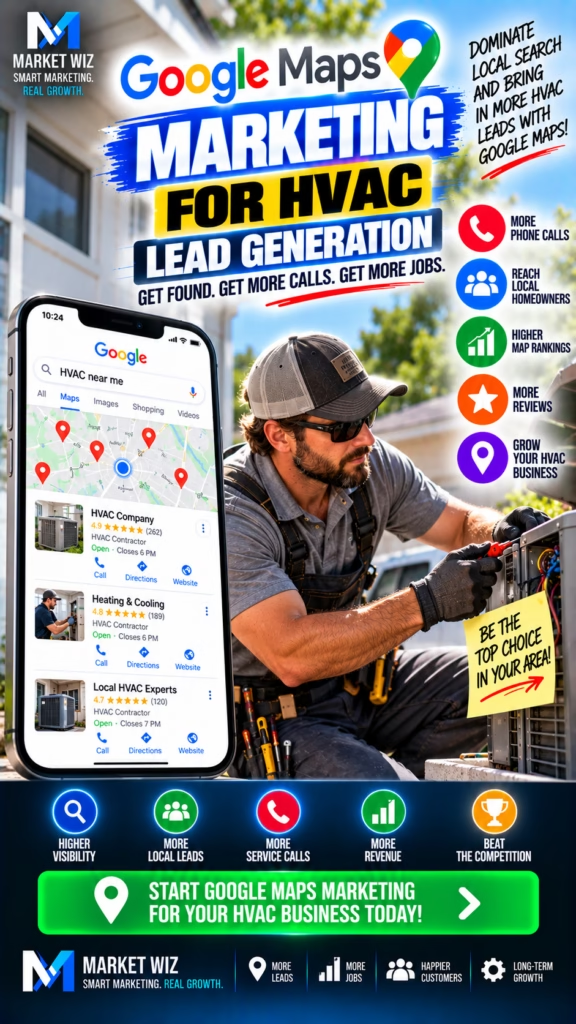
Google Maps Marketing for HVAC Lead Generation
HVAC companies can use Google Maps marketing as part of a broader local customer acquisition strategy to increase visibility when homeowners and property decision-makers search for heating and cooling solutions. The strongest approach combines an accurate Google Business Profile, local SEO, authentic reviews, useful content, fast lead response, CRM tracking, AI automation, and measurable sales performance.
Why Google Maps Marketing Matters for HVAC Lead Generation
HVAC is one of the most locally driven categories in home improvement and property maintenance. When an air conditioner stops cooling during hot weather or a heating system fails during cold weather, customers often begin searching for nearby companies immediately.
Even less urgent HVAC needs tend to have strong geographic intent. Homeowners researching system replacement, preventative maintenance, indoor comfort improvements, ductwork, heat pumps, or seasonal tune-ups typically want a company that actually operates in their area.
Google Search and Google Maps can play an important role in this discovery process.
A prospective customer may search for an HVAC company, compare nearby businesses, inspect reviews, visit websites, look at photos, confirm business information, and call one or more companies.
Google Maps marketing becomes more valuable when it connects visibility to an organized sales process. Ranking or appearing locally is only the beginning. HVAC companies also need fast customer response, qualification, appointment workflows, CRM tracking, follow-up, and measurement from lead to booked revenue.
Understand Local Search Intent for HVAC Customers
HVAC customers search differently depending on what is happening in their home or property.
Some searches are urgent. The customer may have no cooling, no heat, unusual system operation, a leaking unit, weak airflow, or another problem that requires professional attention.
Other searches are research-oriented. A homeowner may be comparing replacement options, considering a heat pump, planning preventative maintenance, researching energy efficiency, or preparing to replace an older system.
Match marketing to customer intent
An effective HVAC marketing system recognizes these differences. Repair-related searches may require immediate response, while replacement leads may require a longer educational and sales process.
Understanding search intent helps HVAC companies create better website pages, Google Business Profile content, lead workflows, and sales processes.
Build a Strong Google Business Profile for Your HVAC Company
A Google Business Profile can serve as one of the most visible digital touchpoints for an HVAC company.
Prospective customers may use the profile to understand what the company does, determine whether it serves their area, view business hours, inspect photos, read reviews, visit the website, and contact the company through supported methods.
Business information should be accurate, current, and consistent with the company's real-world operations.
Accuracy creates a stronger customer experience
Incorrect phone numbers, outdated hours, inaccurate website links, or misleading location information can create friction for customers and weaken trust.
HVAC companies should regularly review their profile and follow Google's current Business Profile guidelines.
Choose Accurate HVAC Business Categories
Business categories help Google and potential customers understand the nature of a company.
HVAC businesses should choose categories that accurately represent their real operations rather than selecting unrelated categories in an attempt to increase visibility.
A company primarily focused on heating and air conditioning should make that business model clear.
Relevance matters more than category quantity
Adding unrelated business categories can confuse customers and may conflict with platform guidelines.
The goal is to create an accurate representation of the company and its legitimate offerings.
Build HVAC Marketing Around Specific Customer Needs
HVAC companies often provide multiple types of work. Each major customer need can become part of the company's broader local marketing strategy.
AC Repair
Create useful content around cooling problems, system performance, common warning signs, and professional air conditioning repair.
Heating Repair
Build visibility around furnace problems, heating failures, system performance concerns, and seasonal heating needs.
HVAC Replacement
Help customers researching older systems understand replacement considerations, equipment options, efficiency, and installation processes.
Heat Pumps
Create educational content for customers researching heat pump installation, replacement, maintenance, and performance.
HVAC Maintenance
Support seasonal demand with useful information about tune-ups, preventative maintenance, and system care.
Indoor Comfort
Develop relevant content around airflow, temperature consistency, humidity, filtration, and other legitimate comfort solutions offered by the company.
Align Google Maps Marketing With Real HVAC Service Areas
HVAC companies need leads from customers they can realistically serve.
A large number of inquiries outside the company's operating territory may create administrative work without creating useful revenue opportunities.
Geographic strategy should therefore reflect actual operations.
Focus on legitimate market coverage
HVAC companies can strengthen their overall online presence by creating useful content for communities they genuinely serve and maintaining accurate information about geographic coverage.
Any location or service-area information presented through Google should comply with Google's current eligibility and representation guidelines.
Connect Google Maps Visibility to a Strong HVAC Website
A customer who discovers an HVAC company through Google Maps may visit the company's website before calling.
The website therefore becomes an extension of the local search experience.
It should quickly explain what the company does, where it operates, how customers can make contact, and why the business may be a good fit for their heating or cooling needs.
Create clear HVAC pages
Depending on the company's legitimate offerings, website content may cover air conditioning repair, heating repair, system replacement, heat pumps, maintenance, ductwork, indoor comfort, commercial HVAC, and other relevant categories.
Separate useful pages can help both customers and search engines understand the company's expertise.
Use Local SEO to Support Google Maps HVAC Visibility
Google Maps marketing should not be separated from the broader local SEO strategy.
The company's website, content, reputation, business information, and other online signals can all contribute to the overall digital presence customers encounter.
Create genuinely useful local content
HVAC websites can answer common questions, explain system options, discuss seasonal preparation, describe legitimate service coverage, showcase completed work where appropriate, and provide useful information about heating and cooling decisions.
Content should be written for real customers rather than created only to repeat keywords.
Build HVAC SEO Around Real Search Demand
HVAC customers use many different search phrases depending on their needs.
A homeowner with a failed air conditioner may search differently from someone researching a complete HVAC replacement.
Contractors can organize website content around these different customer journeys.
Important HVAC search themes can include:
- HVAC companies
- Air conditioning repair
- AC repair
- Heating repair
- Furnace repair
- HVAC replacement
- Air conditioning installation
- Heating installation
- Heat pump installation
- HVAC maintenance
- AC tune-up
- Furnace maintenance
- Commercial HVAC
Keyword strategy should match the actual work the HVAC company performs and the locations it legitimately serves.
Build an Authentic HVAC Review Strategy
Reviews can influence how prospective customers evaluate an HVAC company.
Heating and cooling work often involves entering the customer's home, diagnosing equipment, explaining technical problems, presenting options, and potentially completing a significant repair or replacement.
Customers may therefore pay close attention to the experiences described by previous customers.
Ask real customers for honest feedback
HVAC companies can create a consistent process for inviting eligible customers to share authentic feedback while following Google's current review policies.
Businesses should avoid fake reviews, review manipulation, misleading incentives, or other practices that violate platform rules.
Respond Professionally to HVAC Customer Reviews
Review responses provide another opportunity to demonstrate professionalism.
Positive reviews can be acknowledged naturally. Critical feedback can be addressed professionally without exposing private customer information or escalating conflict publicly.
Remember the future customer reading the response
A review response is not only communication with the original reviewer. Future prospects may read the exchange while deciding whether to contact the HVAC company.
Use Authentic Photos in HVAC Google Marketing
Real images can help customers understand that the HVAC company is an active local business.
Appropriate photos may include technicians, company vehicles, equipment, installations, completed projects, shop or office environments, and other legitimate aspects of the company.
Customer privacy and permission should always be respected.
Build a reusable HVAC media library
Organizing approved photos by project type and location can support Google Business Profile content, website pages, social media, advertising, proposals, and other marketing activities.
Create Useful HVAC Content Around Customer Problems
Customers do not always search using technical HVAC terminology.
They may describe what they are experiencing: a house that will not cool, rooms with uneven temperatures, strange system operation, weak airflow, an older unit, high energy usage, or a heating system that is not keeping the property comfortable.
Educational content can address these concerns without pretending to diagnose an individual system remotely.
Useful HVAC content topics include:
- Signs an air conditioner may need professional attention
- Questions to ask before replacing an HVAC system
- How seasonal HVAC maintenance works
- Common reasons homeowners consider heat pumps
- How HVAC filters affect normal system operation
- What homeowners can expect during an HVAC estimate
- How to prepare for seasonal heating and cooling demand
- When an older HVAC system may warrant professional evaluation
Build Seasonal HVAC Marketing Campaigns
HVAC demand changes with weather and seasonality.
Cooling-related searches can increase as temperatures rise, while heating-related demand can increase when colder conditions arrive.
HVAC companies can prepare content and operational workflows before peak periods instead of reacting only after demand increases.
Prepare marketing before the season peaks
Seasonal landing pages, maintenance content, Google Business Profile updates, social content, customer reminders, staffing plans, and lead response workflows can be prepared ahead of time.
Turn Google Maps Visibility Into More HVAC Phone Calls
Phone calls remain an important conversion event for many HVAC companies.
Customers dealing with comfort problems may prefer to speak directly with someone rather than complete a lengthy form.
The company should therefore make the customer contact process clear and efficient.
Do not waste the call after generating it
Marketing investment has limited value if calls are consistently missed, handled poorly, routed incorrectly, or never followed up.
HVAC companies need a process for answering, routing, documenting, and following up with legitimate customer inquiries.
Improve HVAC Lead Response Speed
Response time can be especially important in heating and cooling.
When customers have no cooling or no heat, they may contact several local companies quickly.
The first company to respond professionally is not guaranteed to win the customer, but delayed response can make the sales process more difficult.
Local visibility and lead response should be optimized together. Generating more HVAC calls without improving the process for answering, qualifying, scheduling, and tracking them can simply create more missed opportunities.
Qualify HVAC Leads Before Routing the Appointment
Basic qualification can help the company understand what the customer needs and route the opportunity appropriately.
The goal is not to diagnose complex HVAC problems through marketing messages. Technical diagnosis belongs with qualified professionals.
Useful initial information may include:
- Customer name
- Phone number
- Email address when appropriate
- Property location
- General heating or cooling concern
- System type if the customer knows it
- Whether the issue involves heating, cooling, maintenance, or replacement
- Preferred appointment timing
- Any other information required for appropriate routing
Use AI Automation to Support HVAC Lead Generation
HVAC companies often receive inquiries while technicians, dispatchers, sales representatives, and owners are already busy.
AI and workflow automation can support the administrative side of the customer journey.
Automation can assist with:
- Lead notifications
- Initial information collection
- CRM record creation
- Lead routing
- Appointment requests
- Appointment reminders
- Estimate follow-up reminders
- Internal task creation
- Lead status updates
- Customer follow-up workflows
Technical HVAC advice, safety decisions, equipment diagnosis, installation recommendations, pricing commitments, and contractual decisions should remain under qualified human oversight.
Track Google Maps HVAC Leads Inside a CRM
HVAC companies need to know what happens after a customer makes contact.
Without lead tracking, the company may know that calls are coming in but have limited visibility into how many become appointments, estimates, replacements, maintenance customers, or completed jobs.
Useful HVAC CRM fields include:
- Lead date
- Customer name
- Phone number
- Location
- Lead source
- HVAC need
- Appointment date
- Technician or representative
- Estimate status
- Follow-up status
- Job status
- Job value
- Closed or lost reason where appropriate
Turn HVAC Leads Into Qualified Appointments
A lead becomes more valuable when the company can move the customer toward an appropriate next step.
Depending on the situation, that may involve a repair appointment, maintenance visit, system evaluation, replacement consultation, estimate, or another legitimate customer interaction.
Reduce unnecessary scheduling friction
Customers should understand what happens next, when they can expect contact, and what information may be useful for the appointment.
Build Follow-Up Into HVAC Lead Generation
Not every HVAC opportunity closes during the first conversation.
Replacement customers may compare options. Maintenance customers may need reminders. Property managers may need internal approval. Commercial customers may have longer buying cycles.
A structured follow-up process helps the company maintain visibility into these opportunities.
Follow up based on the real sales stage
A customer waiting for an estimate should receive different communication from someone who has not yet scheduled an appointment. Relevant follow-up is more useful than sending identical messages to every lead.
Use Short-Form Video to Strengthen HVAC Visibility
HVAC systems can feel technical and unfamiliar to homeowners. Short-form video gives companies an opportunity to explain common concepts in an accessible format.
Videos can also demonstrate that the company is active, professional, and knowledgeable.
Useful HVAC video concepts include:
- What happens during an AC tune-up
- Signs an older HVAC system needs professional evaluation
- Why airflow matters
- How homeowners can prepare for summer cooling season
- How homeowners can prepare for winter heating season
- What to expect during an HVAC replacement estimate
- Completed HVAC installation walkthroughs
- Heat pump education
Use Google Maps Marketing for Commercial HVAC Lead Generation
Commercial HVAC marketing has different customer dynamics than residential HVAC.
Potential buyers may include property managers, facility managers, building owners, office operators, retail businesses, warehouses, restaurants, hotels, multifamily properties, and other organizations.
These customers may research companies through Google before contacting them, particularly when searching for a local commercial HVAC provider.
Build content for commercial decision-makers
Commercial HVAC pages can explain relevant capabilities, property types, maintenance programs, geographic coverage, response processes, and other legitimate business information.
Track HVAC Leads Back to Their Marketing Source
Marketing becomes easier to improve when the company can connect customer activity to its source.
Depending on the company's technology and privacy practices, lead attribution may include call tracking, website analytics, CRM source fields, campaign tracking, and staff asking customers how they found the business.
The objective is to understand which marketing channels contribute to real customer acquisition.
Measure Google Maps HVAC Marketing From Visibility to Revenue
HVAC marketing should ultimately be evaluated against business outcomes.
| Stage | Metric | Business Question |
|---|---|---|
| Visibility | Local search and profile activity | Are relevant customers discovering the HVAC company? |
| Contact | Calls and inquiries | Is visibility generating customer conversations? |
| Qualification | Qualified HVAC leads | Are inquiries relevant to the company's work and territory? |
| Scheduling | Appointments booked | Are leads moving into real customer interactions? |
| Sales | Estimates and opportunities | Are appointments creating repair, maintenance, or replacement opportunities? |
| Conversion | Jobs won | How many opportunities become paying customers? |
| Revenue | Attributed job value | What measurable business value is associated with marketing? |
Optimize HVAC Marketing Using Real Lead Data
Once lead sources and sales outcomes are tracked, HVAC companies can make better decisions.
The company may discover that certain communities produce more replacement opportunities, that maintenance content generates recurring customers, or that specific website pages create more qualified calls.
Marketing can then be improved based on actual business performance.
Look beyond raw lead volume
Twenty low-quality inquiries are not necessarily more valuable than five strong replacement opportunities.
HVAC companies should consider lead quality, conversion rates, average job value, acquisition costs, customer lifetime value where appropriate, and operational capacity.
Common Google Maps Marketing Mistakes HVAC Companies Should Avoid
Local marketing problems are often caused by weak systems rather than a complete lack of demand.
Common HVAC marketing mistakes include:
- Inaccurate business information
- Using misleading locations or profiles
- Selecting irrelevant business categories
- Ignoring customer reviews
- Using fake or manipulated reviews
- Having an outdated HVAC website
- Creating thin or repetitive local pages
- Failing to explain actual HVAC offerings
- Missing customer phone calls
- Responding slowly to urgent inquiries
- Failing to track lead sources
- Failing to use a CRM
- Ignoring estimate follow-up
- Focusing only on rankings instead of revenue
- Failing to follow current Google Business Profile guidelines
Build a Complete Google Maps HVAC Lead Generation System
Strong HVAC marketing connects local visibility to customer response, appointments, sales, follow-up, and revenue measurement.
Define HVAC Growth Priorities
Identify the repair, replacement, maintenance, heat pump, commercial, or other legitimate HVAC opportunities the company wants to grow.
Define Real Geographic Coverage
Focus local marketing on areas the HVAC company legitimately serves.
Optimize Core Business Information
Maintain accurate customer-facing information across Google, the company website, and other important digital properties.
Strengthen Local Content
Create useful HVAC pages, educational resources, project content, photos, and location-relevant information.
Build Authentic Reviews
Create a consistent process for requesting genuine customer feedback in compliance with platform policies.
Improve Lead Response
Ensure new calls and inquiries are answered, routed, documented, and handled efficiently.
Qualify and Schedule
Collect appropriate information and move qualified customers toward the correct HVAC appointment or consultation.
Track Opportunities in a CRM
Connect lead source, appointment, estimate, job status, follow-up, and revenue.
Measure and Optimize
Use real lead and revenue data to improve the HVAC marketing system over time.
Turn Google Maps Visibility Into Long-Term HVAC Growth
Google Maps marketing becomes more powerful when it is treated as part of an ongoing customer acquisition system rather than a one-time optimization project.
HVAC markets change with seasonality, competition, customer demand, equipment trends, local development, company capacity, and platform updates.
The marketing system needs to evolve with those changes.
Companies can continue improving their website, adding useful project content, earning authentic customer reviews, refining lead response, strengthening CRM workflows, and measuring which activities create profitable customers.
The long-term goal is not simply to appear on a map. It is to build a local HVAC acquisition system where customers can discover the company, trust the business, make contact quickly, receive a professional response, schedule the right appointment, and move through a measurable sales process.
30 FAQs About Google Maps Marketing for HVAC Lead Generation
1. What is Google Maps marketing for HVAC companies?
Google Maps marketing for HVAC companies is the process of improving a heating and cooling company's local visibility through an accurate and optimized Google Business Profile, relevant business information, authentic reviews, photos, local content, website signals, and broader local SEO.
2. Can Google Maps generate HVAC leads?
Google Maps can contribute to HVAC lead generation by helping local customers discover heating and cooling companies when researching repair, installation, replacement, maintenance, and related HVAC needs.
3. Why is Google Maps important for HVAC contractors?
HVAC searches often have strong local intent. Customers frequently want a nearby company that serves their area, has credible reviews, provides the type of HVAC help they need, and can respond promptly.
4. What is a Google Business Profile for an HVAC company?
A Google Business Profile is the business listing that can display eligible company information across Google Search and Maps, including contact information, categories, hours, reviews, photos, website links, and other supported details.
5. How can HVAC companies improve Google Maps visibility?
HVAC companies can strengthen local visibility by maintaining accurate business information, choosing appropriate categories, earning authentic reviews, adding useful photos, strengthening their website and local SEO, and following Google's current Business Profile guidelines.
6. Do reviews help HVAC Google Maps marketing?
Authentic customer reviews can strengthen customer trust and provide useful information to prospects evaluating an HVAC company. Review activity should always follow Google's policies.
7. Should HVAC companies respond to Google reviews?
Professional review responses can demonstrate that the HVAC company pays attention to customer feedback and actively manages its online presence.
8. Can Google Maps help generate AC repair leads?
Google Maps can help customers discover HVAC companies while searching for air conditioning repair and related cooling solutions in their local area.
9. Can Google Maps help generate furnace repair leads?
Local Google visibility can help heating companies appear during customer research for furnace repair, heating problems, system replacement, and related needs.
10. Can Google Maps help generate HVAC installation leads?
Customers researching HVAC replacement or installation may use Google Search and Maps to compare nearby companies, reviews, business information, websites, and other trust signals.
11. How important are HVAC business categories on Google?
Accurate business categories help describe what a company does. HVAC companies should select categories that truthfully represent the business and comply with Google's current guidelines.
12. Should HVAC companies add photos to Google Business Profile?
Useful authentic photos can help customers understand the company, team, equipment, vehicles, completed work, and overall professionalism when the images are appropriate and customer privacy is respected.
13. Can local SEO improve HVAC lead generation?
Local SEO can support HVAC lead generation by improving the company's broader visibility for relevant local heating, cooling, installation, repair, and maintenance searches.
14. Should HVAC companies create city-specific website content?
Useful location content can help explain legitimate service coverage and provide relevant information to customers in communities the HVAC company actually serves.
15. How quickly should HVAC companies respond to Google leads?
Prompt response is particularly important for HVAC inquiries because many heating and cooling problems create immediate comfort concerns and customers may contact multiple companies.
16. Can AI help HVAC companies respond to leads?
AI can support appropriate initial response, lead routing, information collection, appointment workflows, CRM updates, reminders, and follow-up while technical HVAC diagnosis and important customer commitments remain under qualified human oversight.
17. Should HVAC companies use a CRM?
A CRM can help HVAC companies organize leads, calls, customer information, appointment status, estimates, follow-up, sales opportunities, installations, and attributed revenue.
18. What information should HVAC companies collect from new leads?
Useful information may include customer name, contact details, location, type of HVAC issue, system type when known, urgency, preferred appointment timing, and other information needed to route the inquiry appropriately.
19. How can HVAC companies improve lead quality?
HVAC companies can improve lead quality through accurate service information, realistic geographic targeting, clear website content, prompt qualification, strong reputation signals, and organized lead routing.
20. Can Google Maps marketing help HVAC maintenance programs?
Google visibility can help customers discover HVAC companies when researching tune-ups, preventative maintenance, seasonal system checks, and other legitimate maintenance offerings.
21. Can Google Maps marketing help commercial HVAC companies?
Commercial HVAC companies can also benefit from strong local business visibility, although their buyer journey, keywords, sales process, geographic reach, and lead qualification may differ from residential HVAC marketing.
22. Should HVAC companies track phone calls from marketing?
Appropriate call and lead-source tracking can help HVAC companies understand which marketing channels contribute to qualified conversations, appointments, estimates, and revenue.
23. What HVAC marketing metrics should be tracked?
Useful metrics can include calls, website inquiries, qualified leads, appointments, estimates, replacement opportunities, maintenance opportunities, conversion rates, booked work, customer acquisition costs, and attributed revenue.
24. Can social media support Google Maps HVAC marketing?
Social media can complement local search visibility by showcasing company activity, educational content, technicians, projects, seasonal information, and other useful customer-facing content.
25. Should HVAC companies optimize their websites for local search?
A useful, technically sound website with accurate service information and relevant local content can support the broader online presence of an HVAC company.
26. What are common Google Maps marketing mistakes for HVAC companies?
Common mistakes include inaccurate business information, weak websites, inconsistent lead response, poor review management, misleading content, duplicate or ineligible profiles, weak lead tracking, and failure to follow Google's current guidelines.
27. How can HVAC companies convert more Google leads into appointments?
Companies can improve conversion through fast response, clear communication, appropriate qualification, efficient scheduling, professional customer interactions, and organized follow-up.
28. Is Google Maps enough for HVAC marketing?
HVAC companies generally benefit from a diversified strategy that can include Google Maps, local SEO, a professional website, reviews, social media, referral systems, CRM follow-up, and other appropriate acquisition channels.
29. How can HVAC companies scale Google Maps lead generation?
HVAC companies can scale by standardizing local visibility work, review processes, content creation, website optimization, lead response, CRM tracking, appointment workflows, follow-up, reporting, and other compliant marketing activities.
30. What is the goal of Google Maps marketing for HVAC lead generation?
The goal is to turn relevant local search visibility into qualified customer conversations, calls, appointments, estimates, installations, maintenance opportunities, and measurable HVAC revenue.
30 Additional SEO Keywords for HVAC Lead Generation
These keyword themes can support HVAC website content, local landing pages, Google Business Profile strategy, blog content, social media, local SEO, and broader customer acquisition campaigns.
Build a Stronger HVAC Lead Generation System With Google Maps
Google Maps marketing for HVAC lead generation can become a powerful part of an established heating and cooling company's customer acquisition strategy.
HVAC is fundamentally local. Customers usually need a company that operates in their geographic area, understands local heating and cooling needs, can respond within an appropriate timeframe, and has a reputation they can evaluate.
Google Search and Maps can help connect those customers with relevant businesses.
But local visibility by itself does not create a complete marketing system.
An HVAC company can improve its online presence and still lose opportunities if phone calls go unanswered, inquiries are not tracked, appointments are not scheduled efficiently, estimates receive no follow-up, or marketing performance is never connected to revenue.
The strongest strategy therefore begins with accurate business information and extends through the entire customer journey.
A prospective customer may begin with a local Google search because the air conditioner is not keeping the home comfortable.
The customer may compare several companies in Maps, inspect reviews, look at business hours, view photos, visit websites, and decide which businesses appear credible enough to contact.
Another customer may be researching replacement before the current system fails.
That homeowner may read educational content about system replacement, heat pumps, energy efficiency, maintenance, or equipment options before requesting an estimate.
Commercial customers may follow another path entirely.
A property manager or facility operator may research local commercial HVAC companies, review capabilities, compare business information, and begin a longer sales conversation.
Each customer journey requires accurate information and an appropriate response process.
Google Business Profile optimization is one part of that process.
HVAC companies should maintain accurate company information, use categories that truthfully describe the business, publish appropriate photos, manage authentic reviews, and comply with current Google guidelines.
The company's website should reinforce that information.
Customers should be able to understand the HVAC work the company performs, the communities it serves, how to make contact, and what they can expect from the next step.
Local SEO can expand this foundation.
Useful pages can address air conditioning repair, heating repair, system replacement, heat pumps, maintenance, commercial HVAC, and other legitimate areas of the company's expertise.
Educational content can answer common customer questions and help prospective customers make better-informed decisions.
Geographic content can explain legitimate service coverage without manufacturing fake locations or creating misleading representations of the business.
Authentic reviews strengthen the customer research experience.
Prospective customers can learn how previous customers describe communication, professionalism, timeliness, workmanship, and other aspects of the experience.
HVAC companies can build a consistent process for requesting honest feedback from eligible customers while respecting platform rules.
Photos and video can add another layer of trust.
Customers can see technicians, vehicles, installations, equipment, company operations, and other legitimate visual evidence of the business.
These assets can be reused across the website, Google Business Profile, social media, short-form video, advertising, and sales materials.
Once visibility produces a lead, speed becomes important.
HVAC demand can be urgent. A customer without cooling during hot weather or without heating during cold weather may contact multiple companies in a short period.
HVAC businesses should have a defined process for receiving, documenting, qualifying, and routing these inquiries.
AI and automation can support that process.
Automation can help create lead records, send internal notifications, collect basic customer information, route opportunities, schedule reminders, and keep follow-up organized.
These tools should support professional staff rather than attempt to replace qualified technical judgment.
HVAC diagnosis can involve electrical systems, refrigerants, gas appliances, combustion equipment, mechanical components, and other technical or safety considerations.
Qualified professionals should remain responsible for diagnosis, technical recommendations, safety decisions, pricing commitments, installation decisions, and contractual work.
CRM tracking then connects marketing to the sales process.
The company can record where the lead came from, what the customer needed, whether an appointment was scheduled, whether an estimate was created, whether follow-up occurred, whether the job was won, and how much revenue resulted.
This information changes the way HVAC marketing can be managed.
Instead of asking whether Google Maps appears to be working, the company can evaluate actual business outcomes.
How many calls were generated?
How many were qualified?
How many became appointments?
How many created estimates?
How many resulted in completed jobs?
Which jobs were repairs, maintenance, replacements, or commercial opportunities?
What revenue was associated with those customers?
These questions allow the HVAC company to optimize for revenue rather than vanity metrics.
The company may discover that certain markets create more replacement opportunities.
It may find that one category of educational content generates unusually strong customer engagement.
It may discover that calls are being generated successfully but lost because response times are too slow.
It may find that technicians complete strong appointments but estimate follow-up is inconsistent.
Each insight creates an opportunity to improve the system.
Google Maps marketing also works best when supported by additional channels.
Social media can help customers become familiar with the company before an urgent HVAC need appears.
Short-form video can explain heating and cooling concepts in a format that is easy to consume.
Local SEO can capture customers searching through traditional organic results.
Website content can provide deeper education and conversion opportunities.
Referral marketing can turn satisfied customers into future sources of business.
CRM and automation can keep leads from disappearing between marketing and operations.
The result is a diversified HVAC customer acquisition strategy rather than dependence on one source.
Seasonality should also be incorporated into planning.
HVAC companies can prepare cooling content before summer demand, heating content before colder weather, maintenance campaigns before peak operating seasons, and replacement education throughout the year.
Preparing early gives the business time to improve pages, publish content, organize customer communication, train staff, and test lead workflows before the busiest periods.
Long-term growth comes from consistency.
Business information stays accurate. Reviews continue to grow organically. New project photos are added. Website content improves. Leads receive faster responses. CRM records become more complete. Follow-up becomes more systematic. Marketing reports become more connected to revenue.
Over time, the company builds a stronger local digital footprint and a more disciplined customer acquisition process.
That is the larger opportunity behind Google Maps marketing for HVAC lead generation.
It is not simply about increasing map visibility.
It is about connecting local search demand to a complete system that helps customers discover the company, evaluate its reputation, make contact, receive a prompt response, schedule the right appointment, move through the sales process, and become measurable revenue.
When Google Maps, Google Business Profile optimization, local SEO, reviews, website content, social media, AI automation, CRM tracking, customer response, follow-up, and reporting work together, an HVAC company can build a far more scalable local marketing engine.
Build a More Powerful HVAC Lead Generation System
Market Wiz AI helps established businesses build scalable customer acquisition systems using Google Maps optimization, local SEO, social marketing, AI automation, lead response, CRM workflows, qualification, follow-up, multi-channel visibility, and performance tracking.
Get Started With Market Wiz AI© Market Wiz AI. Google, Google Maps, and Google Business Profile are trademarks of Google LLC. Market Wiz AI is not affiliated with or endorsed by Google unless expressly stated. Google Business Profile guidelines, eligibility requirements, ranking systems, features, and availability may change over time.














Combine Google Maps With HVAC Social Media Marketing
Google captures customers actively searching, while social media can help the company remain visible before an immediate HVAC need occurs.
Contractors can use Facebook, Instagram, TikTok, YouTube Shorts, and other appropriate platforms to publish educational and project-based content.
HVAC social content can include: