

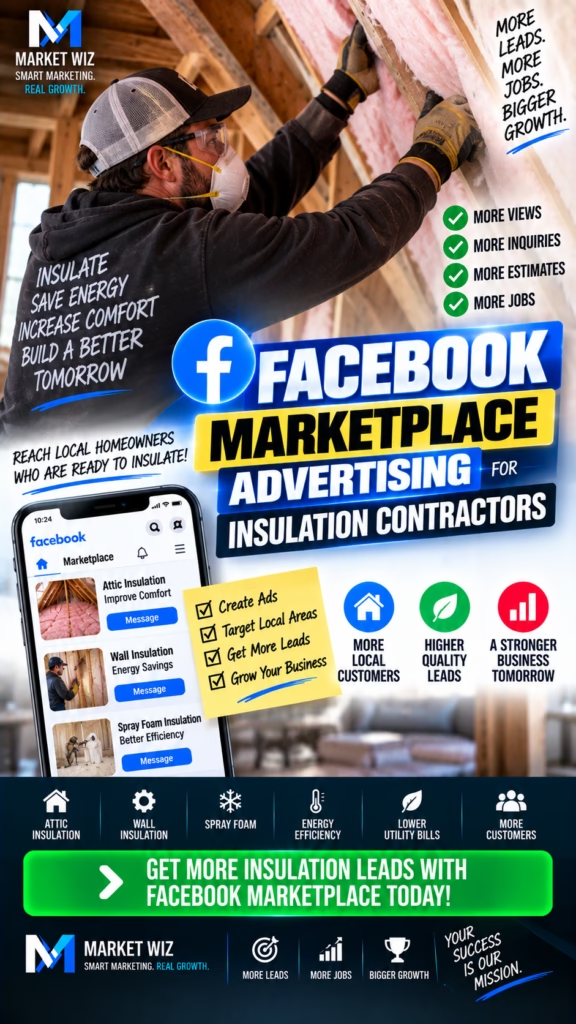
Facebook Marketplace Advertising for Insulation Contractors
Insulation companies need a steady flow of local homeowners, property owners, builders, and qualified prospects who need real projects completed. A well-organized Facebook marketing strategy can help insulation contractors create additional local visibility, start more customer conversations, improve lead response, and build a stronger pipeline of estimate opportunities.
Why Insulation Contractors Need a Strong Local Marketing System
Insulation is a highly localized business. Most contractors operate within defined cities, counties, metropolitan areas, or regional territories. That means the success of an insulation marketing campaign depends heavily on reaching property owners within areas the company can actually serve.
Homeowners may begin researching insulation for many different reasons. Some have uncomfortable rooms. Others are renovating an older home, finishing an attic, improving a garage, addressing a crawl space, replacing deteriorated insulation, or exploring ways to improve the building envelope.
These customers do not all begin their search in the same place.
Some search Google. Others ask for referrals, browse social media, look at local business profiles, watch home improvement videos, or encounter relevant offers through Facebook.
This creates an opportunity for insulation companies to build a broader local visibility strategy instead of depending on only one lead source.
The goal is not simply more advertising. The goal is to create relevant local visibility, turn that visibility into qualified conversations, move appropriate prospects toward estimates, and measure which marketing channels contribute to profitable insulation projects.
Understand Facebook Marketplace's Role in Insulation Marketing
Facebook Marketplace is designed primarily around eligible goods and listings, and businesses should always follow the platform's current commerce policies and listing requirements.
For insulation contractors, Marketplace-related advertising should therefore be approached carefully and accurately. The broader Facebook ecosystem can also include business pages, local groups, organic content, video, paid advertising, messaging, and other tools that may be better suited to particular promotional objectives.
Rather than treating Marketplace as the entire marketing strategy, insulation companies can consider it one potential visibility channel inside a larger local customer acquisition system where eligible.
Think in terms of customer discovery
A homeowner who encounters a relevant insulation-related listing or local piece of content may become aware of a problem they have been postponing.
That awareness can lead to additional research, a company search, a website visit, a phone call, a message, or an estimate request.
Understand the Insulation Customer's Intent
Effective advertising begins with understanding why customers need insulation in the first place.
A homeowner rarely wakes up wanting insulation simply because insulation itself is exciting. The underlying motivation is normally connected to the property.
Common customer motivations may include:
- Hot or cold rooms
- Older or deteriorated insulation
- Attic renovation
- Garage improvement
- Crawl space concerns
- New construction
- Home additions
- Wall renovations
- Noise concerns
- Air leakage concerns
- Building envelope improvements
- Replacing damaged materials
- Preparing a property for sale or renovation
Marketing becomes stronger when it connects insulation solutions to these practical homeowner situations.
Define the Ideal Insulation Lead Before Advertising
Not every inquiry is equally valuable. An insulation contractor should define what a good lead looks like before increasing campaign volume.
The ideal customer profile may depend on the company's equipment, crew capabilities, materials, project minimums, geography, and specialization.
Useful qualification factors can include:
- Property location
- Residential or commercial property
- Area requiring insulation
- Approximate project size
- Existing insulation condition
- Desired insulation type
- Project timeframe
- New construction versus retrofit
- Accessibility
- Appointment availability
Defining these factors helps the marketing and sales process focus on customers the contractor is equipped to help.
Build Campaigns Around the Insulation Company's Real Service Area
Geographic targeting is one of the most important elements of local contractor marketing.
Generating leads hundreds of miles outside the company's operational territory does little good if crews cannot reasonably complete those projects.
Contractors should map their actual coverage based on travel time, crew capacity, project economics, scheduling, and existing demand.
Organize markets into practical territories
A company might have a primary city, surrounding suburbs, nearby counties, and secondary expansion markets.
Tracking performance by territory can reveal which locations produce the strongest combination of qualified leads, estimate appointments, closed projects, and revenue.
Build Marketing Around Specific Insulation Solutions
Generic contractor advertising can be difficult for customers to interpret. More specific content helps homeowners connect their problem to an available solution.
Attic Insulation
Content can focus on aging attic insulation, renovation projects, coverage concerns, and attic improvement opportunities.
Spray Foam
Educational marketing can explain common applications, project considerations, and situations where spray foam may be evaluated.
Fiberglass
Contractors can educate customers about batt and fiberglass applications where appropriate for the property.
Cellulose
Content can explain cellulose applications, retrofit considerations, and areas where blown-in insulation may be considered.
Crawl Spaces
Local campaigns can address homeowners researching insulation options for crawl spaces and other difficult-to-access areas.
Insulation Removal
Some projects begin with removal of old, contaminated, damaged, or otherwise unsuitable insulation before replacement.
Create Insulation Advertising Around Real Customer Problems
Strong marketing should make it easy for a homeowner to recognize why the content may be relevant.
Instead of filling every advertisement with company-focused language, contractors can lead with the property situation.
Examples of useful themes include:
- Older attic insulation
- Rooms that are difficult to keep comfortable
- Garage insulation projects
- Insulation during remodeling
- Crawl space projects
- New construction insulation
- Insulation replacement
- Home additions
- Wall insulation during renovation
- Property improvement planning
This approach makes the marketing more relevant to the homeowner's immediate situation.
Write Clear Titles for Insulation Marketing Campaigns
The title or opening hook should quickly explain the primary topic. Customers should not need to interpret vague marketing language to understand what the content is about.
Useful title elements can include:
- Insulation type
- Property area
- City or local market
- Project type
- Homeowner problem
- Relevant solution
Clear wording also improves campaign organization because different creative themes can be tracked separately.
Write Insulation Descriptions That Educate the Homeowner
Insulation can be technical. Homeowners may not know which material they need or whether an existing installation should be supplemented, replaced, or inspected.
Marketing copy can therefore provide useful context without overwhelming the prospect.
A useful description can explain:
- What type of project is being discussed
- Where insulation is commonly installed
- What homeowners may notice
- Which property types the contractor works with
- What geographic area the company covers
- How the estimate process works
- What information the homeowner should provide
- How to take the next step
Use Authentic Insulation Project Images
Insulation marketing benefits from visual proof because the work is often hidden after a project is completed.
Contractors should capture useful project images while work is accessible and when doing so is appropriate.
Potential visual content includes:
- Attic spaces before installation
- Insulation installation in progress
- Completed attic coverage
- Spray foam applications
- Wall cavities during renovation
- Garage projects
- Crawl space projects
- Insulation removal
- New construction
- Professional crews and equipment
Accuracy matters more than visual hype. Authentic project imagery can build confidence because prospects can see the type of work the contractor actually performs.
Turn Before-and-After Projects Into Marketing Assets
Every completed insulation project can potentially create useful educational content for future customers.
A before image can show the initial condition. An installation image can demonstrate the work being performed. A completed image can document the final result.
These assets can later support Facebook content, website project pages, social media, local SEO content, videos, sales presentations, and other marketing materials.
Build a project content library
Organize images by city, project type, insulation type, property type, and completion date. Over time, the company develops a valuable library of real local work.
Keep Energy Savings and Performance Claims Accurate
Energy efficiency is an important reason many property owners investigate insulation, but contractors should be careful with specific performance or savings claims.
Actual results can depend on climate, existing insulation, air leakage, HVAC equipment, property design, occupant behavior, installation quality, utility rates, and many other variables.
Use educational language instead of unrealistic guarantees
Marketing can discuss the role insulation may play in a building's thermal envelope and comfort strategy without promising a specific utility bill reduction that has not been established for the individual property.
Localize Insulation Marketing for Each Target Area
Local relevance can help prospects recognize that the contractor operates in their community.
Contractors can create content around actual cities, neighborhoods, counties, and regional conditions within their service territory.
Localization can include:
- City names
- County names
- Actual project locations
- Regional housing types
- Local climate considerations
- Nearby communities served
- Locally completed projects
The key is accuracy. Local references should reflect areas the contractor genuinely serves.
Respond Quickly to New Insulation Leads
Marketing creates the opportunity. Lead response determines what happens next.
A homeowner who reaches out about an insulation project may be contacting multiple contractors. If an inquiry sits unanswered, the business may lose the opportunity before anyone has discussed the property.
Create a defined response workflow
New leads should have a clear destination. The company should know who receives the inquiry, who responds, what information should be collected, and when the lead should move to estimating or scheduling.
Qualify Insulation Leads Before Scheduling
Basic qualification can help the contractor understand the project before committing scheduling resources.
Useful questions may include:
- Where is the property located?
- What part of the property needs insulation?
- Is this an existing home or new construction?
- Is insulation currently present?
- What problem is the homeowner trying to address?
- Does the customer have a preferred insulation type?
- When would they like the project completed?
- What is the best contact information?
Qualification should remain simple enough that interested homeowners are not forced through an unnecessarily complicated process.
Turn Qualified Insulation Leads Into Estimate Opportunities
Once a prospect appears to fit the contractor's coverage and project capabilities, the next step may be a phone consultation, property inspection, estimate appointment, or another appropriate evaluation.
The process should be easy to understand.
Reduce scheduling friction
Clearly explain what happens next, what the homeowner should expect, what information is needed, and how the appointment will be confirmed.
The easier the transition from inquiry to appointment, the less opportunity there is for a qualified prospect to disappear between stages.
Use AI and Automation to Support Insulation Lead Response
Growing contractors may receive inquiries during evenings, weekends, busy installation periods, or times when office employees are occupied.
Appropriate AI and automation tools can help organize incoming leads, provide initial responses, collect basic project information, create internal notifications, update CRM records, and support follow-up workflows.
Automation should support the team
Technical questions, unusual properties, detailed estimates, and complex project decisions may still require an experienced employee. Automation works best when it removes repetitive administrative steps and helps people focus on valuable conversations.
Track Facebook and Marketplace Leads Inside a CRM
Contractors need visibility into what happens after a marketing lead arrives.
Without tracking, management may know that the phones are ringing but not know which campaigns generate estimates or closed projects.
Useful CRM fields include:
- Lead date
- Customer name
- Phone
- Property location
- Lead source
- Campaign
- Project type
- Insulation type
- Qualification status
- Appointment date
- Estimate amount
- Follow-up status
- Closed project status
- Revenue
Build Consistent Follow-Up for Insulation Estimates
Not every homeowner makes a decision immediately after receiving an estimate.
Some need to review the proposal, compare options, coordinate another home improvement project, discuss the decision with a spouse or partner, or wait until a more appropriate time.
A structured follow-up system helps prevent legitimate opportunities from being forgotten.
Track the reason for follow-up
Instead of repeatedly contacting every lead with the same message, record the customer's project status and next expected action.
Use Local Facebook Groups Where Appropriate
Community Facebook Groups can provide another source of local visibility, particularly in neighborhoods and communities where homeowners frequently request contractor recommendations.
Group administrators establish their own promotional rules, so businesses should review and follow those requirements before publishing promotional content.
Lead with useful local content
Educational posts, project examples, seasonal information, and homeowner tips may provide more value than repetitive promotional messages.
Build the Insulation Company's Facebook Page as a Trust Asset
Prospects who discover a contractor elsewhere may search for the company's Facebook Page before making contact.
An active page can show that the company performs real projects and remains active in the market.
Useful page content can include:
- Completed projects
- Before-and-after photos
- Short educational videos
- Attic insulation tips
- Spray foam project examples
- Crew photos
- Frequently asked questions
- Seasonal homeowner information
- Company updates
- Local project highlights
Use Short-Form Video to Explain Insulation Problems
Insulation is highly visual when contractors show the right areas. Short videos can explain common homeowner concerns in a format that is easier to understand than a technical article.
A contractor can show an attic, explain what the crew is evaluating, demonstrate an installation process, or answer a common homeowner question.
One project can create multiple videos
A single project may provide content about the initial condition, preparation, insulation material, installation process, completed work, and homeowner education.
Combine Facebook Visibility With Google Maps Marketing
Facebook and Google Maps often serve different discovery behaviors.
Facebook can create awareness while a person is browsing. Google Maps may capture someone actively searching for an insulation contractor nearby.
Using both channels can help a contractor become visible during multiple stages of the customer's research process.
Strengthen local business information
Contractors should maintain accurate business information, service areas, contact details, website information, photos, and other relevant profile elements wherever appropriate.
Use Local SEO to Support Insulation Lead Generation
Search engine optimization can help insulation companies build visibility for customers actively researching specific problems and solutions.
A strong website can create pages around legitimate insulation offerings, geographic markets, frequently asked questions, and educational topics.
Useful insulation SEO topics include:
- Attic insulation
- Spray foam insulation
- Blown-in insulation
- Fiberglass insulation
- Cellulose insulation
- Crawl space insulation
- Garage insulation
- Insulation removal
- Wall insulation
- New construction insulation
Use Multiple Touchpoints to Stay Visible to Homeowners
Home improvement decisions are not always immediate. A homeowner may first discover a contractor, research the company later, read reviews, visit the website, and finally request an estimate days or weeks afterward.
This is why a broad digital presence can be useful.
Facebook content, Google visibility, website information, email, follow-up, paid advertising, and other channels can create additional opportunities for the customer to encounter the company.
Measure Insulation Marketing Beyond Messages and Clicks
Marketing metrics become more useful when they connect to revenue outcomes.
| Stage | Metric | Business Question |
|---|---|---|
| Visibility | Campaign reach and activity | Are appropriate local prospects seeing the marketing? |
| Inquiry | Messages, calls, forms | Is the marketing creating customer interest? |
| Qualification | Qualified insulation leads | Are inquiries located in the service area and suitable for the company? |
| Appointment | Inspections and estimates | Are qualified prospects moving into the sales process? |
| Proposal | Estimates delivered | How many appointments become legitimate proposals? |
| Sale | Closed insulation projects | Which campaigns produce customers? |
| Revenue | Revenue by lead source | Which marketing channels contribute meaningful business value? |
Optimize Insulation Campaigns Using Real Lead Data
Contractors should compare campaigns based on actual outcomes rather than assumptions.
One market may generate more inquiries but fewer appointments. Another may generate fewer inquiries but larger projects. Attic insulation content may outperform general company advertising in one city while spray foam content performs better in another.
Compare performance by:
- City
- Campaign
- Project type
- Creative
- Lead source
- Qualified lead rate
- Appointment rate
- Estimate rate
- Close rate
- Average project value
- Revenue
Common Facebook Marketing Mistakes Insulation Contractors Make
Strong results require more than simply publishing promotional content.
Common mistakes include:
- Advertising outside the real service area
- Using generic stock imagery instead of authentic project content
- Publishing unclear offers
- Making unsupported energy savings claims
- Failing to distinguish different insulation solutions
- Slow lead response
- No qualification process
- No CRM tracking
- No estimate follow-up
- No source attribution
- No measurement of closed projects
- Using outdated project information
- Ignoring current Facebook commerce or advertising policies
- Depending entirely on one marketing channel
Build a Complete Insulation Lead Generation System
The strongest insulation marketing operation connects visibility, response, qualification, scheduling, estimating, follow-up, and measurement.
Define the Service Area
Identify the cities and territories the insulation company can realistically cover.
Define Project Types
Organize marketing around the insulation solutions and property types the company actually handles.
Create Local Marketing Assets
Develop accurate project photos, educational content, videos, landing pages, social posts, and eligible advertising assets.
Generate Customer Visibility
Use appropriate Facebook channels alongside search, Google Maps, SEO, and other relevant marketing sources.
Capture Inquiries
Make it easy for interested property owners to contact the company through the available customer response channels.
Qualify the Project
Confirm location, insulation need, property type, project timing, and other essential information.
Schedule the Estimate
Move qualified prospects into an inspection, estimate, consultation, or other appropriate next step.
Follow Up
Track open proposals and future opportunities so legitimate prospects are not forgotten.
Measure Revenue
Connect closed insulation projects back to their original marketing source whenever possible.
Turn Facebook Visibility Into Long-Term Insulation Company Growth
A contractor's marketing becomes more valuable when each stage supports the next.
Visibility introduces the company. Educational content creates understanding. Authentic project images create context. Fast response begins the conversation. Qualification determines whether the opportunity fits. Scheduling moves the customer toward an estimate. Follow-up helps the company remain organized. Tracking reveals which campaigns contribute to revenue.
Over time, the company develops a stronger marketing engine because real project data can guide future decisions.
The objective is a repeatable customer acquisition system. Facebook Marketplace may contribute to visibility where listings are eligible, while Facebook Pages, Groups, video, Google Maps, SEO, websites, paid advertising, referrals, and other channels can work together to create a broader pipeline.
30 FAQs About Facebook Marketplace Advertising for Insulation Contractors
1. What is Facebook Marketplace advertising for insulation contractors?
It is the strategic use of eligible Facebook Marketplace listings and related local marketing processes to increase awareness of an insulation company and create customer opportunities where the company's offerings comply with current platform rules.
2. Can Facebook Marketplace help insulation contractors generate leads?
Where eligible listings align with current Marketplace policies, Facebook Marketplace can contribute to local visibility and customer inquiries as part of a broader insulation contractor marketing strategy.
3. Why is local targeting important for insulation contractors?
Insulation companies normally operate within defined geographic territories, so local targeting helps focus marketing activity on homeowners and property owners the contractor can realistically serve.
4. What types of insulation should contractors market?
Contractors can build broader marketing campaigns around the insulation solutions they actually provide, such as attic insulation, fiberglass, cellulose, spray foam, crawl space insulation, wall insulation, garage insulation, and insulation removal.
5. What makes insulation marketing effective?
Effective insulation marketing clearly explains customer problems, available solutions, geographic coverage, relevant project types, next steps, and accurate information without relying on unsupported claims.
6. Should insulation contractors use project photos?
Authentic project photographs can help prospects understand the contractor's work, provided the images accurately represent completed or current projects and are used appropriately.
7. Can attic insulation be marketed locally?
Attic insulation can be promoted through appropriate local marketing channels because homeowners frequently research insulation when addressing comfort, aging materials, renovations, or energy efficiency concerns.
8. Can spray foam insulation companies use Facebook marketing?
Spray foam contractors can use appropriate Facebook marketing tools and content to build awareness, educate local prospects, and generate customer inquiries while following applicable platform requirements.
9. How important are images for insulation advertising?
Images can help homeowners understand insulation conditions, application areas, project environments, and completed work, making them useful components of insulation marketing.
10. Should insulation marketing mention energy efficiency?
Energy efficiency can be discussed when claims are accurate and appropriately qualified. Contractors should avoid guaranteeing specific savings that cannot be substantiated for an individual property.
11. How quickly should insulation leads receive a response?
Businesses benefit from an organized process that reviews and routes new inquiries promptly so qualified prospects can move toward an estimate or consultation without unnecessary delays.
12. What information should be collected from an insulation lead?
Useful information may include property location, project type, area requiring insulation, existing insulation condition, approximate timeframe, contact information, and appointment availability.
13. Can AI help manage insulation leads?
AI and automation can support lead organization, initial responses, qualification workflows, routing, reminders, CRM updates, and reporting while complex customer questions may still require human attention.
14. Should insulation contractors use a CRM?
A CRM can help contractors organize leads, contact information, project details, appointments, estimates, follow-up tasks, marketing sources, and sales outcomes.
15. How can insulation contractors improve lead quality?
Clear geographic targeting, accurate project information, relevant visuals, educational content, and simple qualification questions can help contractors identify prospects who fit their coverage and capabilities.
16. Can insulation contractors market in multiple cities?
Contractors serving multiple cities can build local marketing strategies around those legitimate coverage areas while adapting content to actual market conditions and applicable platform requirements.
17. Should insulation ads be different by city?
Local marketing can be more relevant when geographic references, project examples, coverage information, and customer messaging accurately reflect each market.
18. Can insulation contractors use Facebook Groups?
Relevant local groups may provide additional community visibility when promotional content is allowed by the group's rules and the content is appropriate for the audience.
19. Can Facebook Marketplace work with Google Maps marketing?
Marketplace-related visibility and Google Maps optimization can support different customer discovery paths within a broader local marketing strategy.
20. Can insulation contractors use local SEO with Facebook marketing?
Local SEO can complement Facebook marketing by helping contractors become discoverable when prospects actively search online for insulation-related solutions in their area.
21. What should insulation contractors track?
Useful metrics include inquiries, qualified leads, calls, appointments, inspections, estimates, proposals, closed projects, revenue, response time, and lead source.
22. How should insulation leads be followed up with?
Follow-up should be organized around the prospect's project status, estimate stage, requested next action, and communication preferences.
23. Can before-and-after content help insulation marketing?
Accurate before-and-after project content can help prospects visualize the work performed and understand common insulation conditions.
24. Should insulation companies create educational content?
Educational content can help explain insulation types, project considerations, common warning signs, attic conditions, air sealing concepts, and questions homeowners should ask.
25. What are common insulation marketing mistakes?
Common mistakes include weak geographic targeting, generic content, unsupported savings claims, poor project images, slow response, unclear next steps, weak tracking, and failure to follow platform requirements.
26. Can insulation companies automate lead notifications?
Lead management systems can send appropriate internal notifications when new prospects enter a CRM or another connected workflow.
27. How can insulation contractors convert more inquiries into estimates?
Contractors can improve the process by responding promptly, asking relevant qualification questions, clearly explaining the next step, offering practical appointment options, and maintaining organized follow-up.
28. Is Facebook Marketplace enough for insulation marketing?
Most insulation companies benefit from a diversified strategy that can include Facebook, Google Maps, local SEO, websites, social media, referrals, paid advertising, email, and other appropriate channels.
29. How can insulation contractors scale local marketing?
Contractors can scale by documenting market coverage, standardizing campaign assets, organizing lead routing, tracking performance by location, improving follow-up, and expanding only where operational capacity supports additional demand.
30. What is the goal of Facebook Marketplace advertising for insulation contractors?
The broader goal is to create relevant local visibility that can contribute to qualified customer conversations, estimate opportunities, measurable project pipelines, and sustainable business growth.
30 Additional SEO Keywords for Insulation Contractor Marketing
These additional keyword themes can support insulation contractor landing pages, educational articles, location pages, social content, marketing campaigns, and broader local customer acquisition strategies.
Build a Stronger Customer Acquisition System for Your Insulation Company
Facebook Marketplace advertising for insulation contractors is most useful when it is considered part of a complete local marketing and lead management system rather than an isolated advertising tactic.
The process begins with understanding the customer.
Homeowners and property owners usually begin researching insulation because something about the building has created a reason to act. They may be renovating an attic, addressing uncomfortable rooms, improving a garage, working on a crawl space, building an addition, replacing older insulation, or completing new construction.
Marketing should connect these real property situations to the insulation solutions the contractor actually provides.
Geographic relevance is equally important.
Contractors should focus marketing on cities, counties, and territories they can realistically cover. This helps reduce irrelevant inquiries and allows campaign performance to be measured market by market.
Creative quality matters as well.
Authentic project images can help homeowners understand what the contractor does. Before-and-after content can document common insulation conditions. Short videos can explain technical topics in simple language. Local project examples can demonstrate that the company actively works in the surrounding market.
Marketing claims should remain accurate.
Insulation can be discussed within the context of comfort, building envelope performance, and energy efficiency, but specific savings claims should not be presented as guaranteed outcomes unless they can be properly substantiated for the property in question.
Facebook Marketplace itself should also be used according to current platform rules. Because Marketplace has eligibility and commerce requirements, contractors should ensure that any listing published there is appropriate for the platform. Other Facebook tools such as Pages, Groups, organic content, video, messaging, and paid advertising may support additional marketing objectives.
Once customer inquiries begin arriving, response speed becomes a critical operational consideration.
Every lead should have a clear destination. The company should know who receives the inquiry, who responds, which qualification questions need to be asked, and how qualified prospects move toward an inspection or estimate.
A CRM can connect these stages.
Instead of leaving leads scattered across messages, email inboxes, spreadsheets, and employee phones, the contractor can create an organized record of the customer, property, project type, marketing source, appointment, estimate, follow-up status, and final outcome.
AI and automation can support this process by reducing repetitive administrative work. Appropriate systems can help organize incoming leads, route prospects, trigger internal notifications, collect basic project information, update CRM records, and maintain follow-up tasks.
Human expertise remains important, particularly when customers have technical questions or when a property requires professional evaluation.
The marketing system should then connect to measurable outcomes.
Contractors can track how many inquiries each campaign produces, how many leads are qualified, how many estimates are scheduled, how many proposals are delivered, how many projects close, and how much revenue can be connected to each lead source.
This information allows the company to identify stronger markets, better project types, more effective creative, and more productive marketing channels.
Facebook can then operate alongside other customer acquisition channels.
Google Maps can help capture active local searches. SEO can build long-term search visibility. A strong website can educate customers. Social media can demonstrate active projects. Video can answer common homeowner questions. Paid advertising can create additional reach. Referrals and reviews can reinforce trust.
The strongest insulation marketing strategy connects these channels rather than treating each one as an isolated activity.
A homeowner may first encounter the company on Facebook, search the business name on Google, visit the website, review completed projects, and then call for an estimate. Another customer may discover the contractor through Google Maps and later see social content that reinforces the decision to make contact.
Each touchpoint can contribute to the final customer journey.
For that reason, the ultimate objective is not simply more Facebook activity or more Marketplace visibility.
The objective is to build a repeatable system that creates relevant local awareness, generates qualified insulation opportunities, responds to those prospects efficiently, moves them toward estimates, follows up appropriately, and measures which marketing activity contributes to actual business growth.
Generate More Local Opportunities for Your Insulation Company
Market Wiz AI helps established businesses build multi-channel local marketing systems that connect visibility, lead generation, customer response, Google Maps, SEO, social marketing, automation, CRM workflows, follow-up, and performance tracking.
Get Started With Market Wiz AI© Market Wiz AI. Facebook and Facebook Marketplace are trademarks of Meta Platforms, Inc. Market Wiz AI is not affiliated with or endorsed by Meta Platforms, Inc. Platform availability, eligibility, commerce policies, advertising requirements, and features may change over time.













