

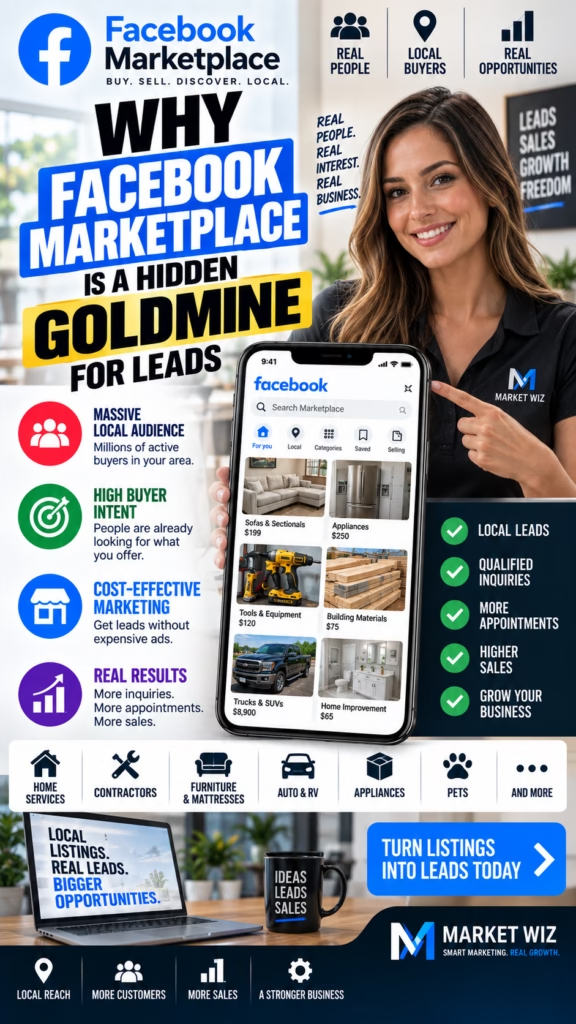
Why Facebook Marketplace Is a Hidden Goldmine for Leads
Facebook Marketplace is often treated as a place for used furniture, local bargains, and one-time consumer sales. But for businesses with legitimate physical products, it can become something much more valuable: a local discovery channel that puts inventory directly in front of buyers, starts conversations, reveals purchase intent, and creates opportunities that may extend far beyond the original product inquiry.
Businesses often spend heavily trying to interrupt potential customers with ads. Facebook Marketplace works differently. People are already there looking at products. They are browsing, comparing, checking prices, evaluating options, and contacting sellers. That existing shopping behavior is one reason Facebook Marketplace can become a hidden goldmine for leads when businesses approach it strategically.
The opportunity is not simply that Marketplace gets attention. Attention alone does not create sales.
The real opportunity comes from the combination of:
- local buyer activity;
- visual product discovery;
- direct buyer-to-seller conversations;
- product-specific purchase intent;
- fast lead qualification;
- CRM follow-up;
- larger customer opportunities discovered after the initial inquiry.
A buyer asking about one mattress may furnish an entire rental property. Someone looking at flooring may need thousands of square feet for an investment property. A person asking about a carport may actually own multiple properties. A contractor asking about equipment may need repeat purchases.
The product starts the conversation.
The conversation reveals the lead.
Why Facebook Marketplace Can Be a Hidden Goldmine
Facebook Marketplace is easy to underestimate because many people associate it with:
- used couches;
- garage-sale items;
- small local transactions;
- individual sellers.
But the underlying behavior is much more valuable than those examples suggest.
Marketplace brings together people who are already actively evaluating physical products.
That distinction matters.
The buyer is already looking
Traditional advertising often begins with interruption.
A business pays to place an advertisement in front of someone who may or may not currently want the product.
Marketplace often begins with active browsing.
Someone may already be searching for:
- furniture;
- appliances;
- flooring;
- vehicles;
- equipment;
- building materials;
- storage products;
- carports;
- cabinets;
- other physical inventory.
Products reveal needs
A product inquiry frequently tells the business something about the customer's broader situation.
For example:
- flooring inquiry → property renovation;
- multiple mattresses → hotel, rental, dormitory, or housing need;
- commercial shelving → business expansion;
- large equipment → commercial operation;
- multiple appliances → rental property or property management need;
- carport inquiry → vehicle, equipment, or property protection need.
Local intent can shorten the sales path
Many Marketplace buyers are not merely researching nationwide.
They often care about:
- what is nearby;
- what is available now;
- what they can pick up;
- what can be delivered locally;
- which seller can respond quickly.
Marketplace Is Built Around Product Discovery
One of the most important differences between Marketplace and traditional search advertising is the way people discover offers.
Search intent
Some users know exactly what they want.
They may search for:
- queen mattress;
- 20x20 carport;
- LVP flooring;
- used forklift;
- white shaker cabinets;
- washer and dryer.
Browsing intent
Other buyers may not know the exact product yet.
They browse:
- related listings;
- price points;
- styles;
- configurations;
- local inventory.
Visual discovery
A strong image may attract someone who was not searching for that exact model or configuration.
This makes photography extremely important.
Search
Buyers can seek specific products and compare nearby options.
Browse
Prospects may discover products they had not originally searched for.
Compare
Price, photos, specifications, location, and seller responsiveness can all influence the final decision.
Contact
Marketplace creates a direct path from product discovery to buyer conversation.
Why Local Buyer Intent Matters
Local intent can make Marketplace especially useful for businesses that sell physical products within specific geographic markets.
Convenience matters
Buyers often care about:
- distance;
- delivery;
- pickup;
- availability;
- installation options where appropriate;
- speed.
Nearby sellers can feel more accessible
A local listing can create a more immediate buying experience than an anonymous national ecommerce result.
Local product searches can reveal service opportunities
A person shopping for renovation materials may also need:
- delivery;
- installation;
- measurement;
- additional materials;
- other project support.
Those opportunities should only be discussed honestly and in accordance with the platform's current requirements.
Local data can improve other marketing channels
Marketplace lead patterns can reveal:
- strong cities;
- popular products;
- high-value ZIP codes;
- investor-heavy markets;
- commercial demand.
That intelligence can inform:
- Google Maps SEO;
- paid ads;
- website landing pages;
- Craigslist targeting;
- direct outreach;
- sales territories.
How Product Inquiries Become Leads
This is where Marketplace can become much more valuable than a simple classified sale.
Example 1: Flooring
Buyer:
“Do you have 1,500 square feet of this?”
That question immediately tells the business:
- this is not a tiny purchase;
- the buyer likely has an active property project;
- quantity matters;
- delivery may matter;
- installation may become relevant;
- other rooms or materials may be involved.
Example 2: Appliances
Buyer:
“Do you have five more sets?”
That may indicate:
- landlord;
- apartment operator;
- property manager;
- investor;
- dealer;
- commercial buyer.
Example 3: Furniture
A buyer asking about multiple beds, sofas, or dining sets may be:
- furnishing a rental;
- furnishing an Airbnb;
- opening a housing facility;
- managing multiple units;
- buying for an office or business.
Example 4: Carports and buildings
One inquiry may reveal:
- multiple vehicles;
- business equipment;
- commercial property;
- multiple installation locations;
- future structure needs.
What Types of Products Can Create Strong Opportunities?
Marketplace can be especially useful for physical products that have strong local demand or high consideration.
Furniture
Potential lead paths:
- single purchase;
- room package;
- whole-home purchase;
- rental property furnishing;
- commercial furnishing.
Mattresses
Potential customers:
- homeowners;
- landlords;
- hotels;
- property managers;
- extended-stay operators;
- housing providers.
Appliances
Potential lead types:
- individual consumer;
- rental property;
- investor;
- property manager;
- bulk purchaser.
Flooring
Potential opportunities:
- single room;
- whole home;
- rental property;
- apartment turnover;
- commercial flooring project.
Carports and metal structures
Potential buyers:
- homeowners;
- farm owners;
- equipment owners;
- commercial property owners;
- dealers;
- contractors.
Vehicles and recreational products
Higher-ticket inventory may create:
- buyer conversations;
- financing inquiries;
- trade discussions where appropriate;
- appointment opportunities.
Equipment
Heavy equipment, commercial tools, and specialized machinery may attract:
- contractors;
- farmers;
- business owners;
- industrial buyers;
- resellers.
Writing Better Marketplace Titles
Marketplace titles should help the buyer understand the product immediately.
Product-first titles
Examples:
- 20x30 Vertical Roof Metal Carport;
- Waterproof LVP Flooring - 20 MIL;
- Queen Mattress - Medium Firm;
- White Shaker Kitchen Cabinets;
- Commercial Washer & Dryer Set;
- 26x21 Enclosed Metal Garage.
Useful specifications can increase relevance
Add:
- size;
- material;
- model;
- condition;
- color;
- style;
- capacity;
- quantity.
Avoid titles that hide the product
Weak:
HUGE DEAL - MUST SEE!!!
Strong:
20x21 Steel Carport - $1,995 Installed
when that price and configuration are genuine.
Avoid excessive SEO stuffing
Product clarity should come before keyword repetition.
Using Photos to Increase Clicks and Trust
Marketplace is highly visual.
The first image may determine whether the buyer opens the listing at all.
Show the actual product
Buyers want to know what they are considering.
Use a clean primary image
The hero photo should:
- show the product clearly;
- avoid excessive clutter;
- use good lighting;
- make scale understandable;
- match the actual offer.
Show multiple angles
Especially for:
- vehicles;
- furniture;
- equipment;
- buildings;
- appliances.
Use installed examples when relevant
For flooring, cabinets, carports, sheds, or similar products, installed examples can help buyers visualize the end result.
Do not misrepresent the product
Avoid:
- unrelated premium photos;
- photos of unavailable models;
- stolen images;
- images implying features that are not included.
Why Accurate Pricing Improves Lead Quality
Pricing is one of the strongest filters in any sales process.
Real prices reduce bad-fit leads
When a buyer understands the price before messaging, the conversation begins at a more realistic point.
Fake low prices create fake demand
A $1 listing may appear to create huge interest.
But if the real price is $4,000, many of those messages are not qualified buyer demand.
Use legitimate starting prices carefully
Starting prices can make sense when:
- a genuine base product exists;
- the base configuration can actually be purchased;
- the listing explains what is included;
- upgrades genuinely cost more.
Explain pricing units
Examples:
- per square foot;
- per box;
- per item;
- per set;
- installed configuration;
- base model.
Writing Marketplace Descriptions That Convert
A strong description should reduce uncertainty and improve lead quality.
Explain what is being sold
Include:
- product;
- size;
- condition;
- material;
- brand;
- model;
- quantity.
Explain what is included
Clarify:
- accessories;
- hardware;
- delivery;
- installation where legitimately included;
- optional upgrades.
Explain availability accurately
State whether the product is:
- in stock;
- special order;
- limited quantity;
- available in multiple configurations.
Explain location
Buyers should understand:
- pickup location;
- delivery area;
- serviceable installation area when appropriate.
Use language that answers buyer questions
Good Marketplace copy reduces:
- confusion;
- repetitive questions;
- bad-fit messages;
- pricing misunderstandings.
The Power of Local Marketplace Targeting
Marketplace can be particularly valuable because local commerce depends on proximity.
Product location matters
Buyers may choose a product partly because:
- it is nearby;
- pickup is easy;
- delivery is available;
- the seller serves their market.
Use truthful geographic information
Businesses should not pretend inventory is located in cities where it is not.
Use legitimate delivery areas
If a seller genuinely delivers across a wider territory, describe that accurately.
Track lead geography
A good CRM can reveal:
- which cities produce leads;
- which cities produce sales;
- which markets generate larger orders;
- which markets attract commercial buyers.
Market-level performance can guide expansion
A company may discover that one suburb consistently produces:
- larger orders;
- more qualified leads;
- more repeat customers.
That information can influence future business strategy.
Facebook Marketplace for High-Ticket Products
Marketplace is not limited to low-priced items.
High-ticket physical products can generate valuable conversations because buyers often want:
- photos;
- specifications;
- price;
- availability;
- local contact;
- questions answered before committing.
Carports and metal buildings
Buyers may compare:
- size;
- roof style;
- configuration;
- installed price;
- delivery area.
Vehicles and RVs
Buyers may ask:
- condition;
- mileage;
- model;
- price;
- financing availability where legitimate;
- appointment availability.
Heavy equipment
Commercial buyers may need:
- technical specifications;
- operating hours;
- condition;
- transport;
- quantity.
High-ticket listings need stronger qualification
Useful questions may include:
- Where are you located?
- Which size do you need?
- When are you looking to purchase?
- Is this for personal or business use?
- Do you need one unit or multiple?
Using Marketplace to Find Commercial Buyers
One of the most overlooked opportunities on Marketplace is B2B discovery.
Not every buyer is a consumer.
Commercial buyers may include
- contractors;
- property managers;
- landlords;
- hotels;
- warehouse operators;
- retailers;
- construction businesses;
- dealers;
- resellers.
Quantity reveals intent
A buyer asking for:
- 20 mattresses;
- 10 appliances;
- 5,000 square feet of flooring;
- multiple structures;
- several equipment units;
may represent an entirely different level of opportunity than a normal consumer inquiry.
Commercial leads should be routed differently
Larger opportunities may need:
- sales manager;
- commercial pricing;
- bulk quote;
- delivery coordination;
- account-level follow-up.
Investors, Landlords, and Property Managers
Property-related buyers can be especially valuable because they may need recurring products over time.
Landlords
Common purchases may include:
- appliances;
- flooring;
- furniture;
- doors;
- cabinets;
- fixtures.
House flippers
A single property may require:
- whole-home flooring;
- kitchen cabinets;
- bathroom vanities;
- appliances;
- doors;
- materials.
Property managers
They may have ongoing needs across:
- apartments;
- single-family rentals;
- commercial properties;
- multifamily portfolios.
Repeat buying changes customer value
One Marketplace conversation can be worth far more than one transaction if the buyer manages multiple properties.
Speed-to-Lead on Facebook Marketplace
Marketplace is conversational.
Buyers often send quick messages and continue comparing options.
Respond quickly
A delayed reply may mean the buyer continues with another seller.
Answer the question first
Buyer:
“Is this still available?”
The first response should answer availability rather than immediately launching into a long sales pitch.
Then ask one useful qualification question
Depending on the product:
- What size do you need?
- How many are you looking for?
- What city are you in?
- When are you looking to purchase?
Keep the interaction natural
Buyers should feel like they are speaking with a useful seller, not being forced through an interrogation.
Identify larger opportunities
When quantity, commercial use, or multiple locations appear, route the lead accordingly.
Qualifying Marketplace Leads
Qualification should be relevant to the product and business model.
Product
What exact item does the buyer want?
Quantity
One unit or twenty?
Location
Is the buyer within:
- pickup area;
- delivery territory;
- installation area where relevant?
Timeline
Are they:
- ready today;
- shopping this week;
- planning next month;
- researching for later?
Buyer type
Determine whether they are:
- consumer;
- business;
- contractor;
- landlord;
- investor;
- property manager;
- dealer.
Additional need
Does the buyer need:
- related products;
- bulk quantity;
- delivery;
- future inventory;
- multiple locations?
CRM Tracking and Follow-Up
Marketplace becomes more valuable when inquiries stop disappearing inside messages and start entering a measurable sales system.
Track source
Record:
Facebook Marketplace
Track original listing
- listing title;
- product;
- price;
- location;
- listing date.
Track lead type
- consumer;
- commercial;
- investor;
- landlord;
- property manager;
- dealer;
- contractor.
Track pipeline stage
Suggested stages:
- new inquiry;
- responded;
- qualified;
- quote sent;
- appointment scheduled;
- follow-up;
- won;
- lost.
Track final revenue
This allows the business to answer:
- Which product generates the most leads?
- Which product generates the most sales?
- Which city produces the most revenue?
- Which listings attract commercial buyers?
- Which inquiries become repeat customers?
Track repeat value
A single Marketplace customer may make several purchases over time.
Facebook Marketplace Lead Generation Funnel
| Stage | Main Goal | Optimization Focus |
|---|---|---|
| Product Impression | Earn attention | Image, title, price |
| Listing View | Build interest | Photos, specifications, description |
| Message | Start conversation | Clear offer and availability |
| Qualified Lead | Identify buyer fit | Quantity, location, timeline, buyer type |
| Sales Step | Advance opportunity | Quote, call, appointment, order |
| Follow-Up | Recover delayed buyers | CRM reminders and relevant communication |
| Sale | Generate revenue | Closing and fulfillment |
Facebook Marketplace for Retail Businesses
Retailers can use Marketplace to surface legitimate inventory to nearby shoppers.
Furniture stores
Strong listings may feature:
- sofas;
- beds;
- mattresses;
- tables;
- sectionals;
- bedroom sets.
Appliance stores
Listings may include:
- washers;
- dryers;
- refrigerators;
- ranges;
- sets.
Flooring businesses
Products can include:
- LVP;
- laminate;
- engineered hardwood;
- tile;
- commercial glue-down flooring.
Building-product companies
Potential Marketplace products:
- carports;
- sheds;
- metal garages;
- doors;
- cabinets;
- building materials.
Facebook Marketplace for Dealers
Dealers often have an advantage because inventory can naturally create multiple listings.
Different inventory creates natural variation
Separate listings may legitimately represent:
- different models;
- different sizes;
- different colors;
- different configurations;
- different price points.
Dealer lead qualification
Important questions may include:
- Which model are you interested in?
- Which size?
- What city are you in?
- When are you looking to purchase?
Appointments can improve high-ticket conversion
Depending on the product, the next step may be:
- showroom visit;
- phone consultation;
- quote;
- delivery discussion;
- financing discussion where legitimately available.
Facebook Marketplace for Property-Related Businesses
Property-related products often create larger lead opportunities because one buyer may control multiple locations.
Property managers
Potential recurring needs:
- appliances;
- flooring;
- furniture;
- doors;
- fixtures;
- building materials.
Landlords
A landlord may purchase repeatedly for tenant turnovers.
Investors
One flip can create demand across multiple product categories.
Commercial real estate owners
Businesses may need:
- storage;
- equipment;
- furniture;
- building products;
- commercial flooring.
Why Marketplace Leads Can Be More Valuable Than They Look
A common mistake is measuring Marketplace only by the price of the listed item.
A small inquiry can reveal a large buyer
Someone asking about one sample product may eventually need:
- bulk quantity;
- multiple units;
- future purchases;
- products for multiple properties.
One lead can open another channel
A Marketplace buyer may later become:
- phone customer;
- website customer;
- email subscriber;
- commercial account;
- referral source.
Marketplace can create customer data
Businesses can learn:
- what people ask;
- what objections appear;
- which products get attention;
- which prices generate qualified interest;
- what markets perform best.
Why Fast Response Creates an Advantage
Marketplace shoppers often contact multiple sellers.
That creates a race for relevance.
Fast response builds momentum
The buyer is already in shopping mode.
A prompt answer keeps the conversation active.
Useful response beats aggressive response
A good reply should:
- answer the question;
- confirm availability;
- clarify price;
- ask one relevant qualification question;
- move naturally toward the next step.
Buyer momentum fades
A prospect who messages today may make a purchase from another seller before tomorrow.
Using AI to Improve Marketplace Lead Response
AI can support legitimate Marketplace lead management when configured with accurate information.
Common-question handling
AI can help answer:
- availability;
- price;
- size;
- location;
- delivery;
- product specifications.
Qualification
A system can help collect:
- buyer city;
- quantity;
- timeline;
- product preference;
- commercial versus personal use.
Lead routing
Leads can be assigned to:
- retail salesperson;
- commercial sales;
- location manager;
- dealer;
- territory representative.
CRM synchronization
Marketplace conversations can become structured sales records.
Follow-up reminders
A buyer who says:
“I need this next week.”
should not disappear because no one remembered to follow up.
Marketplace Lead Qualification Checklist
- Lead source
- Original listing
- Product requested
- Quantity
- Price discussed
- Buyer city
- Pickup or delivery
- Timeline
- Consumer or business
- Landlord or investor
- Property manager
- Contractor
- Dealer or reseller
- Additional product needs
- Quote needed
- Call needed
- Appointment needed
- Salesperson assigned
- Follow-up date
- Final status
Marketplace Listing Optimization Checklist
- Use a legitimate eligible physical product.
- Review current Marketplace policies.
- Use the correct category.
- Use a genuine product location.
- Use accurate pricing.
- Avoid fake $0 pricing.
- Avoid fake $1 pricing.
- Use authentic photos.
- Use clear primary images.
- Use product-first titles.
- Add useful specifications.
- Add dimensions where relevant.
- Add material information.
- Add condition.
- Add quantity.
- Explain availability.
- Explain pickup or delivery.
- Explain what the price includes.
- Avoid fake discounts.
- Avoid fake urgency.
- Avoid unsupported warranty claims.
- Avoid misleading locations.
- Avoid fake inventory.
- Avoid duplicate spam.
- Respond quickly.
- Answer buyer questions.
- Qualify quantity and location.
- Move strong leads into CRM.
- Track closed sales.
- Optimize by revenue.
Combining Marketplace With Other Marketing Channels
Facebook Marketplace becomes more valuable when it is part of a broader customer acquisition system.
Google Maps
Marketplace may introduce the business.
Google Maps may validate it.
Buyers may search the company name and look at:
- reviews;
- photos;
- website;
- location;
- business information.
Organic SEO
Website pages can target:
- product categories;
- city keywords;
- commercial applications;
- buying guides;
- frequently asked questions.
Craigslist
Craigslist can provide another local classified channel for appropriate offers.
Social media
Facebook, Instagram, TikTok, and YouTube can demonstrate:
- product examples;
- installations;
- inventory;
- customer use cases;
- educational content.
Paid advertising
Paid campaigns can create broader scale and retarget interested buyers.
CRM
The CRM connects all channels.
It allows the business to compare:
- Marketplace leads;
- Google leads;
- Craigslist leads;
- website leads;
- paid ad leads;
- referrals.
Facebook Marketplace vs. Traditional Paid Advertising
| Factor | Facebook Marketplace | Traditional Paid Ads |
|---|---|---|
| Buyer Entry Point | Product discovery | Advertisement impression or click |
| Visual Importance | Extremely high | Varies by ad format |
| Local Intent | Often strong | Depends on targeting |
| Primary Conversion | Product inquiry | Click, form, call, purchase |
| Best Role | Product-driven discovery | Scalable targeted acquisition |
Facebook Marketplace vs. Google Maps
| Factor | Facebook Marketplace | Google Maps |
|---|---|---|
| Intent | Product browsing | Business or service search |
| Main Asset | Product listing | Business profile |
| Visual Focus | Product photos | Business and project photos |
| Trust Signals | Listing quality and seller interaction | Reviews, profile completeness, reputation |
| Best Use Together | Create discovery | Validate business and capture direct local intent |
Facebook Marketplace vs. Craigslist
| Factor | Facebook Marketplace | Craigslist |
|---|---|---|
| Discovery Style | Visual product browsing | Classified browsing and search |
| Strongest Asset | Primary product image | Title, description, photos |
| Product Focus | Strong | Strong across many categories |
| Local Intent | High in many categories | High in local markets |
| Best Strategy | Compliant physical product listings | Relevant classified offers under current rules |
Why Marketplace Can Work for High-Intent Local Businesses
Some businesses benefit particularly well because their customers naturally want to see the product before buying.
Furniture
Buyers want:
- photos;
- size;
- style;
- price;
- local availability.
Carports and metal buildings
Buyers want:
- size;
- configuration;
- roof style;
- price;
- installation area.
Flooring
Buyers want:
- color;
- finish;
- price per square foot;
- quantity;
- local inventory.
Appliances
Buyers want:
- condition;
- brand;
- model;
- price;
- pickup or delivery.
Equipment
Buyers want:
- specifications;
- condition;
- operating details;
- price;
- location.
Why Marketplace Can Generate Better Market Intelligence
Marketplace is not only a sales channel.
It can also become a source of customer intelligence.
Buyer questions reveal friction
If everyone asks:
- Does that include delivery?
- What size is it?
- Do you have another color?
- Can I get ten?
those questions tell you what information the listing is missing.
Message volume reveals interest
Product categories with stronger inquiry rates may deserve:
- more inventory;
- better creative;
- more website content;
- larger ad budgets elsewhere.
Lead quality reveals true demand
Ten serious commercial inquiries may be more valuable than one hundred casual messages.
Why Marketplace Can Support Organic Growth
Marketplace activity can create benefits beyond the listing itself.
Brand searches
Buyers may search the business name.
Website visits
Prospects may explore the company's full inventory or services elsewhere.
Google reviews
Strong public reputation can support Marketplace conversion.
Referrals
A satisfied buyer may refer another customer.
Repeat purchases
Businesses selling repeat-use products can turn one local buyer into a longer-term customer.
Marketplace Mistakes That Destroy Lead Quality
1. Fake $1 pricing
It may increase messages while lowering real buyer quality.
2. Fake $0 pricing
Misleading pricing creates unrealistic expectations.
3. Service-only disguises
Do not pretend a service is a product simply to gain exposure.
4. Fake inventory
Advertise products that are genuinely available or honestly described as order-based.
5. Fake locations
Use accurate geographic information.
6. Stolen or misleading photos
Visual trust matters.
7. Unsupported warranty claims
Only state warranties that actually apply.
8. Invented discounts
Promotional pricing should be real.
9. Inaccurate specifications
Size, material, model, condition, and features should be correct.
10. Duplicate spam
Excessive repetitive listing behavior can create poor buyer experience and platform risk.
11. Slow response
Buyer interest can move quickly.
12. No qualification
Businesses can waste time on inquiries that are outside the real sales opportunity.
13. No CRM tracking
Without tracking, profitable leads become invisible in reporting.
14. Measuring only messages
Message volume does not equal revenue.
Building a Repeatable Marketplace Lead System
A scalable Marketplace strategy requires more than manually posting random products whenever someone remembers.
Layer 1: Product Database
- product name;
- category;
- price;
- specifications;
- location;
- inventory status;
- photos.
Layer 2: Listing Preparation
- product-first title;
- accurate description;
- strong primary image;
- correct price;
- accurate location.
Layer 3: Compliance Review
- eligible physical product;
- truthful location;
- accurate inventory;
- supportable claims;
- current policy review.
Layer 4: Lead Response
- respond quickly;
- answer the question;
- confirm availability;
- ask one relevant qualification question.
Layer 5: Qualification
- quantity;
- location;
- timeline;
- buyer type;
- additional needs.
Layer 6: Sales Routing
- consumer sales;
- commercial sales;
- dealer sales;
- territory sales;
- specialist.
Layer 7: CRM Tracking
- source;
- listing;
- lead owner;
- status;
- follow-up date;
- quote value.
Layer 8: Revenue Attribution
- sale value;
- order size;
- repeat purchases;
- commercial account value.
Layer 9: Optimization
- identify top-performing products;
- identify top-performing markets;
- improve weak images;
- improve response speed;
- prioritize high-value buyer types.
How Businesses Should Measure Facebook Marketplace Results
Listings alone are not a performance metric.
Track inquiries
This measures top-of-funnel interest.
Track qualified leads
Determine which inquiries represent realistic buying opportunities.
Track calls or appointments
High-ticket products may move buyers into:
- phone calls;
- showroom visits;
- quotes;
- appointments.
Track orders
Measure:
- units sold;
- average order value;
- revenue.
Track buyer type
Separate:
- consumer;
- commercial;
- landlord;
- investor;
- dealer;
- property manager.
Track repeat revenue
Repeat buyers may dramatically increase the value of the channel.
Marketplace Lead Metrics
| Metric | What It Measures | Why It Matters |
|---|---|---|
| Listings | Inventory exposure | Shows marketing activity |
| Inquiries | Buyer response | Shows initial interest |
| Qualified Leads | Real opportunities | Measures lead quality |
| Calls / Quotes | Sales progression | Shows deeper intent |
| Orders | Closed purchases | Measures conversion |
| Average Order Value | Typical transaction size | Measures economic quality |
| Revenue | Total financial result | Measures real channel value |
Facebook Marketplace for New Businesses
New businesses can use Marketplace to learn how local buyers respond to products.
Start with the strongest inventory
Prioritize products with:
- clear pricing;
- strong photos;
- local demand;
- good availability.
Track every inquiry
Early data can reveal:
- best products;
- best cities;
- common buyer questions;
- price sensitivity.
Build reputation elsewhere
Strengthen:
- Google Business Profile;
- website;
- social media;
- reviews;
- business information.
Facebook Marketplace for Established Businesses
Established businesses often have more inventory and data to work with.
Segment by product
Track performance across:
- product categories;
- models;
- price points;
- locations.
Segment by buyer type
Separate:
- retail buyers;
- commercial accounts;
- property managers;
- investors;
- dealers.
Build commercial follow-up
A bulk buyer should not be handled exactly like a single retail shopper.
Measure lifetime value
Repeat customers and commercial accounts can make Marketplace much more valuable than initial order revenue suggests.
Final Thoughts: Why Facebook Marketplace Is a Hidden Goldmine for Leads
Facebook Marketplace is easy to overlook because it looks simple.
A product.
A photo.
A price.
A message.
But behind that simple interface is a powerful local behavior:
people actively looking at products they may want to buy.
For businesses with legitimate eligible physical products, that behavior can create:
- consumer sales;
- bulk orders;
- commercial accounts;
- landlord relationships;
- investor leads;
- property management opportunities;
- repeat customers;
- cross-sell opportunities.
The strongest strategy is not to flood Marketplace with low-quality listings.
It is to build a disciplined system around:
- real products;
- accurate prices;
- authentic photos;
- clear descriptions;
- truthful locations;
- fast responses;
- lead qualification;
- CRM tracking;
- follow-up;
- revenue attribution.
Businesses should avoid:
- fake $0 or $1 pricing;
- service-only disguises;
- fake locations;
- invented inventory;
- stolen photos;
- fake discounts;
- unsupported warranties;
- inaccurate specifications;
- duplicate spam.
When Marketplace is connected to a real sales process, a simple product inquiry can become much more.
A mattress inquiry may become a hotel account.
A flooring message may become a full rental renovation.
An appliance buyer may manage twenty properties.
A carport inquiry may become several structures.
That is why Facebook Marketplace can be a hidden goldmine for leads: not because every message is valuable, but because the right listings put businesses directly in front of active local buyers, and the right lead system identifies the opportunities hidden inside those conversations.
Frequently Asked Questions About Facebook Marketplace Lead Generation
1. Why can Facebook Marketplace be a hidden goldmine for leads?
Marketplace puts legitimate products in front of people already browsing and comparing local options. Product inquiries can reveal larger purchase, commercial, property, or repeat-customer needs.
2. Can businesses generate leads through Facebook Marketplace?
Yes. Businesses with legitimate eligible physical products can use Marketplace to create buyer conversations and track qualified opportunities.
3. What makes Facebook Marketplace different from traditional advertising?
Marketplace often begins with active product discovery rather than an advertisement interrupting someone who may not currently be shopping.
4. Can Marketplace product inquiries become larger sales opportunities?
Yes. Buyers may need larger quantities, multiple products, delivery, commercial pricing, or repeat purchases.
5. What kinds of businesses can benefit from Facebook Marketplace?
Businesses selling legitimate physical products such as furniture, appliances, flooring, equipment, vehicles, structures, cabinets, building materials, and similar inventory may benefit.
6. Can service businesses use Facebook Marketplace?
Marketplace may restrict service-only listings, so businesses should generally focus on legitimate eligible physical products and review current platform policies.
7. Should Marketplace listings use real prices?
Yes. Use accurate prices or legitimate starting prices that correspond to actual products or configurations.
8. Should businesses use $0 or $1 Marketplace pricing?
No. Fake placeholder pricing can generate misleading interest and lower lead quality.
9. Do photos matter on Facebook Marketplace?
Yes. Strong authentic photos can affect listing clicks, trust, buyer understanding, and conversion.
10. Should Marketplace listings use authentic photos?
Yes. Genuine product or accurately represented inventory photos help reduce confusion and strengthen buyer confidence.
11. How should businesses write Facebook Marketplace titles?
Lead with the real product and include useful details such as size, material, model, condition, color, configuration, or quantity.
12. Can businesses list products in multiple cities?
Businesses should use truthful geographic information and should not imply inventory or local presence where it does not genuinely exist.
13. Why is local intent valuable on Facebook Marketplace?
Many Marketplace buyers care about nearby availability, pickup, delivery, speed, and the ability to communicate directly with a local seller.
14. Can Facebook Marketplace generate commercial leads?
Yes. Some buyers represent contractors, landlords, investors, businesses, property managers, dealers, or other organizations that may need larger quantities.
15. Can Marketplace generate investor or landlord leads?
Yes. Property owners may browse Marketplace for materials, appliances, furniture, cabinets, flooring, structures, and other products connected to property improvement.
16. How fast should businesses respond to Marketplace leads?
As quickly as practical because buyers may contact multiple sellers while actively comparing options.
17. How should Marketplace leads be qualified?
Confirm product, quantity, location, timeline, buyer type, delivery needs, and whether the prospect has additional related needs.
18. Should Facebook Marketplace leads go into a CRM?
Yes. CRM tracking helps connect listings and conversations with quotes, calls, appointments, orders, repeat customers, and revenue.
19. Can Marketplace generate repeat customers?
Yes. Landlords, investors, contractors, property managers, and commercial buyers may return for additional purchases.
20. Can Marketplace leads turn into phone calls?
Yes. Qualified leads may move from Marketplace messaging into the business's normal phone, sales, quote, or appointment process when appropriate.
21. Can Marketplace work with Google Maps marketing?
Yes. Marketplace can create product discovery while Google Maps helps validate the business and capture direct local searches.
22. Can Marketplace work with local SEO?
Yes. Local SEO can create long-term search visibility while Marketplace provides another local product discovery channel.
23. Can AI help businesses respond to Marketplace leads?
AI can support legitimate response, qualification, routing, CRM entry, follow-up, and reporting when configured with accurate product and business information.
24. Can automation help organize Marketplace lead generation?
Yes. Automation can help organize legitimate inventory, product data, lead tracking, routing, and reporting, but it should not be used for spam or platform-rule evasion.
25. What Marketplace mistakes should businesses avoid?
Avoid fake prices, fake inventory, misleading locations, stolen images, false specifications, fake discounts, unsupported warranties, and repetitive duplicate spam.
26. How should businesses measure Marketplace lead generation?
Track listings, inquiries, qualified leads, quotes, calls, appointments, sales, average order value, repeat purchases, and revenue by product and market.
27. Is Facebook Marketplace only useful for cheap products?
No. Higher-value products can also generate strong buyer interest when listings provide clear specifications, real pricing, strong photos, and professional follow-up.
28. Can Facebook Marketplace work for high-ticket products?
Yes. Vehicles, equipment, structures, commercial products, and other high-ticket inventory can create qualified local conversations.
29. Is Facebook Marketplace enough by itself for lead generation?
Usually not. Marketplace often performs best as part of a broader system that includes Google Maps, SEO, social media, paid ads, Craigslist, referrals, and CRM follow-up.
30. What is the best Facebook Marketplace lead generation strategy?
Use legitimate physical products, accurate pricing, authentic photos, strong titles, truthful locations, fast response, relevant qualification, CRM tracking, follow-up, and optimization based on real sales and revenue.
30 Additional SEO Keywords
Turn Facebook Marketplace Product Interest Into More Qualified Lead Opportunities
Build a smarter Marketplace lead generation system with organized product listings, stronger creative, accurate pricing, legitimate local targeting, faster AI-powered lead response, buyer qualification, CRM tracking, follow-up, and reporting designed to turn product inquiries into measurable consumer, commercial, investor, dealer, and repeat-customer opportunities.
Schedule a MarketWiz.ai Demo












