

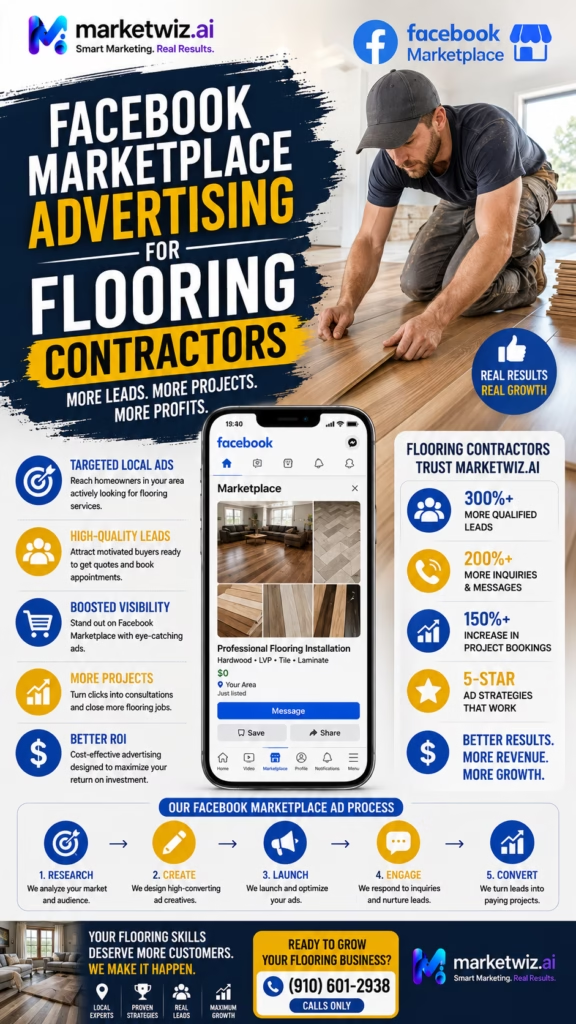
Facebook Marketplace Advertising for Flooring Contractors
Flooring contractors operate in a highly visual local market where buyers compare materials, colors, pricing, project examples, reviews, availability, and installation options before making a decision. Facebook Marketplace advertising can create another powerful discovery channel when it is built around legitimate flooring products, professional creative, accurate pricing, fast lead response, geographic targeting, CRM tracking, and AI-powered customer acquisition workflows.
Flooring is one of the most visual categories in home improvement. Customers want to see colors, textures, room transformations, installed examples, material styles, and realistic pricing before they are comfortable moving forward. That makes Facebook Marketplace advertising for flooring contractors a potentially valuable component of a broader local marketing strategy.
The strongest approach is not simply posting a generic advertisement saying that a company installs floors. Marketplace is primarily a commerce environment, so flooring businesses should think carefully about how physical materials, legitimate inventory, product categories, accurate pricing, and customer intent fit together.
A flooring company may be able to create local visibility around actual materials such as luxury vinyl plank, laminate, engineered hardwood, tile, commercial flooring products, transitions, trim, underlayment, or other legitimate inventory. From there, customer conversations can potentially lead to measurements, estimates, showroom visits, material orders, and larger flooring projects.
The real opportunity appears when every stage is connected: the right material, the right image, the right local shopper, the right response, the right qualification questions, the right follow-up, and the right CRM tracking.
1. What Is Facebook Marketplace Advertising for Flooring Contractors?
Facebook Marketplace advertising for flooring contractors refers to using Marketplace visibility and related Facebook marketing to place flooring products and relevant offers in front of local customers who may be planning a renovation, replacing damaged floors, updating a rental property, building a new home, remodeling a commercial property, or simply shopping for flooring materials.
For flooring contractors, the best strategy typically begins with the physical product rather than a vague service-only advertisement.
Depending on verified inventory and current platform rules, legitimate flooring listings could involve categories such as:
- luxury vinyl plank flooring,
- laminate flooring,
- engineered hardwood,
- solid hardwood,
- tile,
- carpet products,
- commercial glue-down flooring,
- water-resistant flooring products,
- underlayment,
- transition pieces,
- trim and molding,
- flooring accessories.
Businesses should always confirm that the specific listing format, product, category, and wording comply with current Meta policies.
Marketplace rules can change, and the most sustainable strategy is always built around accurate products, legitimate pricing, real locations, truthful availability, and professional customer communication.
2. Why Facebook Marketplace Can Fit the Flooring Industry
Flooring has several characteristics that make it especially suited to visual local advertising.
Highly Visual Product
Customers can quickly compare wood tones, plank widths, textures, patterns, tile styles, and finished room appearances through strong imagery.
Local Purchasing Behavior
Many flooring shoppers prefer nearby stores, installers, distributors, or contractors because delivery, measuring, pickup, samples, and installation are geographically dependent.
High Project Value
A shopper interested in a few hundred or several thousand square feet of flooring can represent a meaningful sales opportunity.
Large Product Variety
Multiple flooring categories give companies opportunities to create different campaigns for different customer budgets, styles, rooms, and project types.
Facebook Marketplace can create discovery among users who may not yet be searching Google for a specific flooring contractor.
Someone browsing furniture, home improvement products, appliances, renovation supplies, or local building materials may also be preparing for a flooring project.
That creates an opportunity to reach customers earlier in the buying journey.
3. Understand Flooring Customer Intent
Not every flooring customer is shopping for the same thing.
A homeowner replacing a bedroom carpet behaves differently from a property investor renovating twenty rental units. A contractor purchasing commercial glue-down flooring has different priorities from a homeowner comparing luxury vinyl plank colors.
Understanding intent helps businesses create better listings and better sales conversations.
Homeowners
Homeowners may prioritize:
- appearance,
- comfort,
- durability,
- maintenance,
- water resistance,
- pet friendliness,
- budget,
- installation timing.
Landlords and Investors
Property investors may focus more heavily on:
- cost per square foot,
- durability,
- consistent availability,
- fast installation,
- easy replacement,
- bulk purchasing,
- turnaround time between tenants.
Builders and Remodelers
Contractors may care about quantities, specifications, packaging, lead times, consistency, delivery, material compatibility, and repeat purchasing.
Commercial Customers
Commercial flooring buyers may require:
- larger quantities,
- commercial product specifications,
- project scheduling,
- insurance and documentation,
- formal estimates,
- multi-location capabilities.
4. Build Marketplace Advertising Around Physical Flooring Products
One of the strongest ways for flooring companies to approach Marketplace is to make the physical flooring product the center of the listing.
This creates a straightforward commerce-oriented experience.
For example, a legitimate listing may focus on:
- a specific LVP color,
- a laminate flooring line,
- engineered hardwood inventory,
- commercial glue-down material,
- tile,
- flooring cartons or pallets,
- verified clearance or surplus inventory,
- trim pieces,
- underlayment.
The exact product information should be accurate.
Do not invent:
- brands,
- wear layers,
- waterproof ratings,
- warranties,
- quantities,
- discount percentages,
- availability,
- dimensions,
- certifications.
If the business has not verified a specification, it should not be treated as fact.
5. Write Strong Flooring Marketplace Titles
A strong title makes the product understandable immediately.
Good titles typically emphasize the primary material and a meaningful attribute that is verified.
Instead of stuffing every keyword into one title, prioritize readability.
Potential Title Structure
A useful framework can be:
Material Type + Style or Key Attribute + Unit or Intended Use
For example, if accurate:
- Luxury Vinyl Plank Flooring – Natural Oak Style
- Laminate Flooring – Modern Wood Look
- Commercial Glue-Down Flooring – Multiple Colors
- Engineered Hardwood Flooring – Wide Plank Style
The exact wording should always reflect the real product being sold.
6. Write Flooring Descriptions That Answer Buying Questions
A flooring listing description should reduce uncertainty.
The customer may want to know:
- what material is this,
- what color or style is it,
- what is the price,
- what unit is the price based on,
- how much flooring is available,
- is it suitable for my project,
- where is pickup or service available,
- is installation available separately,
- how do I determine the quantity I need?
The description should answer as many of these questions as possible without becoming confusing.
Clear product listings tend to generate better conversations because customers have already learned the essential details before contacting the business.
7. Use Genuine Flooring Pricing
Pricing is especially important for flooring because products are frequently compared by square foot, carton, box, pallet, or project quantity.
If a listing says a product costs $2.49, the customer should know exactly what that means.
Is that:
- $2.49 per square foot?
- $2.49 per piece?
- $2.49 per sample?
- a starting price?
Ambiguous pricing creates distrust.
Fake $0, $1, or similarly unrealistic placeholder prices should be avoided unless the actual physical product genuinely costs that amount.
8. Explain Per-Square-Foot Pricing Correctly
Per-square-foot pricing is familiar to flooring shoppers, but it still needs context.
For example, a listing could accurately explain:
- material price per square foot,
- square feet per box,
- minimum quantity where applicable,
- whether tax is included or separate,
- whether installation is additional,
- whether delivery is available,
- whether accessories are separate.
This helps buyers estimate material costs while reducing confusion about total project price.
Flooring companies should also remember that actual project quantities often require waste factors, cuts, room layout considerations, transitions, stairs, closets, and other variables.
A simple product listing should not imply that multiplying room size by material price always equals the final completed project cost.
9. Use Professional Flooring Images
Flooring creative should make customers imagine the material inside their own homes or properties.
Useful image types include:
- full-room installed flooring photos,
- close-up plank texture shots,
- product stacks or boxes,
- sample boards,
- flooring displayed in natural light,
- before-and-after room transformations,
- wide-angle completed projects,
- commercial flooring examples,
- multiple color options displayed cleanly.
Lead With the Best Image
The first image is the most important because it must earn attention in a crowded feed.
Use an image that clearly shows the product and communicates quality immediately.
Show Texture
Customers often want to understand grain patterns, surface details, sheen, plank variation, and overall color.
Show the Product Installed
Raw product photography is useful, but room photography helps customers visualize the finished result.
10. Use Flooring Before-and-After Content
Flooring transformations are naturally compelling.
A worn carpet replaced by modern LVP can completely change a room. Old tile replaced with a contemporary wood-look floor can make a space feel dramatically different.
Before-and-after projects can demonstrate:
- style improvement,
- brightness,
- modernization,
- visual continuity,
- cleaner room design,
- property renovation potential.
The strongest examples are real completed projects with permission to use the imagery.
11. Create Separate Campaigns for Luxury Vinyl Plank
Luxury vinyl plank remains a major category for many flooring businesses, making it a logical candidate for dedicated marketing.
Potential LVP listing information can include verified:
- color,
- style,
- plank dimensions,
- wear layer,
- installation method,
- attached pad information,
- water resistance or waterproof rating,
- square feet per carton,
- price per square foot.
Only use specifications that are confirmed for the actual product.
Customers may also respond to room imagery showing:
- living rooms,
- kitchens,
- bedrooms,
- rental properties,
- open-concept spaces,
- commercial interiors.
12. Build Dedicated Laminate Flooring Marketing
Laminate remains relevant for customers who want attractive wood-look flooring at a specific budget or for particular applications.
Marketing should focus on factual product information rather than generalized claims.
Potential verified details include:
- color,
- surface appearance,
- plank dimensions,
- packaging quantity,
- installation system,
- price,
- available quantity.
Separate laminate campaigns also give the business better data about which flooring categories generate the strongest Marketplace interest.
13. Market Hardwood and Engineered Hardwood Visually
Hardwood buyers often care deeply about appearance, finish, plank size, species, color, and long-term value.
Professional imagery is especially important.
Room scenes can highlight:
- natural grain,
- color variation,
- wide plank appearance,
- traditional interiors,
- modern interiors,
- premium finishing.
Product descriptions should clearly identify whether the flooring is solid hardwood, engineered hardwood, or another wood-look product.
Avoid using "hardwood" as a generic description for products that are actually laminate or vinyl.
14. Create Commercial Flooring Marketplace Campaigns
Commercial flooring prospects often have different needs from residential buyers.
Potential audiences can include:
- property managers,
- apartment operators,
- retail stores,
- offices,
- restaurants,
- medical offices,
- warehouses,
- contractors,
- real estate investors.
Commercial product campaigns may emphasize legitimate inventory such as:
- commercial glue-down flooring,
- carpet tile,
- durable LVP,
- commercial sheet products,
- tile,
- bulk material quantities.
Commercial buyers may also ask about quantity, project schedule, repeat purchasing, delivery, installation, account billing, and multi-location capabilities.
15. Respond to Flooring Marketplace Leads Quickly
Flooring shoppers frequently compare several companies.
They may contact a local retailer, big-box store, installer, flooring contractor, and Marketplace seller within the same afternoon.
The company that responds quickly and professionally has a significant opportunity to continue the conversation.
A useful first response should help determine:
- which product caught their attention,
- how much flooring they may need,
- where the project is located,
- when they plan to complete the project,
- whether they need materials only or additional assistance.
Do not overload the prospect with too many questions at once.
16. Qualify Flooring Leads Efficiently
Flooring qualification helps sales teams prioritize real projects.
Useful qualification questions include:
- What type of flooring are you considering?
- Approximately how many square feet is the project?
- Which rooms are involved?
- What city is the property located in?
- Do you have a target timeline?
- Are you purchasing material only?
- Do you already know the style or color you prefer?
- Is the property residential or commercial?
Square footage is especially important because it helps determine whether the opportunity is a small room, full-home renovation, commercial project, or bulk material purchase.
17. Put Flooring Leads Into a CRM
Marketplace inquiries become difficult to manage when they remain trapped inside individual message threads.
A CRM or structured lead system can track:
- lead name,
- phone number,
- email,
- location,
- flooring category,
- color or style preference,
- approximate square footage,
- material-only or full-project interest,
- estimate status,
- appointment date,
- showroom visit,
- follow-up status,
- sales outcome,
- project value.
This creates accountability and makes marketing measurable.
18. Create Flooring Sales Follow-Up
Flooring purchases often involve more consideration than smaller consumer products.
The prospect may need to:
- compare colors,
- measure rooms,
- talk with a spouse,
- compare estimates,
- review finances,
- choose between product categories,
- coordinate a renovation schedule.
That makes professional follow-up important.
Potential follow-up stages include:
- initial inquiry follow-up,
- sample or product follow-up,
- measurement follow-up,
- estimate follow-up,
- appointment reminder,
- project scheduling follow-up.
Communication should remain useful and respectful rather than repetitive.
19. Use AI to Improve Flooring Lead Management
AI can help flooring companies organize a high volume of product questions and project inquiries.
AI-Assisted Product Responses
AI can help draft responses to common questions about pricing, available product categories, square footage, colors, pickup, scheduling, and other verified business information.
AI Lead Qualification
AI can collect basic information such as:
- project location,
- flooring type,
- square footage,
- timing,
- project type.
AI CRM Organization
Conversation information can be structured into CRM fields so sales teams do not need to manually copy every detail.
AI Follow-Up Assistance
AI can identify unresolved opportunities and help generate appropriate follow-up drafts.
AI Marketing Reporting
AI can help summarize which products, cities, listing styles, and price points generate the strongest inquiries.
20. Support Marketplace With a Professional Facebook Page
Customers often research flooring companies before making large purchases.
A professional Facebook Page can show:
- recent installations,
- before-and-after projects,
- flooring material spotlights,
- new colors and styles,
- room transformations,
- commercial projects,
- educational flooring tips,
- company updates.
This additional social proof can support trust after the prospect discovers the business through Marketplace.
21. Combine Facebook Marketplace With Google Maps
Facebook Marketplace and Google Maps can reach customers at different stages of the buying journey.
| Channel | Customer Behavior | Marketing Role |
|---|---|---|
| Facebook Marketplace | Browsing products and local offers | Create product discovery |
| Facebook Page | Checking project activity | Build trust |
| Google Maps | Searching for flooring providers | Capture high-intent local demand |
| Website | Comparing services and products | Educate and convert |
| CRM | Moving through the purchase process | Track and follow up |
A prospect might first see an LVP product on Marketplace, later search the business name on Google, read reviews, visit the website, and then call.
That is why consistent branding across channels matters.
22. Build Flooring Website Pages That Support Marketplace Leads
A professional flooring website can help answer deeper questions Marketplace cannot.
Useful website sections can include:
- luxury vinyl plank flooring,
- laminate flooring,
- engineered hardwood,
- hardwood flooring,
- commercial flooring,
- carpet,
- tile,
- flooring installation,
- project galleries,
- service areas,
- customer FAQs.
Product and service pages also support local SEO and can help convert prospects who want additional information before contacting the business.
23. Use Reviews and Completed Projects to Build Trust
Flooring is a significant home improvement purchase. Customers often want evidence that the company will handle the project professionally.
Trust signals can include:
- Google reviews,
- customer testimonials,
- real installation photos,
- project galleries,
- before-and-after images,
- professional company branding,
- consistent business information.
Reviews can also reveal what customers value most—communication, installation quality, selection, pricing clarity, cleanliness, or project scheduling.
24. Use Marketplace to Support Flooring Inventory Strategy
Marketplace can potentially support inventory movement when a flooring business has legitimate physical products available.
This may include:
- current flooring lines,
- verified surplus inventory,
- remaining cartons from discontinued colors,
- bulk quantities,
- commercial material,
- trim and accessories.
However, inventory claims should always be accurate.
Do not advertise a product as available if the quantity has not been confirmed.
If a listing refers to clearance, discount, sale, or limited inventory, that claim should be legitimate.
25. Track Flooring Marketplace Performance
A flooring company should not judge advertising only by message volume.
Track the full customer journey.
| Stage | Key Question | Possible Metric |
|---|---|---|
| Visibility | Are local buyers seeing the product? | Views and reach |
| Inquiry | Are shoppers starting conversations? | Messages |
| Qualification | Are they real flooring opportunities? | Qualified lead rate |
| Measurement | Are prospects advancing? | Measurements or appointments |
| Estimate | Are projects being priced? | Estimates generated |
| Sale | Are estimates converting? | Closed projects |
| Revenue | Is Marketplace profitable? | Revenue and customer value |
A campaign generating ten serious 1,500-square-foot flooring opportunities may be much more valuable than one generating one hundred low-intent questions.
26. Facebook Marketplace Mistakes Flooring Contractors Should Avoid
Using Fake $1 Pricing
If a product does not cost $1, do not represent it that way merely to attract clicks. Use genuine pricing and units.
Advertising Services as Products
Marketplace rules should be reviewed carefully. Flooring companies can build listings around legitimate physical materials rather than disguising a service as a product.
Inventing Product Specifications
Do not guess about waterproof ratings, wear layers, warranties, dimensions, brands, certifications, or installation methods.
Using Unverified Discounts
Terms such as "50% off," "clearance," or "lowest price" should only be used when the business can substantiate them.
Using Fake Availability
Do not claim inventory is available if it has not been confirmed.
Using Poor Photography
Dark warehouse photos, blurry samples, cluttered backgrounds, and inaccurate colors can make quality flooring look unattractive.
Responding Too Slowly
A customer who does not receive an answer may simply contact another flooring company.
Failing to Track Leads
Without a CRM, sales opportunities can disappear into old Marketplace conversations.
27. The Facebook Marketplace Flooring Growth Framework
Choose the Right Products
Select legitimate flooring materials with confirmed pricing, specifications, inventory, and useful visual appeal.
Define the Target Buyer
Separate homeowners, investors, builders, contractors, property managers, and commercial buyers.
Create Premium Photography
Show real flooring clearly through installed room images, close-up details, product displays, and transformations.
Use Accurate Pricing
Clearly state whether pricing is per square foot, carton, box, piece, or another legitimate unit.
Write Clear Listings
Provide verified product information without exaggerated claims or confusing keyword stuffing.
Respond Fast
Answer product and project inquiries while customer interest remains high.
Qualify the Project
Collect location, flooring type, square footage, timeline, and project requirements.
Move Leads Into a CRM
Track the opportunity from inquiry through measurement, estimate, follow-up, and sale.
Measure Revenue
Determine which flooring categories, cities, products, images, and listing styles produce the strongest sales.
Scale Proven Campaigns
Increase marketing effort around the products and markets already generating qualified and profitable opportunities.
28. A 90-Day Facebook Marketplace Advertising Plan for Flooring Contractors
Days 1–30: Build the Foundation
- Review current Marketplace rules.
- Identify legitimate flooring products to advertise.
- Verify pricing and inventory.
- Verify product specifications.
- Create product photography.
- Create room-scene imagery.
- Build product-specific listing templates.
- Define target cities.
- Create a fast lead response process.
- Set up CRM tracking.
Days 31–60: Test the Market
- Test LVP campaigns.
- Test laminate campaigns.
- Test hardwood or engineered hardwood campaigns where relevant.
- Test commercial flooring products.
- Compare price points.
- Compare creative styles.
- Track square footage opportunities.
- Improve qualification questions.
- Improve estimate follow-up.
- Strengthen Google Maps and website visibility.
Days 61–90: Scale the Winners
- Identify top-performing products.
- Identify high-converting cities.
- Identify highest-value customer segments.
- Increase creative variation.
- Improve AI-assisted response workflows.
- Automate CRM organization where appropriate.
- Track revenue by product category.
- Improve showroom or estimate conversion.
- Reduce time spent on poor-fit leads.
- Repeat proven campaigns.
29. The Future of Flooring Marketplace Advertising
Flooring marketing will become increasingly integrated across channels.
A modern flooring company may use:
- Facebook Marketplace for product discovery,
- Facebook and Instagram for visual branding,
- Google Maps for local search demand,
- Google Search for project intent,
- a website for education and conversion,
- CRM systems for sales management,
- AI for lead organization,
- automation for reporting and follow-up.
Customers will increasingly expect fast answers and detailed product information.
AI can help businesses respond more efficiently, but accuracy becomes even more important when automation is involved.
A flooring AI system should never invent:
- product stock,
- pricing,
- colors,
- dimensions,
- wear layers,
- warranties,
- brands,
- installation dates.
The best systems combine automation with verified business data.
That allows technology to improve speed without sacrificing customer trust.
30. Final Thoughts: Turn Marketplace Browsers Into Flooring Customers
Facebook Marketplace advertising can become a powerful addition to a flooring contractor's local marketing strategy when the business approaches it as a genuine commerce channel rather than a generic advertising board.
The strongest flooring strategy combines:
- legitimate physical flooring products,
- accurate prices,
- verified specifications,
- professional product photography,
- installed room examples,
- before-and-after projects,
- local geographic targeting,
- fast response,
- efficient qualification,
- square footage tracking,
- CRM organization,
- professional estimate follow-up,
- AI-assisted lead management,
- Google Maps visibility,
- website support,
- reviews and reputation,
- continuous campaign analysis.
A flooring business does not need every Facebook user to see its products.
It needs the right homeowners, property investors, builders, commercial buyers, and contractors in the right markets who are actively considering flooring.
When accurate product advertising connects those customers to a strong sales system, Marketplace can become more than another social platform.
It can become one component of a scalable flooring customer acquisition engine.
Frequently Asked Questions About Facebook Marketplace Advertising for Flooring Contractors
1. Can flooring contractors use Facebook Marketplace for advertising?
Flooring businesses can use Marketplace where listings comply with current Meta rules. A product-focused approach based on legitimate flooring materials can create local visibility without misrepresenting services as physical products.
2. Why can Facebook Marketplace work for flooring companies?
Flooring is highly visual and locally purchased. Marketplace can expose products to homeowners, landlords, investors, contractors, and property managers in nearby markets.
3. What flooring products can be advertised?
Depending on actual inventory and platform eligibility, listings may involve physical products such as LVP, laminate, engineered hardwood, tile, carpet, commercial flooring, underlayment, trim, and transitions.
4. Can flooring installation be advertised on Marketplace?
Businesses should verify current Marketplace policies regarding services. Product-based listings built around legitimate physical flooring are generally a clearer commerce strategy, with installation mentioned separately only where appropriate.
5. Can Marketplace generate flooring leads?
Yes. Product visibility can create customer conversations that may later become material orders, measurements, estimates, showroom visits, or flooring projects.
6. What flooring images work best?
Strong creative can include installed room photography, close-up texture images, clean product displays, sample boards, before-and-after transformations, and genuine completed projects.
7. Should flooring listings include pricing?
When pricing is shown, it should be genuine and explain the correct unit such as per square foot, box, carton, pallet, or piece.
8. Is price per square foot useful?
Yes. Price per square foot can help customers compare products when it accurately represents the material and clearly states what is included or excluded.
9. How fast should flooring companies respond?
Fast response is important because shoppers often compare multiple flooring providers during the same buying session.
10. What should flooring contractors ask new leads?
Useful information includes project location, flooring preference, approximate square footage, room type, timing, and whether the customer is interested in materials only or additional project assistance.
11. Should flooring leads go into a CRM?
Yes. A CRM can organize product preferences, square footage, estimates, measurements, appointments, follow-up, and final sales outcomes.
12. Can AI help manage flooring leads?
AI can assist with response drafting, qualification, CRM organization, product information retrieval, follow-up, and performance reporting when using verified data.
13. Do before-and-after flooring photos work?
Yes. Authentic before-and-after flooring transformations are highly visual and can help customers understand the impact of a flooring upgrade.
14. Should flooring types have separate campaigns?
Separate campaigns can improve relevance because LVP, laminate, hardwood, tile, carpet, and commercial flooring customers may have different priorities.
15. Can flooring stores benefit from Marketplace?
Flooring retailers with genuine physical inventory may benefit from local Marketplace visibility when products, quantities, prices, and availability are represented accurately.
16. Should flooring companies target specific cities?
Yes. Businesses should focus on genuine sales and service territories where they can efficiently support customers.
17. Can flooring contractors use Facebook Groups?
Local groups may create awareness when business participation is permitted and the company follows community rules.
18. Should flooring contractors also optimize Google Maps?
Yes. Google Maps can capture customers actively searching for nearby flooring stores, contractors, or installers.
19. Does a flooring website support Marketplace advertising?
Yes. A professional website can provide product categories, service information, reviews, project galleries, service areas, and deeper buying information.
20. How should LVP be marketed?
Use verified product details such as color, dimensions, wear layer, installation method, packaging, and pricing. Do not invent specifications.
21. How should laminate flooring be marketed?
Present the real product clearly with accurate appearance, dimensions, packaging units, pricing, available quantity, and verified specifications.
22. Can Marketplace help move excess flooring inventory?
Yes, when surplus or clearance inventory is genuine and quantity, condition, price, and product information are accurately represented.
23. What should flooring businesses avoid?
Avoid fake pricing, fake discounts, misleading availability, invented product details, spam-like duplication, inaccurate locations, and policy violations.
24. Should each campaign be tracked?
Yes. Tracking helps identify which product categories, colors, pricing, locations, and creative styles generate valuable flooring opportunities.
25. Can Marketplace help commercial flooring contractors?
It can support visibility, although commercial flooring growth is usually strongest when combined with B2B outreach, local SEO, networking, and property manager relationships.
26. How can flooring companies improve conversion?
Use better imagery, genuine pricing, clear product information, quick response, strong qualification, professional estimates, and organized follow-up.
27. Should flooring businesses follow up after estimates?
Yes. Professional follow-up can recover projects when customers are comparing materials, contractors, pricing, or schedules.
28. Can Marketplace advertising be automated?
Some administrative, reporting, CRM, lead-routing, and response-support workflows may be automated while maintaining appropriate oversight and platform compliance.
29. What flooring marketing metrics should be tracked?
Track inquiries, qualified leads, estimated square footage, measurements, estimates, appointments, close rates, customer value, and revenue by product or market.
30. What is the best long-term Facebook Marketplace strategy for flooring contractors?
Combine compliant product-focused listings, verified pricing, professional creative, local targeting, fast response, CRM tracking, estimate follow-up, Google Maps visibility, reviews, AI-assisted lead management, and continuous performance optimization.
30 Additional SEO Keywords
These additional SEO keywords can support future blog content, flooring landing pages, internal linking, service pages, social content, local SEO campaigns, FAQ expansion, and broader topical authority around Facebook Marketplace advertising and flooring lead generation.
Turn Local Marketplace Visibility Into More Flooring Opportunities
MarketWiz.ai combines AI-powered local marketing, Facebook Marketplace strategies, lead response systems, CRM workflows, Google Maps visibility, marketing automation, and customer acquisition technology designed to help flooring companies create more qualified opportunities and build scalable local growth systems.
Call MarketWiz.ai: (910) 601-2938












