

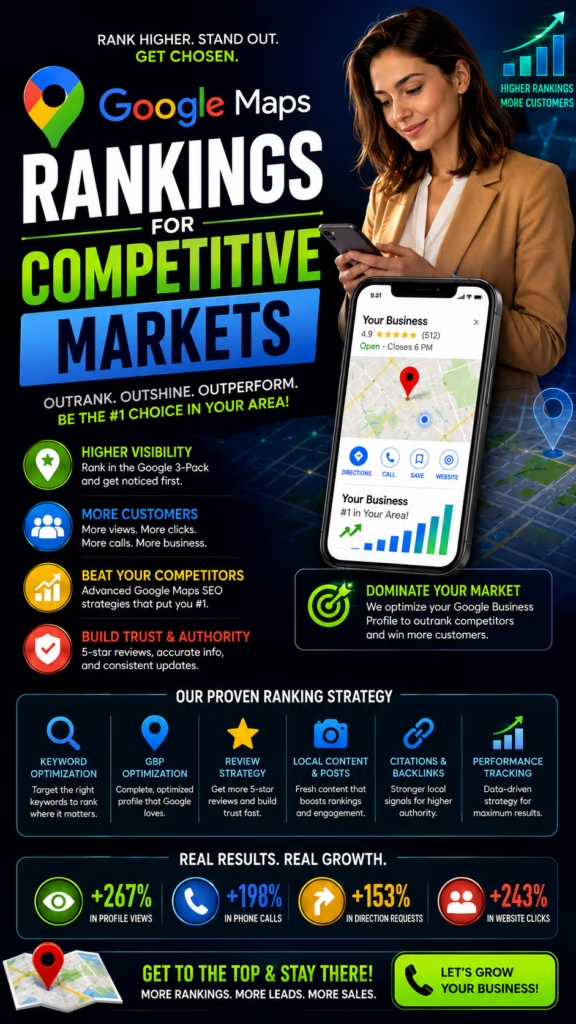
Google Maps Rankings for Competitive Markets
Google Maps rankings for competitive markets require a coordinated local SEO strategy that improves relevance, prominence, trust, website quality, review strength, and local authority.
Introduction
Google Maps rankings for competitive markets require a stronger local SEO system because businesses are competing against established brands, high-review competitors, aggressive advertisers, and companies with years of local authority.
Google Maps rankings for competitive markets require a stronger local SEO system because businesses are competing against established brands, high-review competitors, aggressive advertisers, and companies with years of local authority. In competitive markets, this element should be maintained consistently and measured against real customer outcomes rather than treated as a one-time optimization task.
What Competitive Google Maps Rankings Mean
Competitive local search visibility is built through relevance, distance, prominence, trust, website quality, profile completeness, reviews, citations, links, content, and customer experience.
Competitive local search visibility is built through relevance, distance, prominence, trust, website quality, profile completeness, reviews, citations, links, content, and customer experience. In competitive markets, this element should be maintained consistently and measured against real customer outcomes rather than treated as a one-time optimization task.
Why Some Local Markets Are Harder to Rank In
In difficult markets, small execution gaps matter. A weak category choice, thin location page, inconsistent citation, slow website, or poor review workflow can make it harder to compete.
In difficult markets, small execution gaps matter. A weak category choice, thin location page, inconsistent citation, slow website, or poor review workflow can make it harder to compete. In competitive markets, this element should be maintained consistently and measured against real customer outcomes rather than treated as a one-time optimization task.
Set Clear Local Ranking Goals
Campaigns should focus on measurable visibility and lead outcomes rather than a single keyword from a single location.
Campaigns should focus on measurable visibility and lead outcomes rather than a single keyword from a single location. In competitive markets, this element should be maintained consistently and measured against real customer outcomes rather than treated as a one-time optimization task.
Fully Optimize Google Business Profile
A complete Google Business Profile should use the correct real-world business name, primary and secondary categories, phone number, website, hours, services, attributes, and photos.
A complete Google Business Profile should use the correct real-world business name, primary and secondary categories, phone number, website, hours, services, attributes, and photos. In competitive markets, this element should be maintained consistently and measured against real customer outcomes rather than treated as a one-time optimization task.
Choose the Right Primary and Secondary Categories
Category selection is one of the strongest relevance signals available inside the profile. Choose categories that accurately reflect real services.
Category selection is one of the strongest relevance signals available inside the profile. Choose categories that accurately reflect real services. In competitive markets, this element should be maintained consistently and measured against real customer outcomes rather than treated as a one-time optimization task.
Build Out Google Business Profile Services
Service entries can reinforce topical relevance and help customers understand what the business actually offers.
Service entries can reinforce topical relevance and help customers understand what the business actually offers. In competitive markets, this element should be maintained consistently and measured against real customer outcomes rather than treated as a one-time optimization task.
Write a Strong Business Description
The business description should clearly explain the company, core services, service areas, and differentiators without keyword stuffing.
The business description should clearly explain the company, core services, service areas, and differentiators without keyword stuffing. In competitive markets, this element should be maintained consistently and measured against real customer outcomes rather than treated as a one-time optimization task.
Use High-Quality Local Photos
Original photos of the storefront, team, vehicles, projects, products, and local work can strengthen trust and help the profile feel legitimate.
Original photos of the storefront, team, vehicles, projects, products, and local work can strengthen trust and help the profile feel legitimate. In competitive markets, this element should be maintained consistently and measured against real customer outcomes rather than treated as a one-time optimization task.
Publish Useful Google Business Profile Posts
Profile posts can support engagement and freshness when they highlight real updates, offers, projects, seasonal information, and customer education.
Profile posts can support engagement and freshness when they highlight real updates, offers, projects, seasonal information, and customer education. In competitive markets, this element should be maintained consistently and measured against real customer outcomes rather than treated as a one-time optimization task.
Build a Sustainable Review Strategy
A sustainable review strategy asks real customers for honest feedback and avoids incentives, gating, or fabricated reviews.
A sustainable review strategy asks real customers for honest feedback and avoids incentives, gating, or fabricated reviews. In competitive markets, this element should be maintained consistently and measured against real customer outcomes rather than treated as a one-time optimization task.
Respond to Reviews Professionally
Professional review responses can reinforce trust, clarify misunderstandings, and show that the business actively manages customer experience.
Professional review responses can reinforce trust, clarify misunderstandings, and show that the business actively manages customer experience. In competitive markets, this element should be maintained consistently and measured against real customer outcomes rather than treated as a one-time optimization task.
Strengthen the Local Website
The connected website should clearly explain services, locations, trust signals, contact information, and conversion paths while remaining fast and mobile friendly.
The connected website should clearly explain services, locations, trust signals, contact information, and conversion paths while remaining fast and mobile friendly. In competitive markets, this element should be maintained consistently and measured against real customer outcomes rather than treated as a one-time optimization task.
Build High-Quality Location Pages
High-quality location pages can improve local relevance when they contain genuinely useful information for customers in each target market.
High-quality location pages can improve local relevance when they contain genuinely useful information for customers in each target market. In competitive markets, this element should be maintained consistently and measured against real customer outcomes rather than treated as a one-time optimization task.
Create Strong Service Pages
Important services often deserve dedicated pages that explain problems, process, benefits, FAQs, local availability, and the next step.
Important services often deserve dedicated pages that explain problems, process, benefits, FAQs, local availability, and the next step. In competitive markets, this element should be maintained consistently and measured against real customer outcomes rather than treated as a one-time optimization task.
Improve Internal Linking
Internal links help users and search systems understand the relationship between services, locations, and supporting resources.
Internal links help users and search systems understand the relationship between services, locations, and supporting resources. In competitive markets, this element should be maintained consistently and measured against real customer outcomes rather than treated as a one-time optimization task.
Build Consistent Local Citations
Consistent citations across reputable directories, associations, chambers, and industry sources help reinforce the business identity.
Consistent citations across reputable directories, associations, chambers, and industry sources help reinforce the business identity. In competitive markets, this element should be maintained consistently and measured against real customer outcomes rather than treated as a one-time optimization task.
Earn Local and Industry Links
Relevant local and industry backlinks can support authority and prominence when they come from legitimate relationships and useful sources.
Relevant local and industry backlinks can support authority and prominence when they come from legitimate relationships and useful sources. In competitive markets, this element should be maintained consistently and measured against real customer outcomes rather than treated as a one-time optimization task.
Publish Local Content That Helps Customers
Local content should answer real customer questions about neighborhoods, seasons, planning, regulations, comparisons, and service needs.
Local content should answer real customer questions about neighborhoods, seasons, planning, regulations, comparisons, and service needs. In competitive markets, this element should be maintained consistently and measured against real customer outcomes rather than treated as a one-time optimization task.
Strengthen Brand and Entity Consistency
Brand consistency across the website, Google profile, directories, and public references helps search systems connect signals to the same business entity.
Brand consistency across the website, Google profile, directories, and public references helps search systems connect signals to the same business entity. In competitive markets, this element should be maintained consistently and measured against real customer outcomes rather than treated as a one-time optimization task.
Understand Proximity and Geographic Limits
Proximity remains an important local ranking factor, so businesses should set realistic expectations about how far they can dominate from a verified location.
Proximity remains an important local ranking factor, so businesses should set realistic expectations about how far they can dominate from a verified location. In competitive markets, this element should be maintained consistently and measured against real customer outcomes rather than treated as a one-time optimization task.
Use Local Rank Grid Tracking
Grid tracking reveals how visibility changes across a city and is often more useful than checking a single search from one device.
Grid tracking reveals how visibility changes across a city and is often more useful than checking a single search from one device. In competitive markets, this element should be maintained consistently and measured against real customer outcomes rather than treated as a one-time optimization task.
Analyze Local Competitors
Competitor analysis should review categories, reviews, location, website strength, services, citations, backlinks, content, and conversion quality.
Competitor analysis should review categories, reviews, location, website strength, services, citations, backlinks, content, and conversion quality. In competitive markets, this element should be maintained consistently and measured against real customer outcomes rather than treated as a one-time optimization task.
Improve Conversion From Google Maps Traffic
Ranking is only valuable when visibility becomes calls, forms, visits, bookings, or qualified leads. Conversion optimization belongs inside local SEO.
Ranking is only valuable when visibility becomes calls, forms, visits, bookings, or qualified leads. Conversion optimization belongs inside local SEO. In competitive markets, this element should be maintained consistently and measured against real customer outcomes rather than treated as a one-time optimization task.
Avoid Google Maps Spam Tactics
Fake locations, keyword-stuffed names, duplicate profiles, fabricated reviews, and manipulative tactics can create suspension and trust risks.
Fake locations, keyword-stuffed names, duplicate profiles, fabricated reviews, and manipulative tactics can create suspension and trust risks. In competitive markets, this element should be maintained consistently and measured against real customer outcomes rather than treated as a one-time optimization task.
Track Leads and Calls From Local Search
Use call tracking when appropriate, UTM parameters, CRM source fields, form tracking, and appointment data to connect local visibility to revenue.
Use call tracking when appropriate, UTM parameters, CRM source fields, form tracking, and appointment data to connect local visibility to revenue. In competitive markets, this element should be maintained consistently and measured against real customer outcomes rather than treated as a one-time optimization task.
Use AI to Analyze Local SEO Data
AI can help summarize rank grids, cluster keywords, analyze reviews, compare competitors, and organize reporting, but important conclusions should be checked against source data.
AI can help summarize rank grids, cluster keywords, analyze reviews, compare competitors, and organize reporting, but important conclusions should be checked against source data. In competitive markets, this element should be maintained consistently and measured against real customer outcomes rather than treated as a one-time optimization task.
Manage Multi-Location Google Maps SEO
Multi-location businesses need accurate, legitimate profiles for each location with unique local landing pages, photos, hours, services, and review strategies.
Multi-location businesses need accurate, legitimate profiles for each location with unique local landing pages, photos, hours, services, and review strategies. In competitive markets, this element should be maintained consistently and measured against real customer outcomes rather than treated as a one-time optimization task.
Set Realistic Ranking Timelines
Competitive local SEO usually takes sustained effort. Timelines depend on competition, authority, review history, proximity, technical health, and the current gap to leaders.
Competitive local SEO usually takes sustained effort. Timelines depend on competition, authority, review history, proximity, technical health, and the current gap to leaders. In competitive markets, this element should be maintained consistently and measured against real customer outcomes rather than treated as a one-time optimization task.
Common Google Maps Ranking Mistakes
Common mistakes include incomplete profiles, weak categories, thin location pages, inconsistent citations, poor review management, no tracking, and over-focusing on rank position alone.
Common mistakes include incomplete profiles, weak categories, thin location pages, inconsistent citations, poor review management, no tracking, and over-focusing on rank position alone. In competitive markets, this element should be maintained consistently and measured against real customer outcomes rather than treated as a one-time optimization task.
A 30-Day Competitive Google Maps Action Plan
Week one should audit the profile, website, reviews, citations, and competitors. Week two should fix profile and site gaps. Week three should strengthen reviews, content, links, and citations. Week four should compare grids, leads, and competitor movement.
Week one should audit the profile, website, reviews, citations, and competitors. Week two should fix profile and site gaps. Week three should strengthen reviews, content, links, and citations. Week four should compare grids, leads, and competitor movement. In competitive markets, this element should be maintained consistently and measured against real customer outcomes rather than treated as a one-time optimization task.
Conclusion
Google Maps rankings for competitive markets improve through stronger legitimate local signals built over time. Durable growth comes from profile quality, website strength, reviews, citations, links, tracking, and customer experience.
Google Maps rankings for competitive markets improve through stronger legitimate local signals built over time. Durable growth comes from profile quality, website strength, reviews, citations, links, tracking, and customer experience. In competitive markets, this element should be maintained consistently and measured against real customer outcomes rather than treated as a one-time optimization task.
Frequently Asked Questions
What are Google Maps rankings for competitive markets?
They are local search positions earned in markets where many strong businesses compete for the same customers, services, and geographic areas.
What affects Google Maps rankings?
Google commonly considers relevance, distance, and prominence, along with profile quality, website signals, reviews, and local-search evidence.
Can a business guarantee the number-one Google Maps ranking?
No legitimate provider can guarantee a permanent number-one ranking because local results depend on many factors outside a business's control.
How important is Google Business Profile optimization?
It is extremely important because the profile provides structured information about the business, services, categories, location, hours, and contact details.
What is the most important Google Business Profile category?
The primary category should represent the core business or service as accurately as possible.
Do secondary categories help?
Relevant secondary categories can help Google understand additional legitimate services the business provides.
Do reviews help Google Maps performance?
Reviews can support customer trust and local prominence, especially when they are genuine, recent, and managed consistently.
How often should businesses ask for reviews?
Businesses should request honest reviews consistently from real customers rather than relying on occasional large bursts.
Should businesses respond to reviews?
Yes. Professional responses can improve customer trust and show that the business actively manages its reputation.
Do Google Business Profile posts improve rankings?
Posts can improve profile activity and customer engagement, but they should not be treated as a guaranteed direct ranking tactic.
How important is the website for Google Maps SEO?
Very important. The connected website helps establish service relevance, location relevance, authority, and conversion quality.
Do location pages help local rankings?
Well-written location pages can help establish local relevance when they provide useful, unique information for real customers.
Should businesses create hundreds of city pages?
No. Large numbers of thin, nearly identical pages can create a poor user experience and weak content quality.
Do citations still matter for local SEO?
Consistent, relevant citations can help reinforce business information and local credibility.
Do backlinks help Google Maps rankings?
Strong local and industry-relevant backlinks can support website authority and local prominence.
What is local rank grid tracking?
It measures rankings from multiple geographic points to show how visibility changes across a city or service area.
Why does a business rank well in one neighborhood but poorly in another?
Proximity and local competition can cause rankings to vary significantly across short distances.
Can service-area businesses rank far from their address?
They may rank across a broader area, but proximity still matters and visibility often weakens farther from the verified location.
Should businesses use virtual offices for rankings?
Businesses should not create fake or ineligible locations solely to manipulate Google Maps visibility.
Can keyword stuffing the business name improve rankings?
It may create temporary visibility in some cases, but it can violate guidelines when the name does not reflect the real-world business name.
How should competitors be analyzed?
Review their categories, location, reviews, services, website, local content, citations, backlinks, and conversion experience.
What metrics should local SEO campaigns track?
Track grid visibility, calls, website visits, direction requests, form leads, appointments, qualified leads, and revenue.
How long does competitive Google Maps SEO take?
Timelines vary by competition, profile strength, website authority, review history, proximity, and the gap between the business and competitors.
Can AI help with Google Maps SEO?
Yes. AI can help summarize data, cluster keywords, analyze reviews, identify content gaps, and organize reporting when used with human review.
Can Google Maps rankings change frequently?
Yes. Local rankings can change because of competitor activity, searcher location, profile updates, algorithm changes, reviews, and other factors.
What is the biggest local SEO mistake?
A major mistake is focusing only on rankings while ignoring profile accuracy, website quality, customer conversion, and lead tracking.
Should every service have its own page?
Important services often deserve dedicated pages when there is enough useful information to justify them.
Can businesses improve rankings without buying ads?
Yes. Organic local SEO can improve visibility independently of paid advertising, although competitive results usually require sustained optimization.
What is the role of proximity in Google Maps rankings?
Proximity measures how close a business is to the searcher or location implied by the query and can strongly influence local results.
What is the main goal of Google Maps SEO in competitive markets?
The main goal is to build durable local visibility that produces qualified calls, leads, appointments, visits, and revenue.
30 Additional SEO Keywords
Use these naturally in supporting articles, service pages, location pages, internal links, image alt text, and future local SEO content.
Build a Stronger Google Maps Ranking System
MarketWiz.ai helps businesses connect Google Maps SEO, local content, profile optimization, reviews, citations, rank tracking, and conversion-focused workflows into a more measurable local growth system.
Request a MarketWiz.ai Strategy Review












