

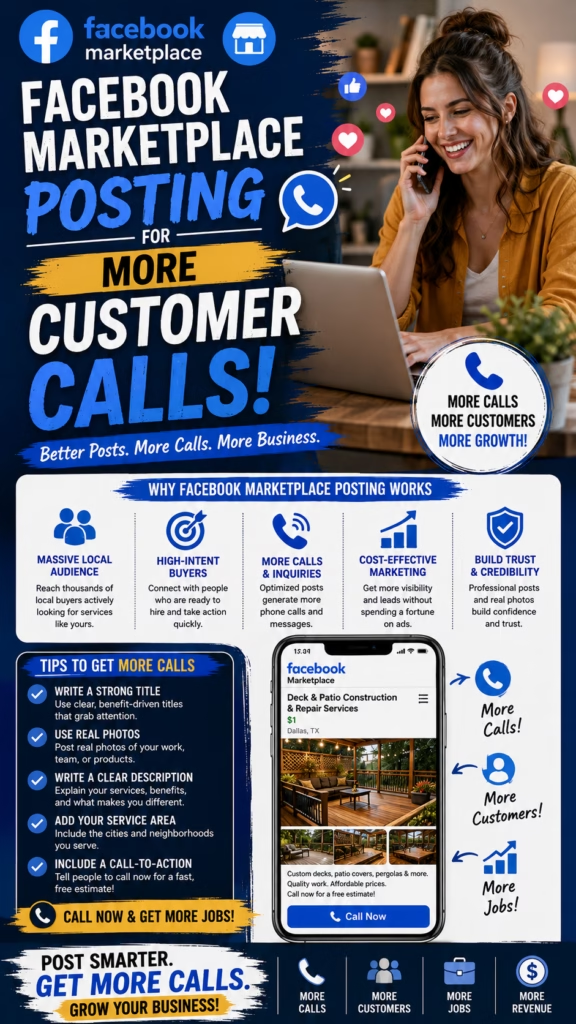
Facebook Marketplace Posting for More Customer Calls
Facebook Marketplace posting for more customer calls is about more than publishing listings and waiting for messages. A stronger strategy uses genuine physical products, accurate pricing, compelling images, useful local information, buyer-focused descriptions, fast response, simple qualification, clear next steps, phone conversion, CRM attribution, and revenue tracking to turn Marketplace visibility into real customer conversations.
A Facebook Marketplace message is useful. A qualified customer conversation can be much more valuable.
That distinction is the foundation of this strategy.
Many businesses measure Marketplace performance by listing count.
How many products did we post?
How many messages came in?
How many views did the listing receive?
Those numbers can provide useful signals.
But they do not necessarily tell the business whether Marketplace is generating customers.
A stronger question is:
How many Marketplace buyers turned into qualified conversations?
How many called?
How many scheduled an appointment?
How many requested a quote?
How many bought?
How much revenue came from those customers?
That moves Marketplace from activity tracking into customer acquisition.
The journey often starts with a physical product.
Furniture.
Flooring.
Appliances.
Garage doors.
Equipment.
Mattresses.
Building materials.
Outdoor products.
Retail inventory.
The buyer sees the item.
Looks at the photo.
Looks at the price.
Reads the description.
Checks the location.
Then asks a question.
“Is this available?”
“What size is it?”
“Do you have another color?”
“Can I pick it up today?”
“Do you have more than one?”
“Does that price include everything shown?”
“Can I call you?”
Those questions reveal purchase intent.
The job of the business is to make the transition from product interest to customer conversation easy.
That begins long before the phone rings.
The listing title matters.
The photos matter.
The price matters.
The description matters.
The local information matters.
The response speed matters.
The qualification process matters.
The phone conversation matters.
The follow-up matters.
The tracking matters.
Marketplace should therefore be viewed as a complete funnel.
Listing.
Buyer.
Inquiry.
Qualification.
Phone call.
Appointment.
Quote.
Purchase.
Repeat purchase.
Referral.
Revenue.
Every stage should be measurable.
The Marketplace-to-Call Growth Formula
Real Product + Accurate Price + Strong Images + Local Relevance + Fast Response + Buyer Qualification + Phone Conversation + Clear Next Step + Follow-Up + CRM Tracking = More Valuable Customer Calls
Why Facebook Marketplace Can Generate More Customer Calls
Local Buying Intent
Many Marketplace buyers are actively browsing nearby products rather than passively consuming advertising.
Product-Led Conversations
A physical item gives the customer a concrete reason to start a conversation.
Visual Discovery
Strong product photography can capture interest before any sales conversation begins.
Fast Messaging
Marketplace creates a simple path from product discovery to direct buyer questions.
Phone Conversion Potential
Larger or more complex purchases often benefit from a short customer call.
Measurable Revenue
Calls can be connected with appointments, purchases, repeat customers, and final revenue.
Use a Product-First Facebook Marketplace Strategy
Marketplace works best when the listing actually represents an item.
Advertise Genuine Physical Products
The customer should be able to understand exactly what item is being offered.
Use Accurate Product Details
Size, model, brand, material, condition, color, quantity, and other important facts should be accurate.
Use Genuine Pricing
The displayed amount should correspond to a real product.
Use Current Availability
Do not advertise inventory that is not genuinely available.
Do Not Disguise Service Ads as Products
Service-only offers should not be represented as fake physical items.
A Better Listing Starts With a Real Offer
Marketplace customer calls are more useful when the buyer understands exactly what product started the conversation. Clear product-based listings create stronger expectations than vague promotional posts.
Understand Facebook Marketplace Buyer Intent
Ready-to-Buy Customers
Some buyers are actively looking for an item immediately.
Comparison Shoppers
Buyers may contact several sellers while comparing price, quality, location, and availability.
Research-Stage Buyers
Some shoppers are early in the process and need additional information.
Bulk Buyers
Contractors, landlords, property managers, and businesses may need larger quantities.
Higher-Ticket Buyers
Large purchases may involve more questions before the customer is ready to buy.
Local Convenience Buyers
Some shoppers choose a business because the product is nearby and easy to obtain.
Improve Overall Marketplace Listing Quality
Customer calls usually begin with stronger listings.
Make the Product Obvious
The buyer should immediately know what is being sold.
Make the Price Clear
Avoid forcing customers to message only to discover the real cost.
Make the Location Understandable
Buyers should know whether the item is practical to purchase locally.
Make the Photos Useful
Images should answer questions rather than merely decorate the listing.
Make the Description Specific
Include information a serious customer actually needs.
Make the Next Step Easy
Interested shoppers should understand how to continue the conversation.
Write Better Facebook Marketplace Titles
Lead With the Product
Start with the item the customer is shopping for.
Use Brand When Helpful
Include accurate brand information where buyers care about it.
Use Model or Style
Product specificity can improve lead relevance.
Add Size Where Important
Dimensions are critical in categories such as flooring, furniture, doors, appliances, mattresses, and equipment.
Use Condition Where Relevant
New, used, open-box, floor model, or another genuine condition may improve qualification.
Avoid Keyword Stuffing
Titles should still sound natural.
Avoid Excessive Capitals
Clean readable listings tend to look more professional.
Write Better Marketplace Descriptions for More Customer Calls
Describe the Product First
Start with the item itself.
Include Important Specifications
Give buyers enough information to determine basic fit.
Include Accurate Pricing
Explain whether the price is per item, per square foot, per box, per set, or another unit.
Explain Condition
Honest condition descriptions improve trust.
Explain Local Availability
Pickup, store, showroom, delivery, or other logistics should be accurate.
Answer Common Questions Before They Are Asked
Buyers are more likely to call when they already understand the basics.
Keep the Call to Action Simple
Give interested customers one obvious next step.
Use Better Product Images to Increase Marketplace Response
Use a Strong Primary Image
The first photo should make the product immediately recognizable.
Show Multiple Angles
Higher-value products often benefit from front, side, interior, and detail views.
Show Scale
Context or dimensions can help buyers understand actual size.
Show Important Details
Controls, hardware, finishes, materials, labels, model information, and special features may deserve close-up images.
Show Condition Honestly
Used or open-box products should show relevant wear.
Show Genuine Inventory
Do not imply that a generic concept image is the exact physical item being sold.
Better Images Reduce Low-Quality Calls
Good product photography helps customers self-qualify before contacting the business. Buyers who understand the product before calling can have more useful conversations.
Use Accurate Pricing to Generate Better Customer Calls
Price has a major effect on inquiry quality.
Use the Actual Product Price
Avoid misleading numbers intended only to attract clicks.
Clarify Pricing Units
Per item, per box, per square foot, per set, or another unit should be obvious.
Use Starting Prices Carefully
A genuine product should exist at the advertised starting price.
Explain Optional Upgrades
Custom colors, sizes, features, quantities, delivery, or related additions may change cost.
Avoid Fake Discounts
Promotions should be current and real.
Avoid Fake $0 or $1 Listings
Artificial pricing can produce more messages but weaker customer expectations.
Accurate Price = Better Phone Conversation
When the buyer already understands the real product price, the phone call can focus on fit, quantity, timing, availability, options, and the next step instead of correcting misleading expectations.
Strengthen Local Relevance in Marketplace Listings
Use Accurate City Information
Buyers want to know where the product is located.
Use Real Pickup Locations
Do not fabricate addresses or inventory locations.
Explain Delivery Where Available
Delivery areas should be genuine.
Explain Store or Showroom Access
Physical businesses can use local presence to increase trust.
Track Customer ZIP Codes
Geographic data can reveal which areas generate the best calls.
Local Buyers Are Often Better Call Prospects
A customer who lives nearby, understands the product, and can realistically purchase or visit the business is generally more valuable than an inquiry from someone outside the practical market.
Handle Marketplace Product Availability Carefully
Confirm Inventory Before Making Strong Claims
Do not say “in stock” unless availability is known.
Update Sold Products
Old listings can create unnecessary calls.
Confirm Quantity
Bulk buyers may need multiple units.
Confirm Colors and Variants
Do not assume every option is available.
Explain Order-Based Products
Custom or special-order items should have realistic lead-time language.
Do Not Promise Unconfirmed Delivery Dates
Inventory and logistics can change.
Include Useful Product Specifications Before the Customer Calls
Dimensions
Help customers understand size.
Brand
Use accurate manufacturer information.
Model
Model numbers help serious buyers research products.
Material
Construction can influence durability, appearance, and suitability.
Quantity
Explain how much product the price includes.
Compatibility
Avoid unsupported fitment or compatibility claims.
Describe Marketplace Product Condition Clearly
New
Use only when the item is genuinely new.
Used
Explain relevant wear.
Open-Box
State what the condition means for the actual item.
Floor Model
Disclose visible cosmetic condition.
Scratch-and-Dent
Show imperfections in photos where possible.
Refurbished
Use the term only where accurate.
Build Trust Before Asking the Marketplace Buyer to Call
Use Accurate Business Information
Customers may research the seller before calling.
Use Consistent Branding
Product images, business pages, and local profiles should look connected.
Use Genuine Reviews Where Appropriate
Do not fabricate social proof.
Keep Product Claims Accurate
Trust disappears quickly when the call reveals different facts from the listing.
Make the Customer Feel Informed
Informed buyers often make stronger phone leads.
Respond to Marketplace Leads Quickly
A buyer may contact several sellers within minutes.
Answer the Actual Question
If the customer asks whether something is available, answer that first.
Confirm the Product
Make sure both sides are discussing the same item.
Confirm Location
Determine whether the customer can realistically buy.
Confirm Quantity
This may change the sales opportunity significantly.
Confirm Timing
Buyers who need the item today require different handling from those planning next month.
Move Serious Customers Forward
A phone conversation can be a natural next step for qualified buyers.
Qualify Marketplace Buyers Before the Phone Call
Which Product Are You Interested In?
Confirm the exact item.
How Many Do You Need?
Quantity can reveal order value.
What City Are You In?
Confirm geographic fit.
When Do You Need It?
Timing helps prioritize leads.
Do You Need Pickup, Delivery, or Another Option?
Clarify logistics where applicable.
Do You Have Any Specific Requirements?
Size, color, model, material, configuration, or another key detail may matter.
Qualification Makes Customer Calls More Valuable
A two-minute Marketplace conversation can eliminate poor-fit inquiries before they become ten-minute phone calls. Good qualification protects sales time.
Move Qualified Marketplace Leads Toward Customer Calls
Not every Marketplace inquiry needs a phone conversation.
But certain leads become easier to close through voice.
Higher-Value Products
Buyers may want additional confidence before spending more money.
Custom Products
Multiple options can be easier to discuss verbally.
Large Quantities
Contractors and businesses may need availability and pricing clarified.
Appointments
Showroom visits, measurements, consultations, or pickups may be easier to confirm by phone.
Technical Products
Compatibility and specifications may require a deeper conversation.
Urgent Buyers
Customers needing an item immediately may prefer to call and confirm.
Know When a Marketplace Phone Call Makes Sense
The Buyer Has Several Questions
A call can save time compared with a long message thread.
The Buyer Wants to Visit
Confirm product, location, hours, and availability before they travel.
The Buyer Needs a Quote
Quantity, configuration, and other variables may be easier to discuss verbally.
The Buyer Needs Measurement
Certain products require more precise project information.
The Buyer Has a High-Value Purchase
Personal conversation can strengthen confidence.
The Buyer Wants Immediate Confirmation
A phone call may be the fastest path.
Open Marketplace Customer Calls Correctly
The customer should not have to explain everything again.
Reference the Product
Start by confirming which Marketplace item prompted the call.
Reference Known Information
If the customer already shared quantity or location, do not repeatedly ask for the same information.
Answer Outstanding Questions
Lead with helpful information.
Then Qualify Further
Use the call to determine product fit and next steps.
Keep the Conversation Natural
A Marketplace buyer usually does not want a scripted high-pressure sales call.
Ask Better Questions During Marketplace Customer Calls
What Are You Looking For?
Confirm the customer's actual need.
What Quantity Do You Need?
This can dramatically change the transaction value.
Where Are You Located?
Confirm practical local fit.
When Do You Need It?
Timing reveals urgency.
What Size or Specifications Do You Need?
Product fit matters.
Are You Comparing Other Options?
Understand the buying stage without pressuring the customer.
What Would Help You Make a Decision?
The answer may be availability, a visit, a quote, measurements, or product information.
Confirm Product Fit on the Customer Call
Size
Make sure dimensions match the customer's need.
Quantity
Confirm enough inventory exists.
Color
Verify the available finish.
Model
Confirm exact product configuration.
Condition
Make sure the customer understands new, used, open-box, or another condition.
Compatibility
Verify product fit where relevant rather than making unsupported assumptions.
Confirm Geographic Fit Before Investing More Sales Time
Local Pickup
Confirm the buyer can reach the pickup location.
Store Visit
Confirm business location and hours.
Delivery
Determine whether the destination is inside the real delivery area.
Installation
Where separately available, confirm that the property is inside the installation territory.
Commercial Orders
Delivery distance may affect larger transactions.
Confirm Customer Timing on the Marketplace Call
Ready Today
Confirm inventory immediately.
Ready This Week
Move toward the next practical step.
Planning Ahead
Create an appropriate follow-up point.
Project Deadline
Contractors, landlords, and remodelers may have specific timelines.
Move-In Date
Furniture, mattresses, appliances, flooring, and other products may be tied to a move.
Seasonal Purchase
Outdoor and seasonal products can have narrow buying windows.
Handle Marketplace Budget Questions Carefully
Do Not Hide the Advertised Price
The phone call should not reveal a dramatically different price without a valid product-related reason.
Clarify Options
Upgrades or larger quantities can change total cost.
Explain Pricing Units
Per piece, box, square foot, set, or unit should remain clear.
Offer Relevant Alternatives
If the exact product is outside the buyer's range, another genuine product may fit.
Avoid Pressure
Useful product guidance creates better long-term customers than aggressive sales tactics.
Move Marketplace Customer Calls Toward Appointments
Showroom Appointments
Useful for products customers want to compare in person.
Measurement Appointments
Important for products that depend on site dimensions.
Pickup Appointments
Can help ensure product availability and staff readiness.
Product Demonstrations
Certain equipment or higher-value products may benefit from demonstrations.
Commercial Consultations
Larger orders may need a deeper buying conversation.
Track the Appointment Source
Marketplace should retain attribution.
Move Marketplace Phone Leads Toward Quotes
Confirm Product
Know exactly what the quote includes.
Confirm Quantity
Bulk orders require accurate inventory information.
Confirm Options
Size, finish, accessories, configuration, and other product details can affect cost.
Confirm Delivery or Pickup
Logistics may affect the final amount.
Confirm Installation Where Applicable
Keep product and separately available installation costs clear.
Track Quote Value
Listing quality should eventually be connected with real opportunity value.
Move Marketplace Calls Toward Purchases
Confirm Inventory
Avoid bringing customers to unavailable products.
Confirm Final Product Selection
Model, color, size, quantity, and condition should match expectations.
Confirm Pickup or Delivery
Make logistics clear.
Confirm Payment Process
Use legitimate business procedures.
Confirm Documentation
Receipts, warranties, invoices, or other normal purchase information should be handled accurately.
Record Marketplace Attribution
The final sale should remain connected to its original source.
Build a Marketplace Customer Call Follow-Up System
Follow Up on Quotes
Buyers may need time to decide.
Follow Up on Out-of-Stock Products
Contact the customer only if appropriate inventory becomes genuinely available.
Follow Up on Future Purchases
Some customers plan weeks or months ahead.
Follow Up After Appointments
Store and showroom visitors may still need help making a decision.
Follow Up With Commercial Buyers
Larger transactions often take longer.
Respect Customer Preferences
Stop unwanted follow-up when requested.
Handle Missed Marketplace Customer Calls Correctly
A missed call can still represent a strong buying opportunity.
Return Calls Promptly
A customer may call several businesses.
Know the Likely Marketplace Source
If call tracking is available, preserve attribution.
Reference the Product
When known, begin with the product that generated interest.
Do Not Make the Buyer Repeat Everything
Use existing CRM or message context.
Track the Outcome
Missed calls should not disappear from reporting.
Track Marketplace Customer Calls
Call Source
Record Facebook Marketplace.
Original Listing
Identify the product that created the call.
Call Outcome
Qualified, unqualified, appointment, quote, purchase, follow-up, or another useful outcome.
Call Duration
Duration can provide context, although it should not be treated as a direct measure of lead quality.
Revenue Outcome
Connect completed purchases to the original call where possible.
Repeat Customer Outcome
Track future value.
Track Facebook Marketplace Customer Calls in CRM
- Customer name
- Phone number
- Email where provided
- Facebook Marketplace source
- Original listing reference
- Product category
- Specific product
- Quantity requested
- Customer city
- ZIP code
- Desired timing
- Pickup or delivery preference
- Product requirements
- Initial message status
- Phone-call status
- Call outcome
- Appointment status
- Quote amount
- Purchase status
- Transaction value
- Additional products purchased
- Repeat customer status
- Referral opportunity
- Customer lifetime value
Suggested Marketplace Call Pipeline
- New Marketplace inquiry
- Responded
- Product confirmed
- Buyer qualified
- Phone call requested
- Phone call completed
- Appointment / quote opportunity
- Quote sent
- Purchase pending
- Purchased
- Upsell / additional purchase
- Repeat customer
- Referral opportunity
- Lost / not qualified
Measure Facebook Marketplace Customer Call Performance
| Metric | Why It Matters |
|---|---|
| Total Marketplace inquiries | Measures initial product response |
| Qualified Marketplace leads | Measures buyer relevance |
| Customer calls | Measures transition into deeper conversations |
| Qualified calls | Measures phone lead quality |
| Appointments / quotes | Measures sales progression |
| Purchases | Measures actual conversion |
| Average transaction value | Measures economic lead quality |
| Closed Marketplace revenue | Measures actual business impact |
Track Customer Calls by Marketplace Listing
Listing Views
Useful as an early visibility indicator.
Messages
Shows buyer interest.
Qualified Leads
Reveals whether the listing attracts appropriate buyers.
Phone Calls
Shows which products generate deeper engagement.
Appointments
Reveals real sales progression.
Revenue
Shows which listings actually create business.
Track Marketplace Calls by Product Category
Furniture
Compare calls, store visits, and average purchases.
Flooring
Measure quantity, square footage, phone conversations, and order value.
Mattresses
Track product calls and showroom conversion.
Appliances
Compare product availability calls and final purchases.
Garage Doors
Measure calls that progress into measurement and installation.
Equipment
Track higher-ticket and commercial buyer value.
Track Marketplace Customer Calls by City
Inquiry Volume
Which areas generate the most Marketplace activity?
Call Conversion
Which markets produce buyers willing to speak directly?
Average Transaction Value
Some markets may create larger purchases.
Delivery Demand
Geography may affect logistics.
Repeat Customer Rate
Some local areas may create stronger lifetime value.
Revenue
Compare actual Marketplace-generated sales by city.
Measure Marketplace Customer Lifetime Value
The first phone call can be the beginning of a much larger customer relationship.
First Purchase
Track the original transaction.
Additional Products
One buyer may purchase more during the same transaction.
Future Purchases
Local customers can return.
Commercial Accounts
Contractors, landlords, and businesses may become repeat buyers.
Referrals
Satisfied customers can generate additional business.
Full Lifetime Value
Measure more than the first invoice.
One Marketplace Call Can Be Worth Much More Than One Sale
A buyer can purchase an advertised product, add related items, return later, or refer another customer. Long-term attribution reveals the true value of Marketplace customer acquisition.
Use Marketplace Customer Calls to Build Repeat Revenue
Remember the Original Product
Customer history makes future conversations easier.
Track Related Needs
Do not rely on memory alone.
Follow Up at Appropriate Times
Some products lead naturally to future purchases.
Identify Commercial Customers
Business buyers may have repeat purchasing cycles.
Preserve Attribution
Future revenue should remain connected to the original Marketplace acquisition where useful.
Use Automation Carefully With Marketplace Customer Calls
Lead Routing
Send qualified inquiries to the appropriate salesperson quickly.
CRM Attribution
Preserve Marketplace as the source.
Call Tracking
Connect calls to listings where appropriate.
Product Tags
Organize inquiries by item and category.
Appointment Reminders
Reduce forgotten customer commitments.
Follow-Up Reminders
Keep open sales opportunities organized.
Revenue Reporting
Connect completed sales back to Marketplace.
Automation Should Support Lead Handling, Not Marketplace Spam
Do not use automation to fabricate products, fake inventory, misleading prices, false locations, deceptive discounts, copied product imagery, repetitive low-value duplicate listings, service-only listings disguised as products, or activity intended to bypass Marketplace policies, account safeguards, listing limits, category rules, commerce standards, or enforcement systems.
Connect Facebook Marketplace With Google Maps
A Marketplace shopper may not call immediately.
They may research the business first.
Business Name
Make it easy for serious customers to verify the seller.
Reviews
Genuine customer feedback can strengthen confidence.
Photos
Business and product photos reinforce local credibility.
Hours
Buyers may check whether the business is open before calling.
Location
Accurate local information supports store and showroom traffic.
Phone Number
Consistent accurate contact information reduces customer confusion.
Connect Facebook Marketplace With Local SEO
Product Pages
Marketplace shoppers may search the exact product on Google.
Category Pages
Strong local category pages can capture additional demand.
City Pages
Genuine local service or store pages can reinforce geographic relevance.
FAQs
Answer common buying questions on the website.
Internal Linking
Connect products with useful related pages.
Consistent Information
Prices, availability, and product details should not contradict one another across channels.
Common Marketplace Posting Mistakes That Reduce Customer Calls
Using Fake $0 or $1 Prices
Misleading pricing creates poor expectations.
Posting Service-Only Offers as Products
Keep listings centered on genuine physical items.
Using Vague Titles
Buyers should know what the item is immediately.
Using Poor Photos
Blurry or irrelevant images weaken trust.
Using Stock Images as Exact Inventory
Do not misrepresent the item the customer will receive.
Advertising Unavailable Products
Stale inventory wastes customer calls.
Using False Local Locations
Geography must remain accurate.
Inventing Discounts
Promotions should be genuine.
Leaving Out Important Specifications
Buyers may call only to discover the item is unsuitable.
Responding Too Slowly
Customers may buy elsewhere.
Sending Every Lead Straight to the Phone
Basic message qualification can protect sales time.
Making Customers Repeat Information
Use existing Marketplace conversation context.
Failing to Track Calls
Marketplace performance becomes difficult to measure.
Failing to Track Final Revenue
Calls are not the end goal.
Excessive Duplicate Listings
Genuine product variety is stronger than repetitive spam.
Ignoring Current Marketplace Requirements
Commerce policies and listing rules can change.
A 30-Day Facebook Marketplace Plan for More Customer Calls
Week 1: Build the Marketplace Foundation
- Identify genuine physical products suitable for Marketplace
- Verify current product pricing
- Verify current inventory
- Verify product specifications
- Collect clear genuine product photos
- Define accurate store, pickup, delivery, or service areas
- Review current Marketplace requirements
- Create buyer qualification questions
- Create phone-call outcome categories
- Set up Marketplace attribution in CRM
Week 2: Build Better Marketplace Listings
- Create product-specific listing titles
- Add genuine product prices
- Add multiple useful images
- Add dimensions and specifications
- Add accurate condition information
- Add confirmed availability
- Add accurate local information
- Answer common buyer questions in descriptions
- Use one clear next step
- Avoid unnecessary duplicate listings
Week 3: Improve Customer Call Conversion
- Respond quickly to new Marketplace inquiries
- Confirm the product
- Confirm buyer location
- Confirm quantity
- Confirm purchase timing
- Confirm key product requirements
- Move qualified higher-intent buyers toward phone calls
- Use existing message context during calls
- Move calls toward appointments, quotes, or purchases
- Track every meaningful call outcome
Week 4: Measure and Improve
- Compare calls by Marketplace listing
- Compare qualified call rates
- Compare appointments generated
- Compare quotes generated
- Compare purchase conversion
- Compare average transaction values
- Compare cities and ZIP codes
- Compare product categories
- Track repeat customers
- Track commercial accounts
- Track final Marketplace revenue
- Optimize listings based on real customer outcomes
End-of-Month Outcome
After 30 days, the business should have stronger product-based Marketplace listings, better pricing, better images, clearer descriptions, more accurate local targeting, faster response, stronger buyer qualification, better Marketplace-to-phone conversion, improved call handling, CRM attribution, and a clearer understanding of which listings generate actual customers and revenue.
Final Takeaway: Marketplace Posting Should Generate Conversations That Move Customers Forward
Facebook Marketplace should not be treated as a contest to produce the most listings.
It should be treated as a customer acquisition channel.
That means the goal is not:
More posts for the sake of posts.
More clicks for the sake of clicks.
More messages for the sake of messages.
The goal is qualified customer movement.
Product discovery.
Buyer inquiry.
Qualification.
Customer call.
Appointment.
Quote.
Purchase.
Repeat revenue.
That process begins with the listing.
A good listing does much of the early sales work before the customer ever speaks with anyone.
It tells them what the item is.
What it costs.
What it looks like.
What size it is.
What condition it is in.
Where it is located.
Whether it is available.
What important features it has.
Then the buyer decides whether to start a conversation.
That is why accuracy is so important.
If the listing says $1 and the real product is $1,200, the conversation begins with disappointment.
If the listing says “in stock” and the product is unavailable, the conversation begins with disappointment.
If the listing uses a photo that does not represent the real product, the conversation begins with confusion.
If the location is false, the conversation may never become a purchase.
Better Marketplace marketing starts with accurate expectations.
Then speed matters.
Marketplace is conversational.
A buyer sees a listing.
Messages one seller.
Messages another.
Messages a third.
The first helpful response can have an advantage.
But the response has to be useful.
Customer:
“Is this available?”
Weak response:
“Yes.”
Better response:
Confirm availability.
Answer the customer's question.
Then ask one useful qualification question.
Quantity.
Location.
Timing.
Size.
The goal is to keep the conversation moving.
But not every buyer should immediately become a phone call.
Some customers only need a basic answer.
Others are not inside the market.
Some want a product that does not fit.
Some need a quantity the business does not have.
Basic qualification protects sales time.
Once the lead looks legitimate, the phone can become powerful.
Phone calls make sense when the product is complicated.
High value.
Custom.
Technical.
Bulk.
Appointment-based.
Measurement-based.
Time-sensitive.
A conversation can answer five questions in two minutes that might take fifteen messages.
But the business should not reset the conversation when the customer calls.
If the buyer already said:
“I need 700 square feet.”
Do not ask:
“How much do you need?”
If they already said:
“I am in Dallas.”
Do not begin by asking:
“What city are you in?”
Use context.
That makes the customer feel heard.
Then ask deeper questions.
What exactly are you trying to accomplish?
What specifications matter?
How soon do you need it?
Do you need pickup or delivery?
Do you need an appointment?
Do you need a quote?
Those questions create progress.
The phone conversation should always have a purpose.
Appointment.
Quote.
Store visit.
Product reservation.
Measurement.
Pickup.
Purchase.
Clear next steps improve conversion.
Missed calls matter too.
A buyer may call while standing in a competitor's parking lot.
Or while comparing three products.
Returning a missed call quickly can still recover the opportunity.
This is why call tracking matters.
Marketplace listing.
Customer.
Call.
Outcome.
Purchase.
Revenue.
Without attribution, the business may think Marketplace generates only messages.
In reality, those messages may be creating calls.
Those calls may be creating store visits.
Those visits may be creating purchases.
The platform should receive credit for the whole customer journey.
CRM tracking makes that possible.
Record the listing.
Record the product.
Record the customer.
Record the city.
Record the call.
Record the appointment.
Record the quote.
Record the purchase.
Record the revenue.
Then compare performance.
Maybe one product gets many messages but few calls.
Maybe another gets fewer messages but almost every buyer calls.
Maybe one listing generates low-value buyers.
Maybe another generates commercial customers.
Maybe one city produces strong store traffic.
Maybe another produces large delivery orders.
Data reveals the difference.
That information should shape future Marketplace posting.
Advertise more of what produces qualified customers.
Improve listings that generate weak inquiries.
Remove stale inventory.
Improve images.
Improve titles.
Improve price clarity.
Improve local targeting.
Improve response scripts.
Improve call handling.
Then look beyond the first purchase.
A Marketplace buyer can become a repeat customer.
A flooring buyer may return for another project.
A landlord may need additional products for another property.
A contractor may buy every month.
A furniture customer may return for another room.
An appliance customer may need another replacement later.
One customer call can create substantial lifetime value.
Referrals expand the value further.
A satisfied customer tells a friend.
A contractor refers another contractor.
A landlord refers another property owner.
Marketplace creates the first introduction.
The business experience creates everything after it.
Google Maps supports this journey.
Marketplace shopper sees the product.
Searches the business.
Reads reviews.
Checks the location.
Looks at photos.
Confirms hours.
Then calls.
Marketplace creates discovery.
Google Maps creates validation.
Local SEO captures additional intent.
The website provides more detail.
CRM manages the sales process.
The phone conversation creates human connection.
The purchase creates revenue.
That is the complete system.
Automation can improve efficiency within that system.
New lead arrives.
Route it.
Tag the listing.
Record the product.
Track the phone call.
Trigger an appointment reminder.
Trigger follow-up.
Record the sale.
Measure revenue.
Those are useful workflows.
But automation should never be used to make Marketplace deceptive.
Do not create fake inventory.
Do not create fake prices.
Do not create false locations.
Do not fabricate discounts.
Do not disguise services as products.
Do not copy another seller's product photos.
Do not flood the platform with repetitive low-value listings.
Better Marketplace marketing is not about exploiting the platform.
It is about making legitimate products easier for local customers to discover and buy.
Measure success accordingly.
Qualified messages.
Customer calls.
Qualified calls.
Appointments.
Quotes.
Purchases.
Average order value.
Repeat customers.
Referrals.
Revenue.
Those numbers tell the real story.
Better Marketplace listings create better interest.
Better interest creates better conversations.
Better qualification creates better calls.
Better calls create clearer next steps.
Better follow-up creates more purchases.
Better tracking creates smarter marketing.
That is how Facebook Marketplace posting can become a practical strategy for generating more valuable customer calls.
Frequently Asked Questions
1. Can Facebook Marketplace generate customer calls for local businesses?
Yes. Genuine product listings with useful local information, accurate prices, strong photos, and fast response can create customer conversations that move into phone calls.
2. What makes a Marketplace listing more likely to generate calls?
Clear product titles, real pricing, useful photos, specific descriptions, local relevance, fast response, and a simple next step can improve call quality.
3. Should Marketplace listings focus on physical products?
Yes. Marketplace listings should be centered on genuine physical items rather than disguising service-only promotions as products.
4. Should Marketplace listings include real prices?
Yes. Pricing should correspond to the actual physical product being offered.
5. Do product photos affect Marketplace lead quality?
Yes. Strong genuine photos help buyers understand the product before contacting the business.
6. Should Marketplace listings include city names?
Accurate local information can help buyers determine whether the item is practical to purchase, pick up, view, or have delivered.
7. How important is the Marketplace listing title?
Very important. The title helps buyers determine product relevance before opening the listing.
8. Should Marketplace titles use excessive capitalization?
Clean professional titles are generally preferable to excessive capitals, symbols, and punctuation.
9. Can Facebook Marketplace help businesses reach nearby buyers?
Yes. Marketplace often supports local discovery and can help nearby buyers find relevant products.
10. Should businesses put their phone number in Marketplace listings?
Businesses should follow current Marketplace rules regarding contact information. Where phone contact is permitted, the number should be accurate and monitored.
11. How quickly should businesses respond to Marketplace leads?
As promptly as operationally practical because customers may contact several sellers during the same shopping session.
12. Should Marketplace leads be qualified before a phone call?
Yes. Confirm product, location, quantity, timing, and key needs before moving every inquiry into a phone conversation.
13. Can Marketplace leads convert better by phone?
Some higher-value, custom, technical, bulk, or appointment-based purchases can be easier to progress through a direct phone conversation.
14. Should businesses track Marketplace phone calls?
Yes. Call tracking helps connect Marketplace visibility with qualified conversations and revenue.
15. Should businesses track leads by Marketplace listing?
Yes. Listing-level data can reveal which products, titles, prices, and images generate the best calls.
16. Should businesses track Marketplace leads by city?
Yes. Geography can affect lead volume, buyer quality, transaction value, and logistics.
17. Can Marketplace phone leads become repeat customers?
Yes. A buyer first acquired through Marketplace may purchase again or refer other customers.
18. Should Marketplace listings use product-specific descriptions?
Yes. Product-specific descriptions create clearer expectations and more useful inquiries.
19. Should businesses rotate legitimate Marketplace product listings?
Businesses can maintain varied genuine product listings but should avoid repetitive low-value duplication or attempts to bypass platform safeguards.
20. Should Marketplace listings mention availability?
Only confirmed availability should be advertised.
21. Can Marketplace work for higher-ticket products?
Yes. Detailed product listings can generate qualified conversations for higher-value purchases.
22. Should Marketplace leads be tracked in CRM?
Yes. CRM tracking can connect inquiries with calls, appointments, quotes, purchases, follow-up, repeat business, and revenue.
23. What should businesses ask during a Marketplace phone call?
Confirm product, quantity, customer location, timing, specifications, purchase needs, and the most useful next step.
24. Should businesses follow up after a Marketplace phone call?
Yes, where appropriate. Higher-value purchases may require follow-up after quotes, appointments, product selection, or availability discussions.
25. Can automation help manage Marketplace customer calls?
Automation can support lead routing, call tracking, CRM attribution, reminders, follow-up, and reporting when used responsibly.
26. Can Marketplace complement Google Maps marketing?
Yes. Marketplace can create discovery while Google Maps strengthens local trust through reviews, photos, business details, and location information.
27. Can Marketplace complement local SEO?
Yes. Marketplace can generate direct buyer interest while SEO captures related Google searches.
28. What Marketplace mistakes reduce customer calls?
Vague titles, fake prices, weak photos, false inventory, inaccurate locations, slow response, unclear descriptions, and repetitive duplicates can reduce lead quality.
29. Should businesses measure calls instead of Marketplace messages?
Both can be useful, but qualified calls, appointments, purchases, and revenue are usually stronger measures of business impact than message volume alone.
30. What is the goal of Facebook Marketplace posting for more customer calls?
The goal is to turn genuine local product visibility into qualified conversations, customer calls, appointments, purchases, repeat customers, referrals, and measurable revenue.
30 Additional SEO Keywords
Use these supporting phrases naturally across Facebook Marketplace marketing articles, product pages, local landing pages, CRM resources, lead-generation guides, FAQs, and relevant internal links.
Build a Stronger Facebook Marketplace Customer Call System
MarketWiz.ai helps local businesses strengthen customer acquisition through automated advertising, local marketing, lead capture, follow-up, CRM integration, and measurable reporting designed to turn more qualified local Marketplace opportunities into real customer conversations and revenue.
This article provides general information about Facebook Marketplace posting, Facebook Marketplace lead generation, product marketing, local customer acquisition, customer calls, call tracking, CRM attribution, sales follow-up, local marketing, and revenue measurement. It does not provide legal, tax, financial, accounting, privacy, telecommunications, call-recording, consumer-finance, advertising-law, consumer-protection, product-safety, warranty, ecommerce, licensing, insurance, regulatory, compliance, or platform advice. Facebook Marketplace, Meta commerce policies, eligible categories, prohibited products, listing requirements, account safeguards, contact-information rules, geographic availability, product restrictions, ranking systems, commerce eligibility, and enforcement standards can change. Businesses should review current Facebook Marketplace and Meta commerce requirements before publishing or automating product listings. Marketplace listings should represent genuine physical products rather than disguising service-only offers as merchandise. Product names, brands, models, dimensions, materials, colors, prices, starting prices, per-unit prices, quantities, product condition, product photos, store locations, pickup locations, delivery areas, discounts, warranties, availability, specifications, compatibility claims, lead times, and other customer-facing information should remain accurate. Businesses should not fabricate physical inventory, false prices, fake $0 or $1 placeholder pricing, inaccurate local locations, fake discounts, fabricated customer reviews, false warranties, misleading product specifications, fake availability, or copied product imagery represented as their own inventory. Stock, rendered, manufacturer, or generated imagery should not be presented as exact physical inventory when it is not. Availability can change rapidly and should be confirmed before customers are asked to travel, schedule pickup, or make purchasing commitments. Businesses should comply with applicable laws and platform rules regarding telephone contact, consent, call recording, automated dialing, SMS, follow-up, customer data, privacy, and marketing communications. Businesses should not record calls without complying with applicable consent requirements. Phone numbers used for customer contact should be accurate, monitored, and appropriate for the advertised business. Automation should not be used to fabricate inventory, manipulate pricing, create false geographic presence, generate deceptive product details, publish repetitive low-value spam, disguise prohibited content, evade Marketplace account safeguards, bypass product restrictions, or circumvent other Meta commerce requirements. Facebook Marketplace inquiries, phone calls, qualified calls, appointments, quotes, purchases, average transaction values, repeat customers, referrals, commercial accounts, revenue, profitability, and return on marketing investment cannot be guaranteed and may vary based on local demand, product category, pricing, inventory, competition, listing quality, product images, seller reputation, response speed, call handling, qualification, location, availability, customer service, sales execution, follow-up, seasonality, and other market conditions.













Use Social Proof to Support Marketplace Customer Calls
Genuine Customer Reviews
Real experiences can strengthen trust.
Real Product Photos
Show what customers actually purchased.
Real Completed Projects
Where products involve installation, genuine finished work can help customers evaluate quality.
Real Business Presence
A consistent Facebook Page, Google profile, and website improve legitimacy.
Avoid Fabricated Testimonials
False social proof damages trust and can create compliance concerns.