

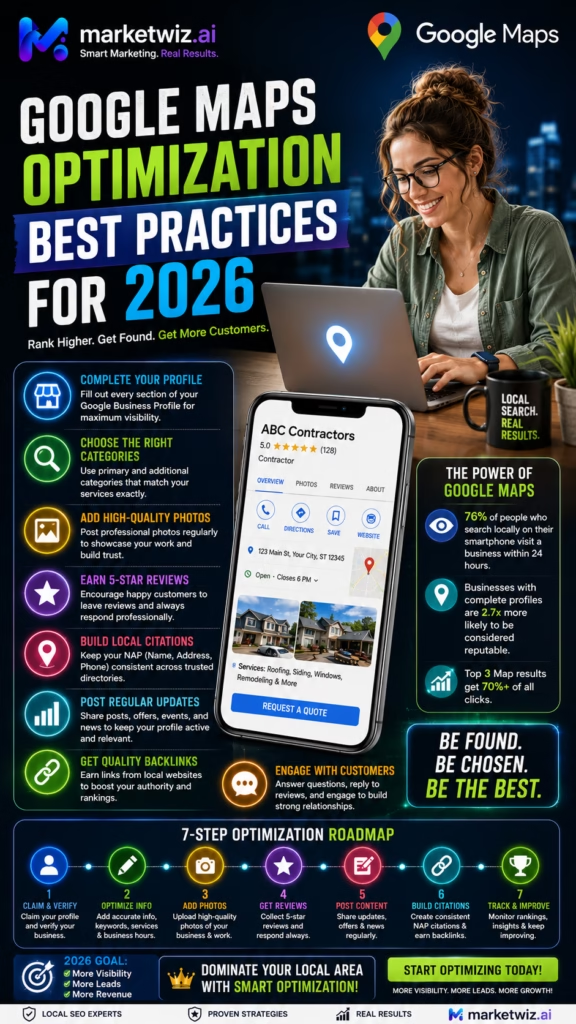
Google Maps Optimization Best Practices for 2026
Google Maps optimization best practices for 2026 focus on building a complete, accurate, relevant, trustworthy, and conversion-ready local business presence. Strong local visibility is not created by one keyword, one review, one category, or one profile edit. Businesses need an optimized Google Business Profile, accurate categories and services, current business information, authentic reviews, professional photos, strong website content, useful service and location pages, consistent citations, relevant authority, mobile-friendly conversion paths, geographic ranking analysis, lead attribution, and ongoing measurement tied to real customer acquisition.
Google Maps optimization in 2026 is less about chasing one isolated ranking and more about building the strongest legitimate local business presence possible.
Local customers increasingly expect businesses to be easy to find, easy to understand, easy to evaluate, and easy to contact.
They may discover a company through Google Maps.
They may see the business in a local search result.
They may compare reviews.
They may inspect photos.
They may read services.
They may visit the website.
They may compare competitors.
They may call directly.
Or they may submit an estimate or contact request.
Every one of those actions is connected.
This means local SEO cannot be treated as a single profile optimization task.
Businesses need to think about the complete customer journey.
First comes visibility.
Then relevance.
Then trust.
Then conversion.
Then follow-up.
Then customer acquisition.
Then measurement.
A business can improve rankings but still fail to produce enough customers if the profile is incomplete, the website is weak, reviews are outdated, calls are missed, or prospects cannot understand the offer.
The strongest 2026 strategy connects all of those pieces.
The 2026 Google Maps Optimization Formula
Accurate Google Business Profile + Strong Relevance + Real Geographic Fit + Local Prominence + Genuine Reviews + High-Quality Photos + Strong Website + Service Pages + Useful Location Content + Accurate Citations + Relevant Authority + Fast Lead Response + CRM Attribution + Revenue Measurement = Stronger Local Search Performance
What Google Maps Optimization Means in 2026
Google Maps optimization should not be viewed as a checklist that ends after a profile is verified.
A verified profile is a starting point.
The business still needs to become relevant to customer searches.
It needs to demonstrate legitimacy.
It needs to build reputation.
It needs to communicate what it does.
It needs to explain where it operates.
It needs to maintain accurate information.
It needs a website capable of supporting the business entity.
And it needs a conversion system capable of turning searchers into customers.
Accuracy
Business information should reflect the real-world operation.
Relevance
Profiles and websites should clearly explain services, products, and customer needs.
Reputation
Genuine reviews, project proof, and customer experience help build trust.
Authority
Citations, links, local mentions, industry relationships, and website quality strengthen the business entity.
Conversion
Local visibility should make it easy for customers to call, visit, purchase, or request information.
Measurement
Rankings should ultimately be evaluated against qualified leads, customers, revenue, and profitability.
Understand the Core Local Ranking Fundamentals
Google's public guidance describes local results primarily around three broad concepts: relevance, distance, and prominence.
Those ideas remain a useful framework for local businesses in 2026.
Relevance
How closely does the business match the user's search?
Distance
How geographically close is the business to the location associated with the search?
Prominence
How established, trusted, and recognized does the business appear?
Businesses cannot treat these as isolated switches.
They interact.
A highly relevant company farther away may sometimes compete with a closer company.
A prominent business with strong reviews and authority may outperform a weaker competitor.
A nearby company with poor relevance may fail to perform for certain services.
Think in Systems, Not Tricks
The safest and most durable strategy is to make the business genuinely easier for search engines and customers to understand: what it does, where it operates, why customers trust it, and how people can take the next step.
Improve Local Relevance in 2026
Choose Accurate Categories
Categories should describe the actual business.
Add Important Services
Customers should be able to understand what the company provides.
Build Dedicated Service Pages
Important services deserve enough website content to establish clear relevance.
Use Natural Service Language
Explain services using words customers actually understand.
Build Useful FAQs
Answer the questions prospective customers repeatedly ask.
Support Services With Proof
Use genuine project examples, products, case studies, photos, or customer experiences where appropriate.
Maintain Consistency
The profile and website should describe the same real business.
Understand Distance and Geographic Visibility
Google Maps is inherently geographic.
A business can perform differently depending on where the customer is searching from.
Do Not Judge Rankings From One Location
One search performed from one address gives only a narrow view.
Know Your Strongest Geographic Zone
Businesses often have stronger visibility closer to their location.
Understand Real Customer Geography
Track where qualified leads and customers actually come from.
Do Not Assume Service Areas Override Distance
Adding cities to a service-area list should not be treated as a guaranteed ranking mechanism.
Use Geographic Tracking
Multi-point ranking reports can help show how visibility changes across the market.
Prioritize Profitable Markets
A business does not need equally strong visibility in every possible city.
Build Local Prominence
Prominence grows from the broader footprint of the business.
Earn Genuine Reviews
Real customer feedback supports reputation.
Build a Strong Website
Quality content and legitimate authority strengthen the business online.
Maintain Accurate Citations
Core business information should remain consistent across reputable sources.
Earn Relevant Backlinks
Links from trusted local, industry, editorial, supplier, manufacturer, and partner sources can strengthen authority.
Participate in the Community
Genuine partnerships, memberships, sponsorships, and community involvement can create natural local mentions.
Build a Recognizable Brand
Consistent business identity across the web helps reinforce the company as a real local entity.
Fully Optimize Google Business Profile
Profile optimization in 2026 begins with completeness and accuracy.
Business Name
Use the real-world name of the business.
Primary Category
Select the category that best describes the core business.
Secondary Categories
Add relevant secondary categories only when they represent real operations.
Phone Number
Make sure customers reach a working and monitored number.
Website URL
Link to the most useful website destination.
Business Hours
Keep regular and special hours accurate.
Services
Include genuine services the business actually offers.
Business Description
Explain what the company does naturally and accurately.
Photos
Add authentic images that help prospective customers understand the business.
Ongoing Review
Revisit important information periodically rather than assuming the profile never needs maintenance.
Choose Accurate Categories
Categories communicate the nature of the business.
Prioritize the Core Business
The primary category should match the company's main service or business type.
Use Secondary Categories Selectively
Secondary categories can support other genuine business functions.
Avoid Irrelevant Categories
Do not add unrelated categories simply because they appear attractive for additional visibility.
Review Categories When Services Change
Business models evolve.
Review Available Category Options Periodically
Platform options can change over time.
Category Accuracy Beats Category Quantity
A smaller set of highly accurate categories is more useful than an overloaded profile trying to represent services the company does not really perform.
Add Genuine Services Customers Care About
Service details help users understand the business before contacting it.
Use Customer-Friendly Service Names
Avoid unnecessary jargon.
Match the Website
Important profile services should be clearly supported by website content.
Prioritize Revenue-Producing Services
Make important business offerings easy to understand.
Do Not Invent Services
Only describe services actually offered.
Update Services When the Business Changes
Remove outdated services and add genuine new offerings.
Use Service Pages for Deeper Detail
The website can explain each major service more completely than a profile field.
Improve the Google Business Profile Description
Explain What the Business Does
Make the core offer obvious.
Explain Who the Business Serves
Residential, commercial, B2B, retail, or other customer types can be mentioned when relevant.
Explain Real Geographic Coverage
Mention important local markets naturally.
Explain Genuine Differentiators
Experience, specialization, product selection, project capability, or other factual strengths can help.
Avoid Promotional Overload
Write clearly instead of stuffing the description with repetitive keywords.
Keep Claims Verifiable
Awards, credentials, experience, guarantees, and other claims should be accurate.
Keep Business Information Accurate Across the Web
Business Name
Use consistent real-world branding.
Address
Follow current requirements for businesses that display a customer-facing location and for service-area businesses.
Phone Number
Keep the primary customer-facing contact information accurate.
Website
Use the correct domain and secure destination.
Hours
Keep hours consistent wherever customers rely on them.
Business Identity
Major directories, websites, social profiles, and other listings should describe the same real company.
Maintain Accurate Business and Special Hours
Regular Hours
Display the hours customers can reasonably expect to reach or visit the business.
Holiday Hours
Use special hours where appropriate.
Seasonal Hours
Businesses with seasonal operations should update information when schedules change.
Appointment-Based Businesses
Make customer expectations clear.
After-Hours Leads
Forms and digital inquiries may remain available even when staff are unavailable, but response expectations should remain realistic.
Optimize Service Areas Correctly in 2026
Service-area businesses often misunderstand this part of Google Maps optimization.
Service areas should represent genuine operational geography.
Use Real Markets
Add areas the business genuinely serves.
Do Not Add Cities Merely to Chase Rankings
Service-area settings should not be treated as a direct geographic ranking override.
Consider Operational Capacity
Travel time, delivery costs, crew capacity, profitability, and customer expectations matter.
Support Priority Markets With Website Content
Important areas can have useful local pages and project content.
Track Customers by Geography
Some markets may create more profitable leads than others.
Service Area Is an Operational Decision Too
SEO should not drive a company into markets it cannot profitably or reliably serve. Strong local marketing aligns search visibility with actual business capacity.
Build a Genuine Google Review Strategy
Ask Real Customers
Review requests should go to customers who genuinely experienced the business.
Ask Consistently
Build review generation into the normal customer process.
Make Reviewing Easy
Reduce unnecessary steps.
Let Customers Use Their Own Words
Do not dictate false experiences or require specific claims.
Maintain Review Recency
A steady flow of customer feedback can show that the business remains active.
Watch Review Themes
Customer comments can reveal what the business does particularly well and where operations need improvement.
Avoid Manipulation
Do not purchase, fabricate, exchange, or otherwise create misleading reviews.
Respond to Google Reviews Professionally
Positive Reviews
Thank customers naturally.
Detailed Reviews
Reference the experience carefully without exposing private information.
Negative Reviews
Respond calmly and avoid emotional public disputes.
Protect Customer Privacy
Do not disclose unnecessary account, project, health, payment, address, or personal information.
Learn From Patterns
Recurring feedback can identify operational problems before they grow.
Use Better Google Business Profile Photos
Strong images can help customers evaluate a business quickly.
Storefront or Office
Customer-facing locations should be easy to recognize.
Products
Retail and product businesses can show genuine merchandise.
Completed Projects
Contractors and service businesses can show real work.
Before-and-After Images
Transformations can demonstrate value clearly.
Team Photos
Authentic staff imagery can increase familiarity.
Vehicles and Equipment
Branded operational assets can reinforce legitimacy.
Interior Photos
Retailers, offices, studios, clinics, showrooms, restaurants, and other customer-facing businesses can help visitors understand what to expect.
Avoid Misleading Images
Do not represent stock photography as genuine business work when doing so would mislead customers.
Use Google Business Profile Posts Strategically
Recent Projects
Share authentic completed work.
Products
Highlight genuine products or product categories.
Seasonal Services
Communicate relevant seasonal demand.
Educational Content
Help customers understand important services or products.
Company Updates
Share meaningful business information.
Events
Promote real events when appropriate.
Posts should support the broader business profile rather than becoming a source of repetitive keyword stuffing.
Strengthen the Website Behind Google Maps
The website remains an important part of the local-search ecosystem.
Clear Business Identity
Make it obvious who the company is.
Clear Services
Explain major products and services.
Local Relevance
Explain real service geography.
Project or Product Proof
Use genuine examples.
Strong Mobile Experience
Local traffic should not struggle on a phone.
Clear Conversion Actions
Make calls, appointments, purchases, forms, or visits easy.
Fast Loading
Avoid unnecessary page weight.
Useful Content
Pages should answer real customer questions.
Create Strong Service Pages
Businesses with multiple important services should avoid forcing everything onto one generic page.
Use One Clear Primary Topic
Each page should have a defined customer purpose.
Explain the Customer Need
Describe why someone seeks the service.
Explain the Service
Make the process and offer understandable.
Provide Proof
Add real project examples, products, case studies, testimonials, or imagery where relevant.
Add FAQs
Answer real buying questions.
Add Local Context
Explain where the service is genuinely available.
Add a Clear Next Step
Make conversion easy.
Create Useful Location Pages Instead of Thin Doorway Pages
Use Genuine Service Locations
Build pages around real business coverage.
Add Local Project Examples
Genuine work in the market can make the page more meaningful.
Discuss Local Customer Needs
Climate, neighborhoods, property types, customer demographics, building stock, transportation, or regional needs may influence demand.
Use Local Photos
Real images can improve credibility.
Answer Local Questions
Useful location-specific FAQs can improve customer value.
Avoid Copy-and-Paste Pages
Changing only the city name creates little meaningful value.
Improve Internal Linking for Local SEO
Home Page to Services
Make major services easy to find.
Services to Locations
Connect real service geography.
Locations to Services
Help local customers reach relevant pages.
Blog Content to Commercial Pages
Educational articles can support service and product pages.
Case Studies to Services
Connect real proof with the appropriate offer.
Use Natural Anchor Text
Links should make sense to users rather than being optimized mechanically.
Build Accurate Local Citations
Citations remain useful when they accurately represent the business.
Major Business Platforms
Maintain accurate core information.
Industry Directories
Use relevant professional platforms.
Local Organizations
Chambers, associations, community resources, and regional directories can reinforce local presence.
Supplier and Manufacturer Directories
Legitimate dealer, installer, retailer, or partner listings may be useful.
Correct Old Information
Remove outdated phone numbers, domains, addresses, and company names.
Prioritize Quality
A smaller number of useful and accurate listings can be more valuable than large volumes of irrelevant directory submissions.
Earn Relevant Local and Industry Backlinks
Business Partnerships
Genuine relationships can create natural references.
Suppliers
Supplier websites may maintain customer, installer, or dealer directories.
Manufacturers
Authorized programs can create strong relevant links.
Professional Associations
Genuine memberships may provide authoritative references.
Local Media
Interesting businesses, events, projects, or community involvement may earn editorial mentions.
Sponsorships
Authentic community sponsorships can produce local brand visibility.
Avoid Manipulative Link Schemes
Build authority through genuine business relationships instead.
Use Structured Data Correctly in 2026
Structured data can help search engines understand entities and page content.
Represent Visible Information Accurately
Markup should match what users can actually see on the page.
Use Appropriate Schema Types
Article, Organization, BreadcrumbList, LocalBusiness, Product, Service-related information, and other schema types should be used only where appropriate.
Do Not Invent Structured Data Claims
Schema is not a place to hide unsupported reviews, ratings, prices, addresses, credentials, or other information.
Validate Markup
Technical validation can help identify syntax and eligibility issues.
Keep Markup Updated
Structured data should evolve when business information changes.
Structured Data Supports Understanding, Not Guaranteed Rankings
Schema markup should be viewed as a technical communication layer that helps search engines understand content. It is not a shortcut that guarantees a particular Google Maps position.
Publish Useful Local Content
Customer Questions
Turn common sales questions into useful articles.
Service Education
Help customers understand when they need a service.
Product Education
Retail and product businesses can explain options and differences.
Cost Factors
Explain what influences pricing without inventing universal costs.
Project Case Studies
Show real examples.
Local Guides
Explain regional considerations where useful.
Seasonal Topics
Prepare content before predictable demand cycles.
Industry Changes
Explain meaningful updates that affect customers.
Improve Mobile Conversion From Google Maps Traffic
A large portion of local customer journeys can happen on smartphones.
Fast Loading
Compress images and remove unnecessary page weight.
Readable Content
Avoid tiny text.
Clear Phone Actions
Make calling simple where calls are an appropriate conversion.
Simple Forms
Avoid demanding excessive information before a customer can inquire.
Easy Navigation
Customers should find products, services, locations, and contact information quickly.
Mobile-Friendly Galleries
Images should display cleanly.
Clear Next Step
The customer should know what to do after landing on the site.
Turn Google Maps Visibility Into More Qualified Calls
Local SEO can only create opportunity.
The business still has to convert it.
Answer Promptly
Local buyers may contact several companies.
Know the Lead Source
Track whether the inquiry came from Google Maps, organic search, advertising, or another channel.
Understand the Need
Ask what product or service the customer wants.
Confirm Location
Ensure the customer fits the real service geography.
Understand Timing
Immediate buyers and future researchers may require different follow-up.
Create the Next Step
Move qualified customers toward the correct purchase, appointment, estimate, consultation, reservation, visit, or other action.
Qualify Local Leads Instead of Measuring Raw Inquiry Volume
Product or Service Fit
Does the business offer what the customer wants?
Geographic Fit
Can the business realistically serve the customer?
Timing
When does the customer want to move forward?
Scope
Is the project or purchase aligned with business capacity?
Customer Type
Residential, commercial, consumer, business, property manager, investor, or other segments may require different workflows.
Purchase Intent
Determine whether the person is researching or actively buying.
Qualified Leads Beat Vanity Metrics
Ten high-intent local inquiries that become customers can be more valuable than one hundred weak calls that do not fit the business.
Connect Google Maps Leads to CRM
- Lead name
- Phone number
- Email where provided
- Google Maps or local-search source
- Product or service requested
- Customer location
- Customer type
- Project or purchase scope
- Timing
- Qualification status
- Appointment status
- Estimate or proposal status
- Closed or lost status
- Customer revenue
- Repeat-customer status
Suggested Local Lead Pipeline
- New Google lead
- Contacted
- Qualified
- Next step scheduled
- Estimate or consultation completed
- Proposal or purchase opportunity
- Follow-up
- Won
- Lost
- Repeat customer
Track Google Maps Performance With Business Outcomes
Geographic Visibility
Where does the company appear?
Calls
How many inquiries reach the business?
Website Visits
How much local search traffic reaches the website?
Contact Actions
How many people submit forms, book appointments, request estimates, or take other useful actions?
Qualified Leads
How many inquiries fit the business?
Customers
How many leads become paying customers?
Revenue
What revenue can be attributed to local search?
Profitability
Which products, services, and markets generate the strongest economics?
| Metric | What It Tells You |
|---|---|
| Geographic visibility | Where the business appears across the target market |
| Profile engagement | How customers interact with the local listing |
| Calls and forms | How much inquiry activity local search creates |
| Qualified leads | Whether visibility is reaching appropriate customers |
| Customers | Whether local-search opportunities convert |
| Revenue | Financial value generated by local search |
| ROI | Whether local SEO investment produces profitable growth |
Use Geographic Rank Tracking Instead of One Search Result
Local rankings vary geographically.
Measure Multiple Locations
Check important search points across the real target market.
Track Core Keywords
Monitor important products and services separately.
Track Over Time
Look for patterns rather than reacting to one daily fluctuation.
Compare With Competitors
Understand where competitors have stronger or weaker local coverage.
Compare Rankings With Leads
Visibility only matters when it supports customer acquisition.
Prioritize High-Value Zones
Focus optimization around markets capable of producing profitable customers.
Analyze Local Competitors More Intelligently
Categories
Review how competitors describe their core business.
Reviews
Compare quantity, recency, sentiment, and response quality.
Photos
Evaluate the quality of their business and project proof.
Services
Understand which customer needs competitors emphasize.
Website
Review service pages, location pages, content quality, mobile usability, and conversion.
Citations
Identify relevant business directories and local resources.
Backlinks
Look for legitimate authority sources.
Content Gaps
Find useful questions and topics competitors are not covering well.
Do Not Copy Competitors Blindly
Competitor research should reveal opportunities to strengthen your own business assets. A competitor ranking well does not automatically mean every tactic they use is responsible for that performance.
Use AI Carefully for Google Maps Optimization in 2026
AI can make local SEO workflows faster, but accuracy still matters.
Keyword Research Support
AI can organize service and customer-topic ideas.
Content Planning
AI can help build outlines for service, location, FAQ, and educational pages.
Content Drafting
Drafts can be generated from verified business information.
Review Response Assistance
AI can help produce professional responses when customer context is verified.
Lead Categorization
AI can organize incoming inquiries by service, location, urgency, or customer type.
Reporting
Ranking, lead, and customer data can be summarized more efficiently.
Do Not Let AI Invent Local Business Facts
Never fabricate addresses, office locations, service areas, customer reviews, years in business, licenses, awards, certifications, services, prices, warranties, products, project examples, team members, opening hours, or other customer-facing information simply to make content appear stronger.
Google Maps Optimization Best Practices for Multi-Location Businesses
Maintain Genuine Locations
Each location should represent a real eligible business operation.
Keep Location Information Distinct
Phones, addresses, hours, services, and location details should remain accurate.
Create Useful Location Pages
Each real location can have a useful page containing relevant local information.
Use Location-Specific Reviews and Photos Naturally
Customer feedback and imagery can help users evaluate individual locations.
Track Performance Separately
Compare rankings, calls, customers, and revenue by location.
Maintain Central Brand Consistency
Each location should still clearly belong to the same genuine organization where applicable.
Google Maps Best Practices for Service-Area Businesses
Follow Address Requirements
Configure location visibility according to current eligibility and service-area rules.
Use Genuine Service Geography
Do not claim markets the business cannot realistically serve.
Create Strong Service Pages
Build relevance around the actual work performed.
Create Useful Market Pages
Important cities can have unique local content.
Collect Real Project Proof
Photos and case studies can demonstrate real geographic activity.
Track Leads by ZIP Code or City
Determine which markets produce the best customers.
Google Maps Best Practices for Local Retail Businesses
Accurate Store Hours
Customers need to know when they can visit.
Clear Store Location
Make the business easy to find.
Strong Interior and Exterior Photos
Help customers recognize the location.
Product Information
Explain important physical products and categories.
Customer Reviews
Build authentic retail reputation.
Local Website Pages
Location-specific inventory, services, hours, and customer information can be useful where accurate.
Track Store Visits and Purchases
Local SEO should ultimately support real customer transactions.
Google Maps Best Practices for Contractors and Home Service Companies
Build Service-Specific Pages
Roofing, plumbing, electrical, HVAC, painting, landscaping, flooring, decks, fencing, remodeling, concrete, and other trades should clearly explain major services.
Use Real Project Photos
Completed work is one of the strongest trust assets a contractor can produce.
Track Territory Carefully
Drive time and job economics matter.
Build a Review Process
Genuine customer feedback supports reputation.
Answer Leads Quickly
Homeowners may call multiple contractors.
Track Estimate Conversion
Rankings become more meaningful when tied to signed projects.
Google Maps Optimization Mistakes to Avoid in 2026
Keyword Stuffing the Business Name
Use the real-world business name.
Creating Fake Locations
Do not manufacture offices or addresses for ranking purposes.
Buying Reviews
Build legitimate customer reputation.
Using Irrelevant Categories
Categories should describe the actual business.
Claiming Unrealistic Service Areas
Geography should reflect operational reality.
Creating Thin City Pages
Local pages need meaningful differentiation.
Ignoring the Website
Google Business Profile and website optimization should support each other.
Ignoring Mobile Performance
Local customers frequently search from phones.
Using Fake Photos
Do not misrepresent stock or generated imagery as authentic completed work.
Ignoring Review Responses
Customer engagement matters.
Ignoring Citation Accuracy
Outdated business information creates confusion.
Buying Random Backlinks
Focus on relevance and legitimacy.
Publishing AI Content Without Verification
Customer-facing information should remain accurate.
Measuring One Ranking From One Computer
Local visibility varies geographically.
Measuring Rankings Without Leads
Visibility should support customer acquisition.
Expecting Immediate Results
Local search growth is competitive and cumulative.
Guaranteeing Number-One Rankings
No legitimate optimization process can guarantee a particular ranking position.
A 30-Day Google Maps Optimization Plan for 2026
Week 1: Audit Accuracy and Eligibility
- Verify Google Business Profile access
- Confirm the real-world business name
- Confirm address or service-area configuration
- Confirm phone number
- Confirm website URL
- Review primary category
- Review secondary categories
- Review services
- Review business hours
- Review business description
- Review photos
- Review customer reviews
Week 2: Strengthen Relevance
- Improve core service information
- Create or improve major service pages
- Improve website home page messaging
- Review location-page quality
- Add genuine project or product photos
- Create useful FAQs
- Improve internal linking
- Review mobile navigation
- Review conversion actions
- Add accurate structured data where appropriate
Week 3: Strengthen Prominence
- Create a consistent review-request process
- Respond to existing reviews
- Audit important local citations
- Correct inconsistent business information
- Review industry directories
- Review local organization opportunities
- Review supplier or manufacturer listings
- Identify legitimate backlink opportunities
- Publish one useful local article
- Publish one authentic business update
Week 4: Improve Conversion and Measurement
- Improve mobile page speed
- Make primary contact actions easier
- Simplify lead forms
- Track Google Maps lead source
- Connect qualified leads to CRM
- Track calls
- Track forms or appointments
- Track qualified leads
- Track closed customers
- Track revenue
- Measure geographic ranking visibility
- Compare results by product, service, and market
End-of-Month Outcome
After 30 days, the business should have a cleaner Google Business Profile, stronger service relevance, better review management, more useful business photos, stronger website support, improved citation accuracy, better internal linking, clearer geographic reporting, improved lead attribution, and a more reliable system for measuring whether Google Maps visibility is producing real customers.
Final Takeaway: The Best Google Maps Strategy for 2026 Is to Build a Stronger Local Business Entity
Local SEO continues to attract businesses because the opportunity is simple to understand.
Customers search locally.
Businesses want to appear.
But the temptation is to search for shortcuts.
One category trick.
One keyword.
One profile change.
One review strategy.
One backlink package.
One location setting.
One tactic that supposedly changes everything.
That is not the strongest way to approach Google Maps optimization in 2026.
The better strategy is to strengthen the complete business entity.
Start with accuracy.
Use the real business name.
Use the real phone number.
Use the correct website.
Use accurate hours.
Use genuine categories.
Use genuine services.
Use legitimate location information.
Do not create confusion.
Then improve relevance.
A roofing company should clearly explain roofing.
A flooring company should clearly explain flooring.
A restaurant should clearly explain the dining experience.
A retailer should clearly explain what it sells.
A plumber should clearly explain plumbing services.
A landscaping company should clearly explain landscaping.
A medical practice should clearly explain its legitimate specialties and services.
The profile should communicate that relevance.
The website should reinforce it.
Important services should have strong pages.
Products should have useful information.
FAQs should answer real customer questions.
Project examples should prove capability.
Then consider geography.
Local rankings are local.
They change across a market.
A company may be visible close to its location.
Less visible several miles away.
Strong in one neighborhood.
Weak in another.
This is why one manual ranking check is not enough.
Geographic tracking provides context.
Use multiple points.
Use major products and services.
Track important markets.
Compare performance over time.
Then connect rankings with customer data.
Which areas generate calls?
Which areas generate qualified leads?
Which areas create customers?
Which areas create profitable customers?
Geographic SEO becomes much more useful when it answers those questions.
Prominence should be built honestly.
Earn genuine reviews.
Ask customers consistently.
Respond professionally.
Avoid manipulation.
Build a strong website.
Build relevant citations.
Build legitimate backlinks.
Participate in the local market.
Join real organizations.
Develop real partnerships.
Earn mentions.
Build the business's reputation over time.
Photos should strengthen trust.
Show the location.
Show the team.
Show products.
Show projects.
Show before-and-after transformations.
Show equipment.
Show genuine proof of business activity.
Do not rely entirely on generic stock photography when customers need to understand the actual business.
Website quality matters too.
A customer should not leave Google Maps and land on a slow, confusing, outdated website.
The home page should explain the company.
The service pages should explain the offer.
Location pages should add local value.
Contact actions should be obvious.
Mobile users should be able to navigate easily.
Project photos should load quickly.
Forms should be simple.
The customer journey should feel professional.
Citations should reinforce the same entity.
Business name.
Address where applicable.
Phone number.
Website.
Category.
Hours.
Business information should not conflict unnecessarily across the web.
Structured data can strengthen technical clarity.
Use markup that accurately represents visible page information.
Do not use schema to hide fabricated claims.
Do not invent reviews.
Do not invent ratings.
Do not invent prices.
Do not invent locations.
Do not invent credentials.
Technical optimization still depends on accuracy.
AI creates new opportunities in 2026.
AI can organize keyword ideas.
It can create article outlines.
It can help write service-page drafts.
It can organize review responses.
It can categorize leads.
It can summarize ranking data.
It can accelerate reporting.
But AI does not eliminate the need for factual verification.
Local SEO content describes a real business.
The details matter.
The address matters.
The service area matters.
The services matter.
The credentials matter.
The products matter.
The hours matter.
The customer claims matter.
Automation should improve accuracy and productivity rather than manufacture authority.
Conversion remains one of the most overlooked parts of Google Maps SEO.
A business can improve visibility dramatically and still fail to grow.
Calls can be missed.
Forms can go unanswered.
Staff can respond slowly.
Customers can receive generic replies.
Salespeople can forget follow-up.
Leads can disappear.
That is why lead handling belongs inside the local SEO strategy.
Answer quickly.
Understand the customer.
Determine service fit.
Determine location fit.
Determine timing.
Create the next step.
Track the lead.
Follow up.
Record the outcome.
CRM attribution closes the loop.
The business should know whether the customer came from Google.
It should know which service they requested.
It should know which city they came from.
It should know whether they qualified.
It should know whether an appointment happened.
It should know whether the customer purchased.
It should know how much revenue was created.
That information changes local SEO from a ranking project into a customer acquisition system.
The strongest 2026 reporting therefore connects four layers.
Visibility.
Engagement.
Leads.
Customers.
Visibility tells you where the business appears.
Engagement tells you whether searchers interact.
Lead tracking tells you whether they inquire.
CRM tracking tells you whether they buy.
Revenue tracking tells you whether the strategy is profitable.
That is the standard businesses should aim for.
Not simply “Are we number one?”
Ask better questions.
Are we visible for the right searches?
Are we visible in the right geographic areas?
Are searchers engaging with the profile?
Are they reaching the website?
Are they calling?
Are they qualified?
Are they becoming customers?
Are those customers profitable?
Which services perform best?
Which locations perform best?
Which pages create leads?
Which improvements produce measurable business growth?
Those questions create a much stronger local SEO program.
The businesses that perform well over time are usually not the businesses chasing every shortcut.
They are the businesses building stronger assets.
Better profile information.
Better website pages.
Better local content.
Better customer reviews.
Better project proof.
Better citations.
Better authority.
Better mobile experiences.
Better lead response.
Better CRM tracking.
Better measurement.
That is what Google Maps optimization best practices for 2026 ultimately come down to: building a more complete, more accurate, more relevant, more trusted, more useful, and more measurable local business presence.
Frequently Asked Questions
1. What are the most important Google Maps optimization best practices for 2026?
Maintain a complete and accurate Google Business Profile, strengthen service relevance, earn genuine reviews, publish authentic photos, support the profile with a strong website, maintain accurate citations, build legitimate authority, optimize mobile conversion, and track customers rather than rankings alone.
2. What are Google's main local ranking factors in 2026?
Google continues to describe local results primarily around relevance, distance, and prominence.
3. What does relevance mean in Google Maps SEO?
Relevance refers to how closely the business matches what the customer searched for. Accurate categories, services, profile details, and website content can strengthen relevance.
4. What does distance mean in Google Maps rankings?
Distance reflects geography between the business and the location associated with the search, which is why visibility can change across a local market.
5. What does prominence mean for Google Maps SEO?
Prominence relates to how established or recognized the business appears through reputation, reviews, website authority, citations, links, and other legitimate references.
6. Should businesses completely fill out Google Business Profile?
Businesses should keep relevant profile fields complete and accurate, including categories, services, contact information, hours, website, location information, and business details.
7. Are Google Business Profile categories important?
Yes. Choose the most accurate primary category and only add relevant secondary categories that reflect actual operations.
8. Should businesses add services to Google Business Profile?
Yes. Accurate service information helps customers understand whether the business is a good fit.
9. Are Google reviews still important in 2026?
Yes. Genuine reviews remain important for customer trust and local business reputation.
10. Should businesses respond to Google reviews?
Yes. Professional review responses demonstrate engagement and can improve the experience for future customers evaluating the profile.
11. Should businesses buy Google reviews?
No. Businesses should build authentic customer feedback rather than buying, fabricating, or manipulating reviews.
12. Do photos help Google Business Profile performance?
Real photos can help customers understand the company, location, team, products, services, and completed work and can improve trust and engagement.
13. How often should Google Business Profile information be reviewed?
Review it regularly and whenever services, categories, phone numbers, websites, hours, locations, or other business information changes.
14. Do service areas control Google Maps rankings?
Service areas communicate where a business operates, but businesses should not assume that selecting additional cities automatically causes the profile to rank in those markets.
15. Should businesses create location pages in 2026?
Yes, where useful and appropriate. Strong location pages should contain genuine local information rather than duplicated text.
16. Should businesses create hundreds of duplicate city pages?
No. Thin pages that simply replace one city name with another provide little useful differentiation.
17. Are local citations still useful in 2026?
Accurate citations across relevant directories, industry resources, local organizations, and trusted platforms can support business consistency and local presence.
18. Do backlinks matter for Google Maps SEO?
Legitimate relevant links can strengthen the authority of the website and business entity supporting local-search visibility.
19. Does website SEO affect Google Maps visibility?
A strong website supports service relevance, business authority, geographic context, customer trust, and conversion from local search traffic.
20. Should businesses create separate service pages?
Important products and services can benefit from dedicated pages that answer customer questions and demonstrate genuine expertise.
21. Does structured data help local business SEO?
Accurate structured data can help search engines understand page content and business entities, but it should accurately reflect visible information and follow current technical guidelines.
22. Should local businesses optimize for mobile users?
Yes. Local customers frequently search from phones, so speed, navigation, contact actions, readable content, and simple forms matter.
23. Should businesses use Google Business Profile posts?
Posts can communicate useful project, product, service, seasonal, educational, event, and company information where relevant.
24. Can AI be used for Google Maps optimization in 2026?
Yes. AI can support research, content drafting, review responses, reporting, lead categorization, and planning, but customer-facing facts should always be verified.
25. Should businesses track Google Maps rankings from more than one location?
Yes. Multi-point tracking provides a more realistic picture because local visibility can vary significantly across a market.
26. What Google Maps metrics should businesses track?
Track geographic visibility, calls, website visits, contact actions, qualified leads, appointments, customers, revenue, acquisition cost, and ROI.
27. Can Google Maps rankings be guaranteed in 2026?
No. Local rankings vary based on relevance, distance, prominence, user location, competition, search intent, business history, and Google's systems.
28. What Google Maps tactics should businesses avoid?
Avoid fake locations, keyword-stuffed business names, purchased reviews, fabricated business information, irrelevant categories, duplicate thin city pages, and deceptive optimization practices.
29. How long does Google Maps optimization take?
There is no universal timeline. Competition, proximity, business history, profile quality, website authority, reviews, local relevance, and market conditions all affect progress.
30. What is the goal of Google Maps optimization in 2026?
The goal is to build stronger relevant local visibility and convert that visibility into qualified inquiries, appointments, purchases, customers, revenue, and measurable business growth.
30 Additional SEO Keywords
Use these supporting phrases naturally across local SEO articles, service pages, location pages, Google Maps guides, case studies, FAQs, internal links, and customer education content.
Build a Stronger Google Maps Growth System for 2026
MarketWiz.ai helps local businesses strengthen Google Maps visibility through Google Business Profile optimization, local SEO, citation development, website relevance, geographic ranking analysis, lead attribution, and measurable customer-acquisition reporting.
This article provides general information about Google Maps optimization, Google Business Profile, local SEO, website optimization, reviews, citations, backlinks, structured data, CRM tracking, analytics, AI-assisted marketing, lead generation, and business growth. It does not provide legal, tax, financial, privacy, consumer-protection, regulatory, licensing, professional, or platform advice. Google Business Profile, Google Maps, local search interfaces, categories, services, review policies, service-area requirements, profile features, ranking systems, structured-data requirements, and eligibility rules can change. Businesses should review current Google documentation and applicable laws before implementing local-search strategies. Business names, addresses, phone numbers, websites, hours, categories, service areas, services, photos, customer reviews, products, credentials, licenses, awards, certifications, warranties, prices, project claims, and other customer-facing information should remain accurate. Businesses should not fabricate locations, purchase fake reviews, create false customer activity, keyword-stuff business names, claim service areas they do not genuinely serve, misrepresent project photographs, invent products or services, publish unsupported credentials, or use deceptive optimization tactics. Structured data should accurately represent visible page content and follow applicable guidelines. Google Maps rankings, calls, website traffic, leads, customers, revenue, and ROI cannot be guaranteed and may vary based on relevance, distance, prominence, competition, searcher location, user intent, profile quality, reviews, website strength, local authority, business history, customer demand, Google's systems, lead handling, sales execution, operational capacity, and other factors.













