
Google Maps SEO for Deck Builders
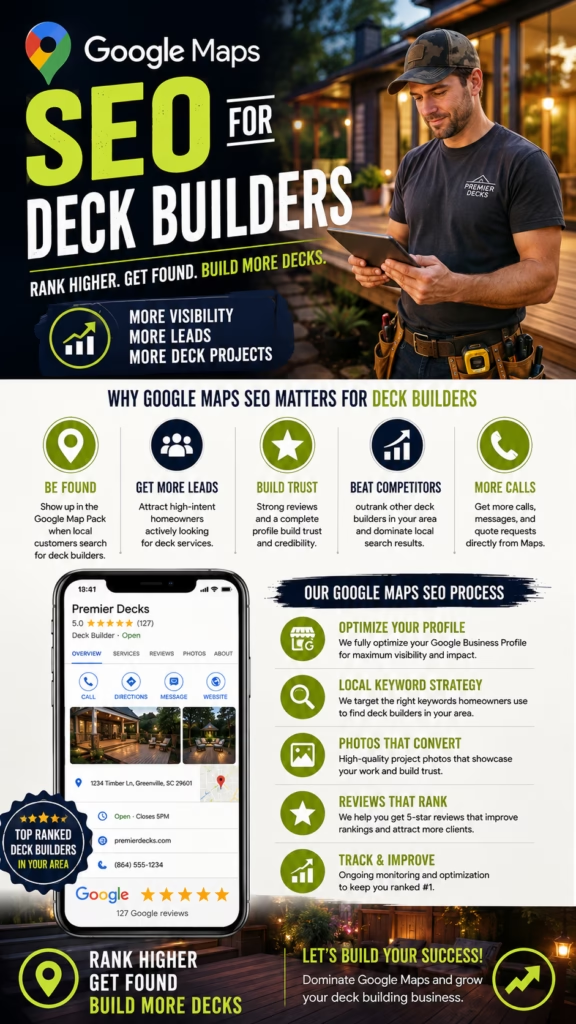
Google Maps SEO for deck builders can help deck contractors, outdoor living companies, porch builders, railing installers, composite decking specialists, and residential construction businesses improve local visibility when homeowners search for deck-related services. Strong Google Maps performance requires more than creating a Google Business Profile. Deck builders need accurate business information, relevant categories, detailed services, genuine customer reviews, professional project photos, strong local website content, accurate citations, useful location pages, mobile-friendly conversion paths, lead attribution, and ongoing optimization focused on qualified calls, estimate requests, booked appointments, closed deck projects, and profitable customer acquisition.
When homeowners decide they want a new deck, replace an aging deck, upgrade to composite decking, add railings, or create a better outdoor living space, many begin their search on Google.
They search for a deck builder near them.
They search for a deck contractor.
They search for composite deck builders.
They search for wood deck contractors.
They search for deck replacement.
They search for deck repair.
They search for railing installation.
They search for porch builders.
They search for pergola builders.
They search for outdoor living contractors.
Those searches frequently have strong local intent.
A homeowner usually does not want a deck contractor located several states away.
They want someone who can realistically serve their property.
That is where Google Maps and local search visibility become important.
But appearing in local search is only the first step.
Homeowners still need a reason to contact the business.
They want to see completed deck projects.
They want to know whether the contractor works with composite or wood.
They want to see railings.
They may want to see stairs.
They may want multi-level deck examples.
They may want covered-deck or porch examples.
They want customer reviews.
They want clear contact information.
They want confidence that the builder serves their area.
They want an easy way to request an estimate.
Strong Google Maps SEO connects all of those pieces.
The profile generates visibility.
Reviews create trust.
Project photos demonstrate quality.
The website explains services.
Location content reinforces geographic relevance.
Citations reinforce business information.
Lead tracking connects local search visibility to actual revenue.
The Deck Builder Google Maps Growth Formula
Accurate Google Business Profile + Relevant Deck Services + Genuine Reviews + High-Quality Project Photos + Strong Local Website + Useful Service Pages + Accurate Citations + Local Authority + Fast Lead Response + CRM Tracking = Stronger Deck Builder Customer Acquisition
Why Google Maps Matters for Deck Builders
High Local Intent
Deck-building searches frequently come from homeowners actively looking for a contractor who serves their area.
High Project Value
Deck projects can represent significant construction opportunities, making qualified local visibility valuable.
Strong Visual Selling
Completed deck photography can immediately demonstrate craftsmanship, design, materials, and project capability.
Review Influence
Homeowners often compare ratings, recent reviews, and customer experiences before requesting an estimate.
Service Comparison
Google allows customers to compare deck contractors, outdoor-living companies, remodelers, and other local builders quickly.
Referral and Repeat Potential
A strong completed deck project can generate future referrals, repairs, additions, and other outdoor-living work.
Understand Deck-Building Local Search Intent
New Deck Construction
Customers may be starting from an empty backyard or replacing a patio with a new raised deck.
Deck Replacement
An existing structure may be worn, outdated, undersized, or no longer meet the homeowner's needs.
Composite Decking
Homeowners may specifically want lower-maintenance decking products.
Wood Decking
Some buyers prefer traditional wood appearance, construction, or material characteristics.
Deck Repair
Customers may search for stairs, boards, railings, framing, or other repair work.
Outdoor Living
Larger searches may combine decks with pergolas, covered areas, outdoor kitchens, patios, or other improvements.
Research Intent
Homeowners may search for deck costs, material comparisons, railing options, planning information, or design ideas before contacting builders.
Optimize the Deck Builder Google Business Profile Completely
Business Name
Use the genuine real-world business name rather than inserting unnecessary keywords.
Primary Category
Choose the category that best represents the company's real core business.
Secondary Categories
Add relevant categories only when they accurately reflect genuine services.
Phone Number
Use a reliable number that is actively monitored.
Website
Link to a useful, mobile-friendly website that clearly explains deck services.
Hours
Keep regular and special business hours accurate.
Services
Add actual deck-building and outdoor-living services where the profile supports them.
Photos
Upload genuine project and business photography.
Make It Easy for Homeowners to Understand the Business
A homeowner should be able to determine quickly whether the company builds the type of deck they want, works in their area, has completed similar projects, and offers an easy path to request an estimate.
Choose Accurate Google Business Profile Categories
Category selection helps Google and customers understand the business.
Choose the Best Primary Category
Use the closest accurate category for the company's main activity.
Add Relevant Secondary Categories
Secondary categories may support related services such as porch work, outdoor structures, remodeling, or other genuine business offerings.
Avoid Category Stuffing
Do not add unrelated categories simply because they could generate additional impressions.
Review Categories Periodically
Available categories can change, so revisit the profile setup periodically.
Support Categories With Website Content
If a category represents a major service, explain that service clearly on the website.
Add Deck-Building Services Customers Actually Search For
- New deck construction
- Deck replacement
- Composite decking
- Wood decking
- Deck remodeling
- Deck expansion
- Deck resurfacing where offered
- Deck repair
- Deck railing installation
- Deck stair construction
- Covered decks
- Screened porches where offered
- Front porches
- Back porches
- Pergolas
- Outdoor living structures
- Multi-level decks
- Pool decks where offered
- Deck lighting where offered
- Deck design
Only list services the company genuinely performs.
Improve the Deck Builder Business Description
Explain the Core Business
State clearly whether the company specializes in decks, porches, outdoor living, remodeling, or a broader construction category.
Explain Major Materials
Composite and wood decking can be mentioned when genuinely offered.
Explain Project Types
New construction, replacement, multi-level decks, railings, stairs, covered decks, or other specialties may be useful.
Explain the Service Area
Mention genuine geographic markets naturally.
Explain Real Differentiators
Project design, communication, craftsmanship, material knowledge, or other factual strengths can help customers understand the business.
Avoid Keyword Stuffing
Write naturally for customers rather than repeating “deck builder” and city names unnaturally.
Keep Deck Builder Business Information Accurate Everywhere
Business Name
Use consistent branding.
Address
Follow Google requirements for storefront and service-area businesses.
Phone
Use a reliable customer-facing number.
Website
Use the correct primary domain.
Hours
Keep office or sales availability accurate.
Service Areas
Only claim communities the company realistically serves.
Optimize Deck Builder Service Areas Accurately
Deck builders typically travel to the customer's property, making service-area accuracy important.
Use Real Geographic Coverage
Choose cities and communities that crews can serve efficiently.
Consider Project Value
A larger custom deck may justify more travel than a smaller repair project.
Consider Crew Logistics
Travel time, material delivery, inspections, permits, and project management all influence practical territory.
Support Major Markets With Website Content
Important locations can have useful local pages where the business genuinely performs work.
Track Lead Quality by City
Some markets may produce higher project values or stronger close rates.
A Bigger Service Area Does Not Automatically Mean Better Rankings
Local results are influenced by many factors including proximity. Businesses should focus on genuine service geography rather than assuming that selecting more cities will automatically create stronger visibility everywhere.
Maintain Accurate Business Hours
Regular Hours
Keep standard office and sales hours accurate.
Special Hours
Update holiday hours where appropriate.
Seasonal Changes
Some deck builders adjust office availability during slower winter months.
Lead Handling Outside Business Hours
If estimate forms remain available after hours, make follow-up expectations clear rather than promising unrealistic response times.
Use Better Deck Project Photos
Deck construction is highly visual.
Completed Composite Decks
Show color, board layout, fascia, railings, stairs, and finished details.
Completed Wood Decks
Show genuine examples of the materials and styles the company builds.
Multi-Level Decks
Larger projects can demonstrate design and structural complexity.
Deck Railings
Show wood, metal, cable, composite, or other railing systems when genuinely installed.
Deck Stairs
Clear stair and landing photos can demonstrate attention to detail.
Porches and Covered Decks
Show roof integration and outdoor-living spaces where applicable.
Team and Equipment
Professional crews, vehicles, trailers, and jobsite imagery can support trust.
Real Work Is a Powerful Marketing Asset
Authentic completed deck photography helps homeowners imagine what the contractor could build on their own property.
Use Before-and-After Deck Projects
Deck Replacement
Show an aging structure followed by the completed replacement.
Deck Expansion
Show how a small existing structure became a larger outdoor-living space.
Railing Upgrades
Show the visual difference between older railings and the finished system.
Material Conversion
Show genuine wood-to-composite transformations when performed.
Use Similar Angles
Comparable before-and-after framing makes transformations easier to understand.
Respect Customer Privacy
Avoid exposing addresses, license plates, people, or other identifying details unnecessarily.
Build a Strong Google Review Strategy for Deck Builders
Ask Real Customers
Request reviews from homeowners who genuinely completed projects with the company.
Ask Consistently
A steady review process can support a healthier reputation profile over time.
Make Reviewing Easy
Reduce unnecessary steps for the customer.
Let Customers Use Their Own Words
Do not script false experiences or pressure buyers into specific claims.
Watch Review Themes
Customers may naturally discuss communication, workmanship, cleanup, scheduling, design, materials, or project management.
Avoid Fake Reviews
Never buy reviews or create artificial customer accounts.
Respond Professionally to Deck Builder Reviews
Positive Reviews
Thank the customer naturally.
Detailed Project Reviews
Reference the project carefully without exposing private information.
Neutral Feedback
Acknowledge constructive criticism.
Negative Reviews
Respond calmly and avoid public arguments.
Operational Learning
Repeated comments about scheduling, cleanup, estimates, communication, or quality can reveal opportunities for improvement.
Use Google Business Profile Posts for Deck Marketing
Recent Deck Projects
Share completed work with genuine project images.
Composite Decking Projects
Highlight real material styles and finished projects.
Deck Replacement
Show before-and-after transformations.
Outdoor Living
Highlight porches, pergolas, lighting, stairs, and railings when relevant.
Planning Content
Share useful information for homeowners considering a deck project.
Seasonal Updates
Discuss project scheduling, planning, or maintenance based on real business availability and seasonality.
Strengthen the Deck Builder Website Behind Google Maps
Clear Home Page
Explain the company's primary deck and outdoor-living services.
Dedicated Service Pages
Important deck categories should have enough content for homeowners to evaluate them.
Project Galleries
Use genuine completed projects.
Location Relevance
Explain real geographic coverage without creating thin doorway pages.
Mobile Usability
Homeowners searching from phones should have an easy experience.
Estimate Calls to Action
Make phone calls and project estimate requests easy to complete.
Accurate Business Information
Keep phone, website, service area, and company name aligned with the Google Business Profile.
Create Dedicated Deck Service Pages
New Deck Construction
Explain planning, design, material choices, construction, and project workflow.
Composite Decking
Discuss the material options genuinely offered and show real projects.
Wood Decks
Explain available wood materials and maintenance considerations accurately.
Deck Replacement
Explain how older decks are evaluated and replaced.
Deck Railings
Show genuine railing systems and completed work.
Porches and Covered Decks
Create separate content if these services represent a major part of the business.
Create Useful Location Pages for Deck Building Markets
Use Genuine Service Markets
Only create location pages for communities where the company truly performs deck work.
Add Local Project Examples
Genuine nearby deck projects can make the page more useful.
Discuss Local Housing Context
Different neighborhoods may have different lot sizes, home styles, HOA considerations, terrain, or outdoor-living opportunities.
Discuss Real Service Differences
A market may have greater demand for elevated decks, pool decks, composite replacements, or other genuine project types.
Avoid Duplicate Pages
Do not copy the same page repeatedly while changing only the city name.
Build Accurate Local Citations for Deck Contractors
Major Business Platforms
Keep core information accurate.
Home-Service Directories
Relevant contractor or remodeling directories can reinforce local presence where legitimate.
Industry Listings
Genuine manufacturer, dealer, builder, or professional directory relationships may provide useful authority.
Local Directories
Chambers and regional organizations can support local discovery.
Correct Old Information
Remove outdated websites, phone numbers, addresses, or business names.
Avoid Citation Spam
Focus on quality, relevance, and accuracy rather than meaningless directory volume.
Earn Relevant Local and Industry Links
Material Suppliers
Genuine supplier relationships can sometimes create contractor-directory or dealer mentions.
Manufacturers
Authorized programs may provide relevant business listings where applicable.
Builders and Remodelers
Genuine partnerships may create referrals and local mentions.
Real Estate Professionals
Local relationships may generate referral opportunities.
Community Organizations
Sponsorships and memberships can create legitimate visibility.
Project Features
Unique outdoor-living projects may earn editorial or community coverage.
Optimize Google Maps SEO for Composite Decking
Composite decking can represent high-intent local search demand.
Create a Composite Decking Page
Explain the types of composite projects the business genuinely installs.
Show Completed Composite Projects
Use real photos showing boards, trim, railings, stairs, and finished details.
Explain Material Choices Accurately
Avoid making unsupported claims about specific products.
Discuss Maintenance
Explain general maintenance differences accurately.
Use Customer Reviews Naturally
Customers may mention composite decking in genuine project reviews.
Optimize Google Maps SEO for Wood Decks
Create a Wood Deck Page
Explain wood deck construction where this is an important service.
Show Genuine Wood Projects
Use real finished deck photography.
Explain Material Options
Only describe woods the company genuinely uses.
Explain Maintenance
Provide useful, factual care information.
Compare Materials Carefully
Help homeowners understand tradeoffs without exaggerating performance claims.
Optimize for Deck Replacement Searches
Create a Dedicated Replacement Page
Explain how deck replacement projects work.
Use Before-and-After Images
Replacement projects are ideal for visual proof.
Explain Design Changes
Customers may increase deck size, change materials, modify railings, or update stairs.
Discuss Existing Conditions Carefully
Avoid diagnosing structural conditions without an appropriate on-site evaluation.
Track Replacement Lead Value
Replacement projects can represent significant construction opportunities.
Optimize for Deck Railing Searches
Railing Installation
Create useful content if railing work is a major service.
Show Different Railing Styles
Use genuine examples installed by the business.
Show Stair Railings
Detail photos can demonstrate craftsmanship.
Explain Material Options
Only list wood, composite, metal, cable, or other systems genuinely installed.
Respect Code Requirements
Actual railing construction should follow applicable local building codes, permitting requirements, and manufacturer instructions.
Optimize for Deck Stair Construction
Show Real Stair Projects
Include stairs, landings, rails, and transitions.
Explain Integration
Stairs can be discussed as part of new deck construction or replacement.
Use Useful Project Content
Explain design considerations without giving unsafe construction shortcuts.
Use Customer-Friendly Language
Homeowners may search for “deck stairs,” “stairs from deck to yard,” or similar terminology.
Optimize Google Maps SEO for Porches and Covered Decks
Front Porches
Show completed porch projects where genuinely offered.
Back Porches
Highlight outdoor living and backyard use.
Covered Decks
Show real roofed deck and porch structures.
Screened Porches
Create separate service content if the business genuinely builds them.
Complex Project Qualification
Covered structures can involve additional design, permitting, structural, and roofing considerations.
Optimize for Pergola and Outdoor Structure Searches
Pergola Projects
Show genuine completed structures.
Deck Integration
Pergolas can be presented as part of a broader outdoor-living project.
Material Options
Use only material types actually offered.
Project Galleries
Strong visual proof can help homeowners understand scale and style.
Service Relevance
Only target pergola searches if this is genuinely part of the company's work.
Optimize Google Maps SEO for Deck Repair
Deck Board Replacement
Explain common repair categories without promising that isolated board replacement is always appropriate.
Railing Repair
Show genuine completed repair work where possible.
Stair Repair
Explain that actual scope depends on on-site conditions.
Structural Concerns
Avoid making technical structural assessments based only on photos or phone descriptions.
Repair Versus Replacement
Useful educational content can help homeowners understand that some decks may require a more complete evaluation.
Optimize for Outdoor Living Projects
Some homeowners are not searching only for a deck.
They are searching for a complete backyard experience.
Decks
Use completed deck projects as the foundation.
Pergolas
Add shade and architectural interest where genuinely offered.
Covered Spaces
Highlight covered outdoor living where appropriate.
Lighting
Show real integrated lighting systems if offered.
Railings and Stairs
Show finished details.
Multi-Feature Projects
Larger outdoor-living projects may represent high-value search intent.
Publish Better Local Deck-Building Content
Composite vs. Wood Decking
Provide a balanced explanation of relevant material differences.
Deck Replacement Planning
Explain what homeowners should consider before replacing an older deck.
Deck Design Ideas
Discuss stairs, railings, layout, levels, seating areas, and outdoor use.
Deck Maintenance
Offer factual maintenance guidance appropriate to common materials.
Project Case Studies
Explain homeowner goals, design decisions, materials, challenges, and completed outcomes.
Local Project Considerations
Discuss genuine regional factors such as climate, lot conditions, property styles, or permitting without giving false legal or code advice.
Improve Mobile Conversion From Google Maps Traffic
Fast Website Loading
Avoid unnecessarily heavy pages and oversized media.
Clear Phone Number
Make calling easy for mobile users.
Simple Estimate Form
Ask only for information genuinely needed at the first inquiry stage.
Mobile Project Galleries
Deck photos should display clearly without awkward navigation.
Easy Service Navigation
Visitors should quickly find composite decking, replacement, railings, porches, or other relevant pages.
Clear Calls to Action
Make the next step obvious.
Turn Google Maps Visibility Into More Deck Builder Calls
Ranking visibility matters only when the company can convert the resulting opportunity.
Answer Promptly
Homeowners may call several deck contractors.
Identify the Project
Determine whether the customer wants a new deck, replacement, repair, railing, porch, pergola, or another project.
Ask Property Location
Confirm that the project falls inside the service area.
Ask Approximate Size
Basic project dimensions or desired size can help with qualification.
Ask Material Preference
Composite versus wood may affect project planning.
Ask Timing
Determine whether the homeowner is planning now or researching for later.
Advance the Lead
Move qualified prospects toward an estimate or consultation.
Qualify Deck Builder Leads From Google Maps
Project Type
New deck, replacement, repair, railing, porch, or another service.
Property Location
Confirm service-area fit.
Approximate Size
Understand the likely scope.
Material Preference
Composite, wood, or undecided can influence the conversation.
Project Timing
Determine whether the homeowner wants to move forward soon.
Existing Structure
Replacement projects may require additional on-site evaluation.
Budget Alignment
Where appropriate, understand whether the project expectations reasonably align with the company's market and services.
Qualified Calls Matter More Than Raw Calls
A deck builder should measure whether Google Maps visibility creates realistic projects in the right service area, not simply whether the phone rings more often.
Connect Google Maps Deck Leads to CRM
- Lead name
- Phone number
- Email when provided
- Google Maps or local search source
- Project address or city
- Project type
- New deck or replacement
- Approximate size
- Material preference
- Project timing
- Estimate status
- Appointment status
- Proposal value
- Won or lost status
- Closed project value
Suggested Deck Builder Pipeline
- New Google lead
- Contacted
- Qualified
- Estimate scheduled
- Site visit completed
- Proposal sent
- Follow-up
- Won
- Lost
- Project completed
- Review requested
Track Google Maps SEO Performance for Deck Builders
Local Visibility
How often is the business visible across the target service area?
Calls
How many local inquiries reach the business?
Website Visits
How much qualified search traffic reaches deck service pages?
Estimate Requests
How many visitors request project pricing or consultation?
Qualified Leads
How many inquiries fit the company's services, location, project type, and timing?
Closed Deck Projects
How many local-search leads become customers?
Revenue
What project value is attributable to local search?
| Metric | What It Shows |
|---|---|
| Geographic visibility | Where the business appears across the service area |
| Google calls | Direct lead activity from local search |
| Estimate requests | High-intent homeowner actions |
| Qualified leads | Project and territory fit |
| Proposal rate | How many qualified leads reach estimating |
| Closed projects | Actual customer acquisition |
| Revenue and ROI | Economic value of the local SEO channel |
Measure Geographic Deck Builder Rankings Across the Service Area
Use Multiple Search Points
One ranking checked from one location does not represent the entire market.
Track Core Keywords
Monitor deck builder, deck contractor, composite deck builder, deck replacement, and other important service phrases.
Track Multiple Cities
Focus on communities the business genuinely serves.
Compare Changes Over Time
Look for meaningful trends rather than reacting to isolated ranking changes.
Compare Rankings With Leads
A visibility increase becomes more meaningful when it produces additional qualified calls or estimates.
Analyze Competing Deck Builders in Google Maps
Google Business Profile Categories
Review how competitors position their businesses.
Customer Reviews
Compare review quantity, recency, themes, and response quality.
Project Photography
Evaluate whether competitors show real work effectively.
Service Coverage
Understand which project categories they emphasize.
Website Quality
Compare composite pages, replacement pages, galleries, local pages, and conversion paths.
Local Authority
Review directories, suppliers, manufacturer relationships, community mentions, and other legitimate authority signals.
Use Competitor Research to Find Gaps
Do not simply copy competitors. Identify where your profile, service pages, reviews, photos, local content, and customer experience can become stronger.
Plan Google Maps SEO Around Deck-Building Seasonality
Winter Planning
Homeowners may begin researching projects before construction season.
Early Spring
Search interest can increase as homeowners prepare outdoor spaces.
Late Spring and Summer
Deck-building demand may increase substantially in many markets.
Fall
Homeowners may plan replacements or upgrades before winter.
Regional Differences
Climate affects construction season and search behavior.
Prepare SEO Before Peak Demand
Create service pages, project galleries, review processes, and local content before the busiest period rather than waiting until lead volume peaks.
Common Google Maps SEO Mistakes Deck Builders Should Avoid
Using an Inaccurate Business Name
Do not stuff keywords into the company name.
Choosing Irrelevant Categories
Categories should represent real services.
Using Poor Project Photos
Weak images make it harder for customers to evaluate craftsmanship.
Ignoring Reviews
A stale or poorly managed review profile can reduce customer confidence.
Buying Fake Reviews
Artificial reviews create trust and policy risks.
Using Thin Service Pages
A few generic sentences about decks provide little value.
Creating Duplicate City Pages
Repeating nearly identical text across dozens of locations creates weak content.
Claiming Cities the Business Does Not Serve
Geographic information should remain accurate.
Ignoring Mobile Conversion
Many homeowners search for contractors from phones.
Responding Slowly to Calls
Strong rankings can still produce weak sales results when leads are not handled effectively.
Failing to Track Estimate Requests
Without CRM attribution, businesses cannot connect SEO work to actual projects.
Measuring Only Rankings
Revenue and qualified projects are stronger business outcomes.
Expecting Instant Ranking Changes
Local SEO improvements take time and depend on many competitive factors.
Making Unsupported Ranking Guarantees
No legitimate strategy can guarantee a specific Google Maps position.
A 30-Day Google Maps SEO Plan for Deck Builders
Week 1: Audit the Local SEO Foundation
- Verify Google Business Profile ownership
- Verify the real business name
- Verify phone number
- Verify website URL
- Review address or service-area configuration
- Review primary category
- Review secondary categories
- Review operating hours
- Review deck services
- Review business description
- Review existing photos
- Review current reviews and responses
Week 2: Improve Deck Service Relevance
- Add accurate deck-building services
- Improve the business description
- Add genuine completed deck photos
- Add before-and-after deck replacements
- Review service-area accuracy
- Create or improve new deck construction page
- Create or improve composite decking page
- Create or improve wood deck page
- Create or improve deck replacement page
- Create or improve railing page
- Create or improve porch or pergola pages where applicable
Week 3: Strengthen Local Authority
- Audit major local citations
- Correct inaccurate business information
- Review contractor directories
- Review manufacturer or supplier directories
- Review local business directories
- Create a consistent review-request process
- Respond to existing reviews
- Publish a recent project update
- Publish one useful deck-planning article
- Improve internal linking between service pages
- Improve project gallery content
Week 4: Improve Lead Conversion and Tracking
- Improve mobile website speed
- Make phone actions more visible
- Simplify deck estimate forms
- Track Google lead source
- Connect qualified leads to CRM
- Track calls
- Track estimate requests
- Track booked site visits
- Track proposals
- Track won projects
- Track project revenue
- Measure geographic ranking visibility
End-of-Month Outcome
After 30 days, the deck builder should have a more complete Google Business Profile, stronger deck-service relevance, better project photos, improved review management, cleaner citation data, stronger website support, better geographic tracking, and a more reliable system for measuring whether Google Maps visibility is producing qualified deck leads and closed projects.
Final Takeaway: Google Maps SEO Should Produce Better Deck Projects, Not Just Better Ranking Screenshots
Effective Google Maps SEO for deck builders should always connect local search visibility with real customer acquisition.
Rankings matter.
Visibility matters.
Profile views matter.
Website visits matter.
But those metrics are not the final goal.
The deck contractor needs qualified homeowners.
The business needs estimate requests.
It needs site visits.
It needs proposals.
It needs signed projects.
It needs profitable deck construction.
That is why successful local SEO starts with accurate information.
The Google Business Profile should use the genuine company name.
It should use the correct phone number.
It should use the correct website.
It should accurately represent the service territory.
It should use relevant categories.
It should list real services.
That creates a strong foundation.
Service relevance comes next.
If the business specializes in composite decks, make that clear.
Build a strong composite decking page.
Show genuine composite projects.
Explain material choices accurately.
If the business builds wood decks, create useful wood-deck content.
If replacement projects are important, create a dedicated deck-replacement page.
Show before-and-after transformations.
If the company installs railings, show railings.
If it builds porches, show porches.
If it installs pergolas, show pergolas.
If it builds multi-level decks, show complex completed projects.
Specificity helps customers understand what the company can do.
Project photography is especially important in deck construction.
Homeowners are visual buyers.
They want to imagine a new deck behind their house.
They want to imagine family gatherings.
They want to imagine outdoor furniture.
They want to imagine stairs leading into the yard.
They want to imagine a clean railing system.
They want to imagine composite boards that complement the home.
Strong project photography helps create that connection.
Use wide-angle finished shots.
Use detail shots.
Show railings.
Show fascia.
Show stairs.
Show transitions.
Show covered areas.
Show outdoor-living layouts.
Show genuine before-and-after work.
That provides visual evidence that the company performs the services it claims.
Reviews add social proof.
Homeowners may naturally discuss communication.
Scheduling.
Material selection.
Craftsmanship.
Cleanup.
Design.
Project management.
Build a consistent review-request process.
Ask real customers.
Make it easy.
Respond professionally.
Never manufacture reviews.
Never buy fake reviews.
Never create fake customer accounts.
Authentic customer feedback is more valuable than artificial review volume.
The website should reinforce the profile.
A homeowner who clicks from Google Maps should not land on a vague construction page.
They should see deck projects.
They should see service information.
They should understand material options.
They should understand whether the company works in their area.
They should have an easy path to request an estimate.
Service pages can support that experience.
Create useful pages for new deck construction.
Composite decking.
Wood decking.
Deck replacement.
Railings.
Stairs.
Porches.
Pergolas.
Outdoor living.
Each page should provide genuine customer value.
Location pages can support important markets too.
But they should not simply repeat the same content dozens of times.
A useful local page can discuss real projects.
Genuine service coverage.
Common project types.
Local property considerations.
Relevant deck examples.
The goal is to create useful pages, not a collection of city-name substitutions.
Citations support consistency.
The company name should remain accurate.
The phone number should remain accurate.
The website should remain accurate.
Old directory listings should be corrected.
Relevant contractor and home-service platforms can be reviewed.
Manufacturer and supplier relationships can sometimes create useful industry visibility.
Local business organizations can strengthen geographic presence.
Real authority is more useful than random directory volume.
Lead conversion is where the marketing strategy becomes financially meaningful.
A homeowner calls.
What happens next?
Does someone answer?
Does the company ask what kind of deck they need?
Does it ask whether there is an existing deck?
Does it ask property location?
Does it ask approximate size?
Does it ask material preference?
Does it ask project timing?
Does it move the homeowner toward an estimate?
Strong local SEO can still underperform when lead handling is weak.
That is why CRM attribution matters.
Track the original source.
Track the service requested.
Track the city.
Track the approximate project size.
Track material preference.
Track estimate status.
Track proposal value.
Track whether the project was won or lost.
Track final revenue.
Those numbers make local SEO measurable.
A ranking improvement becomes meaningful when it creates more qualified homeowners.
More qualified homeowners become meaningful when they schedule estimates.
More estimates become meaningful when they create proposals.
More proposals become meaningful when they create signed deck projects.
Signed projects become meaningful when they generate healthy gross profit.
That is the complete local SEO chain.
Deck builders should also measure visibility geographically.
Local rankings are not uniform.
A company may perform strongly close to its business location and differently farther away.
One community may generate high-value composite deck projects.
Another may generate mostly repair inquiries.
Another may generate large covered porch projects.
Another may have poor lead quality.
Geographic reporting helps identify those differences.
Measure deck builder rankings.
Measure composite deck rankings.
Measure deck replacement rankings.
Measure major cities.
Then compare visibility with calls and project revenue.
Seasonality should also be considered.
In many climates, deck demand increases before and during warmer months.
Homeowners may begin researching during winter.
They may request estimates in early spring.
Construction demand may increase through spring and summer.
Planning may continue into fall.
The exact cycle varies by market.
A strong SEO strategy prepares before demand peaks.
Build service pages before the busy season.
Improve project galleries before the busy season.
Strengthen the review process before the busy season.
Improve citation consistency before the busy season.
Build local content before the busy season.
Improve CRM tracking before the busy season.
Then the business is positioned to capture demand when homeowners begin searching.
Finally, avoid shortcuts.
Do not stuff keywords into the business name.
Do not create fake addresses.
Do not buy fake reviews.
Do not create dozens of duplicate location pages.
Do not claim services the company does not offer.
Do not claim geographic areas the company cannot serve.
Do not make unsupported ranking guarantees.
Build strong local assets instead.
Accurate profile.
Strong service pages.
Real deck photos.
Genuine reviews.
Accurate citations.
Useful location content.
Professional lead handling.
CRM attribution.
Customer-level measurement.
When those elements work together, Google Maps SEO can become a meaningful customer-acquisition channel for deck builders.
Frequently Asked Questions
1. What is Google Maps SEO for deck builders?
It is the process of improving Google Business Profile, deck-service relevance, local website signals, reviews, project photos, citations, geographic authority, and conversion tracking to improve visibility for local deck-building searches.
2. Why is Google Maps important for deck builders?
Homeowners frequently use local search to find nearby deck contractors, composite deck builders, porch builders, and outdoor-living companies.
3. Can deck contractors rank in Google local results?
Yes. Visibility depends on relevance, proximity, prominence, profile quality, reviews, website signals, competition, and other local-search factors.
4. What Google Business Profile category should a deck builder use?
Choose the most accurate available category for the contractor's real core business and use secondary categories only for genuine related services.
5. Should deck builders add services to Google Business Profile?
Yes. Add genuine services such as new decks, deck replacement, composite decking, wood decks, railings, stairs, porches, pergolas, or repairs where offered.
6. Do Google reviews help deck builders?
Reviews can strengthen customer confidence and provide useful reputation signals when they come from genuine customers.
7. Should deck builders respond to reviews?
Yes. Professional responses can demonstrate communication and customer care.
8. Do project photos matter for deck builder SEO?
Yes. High-quality real project photos help homeowners understand the contractor's craftsmanship and project capabilities.
9. What photos should deck builders upload?
Use genuine composite decks, wood decks, railings, stairs, multi-level decks, porches, pergolas, before-and-after projects, crews, and business imagery.
10. Should deck builders use before-and-after photos?
Yes. Deck replacements, expansions, railing upgrades, and material changes can create strong before-and-after content.
11. Does a deck builder website affect Google Maps performance?
A strong website can reinforce deck service relevance, local relevance, project credibility, customer conversion, and business information.
12. Should deck builders create individual service pages?
Yes. Important services such as composite decking, wood decks, replacement, railings, porches, and pergolas can benefit from dedicated content.
13. Should deck contractors create location pages?
Location pages can be useful for genuine service markets when each page provides unique and helpful local content.
14. What are local citations for deck builders?
Citations are online references to core business information across relevant directories, contractor platforms, local resources, and professional websites.
15. Does business information consistency matter?
Yes. Consistent core business information helps reduce confusion across Google, directories, websites, and local platforms.
16. Can service-area deck builders optimize Google Maps?
Yes. Deck contractors can optimize service-area profiles while accurately following Google's service-area and address requirements.
17. Should deck builders list cities they do not serve?
No. Service-area information and website location content should accurately reflect communities the company serves.
18. Can Google Business Profile posts help deck builders?
Posts can highlight real deck projects, design ideas, material information, replacement projects, and other useful business updates.
19. What content should deck builders publish?
Useful topics include composite versus wood decking, deck replacement, railings, project planning, maintenance, outdoor living, and genuine case studies.
20. Can deck builders optimize for composite decking searches?
Yes. Dedicated composite-deck pages, real project galleries, local relevance, customer reviews, and accurate material information can support those searches.
21. Can deck builders optimize for wood deck searches?
Yes. Create useful wood deck content supported by genuine project examples and accurate material information.
22. Can deck builders optimize for deck replacement?
Yes. Deck replacement pages, before-and-after photography, reviews, service information, and local relevance can support replacement searches.
23. How should deck builders track Google Maps leads?
Track phone calls, forms, qualified leads, estimates, site visits, proposals, closed projects, project revenue, and local search source information.
24. Should deck builders track Google Business Profile calls?
Call tracking can help measure local lead quality when implemented carefully and consistently.
25. What keywords should deck builders target?
Target genuine services and local intent such as deck builder, deck contractor, composite deck builder, wood deck builder, deck replacement, railing installation, porch builder, pergola builder, and relevant city combinations.
26. How long does Google Maps SEO take for deck builders?
There is no guaranteed timeline. Progress depends on competition, proximity, reviews, website strength, profile quality, local authority, and many other factors.
27. Can Google Maps rankings be guaranteed?
No. Local rankings vary based on searcher location, relevance, competition, proximity, prominence, Google's systems, and other changing factors.
28. What is the biggest Google Maps SEO mistake deck builders make?
Treating Google Business Profile as a one-time setup instead of continually improving profile accuracy, project proof, reviews, website quality, local authority, and lead tracking.
29. Should deck builders focus on rankings or leads?
Rankings are useful, but qualified calls, estimate requests, proposals, closed projects, project value, and profitability are stronger business outcomes.
30. What is the goal of Google Maps SEO for deck builders?
The goal is to turn stronger local search visibility into qualified deck leads, estimates, signed projects, revenue, and measurable business growth.
30 Additional SEO Keywords
Use these supporting phrases naturally across deck service pages, Google Maps SEO guides, local landing pages, project galleries, FAQs, articles, case studies, and relevant internal links.
Build a Stronger Google Maps Growth System for Your Deck Business
MarketWiz.ai helps local businesses improve Google Maps visibility through stronger Google Business Profile optimization, local SEO, citation development, website relevance, geographic ranking analysis, lead attribution, and measurable customer-acquisition reporting.
This article provides general Google Maps optimization, Google Business Profile, deck-builder marketing, contractor local SEO, website optimization, citation, review-management, CRM, analytics, lead-generation, and business information. It does not provide legal, engineering, architectural, structural, building-code, permitting, contractor-licensing, construction, electrical, roofing, safety, insurance, tax, financial, privacy, consumer-protection, regulatory, or platform advice. Google Business Profile, Google Maps, local search interfaces, categories, ranking systems, service-area rules, review policies, profile features, and eligibility requirements can change. Deck builders should follow current Google requirements and all applicable contractor licensing, building-code, structural, permitting, zoning, inspection, engineering, manufacturer, safety, insurance, and local regulatory requirements. Business names, addresses, phone numbers, service areas, hours, categories, services, project photos, reviews, credentials, certifications, material claims, project claims, warranties, financing, and other customer-facing information should be accurate. Businesses should not create fake reviews, fabricate addresses, claim service areas they do not serve, keyword-stuff business names, misrepresent completed projects, invent credentials, fabricate warranties, or use deceptive ranking tactics. Google Maps rankings, visibility, calls, estimates, signed deck projects, revenue, and ROI cannot be guaranteed and may vary based on searcher location, proximity, relevance, prominence, competition, reviews, website strength, local authority, business history, seasonality, customer demand, Google's systems, lead handling, sales execution, project capacity, and many other factors.