

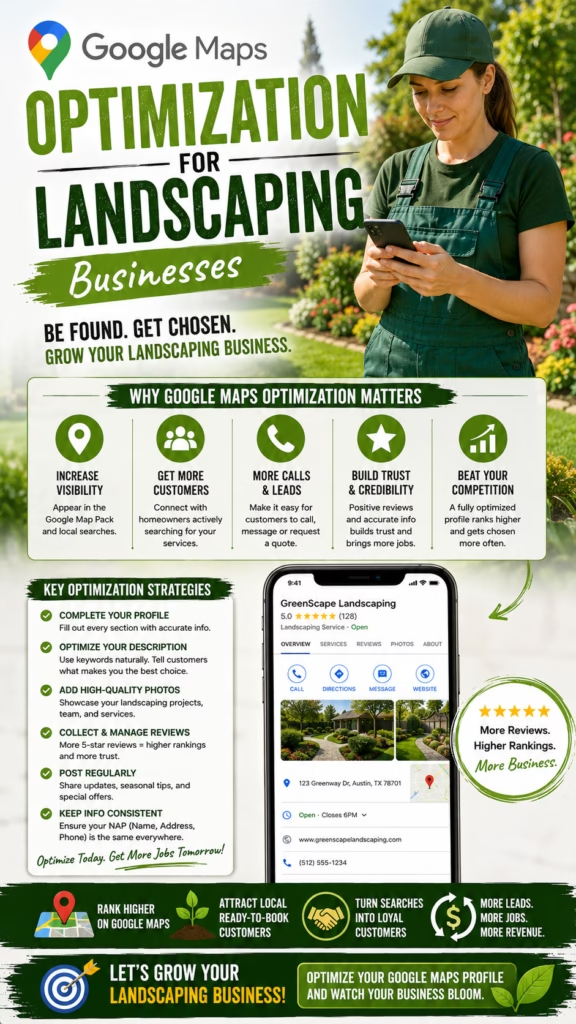
Google Maps Optimization for Landscaping Businesses
Google Maps optimization for landscaping businesses can help lawn care companies, landscape contractors, hardscaping businesses, irrigation specialists, garden designers, maintenance companies, and full-service landscapers improve visibility when local customers search for help. Strong local visibility depends on much more than creating a Google Business Profile. Landscaping companies need accurate business information, relevant categories, complete service details, genuine reviews, high-quality project photos, useful local website content, consistent citations, strong service-area relevance, conversion-focused pages, lead tracking, and ongoing optimization built around real customer outcomes.
Landscaping customers rarely begin their search by driving around town looking for trucks with logos.
Many begin with Google.
They search for a landscaper near them.
They search for lawn care.
They search for landscape design.
They search for patio installation.
They search for retaining walls.
They search for irrigation repair.
They search for mulch installation.
They search for spring cleanup.
They search for commercial landscaping.
And when those searches have strong local intent, Google Maps and the local search results can play an important role in which businesses receive attention.
That makes local visibility valuable.
But visibility alone is not enough.
A landscaping business can appear in search and still lose the customer.
The profile may have weak photos.
The reviews may be outdated.
The business category may be inaccurate.
The website may load slowly.
The service pages may be vague.
The phone number may be difficult to find.
The business may not explain whether it offers lawn maintenance, hardscaping, irrigation, landscape design, planting, cleanup, or other services.
The result is visibility without conversion.
Strong Google Maps optimization connects discovery with trust and action.
The customer sees a relevant landscaping company.
They see real project photos.
They see reviews.
They see services that match what they need.
They see a professional website.
They understand the areas the company serves.
And they have a clear way to call or request an estimate.
The Landscaping Google Maps Growth Formula
Accurate Google Business Profile + Relevant Landscaping Categories + Complete Services + Real Reviews + High-Quality Project Photos + Strong Local Website + Consistent Citations + Local Authority + Fast Lead Response + Conversion Tracking = Stronger Landscaping Customer Acquisition
Why Google Maps Matters for Landscaping Businesses
Strong Local Intent
Landscaping searches often come from customers looking for a nearby business capable of serving a specific property.
Phone-Call Potential
A strong local profile can make it easy for homeowners and property managers to call directly from search.
Visual Proof
Landscaping is highly visual, making photos and completed-project galleries particularly valuable.
Review Influence
Customers can evaluate reputation before contacting a landscaping company.
Service Comparison
Buyers can quickly compare landscapers, lawn companies, hardscape contractors, and other local providers.
Recurring Customer Potential
One local lead can become a recurring lawn-maintenance or commercial landscaping customer.
Understand Local Landscaping Search Intent
Different landscaping searches represent different levels of urgency and value.
Immediate Service Searches
Searches such as “landscaper near me” or “lawn service near me” may indicate a customer actively comparing local companies.
Project Searches
Searches for patios, retaining walls, landscape design, sod installation, or irrigation systems may represent larger project opportunities.
Maintenance Searches
Lawn mowing, trimming, pruning, and recurring landscape maintenance can create long-term customer value.
Seasonal Searches
Spring cleanup, fall cleanup, leaf removal, mulching, planting, and winter preparation can shift throughout the year.
Commercial Searches
Property managers, HOAs, offices, apartment communities, and retail properties may search for ongoing landscape maintenance.
Research Searches
Customers may also search for landscaping ideas, costs, materials, design options, or maintenance tips before requesting an estimate.
Optimize the Google Business Profile Completely
A partially completed profile leaves useful information unavailable to customers.
Business Name
Use the genuine real-world business name.
Primary Category
Select the category that most accurately reflects the core landscaping business.
Secondary Categories
Add additional relevant categories only where they accurately match services genuinely offered.
Phone Number
Keep the primary contact information accurate and monitored.
Website
Send customers to a useful page where they can learn about services and request the next step.
Hours
Maintain accurate regular and special hours.
Services
Add genuine landscaping services where the profile interface supports them.
Photos
Use authentic business and project photography.
Profile Completeness Supports Customer Confidence
Customers should not have to guess whether the landscaping business performs the service they need, serves their area, or is currently available to contact.
Choose Accurate Google Business Profile Categories
Categories help communicate what the business actually does.
Primary Category
The primary category should represent the company's main line of business as accurately as possible.
Secondary Categories
Secondary categories can support additional genuine services when appropriate.
Avoid Irrelevant Categories
Adding unrelated categories in an attempt to reach more searches can create inaccurate business information.
Review Categories Periodically
Available Google categories can evolve, so businesses should periodically check whether their current setup still matches their operation.
Align Categories With Website Content
Important services reflected in profile categories should also be explained clearly on the website.
Add Landscaping Services Customers Actually Search For
Service information can help customers understand whether the business is a match.
- Lawn mowing
- Lawn maintenance
- Landscape maintenance
- Landscape design
- Landscape installation
- Hardscaping
- Patio installation
- Walkway installation
- Retaining walls
- Paver installation
- Sod installation
- Mulching
- Planting
- Tree and shrub planting
- Pruning
- Garden bed installation
- Irrigation installation
- Irrigation repair
- Drainage solutions
- Spring cleanup
- Fall cleanup
- Leaf removal
- Commercial landscaping
- Property maintenance
Only include services the business genuinely offers.
Improve the Landscaping Business Description
A business description should help a prospective customer quickly understand the company.
Explain the Core Business
State whether the company specializes in landscaping, lawn maintenance, hardscaping, landscape design, irrigation, or a broader mix.
Explain the Customer Type
Residential, commercial, HOA, property management, or other customer types can be included where accurate.
Explain the Geographic Focus
Mention genuine service geography naturally.
Explain Differentiators Carefully
Highlight real capabilities, experience, design focus, communication standards, or other factual differentiators.
Avoid Keyword Stuffing
Write for customers first rather than repeating city and service phrases unnaturally.
Keep Landscaping Business Information Accurate Everywhere
Business Name
Use consistent branding.
Address
Follow Google's address-display requirements, especially for service-area businesses.
Phone
Use a reliable number that reaches the business.
Website
Keep the correct primary domain across local listings.
Hours
Keep operating information updated.
Service Areas
Do not claim communities the business does not realistically serve.
Optimize Landscaping Service Areas Accurately
Landscaping companies often serve customers at their properties rather than at a retail storefront.
Use Real Service Geography
List communities and areas the business genuinely serves.
Avoid Excessive Geographic Expansion
A very large service area does not automatically create stronger local visibility.
Match Service Areas With Operations
Crew travel time, equipment logistics, job size, and scheduling should influence realistic territory.
Build Website Support
Important markets can have useful local website content where the company genuinely performs work.
Track Results by City
Some service areas may generate stronger lead quality and profitability than others.
Maintain Accurate Business and Seasonal Hours
Landscaping companies can experience seasonal operating changes.
Regular Hours
Keep standard business hours accurate.
Seasonal Changes
Update hours if the office or sales team changes availability during slower seasons.
Holiday Hours
Use special hours when appropriate.
After-Hours Lead Handling
If customers can submit forms or requests outside business hours, explain how follow-up works without creating unrealistic expectations.
Use High-Quality Landscaping Photos
Landscaping is one of the most visual local service industries.
Completed Landscapes
Show attractive finished properties.
Patios and Hardscapes
Show real paver, stone, walkway, retaining-wall, and outdoor-living projects.
Lawn Work
Show healthy lawns, edging, mowing, and maintenance results.
Planting Beds
Show mulch, shrubs, flowers, trees, and landscape design.
Irrigation
Show real system work when visually useful.
Team and Equipment
Professional crews, branded vehicles, tools, and equipment can reinforce legitimacy.
Use Real Landscaping Work Whenever Possible
Authentic project photography helps prospective customers evaluate what the company actually does and can be more useful than generic stock imagery.
Use Before-and-After Landscaping Photos Strategically
Show the Original Condition
Let customers understand the starting point.
Show the Completed Transformation
Use a similar angle when possible.
Explain the Project
Describe what changed.
Identify the Service Type
Landscaping, sod, hardscaping, planting, drainage, or another service can be stated accurately.
Protect Customer Privacy
Avoid unnecessarily exposing identifying information from customer properties.
Build a Strong Google Review Strategy for Landscaping
Reviews can influence both trust and conversion.
Ask Real Customers
Request feedback from customers who genuinely used the service.
Ask Consistently
A steady review process can be more sustainable than occasional bursts.
Make the Process Easy
Reduce unnecessary friction in the review request.
Do Not Script False Experiences
Customers should describe their genuine experience in their own words.
Avoid Review Manipulation
Do not buy fake reviews, create reviews internally, or pressure customers to make misleading claims.
Track Review Themes
Customer feedback can reveal strengths and recurring service issues.
Respond Professionally to Landscaping Reviews
Positive Reviews
Thank customers naturally and reference the project only when appropriate.
Neutral Reviews
Acknowledge constructive feedback.
Negative Reviews
Respond calmly and avoid arguing publicly.
Protect Privacy
Do not reveal private customer or project details unnecessarily.
Use Feedback Operationally
Reviews can help identify communication, scheduling, cleanup, quality-control, or service issues.
Use Google Business Profile Posts for Landscaping Marketing
Recent Projects
Highlight completed landscaping work with authentic imagery.
Seasonal Services
Discuss cleanup, mulching, planting, irrigation, or maintenance when seasonally relevant.
Helpful Tips
Publish concise educational content about lawn and landscape care.
Business Updates
Share accurate operational news.
Service Highlights
Educate customers about genuine services the company offers.
Strengthen the Landscaping Website Behind the Google Business Profile
A Google Business Profile does not operate in isolation.
Clear Home Page
State the landscaping company's core services and service geography.
Strong Service Pages
Give important services their own useful content.
Project Galleries
Show genuine landscaping work.
Location Relevance
Explain where the company works without creating repetitive doorway pages.
Mobile Usability
Customers searching from phones should be able to navigate easily.
Clear Calls to Action
Make phone calls and estimate requests easy.
Accurate Business Information
Keep contact details aligned with other local listings.
Create Individual Landscaping Service Pages
Important services deserve enough content for customers to understand them.
Lawn Care
Explain mowing, edging, maintenance, fertilization if offered, and service schedules.
Landscape Design
Explain the design process, property goals, planting plans, and implementation.
Hardscaping
Explain patios, pavers, retaining walls, walkways, and outdoor-living projects.
Irrigation
Explain installation, repairs, controllers, zones, and maintenance where offered.
Planting and Mulching
Explain bed preparation, mulch, shrubs, trees, and seasonal planting.
Commercial Landscaping
Explain recurring maintenance, property types, and service capabilities.
Create Useful Landscaping Location Pages
Location pages should provide genuine value.
Use Real Service Areas
Only create pages for places the company genuinely serves.
Add Local Project Context
Discuss relevant landscaping work performed in or near the area where appropriate.
Add Locally Relevant Services
Customer needs may vary by housing type, terrain, lot size, climate, or property use.
Avoid Duplicate City Pages
Changing only the city name across dozens of nearly identical pages creates weak content.
Link Location Pages Naturally
Connect them with relevant service pages and navigation where useful.
Build Accurate Local Citations for Landscaping Businesses
Local citations help establish consistent business information across the web.
Major Business Directories
Keep core information accurate.
Industry Directories
Relevant landscaping, lawn care, contractor, home-service, or professional directories can be useful where legitimate.
Local Directories
Chambers, community organizations, and regional business resources can strengthen local visibility.
Correct Old Information
Update outdated phone numbers, websites, addresses, or business names.
Avoid Low-Quality Citation Spam
More listings are not automatically better if they are inaccurate, irrelevant, or low quality.
Earn Relevant Local and Industry Links
Local Business Partnerships
Genuine relationships with complementary businesses can create useful local mentions.
Supplier Relationships
Vendors or manufacturers may maintain contractor or dealer directories.
Community Organizations
Sponsorships or memberships can create legitimate local visibility.
Project Features
Distinctive landscaping projects may earn editorial attention.
Professional Associations
Genuine memberships can create relevant authority signals.
Avoid Manipulative Link Schemes
Focus on real business relationships and useful mentions.
Optimize Google Maps Visibility for Lawn Care Searches
Create a Lawn Care Page
Explain recurring maintenance services clearly.
Use Lawn Project Photos
Show edging, mowing, maintenance, cleanup, and healthy landscapes.
Earn Lawn Care Reviews Naturally
Customer reviews may naturally mention ongoing maintenance experiences.
Explain Service Frequency
Weekly, biweekly, seasonal, or customized schedules should only be stated where accurate.
Track Recurring Customer Value
One lawn-care lead can represent months or years of revenue.
Optimize for Landscape Design Searches
Show Design Quality
Use completed projects and layout examples.
Explain the Design Process
Customers may want to understand consultation, planning, plant selection, and installation.
Show Different Property Styles
Front yards, backyards, gardens, pool landscapes, and outdoor-living areas can demonstrate range.
Use Detailed Case Studies
Explain goals, constraints, materials, and the completed outcome.
Track Project Value
Design-focused leads may have higher average project values than basic maintenance leads.
Optimize Google Maps Visibility for Hardscaping
Patios
Create useful patio installation content with genuine project photos.
Pavers
Explain available material types where genuinely offered.
Retaining Walls
Show real wall projects and discuss appropriate uses.
Walkways
Use project galleries to demonstrate design and installation quality.
Outdoor Living
Landscaping businesses offering outdoor-living construction can explain those services separately.
Hardscaping Often Represents High-Value Search Intent
Customers searching for patios, retaining walls, pavers, or outdoor living projects may represent substantial project opportunities, making strong qualification and conversion tracking especially important.
Optimize Google Maps Visibility for Irrigation Services
Irrigation Installation
Explain genuine system-installation capabilities.
Irrigation Repair
Describe troubleshooting and repair services where offered.
Sprinkler Systems
Use customer-friendly terminology alongside accurate technical information.
Controllers and Zones
Explain common system components when useful.
Seasonal Irrigation Content
Publish useful watering and maintenance information appropriate to the local market.
Optimize for Mulching, Planting, and Garden Services
Mulch Installation
Show clean bed preparation and finished landscaping.
Shrub Planting
Demonstrate genuine planting projects.
Tree Planting
Explain tree-selection and installation capabilities where offered.
Flower Beds
Seasonal color can make strong visual content.
Garden Design
Use project galleries and local planting knowledge.
Optimize for Seasonal Landscaping Cleanup Searches
Spring Cleanup
Highlight debris removal, bed preparation, pruning, mulch, and lawn preparation where offered.
Fall Cleanup
Explain leaf removal and seasonal property preparation.
Storm Cleanup
Only promote services genuinely offered and suitable for the company's equipment and capabilities.
Seasonal Timing
Update content and profile posts before peak demand begins.
Recurring Maintenance
Seasonal cleanup customers can sometimes become ongoing maintenance customers.
Optimize Google Maps for Commercial Landscaping Leads
Commercial landscaping requires a different customer-acquisition perspective.
Property Managers
May oversee multiple sites.
Apartment Communities
Can require recurring landscape maintenance.
HOAs
May need scheduled maintenance across common areas.
Office Properties
Curb appeal and ongoing maintenance can be important.
Retail Properties
Landscaping may contribute to property presentation and customer experience.
Track Contract Value
Commercial leads may have substantially greater lifetime value than one-time residential projects.
Publish Better Local Landscaping Content
Useful local content can strengthen the website and attract customers earlier in their buying journey.
Seasonal Lawn Guides
Explain timing for common lawn tasks in the local climate.
Planting Guides
Discuss locally relevant plants, shrubs, or trees.
Hardscape Planning
Help homeowners think through patios, walkways, and retaining walls.
Drainage Education
Explain common yard drainage problems without overstating technical conclusions.
Project Case Studies
Show genuine project challenges and outcomes.
Service-Area Content
Discuss real local landscaping considerations without creating thin location pages.
Improve Mobile Conversion From Google Maps Traffic
Many local landscaping searches happen on mobile devices.
Fast Loading
Avoid unnecessarily heavy pages.
Readable Text
Service information should be easy to scan.
Clear Phone Action
Make calling straightforward.
Simple Estimate Forms
Do not ask for unnecessary information before a customer can inquire.
Visible Project Photos
Galleries should work smoothly on smaller screens.
Strong Service Navigation
Customers should quickly find landscaping, hardscaping, lawn care, irrigation, or other relevant pages.
Turn Google Maps Visibility Into More Landscaping Calls
Rankings are useful only if customers take action.
Answer Promptly
Local prospects may call several landscaping companies.
Identify the Service
Determine whether the customer needs lawn care, design, hardscaping, irrigation, cleanup, or another service.
Ask Location
Confirm that the property fits the service territory.
Ask Project Type
Understand the scope at a high level.
Ask Timing
Determine whether the project is immediate or future.
Advance the Lead
Move qualified customers toward an estimate, consultation, property visit, or other appropriate next step.
Qualify Landscaping Leads From Google Maps
Service Fit
Does the company perform the requested service?
Location Fit
Is the property within the service territory?
Project Type
Lawn maintenance and major hardscaping projects require different workflows.
Timing
When does the customer want the work completed?
Property Type
Residential, commercial, HOA, apartment, or other property categories may have different requirements.
Project Scope
Understand the approximate size before allocating estimating resources.
Local Ranking Quality Should Be Measured by Lead Quality
Ranking for broad landscaping searches has limited business value if the resulting calls are outside the territory, unrelated to services offered, or consistently poor fits.
Connect Google Maps Landscaping Leads to CRM
- Lead name
- Phone number
- Email where provided
- Google Maps or organic local source
- Service requested
- Property location
- Residential or commercial
- Project description
- Timing
- Estimate status
- Appointment status
- Proposal value
- Closed or lost status
- Customer revenue
- Recurring customer status
Suggested Landscaping Pipeline
- New Google lead
- Contacted
- Qualified
- Estimate scheduled
- Estimate completed
- Proposal sent
- Follow-up
- Won
- Lost
- Recurring customer
Track Google Maps and Local SEO Performance
Rankings alone provide an incomplete picture.
Calls
How many phone inquiries came from local search?
Website Visits
How much qualified local traffic reached the site?
Estimate Requests
How many visitors requested a quote or consultation?
Qualified Leads
How many inquiries matched the company's services and geography?
Closed Customers
How many leads became paying customers?
Revenue
How much business came from local search?
| Metric | Why It Matters |
|---|---|
| Local visibility | Shows geographic search presence |
| Profile engagement | Shows customer interaction with the business listing |
| Calls | Measures direct local lead activity |
| Estimate requests | Measures conversion intent |
| Qualified leads | Measures business-fit quality |
| Closed jobs | Measures customer acquisition |
| Revenue and ROI | Measures economic value |
Measure Landscaping Visibility Across the Service Area
Local visibility can change dramatically across short distances.
Track Multiple Search Points
A single ranking checked from one location does not represent the entire market.
Track Important Services
Measure landscaping, lawn care, hardscaping, irrigation, and other core services separately.
Track Important Cities
Focus on markets the business genuinely serves.
Compare Over Time
Look for trends rather than reacting to one isolated ranking check.
Connect Rankings to Leads
Visibility should eventually be evaluated alongside calls, estimates, customers, and revenue.
Analyze Landscaping Competitors in Google Maps
Categories
Review how accurately competitors position their businesses.
Reviews
Compare review volume, recency, themes, and response quality.
Photos
Evaluate the quality and quantity of genuine project imagery.
Services
Understand which customer needs competitors emphasize.
Website Quality
Compare service pages, location content, project galleries, and mobile conversion.
Local Authority
Review directories, local mentions, partnerships, and industry references.
Competitive Analysis Should Improve Your Own Business Assets
The goal is not to copy competitors. Use competitive research to identify gaps in your profile, website, review process, project content, and local authority.
Plan Google Maps Optimization Around Landscaping Seasonality
Late Winter
Prepare spring cleanup, lawn care, planting, and design content before demand accelerates.
Spring
Highlight cleanup, mulch, planting, irrigation, lawn preparation, and project installation.
Summer
Focus on maintenance, irrigation, landscape upgrades, and active installation work.
Fall
Highlight cleanup, leaf removal, pruning, planting, and seasonal preparation.
Winter
Depending on climate and services, focus on planning, design, commercial contracts, offseason projects, or other relevant work.
Prepare Before Peak Search Demand
Do not wait until a service is already at peak demand to create all supporting content.
Common Google Maps Optimization Mistakes Landscaping Businesses Should Avoid
Using Inaccurate Business Information
Customers and search platforms need reliable details.
Choosing Irrelevant Categories
Categories should represent genuine services.
Ignoring the Website
A weak website can reduce trust and conversion.
Using Generic Stock Photos Only
Landscaping customers benefit from seeing real completed work.
Ignoring Reviews
Reputation can strongly influence customer decisions.
Buying Fake Reviews
Review manipulation can create trust and policy risks.
Creating Duplicate Location Pages
Thin city pages add little customer value.
Claiming Service Areas the Company Does Not Serve
Geographic information should remain accurate.
Ignoring Seasonal Search Demand
Landscaping demand changes throughout the year.
Failing to Answer Calls Quickly
Strong rankings can still produce weak results if leads are not handled well.
Measuring Rankings Without Revenue
Visibility should ultimately support real business outcomes.
Making Constant Unnecessary Profile Changes
Optimization should be deliberate and based on accurate business information.
Keyword Stuffing
Write naturally for customers rather than forcing repetitive service and city phrases.
Expecting Instant Results
Local SEO requires ongoing improvement and cannot guarantee a specific ranking timeline.
A 30-Day Google Maps Optimization Plan for Landscaping Businesses
Week 1: Audit the Local SEO Foundation
- Verify Google Business Profile ownership and access
- Verify business name
- Verify phone number
- Verify website URL
- Verify address or service-area setup
- Review primary category
- Review secondary categories
- Review business hours
- Review listed services
- Review business description
- Review current photos
- Review current Google reviews
Week 2: Improve Landscaping Relevance
- Add accurate core landscaping services
- Improve business description
- Add authentic completed-project photos
- Add before-and-after project images
- Review service-area accuracy
- Create or improve lawn care page
- Create or improve landscaping page
- Create or improve hardscaping page
- Create or improve irrigation page where applicable
- Create or improve commercial landscaping page where applicable
Week 3: Strengthen Local Authority
- Audit major local citations
- Correct inconsistent contact information
- Review relevant industry directories
- Review local business directories
- Build a consistent review-request process
- Respond to existing reviews
- Publish one useful Google Business Profile update
- Publish one local landscaping article
- Add internal links between service pages
- Improve project gallery content
Week 4: Improve Conversion and Measurement
- Improve mobile website speed
- Make phone actions more visible
- Simplify estimate-request forms
- Create source tracking for Google leads
- Connect qualified leads to CRM
- Track calls
- Track estimate requests
- Track qualified leads
- Track booked estimates
- Track won customers
- Track revenue
- Measure local visibility by geography
End-of-Month Outcome
After 30 days, the landscaping business should have a more complete Google Business Profile, stronger service relevance, better landscaping photos, improved review management, more accurate local citations, stronger website support, cleaner lead tracking, and a better system for measuring whether Google Maps visibility is turning into qualified landscaping customers.
Final Takeaway: Google Maps Optimization Should Produce Better Landscaping Customers
Effective Google Maps optimization for landscaping businesses should not be treated as a contest to achieve one ranking screenshot.
Local visibility matters.
Rankings matter.
Profile engagement matters.
But those metrics are intermediate steps.
Landscaping businesses ultimately need customers.
They need calls from people in the service area.
They need homeowners looking for services the company actually offers.
They need property managers with realistic commercial opportunities.
They need qualified estimate requests.
They need profitable projects.
And for maintenance companies, they need recurring customers who create long-term value.
The process begins with accurate business information.
The landscaping company's name should be correct.
The phone number should work.
The website should be accurate.
The hours should be accurate.
The business category should represent the company honestly.
Service areas should reflect places the company genuinely serves.
That creates the foundation.
Next comes service relevance.
If the company provides lawn maintenance, explain lawn maintenance.
If it performs landscape design, explain the design process.
If it installs patios, show patio projects.
If it builds retaining walls, publish genuine retaining-wall examples.
If it installs irrigation systems, create useful irrigation information.
If it performs seasonal cleanup, prepare that content before seasonal demand.
If it serves commercial properties, explain commercial landscaping separately.
Specificity helps customers understand the business.
Visual proof is especially important in landscaping.
Prospective customers want to see what the company can do.
A written claim that a landscaper creates beautiful outdoor spaces is less persuasive than genuine completed-project photos.
Show lawns.
Show planting beds.
Show patios.
Show pavers.
Show retaining walls.
Show walkways.
Show gardens.
Show outdoor living areas.
Show transformations.
Show the team when appropriate.
Show branded equipment and vehicles when useful.
These assets can improve customer confidence.
Reviews add another layer of trust.
A landscaping business should not wait until it desperately needs more reviews.
Build a consistent process.
Ask genuine customers.
Make the process easy.
Respond professionally.
Learn from recurring feedback.
Do not manipulate reviews.
Do not buy reviews.
Do not create fake customer accounts.
Do not instruct customers to make claims that are not true.
Authentic reputation is more valuable than artificial numbers.
The website should support everything the profile communicates.
If the profile says the company offers hardscaping, the website should explain hardscaping.
If the company serves several important communities, the website can provide useful local information for those markets.
If the business specializes in commercial maintenance, create a commercial landscaping page.
If lawn maintenance is a major revenue source, create a strong lawn-care page.
Avoid thin pages.
Avoid duplicate city content.
Avoid repetitive keyword stuffing.
Build pages that help real customers decide whether to contact the company.
Local citations reinforce the business's presence across other online properties.
The company name should stay consistent.
The phone number should stay consistent.
The website should stay consistent.
Old information should be corrected.
Relevant local and industry directories are more useful than meaningless directory volume.
Local links and mentions can strengthen authority as well.
Landscaping businesses naturally interact with nurseries.
Suppliers.
Builders.
Property managers.
Chambers of commerce.
Community organizations.
Home-service businesses.
Professional associations.
Genuine business relationships can lead to useful mentions and referrals.
Conversion then becomes critical.
A customer sees the landscaping business in Google Maps.
They call.
What happens next?
Does someone answer?
Does the customer receive a useful response?
Does the company ask what service is needed?
Does it ask where the property is located?
Does it ask whether the property is residential or commercial?
Does it ask about project timing?
Does it create a clear next step?
Strong local SEO with weak lead handling produces wasted opportunity.
That is why CRM attribution matters.
A Google Maps lead should not disappear into an untracked phone call.
Record the service requested.
Record the location.
Record the lead source.
Record whether the estimate was scheduled.
Record whether the proposal was sent.
Record whether the customer hired the company.
Record job value.
Record recurring customer value where relevant.
That information changes how local SEO performance is evaluated.
A ranking improvement becomes meaningful when it creates more qualified calls.
More qualified calls become meaningful when they create estimates.
More estimates become meaningful when they create customers.
More customers become meaningful when they create profitable revenue.
That is the complete chain.
Landscaping businesses should also respect seasonality.
Search demand changes throughout the year.
Customers may search heavily for cleanup and mulch in spring.
Lawn maintenance may increase during the growing season.
Irrigation searches may increase during hot and dry periods.
Leaf cleanup may increase in fall.
Design and hardscaping demand may follow different patterns.
Commercial contract planning may begin months before work starts.
Good local marketing prepares before demand peaks.
Finally, measure results geographically.
A landscaping business may appear strongly close to its base and weakly farther away.
One city may generate excellent leads.
Another may create poor-fit inquiries.
One neighborhood may produce recurring lawn customers.
Another may produce high-value hardscaping projects.
Local ranking data becomes much more valuable when connected with real lead and revenue data.
Track visibility.
Track calls.
Track forms.
Track estimates.
Track qualified leads.
Track closed customers.
Track revenue.
Track recurring customer value.
Then improve the markets, services, pages, profile assets, reviews, and customer workflows that create the strongest results.
That is the purpose of Google Maps optimization.
Not ranking for the sake of ranking.
Not publishing photos for the sake of publishing photos.
Not collecting reviews for the sake of a bigger number.
The goal is stronger local visibility that produces qualified landscaping opportunities and sustainable business growth.
Frequently Asked Questions
1. What is Google Maps optimization for landscaping businesses?
It is the process of improving Google Business Profile, service relevance, website content, reviews, photos, local citations, geographic signals, and conversion tracking to support stronger landscaping visibility in local search.
2. Why is Google Maps important for landscapers?
Customers frequently use local search to find landscapers, lawn care companies, hardscaping contractors, irrigation services, and other nearby outdoor-service businesses.
3. Can landscaping companies rank in Google local results?
Landscaping businesses can appear in local results when their relevance, prominence, location signals, profile quality, website, reviews, and other local-search factors support the query.
4. What Google Business Profile category should a landscaper use?
Use the most accurate available category for the company's primary line of business and relevant secondary categories only when they truthfully describe genuine services.
5. Should landscaping businesses add services to Google Business Profile?
Yes. Accurate service information can help customers understand whether the company offers lawn care, landscaping, hardscaping, irrigation, planting, cleanup, or other services.
6. Do Google reviews help landscaping businesses?
Reviews can strengthen customer trust and reputation when they come from real customers and accurately reflect genuine experiences.
7. Should landscapers respond to Google reviews?
Yes. Professional responses can demonstrate attention to customer experience and provide useful context to future buyers.
8. Do photos matter for landscaping Google Maps optimization?
Yes. Landscaping is highly visual, and real completed-project photos can help customers understand the company's capabilities.
9. What landscaping photos should be uploaded?
Use genuine completed landscapes, lawns, patios, retaining walls, plantings, irrigation work, before-and-after projects, teams, vehicles, and other relevant business imagery.
10. Should landscapers use before-and-after photos?
Yes, when they accurately represent real landscaping work and respect customer privacy.
11. Does a landscaping website affect Google Maps performance?
A strong website can reinforce service and local relevance while giving searchers a better place to evaluate the company and request an estimate.
12. Should landscaping companies create individual service pages?
Yes. Important services can benefit from dedicated pages containing useful, accurate, unique information.
13. Should landscapers create location pages?
Location pages can be useful for real service markets when each page provides genuine local value rather than duplicated city-name content.
14. What are local citations for landscaping businesses?
Citations are online references to core business information across relevant directories, associations, and local platforms.
15. Does business information consistency matter?
Yes. Consistent core business information can reduce confusion across Google, directories, websites, and other local resources.
16. Can service-area landscaping businesses optimize Google Maps?
Yes. Service-area landscapers can optimize their profiles while accurately following Google's address and service-area requirements.
17. Should landscapers list cities they do not actually serve?
No. Geographic claims should reflect places the landscaping company genuinely serves.
18. Can Google Business Profile posts help landscaping companies?
Posts can highlight real projects, seasonal services, helpful landscaping information, and business updates.
19. What seasonal content should landscapers publish?
Topics may include spring cleanup, lawn preparation, summer maintenance, irrigation, fall cleanup, planting, pruning, mulch, and other locally relevant seasonal services.
20. Can landscaping companies use local SEO for lawn care leads?
Yes. Strong lawn-care pages, reviews, photos, Google Business Profile information, and local website signals can support lawn-service visibility.
21. Can landscapers optimize for hardscaping searches?
Yes. Businesses offering hardscaping can build strong service content and project proof around patios, pavers, retaining walls, walkways, and outdoor living.
22. Can landscapers optimize for irrigation leads?
Yes, when irrigation is genuinely offered. Use accurate service pages, project information, reviews, and local signals.
23. How should landscaping companies track Google Maps leads?
Track calls, website visits, estimate requests, qualified leads, appointments, closed customers, revenue, and local-search source information.
24. Should landscapers track calls from Google Business Profile?
Call tracking can help measure local lead volume and quality when implemented carefully and accurately.
25. What landscaping keywords should businesses target?
Target genuine service and local-intent phrases such as landscaping company, lawn care, landscape design, hardscaping, irrigation, mulching, cleanup, and relevant city-based combinations.
26. How long does Google Maps optimization take?
There is no guaranteed timeline. Competition, proximity, reviews, profile quality, website strength, local authority, and many other factors can affect progress.
27. Can Google Maps rankings be guaranteed?
No. Local rankings vary by user location, search query, competition, relevance, prominence, proximity, and Google's changing systems.
28. What is the biggest Google Maps mistake landscaping businesses make?
Treating the profile as a one-time setup instead of continually improving accuracy, reviews, photos, service content, website quality, local authority, and lead tracking.
29. Should landscaping businesses optimize for calls or rankings?
Rankings are useful, but qualified calls, estimate requests, closed customers, revenue, and profitability are stronger business outcomes.
30. What is the goal of Google Maps optimization for landscaping businesses?
The goal is to turn stronger local visibility into qualified landscaping calls, estimate requests, customers, recurring accounts, revenue, and measurable business growth.
30 Additional SEO Keywords
Use these supporting phrases naturally across landscaping service pages, Google Maps SEO guides, local landing pages, project galleries, FAQs, articles, case studies, and internal links.
Build a Stronger Google Maps Growth System for Your Landscaping Business
MarketWiz.ai helps local businesses improve Google Maps visibility through stronger Google Business Profile optimization, local SEO, citation development, website relevance, location tracking, lead attribution, and measurable customer-acquisition reporting.
This article provides general Google Maps optimization, Google Business Profile, landscaping marketing, local SEO, website optimization, lead-generation, citation, review-management, CRM, analytics, and business information. It does not provide legal, tax, financial, licensing, landscaping, horticultural, pesticide, irrigation, engineering, environmental, building-code, safety, privacy, consumer-protection, regulatory, or platform advice. Google Business Profile, Google Maps, local-search interfaces, categories, service-area rules, review policies, ranking systems, profile features, and eligibility requirements can change. Landscaping businesses should review current Google requirements and all applicable laws, licensing rules, contractor requirements, environmental regulations, pesticide requirements, irrigation regulations, local ordinances, insurance obligations, and professional standards before implementing marketing or landscaping services. Business information, addresses, phone numbers, service areas, hours, categories, services, reviews, photos, project claims, credentials, warranties, certifications, pricing, and other customer-facing details should be accurate. Businesses should not create fake reviews, fabricate locations, claim service areas they do not actually serve, misrepresent project photos, invent credentials, keyword-stuff business names, or use other misleading optimization tactics. Google Maps rankings, local visibility, calls, estimate requests, customers, revenue, and ROI cannot be guaranteed and can vary based on searcher location, competition, proximity, relevance, prominence, business history, review signals, website quality, local authority, Google's systems, seasonality, customer demand, operational capacity, and many other factors.













