
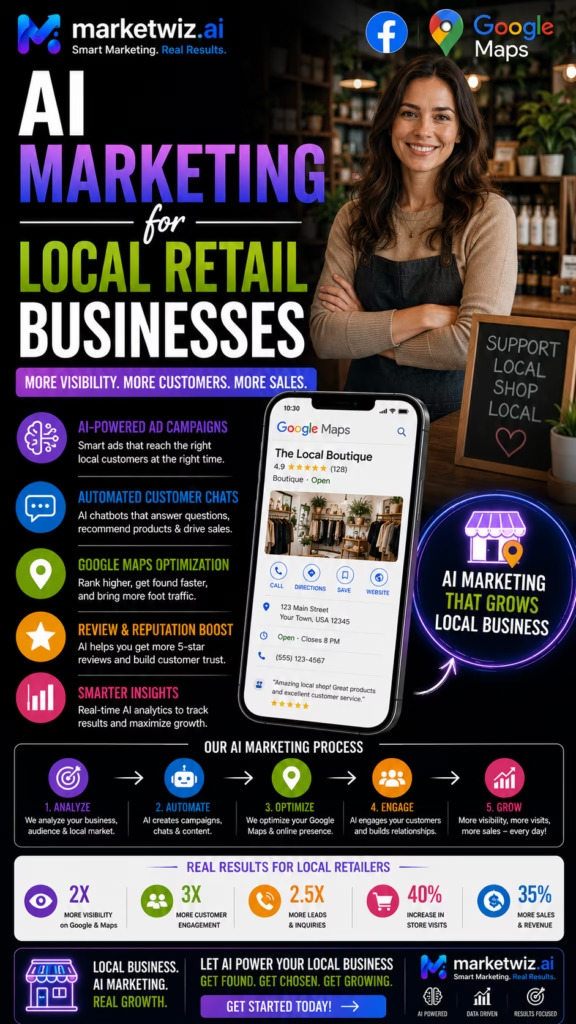
AI Marketing for Local Retail Businesses
AI marketing for local retail businesses can help stores respond to more shoppers, answer product questions faster, promote current inventory, recover missed calls, capture after-hours inquiries, qualify high-intent customers, schedule showroom visits or consultations, automate follow-up, connect CRM systems, and measure which local marketing channels actually create purchases. The strongest AI strategy does not replace the value of knowledgeable retail staff. It helps remove repetitive lead-handling work so employees can spend more time helping serious shoppers compare products, understand features, make confident buying decisions, and complete purchases.
Local retail businesses often spend substantial time and money attracting shoppers, only to lose good opportunities because response is slow, product information is difficult to access, or follow-up never happens.
A customer may call a furniture store during a busy Saturday and hang up. Another may message a flooring showroom after hours asking whether a specific product is in stock. Another may discover a jewelry store through Google Maps and ask about an appointment. Another may send a Marketplace message asking whether an appliance can be delivered this week.
These are not abstract website visitors.
They can be real local shoppers with immediate buying intent.
Yet local retail businesses frequently rely on employees who are already busy assisting people inside the store.
That creates a gap between marketing and sales.
AI can help close that gap.
An AI-powered system can answer approved basic questions, identify product interest, check current inventory when connected to accurate data, collect contact information, schedule a consultation, create a CRM record, and route the shopper toward a salesperson.
The objective is not to replace the store experience.
It is to make sure more people actually reach that experience.
The Local Retail AI Growth Formula
Local Visibility + Fast AI Response + Product Qualification + Inventory Matching + Store Visit Generation + Human Sales Handoff + CRM Follow-Up + Repeat Customer Marketing + Revenue Attribution = Sustainable Retail Growth
Why AI Marketing Can Work So Well for Local Retail Businesses
Shoppers Research Outside Store Hours
Customers compare products, prices, stores, and reviews during evenings, weekends, and other times when staff may not be available.
Product Questions Repeat Constantly
Availability, pricing, sizing, delivery, pickup, warranties, colors, models, and financing are common questions across retail.
Local Shoppers Compare Competitors Quickly
A slow response can send a motivated customer to the next nearby store.
Inventory Can Be Used for Qualification
Product category, brand, model, price range, size, style, and availability can help route shoppers efficiently.
Store Visits Can Be Valuable Conversion Events
High-ticket and experience-driven retail often converts better when shoppers reach the showroom or store.
Revenue Can Be Tracked
AI-assisted leads can be connected to visits, quotes, purchases, repeat revenue, gross profit, and customer acquisition cost.
Understand the Local Retail Buyer Journey Before Automating It
Discovery
Shoppers may discover the business through Google Maps, social media, Facebook Marketplace, paid ads, organic search, local directories, referrals, or the store website.
Research
They compare products, pricing, availability, delivery, reviews, features, styles, sizes, promotions, and local alternatives.
Qualification
The retailer may need to understand product interest, preferred features, budget range, timing, delivery location, or appointment need.
Store Visit or Consultation
Furniture, flooring, jewelry, mattresses, appliances, specialty products, and other high-consideration purchases may benefit from an in-person visit.
Purchase
The final transaction may include the main product, accessories, services, delivery, setup, financing, warranties, or other options.
Retention
Post-purchase follow-up can create reviews, referrals, accessories, replenishment, service opportunities, or future purchases.
Connect AI to the Store's Major Lead Sources
Google Maps
Local shoppers may call or visit the website directly from the business profile.
Website
AI chat can handle product questions, collect shopper intent, and route qualified opportunities.
Phone Calls
AI voice can help with missed calls, overflow, after-hours intake, and common questions.
Facebook Marketplace
Eligible products and listings may generate local product-specific conversations.
Social Media
Facebook, Instagram, TikTok, YouTube Shorts, and other platforms can drive local product interest.
Paid Advertising
AI can help process inbound leads generated from paid search and social campaigns.
Define What a Qualified Local Retail Lead Looks Like
Real Product Need
The shopper has genuine interest in a product or product category the store sells.
Local Fit
The customer is within a practical store, delivery, pickup, or service area.
Budget Fit
The shopper's expectations align reasonably with available products.
Purchase Timing
The customer has some idea of when they may buy.
Willingness to Continue
They are willing to visit the store, speak with staff, request a quote, reserve a product, or continue shopping.
Use AI to Qualify Product Intent
The first useful question is often simply what the shopper is trying to buy.
Specific Product
The shopper may reference an exact model, SKU, listing, style, size, color, or brand.
Product Category
They may know they need a sofa, refrigerator, mattress, engagement ring, hardwood flooring, television, dining set, or another category.
Feature-Based Intent
The customer may care more about dimensions, capacity, material, finish, comfort, color, or performance than a specific brand.
Open-Ended Shopping
Some customers need staff guidance and should be routed toward a consultation or store visit.
Qualify Retail Budget Without Creating Friction
Ask for a Range
A general budget range can help narrow product options without making the conversation feel restrictive.
Clarify Whether Services Are Included
Delivery, installation, setup, extended warranties, customization, and accessories may affect total purchase cost.
Use Budget to Guide, Not Reject
The purpose is to identify realistic options, not dismiss shoppers.
Qualify Purchase Timing
Buying Today
Immediate shoppers can be prioritized and routed toward current inventory.
Within a Week
These customers may benefit from a showroom appointment, product reservation, or salesperson callback.
Within 30 Days
Structured follow-up can keep the store in consideration.
Researching
Early-stage shoppers may benefit from useful information rather than aggressive follow-up.
Connect AI With Accurate Retail Inventory
AI becomes dramatically more useful when it knows what is actually in stock.
Product Name and SKU
Exact identification helps prevent confusion.
Brand
Some shoppers have strong brand preferences.
Price
Current approved pricing should be used rather than outdated data.
Availability
AI should know whether an item is in stock, low stock, display-only, backordered, incoming, or unavailable.
Store Location
Multi-location retailers should know exactly which store has the product.
Product Attributes
Size, color, dimensions, capacity, material, features, finish, or compatibility can help match shoppers.
Let AI Answer Retail Pricing Questions Accurately
Use Current Prices
The system should reference current approved store pricing.
Explain Product Variations
Different sizes, finishes, packages, or models may have different prices.
Explain Additional Services
Delivery, setup, installation, assembly, or other services should be identified separately when applicable.
Avoid Misleading Starting Prices
If a promoted price applies only to one configuration, make that clear.
Use AI to Explain Local Retail Promotions Clearly
Current Promotions Only
AI should reference offers that are genuinely active.
Explain What Is Included
Bundle discounts, free accessories, delivery promotions, clearance offers, and seasonal sales should be communicated accurately.
Explain Conditions
Minimum purchase requirements, product exclusions, timing, financing requirements, or other restrictions should not be hidden.
Avoid Fake Scarcity
Do not claim that inventory is almost gone unless that information is actually supported.
Use AI to Handle Delivery, Pickup, and Setup Questions
Delivery Area
Ask for ZIP code when geographic eligibility matters.
Delivery Timing
Provide realistic windows based on actual availability.
Pickup
Explain store pickup procedures when offered.
Installation or Setup
Furniture assembly, appliance installation, flooring installation, electronics setup, or other services may require different workflows.
Haul-Away
If old-item removal is available, explain fees and restrictions accurately.
Handle Retail Financing Questions Carefully
Provide Approved General Information
AI can state that financing options may be available when accurate.
Do Not Guarantee Approval
Financing decisions belong to the relevant lender or provider.
Do Not Invent Rates or Payments
Terms can depend on credit, purchase amount, promotions, lender, duration, and other factors.
Escalate Detailed Questions
Store staff or financing providers should handle specific offers and eligibility questions.
Use AI to Schedule Retail Appointments and Consultations
Not every retail purchase requires an appointment, but many high-value categories benefit from one.
- Furniture design consultations
- Flooring measurements or showroom visits
- Jewelry consultations
- Mattress showroom visits
- Appliance consultations
- Electronics demonstrations
- Custom product consultations
- Pickup scheduling
Send Context to Staff
The appointment should include the customer's product interest, budget, timing, and other useful details.
Use AI to Generate More Qualified Store Visits
Local retail marketing becomes more valuable when digital conversations result in real foot traffic.
Confirm the Product Before the Visit
If possible, verify availability first.
Explain Why Visiting Helps
Customers may benefit from seeing product size, color, materials, comfort, finish, sound, fit, or other physical characteristics.
Prepare Staff
Employees should know what the shopper is coming to see.
Send Reminders
Appointment and visit reminders can improve show rates.
AI Store Visit Handoff Example
You're interested in the product you asked about, and you'd like to see it in person before deciding. I can help arrange a store visit so the team knows what you'd like to compare when you arrive.
Recover Missed Retail Calls With AI
A missed call can represent a shopper who is already close to making a decision.
Identify Why They Called
Product availability, pricing, store hours, delivery, appointment, order status, or customer service?
Capture Contact Information
Create a useful callback record rather than a generic missed-call notice.
Identify Immediate Buyers
Customers looking to purchase today can be prioritized.
Capture Local Retail Leads After Hours
Many shoppers research products when stores are closed.
Answer Approved Questions
Hours, location, general availability, product categories, and basic policies can often be handled automatically.
Capture Product Interest
Ask what the shopper is looking for.
Schedule the Next Step
The customer may book a consultation, store visit, or callback.
Flag Strong Opportunities
Immediate buyers can be prioritized for opening-time follow-up.
Use AI Chat for Local Retail Lead Qualification
- Ask what product the shopper wants
- Identify exact SKU or model when available
- Ask important feature preferences
- Ask budget range when useful
- Ask purchase timing
- Ask delivery or pickup ZIP code
- Answer approved product questions
- Confirm store location
- Schedule appointments or visits
- Create CRM records
The best retail chat experience should feel fast and useful rather than forcing the customer through a long questionnaire.
Use AI Voice for Retail Calls and Lead Routing
Answer Common Questions
Store hours, address, product categories, pickup options, and basic policies can often be handled automatically.
Capture Product Interest
Ask what the customer is shopping for.
Schedule Appointments
Qualified callers can move directly into a consultation or showroom visit.
Escalate Complex Issues
Complaints, returns, warranties, detailed financing, custom orders, negotiation, and technical product advice should be routed to human staff.
Use AI to Convert Google Maps Retail Leads
Google Maps can create high-intent local retail traffic because shoppers may already be comparing nearby stores.
Answer Local Calls Quickly
Missed-call recovery can protect valuable Maps traffic.
Capture Product Intent
Ask whether the shopper is looking for a specific product or general category.
Direct Customers to the Correct Location
Multi-location retailers should route customers accurately.
Track Maps as the Source
Revenue attribution should distinguish Maps leads from other marketing channels.
Use AI for Facebook Marketplace Retail Lead Workflows
Eligible retail inventory may generate direct product-specific inquiries through Marketplace.
Answer the Listing Question First
If the shopper asks whether an item is available, answer that directly when inventory data is reliable.
Preserve the Product Source
CRM records should include the exact listing or product.
Ask One Useful Follow-Up Question
Delivery location, timing, size, color, or store visit intent may be enough to move the conversation forward.
Create a Clear Next Step
Qualified shoppers can be routed toward pickup, delivery, appointment, store visit, or salesperson follow-up.
Automate Retail Follow-Up Without Annoying Customers
Quote Follow-Up
Ask whether the shopper needs additional product information.
Availability Follow-Up
Notify customers when requested products arrive.
Appointment Reminders
Confirm store visits, consultations, or measurements.
Pickup and Delivery
Provide useful status information when appropriate.
Future Purchase Timing
Customers not ready today can be followed appropriately later.
Reactivate Older Retail Leads With Structured AI Follow-Up
Many local stores have old inquiries, quotes, and unclosed shoppers that were never consistently followed.
Unclosed Quotes
Ask whether the shopper still needs the product.
Out-of-Stock Leads
Re-engage customers when relevant inventory becomes available.
Seasonal Opportunities
Some products naturally create future demand.
Past Customers
Appropriate campaigns can introduce accessories, upgrades, service, or complementary products.
Use AI to Support High-Ticket Local Retail Sales
Furniture, flooring, mattresses, jewelry, appliances, electronics, specialty equipment, and other high-value categories can benefit significantly from AI qualification.
Identify Serious Buyers
Budget, timing, product type, delivery location, and store-visit intent can help prioritize strong opportunities.
Route to Experienced Staff
Premium shoppers may benefit from knowledgeable salespeople.
Schedule Consultations
High-ticket purchases often justify a dedicated appointment.
Track Gross Profit
Lead volume is less important than profitable sales.
Use AI for Relevant Retail Upsells and Bundles
AI can help identify complementary products when they genuinely fit the customer's needs.
Furniture
Sofa plus tables, rugs, chairs, or protection products.
Appliances
Appliance plus accessories, installation, or haul-away.
Mattresses
Mattress plus adjustable base, protector, pillows, or sheets.
Flooring
Flooring plus installation, underlayment, trim, or related services.
Electronics
Device plus accessories, mounting, cables, or setup services.
The best upsells improve the customer's purchase rather than simply increasing the transaction amount.
Route Retail Leads Across Multiple Store Locations
Route by Shopper Location
Direct customers to the nearest practical store.
Route by Inventory
A particular item may only be available at one location.
Route by Specialty
Different stores may focus on different product categories.
Route by Staff Expertise
Custom design, premium products, commercial sales, or specialty orders may require different teams.
Maintain One Customer Record
CRM systems should prevent duplicate follow-up from multiple locations.
Connect AI Retail Leads With CRM
Capture Shopper Information
- Name
- Phone number
- Email when appropriate
- Lead source
- Product interest
- Product SKU or model
- Budget range
- Purchase timing
- Preferred store
- Delivery or pickup location
- Appointment status
- Quote status
- Purchase outcome
Use Clear Pipeline Stages
- New retail inquiry
- AI qualified
- Staff assigned
- Store visit scheduled
- Consultation completed
- Quote provided
- Decision pending
- Purchased
- Delivery or pickup scheduled
- Completed
- Lost or future follow-up
Use AI to Improve Local Retail Customer Retention
Review Requests
After a successful purchase, customers can be invited to leave genuine feedback.
Accessory Follow-Up
Complementary products may create repeat purchases.
Replenishment
Some retailers sell products customers need repeatedly.
Service Reminders
Retailers that provide maintenance, service, installation, or warranty work can create future contact points.
Customer Reactivation
Past buyers may become future customers when new products or needs emerge.
Use AI to Support Retail Sales Staff Rather Than Replace Them
Experienced local retail employees provide context, trust, and product understanding that automation cannot fully replace.
Product Demonstration
Staff can help shoppers compare real products.
Nuanced Recommendations
Human employees can understand subtle needs, style preferences, and objections.
Negotiation
High-ticket sales may require human judgment.
Relationship Building
Local retail thrives on trust and repeat business.
Best Use of AI
Let AI handle repetitive questions, lead intake, missed calls, scheduling, qualification, and follow-up so staff can spend more time helping serious shoppers and completing sales.
Track Local Retail AI Marketing Metrics That Matter
Lead Metrics
- Total valid inquiries
- Qualified local shoppers
- Average response time
- Phone numbers captured
- After-hours leads captured
- Missed calls recovered
Visit and Appointment Metrics
- Store visits generated
- Appointments scheduled
- Appointment show rate
- Consultations completed
Sales Metrics
- Quotes issued
- Purchases completed
- Average order value
- Average gross profit
- Repeat customer rate
- Accessory or bundle attachment rate
Track Local Retail Revenue Back to Lead Source
| Lead Source | What to Track |
|---|---|
| Google Maps | Calls, store visits, purchases, average order value |
| Website | Chat leads, forms, appointments, purchases |
| Facebook Marketplace | Product inquiries, qualified shoppers, store visits, sales |
| Paid search | Qualified leads, cost per visit, purchases, CAC |
| Paid social | Lead quality, appointments, purchases, gross profit |
| Organic social | Inbound messages, store visits, purchases |
| Referrals | Qualified shoppers, close rate, repeat value |
Measure AI Marketing ROI for Local Retail Businesses
Qualified Lead Rate
Qualified Lead Rate = Qualified Local Retail Leads ÷ Total Valid Retail Inquiries × 100
Store Visit Rate
Store Visit Rate = Qualified Store Visits ÷ Qualified Retail Leads × 100
Purchase Rate
Purchase Rate = Retail Customers ÷ Qualified Retail Leads × 100
Average Order Value
Average Order Value = Total Retail Revenue ÷ Completed Retail Purchases
Customer Acquisition Cost
Customer Acquisition Cost = Total Retail Marketing and Lead-Handling Cost ÷ New Retail Customers
AI Marketing ROI
ROI = (Gross Profit From AI-Assisted Retail Customers − AI and Marketing Cost) ÷ AI and Marketing Cost × 100
Common AI Marketing Mistakes Local Retail Businesses Should Avoid
Using AI Without Accurate Inventory
Wrong availability information damages customer trust.
Using Outdated Prices
Pricing changes should reach automated systems quickly.
Giving Generic Responses
Customers want answers related to the actual product they asked about.
Asking Too Many Questions
Long automated interrogations can cause shoppers to leave.
Ignoring Missed Calls
Phone shoppers may be among the strongest local leads.
Failing to Create a Next Step
Good leads should move toward a store visit, appointment, purchase, pickup, or human conversation.
Not Connecting CRM
Staff need organized shopper context.
Automating Complex Sales Advice
AI should know when to hand the conversation to a person.
Tracking Messages Instead of Purchases
Message volume is not a strong measure of retail profitability.
A 30-Day AI Marketing Plan for Local Retail Businesses
Week 1: Build the Retail Lead Foundation
- List all lead sources
- Document current response times
- Define qualified shopper criteria
- Map product and inventory data
- Document store locations
- Document delivery areas
- Create CRM pipeline stages
- Set lead-source tracking rules
Week 2: Build AI Qualification
- Create product-intent questions
- Create budget questions
- Create purchase-timing questions
- Create delivery or pickup questions
- Create appointment routing
- Create store-location routing
- Create human escalation rules
Week 3: Build Follow-Up and Store Visit Systems
- Create missed-call recovery
- Create after-hours lead intake
- Create store-visit scheduling
- Create appointment reminders
- Create quote follow-up
- Create inventory follow-up
- Create old-lead reactivation
- Connect CRM automation
Week 4: Measure Retail Sales Outcomes
- Track qualified lead rate
- Track store visit rate
- Track appointment show rate
- Track purchase rate
- Track average order value
- Track gross profit
- Track repeat customer revenue
- Calculate CAC and ROI
End-of-Month Outcome
After 30 days, the local retail business should have faster shopper response, better product qualification, cleaner inventory routing, improved missed-call recovery, stronger store-visit generation, more organized follow-up, CRM attribution, and clearer visibility into which AI-assisted leads become actual customers and profitable retail sales.
Final Takeaway: AI Marketing Should Help Local Retail Businesses Create More Customers
Effective AI marketing for local retail businesses should not be measured by how many conversations can be automated.
It should be measured by whether more local shoppers move toward real buying decisions.
The first job of AI is response speed.
Customers who call during busy periods, message after hours, discover a store through Google Maps, or ask about a Marketplace product should receive useful information quickly.
The second job is product qualification.
The system should understand what the customer wants, which features matter, the expected budget, purchase timing, and whether delivery, pickup, or an in-store visit is needed.
The third job is inventory matching.
AI should connect shoppers with relevant products rather than sending generic responses.
The fourth job is routing.
Customers should reach the correct store, department, salesperson, appointment, or product category.
The fifth job is follow-up.
Quotes, store visits, appointments, product availability, delivery, pickup, and future purchase timing can all benefit from consistent communication.
The sixth job is retention.
Reviews, repeat purchases, accessories, replenishment, upgrades, and referrals can extend the value of each customer.
The seventh job is measurement.
Every qualified lead should be connected to a source, product interest, appointment or store visit, purchase result, and revenue whenever possible.
AI does not eliminate the need for strong local retail staff.
It can make them more productive.
Instead of spending large portions of the day answering the same availability questions, manually returning missed calls, and sorting through scattered messages, employees can focus on serious shoppers.
They can demonstrate products, explain differences, answer detailed questions, build trust, create bundles, solve customer problems, and close purchases.
Local retailers should ultimately measure AI with business outcomes.
Qualified lead rate, store-visit rate, appointment show rate, purchase rate, average order value, gross profit, repeat revenue, customer acquisition cost, and ROI provide a much stronger picture than raw conversation volume.
When AI response, accurate inventory, shopper qualification, store visit generation, human sales handoff, CRM tracking, follow-up, retention, and revenue attribution all work together, local retail businesses can create a more scalable and measurable customer acquisition system.
Frequently Asked Questions
1. What is AI marketing for local retail businesses?
AI marketing uses chat, voice, lead qualification, inventory matching, scheduling, follow-up, and CRM workflows to help local stores attract and convert more shoppers.
2. Can AI help local stores generate more leads?
AI can help improve response speed, missed-call recovery, qualification, scheduling, and follow-up so more inquiries become usable sales opportunities.
3. What types of local retail businesses can use AI marketing?
Furniture, appliances, mattresses, jewelry, flooring, electronics, specialty retail, boutiques, home improvement, and many other local stores can use AI marketing.
4. Can AI answer product availability questions?
Yes, when connected to accurate current inventory information.
5. Can AI answer retail pricing questions?
Yes, when current approved pricing information is available.
6. Can AI help stores recover missed calls?
Yes. AI can capture why the shopper called and create a useful callback record.
7. Can AI respond to retail customers after hours?
Yes. AI can answer approved questions, capture product interest, and schedule future follow-up.
8. Can AI schedule retail appointments?
Yes. Consultations, showroom visits, demonstrations, fittings, measurements, and pickup appointments can often be scheduled.
9. Can AI work with Google Maps retail leads?
Yes. Google Maps calls and website inquiries can be qualified, routed, scheduled, and tracked.
10. Can AI work with Facebook Marketplace retail leads?
AI can support eligible Marketplace lead handling and routing when configured appropriately.
11. Can AI help local retailers market inventory?
Yes. AI can organize product data, answer shopper questions, and route customers toward relevant inventory.
12. Can AI help retailers promote clearance inventory?
Yes. Clearance and closeout products can be promoted when current inventory and pricing information are accurate.
13. Can AI help local stores follow up with shoppers?
Yes. AI-supported follow-up can handle reminders, quotes, availability updates, and next-step communications.
14. Can AI help retailers reactivate old leads?
Yes, when appropriate communication and consent requirements are followed.
15. Should retail leads go into a CRM?
Yes. CRM tracking helps organize source, product interest, appointments, quotes, purchases, and revenue.
16. Can AI help retailers manage multiple store locations?
Yes. AI can route shoppers by location, inventory, store hours, product category, or staff expertise.
17. Can AI help stores promote high-ticket products?
Yes. AI can identify higher-intent shoppers and route them toward experienced sales staff or consultations.
18. Can AI help stores with delivery questions?
Yes. AI can explain approved delivery, pickup, setup, and related store policies.
19. Can AI discuss retail financing?
AI can provide approved general information but should not guarantee financing approval, rates, or payment amounts.
20. Can AI improve store visit rates?
Faster response, inventory confirmation, appointments, and reminders can help more qualified shoppers reach the store.
21. Can AI improve retail sales conversion?
AI can improve parts of the process through faster response, better qualification, routing, and follow-up.
22. Can AI replace local retail salespeople?
AI is better used to support staff while humans manage nuanced product recommendations, demonstrations, negotiations, and relationships.
23. What local retail lead metrics should businesses track?
Track qualified shoppers, response time, store visits, appointments, purchases, average order value, gross profit, and CAC.
24. Should local retailers track lead source?
Yes. Source tracking helps compare Maps, Marketplace, paid ads, social media, website, calls, and referrals.
25. Can AI help local retailers with customer retention?
Yes. Reviews, replenishment, accessories, service reminders, and customer reactivation can support repeat business.
26. Can AI help increase average order value?
Yes. Relevant complementary products and bundles can be introduced when they genuinely fit customer needs.
27. Can AI guarantee retail sales?
No. Sales depend on demand, inventory, pricing, competition, store experience, marketing, and sales execution.
28. How should local retail businesses measure AI marketing ROI?
Measure qualified leads, store visits, purchases, average order value, gross profit, CAC, repeat revenue, and overall return on investment.
29. What is the biggest AI marketing mistake local retailers make?
Automating customer responses without accurate product data, human escalation, CRM integration, follow-up, and revenue attribution.
30. What is the goal of AI marketing for local retail businesses?
The goal is to turn more local shopper inquiries into qualified conversations, store visits, purchases, repeat customers, referrals, revenue, and measurable growth.
30 Additional SEO Keywords
Use these supporting phrases naturally across local retail marketing pages, AI automation guides, inventory pages, location pages, FAQs, case studies, and internal links.
Turn More Local Retail Inquiries Into Qualified Shoppers, Store Visits, and Sales
MarketWiz.ai helps local retail businesses organize AI lead generation, respond to shoppers faster, qualify product interest, connect current inventory, recover missed calls, capture after-hours inquiries, connect AI voice and chat systems, generate store visits, schedule consultations, route leads to the right location or salesperson, connect CRM workflows, automate follow-up, improve customer retention, and measure purchases, gross profit, customer acquisition cost, and return on investment.
This article provides general AI marketing, local retail, lead-generation, automation, CRM, customer-retention, and business information and does not provide legal, lending, financing, tax, insurance, warranty, privacy, telecommunications, consumer-protection, accessibility, franchise, or regulatory advice. Product inventory, pricing, promotions, financing programs, delivery, pickup, installation, warranties, return policies, store hours, and availability can change. AI systems should not guarantee inventory, pricing, financing approval, payment terms, delivery timing, product suitability, or promotional eligibility without accurate current data and appropriate disclosures. Retail businesses should follow applicable advertising, calling, texting, privacy, financing, accessibility, platform, consumer-protection, and local business requirements. Lead volume, store visits, appointments, purchases, average order value, repeat business, revenue, and marketing results cannot be guaranteed and depend on inventory, local demand, pricing, competition, marketing quality, response speed, store experience, sales staff performance, and execution.














Use AI to Convert Social Media Retail Interest
Instagram and Facebook
Product photos, promotions, inventory arrivals, customer projects, and short videos can generate direct messages.
TikTok and Short-Form Video
Product demonstrations and visual transformations can create local interest.
YouTube Shorts
Short-form product content can create additional brand discovery.
Route Conversations Into CRM
Strong social leads should not remain trapped inside isolated message inboxes.