

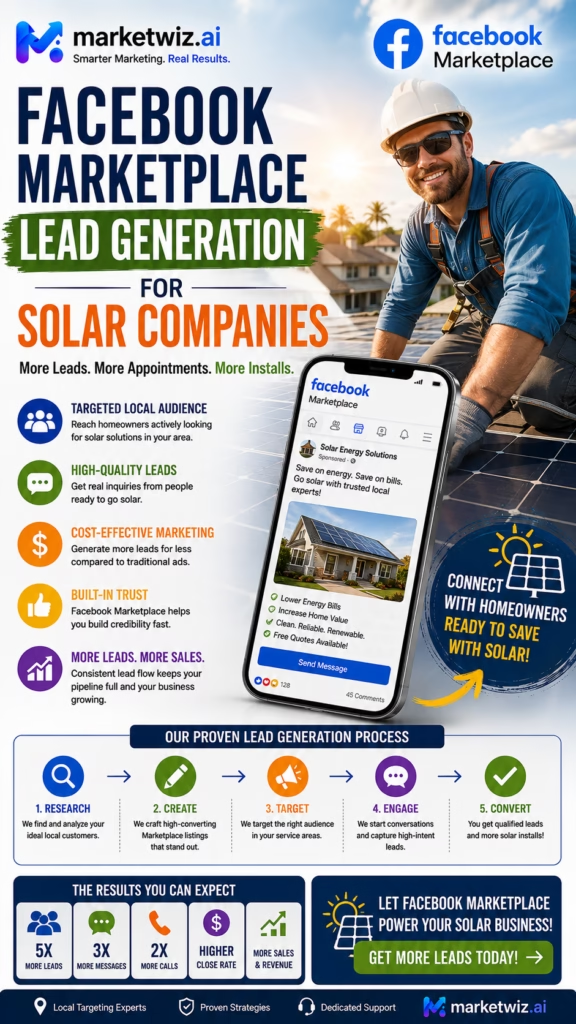
Facebook Marketplace Lead Generation for Solar Companies
Facebook Marketplace lead generation for solar companies can help solar businesses create more local visibility and start conversations with homeowners who are already researching property upgrades, energy costs, batteries, backup power, roofing improvements, and long-term household expenses. The strongest Marketplace strategy is not built around exaggerated savings or vague “free solar” claims. It is built around accurate offers, strong project images, local targeting, useful education, compliant pricing language, homeowner qualification, fast response, appointments, CRM tracking, and measurable installed revenue.
Solar companies do not need more random messages. They need homeowners who have a realistic chance of becoming viable solar customers.
That distinction matters because solar is usually a higher-value, higher-consideration purchase.
A homeowner may need to understand system design, energy usage, financing, roof conditions, utility rates, batteries, incentives, warranties, timelines, permitting, and expected long-term economics before making a decision.
Facebook Marketplace can become one piece of that customer-acquisition process when listings are designed around real homeowner interests.
Instead of presenting vague “solar available” messages, solar companies can create more specific local campaigns around energy cost concerns, rooftop solar consultations, battery storage, backup power, home energy upgrades, or property-specific solar evaluations.
The goal is not to promise a result before reviewing the property.
The goal is to create enough relevance and trust to begin a qualified conversation.
The Solar Marketplace Lead Formula
Local Homeowner Intent + Clear Solar Offer + Real Project Photos + Accurate Claims + Geographic Fit + Property Qualification + Fast Response + Consultation + Proposal + CRM Tracking = Stronger Solar Customer Acquisition
Why Facebook Marketplace Can Help Solar Companies Generate Leads
Local Homeowner Discovery
Marketplace can introduce a solar company to nearby homeowners who may not yet know the brand.
Home Improvement Intent
Marketplace users may already be researching products and improvements for their homes.
Visual Solar Proof
Real project photos can show equipment, installations, roof layouts, batteries, and completed systems.
Direct Customer Conversation
Interested homeowners can begin a conversation quickly rather than navigating a complicated funnel.
Local Market Segmentation
Solar companies can focus marketing on areas they actually install and support.
Measurable Sales Pipeline
Marketplace conversations can be tracked through appointments, proposals, closed projects, and installed revenue.
Define What a Qualified Solar Marketplace Lead Looks Like
Geographic Fit
The property should be located inside a market where the company can legally and operationally sell, permit, install, and service solar.
Property Fit
The property should have a realistic path to a solar evaluation.
Customer Interest
The homeowner should have a genuine reason for exploring solar, battery storage, backup power, or energy-cost reduction.
Decision Timing
Some customers are ready immediately, while others are planning for a later project.
Willingness to Continue
A qualified prospect should be willing to provide enough information for a legitimate evaluation or consultation.
Understand the Homeowner Intent Behind Solar Marketplace Leads
High Utility Bills
Some homeowners begin researching solar because monthly energy costs have increased.
Long-Term Homeownership
Homeowners planning to remain in a property may be evaluating long-term energy investments.
Battery Backup
Outages, storms, utility reliability, and resilience can create interest in battery storage.
Home Renovation
Roofing, electrical work, remodeling, EV purchases, and other upgrades can create natural solar research moments.
Environmental Goals
Some customers are motivated by reducing grid dependence or using more renewable energy.
Choose Solar Marketplace Offers That Attract Better Prospects
Solar Evaluation Offer
Position the listing around determining whether rooftop solar may fit the customer's property and usage.
Solar + Battery Consultation
Homeowners interested in backup power may respond to a combined solar and battery conversation.
High-Energy-Bill Consultation
Focus on reviewing energy usage rather than promising a specific savings amount.
Home Energy Upgrade Consultation
Solar can be positioned within a broader conversation around home energy planning.
Existing Solar Expansion
Some homeowners may already have solar and need additional capacity or storage options.
Better Solar Offer Example
Considering solar for your home? Send your city and approximate electric bill range. We can help determine whether your property may be worth evaluating for rooftop solar or battery storage.
Write Facebook Marketplace Titles That Attract the Right Solar Prospects
Keep the Title Clear
Homeowners should immediately understand the topic.
Avoid Unrealistic Claims
Do not imply guaranteed savings, guaranteed eligibility, guaranteed financing, or guaranteed zero-cost solar.
Use Local Relevance Carefully
Location can help qualify the audience when it naturally fits the offer.
Solar Marketplace Title Examples
Home Solar Evaluation for Local Homeowners
Solar + Battery Options for Home Energy Planning
Thinking About Solar? Start With a Property Review
Rooftop Solar Consultation for Local Homeowners
Write Solar Marketplace Descriptions That Educate and Qualify
Explain the Offer
Tell homeowners whether the listing is for a consultation, evaluation, battery discussion, or solar project review.
Explain What Affects Solar Design
Roof layout, shade, energy usage, system size, utility rates, equipment, batteries, local permitting, and other factors can affect recommendations.
Explain the Next Step
Ask for the minimum information needed to begin evaluating fit.
Use Appropriate Disclosures
Avoid presenting estimated savings, incentives, payment amounts, or tax benefits as guaranteed results.
Use Real Solar Installation Photos to Build Trust
Completed Rooftop Systems
Show actual installations that represent the company's work.
Battery Systems
Show real battery installations when offered.
Inverters and Equipment
Equipment details can help customers understand system quality.
Crews and Installation Work
Professional team photos can humanize the company.
Before-and-After Project Context
Roof or electrical project context can help customers understand the process.
Avoid Misrepresenting Projects
Images should accurately represent real capabilities and work.
Use Solar Savings Language Carefully
Savings claims are one of the most sensitive areas in solar marketing because homeowner results vary significantly.
Do Not Promise a Specific Savings Percentage Without Support
Energy outcomes depend on many property-specific and financial factors.
Use Educational Language
Explain that solar may change how a homeowner purchases energy rather than guaranteeing a predetermined result.
Qualify Estimates
Any modeled savings should be based on reasonable assumptions and clearly identified as estimates rather than guaranteed outcomes.
Safer Solar Marketing Language
Solar economics vary by property, utility usage, system design, equipment, available incentives, financing terms, roof conditions, and local utility rates. A property-specific review is needed to estimate potential costs and benefits.
Handle Solar Financing Language Correctly
Avoid Guaranteed Approval
Financing eligibility can depend on lender criteria and customer circumstances.
Do Not Hide Material Terms
Advertised payment amounts should not omit important conditions, assumptions, fees, or financing terms.
Separate Cash Price From Financing Examples
Customers should understand whether a number represents a total system price, financed payment, lease payment, or another structure.
Escalate Financing Questions
Detailed financing discussions should be handled by appropriately trained personnel and compliant processes.
Discuss Solar Incentives and Tax Benefits Carefully
Keep Information Current
Incentive programs can change.
Do Not Present Tax Benefits as Cash Rebates Unless Accurate
Tax credits and rebates have different eligibility requirements and financial effects.
Avoid Individual Tax Advice
Customers should be encouraged to consult qualified tax professionals regarding personal eligibility.
Explain Incentives as One Part of the Evaluation
The solar decision should consider system cost, energy use, financing, incentives, expected production, and customer goals.
Target Solar Marketplace Leads in the Right Geographic Areas
Installation Territory
Focus on markets where the company has crews, permitting capability, sales coverage, and service support.
Utility Territory
Utility rules can affect project economics and interconnection.
State and Local Requirements
Solar regulations, permits, incentives, and contracting rules can vary by location.
Do Not Overexpand Lead Coverage
Leads outside operational territory can waste sales time and create poor customer experiences.
Qualify Solar Property and Homeowner Fit
Property Location
Start with the city or ZIP code.
Property Type
Single-family homes, multifamily properties, and commercial buildings may require different processes.
Ownership or Decision Authority
Determine who can authorize the project when relevant.
Current Energy Use
Understanding electricity consumption helps determine whether a solar review is worthwhile.
Project Timing
Identify whether the homeowner is researching or ready to move forward.
Use Electric Bill Information to Improve Solar Lead Qualification
Ask for a Monthly Range First
A customer may be comfortable sharing an approximate range before sending a document.
Explain Why the Bill Matters
Energy usage helps estimate potential system size and project economics.
Request Detailed Bills Later When Needed
More detailed usage history may be appropriate after the homeowner agrees to a deeper evaluation.
Handle Customer Data Carefully
Utility bills can contain personal information and should be handled appropriately.
Qualify Roof Conditions Before Treating Every Solar Lead Equally
Roof Age
Older roofs may need evaluation before solar installation.
Roof Material
Different materials can affect installation methods and pricing.
Shade
Trees, adjacent buildings, and roof orientation can affect potential solar production.
Available Roof Area
Roof space can influence system design.
Roof Replacement Plans
Solar timing may need to coordinate with planned roofing work.
Use Battery Storage to Create Additional Marketplace Lead Opportunities
Backup Power Interest
Homeowners may be motivated by outages and grid reliability.
Solar + Battery Bundles
Some customers prefer to evaluate both technologies together.
Existing Solar Owners
Battery marketing may generate leads from homeowners who already have solar.
EV and Home Electrification
Growing household electric demand may influence energy storage planning.
Use One Clear Call to Action for Solar Marketplace Leads
Send your city, approximate monthly electric bill range, and whether you are interested in solar, battery storage, or both. We can review the basics and confirm whether a consultation makes sense.
Keep the First Step Simple
Do not demand extensive personal or property information before giving the homeowner a useful response.
Ask Only What Helps Qualify the Lead
Location, energy use, property type, solar interest, battery interest, and timing are usually more useful than a long questionnaire.
Respond Quickly to Solar Marketplace Leads
Solar shoppers may contact multiple companies while researching.
Thanks for reaching out. We can help you see whether solar may be worth evaluating for your property. What city are you in, and are you mainly looking at rooftop solar, battery storage, or both?
Answer Before Selling
Customers are more likely to continue when the first response feels informative rather than aggressive.
Ask One Useful Question
Keep the conversation moving naturally.
Ask Better Solar Qualification Questions
What City Is the Property In?
Confirms geographic fit.
Are You Looking for Solar, Battery, or Both?
Identifies the main customer need.
What Is Your Approximate Electric Bill?
Helps estimate energy usage.
What Type of Property Is It?
Helps identify the appropriate project process.
How Soon Are You Considering a Project?
Helps prioritize immediate versus future opportunities.
Would You Like a Phone or Virtual Consultation?
Moves the customer toward a clear next step.
Capture Phone Information From Qualified Solar Leads
Give Value Before Requesting Contact Information
Answer enough of the homeowner's questions to establish trust.
Connect the Phone Request to a Purpose
Explain that a phone number is needed to coordinate the consultation, property review, or estimate.
Respect Consent Requirements
Solar companies should follow applicable calling, SMS, privacy, and telemarketing requirements.
Move Qualified Marketplace Solar Leads Into Appointments
Phone Consultation
Good for initial qualification and education.
Virtual Solar Review
Customers may be able to discuss bills, property details, and goals remotely.
Site Assessment
Higher-intent homeowners may need an onsite review.
Battery Consultation
Battery-focused customers may need a separate technical conversation.
Confirm the Appointment Purpose
The sales team should know the exact Marketplace campaign and customer interest.
Move Solar Leads From Conversation to Site Assessment
Confirm Property Address
The correct property is necessary for site-specific analysis.
Review Roof and Shade Conditions
Initial imagery may help determine whether the property deserves a deeper evaluation.
Review Electrical Needs
Existing electrical equipment may affect project scope.
Review Customer Goals
Savings, backup power, EV charging, sustainability, or energy independence may shape the design conversation.
Move Qualified Solar Leads Into Accurate Proposals
Use Real Energy Data
Proposals should reflect actual usage when available.
Use Property-Specific Design
System size and expected production should reflect realistic site conditions.
Explain Equipment
Panels, inverters, batteries, warranties, monitoring, and related components should be clear.
Explain Financial Assumptions
Financing, incentives, escalation assumptions, utility rates, and modeled savings should be presented transparently.
Give the Customer a Clear Next Step
The proposal should lead toward questions, revisions, approval, or a documented decision.
Follow Up With Solar Marketplace Leads Based on Intent
Hot Solar Leads
Homeowners ready to act should receive fast follow-up.
Comparison Shoppers
Customers comparing several installers may need education, proposal clarification, and proof of credibility.
Future Solar Buyers
Some homeowners may be waiting for a roof replacement, move, financing change, or utility-bill increase.
Battery-Only Leads
Storage prospects may have different follow-up needs than solar-only prospects.
Use AI to Qualify Solar Marketplace Leads Faster
AI Can Collect Basic Information
- City or ZIP code
- Solar versus battery interest
- Approximate electric bill range
- Property type
- Project timing
- Roof replacement plans
- Appointment preference
- Phone number when appropriate
AI Can Route Strong Opportunities
Qualified homeowners can be sent directly to a solar advisor or appointment calendar.
AI Can Support Missed-Call Recovery
Prospects who call after messaging can be captured more reliably.
AI Should Use Approved Solar Language
Avoid unsupported savings, financing, incentive, tax, or eligibility claims.
Escalate Complex Questions
Financing, tax incentives, contracts, engineering, production guarantees, and site-specific pricing should be handled by appropriately qualified staff.
Connect Marketplace Solar Leads With Your CRM
Capture Lead Source
- Facebook Marketplace
- Listing or campaign title
- Target city
- Solar versus battery campaign
Capture Property and Customer Information
- Customer name
- Phone number
- Email when appropriate
- Property location
- Property type
- Electric bill range
- Solar or battery interest
- Project timing
- Appointment status
- Proposal status
Use Clear Pipeline Stages
- New Marketplace inquiry
- Contacted
- Qualified homeowner
- Consultation scheduled
- Site assessment
- Proposal sent
- Decision pending
- Contracted
- Installed
- Lost
Track Solar Marketplace Lead Metrics That Matter
Inquiry Metrics
- Total valid Marketplace inquiries
- Qualified homeowner leads
- Battery leads
- Solar-only leads
- Average response time
- Phone numbers captured
Appointment Metrics
- Consultations booked
- Appointment show rate
- Site assessments
- Virtual reviews completed
Sales Metrics
- Proposals sent
- Proposal-to-close rate
- Contracts signed
- Installed projects
- Average installed project value
Connect Marketplace Solar Leads to Installed Revenue
Qualified Lead Rate
Qualified Lead Rate = Qualified Solar Leads ÷ Total Valid Marketplace Solar Inquiries × 100
Appointment Rate
Appointment Rate = Solar Consultations Scheduled ÷ Qualified Marketplace Solar Leads × 100
Proposal Rate
Proposal Rate = Solar Proposals Sent ÷ Qualified Marketplace Solar Leads × 100
Installed Revenue per Lead
Installed Revenue per Qualified Lead = Installed Marketplace Solar Revenue ÷ Qualified Marketplace Solar Leads
Measure Facebook Marketplace ROI for Solar Companies
Customer Acquisition Cost
Customer Acquisition Cost = Total Marketplace Solar Marketing and Sales Cost ÷ New Marketplace Solar Customers
Marketplace Solar ROI
ROI = (Gross Profit From Marketplace Solar Customers − Marketplace Marketing Cost) ÷ Marketplace Marketing Cost × 100
| Metric | What It Measures |
|---|---|
| Qualified solar lead rate | Whether Marketplace is reaching realistic homeowner opportunities |
| Appointment rate | Whether qualified homeowners move into consultations |
| Proposal rate | Whether qualified leads become technically and financially viable projects |
| Close rate | Whether proposals become signed solar customers |
| Installed project value | The average revenue generated by completed Marketplace solar customers |
| Gross profit and ROI | Whether Marketplace contributes to profitable solar customer acquisition |
Common Facebook Marketplace Solar Lead Generation Mistakes
Using “Free Solar” Without Proper Context
Misleading free or zero-cost language can damage trust and create compliance problems.
Promising Guaranteed Savings
Solar economics vary by customer and property.
Using Generic Stock Photos
Real project images generally create stronger credibility.
Ignoring Geographic Fit
Leads outside installation territory waste valuable sales time.
Failing to Qualify the Property
Not every homeowner or roof is ready for solar.
Overcomplicating the First Response
Asking ten questions immediately can reduce engagement.
Responding Too Slowly
Solar shoppers may contact several installers.
Not Tracking Proposal and Install Outcomes
Raw lead volume does not reveal customer acquisition quality.
Measuring Leads Instead of Installed Profit
Installed customers and gross profit are stronger business metrics.
A 30-Day Facebook Marketplace Lead Generation Plan for Solar Companies
Week 1: Build the Solar Marketplace Foundation
- Define target solar markets
- Review current platform eligibility
- Identify compliant solar offers
- Collect original installation photos
- Create solar and battery campaign angles
- Document current lead volume
- Define qualified lead criteria
- Set CRM source tracking
Week 2: Improve Solar Listings
- Write clearer solar listing titles
- Improve homeowner-focused descriptions
- Remove unsupported savings claims
- Clarify service areas
- Add real solar project photos
- Create battery-specific listings
- Create property-review CTAs
- Review financing and incentive language
Week 3: Improve Qualification and Follow-Up
- Create first-response templates
- Create homeowner qualification questions
- Add electric-bill-range questions
- Improve phone capture
- Create consultation workflows
- Create missed-call recovery
- Connect AI qualification where appropriate
- Create proposal follow-up tasks
Week 4: Measure Solar Sales Outcomes
- Track qualified homeowner rate
- Track appointment rate
- Track show rate
- Track site assessments
- Track proposal rate
- Track contracts
- Track installed Marketplace revenue
- Calculate customer acquisition cost and ROI
End-of-Month Outcome
After 30 days, the solar company should have clearer Marketplace offers, stronger real-world project images, better homeowner qualification, cleaner compliance language, faster response, improved appointment workflows, CRM attribution, and more reliable visibility into which Marketplace campaigns create proposals, signed customers, installations, revenue, and profit.
Final Takeaway: Solar Marketplace Marketing Should Focus on Qualified Homeowners, Not Raw Messages
Effective Facebook Marketplace lead generation for solar companies should be built around qualified local opportunities rather than message volume alone.
Solar is a complex purchase.
Homeowners need accurate information, realistic expectations, property-specific analysis, trustworthy project examples, and a professional sales process.
Marketplace can help create the first point of discovery when solar companies use clear offers that match real homeowner concerns.
A listing might focus on high electric bills, rooftop solar evaluation, battery backup, solar-plus-storage planning, or a general property review.
Strong original installation photos can build trust before the customer sends a message.
Clear descriptions can explain that system design, pricing, savings, financing, incentives, and expected production depend on customer-specific factors.
Once a homeowner responds, the company should answer quickly and begin qualification naturally.
City, property type, solar versus battery interest, electric bill range, roof conditions, and project timing can help determine whether the lead is worth moving forward.
Good leads can then move into phone consultations, virtual reviews, site assessments, system design, proposals, and signed projects.
AI chat, AI voice, missed-call recovery, appointment scheduling, CRM integration, and automated follow-up can help solar companies manage more conversations while protecting response speed.
The final measurement should be based on business outcomes.
Qualified homeowner rate, consultation rate, proposal rate, close rate, average installed project value, installed revenue, gross profit, customer acquisition cost, and ROI provide a much clearer picture of Marketplace performance.
When accurate marketing, homeowner qualification, fast response, and sales tracking work together, Facebook Marketplace can become another useful local lead source inside a broader solar customer acquisition strategy.
Frequently Asked Questions
1. Can Facebook Marketplace generate leads for solar companies?
Marketplace can support local discovery and customer conversations for eligible solar-related offers when the listings comply with current platform requirements.
2. What makes a qualified solar lead?
A qualified solar lead generally has realistic geographic, property, energy-usage, timing, and decision-making fit for a solar evaluation.
3. How should solar companies write Marketplace listings?
Use accurate language, real project images, useful local information, clear next steps, and properly qualified savings and financing language.
4. Should solar Marketplace listings mention savings?
Savings can be discussed carefully, but results should not be presented as guaranteed because they depend on property, utility, financing, system, and usage factors.
5. Should solar companies advertise zero-dollar offers?
Avoid misleading free or zero-dollar claims unless the terms are accurate, complete, and compliant.
6. Do original solar installation photos help?
Yes. Real solar, battery, equipment, crew, and completed-project photos can improve trust.
7. Can Marketplace help solar companies reach homeowners?
Yes. Marketplace may create local discovery among homeowners researching property upgrades, energy costs, batteries, and home improvements.
8. How should solar companies qualify Marketplace leads?
Ask useful questions about location, property type, energy use, roof conditions, solar or battery interest, and project timing.
9. Should solar companies ask for electric bills?
Electric bill information can help evaluate energy use, but the company should explain why it is needed and protect customer information.
10. Should solar companies ask whether the prospect owns the home?
Ownership or decision authority may be relevant depending on the project structure and solar business model.
11. How important is service-area targeting for solar leads?
Very important. Leads should come from areas the company can realistically sell, permit, install, and service.
12. Should solar Marketplace listings mention financing?
Financing may be mentioned when accurate, but companies should avoid guaranteed approval claims and incomplete payment representations.
13. Should solar Marketplace listings mention tax credits?
Incentive references should be current, qualified, accurate, and not presented as individualized tax advice.
14. Can solar companies promote batteries on Marketplace?
Eligible battery and energy-storage offers can create additional homeowner interest when they comply with current platform rules.
15. Does response speed matter for solar Marketplace leads?
Yes. Solar shoppers may contact several companies, so quick professional response can improve conversion.
16. What should a solar company ask first?
After answering the immediate question, ask one useful qualification question such as location or whether the customer wants solar, battery storage, or both.
17. Can Marketplace solar leads become appointments?
Yes. Good leads can move into consultations, virtual reviews, site assessments, or other appropriate appointments.
18. Should solar Marketplace leads be tracked in a CRM?
Yes. CRM tracking helps connect Marketplace source data with qualification, appointments, proposals, customers, and revenue.
19. Can AI qualify solar Marketplace leads?
AI can help collect approved qualification details, schedule consultations, route strong leads, and create CRM records.
20. Can AI answer solar pricing questions?
AI can provide approved general context, but final pricing should reflect property-specific design and financial factors.
21. Should solar companies track missed calls?
Yes. High-intent prospects who call should have a missed-call recovery workflow.
22. What solar Marketplace metrics should companies track?
Track qualified leads, response time, consultations, site assessments, proposals, signed customers, installed revenue, gross profit, and acquisition cost.
23. Should solar companies measure appointment rate?
Yes. Appointment rate shows how effectively Marketplace conversations become meaningful sales opportunities.
24. Should solar companies measure proposal rate?
Yes. Proposal rate helps show whether lead qualification is producing viable solar projects.
25. Should solar companies track installed revenue by lead source?
Yes. Installed revenue provides a stronger measure of source quality than raw inquiries alone.
26. Can solar Marketplace lead generation be automated?
Certain qualification, CRM, scheduling, reminder, and follow-up workflows may be automated when platform and communication requirements are followed.
27. Can solar leads from Marketplace be guaranteed?
No. Lead volume and quality depend on market demand, competition, platform systems, offer quality, location, customer fit, and sales execution.
28. Should solar companies combine Marketplace with Google Maps?
Yes. Homeowners may verify the company through Google reviews, the website, projects, licensing information, and broader local reputation.
29. What is the biggest solar Marketplace lead generation mistake?
Chasing message volume with exaggerated claims and weak qualification instead of focusing on qualified homeowners, compliant offers, and installed outcomes.
30. What is the goal of Facebook Marketplace lead generation for solar companies?
The goal is to turn local Marketplace visibility into qualified homeowner conversations, consultations, proposals, signed projects, installed revenue, and measurable growth.
30 Additional SEO Keywords
Use these supporting phrases naturally across solar marketing guides, local landing pages, Marketplace strategy pages, FAQs, service pages, solar case studies, and internal links.
Turn Facebook Marketplace Solar Inquiries Into More Qualified Homeowner Opportunities
MarketWiz.ai helps solar companies organize Facebook Marketplace marketing, create stronger local solar offers, improve listing titles and descriptions, organize real installation imagery, qualify homeowners, capture property and electric-usage details, recover missed calls, connect AI voice and CRM systems, schedule consultations, route stronger opportunities, track proposals, and measure signed customers, installed revenue, gross profit, customer acquisition cost, and return on investment.
This article provides general Facebook Marketplace, solar marketing, lead-generation, automation, and business information and does not provide legal, tax, financial, lending, engineering, electrical, licensing, insurance, privacy, telecommunications, consumer-protection, platform-compliance, or regulatory advice. Facebook Marketplace and Meta features, listing eligibility, commerce categories, advertising rules, interfaces, visibility systems, and platform policies may change. Solar companies should review current platform rules and all applicable federal, state, local, utility, contractor, licensing, advertising, financing, telemarketing, privacy, SMS, calling, incentive, tax-credit, consumer-protection, and solar-specific requirements before publishing offers or implementing customer communication systems. Solar savings, production, utility reductions, incentives, financing approval, tax benefits, system pricing, and project economics cannot be guaranteed and vary by property, roof, shade, utility rates, energy usage, equipment, financing, incentives, system design, permitting, interconnection, location, and customer circumstances. Lead volume, appointments, signed customers, installed projects, revenue, and other marketing results also cannot be guaranteed.













