
Facebook Marketplace Marketing for HVAC Contractors
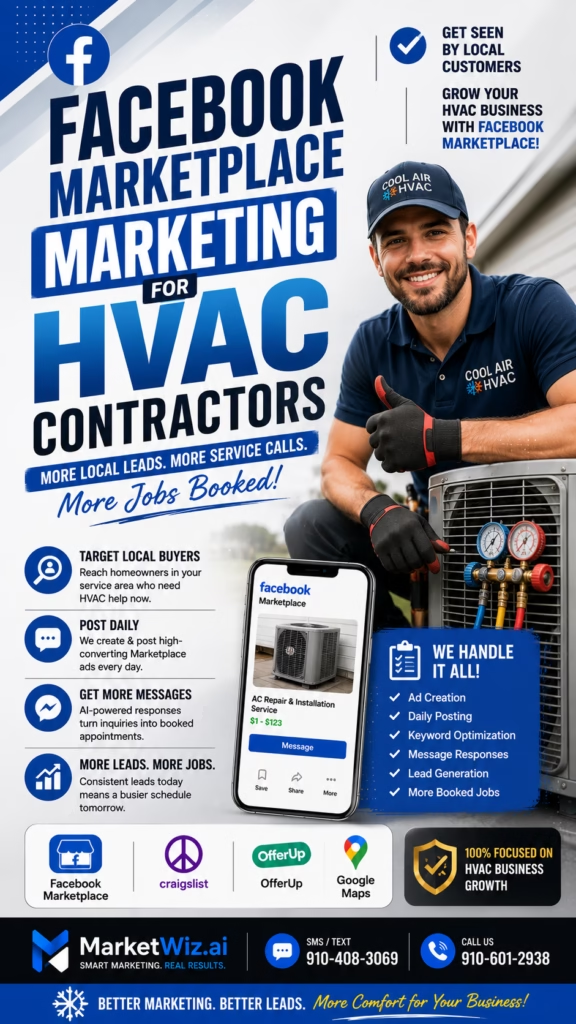
Facebook Marketplace marketing for HVAC contractors can help heating and cooling companies improve local visibility, generate qualified service inquiries, promote repair and replacement consultations, schedule maintenance appointments, and convert Marketplace conversations into profitable HVAC jobs.
Facebook Marketplace marketing for HVAC contractors is a local customer-acquisition strategy designed to connect heating and cooling companies with homeowners, landlords, property managers, investors, and business owners who need repairs, maintenance, system evaluations, replacements, indoor air quality improvements, or commercial HVAC support.
HVAC businesses operate in one of the most urgent and competitive local service industries. Customers often begin searching when an air conditioner stops cooling, a furnace will not start, energy bills increase, indoor humidity becomes uncomfortable, or an aging system begins failing repeatedly.
Many contractors rely on Google Ads, local service directories, referrals, maintenance customers, yard signs, vehicle branding, direct mail, and seasonal promotions. Those channels can work, but customer acquisition costs may rise quickly during periods of high demand.
Marketplace can provide another source of local discovery. A homeowner browsing appliances, home improvement products, rental listings, generators, windows, or property-related items may also be dealing with a heating, cooling, ventilation, or indoor air quality concern.
The strongest HVAC campaigns do more than publish broad advertisements. They connect a specific customer problem with helpful information, professional proof, accurate expectations, fast communication, and a clear path toward a service appointment or replacement estimate.
The Core HVAC Marketing Principle
The goal is not simply to collect messages. The goal is to attract local property owners with a real heating or cooling need, confirm that the request fits the company, and move the qualified prospect toward a professionally scheduled appointment.
What Is Facebook Marketplace Marketing for HVAC Contractors?
Facebook Marketplace marketing for HVAC contractors is a structured process that combines local service positioning, HVAC-specific content, professional project images, fast lead response, technical qualification, appointment scheduling, sales follow-up, and performance tracking.
A complete HVAC Marketplace system should answer:
- Which HVAC services should receive the most promotion?
- Which cities can technicians serve efficiently?
- Which customer problems create the strongest intent?
- How should repair and replacement offers be separated?
- What trust signals should appear in the content?
- How quickly can new inquiries be answered?
- Which questions identify a qualified HVAC lead?
- How will appointments and estimates be scheduled?
- How will jobs, revenue, and gross profit be tracked?
Marketplace Is an Entry Point, Not the Entire Sales Process
A customer may first discover the company through Marketplace, check Google reviews, visit the website, inspect service pages, view technician photos, and then call or schedule an appointment.
The listing creates the first opportunity. The company’s response, reputation, dispatch process, technician experience, estimate quality, and follow-up determine whether that opportunity becomes revenue.
Why Facebook Marketplace Can Work for HVAC Companies
HVAC Demand Is Local and Time-Sensitive
Heating and cooling problems usually require nearby support. A customer wants to know whether a qualified company serves the property, how quickly an appointment may be available, and what information is needed before dispatch.
Customers Often Experience Visible or Immediate Symptoms
- The AC is running but not cooling
- The furnace will not turn on
- Some rooms are hotter or colder than others
- The system is making unusual noises
- Energy bills increased unexpectedly
- The thermostat is not controlling the system
- Indoor humidity is uncomfortable
- Airflow appears weak
- The system needs frequent repairs
- The equipment is approaching replacement age
Content that speaks directly to these customer experiences may feel more relevant than a generic “we do HVAC” advertisement.
HVAC Work Creates Repeat Customer Value
A single repair may lead to future maintenance, equipment replacement, indoor air quality upgrades, thermostat installation, ductwork, seasonal tune-ups, commercial work, and referrals.
Understand HVAC Customer Intent
Emergency Repair
The customer has no heating, no cooling, water near equipment, electrical concerns, or another urgent comfort problem.
Performance Problem
The system is operating but not maintaining temperature, airflow, comfort, or humidity effectively.
Planned Replacement
The homeowner is comparing systems, efficiency, financing, warranties, and installation companies.
Preventive Maintenance
The customer wants a seasonal inspection, tune-up, filter service, cleaning, or maintenance agreement.
Indoor Air Quality
The property owner is concerned about filtration, humidity, ventilation, odors, dust, or air circulation.
Commercial Service
A property manager or business needs repair, replacement, maintenance, documentation, or ongoing vendor support.
Set Clear HVAC Marketplace Campaign Goals
The campaign should support a measurable business objective rather than a vague goal such as “get more HVAC leads.”
Possible HVAC Marketing Goals
- Generate 60 qualified cooling inquiries during summer
- Schedule 30 replacement estimates per month
- Add 50 new maintenance customers
- Fill technician availability during shoulder season
- Increase indoor air quality sales
- Reach more landlords and property managers
- Expand into a nearby city
- Increase average service-ticket value
- Reduce dependence on shared lead platforms
- Create more repeat and referral revenue
Match Marketing to HVAC Capacity
Before increasing lead volume, confirm the company has enough:
- Qualified technicians
- Dispatch and customer service coverage
- Service vehicles
- Replacement estimators
- Installation crews
- Equipment and parts availability
- After-hours coverage when promoted
- Appointment capacity
- Financing and proposal support
Do Not Promote Service You Cannot Deliver
More leads can damage the brand when phone calls are missed, appointments are delayed, technicians arrive outside promised windows, or emergency availability is advertised without real dispatch capacity.
Choose HVAC Services to Promote
Separate campaigns should focus on specific customer needs because repair, maintenance, replacement, and commercial HVAC leads have different urgency, value, and sales processes.
| HVAC Service | Customer Need | Marketplace Focus |
|---|---|---|
| AC Repair | No cooling, weak airflow, unusual operation | Fast local response, diagnostic appointment, service area |
| Heating Repair | No heat, inconsistent temperature, furnace problems | Safety, technician availability, inspection process |
| System Replacement | Old equipment, repeated repairs, poor efficiency | Evaluation, options, warranties, financing, estimate |
| Maintenance | Seasonal preparation and preventive care | Tune-up process, maintenance value, scheduling |
| Indoor Air Quality | Dust, humidity, odors, filtration concerns | Assessment, product options, professional installation |
| Ductwork | Airflow imbalance, damaged or inefficient ducts | Inspection, airflow evaluation, repair or replacement |
| Thermostats | Control issues or smart thermostat upgrades | Compatibility, installation, setup, customer education |
| Commercial HVAC | Business comfort, maintenance, repair, replacement | Scheduling, documentation, vendor reliability |
Define the Target HVAC Customer
Homeowners
Homeowners may prioritize comfort, trust, technician professionalism, pricing clarity, financing, warranties, and confidence that the problem will be explained clearly.
Landlords and Real Estate Investors
Investors often value speed, dependable communication, cost control, documentation, tenant coordination, and repeat service across multiple properties.
Property Managers
Property managers may need reliable service windows, tenant communication, approval procedures, invoices, recurring maintenance, and emergency response.
Commercial Property Owners
Commercial customers may prioritize business continuity, system uptime, scheduled maintenance, documentation, after-hours work, and minimizing disruption.
Choose Profitable HVAC Service Areas
HVAC marketing should focus on areas the company can serve efficiently and profitably.
Market Selection Factors
- Drive time and traffic
- Population and property density
- Age of local housing stock
- Average home values
- Climate and seasonal demand
- Rental property concentration
- Commercial property density
- Competitor activity
- Technician availability
- Average ticket and close rate
Primary Service Area
The primary market should support rapid dispatch, efficient route planning, strong customer reviews, and dependable appointment coverage.
Test Markets Carefully
A nearby city may produce strong demand, but travel time, technician routing, equipment delivery, and after-hours coverage must be evaluated before expansion.
Create HVAC Offers That Encourage Qualified Action
Potential HVAC Offer Angles
- Local AC repair appointments
- Heating-system evaluation
- Replacement estimate consultation
- Seasonal HVAC tune-up
- Maintenance agreement enrollment
- Indoor air quality evaluation
- Thermostat installation consultation
- Landlord HVAC service program
- Commercial maintenance consultation
- Second-opinion system evaluation
Explain the Offer Clearly
- Which service is included
- Which cities are covered
- Whether a diagnostic or service fee applies
- What information the customer should provide
- Whether an on-site evaluation is required
- What happens after the initial conversation
- Which systems or project types are outside scope
Write Effective HVAC Marketplace Titles
Recommended Title Formula
HVAC Service + Customer Need + Local Area
HVAC Title Examples
- AC Repair Appointments Available in Dallas
- Heating and Furnace Service in Charlotte
- HVAC Replacement Estimates in Tampa
- Air Conditioner Not Cooling? Local Service Available
- Seasonal HVAC Tune-Ups for Raleigh Homeowners
- Indoor Air Quality Solutions in Orlando
- Landlord and Property Manager HVAC Service
- Commercial Heating and Cooling Support in Atlanta
Title Mistakes to Avoid
- Unsupported “best HVAC company” claims
- False same-day or emergency availability
- Misleading service prices
- Excessive capitalization
- Unrelated keyword stuffing
- Inaccurate licensing claims
- Locations outside the real service area
Write HVAC Descriptions That Build Trust
The description should help the customer understand whether the company handles the problem and what happens after contact.
Start With the Customer’s Comfort Problem
Is your air conditioner running without cooling the home evenly? Our local HVAC team helps homeowners and property managers evaluate cooling problems, airflow concerns, thermostat issues, and aging equipment through professionally scheduled service appointments.
Explain Common HVAC Needs
- Air conditioning repair
- Heating and furnace repair
- System replacement consultation
- Seasonal maintenance
- Thermostat problems
- Airflow concerns
- Indoor air quality upgrades
- Ductwork evaluation
- Landlord and rental-property service
- Commercial HVAC support
Explain the Appointment Process
- The customer provides the property city and basic system concern.
- The company confirms service-area and scheduling availability.
- A qualified team member reviews basic system information.
- A service call or estimate appointment is scheduled.
- The technician inspects and evaluates the equipment.
- The customer receives findings and available next steps.
Use a Clear Call to Action
Message us with the property city, whether the issue involves heating or cooling, the system type if known, when the problem started, and the best phone number for scheduling.
Use Professional HVAC Photos
Authentic images help customers evaluate the company’s professionalism, organization, and experience.
Useful HVAC Images
- Clean air-conditioning installations
- Furnace and air-handler installations
- Professional technicians in uniform
- Branded service vehicles
- Smart thermostat installations
- Indoor air quality equipment
- Organized mechanical rooms
- Commercial rooftop units
- Ductwork projects
- Clean work and protective floor preparation
Protect Customer Privacy
Avoid publishing addresses, family photos, personal documents, alarm information, access codes, or other private property details. Obtain appropriate permission before using customer project images.
Do Not Misrepresent Work
Do not present another contractor’s installation, stock photography, or manufacturer imagery as completed company work.
Present HVAC Pricing Accurately
HVAC pricing may depend on equipment type, system size, parts, labor, diagnostics, refrigerant, access, electrical requirements, permits, ductwork, warranties, and installation conditions.
Use Clear Service-Fee Language
Explain whether a diagnostic fee, dispatch fee, maintenance price, or estimate fee applies. Avoid hiding important conditions.
Do Not Quote Complex Repairs Without Evaluation
A message describing “AC not cooling” could involve several possible causes. A qualified inspection may be necessary before confirming the repair scope and final price.
Explain Replacement Estimates
Replacement pricing may require:
- Property location
- Equipment type and age
- System capacity
- Ductwork condition
- Electrical requirements
- Efficiency preferences
- Comfort concerns
- Financing or budget needs
- On-site measurements
Build Trust Before the HVAC Appointment
Useful HVAC Trust Signals
- Accurate company name
- Relevant contractor licensing
- Insurance information where appropriate
- Technician certifications and training
- Years of local experience
- Authentic installation photos
- Verified customer reviews
- Professional website
- Clear service-area details
- Written estimate and warranty process
Explain How the Company Works
Customers feel more comfortable when they understand dispatch, arrival windows, diagnostics, repair authorization, replacement estimates, payment expectations, warranties, and follow-up.
Localize HVAC Marketplace Campaigns
HVAC needs vary by climate, property type, season, system design, and local customer expectations.
Local Details to Include
- Primary city and nearby communities
- Residential or commercial service focus
- Appointment availability
- Emergency or after-hours limitations
- Travel or diagnostic fees
- Property types served
- System types handled
Match Content to Local Climate
Hot and humid regions may require stronger cooling, humidity, and maintenance campaigns. Cold climates may prioritize furnaces, heat pumps, boilers, frozen-system concerns, and heating reliability.
Create Seasonal HVAC Marketplace Campaigns
Spring
- Cooling-system tune-ups
- Thermostat upgrades
- Indoor air quality evaluations
- Pre-season replacement estimates
Summer
- AC repair
- No-cooling service
- Replacement consultations
- Airflow and humidity concerns
Fall
- Heating-system maintenance
- Furnace inspections
- Heat pump service
- Heating replacement estimates
Winter
- No-heat service
- Furnace repair
- Heat pump troubleshooting
- Commercial heating support
Prepare Before Peak Demand
Seasonal campaigns should be launched before appointment capacity becomes overloaded. Marketing is less useful when the company cannot answer calls or schedule service promptly.
Improve HVAC Lead Response Speed
Customers experiencing comfort problems often contact multiple companies. Fast, professional communication can create an advantage before dispatch.
Create a Response Standard
- Assign ownership of new messages
- Set business-hours and after-hours expectations
- Create approved response templates
- Collect location and system information
- Identify urgent safety situations
- Route leads to dispatch or estimating
- Record every lead source
Professional Initial Response Example
Thanks for contacting us. Please send the property city, whether the issue involves heating or cooling, what the system is doing, when the problem began, and the best phone number. Our team can then review service-area and appointment availability.
Qualify HVAC Marketplace Leads
Essential HVAC Qualification Questions
- What city or ZIP code is the property in?
- Is the issue related to heating, cooling, airflow, or indoor air quality?
- Is the system running at all?
- What type of property is involved?
- Is the customer the owner or authorized decision-maker?
- How old is the equipment, if known?
- Has another contractor inspected the system?
- When would the customer like service?
- Are there tenant, gate, parking, or access restrictions?
- What is the best phone number?
Prioritize Safety
If a customer reports gas odor, smoke, fire, exposed electrical components, carbon monoxide alarms, severe water intrusion near electrical equipment, or another immediate hazard, direct the customer toward appropriate emergency action instead of encouraging unsafe troubleshooting.
Convert HVAC Leads Into Service Appointments
Offer Specific Appointment Options
We currently have appointment availability Wednesday afternoon and Thursday morning. Which option works better for the property owner or tenant contact?
Confirm Appointment Details
- Customer name
- Property address
- Phone number
- System concern
- Equipment type if known
- Appointment date and arrival window
- Access instructions
- Tenant, pet, gate, or parking details
- Diagnostic or service-fee expectations
Reduce Missed Appointments
Confirmation messages and reminders help ensure that the customer, tenant, or property representative is available when the technician arrives.
Generate More HVAC Replacement Estimates
Replacement leads may produce significant revenue, but customers need confidence in the recommendation, equipment options, company, and installation process.
Potential Replacement Indicators
- Frequent repairs
- Increasing energy bills
- Uneven comfort
- Old or obsolete equipment
- Major component failure
- Excessive noise
- Humidity problems
- Renovation or property expansion
Replacement Content Should Explain
- Why an on-site evaluation is necessary
- How system sizing is considered
- Available efficiency options
- Warranty and installation information
- Financing availability when applicable
- Expected project process
- How estimates are scheduled
Avoid presenting every customer with the same system or promising savings that cannot be supported.
Use Marketplace Marketing to Promote HVAC Maintenance
Maintenance customers can create predictable recurring revenue and strengthen long-term relationships.
Maintenance Campaign Benefits
- Seasonal customer contact
- Earlier identification of system concerns
- Improved scheduling during shoulder season
- Stronger replacement opportunities
- Repeat service revenue
- Customer retention
Explain the Maintenance Offer
Clarify what the appointment includes, which equipment is covered, whether filters or parts are separate, and whether the offer is a one-time tune-up or ongoing agreement.
Generate Commercial HVAC Leads
Potential Commercial Customers
- Apartment communities
- Property management companies
- Retail stores
- Restaurants
- Hotels and extended-stay properties
- Warehouses
- Medical offices
- Professional offices
- Commercial real estate investors
- General contractors
Commercial Buyers Often Value
- Reliable response
- Preventive maintenance
- Detailed documentation
- Insurance and licensing information
- After-hours scheduling
- Tenant and occupant communication
- Multiple-location service
- Dedicated account management
Build HVAC Lead Follow-Up
| Timing | Purpose | Recommended Action |
|---|---|---|
| Immediately | Acknowledge the inquiry | Collect property, system, timing, and contact information |
| Same day | Complete qualification | Confirm service area and appointment availability |
| Next business day | Recover incomplete leads | Ask whether HVAC assistance is still needed |
| After service | Support the customer | Confirm comfort and answer follow-up questions |
| After estimate | Support the decision | Answer equipment, financing, timing, and warranty questions |
| Long term | Create retention | Use permission-based seasonal maintenance reminders |
Track HVAC Marketplace Performance
Important HVAC Metrics
- Total Marketplace inquiries
- Qualified HVAC leads
- Average first-response time
- Phone numbers collected
- Service calls scheduled
- Service calls completed
- Replacement estimates scheduled
- Replacement systems sold
- Maintenance agreements sold
- Average repair ticket
- Average installation value
- Lead acquisition cost
- Customer acquisition cost
- Gross profit
- Repeat customer revenue
- Referral revenue
- Total campaign revenue
- Return on investment
Track Each HVAC Service Separately
Repair, maintenance, replacement, indoor air quality, and commercial leads have different values, close rates, scheduling needs, and margins.
Track Each Market Separately
One city may generate many low-value inquiries while another produces fewer but more profitable replacement or commercial opportunities.
Optimize HVAC Marketplace Campaigns
Elements to Test
- Main technician or installation image
- Repair-focused versus comfort-focused titles
- Residential versus commercial messaging
- Maintenance versus replacement offers
- Short versus detailed descriptions
- City-specific wording
- Call-first versus message-first calls to action
- Qualification question order
- Appointment options
- Follow-up timing
Review the Entire HVAC Sales Funnel
If leads are not becoming profitable jobs, evaluate:
- Response speed
- Dispatch availability
- Lead qualification
- Service-area fit
- Appointment confirmation
- Technician communication
- Repair authorization
- Replacement presentation
- Financing options
- Estimate follow-up
Common Facebook Marketplace Mistakes for HVAC Contractors
Using Generic HVAC Advertising
Broad messaging is less relevant than content focused on a clear problem such as no cooling, seasonal maintenance, or replacement planning.
Using Misleading Prices
Unrealistic repair or replacement prices may generate messages but damage trust when the actual cost is substantially different.
Claiming Emergency Service Without Coverage
Only promote emergency or 24-hour availability when dispatch and technician capacity support the promise.
Diagnosing Through Messages
Many HVAC concerns require professional inspection and testing. Avoid guaranteeing a diagnosis based only on a brief message.
Responding Too Slowly
Customers with uncomfortable or unsafe conditions may choose the first qualified company that responds and schedules service.
Ignoring Maintenance Follow-Up
A completed repair can become a long-term customer relationship when the company offers appropriate maintenance and future support.
Combine Marketplace With a Complete HVAC Marketing System
Google Business Profile
Google Maps helps prospects verify service areas, reviews, photos, business hours, and local reputation.
Local SEO
HVAC service and city pages can help the company appear for searches involving AC repair, furnace service, replacement, maintenance, heat pumps, and indoor air quality.
Website Content
The website should explain services, financing, warranties, scheduling, emergency availability, maintenance plans, and service areas.
Social Media and Video
Educational content can explain comfort problems, maintenance, system operation, replacement considerations, and professional installation.
CRM and Customer Retention
A CRM helps track lead source, appointment status, service history, replacement estimates, maintenance agreements, follow-up tasks, and repeat opportunities.
The Connected HVAC Customer Journey
A homeowner may discover the company through Marketplace, verify reviews on Google, visit the website, review financing or service information, and then schedule an appointment. Every channel supports the same decision.
Use Automation to Support HVAC Lead Management
Helpful HVAC Automation Applications
- Immediate inquiry acknowledgment
- Lead entry into a CRM or spreadsheet
- Heating versus cooling lead tagging
- Notification to dispatch or sales
- Appointment reminders
- Duplicate lead detection
- Replacement-estimate follow-up tasks
- Maintenance reminders
- Response-time reporting
- Daily lead summaries
Keep Automation Accurate
Automated systems should not provide unsupported technical diagnoses, promise unavailable appointments, guarantee prices, recommend unsafe troubleshooting, or incorrectly represent licensing and emergency availability.
Escalate Urgent and Complex Leads
Safety concerns, gas odors, electrical problems, carbon monoxide alarms, commercial systems, major replacements, and technical questions should be routed quickly to qualified staff.
A 30-Day Facebook Marketplace Plan for HVAC Contractors
Week 1: Strategy and Preparation
- Select the primary HVAC service to promote
- Define the ideal customer and property type
- Choose primary and secondary service areas
- Review dispatch and technician capacity
- Gather authentic HVAC images
- Prepare licensing and trust information
- Create a lead-tracking system
- Assign response responsibility
Week 2: Campaign Development
- Write HVAC-specific title variations
- Create localized descriptions
- Prepare repair and replacement offers
- Create maintenance campaign content
- Build initial response templates
- Develop qualification questions
- Define appointment procedures
- Review safety and pricing language
Week 3: Campaign Launch
- Publish eligible Marketplace content
- Monitor inquiries and response times
- Record every lead source
- Qualify location and system need
- Route urgent leads appropriately
- Offer specific appointment options
- Begin professional follow-up
- Track common customer questions
Week 4: Analysis and Optimization
- Compare lead quality by service type
- Compare appointment volume by city
- Review title and image performance
- Measure repairs, estimates, and replacements
- Identify response and dispatch delays
- Improve content based on customer questions
- Expand high-performing campaigns
- Calculate revenue, gross profit, and ROI
Expected Strategic Outcome
After 30 days, the company should understand which services, locations, customer problems, images, messages, and appointment workflows generate the strongest HVAC opportunities.
Final Takeaway: HVAC Marketplace Marketing Requires Speed and Trust
Facebook Marketplace marketing for HVAC contractors works best when local visibility is connected to a complete response, qualification, dispatch, estimate, sales, and retention process.
A relevant title earns attention. Authentic HVAC images demonstrate professionalism. A useful description helps the customer understand the service. Accurate pricing language builds trust. A fast response starts the conversation. Qualification confirms fit. A well-managed appointment creates the opportunity. Strong service and follow-up create long-term customer value.
HVAC companies should focus on becoming easier to find, easier to understand, easier to trust, and easier to schedule.
Marketplace can become a valuable part of a broader marketing system that includes Google Maps, local SEO, paid search, referrals, social media, website content, customer reviews, CRM organization, maintenance programs, and repeat customer marketing.
Frequently Asked Questions
1. What is Facebook Marketplace marketing for HVAC contractors?
It is a local lead-generation strategy that uses HVAC-focused content, professional images, fast response, qualification, appointment scheduling, and follow-up to generate heating and cooling customers.
2. Can HVAC contractors use Facebook Marketplace to generate leads?
Eligible HVAC companies may use available Marketplace and advertising opportunities while following current platform policies, category rules, licensing requirements, and local laws.
3. What HVAC services can be promoted through Marketplace marketing?
Eligible campaigns may focus on AC repair, heating repair, replacement consultations, maintenance, indoor air quality, ductwork, thermostats, and commercial HVAC support.
4. What makes an HVAC Marketplace listing effective?
Strong listings use a clear service focus, authentic photos, accurate local information, qualifications, useful education, and a direct appointment call to action.
5. How quickly should HVAC Marketplace leads be answered?
Respond as quickly as reasonably possible because customers with heating and cooling problems often contact several companies.
6. Can Marketplace generate emergency HVAC leads?
It may generate urgent inquiries, but emergency service should only be promoted when the company can actually provide it.
7. How should HVAC leads be qualified?
Ask about location, system type, symptoms, property type, timing, decision-maker status, access requirements, and the best phone number.
8. Should HVAC contractors diagnose equipment through messages?
Avoid guaranteeing a diagnosis through messages because many HVAC problems require on-site inspection and testing.
9. Can Facebook Marketplace help HVAC companies sell replacements?
Yes. Replacement-focused content can create estimate opportunities when it explains evaluation, options, warranties, financing, and scheduling accurately.
10. Should HVAC listings include prices?
Use accurate pricing language. Defined maintenance offers may support published prices, while repairs and replacements often require inspection.
11. What images work best for HVAC marketing?
Use authentic installations, technicians, service vehicles, thermostats, indoor air quality equipment, ductwork, and commercial HVAC projects.
12. Can HVAC contractors target landlords and property managers?
Yes. Local HVAC campaigns may help contractors reach landlords, investors, apartment managers, and commercial property professionals.
13. What should an HVAC Marketplace description include?
Include the service, common problems, service area, qualifications, inspection process, scheduling expectations, pricing limitations, and contact instructions.
14. Should HVAC contractors mention licensing and insurance?
Contractors should accurately state relevant licensing, insurance, certifications, and qualifications where applicable.
15. Can Marketplace marketing support HVAC local SEO?
Marketplace can create direct discovery while SEO helps customers verify the company through Google Maps, reviews, service pages, and city pages.
16. What is a strong HVAC call to action?
Ask for the property city, heating or cooling issue, system type if known, desired timing, and best phone number.
17. Can small HVAC companies compete on Marketplace?
Small companies can compete through local expertise, authentic work, fast communication, specialization, and dependable customer service.
18. Why do HVAC Marketplace campaigns underperform?
Weak photos, vague descriptions, poor targeting, unrealistic pricing, slow responses, missing trust signals, and weak follow-up can reduce results.
19. Can HVAC Marketplace leads become maintenance customers?
Yes. Repairs and installations can lead to maintenance plans, tune-ups, upgrades, repeat service, and referrals.
20. Should HVAC contractors advertise 24-hour service?
Only advertise 24-hour availability when technicians, dispatch, communication systems, and service-area coverage support it.
21. Can automation improve HVAC lead response?
Automation can acknowledge inquiries, collect basic details, notify staff, record leads, create reminders, and reduce missed opportunities.
22. What HVAC marketing metrics should contractors track?
Track inquiries, qualified leads, response time, appointments, repairs, replacement estimates, installations, maintenance sales, revenue, gross profit, and ROI.
23. How often should HVAC Marketplace content be reviewed?
Review content regularly to confirm service areas, pricing, availability, qualifications, offers, images, and contact information remain accurate.
24. Can Marketplace help HVAC companies test nearby cities?
Yes. Marketplace may help evaluate demand before adding technicians, vehicles, inventory, or larger advertising budgets.
25. Should HVAC companies publish educational content?
Educational content can explain warning signs, maintenance, comfort problems, replacement considerations, and indoor air quality.
26. How can HVAC Marketplace inquiries become appointments?
Respond quickly, confirm service-area fit, gather system information, explain the process, and offer specific appointment options.
27. Can Marketplace marketing support commercial HVAC work?
Eligible contractors may create campaigns for apartments, offices, retail properties, warehouses, restaurants, and other commercial facilities.
28. How long does HVAC Marketplace marketing take to work?
Results vary by season, weather, demand, competition, market size, listing quality, response speed, capacity, and follow-up.
29. Should HVAC contractors combine Marketplace with other channels?
Yes. Marketplace works best with Google Maps, local SEO, paid search, referrals, social media, website content, reviews, and CRM follow-up.
30. What is the main goal of HVAC Marketplace marketing?
The goal is to convert local visibility into qualified service calls, estimates, installations, maintenance customers, referrals, and profitable revenue.
30 Additional SEO Keywords
Use these supporting phrases naturally in related HVAC blog posts, service pages, city pages, headings, image alt text, internal links, and local marketing content.
Turn Marketplace Visibility Into More HVAC Jobs
MarketWiz.ai helps HVAC contractors build organized local marketing systems with Marketplace visibility, AI-assisted lead response, Google Maps strategies, local SEO, CRM workflows, appointment generation, estimate follow-up, and customer retention systems designed for measurable growth.
This article provides general marketing information and is not HVAC, electrical, mechanical, engineering, legal, licensing, safety, or technical advice. Contractors should follow current platform rules, applicable licensing requirements, manufacturer instructions, safety procedures, privacy obligations, advertising standards, and local, state, and federal laws.