

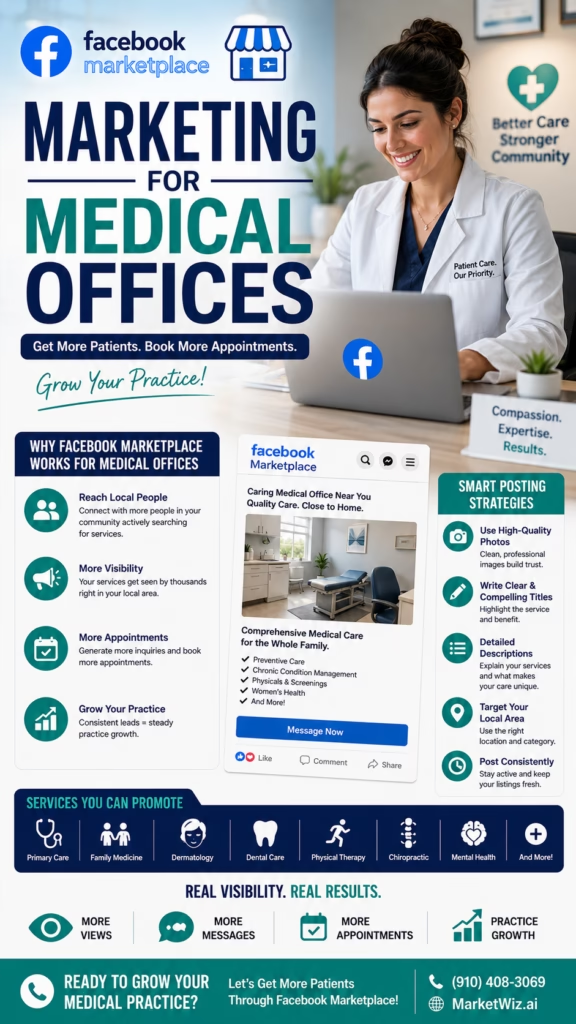
Facebook Marketplace Marketing for Medical Offices
Facebook Marketplace Marketing for Medical Offices is a complete guide for clinics, dental practices, wellness offices, therapy providers, specialty practices, and local healthcare organizations that want to improve visibility, manage patient inquiries, protect privacy, schedule appointments, and build an organized Facebook marketing system.
Introduction
Facebook Marketplace Marketing for Medical Offices requires a different approach than ordinary retail marketing because healthcare-related content may involve platform restrictions, professional advertising rules, patient privacy, sensitive personal information, and regulated services.
Medical offices should never assume that every service, treatment, product, promotion, or health-related offer is eligible for Facebook Marketplace.
Before publishing, the practice should review Meta’s current commerce policies, healthcare-related restrictions, local professional rules, privacy requirements, and internal compliance procedures.
When an offer is eligible, Facebook may support local visibility by helping people discover practice information, permitted wellness programs, educational events, non-restricted products, appointment opportunities, and office updates.
Medical-office Facebook marketing should begin with eligibility, accuracy, privacy, and patient safety—not posting volume.
Strong marketing content uses clear language, real office images, accurate credentials, transparent pricing, appropriate disclaimers, local relevance, and a direct path to secure scheduling.
Weak medical marketing often relies on exaggerated claims, guaranteed results, inappropriate before-and-after images, sensitive targeting, misleading prices, restricted products, or unsecured collection of health information.
AI can support administrative tasks such as responding with approved office information, collecting basic scheduling details, routing appointment requests, updating lead records, and notifying staff.
AI should not diagnose symptoms, recommend treatment, interpret test results, prescribe medication, or replace licensed clinical judgment.
Main idea: Facebook Marketplace Marketing for Medical Offices works best when eligible local promotion is connected to professional content, secure patient communication, fast administrative response, and compliant appointment scheduling.
Table of Contents
- 1) Understanding Marketplace eligibility
- 2) Why local Facebook visibility matters
- 3) Medical offices that may benefit
- 4) Choosing appropriate offers
- 5) Avoiding restricted medical products
- 6) Creating accurate medical marketing titles
- 7) Writing professional descriptions
- 8) Using medical-office photos
- 9) Protecting patient privacy
- 10) Avoiding unsupported health claims
- 11) Improving local relevance
- 12) Marketing primary care offices
- 13) Marketing dental practices
- 14) Marketing physical therapy clinics
- 15) Marketing chiropractic offices
- 16) Marketing wellness and preventive services
- 17) Marketing med spas carefully
- 18) Promoting medical-office events
- 19) Improving inquiry response speed
- 20) Creating a safe first response
- 21) Collecting appointment information
- 22) Routing urgent and emergency messages
- 23) Using AI for administrative responses
- 24) Scheduling consultations and visits
- 25) Connecting inquiries to a CRM
- 26) Tracking medical marketing performance
- 27) Building trust and credibility
- 28) Common medical marketing mistakes
- 29) Building a repeatable system
- 30) Final thoughts
- 31) Frequently asked questions
- 32) Extra keywords
1) Understanding Marketplace Eligibility
The first step in Facebook Marketplace Marketing for Medical Offices is determining whether the intended offer is eligible.
Marketplace is primarily designed for permitted goods and categories. Medical services, regulated products, prescription items, healthcare claims, supplements, devices, and treatment-related promotions may be limited or prohibited depending on the offer and current platform rules.
Before publishing, review:
- Meta commerce policies
- Meta advertising standards
- Restricted product categories
- Prescription-product rules
- Medical-device restrictions
- Professional licensing requirements
- State advertising rules
- Privacy requirements
- Internal compliance procedures
- Current account eligibility
A practice should not attempt to avoid platform restrictions through misleading categories, incomplete descriptions, altered terminology, or disguised offers.
When Marketplace is not appropriate, the office may use a Facebook Page, permitted organic content, compliant paid campaigns, local groups where allowed, its website, Google Business Profile, email, or secure scheduling tools.
Eligibility must be confirmed before a medical office creates or automates Marketplace content.
2) Why Local Facebook Visibility Matters
Patients often research local practices before calling or requesting an appointment.
They may review the office location, staff, services, hours, photos, reviews, website, insurance information, appointment availability, and general reputation.
Local Facebook visibility may support:
- Practice awareness
- Office discovery
- Website visits
- Appointment requests
- Event registration
- Community education
- Staff introductions
- Office announcements
- Review visibility
- Brand recognition
Facebook should not be viewed as a replacement for a medical-office website or secure patient portal.
Instead, it can serve as an early discovery and communication channel that directs users toward approved scheduling and information systems.
Facebook visibility creates value when it helps local patients find accurate office information and reach the correct secure next step.
3) Medical Offices That May Benefit
Many healthcare and wellness organizations may benefit from a broader local Facebook strategy, even when Marketplace itself is not appropriate for every offer.
Potential practice categories include:
- Primary care offices
- Dental practices
- Orthodontic offices
- Physical therapy clinics
- Chiropractic offices
- Optometry practices
- Audiology offices
- Dermatology practices
- Women’s health clinics
- Pediatric offices
- Urgent care centers
- Wellness clinics
- Med spas
- Nutrition practices
- Occupational health offices
Each practice has different advertising rules, patient expectations, privacy risks, appointment types, and service limitations.
A dental cleaning campaign should not use the same language as a physical therapy consultation, urgent care announcement, cosmetic procedure, or preventive wellness event.
Medical marketing should be customized to the practice type, professional rules, patient needs, and permitted communication channel.
4) Choosing Appropriate Offers
Medical offices should choose offers that are accurate, permitted, easy to explain, and connected to a clear administrative next step.
Potentially appropriate promotional topics may include:
- Office opening announcements
- New location information
- Permitted screening events
- Educational workshops
- Community wellness events
- General appointment availability
- Staff introductions
- Accepted appointment categories
- Non-restricted wellness programs
- Approved non-prescription products
The practice should avoid publishing clinical promises, individualized treatment recommendations, or offers that require a professional evaluation before eligibility can be determined.
If pricing depends on insurance, medical necessity, treatment planning, or an examination, the description should explain that clearly.
A strong medical-office offer is transparent, permitted, easy to understand, and appropriately connected to an evaluation or scheduling process.
5) Avoiding Restricted Medical Products
Healthcare businesses must be especially careful with products that may be regulated, prescription-based, age-restricted, or prohibited by platform policies.
Potentially restricted categories may include:
- Prescription medications
- Controlled substances
- Prescription medical devices
- Unapproved treatments
- Products making cure claims
- Certain supplements
- Products requiring professional supervision
- Recalled medical products
- Used personal medical equipment
- Products prohibited by law or policy
The fact that an item is available inside a medical office does not automatically make it eligible for Marketplace.
Medical offices should maintain an approved product list and review current rules before creating templates or automated posting systems.
Never attempt to disguise a restricted medical product as a general wellness or household item.
6) Creating Accurate Medical Marketing Titles
A medical marketing title should be clear, professional, locally relevant, and free from exaggerated health claims.
Useful title elements may include:
- Practice type
- Permitted service category
- City or local area
- Appointment type
- Educational event
- Office availability
- General patient benefit
Example medical-office titles:

Local Dental Office Accepting New Patient Appointments

Physical Therapy Consultations Available in Downtown Raleigh

Community Wellness Workshop at Our Medical Office

New Primary Care Office Now Open in North Charlotte

Local Chiropractic Office Appointment Information

Dental Implant Consultation Information – Evaluation Required

Women’s Health Office Scheduling New Patient Visits

Preventive Wellness Event at Our Local Clinic
Avoid titles such as “Guaranteed Pain Relief,” “Permanent Cure,” “Best Doctor in the State,” or “Instant Results” unless every statement is objectively supportable and legally permitted.
Medical titles should help users understand the practice and next step without implying a guaranteed clinical outcome.
7) Writing Professional Descriptions
A professional description should explain the office, permitted offer, location, appointment process, and important limitations.
Recommended medical marketing structure:

Practice introduction
General service information
Who the appointment may be appropriate for
Location and office hours
Pricing or insurance information
Evaluation requirements
Secure scheduling instructions
Privacy reminder
Emergency disclaimer
Example medical-office description:
Our local physical therapy office is currently accepting requests for initial evaluations.
We work with adults seeking professional assessment for mobility, strength, recovery, and movement-related concerns.
Treatment recommendations are made only after an appropriate clinical evaluation.
Please use our secure appointment form or call the office to request availability.
Do not send private medical information through Facebook Messenger.
Facebook messages are not monitored for emergencies.Descriptions should not diagnose conditions, guarantee treatment results, or pressure people to disclose personal health information publicly.
A complete medical description informs the patient while protecting clinical boundaries and privacy.
8) Using Medical-Office Photos
Professional images can make a medical office appear more familiar, credible, and welcoming.
Useful images may include:
- Exterior building photos
- Reception area
- Waiting room
- Treatment rooms without patients
- Staff portraits
- Provider headshots
- Permitted equipment
- Office signage
- Educational events
- Accessible entrances
Patient information should never appear accidentally in computer screens, sign-in sheets, charts, appointment boards, wristbands, labels, or paperwork.
Photos containing patients require appropriate written authorization and review under the office’s privacy and marketing policies.
Stock photos should not create a false impression about the office, staff, facility, equipment, or outcomes.
Real office photography can improve trust, but every image should be reviewed for privacy and accuracy before publication.
9) Protecting Patient Privacy
Patient privacy is a central part of medical-office marketing.
Ordinary Facebook messages should not be treated as a secure patient portal unless the practice has specifically verified and approved the technology for that use.
Avoid requesting through unsecured messages:
- Detailed symptom histories
- Diagnoses
- Prescription lists
- Insurance identification numbers
- Social Security numbers
- Medical-record images
- Laboratory results
- Imaging reports
- Detailed treatment histories
- Other sensitive health information
Example privacy-safe response:

Thank you for contacting our office.

For your privacy, please do not send medical records or detailed health information through Facebook.

You can request an appointment through our secure scheduling form or call the office directly.
Staff should understand which information can be discussed through social channels and when the conversation must be transferred to a secure system.
Convenient communication should never override patient privacy or secure information handling.
10) Avoiding Unsupported Health Claims
Medical advertising should accurately represent what a service may do without promising an outcome that cannot be guaranteed.
Avoid statements such as:
- Guaranteed cure
- Permanent pain elimination
- Works for everyone
- No risk
- Instant recovery
- Better than every alternative
- Clinically proven without evidence
- Insurance always covers it
- No evaluation required
- Guaranteed approval
Testimonials and before-and-after images should not imply that every patient will experience the same result.
Clinical statements should be reviewed by the appropriate provider, compliance professional, or legal advisor when necessary.
Responsible medical marketing explains services accurately while recognizing that individual results and treatment needs vary.
11) Improving Local Relevance
Medical offices usually serve a defined geographic area. Local information helps potential patients determine whether the practice is convenient and appropriate.
Useful local details include:
- City
- Neighborhood
- County
- Nearby communities
- Office address
- Parking information
- Public transportation
- Accessibility information
- Office hours
- Appointment availability
Practices should not create fake locations, duplicate local pages, or claim coverage in areas where they do not operate.
Local keywords should appear naturally in titles, descriptions, image captions, website pages, and Google Business Profile content.
Local relevance helps patients understand where the office is, who it serves, and how to schedule.
12) Marketing Primary Care Offices
Primary care marketing should focus on access, continuity, preventive care, office information, and the new-patient process.
Potential topics include:
- New-patient appointments
- Annual wellness visits
- Preventive screenings
- Office opening announcements
- Provider introductions
- Accepted age groups
- General insurance information
- Office hours
- Telehealth availability where permitted
- Secure scheduling instructions
Content should not suggest that every patient qualifies for a particular service or that coverage is guaranteed.
Messages about symptoms should be routed to approved clinical triage systems rather than handled as ordinary marketing leads.
Primary care marketing should make the office easier to understand and access without replacing appropriate clinical screening.
13) Marketing Dental Practices
Dental offices can use Facebook to increase awareness of general dentistry, preventive appointments, cosmetic consultations, orthodontics, and office availability.
Potential dental content includes:
- New-patient appointment information
- Cleaning and examination availability
- Emergency dental contact instructions
- Cosmetic consultation information
- Orthodontic consultation information
- Provider introductions
- Office tours
- Insurance and payment information
- Dental education
- Community events
Pricing should clearly explain whether examinations, imaging, treatment planning, laboratory fees, or other services are separate.
Before-and-after images should only be used with proper authorization and appropriate disclosures.
Dental marketing performs best when it combines professional visuals, transparent appointment information, and realistic treatment expectations.
14) Marketing Physical Therapy Clinics
Physical therapy marketing can focus on evaluation availability, mobility education, post-operative rehabilitation information, sports recovery, workplace injuries, and general movement health.
Potential physical therapy topics include:
- Initial evaluations
- Post-operative rehabilitation
- Sports rehabilitation
- Balance training
- Mobility education
- Workplace injury programs
- Provider introductions
- Clinic equipment
- Insurance information
- Appointment availability
Marketing content should not diagnose a person’s injury based on a comment, image, or short message.
Users should be directed toward an appropriate evaluation and secure appointment process.
Physical therapy marketing should educate, build trust, and encourage proper professional evaluation.
15) Marketing Chiropractic Offices
Chiropractic marketing should use careful language and avoid unsupported claims about curing unrelated diseases or guaranteeing pain elimination.
Potential chiropractic content includes:
- Office information
- Initial consultation process
- Provider credentials
- General mobility education
- Workplace posture education
- Sports and activity information
- Office equipment
- Appointment availability
- Accepted payment methods
- Community workshops
Clinical claims should stay within the provider’s professional scope and the evidence available.
Marketing content should clearly explain that recommendations depend on an appropriate examination.
Chiropractic marketing should prioritize accurate scope, professional credentials, education, and appropriate evaluation.
16) Marketing Wellness and Preventive Services
Wellness content can attract local interest, but broad health language should not be used to hide restricted products or unsupported treatment claims.
Potential wellness topics include:
- Preventive health education
- Nutrition workshops
- Stress-management education
- Movement classes
- Community screenings where permitted
- Health-awareness events
- Workplace wellness programs
- General lifestyle education
- Office consultations
- Local wellness partnerships
Medical offices should clearly separate general educational content from individualized medical advice.
Any product or program should be reviewed for eligibility, accurate claims, pricing, and professional oversight.
Wellness marketing should support informed patient engagement without overstating medical benefits.
17) Marketing Med Spas Carefully
Med spas require additional care because cosmetic procedures, prescription products, injections, devices, before-and-after images, and financing offers may face significant restrictions.
Review before publishing:
- Provider licensing
- Procedure eligibility
- Product restrictions
- Prescription requirements
- Before-and-after permissions
- Image-editing disclosures
- Pricing accuracy
- Required consultation language
- Age restrictions
- Platform policies
Advertisements should not imply that a cosmetic result is guaranteed or that an evaluation is unnecessary.
Discount language should clearly explain what is included, expiration dates, eligibility, and additional fees.
Med-spa marketing should receive professional compliance review before being published or automated.
18) Promoting Medical-Office Events
Educational and community events can provide a safer and more useful focus for local Facebook visibility.
Event examples include:
- Office open houses
- Provider meet-and-greets
- Health education seminars
- Nutrition workshops
- Mobility workshops
- Dental education events
- Community screening events
- New-location celebrations
- Caregiver education sessions
- Workplace wellness presentations
Event descriptions should include the date, time, location, registration process, cost, eligibility, accessibility, and whether medical care will be provided.
Attendees should not be encouraged to disclose sensitive health information publicly.
Community events can increase local awareness while positioning the medical office as a helpful educational resource.
19) Improving Inquiry Response Speed
Potential patients often contact several offices when looking for availability, insurance information, consultation options, or a convenient location.
A fast administrative response should:
- Acknowledge the inquiry
- Provide general office information
- Avoid medical diagnosis
- Confirm monitored hours
- Provide secure scheduling instructions
- Explain emergency limitations
- Offer a clear next step
Example first response:

Thank you for contacting our office.

We can help with general appointment and scheduling information here, but please do not send private medical details through Facebook.

To request an appointment, use our secure scheduling link or call the office during business hours.

Facebook messages are not monitored for emergencies.
Responses should not promise appointment times, insurance coverage, treatment eligibility, or clinical outcomes until the appropriate information has been verified.
Fast response improves access when it remains accurate, administrative, privacy-conscious, and clinically appropriate.
20) Creating a Safe First Response
The first response establishes the boundaries of the conversation.
It should help the user without turning an unsecured social thread into a medical consultation.
Safe first-response structure:

Acknowledge the message
State what information can be provided
Avoid clinical advice
Protect privacy
Direct to secure scheduling
Provide office contact details
Include emergency guidance
Example:
Hello, and thank you for contacting [Practice Name].
We can assist with office hours, location, general service information, and appointment requests.
For privacy, please do not send symptoms, medical records, insurance identification numbers, or other sensitive health information through Facebook.
For urgent symptoms, call the office or follow the appropriate urgent-care instructions. For emergencies, call emergency services.The response can be adapted to the practice’s hours, specialties, triage rules, and approved communication tools.
A safe first response is helpful without crossing into diagnosis, treatment, or unsecured collection of protected information.
21) Collecting Appointment Information
Medical offices may collect limited administrative information needed to route an appointment request.
Basic scheduling details may include:
- Name
- Phone number
- Email address
- Preferred office location
- General appointment category
- New or existing patient status
- Preferred day
- Preferred time range
- Preferred contact method
- Referral requirement awareness
Detailed medical information should be collected through approved secure systems rather than ordinary social messages.
Practices should avoid requesting full insurance numbers, identification documents, medical records, or detailed symptom descriptions through Facebook.
Collect only the minimum information needed to route the user toward secure scheduling.
22) Routing Urgent and Emergency Messages
Medical offices must clearly distinguish marketing inquiries from urgent clinical needs.
Emergency language should explain:
- Facebook is not monitored continuously
- Social messages are not an emergency service
- Users should call emergency services for emergencies
- Urgent symptoms require appropriate clinical contact
- The office cannot diagnose through Messenger
- Response times may vary outside business hours
Example emergency disclaimer:

Facebook messages are not monitored for emergencies.

If you believe you are experiencing a medical emergency, call emergency services immediately.

For urgent but non-emergency concerns, contact the office using the approved clinical phone number or patient portal.
Automated systems should be reviewed carefully so that urgent language triggers the correct approved response and staff notification.
Never allow a marketing chatbot to present itself as emergency triage or clinical care.
23) Using AI for Administrative Responses
AI can help medical offices manage repetitive administrative questions when it operates within approved boundaries.
AI may support:
- Office hours
- Location information
- Parking information
- General appointment categories
- Secure scheduling links
- Provider directory information
- New-patient instructions
- General payment information
- Event registration
- Lead routing
- Conversation summaries
- Staff notifications
AI-supported administrative workflow:

Facebook inquiry received
Approved greeting sent
Privacy notice provided
Emergency limitation stated
General request identified
Secure scheduling link provided
Basic administrative details collected
Lead routed to staff
CRM or practice system updated
Follow-up reminder created
AI should not diagnose, recommend medication, interpret symptoms, offer treatment plans, guarantee insurance coverage, or make clinical decisions.
Every automated response should be approved by the practice and reviewed regularly.
AI is most useful when it improves administrative access without pretending to provide medical care.
24) Scheduling Consultations and Visits
Once the inquiry is appropriate for scheduling, the office should move the user into an approved appointment system.
Scheduling information may include:
- Practice location
- Provider availability
- Appointment category
- New-patient requirements
- Referral requirements
- Insurance verification process
- Required forms
- Arrival instructions
- Cancellation policy
- Secure portal link
Example scheduling message:

We can help you request a new-patient appointment.

Please use our secure scheduling form at the link below or call the office during business hours.

Appointment availability and insurance participation will be confirmed by our scheduling team.
Medical offices should avoid guaranteeing that an appointment is confirmed until the scheduling system or staff has verified it.
The purpose of social messaging is to guide the user toward secure, confirmed scheduling—not to complete clinical intake publicly.
25) Connecting Inquiries to a CRM
Administrative inquiries should be organized so the office can track response, scheduling, and source attribution.
Potential CRM fields include:
- Inquiry date
- Name
- Phone number
- Email address
- Preferred location
- General appointment category
- New or existing patient
- Preferred appointment time
- Source campaign
- Response status
- Scheduling status
- Follow-up date
- Final administrative outcome
The system should use appropriate access controls, privacy protections, security procedures, and data-retention rules.
Sensitive medical details should not be copied into general-purpose marketing systems unless those systems are approved for the intended use.
Medical-office lead tracking should improve administrative organization without creating unnecessary privacy risk.
26) Tracking Medical Marketing Performance
Medical offices should evaluate Facebook marketing through meaningful administrative outcomes rather than message volume alone.
Useful performance metrics include:
- Content published
- Listing or post views when available
- Website visits
- Phone calls
- Appointment inquiries
- Average response time
- Secure scheduling clicks
- Appointments requested
- Appointments confirmed
- Appointments attended
- Cost per inquiry
- Cost per scheduled appointment
- Cost per attended appointment
Example medical-office results:

310 general inquiries
294 initial responses
176 secure scheduling clicks
112 appointment requests
87 confirmed appointments
73 attended appointments

Response coverage:
294 ÷ 310 = 94.8%

Scheduling-click rate:
176 ÷ 294 = 59.9%

Appointment-request rate:
112 ÷ 176 = 63.6%

Attendance rate:
73 ÷ 87 = 83.9%
Practices should compare results by location, service category, provider, campaign, content type, response time, and appointment availability.
Revenue reporting should be handled carefully and in accordance with the practice’s privacy and compliance standards.
Medical marketing performance should be measured through appropriate patient-access and appointment outcomes.
27) Building Trust and Credibility
Patients may research several practices before requesting an appointment.
Trust-building elements include:
- Accurate provider credentials
- Professional staff photos
- Real office images
- Clear contact information
- Transparent office policies
- Secure scheduling
- Educational content
- Professional review responses
- Consistent branding
- Accessible website information
- Accurate location listings
- Respectful communication
Practices should not use fake testimonials, copied provider photos, false credentials, or misleading office locations.
Review responses should never reveal that a person is a patient or discuss private treatment details.
Medical-office trust is built through accurate credentials, privacy, transparency, and dependable patient communication.
28) Common Medical Marketing Mistakes
Medical-office Facebook marketing can fail when speed and visibility are prioritized over accuracy, policy compliance, and privacy.
Common mistakes include:
- Promoting restricted products
- Using misleading categories
- Making guaranteed outcome claims
- Collecting medical details in Messenger
- Using patient images without authorization
- Displaying private information in photos
- Using misleading prices
- Guaranteeing insurance coverage
- Allowing AI to diagnose
- Failing to include emergency guidance
- Responding too slowly
- Not routing users to secure scheduling
- Using fake office locations
- Ignoring professional advertising rules
- Not tracking appointment outcomes
Another major mistake is assuming that a successful retail Marketplace strategy can be copied directly into healthcare.
Medical marketing requires stricter review, stronger privacy controls, and clearer boundaries between administrative information and clinical care.
Medical-office marketing underperforms when visibility is pursued without eligibility, privacy, accuracy, and patient safety.
29) Building a Repeatable Medical Marketing System
A repeatable system helps medical offices manage Facebook content and inquiries consistently.
Recommended medical marketing workflow:

Confirm offer eligibility
Review platform rules
Review professional requirements
Choose approved topic
Write accurate title
Create privacy-safe images
Write compliant description
Add secure scheduling option
Publish approved content
Respond with approved script
Protect patient privacy
Route urgent messages
Collect basic scheduling details
Transfer to secure system
Update CRM
Notify staff
Track appointment outcome
Review performance
Update templates
A complete system should include:
- Approved service list
- Restricted-topic list
- Content templates
- Image review checklist
- Privacy rules
- First-response scripts
- Emergency disclaimers
- Secure scheduling links
- AI response boundaries
- Staff routing rules
- CRM fields
- Performance reports
Templates should be reviewed whenever platform policies, laws, services, office hours, providers, insurance participation, or appointment procedures change.
Medical offices should assign a responsible team member to review marketing content and automated responses.
A repeatable system makes medical marketing more consistent while reducing privacy, accuracy, and compliance risks.
30) Final Thoughts
Facebook Marketplace Marketing for Medical Offices can support local visibility only when the practice begins with eligibility, patient privacy, accurate claims, professional standards, and appropriate communication boundaries.
Medical offices should review current Meta policies before promoting services, wellness programs, devices, products, consultations, or treatment-related offers.
Strong medical marketing uses clear titles, professional office photos, accurate credentials, transparent descriptions, local information, secure scheduling instructions, and realistic expectations.
Potential patients should not be encouraged to disclose sensitive medical information through public comments or ordinary social messages.
AI can assist with approved administrative information, office hours, locations, appointment requests, lead routing, CRM updates, and follow-up reminders.
AI should never diagnose symptoms, recommend treatment, prescribe medication, interpret clinical results, or replace licensed healthcare professionals.
Medical practices should track inquiries, response time, secure scheduling clicks, confirmed appointments, attended visits, source attribution, and appropriate acquisition costs.
Facebook Marketplace should not be treated as the only marketing channel. It should be considered alongside Facebook Pages, compliant social content, Google Business Profile, local SEO, the practice website, secure patient portals, email, community events, and professional referral networks.
Build a Smarter Medical-Office Marketing System
Market Wiz AI helps local organizations improve Facebook marketing, AI-assisted administrative responses, appointment-request workflows, CRM organization, Google Maps visibility, local SEO, social content, lead notifications, and follow-up.
Schedule a Market Wiz AI DemoFinal takeaway: Facebook Marketplace Marketing for Medical Offices should combine eligibility review, accurate content, patient privacy, safe communication, secure scheduling, organized tracking, and professional human oversight.
31) Frequently Asked Questions
1) Can medical offices use Facebook Marketplace for marketing?
Medical offices should review current Meta commerce and advertising policies first. Certain medical services, products, claims, and regulated offers may be restricted or prohibited.
2) What is Facebook Marketplace marketing for medical offices?
It refers to using eligible local Facebook visibility opportunities to promote permitted office information, events, wellness-related content, approved products, or appointment awareness.
3) What should medical offices promote on Facebook?
Practices can focus on accurate office information, locations, staff introductions, educational events, permitted services, office updates, and approved appointment opportunities.
4) Should medical offices advertise prescription products?
No prohibited prescription product should be advertised. The office should review platform rules and applicable law before publishing any medical product.
5) Can a clinic guarantee treatment results?
Medical offices should avoid guaranteed outcomes, cure claims, exaggerated results, and unsupported comparisons.
6) How can medical offices improve Facebook visibility?
Use accurate business information, professional images, helpful content, clear descriptions, local relevance, consistent posting, fast responses, and strong reviews.
7) Should medical-office content include prices?
Pricing should be accurate and explain what is included, whether evaluation is required, whether insurance may apply, and whether other fees may exist.
8) Can clinics discuss patient information in Messenger?
Clinics should avoid requesting or sharing sensitive health information through ordinary social messages and should direct users to secure approved channels.
9) How quickly should a clinic respond?
The office should respond promptly during monitored hours while clearly stating that social messaging is not appropriate for emergencies.
10) What should the first response say?
It should acknowledge the inquiry, avoid diagnosis, provide general office information, protect privacy, and direct the user to secure scheduling.
11) Can AI answer medical questions?
AI should not diagnose, prescribe, interpret symptoms, or replace a licensed healthcare professional.
12) Can AI schedule appointments?
AI may support appointment requests and approved scheduling workflows while protecting sensitive information and confirming details accurately.
13) What information can a clinic collect?
The clinic may collect limited contact and scheduling information but should avoid requesting detailed medical histories through unsecured messages.
14) Should medical leads go into a CRM?
Administrative lead details may be organized in an approved system with appropriate privacy, security, access, and retention controls.
15) Can dental offices use Facebook marketing?
Yes, when content follows platform policies, professional advertising rules, privacy requirements, and accurate treatment-claim standards.
16) Can chiropractic offices market on Facebook?
Yes, but they should avoid unsupported health claims and remain within professional scope and platform rules.
17) Can physical therapy clinics use Facebook?
Physical therapy clinics can promote compliant local education, evaluations, office information, and appointment awareness.
18) Can med spas use Marketplace?
Med spas must review product restrictions, licensing rules, procedure eligibility, image requirements, and current Meta policies before publishing.
19) Should medical offices use before-and-after photos?
Only with proper written authorization, accurate disclosure, professional review, and compliance with privacy and platform rules.
20) How can medical offices build trust?
Use accurate credentials, professional staff profiles, real office photos, secure scheduling, transparent policies, patient education, and respectful communication.
21) What metrics should medical offices track?
Track inquiries, response time, secure scheduling clicks, appointment requests, confirmed appointments, attended visits, source attribution, and acquisition costs.
22) Can Marketplace replace a medical website?
No. A professional website, Google Business Profile, secure scheduling system, local SEO, and approved patient communication remain essential.
23) Can Facebook support local SEO?
Facebook does not replace local SEO, but it can support brand awareness, website traffic, reviews, and local discovery.
24) What images should a medical office use?
Use professional images of the building, reception area, staff, office equipment, educational events, and permitted services without revealing patient information.
25) How should clinics handle emergency messages?
State that social messaging is not monitored for emergencies and direct users to emergency services or the practice’s approved urgent-care process.
26) Should medical offices discuss insurance?
They may provide general information but should verify coverage individually and avoid guaranteeing payment or benefits.
27) Can medical offices promote free consultations?
Only when the consultation is genuinely free, clearly defined, legally permitted, and not misleading.
28) Why does medical Facebook marketing fail?
Common causes include unclear messaging, policy violations, unsupported claims, privacy mistakes, poor images, slow response, and no appointment workflow.
29) Can follow-up be automated?
Administrative follow-up may be automated through approved systems when messages are accurate, consent-aware, privacy-conscious, and professionally reviewed.
30) What is the best Facebook Marketplace strategy for medical offices?
Confirm eligibility, create accurate local content, avoid restricted claims, protect privacy, respond quickly, route users to secure scheduling, track outcomes, and maintain human oversight.
30) Extra Keywords
- Facebook Marketplace Marketing for Medical Offices
- medical office Facebook marketing
- Facebook marketing for clinics
- healthcare local marketing
- medical practice lead generation
- local patient marketing
- medical office visibility
- Facebook marketing for doctors
- clinic appointment marketing
- healthcare social media strategy
- medical office social media marketing
- Facebook marketing for dentists
- Facebook marketing for chiropractors
- physical therapy marketing
- med spa Facebook marketing
- medical appointment lead generation
- healthcare Facebook lead response
- medical office AI responder
- AI appointment scheduling for clinics
- medical office CRM integration
- healthcare lead management
- medical practice local SEO
- Google Maps marketing for clinics
- patient inquiry automation
- clinic Facebook visibility
- medical office appointment automation
- healthcare marketing automation
- local medical practice advertising
- medical clinic digital marketing
- medical office customer engagement













