

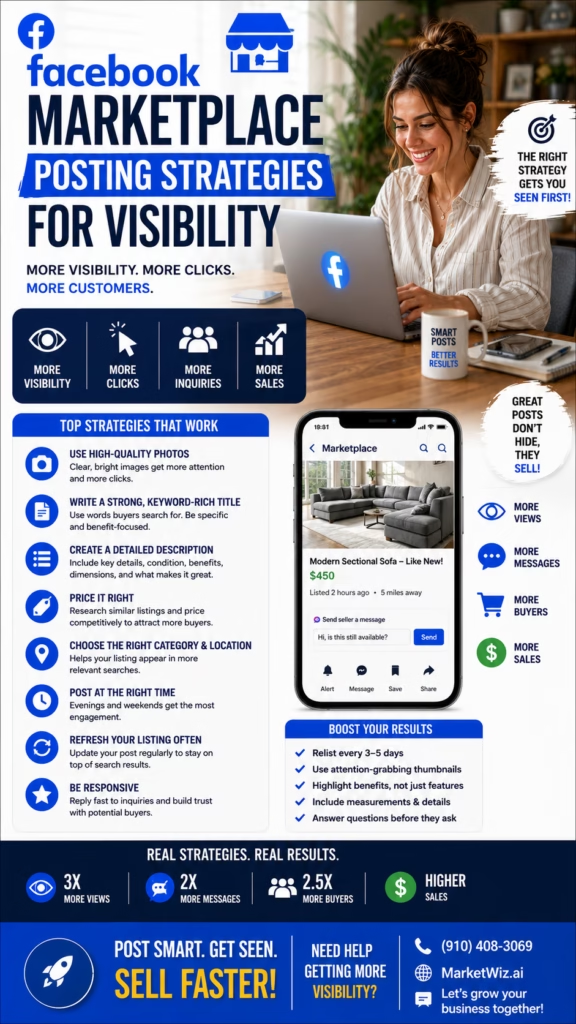
Facebook Marketplace Posting Strategies for Visibility
Facebook Marketplace Posting Strategies for Visibility is a complete guide for local businesses, retailers, property marketers, product sellers, and service providers that want to create stronger listings, attract more qualified inquiries, improve response speed, and build a repeatable local lead-generation system.
Introduction
Facebook Marketplace Posting Strategies for Visibility begins with a simple principle: a listing must first earn attention before it can generate a message, appointment, pickup, delivery, consultation, or sale.
Marketplace users often browse quickly. They compare photos, titles, prices, locations, descriptions, seller information, and availability before deciding whether to open a listing or send a message.
This creates both an opportunity and a challenge. Businesses can reach local customers where they already browse, but weak listings may disappear among similar products, unclear offers, and competing sellers.
Improving visibility requires more than publishing the same advertisement repeatedly. Strong Marketplace marketing depends on accurate categories, professional cover photos, clear titles, complete descriptions, local relevance, realistic pricing, fast responses, qualification, and follow-up.
Facebook Marketplace visibility improves when every listing is built around customer relevance, visual clarity, accurate information, and a fast path to the next step.
Businesses should avoid misleading prices, fake locations, unavailable inventory, duplicate listings, exaggerated claims, hidden conditions, unrelated keywords, or photos that do not represent the actual offer.
AI can support the process by helping create listing variations, organize product information, prepare responses, collect lead details, qualify prospects, summarize conversations, update CRM records, and schedule follow-up.
Human judgment remains important for pricing, negotiations, inventory confirmation, delivery arrangements, product condition, safety, financing disclosures, customer service, and final sales decisions.
Main idea: Facebook Marketplace Posting Strategies for Visibility work best when strong listings are connected to fast communication, accurate qualification, organized lead tracking, and dependable customer follow-through.
Table of Contents
- 1) Why Facebook Marketplace visibility matters
- 2) Understanding Marketplace buyer intent
- 3) Choosing the right products and offers
- 4) Selecting the most accurate category
- 5) Creating stronger Marketplace titles
- 6) Designing a better cover photo
- 7) Building a complete photo gallery
- 8) Writing professional descriptions
- 9) Using keywords naturally
- 10) Improving local relevance
- 11) Setting accurate prices
- 12) Explaining pickup and delivery
- 13) Creating furniture listings
- 14) Creating appliance listings
- 15) Creating equipment and tool listings
- 16) Creating home and building product listings
- 17) Creating vehicle and transportation listings
- 18) Creating property-related listings
- 19) Improving response speed
- 20) Qualifying Marketplace inquiries
- 21) Moving conversations toward action
- 22) Following up with Marketplace leads
- 23) Using AI for Marketplace responses
- 24) Connecting Marketplace leads to a CRM
- 25) Tracking Marketplace performance
- 26) Refreshing and maintaining listings
- 27) Building trust and credibility
- 28) Avoiding common Marketplace mistakes
- 29) Building a repeatable posting system
- 30) Final thoughts
- 31) Frequently asked questions
- 32) Extra keywords
1) Why Facebook Marketplace Visibility Matters
Visibility matters because users cannot inquire about a listing they never notice, understand, or trust.
Marketplace shoppers often make fast decisions based on the first image, title, price, location, and basic product details.
Better visibility may help businesses:
- Earn more listing views
- Generate more local inquiries
- Promote available inventory
- Move clearance products
- Fill delivery schedules
- Book product demonstrations
- Schedule property tours
- Create store visits
- Increase local brand awareness
- Support direct customer conversations
Visibility does not depend on a single trick. It is usually the result of several listing-quality decisions working together.
A clear title may improve relevance. A stronger photo may improve attention. Accurate pricing may improve trust. Fast responses may improve conversion.
Marketplace visibility begins with listings that are easy to notice, easy to understand, and easy to respond to.
2) Understanding Marketplace Buyer Intent
Marketplace visitors may be browsing, comparing, researching, or ready to buy. Understanding intent helps businesses create better listings and conversations.
Marketplace users may want to:
- Find a specific item
- Compare local prices
- Check product availability
- Arrange pickup
- Request delivery
- Ask about condition
- Confirm dimensions
- Schedule a demonstration
- Book a property tour
- Negotiate a purchase
Some users will send a short default inquiry. Others will ask detailed questions about price, condition, location, availability, financing, pickup, delivery, or installation.
The listing should answer common questions before the conversation begins, while the response process should make it easy to qualify genuine interest.
Strong Marketplace listings are designed around the information local buyers need before they feel comfortable taking action.
3) Choosing the Right Products and Offers
Not every product or offer is equally suited to Marketplace. Businesses should prioritize listings with clear local demand, visible value, useful photos, and a straightforward next step.
Strong Marketplace offers often have:
- A recognizable product category
- A clear price or pricing structure
- Visible condition or quality
- Local pickup or delivery
- Available inventory
- Useful dimensions or specifications
- Strong customer demand
- A simple path to purchase
Furniture, appliances, equipment, home products, building materials, electronics, decor, tools, vehicles, and other locally relevant inventory may attract attention depending on the market.
Businesses should create focused listings instead of placing unrelated inventory into one broad advertisement.
A focused listing helps users understand exactly what is available and improves the quality of incoming questions.
The best Marketplace offers are specific, visual, locally relevant, accurately priced, and ready for a clear transaction process.
4) Selecting the Most Accurate Category
Category selection affects how users browse and filter Marketplace inventory.
Businesses should choose the most accurate category and complete every relevant listing field available for the product type.
Before publishing, review:
- Main category
- Subcategory
- Condition
- Brand
- Model
- Color
- Size
- Location
- Price
- Pickup or delivery options
Incorrect categories may reduce relevance and attract users searching for a different type of product.
Businesses should not place products into unrelated categories simply to reach a larger audience.
Accurate categories improve listing clarity and help Marketplace users find inventory that matches their search.
5) Creating Stronger Marketplace Titles
The title should explain the product quickly. It should include the most important identifying information without becoming difficult to read.
Useful title elements include:
- Product name
- Brand
- Model
- Size
- Material
- Condition
- Important feature
- Local availability
Example Marketplace titles:

Modern Gray Sectional Sofa with Chaise

Queen Memory Foam Mattress – New in Packaging

Stainless Steel French Door Refrigerator

Heavy-Duty Commercial Storage Shelving

Solid Wood Dining Table with Six Chairs

Portable Storage Building Available for Delivery

Luxury Vinyl Plank Flooring – Multiple Colors

Three-Bedroom Rental Home with Private Yard
Titles should avoid excessive capital letters, repeated punctuation, unrelated keywords, fake urgency, and misleading claims.
A strong title gives users enough information to decide whether the listing is relevant before opening it.
Clear Marketplace titles improve visibility by matching the words and product details buyers naturally look for.
6) Designing a Better Cover Photo
The cover photo is one of the most important parts of a Marketplace listing because it often determines whether a user stops scrolling.
A strong cover photo should be:
- Bright
- Clear
- Sharp
- Uncluttered
- Accurate
- Properly framed
- Focused on the product
- Easy to understand on mobile
The product should fill enough of the image to remain visible in a small listing preview.
Businesses should remove distracting objects, poor backgrounds, excessive graphic overlays, or unrelated people when they reduce product clarity.
The image should represent the actual item, model, inventory, property, or service result being promoted.
The best Marketplace cover photo communicates the offer before the user reads a single word.
7) Building a Complete Photo Gallery
One strong image earns attention, but a complete gallery helps users evaluate the product and trust the listing.
Useful gallery photos may show:
- Front view
- Side view
- Back view
- Close-up details
- Dimensions or scale
- Brand label
- Controls or features
- Packaging
- Included accessories
- Known wear or damage
- Delivery setup
- Product in a real environment
Photos should answer questions the buyer would normally ask in person.
Known flaws should be shown clearly. Hiding damage may create wasted conversations, complaints, cancellations, and loss of trust.
Businesses should avoid adding near-identical photos that do not provide new information.
A complete photo gallery reduces uncertainty and helps serious buyers move forward with confidence.
8) Writing Professional Marketplace Descriptions
A professional description should provide the information needed to evaluate the listing without forcing the buyer to ask basic questions.
Recommended Marketplace description structure:

Short product overview
Main features
Condition
Dimensions or specifications
Available colors or models
Price information
Pickup or delivery details
Location
Availability
Clear call to action
Descriptions should be easy to scan. Use short paragraphs and bullet points rather than one large block of text.
Example description:

Upgrade your living room with this modern gray sectional sofa featuring a reversible chaise and comfortable deep seating.

Features:

• Durable upholstery
• Reversible chaise
• Supportive cushions
• Neutral gray finish
• Available for local pickup
• Delivery may be available for an additional charge

Send your ZIP code and preferred pickup or delivery date for current availability.
Descriptions should disclose relevant conditions, fees, assembly requirements, deposits, delivery limits, and product variations.
A complete description improves visibility and conversion by making the listing more relevant, trustworthy, and useful.
9) Using Keywords Naturally
Keywords help users understand what the listing represents and may improve relevance when shoppers search or browse.
Useful keyword types include:
- Product category
- Brand
- Model
- Material
- Size
- Color
- Condition
- Style
- Use case
- Local city or delivery area
A furniture listing might naturally include sectional sofa, chaise, gray upholstery, living room furniture, local pickup, and delivery.
An appliance listing might include refrigerator, stainless steel, French door, ice maker, dimensions, condition, and local delivery.
Keywords should not be repeated excessively or placed into unrelated lists.
Natural keywords make listings easier to understand while preserving professional, customer-friendly writing.
10) Improving Local Relevance
Marketplace is strongly connected to location. Buyers often want products they can inspect, pick up, receive, or use nearby.
Local listing details may include:
- City
- Neighborhood
- County
- Pickup area
- Delivery radius
- Store location
- Warehouse location
- Appointment area
- Nearby communities served
Locations must remain accurate. Businesses should not claim inventory, offices, stores, or service areas that do not exist.
Delivery listings should explain the legitimate radius, scheduling process, minimum purchase, and additional fees when applicable.
Local relevance helps Marketplace users quickly determine whether the listing fits their location, transportation, and timing needs.
11) Setting Accurate Prices
Price is one of the first details users evaluate. Misleading or incomplete pricing can create low-quality inquiries and damage trust.
Pricing details may include:
- Full purchase price
- Sale price
- Starting price
- Price range
- Deposit
- Delivery fee
- Installation fee
- Assembly fee
- Financing information
- Taxes or other charges
If a listing shows a starting price, the description should clearly explain what that starting price includes.
Businesses should not use artificially low prices simply to attract clicks when the displayed product cannot be purchased for that amount.
Price changes should be updated quickly across the title, description, images, and response scripts.
Accurate pricing improves buyer trust and reduces conversations with prospects who misunderstand the true cost.
12) Explaining Pickup and Delivery
Pickup and delivery information can strongly influence whether a local buyer sends a message.
Pickup information should explain:
- General pickup area
- Appointment requirements
- Available pickup days
- Loading assistance
- Vehicle requirements
- Payment expectations
Delivery information should explain:
- Delivery radius
- Delivery fee
- Scheduling process
- Minimum purchase
- Assembly options
- Installation limitations
- Stair or access fees
Example delivery call to action:

Local delivery may be available.

Send your ZIP code, preferred delivery date, and any stair or access details for an accurate delivery quote.
Clear pickup and delivery details remove uncertainty and help serious buyers take the next step faster.
13) Creating Furniture Listings
Furniture listings are highly visual and should provide dimensions, material, condition, style, and delivery information.
Furniture listing details may include:
- Furniture type
- Brand
- Material
- Color
- Dimensions
- Seating capacity
- Condition
- Assembly requirements
- Pickup location
- Delivery options
Furniture title example:

Modern Beige Sectional Sofa with Reversible Chaise

Furniture description opening:

Create a comfortable and modern living space with this beige sectional sofa featuring a reversible chaise, supportive cushions, and a neutral design that works with many home styles.
Photos should show the full piece, fabric texture, cushion condition, legs, back, labels, and any wear.
Measurements should be accurate so buyers can determine whether the furniture fits through doors, hallways, elevators, and rooms.
Furniture listings become more visible and useful when they combine strong lifestyle photos with exact practical details.
14) Creating Appliance Listings
Appliance buyers often need specific information about brand, model, dimensions, condition, power requirements, and delivery.
Appliance listing details may include:
- Appliance type
- Brand
- Model number
- Color or finish
- Dimensions
- Capacity
- Condition
- Tested functionality
- Included accessories
- Delivery or installation
Appliance title example:

Stainless Steel French Door Refrigerator with Ice Maker

Appliance response prompt:

Please send your ZIP code, desired delivery date, and the opening dimensions where the refrigerator will be installed.
Sellers should disclose known defects, missing parts, dents, scratches, repair history, and whether the unit has been tested.
Installation claims should only be made when the business is qualified and prepared to provide the stated service.
Detailed appliance listings reduce uncertainty and help buyers confirm fit before arranging pickup or delivery.
15) Creating Equipment and Tool Listings
Equipment and tool buyers may be professionals, contractors, property owners, hobbyists, or local businesses.
Equipment listing details may include:
- Equipment type
- Brand
- Model
- Power source
- Capacity
- Operating hours
- Condition
- Maintenance history
- Included accessories
- Loading and transportation needs
Photos should show the overall unit, controls, serial or model label, working areas, attachments, tires, wear, and known damage.
Descriptions should explain whether the equipment has been tested and whether the buyer may inspect it before purchase.
Businesses should avoid making safety, capacity, or performance claims that cannot be supported.
Equipment listings perform best when technical details, condition, and transportation requirements are clearly documented.
16) Creating Home and Building Product Listings
Home products and building materials may attract homeowners, contractors, landlords, investors, and property managers.
Potential listing categories include:
- Flooring
- Cabinets
- Doors
- Windows
- Countertops
- Lighting
- Storage buildings
- Fencing materials
- Roofing materials
- Home fixtures
Descriptions should include measurements, material, color, quantity, coverage, condition, compatibility, pickup, and delivery.
Building product call to action:

Send the quantity needed, project ZIP code, preferred color or model, and desired delivery date for current availability.
Businesses should clarify whether products are sold individually, by package, by square foot, by pallet, or as a complete set.
Building product listings become more useful when buyers can calculate fit, quantity, transportation, and total cost.
17) Creating Vehicle and Transportation Listings
Vehicle listings require accurate details because buyers often filter by make, model, year, mileage, condition, and location.
Vehicle listing details may include:
- Year
- Make
- Model
- Trim
- Mileage
- Transmission
- Fuel type
- Condition
- Title status
- Known mechanical issues
- Service history
- Location
Photos should show the exterior, interior, tires, dashboard, mileage, cargo area, engine compartment when appropriate, and visible damage.
Sellers should disclose known defects and avoid making unsupported warranty or mechanical claims.
Businesses should follow applicable laws, dealer requirements, financing disclosures, and Meta commerce policies.
Accurate vehicle details improve visibility among serious buyers and reduce repetitive qualification questions.
18) Creating Property-Related Listings
Property-related listings may include rentals, rooms, apartments, homes, commercial spaces, storage, or other permitted real estate offers.
Property listing details may include:
- Property type
- Location
- Monthly price
- Bedrooms
- Bathrooms
- Square footage
- Availability date
- Lease terms
- Utilities
- Parking
- Pet policy
- Tour process
Photos should accurately represent the available property and should not use unrelated model units without clear disclosure.
Descriptions should explain application requirements, deposits, fees, availability, and contact instructions accurately.
Housing-related advertising must follow applicable fair housing laws, local regulations, and current platform policies.
Property listings need accurate photos, complete terms, clear availability, and a simple tour or application process.
19) Improving Marketplace Response Speed
Marketplace users may contact several sellers at the same time. Fast response can determine which seller receives the next message, phone call, appointment, or purchase.
A useful first response should:
- Acknowledge the inquiry
- Confirm current availability
- Answer the main question
- Collect the buyer’s ZIP code
- Confirm pickup or delivery
- Request a phone number when appropriate
- Offer a specific next step
Example Marketplace first response:

Thank you for your message.

Yes, this item is currently available.

Please send your ZIP code and let me know whether you need pickup or delivery. I can then confirm the next available option.
Responses should remain accurate. Businesses should not automatically confirm availability without checking current inventory.
Fast, accurate responses help Marketplace businesses convert initial curiosity into qualified buying conversations.
20) Qualifying Marketplace Inquiries
Qualification helps businesses identify serious buyers and prepare the correct next step.
Basic Marketplace qualification flow:

Confirm product
Confirm availability
Collect location
Ask about quantity
Confirm pickup or delivery
Ask about preferred timing
Collect contact information
Offer next step
Record lead
Useful qualification details include:
- Buyer location
- Product requested
- Preferred model or color
- Quantity
- Pickup or delivery
- Desired date
- Budget when appropriate
- Phone number
- Email address when needed
- Appointment availability
The qualification process should remain simple. Asking too many questions before answering the buyer’s main concern may reduce engagement.
Different products require different questions. A furniture seller, appliance store, property manager, equipment dealer, and vehicle seller should not use the same qualification script.
Effective qualification helps businesses focus on real opportunities while maintaining a smooth customer experience.
21) Moving Conversations Toward Action
Marketplace conversations should not remain vague. Once the buyer appears qualified, the business should provide a clear next step.
Possible next steps include:
- Schedule pickup
- Confirm delivery
- Book a store visit
- Schedule a product demonstration
- Arrange a property tour
- Send a formal quote
- Confirm inventory
- Reserve an item
- Provide financing information
- Transfer the lead to a salesperson
Example next-step message:

We currently have pickup availability Friday afternoon or Saturday morning.

Which time works better for you?

Once confirmed, I will send the pickup details.
Specific options are often easier for customers to answer than open-ended questions.
Businesses should clearly explain deposits, reservation terms, return policies, delivery charges, and other important conditions before the transaction.
A Marketplace inquiry becomes more valuable when the business quickly converts it into a defined customer action.
22) Following Up with Marketplace Leads
Not every interested buyer makes a decision during the first conversation.
Some users are comparing products, checking measurements, arranging transportation, discussing the purchase with someone else, or waiting for a preferred date.
Useful follow-up moments include:
- After the first inquiry
- After sending dimensions
- After providing a delivery quote
- Before a scheduled pickup
- Before a property tour
- After a missed appointment
- When inventory changes
- When a price changes
- When a requested model becomes available
- When delivery capacity opens
Example Marketplace follow-up:

Hi, I wanted to follow up about the item you asked about.

It is currently available. Let me know if you still need pickup, delivery, dimensions, or additional photos.
Follow-up should remain respectful. Businesses should stop messaging people who decline or ask not to be contacted.
Professional follow-up helps recover qualified Marketplace opportunities that might otherwise be forgotten.
23) Using AI for Marketplace Responses
AI can help businesses manage repetitive Marketplace conversations while salespeople focus on qualified buyers and completed transactions.
AI can support:
- Listing title variations
- Product descriptions
- Initial responses
- Availability questions
- Lead qualification
- Pickup and delivery questions
- Appointment scheduling
- Conversation summaries
- CRM updates
- Lead notifications
- Follow-up reminders
- Reporting
AI-supported Marketplace workflow:

Inquiry received
Initial response sent
Availability checked
Product confirmed
Location collected
Pickup or delivery confirmed
Contact information collected
Lead qualified
Next step scheduled
CRM updated
Salesperson notified
Outcome tracked
AI should use approved business information and should not invent inventory, pricing, delivery availability, product condition, financing terms, warranties, or return policies.
Human review remains important for negotiation, exceptions, complaints, high-value purchases, technical questions, and final transaction decisions.
AI creates value when it improves speed and organization without reducing accuracy or customer trust.
24) Connecting Marketplace Leads to a CRM
Marketplace inquiries should not remain scattered across personal inboxes and unorganized message threads.
A CRM or lead sheet helps businesses track each opportunity from first message through purchase, delivery, appointment, or lost sale.
Recommended Marketplace CRM fields include:
- Lead date
- Buyer name
- Phone number
- Email address
- Facebook profile or account reference
- Listing title
- Product requested
- Buyer location
- Quantity
- Pickup or delivery
- Preferred date
- Lead status
- Appointment date
- Follow-up date
- Estimated value
- Sale amount
- Final outcome
Lead statuses may include new inquiry, responded, qualified, appointment scheduled, pickup scheduled, delivery scheduled, follow-up needed, sold, completed, not qualified, or lost.
Notifications can alert salespeople when a phone number is collected, a high-value product inquiry arrives, or a scheduled action is approaching.
CRM organization turns Marketplace message volume into a measurable local sales pipeline.
25) Tracking Marketplace Performance
Businesses should evaluate Marketplace through real outcomes rather than judging success only by how many messages a listing receives.
Important Marketplace metrics include:
- Listings published
- Listing views when available
- Total inquiries
- Average response time
- Qualified leads
- Phone numbers collected
- Appointments scheduled
- Pickups scheduled
- Deliveries scheduled
- Sales completed
- Average order value
- Cost per lead
- Cost per sale
- Total revenue
Example Marketplace results:

420 total inquiries
396 first responses
231 qualified leads
148 pickups, deliveries, or appointments
104 completed sales
$76,800 in total revenue

Response coverage:
396 ÷ 420 = 94.3%

Qualification rate:
231 ÷ 396 = 58.3%

Action rate:
148 ÷ 231 = 64.1%

Close rate:
104 ÷ 148 = 70.3%
Businesses should compare results by listing title, product category, photo style, price, location, response time, delivery option, and inventory type.
A listing with fewer inquiries may still be more profitable if those inquiries produce higher-value sales.
Marketplace performance should be measured through qualified leads, scheduled actions, completed sales, and profitable revenue.
26) Refreshing and Maintaining Listings
Listings should remain accurate throughout their active life.
Update a listing when:
- Price changes
- Inventory changes
- A color sells out
- A model becomes unavailable
- Condition changes
- Delivery terms change
- Pickup location changes
- New photos become available
- Product details are corrected
- The item is sold
Businesses should follow current Marketplace renewal, deletion, listing, and commerce policies.
Publishing repetitive duplicate listings may reduce customer trust and create account or policy problems.
Rather than reposting identical content, businesses should improve weak photos, titles, descriptions, prices, and targeting based on actual performance.
Listing maintenance protects customer trust by ensuring every visible offer reflects current inventory and accurate terms.
27) Building Trust and Credibility
Trust is especially important when buyers are communicating with unfamiliar sellers through an online marketplace.
Trust-building elements include:
- Real product photos
- Accurate descriptions
- Transparent pricing
- Known flaw disclosure
- Professional communication
- Consistent business branding
- Clear pickup procedures
- Accurate delivery information
- Dependable appointment confirmation
- Written receipts or order details
- Business website
- Customer reviews
Businesses should avoid fake reviews, copied photos, false locations, hidden fees, unavailable inventory, unsupported guarantees, and misleading product descriptions.
Buyers should know who they are communicating with, what is being sold, how much it costs, and what the next step involves.
Marketplace visibility may earn the first click, but transparency and dependable service create the sale.
28) Avoiding Common Marketplace Mistakes
Many Marketplace listings underperform because businesses focus on quantity without improving listing quality or customer response.
Common Marketplace mistakes include:
- Using weak cover photos
- Writing vague titles
- Selecting incorrect categories
- Using misleading prices
- Posting unavailable inventory
- Using duplicate descriptions
- Using fake locations
- Hiding damage or flaws
- Leaving descriptions incomplete
- Responding too slowly
- Failing to qualify leads
- Not moving conversations forward
- Not following up
- Not tracking outcomes
- Ignoring current platform rules
Another mistake is using one generic listing for several different products. Buyers searching for different sizes, models, colors, and prices need specific information.
Businesses should review which listings create serious buyer conversations and which attract confusion or low-quality inquiries.
Marketplace marketing underperforms when posting volume becomes more important than accuracy, visual quality, response speed, and customer trust.
29) Building a Repeatable Posting System
A repeatable Marketplace posting system helps businesses manage inventory, listings, messages, and follow-up consistently.
Recommended Marketplace posting system:

Choose product
Confirm inventory
Select category
Create accurate title
Prepare clear cover photo
Add complete photo gallery
Write description
Set correct price
Confirm location
Publish listing
Respond quickly
Qualify buyer
Offer next step
Update CRM
Follow up
Track sale
Maintain listing
Improve future posts
A repeatable system should include:
- Approved listing templates
- Product information sheets
- Title variations
- Photo standards
- Pricing rules
- Delivery policies
- First-response scripts
- Qualification questions
- Scheduling procedures
- CRM fields
- Follow-up messages
- Performance reports
Templates should create consistency without producing inaccurate or repetitive listings.
Once one product category and market performs reliably, the business can test new inventory, locations, titles, photos, and offers.
A repeatable system turns Facebook Marketplace from occasional posting into an organized local customer-acquisition channel.
30) Final Thoughts
Facebook Marketplace Posting Strategies for Visibility can help local businesses, retailers, product sellers, property marketers, and service providers create stronger listings and more organized customer conversations.
The strongest strategy begins with accurate categories, clear titles, bright cover photos, complete galleries, detailed descriptions, realistic prices, legitimate locations, and transparent pickup or delivery information.
Businesses should respond quickly, confirm availability, collect essential buyer information, qualify the opportunity, provide a specific next step, record the lead, and follow up professionally.
AI can support the workflow by creating listing variations, answering routine questions, collecting details, preparing appointment options, updating CRM records, and creating follow-up reminders.
Human expertise remains essential for pricing, negotiation, inventory confirmation, complaints, special delivery situations, financing, product condition, and final transaction decisions.
Marketplace success should be measured through qualified inquiries, scheduled pickups, deliveries, appointments, completed sales, average order value, acquisition cost, and total revenue.
Facebook Marketplace should not be treated as a spam channel or a place for misleading offers. Sustainable visibility comes from useful listings, real photos, accurate information, fast communication, and dependable customer service.
Marketplace can also work alongside Facebook Pages, local groups, Craigslist, OfferUp, Google Maps, local SEO, social media, email, referrals, call tracking, and CRM follow-up.
Build a Smarter Marketplace Lead System
Market Wiz AI helps local businesses automate Facebook Marketplace posting, Craigslist advertising, OfferUp marketing, AI customer responses, lead qualification, appointment scheduling, CRM updates, Google Maps growth, local SEO, social content, and follow-up.
Schedule a Market Wiz AI DemoFinal takeaway: Facebook Marketplace visibility improves when accurate listings, strong photos, local relevance, fast response, qualification, CRM organization, and consistent follow-up work together as one complete system.
31) Frequently Asked Questions
1) How can I improve visibility on Facebook Marketplace?
Use accurate categories, clear titles, strong cover photos, complete descriptions, realistic prices, correct locations, fast responses, and current inventory information.
2) What makes a strong Facebook Marketplace title?
A strong title identifies the product, important feature, condition, size, model, or local benefit without misleading claims or excessive symbols.
3) Do photos affect Facebook Marketplace visibility?
Clear, relevant photos can improve listing quality, buyer trust, click-through interest, and engagement.
4) How many photos should a listing have?
Use enough photos to show the front, sides, condition, features, dimensions, flaws, accessories, and delivery setup without unnecessary duplicates.
5) Should I use keywords in Marketplace listings?
Yes. Use relevant product, brand, model, material, size, color, condition, and location terms naturally.
6) How often should listings be updated?
Update listings whenever price, availability, quantity, condition, location, delivery, or product information changes.
7) Should I delete and repost Marketplace listings?
Avoid repetitive duplicate posting and follow Meta’s current listing, renewal, commerce, and account policies.
8) Does response speed matter?
Yes. Buyers often message multiple sellers and may choose the first business that provides accurate and helpful information.
9) What should the first response say?
Acknowledge the inquiry, confirm availability, answer the main question, collect essential details, and provide a clear next step.
10) How can businesses qualify Marketplace leads?
Ask about location, product, quantity, preferred timing, pickup or delivery, budget when appropriate, and contact information.
11) Can local service businesses use Facebook Marketplace?
Permitted listing types depend on current Meta commerce policies, account access, category rules, location, and the specific offer.
12) What products perform well on Marketplace?
Performance varies, but furniture, appliances, equipment, tools, home products, vehicles, electronics, decor, and building materials may attract local interest.
13) Should listings include accurate prices?
Yes. Clearly explain the full price, starting price, deposit, delivery fee, installation fee, or financing terms when applicable.
14) How important is the category?
The category helps users browse and filter relevant inventory, so sellers should select the most accurate available option.
15) Should descriptions be long?
Descriptions should be complete but readable, covering features, condition, dimensions, price, location, pickup, delivery, and response instructions.
16) Can AI help manage Marketplace leads?
AI can help draft listings, respond to routine inquiries, collect details, qualify prospects, summarize conversations, update CRM records, and prepare follow-up.
17) Should Marketplace leads be stored in a CRM?
Qualified leads should be organized so the business can track customer information, requested products, appointments, sales, and revenue.
18) How can sellers build trust?
Use real photos, accurate descriptions, transparent prices, clear pickup or delivery details, professional communication, and dependable follow-through.
19) What Marketplace metrics should businesses track?
Track listing views when available, inquiries, response time, qualified leads, appointments, pickups, deliveries, sales, average order value, and revenue.
20) Can Marketplace support local marketing?
Yes. Marketplace can support Facebook Pages, groups, Google Maps, local SEO, Craigslist, OfferUp, email, referrals, and CRM follow-up.
21) Why do some listings get few inquiries?
Possible reasons include weak photos, vague titles, unrealistic pricing, incorrect categories, incomplete descriptions, low local demand, or slow response.
22) Should businesses create separate listings for each product?
Separate listings can improve clarity when products differ by model, size, color, price, condition, or location.
23) How can local keywords improve listings?
Accurate city, neighborhood, delivery-area, product, and service terms help users confirm whether the listing is locally relevant.
24) Can Marketplace follow-up be automated?
Parts of follow-up can be automated, including reminders, approved responses, notifications, CRM updates, appointment confirmations, and summaries.
25) What is the best Facebook Marketplace visibility strategy?
Combine accurate listings, strong photos, clear titles, relevant categories, realistic pricing, fast response, qualification, follow-up, and performance tracking.
26) Should sellers mention delivery?
Clearly explain whether pickup, delivery, shipping, installation, or assembly is available and whether additional charges apply.
27) How can cover photos get more attention?
Use a bright, uncluttered image that clearly shows the actual item or result and remains understandable on a small mobile screen.
28) Should listings mention flaws?
Yes. Known damage, missing parts, wear, repairs, and limitations should be disclosed accurately.
29) Can Marketplace be used across multiple cities?
Businesses should use accurate locations, legitimate inventory or service coverage, and follow current Meta commerce and location policies.
30) Is Facebook Marketplace worth using for local businesses?
Marketplace may be worth testing for businesses with locally relevant inventory, strong photos, clear prices, fast response processes, and reliable tracking.
30) Extra Keywords
- Facebook Marketplace Posting Strategies for Visibility
- Facebook Marketplace posting strategy
- Facebook Marketplace visibility tips
- Facebook Marketplace marketing
- Facebook Marketplace lead generation
- Facebook Marketplace listing optimization
- how to get more Marketplace views
- Facebook Marketplace business listings
- local Marketplace advertising
- Facebook Marketplace seller tips
- Marketplace product photography
- Marketplace title optimization
- Marketplace description strategy
- Facebook Marketplace keywords
- Facebook Marketplace local leads
- Marketplace buyer response strategy
- Facebook Marketplace response automation
- AI Facebook Marketplace marketing
- Facebook Marketplace CRM integration
- Marketplace lead qualification
- Facebook Marketplace follow-up
- Marketplace sales strategy
- Facebook Marketplace furniture listings
- Facebook Marketplace appliance listings
- Facebook Marketplace property listings
- Facebook Marketplace local delivery
- Facebook Marketplace cover photo tips
- Marketplace listing visibility
- local business Marketplace marketing
- Facebook Marketplace marketing automation













