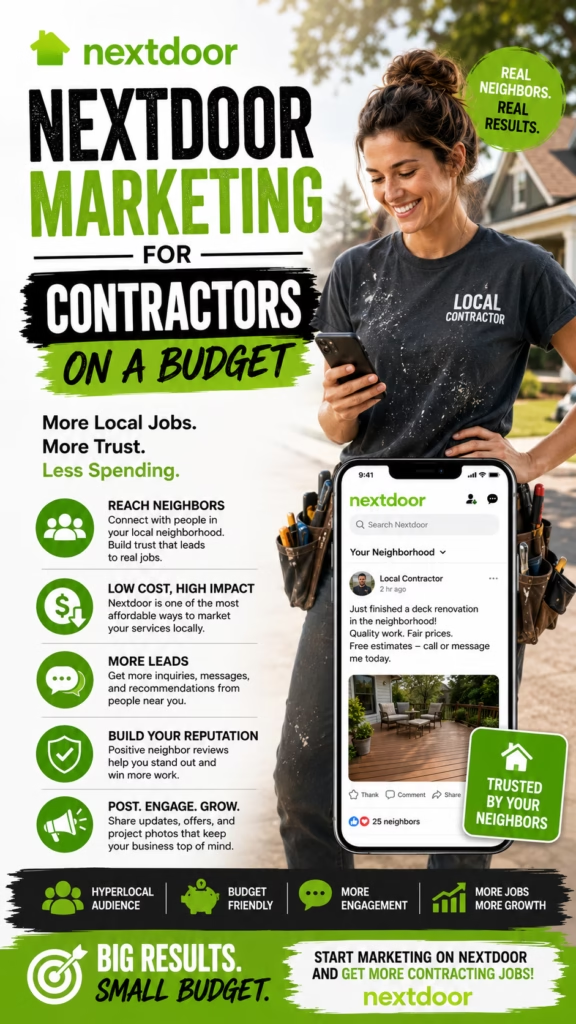
Nextdoor Marketing for Contractors on a Budget
Nextdoor Marketing for Contractors on a Budget helps local service businesses build neighborhood visibility, attract nearby homeowners, generate recommendations, control advertising costs, and turn community conversations into estimates, appointments, and booked projects.
Introduction
Nextdoor Marketing for Contractors on a Budget is one of the most practical local marketing strategies for contractors who want more visibility without depending entirely on expensive paid advertising.
Homeowners frequently ask neighbors for recommendations before hiring a roofer, painter, plumber, electrician, HVAC technician, remodeler, landscaper, pressure washing company, garage builder, flooring installer, or another local contractor. Nextdoor brings those neighborhood conversations into one digital platform.
A contractor can use Nextdoor to display completed work, answer homeowner questions, share seasonal maintenance reminders, explain service availability, build recommendations, and become more recognizable within the communities the company already serves.
Nextdoor helps contractors compete through neighborhood trust and local relevance instead of advertising budget alone.
This does not mean Nextdoor produces results automatically. Contractors still need accurate business information, professional project photos, useful posts, consistent activity, fast responses, clear service areas, lead qualification, estimate follow-up, and a dependable customer experience.
The advantage is that a contractor can begin with organic activity. Helpful neighborhood posts, customer recommendations, project updates, and community engagement can create visibility before the business spends heavily on paid promotion.
Contractors can use Nextdoor marketing to promote roofing, interior painting, exterior painting, plumbing repairs, electrical work, HVAC service, remodeling, flooring, concrete, landscaping, pressure washing, fencing, decks, garage construction, appliance installation, and many other local services.
The strongest strategy combines an accurate business presence, neighborhood-specific content, genuine recommendations, real photos, seasonal posts, fast lead response, organized follow-up, cost control, and performance tracking.
Main idea: Nextdoor Marketing for Contractors on a Budget works when the contractor consistently provides useful local information and makes it easy for nearby homeowners to request help.
Table of Contents
- 1) Why Nextdoor matters for local contractors
- 2) Understanding neighborhood customer intent
- 3) Setting up the contractor business presence
- 4) Choosing the right services to promote
- 5) Building trust before asking for leads
- 6) Creating useful neighborhood posts
- 7) Using real project photos
- 8) Writing contractor posts that convert
- 9) Earning genuine recommendations
- 10) Responding to neighborhood recommendations
- 11) Using seasonal contractor content
- 12) Targeting nearby service areas
- 13) Marketing without overspending
- 14) Using organic activity before paid promotion
- 15) Creating a low-cost posting calendar
- 16) Responding quickly to local leads
- 17) Qualifying contractor inquiries
- 18) Moving Nextdoor leads toward estimates
- 19) Following up with homeowners
- 20) Using Nextdoor with Google Maps and Marketplace
- 21) Tracking budget and lead performance
- 22) Scaling Nextdoor across multiple cities
- 23) Common Nextdoor marketing mistakes
- 24) Final thoughts
- 25) FAQs
- 26) Extra keywords
1) Why Nextdoor Matters for Local Contractors
Nextdoor matters because homeowners often prefer contractors who are already known within the neighborhood. A recommendation from a nearby resident can feel more trustworthy than a generic advertisement.
Contractor work is also strongly local. Travel time, service areas, crew schedules, weather, permits, material delivery, and neighborhood familiarity all affect whether a project is practical.
Nextdoor visibility can generate:
- Estimate requests
- Phone calls
- Direct messages
- Neighborhood recommendations
- Project questions
- Seasonal service inquiries
- Emergency repair leads
- Before-and-after engagement
- Local referrals
- Booked contractor projects
A homeowner who sees the contractor mentioned by several nearby residents may feel more comfortable making contact. Local recognition can reduce the trust gap that often exists with unknown service providers.
Nextdoor can also help smaller contractors compete with larger companies. A business may not have the biggest advertising budget, but it can still build a strong local reputation through useful content and reliable customer service.
Nextdoor gives contractors a chance to become the familiar local option before a homeowner urgently needs service.
2) Understanding Neighborhood Customer Intent
Nextdoor users are not always actively shopping. Some are asking for advice, reporting a neighborhood issue, planning a future project, or requesting contractor recommendations.
Common homeowner intent levels include:
- Looking for general advice
- Comparing local contractors
- Requesting recommendations
- Researching project costs
- Planning future improvements
- Looking for seasonal maintenance
- Trying to solve an urgent problem
- Seeking a second opinion
- Requesting an estimate
- Ready to schedule service
The contractor should respond according to the homeowner’s stage. A person asking whether a roof stain is serious may need education before an estimate. A homeowner asking for an electrician this week may be ready to schedule immediately.
Businesses should avoid turning every neighborhood conversation into a hard sales pitch. Helpful responses build credibility and can lead to future work.
The strongest Nextdoor contractors answer questions clearly, explain when professional inspection is appropriate, and make the next step simple without creating pressure.
Neighborhood marketing works best when the contractor helps first and sells second.
3) Setting Up the Contractor Business Presence
The contractor’s business information should be complete, accurate, and consistent with the company’s real operation.
Contractor business setup checklist:
- Accurate business name
- Current phone number
- Professional website
- Correct service category
- Real service areas
- Clear business description
- Accurate operating hours
- Real project photos
- Customer recommendations
- Easy contact options
The business name should match the company’s real branding. Avoid adding unrelated city names, exaggerated claims, or a long list of services to the official name.
The description should explain the contractor’s primary work, customer types, markets, experience, and estimate process.
Contractor description structure:
Main service
Additional services
Primary customer type
Cities or neighborhoods served
Project or repair focus
Simple trust statement
Estimate process
Clear next step
Phone numbers and website links should be monitored. A complete business presence creates little value if messages and calls are not answered.
An accurate Nextdoor business presence gives every post and recommendation a stronger foundation.
4) Choosing the Right Services to Promote
Contractors should promote services that are profitable, visually understandable, locally relevant, and supported by actual availability.
Strong Nextdoor contractor categories include:
- Roof repair
- Interior painting
- Exterior painting
- Plumbing repair
- Electrical service
- HVAC maintenance
- Kitchen remodeling
- Bathroom remodeling
- Flooring installation
- Pressure washing
- Landscaping
- Deck construction
- Fence installation
- Garage construction
A contractor should avoid advertising every service in every post. Focused content makes it easier for homeowners to understand the offer.
Weak contractor post:
We do all home repairs. Call today.

Focused contractor post:
Need Interior Painting Before the Holidays?

We have selected estimate appointments available for bedrooms, living rooms, hallways, trim, and full interior repainting in nearby neighborhoods.
Service availability should match crew capacity. Promoting a service that cannot be scheduled for several months may create frustration unless the timeline is clearly explained.
Promote the services the company can deliver well, profitably, and on a reliable schedule.
5) Building Trust Before Asking for Leads
Nextdoor is a neighborhood platform, so trust matters more than aggressive promotion. Contractors should build familiarity through useful participation.
Ways contractors can build neighborhood trust:
- Answer maintenance questions
- Share safety reminders
- Explain seasonal preparation
- Post real project results
- Respond respectfully
- Thank customers for recommendations
- Clarify service areas
- Provide honest timelines
- Avoid high-pressure language
- Follow through on appointments
A homeowner may read several contractor posts before making contact. Consistent professionalism builds recognition over time.
Contractors should avoid commenting on every homeowner request with a generic call me message. A more useful response acknowledges the problem and explains how the company may help.
Helpful response:
That type of ceiling stain can come from several sources, including a roof leak, plumbing issue, or condensation. The first step is identifying when the stain appears and what is located above it. If you are in our service area, we can review photos and explain whether an inspection is appropriate.
Trust grows when homeowners repeatedly see the contractor provide clear, useful, and respectful information.
6) Creating Useful Neighborhood Posts
Useful posts give homeowners a reason to read, save, comment, or contact the business.
Nextdoor post ideas for contractors:
- Seasonal maintenance checklists
- Storm preparation tips
- Before-and-after projects
- Common repair warning signs
- Project planning advice
- Service availability updates
- Material selection tips
- Local project highlights
- Home safety reminders
- Estimate appointment openings
Example Nextdoor post:
Three Signs Your Exterior Paint May Need Attention

1. Peeling or cracking around trim
2. Faded siding on sun-exposed walls
3. Open gaps around windows or doors

Small issues can become larger preparation problems when moisture reaches exposed surfaces.

We are currently reviewing exterior painting projects in nearby neighborhoods. Message with your city, several photos, and your preferred timeline if you would like to discuss an estimate.
The post should contain useful information even if the reader does not immediately hire the contractor.
Posts should be easy to scan. Use short paragraphs, clear headings, and one focused topic.
The best contractor posts educate the neighborhood while creating a natural path to an estimate.
7) Using Real Project Photos
Real photos help homeowners evaluate workmanship, project experience, cleanliness, organization, and style.
Strong contractor photo ideas:
- Before-and-after projects
- Completed rooms
- Exterior transformations
- Roof repair details
- Finished decks
- New flooring
- Concrete projects
- Landscaping results
- Professional crews
- Branded vehicles
- Jobsite protection
- Cleanup results
The first image should communicate the project clearly. A painting post should show the finished painting work. A garage builder should show a completed garage. A pressure washing company should show a visible cleaning result.
Use photos owned by the business or used with permission. Avoid presenting stock photos as actual local projects.
Protect customer privacy by removing addresses, family photos, license plates, documents, alarm information, and identifiable occupants when necessary.
Before-and-after photos should use similar angles whenever possible so homeowners can understand the transformation quickly.
Real project photos turn contractor claims into visible proof.
8) Writing Contractor Posts That Convert
A strong contractor post should explain the homeowner problem, provide useful information, identify the service area, and offer a clear next step.
Contractor post structure:
Local homeowner problem
Useful explanation
Warning signs or options
Service offered
Neighborhood availability
Qualification details
Clear call to action
Example post:
Planning a Bathroom Update?
A successful bathroom project often begins with layout, plumbing location, ventilation, waterproofing, materials, storage, and realistic scheduling.
We are currently reviewing selected bathroom remodeling projects in nearby communities.
Message with your city, photos of the current bathroom, approximate room size, desired changes, and preferred timeline.Avoid excessive sales language, unsupported discounts, or urgency that does not reflect actual availability.
Contractors should also avoid publishing a price without explaining the scope. Project costs depend on size, materials, access, condition, preparation, labor, permits, and customer selections.
A strong Nextdoor post gives the homeowner enough value and clarity to start a qualified conversation.
9) Earning Genuine Recommendations
Recommendations are one of the strongest trust signals on Nextdoor because they connect the business to real neighborhood experiences.
Good times to request a recommendation:
- After a successful project
- After resolving a repair issue
- After a customer compliments the work
- After a clean final walkthrough
- After completing work on schedule
- After a positive follow-up message
- After repeat service
- After a referral
Simple recommendation request:
Thank you for trusting us with your project. If you are comfortable sharing your experience, we would appreciate an honest Nextdoor recommendation. Your feedback helps nearby homeowners understand our communication, workmanship, and process.
Contractors should not purchase recommendations, create fake accounts, pressure customers, or ask people to post experiences that did not happen.
Detailed recommendations are usually more persuasive than generic praise. Homeowners may mention communication, cleanliness, punctuality, project quality, estimate clarity, and professionalism.
Genuine neighborhood recommendations can influence future homeowners long after the original project is completed.
10) Responding to Neighborhood Recommendations
Contractors should acknowledge recommendations professionally and personally without revealing private project information.
Positive response:
Thank you for the recommendation and for trusting our team with your project. We appreciate the opportunity to work in your neighborhood and are glad the communication and finished result met your expectations.
Responses should avoid mentioning private pricing, customer addresses, payment details, disputes, or personal information.
If a homeowner posts a concern, respond calmly. Acknowledge the issue, protect privacy, and offer an appropriate offline conversation.
Future customers may judge the response as closely as the original comment.
Contractors should never argue publicly, insult customers, or publish screenshots of private conversations.
Professional responses show the neighborhood how the contractor communicates when projects go well and when concerns arise.
11) Using Seasonal Contractor Content
Homeowner needs change throughout the year. Seasonal content helps contractors appear relevant before demand reaches its highest point.
Seasonal contractor content:
Spring roof inspections
Summer HVAC maintenance
Exterior painting season
Storm damage reminders
Fall gutter cleaning
Winter plumbing preparation
Holiday interior painting
Deck preparation
Landscape cleanup
Driveway pressure washing
Seasonal post goals can include:
- Educating homeowners
- Preventing urgent repairs
- Filling schedule openings
- Promoting maintenance
- Preparing for weather changes
- Highlighting seasonal projects
- Generating estimate requests
- Building local recognition
Publish seasonal content before customers begin searching heavily. A gutter cleaning reminder is more useful before leaves create major blockages.
Content should reflect local weather and housing conditions rather than generic national advice.
Seasonal Nextdoor content places the contractor in front of homeowners before small maintenance needs become urgent projects.
12) Targeting Nearby Service Areas
Nextdoor is neighborhood focused, making accurate service areas essential.
Service-area planning questions:
Which neighborhoods are profitable?
How far will crews travel?
Where are current projects located?
Which areas have strong referrals?
Can estimates be scheduled efficiently?
Are material deliveries practical?
Do distant jobs require travel fees?
Which services are offered in each area?
Contractors should avoid claiming broad coverage they cannot support. Generating leads outside the service area wastes time and creates a poor homeowner experience.
Posts can mention real neighborhood availability when appropriate. For example, a contractor working in one community may have an opening for another nearby estimate.
Local availability post:
Our team is completing two exterior painting projects near the north side of town this month. We have limited estimate availability for nearby homeowners considering siding, trim, shutters, or full exterior repainting.
Track project value and lead quality by neighborhood. A nearby area may create efficient routing and stronger word-of-mouth opportunities.
Neighborhood targeting works best when marketing coverage matches real operational capacity.
13) Marketing Without Overspending
A contractor does not need a large budget to begin building visibility on Nextdoor. The first investment should often be time, consistency, project documentation, customer service, and lead follow-up.
Low-cost Nextdoor marketing assets include:
- Real project photos
- Customer recommendations
- Maintenance tips
- Seasonal checklists
- Before-and-after posts
- Service availability updates
- Educational answers
- Neighborhood project stories
- Fast lead responses
- Referral requests
Contractors should calculate the true cost of marketing, including staff time, content creation, software, photography, lead response, estimates, and follow-up.
Budget planning:
Monthly content time
Photo collection
Lead-response labor
Estimate preparation
Software or CRM cost
Paid promotion when used
Customer follow-up
Revenue from booked projects
A low-cost channel is not automatically profitable. The business should measure how many qualified leads, estimates, and booked projects result.
Budget marketing succeeds when the contractor replaces unnecessary ad spend with consistent local proof and organized follow-up.
14) Using Organic Activity Before Paid Promotion
Organic activity can help the contractor learn which services, posts, photos, and neighborhoods generate interest before paying to increase exposure.
Organic testing can reveal:
- Which services receive questions
- Which photos get engagement
- Which seasonal topics matter
- Which neighborhoods respond
- Which calls to action work
- Which posts generate estimates
- Which project types are most profitable
- Which customer questions repeat
Once a contractor identifies a strong post or service category, paid promotion may help reach additional nearby homeowners when available and appropriate.
Paid promotion should not be used to rescue weak content. A vague post with poor photos and no clear offer may simply waste a larger budget.
Start with strong organic assets: accurate profile information, real project photos, genuine recommendations, useful posts, and a clear response process.
Organic performance can help contractors make smarter paid decisions instead of guessing where to spend.
15) Creating a Low-Cost Posting Calendar
A simple content calendar helps contractors remain active without spending hours creating new ideas every day.
Four-week Nextdoor posting calendar:

Week 1:
Before-and-after project

Week 2:
Seasonal maintenance tip

Week 3:
Service availability update

Week 4:
Frequently asked homeowner question
Additional monthly post categories:
- Project spotlight
- Customer recommendation
- Material education
- Warning signs
- Preparation checklist
- Team introduction
- Local service-area update
- Appointment opening
One completed project can create several pieces of content. The contractor can share the before photo, process detail, final result, customer benefit, and maintenance advice in separate posts.
Posts should not be exact duplicates. Change the focus, image, title, lesson, or call to action.
A simple posting calendar creates consistency without requiring a large advertising team.
16) Responding Quickly to Local Leads
Homeowners may request recommendations from several contractors at once. Fast response can create an immediate advantage.
Simple contractor response:
Thanks for reaching out. We may be able to help. What neighborhood or city is the property in, what service do you need, and what timeline are you considering? Photos and approximate project dimensions would also be helpful.
A strong first response should:
- Acknowledge the exact service
- Confirm the location
- Ask one or two useful questions
- Request photos when appropriate
- Ask about timing
- Explain the next step
- Avoid instant price guarantees
- Remain natural and professional
Evening and weekend response coverage can be valuable because homeowners often research projects outside work hours.
Speed should not replace accuracy. Contractors should not promise availability, pricing, permits, project feasibility, or completion dates before reviewing the necessary information.
Nextdoor creates the local conversation, but response speed determines whether the contractor receives the estimate opportunity.
17) Qualifying Contractor Inquiries
Not every Nextdoor message is a qualified lead. Contractors should collect enough information to determine service fit, location, timeline, scope, and next steps.
Useful contractor lead questions:
- What city or neighborhood is the property in?
- What service is needed?
- Is the project residential or commercial?
- What is the approximate size?
- Are photos available?
- What is the current condition?
- Is the request urgent?
- What timeline is preferred?
- Are materials already selected?
- Are there access limitations?
- Is the property owner making the decision?
- What is the best contact method?
The first response should not ask every question at once. Begin with location, service, timeline, and photos.
After the lead responds, the contractor can collect dimensions, materials, access, condition, permit needs, and scheduling details.
Leads can be organized as new, awaiting photos, service area confirmed, qualified, estimate scheduled, estimate sent, follow-up needed, won, lost, or closed.
Simple qualification turns neighborhood message volume into a manageable contractor sales pipeline.
18) Moving Nextdoor Leads Toward Estimates
The goal of the conversation is usually to schedule a phone call, inspection, consultation, measurement appointment, or estimate.
Nextdoor contractor lead flow:
New message
Location confirmed
Service confirmed
Photos received
Project scope reviewed
Phone number collected
Estimate appointment scheduled
Site visit completed
Estimate prepared
Proposal sent
Follow-up completed
Project booked
Every qualified conversation should have a clear next action.
For a small repair, the next step may be additional photos. For a remodeling project, the next step may be a site consultation. For emergency service, it may be a phone call and scheduling confirmation.
Contractors should explain what the estimate includes and whether site visits, measurements, diagnostic work, plans, material selections, or consultation fees apply.
A homeowner is more likely to move forward when the process feels organized and transparent.
Nextdoor becomes a real lead channel when neighborhood conversations consistently move toward professional estimates.
19) Following Up with Homeowners
Many homeowners do not schedule immediately. They may be comparing contractors, waiting for funds, reviewing insurance, choosing materials, coordinating with family, or planning for a later season.
Useful follow-up moments include:
- After requesting photos
- After a phone consultation
- Before an estimate appointment
- After a site visit
- After sending an estimate
- When scheduling opens
- When materials become available
- When weather conditions improve
- When a seasonal deadline approaches
- When the homeowner postpones
Simple follow-up:
Hi, I wanted to follow up regarding your project. Are you still considering the same service and timeline? We can answer updated questions, review scheduling, or explain the next estimate step whenever you are ready.
Follow-up should remain respectful. Avoid overwhelming homeowners with repeated messages.
A CRM, spreadsheet, or lead tracker can record the service, location, project stage, estimate status, next action, and follow-up date.
Consistent follow-up helps contractors recover qualified neighborhood leads that do not book during the first conversation.
20) Using Nextdoor with Google Maps and Marketplace
Nextdoor becomes stronger when it supports other local marketing channels rather than operating alone.
A complete local marketing system may include:
- Nextdoor neighborhood posts
- Google Business Profile optimization
- Google Maps reviews
- Facebook Marketplace listings
- Craigslist posts
- OfferUp listings
- Local service pages
- Project galleries
- Social media posts
- Lead tracking and follow-up
Nextdoor builds neighborhood familiarity. Google Maps captures local search demand. Facebook Marketplace can generate direct service conversations. The website provides deeper project information and estimate forms.
Example local customer journey:
Homeowner sees Nextdoor project post
Neighbor recommends the contractor
Homeowner searches company on Google
Reads Google reviews
Visits website
Requests estimate
Contractor follows up
Project is booked
Branding, phone numbers, service information, and customer expectations should remain consistent across every channel.
Nextdoor works best as part of a connected local marketing system that reinforces trust wherever homeowners search.
21) Tracking Budget and Lead Performance
Contractors should track Nextdoor performance to determine whether the time and money invested are producing profitable projects.
Useful Nextdoor contractor metrics:
- Posts published
- Post views
- Comments
- Direct messages
- Recommendations
- Qualified leads
- Phone numbers collected
- Estimates scheduled
- Estimates completed
- Projects booked
- Average project value
- Revenue by service
- Revenue by neighborhood
- Lead-to-project conversion rate
- Total marketing cost
Example Nextdoor performance:
20 posts published
6,000 local post views
96 messages and comments
42 qualified leads
24 estimates scheduled
18 estimates completed
7 projects booked

Qualification rate:
42 ÷ 96 = 43.8%

Estimate scheduling rate:
24 ÷ 42 = 57.1%

Estimate-to-project rate:
7 ÷ 18 = 38.9%
Include the cost of staff time, software, paid promotion, content creation, estimate preparation, and follow-up.
Customer acquisition cost:
Total Nextdoor marketing and sales cost
÷
Number of new customers
=
Customer acquisition cost
Budget marketing should be measured by profitable booked projects—not likes, comments, or views alone.
22) Scaling Nextdoor Across Multiple Cities
Contractors serving several cities should scale carefully. Each market needs accurate availability, local proof, and a dependable response process.
Multi-market Nextdoor best practices:
- Use accurate local information
- Post real nearby projects
- Adjust services by market
- Route leads correctly
- Track results by city
- Use market-specific photos
- Clarify travel or service fees
- Maintain consistent branding
- Update schedule availability
- Avoid identical repetitive posts
One city may produce strong painting leads while another performs better for roofing or pressure washing. Content should reflect actual demand.
Businesses should not target markets without crew capacity, estimate coverage, or practical travel routes.
Lead routing becomes more important as the business expands. Each inquiry should reach the correct salesperson, estimator, office, or service team.
Multi-city Nextdoor marketing works when local content feels relevant and operations can support every lead generated.
23) Common Nextdoor Marketing Mistakes
Contractors often struggle on Nextdoor because they treat the platform like a classified ad board instead of a neighborhood community.
Common contractor mistakes include:
- Posting only sales messages
- Using vague descriptions
- Using stock photos as real projects
- Commenting call me on every request
- Using misleading prices
- Making unsupported guarantees
- Ignoring homeowner questions
- Responding slowly
- Arguing publicly
- Requesting fake recommendations
- Posting identical content repeatedly
- Targeting unserviceable areas
- Failing to qualify leads
- Failing to follow up
- Failing to track projects
Another mistake is promoting too many unrelated services in one post. Focused posts usually create clearer homeowner interest.
Contractors should avoid giving final prices without understanding project scope, materials, access, condition, measurements, permits, and timing.
The platform should be used to begin a professional conversation, not replace inspection, contracts, licensing requirements, permits, or project planning.
Nextdoor marketing fails when the contractor creates neighborhood visibility but communicates like an aggressive advertiser instead of a trusted local professional.
24) Final Thoughts
Nextdoor Marketing for Contractors on a Budget can help local service businesses attract nearby homeowners, earn recommendations, generate estimate requests, and reduce dependence on expensive advertising.
The strongest strategy begins with an accurate business presence, focused services, real project photos, useful neighborhood posts, seasonal content, genuine recommendations, respectful engagement, fast responses, lead qualification, estimate scheduling, follow-up, and performance tracking.
Contractors should create content around the services they genuinely provide, including roofing, painting, plumbing, HVAC, electrical work, remodeling, flooring, concrete, landscaping, pressure washing, decks, fences, garages, and other local projects.
Nextdoor should support a broader local system that includes Google Maps SEO, Facebook Marketplace, Craigslist, OfferUp, social media, service pages, reviews, project galleries, referrals, and organized lead management.
Most importantly, contractors should remain useful and professional. Homeowners remember the companies that answer questions clearly, show real work, arrive when promised, communicate consistently, and follow through.
Build a Stronger Neighborhood Lead System
Market Wiz AI helps contractors improve Nextdoor content, Google Maps visibility, Marketplace posting, local SEO, project promotion, lead response, customer follow-up, and multi-market performance tracking.
Schedule a Market Wiz AI DemoFinal takeaway: Nextdoor helps contractors grow on a budget when neighborhood trust, useful content, real project proof, fast response, and organized follow-up work together to create profitable local projects.
25) FAQs
1) What is Nextdoor Marketing for Contractors on a Budget?
It is the process of using an accurate business presence, helpful neighborhood posts, project photos, recommendations, local engagement, and lead follow-up to generate contractor opportunities without relying entirely on expensive advertising.
2) Can contractors generate leads from Nextdoor?
Yes. Contractors can generate nearby homeowner messages, recommendations, estimate requests, phone calls, and booked projects.
3) Is Nextdoor affordable for small contractors?
Yes. Contractors can begin with organic posts, genuine recommendations, real project photos, useful answers, and consistent engagement before investing in paid promotion.
4) What contractors can use Nextdoor?
Roofers, painters, plumbers, electricians, HVAC companies, remodelers, flooring installers, landscapers, pressure washing companies, garage builders, and many other local contractors can use it.
5) What should contractors post on Nextdoor?
Post maintenance advice, seasonal reminders, project photos, before-and-after results, service availability, homeowner FAQs, safety tips, and estimate opportunities.
6) How often should contractors post?
A consistent schedule is more important than excessive volume. Many contractors can begin with one useful post each week and adjust based on results.
7) Are real project photos important?
Yes. Real photos help homeowners evaluate workmanship, experience, project quality, cleanliness, and completed results.
8) Can contractors use stock photos?
Stock photos may support general education, but they should not be presented as actual projects completed by the company.
9) How can contractors get more Nextdoor recommendations?
Ask satisfied customers for honest recommendations after successful projects, positive feedback, repairs, referrals, or final walkthroughs.
10) Should contractors respond to recommendations?
Yes. A professional response shows appreciation and reinforces the communication style future homeowners can expect.
11) Should contractors answer homeowner questions?
Yes. Helpful, accurate answers can build neighborhood trust, but contractors should avoid diagnosing complex problems without proper inspection.
12) Should contractors include prices in posts?
They should use accurate pricing language and explain when final cost depends on measurements, condition, materials, access, permits, labor, and project scope.
13) What information should a Nextdoor lead provide?
Ask for the property city, service needed, approximate size, current condition, photos, preferred timeline, and best contact method.
14) How quickly should contractors respond?
Contractors should respond as quickly as reasonably possible because homeowners may contact several local companies.
15) Can Nextdoor responses be automated?
Automation can support initial replies, location questions, service qualification, phone collection, scheduling, and follow-up when responses remain accurate and natural.
16) Should contractors ask for photos?
Yes. Photos can help identify project type, visible condition, approximate scope, access, and the most appropriate next step.
17) How should Nextdoor leads be moved forward?
Qualified leads should move toward a phone call, inspection, consultation, measurement appointment, site visit, or estimate.
18) Should contractors follow up after sending an estimate?
Yes. Respectful follow-up can answer questions, clarify scope, discuss scheduling, and recover projects that do not book immediately.
19) Can Nextdoor work with Google Maps?
Yes. Nextdoor can build neighborhood awareness while Google Maps provides reviews, business information, local search visibility, directions, phone calls, and website access.
20) Can Nextdoor work with Facebook Marketplace?
Yes. Contractors can use Nextdoor for neighborhood trust and Marketplace for focused service listings and direct customer conversations.
21) What metrics should contractors track?
Track posts, views, comments, messages, recommendations, qualified leads, estimates, booked projects, revenue, and customer acquisition cost.
22) Why do contractor posts get views but few leads?
The content may be too generic, overly promotional, visually weak, unclear about the service area, or missing a direct estimate call to action.
23) Why do Nextdoor leads fail to become projects?
Leads may be outside the service area, poorly qualified, expecting unrealistic pricing, lost because of slow response, or not followed up properly.
24) What is the biggest Nextdoor marketing mistake?
One of the biggest mistakes is posting only advertisements without providing useful neighborhood information or building genuine trust.
25) What is the best Nextdoor tip for contractors?
Be useful, show real work, earn genuine recommendations, respond quickly, qualify every inquiry, and track leads through booked projects.
25) Extra Keywords
- Nextdoor Marketing for Contractors on a Budget
- Nextdoor contractor marketing
- local contractor lead generation
- neighborhood marketing for contractors
- affordable contractor advertising
- Nextdoor business posts
- local service business marketing
- budget contractor marketing
- Nextdoor leads for contractors
- contractor neighborhood advertising
- Nextdoor recommendations for contractors
- organic contractor marketing
- low-cost contractor lead generation
- Nextdoor marketing strategy
- local homeowner lead generation
- contractor project marketing
- Nextdoor content for contractors
- local contractor customer acquisition
- Nextdoor service area marketing
- contractor recommendation strategy
- Nextdoor contractor advertising
- neighborhood contractor leads
- contractor social proof marketing
- affordable local business marketing
- Nextdoor contractor business growth