
How OfferUp Helps Local Businesses Compete
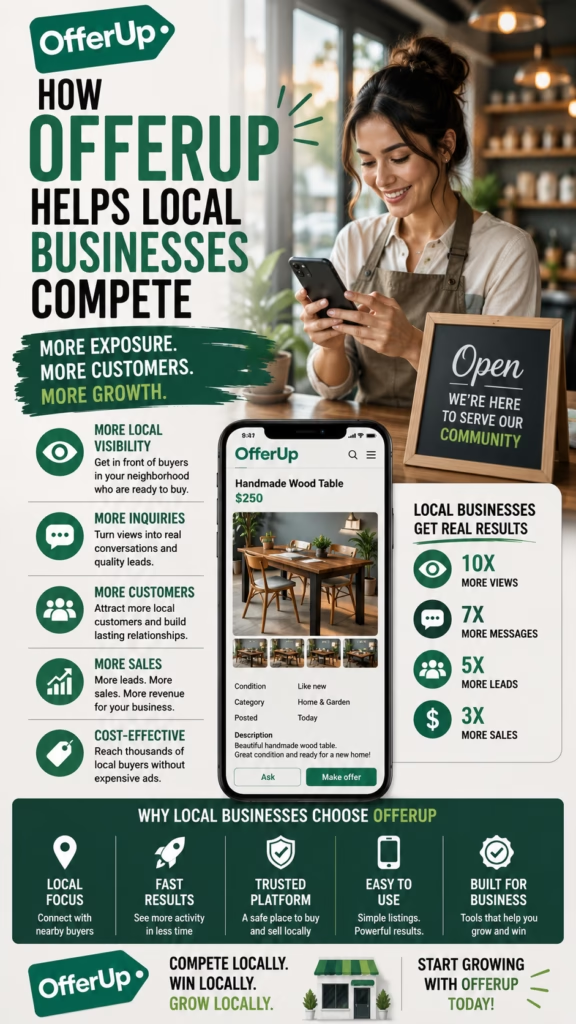
How OfferUp Helps Local Businesses Compete comes down to local visibility, direct buyer communication, real inventory, faster responses, stronger trust, and a simpler path from discovery to customer action.
Introduction
How OfferUp Helps Local Businesses Compete is an important question for smaller companies that do not have the advertising budgets, brand recognition, staffing, or physical footprint of national competitors. Large businesses may dominate traditional advertising, but local companies can still win when they are more relevant, more responsive, and easier to buy from.
OfferUp gives local businesses a practical marketplace where nearby buyers can discover products, compare options, ask questions, arrange pickup, request delivery, schedule services, and begin conversations without moving through a complicated sales funnel.
That local structure creates an advantage. A nearby furniture store can promote actual inventory. A contractor can show recent work. A repair company can post around a specific household problem. A moving company can generate local quote requests. A retailer can highlight pickup and delivery options that a national competitor may not provide as quickly.
OfferUp helps local businesses compete by making proximity, trust, inventory, service, and response speed more important than company size alone.
Furniture stores, mattress retailers, appliance sellers, contractors, repair companies, mobile home dealers, shed sellers, movers, cleaners, landscapers, junk removal businesses, handymen, and other local companies can use OfferUp to create direct customer opportunities.
The strongest strategy combines clear titles, real photos, honest pricing, local keywords, specific product or service listings, buyer qualification, rapid follow-up, unique listing variations, and consistent tracking.
Main idea: How OfferUp Helps Local Businesses Compete is by allowing smaller companies to create a clearer, faster, and more personal buying experience than many larger competitors.
Table of Contents
- 1) Why local businesses need different competitive advantages
- 2) How OfferUp creates local buyer intent
- 3) Competing through proximity and convenience
- 4) Competing through faster response
- 5) Competing through stronger trust
- 6) Competing with real products and project photos
- 7) Writing titles that stand out locally
- 8) Writing descriptions that reduce buyer hesitation
- 9) Competing without always lowering prices
- 10) Using local keywords and service areas
- 11) OfferUp competition for local retailers
- 12) OfferUp competition for contractors
- 13) OfferUp competition for repair companies
- 14) OfferUp competition for home services
- 15) OfferUp competition for moving companies
- 16) OfferUp competition for high-ticket sellers
- 17) Creating stronger calls to action
- 18) Qualifying leads better than competitors
- 19) Turning messages into appointments and sales
- 20) Creating unique listing variations
- 21) Building a consistent competitive system
- 22) Tracking competitive performance
- 23) Common OfferUp competition mistakes
- 24) Trust and compliance reminders
- 25) Final thoughts
- 26) FAQs
- 27) Extra keywords
1) Why Local Businesses Need Different Competitive Advantages
Local businesses cannot always compete with national companies through advertising budgets, brand recognition, inventory scale, or large teams. They need advantages that larger competitors may struggle to deliver consistently.
Local businesses can compete through:
- Faster personal responses
- Local delivery
- Same-day or short-term availability
- Neighborhood knowledge
- Flexible service
- Real local inventory
- Direct owner or staff communication
- Custom solutions
- Local project experience
- Stronger customer relationships
OfferUp supports these advantages because the platform is built around local discovery and direct messaging. A buyer does not only compare prices. They also compare distance, availability, convenience, responsiveness, condition, trust, and the quality of the conversation.
A small business may not have the lowest price, but it may offer delivery today, an appointment this week, a real person who responds quickly, or a product the customer can see locally.
Local businesses compete best when they emphasize advantages that large companies cannot easily personalize.
2) How OfferUp Creates Local Buyer Intent
OfferUp users often browse with a practical goal. They may want furniture, appliances, tools, equipment, a local service, repair help, delivery, moving assistance, or another nearby solution.
OfferUp buyer intentions may include:
Find a product nearby
Compare local prices
Arrange same-day pickup
Ask about delivery
Find a local contractor
Schedule a repair
Request an estimate
Locate used or open-box inventory
Find a better local deal
Talk directly with a seller
This local intent can give smaller businesses an advantage over broad advertising. The customer is already searching within a marketplace rather than being interrupted by an unrelated ad.
The business must still earn the response. A strong listing should make the offer clear, prove trust, explain availability, and guide the buyer toward the next step.
OfferUp creates competitive value because the buyer is often already closer to action than someone casually scrolling a general social feed.
3) Competing Through Proximity and Convenience
Proximity is one of the strongest competitive advantages available to a local business. Buyers may choose a nearby company because pickup, delivery, installation, service, or support feels easier.
Convenience advantages local businesses can promote:
- Local pickup
- Same-day availability
- Short delivery routes
- Showroom visits
- Local installation
- Nearby repair appointments
- Flexible scheduling
- Direct customer support
- Local product exchanges
- Neighborhood service coverage
A furniture store can promote local delivery and showroom access. An appliance seller can offer delivery and installation. A contractor can highlight nearby estimate appointments. A moving company can focus on routes within its primary service area.
The listing should explain convenience clearly. Do not assume the buyer understands that delivery, pickup, installation, or appointments are available.
Local businesses compete more effectively when the listing shows how proximity makes the transaction easier.
4) Competing Through Faster Response
Response speed is one of the simplest competitive advantages to build. Many businesses lose leads because they reply too slowly or provide incomplete answers.
Simple fast-response example:
Thanks for reaching out. Are you looking for pickup, delivery, an estimate, or similar options? What city are you located in, and when do you need it?
A fast response should do more than confirm availability. It should acknowledge the buyer, answer the immediate question, ask one or two useful qualification questions, and move the conversation forward.
Ways to improve response speed:
- Prepare message templates
- Assign clear response ownership
- Keep inventory information current
- Check messages consistently
- Use qualification questions
- Track unanswered inquiries
- Move qualified leads into a CRM
- Follow up with interested buyers
A smaller business can often beat a larger competitor simply by responding faster and communicating more clearly.
5) Competing Through Stronger Trust
Trust affects whether a buyer sends a message, schedules an appointment, visits a store, or shares project information. Local businesses can build trust through consistency and transparency.
OfferUp trust signals include:
- Clear profile identity
- Consistent business name
- Real product photos
- Real project photos
- Accurate local information
- Honest pricing
- Professional message tone
- Clear pickup or service details
- Current availability
- Accurate business claims
Trust is especially important for high-ticket products and services that require access to a home. Buyers may review the seller profile, listing history, photos, and communication style before moving forward.
Businesses should avoid copied images, unclear identities, fake urgency, hidden prices, exaggerated claims, or listings that do not match the actual offer.
Trust gives local businesses a competitive advantage because buyers often choose the seller who feels safer and easier to work with.
6) Competing With Real Products and Project Photos
Real photos help smaller businesses prove value without relying on expensive branding. A buyer can see the actual product, actual inventory, actual project, actual vehicle, or actual team.
Competitive photo ideas:
- Actual inventory
- Multiple product angles
- Condition close-ups
- Before-and-after projects
- Showroom displays
- Service vehicles
- Professional crews
- Completed installations
- Delivery-ready products
- Clean equipment photos
Retailers should show real products whenever possible. Contractors should show completed projects. Repair companies can show equipment, vehicles, and non-sensitive examples of completed work.
Photos should be bright, accurate, and relevant. Avoid images that make the product appear different from its actual condition or create unrealistic expectations.
Real photos help local businesses compete because visible proof can be more persuasive than a large-company marketing claim.
7) Writing Titles That Stand Out Locally
OfferUp titles should immediately explain what is available. A specific title helps the right buyer recognize relevance faster than a vague promotional phrase.
Weak title:
Best Deal Around

Better title:
Queen Mattress Available With Local Delivery

Weak title:
Furniture Store

Better title:
Gray Sectional Sofa - Pickup or Delivery Available

Weak title:
Repair Service

Better title:
Dryer Not Heating? Local Repair Appointments

Weak title:
Contractor Available

Better title:
Interior Painting Estimates Available This Week

Weak title:
Moving Help

Better title:
Local Apartment Moving Appointments Available
Strong titles may include the product, service, size, condition, location, appointment type, delivery option, or customer problem.
Avoid excessive capitalization, punctuation, vague hype, and unsupported urgency. Titles should be easy to read and match the actual listing.
Specific titles help local businesses compete by matching the exact words buyers use when browsing.
8) Writing Descriptions That Reduce Buyer Hesitation
A strong description answers the questions weaker competitor listings leave unanswered. It should explain the offer, condition, location, price, availability, and next step.
Competitive OfferUp description:
Opening buyer benefit
Product or service details
Condition or project scope
Size, model, or specifications
Price or estimate information
Pickup, delivery, installation, visit, or appointment options
Local service area
Trust signal
Qualification question
Clear CTA
Descriptions should reduce unnecessary back-and-forth. If customers repeatedly ask about dimensions, service areas, delivery costs, appointment timing, or availability, add that information to the listing.
Short paragraphs and direct language usually perform better than large blocks of promotional text.
Local businesses compete more effectively when their descriptions make buyers feel informed before they send a message.
9) Competing Without Always Lowering Prices
Price is important, but it is not the only way to compete. Constantly lowering prices can reduce margins and make long-term growth difficult.
Ways to compete beyond price:
Faster response
Local delivery
Professional installation
Same-week appointments
Better photos
Clearer descriptions
Product knowledge
Flexible scheduling
Stronger trust
Better follow-up
A local retailer may offer delivery, assembly, showroom comparison, or same-day pickup. A contractor may provide faster estimates and better communication. A repair company may offer more convenient scheduling.
The listing should make these advantages visible. Buyers cannot value a benefit they do not know exists.
OfferUp helps local businesses compete on service, convenience, and trust instead of price alone.
10) Using Local Keywords and Service Areas
Local keywords help buyers understand whether the product, delivery route, pickup location, or service area is relevant.
Natural local wording examples:
- Local pickup available
- Delivery available in nearby areas
- Serving local homeowners
- Message with your city for availability
- Showroom visits available locally
- Estimate appointments available this week
- Serving nearby communities
- Local installation options available
Businesses serving multiple areas can create separate listings for distinct markets, but every listing should include accurate and useful local context.
Avoid repeating city names unnaturally. The purpose of local wording is to clarify availability and improve customer relevance.
Local keywords create competitive value when they make the buyer confident that the business actually serves their area.
11) OfferUp Competition for Local Retailers
Local retailers can use OfferUp to make inventory visible before the customer enters the store. This can help them compete against larger stores and online sellers.
Retail listing ideas:
- Mattress size availability
- Sectional sofas
- Dining room sets
- Appliance bundles
- Open-box inventory
- Clearance products
- Showroom appointments
- Seasonal merchandise
- Same-day pickup
- Local delivery options
Retailers should create product-specific listings rather than one general store advertisement. Individual products are easier for buyers to discover and compare.
Retailers can compete through local availability, delivery, product knowledge, similar options, and the ability to see products in person.
OfferUp helps local retailers compete by turning real inventory into direct buyer conversations.
12) OfferUp Competition for Contractors
Contractors can compete by creating project-specific listings that show real work and simplify the estimate process.
Contractor listing ideas:
Interior Painting Estimate Openings
Fence Repair and Installation Estimates
Drywall Patch and Repair Appointments
Flooring Installation Consultations
Bathroom Remodel Estimate Requests
Deck Repair and Restoration
Cabinet Installation Appointments
Seasonal Home Improvement Openings
Each listing should include project photos, local service information, estimate details, and a CTA requesting the homeowner’s city, project type, photos, approximate size, and timeline.
Contractors can compete against larger companies by offering faster responses, local knowledge, direct communication, and a more personal estimate process.
OfferUp helps contractors compete when one focused listing turns one homeowner problem into one clear estimate request.
13) OfferUp Competition for Repair Companies
Repair companies can create strong intent by posting around specific problems. Customers often search for help when an item stops working and they need a nearby provider.
Repair listing ideas:
- Washer not draining
- Dryer not heating
- Refrigerator not cooling
- Fence gate not closing
- Drywall holes or cracks
- Door repair appointments
- Furniture repair
- Equipment repair
- Deck board replacement
- Rental property repairs
Repair companies can compete through problem-specific titles, faster appointments, local service coverage, real photos, and clear diagnostic or service-fee information.
Businesses should avoid diagnosing complex problems or guaranteeing prices without enough information.
OfferUp helps repair companies compete by connecting urgent local problems with faster service conversations.
14) OfferUp Competition for Home Services
Home service companies can compete by targeting recognizable household needs instead of using general business advertisements.
Home service listing ideas:
- Move-out cleaning
- Junk removal
- Yard cleanup
- Pressure washing
- Interior painting
- Fence repair
- Furniture assembly
- Handyman work
- Property maintenance
- Local installation services
Local providers can compete with larger companies by offering flexible scheduling, faster estimates, direct communication, and familiarity with nearby neighborhoods.
Each listing should explain the service area, appointment process, price structure, and what details the homeowner should send.
OfferUp helps home service companies compete by making local help feel immediate, personal, and easy to schedule.
15) OfferUp Competition for Moving Companies
Moving companies can use OfferUp to reach people buying furniture, selling household items, changing apartments, or preparing for a local relocation.
Moving listing ideas:
Apartment moving appointments
Local residential moving estimates
Loading and unloading help
Labor-only moving assistance
Furniture pickup and delivery
Small-move service
Storage unit moving
Office relocation appointments
Moving companies can compete through local route knowledge, quick quote responses, flexible scheduling, labor-only options, and product-delivery services.
Listings should request pickup and destination cities, move date, property size, stairs, elevators, major items, and truck requirements.
OfferUp helps movers compete when listings make the quote and scheduling process easier than competing options.
16) OfferUp Competition for High-Ticket Sellers
High-ticket sellers need stronger trust, more information, and better qualification. This includes mobile homes, sheds, equipment, premium furniture, appliances, vehicles, and expensive services.
High-ticket competitive elements:
- Real product photos
- Multiple angles
- Clear specifications
- Model, size, or year
- Condition details
- Location information
- Viewing or appointment options
- Delivery or setup details
- Accurate financing language
- Buyer qualification questions
High-ticket listings may be designed to create a qualified phone call, tour, showroom visit, consultation, or financing discussion rather than an immediate purchase.
Local businesses can compete through personal guidance, product knowledge, real inventory, delivery options, and direct support.
OfferUp helps high-ticket sellers compete by shortening the distance between initial interest and a serious local appointment.
17) Creating Stronger Calls to Action
A strong call to action tells the buyer what to send and what happens next. This improves message quality and reduces wasted time.
Competitive OfferUp CTA examples:
- Message with your city for pickup or delivery options.
- Ask about current availability before visiting.
- Message with your preferred size or model.
- Send your budget and what you are looking for.
- Ask about similar products in stock.
- Send a quick photo for a faster estimate.
- Reply with your preferred appointment time.
- Message before visiting to confirm availability.
A vague CTA such as “contact us” does not help the buyer know what information is needed. Better CTAs create more useful first messages.
The CTA should match the offer. Product listings may ask about size, color, pickup, or delivery. Service listings may ask for project details, location, photos, and timeline.
A stronger CTA gives local businesses a competitive advantage by moving buyers forward faster.
18) Qualifying Leads Better Than Competitors
Lead qualification helps businesses identify serious buyers and provide more accurate next steps. The business that asks better questions can often deliver a better customer experience.
Useful qualification details include:
- City or neighborhood
- Product or service needed
- Size, model, or style preference
- Pickup or delivery preference
- Budget range when relevant
- Timeline
- Photos if useful
- Preferred appointment time
- Best contact method
- Whether similar options are acceptable
The listing can request one or two important details, while the first response gathers the rest. Avoid making the process feel unnecessarily complicated.
Qualification is especially important for high-ticket products, services, financing, delivery, installation, and projects requiring on-site visits.
Better qualification helps local businesses spend more time on real opportunities and less time on vague inquiries.
19) Turning Messages Into Appointments and Sales
OfferUp messages only create value when the business moves the conversation toward a real next step.
Possible next steps:
Confirm pickup time
Schedule delivery
Reserve an item
Book a showroom visit
Schedule an estimate
Request project photos
Arrange a phone call
Book a service appointment
Schedule a product tour
Complete a purchase
The first response should identify the buyer’s goal. The second step should collect the necessary details. The final step should confirm a specific action.
Businesses should avoid leaving conversations open-ended. A direct scheduling option or clear next question makes the process easier.
Local businesses compete more effectively when every qualified conversation moves toward a specific appointment, visit, pickup, delivery, or sale.
20) Creating Unique Listing Variations
Consistent OfferUp marketing should not mean posting identical listings. Unique variations help businesses reach different buyers and customer needs.
Ways to create unique OfferUp listings:
Feature a different product
Promote a separate service
Target another buyer problem
Use new real photos
Highlight a different benefit
Focus on another local area
Change the title structure
Use a different qualification question
Promote delivery or installation
Create an educational listing
A retailer can rotate products and inventory categories. A contractor can rotate project types. A repair company can rotate problem-focused posts. A mover can rotate apartment, residential, delivery, and labor-only services.
Each variation should represent a real offer. Avoid meaningless duplicates that provide no additional customer value.
Unique listing variations help local businesses compete by creating more relevant ways for buyers to discover them.
21) Building a Consistent Competitive System
OfferUp becomes a competitive advantage when the business uses a repeatable system instead of random posting.
Repeatable OfferUp system:
Choose listing categories
Plan product or service angles
Organize real photos
Write unique titles
Create useful descriptions
Add local details
Use accurate pricing
Include qualification questions
Prepare response templates
Track leads and results
Businesses should assign responsibility for listing creation, message response, inventory updates, scheduling, CRM entry, and follow-up.
A system prevents strong leads from being lost and makes it easier to identify which listings produce the best results.
Consistency turns OfferUp from an occasional posting channel into a long-term competitive asset.
22) Tracking Competitive Performance
Tracking helps businesses understand whether OfferUp is producing real competitive value. Views and messages are useful, but qualified actions and revenue matter more.
OfferUp metrics to track:
- Listing views
- Buyer messages
- Qualified leads
- Average response time
- Pickup requests
- Delivery inquiries
- Store visits
- Appointment requests
- Estimate leads
- Product holds
- Completed sales
- Revenue by listing type
Compare performance by title, photo, product, service, city, price, CTA, and response script. A listing with fewer views may still be more valuable if the leads are better qualified.
High views with few messages may signal weak photos, unclear pricing, poor trust, or a missing CTA. Many messages with few sales may indicate poor qualification or follow-up.
Competitive performance should be measured by qualified customer actions, not by listing volume alone.
23) Common OfferUp Competition Mistakes
Local businesses often lose their competitive advantage by copying competitors, competing only on price, using vague listings, or replying too slowly.
Common mistakes include:
- Generic listing titles
- Stock photos only
- Copied descriptions
- No clear differentiator
- Competing only on price
- No local relevance
- No qualification questions
- No clear CTA
- Slow responses
- Outdated availability
- No performance tracking
- Unsupported claims
Another mistake is listing too many products or services in one post. Focused listings are easier to understand and easier to measure.
Businesses should also avoid hiding fees, exaggerating condition, promising guaranteed results, or presenting unavailable products as current inventory.
OfferUp stops being a competitive advantage when listings look, sound, and respond exactly like weaker competitors.
24) Trust and Compliance Reminders
OfferUp listings should follow current platform rules and applicable requirements involving pricing, privacy, licensing, financing, housing, services, warranties, environmental claims, and consumer protection.
Trust and compliance reminders:
- Use accurate business identification
- Describe products and services honestly
- Use accurate prices
- Keep availability current
- Avoid unsupported guarantees
- Use accurate financing language
- Protect customer information
- Use photos you have permission to share
- Follow applicable service and licensing rules
- Review current platform policies
Businesses should be especially careful with housing, financial, medical, legal, environmental, safety, warranty, and guaranteed-performance claims.
Accurate listings may create fewer impulsive inquiries, but they generally create stronger trust, better qualification, and healthier long-term customer relationships.
Local businesses compete best when the customer experience matches the promises made in the listing.
25) Final Thoughts
How OfferUp Helps Local Businesses Compete comes down to giving smaller companies a direct way to reach nearby buyers, display real products, promote focused services, answer questions, and move customers toward action.
OfferUp allows local businesses to compete through proximity, convenience, faster responses, stronger trust, real inventory, personal communication, local delivery, flexible appointments, and better service.
The strongest strategy uses specific titles, real photos, useful descriptions, honest prices, local keywords, qualification questions, strong CTAs, rapid follow-up, unique listing variations, and performance tracking.
Local businesses should not try to imitate national companies. They should emphasize the advantages that come from being nearby, accessible, responsive, and connected to the community.
OfferUp can support retailers, contractors, repair companies, home service providers, moving companies, dealers, and high-ticket sellers when listings match real local demand.
Final takeaway: OfferUp helps local businesses compete when every listing makes the company easier to find, easier to trust, faster to reach, and simpler to buy from than competing options.
26) FAQs
1) How does OfferUp help local businesses compete?
OfferUp helps local businesses compete through nearby visibility, direct messaging, real inventory, local delivery, faster response, service promotion, and stronger customer relationships.
2) Can small businesses compete with large companies on OfferUp?
Yes. Small businesses can compete through local convenience, responsiveness, trust, product knowledge, flexibility, and personalized service.
3) What types of businesses can use OfferUp?
Retailers, furniture stores, mattress sellers, appliance companies, contractors, repair companies, movers, cleaners, landscapers, dealers, and other local businesses can use OfferUp.
4) What makes a competitive OfferUp listing?
A competitive listing includes a clear title, real photos, accurate pricing, local details, useful descriptions, trust signals, qualification questions, and a strong CTA.
5) Does the lowest price always win?
No. Buyers may choose a seller based on convenience, delivery, trust, response speed, quality, availability, and communication.
6) How important is response speed?
Response speed is extremely important because buyers often contact several sellers or service providers.
7) Are real photos important?
Yes. Real product and project photos build trust and provide visible proof of inventory, condition, or workmanship.
8) What should an OfferUp title include?
The title should clearly identify the product, service, size, condition, buyer problem, delivery option, or appointment type.
9) What should a description include?
It should include the offer, condition or scope, price, local availability, pickup or delivery, trust signals, qualification questions, and a clear next step.
10) Should businesses use local keywords?
Yes. Local keywords help buyers understand where pickup, delivery, services, installation, estimates, and appointments are available.
11) Can retailers compete through OfferUp?
Yes. Retailers can promote real inventory, clearance items, open-box products, pickup, delivery, showroom visits, and local availability.
12) Can contractors use OfferUp competitively?
Yes. Contractors can create project-specific listings, show real work, generate estimate requests, and respond faster than larger competitors.
13) Can repair companies use OfferUp?
Yes. Repair companies can create problem-focused listings around appliances, furniture, doors, fences, equipment, and household repairs.
14) Can home service businesses use OfferUp?
Yes. Cleaning, junk removal, landscaping, painting, moving, handyman, and maintenance businesses can promote focused local services.
15) Can moving companies compete on OfferUp?
Yes. Movers can promote apartment moves, residential moves, labor-only help, furniture delivery, loading, unloading, and local relocation services.
16) Can high-ticket sellers use OfferUp?
Yes. High-ticket listings require strong photos, detailed specifications, trust signals, appointments, qualification, and professional follow-up.
17) What is a good OfferUp CTA?
A good CTA asks buyers to message with location, product preference, service need, photos, timeline, pickup preference, delivery need, or appointment availability.
18) How should businesses qualify leads?
Ask for city, product or service needed, size, model, budget, timeline, photos, delivery preference, and preferred next step.
19) How do messages become sales?
Businesses should respond quickly, qualify the buyer, answer questions, and move the conversation toward pickup, delivery, an appointment, visit, estimate, or purchase.
20) Should every listing be unique?
Yes. Unique products, services, titles, photos, descriptions, local angles, and CTAs create stronger visibility and customer relevance.
21) What should businesses track?
Track views, messages, qualified leads, response time, pickups, delivery inquiries, appointments, estimates, store visits, sales, and revenue.
22) Why do listings get views but no messages?
The listing may have weak photos, unclear pricing, a vague title, incomplete information, low trust, or no clear CTA.
23) Why do messages fail to become customers?
The leads may be poorly qualified, the offer may be unclear, availability may be outdated, or follow-up may be too slow.
24) What is the biggest OfferUp competition mistake?
The biggest mistake is copying competitors and competing only on price without creating a stronger local customer experience.
25) What is the best OfferUp competitive strategy?
Be more local, more trustworthy, more responsive, and easier to buy from than competing listings.
25 Extra Keywords
- How OfferUp Helps Local Businesses Compete
- OfferUp marketing
- local business marketing
- OfferUp advertising
- OfferUp lead generation
- local marketplace marketing
- OfferUp business growth
- OfferUp competitive advantage
- OfferUp local visibility
- OfferUp small business marketing
- OfferUp local leads
- OfferUp product listings
- OfferUp service listings
- OfferUp retail marketing
- OfferUp contractor leads
- OfferUp repair leads
- OfferUp home service leads
- OfferUp moving leads
- OfferUp customer acquisition
- OfferUp buyer trust
- OfferUp response strategy
- OfferUp listing optimization
- OfferUp local customer growth
- OfferUp business competition
- OfferUp sales growth