

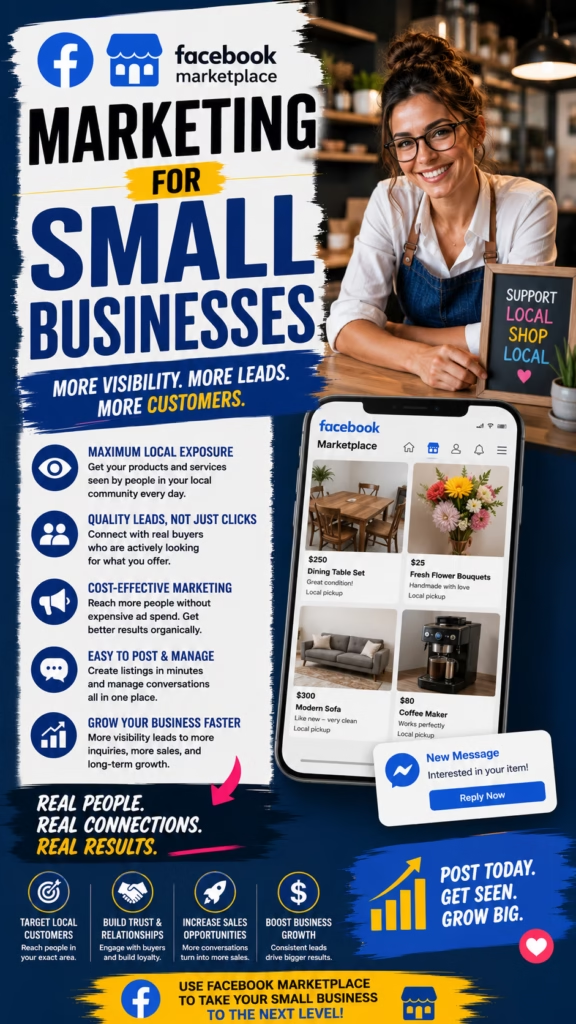
Facebook Marketplace Marketing for Small Businesses
Facebook Marketplace Marketing for Small Businesses helps local companies promote products and services, reach nearby buyers, improve lead quality, build trust, and turn Marketplace activity into more sales, appointments, deliveries, pickups, visits, and customer relationships.
Introduction
Facebook Marketplace Marketing for Small Businesses gives local companies a practical way to reach people who are already browsing products, comparing prices, searching for nearby services, and looking for convenient local solutions. Unlike a general social media post that may disappear quickly in a news feed, a Marketplace listing is built around buyer intent.
Small businesses often compete against larger companies with bigger advertising budgets, larger teams, and stronger brand recognition. Facebook Marketplace can help narrow that gap by giving smaller businesses a direct way to show inventory, promote services, answer questions, and create one-on-one customer conversations.
Small businesses do not need to look like national brands on Marketplace. They need to look local, trustworthy, helpful, responsive, and easy to buy from.
Furniture stores, mattress retailers, appliance companies, contractors, repair businesses, moving companies, mobile home dealers, shed sellers, landscapers, cleaners, junk removal companies, handymen, and many other small businesses can use Marketplace to increase local visibility.
The strongest strategy is not based on random posting. It uses clear titles, real photos, useful descriptions, honest pricing, local keywords, focused offers, qualification questions, fast follow-up, and consistent performance tracking.
Main idea: Facebook Marketplace Marketing for Small Businesses works best when every listing helps the right local customer understand the offer, trust the business, and take one simple next step.
Table of Contents
- 1) Why Facebook Marketplace matters for small businesses
- 2) How local Marketplace buyers make decisions
- 3) Building a trustworthy seller profile
- 4) Creating a small business Marketplace strategy
- 5) Writing listing titles that attract clicks
- 6) Using photos that build local trust
- 7) Writing descriptions that generate messages
- 8) Using local keywords naturally
- 9) Pricing products and services clearly
- 10) Creating product listings for small businesses
- 11) Creating service listings for small businesses
- 12) Marketplace marketing for local retailers
- 13) Marketplace marketing for contractors
- 14) Marketplace marketing for repair companies
- 15) Marketplace marketing for high-ticket sellers
- 16) Creating calls to action that get responses
- 17) Qualifying Marketplace leads
- 18) Following up faster with local buyers
- 19) Building a consistent posting system
- 20) Tracking Marketplace results
- 21) Common small business Marketplace mistakes
- 22) Final thoughts
- 23) FAQs
- 24) Extra keywords
1) Why Facebook Marketplace Matters for Small Businesses
Facebook Marketplace matters because it connects small businesses with nearby people who are already browsing with intent. A buyer may be looking for a specific product, a repair service, local delivery, a contractor, an appointment, a showroom, or a deal they can act on quickly.
This creates a different opportunity than broad awareness advertising. Marketplace users are often closer to making a decision, especially when they find a listing that matches their location, budget, and immediate need.
Marketplace can help small businesses generate:
- Local buyer messages
- Product inquiries
- Pickup requests
- Delivery leads
- Store visits
- Showroom appointments
- Service calls
- Estimate requests
- Qualified customer conversations
- Repeat local visibility
Small businesses can also benefit from the personal nature of Marketplace communication. Customers often prefer talking directly with a local seller who can answer questions, confirm availability, explain options, and help them make a decision.
Facebook Marketplace gives small businesses a chance to compete through proximity, service, trust, and responsiveness.
2) How Local Marketplace Buyers Make Decisions
Marketplace buyers often make quick decisions. They compare several listings by looking at the first photo, title, price, location, seller profile, description, pickup options, delivery details, and response speed.
Local Marketplace buyers commonly ask:
Is this available?
Is the business near me?
Is the price clear?
Do the photos look real?
Can I trust this seller?
Is pickup available?
Can the product be delivered?
Can I schedule an appointment?
Are other options available?
How quickly will someone reply?
A small business can gain an advantage by answering these questions before the customer has to ask. Clear listings save time for both the buyer and the business.
Buyers do not always choose the lowest price. They may choose the seller who communicates clearly, has stronger photos, offers delivery, replies faster, or appears more reliable.
Small businesses win Marketplace buyers by reducing uncertainty and making the buying process feel simple.
3) Building a Trustworthy Seller Profile
Your profile supports every Marketplace listing you create. Buyers may check the profile before sending a message, especially when the product is expensive or the service requires someone to enter their home.
Small business profile trust checklist:
- Clear profile image or business identity
- Accurate local area
- Consistent business or seller name
- Professional message tone
- Real product or project photos
- Clean and relevant listing history
- Clear pickup, delivery, or service details
- Fast and respectful responses
A trustworthy profile should feel consistent with the rest of the business. The name, tone, photos, and offer should not create confusion. Customers should understand whether they are dealing with an individual seller, local store, service provider, or contractor.
Profile trust makes every Marketplace listing more believable and easier to respond to.
4) Creating a Small Business Marketplace Strategy
A strong Marketplace strategy begins by deciding what each listing is supposed to accomplish. A listing may be designed to sell one item, promote a category, schedule an estimate, generate a service appointment, encourage a store visit, or start a conversation about available options.
Small business Marketplace strategy:
Choose one offer per listing
Identify the ideal buyer
Use a specific title
Select strong photos
Explain the product or service
Add local details
Use honest pricing
Include a qualification question
Add one clear CTA
Prepare a fast response process
Small businesses should avoid trying to promote every service or product in one listing. Focused listings are easier for customers to understand and easier for the business to track.
For example, a furniture store can create separate listings for sectionals, dining sets, mattresses, clearance items, and delivery options. A contractor can create separate listings for painting, fence repair, flooring, drywall, and remodeling estimates.
Marketplace becomes more effective when every listing has one clear offer, one clear audience, and one clear next step.
5) Writing Listing Titles That Attract Clicks
Titles are one of the first things buyers see. A strong title should immediately explain what the product or service is and include an important feature, size, condition, benefit, or location detail when relevant.
Weak title:
Great Deal

Better title:
Queen Mattress Available With Local Delivery

Weak title:
Furniture

Better title:
Gray Sectional Sofa - Pickup or Delivery Available

Weak title:
Repair Service

Better title:
Washer Not Draining? Repair Appointments Available

Weak title:
Contractor

Better title:
Interior Painting Estimate Openings This Week

Weak title:
Appliance

Better title:
Washer and Dryer Set - Local Delivery Available
A title should sound natural and useful. Avoid stuffing too many keywords into one line. The goal is to help the right buyer recognize the offer quickly.
Specific titles create better clicks because buyers immediately understand what the listing offers.
6) Using Photos That Build Local Trust
Photos can determine whether someone stops scrolling. Small businesses should use bright, clear, real images whenever possible. The main image should make the offer easy to understand on a mobile screen.
Photo ideas for small businesses:
- Actual product photos
- Multiple product angles
- Close-up condition details
- Brand or model labels
- Before-and-after project photos
- Showroom photos
- Storefront photos
- Service vehicle photos
- Team or technician photos
- Delivery-ready inventory photos
Retail businesses should show the actual product whenever possible. Service businesses should show completed work, equipment, vehicles, team members, or before-and-after results. Contractors should use real project photos that demonstrate quality.
Small businesses should avoid blurry images, dark photos, unrelated stock images, or graphics overloaded with text. A clean, accurate photo often creates more trust than an overly designed image.
Real photos help small businesses compete because they provide proof before the first conversation begins.
7) Writing Descriptions That Generate Messages
A strong description should answer important buyer questions and guide the customer toward a message. It should be clear, organized, and easy to scan.
Small business listing description:
Opening buyer benefit
Product or service details
Condition or service scope
Size, model, or specifications
Price or estimate information
Pickup, delivery, appointment, or visit options
Local service area
Trust signal
Qualification question
Simple next step
If buyers repeatedly ask the same question, add the answer to the description. Common questions may involve measurements, condition, delivery fees, service areas, installation, appointment timing, or current availability.
The description should be detailed enough to create confidence without becoming difficult to read. Use short paragraphs and clear language.
A useful description turns more Marketplace views into qualified customer conversations.
8) Using Local Keywords Naturally
Local keywords help buyers understand whether a listing is relevant to their area. Small businesses can use city names, neighborhoods, counties, service areas, pickup locations, and delivery zones naturally.
Natural local wording examples:
- Local pickup available
- Delivery available in nearby areas
- Serving local homeowners
- Message with your city for availability
- Showroom visits available locally
- Estimate appointments available this week
- Serving nearby neighborhoods
- Local installation options available
Businesses serving multiple locations can create different listings for distinct markets, provided each post is accurate, useful, and relevant. Do not repeat city names unnaturally or create low-quality duplicate posts.
Use local keywords to clarify where the business serves, not to overload the listing.
9) Pricing Products and Services Clearly
Pricing clarity improves buyer trust and lead quality. Misleading prices may create more messages, but those messages often waste time and frustrate potential customers.
Clear pricing examples:
Price listed is firm.
Starting at $199.
Free estimate available.
Delivery may require an additional fee.
Bundle pricing may be available.
Message for current inventory and pricing.
Project pricing depends on size and scope.
Financing may be available for qualified buyers.
Product sellers should include the actual price whenever possible. Service businesses can explain whether the listing price is a starting point, service-call fee, estimate amount, or example price.
When pricing depends on size, distance, labor, customization, financing, installation, or project scope, explain that clearly in the listing.
Clear pricing produces better leads because customers understand the offer before they message.
10) Creating Product Listings for Small Businesses
Product listings should make comparison easy. Buyers need enough information to decide whether an item matches their needs before starting a conversation.
Product listing details to include:
- Product name
- Brand or model
- Condition
- Size or dimensions
- Color or material
- Price
- Pickup option
- Delivery option
- Installation option if relevant
- Current availability
- Included items
- Similar products available
A mattress store might include size, comfort type, firmness, pickup, delivery, and showroom information. An appliance company might include brand, model, condition, dimensions, testing details, delivery, and warranty information if accurate.
A furniture store might include material, measurements, color, number of pieces, pickup details, and delivery availability. More complete details create stronger buyer confidence.
Product listings work best when the buyer can understand the item and transaction without guessing.
11) Creating Service Listings for Small Businesses
Service listings should focus on one clear problem, appointment type, or project. Broad service lists can confuse buyers and produce weaker leads.
Service listing examples:
Move-Out Cleaning Appointments Available
Garage Cleanout and Junk Removal Help
Washer and Dryer Repair Service Calls
Interior Painting Estimate Openings
Fence Repair Estimate Requests
Local Handyman Repair Appointments
Pressure Washing Openings This Week
Yard Cleanup Appointments Available
Each service listing should explain the service area, what is included, how pricing works, when appointments are available, and what the customer should send.
Service businesses can ask customers to include photos, location, timeline, project size, or preferred appointment time. This creates a more useful first conversation.
Small service businesses generate better Marketplace leads when each listing solves one recognizable customer problem.
12) Marketplace Marketing for Local Retailers
Local retailers can use Marketplace to promote in-stock inventory, showroom products, clearance items, seasonal merchandise, open-box products, bundles, pickup options, and delivery availability.
Retail Marketplace listing ideas:
- New inventory arrivals
- Mattress size availability
- Furniture delivery listings
- Appliance bundle offers
- Open-box inventory
- Clearance merchandise
- Showroom appointment listings
- Seasonal product posts
- Same-day pickup options
- Local delivery availability
Retailers should create product-specific listings rather than relying on one general store advertisement. Buyers are more likely to message about a specific sofa, mattress, appliance, table, or product category.
Marketplace can also help stores bring customers into the showroom by asking buyers to confirm availability before visiting or request similar options.
Marketplace helps local retailers turn inventory visibility into messages, visits, pickups, deliveries, and sales.
13) Marketplace Marketing for Contractors
Contractors can use Facebook Marketplace to generate estimate requests for specific project types. The best listings focus on one service and include real examples of completed work.
Contractor listing ideas:
Interior Painting Estimate Openings
Fence Repair and Installation Estimates
Deck Repair Consultation Appointments
Drywall Patch and Repair Help
Flooring Installation Estimate Requests
Bathroom Update Appointments
Small Remodel Consultations
Seasonal Home Improvement Openings
Contractor listings should ask homeowners to send the project location, photos, approximate size, project type, and preferred timeline. This helps contractors qualify opportunities before scheduling.
Before-and-after photos can be especially effective because homeowners want to see evidence of quality, cleanliness, and completed results.
Contractors perform better on Marketplace when every listing turns one project need into one clear estimate request.
14) Marketplace Marketing for Repair Companies
Repair businesses can create listings around specific problems. Customers often search for help when something stops working, breaks, leaks, will not start, or needs immediate attention.
Repair listing ideas:
- Dryer not heating
- Washer not draining
- Refrigerator not cooling
- Dishwasher not draining
- Fence gate not closing
- Door repair appointments
- Drywall holes and cracks
- Small home repair help
- Furniture repair services
- Equipment repair appointments
Problem-focused titles attract stronger intent because customers recognize their situation immediately. The listing should explain the service area, appointment process, estimate or diagnostic fee if applicable, and what details the customer should send.
Repair companies can use Marketplace to connect urgent customer problems with fast local appointment options.
15) Marketplace Marketing for High-Ticket Sellers
High-ticket sellers need stronger trust and more complete information. This includes mobile home dealers, shed companies, furniture retailers, appliance companies, equipment sellers, and businesses offering premium services.
High-ticket listing elements:
- Real product photos
- Multiple angles
- Clear specifications
- Model, size, or year information
- Condition details
- Location or showroom information
- Appointment or tour options
- Delivery or setup details
- Financing language if accurate
- Buyer qualification questions
High-ticket listings may not generate an immediate purchase. Their primary goal may be to start a qualified conversation, schedule a visit, arrange a tour, compare options, or discuss financing.
The seller should respond professionally and be prepared to answer detailed questions. Higher-priced offers require stronger proof and a more organized follow-up process.
Marketplace can help high-ticket small businesses shorten the distance between initial interest and a qualified appointment.
16) Creating Calls to Action That Get Responses
A strong call to action tells the buyer what to do next. It should be simple, specific, and connected to the listing goal.
Marketplace CTA examples for small businesses:
- Message with your city for pickup or delivery options.
- Ask about current availability before visiting.
- Message with your preferred size or model.
- Send your budget and what you are looking for.
- Ask about similar products in stock.
- Send a quick photo for a faster estimate.
- Reply with your preferred appointment time.
- Message before visiting to confirm availability.
- Send your neighborhood and project details.
- Ask about delivery or installation options.
“Contact us for more information” is too general. A stronger CTA gives buyers an easy first message and helps the business collect useful information.
Better calls to action create better first messages and faster customer conversations.
17) Qualifying Marketplace Leads
Not every message will become a customer. Qualification helps small businesses identify serious buyers and respond with the right next step.
Useful qualification questions include:
- What city or neighborhood are you in?
- Which product or service do you need?
- What size, model, or style do you prefer?
- Do you need pickup, delivery, or installation?
- What is your approximate budget?
- What is your timeline?
- Can you send photos if relevant?
- What appointment time works best?
- What is the best contact method?
- Would similar options work?
The listing can ask for one or two important details, while the first response can gather the rest. Avoid making the process feel like a long application.
Lead qualification should make the conversation more useful without making it harder for the customer to respond.
18) Following Up Faster With Local Buyers
Response speed is one of the strongest advantages a small business can build. Marketplace buyers frequently contact several sellers, especially when they need a product or service quickly.
Simple Marketplace follow-up script:
Thanks for reaching out. Are you looking for pickup, delivery, an estimate, or similar options? Also, what city are you located in?
A strong first response should acknowledge the buyer, answer the obvious question, ask one or two useful qualification questions, and move toward the next step.
Ways to improve response speed:
- Prepare response templates
- Assign message responsibility
- Check messages consistently
- Keep inventory information current
- Use qualification questions early
- Track unanswered messages
- Follow up with interested buyers
- Move qualified leads into a CRM
Small businesses can often beat larger competitors simply by responding faster and communicating more clearly.
19) Building a Consistent Posting System
Marketplace marketing becomes more effective when it is repeatable. Small businesses should build a simple system for creating listings, managing photos, tracking inventory, replying to messages, and reviewing performance.
Repeatable small business posting system:
Choose listing categories
Plan product or service angles
Create title variations
Use organized photo folders
Write unique descriptions
Add local details
Use accurate pricing
Include qualification questions
Prepare response scripts
Track leads and results
Consistency does not mean posting identical content. Businesses should rotate products, services, photos, customer problems, buyer benefits, local areas, and CTAs.
A consistent system also reduces missed opportunities. Staff members should know who is responsible for listings, messages, follow-up, and inventory updates.
A repeatable Marketplace system helps small businesses turn occasional leads into a reliable marketing channel.
20) Tracking Marketplace Results
Tracking helps small businesses understand which listings create real results. Views are useful, but qualified messages, appointments, visits, pickups, deliveries, and sales matter more.
Marketplace metrics to track:
- Listing views
- Buyer messages
- Qualified leads
- Average response time
- Pickup requests
- Delivery inquiries
- Store visits
- Appointment requests
- Estimate leads
- Product holds
- Completed sales
- Booked service jobs
Compare listings by product, service, title, photo, location, price, CTA, and response script. A post with fewer views may still be more valuable if it creates better qualified leads.
Tracking also helps businesses identify weak points. High views with few messages may signal weak pricing, trust, photos, or descriptions. Many messages with few sales may signal poor qualification or follow-up.
Marketplace performance improves when decisions are based on real customer actions instead of guesswork.
21) Common Small Business Marketplace Mistakes
Facebook Marketplace does not create results automatically. Weak listings, slow responses, and unclear offers can waste time and reduce trust.
Common mistakes include:
- Generic listing titles
- Blurry or irrelevant photos
- Duplicate-looking content
- Unclear or misleading pricing
- No pickup or delivery information
- No local service-area details
- No qualification questions
- No clear CTA
- Slow responses
- Outdated availability
- No lead tracking
- No follow-up process
Another mistake is trying to make every listing sound overly promotional. Marketplace buyers often respond better to direct, practical, informative language.
Businesses should also avoid promises they cannot support. Be accurate about prices, product condition, service availability, delivery, financing, warranties, and project outcomes.
Marketplace struggles when small business listings create confusion, distrust, or unnecessary friction.
22) Final Thoughts
Facebook Marketplace Marketing for Small Businesses can help local companies compete more effectively by reaching nearby customers at the moment they are searching for products, services, delivery, repairs, estimates, and local solutions.
The strongest Marketplace strategy is built on trust, clarity, local relevance, real photos, accurate pricing, focused offers, strong calls to action, lead qualification, fast follow-up, consistent posting, and performance tracking.
Small businesses do not always need the biggest budget to win. They can compete by offering a better customer experience, answering questions faster, showing real products or work, and making the next step easier.
Every listing should have one primary purpose. Whether that purpose is a sale, appointment, delivery, pickup, showroom visit, estimate, or service call, the listing should guide the customer toward that action.
Final takeaway: Facebook Marketplace helps small businesses grow when every listing is local, trustworthy, useful, and designed to move the right customer into a real conversation.
23) FAQs
1) What is Facebook Marketplace Marketing for Small Businesses?
It is a strategy for using Marketplace listings to promote local products and services, attract nearby buyers, generate leads, and create sales or appointments.
2) Can small businesses advertise on Facebook Marketplace?
Small businesses can use Marketplace listings to create local visibility and customer conversations, depending on the type of product, service, account, and applicable platform rules.
3) What types of small businesses can use Marketplace?
Retail stores, furniture companies, mattress stores, appliance sellers, contractors, repair companies, movers, cleaners, landscapers, dealers, and many local service businesses can use Marketplace.
4) Why is Facebook Marketplace useful for small businesses?
It reaches people who are already browsing for nearby products, services, deals, pickup options, delivery, and local providers.
5) What makes a strong Marketplace listing?
A strong listing includes a specific title, real photos, clear details, honest pricing, local information, trust signals, and a simple CTA.
6) Are photos important for Marketplace marketing?
Yes. Strong photos help listings attract clicks, build trust, and answer buyer questions.
7) Should small businesses include prices?
Yes, when possible. If pricing varies, explain whether the amount is a starting price, estimate, service fee, or example.
8) What is a good Marketplace title?
A good title clearly identifies the product, service, size, condition, benefit, or appointment type.
9) What is a good Marketplace CTA?
A good CTA asks buyers to send their city, product preference, service need, timeline, delivery preference, or appointment availability.
10) How can small businesses improve Marketplace lead quality?
Ask for useful details such as location, size, model, budget, timeline, photos, pickup preference, delivery need, or project type.
11) How fast should small businesses respond?
They should respond as quickly as possible because buyers often contact multiple sellers or providers.
12) Can retailers use Facebook Marketplace?
Yes. Retailers can promote individual products, inventory categories, clearance items, pickup options, delivery, and showroom availability.
13) Can contractors use Marketplace?
Yes. Contractors can create project-specific listings and generate estimate requests from local homeowners.
14) Can repair companies use Marketplace?
Yes. Repair companies can post listings around specific problems such as appliances not working, damaged fences, doors, drywall, or equipment.
15) Can service businesses use Marketplace?
Yes. Service businesses can promote cleaning, junk removal, moving help, painting, landscaping, handyman services, and other local needs.
16) Can high-ticket sellers use Marketplace?
Yes. High-ticket listings require stronger photos, detailed specifications, trust signals, appointment options, and professional follow-up.
17) Should each Marketplace listing be unique?
Yes. Unique titles, photos, descriptions, offers, and local angles help listings feel more useful and credible.
18) Should small businesses use local keywords?
Yes. Local keywords help buyers understand where pickup, delivery, services, appointments, or showroom visits are available.
19) Why do Marketplace listings get views but no messages?
The listing may lack clear pricing, strong photos, trust, useful details, local relevance, or a direct next step.
20) Why do Marketplace messages fail to become customers?
The leads may be poorly qualified, the offer may be unclear, or the follow-up may not move buyers toward a visit, pickup, delivery, estimate, appointment, or sale.
21) What Marketplace results should small businesses track?
Track views, messages, qualified leads, response time, appointments, visits, pickups, delivery inquiries, estimates, sales, and booked jobs.
22) Can Marketplace reduce dependence on paid ads?
Marketplace can create additional organic local visibility and customer conversations that may reduce dependence on traditional advertising.
23) What should small businesses avoid?
Avoid misleading pricing, weak photos, repetitive posts, unclear availability, no local details, no CTA, slow responses, and poor follow-up.
24) What is the biggest small business Marketplace mistake?
The biggest mistake is posting without a clear offer, buyer target, qualification process, response system, or way to track results.
25) What is the best Marketplace marketing tip for small businesses?
Create specific listings around real local buyer needs and respond quickly with a helpful, clear next step.
25) Extra Keywords
- Facebook Marketplace Marketing for Small Businesses
- Facebook Marketplace marketing
- small business Marketplace marketing
- Facebook Marketplace leads
- local business marketing
- Marketplace listing optimization
- Facebook Marketplace strategy
- Facebook Marketplace small business leads
- Facebook Marketplace local advertising
- Facebook Marketplace business growth
- Facebook Marketplace product listings
- Facebook Marketplace service listings
- Facebook Marketplace retail marketing
- Facebook Marketplace contractor leads
- Facebook Marketplace repair leads
- Facebook Marketplace home service leads
- Facebook Marketplace appointment leads
- Facebook Marketplace estimate requests
- Facebook Marketplace delivery leads
- Facebook Marketplace pickup leads
- Facebook Marketplace customer acquisition
- Facebook Marketplace response strategy
- Facebook Marketplace local visibility
- Facebook Marketplace sales growth
- small business Marketplace strategy













