
Why Facebook Marketplace Still Works for Local Businesses
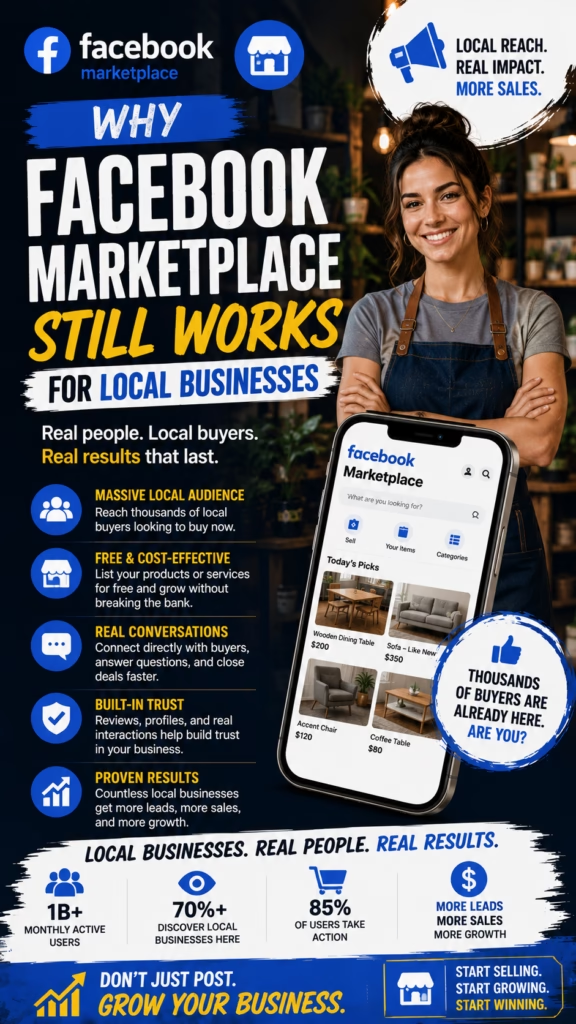
Why Facebook Marketplace Still Works for Local Businesses comes down to local buyer intent, easy messaging, product discovery, service visibility, trust-building listings, and fast follow-up.
Introduction
Why Facebook Marketplace Still Works for Local Businesses is simple: people still use Marketplace when they want to find something nearby, compare options, ask questions, schedule pickup, request delivery, visit a showroom, or contact a local provider. Marketplace works because it connects local intent with direct conversation.
For many businesses, Facebook Marketplace is not just a place to list used items. It can become a local visibility channel for furniture stores, mattress stores, appliance sellers, mobile home dealers, shed dealers, contractors, repair companies, junk removal services, cleaning companies, landscapers, moving companies, and other local sellers.
Facebook Marketplace still works because buyers are already browsing with intent, and businesses that post clearly can turn that attention into messages.
The businesses that win are not just posting more often. They are creating better listings. They use strong titles, real photos, clear pricing, local keywords, trust signals, useful descriptions, simple CTAs, and fast follow-up. That is what turns Marketplace traffic into leads.
Main idea: Facebook Marketplace still works for local businesses when every listing is clear enough to click, trustworthy enough to message, and simple enough to convert.
Table of Contents
- 1) Why Marketplace still has local buyer intent
- 2) How Marketplace helps small businesses compete
- 3) Why local discovery still matters
- 4) Why direct messaging creates fast leads
- 5) Building seller profile trust
- 6) Writing titles that still get clicks
- 7) Using photos that create confidence
- 8) Writing descriptions that generate messages
- 9) Using local keywords naturally
- 10) Pricing listings for better lead quality
- 11) Why Marketplace works for retail stores
- 12) Why Marketplace works for service businesses
- 13) Why Marketplace works for contractors
- 14) Why Marketplace works for high-ticket sellers
- 15) Creating stronger calls to action
- 16) Qualifying Marketplace leads
- 17) Following up faster than competitors
- 18) Tracking Marketplace results
- 19) Common reasons Marketplace does not work
- 20) Final thoughts
- 21) FAQs
- 22) Extra keywords
1) Why Marketplace Still Has Local Buyer Intent
Marketplace still works because many users browse with a purpose. They are looking for products, services, deals, nearby options, pickup availability, delivery, showroom inventory, or local providers. This creates stronger intent than a random social post.
Marketplace buyers may be looking for:
- Furniture
- Mattresses
- Appliances
- Mobile homes
- Sheds
- Local services
- Repair help
- Contractor estimates
- Pickup options
- Delivery options
Marketplace works because buyers often arrive already interested in taking action.
2) How Marketplace Helps Small Businesses Compete
Facebook Marketplace gives local businesses a way to appear next to other nearby options without needing a huge ad budget. A smaller business can compete by showing better photos, clearer details, faster replies, stronger pricing, and a more helpful conversation.
Small business advantages on Marketplace:
Local availability
Fast communication
Real inventory
Pickup and delivery options
Personal service
Flexible scheduling
Better local knowledge
Direct buyer conversations
Simple CTAs
Strong follow-up
Marketplace lets local businesses compete by being easier to find, easier to trust, and easier to message.
3) Why Local Discovery Still Matters
Local discovery matters because many customers want nearby options. They may not want shipping delays, national call centers, or unclear availability. Marketplace makes local browsing feel immediate.
Businesses can use listings to promote what is available now, what can be delivered nearby, what can be picked up today, or what appointments are open this week.
Local discovery can drive:
- Same-day pickup interest
- Delivery questions
- Store visit intent
- Showroom appointments
- Local service inquiries
- Neighborhood-specific leads
- Product comparison messages
- Quote requests
Marketplace keeps local businesses visible where nearby buyers are already browsing.
4) Why Direct Messaging Creates Fast Leads
Direct messaging is one of the biggest reasons Marketplace still works. Buyers do not have to fill out a complicated form. They can ask a quick question, check availability, request delivery, or schedule a visit.
Marketplace messages often include:
Is this available?
Can you deliver?
Where are you located?
Do you have other sizes?
Can I see it today?
How much for installation?
Can I get an estimate?
Can I pick it up this week?
Marketplace turns local visibility into direct conversations faster than many traditional marketing channels.
5) Building Seller Profile Trust
Seller trust matters because buyers often check the profile before messaging. A weak profile can hurt response rates even if the listing is good.
Profile trust checklist:
- Clear profile image or business identity
- Accurate local area
- Consistent seller or business name
- Professional communication style
- Real listing photos
- Clean listing history
- Clear pickup, delivery, or appointment details
- Fast reply behavior
A trustworthy profile makes every Marketplace listing stronger.
6) Writing Titles That Still Get Clicks
Marketplace titles still matter because buyers scan quickly. Specific titles help buyers understand the offer instantly.
Weak title:
Great Deal

Better title:
Queen Mattress Available - Local Delivery Options

Weak title:
Nice Couch

Better title:
Gray Sectional Sofa - Pickup or Delivery Available

Weak title:
Repair Help

Better title:
Washer and Dryer Repair Appointments Available

Weak title:
Home Service

Better title:
Interior Painting Estimate Openings This Week
Clear titles still get clicks because they match what buyers are already searching for.
7) Using Photos That Create Confidence
Photos help buyers decide whether a listing is worth messaging. Real photos build trust faster than vague descriptions alone.
Photos that help Marketplace listings work:
- Real product photos
- Multiple angles
- Close-up details
- Condition photos
- Showroom photos
- Before-and-after service photos
- Service vehicle photos
- Team or technician photos
- Delivery-ready product photos
- Clean branded graphics
Marketplace works better when buyers can see proof before messaging.
8) Writing Descriptions That Generate Messages
The description should answer the buyer’s basic questions and make the next step easy. If the description is too vague, buyers may scroll away.
Marketplace description structure:
Opening benefit
Product or service details
Condition or scope
Size, model, or project details
Price or estimate note
Pickup, delivery, appointment, or store visit option
Local area
Trust signal
What the buyer should message
Simple next step
A strong description turns interest into a message by removing confusion.
9) Using Local Keywords Naturally
Local keywords help buyers understand whether the offer is nearby. Use city names, neighborhoods, service areas, pickup areas, and delivery areas naturally.
Natural local keyword examples:
- Local pickup available
- Delivery available nearby
- Serving local homeowners
- Message with your city for availability
- Showroom visits available locally
- Estimate appointments available this week
Natural local wording helps buyers understand availability without making listings look spammy.
10) Pricing Listings for Better Lead Quality
Pricing affects whether buyers message and whether those messages are useful. Clear pricing helps attract better-fit buyers.
Pricing language examples:
Price listed is firm.
Starting at $99.
Free estimate available.
Delivery available for an additional fee.
Bundle pricing may be available.
Message for current inventory and pricing.
Pricing depends on project size.
Financing options may be available for qualified buyers.
Honest pricing helps Marketplace generate better conversations, not just more messages.
11) Why Marketplace Works for Retail Stores
Retail stores can use Marketplace to promote inventory, clearance items, showroom products, seasonal products, open-box items, and delivery-ready items.
Retail listing ideas:
- Mattress inventory
- Furniture sets
- Appliances
- Dining room sets
- Open-box products
- Clearance items
- Seasonal products
- Delivery-ready inventory
Retailers win when Marketplace listings turn browsing into pickup, delivery, or store visit intent.
12) Why Marketplace Works for Service Businesses
Service businesses can use Marketplace to promote specific needs. The key is to post around one service or problem at a time.
Service listing ideas:
Move-Out Cleaning Appointments
Garage Cleanout and Junk Removal Help
Washer and Dryer Repair Service Calls
Interior Painting Estimate Openings
Fence Repair Estimate Requests
Local Handyman Repair Appointments
Service businesses get better leads when listings solve one clear customer problem.
13) Why Marketplace Works for Contractors
Contractors can use Marketplace to create estimate requests with project-specific listings. Photos, proof, and clear CTAs matter.
Contractor listing ideas:
- Interior painting estimates
- Fence repair and installation
- Deck repair consultations
- Drywall patch and repair
- Flooring installation estimates
- Bathroom update appointments
- Small remodel consultations
- Seasonal home improvement openings
Contractor listings work when they make requesting an estimate feel easy.
14) Why Marketplace Works for High-Ticket Sellers
High-ticket sellers need more detail and trust. Marketplace can work for mobile homes, sheds, premium furniture, appliances, equipment, and similar products when listings are detailed and credible.
High-ticket trust elements:
- Real photos
- Clear specifications
- Model or size information
- Location or showroom details
- Appointment or tour option
- Delivery or setup information
- Financing language if accurate
- Simple qualification questions
High-ticket Marketplace listings need strong trust before buyers feel ready to message.
15) Creating Stronger Calls to Action
A strong CTA tells buyers what to send and what happens next. This increases response quality and helps the conversation move faster.
Marketplace CTA examples:
- Message with your city for pickup or delivery options.
- Ask about current availability before visiting.
- Message with your preferred size or model.
- Send your budget and what you are looking for.
- Ask about similar items in stock.
- Send a quick photo for a faster estimate.
- Reply with your preferred appointment time.
- Message before visiting to confirm availability.
Clear CTAs turn Marketplace attention into usable leads.
16) Qualifying Marketplace Leads
Lead qualification helps businesses save time. Listings should tell buyers what details to include so the first reply can move the conversation forward.
Ask leads to include:
- City or neighborhood
- Product or service needed
- Size or model preference
- Pickup or delivery preference
- Budget range if relevant
- Timeline
- Photos if useful
- Preferred appointment time
- Best contact method
- Whether they want similar options
Qualified Marketplace messages are easier to turn into customers.
17) Following Up Faster Than Competitors
Marketplace buyers often message multiple sellers. Fast, helpful replies can win the conversation before competitors respond.
Simple Marketplace follow-up script:
Thanks for reaching out. Are you looking for pickup, delivery, an estimate, or similar options? Also, what city are you located in?
Marketplace still works because fast follow-up can turn casual messages into real sales opportunities.
18) Tracking Marketplace Results
Tracking helps businesses understand what works. Do not only track views. Track useful conversations, qualified leads, appointments, estimates, sales, and visits.
Track these Marketplace results:
- Listing views
- Messages
- Qualified leads
- Pickup requests
- Delivery requests
- Store visits
- Appointment requests
- Estimate leads
- Product holds
- Completed sales
Marketplace works better when businesses improve based on real buyer response.
19) Common Reasons Marketplace Does Not Work
Marketplace often fails when businesses post vague, duplicate-looking, low-trust listings and then respond slowly. The platform may still work, but the strategy does not.
Common mistakes include:
- Generic titles
- Blurry photos
- No price clarity
- No pickup details
- No delivery explanation
- No product dimensions
- No condition details
- No clear CTA
- Slow replies
- Duplicate-looking posts
Marketplace struggles when listings create confusion instead of confidence.
20) Final Thoughts
Why Facebook Marketplace Still Works for Local Businesses comes down to local intent, direct messaging, trust, and convenience. Buyers still use Marketplace to find nearby products, compare options, ask questions, request delivery, schedule visits, and contact local providers.
The strongest strategy includes clear titles, real photos, useful descriptions, local keywords, honest pricing, pickup and delivery clarity, strong CTAs, lead qualification, fast follow-up, testing, and tracking.
Final takeaway: Facebook Marketplace still works when businesses use it as a serious local lead channel, not a random posting board.
21) FAQs
1) Why does Facebook Marketplace still work for local businesses?
It works because local buyers still use Marketplace to search for products, services, pickup options, delivery, store visits, and nearby sellers.
2) Can businesses still get leads from Facebook Marketplace?
Yes. Businesses can get leads when listings are clear, local, trustworthy, and easy to message.
3) What businesses can use Facebook Marketplace?
Retail stores, furniture sellers, mattress stores, appliance companies, contractors, home services, repair companies, dealers, and product sellers can use it.
4) What makes Marketplace listings work?
Specific titles, real photos, clear descriptions, honest pricing, local details, trust signals, and strong CTAs help listings work.
5) Does Marketplace work without paid ads?
Yes. Organic Marketplace posting can generate messages when listings match buyer intent.
6) Are photos important?
Yes. Clear real photos help buyers trust the listing and decide whether to message.
7) Should businesses include pricing?
Yes, when possible. If pricing varies, use honest estimate or starting-price language.
8) What is a good Marketplace CTA?
Ask buyers to message with city, product interest, pickup or delivery preference, budget, timeline, or appointment interest.
9) How do businesses improve lead quality?
Ask buyers to include location, size, model, photos, timeline, and preferred next step.
10) How fast should businesses reply?
As quickly as possible because buyers often message multiple sellers.
11) Can retail stores use Marketplace?
Yes. Retailers can promote inventory, clearance items, showroom products, pickup options, and delivery.
12) Can contractors use Marketplace?
Yes. Contractors can create project-specific listings that generate estimate requests.
13) Can home services use Marketplace?
Yes. Home services can create listings for cleaning, repairs, painting, junk removal, landscaping, and handyman work.
14) Can high-ticket sellers use Marketplace?
Yes. High-ticket sellers need strong photos, detailed descriptions, trust signals, and clear inquiry CTAs.
15) Should businesses use local keywords?
Yes. Local keywords help buyers understand where pickup, delivery, service, or appointments are available.
16) Why do listings get views but no messages?
The listing may lack trust, photos, clear pricing, local details, or a simple next step.
17) Why do messages not turn into sales?
The leads may be unqualified, or the follow-up may not move buyers toward pickup, delivery, visit, estimate, or sale.
18) Should every listing be unique?
Yes. Unique listings usually perform better than copied or duplicate-looking posts.
19) Can Marketplace reduce paid ad costs?
It can create organic buyer conversations that may reduce reliance on paid campaigns over time.
20) What should businesses track?
Track views, messages, qualified leads, pickup requests, delivery requests, appointments, store visits, estimates, and sales.
21) What makes a seller profile trustworthy?
A clear profile image, accurate local area, consistent identity, real listings, professional replies, and fast response behavior build trust.
22) What should businesses avoid?
Avoid vague titles, blurry photos, fake pricing, no logistics, no CTA, duplicate-looking posts, and slow replies.
23) Is Marketplace good for service businesses?
Yes. Service businesses can use Marketplace to promote specific services and generate local appointment or estimate requests.
24) What is the biggest Marketplace mistake?
The biggest mistake is treating Marketplace like a random posting board instead of a local lead system.
25) What is the best Marketplace tip for local businesses?
Make every listing clear, local, trustworthy, and easy to message.
25) Extra Keywords
- Why Facebook Marketplace Still Works for Local Businesses
- Facebook Marketplace marketing
- Facebook Marketplace local leads
- Marketplace business growth
- local Marketplace marketing
- Facebook Marketplace posting
- Facebook Marketplace lead generation
- Facebook Marketplace organic growth
- Facebook Marketplace business leads
- Facebook Marketplace listing optimization
- Facebook Marketplace product listings
- Facebook Marketplace service listings
- Facebook Marketplace retail leads
- Facebook Marketplace contractor leads
- Facebook Marketplace home service leads
- Facebook Marketplace appointment leads
- Facebook Marketplace pickup leads
- Facebook Marketplace delivery leads
- Facebook Marketplace quote requests
- Facebook Marketplace customer acquisition
- Facebook Marketplace response strategy
- Facebook Marketplace sales leads
- Facebook Marketplace business visibility
- local business Marketplace strategy
- Facebook Marketplace marketing tips