

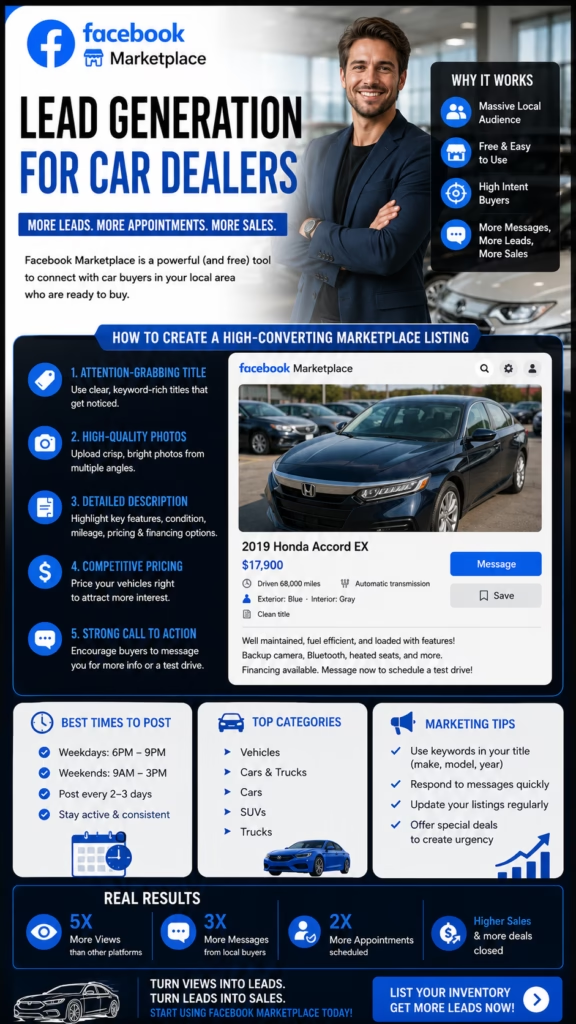
Facebook Marketplace Lead Generation for Car Dealers
Facebook Marketplace Lead Generation for Car Dealers explains how auto dealers can create stronger vehicle listings, attract qualified buyers, promote used car inventory, answer price and payment questions, build trust, schedule test drives, and track Marketplace leads from first message to sale.
Introduction
Facebook Marketplace Lead Generation for Car Dealers can help dealerships turn local vehicle searches into real buyer conversations. Many buyers browse Facebook Marketplace when they are looking for used cars, trucks, SUVs, work vehicles, first cars, family vehicles, affordable transportation, or specific makes and models.
Marketplace is visual, local, and message-driven. That makes it a strong fit for car dealers with inventory to promote. A clean listing can show exterior photos, interior photos, mileage, price, year, make, model, trim, condition, financing options if available, dealership location, and the next step for a test drive.
Facebook Marketplace lead generation works best for car dealers when every vehicle listing is clear, visual, trustworthy, and connected to fast buyer follow-up.
Dealers should not treat Marketplace like a random posting board. Each vehicle should have a strong title, full photo set, accurate description, pricing clarity, buyer qualification questions, and a lead tracking process. The goal is not just more messages. The goal is better buyer conversations that can become calls, appointments, test drives, applications, and sales.
Main idea: Facebook Marketplace Lead Generation for Car Dealers should focus on better vehicle presentation, clear buyer details, fast replies, and measurable sales follow-up.
Table of Contents
- 1) Why Facebook Marketplace works for car dealers
- 2) What car buyer leads look like
- 3) How buyers choose which vehicle listing to message
- 4) Building a Marketplace strategy for dealerships
- 5) Writing vehicle listing titles that get clicks
- 6) Creating buyer-focused vehicle descriptions
- 7) Photos that generate more car buyer interest
- 8) Local keywords for car dealer listings
- 9) Trust signals for auto dealers
- 10) Highlighting features, condition, and value
- 11) Price, payment, and financing language
- 12) Trade-in and test-drive lead strategy
- 13) Follow-up that books appointments
- 14) Posting rotation for vehicle inventory
- 15) Reducing low-quality buyer messages
- 16) Tracking Marketplace car dealer leads
- 17) Common mistakes car dealers make
- 18) Final thoughts
- 19) FAQs
- 20) Extra keywords
1) Why Facebook Marketplace Works for Car Dealers
Facebook Marketplace works for car dealers because buyers are already browsing visually and locally. A buyer can quickly compare vehicles by price, mileage, condition, location, photos, year, make, model, and seller credibility. This creates an opportunity for dealerships that present inventory professionally.
Marketplace can help dealers generate:
- Vehicle availability questions
- Price inquiries
- Payment questions
- Financing questions
- Trade-in questions
- Test-drive requests
- Phone call requests
- Appointment bookings
- Credit application interest
- Walk-in showroom visits
2) What Car Buyer Leads Look Like
Car buyer leads usually start with practical questions. A buyer may ask if the vehicle is still available, whether the price is firm, what the mileage is, whether financing is available, whether trades are accepted, or when they can come see it.
Strong buyer lead signals:
Asks to schedule a test drive
Asks if financing is available
Mentions down payment
Asks about trade-ins
Shares current vehicle
Asks for dealership location
Requests a phone call
Asks about mileage
Asks about vehicle history
Wants to come in today or this week
3) How Buyers Choose Which Vehicle Listing to Message
Buyers usually make quick decisions based on the main photo, price, mileage, condition, year, make, model, trim, location, and seller trust. If the listing looks incomplete, vague, or suspicious, buyers may keep scrolling. If it looks clean and detailed, they are more likely to message.
Buyers usually evaluate:
- Main vehicle photo
- Price
- Mileage
- Year, make, and model
- Trim level
- Interior condition
- Exterior condition
- Vehicle features
- Dealer credibility
- Response speed
4) Building a Marketplace Strategy for Dealerships
A strong dealership strategy treats each vehicle listing like its own landing page. Each car, truck, or SUV should have unique photos, a specific title, accurate details, and a clear call-to-action.
Dealer Marketplace strategy:
One listing per vehicle
Unique title per vehicle
Full photo set
Clear price
Mileage included
Year, make, model, trim
Feature highlights
Financing CTA if available
Trade-in CTA if accepted
Appointment tracking
5) Writing Vehicle Listing Titles That Get Clicks
The title should tell the buyer exactly what the vehicle is. Include year, make, model, trim, mileage, price angle, condition, or buyer benefit when useful.
Title examples:
2018 Toyota Camry SE - Clean Sedan Available
2020 Ford F-150 XLT - Financing Options Available
2019 Honda CR-V EX - Low Miles, Test Drive Ready
2017 Chevy Silverado 1500 - Work Truck Available
2021 Nissan Altima SV - Local Dealer Inventory
6) Creating Buyer-Focused Vehicle Descriptions
A buyer-focused description should answer the most common questions before the buyer messages. Include vehicle specs, condition, features, price, dealership location, financing or trade-in options if available, and next step.
A strong vehicle description should include:
- Year, make, and model
- Trim level
- Mileage
- Price
- Engine or drivetrain if useful
- Key features
- Condition notes
- Financing options if available
- Trade-in info if accepted
- Test-drive CTA
7) Photos That Generate More Car Buyer Interest
Photos are one of the biggest drivers of Marketplace vehicle leads. Buyers want to see the actual vehicle from multiple angles before they ask questions. A listing with weak photos can lose trust quickly.
Recommended vehicle photos:
Front exterior
Rear exterior
Driver side
Passenger side
Front seats
Back seats
Dashboard
Odometer
Center console
Trunk or cargo area
Tires and wheels
Engine bay
Key features
Any condition details
8) Local Keywords for Car Dealer Listings
Local keywords help buyers understand where the vehicle is located and whether the dealership is close enough to visit. Use city names, nearby towns, dealer location terms, and buyer-friendly search phrases naturally.
Useful local keywords include:
- Used car in [City]
- Car dealer in [City]
- Used truck near [City]
- SUV for sale in [City]
- Local auto dealer
- Financing available if offered
- Trade-ins accepted if applicable
- Test drive available
- Used vehicle inventory
- Affordable car near [Area]
9) Trust Signals for Auto Dealers
Trust matters because buying a vehicle is a major decision. Marketplace listings should make the dealership feel real, local, and professional.
Trust signals:
Dealership name
Phone number
Website
Lot address
Real vehicle photos
Accurate price
Clear mileage
Vehicle history mention if available
Financing process
Trade-in process
Professional replies
Appointment confirmation
10) Highlighting Features, Condition, and Value
Feature highlights help buyers compare vehicles quickly. Instead of writing a vague description, list the features that matter most to the buyer.
Features worth highlighting:
- Backup camera
- Bluetooth
- Apple CarPlay or Android Auto
- Leather seats
- Heated seats
- Third-row seating
- All-wheel drive or 4x4
- Clean interior
- Good tires
- Recent service if applicable
11) Price, Payment, and Financing Language
Buyers often ask about down payments, monthly payments, financing, credit approval, taxes, fees, and trade-ins. Listings should be clear without overpromising.
Pricing details to clarify:
Vehicle price
Down payment language if applicable
Financing availability if offered
Trade-in options if accepted
Tax and fee disclaimer if needed
Cash price if different
Application process
Monthly payment estimates if compliant
Appointment availability
Dealer contact method
12) Trade-In and Test-Drive Lead Strategy
Trade-ins and test drives can turn Marketplace messages into real dealership opportunities. Dealers should make these next steps easy to understand.
Strong next-step CTAs:
- Message to confirm availability
- Ask about financing
- Ask about trade-in options
- Schedule a test drive
- Call for appointment times
- Send your current vehicle details
- Ask for the dealership address
- Request more photos
- Ask about payment options
- Come see it today if available
13) Follow-Up That Books Appointments
Fast follow-up is critical. Buyers may message several listings at once. The dealer that replies quickly and clearly has a better chance of booking the appointment.
Follow-up script:
Thanks for reaching out. Yes, this vehicle is currently available. It is a [year/make/model] with [mileage] miles, listed at [price]. Are you looking to schedule a test drive, ask about financing, or get trade-in details? I can help with the next step.
14) Posting Rotation for Vehicle Inventory
Posting rotation helps dealers promote different vehicles, buyer needs, price ranges, and inventory categories. A dealer can rotate sedans, trucks, SUVs, family vehicles, work vehicles, low-mile vehicles, budget cars, and financing-friendly options.
Posting rotation angles:
- Affordable sedan
- Family SUV
- Work truck
- Low-mile vehicle
- Fuel-efficient car
- Financing option listing
- Trade-in friendly listing
- New arrival
- Weekend test drive
- Featured inventory
15) Reducing Low-Quality Buyer Messages
Low-quality messages often happen when listings are missing price, mileage, location, photos, or financing details. Strong listings answer common buyer questions upfront.
Ask buyers to send:
Name
Phone number
Vehicle of interest
Budget range
Financing or cash question
Trade-in details
Desired test-drive time
Current vehicle details
Down payment range if relevant
Best time to call
16) Tracking Marketplace Car Dealer Leads
Tracking helps dealers understand which vehicles and listing angles generate the best leads. Track messages, calls, appointments, test drives, applications, approvals, and sold vehicles.
Track these metrics:
- Listing title
- Stock number
- Vehicle price
- Messages received
- Qualified leads
- Calls booked
- Test drives scheduled
- Credit applications started
- Approvals
- Vehicles sold
17) Common Mistakes Car Dealers Make
Many dealers struggle on Marketplace because listings are incomplete or too generic. They may use poor photos, vague descriptions, missing mileage, unclear price, slow replies, or no lead tracking.
Common mistakes:
No clear price
Poor vehicle photos
Missing mileage
Missing trim details
No dealership location
No financing CTA
No trade-in CTA
No test-drive CTA
Slow replies
No CRM or lead tracking
Marketplace fails when vehicle listings create interest but do not guide buyers toward an appointment.
18) Final Thoughts
Facebook Marketplace Lead Generation for Car Dealers is about creating vehicle listings that are easy to understand, easy to compare, and easy to inquire about. Strong photos, clear titles, honest details, pricing clarity, trust signals, and fast follow-up can turn Marketplace into a reliable dealership lead source.
Final takeaway: Car dealers can generate better Facebook Marketplace leads when listings are visual, specific, local, trustworthy, and connected to a fast appointment follow-up process.
19) FAQs
1) What is Facebook Marketplace lead generation for car dealers?
It is the process of using Marketplace vehicle listings to attract buyer messages, qualify leads, schedule test drives, and generate vehicle sales opportunities.
2) Can car dealers get leads from Facebook Marketplace?
Yes. Dealers can get leads when listings include strong photos, clear prices, mileage, location, and fast follow-up.
3) What should a vehicle listing include?
Include year, make, model, trim, mileage, price, photos, features, condition notes, dealership location, and appointment CTA.
4) What photos work best?
Exterior angles, interior seats, dashboard, odometer, wheels, trunk, engine bay, and feature photos work well.
5) Should dealers list the price?
Yes. Clear pricing helps buyers self-qualify before messaging.
6) Should mileage be included?
Yes. Mileage is one of the most important details buyers compare.
7) Should financing be mentioned?
Yes, if financing is available. Keep wording accurate and compliant.
8) What makes a strong title?
A strong title includes year, make, model, trim, and a key buyer benefit.
9) How fast should dealers reply?
As fast as possible. Buyers often message multiple listings.
10) How do dealers book more test drives?
Reply quickly, confirm availability, answer questions, and offer a clear test-drive time.
11) Should each vehicle have its own listing?
Yes. Each vehicle should have its own listing with unique photos and details.
12) Should listings mention trade-ins?
Yes, if trade-ins are accepted. Trade-in language can help start buyer conversations.
13) Can Marketplace help sell used trucks?
Yes. Trucks can perform well when towing, work, 4x4, mileage, and condition details are clear.
14) Can Marketplace help sell budget cars?
Yes. Budget-friendly vehicles can attract strong interest when price and condition are clear.
15) What trust signals should dealers include?
Dealership name, phone number, website, lot address, real photos, vehicle details, and professional replies help build trust.
16) What should the first reply say?
Confirm availability, summarize the vehicle, ask whether the buyer wants financing, trade-in info, or a test drive.
17) How do dealers reduce low-quality leads?
Include price, mileage, location, photos, financing details, and buyer qualification questions.
18) Should dealers track leads?
Yes. Track messages, calls, appointments, test drives, applications, approvals, and sales.
19) What is posting rotation?
Posting rotation means promoting different vehicles and listing angles to test what creates the best leads.
20) What are common Marketplace mistakes?
Weak photos, vague descriptions, missing price, missing mileage, slow replies, and no tracking are common mistakes.
21) Should dealers mention vehicle features?
Yes. Features like backup camera, Bluetooth, 4x4, heated seats, and third-row seating can increase interest.
22) Should dealers mention vehicle history?
Yes, if accurate and available. Vehicle history can help build buyer trust.
23) Can Marketplace replace a dealership website?
No. Marketplace should support the broader sales system, including a website, Google profile, phone follow-up, and CRM tracking.
24) What is the main goal of Marketplace lead generation?
The main goal is to turn local listing views into qualified buyer messages, calls, test drives, applications, and vehicle sales.
25) What is the best strategy for car dealers?
Use strong photos, clear pricing, unique listings, local keywords, trust signals, fast replies, and consistent lead tracking.
20) Extra Keywords
- Facebook Marketplace Lead Generation for Car Dealers
- car dealer Facebook Marketplace leads
- auto dealer lead generation
- Facebook Marketplace car sales
- used car dealer marketing
- vehicle listing strategy
- car dealer Marketplace strategy
- used car leads
- auto dealership leads
- Facebook Marketplace vehicle listings
- car buyer leads
- test drive leads
- dealership inventory marketing
- auto sales lead generation
- used truck leads
- car dealership advertising
- Facebook Marketplace auto leads
- vehicle appointment leads
- dealer financing leads
- trade-in leads
- car dealer follow-up
- used vehicle marketing
- auto dealer listing photos
- sell cars on Facebook Marketplace
- car sales Marketplace marketing













