

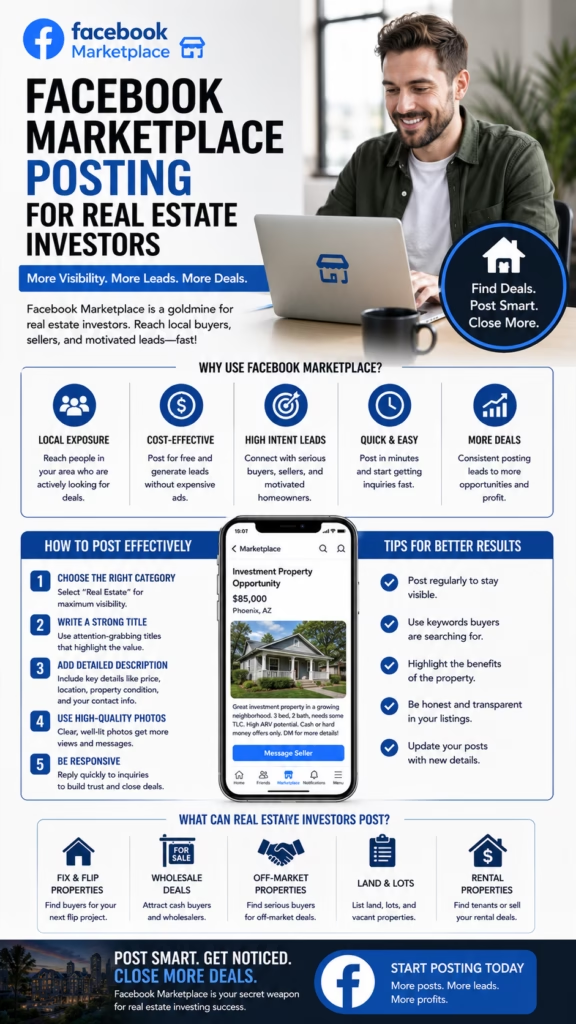
Facebook Marketplace Posting for Real Estate Investors
Facebook Marketplace Posting for Real Estate Investors explains how investors can use Marketplace listings, local property keywords, buyer posts, seller lead angles, land deal promotions, trust signals, Messenger follow-up, and lead tracking to create more real estate conversations.
Introduction
Facebook Marketplace Posting for Real Estate Investors can be a practical way to generate local property conversations, buyer inquiries, seller leads, land interest, rental leads, and cash buyer responses. Marketplace is built around local discovery, which makes it useful for investors who need to connect with people in specific cities, counties, and neighborhoods.
Real estate investors can use Marketplace in several ways. Some may post available properties, land deals, owner-financing opportunities, rental listings, lease options, or investment-friendly property alerts. Others may use Marketplace-style posts to attract motivated sellers, cash buyers, local landlords, contractors, or people looking for flexible property options.
Facebook Marketplace posting works for real estate investors when listings are clear, local, compliant, trustworthy, and built to start qualified conversations.
Marketplace should not be treated like random posting. Real estate investors need a strategy. Each listing should focus on one audience and one goal. A land buyer post should not sound like a rental post. A seller lead post should not sound like a cash buyer post. A property listing should not be vague about location, price, terms, or next step.
The strongest Marketplace strategy for investors uses clear titles, accurate property details, strong photos, local keywords, transparent terms, trust signals, fast Messenger follow-up, lead tracking, and consistent posting rotation.
Main idea: Facebook Marketplace Posting for Real Estate Investors is about turning local visibility into seller conversations, buyer inquiries, property leads, and investment opportunities.
Table of Contents
- 1) Why Facebook Marketplace can work for real estate investors
- 2) What real estate leads look like on Marketplace
- 3) How buyers and sellers decide who to message
- 4) Building a Marketplace strategy for investors
- 5) Writing real estate listing titles that get clicks
- 6) Creating descriptions that qualify leads
- 7) Local property keywords for Marketplace
- 8) Trust signals for real estate investors
- 9) Seller lead posting strategy
- 10) Buyer lead posting strategy
- 11) Land investor posting strategy
- 12) Owner-financing and flexible terms strategy
- 13) Rental and lease-option posting strategy
- 14) Cash buyer and investor list strategy
- 15) Posting rotation for real estate investors
- 16) Reducing low-quality property inquiries
- 17) Messenger follow-up for property leads
- 18) Tracking Marketplace real estate leads
- 19) Common Marketplace mistakes investors make
- 20) Final thoughts
- 21) FAQs
- 22) Extra keywords
1) Why Facebook Marketplace Can Work for Real Estate Investors
Facebook Marketplace can work for real estate investors because it is local, visual, and conversation-driven. People browse Marketplace for homes, land, rentals, furniture, moving needs, local deals, and property-related opportunities. This creates a natural environment for real estate investors to reach people thinking about housing, land, relocation, downsizing, or investing.
Marketplace also makes it easy for people to ask questions. A potential buyer can message about price, location, terms, acreage, utilities, financing, closing process, or property access. A potential seller can ask whether the investor buys houses, land, inherited property, or distressed homes.
Marketplace can help real estate investors generate:
- Seller leads
- Buyer inquiries
- Land buyer leads
- Owner-financing inquiries
- Rental leads
- Lease-option leads
- Cash buyer responses
- Investor networking leads
- Property showing requests
- Local property conversations
Marketplace gives real estate investors a local channel for creating conversations around property needs and opportunities.
2) What Real Estate Leads Look Like on Marketplace
Real estate leads on Marketplace can look different depending on the strategy. A buyer lead may ask about price, location, terms, bedrooms, acreage, utilities, or availability. A seller lead may ask whether the investor buys homes quickly, buys land, buys inherited property, or can close without repairs.
The best leads include useful details. A buyer should provide location interest, budget, timeline, and financing needs. A seller should provide property address or area, condition, ownership situation, timeline, and asking price if available.
Strong real estate lead signals:
Asks about price or terms
Mentions a specific property
Provides city or county
Asks about owner financing
Requests property details
Wants to schedule a showing
Shares seller timeline
Mentions inherited property
Asks about selling as-is
Requests a call
Asks about closing process
Shows clear buyer or seller intent
A better Marketplace real estate lead has a real property need, a clear location, and a willingness to take the next step.
3) How Buyers and Sellers Decide Who to Message
Buyers and sellers usually decide quickly. They look at the title, photo, price, location, terms, description, profile credibility, and response speed. If the listing feels vague or risky, they may skip it. If it feels clear and trustworthy, they may start a conversation.
Real estate is a high-trust category. People want to know they are dealing with a real person or company. The listing should make the investor look professional, transparent, and easy to contact.
People usually evaluate:
- Property location
- Price or terms
- Photos
- Description clarity
- Investor credibility
- Availability
- Financing or cash terms
- Next step
- Response speed
- Trust and transparency
The easier the listing is to understand, the more likely a serious buyer or seller is to message.
4) Building a Marketplace Strategy for Investors
A real estate investor should begin with a clear goal. The goal may be to find motivated sellers, sell land, build a cash buyer list, promote owner-financing deals, generate rental interest, attract landlord leads, or test demand in a new market.
Each goal requires a different type of post. A seller lead post should focus on solving seller problems. A buyer lead post should highlight the property opportunity. A land post should explain acreage, access, county, price, and terms. A cash buyer post should invite investors to request deal alerts.
Investor Marketplace strategy:
Define the lead type
Choose the city or county
Write a clear title
Use accurate property details
Add local keywords
Use strong photos
Explain price or terms
Add trust signals
Create a simple CTA
Track every lead source
Marketplace posting becomes stronger when each real estate post has one audience, one offer, and one next step.
5) Writing Real Estate Listing Titles That Get Clicks
The title should clearly describe the property or opportunity. Vague titles like “great deal available” are weak. Strong titles include the property type, location, size, terms, or buyer benefit.
Titles should be honest and specific. Real estate investors should avoid misleading claims. The goal is to attract qualified interest, not random clicks.
Weak title:
Great Property Deal

Better title:
5 Acres for Sale - Owner Financing Available

Weak title:
House Available

Better title:
Fixer-Upper Property Opportunity in [City]

Weak title:
Land Deal

Better title:
Rural Land Near [County] - Flexible Terms Available

Weak title:
Cash Buyers Needed

Better title:
Local Investor Deal Alerts - Message for Property List
Specific real estate titles help buyers and sellers understand the opportunity before clicking.
6) Creating Descriptions That Qualify Leads
A strong real estate Marketplace description should answer the obvious questions and help qualify the lead. Buyers want to know location, price, terms, property size, access, utilities, condition, restrictions, and next steps. Sellers want to know what type of properties the investor buys and how the process works.
The description should be clear, accurate, and transparent. If details are unknown, the listing should not pretend otherwise. Trust is more valuable than hype.
A strong real estate description should include:
- Property type or lead type
- City, county, or general location
- Price or terms when applicable
- Size or property details
- Access and utilities when known
- Condition or opportunity type
- Who the listing is for
- Trust signals
- What details to message
- Clear next step
Descriptions qualify leads when they provide enough detail for serious people to self-identify.
7) Local Property Keywords for Marketplace
Local keywords help Marketplace listings reach people interested in a specific city, county, neighborhood, or property type. Real estate investors should use location terms naturally and accurately.
Keywords may include city names, counties, acreage, land terms, seller terms, buyer terms, financing terms, and property types. The goal is to make the listing more relevant without sounding spammy.
Local real estate keyword examples:
Land for sale in [County]
Owner financing available
Cash buyer property alerts
Investment property in [City]
Fixer-upper opportunity
Rural acreage
Vacant land
As-is property buyer
Sell my house fast
Sell land in [State]
Rental property available
Local real estate investor
Local keywords help Marketplace posts connect with people interested in the exact property area or opportunity type.
8) Trust Signals for Real Estate Investors
Trust is critical in real estate. Buyers and sellers want to know they are not wasting time or dealing with someone unreliable. A Marketplace listing should include enough credibility to make the conversation feel safe and professional.
Trust signals can include company name, website, phone number, business page, past project examples, clear process, transparent terms, local market experience, and professional communication.
Trust signals for investor posts:
- Business or investor name
- Website link
- Local phone number
- Business page
- Clear buying or selling process
- Transparent property details
- Proof of past deals when appropriate
- Professional photos
- Clear terms
- Fast response process
Trust signals help real estate investors turn Marketplace views into serious conversations.
9) Seller Lead Posting Strategy
Seller lead posts should focus on problems a property owner may want to solve. A seller may have inherited property, vacant land, a fixer-upper, rental headaches, code issues, tax concerns, unwanted property, or a home that needs repairs.
Seller posts should be respectful and transparent. They should avoid manipulative pressure and focus on offering a simple way to discuss options.
Seller lead post angles:
We buy houses as-is
Sell inherited property
Sell vacant land
Sell fixer-upper property
Tired landlord property buyer
Sell unwanted property
Cash offer conversation
Fast closing option
No-repair sale option
Local investor buying in [City]
Seller lead posts work best when they speak to real property problems and offer a clear conversation, not pressure.
10) Buyer Lead Posting Strategy
Buyer lead posts should promote available properties, upcoming deals, land opportunities, owner-financing options, rental listings, or investment alerts. The listing should explain what type of buyer is a good fit.
A buyer post should include price, location, property details, terms, and how to request more information. If the goal is to build a buyer list, the post should invite people to message with their buying criteria.
Buyer lead post ideas:
- Land for sale
- Owner-financed property
- Fixer-upper opportunity
- Rental property available
- Investor deal alerts
- Cash buyer list invitation
- Affordable acreage
- Off-market property alert
- Buildable lot opportunity
- Message for current property list
Buyer lead posts should make the property opportunity clear and easy to request.
11) Land Investor Posting Strategy
Land investors can use Marketplace to promote rural acreage, recreational land, buildable lots, owner-financed parcels, hunting land, off-grid property, timber land, and affordable vacant lots. Land posts should include specific details because buyers often need more information before they respond.
Important land details may include acreage, county, access, road frontage, utilities, zoning, terrain, GPS coordinates, financing terms, nearby towns, and whether owner financing is available.
Land post details:
Acreage
County
Nearby town
Price
Owner financing terms
Road access
Utilities if known
GPS coordinates if appropriate
Terrain
Use case
Restrictions if known
Contact next step
Land listings perform better when they include enough detail for serious buyers to evaluate the opportunity.
12) Owner-Financing and Flexible Terms Strategy
Owner-financing posts can attract buyers who want property but may not qualify for traditional financing or want a simpler purchase path. These posts should explain terms clearly and avoid vague promises.
Investors should include down payment, monthly payment, price, property details, and any important conditions when appropriate. Transparency helps reduce low-quality inquiries.
Owner-financing post elements:
- Property location
- Purchase price
- Down payment
- Monthly payment
- Term length if available
- Property size
- Access details
- Buyer qualifications if any
- Clear next step
- Professional disclosure language
Flexible terms posts should be clear enough to attract serious buyers and reduce confusion.
13) Rental and Lease-Option Posting Strategy
Real estate investors with rentals or lease-option opportunities can use Marketplace to generate tenant or buyer interest. These posts should include location, monthly rent or payment, deposit requirements, property details, availability, application process, and screening expectations.
Rental posts should be accurate and fair. Clear details reduce repetitive questions and help prospects decide whether the property fits their needs.
Rental or lease-option post details:
City or neighborhood
Monthly payment
Deposit
Bedrooms and bathrooms
Pet policy if applicable
Move-in availability
Application process
Property features
Utilities responsibility
Showing instructions
Contact next step
Rental and lease-option posts work best when the listing is specific, transparent, and easy to act on.
14) Cash Buyer and Investor List Strategy
Marketplace can also help investors build a cash buyer or investor list. Instead of promoting only one property, an investor can post about local deal alerts, land opportunities, fixer-upper leads, or off-market property updates.
The post should ask interested buyers to message with their criteria, preferred area, budget, property type, and timeline.
Cash buyer list questions:
- What city or county are you buying in?
- What property type do you want?
- What is your budget range?
- Are you looking for land, rentals, or flips?
- Do you prefer owner financing?
- How soon are you looking to buy?
- Are you a cash buyer?
- Do you want deal alerts?
- What price range works best?
- What property features matter most?
Cash buyer posts help investors build a list of people who want future property opportunities.
15) Posting Rotation for Real Estate Investors
Posting rotation helps investors test different angles without relying on one generic real estate post. A strong rotation might include seller lead posts, land listings, buyer alerts, owner-financing posts, rental posts, cash buyer list posts, and city-specific opportunities.
Rotation also helps investors discover which markets, property types, terms, and headlines generate the best conversations.
Investor posting rotation:
Seller lead post
Land deal post
Owner-financing post
Fixer-upper buyer post
Rental listing
Lease-option post
Cash buyer list post
City-specific property post
County-specific land post
Investment alert post
Motivated seller post
Deal criteria post
Posting rotation helps investors identify which Marketplace angles produce the strongest real estate leads.
16) Reducing Low-Quality Property Inquiries
Low-quality inquiries often happen when property posts are missing key details. If price, location, terms, access, property condition, or next steps are unclear, people may ask vague questions or respond without real intent.
Investors can improve lead quality by asking buyers and sellers to provide useful information before the conversation continues.
Ask buyer leads to send:
- Preferred city or county
- Budget range
- Property type
- Cash or financing preference
- Timeline
Ask seller leads to send:
- Property city or county
- Property type
- General condition
- Asking price if available
- Desired timeline
Better real estate posts qualify leads by asking for the details needed to evaluate the opportunity.
17) Messenger Follow-Up for Property Leads
Messenger follow-up is critical because property leads can go cold quickly. A buyer may be comparing multiple listings. A seller may be talking with multiple investors. The response should be fast, clear, and professional.
A strong follow-up should confirm the person’s interest, ask qualifying questions, provide the next step, and move the conversation toward a call, showing, buyer list, offer review, or property details request.
Real estate Messenger flow:
Reply quickly
Confirm buyer or seller interest
Ask for property or buying details
Clarify location
Clarify budget or asking price
Confirm timeline
Send next-step instructions
Move to phone call when appropriate
Log the lead source
Follow up if they go quiet
Marketplace real estate leads convert better when Messenger follow-up is fast, organized, and focused on next steps.
18) Tracking Marketplace Real Estate Leads
Tracking helps investors know which posts generate real opportunities. Without tracking, it is easy to confuse message volume with lead quality. A post may get many messages but few serious buyers or sellers.
Investors should track post title, lead type, market, property type, messages, qualified leads, calls, showings, contracts, closings, and revenue when applicable.
Track these Marketplace real estate metrics:
- Post title
- Lead type
- City or county
- Property type
- Offer angle
- Date posted
- Messages received
- Qualified leads
- Calls booked
- Showings or property reviews
- Contracts created
- Closed deals
The best investor Marketplace strategy tracks qualified opportunities, not just inbox activity.
19) Common Marketplace Mistakes Investors Make
Many investors struggle on Marketplace because their posts are vague, too promotional, missing property details, or unclear about the next step. Some posts focus on hype instead of trust. Others fail to explain price, location, terms, or buyer requirements.
Real estate investors should keep posts clear, accurate, compliant, and transparent. The goal is to build trust and start serious conversations.
Common mistakes:
Vague property titles
Missing location details
No price or terms
Weak photos
No trust signals
No clear next step
Overly promotional wording
No lead qualification questions
Slow Messenger replies
No posting rotation
No tracking
No follow-up process
Marketplace fails for investors when posts create attention but do not create qualified real estate conversations.
20) Final Thoughts
Facebook Marketplace Posting for Real Estate Investors can help investors generate seller leads, buyer leads, land inquiries, owner-financing conversations, rental interest, and cash buyer responses. The key is creating posts that are specific, local, trustworthy, transparent, and easy to respond to.
The strongest strategy uses accurate property details, strong titles, local keywords, clear terms, real photos, trust signals, Messenger follow-up, posting rotation, and lead tracking. Marketplace is not the only real estate marketing channel, but it can be a useful part of a broader acquisition and disposition system.
Final takeaway: Real estate investors can use Facebook Marketplace to turn local property visibility into qualified buyer, seller, and investor conversations.
21) FAQs
1) What is Facebook Marketplace posting for real estate investors?
It is the process of using Marketplace listings and posts to generate seller leads, buyer inquiries, land interest, rental leads, and investor conversations.
2) Can real estate investors get leads from Facebook Marketplace?
Yes. Investors can get leads when posts are local, specific, transparent, and connected to fast follow-up.
3) What should real estate investors post on Marketplace?
Investors can post land deals, owner-financing opportunities, rental listings, cash buyer alerts, seller lead messages, and property opportunities.
4) Can Marketplace generate seller leads?
Yes. Seller lead posts can attract owners with unwanted homes, land, inherited property, rentals, or fixer-upper properties.
5) Can Marketplace generate buyer leads?
Yes. Buyer lead posts can attract people interested in land, homes, rentals, owner financing, or investment deals.
6) Is Marketplace useful for land investors?
Yes. Land investors can promote acreage, vacant lots, rural property, owner-financed land, and county-specific opportunities.
7) What should a real estate Marketplace title include?
The title should include property type, location, size, price, terms, or buyer benefit when appropriate.
8) What should a property description include?
It should include location, price, terms, property details, access, utilities if known, condition, and next step.
9) Should investors include pricing?
When appropriate, yes. Pricing or terms can help qualify buyers and reduce weak messages.
10) Should investors mention owner financing?
Yes, if owner financing is available. Clear terms can attract serious buyers looking for flexible options.
11) What are good Marketplace keywords for investors?
Good keywords include land for sale, owner financing, investment property, fixer-upper, vacant land, sell my house, cash buyer, and county names.
12) What trust signals should investors include?
Trust signals include company name, website, phone number, business page, clear process, transparent terms, and professional communication.
13) How can investors reduce low-quality inquiries?
They can include more property details and ask leads for budget, location, timeline, property type, or seller information.
14) What should investors ask buyer leads?
Ask for preferred city or county, budget, property type, cash or financing preference, and timeline.
15) What should investors ask seller leads?
Ask for property location, type, condition, asking price if available, and desired timeline.
16) Should investors use Messenger follow-up?
Yes. Fast Messenger follow-up can move leads toward calls, showings, buyer lists, or offer reviews.
17) What is posting rotation for real estate investors?
Posting rotation means testing different posts for seller leads, buyer leads, land deals, owner financing, rentals, and cash buyer alerts.
18) Can Marketplace help build a cash buyer list?
Yes. Investors can invite buyers to message their criteria and request future deal alerts.
19) Can Marketplace promote rentals?
Yes. Rental posts can generate interest when they include location, price, deposit, property details, and application process.
20) What should investors track?
Track post title, lead type, city, property type, messages, qualified leads, calls, showings, contracts, and closed deals.
21) What is the biggest Marketplace mistake investors make?
The biggest mistake is posting vague property messages without location, price, terms, trust signals, or next-step instructions.
22) Can Marketplace replace a real estate website?
No. Marketplace should support a broader system that includes a website, CRM, email list, Google Business Profile, SEO, and follow-up process.
23) Should real estate investors use photos?
Yes. Clear property photos, maps, land images, street views, and branded graphics can improve trust and interest.
24) How often should investors test new posts?
Investors should test new post angles regularly and track which ones create qualified buyer and seller conversations.
25) What is the main goal of Marketplace posting for investors?
The main goal is to turn local Marketplace visibility into qualified buyer leads, seller leads, property inquiries, and investment opportunities.
22) Extra Keywords
- Facebook Marketplace Posting for Real Estate Investors
- Facebook Marketplace real estate leads
- real estate investor marketing
- real estate lead generation
- seller leads from Facebook Marketplace
- buyer leads from Facebook Marketplace
- land investor marketing
- Marketplace land listings
- owner financing leads
- cash buyer leads
- investment property leads
- fixer-upper leads
- vacant land buyer leads
- sell my house leads
- sell my land leads
- Facebook Marketplace property leads
- real estate Marketplace posting
- property lead generation
- local real estate investor leads
- rental leads from Marketplace
- lease option leads
- cash buyer list building
- real estate Messenger leads
- Facebook Marketplace seller posts
- real estate investor posting strategy













