
Facebook Marketplace Posting That Brings Results
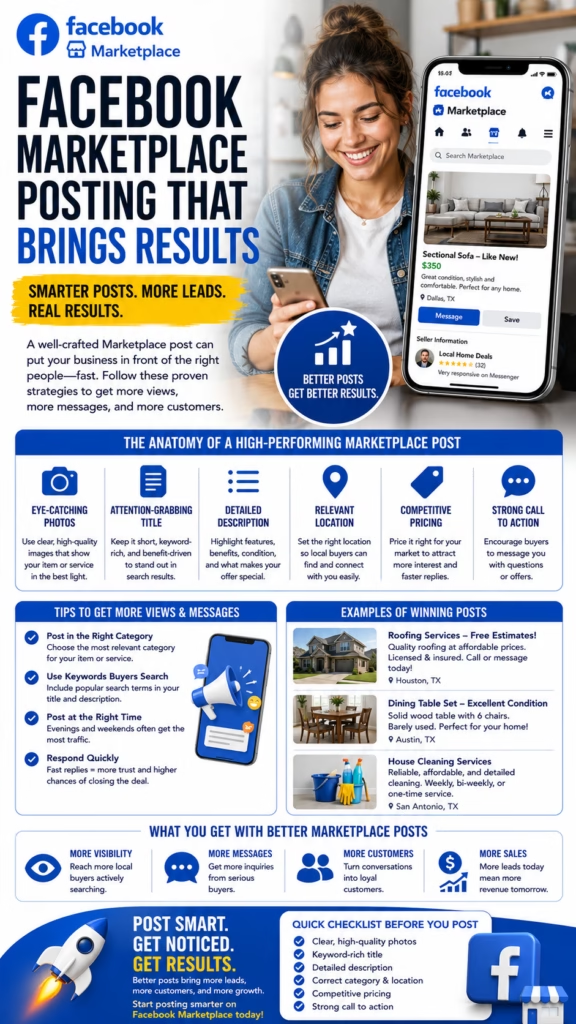
Facebook Marketplace Posting That Brings Results shows business owners how to create stronger listings, improve local visibility, attract better buyer messages, qualify leads, rotate posts, track results, and turn Marketplace activity into real calls, appointments, store visits, delivery requests, and sales opportunities.
Introduction
Facebook Marketplace Posting That Brings Results is not about randomly uploading a product or service and hoping buyers respond. It is about building listings with strategy, clarity, local intent, strong visuals, trust signals, and a follow-up process that turns casual browsing into qualified conversations.
Many business owners post on Facebook Marketplace but never build a real system around it. They may create a few listings, use weak photos, write short descriptions, forget local keywords, respond slowly, or fail to track which posts actually produce leads. The result is inconsistent activity with no clear way to measure success.
Facebook Marketplace posting brings results when every listing is built to attract the right buyer, answer the right questions, and guide the person toward a clear next step.
For local businesses, Marketplace can be more than a place to sell used items. It can become a powerful local visibility channel for furniture stores, mattress stores, appliance sellers, mobile home dealers, trailer companies, contractors, painters, HVAC companies, landscapers, cleaners, remodelers, and other service-based businesses.
When done correctly, Marketplace posting can generate product inquiries, quote requests, service appointments, financing questions, delivery requests, store visits, phone calls, and new customers. The key is treating posting as a lead generation system instead of a one-time listing task.
Main idea: Facebook Marketplace Posting That Brings Results requires clear offers, better listings, consistent rotation, trust-building content, fast replies, and lead tracking.
Table of Contents
- 1) What results-driven Marketplace posting means
- 2) Why Facebook Marketplace can work for businesses
- 3) How buyers decide which posts to message
- 4) Creating a Marketplace posting strategy
- 5) Writing titles that attract serious buyers
- 6) Creating descriptions that qualify leads
- 7) Using photos that build buyer confidence
- 8) Adding local keywords for more visibility
- 9) Building trust inside every listing
- 10) Posting rotation that keeps listings fresh
- 11) Product business posting strategy
- 12) Service business posting strategy
- 13) Marketplace offers that drive action
- 14) Reducing weak or low-intent messages
- 15) Messenger follow-up that turns posts into leads
- 16) Tracking which Marketplace posts bring results
- 17) Common posting mistakes to avoid
- 18) Final thoughts
- 19) FAQs
- 20) Extra keywords
1) What Results-Driven Marketplace Posting Means
Results-driven Marketplace posting means creating posts with a business goal in mind. The goal may be to generate more buyer messages, more qualified leads, more appointments, more delivery requests, more quote requests, more store visits, or more sales. The post should be designed around that outcome from the beginning.
A results-driven post does more than describe what is available. It explains the offer, shows the product or service clearly, answers common buyer questions, builds trust, and encourages the person to take a specific next step.
A results-driven Marketplace post should include:
- A clear product or service focus
- A specific title
- Strong main photo
- Helpful description
- Local city or service area
- Price or pricing context
- Delivery, pickup, or scheduling details
- Trust signals
- Clear call-to-action
- Fast response plan
Marketplace posting brings results when the post is built to create a business outcome, not just visibility.
2) Why Facebook Marketplace Can Work for Businesses
Facebook Marketplace can work for businesses because many users browse with buying intent. They may be looking for a product, service, deal, appointment, delivery option, or nearby seller. This makes Marketplace different from normal social media scrolling because buyers are often closer to taking action.
Businesses can use this intent to create local lead opportunities. A strong Marketplace post can reach people who are already comparing options and looking for something available near them.
Marketplace can create:
Buyer messages
Product questions
Delivery inquiries
Pickup requests
Financing questions
Service estimate requests
Appointment requests
Store visits
Phone calls
Sales conversations
Facebook Marketplace posting works best when the listing matches what local buyers are already trying to find.
3) How Buyers Decide Which Posts to Message
Buyers usually make fast decisions on Marketplace. They look at the image, title, price, distance, seller profile, description, and message option. If the listing feels relevant, clear, and trustworthy, they are more likely to send a message.
If the post looks vague, outdated, low-quality, or confusing, the buyer may skip it. This is why every detail matters. A business post should reduce hesitation and make the next step easy.
Buyers usually evaluate:
- Main photo
- Listing title
- Price or offer
- Location
- Description details
- Seller credibility
- Delivery or pickup options
- Response speed
- Availability
- Ease of taking action
The best Marketplace posts make buyers feel informed before they message.
4) Creating a Marketplace Posting Strategy
A Marketplace posting strategy starts with knowing what type of lead the business wants. A product business may want delivery inquiries, financing questions, store visits, or inventory requests. A service business may want quote requests, appointment bookings, phone calls, or local job inquiries.
Once the goal is clear, each post should be created around a specific buyer need. Instead of posting one generic listing, businesses can create multiple listing angles that speak to different buyer motivations.
Posting strategy examples:
Delivery-focused post
Financing-focused post
Product-specific post
Service-specific post
City-focused post
Seasonal offer post
Before-and-after post
Urgency-based post
Appointment-focused post
Store visit post
Strategy turns Marketplace posting from random activity into a repeatable lead generation system.
5) Writing Titles That Attract Serious Buyers
The title is one of the first things buyers see. A weak title may attract curiosity, but a strong title attracts intent. Good titles are specific, clear, and connected to what the buyer wants.
For best results, the title should include the product or service, one important qualifier, and a reason to click. This may include size, delivery, financing, location, appointment availability, condition, or service type.
Weak title:
Great Deal Available

Better title:
Queen Mattress Set - Local Delivery Available

Weak title:
Painting Service

Better title:
Interior Painting Estimate - Same-Week Scheduling

Weak title:
Nice Couch

Better title:
Modern Sofa Set - Pickup or Delivery Options
Better titles help serious buyers recognize that the post matches what they need.
6) Creating Descriptions That Qualify Leads
A strong description helps qualify the buyer before they message. It should explain what is being offered, who it is best for, where it is available, what the buyer should know, and what to do next.
Descriptions should be easy to scan. Buyers do not need a confusing wall of text, but they do need enough information to feel confident. Clear descriptions can reduce weak messages and improve lead quality.
A strong Marketplace description should include:
- Product or service details
- Main benefits
- Location or service area
- Availability
- Price or price range
- Delivery or pickup options
- Financing when available
- Trust signals
- Best way to respond
- Clear next step
Marketplace descriptions bring results when they answer buyer questions before the first message.
7) Using Photos That Build Buyer Confidence
Photos are one of the biggest drivers of Marketplace results. A strong main image can make a buyer stop scrolling. Clear, real, well-lit images can make the post feel more trustworthy and professional.
Product businesses should show the actual item or inventory whenever possible. Service businesses should show finished work, before-and-after results, team photos, vehicles, jobsite examples, or branded visuals that support the offer.
Photo ideas:
Real product image
Multiple product angles
Showroom display
Delivery setup
Before-and-after result
Finished project photo
Team photo
Work vehicle photo
Close-up detail image
Branded offer image
Better photos create better buyer confidence, which can lead to better messages.
8) Adding Local Keywords for More Visibility
Local keywords help Facebook Marketplace posts connect with buyers in the right area. These keywords may include city names, nearby towns, neighborhoods, service areas, delivery phrases, appointment phrases, and product or service terms.
The goal is to make the post relevant to the buyer’s location and intent. Local keywords should be used naturally in the title and description so the post reads professionally.
Useful local keyword examples:
- Local delivery available
- Same-week appointments
- Serving nearby areas
- Pickup available
- Free estimate in your area
- Available in [City]
- Delivery near [City]
- Local showroom
- Service appointments available
- Message for current availability
Local keywords help Marketplace posts reach buyers who are close enough to become real customers.
9) Building Trust Inside Every Listing
Trust is one of the most important parts of Facebook Marketplace posting that brings results. Buyers want to know they are dealing with a real business, not an unreliable seller. The more trust a listing creates, the easier it is for buyers to move forward.
Trust signals can include the business name, Facebook Page, website, phone number, store location, service area, real photos, delivery details, review mentions, years in business, warranties, guarantees, and professional responses.
Trust signals:
Business name
Website
Facebook Business Page
Local phone number
Store address
Service area
Review mention
Years in business
Real photos
Professional replies
Trust helps turn Marketplace visibility into serious buyer conversations.
10) Posting Rotation That Keeps Listings Fresh
Posting rotation helps businesses stay active and test different buyer angles. Instead of relying on one listing, a business can rotate posts based on products, services, cities, offers, seasons, delivery options, financing, and urgency.
This helps the business learn which posts create the best leads. Some buyers may respond to delivery. Others may respond to financing, local pickup, limited availability, free estimates, or before-and-after proof.
Posting rotation angles include:
- Product-specific posts
- Service-specific posts
- Delivery-focused posts
- Financing-focused posts
- City-focused posts
- Seasonal posts
- Before-and-after posts
- Urgency posts
- Appointment posts
- Store visit posts
Posting rotation helps businesses discover which Marketplace messages are most likely to become real sales opportunities.
11) Product Business Posting Strategy
Product businesses can use Facebook Marketplace posting to generate buyer interest around inventory, delivery, pickup, financing, and availability. This works especially well for items people want to compare locally before buying.
Examples include mattresses, furniture, appliances, sheds, trailers, equipment, mobile homes, home goods, tools, and other local inventory. The post should make it easy for buyers to understand what is available and how to get it.
Product post checklist:
Product name
Size or specs
Condition
Price or starting price
Availability
Delivery option
Pickup option
Financing option
Location
Message prompt
Product posts bring results when they make buying feel simple, local, and convenient.
12) Service Business Posting Strategy
Service businesses can use Facebook Marketplace posting to generate estimate requests, appointment inquiries, quote requests, and local service leads. The post should focus on a specific service instead of being too broad.
For example, a painting company can post about interior painting, exterior painting, cabinet painting, room refreshes, or same-week estimates. An HVAC company can post about AC repair, heating repair, seasonal tune-ups, or emergency service availability.
Service post checklist:
- Specific service
- Local service area
- Problem solved
- Before-and-after proof
- Scheduling availability
- Free estimate option
- Trust signals
- Phone or message CTA
- Response expectation
- Next step
Service posts bring results when they make it easy for buyers to request help quickly.
13) Marketplace Offers That Drive Action
The offer is what gives a buyer a reason to respond. A generic post may get ignored, while a clear offer can create urgency and interest. Strong offers are practical, easy to understand, and connected to what the buyer values.
Examples include same-day delivery, financing available, free estimates, same-week appointments, limited inventory, bundle pricing, pickup available, or message for current options.
Offer examples:
Same-day local delivery available
Financing options available
Free estimate this week
Same-week scheduling
Limited quantity available
Local pickup available
Bundle pricing available
Message for current inventory
Call for appointment times
Ask about delivery options
Marketplace offers drive results when they give buyers a clear reason to message now.
14) Reducing Weak or Low-Intent Messages
Weak messages often happen when the post is unclear. If buyers do not know the price, location, availability, delivery option, or service details, they may send vague questions. Better posts help buyers self-qualify before reaching out.
Businesses can reduce low-quality messages by using specific titles, clear descriptions, better photos, price context, local details, and direct calls-to-action.
Ways to reduce weak messages:
- Use clear titles
- Add location details
- Explain the offer
- Include price context
- Mention availability
- Clarify delivery or pickup
- Add service areas
- Use trust signals
- Ask for a specific response
- Reply with qualification questions
Important: The goal is not just more messages. The goal is better messages from buyers who are more likely to act.
15) Messenger Follow-Up That Turns Posts Into Leads
Marketplace posting only brings results when the follow-up process is strong. Many buyers message multiple sellers. A fast, clear, professional response can be the difference between winning and losing the lead.
The best Messenger replies answer the buyer’s question, confirm interest, ask one qualifying question, and move the conversation toward a call, appointment, quote, delivery, pickup, store visit, or purchase.
Message follow-up workflow:
Reply quickly
Confirm what they are interested in
Answer the question clearly
Ask one qualifying question
Confirm location or timing
Offer next step
Move to call, appointment, quote, visit, pickup, or delivery
Follow up if they go quiet
Marketplace posts generate better results when every message has a follow-up path.
16) Tracking Which Marketplace Posts Bring Results
Tracking helps businesses understand which posts are actually working. Without tracking, it is easy to confuse message volume with success. A post may get many messages but few serious buyers. Another post may get fewer messages but better conversions.
Businesses should track listing titles, post angles, cities, categories, messages, qualified leads, calls, appointments, store visits, delivery requests, and closed sales.
Track these results:
- Post title
- Offer angle
- Category
- City or service area
- Date posted
- Total messages
- Qualified messages
- Calls
- Appointments
- Delivery requests
- Store visits
- Closed sales
Tracking turns Marketplace posting into a measurable marketing system.
17) Common Posting Mistakes to Avoid
Many businesses struggle with Marketplace because their posts are too vague, too repetitive, or too difficult for buyers to understand. Poor photos, weak titles, missing local details, no pricing context, slow replies, and no lead tracking can all hurt results.
The good news is that most posting mistakes can be fixed quickly. Better structure, clearer offers, improved photos, local keywords, trust signals, and faster follow-up can make a major difference.
Common mistakes:
Vague titles
Blurry photos
Generic descriptions
No local keywords
No price context
No delivery details
No service area
No trust signals
No clear call-to-action
Slow replies
No follow-up system
No tracking
Marketplace posting fails when posts create attention but do not guide buyers toward action.
18) Final Thoughts
Facebook Marketplace Posting That Brings Results is about creating a system that helps businesses attract better local buyers, build trust quickly, and turn Marketplace visibility into real sales opportunities.
The strongest Marketplace posting strategies use specific titles, clear descriptions, better photos, local keywords, trust signals, posting rotation, strong offers, fast Messenger replies, and lead tracking. When these pieces work together, Marketplace can become a practical lead generation channel for both product and service businesses.
Final takeaway: Facebook Marketplace posting brings results when listings are clear, local, trustworthy, consistent, and connected to a real follow-up process.
19) FAQs
1) What is Facebook Marketplace posting that brings results?
It is a strategic approach to creating Marketplace posts that generate qualified messages, calls, appointments, store visits, delivery requests, and sales opportunities.
2) Can businesses use Facebook Marketplace for leads?
Yes. Businesses can use Marketplace to generate local buyer inquiries when posts are clear, trustworthy, and supported by fast follow-up.
3) What makes a Marketplace post effective?
An effective post has a clear title, strong photo, helpful description, local keywords, trust signals, and a direct call-to-action.
4) How often should a business post on Marketplace?
Businesses should post consistently and rotate different listing angles based on products, services, cities, offers, and buyer needs.
5) What should I include in a Marketplace title?
Include the product or service, key detail, local relevance, and a reason for the buyer to click or message.
6) What should I include in a Marketplace description?
Include offer details, location, availability, price context, delivery or pickup options, service area, trust signals, and the next step.
7) Do photos matter on Facebook Marketplace?
Yes. Photos are one of the biggest factors in whether a buyer stops scrolling and clicks the post.
8) Should I use local keywords?
Yes. Local keywords help connect the post with buyers in the right city, area, or service zone.
9) Can service businesses post on Marketplace?
Yes. Service businesses can post listings for specific services, free estimates, appointments, seasonal needs, and local service areas.
10) Can product businesses post on Marketplace?
Yes. Product businesses can post inventory, delivery offers, pickup options, financing details, and store visit opportunities.
11) How do I get better leads from Marketplace?
Use clearer posts, better photos, stronger offers, trust signals, local details, and fast follow-up.
12) Why am I getting weak Marketplace messages?
Your post may be too vague, missing key details, attracting the wrong audience, or lacking a clear next step.
13) Should I include pricing?
When appropriate, yes. Pricing or starting-price context helps buyers self-qualify before messaging.
14) Should I mention delivery?
Yes, if delivery is available. Delivery can improve results for large products like mattresses, furniture, appliances, and equipment.
15) Should I mention financing?
Yes, if financing is available. Financing can attract serious buyers who need payment flexibility.
16) What is posting rotation?
Posting rotation means using different post angles instead of repeating the same listing every time.
17) Why is posting rotation important?
It helps test which offers, cities, products, services, and buyer needs produce the best leads.
18) How fast should I reply to Marketplace messages?
As fast as possible. Buyers often contact multiple sellers, so response speed matters.
19) What should my Messenger reply include?
It should answer the question, confirm interest, ask one qualifying question, and offer a clear next step.
20) How do I track Marketplace results?
Track post title, offer angle, messages, qualified leads, calls, appointments, store visits, delivery requests, and sales.
21) Is Marketplace posting better than paid ads?
Marketplace posting and paid ads can both be useful. Marketplace posting is especially helpful for local buyer intent and direct conversations.
22) Can Marketplace posting drive store visits?
Yes. Strong posts can encourage buyers to visit a showroom, store, yard, office, or local pickup location.
23) Can Marketplace posting create appointments?
Yes. Service businesses can use Marketplace posts to generate estimate requests and appointment bookings.
24) What is the biggest Marketplace posting mistake?
The biggest mistake is posting without a strategy, clear offer, trust signals, follow-up process, or result tracking.
25) What is the main goal of Marketplace posting?
The main goal is to turn local Marketplace visibility into qualified buyer conversations and real business results.
20) Extra Keywords
- Facebook Marketplace Posting That Brings Results
- Facebook Marketplace posting
- Marketplace posting strategy
- Facebook Marketplace lead generation
- Facebook Marketplace business posts
- Facebook Marketplace local leads
- Facebook Marketplace buyer messages
- Facebook Marketplace qualified leads
- Marketplace posts for businesses
- Facebook Marketplace advertising
- Facebook Marketplace product leads
- Facebook Marketplace service leads
- Facebook Marketplace local advertising
- Facebook Marketplace listing optimization
- Facebook Marketplace sales leads
- Facebook Marketplace Messenger leads
- Facebook Marketplace appointment leads
- Facebook Marketplace store visits
- Facebook Marketplace delivery inquiries
- Facebook Marketplace posting rotation
- Facebook Marketplace offer strategy
- Facebook Marketplace lead tracking
- Marketplace posts that generate leads
- Marketplace posting for local businesses
- Facebook Marketplace marketing system