

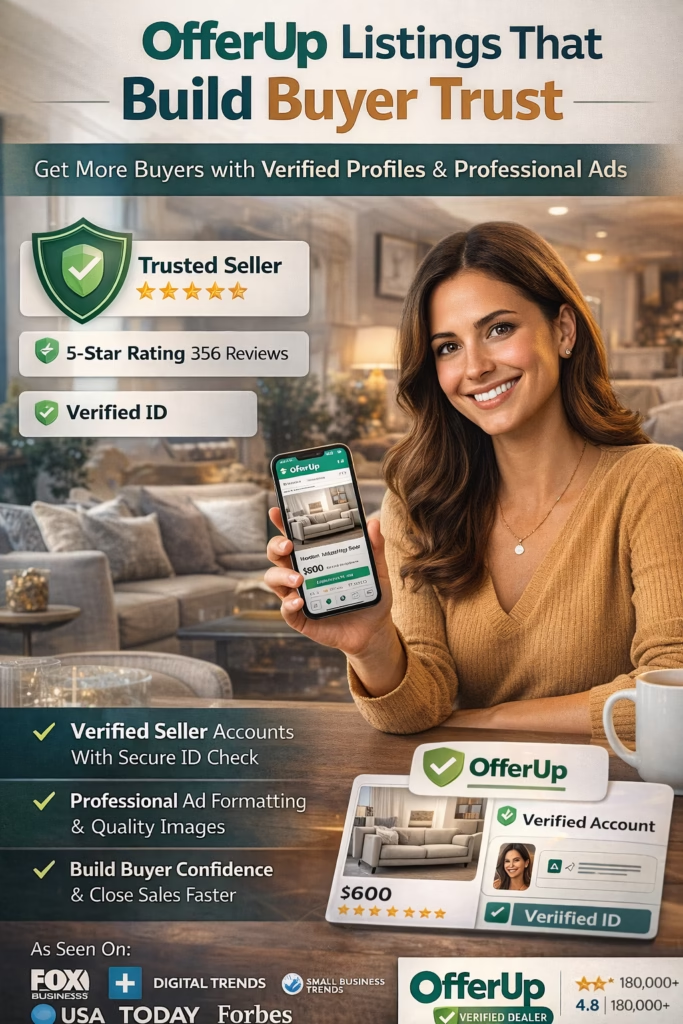
OfferUp Listings That Build Buyer Trust
OfferUp Listings That Build Buyer Trust explains how businesses create stronger marketplace listings that feel safer, clearer, and more believable so buyers feel more comfortable clicking, messaging, and moving toward a purchase.
Introduction
OfferUp Listings That Build Buyer Trust is one of the most important topics for any business or seller trying to generate better results on local marketplace platforms. Many listings fail not because the product is weak, but because the listing does not feel trustworthy enough. Buyers on OfferUp move quickly, compare several options at once, and often make fast judgments about whether a listing feels real, safe, and worth messaging about. If trust breaks down early, the buyer disappears before the conversation even begins.
This matters because trust is not a small detail on OfferUp. It is one of the main forces that decides whether visibility turns into action. A listing may get seen, but if it looks vague, inconsistent, or questionable, it will not produce strong buyer response. On the other hand, a listing that feels honest, clear, useful, and local often performs better even when the product itself is similar to competing offers. That is because buyers do not only evaluate what is being sold. They evaluate whether the seller feels safe to deal with.
OfferUp listings build buyer trust when they reduce uncertainty and make the buyer feel more comfortable taking the first step.
For local businesses, this has practical value. A mattress store wants buyers to believe the listing is current and the offer is real. A furniture seller wants the item to feel legitimate and worth asking about. A wellness brand wants the product presentation to look credible. In every case, trust improves the odds that the buyer will send a message instead of moving on.
The strongest listings usually build trust in several ways at once. They use clearer titles. They show real photos. They explain the offer honestly. They make pricing easier to understand. They feel local and current. They sound professional. Then they back up that first impression with fast response when the buyer reaches out. Together, these elements create listings that feel safer and more believable.
Main idea: Buyer trust on OfferUp grows when listings reduce confusion, increase clarity, and make the seller feel more legitimate and easier to work with.
Table of Contents
- 1) Why buyer trust matters so much on OfferUp
- 2) The first impression that shapes trust
- 3) Titles that make listings feel more credible
- 4) Real photos and visual trust-building
- 5) Descriptions that reduce buyer hesitation
- 6) Pricing clarity and why it affects trust
- 7) Trust signals that make buyers feel safer
- 8) Local relevance and perceived legitimacy
- 9) Tone and wording that improve buyer confidence
- 10) Calls to action that feel natural and trustworthy
- 11) Fast response and trust after the first message
- 12) Follow-up and maintaining trust through the conversation
- 13) Common trust mistakes businesses make on OfferUp
- 14) A practical trust-building workflow for OfferUp listings
- 15) Final thoughts
- 16) FAQs
- 17) Extra keywords
1) Why Buyer Trust Matters So Much on OfferUp
Buyer trust matters because marketplace platforms naturally create uncertainty. Buyers cannot physically inspect the item immediately, and they may not know the seller. That means every part of the listing has to work harder to reduce doubt. If the listing fails to do that, the buyer may avoid the risk and move to another option.
This is one reason trust has such a strong effect on lead flow. A buyer may like the product category, but still refuse to message because the listing feels off. A more trustworthy listing removes that friction and makes communication feel safer.
Buyer trust affects:
- Whether the listing gets opened
- Whether the buyer believes the offer
- Whether the buyer feels safe messaging
- Whether the conversation continues
- Whether the listing turns into a real sales opportunity
On OfferUp, trust often decides whether attention becomes a real buyer action.
2) The First Impression That Shapes Trust
The first impression often shapes trust before the buyer reads a single sentence of the description. Buyers see the title, the main image, and the visible price or offer structure. In a moment, they decide whether the listing feels legitimate enough to open.
That means trust-building starts immediately. If the title is vague, the image is weak, or the price feels strange, doubt appears early. If the listing feels organized, useful, and believable at first glance, the buyer is more willing to continue.
Title noticed
Image judged
Price interpreted
Listing opened
Trust either increases or drops
If the first impression feels weak or inconsistent, buyer trust often collapses before the description even has a chance to help.
3) Titles That Make Listings Feel More Credible
The title helps build trust because it communicates whether the listing feels clear and real. A good title tells the buyer what the item or service is without sounding vague or confusing. It suggests that the seller knows what is being offered and is presenting it directly.
Credibility-focused titles often include the product, a useful detail, and sometimes a practical buyer hook. The goal is not hype. The goal is clarity that feels dependable.
Examples:
- Queen Mattress Set – Local Delivery Available
- Sectional Sofa – Great Condition and Ready This Week
- Dining Table Set – Solid Wood and Seats Six
- Adjustable Bed Base – Excellent Condition
- Wellness Device – Clean Condition, Local Pickup
These titles feel more trustworthy because they reduce ambiguity. The buyer can immediately understand what is being offered.
Better titles build buyer trust by making the listing feel more specific, real, and intentional.
4) Real Photos and Visual Trust-Building
Photos are one of the strongest trust-building tools in any OfferUp listing. Buyers rely heavily on images to judge whether the item is real, current, clean, and worth considering. A strong set of real photos helps the buyer feel that the seller is showing the actual item honestly.
Visual trust grows when the photos make the item easier to believe in. The buyer wants to see what is being offered clearly. Poor images, dark shots, blurry angles, or generic-looking visuals often increase doubt instead.
Real and useful photos build buyer trust because they make the listing feel less hidden and less risky.
This is one of the biggest reasons photo quality often changes listing performance so dramatically.
5) Descriptions That Reduce Buyer Hesitation
A strong description helps continue the trust-building process after the click. Once the buyer opens the listing, they want enough detail to feel confident without being overwhelmed. The description should explain the important facts, reduce uncertainty, and make the offer easier to evaluate.
A trust-focused description usually includes:
- A short and clear summary
- Important product or service details
- Condition or relevant features
- Pickup, delivery, or local information
- A simple next step
Descriptions that are too vague leave the buyer guessing. Descriptions that are too aggressive can feel less credible. The strongest descriptions sound useful, clear, and believable.
Descriptions build trust when they answer the buyer’s biggest questions before the buyer has to ask them.
6) Pricing Clarity and Why It Affects Trust
Pricing affects trust because buyers use the number as a signal about honesty and realism. If the price feels confusing, suspiciously low, or disconnected from the rest of the listing, doubt increases. If it feels understandable and consistent with the offer, the listing feels more legitimate.
That does not mean every trusted listing must be low-priced. It means the pricing should make sense within the story the listing is telling. Convenience, condition, included features, bundle value, or delivery options can all support trust if the listing makes the value clear.
Pricing builds trust when it feels believable enough to support a real conversation, not just curiosity.
Buyers often message the listings where the price makes sense and the offer feels honest.
7) Trust Signals That Make Buyers Feel Safer
Trust signals are small but important details that help the buyer feel more comfortable. They reduce the sense of risk and make the listing feel less anonymous. These signals often matter as much as the main offer itself.
Common trust signals include:
- Clear and honest wording
- Real photos of the actual item
- Specific and useful details
- Consistent pricing or offer framing
- Local pickup or delivery information
- Professional tone
These details help because they remove reasons for suspicion. The more straightforward the listing feels, the easier it is for the buyer to move toward a message.
Trust signals matter because buyers often respond to listings that feel safer, not just listings that look interesting.
8) Local Relevance and Perceived Legitimacy
Local relevance supports trust because it helps the listing feel grounded in a real nearby transaction. Buyers on OfferUp often want items that feel current, local, and practical to act on. A listing that feels tied to the nearby market seems more believable than one that feels generic or disconnected.
This local legitimacy may come from pickup information, delivery details, availability timing, or city-based wording that makes the listing feel close to real life. These small details make the offer easier to picture and easier to trust.
Buyer trust grows when the listing feels like a real local opportunity, not just an abstract online post.
9) Tone and Wording That Improve Buyer Confidence
The way a listing sounds matters. Buyers often judge credibility through tone before they consciously realize it. Listings that sound too vague, too pushy, or too exaggerated may weaken trust. Listings that sound direct, useful, and respectful usually perform better.
That does not mean the writing has to be cold. It means it should feel straightforward and believable. The buyer should feel that the seller is honest, organized, and easy to deal with.
Clear
Honest
Specific
Simple
Useful
Buyer confidence weakens when the wording sounds careless, overly aggressive, or harder to believe.
10) Calls to Action That Feel Natural and Trustworthy
A call to action helps the buyer move forward, but it should do so in a way that still feels comfortable. A strong call to action makes the next step obvious without creating pressure. That balance helps trust continue through the point of response.
Examples:
Message now for availability.
Reach out for pickup or delivery details.
Send a message today if you want more information.
These calls to action work because they feel natural. They invite the buyer forward without sounding forceful or desperate.
Trust-friendly calls to action help buyers respond because they make the next step feel simple and low-risk.
11) Fast Response and Trust After the First Message
Buyer trust does not stop at the listing. Once the buyer sends a message, response speed becomes part of the trust experience. A fast, clear reply reinforces the sense that the listing was legitimate. A slow or confusing reply weakens that confidence quickly.
Thanks for reaching out.
Yes, this is available.
Would you like pickup details, delivery info, or more information?
This kind of response works because it feels organized, available, and easy to continue. It protects the momentum the listing already built.
Fast response strengthens buyer trust because it confirms that the seller is real, present, and ready to help.
12) Follow-Up and Maintaining Trust Through the Conversation
Some buyers will not respond immediately after the first exchange. That does not always mean the opportunity is lost. Thoughtful follow-up helps maintain trust by showing consistency and seriousness. It also gives the buyer another chance to move forward.
Follow-up helps by:
- Reassuring the buyer that the offer is still real
- Clarifying unanswered questions
- Restarting paused conversations
- Making the seller feel more reliable
For many listings, trust continues to grow through the conversation rather than ending at the first message.
Good follow-up helps preserve buyer trust because consistency feels more credible than silence.
13) Common Trust Mistakes Businesses Make on OfferUp
Many businesses weaken buyer trust without realizing it. They use generic titles, weak images, vague descriptions, unclear pricing, or tone that feels too pushy. They may also reply too slowly after a buyer shows interest. These small weaknesses combine into a listing that feels less safe than competing options.
Common trust mistakes include:
- Using unclear or generic titles
- Posting weak or unrealistic visuals
- Writing vague descriptions
- Creating pricing confusion
- Ignoring local cues
- Using weak trust signals
- Responding too slowly
Fixing these trust issues usually improves buyer response faster than simply trying to get more views.
Big mistake: trying to increase traffic before fixing the listing elements that are making buyers hesitate to trust the offer.
14) A Practical Trust-Building Workflow for OfferUp Listings
If a business wants to apply OfferUp Listings That Build Buyer Trust in a practical way, the easiest path is to follow a simple workflow.
Step 1: Write a clear and credible title
Step 2: Use real photos that show the item honestly
Step 3: Create a useful and specific description
Step 4: Make pricing feel clear and believable
Step 5: Add local details that support legitimacy
Step 6: Use a natural call to action
Step 7: Reply quickly to serious messages
Step 8: Follow up consistently when conversations pause
This works because trust is not built through one isolated detail. It is built through the full experience of the listing and the conversation that follows.
Businesses build stronger buyer trust when every part of the OfferUp experience feels clear, local, and easy to believe.
15) Final Thoughts
OfferUp Listings That Build Buyer Trust comes down to one simple principle: buyers respond when the listing feels safer than the alternatives. On a marketplace platform, trust is often the deciding factor between curiosity and action. A stronger listing reduces risk in the buyer’s mind and makes the first message feel easier.
The businesses that build the most trust usually do the same few things well. They use better titles. They show real photos. They explain the offer clearly. They keep pricing believable. They sound professional. They add local cues. Then they respond quickly and consistently. Together, those steps turn a listing into something that feels more real and more reliable, which is exactly what buyers want before they reach out.
Final takeaway: OfferUp listings build buyer trust when they make the offer easy to understand, easy to believe, and easy to act on without unnecessary risk.
16) FAQs
1) How do OfferUp listings build buyer trust?
They build buyer trust by making the listing feel clear, real, believable, and easy to understand.
2) Why is buyer trust so important on OfferUp?
Because buyers often compare multiple listings quickly and avoid options that feel risky or unclear.
3) What makes a listing feel trustworthy?
Clear titles, real photos, honest details, believable pricing, local relevance, and a professional tone all help.
4) Can businesses improve trust without changing the product?
Yes. Better presentation, clearer wording, and faster communication often improve trust even with the same product.
5) What is the biggest trust mistake businesses make?
One of the biggest mistakes is assuming trust happens automatically instead of building it intentionally in the listing.
6) Do titles really affect trust?
Yes. Titles help shape the first impression and signal whether the listing feels organized and legitimate.
7) Why are real photos so important?
Because real photos make the item easier to believe in and reduce suspicion.
8) Does the description affect trust too?
Yes. A stronger description reduces hesitation by making the offer easier to understand.
9) How does pricing affect buyer trust?
Pricing affects trust because buyers use it as a signal for honesty and realism.
10) What are trust signals on OfferUp?
Trust signals include clear wording, real visuals, useful details, local info, consistent pricing, and a professional tone.
11) Why does local relevance help trust?
Because it makes the listing feel like a real nearby opportunity instead of a vague online post.
12) What kind of tone helps build trust?
A clear, honest, simple, and useful tone usually builds the most trust.
13) Should calls to action still be used?
Yes. Trust-friendly calls to action make the next step feel simple and low-pressure.
14) Does fast response matter for trust?
Yes. Fast replies confirm that the seller is real, available, and ready to help.
15) Why is follow-up important?
Because it helps maintain trust and consistency when conversations pause.
16) What usually weakens buyer trust?
Generic titles, weak photos, vague descriptions, confusing prices, poor tone, and slow replies often weaken trust.
17) Is buyer trust more important than traffic?
Both matter, but trust often determines whether the traffic becomes useful action.
18) Can smaller businesses compete on trust?
Yes. Smaller businesses often compete well when they are clearer, more honest, and more responsive.
19) What should businesses track?
They should track views, messages, response speed, buyer quality, and conversion outcomes.
20) Is more posting always the answer?
No. Better trust-building usually matters more than simply posting more listings.
21) Can photos alone improve trust?
Yes. Better real photos can significantly improve how believable a listing feels.
22) Why do some listings get views but no messages?
Usually because the listing attracted attention but failed to build enough trust after the click.
23) What is the main goal of trust-building on OfferUp?
The main goal is to make the buyer feel comfortable enough to start and continue the conversation.
24) Is OfferUp trust more about listing quality or communication?
It is about both, because trust begins in the listing and continues in the response.
25) What is the core principle behind trust-building on OfferUp?
The core principle is that buyers respond more when the offer feels clear, local, honest, and low-risk.
17) Extra Keywords
- OfferUp Listings That Build Buyer Trust
- OfferUp buyer trust
- OfferUp listings
- OfferUp marketing
- OfferUp trust signals
- OfferUp lead generation
- OfferUp buyer inquiries
- OfferUp real photos
- OfferUp pricing clarity
- OfferUp listing credibility
- OfferUp trustworthy listings
- OfferUp local relevance
- OfferUp better titles
- OfferUp better descriptions
- OfferUp buyer confidence
- OfferUp marketplace trust
- OfferUp listing optimization
- OfferUp response strategy
- OfferUp message conversion
- OfferUp small business marketing
- OfferUp safe-looking listings
- OfferUp local sales opportunities
- OfferUp listing trust tips
- OfferUp buyer hesitation
- OfferUp trust-building workflow













