
The Marketplace Customer Journey Explained
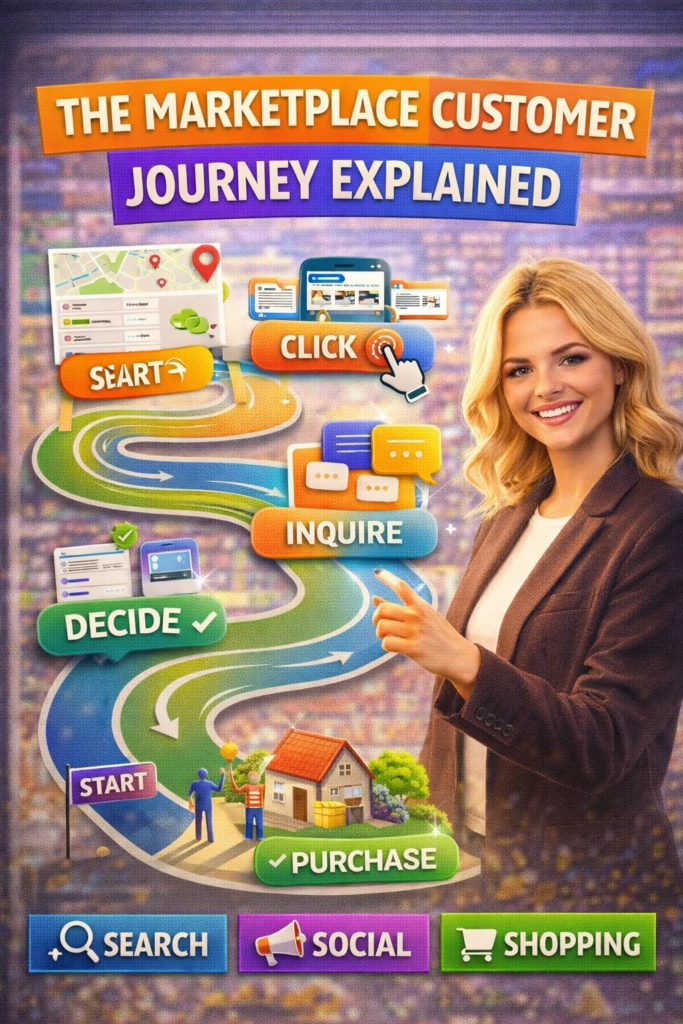
The Marketplace Customer Journey Explained is the blueprint for understanding how a buyer moves from first discovery to click, trust, inquiry, response, and conversion inside Marketplace environments.
Note: This is general guidance. Follow platform rules, use accurate descriptions and pricing, and avoid misleading claims or repetitive duplicate posting patterns.
Introduction
The Marketplace Customer Journey Explained starts with one important reality:
Buyers do not convert all at once. They move through a sequence of decisions.
That sequence matters because many businesses judge listing performance too simply. They look at views, messages, or sales without understanding what happened between each step. But the real opportunity is in understanding the customer journey itself. Once you can see where a buyer hesitates, loses trust, or loses momentum, you know what to improve.
A Marketplace buyer often moves through several stages very quickly:
- They notice a listing
- They decide whether to click
- They evaluate whether it feels real and relevant
- They message or ask a question
- They decide whether the response makes the next step worth taking
Big idea: The Marketplace customer journey is the path between attention and action. Better listings improve that path at every stage.
Expanded Table of Contents
- 1) What the Marketplace customer journey really is
- 2) The six main stages of the Marketplace customer journey
- 3) Discovery: where the journey begins
- 4) Click stage: why the first image and title matter
- 5) Trust stage: what buyers evaluate after the click
- 6) Interest and intent: when browsing becomes real inquiry
- 7) Inquiry stage: what causes buyers to send the first message
- 8) Response stage: why speed and clarity change the outcome
- 9) Follow-up stage: how the journey continues after the first contact
- 10) Conversion stage: how buyers move into appointments, purchases, or next steps
- 11) Common friction points in the Marketplace customer journey
- 12) KPI dashboard: how to measure the customer journey correctly
- 13) 30–60–90 day rollout plan
- 14) 25 Frequently Asked Questions
- 15) 25 Extra Keywords
1) What the Marketplace customer journey really is
The Marketplace customer journey is the sequence of buyer decisions and actions that turns a listing into a conversation, estimate request, visit, or sale.
It includes
- What makes the buyer notice the listing
- What makes them click
- What makes them trust it
- What makes them message
- What makes them continue the conversation
- What moves them toward a real next step
A customer journey is not just what the seller posts. It is what the buyer experiences.
2) The six main stages of the Marketplace customer journey
| Stage | What happens | Main buyer question |
|---|---|---|
| Discovery | Buyer notices the listing | Is this worth looking at? |
| Click | Buyer opens the listing | Does this seem relevant? |
| Trust | Buyer evaluates legitimacy | Does this feel real and believable? |
| Inquiry | Buyer sends a message or question | Is this worth contacting? |
| Response | Seller replies and guides the lead | Is this easy to move forward with? |
| Conversion | Lead becomes a next step or sale | Should I commit now? |
Rule: Good Marketplace performance comes from improving the full journey, not just the first step.
3) Discovery: where the journey begins
The journey starts when the buyer sees the listing in the feed, search area, category view, or local browsing path.
Discovery is influenced by
- Category relevance
- Local proximity
- Listing freshness
- Buyer behavior patterns
- Overall listing quality signals
No discovery means no customer journey at all.
4) Click stage: why the first image and title matter
Once discovered, the listing must earn the click. This is where the first image and title do most of their work.
What helps a buyer click
- A clear first image
- A relevant, simple title
- A visible local or timing cue
- A stronger visual impression than nearby alternatives
Simple title formula
[Offer] + [Primary benefit] + [Local / timing / option cue]Examples
- Queen Mattress – Delivery Available in Rochester
- Exterior Painting – Fast Estimates in Granbury
- Bookshelf – Modern Style + Pickup Today
- Used SUV – Clean Interior + Ready Now
Rule: The customer journey gets stronger when the click feels easy and obvious.
5) Trust stage: what buyers evaluate after the click
After the click, the buyer decides whether the listing feels credible. This is one of the most important moments in the entire journey.
Buyers usually judge
- Whether the photos look real
- Whether the title matches the content
- Whether the wording sounds believable
- Whether the pricing or offer framing makes sense
- Whether the listing feels current and actionable
Trust-first hooks
Real photos + clear details ✅Available now — what city/zip are you in?Fast local options available this week.The customer journey often breaks at the trust stage, not the visibility stage.
6) Interest and intent: when browsing becomes real inquiry
Not every click reflects real intent. A buyer becomes more valuable when interest turns into a willingness to message, call, or ask a serious question.
| Buyer type | Behavior in the journey | Business value |
|---|---|---|
| Casual browser | May click but not continue | Low |
| Comparer | Reads, evaluates, may save | Moderate |
| Ready buyer | Messages quickly and asks direct questions | High |
Rule: A stronger customer journey filters more serious buyers forward.
7) Inquiry stage: what causes buyers to send the first message
The inquiry stage begins when the buyer decides the listing feels clear and safe enough to contact.
Buyers are more likely to message when
- The next step is easy
- The offer feels local and relevant
- The listing reduces doubt
- The CTA feels natural
Best simple CTA
What city/zip are you in, and are you looking for today or this week?The first message usually happens when the listing makes action feel easier than hesitation.
8) Response stage: why speed and clarity change the outcome
The customer journey does not stop when the buyer messages. In many cases, the response stage determines whether interest keeps moving or disappears.
| Reply speed | Buyer impression | Journey effect |
|---|---|---|
| Under 1 minute | Active and reliable | Strong continuation rate |
| Under 5 minutes | Still strong | Good momentum |
| 30+ minutes | Momentum fades | Higher drop-off |
| Hours later | Buyer may move on | Journey often breaks |
Fast-reply template
Yes — available / yes, we can help ✅

What city/zip are you in, and are you looking for today or this week?
Rule: A smooth journey needs a fast and simple response stage.
9) Follow-up stage: how the journey continues after the first contact
Not every serious buyer takes the next step immediately. Follow-up keeps the journey alive after the first message.
Simple follow-up cadence
- +2–4 hours: quick check-in
- Next day: offer a clear next step
- Day 3–5: final helpful nudge
Follow-up example
Quick check — are you still looking, or should I close this out?
If you want, I can send the fastest option for your area.
Avoid: pressure-heavy follow-up. Helpful follow-up maintains trust and recovers more real opportunities.
10) Conversion stage: how buyers move into appointments, purchases, or next steps
The journey becomes measurable when the buyer commits to something concrete.
Common next steps include
- Estimate request
- Store visit
- Appointment booking
- Pickup or delivery arrangement
- Phone consultation
- Direct purchase
The Marketplace customer journey is complete when interest becomes movement.
11) Common friction points in the Marketplace customer journey
Most poor performance can be traced to friction in one part of the journey.
| Friction point | What it causes | Stage affected |
|---|---|---|
| Weak first image | Fewer clicks | Click stage |
| Vague title | Lower relevance | Click stage |
| Poor trust signals | Fewer messages | Trust stage |
| Slow replies | Lead drop-off | Response stage |
| No follow-up | Lost conversions | Follow-up stage |
Rule: Journey improvement starts when friction is diagnosed stage by stage.
12) KPI dashboard: how to measure the customer journey correctly
| KPI | What stage it measures | Target direction |
|---|---|---|
| Impressions / visibility | Discovery stage | Up |
| Click-through rate | Click stage | Up |
| Messages per listing | Trust + inquiry stage | Up |
| Median first reply time | Response stage | Down |
| Qualified lead rate | Intent stage | Up |
| Booked next steps | Conversion stage | Up |
| Recovery rate | Follow-up stage | Up |
The customer journey is easiest to improve when each stage is measured separately.
13) 30–60–90 day rollout plan
Days 1–30 (Fix the biggest drop-off points)
- Improve first images and titles
- Tighten the first three lines of listings
- Add stronger trust hooks
- Deploy fast replies
- Track clicks, messages, and reply speed
Days 31–60 (Improve journey momentum)
- Clarify local and timing cues
- Improve lead qualification questions
- Launch follow-up workflows
- Track booked next steps weekly
- Retire weak-performing listing structures
Days 61–90 (Turn the journey into a system)
- Document SOPs for images, titles, copy, replies, and follow-up
- Scale top-performing listing structures
- Review KPI dashboard weekly
- Optimize stage by stage instead of guessing broadly
Rule: The Marketplace customer journey becomes a growth asset when each stage is intentionally improved.
14) 25 Frequently Asked Questions
1) What is the Marketplace customer journey?
It is the sequence from discovery to click, trust, inquiry, response, follow-up, and conversion.
2) Why is the Marketplace customer journey important?
Because most listing problems come from a breakdown at one part of the journey.
3) What is the fastest way to improve the Marketplace customer journey?
Improve the first image, simplify the title, strengthen trust signals, and respond faster.
4) What is the discovery stage?
The point where the buyer first sees the listing.
5) What is the click stage?
The moment the buyer decides the listing is worth opening.
6) What is the trust stage?
The point where the buyer decides whether the listing feels real and credible.
7) What is the inquiry stage?
The moment when the buyer messages or asks the first question.
8) What is the response stage?
The part where the seller replies and shapes whether the conversation continues.
9) What is the follow-up stage?
The part where the business keeps the opportunity alive after the first interaction.
10) What is the conversion stage?
The point where the lead becomes an estimate, appointment, visit, or sale.
11) Why do some listings get clicks but no messages?
Because the trust stage fails due to weak clarity, trust, or offer framing.
12) Why do some buyers message but disappear?
Often because the response was too slow or the next step was not made easy.
13) How fast should businesses reply?
Under 5 minutes is strong; under 1 minute is ideal.
14) What CTA works best?
“What city/zip are you in, and are you looking for today or this week?”
15) Why does local relevance matter?
Because nearby and timely offers are easier for buyers to act on.
16) What are trust signals?
Real photos, believable wording, clear details, and straightforward pricing or offer framing.
17) What KPI matters most?
Booked next steps, because they connect the full journey to real business results.
18) What is click-through rate?
A measure of how often discovery turns into an actual click.
19) What is messages per listing?
A measure of how efficiently clicks and trust turn into inquiries.
20) What is qualified lead rate?
A measure of how many inquiries come from serious buyers.
21) Can service businesses use this same journey model?
Yes. The same discovery, trust, inquiry, and follow-up stages still apply.
22) Can product sellers use it too?
Yes. Inventory, retail, furniture, vehicle, and product listings all follow similar stages.
23) What is the biggest customer journey mistake?
Trying to improve results without knowing where buyers are dropping off.
24) How long until journey improvements show results?
Often within days to weeks after stronger listing elements and faster response systems are implemented.
25) What should I improve first?
The first image, title clarity, trust signals, and response speed.
15) 25 Extra Keywords
- The Marketplace Customer Journey Explained
- marketplace customer journey
- marketplace buyer journey
- marketplace customer journey map
- marketplace lead generation journey
- buyer behavior marketplace
- marketplace conversion path
- marketplace discovery stage
- marketplace trust stage
- marketplace inquiry stage
- marketplace response stage
- marketplace follow-up stage
- marketplace conversion stage
- click through rate marketplace
- messages per listing KPI
- qualified buyer rate
- booked next steps marketplace
- marketplace friction points
- marketplace customer journey funnel
- high intent marketplace traffic
- 2026 marketplace journey strategy
- marketplace listing psychology
- repeatable buyer journey marketplace
- local buyer journey marketplace
- marketplace conversion system