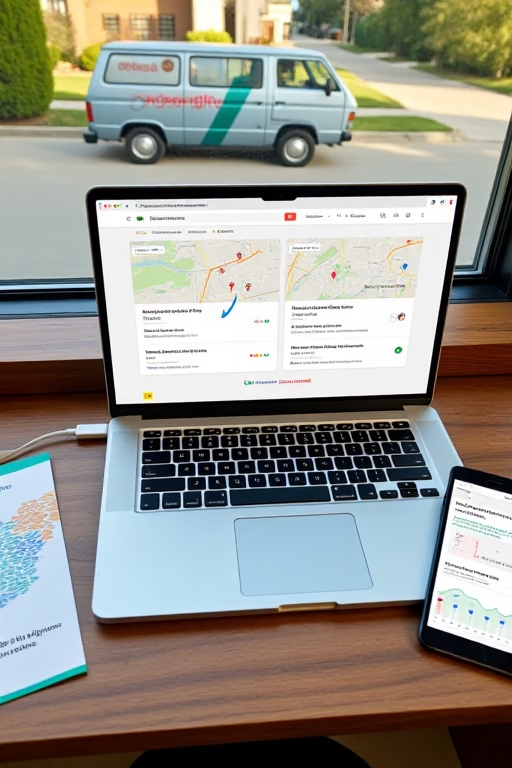

ai appointment booking for furniture stores

AI Appointment Booking for Furniture Stores
Transforming Showroom Visits into Seamless Sales Opportunities
Table of Contents
- Introduction
- 1. Why AI Appointment Booking Matters
- 1.1 Changing Customer Expectations
- 1.2 Overcoming Scheduling Bottlenecks
- 2. How It Works for Furniture Stores
- 2.1 Real-Time Calendar Synchronization
- 2.2 Intelligent Slot Suggestions
- 2.3 Automated Reminders & Confirmations
- 2.4 Cancellation & Rescheduling Management
- 3. Implementation Steps
- 3.1 Selecting the Right AI Platform
- 3.2 Integrating with POS & CRM
- 3.3 Crafting Booking Templates
- 3.4 Staff Training & Adoption
- 4. Best Practices & Pitfalls
- 4.1 Balancing Automation and Human Touch
- 4.2 Ensuring Data Security & Privacy
- 4.3 Maintaining Personalization
- 5. Case Studies
- 6. Conclusion & Next Steps
- 7. 25 Frequently Asked Questions
- 8. 25 Extra Keywords
Introduction
AI Appointment Booking for Furniture Stores equips retailers with intelligent scheduling systems that seamlessly handle showroom visits, design consultations, and delivery appointments—maximizing customer convenience and driving sales without manual back-and-forth.
1. Why AI Appointment Booking Matters
1.1 Changing Customer Expectations
Modern furniture buyers expect instant booking, clear availability, and timely reminders. Delays or confusion can lead to lost interest and cart abandonment.
1.2 Overcoming Scheduling Bottlenecks
Manual appointment handling causes errors, double bookings, and staff frustration. AI automates the process, freeing your team for in-store customer engagement.
2. How It Works for Furniture Stores
2.1 Real-Time Calendar Synchronization
The AI platform syncs with Google Calendar, Outlook, or your retail scheduling system—displaying up-to-the-minute availability for designers, delivery crews, and showrooms.
2.2 Intelligent Slot Suggestions
Based on customer preferences, service duration, and resource allocation, the system recommends optimal appointment times to minimize wait and maximize capacity.
2.3 Automated Reminders & Confirmations
Email, SMS, or push notifications confirm bookings immediately and send reminders 24 and 1 hour before the appointment—reducing no-shows by up to 70%.
2.4 Cancellation & Rescheduling Management
Customers can cancel or reschedule via a self-service link; the AI updates calendars and offers the freed slot to waiting customers automatically.
3. Implementation Steps
3.1 Selecting the Right AI Platform
Evaluate features like multi-channel booking (online, SMS, social), CRM integrations, and analytics dashboards when choosing solutions like Calendly AI, AcuityAI, or specialized retail bots.
3.2 Integrating with POS & CRM
Use APIs or middleware (Zapier, Integromat) to sync customer data, appointment history, and follow-up tasks between your booking system and CRM.
3.3 Crafting Booking Templates
Design templates for different services—showroom visits, design consultations, delivery slots—each with appropriate duration, staff assignment, and buffer times.
3.4 Staff Training & Adoption
Train sales associates and delivery teams on the AI interface, alert settings, and manual override procedures to ensure smooth transition and adoption.
4. Best Practices & Pitfalls
4.1 Balancing Automation and Human Touch
Preserve personalization by allowing customers to leave notes and preferences, and ensure human follow-up for high-value appointments.
4.2 Ensuring Data Security & Privacy
Choose platforms with SOC 2 compliance, encrypt data in transit, and obtain explicit consent for SMS reminders to comply with regulations.
4.3 Maintaining Personalization
Customize reminder messages with customer name, booked service, and staff contact details to reinforce brand warmth and professionalism.
5. Case Studies
5.1 Modern Living Furnishings
After deploying AI appointment booking, Modern Living saw a 50% drop in no-shows and a 30% increase in design consultation bookings within two months.
5.2 ComfortCraft Interiors
Integrating AI scheduling with their CRM boosted delivery slot utilization from 60% to 90%, reducing driver idle time and improving customer satisfaction.
6. Conclusion & Next Steps
Implementing AI Appointment Booking for Furniture Stores elevates the customer experience, optimizes staff workflows, and drives revenue growth. Start with a pilot on one service type, measure impact, then expand across all appointment offerings to fully leverage intelligent scheduling.
7. 25 Frequently Asked Questions
1. How quickly can I set up AI booking?
Most platforms onboard within 1–2 weeks, including integration and staff training.
2. Does AI handle multiple locations?
Yes—configure separate calendars per showroom or delivery hub within the same system.
3. Can customers book via social media?
Many solutions embed booking widgets on Facebook, Instagram, and your website.
4. How to reduce no-shows?
Automated reminders and easy rescheduling links typically cut no-shows by 50–70%.
5. What about walk-in appointments?
Enable buffer slots for same-day walk-ins, and use mobile apps to manage on-the-fly bookings.
6. How to integrate with Shopify?
Use native Shopify apps or zapier flows to sync appointments with customer orders.
7. Are SMS reminders effective?
SMS open rates exceed 90%, making them highly effective for last-minute reminders.
8. Can AI book multiple services?
Yes—set up conditional workflows to bundle showroom visits with delivery or assembly slots.
9. How to measure booking ROI?
Track incremental sales from booked appointments versus setup costs and time saved.
10. Do I need developer resources?
Most platforms offer no-code integrations; advanced customizations may require minimal developer support.
11. How to handle cancellations?
Automate waitlist notifications to fill freed slots and maintain utilization.
12. Can AI personalize follow-ups?
Yes—use dynamic fields to reference booked products, design preferences, and staff names.
13. How to train staff?
Offer live demos, quick-start guides, and role-based access training sessions.
14. What analytics are available?
Dashboards show booking volume, no-show rates, service utilization, and revenue per appointment.
15. How to ensure data privacy?
Choose GDPR/CCPA-compliant platforms and obtain explicit customer consent for communications.
16. Should I offer preferred times?
Yes—allow customers to select morning, afternoon, or evening windows for convenience.
17. Can AI upsell services?
Integrate upsell prompts in booking confirmations—for example, offering fabric protection or assembly add-ons.
18. How often to review templates?
Quarterly reviews ensure messaging stays fresh and aligned with promotions or seasonal campaigns.
19. What if staff availability changes?
Update calendar blocks in real time; AI will automatically hide unavailable timeslots.
20. Are virtual consultations supported?
Yes—link Zoom or Teams meeting rooms directly within the booking flow.
21. How to handle group bookings?
Configure session capacities and allow customers to invite guests via unique booking links.
22. Do I need separate booking for delivery?
It’s best practice—track delivery resources and avoid conflicts with showroom appointments.
23. Can I embed on my website?
All major platforms provide embed codes or plugins for seamless website integration.
24. How to scale across regions?
Use regional calendars and language settings; segment analytics by location for performance insights.
25. Where to learn more?
Visit Market Wiz AI’s blog for deeper scheduling strategies, platform comparisons, and case studies.
8. 25 Extra Keywords
- furniture store booking automation
- AI scheduling furniture showroom
- automated furniture appointments
- intelligent booking retail
- showroom visit scheduler
- delivery appointment AI
- CRM integrated booking
- SMS appointment reminders
- email booking confirmations
- calendar sync retail AI
- self-service booking widget
- no-show reduction furniture
- buffer time configuration
- group booking furniture
- virtual design consultations AI
- upsell during booking
- GDPR compliant booking
- CCPA scheduling privacy
- multi-location booking AI
- embedding booking on site
- real-time availability AI
- appointment ROI furniture
- staff training booking AI
- dashboard analytics scheduling
- Market Wiz AI booking guide