

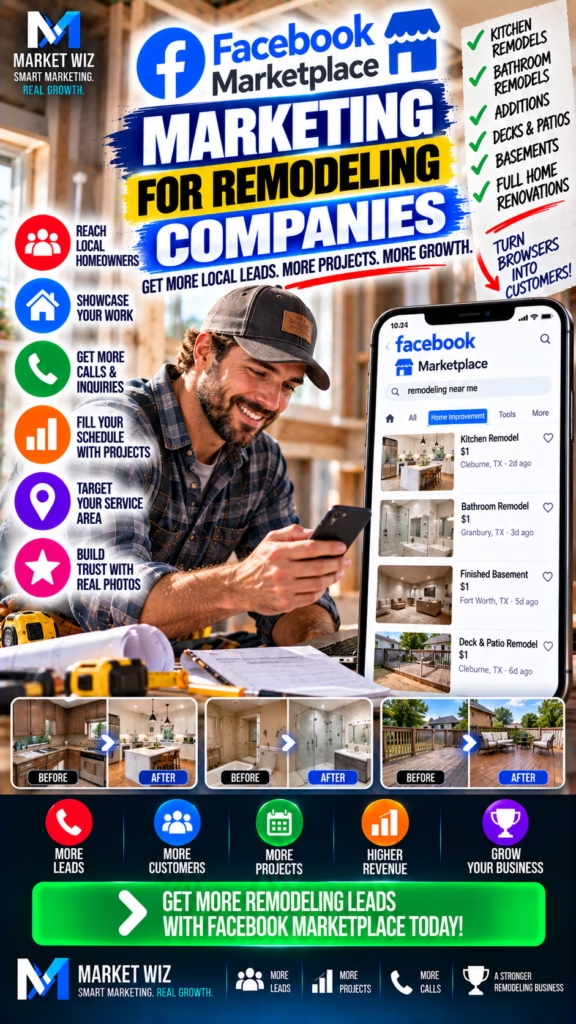
Facebook Marketplace Marketing for Remodeling Companies
Remodeling companies can use Facebook Marketplace as one component of a broader local customer acquisition strategy designed to increase visibility, showcase relevant projects, create homeowner interest, capture inquiries, qualify remodeling opportunities, schedule estimates, improve follow-up, and connect marketing activity to measurable project revenue.
Why Facebook Marketplace Matters for Remodeling Companies
Remodeling is an intensely local business.
Homeowners typically want contractors who understand their market, work within a reasonable geographic area, can demonstrate relevant experience, and can provide a clear path from initial conversation to project estimate.
Facebook Marketplace can create an additional local discovery channel for businesses using eligible listings and following current platform policies.
That local discovery can be valuable because homeowners already use Facebook to browse products, explore local businesses, participate in neighborhood groups, look at home improvement ideas, and interact with people in their communities.
The opportunity is not simply to publish more listings. Remodeling companies need a complete system that connects local visibility with strong project positioning, fast response, qualification, estimates, CRM tracking, follow-up, and sales measurement.
Marketplace should therefore be viewed as one potential entry point into a larger remodeling customer acquisition system.
Understand How Homeowners Choose Remodeling Companies
Remodeling customers rarely make decisions based on a single piece of marketing.
A homeowner may first notice a remodeling project while browsing Facebook. The same person may later search the company name, visit its website, inspect project photos, read Google reviews, compare contractors, discuss the project with family members, and request an estimate days or weeks later.
This means Marketplace marketing should support the complete homeowner decision process.
Homeowners are evaluating more than price
Remodeling involves allowing contractors into a home and trusting them with an important property investment.
Potential customers may evaluate craftsmanship, communication, professionalism, project experience, design capabilities, reviews, reliability, scheduling, materials, project management, and overall confidence in the company.
Strong marketing should reinforce those factors throughout the customer journey.
Build Marketing Around Specific Remodeling Project Types
Broad remodeling messaging can be useful for brand awareness, but project-specific marketing often creates clearer relevance.
A homeowner considering a bathroom renovation has different concerns from someone planning a full kitchen transformation.
A basement finishing prospect has different questions from a homeowner considering an addition.
Kitchen Remodeling
Highlight cabinets, countertops, layouts, islands, flooring, lighting, storage, and complete kitchen transformations.
Bathroom Remodeling
Show showers, tubs, vanities, tile, flooring, fixtures, lighting, storage, and complete bathroom renovations.
Basement Remodeling
Demonstrate how unfinished or outdated basement space can become functional living, entertainment, office, or guest space.
Whole-Home Remodeling
Show larger transformations involving multiple rooms, finishes, layouts, flooring, painting, and coordinated design improvements.
Room Additions
Focus on homeowners needing additional bedrooms, offices, family rooms, living space, or other appropriate expansions.
Interior Improvements
Highlight flooring, painting, trim, drywall, doors, built-ins, and other improvements the company legitimately provides.
Focus Remodeling Marketing on Real Service Areas
Local relevance is one of the most important elements of remodeling lead generation.
A remodeling company should prioritize the communities where it genuinely wants projects and can efficiently provide estimates and complete work.
Expanding visibility far beyond the company's practical service area can create inquiries that consume sales time without creating useful opportunities.
Build geographic campaigns intentionally
Contractors serving several cities can create market-specific strategies around those legitimate service areas.
The marketing can reference relevant project types, communities, home styles, seasonal needs, and other authentic local considerations without pretending to have offices or locations that do not exist.
Use Strong Remodeling Project Photography
Remodeling is highly visual.
Homeowners want to see what a contractor can actually accomplish.
Authentic project photos can therefore become some of the most valuable marketing assets a remodeling company owns.
Useful remodeling photography can include:
- Completed kitchen renovations
- Completed bathroom renovations
- Before-and-after transformations
- Cabinet installations
- Tile work
- Countertop installations
- Flooring transformations
- Custom showers
- Interior painting
- Basement renovations
- Room additions
- Decks and outdoor improvements
- Project progress photography
- Detailed craftsmanship
Photos should accurately represent the company's work and should not create misleading expectations about projects the contractor did not complete.
Use Before-and-After Remodeling Content
Before-and-after content communicates transformation immediately.
The homeowner does not need to imagine the difference between an outdated space and a renovated one because the result is visible.
This format is particularly effective for kitchens, bathrooms, basements, flooring, painting, cabinets, exterior improvements, and complete interior renovations.
Remodeling customers buy transformation. Strong before-and-after content shows the difference between the problem a homeowner currently has and the type of finished environment they may want to create.
Create Clear and Relevant Marketplace Listings
Any Marketplace activity should follow current Meta eligibility, commerce, category, account, and listing requirements.
Where appropriate and permitted, content should be clear enough that potential customers quickly understand what they are viewing.
Confusing listings can create irrelevant inquiries and weak customer experiences.
Clarity improves lead quality
Marketing should accurately represent the offering, location, relevant project information, and next step.
Avoid exaggerated promises, misleading pricing, unrelated categories, deceptive imagery, or other tactics that create attention without creating qualified demand.
Write Remodeling Content Around Customer Intent
Remodeling marketing performs a different role when it speaks directly to the project a homeowner is considering.
Instead of relying entirely on the company name, marketing can focus on the transformation, project category, location, or homeowner need.
This can make content easier to understand while also creating themes that can be reused across websites, social media, local SEO, videos, and other channels.
Project intent creates stronger relevance
Kitchen renovation prospects should encounter kitchen-specific information.
Bathroom prospects should see bathroom projects.
Homeowners researching basement finishing should see examples and information relevant to basement transformations.
Use Remodeling Descriptions That Answer Real Questions
Marketing descriptions should help potential customers understand whether the company may be relevant to their project.
Useful information can include the type of remodeling work performed, general service area, project specialties, process, scheduling expectations, and appropriate next action.
The objective is not to overload the prospect with every possible detail.
The objective is to create enough clarity that a suitable homeowner feels comfortable beginning a conversation.
Turn Every Completed Remodel Into Marketing Content
A completed remodeling project can generate far more marketing value than a single portfolio photo.
With permission and appropriate documentation, one project can support multiple content assets.
- Before-and-after photos
- Project walkthrough videos
- Facebook content
- Instagram content
- Short-form videos
- Website portfolio pages
- Google Business Profile updates
- Local SEO content
- Educational posts
- Material-focused content
- Project case studies
This allows the company's real work to become the foundation of its marketing system.
Respond Quickly to Remodeling Leads
A strong marketing campaign can still underperform when customer response is slow.
Homeowners may contact several remodeling companies while planning a project.
If one company responds promptly while another waits too long, the faster company may have a better opportunity to begin the sales conversation.
Create a defined response process
Every new inquiry should have a clear destination.
The company should know who receives the lead, what information should be collected, how the opportunity is recorded, and what happens next.
Use AI to Support Remodeling Lead Response
Remodeling companies frequently operate in environments where employees cannot remain at a desk all day.
Owners may be visiting projects. Estimators may be meeting homeowners. Project managers may be coordinating crews. Employees may be working onsite.
AI-supported workflows can help organize inquiries while employees are occupied.
AI can support tasks such as:
- Collecting contact information
- Collecting project location
- Identifying remodeling type
- Recording project details
- Creating notifications
- Updating CRM records
- Supporting appointment workflows
- Preparing leads for human follow-up
Human involvement remains important for technical questions, project evaluation, recommendations, estimates, scope discussions, and closing.
Qualify Remodeling Leads Before the Estimate
Remodeling estimates can require significant time.
A contractor may need to travel to the property, inspect the space, discuss goals, take measurements, evaluate conditions, review materials, prepare pricing, and create a proposal.
Basic qualification before that process can improve sales efficiency.
Useful remodeling qualification information may include:
- Project location
- Type of remodeling project
- Approximate project scope
- Current condition of the space
- Desired improvements
- Project timing
- Appointment availability
- Budget expectations when appropriate
- Decision-making process
- Other project-specific requirements
Turn Marketplace Interest Into Estimate Opportunities
The objective of remodeling lead generation is not merely to create conversations.
The marketing process should move qualified homeowners toward the next meaningful sales action.
For many remodeling companies, that action is an estimate, consultation, project review, or discovery conversation.
Capture the Inquiry
Record the homeowner's contact information and source.
Identify the Project
Determine whether the homeowner needs a kitchen, bathroom, basement, addition, whole-home remodel, or another relevant project.
Confirm the Location
Make sure the property falls within the company's actual service area.
Collect Qualification Details
Gather enough information to determine whether the opportunity fits the company's project criteria.
Schedule the Next Action
Move suitable prospects toward the appropriate consultation, estimate, call, or project review.
Track Remodeling Leads Inside a CRM
Remodeling sales cycles can extend over days, weeks, or months.
Homeowners may request information before they are ready for an estimate. They may receive an estimate and postpone the project. They may need time to make design decisions or coordinate financing.
A CRM helps preserve visibility into these opportunities.
Useful remodeling CRM stages might include:
- New inquiry
- Contact attempted
- Contacted
- Qualified
- Consultation scheduled
- Estimate scheduled
- Estimate completed
- Proposal sent
- Follow-up required
- Project won
- Project lost
- Future opportunity
Build Follow-Up Into Remodeling Lead Generation
Remodeling decisions are rarely identical to emergency repair decisions.
Many homeowners have time to compare contractors, discuss the project, review finances, evaluate designs, and decide when they want work to begin.
That makes follow-up especially important.
A homeowner who does not sign immediately should not automatically be treated as a dead lead.
Create different follow-up paths
A homeowner who requested an estimate needs a different follow-up process from someone who has already received a proposal.
A future-project lead should be handled differently from a prospect who wants work completed soon.
Combine Facebook Marketplace With Google Maps Marketing
Homeowners who discover a remodeling company through Facebook may research the business elsewhere before making contact.
Google Maps and Google Business Profile visibility can support that research process.
Accurate business information, authentic reviews, relevant project photos, appropriate categories, website links, and consistent local information can help strengthen the company's overall digital presence.
Marketplace can create discovery while Google Maps can reinforce local credibility. The strongest remodeling strategy connects multiple customer touchpoints instead of expecting one platform to perform every marketing function.
Support Marketplace Marketing With Remodeling SEO
Search engine optimization helps remodeling companies capture homeowners who are actively researching projects and contractors.
A company can build website content around the actual remodeling work it wants to sell.
Useful remodeling SEO themes can include:
- Kitchen remodeling
- Bathroom remodeling
- Basement remodeling
- Whole-home remodeling
- Room additions
- Interior remodeling
- Home renovation
- Flooring installation
- Cabinet remodeling
- Custom showers
- Deck construction
- Local remodeling contractor pages
The company can then connect social, Marketplace, Google Maps, and website visibility into a broader local search ecosystem.
Use Short-Form Video for Remodeling Marketing
Video is particularly effective for remodeling because it can reveal the full scale of a transformation.
A short walkthrough can show layout, finishes, lighting, cabinets, countertops, flooring, fixtures, craftsmanship, and overall design in ways that a single photograph cannot.
Short-form videos can also be created around homeowner questions, renovation ideas, material choices, project planning, and completed transformations.
These videos can strengthen the company's overall online presence and give prospects more evidence of its work.
Use Local Facebook Groups Appropriately
Community groups can provide additional local visibility for remodeling companies when promotional activity is allowed.
Every group has its own rules.
Some groups permit business promotion on specific days. Others allow recommendations but restrict advertising. Some prohibit promotional posts entirely.
Contractors should respect group rules and focus on useful, community-appropriate participation rather than repetitive promotion.
Build Trust Around the Remodeling Company
Home remodeling is a high-trust purchase.
Homeowners are evaluating who will enter their property, manage the project, communicate with them, coordinate work, and influence the final result of an important investment.
Marketing should therefore support credibility rather than focusing exclusively on lead volume.
Trust signals can include:
- Authentic completed project photos
- Detailed project examples
- Customer reviews
- Professional website
- Consistent company information
- Clear communication
- Professional estimate process
- Relevant licenses or credentials where applicable
- Responsive customer support
- Accurate expectations
Use Reviews to Strengthen Remodeling Marketing
Reviews can provide potential customers with additional context about the experience of working with the remodeling company.
Homeowners may pay attention to comments about communication, workmanship, scheduling, cleanliness, project management, professionalism, and final results.
Companies should build an authentic review process rather than relying on artificial or misleading feedback.
Professional responses to reviews can also demonstrate that the business pays attention to customer experiences.
Adjust Remodeling Marketing for Seasonal Demand
Remodeling demand can change throughout the year.
Homeowners may plan indoor projects during colder months, exterior improvements during warmer periods, or larger renovations around moves, holidays, property purchases, and other life events.
Contractors can adjust marketing themes based on the work they want to schedule and the types of projects homeowners are considering.
The goal is not to invent artificial urgency but to align marketing with real customer planning cycles.
Improve Remodeling Lead Quality Instead of Chasing Volume
A remodeling company does not necessarily need the largest possible number of inquiries.
It needs enough suitable opportunities to keep its estimating and production pipeline healthy.
High lead volume can actually create operational problems when most inquiries do not fit the company's project size, geography, specialties, schedule, or business model.
Better positioning can improve qualification
Marketing should make it increasingly clear what the company does, where it works, what types of projects it wants, and what the next customer step looks like.
Track Remodeling Marketing From Inquiry to Revenue
Marketing performance should eventually connect to business results.
Views and messages can be useful early indicators, but remodeling companies ultimately need qualified projects.
| Metric | What It Shows | Why It Matters |
|---|---|---|
| Inquiries | Total customer responses | Shows initial lead activity |
| Qualified Leads | Prospects fitting project criteria | Shows actual opportunity quality |
| Response Time | How quickly inquiries receive attention | Shows sales responsiveness |
| Estimate Appointments | Qualified homeowners moving to the next step | Shows pipeline progression |
| Proposals | Opportunities receiving formal pricing | Shows serious project activity |
| Close Rate | Percentage of opportunities becoming customers | Shows sales effectiveness |
| Average Project Value | Typical revenue per won project | Helps evaluate lead economics |
| Revenue by Source | Sales connected to marketing channels | Shows which channels create business value |
Use Real Remodeling Lead Data to Improve Marketing
Marketing decisions should improve as the company gathers more sales data.
If kitchen remodeling campaigns generate strong qualified leads, the company may decide to increase content around kitchens.
If a particular city creates many inquiries but few suitable projects, geographic targeting may need adjustment.
If bathroom remodeling prospects schedule estimates at a high rate, that information can influence future content and sales planning.
This creates a feedback loop between marketing and real project outcomes.
Common Facebook Marketplace Marketing Mistakes for Remodelers
Marketplace marketing should be handled carefully because low-quality tactics can waste time, create irrelevant inquiries, weaken trust, or conflict with platform requirements.
Common mistakes include:
- Publishing content that does not comply with current Marketplace policies
- Using inaccurate categories
- Using misleading pricing
- Using project images the company cannot legitimately represent as its work
- Posting low-quality or unclear images
- Using identical content repeatedly without meaningful relevance
- Targeting areas the company does not realistically serve
- Failing to respond to inquiries
- Failing to qualify leads
- Failing to record leads
- Failing to follow up after estimates
- Ignoring old opportunities
- Tracking messages but not revenue
- Depending entirely on Marketplace
- Ignoring Google Maps and local SEO
- Failing to build a recognizable remodeling brand
Build a Complete Remodeling Lead Generation System
Marketplace works best when it supports a broader system rather than functioning as an isolated activity.
Define Target Projects
Identify the remodeling categories and project sizes the company wants to sell.
Define Target Markets
Focus on cities and communities the remodeling company can realistically serve.
Build Project Content
Organize authentic project photos, before-and-after transformations, videos, descriptions, and customer education content.
Create Local Visibility
Use appropriate channels such as Google Maps, SEO, social media, eligible Marketplace activity, and other relevant marketing sources.
Capture Every Lead
Make sure customer inquiries enter a defined sales process instead of disappearing into disconnected inboxes.
Qualify Opportunities
Collect enough project information to determine whether the lead fits the company's service area and project criteria.
Schedule Estimates
Move qualified homeowners toward the appropriate consultation or estimate process.
Track the Pipeline
Use a CRM or structured system to track each opportunity from inquiry through proposal and final decision.
Follow Up
Create consistent processes for homeowners who are interested but not immediately ready to begin.
Measure Revenue
Connect marketing activity to won projects so future decisions can be based on actual business performance.
Scale Remodeling Marketing Across Multiple Markets
Remodeling companies expanding into additional cities need systems that preserve consistency while maintaining local relevance.
Simply duplicating identical marketing everywhere may not reflect the differences between markets, project demand, housing stock, travel distance, crew availability, or competitive conditions.
A scalable strategy creates repeatable systems for content, lead response, CRM tracking, qualification, estimate scheduling, and reporting while allowing market-specific adjustments.
This makes expansion more manageable without turning every new market into a completely separate marketing operation.
Turn Marketplace Visibility Into Long-Term Remodeling Growth
The strongest remodeling companies build marketing assets that become more valuable over time.
Every completed project can create new photography.
Every satisfied customer can potentially create an authentic review.
Every frequently asked question can become educational content.
Every project category can become a dedicated website page.
Every target city can inform local SEO strategy.
Every qualified lead can provide information about customer demand.
Every won project can reveal which marketing sources create real revenue.
The objective is not to become dependent on Facebook Marketplace. The objective is to use every appropriate marketing channel to strengthen a diversified remodeling customer acquisition system that the business can measure and improve.
30 FAQs About Facebook Marketplace Marketing for Remodeling Companies
1. What is Facebook Marketplace marketing for remodeling companies?
Facebook Marketplace marketing for remodeling companies is the use of eligible Marketplace listings and local visibility as part of a broader strategy to connect remodeling businesses with nearby homeowners and potential customers.
2. Can remodeling companies use Facebook Marketplace for marketing?
Remodeling companies can use eligible Marketplace activity where it complies with current Meta policies, listing requirements, account rules, and applicable category restrictions.
3. Can Facebook Marketplace generate remodeling leads?
Marketplace visibility can contribute to remodeling customer acquisition when relevant eligible listings reach local users and are supported by strong response, qualification, follow-up, and sales processes.
4. Why is local targeting important for remodeling companies?
Most remodeling companies operate within defined geographic territories, so local targeting helps align marketing activity with homeowners the company can realistically serve.
5. What remodeling projects can be promoted through a broader local marketing strategy?
A remodeling marketing strategy can focus on kitchen remodeling, bathroom remodeling, basement renovations, whole-home remodeling, room additions, flooring, painting, decks, exterior improvements, and other work the company actually provides.
6. Should remodeling companies use project photos?
Authentic project photography can help potential customers understand workmanship, design style, project scope, and completed results.
7. Are before-and-after photos useful for remodeling marketing?
Before-and-after photography can be useful because it visually demonstrates the transformation created by a remodeling project.
8. How often should remodeling marketing content be refreshed?
Remodeling companies should review and refresh marketing content regularly based on current projects, seasonal demand, available offers, target markets, platform requirements, and performance data.
9. Should remodeling companies target multiple cities?
Companies serving multiple communities can build location-specific marketing strategies when those markets are genuinely within the company's service area.
10. Can Facebook Marketplace help kitchen remodelers?
Marketplace can be one component of a broader local marketing strategy for kitchen remodelers when activity is eligible under current platform policies and supported by strong project content and lead handling.
11. Can Facebook Marketplace help bathroom remodelers?
Bathroom remodeling companies can use appropriate local marketing strategies to build visibility around bathroom transformations, renovation ideas, project results, and related customer needs.
12. How important is lead response time for remodeling companies?
Prompt response is important because homeowners may contact multiple remodeling companies while researching a project.
13. Can AI help remodeling companies respond to leads?
AI-supported workflows can help collect information, create notifications, organize lead records, support qualification, and prepare remodeling prospects for human follow-up.
14. What information should remodeling companies collect from leads?
Useful information can include customer name, contact information, project location, remodeling type, approximate scope, desired timeline, appointment availability, and other details relevant to qualification.
15. Should remodeling companies qualify leads before scheduling estimates?
Basic qualification can help remodeling companies determine whether a project fits their territory, capabilities, schedule, and project criteria before investing significant sales time.
16. Can remodeling companies use a CRM for Marketplace leads?
A CRM can help organize remodeling prospects, lead sources, project details, appointments, estimates, follow-up tasks, pipeline stages, and sales outcomes.
17. Should remodeling companies follow up with old leads?
Appropriate follow-up with eligible previous prospects can be valuable because remodeling projects are often delayed by timing, budgeting, planning, or other factors.
18. Can Marketplace replace a remodeling company website?
Marketplace should generally be treated as one potential channel rather than a replacement for an owned website, local SEO presence, Google Business Profile, portfolio, reviews, and other customer acquisition assets.
19. Should remodeling companies also use Google Maps?
Google Maps and local search can complement other marketing channels by helping homeowners discover remodeling companies when actively searching for nearby contractors.
20. Can local SEO support Facebook Marketplace marketing?
Local SEO can support a broader marketing strategy by creating additional discovery opportunities and giving prospects another way to research the remodeling company.
21. Should remodeling companies use Facebook Groups?
Relevant local groups can provide community visibility when promotional activity is permitted by the specific group's rules and applicable platform policies.
22. Can social media help remodeling companies get leads?
Social media can support remodeling lead generation by displaying projects, transformations, design ideas, educational content, customer experiences, and company expertise.
23. Should remodeling companies create videos?
Video can be useful for project walkthroughs, before-and-after transformations, remodeling tips, material comparisons, progress updates, and demonstrations of completed work.
24. What metrics should remodeling companies track?
Useful metrics include inquiries, qualified leads, response time, estimate appointments, estimate completion, close rate, project value, acquisition cost, and revenue by marketing source.
25. How can remodeling companies improve lead quality?
Lead quality can be improved through accurate marketing, clear project positioning, geographic targeting, qualification questions, realistic expectations, and better alignment between marketing content and the work the company wants.
26. Can Marketplace marketing work for high-value remodeling projects?
Marketplace can contribute to awareness and customer acquisition, but higher-value remodeling projects usually benefit from a broader trust-building process that includes portfolios, reviews, websites, consultations, estimates, and professional sales follow-up.
27. What mistakes should remodeling companies avoid on Facebook Marketplace?
Companies should avoid inaccurate information, prohibited listings, policy violations, misleading imagery, repetitive low-quality content, poor lead response, weak qualification, and relying on Marketplace as their only marketing channel.
28. Can remodeling companies market several project types?
A remodeling company can build campaigns around multiple legitimate specialties, allowing different customer needs to be addressed with relevant content and landing pages.
29. How can remodeling companies scale local lead generation?
Scaling can involve expanding local SEO, improving Google Maps visibility, strengthening project content, building repeatable social workflows, using eligible marketplace channels, improving response automation, and tracking leads through a CRM.
30. What is the goal of Facebook Marketplace marketing for remodeling companies?
The goal is to use Marketplace appropriately as one part of a broader local customer acquisition strategy that increases visibility, creates relevant inquiries, and moves qualified homeowners toward estimates and remodeling projects.
30 Additional SEO Keywords
These additional keyword themes can support remodeling website content, local SEO pages, social media campaigns, videos, project portfolio content, lead generation campaigns, and broader customer acquisition strategies.
Build a Stronger Remodeling Customer Acquisition System
Facebook Marketplace can create another point of local visibility for remodeling companies, but visibility alone is not the final objective.
The real objective is to create qualified remodeling opportunities.
That requires a larger system.
Homeowners need to discover the company.
They need to understand what the company does.
They need to see relevant project examples.
They need reasons to trust the contractor.
They need a simple way to begin a conversation.
The company needs to capture that conversation.
It needs to respond.
It needs to collect project information.
It needs to determine whether the project is a good fit.
It needs to schedule the appropriate next step.
It needs to track the opportunity.
It needs to follow up.
And eventually, it needs to understand whether the marketing created revenue.
Facebook Marketplace can participate in the discovery portion of that journey when used appropriately.
But remodeling companies should avoid building their entire customer acquisition strategy around one platform.
A homeowner may discover the company through Facebook and verify it through Google.
Another homeowner may discover the company through Google Maps and later follow its Facebook page.
Someone may find a project through organic search and then watch the company's videos.
A referral may research the company online before making contact.
These channels reinforce one another.
That is why remodeling marketing should be built as an ecosystem.
Marketplace can create local visibility.
Google Maps can strengthen local discovery.
Search engine optimization can capture homeowners researching specific projects.
A professional website can explain services and display the project portfolio.
Social media can keep the company visible.
Short-form video can demonstrate transformations.
Reviews can strengthen trust.
CRM systems can organize opportunities.
AI automation can support response, qualification, routing, and follow-up.
Human estimators and salespeople can evaluate projects, answer questions, create recommendations, and build customer confidence.
Reporting can connect all of this activity to actual remodeling revenue.
The project portfolio is one of the remodeling company's most valuable marketing assets.
Every completed kitchen tells a story.
Every renovated bathroom demonstrates craftsmanship.
Every basement transformation shows what is possible.
Every addition demonstrates the company's ability to create new living space.
Every before-and-after comparison shows change.
Every satisfied customer can contribute credibility.
Remodeling companies should develop a repeatable process for capturing these assets.
Project photography should not be an afterthought.
Before photos should be captured when appropriate.
Progress photos can document the transformation.
Finished photography should highlight the completed result.
Short videos can walk through the space.
Project details can be recorded while they are still fresh.
This content can then be distributed across multiple marketing channels.
One kitchen remodel can support a website portfolio page.
It can create Facebook content.
It can create Instagram content.
It can create a short-form video.
It can create a Google Business Profile update.
It can create educational content about cabinet choices.
It can create content about countertops.
It can create content about flooring.
It can create content about layout changes.
It can create content about lighting.
It can create a local SEO case study.
This dramatically increases the marketing value of every completed project.
Geographic strategy is equally important.
Remodelers should know where their best projects come from.
A company may technically serve a large radius but discover that most profitable projects come from a smaller collection of communities.
Marketing data can reveal those patterns.
The contractor can track which cities generate inquiries.
It can track which cities generate qualified leads.
It can track which cities generate estimates.
It can track which cities generate won projects.
It can track average project value by market.
This allows the company to make smarter decisions about where to concentrate future marketing.
Project category data can provide similar insight.
A company may discover that kitchen projects generate its highest average revenue.
Another contractor may discover that bathroom projects close more consistently.
Another may specialize successfully in whole-home renovations.
Marketing should evolve based on these results.
The goal is not simply to advertise every possible type of work.
The goal is to build demand for the projects that best support the company's business model.
Lead qualification helps protect estimating capacity.
Estimates are expensive in time even when they are offered to homeowners without an upfront charge.
Travel takes time.
Meetings take time.
Measurements take time.
Design discussions take time.
Pricing takes time.
Proposal preparation takes time.
Follow-up takes time.
A company that schedules every inquiry without qualification may fill its calendar with opportunities that never had a realistic chance of becoming projects.
Basic qualification can improve this process.
Is the project inside the service area?
Does the company perform that type of work?
Does the approximate project scope fit the company's business model?
Is the homeowner considering a realistic timeline?
Is the appropriate decision-maker involved?
Are there important project details the estimator should know before arriving?
These questions create a better experience for both the homeowner and the contractor.
AI can support some of this information collection.
It can record the homeowner's name.
It can collect contact information.
It can collect the project address or location.
It can identify the type of remodel.
It can collect timing information.
It can create a CRM record.
It can notify the appropriate employee.
It can help prepare the opportunity for human review.
The human team can then focus on the parts of remodeling sales that require experience.
A homeowner may need advice about whether to reconfigure a kitchen layout.
Someone may need help comparing materials.
A bathroom project may involve technical constraints.
An addition may require a much deeper conversation.
A whole-home renovation may require extensive planning.
These are not conversations that should automatically be reduced to generic automation.
AI should support the sales team rather than prevent customers from reaching knowledgeable people.
Follow-up is another major opportunity.
Remodeling projects can have long consideration periods.
A homeowner may request an estimate in September and decide to begin work months later.
Another homeowner may postpone a project because of financing.
Another may need time to coordinate schedules.
Another may initially choose a different contractor and return later.
Without organized follow-up, these prospects can disappear.
A CRM gives the company a way to preserve those relationships.
The contractor can record the project.
It can record the estimate.
It can record the homeowner's timeline.
It can schedule a future task.
It can identify leads that need another conversation.
It can identify older opportunities worth revisiting.
This is where customer acquisition becomes a system rather than a collection of disconnected messages.
Measurement completes the process.
The remodeling company should eventually know which channels create its strongest opportunities.
Marketplace may generate some inquiries.
Google Maps may generate others.
Organic search may generate high-intent project leads.
Social media may influence homeowners who later contact the company through another channel.
Referrals may continue to be extremely valuable.
Paid advertising may create additional demand.
The company should track as much of this journey as reasonably possible.
Lead volume is the beginning.
Qualified lead volume is more useful.
Estimate appointments provide another level of insight.
Proposals reveal serious project activity.
Won projects reveal sales effectiveness.
Revenue reveals actual business impact.
Average project value helps the company understand lead economics.
This information allows marketing to improve.
If a certain campaign generates many messages but no qualified projects, the company can change it.
If a certain project type generates strong estimates, the company can create more content around it.
If a certain market produces high-value projects, local visibility can be strengthened there.
If prospects repeatedly ask the same questions, the company can create content answering those questions.
If homeowners need more proof before scheduling, the company can strengthen its portfolio and reviews.
This creates continuous improvement.
Marketplace should therefore be evaluated within the larger customer acquisition system.
It can create visibility.
It can create another customer touchpoint.
It can support local awareness.
But the contractor still needs strong work.
It still needs project photography.
It still needs professional communication.
It still needs reviews.
It still needs a website.
It still needs local search visibility.
It still needs an estimating process.
It still needs sales follow-up.
It still needs project management.
Marketing cannot replace those fundamentals.
What marketing can do is help more suitable homeowners discover the company and enter that process.
The remodeling companies that build the strongest long-term marketing systems will use multiple channels together.
They will turn projects into content.
They will turn content into visibility.
They will turn visibility into inquiries.
They will turn inquiries into qualified opportunities.
They will turn qualified opportunities into estimates.
They will turn estimates into projects.
They will turn successful projects into reviews, referrals, portfolio assets, and new marketing content.
That creates a cycle.
More completed work creates more proof.
More proof strengthens marketing.
Stronger marketing creates more opportunities.
Better qualification creates better estimates.
Better sales systems improve conversion.
Better measurement improves future marketing decisions.
Facebook Marketplace can be one useful component of that cycle when it is used appropriately, strategically, and in compliance with current platform requirements.
The long-term goal is not simply more Marketplace activity.
The goal is a stronger remodeling company with a predictable, diversified, measurable customer acquisition system.
Generate More Local Opportunities for Your Remodeling Company
Market Wiz AI helps established businesses build scalable customer acquisition systems using Facebook Marketplace marketing, Google Maps optimization, local SEO, social media marketing, AI automation, lead response, CRM workflows, qualification, follow-up, multi-channel visibility, and performance tracking.
Get Started With Market Wiz AI© Market Wiz AI. Facebook and Facebook Marketplace are trademarks of Meta Platforms, Inc. Market Wiz AI is not affiliated with or endorsed by Meta unless expressly stated. Marketplace eligibility, commerce policies, categories, account requirements, listing rules, features, and availability may change over time. Businesses should review current platform requirements before publishing content.













Use Social Media to Extend Remodeling Visibility
Remodeling companies continuously create visual content simply by completing projects.
Social media gives contractors additional places to distribute those project stories.
Facebook, Instagram, short-form video platforms, YouTube, and other appropriate channels can be used to demonstrate workmanship, transformations, design ideas, and educational expertise.
Useful remodeling social content includes: